U.S. Fish & Wildlife Service
←
→
Page content transcription
If your browser does not render page correctly, please read the page content below
U.S. Fish & Wildlife Service
Prime Hook National Wildlife Refuge

                                      Prime Hook
11978 Turkle Pond Road
Milton, DE 19968
302/684 8419
302/684 8504 FAX
E-mail: FW5RW_PHNWR@fws.gov
www.fws.gov/northeast/primehook/
                                      National Wildlife
Federal Relay Service                 Refuge
for the deaf and hard-of-hearing
1 800/877 8339

U.S. Fish & Wildlife Service
1 800/344 WILD
http://www.fws.gov

September 2012

Black-necked stilt
Bill Buchanan/USFWS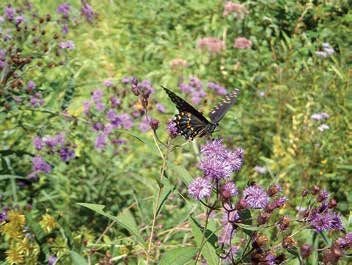
There can be               Welcome                    Prime Hook National Wildlife
                                                                             Refuge is one of more than 550

                   no greater issue                                          refuges in the National Wildlife
                                                                             Refuge System administered by the

                           than that
                                                                             U.S. Fish & Wildlife Service. The
                                                  This goose, designed by    National Wildlife Refuge System is a
                                                                             network of lands and waters managed
                    of conservation
                                                  J.N. “Ding” Darling, has
                                                  become the symbol of the
                                                  National Wildlife Refuge
                                                                             specifically for the protection of
                                                                             wildlife and wildlife habitat. It
                   in this country…
                                                  System.
                                                                             represents the most comprehensive
                                                                             wildlife resource management
                                                                             program in the world.
       —President Theodore Roosevelt
                                                                             Situated along the marshes of the
                                                                             western Delaware Bay, Prime Hook
                                                                             National Wildlife Refuge protects
                                                                             more than 10,000 acres of valuable
                                                                             habitat for wildlife of all kinds.
                                                                             Roughly 80% of the refuge is a mix
                                                                             of fresh and saltwater wetlands
                                                                             stretching from Slaughter Beach in
                                                                             the north to the Broadkill River in
                                                                             the south.

                                                                             The refuge was established in
                                                                             1963 under the authority of the
                                                                             Migratory Bird Conservation Act
                                                                             for use as an inviolate sanctuary, or
                                                                             any other management purpose, for
                                                                             migratory birds. Today, the refuge
                                                  Beach Plum                 hosts thousands of ducks, geese, and
                                                                             shorebirds each year, and provides
                                                                             habitat for other species like the bald
                                                                             eagle and the endangered Delmarva
                                                                             Peninsula fox squirrel.

                                                                             Why is it called “Prime Hook”?
                                                                             When Dutch settlers arrived at
                                                                             what is now Prime Hook National
                                       R.H. Uva

                                                                             Wildlife Refuge, they discovered an
                                                                             abundance of purple beach plums. So
                                                                             they called the area Priume Hoek,
                                                                             meaning Plum Point.

                                                  Working for                The goal of refuge management is
                                                  Wildlife                   to provide habitat for a diversity of
                                                                             native fish, wildlife, and plants. The
                                                                             mix of wetlands, uplands and forest
                                                                             on the refuge are home to a wide
                                                                             variety of native birds, mammals, fish,
                                                                             reptiles, amphibians, insects, and
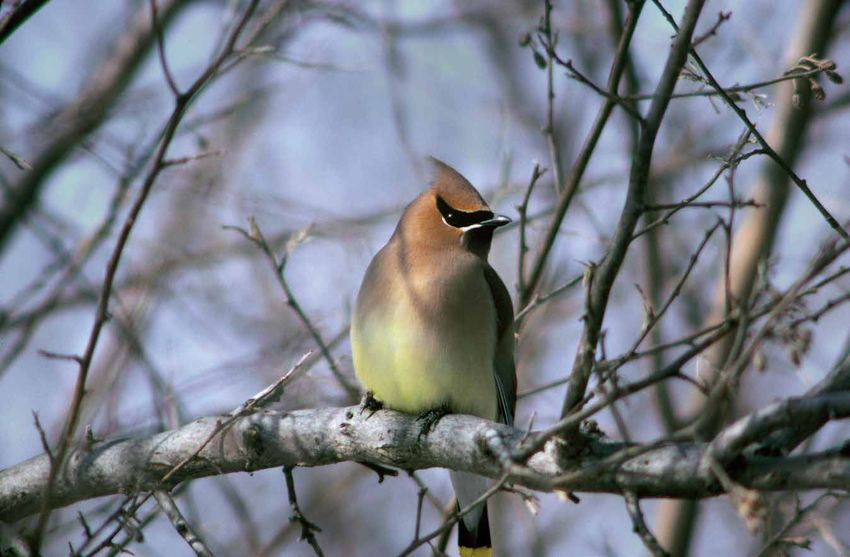
Cedar waxwing                                                                plants.
Dave Menke/USFWS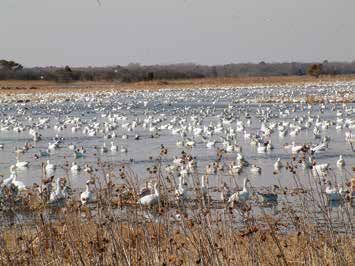
Dave Menke/USFWS

                                                                                                                                                                           Marsha Polk/USFWS
                              Wood
                              ducks
                                                                                                                       Mature
                                      Strategically located on the Atlantic                                          hardwood
                                      Flyway, the refuge manages more                                                    forest
                                      than 4,000 acres of marsh to provide
                                      feeding and resting areas for                                                               The refuge has more than 2,000
                                      migrating birds. The refuge lowers                                                          acres of tidal salt marsh. Refuge
                                      water levels in the spring through                                                          salt marshes, which are a rapidly
                                      a series of dikes and water control                                                         diminishing habitat type on the
                                      structures. Lower water levels allow                                                        east coast, provide critical habitat
                                      the growth of annual marsh plants                                                           for seaside and salt marsh sharp-
                                      like wild rice, millet, and beggars tick.                                                   tailed sparrows. Tidal salt marsh
                                      In the spring, summer, and fall it also                                                     communities are particularly
                                      provides a place for tens of thousands                                                      important nurseries for young fish,
                                      of migrating shorebirds such as                                                             crabs, and other invertebrate fauna.
                                      dunlin, dowitchers, sandpipers, and
                                      plovers to feed.                                                                            Upland areas that include scrub-
                                                                                                                                  shrub and forested habitats account
                                      In the summer, there are nesting                                                            for less than 20% of refuge lands, but
                                      areas for wading birds like least                                                           are very important to many species.
                                      bitterns and shorebirds like spotted                                                        Shrub habitats adjacent to wetland
                                      sandpipers and black-necked stilts.                                                         areas are critical for breeding and
                                      Higher water levels in the fall and                                                         migrating coastal plain swamp
                                      winter make the seeds of annual                                                             sparrows, a unique subspecies of
                                      plants available for the thousands                                                          sparrows found in Delaware and a
                                      of migrating ducks and geese. More                                                          resource of concern for the refuge.
                                      than 100,000 snow geese and 80,000                                                          Prime Hook’s forested habitats
                                      ducks are at the refuge during peak                                                         are also important for breeding
                                      fall migration.                                                                             and migrating songbirds that pass
                                                                                                                                  through in the spring and fall to fuel
                                                                                                                                  up during their long journeys.
                                                                                                     USFWS

                  Waterfowl
                  at sunset
                                                                                                             Delmarva
                                                                                                             Peninsula
                                                                                                             fox squirrel

                                                                                                                                                                           Kate McManus/USFWS
Charles Darling

                                                                                                                        Black
                                                                                                                   swallowtail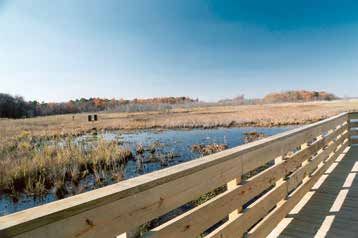
ad
Slaughter Beach
Ro
Prime Hook
ch Community
13
ea
DELAWARE
D
rB
National Wildlife
14 Milford BAY
hte
e
ug
Prime Hook
la
Refuge
Sla
N.W.R.
Sl
113
au
w
Milton
gh
16
a
1 Information Kiosk
te
re
r
Ca
na Fishing
B
l 0 10 20
a
Scale in Miles Boat Launch
y
Headquarters is located 12 miles
Fowler Beach southeast of Milford and 10 miles Wildlife Observation
Rd. northwest of Lewes. Take Route 1
ac h to Route 16 east for 1 mile. Turn left Wildlife Photography
Be
into refuge and proceed 1.6 miles to
the office.
er Photography Blind
wl
Fo
Observation Platform
Co
Refuge Boundary
ds
k
Refuge Property
ee
Ro
Cr Road Prime Hook Beach
h Private Property
ad
er ac Community
Slau ght Be Please Respect
Note: Portions of the refuge boundary
ok do not extend to Delaware Bay.
Ho
e
im
Pr
Li
Prime Hook
tt
le
To Milford State Wildlife k
N
ck ee
Road
e
7 Miles Management
Cr
Area
k
1
Refuge
oo
H
e
im Headquarters/
o ad Visitor Center Broadkill Beach
Pr
Community
dR
Turkle Pond Pe
t
on
e P
er
sf
16
Br
ep
iel
Turkl
Waples
De
oa
Fleetwood
d Ditch
Pond h
Bra
Pond
ac Roa
dk
d
Be
il
nch
l
So
un
5
Ro
d
ill
ad
adk er
Bro
l Riv
il
adk
Bro
16
0 Miles 2
1
Milton 0 Kilometers 2
9/04
Mature hardwood forests provide                               Hunting
                                   critical habitat for bald eagles and the                      The refuge works closely with
                                   endangered Delmarva Peninsula fox                             the Delaware Division of Fish
                                   squirrel. In 1986, this native mammal                         and Wildlife to provide hunting
                                   was reintroduced to Delaware where                            opportunities. Each year thousands
                                   management efforts focus on two                               of hunters visit the refuge for
                                   activities: 1) monitoring the population;                     waterfowl, deer, and upland
                                   and 2) restoring and enhancing                                game hunting. There are special
                                   mature hardwood habitat to ensure                             regulations for hunting on the refuge
                                   their long term survival. Other                               and a permit is required. More
                                   species dependent on refuge forested                          information is available from the
                                   habitats include breeding red-tailed                          refuge office or on the refuge website
                                   and Cooper’s hawks, wild turkeys,                             at www.fws.gov/northeast/primehook/
                                   flying squirrels and many species of
                                   salamanders, lizards, turtles, frogs and                      Canoeing and Kayaking

                  Things to do
                  at the Refuge
                                   toads.

                                   Recreational and educational activities
                                   that are compatible with protecting
                                                                               os                Visitors can paddle 15 miles or
                                                                                                 more of creeks, streams, and
                                                                                                 marsh. The refuge Canoe Trail
                                                                                                 Brochure can help guide your visit
                                   and managing wildlife habitat are                             through Prime Hook Creek. There
                                   available at the refuge throughout the                        is limited access to the canoe trail
                                   year. Special public use regulations                          from September through March.
                                   are in place to protect refuge lands                          Turkle and Fleetwood Ponds also

                  y                and wildlife.

                                   Fishing
                                   Fishing is permitted along the
                                                                               Boardwalk Trail
                                                                                                 provide canoeing and kayaking
                                                                                                 opportunities for visitors.

                                   Headquarters Canal in Prime Hook

                                                                                                                                           Lewis and Elizabeth Dumont
                                   Creek, and at Turkle and Fleetwood
                                   Ponds. These freshwater marshes
                                   and ponds are popular fishing areas
                                   for largemouth bass, pickerel, white
                                   perch, and crappie. Boats up to
                                   30 horsepower are permitted in
USFWS

                                   Prime Hook Creek. Only electric or
                                   hand propelled boats are permitted
                                   in Turkle and Fleetwood Ponds.                                Walking Trails
                  Kids fishing
                                   Petersfield Ditch and Slaughter Canal
                                   are brackish tidal waters popular
                                   for fishing and crabbing from shore.        Ng                Located off Broadkill Beach Road,
                                                                                                 the Headquarters area offers four
                                                                                                 walking trails through fields, forests,

                                                                               j
                  Waterfowl in     Please follow all state and federal                           and marsh. Interpretive signs at
                  refuge marshes   sport fishing regulations.                                    each trail feature refuge history
                                                                                                 and wildlife. The 1⁄ 2 -mile Boardwalk
                                                                                                 Trail and an observation platform
                                                                                                 on the Dike Trail are wheelchair
                                                                                                 accessible. A trail map is available
                                                                                                 at the visitor center.
Charles Darling

                                                                                                 Wildlife Observation and

                                                                               B                 Photography
                                                                                                 A photography blind overlooks a
                                                                                                 secluded pond in the Headquarters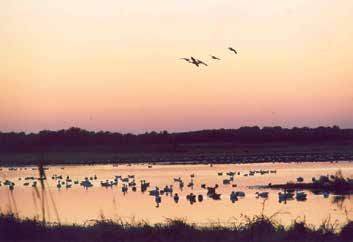
area. It is available on a first-come, and talents, please join us and be a
first-serve basis. part of a growing organization.
In addition to the walking trails, the Visitor Center
N four state highways bisecting the
refuge can be spectacular places for
wildlife viewing and photography.
Prairie warbler
Steve Maslowski/USFWS
The Visitor Center is located inside
the refuge headquarters building.
It’s open year-round on weekdays
During fall and winter, the marshes
along Broadkill Beach Road are filled
with thousands of snow geese and
Sa (Mon.-Fri.; 7:30am-4:00pm; excluding
holidays); open on weekends from
April through December (Sat.-Sun
10:00am-4:00pm); and closed weekends
migrating ducks. Shorebirds also use from January through March. The
Lewis and Elizabeth Dumont
this area during late spring, summer, Visitor Center features refuge
and early fall when water levels are literature, displays of refuge wildlife
lower. In the summer, the shallow and photographs, and educational
pools along Prime Hook Beach and films.
Fowler Beach Roads are good places
to spot wading birds like glossy ibis, A Few Simple The refuge is open 1⁄ 2 -hour before
great egrets, or American bitterns. Rules to Protect sunrise until 1⁄ 2 -hour after sunset.
Please be cautious when viewing Visitors and
Ruddy turnstone wildlife along these public roads. Wildlife This is a carry-in, carry-out facility.
Please take all trash with you.
Environmental Education
jv The refuge provides a living
classroom for students of all ages.
Through teacher training and
volunteer-led field trips, an outing
Dogs are permitted on a short
handheld leash for the entire visit.
Please clean up after your pets.
to the refuge can enhance learning Horses are not permitted.
about nature and management for
wildlife. The refuge works with local Swimming, camping, fires, or
schools to meet state mandated overnight stays are not permitted.
curriculum standards. Please call the Motorized vehicles and bicycles are
refuge for more information. restricted to entrance roads and
designated parking areas. Bicycles
Public are not permitted on the trails.
Outreach
Please do not abandon wild or
domestic animals on the refuge.
Slaughter Abandoned animals can introduce
Creek disease into refuge wildlife
populations or prey on native species.
USFWS
Wild orchid Remember this is your national
wildlife refuge. Disturbing,
Lewis and Elizabeth Dumont
Volunteers destroying or removing vegetation,
Prime Hook has a strong tradition of wildlife or facilities is a crime.
volunteerism. Volunteers contribute
toward many refuge programs Enjoy your visit here. Please respect
including biological, maintenance, the land, the wildlife and other
education, and public use programs. visitors. Remember — take only
USFWS
If you would like to conserve natural memories or photographs, and leave
resources and dedicate your time only footprints.You can also read


