Prisvindende braendeovn som en forgasningsovn - Awardwinning stove as a gasification stove - René Bindig, Ingo Hartmann Fagligt seminar 2019: ...
←
→
Page content transcription
If your browser does not render page correctly, please read the page content below
Prisvindende brændeovn som en forgasningsovn -
Awardwinning stove as a gasification stove
René Bindig, Ingo Hartmann

Fagligt seminar 2019: Biomassekedler og brændeovene,
At Teknologisk Institut, Aarhus, 12.06.2019
Outline

Our Vision: Smart Bioenergy

Remarks on the environmental label „Blauer Engel“

The „Seebeck“-Stove

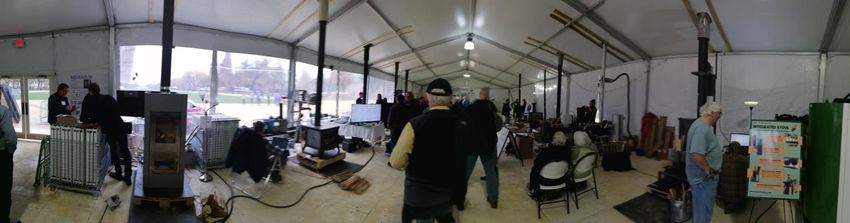
The „Wood Stove Design Challenge 2018” in Washington D.C.

                                                            2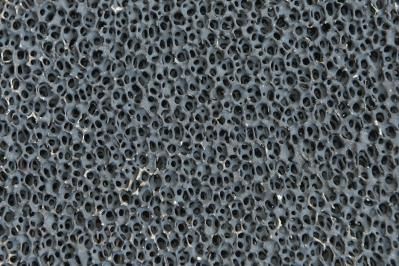
Our Vision: Smart Bioenergy

Safe, clean, integrated and intelligent use of bioenergy for a sustainable
economic system
▪     Integrated, competitive and demand-oriented energy supply
▪     Joint-product generation of bio-based energy carriers
▪     Development of highly efficient and clean technologies
▪     Comprehensive sustainability monitoring
▪     Optimum value-added chains from biomass

Goal: A climate-neutral bioeconomy based on renewable resources

Source of this slide: Presentation of Ingo Hartmann “Sicht des DBFZ auf die Anforderungen „Blauer Engel“ → Partikelanzahlmessungen“ at „Partikelanzahlmessung bei Kaminöfen im
Rahmen des Blauen Engels“, at TFZ in Straubing, 27. März 2019
                                                                                                                                                                                 3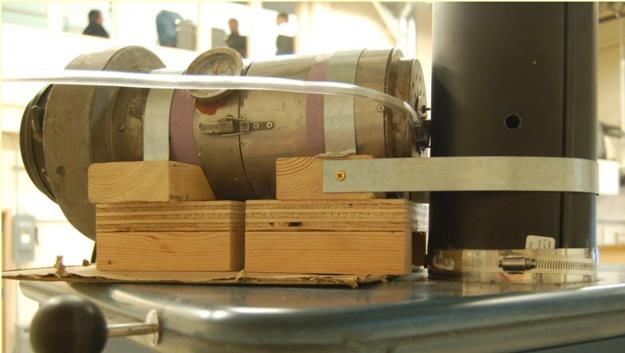
Scheme for emission reduction

Total amount of PM from wood log stoves in the field: 100 mg/m3 (13 % O2) → corresp. to 2.5 g/h (10 kW)
  Influence by user                                                Calculation of heat demand                                            5 mg/m3 reduction
  and fuel supplier                                                fuel properties                                                       95 mg/m3 → 2.375 g/h

 Combustion technology                                             Development                                                           25 mg/m3 reduction
 Combustion chamber optimization                                   (e.g. air control)                                                    70 mg/m3 → 1.75 g/h

Authorities, chimney sweeper                                                                                                             20 mg/m3 reduction
                                                                   User education/fuel standardization/
Fuel check, H2O and K quick control                                                                                                      50 mg/m3 → 1.25 g/h
                                                                   heat demand/sizing
                                                                   „Driving license“ for stove users
                                                                                                                                         25 mg/m3 reduction
                                                                                                                                         25 mg/m3 → 0.625 g/h
  Emission reduction:                                              New admission requirements/                                           20 mg/m3 reduction
  Stove, catalyst, dust precipitation                              New environmental labels                                              5 mg/m3 → 0.125 g/h

→ Testing under field conditions → New test method necessary

K = potassium;
Source of this slide: Presentation of Ingo Hartmann “Sicht des DBFZ auf die Anforderungen „Blauer Engel“ → Partikelanzahlmessungen“ at „Partikelanzahlmessung bei Kaminöfen im
Rahmen des Blauen Engels“, at TFZ in Straubing, 27. März 2019
                                                                                                                                                                                 4
„Blauer Engel“ environmental label

Background
▪ Voluntary label for wood log stoves
▪ Label for very environmentally friendly stoves
Contributors
▪ Federal Ministry of the Environment, Nature Conservation and Nuclear Safety,
▪ The German Environment Agency (Umweltbundesamt - UBA)
▪ RAL gemeinnützige GmbH (sign authority)
▪ Stove manufacturer
▪ Environmental associations
Current status: in process…

                                                                                 5
Proposal for a new test method
„Blauer Engel“
▪ Parallel (simultaneous) measurement of CO, CO2, O2, H2O, Org.-C (VOC), total dust,
       number of particles
▪      Lighting ("cold start") and first two burn-ups with natural draft: design of chimney
       according to manufacturer's specifications
▪      Test with beech: Commercially available logs: water content 15 wt.% (10 to 20),
       dimensions according to manufacturer's specifications (e.g. L = 33 cm and D =
       50 cm)
▪      Continuous over all burns: From "cold" to "basic embers"

Source of this slide: Presentation of Ingo Hartmann “Sicht des DBFZ auf die Anforderungen „Blauer Engel“ → Partikelanzahlmessungen“ at „Partikelanzahlmessung bei Kaminöfen im
Rahmen des Blauen Engels“, at TFZ in Straubing, 27. März 2019
                                                                                                                                                                                 6
Specified targets for “Blauer Engel”-label
from DBFZ point of view

                                                                     VOC (Org.-C) in mg/m3 at 13% O2
 CO in mg/m3 at 13% O2

                                                                                                                                                   PM in mg/m3 at 13% O2
                                          Stove with optimized                                                          Stove with optimized                                                Stove with optimized
                         Simple Stove                                                                  Simple Stove                                                        Simple Stove
                                        combustion chamber, air                                                       combustion chamber, air                                             combustion chamber, air
                                        control and dust collector                                                    control and dust collector                                          control and dust collector

New test method, closer to practice, with following emission limits
(related to 13% O2):
                           CO                  < 200 mg/m³
                           VOC                 < 20 mg/m³
                           PM (total amount) < 10 mg/m³
Source of this slide: Presentation of Ingo Hartmann “Sicht des DBFZ auf die Anforderungen „Blauer Engel“ → Partikelanzahlmessungen“ at „Partikelanzahlmessung bei Kaminöfen im
Rahmen des Blauen Engels“, at TFZ in Straubing, 27. März 2019
                                                                                                                                                                                                                       7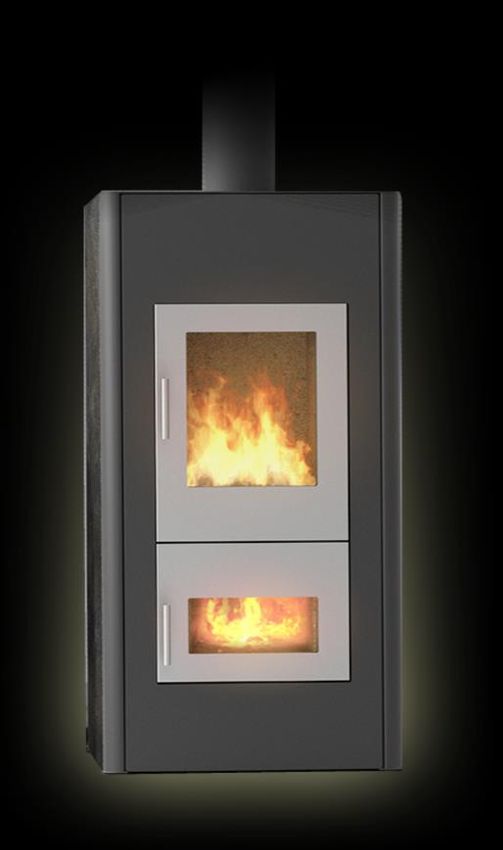
Specified targets for “Blauer Engel”-label
from DBFZ point of view

                                                        expected average                                  best of the measured stoves

             Total PM                                         100 – 150 mg/m3                                                             44 – 61 mg/m3

                   CO                                 1 000 – 3 000 mg/m3                                                           494 – 763 mg/m3

   VOC (measured as OGC)                                      100 – 800 mg/m3                                                          57 – 103 mg/m3

(all values in mg/m3 i.N. related to 13% O2)

“i.N.” = “under standard conditions”: T = 273,15 K, p = 101,325 kPa
Source of this slide: Presentation of Ingo Hartmann “Sicht des DBFZ auf die Anforderungen „Blauer Engel“ → Partikelanzahlmessungen“ at „Partikelanzahlmessung bei Kaminöfen im
Rahmen des Blauen Engels“, at TFZ in Straubing, 27. März 2019
                                                                                                                                                                                 8
Why particle number measurement?

▪ Reduction of soot particles as harmful and climate-relevant emissions is
       important!
▪      Future low dust mass concentrations require the introduction of an
       additional/different measuring method
▪      Number concentration for particles smaller than 1 µm allow a better toxicological
       evaluation?
▪      Total mass of particles smaller than 1 µm will be vanishingly small in future
       – hardly recorded by gravimetric methods
▪      Continuous and ultimately simpler measuring procedure; direct readability

Source of this slide: Presentation of Ingo Hartmann “Sicht des DBFZ auf die Anforderungen „Blauer Engel“ → Partikelanzahlmessungen“ at „Partikelanzahlmessung bei Kaminöfen im
Rahmen des Blauen Engels“, at TFZ in Straubing, 27. März 2019
                                                                                                                                                                                 9
The „Seebeck“ stove

                                     ▪ Manufacterer: Thermoelect GmbH
                                     ▪ Downdraft wood log stove
                                     ▪ Produces space heating, hot water
                                         and electric power
                                     ▪   Space heating: 10 bis 20 kW
                                     ▪   Electric power: 250 W via
                                         thermoelectric generators (TEG)

                                                        Source:
    Source: Prell/Thermoelect GmbH                      Prell/Thermoelect GmbH

                                                                                 10
The „Seebeck“ stove
Integration into the energy infrastructure of a building:
Source: Friling/Thermoelect GmbH Source: Holtmann/Thermoelect GmbH
Source of this slide: Dr. Ingo Hartmann, DBFZ, 10. Fachgespräch Partikelabscheider in häuslichen Feuerungen, 20th March 2019, TFZ, Straubing
11The „Seebeck“ stove
Integration of catalysts for the competition:
Catalyst integration by ETE
Catalyst from Blue Fire GmbH
Source: Holtmann/Thermoelect GmbH
Source of this slide: Dr. Ingo Hartmann, DBFZ, 10. Fachgespräch Partikelabscheider in häuslichen Feuerungen, 20th March 2019, TFZ, Straubing
12The fourth Wood Stove Design Challenge
▪ Sponsored by the US-Department of Energy (DOE) Bioenergy Technology Office
(BETO), the New York State Energy Research and Development Authority
(NYSERDA) and the Osprey Foundation
▪ Measurements were carried out by Brookhaven National Laboratory (BNL)
▪ http://forgreenheat.org/2018-stovedesign/stovedesign.html
▪ National Mall in Washington, DC from 09.11. to 13.11.2018
Source:
Ingo Hartmann/DBFZ
Source of this slide: Dr. Ingo Hartmann, DBFZ, 10. Fachgespräch Partikelabscheider in häuslichen Feuerungen, 20th March 2019, TFZ, Straubing
13Teams
10 Teams as finalists
http://forgreenheat.org/2018-stovedesign/award.html
The Green Box Stove by SBI → Wood log, automated
The VCV Kiwi 2.1 by Flamekeepers → Wood log, automated
The E-Stove by Wittus → Wood log, wood gasification, automated, TEG
The Lumburnator by Stony Brook University → Wood log, automated
The Continental by George Washington University SEAS → Wood log, TEG
Downdraft Rocket by ASAT → Cookstove, automated, TEG
The Kd3 By Unforgettable Fire ™ → Wood log, wood gasification, TEG
The Wiseway by Hi-Z Technology → Pellet stove, TEG
The Pellematic e-max → ÖkoFEN → Pellet boiler, Stirling-Motor
The Optimum by 509 Fabrications → Brikett stove, automated
Source of this slide: Dr. Ingo Hartmann, DBFZ, 10. Fachgespräch Partikelabscheider in häuslichen Feuerungen, 20th March 2019, TFZ, Straubing
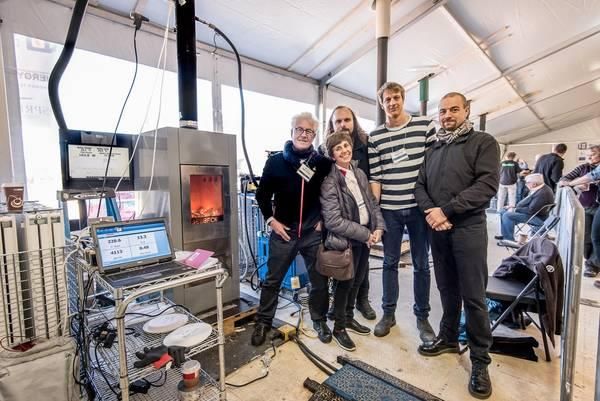
14Team Wittus
Members:
▪ Thermoelect GmbH,
▪ Wittus – Fire by Design,
▪ ETE EmTechEngineering GmbH
▪ DBFZ
Working title:
▪ The “E-Stove”
Photo source: Kittner/BNL
Source of this slide: Dr. Ingo Hartmann, DBFZ, 10. Fachgespräch Partikelabscheider in häuslichen Feuerungen, 20th March 2019, TFZ, Straubing
15Preset measurement protocol for E-Stove
Integrated Duty Cycle (IDC) Test Protocol developed by NESCAUM
Beech or maple logs with 18 to 25 % water content; Start-up: 30 min
▪ Fuel loading density: 0.064 kg/L
▪ Kindling amount: shall not exceed a mass of 0.816 kg
▪ Quantity of logs for starting: 2.449 kg +/- 5% (5.4 lbs +/- 5%)
▪ Minimum weight of a log for starting = 0.318 kg
▪ Up to 2 changes of the air settings during the start phase, not possible for E-Stove!
1st reload (= 1st burn): 45 min
▪ Fuel loading density: 0.080 kg/L
▪ Allowable weight of logs: 0.635 – 1.270 kg
▪ Target number of wood log: 4
▪ Total amount of fuel: 4.082 kg +/- 5%
▪ No adjustment of the air setting allowed, otherwise deduction of points
Source of this slide: Dr. Ingo Hartmann, DBFZ, 10. Fachgespräch Partikelabscheider in häuslichen Feuerungen, 20th March 2019, TFZ, Straubing
16Preset measurement protocol for E-Stove
2nd reload (= 2nd burn): 30 min
▪ Number of wood logs: 2
▪ Allowable weight of logs: 1.270 kg +/- 5%
▪ No adjustment of the air setting allowed, otherwise deduction of points
3rd reload (= 3rd burn): 75 min
▪ Allowable weight of logs: 0.635 – 2.268 kg
▪ Target number of wood log: 5 – 8, batch should consist of 50% of smaller logs and
50% of larger logs
▪ Total amount of fuel: 8.074 kg +/- 5%
▪ No adjustment of the air setting allowed, otherwise deduction of points
Source of this slide: Dr. Ingo Hartmann, DBFZ, 10. Fachgespräch Partikelabscheider in häuslichen Feuerungen, 20th March 2019, TFZ, Straubing
17Example measurement of power output
power output TEG / W
temperature / °C
time / min
Source of this slide: Dr. Ingo Hartmann, DBFZ, 10. Fachgespräch Partikelabscheider in häuslichen Feuerungen, 20th March 2019, TFZ, Straubing
18rd
Example measurement of emissions, 3 Burn
time / sec
Source of this slide: Dr. Ingo Hartmann, DBFZ, 10. Fachgespräch Partikelabscheider in häuslichen Feuerungen, 20th March 2019, TFZ, Straubing
19Results, dust measurement with Condar
TEG Stoves Judges' Stack Testing Data Summary
Stove PM g/kg CO g/kg Efficiency O2 % CO ppm Stack T, (F)
E-Stove 0,87 10,1 82,9 11,19 788,2 192,4
0,19 2,24 g/kWh TEG:
69 803 mg/m³, 13 % O2 161 W on average, 2.5 h measuring time
268 W max
Condar: Condar Portable Dilution Tunnel
Source of images: Norbert Senf, Summary of Studies with the Condar Portable Dilution Tunnel, Masonary Heater Association of North America, January 19, 2018
Source of this slide: Dr. Ingo Hartmann, DBFZ, 10. Fachgespräch Partikelabscheider in häuslichen Feuerungen, 20th March 2019, TFZ, Straubing
20Scoring of the competition
„Automated“
1. PM Emissions, 2. Automation and Innovation, 3. CO and Safety,
4. Delivered efficiency, 5. Consumer appeal
„Thermoelectric“
1. Innovation-Thermoelectric, 2. PM emissions, 3. CO and Safety
4. Automation, 5. Thermal Efficiency
The People’s Choice Award
Voting Online unter surveymonkey.com
Source of this slide: Dr. Ingo Hartmann, DBFZ, 10. Fachgespräch Partikelabscheider in häuslichen Feuerungen, 20th March 2019, TFZ, Straubing
21Results of the competition
„Automated“
1. place: E-Stove Team Wittus (Thermoelect GmbH, Wittus, ETE, DBFZ)
2. place: The Green Box Stove by SBI
„Thermoelectric“
1. place: E-Stove Team Wittus (Thermoelect GmbH, Wittus, ETE, DBFZ)
2. place: The Wiseway by Hi-Z Technology
The People’s Choice Award
The Optimum by 509 Fabrications
Source of this slide: Dr. Ingo Hartmann, DBFZ, 10. Fachgespräch Partikelabscheider in häuslichen Feuerungen, 20th March 2019, TFZ, Straubing
22Outlook
▪ Demonstration project with E-Stove until the end of 2021
▪ Energy supply concept with extended economic considerations
▪ Energy supply of buildings on the basis of the E-Stove
▪ Development of overall system control for energy supply of buildings
▪ CFD-supported further development of the combustion chamber and the air supply
▪ Development of a robust combustion controlling system
▪ Verification of the function of the integrated catalysts under practical conditions
▪ Dust precipitator adaptation and integration
▪ Development of optimized prototypes and field test equipment of the E-Stove
▪ Demonstration measurements
▪ Target emission values: CO < 200 mg/m³
(i.N. related to 13% O2) VOC < 20 mg/m³
PM (total amount) < 10 mg/m³
“i.N.” = “under standard conditions”: T = 273,15 K, p = 101,325 kPa
Source of this slide: Dr. Ingo Hartmann, DBFZ, 10. Fachgespräch Partikelabscheider in häuslichen Feuerungen, 20th March 2019, TFZ, Straubing
23Smart Bioenergy – Innovations for a sustainable future
Contact persons DBFZ Deutsches
Prof. Dr. mont. Michael Nelles Biomasseforschungszentrum
Daniel Mayer gemeinnützige GmbH
Prof. Dr.-Ing. Daniela Thrän Torgauer Straße 116
Dr.-Ing. Jan Liebetrau D-04347 Leipzig
Dr.-Ing. Volker Lenz Phone: +49 (0)341 2434-112
Dr.-Ing. Franziska Müller-Langer E-Mail: info@dbfz.de
Dr.rer.nat. Ingo Hartmann www.dbfz.de
Pictures: DBFZ, Jan Gutzeit, DREWAG/Peter Schubert (Startpage, right), Pixabay / CC0 Public DomainYou can also read


