PROGRAMME Stratification and Population Processes in European Societies - September 22 24 2016 - University of Oxford
←
→
Page content transcription
If your browser does not render page correctly, please read the page content below
PROGRAMME
Stratification and Population Processes
          in European Societies
                     September 22 – 24 2016
                                   Oxford UK

European Consortium for Sociological
Research (ECSR) Conference 2016

Sponsored by: ECSR, University of Oxford, Nuffield College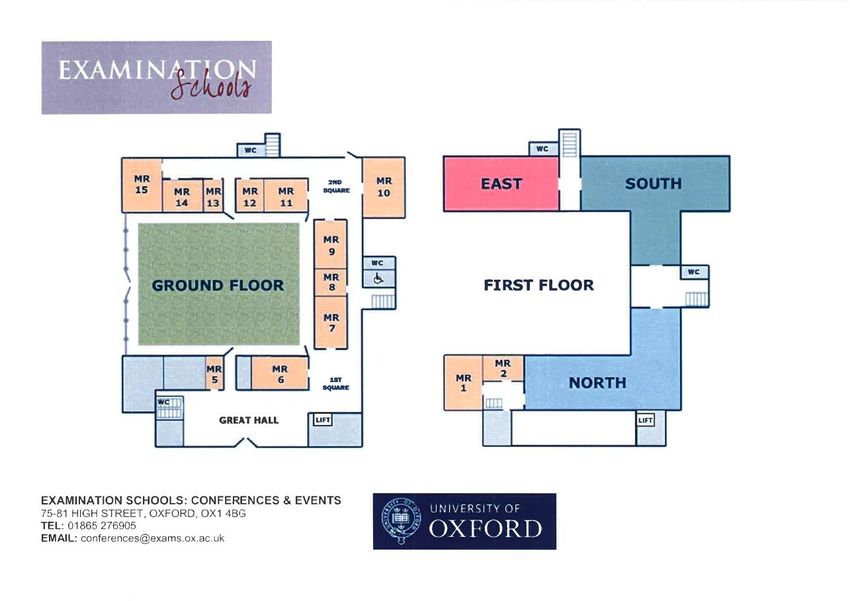
2
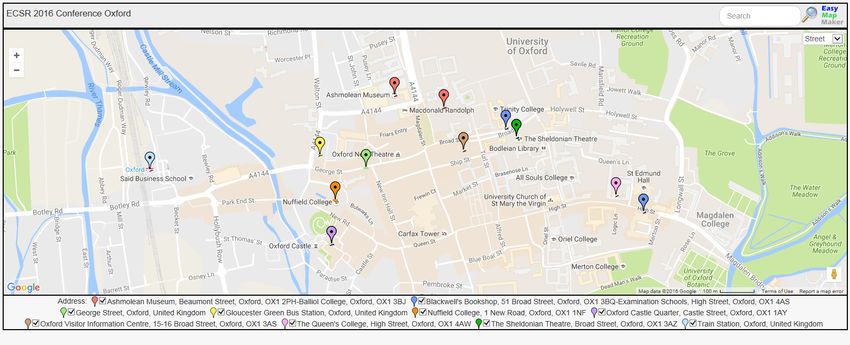
Table of Contents
Welcome address.................................................................................................................................... 6
European Consortium for Sociological Research .................................................................................... 7
Practical Information .............................................................................................................................. 8
Map of conference and other locations of interest .............................................................................. 14
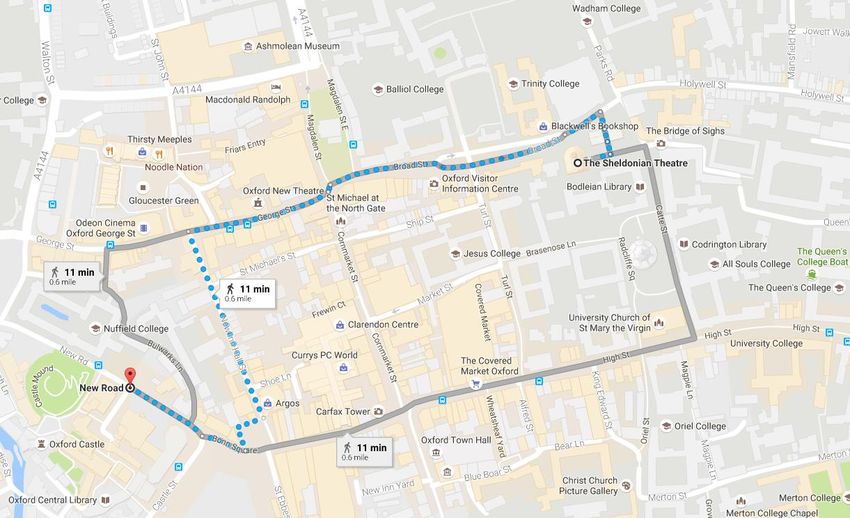
Walking map from The Sheldonian Theatre to Nuffield College .......................................................... 15
Walking map from Examination Schools to Balliol College .................................................................. 16
Map of the Examination School ............................................................................................................ 17
PLENARY SESSIONS AND SOCIAL EVENTS ............................................................................................. 18
Brief Schedule Outline .......................................................................................................................... 20
Thursday 22nd September 2016 ........................................................................................................... 22
08:30         Registration, coffee/tea ........................................................................................................ 22
09.00-10.15           Plenary Session 1.......................................................................................................... 22
10.15-11.45           Parallel Paper Session 1 ............................................................................................... 22
   A1 Ethnicity and the Labour Market ................................................................................................. 22
   B4 Trends in Education and Mobility ................................................................................................ 23
   C7 Household Division of Labour 2 ................................................................................................... 23
   C12 Parenting & Lone Parenthood ................................................................................................... 23
   D3 Labour Market & the Great Recession ........................................................................................ 24
   D10 Gender Differences in the labour market ................................................................................. 24
11:45-12:45           Lunch, North Writing School ........................................................................................ 25
12:45-14:15           Parallel paper session 2 ................................................................................................ 25
   A2 Ethnicity and Educational Tracking.............................................................................................. 25
   B3 Social Mobility, Origin and Education .......................................................................................... 25
   C8 Household Division of Labour 3 ................................................................................................... 26
   E1 Gender Differences in Education ................................................................................................. 26
14:15-14-45           Coffee/tea, North Writing School ................................................................................ 27
14:45-15:45           Parallel paper session 3 (short session) ....................................................................... 27
   D1 Women’s and maternal employment ......................................................................................... 27
   D2 Returns to Education & Skills....................................................................................................... 28
   F1 Education and Health ................................................................................................................... 28
   F2 Beauty and Body .......................................................................................................................... 28
   C4 Time use ....................................................................................................................................... 29

                                                                           3
16:15-17:45           Sheldonian Theatre Plenary Session 2 ......................................................................... 29
18:15           Drinks Reception at Nuffield College .................................................................................. 29
Friday 23rd September 2016 ................................................................................................................ 30
09:00-10:30           Parallel paper session 4 ................................................................................................ 30
   A3 Ethnicity and Friendship Networks .............................................................................................. 30
   C1 Fertility ......................................................................................................................................... 30
   C9 Family Structure 1 ........................................................................................................................ 31
   E4 Anticipation and Motivation for Educational Decisions .............................................................. 31
   D5 Labour market inequalities 1 ....................................................................................................... 32
10:30-11:00           Coffee/tea break, North Writing School ...................................................................... 32
11:00-12:30           Parallel paper session 5 ................................................................................................ 32
   A4 Migration: Selectivity and outcomes ........................................................................................... 32
   C2 Fertility & Well-being ................................................................................................................... 33
   C10 Family Structure 2 ...................................................................................................................... 33
   D6 Returns to Education ................................................................................................................... 33
   F3 Wellbeing and Life Satisfaction .................................................................................................... 34
   D9 Labour market inequalities 2 ....................................................................................................... 34
12:30-13:30           Lunch, North Writing School (Bag Lunch) .................................................................... 35
12:30-13:30           ECSR job market initiative, room 10 ............................................................................ 35
13:30-14:30           Plenary Session 3, South Writing School...................................................................... 35
14:30-15:45           Parallel paper session 6 ................................................................................................ 35
   B1 Comparative Social Mobility 1 ..................................................................................................... 35
   C5 Partnering .................................................................................................................................... 35
   C11 Parenting & families................................................................................................................... 36
   D8 Unemployment and Job Precarity ............................................................................................... 36
   D11 Education and Gender ............................................................................................................... 37
15:45-17:15           Poster presentations and coffee/tea, North Writing School ....................................... 37
18:15         Pre-dinner drinks, Balliol College (Fellows Garden/Master’s Lodgings) ............................... 37
18:45           Conference Dinner, Balliol College ...................................................................................... 37
Saturday 24th September 2016 ............................................................................................................ 38
09:00-10:30               Parallel paper session 7 ............................................................................................ 38
   B2 Comparative Social Mobility 2 ..................................................................................................... 38
   G1 Attitudes ...................................................................................................................................... 38
   E2 Influence of Peers and Classmates .............................................................................................. 39

                                                                            4
C3 Family and Intergenerational Patterns ........................................................................................ 39
D7 Labour market integration .......................................................................................................... 40
10:30-11:00 Coffee/tea break, North Writing School ...................................................................... 40
11:00-12:30 Parallel paper session 8............................................................................................ 40
B5 Intergenerational Processes: Mechanisms .................................................................................. 40
F4 Health Inequalities ....................................................................................................................... 41
G2 Trust, Civic Participation, Party Identification ............................................................................. 41
E3 Educational Expansion, Reforms and Inequalities ....................................................................... 42
C6 Household Division of Labour 1 ................................................................................................... 42
12:30 Conference End ..................................................................................................................... 42
ECSR 2016 Conference Poster Presentations ....................................................................................... 43
Special thanks ....................................................................................................................................... 49
5Welcome address
Welcome to the ECSR 2016 Conference! The European Consortium for Sociological Research
(ECSR), together with the Department of Sociology at the University of Oxford and Nuffield
College has the great pleasure to host this three-day conference in Oxford. The ECSR and our
flagship journal – the European Sociological Review – are delighted that our ECSR
Conferences have become a leading scientific gathering in the discipline of sociology.
This year’s keynote speakers cover a wide array of topics, including: Megan Sweeney
(Department of Sociology, UCLA), John Goldthorpe (Nuffield College, Oxford), Mathieu Ichou
(INED, Paris), Juho Härkönen (Department of Sociology, Stockholm), Amparo González-Ferrer
(Center for Humanities & Social Sciences, Madrid) and Michael Biggs (Department of
Sociology, Oxford).
The number of submissions to this year’s conference was overwhelming and highly
competitive and we were only able to accept 250 authors presenting papers and posters. We
opted for a mix of seasoned and emerging young researchers in what we hope you agree will
be an exciting conference. It is gratifying to see the attendance of such a large number key
researchers in this field.
In addition to support from the ECSR Board and organization itself, we are grateful for the
collaboration and financial support from Nuffield College and the Department of Sociology at
the University of Oxford. A special word of thanks goes to our administrative staff and key
organizers from the Department of Sociology, Yolandi Muller and Jane Greig. We are likewise
grateful to the many Oxford students who have agreed to assist us during the conference.
Although it is a busy programme, we invite you to also enjoy the beautiful city of Oxford. We
hope to you with the full Oxford experience, with conference and social activities taking place
in beautiful locations throughout the city such as the Examination Schools, Sheldonian
Theatre, Nuffield College and Balliol College. See your conference package for more
information.
Please remember that cars and bicycles drive on a different side of the road than Continental
Europe, so please look both ways when you are crossing the road!
Sincerely, the Local Conference Organizers,
Melinda Mills, Christiaan Monden and Janne Jonsson
6European Consortium for Sociological Research
Founded in 1991, the ECSR's purpose is to promote theoretically-driven empirical research in
sociology in Europe, in particular by encouraging cooperation between research centres.
Currently more than 80 leading European research institutes and university departments are
members of the Consortium.
ECSR organizes yearly conferences and annual Graduate Schools. It offers internship grants for
graduate students and awards a yearly prize for the best PhD thesis from an ECSR member
institute.
The European Sociological Review is the official journal of the Consortium.
Membership is open to research institutes and University Departments in all European
countries.
You will find more information about all ECSR activities and how to apply for membership on
the website: http://www.ecsrnet.eu/
Development of ECSR in the course of time
1991: foundation
1996: 27 member institutes of 13 nations
2000: 44 member institutes of 17 nations
2003: 53 member institutes of 19 nations
2012: 68 member institutes of 20 nations
2016: 85 member institutes of 23 nations
7Practical Information
All of the information you need will be in this programme or elsewhere in your pack. Failing
that, there should be someone on the ECSR registration desk throughout the conference who
will be glad to help. Locations mentioned below are marked on the map included in this
programme.
CONFERENCE VENUE
The majority of activities takes place in the Examination Schools, 81 High Street (please see
map on the next page). Presentations will be held throughout the building, with a map of the
Examinations School provided in this programme. All sessions are held in the Examinations
Schools with the exception of the following:
Plenary Session on Thursday, September 22 (16.15-17.45) will take place at the
Sheldonian Theatre.
Welcome Drinks reception on Thursday, September 22 (18.15) will take place at
Nuffield College
Pre-dinner Drinks and Conference Dinner, Friday, September 23 (18.15) will take
place at Balliol College
Maps are provided in this programme to help you find your way. All locations are close and
within a 10-15 minute walking distance.
REGISTRATION DESK
The Registration Desk, where all pre-registered participants may pick up their conference
material operates in the main foyer of the Examinations School, located directly when you
enter the building.
Opening hour’s registration desk:
Thursday, September 22: 8:30 – 15:30
Friday, September 23: 8.30 – 16:00
Saturday, September 24: 8:45 – 11:00
CONFERENCE BADGE AND ENTRY
Participants will receive a conference badge and programme upon registration. Please note
that your registration badge is your entrance ticket to sessions at the Examination Schools
and the Sheldonian Theatre Plenary, but also the *only* way to gain entry to the Welcome
Drinks Reception on Thursday, September 22 at Nuffield College and (if you have registered),
the Conference Dinner on Friday, September 23 at Balliol College. Please make sure you wear
8or carry your badge at all times during all conference activities and social events to avoid
disappointment.
REGISTRATION FEE INCLUDES
Admission to the conference session, plenary sessions, posters and exhibitions
Admission to all Plenary Sessions, including the Opening Ceremony at the Sheldonian
Theatre on Thursday, September 22 (16.15)
Welcome Drinks reception at Nuffield College on Thursday, September 22 (18.15)
Coffee, tea and snacks served during the morning and afternoon breaks
Lunch served on Thursday and Friday (note: since conference ends at 12.30 on Saturday,
no lunch is provided)
Conference documentation
Participation in the ECSR Job Market Initiative on Friday, September 23, 12.30-13.30 in
the North Writing School
Note that the Pre-Dinner Drinks Reception and Conference Dinner at Balliol College on
Friday, September 23 is not included in the registration fee and participants were asked
to register and pay separately
INSTRUCTIONS FOR ORAL PRESENTATIONS
Please check the programme well in advance for the date, time and location of your
presentation. We will provide you with all of the necessary equipment, including computer
and projector. Please bring your presentation to the session at least 10-15 in advance of the
start of the session to load on the computer.
POSTER SESSION
The poster session will take place on Friday, September 23 from 15.45-17.15 in the North
Writing School, together with coffee and tea. We strongly encourage all participants to
attend this session that includes a variety of senior and junior scholars presenting their work.
Poster Boards are provided and posters should be mounted before the poster session starts
and should be dismounted directly after the session. Material to attach posters on boards will
be provided. Posters should be mounted in the order as in the final programme. The
organizers bear no responsibility for posters left behind! Authors are requested to be present
for discussion for the poster session, with past conferences demonstrating that interaction
has been extensive.
EXHIBITION BOOTHS
Several Exhibition booths will be present at the conference, including CLOSER, a consortium
of the UK’s leading longitudinal studies including the four British birth cohort studies; the
9Centre for Social Investigation (CSI) and the Department of Sociology. The exhibitions will be
held throughout the conference in the North Writing School.
MEALS
Coffee and tea, beverages and snacks during the coffee breaks and lunch on both Thursday
and Friday will be provided in the North Writing School for free for all registered participants
wearing their badges. On Friday we will provide you with a bag lunch which will allow you to
attend the ECSR Job Market or take your lunch outside (weather permitting!).
Drinks and small snacks will be provided to all registered conference participants for the
Welcome Drinks Reception at Nuffield College on Thursday, September 22 (18.15).
Remember that only those wearing a conference badge will be able to enter the College and
join the fun! There are many restaurants in this area where you can have dinner after the
reception, which are located on the map. This includes George Street or the Oxford Castle
Quarter, with several restaurants located directly across from the main entrance of Nuffield
College.
For those who have registered for the Conference Dinner, please attend the pre-dinner
drinks at 18.15 in the Fellows Garden (weather-permitting, otherwise in the Master’s
Lodgings), followed by a seated and served three course dinner in the main hall at Balliol
College. The dinner is a served High Table that starts at 7pm sharp, with guests expected to
arrive no later than 6.45pm. Guests that arrive after this time are unlikely to be able to enter
the hall. Only those who have registered and paid and are wearing their badges can attend.
INTERNET ACCESS
Wireless internet can be obtained using the Oxford Wireless LAN (OWL). A username and
password for OWL are included in your pack. By signing you, you will have signed your
agreement to the OWL license if you choose to use it. “Eduroam” is also available in many
locations across Oxford.
TWITTER
The latest news and updates about the Scientific Programme and other aspects of the
programme and tweeting about the conference can use hashtag: #ecsr2016.
SMOKING
Smoking is not permitted inside the Examinations Schools and at the venues for the social
functions. Smokers are kindly requested to smoke in the designated areas outdoors.
10ECSR JOB MARKET INITIATIVE
The first ECSR job market initiative will take place during the lunch break on Friday,
September 23 from 12.30-13.30. Everyone is welcome and pre-registration is required! See
the guidelines at: http://www.ecsrnet.eu/ecsr-job-market
The job market will match institutions or individuals who are planning to hire new employees
with interested individuals on the job market. Several large ECSR institutions have confirmed
attendance with positions for young social scientists. It will be an informal atmosphere and
chance for prospective employers and employees to meet and discuss the future. Pick up
your bag lunch at the North Writing School and join us!
ECSR Board Meeting (by invitation only to Board Members)
The ECSR Board Meeting will take place at Nuffield College on Thursday, September 22 from
6-8pm in the Conference Room.
LUGGAGE ROOM
During the conference a luggage room will be available in room 5A of the Examination
Schools. Please kindly note that all participants will be asked to leave the Examination Schools
by 12.30 on Saturday, September 24 and it will be not be possible to store your luggage there
after that time. If this is a problem, participants are requested to store their luggage in their
hotel’s luggage room on the Saturday.
ACCOMODATION
83 single and 12 double at Queen’s College rooms have been reserved at a very reasonable
price on a first come first served basis. This is located directly across from the Examination
Schools.
Oxford colleges can offer self-catering or bed-and-breakfast accommodation on an individual
basis during the vacation periods and occasionally during term. You can check availability and
book online at: http://www.queens.ox.ac.uk/make-booking
When booking, please use the following promotional code: SOCIO16. To ensure a place, you
will need to ensure they put in the exact dates 21/09/16 to 24/09/16 (3 nights) as well as the
promotional code.
If you are interested in finding private accommodation, there are several hotels in walking
distance from the Examination Schools. Book early as most hotels are relatively small and fill
up quickly.
11QUEEN’S COLLEGE
Check-in is from 14:00-21:00. Please advise the conference team in advance if you expect to
arrive after 21:00 (email: ecsr2016@sociology.ox.ac.uk). The lodge is manned until 23:30 but
the main door will be shut from 21:00 so arrivals after 23:30 will not be able to access the
site. There is a late gate code should you require access back in to the College once the
Porter’s Lodge is closed – please speak to the Lodge directly to obtain this code.
Check-out is by 10:00, any residents not handing their key back by 10:00 will be charged a
late check-out fee of £50.
There is a luggage store for both arrivals and departures, just ask at the lodge.
Internet accounts will be available on arrival at the lodge.
TOURIST INFORMATION
The Oxford Visitor Information Centre is located at 15-16 Broad Street, and is open from
9.30am – 5.30pm on Saturday and Sunday, and from 10am - 4pm on Sunday. The Ashmolean
Museum on Beaumont Street houses world class art and historical exhibits and charges no
entrance fee (open 10am – 6pm on Friday and Sunday, 10am – 5pm on Saturday).
Blackwell’s bookshop, including the famous underground Norrington room, can be found on
Broad Street.
RESTAURANTS
There are many restaurants in Oxford city center and in particular in George Street as well as
the Oxford Castle Quarter (see map).
TRAVELLING TO OXFORD
Please see this link for more detailed information, including a searchable map of Oxford’s
colleges, halls, libraries and Museums: www.ox.ac.uk/visitors/visting-oxford/how-get-
oxford?wssl=1
From London Airports
London Heathrow and Gatwick airports are linked to Oxford by The Airline Coach Service,
which operates a direct and frequent service 24 hours a day (tel: +44 (0) 1865 785400). It is
also possible to train from Heathrow via London and from Gatwick to Oxford via Reading, but
the bus is generally quicker and less expensive.
London Stansted airport is linked to Oxford by the National Express 757 Coach Service,
running every two hours.
12By Bus (Coach)
Frequent 24-hour direct services connect Oxford with London (at peak times every 10-20
minutes). Other bus services include the X90, Oxford Tube and National Express (see website
above for all links).
By train
A direct service operates between Oxford and London Paddington (around every 30 minutes)
or Oxford Parkway and Marylebone London. The National Rail website has travel tools to
search for trains.
By Car and Parking in Oxford
See the website above for full details. Parking is extremely limited in Oxford and many streets
are closed to traffic. If you do come by car, visitors are encouraged to use the Park and Ride
(see website above).
Taxis
Taxis are located at the Oxford Railway Station and Gloucester Green Coach (Bus) Station and
St. Giles in the City Centre. Taxi numbers: ABC Radio Taxis - 01865 242424; 001 Taxis –
01865240000; Oxford Cars – 01865 406080
USEFUL CONTACT NUMBERS
Department of Sociology: 01865 281 740
Examination Schools: 01865 276 903
The Queen’s College: 01865 279120
Balliol College: 01865 277777
Nuffield College: 01865 278 500
Emergency numbers:
Police, Ambulance, Fire: 999
NHS Direct: http://www.nhsdirect.nhs.uk/ or 0845 4647
Organizers:
Yolandi Muller (Research Projects Administrator) and Jane Greig (Sociology Front Desk):
ecsr2016@sociology.ox.ac.uk; tel: 01865 286 197 / 281 740 (office hours only)
13Map of conference and other locations of interest
14Walking map from The Sheldonian Theatre to Nuffield College
15Walking map from Examination Schools to Balliol College
16Map of the Examination Schools
17PLENARY SESSIONS AND SOCIAL EVENTS
PLENARY SESSION 1: Thursday September 22, 9:00-10.15, South Writing School, Examinations
School
Welcome Statement, Christiaan Monden, Co-Organiser Conference, University of Oxford and
Nuffield College
Keynote speakers
Mathieu Ichou ‘Diluting or Transmitting Resources? The Academic Effects of Siblings in
Immigrant Families’
Amparo Gonzalez Ferrer ‘Family migration, separation and the mental wellbeing of the
children of migrants’
PLENARY SESSION 2 and OPENING CEREMONY: Thursday September 22, 16.15-17.45,
Sheldonian Theatre
Welcome Statement, Melinda Mills, Head Department of Sociology & Co-Organiser
Conference, University of Oxford and Nuffield College
Opening Statement, Sir Andrew Dilnot, Warden Nuffield College
Keynote speakers
John Goldthorpe ‘Inequality and Opportunity: Sociological reflections on the Great Gatsby
Curve’
Megan Sweeney ‘Inequality and Contraceptive Use in Comparative Perspective’
WELCOME DRINKS RECEPTION: Thursday September 22, 18.15-21.00, Nuffield College
Please see the map for directions on how to walk from the Sheldonian Theatre to Nuffield
College. Conference assistants will also be on site to direct groups to the College. Note that
this is a restricted event and only those who can present their conference badge at the door
will be admitted. Light snacks will be provided with many restaurants located in the area.
ECSR JOB MARKET INITIATIVE: Friday, September 23, 12:30-13:30, Examinations School, Room
10
The first ECSR job market initiative will take place during the lunch break on Friday,
September 23 from 12.30-13.30. Everyone is welcome and pre-registration is required! See
the guidelines at: http://www.ecsrnet.eu/ecsr-job-market
18The job market will match institutions or individuals who are planning to hire new employees
with interested individuals on the job market. Several large ECSR institutions have confirmed
attendance with positions for young social scientists. It will be an informal atmosphere and
chance for prospective employers and employees to meet and discuss the future. Pick up
your bag lunch at the North Writing School and join us!
PLENARY SESSION 3: Friday September 23, 13:30-14:30, South Writing School, Examinations
School
Chair & Welcome Statement: Janne Jonsson, Nuffield College, Oxford
Keynote Speakers
Michael Biggs ‘The Challenge of Replication and the Potential for Data Sharing’
Juho Härkönen ‘Education, family demography and social inequality: what do we (not)
know?’
POSTER SESSION AND COFFEE & TEA, Friday September 23, 15:45-17.15, North Writing School,
Examinations School
We strongly encourage all participants to attend this session that includes a variety of senior
and junior scholars presenting their work with a cup of coffee or tea.
PRE-DINNER DRINKS RECEPTION, Friday September 23, 18:15, Balliol College, Fellows
Garden/Master’s Lodgings
For those who have registered for the Conference Dinner, please attend the pre-dinner
drinks at 18.15 in the Fellows Garden (weather-permitting, otherwise in the Master’s
Lodgings), followed by a seated and served three course dinner in the main hall at Balliol
College.
CONFERENCE DINNER, Friday September 23, 18:45, Balliol College, High Table
The dinner is a served three course High Table that starts at 7pm sharp, with guests expected
to arrive no later than 6.45pm. Guests that arrive after this time are unlikely to be able to
enter the hall. Only those who have registered and paid and are wearing their badges can
attend. The walking route from The Examination schools to Balliol College is shown on the
selection of maps.
19Brief Schedule Outline
Thursday 22nd September 2016
08:30 Registration, coffee/tea
09:00-10:15 Plenary Session 1, South Writing School
10:15-11:45 Parallel paper session 1
11:45-12:45 Lunch Break, North Writing School
12:45-14:15 Parallel paper session 2
14:15-14:45 Coffee/tea, North Writing School
14:45-15:45 Parallel paper session 3 (short)
Walk from Examination School to Sheldonian Theatre
16:15-17:45 Sheldonian Theatre Plenary Session 2
18:15 Drinks Reception Nuffield College
Friday 23rd September 2016
09:00-10:30 Parallel paper session 4
10:30-11:00 Coffee/tea break, North Writing School
11:00-12:30 Parallel paper session 5
12:30-13:30 Lunch, North Writing School
12:30-13:30 ECSR job market initiative, room 10
13:30-14:30 Plenary Session 3, South Writing School
14:30-15:45 Parallel paper session 6
15:45-17:15 Posters Presentations and coffee/tea, North Writing School
18:15 Pre-dinner drinks, Balliol College (Fellows Garden/Master’s Lodgings)
18:45 Conference Dinner, Balliol College
20Saturday 24th September 2016
09:00-10:30 Parallel paper session 7
10:30-11:00 Coffee/tea break, North Writing School
11:00-12:30 Parallel paper session 8
12:30 Conference end
21Full schedule
Thursday 22nd September 2016
08:30 Registration, coffee/tea
09.00-10.15 Plenary Session 1
Room: South Writing School
Chair: Christiaan Monden, University of Oxford, UK
Mathieu Ichou ‘Diluting or Transmitting Resources? The Academic Effects of Siblings in
Immigrant Families’
Amparo Gonzalez Ferrer ‘Family migration, separation and the mental wellbeing of the
children of migrants’
10.15-11.45 Parallel Paper Session 1
A1 Ethnicity and the Labour Market
Room: 6
Chair: Irena Kogan, University of Mannheim, Germany
Miriam Schmaus (University of Bamberg, Germany) - Ethnic differences in labor market
outcomes: The role of language-based discrimination
Carolina V. Zuccotti (Brighton Business School, UK) & Jacqueline O'Reilly (Brighton Business
School, UK) -Young, unemployed and black: Exploring scarring effects in the British labour
market
Bram Lancee (University of Amsterdam, The Netherlands) - Sorting of migrants across
destination countries? A cross-national analysis of the relative unemployment risk of recent
non-western immigrants in Europe
Ruta Yemane (WZB, Germany), Ruud Koopmans (WZB, Germany), Susanne Veit (WZB,
Germany) - Ethnic Discrimination in the German Labor Market: A Multi-Dimensional
Approach
22B4 Trends in Education and Mobility
Room: 7
Chair: Herman van der Werfhorst, University of Amsterdam, The Netherlands
Nora Skopek (GESIS, Germany), Oshrat Hochman (GESIS, Germany), Klaus Pforr (GESIS,
Germany) - The Effect of Parental Wealth on Children’s Educational Attainment:
Demotivation or Risk Minimization?
Louis-Andre Vallet (CNRS & Sciences Po Paris, France) - Intergenerational Mobility and Social
Fluidity in France over Birth Cohorts and Across Age: The Role of Education
Kristian B. Karlson (University of Copenhagen, Denmark) - How Much Scope for
Convergence? Black-White Trends in Intergenerational Educational Mobility in 20th Century-
United States
Julie Falcon (Universite de Lausanne, Switzerland) & Pierre Bataille (Universite de Lausanne)
- Trends in social reproduction in the French higher education system
C7 Household Division of Labour 2
Room: 11
Chair: Man Yee Kan, University of Oxford, UK
Patrick Prag (University of Oxford, UK), Katia Begall (Utrecht University, Netherlands), Judith
Treas (University of California Irvine, USA) - Resource-Sharing among Married and
Cohabiting Couples. Insights from 31 European Countries
Maike van Damme (LISER/KULeuven, Belgium) & Leen Vandecasteele (University of
Tuebingen, Germany) - Occupational and earnings mobility after separation for British men
and women
Daniela Bellani (Universitat Pompeu Fabra, Italy), Gosta Esping Andersen (Universitat
Pompeu Fabra, Spain), Lea Pessin (Universitat Pompeu Fabra, Spain) - Equity and
divorce. New findings for Western Germany and the United States
Karin Hallden (Stockholm University, Sweden) & Anders Stenberg (Stockholm University) -
Outsourcing of Domestic Work and the Implications for Fertility and Divorce in Sweden
C12 Parenting & Lone Parenthood
Room: 15
Chair: Helen Russell, ESRI
Marit Rebane (EUI, Italy) & Kadri Täht (Tallinn University, Estonia) - Mixed Diverging
Childhoods. Do Parents Tax Sleep, Leisure or Work Hours to Increase Childcare Time?
23Sabine Hubgen (WZB, Germany) - Many routes lead to lone motherhood – which of them
also into poverty? The importance of social selectivity for understanding lone mothers'
poverty risks
Hannah Zagel (Humboldt, Germany) - Lone parenthood timing and social contacts in the life
course
Evrim Altintas (University of Oxford, UK), Alessandro Sommacal (University of Bocconi, Italy),
Alessandra Casarico (University of Verona, Italy) - Distributional aspects of parental time
with children: Evidence from the Multinational Time Use Study (1961-2011)
D3 Labour Market & the Great Recession
Room: 9
Chair: Kristina Lindemann, Goethe University Frankfurt, Germany
Thomas Biegert (WZB, Germany) & Bernhard Ebbinghaus (University of Mannheim,
Germany) - Accumulation or absorption of employment risks during the Great Recession?
Comparing household low/non-employment in Europe before and since 2009
Brian Nolan (University of Oxford, UK), Christopher T Whelan (University College Dublin,
Ireland), Bertrand Maitre (Economic & Social Research Institute, Ireland) - Polarization or
“Squeezed Middle” in Europe through the Great Recession: Income versus Social Class
Perspectives
Timo Lepper (Goethe University Frankfurt, Germany) & Markus Gangl (Goethe University
Frankfurt, Germany) - Hard times: The Great Recession and the effect of job loss on
household incomes
Camilla Borgna (WZB, Germany), Heike Solga (WZB, Germany), Paula Protsch (WZB,
Germany) - Overeducation, labor market dynamics, and economic downturn in Europe
D10 Gender Differences in the labour market
Room: 14
Chair: Daniela Grunow, Goethe University Frankfurt, Germany & Silke Aisenbrey, Yeshiva
University New York City, USA
Felix Busch (University of Oxford, UK) - Devaluation of Female Occupations? Causal
Mechanisms at Work in the U.S. Context
Malcolm Brynin (University of Essex, UK) & Szilvia Altorjai (University of Oxford, UK) - The
Gender Wage Gap in Britain: Is Women's Work Undervalued?
24Liza Reisel (Institute for Social Research, Oslo, Norway), Paul Attewell (CUNY, USA), Kjesti
Mlsje Ostbakken (Pracuje v Institute for Social Research, Norway) - Dynamics of Gender and
Economic Niches in Norway and the United States
Gabriele Mari (University of Trento & Tilburg University, Italy) - Something in the way they
move? Parenthood, job mobility, and gender disparities in the attainment of workplace
authority in the UK
11:45-12:45 Lunch, North Writing School
12:45-14:15 Parallel paper session 2
A2 Ethnicity and Educational Tracking
Room: 7
Chair: Bram Lancee, University of Amsterdam, The Netherlands
Hanno Kruse (University of Mannheim, Germany) - Tracked into parallel lives? Ethnic
segregation in German secondary schools
Julia Tuppat (Goethe University Frankfurt, Germany) & Birgit Becker (Goethe University
Frankfurt, Germany) - Ethnic inequality in kindergarten teachers’ school entry
recommendations?
Jan Paul Heisig (WZB, Germany) & Merlin Schaeffer (University of Cologne, Germany) -
Educational tracking and the ethnic skills gap: a comparison of 14 countries
Markus Weissmann (University of Mannheim, Germany) & Zerrin Salikutluk (Humboldt,
Germany) - Ethnic differences in transitions to vocational education and training at the end
of lower secondary education in Germany
B3 Social Mobility, Origin and Education
Room: 6
Chair: Louis-André Vallet, Sciences Po Paris, France
Tak Wing Chan (UCL-Institute of Education, UK) - Social Mobility and the Wellbeing of
Individuals in the UK
Hannu Lehti (University of Turku, Finland), Aleksi Karhula (University of Turku, Finland), Jani
Erola, (University of Turku, Finland) - Heterogeneous Effects of Parental Unemployment on
Children’s Educational Achievement in Finland
25Tina Baier (Universitat Bielefeld, Germany) - Sibling similarity in educational outcomes and
the role of social background – new findings from the German TwinLife study
Kristina Lindemann (Goethe University, Germany) & Markus Gangl (Goethe University,
Germany) - Equal Access to All in Hard Times: Can Institutions Moderate the Adverse Effect
of Parental Unemployment on Transitions into Tertiary education?
C8 Household Division of Labour 3
Room: 14
Chair: Karin Halldén, Stockholm University, Sweden
Man-Yee Kan ( University of Oxford, UK) & Heather Laurie (University of Essex, UK) -
Gender, ethnicity and household labour in married and cohabiting couples in the UK
Agnese Vitali (University of Southampton, UK) & Bruno Arpino (Universitat Pompeu Fabra,
Spain) - Mixed Who brings home the bacon? The influence of context on partners'
contributions to the household income
Francesca Luppi (Bocconi University, Italy), Letizia Mencarini (Bocconi University, Italy),
Sarah Grace See (Collegio Carlo Alberto, Italy) - All for One and One for All. Exploring the
Effect of the Work-Family Balance on Subjective Wellbeing
Katarina Boye (Stockholm University, Sweden) & Marie Evertsson (Stockholm University,
Sweden) - Dividing care and work after the transition to parenthood – comparing
heterosexual couples to female same sex couples
E1 Gender Differences in Education
Room: 15
Chair: Mark Levels, Maastricht University, The Netherlands
Lotte Scheeren (University of Amsterdam, The Netherlands), Herman G. van de Werfhorst
(University of Amsterdam, The Netherlands), Thijs Bol, (University of Amsterdam, The
Netherlands) - The Gender Revolution in Context: How Later Tracking in Education Benefits
Girls
Anne Hartung (University of Luxembourg, Luxembourg), Marie Valentova (LISER,
Luxembourg), Aigul Alieva (LISER, Luxembourg) - Horizontal Gender Segregation in
Education: A Cross-Cohort and Cross-National Comparison
Carlo Barone (SciencesPo, France), Antonio Schizzerotto (IRVAPP, Italy), Giovanni Abbiati
(IRVAPP, Italy), Giulia Assirelli (University of Trento, Italy) - Nudging gender desegregation in
Higher Education: evidence from a field experiment
26David Reimer (Aarhus University, Denmark) & Reinhard Pollak (WZB, Germany) - Social
Background and Gender Segregation in Higher Education: A European Cross-Country
Comparison
D4 Poverty
Room: 9
Chair: Brian Nolan, University of Oxford, UK
Barbara Lange (Karlsruhe Institute of Technology, Germany), Andreas Haupt (Karlsruhe
Institute of Technology, Germany), Gerd Nollmann (Karlsruhe Institute of Technology,
Germany) - Why has Poverty in Germany increased since the 1990s?
Susan Harkness (University of Bath, UK) - The Effect of Children and Partnership on Income
and Poverty among British Women
Nina-Sophie Fritsch (University of Vienna, Austria) & Roland Verwiebe (University of Vienna,
Austria) - Labor Market Flexibilization and In-Work Poverty: A Comparative Analysis of
Germany, Austria and Switzerland
Paolo Barbieri (University of Trento, Italy), Giorgio Cutuli (University of Trento, Italy), Stefani
Scherer (University of Trento, Italy) - Determinants and trends of in-work poverty in a
Southern European context. A longitudinal analysis.
14:15-14-45 Coffee/tea, North Writing School
14:45-15:45 Parallel paper session 3 (short session)
D1 Women’s and maternal employment
Room: 7
Chair: Leen Vandecastle, University of Tübingen, Germany
Irina Hondralis (University of Bamberg, Germany) & Gundula Zoch (University of Bamberg,
Germany) – Is expanding childcare services to reduce maternal employment interruptions
money well spent?
Yassine Khoudja (Utrecht University, The Netherlands) & Fenella Fleischmann (Utrecht
University, The Netherlands) - Gender ideology and women’s labor market transitions within
couples in the Netherlands
Janna Besamusca (University of Amsterdam, The Netherlands) - Which women work: the
effects of institutions on advantaged and disadvantaged mothers’ employment
27D2 Returns to Education & Skills
Room: 6
Chair: Janne Jonsson, University of Oxford, UK
Petr Mateju (University of Finance and Administration, Prague, Czech Republic), Michael
Smith (Institute for Social and Economic Analyses, Prague, Czech Republic), Petra Anyzova
(University of Finance and Administration, Prague, Czech Republic) – Returns to Cognitive
Skills in Innovative Societies: New Evidence from 14 Nations Participating in PIAAC
Mailys Korber (University of Lausanne, Switzerland) & Daniel Oesch (University of Lausanne,
Switzerland) - Does vocational education give a happy start and a lousy end to careers?
Employment and earnings over the life course
Thijs Bol (University of Amsterdam, The Netherlands) & Jesper Rozer (University of
Amsterdam, The Netherlands) - Labour market effects of general and vocational education
over the life-cycle: disentangling age, period and cohort effects
F1 Education and Health
Room: 9
Chair: Kristian Karlson, University of Copenhagen, Denmark
Stella Chatzitheochari (University of Warwick, UK) & Lucinda Platt (LSE, UK) – Educational
Transitions of Disabled Young People in England: Evidence from LSYPE
Sanna Kailaheimo (University of Turku, Finland) & Jani Erola (University of Turku, Finland) -
The effect of early parental death on children’s tertiary education
Helen Russell (ESRI, Ireland), Oona Kenny (ESRI, Ireland), Fran McGinnity (ESRI, Ireland) -
Childcare and Early Education and Socio-Emotional Outcomes at Age 5: Evidence from the
Growing up in Ireland Study
F2 Beauty and Body
Room: 14
Chair: Vanessa Gash, City University London, UK
Eva Jaspers (Utrecht University, The Netherlands), Bram Lancee (University of Amsterdam,
The Netherlands), Cretien Van Campen (SCP), Maroesjka Versantvoort (SCP) – Beauty and
gender in the hiring process: Preferences for attractive applicants in a Dutch vignette study
Natalia C. Malancu (Universitat Pompeu Fabra, Italy) - Big, Fat Paycheck: An Australian Tale
of Wage Differentials by Nativity Accounting for Body Size
28Irena Kogan (University of Mannheim, Germany) & Jing Shen (University of Mannheim,
Germany) - The next top model? Body size and life satisfaction among the European youth
C4 Time use
Room: 11
Chair: Maike van Damme, University of Leuven, Belgium
Killian Mullan (University of Oxford, UK) & Judy Wajcman (LSE, UK) – Have mobile devices
changed working patterns in the 21st century? A time-diary analysis of work extension in the
UK
Pablo Gracia (EUI) & Joan Garcia-Roman (Minnesota Population Center, USA) - Parental
Work Schedules and Children's Daily Activities: Evidence from Spain
Siobhan McAndrew (University of Bristol, UK) & Lindsay Richards (University of Oxford, UK) -
Sunday Activity, Religiosity and Sociality among English Urban Youth in the 1950s
16:15-17:45 Sheldonian Theatre Plenary Session 2
Welcome Statement: Melinda Mills, Head Department of Sociology & Co-organizer
Conference, Editor European Sociological Review, University of Oxford & Nuffield College
Opening Statement: Sir Andrew Dilnot, Warden Nuffield College
Keynote speakers
John Goldthorpe ‘Inequality and Opportunity: Sociological reflections on the Great Gatsby
Curve’
Megan Sweeney ‘Inequality and Contraceptive Use in Comparative Perspective’
18:15 Drinks Reception at Nuffield College
29Friday 23rd September 2016
09:00-10:30 Parallel paper session 4
A3 Ethnicity and Friendship Networks
Room: 7
Chair: Lucinda Platt, London School of Economics, UK
Lars Leszczensky (University of Mannheim, Germany) & Sebastian Pink (University of
Mannheim, Germany) - Intra- and Inter-group Friendship Choices of Christian and Muslim
Adolescents in Germany
Muge Simsek (Utrecht University, The Netherlands), Frank Van Tubergen (Utrecht
University, The Netherlands), Fenella Fleischmann (Utrecht University, The Netherlands) -
Religion and intergroup boundaries: who are friends and foes in ethnically and religiously
diverse classes in Europe?
Edvard Nergard Larsen (University of Oslo, Norway), Torkild H. Lyngstad (University of Oslo,
Norway), Gunn Elisabeth Birkelund (University of Oslo, Norway) - Ethnic School
Segregation: An Agent-Based Approach
Jan O. Jonsson (University of Oxford, UK), Robert Hellpap (University of Oxford, UK), Isabel
Raabe (University of Oxford, UK) - Who becomes and who stays friends? Ethnic segregation
as a result of group-specific creation and dissolution of friendship in classrooms
C1 Fertility
Room: 14
Chair: Zsolt Spéder, Hungarian Demographic Research Institute
Zuzanna Brzozowska (Wittgenstein Centre, Austria), Tomas Sobotka (Wittgenstein Centre,
Austria), Anna Matysiak (Wittgenstein Centre, Austria), Eva Beaujouan, (Wittgenstein
Centre, Austria) Gender revolution, family reversals and fertility
Francesco Billari (University of Oxford, UK) & Maria Sironi, (UCL-Institute of Education, UK) -
Internet and the timing of births
Felix Tropf (University of Oxford, UK) & Jornt J. Mandemakers (Wageningen University,
Netherlands) - Is the association between Education and fertility postponement causal? The
role of family background factors
Stine Mollegaard (SFI, Switzerland) - The Effect of Birth Weight on Behavioral Problems: New
Evidence from Monozygotic Twins
30C9 Family Structure 1
Room: 15
Chair: Ann Berrington, University of Southampton, UK
Alisa Lewin (University of Haifa, Israel) - Intentions to Live Together among People Living
Apart: Differences by Age and Gender
Ruben van Gaalen (University of Amsterdam, The Netherlands), Anne-Rigt Poortman
Utrecht University, The Netherlands), Kirsten van Houdt (Utrecht University, The
Netherlands) - Diverging destinies in the Netherlands? The educational gradient of union
formation, childbearing and union dissolution in the 21st century
Brienna Perelli-Harris (University of Southampton, UK), Fenaba Addo (University of
Wisconsin, USA), Stefanie Hoherz (University of Southampton, UK), Trude Lappegard
(Statistics Norway, Norway) Sharon Sassler (Cornell University, USA) - Union status and
Income at Mid-life in the U.S., UK, Germany, and Norway: can selection and childbearing
explain the association?
Berkay Ozcan (LSE, UK), Maria Alejandra Osorio (57 Stars, USA), Douglas McKee (Yale, USA)
- Family Structure and Female Entrepreneurship in Mexico
E4 Anticipation and Motivation for Educational Decisions
Room: 6
Chair: Birgit Bekker, Goethe University Frankfurt, Germany
Fabrizio Bernardi (EUI, Italy) - Anticipation of school entry in Italy: consequences for
inequalities of educational opportunities
Annabell Daniel (Freie Universitat Berlin, Germany) & Rainer Watermann (Freie Universitat
Berlin) - What determines students’ decision for higher education? An experimental
validation of the Erikson-Jonsson-model
Rasmus Landerso (Rockwool Foundation Research Unit, Denmark) & Peter Fallesen
(Stockholm University, Sweden) - Preemptive response to punishment: Announcement
effects of noncustodial alternatives to incarceration on offenders’ labor market, criminal,
and educational behavior
Steffen Schindler (University of Bamberg, Germany) - Relative Risk Aversion from a Dynamic
Perspective. Explaining Educational Mobility
31D5 Labour market inequalities 1
Room: 9
Chair: Bernhard Ebbinghaus, University of Mannheim, Germany
Fabian Ochsenfeld (Goethe University Frankfurt, Germany) - Mercantilist dualization: the
introduction of the Euro, redistribution of industry rents, and wage inequality in Germany,
1993-2008
Thijs Bol (University of Amsterdam, The Netherlands) & Tom DiPrete (Columbia University,
USA) – Mixed Institutional Tradeoffs and the Production of Labor Market Inequality
Milan Bouchet-Valat (Paris VIII University, France) - When female labour market
participation decreases wage inequalities between couples: the case of France, 1982-2011
Lindsay Richards (University of Oxford, UK) & Marii Paskov (University of Oxford, UK) - Social
class, employment status and inequality in psychological well-being in the UK: cross-
sectional and fixed effects analyses over two decades
10:30-11:00 Coffee/tea break, North Writing School
11:00-12:30 Parallel paper session 5
A4 Migration: Selectivity and outcomes
Room: 6
Chair: Evelyn Ersanilli, University of Amsterdam, The Netherlands
Marina Fernandez-Reino (Universidad Carlos III de Madrid, Spain), Javier Polavieja
(Universidad Carlos III de Madrid, Spain), Maria Ramos (Universidad Carlos III de Madrid,
Spain) - Influence of personality traits on the decision to migrate. A cross-country
comparison
Sorana Toma (ENSAE) & Mao-Mei Liu (Brown University, USA) - Social Position & Access,
Mobilization and Returns of Social Capital: International Migration to Europe from DR
Congo, Ghana and Senegal
Are Skeie Hermansen (University of Oslo, Norway) - Long-Term Effects of Adolescent Ethnic
Environment on Adult Socioeconomic Attainments among Children of Immigrants
Joran Lameris (Radboud University, The Netherlands), Jochem Tolsma (Radboud University,
The Netherlands), Gerbert Kraaykamp (Radboud University, The Netherlands), Stijn Ruiter
(Universiteit Utrecht, The Netherlands) - Size is in the eye of the beholder: on individuals’
perceptions of ethnic minority density in the neighbourhood
32C2 Fertility & Well-being
Room: 14
Chair: Ruben van Galen, University of Amsterdam, The Netherlands
Zsolt Speder (University Pecs, Hungary) - Well-being consequences of fertility trajectories
childless women and men – is there a happiness penalty of non-realized fertility intentions?
Marco Giesselmann (DIW Berlin, Germany), Marina Hagen (University of Bielefeld,
Germany), Reinhard Schunck (University of Bielefeld, Germany) - Childbirth and mental well-
being – linking the life-course approach and gender perspectives on motherhood
Arnstein Aassve (Bocconi University, Italy), Francesca Luppi Bocconi University, Italy) Letizia
Mencarini (Bocconi University, Italy) - Five reasons to be happy about childbearing
Andreu Arenas (EUI, Italy) & Fabrizio Bernardi (EUI, Italy) - The Iniesta’s effect: sports success
and fertility
C10 Family Structure 2
Room: 11
Chair: Tak Wing Chan, UCL Institute of Education, London, UK
Klara Capkova (Stockholm University, Sweden) - Family Instability after the Birth of an
Unplanned Child: A Comparison of Cohabiting and Married Families
Katya Ivanova (University of Amsterdam, The Netherlands) & Nicoletta Balbo (Bocconi
University, Italy) - Cementing the stepfamily?: Biological and social parents’ well-being after
the birth of a common child in stepfamilies
Ilari Ilmakunnas (University of Turku, Finland) - Trigger events and poverty transitions after
leaving the parental home among young adults in Finland
Antonie Knigge (Utrecht University) - Status differences between siblings. The effect of birth
order reconsidered
D6 Returns to Education
Room: 9
Chair: Magnus Nermo, Stockholm University, Sweden
Stephanie Steinmetz (University of Amsterdam, The Netherlands) & Emer Smyth (ESRI,
Ireland) - Does a PhD really pay off? Returns to higher education from a gender perspective
Yuliya Kosyakova (IAB, Italy) - Cumulation or compensation? Returns to adult education and
social inequalities in Soviet and Post-Soviet Russia
33Andrea Forster (University of Amsterdam, The Netherlands), Herman G. van de Werfhorst
(University of Amsterdam, The Netherlands), Thomas Leopold (University of
Amsterdam, The Netherlands) - Meritocratic and Non-meritocratic Selection Processes and
Heterogeneous Returns to Higher Education
Elisabeth Garratt (University of Oxford, UK) - Parental investment in children’s cognitive
development: Evidence for narrowing stratification in the UK
F3 Wellbeing and Life Satisfaction
Room: 15
Chair: Roland Verwiebe, University of Vienna, Austria
Alexander Patzina (Institute for Employment Research, Germany) & Fabian Kratz (LMU
Munich) - The impact of education on life satisfaction over the life course
Kaarina Korhonen (University of Helsinki, Finland), Hanna Remes (University of Helsinki,
Finland), Pekka Martikainen (University of Helsinki, Finland) - Childhood socioeconomic
position and educational trajectory predict depression in late adolescence and early
adulthood: a Finnish population-based register study
Katja Mohring (University of Mannheim, Germany) - Do the efforts pay off? Life course
determinants of later life objective and subjective well-being among women in Europe
Bruno Arpino (Universitat Pompeu Fabra, Spain), Valeria Bordone (University of
Southampton), Nicoletta Balbo, (Bocconi University ) - Life satisfaction of older Europeans:
the role of grandchildren
D9 Labour market inequalities 2
Room: 7
Chair: Lindsay Richards, University of Oxford, UK
Leen Vandecasteele (University of Tuebingen, Germany) & Martin Ehlert (WZB, Germany) –
Partner resources and the scarring effects of unemployment
Emily Murphy (University of Zurich, Switzerland) & Helen Buchs, (University of Zurich,
Switzerland) - Unemployed job-seekers access to vacancies under varying labour demand:
does skill level equally affect immigrants and natives' search duration?
Raffaele Grotti (University of Trento, Italy) & Giampiero Passaretta (University of Trento,
Italy) - Social inequality and earnings trajectories. A growth curve analysis of West Germany
and the United States
34You can also read


