PROGRESS ON THE SUSTAINABLE DEVELOPMENT GOALS - THE GENDER SNAPSHOT 2021
←
→
Page content transcription
If your browser does not render page correctly, please read the page content below

PROGRESS ON THE SUSTAINABLE DEVELOPMENT GOALS
           THE GENDER SNAPSHOT 2021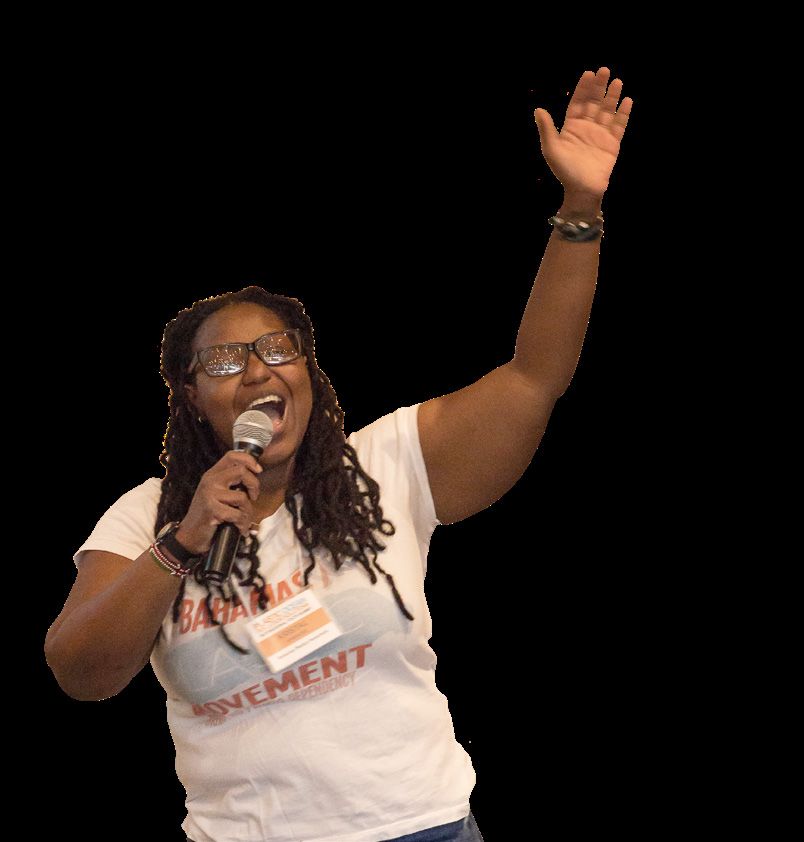
PROGRESS ON THE SUSTAINABLE DEVELOPMENT GOALS

    Snapshot of gender equality across the Sustainable Development Goals

                                                                                          Women with children at
                                                                                          home say they spend about

                                                                                          31 hours
                                                                                          per week on childcare –

                                                                                          5 hours
                                                                                          more
                                                                                          on average than before
                                                                                          the pandemic.

By 2030, over               The pandemic is disrupting     Based on data collected in     Worldwide, women hold
150 million                 essential health services      95 countries in 2020,

WOMEN AND GIRLS
                            for women and girls.
                                                           MORE THAN                      one in four
                                                                                          parliamentary seats. They
could emerge from poverty
if governments implement
                            During the first year of the
                            crisis, an estimated           HALF                           have   36%     of elected
                            12 million
a comprehensive strategy                                   lack quotas for women in       seats in local
to improve access to                                       national parliaments           deliberative bodies.
education and family
planning, achieve equal
                            WOMEN
                            in 115 lower- and middle-      63% lack rape
                            income countries               laws based on the principle    In low- and middle-income
wages and extend
                            experienced disruptions in     of consent.                    countries,
social transfers.
                            family planning services,
                            leading to an estimated        Almost half                    234 million
                                                           continue to restrict women     fewer women than men
                            1.4 million                    from working in certain jobs
                                                           or industries.
                                                                                          have access to the internet
                                                                                          on their mobile phones.
                            UNINTENDED
                            PREGNANCIES.
                                                           An estimated
                                                                                          Only   19%
                                                           736 million                    OF COUNTRIES
                                                           WOMEN AND GIRLS                and areas with data have
                                                           aged 15 years or older have    a comprehensive system to
                                                           experienced physical or        track how budgets respond
                                                           sexual violence by a partner   to gender priorities.
                                                           or sexual violence by a
                                                           non-partner at least once in
The gender gap in food
                                                           their lifetime.
insecurity has increased
due to the COVID-19
pandemic.                                                  By 2030, as many as

Women’s food insecurity                                    2 million
levels were                 Out-of-school girls are at     additional cases of female

10% HIGHER
                            increased risk of violence,    genital mutilation (FGM) are
                            child marriage, child          projected due to COVID-19-
than men’s in 2020,         labour, trafficking and        related service disruptions.
compared with 6%            early childbirth.
higher in 2019.
                            But only                                                      In 2020, only

                            42% OF COUNTRIES                                              26%
                            had measures to support                                       OF 170 COUNTRIES
                            girls’ return to school in                                    were actively working on
                            early 2021.                                                   gender mainstreaming in
                                                                                          water management.

2
THE GENDER SNAPSHOT 2021

                                        Female medical researchers      Slum residents are at an        The lack of women in
Women are
                                        have led advances on            elevated risk of COVID-19       decision-making limits
underrepresented in the
                                        COVID-19 knowledge and          infection and fatality          the reach and impact
energy sector. Globally in
                                        testing techniques.             rates. In Rio de Janeiro,       of pandemic and other
2019, women held
                                                                                                        emergency recovery
22%
                                                                        Brazil, infected women in
                                        But women accounted             neighbourhoods with a           efforts, and opportunities
of traditional energy                   for fewer than                  high concentration of slums     to revitalize economies

                                        1 in 3
jobs and                                                                were more than                  and societies.

32%                                     RESEARCHERS                     2X as likely                    Women chair only
of renewable energy jobs.               globally in 2018.               to die compared with those
                                                                        living in neighbourhoods        18%
                                                                        with no slums.                  of government committees
                                                                                                        on foreign affairs, defence,
                                                                                                        finance and human rights.

Women suffered steeper                  The intersecting
job losses than men during              vulnerabilities of migrant,
the pandemic.                           refugee and internally          Unless urgent action is
                                        displaced women and             taken to reduce emissions,      Better gender data,
The number of employed
women declined by
                                        girls have intensified in the
                                        wake of the pandemic.           global                          statistics and analysis
                                                                                                        are critical, but remain
54 million                              By the end of 2020,             warming will                    insufficient.
and
                                        26.4 million                    exceed 1.5°C                    Under Goal 5, global level
45 million                              PEOPLE
                                                                        by 2040.
                                                                                                        assessments are
                                                                                                        unavailable for
left the labour force                   had fled their countries
altogether.                             and become refugees,
                                        the highest level ever          Women’s voices and
                                                                                                        6 indicators.*
                                                                                                        Trend assessments
                                        recorded. Almost half are       perspectives are critical
                                                                                                        are unavailable for
                                                                        to meeting climate
                                                                                                        15 indicators.*
                                        women and girls.
                                                                        and environmental
                                                                        sustainability challenges
                                                                        but often go unrecognized.
*including sub indicators, see pages 22-27

                                                                                                                                     3
PROGRESS ON THE SUSTAINABLE DEVELOPMENT GOALS

LEAVE NO WOMAN
OR GIRL BEHIND
Global inequalities are widening as a result of COVID-19
One and a half years since the World Health Organization                        been fully vaccinated against COVID-19, compared
declared COVID-19 a global pandemic, the toll on                                with just 0.9 per cent in Venezuela and 0.16 per cent
the poorest and most vulnerable people remains                                  in Papua New Guinea.
devastating and disproportionate. The combined impact
of conflict, extreme weather events and COVID-19 has                            In 29 out of 36 countries and territories where sex
deprived them of even basic needs such as food security.                        disaggregated data are available from June to August
Without urgent action to stem rising poverty, hunger and                        2021, women are more or equally likely as men to be
inequality, especially in countries affected by conflict and                    vaccinated. In Asia and the Pacific, however, more
other acute forms of crisis, millions will continue to suffer.                  men are vaccinated than women. In India, as of August
                                                                                2021, 53 per cent of total administered vaccine doses
No one is safe from COVID-19 until everyone is safe. Yet                        went to men and 47 per cent to women. An estimated
access to life-saving personal protection equipment,                            half a million people in India identify as other genders,
tests, oxygen and especially vaccines remains far                               including trans, non-binary or intersex. Vaccination
from equitable. Of the nearly 5.8 billion vaccine                               rates in the country are rising, but as of August 2021
doses administered globally by mid-September 2021,                              less than 20 percent of the transgender population
77 per cent went to high- or upper-middle-income                                has received at least one dose. In the United States,
countries. A mere 0.3 per cent went to low-income                               women lost an estimated 1.5 years of life expectancy on
countries. Unless access is universal, the virus will                           average from 2018-2020 due to COVID-19. The loss is
continue to roam, mutate and return. Based on the                               significantly higher among Hispanic women (2.9 years)
latest sex-disaggregated data in July 2021, 60 per                              and non-Hispanic Black women (2.7 years) compared
cent of women in Israel and 52 per cent in Austria had                          with non-Hispanic White women (1.1 years).

     IN FOCUS
Vaccines remain out of reach for many around the world
                   To cover 70% of the population                                       Proportion of women fully vaccinated by July 2021

     High-income countries                  Low-income countries
                                                                                   Papua New Guinea           0.16%
      have to increase their                have to increase their
       health spending by                    health spending by
             0.8%.                               56.6%.                                     Venezuela         0.9%

                                                                                               Austria                           52%
            In India, more men are vaccinated than women

47%                      53%
THE GENDER SNAPSHOT 2021
Limited progress for women is being eroded by the pandemic
The pandemic is clawing back limited progress in indispensable to the COVID-19 response. Yet they make
the past 25 years on expanding women’s rights and up only 28 per cent of health executives. While women’s
opportunities, including for economic participation organizations are at the forefront of community
and political voice. Young women have witnessed responses to COVID-19 in many countries, they struggle
more pronounced employment losses than their male with diminishing funding and shrinking civic space.
counterparts and risk long-term exclusion from labour
markets. The number of young women not in education, Women’s effective participation in the pandemic
employment or training (NEET) increased in 28 out of 48 response depends on strong support for their
countries with available data between the fourth quarter leadership. More broadly, stemming the erosion
of 2019 and the fourth quarter of 2020. Women facing of progress on gender equality calls for robust laws
multiple forms of discrimination, including women and and policies to uphold women’s rights, backed by
girls with disabilities, are especially affected. sufficient funds for implementation. Balanced gender
representation in COVID-19 task forces, use of gender-
Where women have been in leadership positions, the responsive budgeting in response and recovery efforts,
response to the pandemic has often been faster and and greater awareness of the gendered effects of the
more attuned to social needs, but at all levels and pandemic are essential for advancing women’s rights
across sectors, women do not have the same space in and equal participation. Yet an analysis of 334 COVID-19
decision-making as men. Globally, women comprise task forces from 137 countries found that only 4 per cent
over 75 per cent of the health workforce, making them have gender parity; 18 countries have no women at all.
IN FOCUS
A lost generation? COVID-19’s impact on learning and skill-building
An increasing number of young women are not Women and girls with disabilities
in employment, education or training (NEET). face an uphill battle.
Viet Nam NEET rates among: Cambodia
The NEET rate of young women
in 28 out of 48 countries
Young women
INCREASED
between the fourth 74.2% 64.2%
with disabilities
quarter of 2019 and the
fourth quarter of 2020.
Young men
70.7% 27.1%
Nearly 6 in 10 NEET youth in the last quarter
with disabilities
of 2020 were women (57.4 per cent).
Young women
10.7% 10.2%
without disabilities
In 2019, the NEET rate among Syrian refugee women
living in Turkey stood at 70.9% compared 6.1%
Young men
6.6%
to 26% for men. without disabilities
Sources: International Labour Organization, Youth and COVID-19: Access to Decent Jobs Amid the Pandemic, 2021; UN Women calculations based on data from the
International Labour Organization, 2021 and census data from IPUMS International, 2013 and 2009 for Cambodia and Viet Nam, respectively.
5PROGRESS ON THE SUSTAINABLE DEVELOPMENT GOALS
13 TOTAL
INDICATORS 5 GENDER-SPECIFIC
INDICATORS*
Progress in eliminating extreme poverty has reversed while holes in the social
protection floor leave women even more vulnerable
Extreme poverty is on the rise. The total number of women and girls living on less than $1.90 a day may reach
435 million in 2021, up from 398.5 million in 2019. This is heartbreaking given progress in reducing poverty over
the last two decades. A simulation analysis of COVID-19 policy responses finds that over 150 million women and
girls could emerge from poverty if governments implemented comprehensive strategies to improve access to
education and family planning, ensure fair and equal wages, and expand social transfers by 2030. Significant
action is urgent, but efforts so far have been inadequate. In 2020, only 46.9 per cent of the world’s population
had access to at least one social protection benefit and only 44.9 per cent of mothers with newborns could obtain
maternity cash benefits. Despite women’s greater vulnerability to poverty, only 23 per cent of social protection
policy and labour market measures to respond to COVID-19 are gender-sensitive.
FIGURE 1
An estimated
are living in
435 million extreme poverty
The target WOMEN AND GIRLS in 2021.
The reality
Eradicate extreme
poverty for all In low-income countries
people everywhere.
41% 38% were living in
OF EMPLOYED VS OF EMPLOYED extreme poverty,
WOMEN MEN in 2019.
An estimated
The target OF THE WORLD’S POPULATION
Social protection 53% has no access to social
The reality
protection benefits.
systems and measures
are available for all,
including the poorest
and most vulnerable. 55% OF MOTHERS WITH NEWBORNS
receive no maternity cash benefits.
Sources: International Labour Organization, 2021; United Nations Statistical Division, The Sustainable Development Goals Report 2021 Statistical Annex; UN Women,
From Insights to Action, Gender Equality in the Wake of COVID-19, 2020.
* The term “gender-specific indicators” refers to indicators that explicitly call for disaggregation by sex and/or refer to gender equality as an underlying objective. For
a full list of gender-specific indicators by Sustainable Development Goal, see pages 28-31.
6THE GENDER SNAPSHOT 2021
14 TOTAL
INDICATORS 2 GENDER-SPECIFIC
INDICATORS
The global gender gap in food security has risen dramatically during the pandemic,
with more women and girls going hungry
The COVID-19 pandemic has undermined food security globally. An estimated 811 million people went hungry in
2020, an increase of 161 million over 2019. Key nutrition services, including school-based nutrition programmes,
have faced severe disruptions. Programmes providing iron and folic acid supplementation for adolescent girls,
for example, declined by 45 per cent. The global gender gap in moderate or severe food insecurity increased
from 6 per cent in 2019 to 10 per cent in 2020. The gaps were largest in Latin America and the Caribbean (30 per
cent) and Asia (10 per cent).
Many of the world’s hungry produce food themselves. In some countries, small-scale farmers account for over
90 per cent of food producers but earn two to three times less than large-scale producers. Women small-scale
producers routinely earn far less than men. Data from 28 countries show that small-scale producer households
headed by women earn on average 30 per cent less than those headed by men. Women can play vital roles in
transforming food systems, as shown by improved nutrition outcomes when agricultural interventions focus on
women’s access to and control over resources.
FIGURE 2
Annual income of small-scale food producers, by sex of household head, 2010-2019 (constant
2011 US dollars, purchasing power parity) and male-to-female income ratio, selected countries
6000 3.0
Male-to-female income ratio
5000 2.5
Annual income in PPP
4000 2.0
3000 1.5
2000 1.0
1000 0.5
0 0
Niger
Ecuador
Burkina Faso
Bangladesh
Mali
Nicaragua
Nigeria
Malawi
Ghana
Ethiopia
Peru
Kyrgyzstan
Pakistan
Senegal
Nepal
Mongolia
India
Guatemala
Mexico
Armenia
Viet Nam
Georgia
Iraq
Rwanda
U.R. of Tanzania
Cameroon
Uganda
Sierra Leone
Male-headed small-scale producers’ annual income (constant 2011 US dollars, PPP)
Female-headed small-scale producers’ annual income (constant 2011 US dollars, PPP)
Male-to-female income ratio
Source: UN Women calculations based on the Global SDG Indicator Database, 2021.
7PROGRESS ON THE SUSTAINABLE DEVELOPMENT GOALS
28 TOTAL
INDICATORS 6 GENDER-SPECIFIC
INDICATORS
Disruptions in essential health services due to COVID-19 are taking a tragic toll on
women and girls
The COVID-19 pandemic’s enormous pressure on health systems has disrupted essential services, including for
maternal health and contraception. In the first year, an estimated 12 million women in 115 lower- and middle-income
countries experienced gaps in family planning services, leading to 1.4 million unintended pregnancies. An estimated
113,400 additional maternal deaths occurred in the same period. In South Asia, essential sexual, reproductive, maternal,
newborn and child health services declined over 50 per cent in the second quarter of 2020 compared with the same
period in 2019. Antenatal HIV testing and antiretroviral therapy fell in South Africa. In Germany, between March and
July 2020, women were more likely to postpone planned cancer screening than men. The pandemic thwarted critical
mental health services in 93 per cent of 130 countries, yet just 17 per cent of countries allocated additional funding to
mental health and psychosocial support in national COVID-19 response plans.
FIGURE 3
Barriers to women’s and girls’ health and well-being as a result of COVID-19
Physical and mental Fear of contracting
health toll COVID-19 in
health-care facilities
Challenges travelling to Unequal access to COVID-19
health-care facilities vaccinations
Health personnel Supply chain disruptions
redeployments and shortages
threaten to erode hard-won gains. Other areas of health are being impacted.
An estimated
in low- and middle-income countries have provided additional
12 Globally, just
17%
have experienced disruptions in funding for mental health and
million family planning services, resulting in
1.4 MILLION unintended pregnancies. OF COUNTRIES
psychosocial support in national
COVID-19 response plans.
WOMEN
Sources: CARE, She Told Us So Rapid Gender Assessment, 2020; Frederiksen et al., “Women’s Experience with Health Care During the COVID-19 Pandemic:
Findings from the KFF Women’ Health Survey”, 2021; United Nations Population Fund, World Health Organization and International Confederation of Midwives,
The State of the World’s Midwifery, 2021; United Nations Population Fund, Survey on the Impact of COVID-19 on Mental, Neurological and Substance Use
Services, 2021; World Health Organization COVID-19 Vaccination Data Dashboard, 2021; World Health Organization, 2020; and Yost and Moffat, “Women in
Supply Chains: On the Frontlines of COVID-19’s Impact”, 2020.
8THE GENDER SNAPSHOT 2021
12 TOTAL
INDICATORS 8 GENDER-SPECIFIC
INDICATORS
School closures spell lost opportunities for girls and an increased risk of violence,
exploitation and early marriage
A year and a half into the pandemic, schools remain partially or fully closed in 42 per cent of countries and
territories. New, more transmissible and potentially more deadly variants of COVID-19 may further delay schooling,
especially in low- and lower-middle-income countries with limited access to vaccines. Worldwide, 128 million girls
of primary or secondary school age were already out of school in 2018. The pandemic will cause another 11 million
to never return to school across all education levels. Many countries have opted for distance learning, but students
from the poorest communities have little access to the Internet and equipment such as tablets, or even more
traditional forms of communication such as television and radio.
Out-of-school girls are at increased risk of violence, child marriage, child labour, child trafficking and early childbirth.
In sub-Saharan Africa, up to 1 million girls may drop out of school due to pregnancy during the COVID-19 crisis, a
risk that is higher in countries such as Equatorial Guinea, Togo and the United Republic of Tanzania, where laws and
policies expel pregnant girls and ban them from returning. Among refugee girls enrolled in secondary school before
the pandemic, half are expected to drop out. Lost education leads to setbacks later on. A single additional year of
schooling can increase adult earnings by up to 20 per cent. Less than half (42 per cent) of 131 countries and territories
are taking at least one measure to support girls in returning to school.
FIGURE 4
Proportion of countries and territories taking at least one measure to support girls in returning
to school, by region, 2021 (percentage)
Central and Southern Asia 60
Northern Africa and Western Asia 57
Eastern and South-Eastern Asia 55
Sub-Saharan Africa 55
Latin America and the Caribbean 36
Oceania, excluding Australia and New Zealand 33
Europe and Northern America 26
Australia and New Zealand 0
World 42
0 20 40 60 80 100
Source: UN Women calculations based on United Nations Educational, Scientific and Cultural Organization Institute for Statistics, Survey on National Education
Responses to COVID-19 School Closures (Third iteration), 2021.
Notes: The figure reflects the 131 countries and territories that contributed to the 2021 UNESCO UIS survey. Data for Central and Southern Asia cover 36 per cent
of countries and 24 per cent of the population in the region. Data for Oceania, excluding Australia and New Zealand, cover 25 per cent of countries and 13 per
cent of the population in the region. Data for Australia and New Zealand are for New Zealand only.
9PROGRESS ON THE SUSTAINABLE DEVELOPMENT GOALS
Women, on the front lines of the pandemic response, have been
given a back seat in shaping the recovery
In 2021, alarm persists over the COVID-19 pandemic, its immediate effect on women’s
well-being and the threat it poses to future generations. Women and girls remain
disproportionately affected by the socioeconomic fallout, struggling with lost jobs and
livelihoods, derailed education and increased burdens of unpaid care work. Women’s
health services and other services such as shelters and one-stop crisis centres, already
poorly funded, faced major disruptions that cut lifelines for survivors of violence and
undermined sexual and reproductive health. Despite women’s central roles in responding
to COVID-19, including as front-line health workers, they do not have the leadership
positions they deserve. Building forward differently and better will hinge on placing
women and girls at the centre of all aspects of response and recovery, including through
gender-responsive laws, policies and budgeting. At the same time, the structural drivers
of gender inequality must be dismantled.
Gaps in laws, policies and institutions to advance gender equality persist.
Based on data collected in 95 COUNTRIES in 2020, Globally, countries had in place,
on average,
more than half LACKED QUOTAS for
73%
women in national parliaments;
63% LACKED RAPE LAWS
based on the principle of consent.
OF THE LAWS AND
Almost half continued to restrict women REGULATIONS
from working in certain jobs or industries.
needed to guarantee the full and equal
Three quarters did not stipulate 18 years access to sexual and reproductive
health care in 2019 based on 75 countries
as the minimum age of marriage for women and men,
with data.
with no exceptions.
Reports of violence against women and girls, a “shadow” pandemic to COVID-19, are
increasing in many parts of the world.
Even before the pandemic, globally, an estimated During the pandemic, calls to domestic
245 million
violence helplines increased. Call volume
increased by
WOMEN AND GIRLS 40% IN MALAYSIA,
aged 15 years and older were subjected to
sexual and/or physical violence by an intimate
50% IN CHINA AND SOMALIA and
partner in the previous year. 79% IN COLOMBIA.
10THE GENDER SNAPSHOT 2021
200 million
Women in 2019 held only
Over
WOMEN AND GIRLS
in 31 countries have undergone female
28% OF MANAGERIAL
POSITIONS in the workplace.
genital mutilation. In half of countries
with available data, the majority were cut
before age 5. With COVID-19 disrupting
interventions to curb the practice, up to
2 million additional
Based on a sample of 36 countries, only
cases of FGM are projected by 2030.
33% HAVE
MANDATORY QUOTAS
to ensure women’s participation
As a result of the pandemic, up to
10 million
in governing land tenure
systems.
MORE GIRLS are at risk of
becoming child brides by 2030.
COVID-19 is intensifying women’s In 90 countries with available
workload at home. Even before the data from 2015 to 2019, male
pandemic, women spent mobile phone ownership was on
3.2 x
average about
AS MANY HOURS 7.1 PERCENTAGE POINTS
higher than female mobile phone ownership.
as men on unpaid care work. Data from 16
73%
countries show that women with children at
home spent 31 hours per week on childcare
during COVID-19 – up from 26 hours previously. OF WOMEN JOURNALISTS
from 125 countries reported facing online violence;
Globally, in 2021, women held only: 11 per cent withdrew from online communities due
A QUARTER OF SEATS IN to harassment.
NATIONAL PARLIAMENTS,
36%
OF SEATS IN LOCAL GOVERNMENTS,
24%
Based on data from 69 countries and areas, only
OF SEATS ON COVID-19 TASK FORCES.
19% have a system to track gender budget
data and make them publicly available.
11PROGRESS ON THE SUSTAINABLE DEVELOPMENT GOALS
11 TOTAL
INDICATORS 0 GENDER-SPECIFIC
INDICATORS
Despite the critical importance of water, women are severely underrepresented in
its management
In 2018, nearly 2.3 billion people lived in water-stressed countries. Without safe drinking water, adequate
sanitation and menstrual hygiene facilities, at home and in public places, women and girls find it harder to lead
safe, productive and healthy lives. With the pandemic, such hardships have intensified, especially for the poorest
women and girls. In many societies, women are responsible for household water supply, sanitation and health.
Efforts to improve the management of water resources, however, often overlook women’s central roles.
In 2020, only 26 per cent of 170 countries were actively pursuing gender mainstreaming in water resources
management. While 24 per cent had made some progress, 50 per cent had made few or no advances in
achieving gender objectives. One reason for limited progress is a lack of earmarked funds and actionable
plans that prioritize gender considerations. For example, while 82 per cent of 104 countries have procedures
for user/community participation, only 45 per cent have specific policies for women’s participation. Similarly,
only 22 per cent have high levels of women’s participation in policy and management processes, meaning
women are formally represented or regularly consulted in these processes. In Oceania (excluding Australia
and New Zealand), no country has high participation.
FIGURE 5
Participation of women in integrated water resources management, 2018-2019
(percentage of countries)
100 100
100
80
80
60
50
46
40 37
33 33
27 27 26
20 22
20
13 13
9 9
0
0
Australia and Europe and Northern Eastern and Sub-Saharan Central and Latin America Oceania, World
New Zealand Northern Africa and South- Africa Southern Asia and the excluding
America* Western Asia* Eastern Asia Caribbean Australia and
New Zealand
High levels of user/community participation
High levels of women’s participation
Source: UN-Water Global Analysis and Assessment of Sanitation and Drinking-Water Survey, 2018/2019.
Notes: The figure covers 104 countries. Regions marked with (*) have lower country/population coverage than UN Women’s criteria of 50 per cent of countries and/or
66 per cent of population coverage in the region. Data for Australia and New Zealand are for New Zealand only.
12THE GENDER SNAPSHOT 2021
6 TOTAL
INDICATORS 0 GENDER-SPECIFIC
INDICATORS
Only about 1 in 10 senior managers in the rapidly growing renewable energy
industry is a woman
Increased demand for clean energy and low-carbon solutions is driving an unprecedented transformation of the
energy sector. But women are being left out. In 2019, women comprised only 22 per cent of the total labour force
in the traditional energy sector and held just 14 per cent of senior management roles. Female representation in
senior management is highest in utilities at 17.1 per cent and lowest in the coal industry at 10.6 per cent. Women
in these roles have more education than men, suggesting that they may need to work harder or show greater
credentials to be promoted. Fifteen per cent hold a doctorate degree compared with 12 per cent of men; 36 per
cent hold a master’s degree compared with 34 per cent of men.
In renewable energy, women make up 32 per cent of the workforce but are concentrated in lower-paying non-
technical positions. Forty-five per cent of all administrative positions are held by women, in comparison to 35 per
cent of technical positions in non-STEM (science, technology, engineering and mathematics) fields. Among STEM
opportunities, women hold just 28 per cent of jobs. Limited participation in STEM constrains the ability to secure
highly skilled roles, leaving women’s voices, leadership and solutions out of the development of green energy.
FIGURE 6
Share of women in senior management roles, by energy industry type, 2019 (percentage)
18
16
14
12
10
8
17.1
13.4
6 12.1
10.6 10.8
4
2
0
Coal Renewables Oil & gas Uranium Utilities
Source: International Energy Agency, 2021.
13PROGRESS ON THE SUSTAINABLE DEVELOPMENT GOALS
16 TOTAL
INDICATORS 6 GENDER-SPECIFIC
INDICATORS
Women have suffered steeper job losses than men, along with increased – and unpaid –
care burdens at home
As economies recover from the pandemic, gendered impacts on labour markets are unquestionable. Between
2019 and 2020, women, who were already underrepresented in employment and the labour force, suffered
steeper job losses than men. Women’s employment fell by 4.2 per cent globally compared with 3 per cent for
men. The number of employed women declined by 54 million in 2020 and 45 million women left the labour
market altogether. Women’s higher projected employment growth rate in 2021 compared to men’s (3.3 vs. 3.0 per
cent) will still be insufficient to bring women back to pre-pandemic employment levels. In 2021, the number of
employed women is projected to be 13 million less than in 2019, while the number of employed men is projected
to be about the same as the previous year.
The pandemic has reinforced gender inequalities at home and in labour markets. Women aged 25-54 with
children saw increased unpaid care and domestic work burdens as schools closed under lockdowns. Between
the fourth quarters of 2019 and 2020, the gender gap in labour force participation among partnered working-
age women and men living with children under age 6 widened in 7 out of 11 countries with data, including
Ecuador, Italy and the Republic of North Macedonia. Women in the informal sector have been more severely
affected by the triple crisis of care burdens and job and income losses. In June 2020 earnings of women in
informal employment with increases in direct care responsibilities fell to 42.4 per cent of pre-COVID-19 levels.
Earnings of their male counterparts declined less, to 61.8 per cent.
FIGURE 7
Employed population, by sex and region, persons aged 15 and older, 2019-2021 (absolute change)
10 8.8
5.4
5
0.9
0.1
0
Millions
-0.1
-0.9
-5 -3.7 -3.6
-4.9
-6.9
-10
-10.2
-15 -13.4
Africa Americas Arab States Asia and Europe and World
the Pacific Central Asia
Women Men
Source: UN Women calculations based on data from International Labour Organization, 2021.
14THE GENDER SNAPSHOT 2021
12 TOTAL
INDICATORS 0 GENDER-SPECIFIC
INDICATORS
Women represent only a third of the world’s researchers, but have been at the
forefront of COVID-19 innovations
The COVID-19 crisis has spurred striking achievements in medical research and innovation. Women’s contribution
has been profound. Hungarian biochemist Katalin Kariko’s work on mRNA led to two vaccines to fight the virus. A
female Sudanese molecular biologist led an initiative to make ventilators using 3D printers. These contributions
occurred despite the fact that women comprise less than a third of all researchers globally. Women’s health-
related research and gender-disaggregated medical data are routinely underfunded. In Canada, women’s health
research received just 1 per cent of health funding between 2008 and 2018. Globally, between January 2020 and
January 2021, just 4 per cent of clinical studies on COVID-19 treatments reported a plan to consider sex and/or
gender. Only 1 of 4,420 studies addressed COVID-19 impacts on transgender people.
Gender gaps among researchers may partly reflect women’s lower presence in science, technology, engineering
and mathematics, where just over a third of graduates are female. Even in regions such as Central and Southern
Asia and Northern Africa and Western Asia, where the proportion of female STEM graduates is relatively high
(40.6 and 40.1 per cent, respectively), barriers remain to employment in STEM fields. In Oman, 56 per cent of STEM
graduates are women yet they account for just 23.3 per cent of researchers in natural sciences and 15.5 per cent
of researchers in engineering and technology.
FIGURE 8
Proportion of female graduates in STEM, by region, 2013-2018 (percentage)
33.6% 36.8%
Europe and World
Northern America
40.1% 40.6%
Northern Africa Central and
and Western Asia Southern Asia
34.2%
Latin America and the
Caribbean 33.5%
Eastern and South-
Eastern Asia
32.0% 32.6%
Sub-Saharan
Australia and
Africa
New Zealand
Source: UN Women calculations based on United Nations Educational, Scientific and Cultural Organization Institute for Statistics, 2019.
Notes: The figure covers 107 countries. Estimates for sub-Saharan Africa should be interpreted with caution as only 44 per cent of countries and 43 per cent of the region’s
population are covered. Estimates for Oceania, excluding Australia and New Zealand are not available, and are hence not shown.
15PROGRESS ON THE SUSTAINABLE DEVELOPMENT GOALS
14 TOTAL
INDICATORS 1 GENDER-SPECIFIC
INDICATOR
Migrant women make substantial contributions to host communities but struggle with
acute risks of violence and discrimination
Migrants, refugees and internally displaced persons are among the most vulnerable populations in the world.
By the end of 2020, 26.4 million people had fled their countries and become refugees, the highest level ever
recorded. Nearly half are women and girls. Among international migrants, women make up 48.1 per cent of the
total. Migrant women contribute substantially to the social and economic fabric of host communities, including
as front-line health-care workers. Long-term care centres, which saw the worst outbreaks of COVID-19, rely
heavily on them. In Australia, more than one in five long-term care workers is a migrant.
A lack of dedicated policies for migrant women, however, means that their needs go unrecognized in host
communities. Emerging data show that compared to non-migrants, migrants are at increased risk of infection
and death from COVID-19 for reasons including poor living and working conditions and limited access to health
care. Migrant women, overrepresented in domestic work, face other challenges such as greater vulnerability to
exploitation and discrimination, which are rising during the pandemic. Data on trafficking victims, most of whom are
women, show that nearly 20 per cent of trafficking for forced labour involves migrants. Women migrants report high
rates of sexual violence in transit to their destination. In 2020, up to 53 per cent of women travelling along Western
and Central Mediterranean routes reported experiencing or witnessing violence, compared to 19 per cent of men.
FIGURE 9
Prevalence of sexual violence among migrants by sex, 2020 (percentage)
Médecins du Monde’s report 53
19
UNODC Observatory data 34
12
Mixed Migration Centre 18
4
19
UNHCR
6
19
IOM
6
0 20 40 60
Percentage of female migrants/refugees reporting sexual violence (including as witnesses)
Percentage of male migrants/refugees reporting sexual violence (including as witnesses)
Sources: United Nations Office on Drugs and Crime, Abused and Neglected: A Gender Perspective on Migrant Smuggling Offences and Response, 2020.
Note: Figures from the International Organization for Migration, the United Nations High Commissioner for Refugees and the Mixed Migration Centre are sourced from the
4Mi survey; Médecins du Monde’s questions were limited to abuses committed in Libya.
16THE GENDER SNAPSHOT 2021
14 TOTAL
INDICATORS 3 GENDER-SPECIFIC
INDICATORS
Precarious living conditions in slums can lead to higher rates of COVID-19 infection
and death among women
Globally, more than 1 billion people live in informal settlements and slums. Women and girls, often overrepresented
in densely populated areas, suffer from inadequate water and sanitation, health care and transportation.
Overcrowding, poor housing and tenure insecurity are added concerns. Women and girls in slums and slum-like
settings in Liberia are less likely to progress to secondary or higher education compared with male counterparts
and urban women in non-slum settings. In 2018-2019, 48.1 per cent experienced physical, sexual or emotional
violence at the hands of a husband or partner compared with 45.5 per cent of women overall.
Precarious living conditions are associated with higher COVID-19 infection and fatality rates. In Rio de Janeiro,
Brazil, infected women in neighbourhoods with a high concentration of slums were more than twice as likely to die
compared with those in neighbourhoods with no slums. Additionally, service disruptions disproportionately affect
slum-dwelling women. In Bangladesh, Kenya, Nigeria and Pakistan, pregnant women living in slums have less
access to antenatal programmes and pregnancy care.
FIGURE 10
Gender and well-being profile of urban areas and slums in Liberia, population aged 15-49,
2019-2020, selected indicators
Sex ratio Share with secondary or Intimate partner violence in the
(women per 100 men) higher education (percentage) last 12 months (percentage)
Female Male
0 0 0
20
10
20
54.5
40 60.6
71.9 70.4 20 41.9
100 104 102 75.9 45.5
40
114 85.7 49.3 48.5 48.1
60
30
Urban
80 60 slum
Urban
40
Urban Rural
100 Urban non-slum
Overall 80 Urban slum
Urban Rural Overall
slum
50 Urban Slum
Urban Urban non-slum Urban Urban
non-slum
Source: UN Women calculations based on data from ICF International for Liberia, 2019-2020.
Note: Intimate partner violence refers to ever-partnered women who have been subjected to physical, sexual or emotional violence committed by a husband or a
partner in the last 12 months.
17PROGRESS ON THE SUSTAINABLE DEVELOPMENT GOALS
45 TOTAL
INDICATORS 1 GENDER-SPECIFIC
INDICATOR
Women are finding solutions for our ailing planet but without the platforms and
recognition they deserve
Life below water and above land is under immense peril. Humanity is to blame. Unsustainable production and
consumption levels are depleting the earth’s natural resources; increasing pollution, including of the world’s oceans,
and pumping an alarming amount of carbon dioxide and other harmful greenhouse gases into the earth’s atmosphere.
Without urgent action to reduce emissions, global warming will exceed 1.5°C by 2040, crossing a threshold where
consequences could be catastrophic.
Female activists, scientists and researchers are working hard to solve these issues but often without the same platforms that
men have to share their knowledge and skills. Globally, women constitute only 39 per cent of ocean scientists, for instance.
Between 2011 to 2018, women comprised only 29 per cent of featured speakers at international ocean science conferences.
The voices of women from marginalized communities, including youth and indigenous women, are mostly absent, even
as they have contributed little to the climate crisis and are especially vulnerable to its effects. Women’s participation in
climate and development planning at all levels is essential to climate justice and environmental sustainability.
FIGURE 11
Spotlight on young female environmental advocates making a difference
Sophia Kianni
is the youngest adviser on climate change to the UN Secretary-
General and founder of Climate Cardinals, an international
youth-led non-profit working to make the climate movement
more accessible to non-English speaking audiences.
Kristal Ambrose
Asha de Vos
is a youth educator and
is a marine biologist, ocean educator marine plastic pollution
and pioneer of long-term research on researcher and founder
the blue whales of the Northern Indian of the Bahamas Plastic
Ocean. She founded Oceanswell, a Movement, a youth-led
Sri Lankan non-profit organization initiative to educate
that works to change the trajectory young people about
for the world’s oceans by educating plastic pollution and
the next generation of diverse ocean its impact on marine
heroes, equipping students from ecosystems. Her work
underrepresented nations to conduct led the Bahamian
marine conservation research and Government to commit
engaging everybody in conversations to banning single-use
about the magic of our oceans. plastics.
Source: UN News, “First Person: Turning ‘Apathetic People into Climate Activists’; A Young Person’s View”, 2020 and Togetherband, “Five Female Ocean Activists to
Follow Right Now”, 2019.
18THE GENDER SNAPSHOT 2021
24 TOTAL
INDICATORS 6 GENDER-SPECIFIC
INDICATORS
Women’s unequal decision-making power undermines development at every level
Achieving peaceful, just and inclusive societies is an aspiration that is increasingly difficult to reach, given pervasive
inequalities, conflict, violence against women and pandemic fallout. Women’s representation in political and other
positions to resolve these issues remains constrained. They hold only 18.9 per cent of parliamentary seats in conflict-
affected countries, for example, well below the global average of 25.6 per cent. Globally, female parliamentarians
are twice as likely as male parliamentarians to face violence and ill-treatment.
Women’s insufficient participation in decision-making limits the reach and impact of pandemic and other emergency
recovery efforts along with opportunities to revitalize economies and societies. Countries with more women in the
national legislature are more likely to pass laws that support rights and well-being, notably on sexual harassment,
rape, divorce and domestic violence. Despite agreement on inclusive governance as critical for human progress,
women chair only 18.0 per cent of government committees on foreign affairs, defence, finance and human rights,
compared with 70.1 per cent of committees on gender equality. Young people are also underrepresented in key
governance positions, even as they are leading the fight for broader economic, social and environmental justice
and systemic transformation. People aged 45 and under chair only 20.2 per cent of committees.
FIGURE 12
Chairpersons of permanent committees, by sex and committee focus, 2021 (percentage)
Gender equality committee
chairpersons 70.1 29.9
Foreign affairs, defense, finance
and human rights committee 18.0 82.0
chairpersons combined
0 20 40 60 80 100
Women Men
Source: IPU Parline Database, September 2021.
Note: Data presented are for all chambers.
19PROGRESS ON THE SUSTAINABLE DEVELOPMENT GOALS
24 TOTAL
INDICATORS 0 GENDER-SPECIFIC
INDICATORS
Strengthening gender perspectives in finance and other means to achieve sustainable
development is more urgent than ever amid persistent gaps and escalating challenges
Global partnership and cooperation, including around finance, fair and equitable trade, and support for
technological progress and innovation, is essential for sustainable development. Fulfilling the promise of Goal
17 to “revitalize the global partnership for sustainable development” is more imperative than ever given the
economic devastation of the pandemic, assaults on women’s rights and the looming climate crisis. Women and
girls must be front and centre in the pandemic recovery and actions to achieve all 17 Sustainable Development
Goals. Yet as one indication of the disparities at work, in the first round of Nationally Determined Contributions
to climate goals, only 64 out of 190 contributions referred to women or gender. Only 22 countries considered
women’s or gender issues as a cross-cutting issue mainstreamed across multiple sectors.
Large gender gaps remain in other targets and indicators under Goal 17, including target 17.8 on enhancing the
use of information and communications technology and target 17.18 on increasing availability of high-quality,
timely and reliable data, including gender data. Women and girls are the majority of the 3.7 billion people who are
still unconnected to the online world. Only 15 per cent of women in the least developed countries had access to the
Internet in 2019. Internet access gaps have large implications for women attempting to engage in an increasingly
online world and for information flows during the pandemic. Only 37 per cent of women used the Internet and
social media to access information on COVID-19, compared with 42 per cent of men.
Information and data gaps are impede progress in monitoring the Sustainable Development Goals from a gender
perspective. Where data are available, global assessment of distance to targets paints a complex picture, in nine areas
distance to target is moderate, in two the current levels are far from the target. In six areas data gaps make global
assessments of current levels impossible. Almost all the indicators lack sufficient data to assess the pace of progress.
FIGURE 13
Global assessment of current progress under Goal 5 (number of indicators)
Moderate distance to target 9
Insufficient data 6
Far from target 2
Close to target 1
Target met or almost met 0
0 2 4 6 8 10
Source: UN Women calculations based on the SDG 5 Tracker in this publication, see pages 22-27.
Note: SDG 5 has 14 official indicators but 18 are included in the chart given 5.1.1 and 5.5.1 have multiple sub-indicators.
20THE GENDER SNAPSHOT 2021
SDG 5 TRACKER:
CHARTING THE
WAY FORWARD
21PROGRESS ON THE SUSTAINABLE DEVELOPMENT GOALS THE GENDER SNAPSHOT 2021
Unless progress is accelerated, the global community will fail Level assessment (latest available) Trend assessment (if available)
to achieve SDG 5 Target met or almost met Substantial progress/on track
Close to target Fair progress but acceleration needed
For the first time, the annual Gender Snapshot brings no progress across regions and in at least one case a
together the latest data for each indicator under deteriorating outlook. The full impact of the COVID-19 Moderate distance to target Limited or no progress
Goal 5 to track global and regional progress towards pandemic is not yet known but is expected to further Far from target Deterioration
gender equality. The chart that follows assesses two erode progress. Strong legal and policy action as well
Very far from target Insufficient data
measures of progress. A level assessment, which as resources for implementation are critical to stem
gauges the current level of development in relation to the tide and get back on track. Insufficient data
achievement of the target, and a trend assessment,
which measures the pace of progress from a baseline Moreover, data gaps need to be urgently addressed.
year to the current level. In 6 out of 18 indicators global data remain insufficient
to assess current levels. Trend data are even more
The assessment to date reveals a long road ahead. sparse. Only 2 of the 18 indicators have sufficient
Globally, only 1 of the 18 indicators (including sub data to assess progress over time across all regions.
indicators) is assessed as being “close to target”. Where Without a bold commitment to fill these gaps, the
data are available over time, they reveal limited or picture of progress will remain incomplete.
Oceania
Northern Eastern and Latin America Europe and
Sub-Saharan Central and (excluding Australia and
Targets and indicators World
Africa
Africa and
Southern Asia
South-Eastern and the
Australia and
Northern
New Zealand
Western Asia Asia Caribbean America
New Zealand)
Target 5.1
Moderate Moderate Very far Moderate Far Moderate Moderate Moderate
5.1.1 Level
Overarching legal frameworks and public life Trend
Moderate Moderate Far Moderate Moderate Moderate Moderate Close
Level
Violence against women
Trend
Moderate Moderate Far Very far Moderate Moderate Close Close
Level
Employment and economic benefits
Trend
Moderate Moderate Far Moderate Moderate Close Moderate Moderate
Level
Marriage and family
Trend
Target 5.2
Moderate Far Close Very far Close
5.2.1 Level
Women and girls subjected to intimate
Trend
partner violence
22 23PROGRESS ON THE SUSTAINABLE DEVELOPMENT GOALS THE GENDER SNAPSHOT 2021
Oceania
Northern Eastern and Latin America Europe and
Sub-Saharan Central and (excluding Australia and
Targets and indicators World
Africa
Africa and
Southern Asia
South-Eastern and the
Australia and
Northern
New Zealand
Western Asia Asia Caribbean America
New Zealand)
5.2.2 Level
Sexual violence against women and girls Trend
Target 5.3
Moderate Far Moderate Moderate Moderate Moderate
5.3.1 Level
Child marriage among women and girls Trend
Fair Fair Limited Fair Limited Limited
Moderate Very far
5.3.2 Level
Female genital mutilation/cutting Trend
Limited Limited
Target 5.4
Far Very far Very far Far Far Far Moderate
5.4.1 Level
Ratio of unpaid domestic and care work,
Trend
by sex
Target 5.5
Moderate Moderate Far Far Moderate Close Very far Close Close
5.5.1 Level
Proportion of seats held by women in Trend
(a) national parliaments
Fair Fair Limited Limited Fair On track Fair On track On track
Close Moderate Far Target met Moderate Moderate Moderate Close Close
5.5.1 Level
Proportion of seats held by women in
Trend
(b) local governments
Moderate Close Far Far Close Close Moderate Close Close
5.5.2 Level
Women in managerial positions Trend
Limited Limited Limited Limited On track Deterioration Limited On track Fair
Target 5.6
Far Very far Moderate Far Close Close Far Close
5.6.1 Level
Proportion of women and girls who make
Trend
informed decisions on reproductive health
Moderate Moderate Far Far Close Moderate Close Target met
5.6.2 Level
Laws on equal access to reproductive
Trend
health, information and education
24 25PROGRESS ON THE SUSTAINABLE DEVELOPMENT GOALS THE GENDER SNAPSHOT 2021
Oceania
Northern Eastern and Latin America Europe and
Sub-Saharan Central and (excluding Australia and
Targets and indicators World
Africa
Africa and
Southern Asia
South-Eastern and the
Australia and
Northern
New Zealand
Western Asia Asia Caribbean America
New Zealand)
Target 5.a
5.a.1 Level
Ownership or secure rights over agricultural
Trend
land, by sex
5.a.2 Level
Laws that guarantee equal land rights Trend
Target 5.b
Moderate Moderate
5.b.1 Level
Women who own a mobile phone Trend
Close Close
Level
Men who own a mobile phone
Trend
Target 5.c
Very far Very far
5.c.1 Level
Countries with system to track gender equality Trend
Sources: UN Women and United Nations Statistics Division, based on the latest available data and estimates as of 2021 provided by: United Nations 5.4.1: Simple averages of the female-to-male ratio of time spent in unpaid care and domestic work for 92 countries and areas based on the latest available
Department of Economic and Social Affairs, Food and Agriculture Organization, International Labour Organization, Inter-Parliamentary Union, International data in the Global SDG Indicator Database (2001 or later). Data for India were added using the 2019 time use survey report and for Madagascar using the
Telecommunication Union, International Union for Conservation of Nature, United Nations Children’s Fund, United Nations Educational, Scientific and Cultural ILO 2018 care report. Regional aggregates are presented only if 50 per cent of countries and/or 66 per cent of the region’s population are covered except for
Organization, United Nations Population Fund and UN Women. Northern Africa and Western Asia where the population coverage is 65.5 per cent.
Notes: Official SDG indicator names have been condensed for the purposes of this depiction given space limitations. Global and regional averages as reported 5.5.1(b): 135 countries in the world are covered including 29 in Sub-Saharan Africa, 17 in Northern Africa and Central Asia, 11 in Central and Southern Asia, 11
in The Sustainable Development Goals Report 2021 Statistical Annex, unless otherwise specified. For full indicator names and descriptions, see list of gender- in Eastern and South-Eastern Asia, 21 in Latin America and the Caribbean, 7 in Oceania (excluding Australia and New Zealand), 37 in Europe and Northern
specific indicators below. America and 2 in Australia and New Zealand.
SDG 5 has 14 official indicators but 18 are assessed in the tracker given 5.1.1 and 5.5.1 have multiple sub indicators. 5.6.1: The average for world is based on 64 countries with 16 per cent population coverage, Sub-Saharan Africa is based on 36 countries and 97 per cent
5.2.1: The average for World is based on 157 countries with 90 per cent population coverage, Sub-Saharan Africa is based on 39 countries and 94 per cent population population coverage, Central and Southern Asia is based on 7 countries and 20 per cent population coverage, Eastern and South-Eastern Asia is based on 5
coverage, Latin America and the Caribbean is based on 26 countries and 99 per cent population coverage, Oceania (excluding Australia and New Zealand) is based countries and 6 per cent population coverage and Latin America and the Caribbean is based on 7 countries and 10 per cent population coverage and Oceania
on 9 countries and 96 per cent population coverage and Australia and New Zealand is based on 2 countries and 100 per cent population coverage. (excluding Australia and New Zealand) is based on 1 country and 79 per cent population coverage. The average for Northern Africa and Western Asia covers
Western Asia only (3 countries and 5 per cent population coverage). The average for Europe and Northern America covers Europe only (5 countries and 9 per
5.3.1: Covers women aged 20-24 years who were married or in a union before age 18. Trend assessment uses a baseline year around 2010. The average for World is cent population coverage).
based on 98 countries with 79 per cent population coverage, Sub-Saharan Africa is based on 34 countries with 93 per cent population coverage, Northern Africa and
Western Asia is based on 13 countries with 77 per cent population coverage, Central and Southern Asia is based on 11 countries with 95 per cent population coverage, 5.6.2: Based on 75 countries with complete data.
Latin America and the Caribbean is based on 15 countries with 50 per cent population coverage, and Oceania (excluding Australia and New Zealand) is based on 5 5.b.1: UN Women calculation based on the SDG indicator database, 2021. Includes latest available year during period 2015-2019. Covers 89 countries and
countries with 89 per cent population coverage. areas. Regional averages are presented only if 50 per cent of countries and 66 per cent of the region’s population are covered.
5.3.2: The average for Sub-Saharan Africa is based on 25 countries with 69 per cent population coverage. The average for Northern Africa and Western 5.c.1: In 2018, 69 countries and areas in the World reported data. In two regions, a threshold of 50% of countries and/or two-thirds of the regional population
Asia covers Northern Africa only (2 countries and 65 per cent population coverage) since data coverage is limited for Western Asia. means estimates not were covered: Sub-Saharan Africa (27 countries) and Oceania, excluding Australia and New Zealand, (10 countries). For all other regions, additional data will
produced as the practice is marginal in the given region. be presented when threshold levels of coverage are available, expected in 2022.
26 27PROGRESS ON THE SUSTAINABLE DEVELOPMENT GOALS
LIST OF GENDER-
SPECIFIC INDICATORS
Goal 1. End poverty in all its forms everywhere
Gender-specific indicators (5)
1.1.1 Proportion of the population living below the international poverty line by sex, age, employment status and geographic location
(urban/rural)
1.2.1 Proportion of population living below the national poverty line, by sex and age
1.2.2 Proportion of men, women and children of all ages living in poverty in all its dimensions according to national definitions
1.3.1 Proportion of population covered by social protection floors/systems, by sex, distinguishing children, unemployed persons, older
persons, persons with disabilities, pregnant women, newborns, work-injury victims and the poor and the vulnerable
1.4.2 Proportion of total adult population with secure tenure rights to land, (a) with legally recognized documentation, and (b) who
perceive their rights to land as secure, by sex and type of tenure
Goal 2. End hunger, achieve food security and improved nutrition and promote
sustainable agriculture
Gender-specific indicators (2)
2.2.3 Prevalence of anaemia in women aged 15 to 49 years, by pregnancy status (percentage)
2.3.2 Average income of small-scale food producers, by sex and indigenous status
Goal 3. Ensure healthy lives and promote well-being for all at all ages
Gender-specific indicators (6)
3.1.1 Maternal mortality ratio
3.1.2 Proportion of births attended by skilled health personnel
3.3.1 Number of new HIV infections per 1,000 uninfected population, by sex, age and key populations
3.7.1 Proportion of women of reproductive age (aged 15–49 years) who have their need for family planning satisfied with modern
methods
3.7.2 Adolescent birth rate (aged 10–14 years; aged 15–19 years) per 1,000 women in that age group
3.8.1 Coverage of essential health services
Goal 4. Ensure inclusive and equitable quality education and promote lifelong learning
opportunities for all
Gender-specific indicators (8)
4.1.1 Proportion of children and young people (a) in grades 2/3; (b) at the end of primary; and (c) at the end of lower secondary
achieving at least a minimum proficiency level in (i) reading and (ii) mathematics, by sex
4.2.1 Proportion of children aged 24–59 months who are developmentally on track in health, learning and psychosocial well-being, by
sex
4.2.2 Participation rate in organized learning (one year before the official primary entry age), by sex
28You can also read


