INTEGRATING GENDER AND WOMEN'S FINANCIAL INCLUSION INTO THE CENTRAL BANK OF EGYPT'S (CBE) FRAMEWORK - BRINGING SMART POLICIES TO LIFE - Alliance ...
←
→
Page content transcription
If your browser does not render page correctly, please read the page content below

BRINGING
                                            SMART

             CE

                                        T
                                            POLICIES

                                    YP
             NT
              R
                  A                 E

                                G
                      L B
                          ANK O
                                F
                                            TO LIFE

INTEGRATING GENDER AND WOMEN’S
FINANCIAL INCLUSION INTO THE CENTRAL
BANK OF EGYPT’S (CBE) FRAMEWORK

CASE STUDY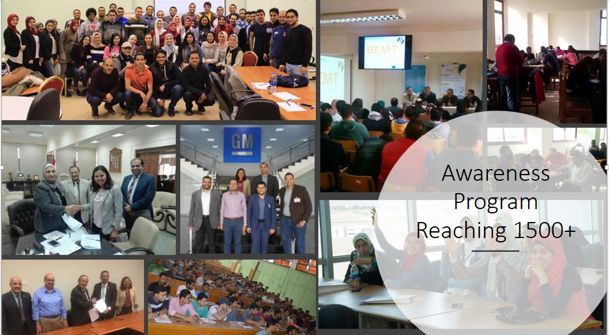
CONTENTS

EXECUTIVE SUMMARY                                                  3

BACKGROUND                                                         4

AT A GLANCE: GENDER STATISTICS IN EGYPT                            5

THE CONTEXT OF WOMEN’S FINANCIAL
INCLUSION: CHALLENGES AND OPPORTUNITIES                            6

POLICY INITIATIVES BY THE EGYPTIAN
GOVERNMENT                                                         8

CBE POLICY INITIATIVES AND REFORMS TO
ADVANCE WOMEN’S FINANCIAL INCLUSION                                8

CBE’S APPROACH TOWARDS BUILDING A GENDER-
SENSITIVE AND INCLUSIVE FINANCIAL SYSTEM                         15

ROADMAP FOR INCREASING WOMEN’S ACCESS
TO FINANCIAL SERVICES                                            16

CONCLUSION                                                       17

GLOSSARY                                                         18

WORKS CITED                                                      19

ANNEX                                                            20

Outline of CBE’s efforts and achievements towards
promoting Women’s Economic Empowerment and Access
to Financial Services in Egypt.
This case study is published with support from Data2X.

© 2019 (April), Alliance for Financial Inclusion. All rights reserved.

3
INTEGRATING GENDER AND WOMEN’S
FINANCIAL INCLUSION INTO THE CENTRAL
BANK OF EGYPT’S (CBE) FRAMEWORK

EXECUTIVE SUMMARY                                            indigent mothers, elderly and disabled citizens who live
                                                             below the poverty line, and the disbursement of social
                                                             insurance pensions through smart cards to a total of
                                                             7.4 million pensioners.
Egyptian women who constitute half of                        The CBE has introduced a number of regulatory reforms
the population, represent tremendous                         to complement the government’s initiatives towards
economic potential, while contributing                       sustaining and promoting women’s financial inclusion
                                                             which comprised:
to only 22.5 percent of total labour
                                                             >	issuing guidelines to banks to collect and report
force, and as such offer estimated credit                       gender-disaggregated data with the aim of tracking
demand of USD283 million among                                  the progress of women’s financial inclusion, mapping
female-owned SMEs1.1.                                           the demand-side and supply-side data that cover both
                                                                households and MSMEs,
The Central Bank of Egypt has taken the responsibility
                                                             >	unifying the definition of women-owned business,
to promote and coordinate financial inclusion, in
                                                                and issuing new Mobile Banking Regulations,
recognition of its key role in reducing poverty and
fostering economic reform programs, whereas account          >	launching a microfinance initiative that serves the
ownership increased significantly for both genders              unbanked and underbanked in Egypt, especially
according to FINDEX 2017, however the gender gap has            women, and
slightly widened.                                            >	a mortgage finance initiative targeting low- and
                                                                middle-income beneficiaries, alongside other
The CBE has achieved major accomplishments                      initiatives correlated to the financial inclusion
towards building an inclusive financial system through          in Egypt.
introducing a number of initiatives to provide financially
underserved households and female MSME owners                CBE and national stakeholders had exerted substantial
with an opportunity to be part of the formal financial       efforts to address women’s financial exclusion
system. This has been achieved through working on a          recognizing the initiatives that are successfully
number of pillars that include: enabling the legal and       implemented and inhabited in Egypt aiming at
regulatory framework conditions, modernizing the             promoting and facilitating responsible financial
financial infrastructure, and building a comprehensive       inclusion, out of which are:
gender-disaggregated data, complemented with the             >	Strengthening the financial consumer protection,
supply side data from financial institutions.
                                                             >	Building awareness and elevating financial literacy
The lack of products and services that appropriately            through The Egyptian Banking Institute (EBI), the
match the financial needs of women, and the legal and           CBE’s training arm,
socio-cultural barriers which specifically face women,       >	The “NilePreneurs” initiative funded by the Central
are among obstacles and challenges that hinder the              Bank of Egypt and implemented by Nile University,
progress of financial inclusion, also immobility and            and
mistaken perceptions about dealing with banks play           >	Enabling the digital financial infrastructure in a step
a role in keeping women out of the formal financial             towards the capitalization on women’s wide spread
system. Although cashless payments are on the rise,             ownership of mobile phones and rising technological
thanks to the establishment of the National Payment             knowledge.
Council (NPC) - headed by the President of Egypt - cash
transactions are still dominant.

The recently-approved law by the Egyptian Parliament
on cashless payments is expected to transform the
country to a more digital-oriented society and as such
will support economic development and inclusive
growth.

Egypt’s Vision 2030, included in the Sustainable
Development Strategy (SDS) prioritized women’s
financial inclusion, which was complemented by the
Egyptian government adopting social protection and
policy initiatives that included: Scaling up the Takaful
and Karama program which conditionally targets

                                                             1	International Finance Corporation (IFC)
4
INTEGRATING GENDER AND WOMEN’S
FINANCIAL INCLUSION INTO THE CENTRAL
BANK OF EGYPT’S (CBE) FRAMEWORK
BACKGROUND is a key enabler for gender equality and women’s
empowerment – the National Council for Women (NCW)
launched the National Women’s Strategy 2030 (NWS) in
March 2017. The NWS was endorsed by Egypt’s President
Abdel Fattah AL-Sisi, who also pronounced 2017 to be
The Central Bank of Egypt (CBE) has “The Year of Egyptian Women”.
brought the promotion and coordination
of a gender-inclusive financial system 2. At the international level, the CBE became a
principal member2 of the Alliance for Financial Inclusion
that addresses the specific demand and (AFI) in July 2013. This membership, along with serving
supply-side barriers faced by women on AFI’s Board of Directors and its Gender and Women’s
(among the various national Financial Inclusion Committee (GWFIC) as a vice-chair,
stakeholders) to the forefront of its has exposed the CBE to international best practices in
gender and women’s financial inclusion. This in turn
development policy agenda. This is in has helped position financial inclusion – especially
recognition that enhancing women’s women’s – at the top of the CBE’s policy agenda. The
financial inclusion and economic CBE’s efforts to promote and address women’s financial
empowerment through encouraging their inclusion are also evident in its Maya Declaration3
commitments.
active participation in entrepreneurial
activities and providing them with access Key gender and women’s financial inclusion
to formal finance is critical at the commitments which have either been achieved or
partially achieved in Egypt include:
macroeconomic level, as it drives an
> Collecting, analyzing and using gender-disaggregated
increase in the size of the active formal data by 2020, which has been partially achieved,
economy. whereas the CBE has established a Centralized
Financial Inclusion Datahub and is currently collecting
To this end, the CBE has been advancing financial
data from all financial institutions (Banks and Egypt
inclusion policies either through modernizing the
Post) through secured unified banking sector network
infrastructure or improving financial sector regulatory
based on the National ID.
frameworks. The CBE has taken a series of actions at
the international, regional and national levels to signal > Determining the baseline gender gap by the end of
its strong commitment to enhancing financial inclusion 2018. This has been achieved based on the results of
in Egypt – particularly, women’s financial inclusion. a demand-side survey.
> Developing a set of supply-side indicators of women’s
These efforts have been complemented by the Egyptian access to, and use of, financial services by the end of
Government’s own aspiration and commitment towards 2018, which has been achieved.
the transition into a cashless economy, as envisioned in
> Halving the gender gap by 2021, which is currently in
the Egypt Vision 2030 document.
progress.
Given the complexity of coordinating with the various
3. At the regional level, the CBE is a member of the
national stakeholders, each of which has a unique and
Council of Arab Central Banks Governors of the Arab
crucial role to play in promoting financial inclusion in
Monetary Fund (AMF), and also been an active member
Egypt, the CBE has been energizing key stakeholders
of the Financial Inclusion Taskforce (FITF) since its
in the country through a highly collaborative and
inception, in a step towards strengthening financial
systematic approach while adopting a multi-pronged
inclusion- particularly for women - and aligning its
course of action.
agenda with local needs and global trends.
1. At the national level, the Sustainable Development
Strategy (SDS): Egypt’s Vision 2030 puts women’s
financial inclusion and economic empowerment at the
heart of the national development reform agenda.
Financial inclusion is a core focus of the country’s
2 A principal member is generally the institution in charge of developing
overall SDS, given its potential to create more regulation or financial policies, and providing leadership on financial
opportunities for inclusive growth, maintain financial inclusion. As a principal member of AFI, the institution would assume the
role of establishing a coordination mechanism to include other relevant
and social stability, and achieve other national goals. national bodies in AFI initiatives aiming to ensure the country speaks
with one voice on financial inclusion.
Furthermore, and in line with the ambitious Sustainable 3 The Maya Declaration is the first global initiative to encourage national
Development Goals (SDGs) – while recognizing the fact commitments to financial inclusion to help members to formulate
coordinated national implementation approaches based on their
that greater access to financial services for women respective needs and challenges.5
INTEGRATING GENDER AND WOMEN’S
FINANCIAL INCLUSION INTO THE CENTRAL
BANK OF EGYPT’S (CBE) FRAMEWORK
THE STRATEGY’S VISION AT A GLANCE: GENDER
By 2030, the Egyptian woman will be a key player in
the process of sustainable development in a country
STATISTICS IN EGYPT
that guarantees her all the rights set forth in the
Constitution, grants full protection and provides
– without discrimination – economic, social and In Egypt females represent 48.4 percent
political opportunities that enable women to promote
their capabilities and achieve self-fulfillment, thus while males stand at 51.6 percent of the
performing their role in Egypt’s development. total population, according to the latest
Achieving the vision and goals of the National Strategy 2017 census conducted by the Central
for the Empowerment of Egyptian Women 2030 Agency for Public Mobilization and
requires working through four main pillars:
Statistics (CAPMAS).
> Political empowerment, and leadership promotion
> Economic empowerment Women also constitute 22.5 percent of the total labor
> Social empowerment force with a working age of 15-64 years. The number of
> Protection
female heads of households was recorded at 3.3 million
out of 23.5 million in the 2017 census. Female heads of
households’ degree of education ranges from illiterate
to university degree holders.
While Egypt has achieved considerable legislative
advances with regard to women’s rights in recent
years, as well as made efforts to reduce practices
such as early marriage and female genital mutilation,
it still has to strive more towards gender equality and
greater levels of gender diversity, which will directly
have a positive impact on economic growth, through
raising literacy levels among females to unlock women’s
economic empowerement, and enhance Egypt’s position
in the Gender Gap Index.
On the financial inclusion front, the latest FINDEX
revealed that inequality remains an obstacle and
women are disproportionately excluded from the formal
financial system, although there is considerable room
for growth.
According to the IMF, raising the female labor
force participation rate to the male level, coupled
with access to employment opportunities, would
increase the GDP by approximately 34 percent.
There is also room for optimism given that the women’s
banking market has tremendous economic potential
in Egypt, with an estimated credit demand of USD283
million among female-owned SMEs, according to the
International Finance Corporation (IFC). However,
financial institutions in the country have yet to develop
strategies to address this market gap, which represents
a missed opportunity and constrains private-sector
development4.
Evidence from IFC client banks indicates that women
are the next frontier market and a potentially profitable
market segment for financial institutions in Egypt.
4 IFC Report “Banking on Women”6
INTEGRATING GENDER AND WOMEN’S
FINANCIAL INCLUSION INTO THE CENTRAL
BANK OF EGYPT’S (CBE) FRAMEWORK
THE CONTEXT OF
96.3 MILLION WOMEN’S FINANCIAL
IS THE POPULATION
OF EGYPT
INCLUSION: CHALLENGES
51.5% 48.5%
AND OPPORTUNITIES
57.5%
OF THE POPULATION Despite a wide range of measures aimed
LIVE IN RURAL AREAS
42.5% 57.5% at advancing women’s financial inclusion
and economic empowerment over the
last few years, which are described in
56.3% detail under the policy initiatives section
OF ADULTS USE of this publication, a number of
MOBILE PAYMENTS
IN EGYPT challenges remain. Further efforts will
be undertaken to build on the initial
8.9% results achieved recently.
In 2014 and until 2017, men’s account ownership in
OF THE POPULATION
ARE UNEMPOLOYED Egypt increased from 19 percent to 39 percent, while
women’s ownership account was tripled as it surged
from 9 percent to 27 percent. In the same period the
gender gap slightly widened by 2 percent according to
Source: CAPMAS, 2018
FINDEX 2017.
Most female heads of households in the 2017 census Although there is no gender breakdown on the barriers
were widows, representing 70.3 percent of total that prevent Egyptian women from accessing and using
female household heads, followed by married women financial services, “insufficient funds,” might be a
at 16.6 percent and divorced women at 7.1 percent. factor that affects women more than men, given the
strong income effect in driving financial inclusion. This
Furthermore, the census revealed that the dropout is not surprising given that the rates of unemployment
rate of females in primary school decreased from among women are higher compared to that of men –
41.9 percent in 2006 to 22.4 percent in 2017, and that reaching almost 24 percent – and that most women
the dropout rates of females in the preparatory school work in unpaid and informal jobs, with around 25
stage5 declined from 58.1 percent in 2006 to 40.4 percent working in agriculture.
percent in 2017, resulting in an improvement in the
gender parity index, which dropped from 1.1 in 2006 These observations highlight the need for financial
to 1.07 in 2017 for females. inclusion stakeholders in Egypt to understand challenges
that women face in order to implement policies
within and beyond the financial sector that address
barriers to women’s economic inclusion. Complete data
availability, from both the demand-side and the supply-
side, is crucial for enabling the financial inclusion
stakeholders to make optimal decisions, particularly,
the incorporation of gender dimension in the data is
important in helping policymakers understand women’s
needs and behavior, as well as for tracking progress in
narrowing the financial inclusion gender gap.
The CBE has made some progress in gathering and
using gender-disaggregated data from the demand-
side in Egypt, complementing this with supply-
side data capitalizing on the Centralized Financial
5 In this context, “preparatory school” refers to the last three years of
high school.7
INTEGRATING GENDER AND WOMEN’S
FINANCIAL INCLUSION INTO THE CENTRAL
BANK OF EGYPT’S (CBE) FRAMEWORK
USE OF MOBILE PAYMENTS IN EGYPT, AS OF FEBRUARY A key constraint to financial inclusion on the supply
20196 side appears to be a lack of products and services that
appropriately match the financial needs of women
clients and are made accessible to them.
Mobile accounts 12.9 million
A study conducted by Deutsche Gesellschaft fur
Mobile Payment Growth Rate (year to year)
Internationale Zusammenarbeit (GIZ) in 2015 on “Access
from Feb 2018 to Feb 2019 35.6%
to Financial Services in Egypt” suggests that financial
Unique users 10 million institutions do not see women as a potential market
segment. In addition, the lack of provision of other non-
Age: >50 years old 16% financial services such as entrepreneurial and financial
education training contributes to the women’s negative
35–50 years old 30%
perception of banks and their low usage of financial
25–35 years old 30% services.
20–25 years old 16% On the demand side, there is a true need for deeper
capabilities, and more insightful benefits of financial
< 20 years old 8% services tailored for women, as well as elevating
the financial knowledge level, with an objective of
Gender: Male 71%
encouraging the access and usage of financial services,
Female 29% which will directly alleviate the high unemployment,
poverty, and illiteracy rates.
Mobile Payment Money in Circulation
from Feb. 2018 to Feb. 2019 14 billion Recently, non-bank financial institutions (NBFIs)
have emerged, but the modern digital channels of
Monthly transaction value (USD) 1.4 billion
distribution are considered to be underdeveloped.
Agent banking (number of agents) 263,725 Modern channels of financial services delivery are slow
in adoption while certain services such as lending and
insurance remain understated. Cash transactions are
Inclusion Datahub, which has been established and is the norm although cashless payments are on the rise,
currently collecting supply-side data from the financial thanks to the pro-inclusion digital financial services
institutions (Banks and Egypt Post) using the unique policies and regulations as well as the establishment
National ID to better understand the characteristics of of the National Payment Council (NPC), headed by the
financial services access, use, and quality, especially for President of Egypt.
underserved segments of the population.
While available data does not yet permit a
The first stage, which is already achieved, is for comprehensive analysis of the current status and
onetime data, that includes all banks’ current individual barriers to women’s financial inclusion and economic
customers with accounts, cards and mobile wallets, empowerment, this publication helps to construct
while the second stage will be for periodic data, which a broad picture, indicating that the gender gap has
will include new data or status-change data that differs widened from 10 to 12 percent and that there is a
from the previous delivered data. These efforts will mismatch between the supply of financial services for
be complemented by the full-fledged demand-side and women and the actual demand for such services.
supply-side mapping exercise for households and MSMEs
which is under design to be conducted in 2019.
In addition, a clear national vision and action plan for
women’s financial inclusion can serve to deepen and
accelerate efforts to reach higher levels of financial
inclusion by 2030. This needs to be supported by quality
supply-side and demand-side data about the levels
and trends of financial inclusion to inform sound policy
reforms.
Women’s demand for financial services is greatly
influenced by a variety of factors, which originate
from day-to-day household and economic activities.
The allocation of resources within the family is also
influenced by the perceived roles and power relations
6 Lending to MFIs is based on commercial rates and not subsidized interest
between men and women. rates.8
INTEGRATING GENDER AND WOMEN’S
FINANCIAL INCLUSION INTO THE CENTRAL
BANK OF EGYPT’S (CBE) FRAMEWORK
POLICY INITIATIVES BY THE CBE POLICY INITIATIVES
EGYPTIAN GOVERNMENT AND REFORMS TO ADVANCE
WOMEN’S FINANCIAL
The Government of Egypt (GoE) has INCLUSION
endorsed the Sustainable Development
Strategy (SDS): Egypt’s Vision 2030,
The CBE has established a series of
setting women’s financial inclusion and
policy and regulatory reforms to support
economic empowerment at the heart
and complement the GoE initiatives
of the national development reform
under the Sustainable Development
agenda.
Strategy 2030.
Furthermore, in its efforts to alleviate the adverse
effects of the economic reforms on the poor and It has focused on the establishment of specific policies
vulnerable, the GoE has prioritized the agenda of to sustain and promote women’s financial inclusion and
women’s financial inclusion and adopted a package of gender diversity in the financial sector. This includes
social protection/social safety net mitigating measures. issuing a unified definition to Women Owned Business
It has also intensified its effort to move away from (WOB), giving women-owned SMEs access to finance,
generalized subsidies to more efficient and enhanced the enhancement of regulation to microfinance
poverty-targeted social safety nets. Some of the policy institutions and village savings and loan associations
initiatives that are being implemented by the Ministry (VSLAs), mortgage financing, digital financial inclusion,
of Social Solidarity (MoSS) are as follows: and a sustainable know your customer (KYC) regime.
These reforms also include a sensitization of gender-
SCALING UP THE TARGETED TAKAFUL AND KARAMA related policies, the enhancement of responsible
CASH TRANSFER PROGRAM financial inclusion initiatives, and a more robust
collection of data to enable evidence-based policy
Egypt has been providing cash to poor households making.
through its first conditional cash transfer program,
Takaful and Karama, a social protection program run DEVELOPING SOUND POLICIES AND REGULATORY
by the Ministry of Social Solidarity (MoSS), since March FRAMEWORK CONDITIONS
2015. Takaful (“Solidarity”) supports vulnerable families
with children under 18, while Karama (“Dignity”) Towards building a gender-sensitive, inclusive financial
supports the elderly poor and people living with special system, the CBE has initiated several policy reform
needs. The cash transfer program has enrolled 2.25 efforts. These are:
million families across all of Egypt’s governorates. 1 Issuing guidance to banks to collect and report
The amount of the Takaful cash transfer provided to gender-disaggregated data using a unique identifier
households depends on the number of children and (national ID). In early 2018, the CBE started to
their school level. The Karama program provides a set formulate a strategy for collecting and analyzing
amount per individual. gender-disaggregated supply-side data. The aim
was to create a baseline for tracking progress
In order to reach the poorest households, participants
towards financial inclusion goals and establish an
are selected using a proxy means test. In the Takaful
evidence base for more timely and targeted policy
program, 89 percent of recipients are women, while
interventions. Details can be found in the evidence-
only 11 percent are men. Since 2018, Takaful started
based policymaking section of the case study.
implementing conditionalities, requiring households
benefiting the program to ensure their children attend 2 A unified definition of women-owned business was
school and health screenings. issued by CBE’s Board of Directors in July 2018 and
circulated to banks (for data collection purposes).
DISBURSEMENT OF SOCIAL INSURANCE PENSIONS The definition stipulated certain criteria. According
THROUGH SMART CARDS to ownership (capital), a stake of at least 51 percent
A total of 7.4 million pensioners in Egypt receive their is to be held by a woman/women, or at least a 20
pensions through smart cards that are disbursed either percent ownership/stake held by a woman/ women
from post offices or from National Social Insurance AND ≥ 1 woman as CEO (President/ Vice- President).
windows. Pensioners can also use these cards to collect
their payments from ATMs.9
INTEGRATING GENDER AND WOMEN’S
FINANCIAL INCLUSION INTO THE CENTRAL
BANK OF EGYPT’S (CBE) FRAMEWORK
CBE GENDER STAKEHOLDER CONSULTATION
THE CBE IS ENERGIZING KEY
STAKEHOLDERS TO PROMOTE MEMBERSHIP MEASUREMENT
WOMEN’S FINANCIAL INCLUSION The CBE Deputy Determined the
AND TO ADDRESS THE GENDER Governor is the baseline gender
GAP BY ADOPTING A Deputy Chair of AFI’s gap in 2018
COLLABORATIVE AND SYSTEMATIC Gender and Women’s
APPROACH TOWARDS WOMEN’S Financial Inclusion
FINANCIAL EXCLUSION. Committee (GWFIC)
REGULATIONS REPORTING TARGET
Developed and issued a Developed a set of Halve Egypt’s
women-owned business supply side indicators gender gap
definition for data on women’s access to by 2021
collection purposes in and use of financial
accordance with best services in 2018
international practices
3 With the aim of allowing the inclusion of more respectively from EGP7.5 billion (USD42 million) and
unbanked and underserved customers by providing an 2.1 million customers during the same period last
alternative to informal channels, the CBE collaborated year according to the data released by the Egyptian
with the Egyptian Money Laundering Combating Unit Union of Microfinance. It is the financing
(EMLCU) to develop new Customer Due Diligence (CDD)
procedures dedicated for mobile payment service 6 A mortgage finance initiative targeting low- and
customers. middle-income beneficiaries was launched in 2014
and revisited in 2017 to ease the process of granting
4 Studying the regulatory framework to facilitate facilities to the targeted segment. The percentage of
digitization of the village savings and Loans women beneficiaries reached 18 percent.
Associations (VSLAs), capitalizing on the successful
model – in collaboration with the NCW and UN
Women – which started in 2013 in three governorates,
benefiting over 18,000 participants (92 percent
women and 8 percent men). This enabled
beneficiaries to organize themselves into informal
savings and credit groups, with accumulated savings
of over EGP4.5 million (USD255,100). VSLA members
use their own group savings to access loans for
income-generating projects.
5 Instituting a microfinance initiative as microfinance
is the most effective financial sub-sector serving
the unbanked and underbanked in Egypt, especially
women. This led the CBE to capitalize on it and
thus, it incentivized banks to lend to microfinance
institutions (MFIs) and NGOs providing microfinance.
The amount of credit7 allocated to microfinance
granted by banks, NGOs, and private enterprises
in Egypt rose to EGP15.6 billion (USD876.4 million)
in the second quarter of 2018. During this period,
microfinance client beneficiaries reached 2.9 million,
out of which 70 percent were women. The rise in 7 Lending to MFIs is based on commercial rates and not subsidized interest
credit and customers grew by 106 and 33 percent rates.10
INTEGRATING GENDER AND WOMEN’S
FINANCIAL INCLUSION INTO THE CENTRAL
BANK OF EGYPT’S (CBE) FRAMEWORK
ACCOUNT PENETRATION
32.4%
Percentage of adults reported having
a formal account with a bank or post office
FINANCIAL INCLUSION USAGE NUMBERS
48% 32% 11% 10% 5%
Use at least Use accounts Save and borrow Have mobile MSMEs have
one service for transactions money accounts loans
PAYMENTS ARE THE MOST USED FINANCIAL SERVICE
36.7% 12.5% 11.9% 11.6% 7.9%
Payments Borrowing Savings Remittances Insurance11
INTEGRATING GENDER AND WOMEN’S
FINANCIAL INCLUSION INTO THE CENTRAL
BANK OF EGYPT’S (CBE) FRAMEWORK
ESTABLISHING GENDER-SENSITIVE, EVIDENCE-BASED 5 Building a Centralized Financial Inclusion Datahub,
POLICYMAKING at the CBE, and collecting supply-side data from the
financial institutions (Banks and Egypt Post) through
The measurement of data development process is still
secured unified Banking sector network based on the
in motion and although significant gaps have been
National ID, which enabled CBE to collect gender-
identified in supply-side data, the efforts to address
disaggregated data from financial institutions.
these gaps have shown results. The following describes
the CBE’s journey to establish a comprehensive,
nationally-owned gender-disaggregated database to CBE’S JOURNEY IN GENDER-DISAGGREGATED DATA
measure the levels and trends of financial inclusion on The scarcity of data on women’s financial access and
both demand and supply sides for individuals: usage behavior has been a major challenge for the CBE
in its efforts to halve the financial inclusion gender
1 In early 2016, the CBE Board of Directors approved
gap by 2021. Demand-side surveys provide an overview
the launch of a gap analysis exercise to map out
of the level and trend of women’s financial inclusion.
supply-side financial inclusion data with the view of
However, they provide few actionable insights into the
measuring the levels and trends of financial inclusion
drivers or distribution of the gender gap due to their
in Egypt.
lack of granularity, limited reach, and low frequency.
2 The supply-side gap analysis was complemented As an alternative, the data that financial service
by a limited8 demand-side survey to verify the use providers (FSPs) submit periodically is a rich depository.
of financial services on a nationally representative For it to work, however, it is important to have all
sample of the adult population which revealed that providers disaggregate the relevant accounts by gender.
32.4 percent of the bankable population owns either
an account at a bank or the post office. This task is not easy in Egypt due to the following:
3 An internal data committee was established at 1 The supply-side data landscape is fragmented by
the CBE to systematically collect and analyze the regulatory reporting silos; Egypt’s formal financial
data from the CBE and other stakeholders from the services ecosystem is a complex configuration of
financial sector, and in order to maximize the quality banks (private and state-owned) and non-bank
of data gained from external stakeholders, a set of financial institutions (NBFIs) such as the Egypt Post,
financial inclusion indicators was agreed upon with MFIs, and others that are regulated by separate
the stakeholders, including clearly-defined terms entities. The reporting ecosystem is similarly complex
based on international standards and good practices. and includes the CBE, the Financial Regulatory
Authority (FRA), and the Ministry of Communication
4 The CBE is currently designing a full-fledged and Information Technology (MCIT). The CBE and FRA
demand-side and supply-side mapping exercise to be have signed a MoU with the view of facilitating data-
conducted in 2019, which will cover both households sharing and similarly a protocol with the MCIT that
and MSMEs including informal sector. The survey enables the compilation of Egypt Post data.
will be conducted in collaboration with the Central
Agency for Public Mobilization and Statistics (CAPMAS) 2T
he 14-digit national ID, which contains a gender
on a nationally representative sample. The results identifier, is applied inconsistently during customer
will enable policymakers to design effective policy due diligence (CDD). The Financial Inclusion Datahub
interventions and will support the private sector in established at the CBE is collecting the data from
understanding the needs of the targeted segments financial institutions and Egypt Post using the national
and the opportunities available. ID as a unique identifier.
3 Some financial institutions find it a challenge to
meet the reporting requirements due to capacity
USAGE OF FINANCIAL SERVICES BY GENDER (2016) constraints and their core banking system. However,
Male Female
these issues are being addressed with the introduction
of the reporting system through the Financial
39.1%
Inclusion Datahub.
Payment
32.4%
9.5%
Borrowing
5.9%
16.0%
Savings
8.0%
15.0%
Remittances
9.5%
5.5% 8 Data collection was conducted through phone interviews administered
Insurance
2.7% using structured questionnaires on the use of formal financial services
and products between June 2015 and June 2016. The sample size was
2000 adults, with “adults” defined as those aged 21 years and above.
The survey was limited to the use of formal financial services.12
INTEGRATING GENDER AND WOMEN’S
FINANCIAL INCLUSION INTO THE CENTRAL
BANK OF EGYPT’S (CBE) FRAMEWORK
4 Dormant accounts, duplicate account holders, joint bank and non-bank financial institutions data
accounts, and the unclear ownership criteria of currently available or in the process of being
female-owned businesses further complicate the collected.
picture. In July 2018, the CBE issued a definition for >F
ollowing this step, a “design sprint” intensive
a women-owned/led business as stated earlier in this workshop was conducted with the CBE team to
publication. quickly develop and test ideas. The aim was to
>T
o address these issues, and with the view of create rough blueprints for a data architecture
establishing a complete dataset, the CBE, with the and dashboard interface that supported women’s
support of the Alliance for Financial Inclusion (AFI) financial inclusion efforts.
and funding from Data2X, enlisted the expertise of >T
he CBE is making improvements on the journey
an international consultancy firm in early 2018 to towards gender-disaggregated data, but still
formulate a strategy for collecting and analyzing there is a lot to be covered. In the meantime,the
gender-disaggregated supply-side data. The aim was following has been achieved:
to create a baseline for tracking progress towards
-T
he The CBE has issued guidelines that target
financial inclusion goals and establish an evidence
financial institutions to collect and report data
base for appropriate and more targeted policy
based on gender, which is paving the way for the
interventions. The recently established Financial
Central Bank to collect, analyze and use gender-
Inclusion Datahub at the CBE is compiling the data
disaggregated data by 2020. In parallel, the
of the financial institutions and the PO using the
Financial Inclusion Datahub recently established
national ID.
at the CBE is collecting gender-disaggregated data
>T
he exercise started with an inventory to find from financial institutions and the PO using the
out what the users of the data have and want, national ID as a unique identifier.
and to work from there. To this end, dozens
-T
he results of the limited demand-side survey
of representatives of all stakeholders in the
conducted in 2017 (covering the period from June
data transmission chain were interviewed. This
2015-June 2016) revealed that the gender gap
included FSPs, supervising authorities, NGOs, and
stands at 10 percent, which will be used as a
government agencies who were asked about their
baseline until the results of the full fledged
reporting systems and processes so that weak links
mapping exercise of the demand-side are
and bottlenecks could be identified.
obtained. This exercise will be conducted and
> This has also supported the development of Gender completed in 2019. The outcome of the mapping
Disaggregated Financial Access and Use Indicators, exercise will enable a better understanding of the
which are important for the CBE to track the barriers to women’s financial inclusion and as such
progress of women’s financial inclusion from the will also enable the policymakers to design the
baseline data. The access and usage indicators appropriate policy interventions. It will support
developed were guided by international best the development of interventions/ programs that
practices, such as the AFI and G20 financial inclusion aim to increase women’s financial inclusion in
indicators. Other additional indicators have been specific market segments, which will support the
developed to allow the CBE to track information that CBE in reaching its target of halving the gender
provides insights into the relative size of women’s gap by 2021.
participation in the financial sector and the economy.
-A
set of supply-side-indicators on women’s access
>T
he indicators in the Annex show gender-based to and use of financial services was developed.
financial indicators that can be derived from both (Please refer to the Annex).
CBE awareness raising campaign on women’s financial inclusion in 201813
INTEGRATING GENDER AND WOMEN’S
FINANCIAL INCLUSION INTO THE CENTRAL
BANK OF EGYPT’S (CBE) FRAMEWORK
PROMOTING AND FACILITATING RESPONSIBLE 3. THE NILEPRENEURS INITIATIVE
FINANCIAL INCLUSION “NilePreneurs” is a national initiative funded by
the Central Bank of Egypt and implemented by Nile
Promotion of financial consumer protection and market
University in collaboration with banks, universities,
supervision practices will be supported by educating
and a number of national and international entities.
and empowering financial consumers, especially
“NilePreneurs” aims at supporting entrepreneurs,
women, who are lagging behind men, according to
startups and small enterprises by encouraging and
statistics on consumer awareness.
supporting local manufacturing in industry, technology,
1. STRENGTHENING FINANCIAL CONSUMER PROTECTION fintech and digital agriculture.
The Board of Directors of the CBE has approved the
establishment of a dedicated consumer protection “NilePreneurs” addresses the Egyptian market’s needs
department with the view of managing the and aims at boosting levels of employment which in
implementation of consumer protection regulations. turn will increase economic growth and improve the
The regulations promoting principles of consumer standard of living in the economy. Nilepreneur activities
protection for the banking sector have been approved and service units play a proactive role in empowering
by the CBE Board in February 2019 following women across Egypt, encouraging them to take part in
consultation with international institutions, banks and SME establishment and management.
relevant national stakeholders.
Through the initiative, banks provide support and
2. IMPLEMENTING THE FINANCIAL LITERACY STRATEGY establish business development centers in geographical
The Egyptian Banking Institute (EBI), the training arm areas with promising investment opportunities,
of the CBE, has been assigned by the CBE to lead the especially in the manufacturing sector with its various
efforts of drafting the National Financial Literacy fields. This consequently increases employment
Strategy in Egypt, with a main pillar dedicated for opportunities for young people.
women’s economic empowerment. This exercise has
been carried out through the formation of the National Furthermore, through one of the many pillars of the
Financial Literacy Committee, with the participation of initiative the ‘’PPP Model’’ which aims at creating the
different relevant stakeholders including: base and infrastructure for developing skilled labour
> Regulatory Authorities such as CBE and FRA for generations while having a minimal impact on the
national budget - capitalizing on the efficiency and
> The Ministries of Finance, of Education, of Higher
knowledge of the private sector in order to bridge
Education and of Youth & Sports
the industry’s human resources skill gap - the Asmarat
> FSPs such as the National Bank of Egypt, Banque Misr, Vocational Training Centre, which specializes in ready
Commercial International Bank, Egypt Post and the made garments, was launched in partnership with BTM
Egypt Stock Exchange Group.
> Governmental institutions such as the Micro, Small
and Medium Enterprises Development Agency
(MSMEDA)
> NGOs & Civil Society Organizations (CSOs) such as the
Alexandria Business Association
> Educators from the Faculty of Economics & Political
Sciences at Cairo University and the Egyptian Banking
Institute (EBI)
> International development agencies such as GIZ, the
World Bank and the Consultative Group to Assist the
Poor (CGAP).
A draft strategy has been shared with stakeholders for
review and approval.
However, there is no country-wide data regarding the
differences in financial literacy levels between men
and women.
CBE & partners reached over 1500 people during 2018 awareness raising
activities across the country/in Cairo14
INTEGRATING GENDER AND WOMEN’S
FINANCIAL INCLUSION INTO THE CENTRAL
BANK OF EGYPT’S (CBE) FRAMEWORK
The center focuses on empowering women and has both Capitalizing on this innovative solution can act as an
educational and productive core concentrations. In entry point for unbanked women by allowing them
addition to accepting students between the ages of 13- to pay their bills or suppliers, collect payments from
16, the center also accepts women up to the age of 40, clients and send money, save in a secure place and
giving them a space to acquire new skills and generate even receive social cash transfers. For example, the
income. CBE enabled microfinance institutions to disburse loans
through mobile wallets and for clients to repay through
4. BUILDING AWARENESS THROUGH FINANCIAL LITERACY their mobile wallets. At present, there are 12.9 million
AND EDUCATION
wallets.
The Egyptian Banking Institute, which is the CBE’s
training arm, is also building the capacity of financial The CBE’s initiatives to overcome infrastructural,
institutions to better serve women with dedicated operational, legal and regulatory barriers focuses on
financial products and services. Recently, Banque Misr two main pillars:
signed a Cooperation Agreement with the International > A sound and strong financial infrastructure supported
Finance Corporation (IFC) to provide banking by a proper operational and regulatory framework
products and services to support women’s economic
> Enabling new technologies to provide digital delivery
empowerment and financial inclusion. All banks are now
channels and expand the CBE’s footprint
also encouraged to report on the number of women
consumers using their various products, as well as the The establishment of the National Payment Council
number of financial products targeted for women and (NPC) by Presidential Decree No. 89 of 2017, which is
the number of women beneficiaries. This data should be headed by the Egyptian President, functions with main
available in the first quarter of 2019. objectives of reducing the use of banknotes outside
the banking sector, and supporting and stimulating the
6.5. ENABLING DIGITAL INFRASTRUCTURE TO USE use of digital financial services as the main means for
DIGITAL FINANCIAL SERVICES (DFS)
payments.
With more women owning mobile phones, digital
finance offers promising opportunities to further
increase women’s access to financial services, both
at the microenterprise level and the household level.
OUTCOMES OF NATIONAL FINANCIAL LITERACY STRATEGY
The CBE appointed the Egyptian banking institute (EBI) to lead financial literacy efforts and establish a steering
committee to develop a national financial literacy strategy. The outcomes were:
7
MILLION
Implementation of Financial inclusion 7 million beneficiaries Egypt has won 5
nationwide financial media campaign utilizing of campaigns across international awards
literacy campaign and TV and radio 27 governorates from child & youth
participation in global finance international
and regional events (CYFI)
(Global Money Week and Arab (February to May 2018) (2013 to 2018) (2014 to 2017)
Financial Inclusion Day)15
INTEGRATING GENDER AND WOMEN’S
FINANCIAL INCLUSION INTO THE CENTRAL
BANK OF EGYPT’S (CBE) FRAMEWORK
CBE’S APPROACH The CBE conducted a similar survey in November 2017
among 33 banks (out of 38 banks) whose Boards of
TOWARDS BUILDING A Directors are located in Egypt. The survey which aimed
at assessing the level of female representation on
GENDER-SENSITIVE AND both staff and leadership levels, revealed that women
INCLUSIVE FINANCIAL representation stood at 11.3 percent in November 2017,
in that regard, targeted policies and measures are being
SYSTEM developed based on the survey results and conclusions.
CENTRAL BANK OF EGYPT–NATIONAL COUNCIL
FOR WOMEN PARTNERSHIP
Given the complexity of the financial Following the signing of an MoU between the CBE and
inclusion landscape in Egypt with the the NCW on the margins of the Alliance for Financial
various national stakeholders – each of Inclusion (AFI) Global Policy Forum (GPF) 2017 hosted
which has a unique and crucial role to in Sharm El Sheikh, Egypt, a high-level committee was
established to proceed with the implementation and
play in promoting financial inclusion in monitoring of the identified areas for cooperation.
Egypt – the CBE has adopted a These were:
multipronged approach to take into > To endorse a national project to promote savings
account the parties involved (such as and women’s entrepreneurship building on the VSLAs
regulators and supervisory authorities, project
government agencies, private sector and > To set clear targets for women’s financial inclusion as
part of the National Women’s Strategy 2030
development partners) and the distinct,
> To increase women’s access to formal financial
important role each has to play. services through digital financial services (DFS) at
Access to resources, employment opportunities, and competitive prices and quality
representation at decision-making levels are key areas > To issue legal and regulatory frameworks conducive to
that can transform the lives of women and contribute to promoting women’s financial inclusion
the achievement of the Egypt Vision 2030, which makes > To increase the number of women in leadership and
gender equality and empowering women a top priority. decision-making positions in the financial sector
A number of initiatives and policies that are described > To identify rural women facilitators in all
in the case study are geared towards supporting governorates and build their capacity to;
women-owned businesses and women entrepreneurs,
and promoting women’s economic empowerment and a) raise awareness through financial education and
leadership. promote banks’ financial product, and
b) identify women’s unique needs for financial
To this end, the CBE, in collaboration with different products and services
stakeholders supporting women (the National Council
for Women, the American University in Cairo and WOMEN’S ECONOMIC AND LEADERSHIP
other relevant stakeholders), is developing different EMPOWERMENT
initiatives to empower women and promote gender
Empowering women and leveraging on their skills and
diversity through capacity building, and enabling access
leadership is essential to maximizing competitiveness
and usage of financial services in different contexts.
since diverse leadership is more likely to find innovative
solutions to foster inclusive growth. Ensuring that
THE CENTRAL BANK OF EGYPT GENDER DIVERSITY
POLICY decision-making bodies reflect the diversity of the
societies they represent guarantees a balanced
The CBE is developing an institution-specific gender perspective in designing and implementing these rules,
diversity policy, which will address the barriers thus enabling an inclusive approach to policymaking and
preventing women from achieving leadership roles, it service delivery.
will also serve as a model for the country’s financial
institutions to raise awareness of the importance of Building on this, and for the first time in Egypt’s history,
women’s economic empowerment and leadership. the Cabinet of Ministers appointed in June 2018, a total
of eight female ministers (while the previous Cabinet
To this end, the CBE has become more focused and had only six), representing nearly 25 percent of the
target oriented, and will rely on the conduct of a Cabinet.
baseline study on the representation of women at
different staff levels within the institution.16
INTEGRATING GENDER AND WOMEN’S
FINANCIAL INCLUSION INTO THE CENTRAL
BANK OF EGYPT’S (CBE) FRAMEWORK
In March 2018, the CBE launched the Women Mentoring
Program (WMP) in collaboration with the NCW and the ROADMAP FOR INCREASING
Top 50 Women Forum, which includes the 100 most
influential women in Egyptian society across industries.
WOMEN’S ACCESS TO
The WMP aims to promote and create a pool of women FINANCIAL SERVICES
in leadership and decision-making positions through
identifying qualified women in various sectors within
the framework of the Egypt Vision 2030.
Despite the number of impediments,
WOMEN ON BOARDS OBSERVATORY AT THE there are many opportunities and
AMERICAN UNIVERSITY IN CAIRO (AUC) prospects to advance women’s financial
The CBE is collaborating with the American University inclusion in the country through existing
in Cairo (AUC), on the Women on Boards Observatory,
structures and by introducing new
which has three targets:
initiatives, that focus on women. In this
> To determine the current status of women on boards
section opportunities to improve women’s
> To provide leadership training to mid-level women to
nurture them as future board members access to financial services in Egypt are
> To make available a database of potential women presented in a roadmap to elevate
qualified to be board members financial inclusion.
The roadmap outlines key priority areas.
1. TO OBTAIN ACCURATE DATA ON THE STATE
OF FINANCIAL INCLUSION IN THE COUNTRY
The CBE has taken the lead in establishing a
comprehensive nationally-owned Financial Inclusion
Database to measure the levels and trends of financial
inclusion on both demand-side and supply-side datasets
for individuals, including gender-disaggregated data as
described in the previous section.
2. TO EXPAND THE REACH OF DIGITAL FINANCIAL
SERVICES (DFS)
The recently-published case study by the CBE on
“Financial Inclusion through Digital Financial Services
and Fintech” highlighted the ample opportunity of a 112
percent mobile penetration rate and a penetration rate
of more than a 38 percent for internet users in Egypt.
Recognizing the potential of these statistics as well as
the rapid development and extension of DFS can be
the path to reach financially excluded and underserved
populations with a range of financial services that suit
their needs. The provision of these services, using
technologies such as mobile phones, can have a great
effect in overcoming geographic, demographic and
institutional constraints to financial inclusion.
While DFS have enormous potential for improving
financial inclusion, a number of challenges need to be
addressed to ensure that Egyptians can fully reap their
benefits. The efforts exerted by the CBE to overcome
such challenges will be focused on two main pillars:
a sound operational and regulatory framework and a
strong financial market infrastructure to support the
expansion of DFS.17
INTEGRATING GENDER AND WOMEN’S
FINANCIAL INCLUSION INTO THE CENTRAL
BANK OF EGYPT’S (CBE) FRAMEWORK
3. TO ENCOURAGE THE USE OF ELECTRONIC
PAYMENTS CONCLUSION
The electronic payment of salaries and social payments
from government can encourage or even compel
people to open formal accounts, which can make a big The CBE shares the conviction with the
difference in the number of people who are officially Government of Egypt that enhancing
banked.
women’s active participation at an
4. TO IDENTIFY SUPPLY-SIDE AND DEMAND-SIDE individual level as well as in MSME
CHALLENGES FOR DESIGNING APPROPRIATE POLICY activities will not only increase their
INTERVENTIONS
access to financial services, but will
Identifying supply-side and demand-side challenges will
also result in increased job creation
pave the way for the private sector to unlock untapped
potential. Through the results of the mapping exercise, and economic development at the
policymakers will be able to design appropriate policy macroeconomic level.
interventions to promote women’s financial inclusion
and address the causes of exclusion. On a policy level, knowing the number of people who
are excluded from financial services and understanding
5. TO PROMOTE RESPONSIBLE FINANCIAL INCLUSION the key contributing factors causing such exclusion,
is important to develop and implement adequate
A financial literacy strategy has been drafted and is intervention strategies. It is crucial therefore that
to be endorsed by the relevant national stakeholders. policymakers, regulators and other key stakeholders
There is a huge gap in knowledge and awareness of understand the factors that played part in the high
financial products, and many women lack financial levels of financial exclusion.
literacy skills. This means that the majority of women
do not have in-depth information of the benefits and To this end, collecting and maintaining an accurate
risks of using financial services and products. database on financial inclusion disaggregated by gender
is of paramount importance. The CBE is committed to
6. TO ENCOURAGE BETTER COORDINATION OF working on identifying solutions for these numerous
FINANCIAL INCLUSION EFFORTS challenges in close consultation with key stakeholders
in the country and the global community so that the
The Financial Inclusion Department (FID) will spearhead
most appropriate path forward can be crafted.
and monitor the financial inclusion process and
foster coordination and collaboration among national
stakeholders.18
INTEGRATING GENDER AND WOMEN’S
FINANCIAL INCLUSION INTO THE CENTRAL
BANK OF EGYPT’S (CBE) FRAMEWORK
GLOSSARY
AFI Alliance for Financial Inclusion
AMF Arab Monetary Fund
AUC American University in Cairo
CAPMAS Central Agency for Public Mobilization
and Statistics
CBE Central Bank of Egypt
CDD Customer Due Diligence
DFS Digital Financial Services
EBI Egyptian Banking Institute
EMLCU Egyptian Money Laundering Combating
Unit
PO Egypt Post
FINDEX Financial Data Exchange
FITF Financial Inclusion Taskforce
FRA Financial Regulatory Authority
FSP Financial Service Provider
GoE Government of Egypt
GPF Global Policy Forum
GWFIC Gender and Women’s Financial Inclusion
Committee
IFC International Finance Corporation
IMF International Monetary Fund
KYC Know Your Customer
MCIT Ministry of Communication and
Information Technology
MFI Microfinance Institutions
MSMEs Micro, Small and Medium Enterprises
NBFI Non-Bank Financial Institutions
NCW National Council for Women
NGO Non-Governmental Organization
NPC National Payment Council
NWS National Women’s Strategy
SDGs Sustainable Development Goals
SDS Sustainable Development Strategy
VLSAs Village Loan Savings Association
WB World Bank
WMP Women Mentoring Program19
INTEGRATING GENDER AND WOMEN’S
FINANCIAL INCLUSION INTO THE CENTRAL
BANK OF EGYPT’S (CBE) FRAMEWORK
WORKS CITED World Bank. The Global FINDEX Database 2017
Measuring Financial Inclusion and the Fintech
Revolution.
Available: https://globalfindex.worldbank.org/
Alliance for Financial Inclusion (AFI). 2018. Financial
World Bank Group - International Finance Group (IFG).
Inclusion through Digital Financial Services and Fintech:
2016. Banking on Women in Egypt “Innovations in the
The Case of Egypt.
Banking Industry”.
Available: https://www.afi-global.org/sites/default/
Available: https://www.ifc.org/wps/wcm/
files/publications/2018-08/AFI_Egypt_Report_AW_
connect/7931b811-04b3-45b5-9dc5-c36a5eb5faf5/
digital.pdf
Web+version_Banking+on+Women+in+Egypt+FINAL.
American University in Cairo (AUC). 2014. Women on pdf?MOD=AJPERES
Boards Observatory Initiative.
World Economic Forum. The Global Gender Gap Report
Available: http://schools.aucegypt.edu/Business/
2017.
Pages/wob-observatory.aspx
Available: http://www3.weforum.org/docs/WEF_
Central Agency for Public Mobilization and Statistics GGGR_2017.pdf
(CAPMAS). 2017. Census Data. A
vailable: https://www.capmas.gov.eg/Pages/
Publications.aspx?page_id=7195
Central Bank of Egypt (CBE). 2017. CBE initiative.
Mortgage, SMEs.
Available: http://www.cbe.org.eg/en/Pages/
CBEInitiatives.aspx
Central Bank of Egypt (CBE). 2017. State of financial
inclusion report 2017.
Link not available.
Central Bank of Egypt (CBE). 2018. Women Owned
Business Definition.
Available: http://www.cbe.org.eg/ar/
BankingSupervision/Pages/Circulars.aspx
Deutsche Gesellschaft fur Internationale
Zusammenarbeit (GIZ). 2015.
Access to Financial Services in Egypt Report. Link not
available.
National Council for Women. 2017. National Strategy for
the Empowerment of Egyptian Women 2030 Vision and
Pillars.
Available: http://ncw.gov.eg/wp-content/
uploads/2017/04/womens-stratagy.pdf
International Monetary Fund. 2013. Women, Work,
and the Economy: Macroeconomic Gains from Gender
Equity.
Available: https://www.imf.org/external/pubs/ft/
sdn/2013/sdn1310.pdf
Sustainable Development Strategy (SDS): Egypt Vision
2030. 2016.
Available http://arabdevelopmentportal.com/sites/
default/files/publication/sds_egypt_vision_2030.pdfYou can also read


