Open Government Indonesia
   National Action Plan
  Implementation Report
       2018-2020
←
→
Page content transcription
If your browser does not render page correctly, please read the page content below
Open Government Indonesia
National Action Plan
Implementation Report
2018-2020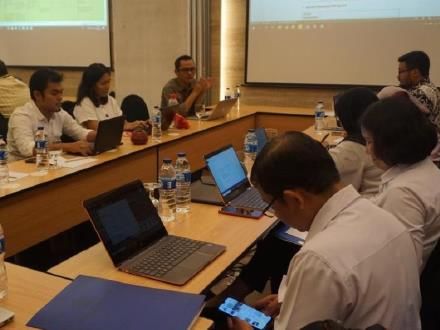
1. Indonesia
   The implementation of the Open Government policy is one of the manifestations of the
   2015-2019 National Medium-Term Development Plan (Rencana Pembangunan
   Jangka Menengah Nasional - RPJMN). One of the mandates of the 2015-2019 RPJMN
   is to Build a Clean, Effective, Democratic, and Reliable Governance with one of the
   priority sub-agendas of Building Transparency and Accountability for Government
   Performance. The three main strategies are: (1) Improving the management system
   and performance reporting of government agencies in an integrated, credible and
   publicly accessible manner, (2) Application of e-government to support simple,
   efficient, transparent and integrated business processes of government and
   development; and (3) Implementation of Open Government to support the realization
   of open, participatory and accountable governance in the formulation of public policies
   as well as supervision of state and government administration.
   For ten years, the Government of Indonesia has committed to continue implementing
   an Open Government through the preparation of the Open Government Indonesia
   National Action Plan (OGI NAP), which has reached its fifth period (2018-2020). The
   2018-2020 OGI NAP is the result of a co-creation process between the Government
   and Civil Society Organizations (CSOs) by focusing on seven thematic issues, namely:
   public participation, public services, bureaucratic reform, increased access to justice,
   open government information, disclosure of extractive sector information, and
   information disclosure on the procurement of goods and services.
   The process of drafting the OGI NAP 2018-2020 begins with the formulation of grand
   challenges targeting the Village, Health, Education, Poverty, Economic sectors
   through a series of processes and stages. The grand challenges are formulated by
   referring to the Government Work Plan document, Presidential Monitoring Priority
   Activities, and the Sustainable Development Goals document which are then mapped
   into five areas, namely (i) public participation; (ii) bureaucratic reform; (iii) access to
   public information; (iv) data management; (v) public service innovation. In addition, the
   grand challenges are formulated by referring to the input, suggestions and criticism
   entered in the LAPOR! Portal. and monitoring media.
   In addition to capturing specific issues originating at the national level, the Action Plan
   also seeks to accommodate several global issues, including Beneficial Ownership,
   Open Procurement of Government Goods and Services (Open Contracting), and
   Access to Legal Aid Services (Access to Justice). At the global level, the OGP has
   officially declared these global issues in the government's openness thematic agenda
   through the Paris Declaration in 2016.

                                           1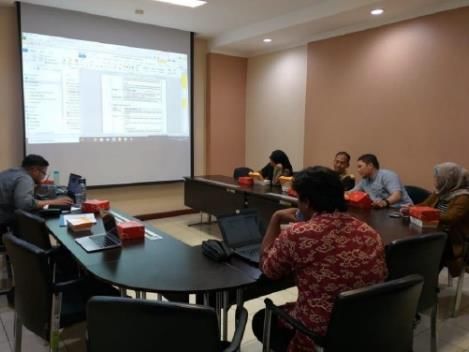
2. The process of drafting and implementing the national action plan
      a. Collaboration during the drafting of national action plan
          In this fifth National Action Plan, preparation begins with the formulation of the
          Grand Challenges done by the Government and CSOs. Based on proposals
          from civil society organizations and discussions with the government, 16
          commitments were consisting of 14 global commitments and 2 national
          commitments. In addition, these 16 commitments also contain 8 targets in the
          Sustainable Development Goals.
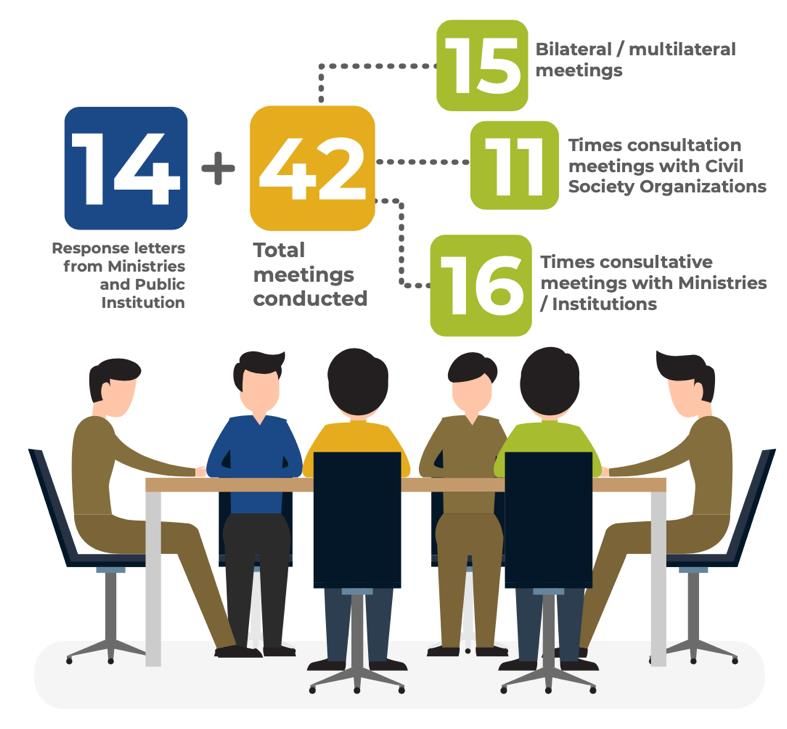
                    Figure 1. Identification of Issues in OGI NAP 2018-2020

          Following the Open Government Partnership (OGP) standards, the process of
          formulating the Action Plan must apply a co-creation approach. Collaboration
          methods can be done through face-to-face and online meetings. There were
          41 face-to-face meetings and 17 community responses obtained through online
          public consultations. Respondents consisted of 14 men and 3 women. Based
          on input from the public, three commitments get the most attention, namely
          commitment to access to budget transparency (16%), commitment to e-
          legislation (11%), and commitment to implementing public consultation forums
          (11%).

                                          2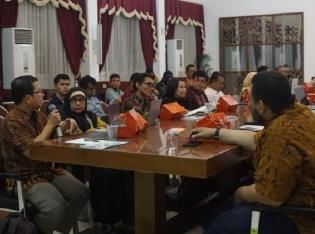
Figure2. The Process of Drafting Action Plan OGI 2018-2020

b. Collaboration during the implementation, monitoring and evaluation of
   action plans
   The monitoring and evaluation mechanism (monev) for the implementation of
   the action plan will use the Monitoring System (Sistem Pemantauan - SISPAN)
   by the Presidential Staff Office (Kantor Staf Presiden - KSP). SISPAN will be
   monitored periodically every three months (quarterly), the target achievements
   that have been prepared in this Action Plan will be sharpened in the quarterly
   target. Furthermore, the co-creation methods in monitoring and evaluation
   through focused discussions between the government and CSOs provide
   mutual feedback in strengthening the implementation of Open Government in
   Indonesia.
   Monitoring and evaluation activities start with the coordination between the
   Secretariat of the Open Government of Indonesia (OGI) and the KSP to open
   reporting access for Ministries / Agencies (Ministry/Agency - K / L) and CSOs.
   The next step is Ministries / Agencies will upload the supporting documents to
   SISPAN with a maximum time span of 10 working days. Then, the OGI
   Secretariat verifies the documents regarding the achievement documents

                                  3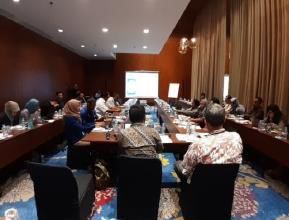
uploaded by the Ministries / Agencies. Then, a multi-stakeholder forum meeting
was held together with Ministries / Agencies and CSOs as a follow-up for the
SISPAN results. Discussions in multi-stakeholder forum meetings were
followed up in a focused trilateral meeting with the OGI Secretariat, Ministries
/ Agencies, and related CSOs. This trilateral meeting is an opportunity to
evaluate and make improvements in the implementation of the action plan.
In 2019, three multi-stakeholder forum meetings and two trilateral monitoring
and evaluation meetings were held. Multi-stakeholder forum meetings in 2019
were held on July 22, October 30, and December 11. Meanwhile, the trilateral
meetings were held on September 18-19 and December 16-17. In 2020, two
multi-stakeholder forum meetings were held on 9 June 2020 and 11 December
2020, and no trilateral meeting was held. The monitoring and evaluation
activities are limited in 2020 due to the COVID-19 pandemic. Thus, physical
meetings cannot be held, and the government budget was reallocated for
handling the pandemic, including the OGI Secretariat budget. Thus, in 2020,
monitoring and evaluation activities mostly use online and correspondence
methods.

              Figure 4. Monitoring and Evaluation Activities
                             OGI NAP 2018-2020

                               4
3. IRM Recommendation
Following the recommendations from the Independent Reporting Mechanism (IRM) as
an independent OGP evaluator team at the 2018-2020 IRM Design Report, there are
several recommendations and inputs for OGI's future action plan, which consists of:
a. Strengthening multi-stakeholder forums through the issuance of
comprehensive government decrees.
Currently, the existence of a multi-stakeholder forum is regulated in the Decree
of the Minister of National Development Planning / Head of Bappenas No.
KEP.88 / M.PPN / HK / 06/2018 concerning the Formation of a Strategic
Coordination Team for the Implementation of the Open Government Indonesia
Action Plan. In implementing the Ministerial Decree, the government realized
the need to improve the existing multi-stakeholder forum. Therefore, in July
2020, the government held a virtual public discussion by inviting CSO
representatives to jointly observe the practice of multi-stakeholder forums in
other countries. The public discussion was then followed up with a meeting of
the OGI steering team in which each member agreed to strengthen the role of
the multi-stakeholder forum by expanding non-government members such as
academics, experts and the private sector in the OGI multi-stakeholder forum.
In addition, the division of roles and functions of a multi-stakeholder forum
needs to be clarified in the government decree. Based on this, the government
will renew the Decree of the Minister of National Development Planning / Head
of Bappenas to strengthen the existence of the OGI multi-stakeholder forum.
b. Establishing a clear inter-government agency coordination mechanism in
the process of formulating, implementing and supervising action plans.
The government together with CSO representatives have compiled a
mechanism for the preparation, implementation, and monitoring of action plans
in December 2019. In addition, in implementing the action plans, each Ministry
/ Agency and CSOs have submitted a point of contact (PoC) for the
implementation of the OGI action plan. It is hoped that by submitting the PoC,
coordination among governments and CSOs can be carried out better.
c. Supporting local government and civil society participation.
The government opens the spaces for local government and civil society
participation in implementing action plans. One of them is by integrating the
OGP Local in the action plan and involving the Ministry of Home Affairs in the
next action plan.
d. Counting the commitments that respond to the narrowing of civic space
as well as public disinformation in the next action plan.
In the preparation of the 2020-2022 action plan, the government has received
a proposal related to strengthening the civic space through a commitment to
Ensuring the Civic Space in Indonesia. This commitment encourages studies
related to the application of restorative justice in cases related to the right to
5information, the right to expression, the right to assembly and the right to
organize.
e. Encouraging the application of the Presidential Regulation on One Data
Indonesia in all policy sectors
The support to strengthen One Data Indonesia in the 2020-2022 action plan is
conducted by encouraging the local governments to have a One Data
Indonesia action plan. This commitment is a follow-up to the One Data
Indonesia action plan launch at the national level. This commitment is a
collaboration between the Secretariat of One Data Indonesia, the Ministry of
National Development Planning / Bappenas and Publish What You Pay
(PWYP) Indonesia by involving several local governments with CSO partners.
64. The Implementation of National Action Plans
I. Improvement in Data Management and Compliance of Extractive, Forestry,
and Plantation Sectors
January 2019 – December 2020
Lead implementing agency/actor 1. Ministry of Law and Human Rights
2. Ministry of Finance
3. Indonesian Financial Transaction Reports
and Analysis Center
4. Ministry of Agriculture
5. Ministry of Energy and Mineral Resources
Commitment Description
What is the public problem that After Panama Papers went public in 2016 mentioning
the commitment will address? 1.038 taxpayers of Indonesian businessmen that had
shell companies overseas and were expected to
inflict the national income as well as undetected
terrorism funding. In this case, the public also put
their attention to the importance of Beneficial
Ownership Disclosure.
Therefore, following the situation previously, the
Indonesian Government initiating the Presidential
Regulation No. 13/2018 on Application of Principles
Introduces Beneficial Ownership of Corporation in
the Framework of Prevention and Eradication of
Criminal Act Money Laundering and Criminal
Funding Terrorism and Presidential Regulation No.
54/2018 on National Strategy of Corruption
Eradication. These Regulations, especially No.
13/2018, is one of the Indonesian milestones
because it encourages corporation (such as limited
liability companies, commanding companies, firms,
unions, associations, foundations, and other
corporate forms) to establish, report, and update their
Beneficial Ownership (BO) data. Moreover, the
regulation also stipulated beneficial ownership data
request by the public. However, as a newly issued
regulation, it has not widely known yet and needs to
develop guidance to implement.
In addition, the implementation to open BO data in
Indonesia is carried out collaboratively with related
ministries and agencies. In this case, the National
Strategy for Corruption Prevention team actively
encourages the disclosure of BO data. BO's
commitment in this Open Government Action Plan
7directly adopts the commitments made in
Presidential Regulation No. 54/2018 concerning the
National Strategy for Prevention of Corruption. In
other words, the implementation of this commitment
results from the collaboration between Ministries /
Agencies that are actively coordinated by the
Secretariat Team for the National Strategy for
Prevention of Corruption.
What is the commitment? Beneficial Ownership in the 2018-2020 commitment
will be focusing on the provision and utilization of the
BO database. BO registration will be carried out in
the extractive, forestry, and plantation sectors.
Furthermore, the use of the BO database will be
focusing on the permit applications in the extractive
and palm oil industries as well as on the misuse of
funding for money laundering and terrorism.
The implementation of BO in Indonesia is
collaboratively managed by related ministries and
institutions. Additionally, the coordinator role is
technically carried out by National Strategy of
Corruption Prevention Team. The commitment of BO
in the Open Government Indonesia National Action
Plan 2018-2020 will precisely adopt the same
commitment in National Strategy of Corruption
Prevention released by Presidential Regulation No.
54/2018 which operationalize further through
National Action Plan on 2019-2020.
How will the commitment The commitment of BO will resolve corruption and tax
contribute to solve the public evasion in Indonesia. Moreover, this commitment
problem? encourages BO database integration through
Corporate Administration Management System. So,
the data can further be requested by public.
Why is this commitment relevant The commitment is aligned with one of Open
to OGP Values? Government Partnership (OGP) values which is
transparency. Transparency is related to the
openness quality of public information and people
accessibility to the information.
Additional information The commitment is also aligned with the
achievement effort of Sustainable Development
Goals (SDGs) No. 17: “Strengthen the means of
implementation and revitalize the global partnership
for sustainable development”, especially on target
17.1: “strengthen domestic resource mobilization,
including through international support to developing
countries, to improve domestic capacity for tax and
other revenue collection”, because not only to publish
BO publicly, but this commitment also indirectly
improves national income by BO collection and
integration.
8In addition, this commitment is mentioned in EITI
Indonesia's roadmap on how it intends to disclose the
beneficial owners of the companies active in the
extractives sector.
The data related to the implementation of BO data
disclosure which is the result of the implementation
of this commitment comes from the Report of the
National Strategy for Corruption Prevention Team
(Stranas PK).
Completion rate Has not Partially Mostly Completed
begun completed completed
✓
Outcome Descriptions 1. Regulation to support BO transparency has been
issued in the form of Ministry of Law and Human
Rights Regulation, namely Ministry of Law and
Human Rights Regulation No. 15 of 2019
concerning Cooperative Ratification, Ministry of
Law and Human Rights Regulation No. 15 of
2019 concerning Procedures for Recognizing
BO Principles, and Ministry of Law and Human
Rights Regulation No. 21 of 2019 concerning
Procedures for Supervision of BO.
2. BO data is already available in the BO database
system through https://bo.ahu.go.id. However,
the BO database system has not been fully
integrated with the application system of the
Ministry/Agency.
3. As of November 2020, only 14.55% of
corporations (PT, foundations, associations,
CVs, firms, civil associations, and cooperatives)
have submitted BO data.
4. The use of BO data has been carried out by
several Ministries/Agencies, namely PPATK,
Directorate General of Taxes, Ministry of
Finance, OSS, and Ministry of Energy and
Mineral Resources.
5. Sector regulations are already available in
several Ministries/Agencies (ESDM, Agriculture,
KUKM, ATR / BPN) related to the submission of
BO in the licensing process.
96. Meanwhile, open public access has not been
built due to the lack of BO data registered in the
database system.
7. One of the obstacles affecting the non-
compliance of the corporations in reporting BO to
https://bo.ahu.go.id is that no sanction
mechanism is regulated. Thus, the corporations
do not feel obliged to report BO data.
8. The BO database system in the Ministry of Law
and Human Rights is not well integrated with the
system at the Ministries/Agencies. On the other
hand, the system in Ministries / Agencies has not
been designed to apply BO data standards for
corporations using services / permits in the
Ministries / Agencies.
Next Steps 1. Improving data integration among the
systems in Ministries / Agencies and
systems in AHU – Ministry of Law and
Human Rights.
2. Improving corporate compliance in
submitting BO data.
3. Increasing and expanding the utilization of
BO data for law enforcement, licensing, and
goods and service procurement officials.
4. Opening public access to the BO database
Milestone Activity with a verifiable Start Date: End Date: Completion
deliverable rate
1. The implementation of Corporate January December Mostly
Administration Management System 2019 2020 completed
2. The use of Beneficial Ownership January December Mostly
database to prevent the misuse legal 2019 2020 completed
persons/arrangements for Anti Money
Laundering/Prevention of Terrorism
Funding, and the Prevention of Tax Evasion
3. The utilization of Beneficial Ownership January December Mostly
database as a requirement for submission of 2019 2020 completed
permission in the extractive and palm oil
industries
Contact Information
10Lead implementing agency/actor
Point of Contact Lead
implementing agency/actor
Position and Working Unit
E-mail and phone
Other actors Ministry/
involved
Agency
CSO, private Publish What You Pay (PWYP) Indonesia
sector,
multilateral, and
working group
Additional information
-
11II. Transparency and Collective Participation in Renewed Data on Recipient of
Health Contribution Assistance
January 2019 – December 2020
Lead implementing Ministry of Social Service
agency/actor
Commitment Description
What is the public problem Law Number 40/2004 on National Social Protection
that the commitment will System and Law Number 24/2011 on Social Protection
address? Administration Body mandate the government to enforce
the implementation of National Health Insurance. One of
the programs is the Health Contribution Assistance
(HCA) for the poor. However, the data of HCA is not
accessible for users and it often not in accordance with
the actual condition. For instance, some recipients might
have already passed away, moved away, had a double
identity number, or had changes in financial
circumstances that allowed them to contribute. The
inconsistency in the HCA recipients’ data happened
because people could not verify and validate the data as
they are not aware of the data platform.
On the other hand, the Minister of Social Services
Regulation Number 5/2016 on Recipient of Health
Contribution Assistance (Revised) mandates the
government to implement the mechanism of data
verification and validation participative. According to the
regulation, the public could participate in updating HCA
data through a sub-district consultation forum.
However, it is not as effective as the data is not
accessible and the monitoring of its implementation
remains low. This Action Plan is committed to
empowering the participatory data update. It also
encourages the Ministry of Social Service to inform the
HCA data through an application system.
What is the commitment? The commitment aims to support the development of the
application system and people’s participation in updating
the data. This application system will provide the
recipient’s personal information. In addition to that, all the
process of updating data will be implementing by sub-
districts. This commitment also encourages the
involvement of women group, marginalized community,
and indigenous people. The result of the participatory
data updates will be done with the issuance of a
ministerial decree.
12How will the commitment This commitment encourages the publication of HCA
contribute to solve the public data will help the people aware of each recipient in their
problem? regions. Moreover, this commitment will empower the
local government to implement the HCA data forum
periodically.
Why is this commitment The commitment is aligned with some of Open
relevant to OGP Values? Government Partnership (OGP) values which are civic
participation and transparency.
• Civic participation relevance of this commitment
can be seen in the involvement of people to
update the data through the sub-district forum.
• Moreover, transparency is relevant with this
commitment by enhancing the quality of public
information and people accessibility to the
information.
Additional information The commitment is also aligned with the achievement
effort of Sustainable Development Goals (SDGs)
Number 3: “Ensure healthy lives and promote well-being
for all at all ages”, especially on 3.8: “achieve universal
health coverage including financial risk protection access
to quality essential healthcare services and access to
safe, effective, quality, and affordable essential
medicines and vaccines for all”, for when all people got
access to health service, the chance to achieve
sustainable development goals would be possible.
Completion rate Has not Partially Mostly Completed
begun completed completed
✓
Outcome Descriptions 1. An information portal related to Integrated Social
Welfare Data (Data Terpadu Kesejahteraan Sosial -
DTKS) is available which can be accessed via
https://dtks.kemensos.go.id by the public.
2. The Ministry of Social Affairs has created a social
welfare information system called the Social Welfare
Information System - Next Generation (SIKS-NG) to
facilitate verification and validation of social welfare
data. However, only the data on Health Insurance
Contribution Assistance Recipients (PBIJK) have
been integrated.
3. The Ministry of Social Affairs has published a profile
guideline for social welfare data analysis and data
verification and validation mechanism in the form of
leaflets / booklets which can be downloaded via the
website.
134. The Ministry of Social Affairs has issued a regulation
on data (PBIJK) which is updated every month
5. The Ministry of Social Affairs has held a meeting with
the Ministry of Home Affairs to discuss the appeal for
Local Governments to verify and validate PBIJK
data.
6. The Ministry of Social Affairs has provided technical
assistance for the social welfare information system
(SIKS-NG) to local governments.
7. Mapping of regions that are active in verifying and
validating PBIJK data has been carried out.
Next Steps 1. Gradually integrating all social welfare data into
SIKS-NG and providing access for the public through
the portal that has been built.
2. During the implementation of this action plan, there
are implementation obstacles in the regions, namely
the local government has not been actively involved
in carrying out verification and validation. It happens
because this commitment has not involved the
Ministry of Home Affairs. Therefore, the Ministry of
Home Affairs which has access and strong pressure
on local governments can be involved.
Milestone Activity with a verifiable Start Date: End Date: Completion
deliverable rate
1. Information system application on social January December Completed
welfare provides all the process of 2019 2019
updating the data as a result from the
online verification. As a data platform, the
system also provides accurate and valid
data, enriched with their export and import
features.
2. The implementation of public January June 2020 Mostly
consultation meeting through city/village 2020 completed
forum or any other platform for renewed
data on Recipient of Health Contribution
Assistance
3. The availability of twelve ministerial January December Completed
decrees on renewed data of the HCA’s 2020 2020
recipients based on citizen participation
inputs
Contact Information
14Lead implementing
agency/actor
Point of Contact Lead
implementing agency/actor
Position and Working Unit
E-mail and phone
Other actors Ministry/
involved
Agency
CSO, private Perkumpulan Media Lintas Komunitas (Medialink)
sector,
multilateral,
and working
group
Additional information
-
15III. Increasing the Access and Quality of Data Disclosures for Education,
Health, Poverty Eradication Budget in Related Ministries/institutions and All
Regional Governments
January 2019 – December 2020
Lead implementing 1. Ministry of Finance
agency/actor 2. Ministry of Home Affairs
Commitment Description
What is the public problem This commitment is an expansion of the previous Action
that the commitment will Plan 2016-2017 about the enhancement of information
address? disclosure in the government budget. The government
budget available on the Ministry of Finance website
(http://www.data-apbn.kemenkeu.go.id/). The website
provides the budget map, data spending of the
government at the national level. In addition, this site also
presents thematic budget allocations, including budgets
for education, health, and social protection.
However, the public has difficulty accessing the data
because some data are not accessible in the portal. It
happened because each ministry has the policy of
budget information disclosure differently. Therefore, the
commitment of the Ministry of Finance in publishing the
budgets of all ministries still needs to be strengthened.
To realize this commitment, the Ministry of Finance
needs support from other ministries and institutions to
issue budgets, especially in the education, health, and
poverty alleviation sectors.
Innovations in data transparency are expected to be
replicated by local governments. Accordingly, this
commitment also encourages the establishment of the
Local Government Budget platform. Thus, all local
government budget data will be integrated into one portal
managed by the Ministry of Home Affairs. Moreover, the
budget transparency at the national and regional level
can be easily accessed by people through the portal of
the Ministry of Finance and Ministry of Home Affairs
using the equivalent quality and standard for publication
purpose. Consequently, the monitoring function
performed by people can be well-implemented.
What is the commitment? This commitment encourages related ministries and
institutions to publish budget data using the standard of
State Budget (APBN) Portal managed by the Ministry of
Finance. To get all ministries to declare their budget data,
it is strongly recommended to sign a Memorandum of
Understanding between the Ministry of Finance, Ministry
16of Education and Culture, Ministry of Health and Ministry
of Social Service.
Furthermore, this commitment encourages the Ministry
of Home Affairs to develop a website. It accommodates
a centralized Regional Budget (APBD) database. This
APBD Portal is different from the APBN Portal since both
are managed by two different authorities.
How will the commitment Standardized budget transparency both in APBN and
contribute to solve the public APBD portal which cover detailed activities could solve
problem? the problem of the data quality that will be published. As
for regional governments, this commitment requires the
Ministry of Home Affairs to encourage local governments
in publishing the budget through a centralized and
integrated electronic system (E-budgeting). Furthermore,
E-budgeting will promote the implementation of the
integrated budget system in 34 provinces.
Why is this commitment The commitment is being aligned with some of Open
relevant to OGP Values? Government Partnership (OGP) values, transparency,
and accountability. Transparency is associated with
public information and accesses the information. It is
manifest in improving the quality of ministries and
institutions budget transparency at the national and local
level. Whereas accountability is correlating with
responsibility for government action through the
publication of government budget openly.
Additional information The commitment is also aligned with the achievement
effort of Sustainable Development Goals (SDGs)
Number 16: “promote peaceful and inclusive societies for
sustainable development, provide access to justice for all
and build effective, accountable, and inclusive
institutions at all levels.” Especially in the 16.6 targets:
“develop effective, accountable, and transparent
institutions at all levels.”
Completion rate Has not Partially Mostly Completed
begun completed completed
✓
Outcome Descriptions 1. The Ministry of Finance has built a portal to publish
the budget data for education, health and poverty
reduction which can be accessed through
http://www.data-apbn.kemenkeu.go.id/. The budget
data is available in Microsoft Excel (.xls) and spatial
data format.
2. There is no memorandum of understanding between
the Ministry of Finance and the Ministry of Education
and Culture, the Ministry of Health, and the Ministry
17of Social Affairs regarding the publication of budget
data for education, health and poverty reduction.
3. The Ministry of Home Affairs has built a local
government budget data portal through the Regional
Government Information System (Sistem Informasi
Pemerintahan Daerah - SIPD) at
https://sipd.go.id/run/.
4. The Ministry of Home Affairs has issued a circular for
Regional Governments to utilize SIPD and conducts
Training of Trainers (ToT) for Provincial
Governments.
5. However, local government budget data in SIPD are
not yet accessible to the public
Next Steps 1. Opening local government budget data available in
SIPD so that it can be accessed by the public
Milestone Activity with a verifiable Start Date: End Date: Completion
deliverable rate
1. The availability of memorandum of January December Has not
understanding on budget publication for 2019 2019 begun
education, health, and poverty eradication
among Ministry of Finance; Ministry of
Education and Culture; and Ministry of
Social Service
2.Publication of budget information for January June 2020 Completed
education, health, and poverty eradication 2020
up to the activity cost in national budget
data portal
3. The forming of local budget data portal January December Mostly
(E-Budgeting) built by Ministry of Home 2019 2019 completed
Affairs
4. The availability of budget data from 34 January December Partially
provinces in E-Budgeting portal 2020 2020 completed
Contact Information
Lead implementing
agency/actor
Point of Contact Lead
implementing agency/actor
18Position and Working Unit
E-mail and phone
Other actors Ministry/ 1. Ministry of Education
involved
Agency 2. Ministry of Health
3. Ministry of Social Affairs
CSO, private National Secretariat of the Indonesian Forum for Budget
sector, Transparency (FITRA)
multilateral,
and working
group
Additional information
-
19IV. The Utilization of Regional Education Budget for Participatory Education
Budget Plan
January 2019 – December 2020
Lead implementing Ministry of Education and Culture
agency/actor
Commitment Description
What is the public problem Law Number 20/2003 Article 49.1 on National
that the commitment will Educational System mandates that central and regional
address? government require to allocate at least 20% of State
Budget (APBN) and Regional Budget (APBD) to enhance
the quality of education nationally. However, at the
implementation level, people cannot get the benefit of the
budget. For this reason, the Ministry of Education and
Culture published Regional Education Budget (REB) to
provide information regarding the budget and education
policy in each region.
For this reason, the Ministry of Education and Culture
published Regional Education Budget (REB) to monitor
budget allocation and the enhancement of education
quality. REB contains data about the budget and
education achievement to improve the education quality
services in regional areas. Furthermore, the data format
in REB will be provided using charts, graphs, and time
series so that it will be easier to monitor the progress.
Unfortunately, REB is not widely known by people and
resulted in less consideration for future planning and
budgeting. Therefore, broadening REB information can
provide an opportunity for government and civil society
to give inputs on educational program plan based on the
actual evidence as well as supervise the education
budget.
What is the commitment? Recently, the government faced non-optimal distribution
of education budget allocation. Therefore, REB is used
to identify the main problems in the regional education
program. By using REB, the government can easily
acknowledge the distribution of education budget,
accreditation, classroom condition, national examination
result, and national examination integrity index, teacher
qualification, teacher competency test, gross enrolment
rate, net enrolment rate, and education ratio.
Considering the benefit of REB, the commitments will
address the use of REB as basic information for the
people who are involved in the decision-making process
to improve the quality of education in the regional area.
20How will the commitment Through this commitment, the Ministry of Education and
contribute to solve the public Culture will be giving a series of workshops for the
problem? government and civil society organizations to socialize
information about REB. The purpose of this socialization
is to extend the information on the use of REB in regional
education planning and budgeting.
Why is this commitment • The commitment is aligned with some of Open
relevant to OGP Values? Government Partnership (OGP) values which are
transparency and civic participation.
Transparency is related to the openness of public
information and people access the information. It
is manifested within the publishment of REB by
the Ministry of Education and Culture along with
the participation from society to renew the REB
data.
• Civic participation is interpreted as the society will
be involved further in the decision-making
process that is shown in people’s involvement in
supervising the management of the education
budget through the REB portal.
Additional information The commitment is also aligned with the achievement
effort of Sustainable Development Goals (SDGs)
Number 16: “promote peaceful and inclusive societies for
sustainable development, provide access to justice for all
and build effective, accountable, and inclusive
institutions at all levels.” Especially in target 16.6:
“develop effective, accountable, and transparent
institutions at all levels.” Because sustainable
development in the future can only be supported by
national institutions that are accountable for their
budgeting and expense. Moreover, this commitment is
indirectly cross-cutting with SDGs Number 4: “Ensure
inclusive and equitable quality education and promote
lifelong learning opportunities for all”, especially on target
4.1: “By 2030, ensure that all girls and boys complete
free, equitable and quality primary and secondary
education leading to relevant and effective learning
outcomes”.
Completion rate Has not Partially Mostly Completed
begun completed completed
✓
Outcome Descriptions 1. The Ministry of Education and Culture has compiled
a Regional Education Balance (REB) which can be
accessed through https://npd.kemdikbud.go.id/.
2. The Ministry of Education and Culture has carried
out REB socialization to the community and local
governments in 17 provinces in 2019.
213. In 2020, REB socialization activities focused on
virtual meetings with Ministries / Agencies and local
governments in Indonesia due to the COVID-19
pandemic.
4. The Ministry of Education and Culture has conducted
education budget planning consultation forums with
civil society in 17 provinces during 2019. However,
due to the COVID-19 pandemic, these activities
cannot be implemented in 2020
Next Steps 1. Encouraging the REB as one of the basic
instruments in planning the education budget in
the regions.
2. Increasing the use of REB data for the community
in conducting supervision.
3. Updating the REB data.
Milestone Activity with a verifiable Start Date: End Date: Completion
deliverable rate
1. The socialization of REB to civil society January December Completed
and local government 2019 2019
2. The consultation forum for the January June 2020 Completed
educational budget plan with civil society 2020
in regions
Contact Information
Lead implementing
agency/actor
Point of Contact Lead
implementing agency/actor
Position and Working Unit
E-mail and phone
Other actors Ministry/ 1. Ombudsman RI
involved
Agency 2. Ministry of Home Affairs
CSO, private Transparency International Indonesia (TII)
sector,
multilateral,
22and working
group
Additional information
-
23V. Encouraging More Accountable and Participative Village Government
Planning
January 2019 – December 2020
Lead implementing 1. Ministry of Village, Development of
agency/actor Disadvantaged Regions, and Transmigration
2. Ministry of Home Affairs
Commitment Description
What is the public problem Public participation in village meetings is still low and this
that the commitment will becomes a concern to the national government. Village
address? meetings lack the involvement of various stakeholders
and instead are only exclusively limited to the village
elites. It is common that the village meetings only consist
of the head of the village and the village secretary. As the
result, the programs that are proposed only cater for the
interest of the village elites. Village meetings should be
done with an inclusive participation forum that involves
communities from various elements such as work
background, age, gender and so on.
Policy improvements have been issued gradually and
among them is the issuance of the Minister of Home
Affairs Regulation Number 20/2018 on Village Financial
Management. In detail, this regulation identifies the
programs and activities carried out by the village
government to be more effective and efficient.
However, the opportunities in improving the quality of the
village government do not end there. The quality of
village community participation is still an unavoidable
task. Communities must gain enough capability to
criticize their own government. To realize government
accountability, it is necessary to have synergy and
commitment among the Village government, BPD,
Village Community Institutions, Village Traditional
Institutions, and all other elements of Village society
along with Local Governments and facilitators to
implement policies on village development planning
correctly.
What is the commitment? The limited access in the participation of Village
Development Planning will cause incompatible
development. Thus, this commitment encourages the
participation of people from various backgrounds and
other stakeholders to be involved in village deliberations.
Regarding this commitment, there will be two ministries
responsible to implement it:
241. Ministry of Home Affairs will take a role to give
capacity building for village and province.
Moreover, they will develop the Village Forum
Guidance in 30 villages of three provinces.
2. Ministry of Village, Development of
Disadvantaged Regions, and Transmigration will
refine the Ministerial Regulation concerning
village deliberations and village assistants.
How will the commitment There are several regulations related to the
contribute to solve the public implementation of village development planning and the
problem? empowerment of village communities that must be
revised to support the implementation of this
commitment. The revised regulations are expected to
provide assurance and encourage community
involvement in the village planning process.
Furthermore, socialization and capacity building are
conducted in the village government, woman, and
communities. Through these activities, hopefully, society
can be more encouraged to participate and be involved
in the process of government planning and
implementation.
Why is this commitment • This commitment is relevant to the principle of
relevant to OGP Values? public participation because it encourages active
participation from village communities in
monitoring and overviewing the course of
government.
• This commitment is also relevant to the principle
of openness and accountability to improve the
quality of village government. With openness in
the process of formulating a village development
program, it will encourage the government to
become more transparent, at the same time
ensuring the use of the village budget to be
efficient and effective as much as possible.
Additional information This commitment is also linked with the Sustainable
Development Goals (SDGs) which happens to be an
international agenda in creating a more transparent and
inclusive development. This commitment is tangible in
the development goal Number 16 which states about
Peace, Justice and Strong Institution. Because a strong
institution is also reflected in accountability,
transparency, and integrity. This commitment will
encourage the achievement of other SDGs, especially
SDGs Number 1 in regard to reducing poverty.
Completion rate Has not Partially Mostly Completed
begun completed completed
25✓
Outcome Descriptions 1. The Ministry of Home Affairs has implemented
Financial Management Technical Assistance in 30
villages in 3 provinces, namely Maluku Province,
Central Java Province, and West Sumatra Province
2. The Ministry of Home Affairs has implemented
Technical Work Meeting related to Institutional
Strengthening of Village Consultative Body,
Implementation of Village Deliberations, and Village
Development Planning
3. The Ministry of Home Affairs has conducted Focus
Group Discussion (FGD) evaluation of village
meetings (musyawarah desa - musdes) and village
development planning deliberations (musyawarah
perencanaan pembangunan desa -
musrenbangdes) in 31 villages in 3 provinces aiming
to obtain various inputs from the village for the
government and regional government for
consolidating and evaluating the implementation of
policies regarding the implementation of
deliberations in the village to boost participation in
village development planning. In carrying out various
activities of the Indonesian Open Government
National Action Plan (RAN-OGI), the Ministry of
Home Affairs always involves Penta helix elements
(academics, business, community, government, and
media) to collaborate in formulating and evaluating
policies related to participatory village development
planning.
4. The Ministry of Home Affairs has prepared the
technical guidelines for the village development
planning deliberations.
5. The Ministry of Villages, Development of
Disadvantaged Areas, and Transmigration has
issued Regulation of the Minister of Villages,
Development of Disadvantaged Areas, and
Transmigration No. 16 of 2019 concerning Village
Deliberations and Regulation of the Minister of
Villages, Development of Disadvantaged Areas, and
Transmigration No. 18 of 2019 concerning General
Guidelines for Village Community Assistants.
6. The Ministry of Home Affairs has issued the Minister
of Home Affairs Regulation number 20 of 2018
concerning Village Financial Management and the
Minister of Home Affairs Regulation number 73 of
2020 concerning Supervision of Village Financial
Management.
26Next Steps 1. Increasing the capacity of village government and
village community assistants in implementing
village meetings and village development
planning deliberations.
2. Evaluating the implementation of village
meetings and village development planning
deliberations on a regular basis.
Milestone Activity with a verifiable Start Date: End Date: Completion
deliverable rate
1. Ministry of Home Affairs will be January December Completed
conducting the workshop on Village Budget 2019 2019
in 30 villages.
2. The development of Village Forum January December Completed
Guidance held by Ministry of Home Affairs 2020 2020
will be followed by Focus Group
Discussion. This FGD will include the
participation of civil society to enrich the
content.
3. The availability of the revised draft of January December Completed
ministry regulation related to village forum. 2019 2019
In this milestone, the development of
ministry regulation draft will involve the civil
society and other stakeholders.
4. The availability of the revised draft of January December Completed
ministry regulation related to village 2019 2019
assistant. In this milestone, the
development of ministry regulation draft will
involve the civil society and other
stakeholders.
Contact Information
Lead implementing Ministry of Villages, Development of Disadvantaged
agency/actor Areas, and Transmigration
Point of Contact Lead Rachmatia Handayani
implementing agency/actor
Position and Working Unit Coordinator of the Substance Evaluation and Reporting
Group, Planning and Cooperation Bureau
E-mail and phone rachmatia@yahoo.com/ 0816702066
Ministry/ Ministry of National Development Planning/
27Other actors Agency Bappenas
involved
CSO, private 1. PATTIRO
sector,
2. Wahana Visi Indonesia
multilateral,
and working
group
Additional information
-
28VI. The Enhancement of Civic Participation in the Process of Developing Local
Legislation through E-Legislation Portal
January 2019 – December 2020
Lead implementing Ministry of Home Affairs
agency/actor
Commitment Description
What is the public problem Law of the Republic of Indonesia Number 12/2011 article
that the commitment will 96 act 1 on the Establishment of Legislation mentions
address? that “people have right to provide input orally and/or
written in the Establishment on Legislation” in which
Local Regulation in Provinces and Districts are included
in the legislation hierarchy. It is stated that people have
the right to participate in the process of developing the
regulation as the requirement of the democratic policy.
However, there are still some factors that obstruct
people’s opportunity to participate in forming local
regulation. The main factors are lack of access to the
process and minimum facility available. Breakthrough is
needed to empower people’s role in the development of
local regulation.
What is the commitment? The commitment of the E-Legislation portal is not a new
innovation because it is already implemented in
Semarang and Makassar. For replicating reason, the
purpose of this commitment is to accelerate the use of E-
Legislation in other regions. The portal contains
legislative programs, drafts of the new regulation,
discussion agendas, minutes of the meeting and an
online public consultation menu.
On this commitment, the Ministry of Home Affairs has to
issue circular letters to the Secretariat of the Regional
House of Representative. In parallel, the ministry will
develop the E-Legislation platform in the regions. This
platform will provide the bill documents, comment box
and the issuance of regulation at the regional level.
How will the commitment The openness of the law-making process through the E-
contribute to solve the public Legislation portal will benefit society’s needs on so many
problem? levels, such as the information of the process of
developing the regulation, the Regional House of
Representative activities, and the online public
consultation menu. Moreover, this platform will be user-
friendly designed.
Why is this commitment The commitment is aligned with some of Open
relevant to OGP Values? Government Partnership (OGP) values which are civic
participation and transparency.
29• Civic participation is related to the openness in
the decision-making process involving people
extensively from various background. In this
case, by providing an E-Legislation platform to
uphold democratic space in the local regulation
making-process, the government has manifested
the value of civic participation.
• Transparency is related to the quality of public
information and people access the information.
This value is manifested in the e-Legislation
which enable people to access the proposed
regional regulation.
Additional information The commitment is also aligned with the achievement
effort of Sustainable Development Goals (SDGs)
number 16: “Promote peaceful and inclusive societies
for sustainable development, provide access to justice
for all and effective, accountable and inclusive
institution at all levels”, especially on target 16.7:
“Ensure responsive, inclusive, participatory, and
representative decision-making at all levels”.
Participatory decision-making process up to the regional
level can create an inclusive and peaceful society for
sustainable development in Indonesia.
Completion rate Has not Partially Mostly Completed
begun completed completed
✓
Outcome Descriptions 1. The Ministry of Home Affairs has issued a Circular
of the Ministry of Home Affairs No. 188.34 / 6588 /
OTDA dated 3 December 2019 regarding the
Regional Legislation Process through the E-
Legislation Platform to all governors.
2. The Ministry of Home Affairs has conducted
socialization related to E-Legislation in two regions,
namely Semarang City and DKI Jakarta Province
3. This commitment has contributed to the birth of the
E-Legislation platform in 5 regions, namely:
a. The DKI Jakarta Provincial DPRD
(Regional People's Representative
Assembly) through the SILEGDA portal
on the website www.dprd-
dkijakartaprov.go.id
b. Provincial DPRD D.I Yogyakarta through
the e-Aspiracy portal on the website
www.dprd-diy.go.id
30c. Semarang City DPRD through the e-
Legislative portal on the website
www.dprd.semarangkota.go.id
d. Central Java Provincial DPRD through
the SIPELAWAN portal on the website
www.dprd.jatengprov.go.id
e. South Sulawesi Provincial DPRD through
the e-Aspiracy portal on the website
www.dprd.sulselprov.go.id
Next Steps 1. Evaluating the use of E-Legislation, especially
related to community participation and involvement.
2. Expanding the use of E-Legislation to other
regions in Indonesia to increase community
participation and involvement in regional
development.
Milestone Activity with a verifiable Start Date: End Date: Completion
deliverable rate
1. The availability of Ministry of Home January July 2019 Completed
Affairs’ circular letters to the Secretariat of 2019
Regional House of Representative
regarding participation on legislative
process through E-Legislation portal
2. The availability of E-Legislation platform January December Completed
on Regional House of Representative’s 2019 2020
website in 5 regions.
Contact Information
Lead implementing
agency/actor
Point of Contact Lead
implementing agency/actor
Position and Working Unit
E-mail and phone
Other actors Ministry/ 1. Ministry of Communication and Informatics
involved 2. Central Information Commission
Agency
31CSO, private Indonesia Parliamentary Center (IPC)
sector,
multilateral,
and working
group
Additional information
-
32VII. Data Integration to Increase Openness in the Management of National
Election and Regional Election
January 2019 – December 2020
Lead implementing National Election Commission (NEC)
agency/actor
Commitment Description
What is the public problem Indonesia is known as one of the biggest democratic
that the commitment will countries where everyone has the right to elect their
address? representative and the head of each government level.
There are two types of election which are the national
and regional election. The election implementation is
mandated by the National Election Commission (NEC).
Regarding the important role of NEC, it has some
innovation in executing its duties. For instance, it
publishes electoral data in the http://infopemilu.kpu.go.id
portal. However, the data in the portal is not completely
available and limited only in recent years.
Furthermore, it also occurs for the information about
legislative candidates’ profile, president candidates’
profile and recapitulation of vote counting. That
information can be access in the various web portal, such
as http://infopemilu.kpu.go.id and https://www.kpu.go.id/.
Therefore, to encourage transparency in the election
process, NEC have to integrate the data through open
access.
What is the commitment? The development of integrated electoral data with One
Data aims to adopt the principle of One Data which are
accessible, reusable, and able to be re-distributed by
everyone. The data could be downloaded in an open
format (e.g: CSV, XLS, XML, JSON). As result, the One
Data principles facilitate people to access government
data. The commitment also encourages publishing the
vote-counting result, legislative and executive
candidates’ profile in one NEC official portal. So that, the
people can find the information easily.
How will the commitment To solve the problems above, the commitments try to
contribute to solve the public simplify the access of data and information regarding the
problem? election process. Moreover, this commitment is
addressed in two areas which are implementing the
principles of One Data and publishing the vote-counting
result.
Therefore, the accessible data will enhance the
transparency of the election process both national and
regional. The development of the electronic system will
also ensure the accuracy, security, and trust of the
33people as well as reduce the possibility of fraud during
the election.
Why is this commitment The commitment shows transparency which is one of the
relevant to OGP Values? values of Open Government Partnership (OGP). It is
related to the openness quality of public information and
people access the information. In this case, transparency
is shown by integrating the election data into One Data
Portal Indonesia that can facilitate people to access its
data to create a better and more reliable election.
Additional information The commitment is also aligned with the achievement
effort of Sustainable Development Goals (SDGs)
Number 16: “Promote peaceful and inclusive societies for
sustainable development, provide access to justice for all
and effective, accountable and inclusive institution at all
levels”, especially on target 16.6: “Develop effective,
accountable and transparent institutions at all levels”.
Because this commitment is expected to realize the
openness in the national and regional election in
Indonesia, then the integrated election data can support
sustainable development in the country.
Completion rate Has not Partially Mostly Completed
begun completed completed
✓
Outcome Descriptions 1. The National Election Commission (NEC) has
published data on voting results at the polling
stations in the 2019 simultaneous elections and
2020 elections through the portal
https://infopemilu.kpu.go.id/.
2. National Election Commission (NEC) has
integrated NEC data in the
https://opendata.kpu.go.id portal but it has not
been integrated with the One Data portal
(data.go.id).
Next Steps 1. Publishing national election and regional election
data in an open data format.
2. Integrating the National Election Commission
(NEC) data portal with One Indonesian Data.
Milestone Activity with a verifiable Start Date: End Date: Completion
deliverable rate
1. Publication of data on National Election April 2019 December Completed
2019 voting results at polling stations online 2019
at the official NEC portal
342. Integration of data election at one official January December Completed
NEC portal. This means that the integration 2019 2019
of two portals (http://infopemilu.kpu.go.id
and https://www.kpu.go.id/) to provide one
portal for election data.
3. Publication of data on Regional Election September December Completed
2020 voting results at polling stations online 2020 2020
at the official NEC portal
4. The availability of data election June 2019 December Has not
information in One Data Portal 2020 begun
Contact Information
Lead implementing
agency/actor
Point of Contact Lead
implementing agency/actor
Position and Working Unit
E-mail and phone
Other actors Ministry/ 1 Ministry of Home Affairs
involved 2. Ministry of National Development and Planning
Agency 3. Election Supervisory Body
CSO, private Perkumpulan untuk Pemilu dan Demokrasi
sector,
(Perludem)
multilateral,
and working
group
Additional information
-
35You can also read


