Second French Plan for Open Science - GENERALISING OPEN SCIENCE IN FRANCE 2021-2024
←
→
Page content transcription
If your browser does not render page correctly, please read the page content below
Second French Plan
for Open Science

GENERALISING
OPEN SCIENCE
IN FRANCE 2021-2024

• Second French Plan for Open Science

Second French Plan for
Open Science
        GENERALISING
        OPEN SCIENCE
        IN FRANCE 2021-2024

                                                               3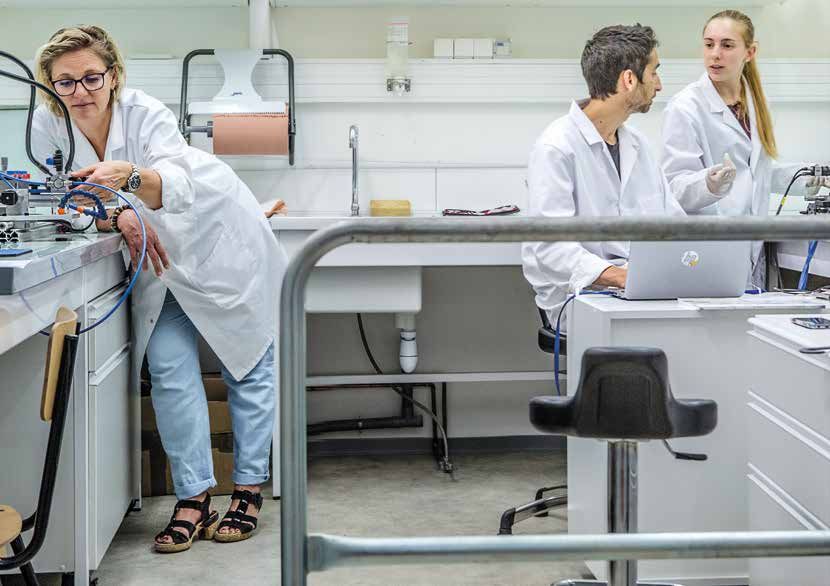
Second French Plan for Open Science • Table of contents

                   Table of contents
                   Introduction                                                                      6

                   Path One
                   Generalising open access to publications                                          8

                   Measures                                                                          10

                                eneralise the obligation to publish in open access all articles
                               G
                          1    and books resulting from publicly funded calls for proposals

                               Support open access economic publishing models that do not
                         2 require the payment of articles or books processing charges
                               (“diamond” model)

                               Encourage multilingualism and the circulation of scientific
                         3 knowledge by translating publications by French researchers

                   Path Two
                   Structuring, sharing and opening up research data                                 12

                   Measures                                                                          14

                               Implement the obligation to disseminate publicly funded
                         4 research data

                               Create Recherche Data Gouv, the federated national platform
                         5 for research data

                               Promote widespread adoption of data policies that cover
                         6 the whole lifecycle of research data, to ensure that they are Findable,
                               Accessible, Interoperable and Reusable (FAIR)

 4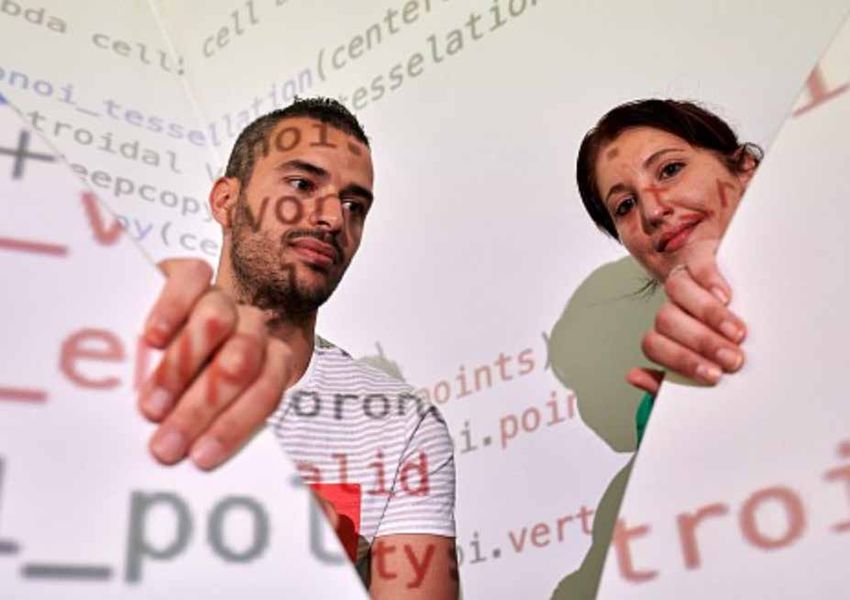
Table of contents • Second French Plan for Open Science

Path Three
Opening up and promoting source code
produced by research                                                                   16

Measures                                                                               18

       Recognize and support the dissemination under an open source license
   7 of software produced by publicly funded research programmes

       Highlight the production of source code from higher education,
   8 research and innovation

   9 Define and promote an open source software policy

Path Four
Transforming practices to make open science
the default principle                                                                 20

Measures                                                                              22

       Develop and value open science skills throughout the educational
   10 and career pathways of students and research staff

       Value open science and the diversity of scientific productions
   11 in the assessment of researchers, of projects and of universities
       and research performing organizations

       Triple the budget for open science through the National Fund
   12 for Open Science and the Investments for the Future Programme

Report of the First French Plan
for Open Science                                                                      26

APPENDICES                                                                            28

                                                                                                          5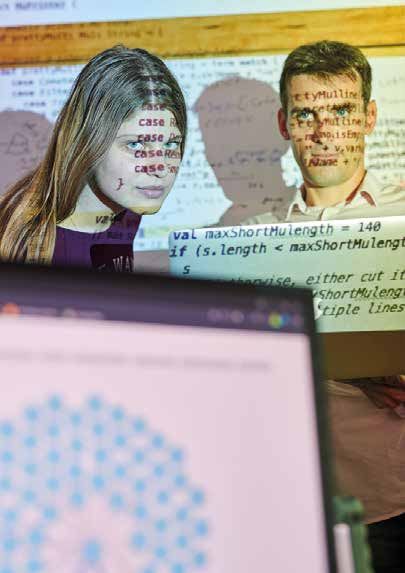
Second French Plan for Open Science • Introduction

                   Introduction

 6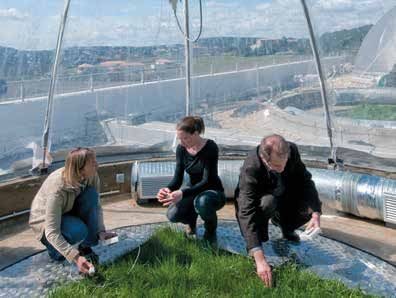
Introduction • Second French Plan for Open Science

O
             pen science refers to the unhindered dissemination of results, methods
             and products from scientific research. It draws on the opportunity
             provided by recent digital progress to develop open access to pub-
             lications and – as much as possible – data, source code and research
methods. It is a means for publicly funded research projects to retain control over
the results they produce. It builds an ecosystem in which science becomes better
substantiated and more transparent, reproducible, effective and cumulative. It
aims to democratize access to knowledge, which is useful for teaching and training,
and for the economy, public policy, citizens and society as a whole. Finally, it con-
stitutes a lever for scientific integrity and builds citizen trust in science.

The French Plan for Open Science has provided France with a coherent and dynamic
policy in the field of open science. It was announced in 2018 by the Minister of
Higher Education, Research and Innovation, Frédérique Vidal, and is coordinat-
ed by the Committee for Open Science, which brings together the Ministry, the
universities and research performing organizations and the scientific community.
Substantial progress has been made in the three years since this policy was intro-
duced. The percentage of open access scientific publications in France has risen
from 41% to 56%. Once the National Fund for Open Science had been created, it
launched two calls for projects to promote open science publication and provid-
ed support for international structuring initiatives. The French National Research
Agency (Agence nationale de la recherche, ANR) and other funding agencies now
ask the projects they fund to make the publications available in open access and
draw up data management plans. The position of Chief Data Officer has been
created in the Ministry and a network of such Chief Data Officers is currently be-
ing deployed in the universities and research performing organizations. Around
twenty universities and research organisations now have an open science policy.
Several guides and recommendations for putting open science into practice have
been published.

The progress already made and the changes in the international context induced
us to extend, renew and strengthen our commitments by adopting a Second
French Plan for Open Science, which will take effect until 2024. With this new plan,
France is continuing its ambitious trajectory initiated by the Digital Republic Act
of 2016 and confirmed by the Research Programming Law of 2020, which includes
open science as one of the missions of researchers.

This Second French Plan extends the scope to include source code from research,
structures actions promoting data sharing and openness through the creation of
the Recherche Data Gouv platform, it increases the number of transformative le-
vers available to generalise the practice of open science and is divided up into dif-
ferent disciplines and themes. It is firmly attached to a European-wide vision and,
in the context of the French presidency of the European Union, proposes to act
in favour of open science being effectively taken into account in both individual
and collective assessments for research. This involves initiating a process of sus-
tainable transformation in order to ensure that open science becomes a common
and shared practice, encouraged by the whole international ecosystem of higher
education, research and innovation.

                                                                                                                7
Path One

                  Generalising
                  open access
                  to publications

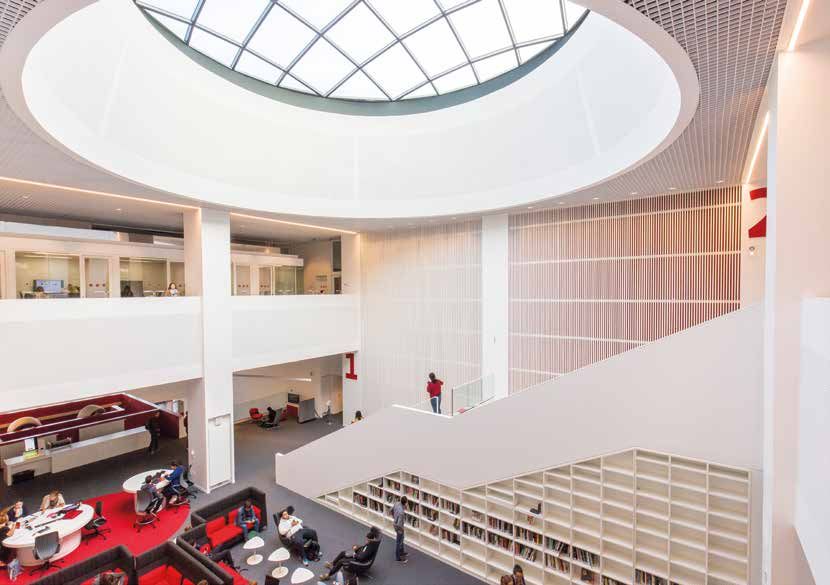
                                                          © Thierry Page, Atmosphere Photo

LILLIAD Learning Center Innovation, University of Lille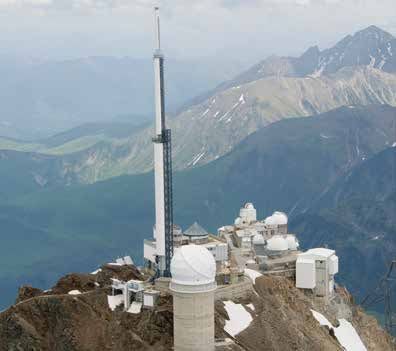
Generalising open access to publications • Second French Plan for Open Science

T
        he practice of providing open access         However, 75% of open access journals can
        to scientific publications should now        be classed as “Diamond” journals. These are
        be inescapable, whether this is done         steered by the scientific community and are
        by initially publishing the text as open     not funded by direct contributions from au-
access or by placing it in an open public archive    thors, nor by mandatory contributions from
such as HAL. The aim set by the Research Pro-        readers. Instead, the publication costs are
gramming Law is to achieve 100% open access          covered beforehand by the State, a university,
publications by 2030.

The conditions set by the French National Re-
search Agency and the European Union in the
                                                          We will support
context of the Horizon Europe programme
contribute greatly to this aim. The obligation to
                                                          bibliodiversity
publish as open access should now be general-
ised to cover all research funding through pub-
                                                          so that the scientific
licly funded calls for projects, for both books
and scientific articles.
                                                          community can
Since 2018, many research funding agencies                regain control over
federated in cOAlition S have implemented,
through Plan S, a common framework com-                   the publishing system
mitting them to make all publications from re-
search they have funded immediately and obli-
                                                     a consortium of public establishments or a
gatorily available as open access. To achieve this
                                                     non-profit organisation. The recently produced
goal, cOAlition S has adopted a rights retention
                                                     OA Diamond Journals Study, carried out by re-
strategy which enables researchers to dissemi-
                                                     quest of cOAlition S, demonstrated the scope
nate their open-source texts without delay, also
                                                     and strategic nature of these journals, and it
when publishing in a subscription-only journal.
                                                     makes recommendations that France intends
In France we support this new step towards
                                                     to support and enact. The academic presses,
meeting the objectives of Plan S.
                                                     attached to universities or research organisa-
In line with the Jussieu Call for Open Science and   tions, will be strengthened, modernised and
Bibliodiversity, the scientific community should     encouraged to join forces to succeed in their
endeavour to build an ecosystem of open, ethi-       transition towards open access. HAL, the
cal and transparent scientific publishing, involv-   French national open archive, will continue
ing a plurality of editorial stakeholders, formats   to play a key role and will be improved ergo-
and languages. A particularly important issue        nomically and functionally to make it easier for
is that of diversifying the economic models          researchers and institutions to use.
for open scientific publishing. Indeed, the risks
                                                     Although the Helsinki Initiative on Multilingual-
associated with the publication fee model (in-
                                                     ism in Scholarly Communication stressed the
volving the payment of article or book process-
                                                     importance of native languages to engender a
ing charges), such as the budgetary burden,
                                                     social anchoring of scientific knowledge and a
growing inequalities between institutions and
                                                     plurality of thought systems, language barriers
disciplines and the race to produce quantity,
                                                     impede the international circulation of knowl-
are being ever better understood.
                                                     edge, which is just as important. However,
                                                     recent spectacular progress in translation tech-

               Our goal is                           nologies using artificial intelligence should allow
                                                     us to resolve this contradiction. Support will be

           to reach 100%                             provided for experimentation with translation
                                                     tools and services for scientific texts, in order

          of open access                             to encourage international dissemination of
                                                     scientific works originally in the French language

             publications                            and to facilitate access to scientific works written
                                                     in foreign languages for the French-speaking
                                                     public.
                                                                                                                               9
Second French Plan for Open Science • Generalising open access to publications
Measures
1 2 3
Generalise the obligation Support open access Encourage multilingualism
to publish in open access economic publishing and the circulation
all articles and books models that do not require of scientific knowledge
resulting from publicly the payment of articles by translating publications
funded calls for or books processing by French researchers
proposals charges (“diamond” model)
Continue developing the HAL scientific publications and make it easier for
national open archive researchers to do so. Invite universities and
research performing organizations to adopt
→ implify the process of making submissions
S
this strategy when negotiating with the
to HAL for researchers publishing on oth-
publishers.
er open access platforms across the world
(CorHAL project). → upport the diversification of economic
S
models enabling a transition from subscrip-
→ Implement HAL’s shared governance and
tion towards open access with no publish-
long-term financing model as voted by the
ing fees, notably the “subscribe to open”
Open Science Steering Committee.
model.
→ Develop the integrated service for self-ar-
→ If publication fees still apply, they should
chiving, automatic collection of publica-
be exclusively for publications with com-
tions and coordination with research data
plete open access, and refused for hybrid
(winning project of the call for expressions
journals.
of interest in Structuring Equipment for
Research in the framework of the → reate Open Science Badges to qualify the
C
Investments for the Future Programme – evaluation methods of open access publica-
Programme d’investissements d’avenir – PIA). tions, to enhance their enrichment by asso-
ciated data and codes, and to display their
user licences.
Building bibliodiversity
→ evelop and support publishing innova-
D
→ eaffirm the French commitment to cOA-
R tions: preprints, open peer review, exe-
lition S, support the rights retention strat- cutable papers (Jupyter notebooks), data
egy to provide immediate open access to papers, overlay journals, etc.
10Generalising open access to publications • Second French Plan for Open Science
Extend the global influence → Create an alliance of public scientific pub-
lishers committed to open science so as to
of French research publications
promote the role they play, coordinate their
→ evelop tools to support multilingualism us-
D initiatives and encourage resource pooling
ing semi-automatic translation and linguis- whenever possible.
tic and discipline-specific expertise.
→ evelop and support a public body for the
D
→ Issue an international call for research into dissemination and distribution of printed
automatic translation as part of the Europe- and digital books, to improve their visibility,
an Research Area Network. particularly in bookshops.
→ In partnership with Wikimedia France, en- → Create a Scientific Publishing Observatory
courage the use of findings from French re- to bring together stakeholders in public and
search in the global collaborative Wikipedia private scientific publishing, research, and
encyclopaedia. scientific information.
→ upport multiplatform publishing, in XML,
S
notably through Métopes, Lodel, and the
Structure, support and modernise Public Knowledge Project, and explore the
French scientific publishing potential for shared access to services for
detecting plagiarism and monitoring manu-
→ I ntroduce a scientific publishing support script submissions (editorial workflow).
plan, in line with the commitment in the
Research Programming Law.
SUPPORT OPEN SCIENCE
IN HUMAN AND SOCIAL
SCIENCES
— upport open access book publishing
S
through the National Fund for Open
Science
— I mplement a scheme for widespread
collective licenses to permit the use
of images protected by copyright
in open access scientific publications,
under a non-profit structure (article 28
of the Research Programming Law)
— upport the national infrastructures
S
for research in the human and
social sciences, and develop a range
of services to connect data and
publications in human and social
sciences, using OpenEdition,
Huma‑Num and Métopes (winning
project of the call for expressions
© Cyril FRESILLON/CNRS Photothèque
of interest in Structuring Equipment
for Research by the PIA)
Raman analysis of a Chinese statue’s
pedestal at the Cernuschi museum in Paris
11Path Two
Structuring, sharing
and opening up
research data
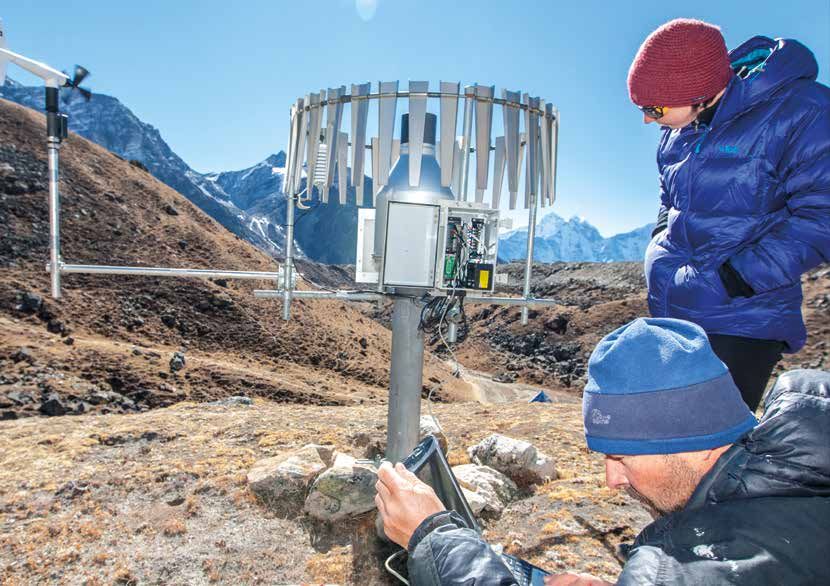
© Thibaut VERGOZ / IGE / LGP / PRESHINE / IRD / CNRS Photothèque
Data retrieval from a GEONOR station, near Mount Everest, NepalStructuring, sharing and opening up research data • Second French Plan for Open Science
O
ur aim is to ensure that the data pro-
duced by French public research is
progressively structured to conform
to the FAIR principles (Findable,
We will create
Accessible, Interoperable, Reusable), safely
preserved and, wherever possible, open to all.
Recherche Data Gouv
The obligation to open up public research data, in order to involve
required in the Digital Republic Act of 2016,
should now be enacted in scientific practice all research fields
with the help of appropriate infrastructures
and support services. This obligation is limited in active practices
by legitimate exceptions as defined by the law.
For example, exceptions can be made for pro- of open data
fessional confidentiality, industrial and trade
secrets, personal data and copyright-protected
catalogue will be entrusted to INRAE with
content. In these cases, data sharing practices
support from universities and other research
should still be encouraged by defining the pro-
performing organisations and will serve the
cedures to follow.
national scientific community as a whole. To
In order to implement the national policy on support and advise researchers throughout
data, algorithms and source code as requested the data lifecycle, “data workshops” will be
by the Prime Minister, a national Chief Data organised across the country involving a wide
Officer will mediate a network of similar Chief range of professions. Thematic reference
Officers working in the executive team of the centres will conceive and issue repositories and
higher education and research institutions. best practices for research fields or disciplines.
Through their coordinated actions, the data, Recherche Data Gouv is founded on shared
source code and algorithms from French public governance by stakeholders in French higher
research will be preserved, referenced, de- education and research, and will guarantee that
scribed and promoted under open licenses. the scientific community retains sovereignty
over the data it produces.
The actions involved in managing, preserving,
We will encourage opening up and sharing data also contribute to
the progress of scientific research. They make
practices that it possible to share the effort of collecting data
within the scientific community, and to consol-
favor research idate and multiply the results of using them.
With this in mind, all practices that promote
data reuse the reuse of research data will be encouraged
through the creation of a prize for teams which
carry out exemplary work in this domain.
Recherche Data Gouv, a federated national
France will continue to provide support for the
platform for research data, will be created to
Research Data Alliance (RDA), an international
include all research fields in the active practice
network that defines best practices in the do-
of producing open data. Recherche Data Gouv
main of research data.
will provide a multidisciplinary data repository
to complement the national and European
infrastructures already used by some scientific
disciplines. It will offer a catalogue that signposts
users to data hosted on other trustworthy
sites, and when finished, it will provide a
single location to promote visibility for all
French research data. The repository and
13Second French Plan for Open Science • Structuring, sharing and opening up research data
Measures
4 5 6
Implement the obligation Create Recherche Data Promote widespread
to disseminate publicly Gouv, the federated adoption of data policies
funded research data national platform for that cover the whole
research data lifecycle of research data,
to ensure that they
are Findable, Accessible,
Interoperable and
Reusable (FAIR)
Develop and structure the range → Implement the recommendations of the In-
of support and tools on offer ternational Committee of Medical Journal
to researchers Editors (ICMJE) by developing Data Sharing
Statements, which publicly detail the con-
→ Create Recherche Data Gouv which will ditions and procedures for accessing data
offer sovereign and certified (Core Trust that cannot be opened.
Seal) storage and signposting for research
data, and a range of support services for re- → ontinue the certification process (Core
C
searchers, through: Trust Seal) for data repositories.
• territorial network of endorsed “data
a → upport the enactment of the European
S
workshops”, involving a wide range of Copyright Directive in the field of text and
skills and professions to provide local data mining (TDM) to encourage the emer-
support; gence of new knowledge.
• t hematic reference centres that define
best practices for the management, des-
cription and opening up of data, specific
to each discipline or research field.
→ eneralise the definition and effective
G
implementation of data management plans,
which guarantee economical preservation
and the opening up and sharing of
documented data, thus making it possible
to reuse and validate them.
14Give recognition to and boost ENCOURAGE HEALTH
the reuse of research data RESEARCH PROJECTS
TO SIGN UP TO OPEN
→ Encourage best practices in data citation.
SCIENCE
→ ward an annual research data prize to
A
highlight the work of exemplary projects
and teams in preparing to reuse or reusing — educe publication bias, which is the
R
research data. tendency to only publish studies that
obtain positive results, to the detriment
→ rack the changing dynamics in opening up
T of inconclusive or negative findings.
data sets associated with publications that
are stored in a selection of repositories, • Propose modifications to the national,
through the Open Science Barometer. European and international rules
in order to make it obligatory to
→ Launch a Europe-wide call for proposals on declare all individual patient data
reusing research data as part of the Europe- sets, whether this entails clinical
an Research Area Network. trials (including non-drug trials) or
observational studies.
• Develop a declaration portal that
Coordinate and promote is interoperable with the European
open data policies and international schemes, by
reducing the administrative burden
→ Deploy a research data governance policy on researchers through a single
and create a specific role for this through declaration. This portal will encourage
a network of Chief Data Officers in the and facilitate data sharing statements,
universities and research performing data reuse and the publication
organizations. of negative results.
→ evelop a proactive approach to opening
D — Under the Plan France Médecine
up data associated with articles and publi- Génomique 2025 (French Plan for
cations in trustworthy thematic data reposi- Genomic Medicine), introduce a tool
tories or in Recherche Data Gouv. to collect, process and use large
volumes of data (DCA – Data Collector
→ hen providing public funding for scientific
W and Analyser) to serve healthcare
publishing platforms and open archives, en- and research.
courage collaboration with Recherche Data
Gouv. — I n response to the coronavirus pandemic,
open up all results from the EMERGEN
programme, which aims to increase
efforts to sequence the variants
of the virus present in the country.
Experiment with samples
at the Imagine Institute of Genetic Diseases,
Necker-Enfants Malades Hospital, Paris
© Inserm/Delapierre, Patrick
15Path Three
Opening up
and promoting source
code produced
by research
© Inria / Photo M. Magnin
Code optimizing for oceanographic data analysis by the GEOSTAT project-team at InriaOpening up and promoting source code produced by research • Second French Plan for Open Science
S
oftware plays a key role in scientific
research, and it can be a tool, a result,
and a research object. Making software
source code available, with the option
Distribution
of modifying, reusing and disseminating them,
is a major requirement to ensure the repro-
of software
ductibility of scientific findings and to support
the creation and sharing of knowledge, in keep-
products under
ing with the open science ethos. open source licence
In order to implement the national policy on
data, algorithms and source code as requested will be preferred
by the Prime Minister, we aim to ensure that the
source code and software produced through
France will support the development and pre-
French public research are developed, sustain-
servation of source code – inseparable from
ably maintained, preserved and treasured. As
the support of humanity’s technical and scien-
such, the remit of Chief Data Officer in the Min-
tific knowledge – and it will, from this position,
istry of Higher Education, Research and Innova-
continue its support for the Software Heritage
tion has been expanded to include algorithms
universal archive. So as to create an eco-
and source code from research.
system that connects code, data and publica-
tions, the collaboration between the national
open archive HAL, the national research data
The opening platform Recherche Data Gouv, the scientific
publishing sector and Software Heritage will be
of software strengthened.
source code In order to increase the visibility of software
and recognise its contribution to research, a
is a major catalogue of these productions will be built
and made widely accessible. An open source
challenge for the research software prize will be created to show-
case and award teams who carry out exemplary
reproductibility work in this field.
of scientific results To facilitate the coordination of the open
source software communities at a national and
international level, a Source Code and Software
College will be created within the Committee
Scientific software stacks are hugely complex for Open Science. Links will also be forged be-
and sometimes combine hundreds of programs tween the Open Software Task Force at the
representing millions, even tens of millions of French Interministerial Directorate for Digital
lines of code. Efforts to develop these stacks Technology, and the European Open Science
should be pooled at the scale of the interna- Cloud (EOSC), the Research Data Alliance (RDA),
tional scientific community in the widest sense: the Research Software Alliance and FORCE 11.
academics, industry and citizens. This impetus
has today become a key lever in research and
innovation. Also, priority will be given to the
dissemination of software productions as open
source software – published under a license
recognised by the Free Software Foundation
and Open Source Initiative, in compliance with
the legal constraints.
17Second French Plan for Open Science • Opening up and promoting source code produced by research
Measures
7 8 9
Recognize and support Highlight the production Define and promote
the dissemination under of source code from an open source software
an open source license higher education, policy
of software produced research and innovation
by publicly funded
research programmes
Define and promote Recognise source code
an open source software policy as a contribution to research
→ roduce a National Charter for Open Source
P → Create an open source research software
Software coming from higher education, prize which rewards teams and projects for
research and innovation. exemplary work in this domain.
→ evelop the link between data and software
D → rovide greater recognition for software
P
through a network of Chief Data Officers production in the career of researchers, re-
in the various universities and research search support staff and in the assessment
performing organizations. of research organisations.
→ roduce recommendations for funding bodies
P → onitor over time the production of code
M
to best support software development. and software by French research teams so
as to identify and assess their dynamics,
→ Improve the skills of commercialization ser- openness and impacts through the Open
vices for the economic models associated Science Barometer.
with producing open source software.
→ uild a catalogue of software resulting from
B
→ upport Software Heritage and recom-
S research, using a standardised metadata
mend it for the archiving and referencing of model that is shared by all the stakeholders
source code. in higher education, research and innovation.
18Opening up and promoting source code produced by research • Second French Plan for Open Science
Coordinate the communities that Build an ecosystem that connects
use source code and open source code, data and publications
software
→ I n the context of public funding for journals
and conferences, recommend adopting a
→ Create a College of Experts for source code
and software within the Committee for policy of open source software associated
Open Science. with the articles, developing articles about
the software and experimenting with ap-
→ stablish a long-lasting link between the
E proaches that link articles, data and code.
Committee for Open Science and the Open
Software Task Force at the French Intermin- → evelop proper coordination between soft-
D
isterial Directorate for Digital Technology. ware forges, open publication archives,
data repositories and the scientific publish-
→
Establish a link with national and interna- ing sector.
tional stakeholders, particularly the Soft-
ware Working Group at the EOSC, the FAIR → ropose standardising the Software Heritage
P
for Research Software Working Group at Identifier (SWHID), which will complement
the RDA, FORCE11 and the Research Soft- the DOIs for software.
ware Alliance – ReSA.
ENCOURAGE CROSSOVERS
BETWEEN OPEN SCIENCE
AND ARTIFICIAL
INTELLIGENCE
— o predict and assess changes in
T
biodiversity caused by climate change
and/or human activities, support the
ANR’s “Artificial intelligence research
in the field of biodiversity” challenge
by supplying all participating research
projects with shared data sets.
— eed or develop machine learning
F
bases for the automated translation
of scientific texts.
— upport the creation of a reference
S
centre for digital pathology to stimulate
innovations in artificial intelligence
in the field of pathology as part
of an organised challenge.
© Inria / Photo S. Erôme - Signatures
Graph structures study
by the TYREX project-team at Inria
19Path Four
Transforming
practices to make
open science
the default principle
© Christophe HARGOUES / LMGC / CNRS Photothèque
Research team at the laboratory of mechanics and civil engineering (CNRS, University of Montpellier)Transforming practices to make open science the default principle • Second French Plan for Open Science
O
pen science should become the de- data requires new skills and leads to the emer-
fault principle for researchers and it gence of new professions which are important
should constitute a criteria of excel- to develop, recognise and value.
lence in research, as is now the case
in the Horizon Europe programme. For this, Aligning the assessment and training policies
the higher education and research ecosystem will make it possible to reduce the contradic-
must be transformed to align the incentives, tory demands to which researchers have been
strengthen capacity and increase recognition subject, so that the benefits of open science
of the efforts made. are fully understood. With this objective in
mind, researchers’ access to public data and
private data of general interest will be made
easier, through the creation of a mediator for
Transformation data of general interest. Adopting open licens-
es for data, publications and source code will
of the assessment help to free up the circulation of scientific find-
ings, and the generalisation of the ORCID iden-
system is required tifier for researchers will consolidate their dig-
ital identity and increase the visibility of their
in order to foster work.
long‑term open To meet the ambitious objectives of this new
plan, open science policies should be strength-
science practices ened and amplified. The National Fund for
Open Science will be continued and its field
of action expanded. We propose that funding
To ensure these practices persist over time, the from the PIA is used to intensify and diversity its
assessment system for researchers, laborato- actions. A firm commitment from universities
ries, universities and research performing or- and research performing organizations to for-
ganizations must be changed so that it becomes malise and implement open science policies will
coherent with the principles of open science. enable their widespread territorial deployment.
In line with the San Francisco Declaration on Re- In parallel, France will increase its presence in
search Assessment (DORA) and the Leiden Man- the international bodies for open science, par-
ifesto for Research Metrics, this involves reduc- ticularly the EOSC, to support the construction
ing the importance of the quantitative aspect of an effective, regulated, transparent and resil-
to the benefit of a more qualitative approach, ient ecosystem, which serves to help the scien-
taking into account – beyond what publications tific community and society as a whole.
do – the plurality of research findings, making
Finally, open science policies must be better
reasoned use of indicators and rewarding co-
monitored and their impacts measured through
operation and openness over competitiveness
a consolidation of the Open Science Barometer
and secrecy. As part of the French Presidency
and an expansion of its scope to include new
of the European Union, France intends to hold
aspects. These policies will be informed by con-
a European event to promote open science at
tributions from research, through the creation
the Académie des sciences (Paris). It will also
of an Open Science Lab dedicated to devel-
encourage the creation of a coalition of Euro-
oping “research on research”, and through the
pean researchers who commit to implementing
launch of a dedicated call for proposals by the
operational, reciprocal and legible transforma-
French National Research Agency.
tions in their assessment practices.
To transform daily practices, the concept of
open science should be present throughout the
research training programmes, from bachelor’s
degree level to senior researchers, with an em-
phasis on the strategic stage of the doctorate.
The management and opening up of research
21Second French Plan for Open Science • Transforming practices to make open science the default principle
Measures
10 11 12
Develop and value Value open science and Triple the budget
open science skills the diversity of scientific for open science
throughout productions in the through the National
the educational assessment of researchers, Fund for Open Science
and career pathways of projects and and the Investments
of students of universities and research for the Future Programme
and research staff performing organizations
Recognise open science → ncourage the journals’ editorial commit-
E
in assessments tees and scientific publishers to request
that the data and code associated with
→ In the context of the French Presidency of the texts submitted be provided, to take
the European Union, organise E uropean these into account in the assessment pro-
Open Science Days at the Académie des cedures and to make public their policies
Sciences in Paris. These will propose creating concerning the data and code linked to
an international coalition focussed on taking the publications.
open science into account in the assessment
of researchers, projects and research institu- → romote the use of narrative CVs to reduce
P
tions. They will also emphasize open access the importance of quantitative assessments
with no publication fees and the importance to the benefit of qualitative ones, and exper-
of source code in open science. iment with an “openness profile” on O RCID.
→ I nclude the open science principles and best
practices in the Hcéres reference files and
Develop and recognise the skills
strengthen cooperation between the Hcéres
and the Committee for Open Science. and professions of open science
→ educe the influence of the journal impact
R → Consider data literacy as a set of key
factor, starting with the removal of all refer- skills and develop the range of initial and
ences to this indicator and to H-index in the continuing education degree programmes
texts of calls for projects and in the applica- in data science and engineering by building
tion forms. on existing initiatives.
22Transforming practices to make open science the default principle • Second French Plan for Open Science
→ ncourage the development of teaching
E Encourage stakeholders
units or training pathways in open science at
in higher education and research
bachelor’s and master’s level and strength-
en open science training for doctoral stu- to adopt an open science policy
dents, by defining a frame of reference for
open science training for doctoral schools, → ncourage universities, research organisa-
E
tions, prestigious universities and engineer-
by creating an open science thesis prize,
ing schools to adopt an open science plan,
and by offering thematic booklets from the
which is made public and is closely super-
Passport for Open Science.
vised.
→ Increase awareness-raising and training
→ ncourage these stakeholders, and the na-
E
programmes in open science for senior
tional research infrastructures, IDEX, I-SITE,
researchers.
European universities and projects funded
by the PIA to request open-source publi-
→ upport the evolution in skills and career
S
pathways for research staff, with a notable cations, data and source code and to offer
emphasis on valuing skills and professions support to researchers in these fields.
linked to managing data lifecycles and de-
veloping source code. → ncourage the universities and research
E
performing organizations who have signed
DORA to actively inform their assessment
→ In the competency framework for research-
ers, research engineers and technicians, in- committees and support them in the ef-
troduce a subset of competencies linked to fective implementation of the principles
open science. adopted.
SUPPORT THE DEVELOPMENT
OF OPEN SCIENCE IN THE
FIELD OF CLIMATE, EARTH
SYSTEMS AND BIODIVERSITY
STUDIES, IN LINE WITH
THE CLIMATE LAW
© Hubert RAGUET/CNRS Photothèque
— ake use of the recommendations
M
of the “observation of natural
environments and systems” task force
that are validated, to strengthen
research services, such as long‑term data
integration services and resulting models.
— o accelerate and strengthen climate
T Observation of plant behavior
and earth system studies, boost at the European Ecotron in Montpellier
the development of a framework data sets for each field. This involves
for data preservation and description encouraging dialogue between the
practices in these fields, and generalise scientific domains to facilitate integrated
their referencing in the research ecosystem approaches. For example,
infrastructures of the national road map this can be useful when studying
or in Recherche Data Gouv. interactions between the ocean and
the atmosphere, or the continental
— upport data set harmonisation and
S
surface and the atmosphere.
interoperability to build large reference
23Second French Plan for Open Science • Transforming practices to make open science the default principle
→ ecommend the use of open licenses for
R Simplify researchers’ lives
research productions – the (French) public
through open science
license, one of the (international) Creative
Commons licenses or the specific open li- → In line with the national policy on data, al-
censes for software – to promote the reuse gorithms and source code as requested by
of publications, data and source code and the prime minister, accelerate researchers’
to protect their provenance. access to public data and create a mediator
to facilitate access to data of public inter-
→ reate a working group for participative
C
est owned by private parties. In particular,
research within the Committee for Open
this will help to increase the contribution
Science.
researchers make to designing and assessing
public policies.
→ ncourage all stakeholders in higher educa-
E
tion and research to get involved in shared
work on open educational resources to → ncourage researchers to adopt the ORCID
E
identifier to consolidate their digital identi-
make them more visible and easier to share
ty and increase the visibility of their work,
and encourage their reuse.
and propose adding data from ORCID to
MAKE USE OF THE RESEARCH
INFRASTRUCTURES
WHICH HAVE SIGNED
UP WITH THE NATIONAL
ROAD MAP TO TRANSFORM
PRACTICES AND GENERALISE
OPEN SCIENCE
© Sébastien CHASTANET/CNRS Photothèque
— I nvite infrastructures to include
in their access conditions the principles
of open access publication
and of opening by default of data
and source code.
— I nvite infrastructures to formalise
their open science policies by making
a strategic document public, and
to effectively implement the FAIR
Aerial view of the Pic du Midi Observatory
principles and data management plans
by and for their users.
— et infrastructures involved
G
— rovide each infrastructure with
P in assembling and hosting large reference
a persistent digital identifier (funder data sets and guidelines for practices
ID) that the researchers will be asked by discipline and theme for preserving,
to mention in their publications, describing and referencing
code and data produced through research data.
this infrastructure.
— I mplement the winning projects
— ncourage infrastructures within a policy
E of the call for expressions of interest
of recruiting professionals responsible in Structuring Equipment for Research
for processing, quality checking, by the PIA which strengthen the
describing and preserving data. development of infrastructures,
platforms and services for thematic data.
24Transforming practices to make open science the default principle • Second French Plan for Open Science
the research information systems to limit Develop the Open Science
the number of repeated submissions.
Barometer as a tool for monitoring,
→ nrich ScanR, a search engine for research
E observing and measuring
and innovation which brings together data the impact of open science
from laboratories, research project authors,
public funds and businesses. → xpand and sustain the Open Science Barom-
E
eter by introducing new indicators that cover
more than just publications:
Participate in the European
• o monitor declarations of health studies,
T
and international open science particularly clinical trials;
landscape
• o monitor the opening up of data and
T
→ nsure that sovereign solutions are adopt-
E source code;
ed to allow higher education and research
stakeholders to keep control over their • To monitor data sharing statements;
open science services for publications, data,
source code, videos and open educational • o monitor the uses society makes of
T
open science;
resources, etc.
• o monitor the universities and research
T
→ articipate in the governance of standards
P
performing organizations’ open science
for metadata and persistent digital identi-
policies, ideally at the European level;
fiers for research objects and stakeholders
(Crossref, DataCite, ORCID, ROR, etc.) and • To monitor accessibility for disabled
in the governance of open science services people to French scientific publication
(Directory of Open Access Journals, Direc- platforms;
tory of Open Access Books, OPERAS, etc.)
• To monitor publication fees for articles
→ ncourage the creation of an open ecosys-
E and books.
tem for citations as an alternative to propri-
etary environments by supporting the Initi-
ative for Open Citations and the OpenAlex
Develop research on research
project run by OurResearch.
in order to advance open science
→ reate a post of national open science co-
C
ordinator and a network of national open → Create an Open Science Lab to develop re-
science coordinators, the Council of nation- search on research, with the aim of inform-
al open science coordination (CoNOSC). ing and guiding open science policies and
encouraging their enactment in the differ-
→ ontinue to structure the French communi-
C ent disciplines. The Open Science Lab could
ty in its contribution to the EOSC: promote be part of an Open Science Observatory to
the EOSC membership to French research be created at international level.
organisations, moderate the community of
French EOSC stakeholders, organise an an- → ropose that the ANR launch an annual call
P
nual EOSC-France event. for projects involving research on research
with an open science perspective.
→ ctively encourage French open science
A
services to sign up to the EOSC catalogue
of services.
→ Include commitments to support open sci-
ence in the Open Government Partnership
(OGP).
25Report
First French Plan
for Open Science
On 4 July 2018, Frédérique Vidal, the Minister → he French National Research Agency re-
T
for Higher Education, Research and Innovation, quests that the research projects it funds
launched the French Plan for Open Science. draw up data management plans (DMP).
Three years after this plan was introduced, the
report testifies to the success of the mobilisation → he role of ministerial Chief Data Officer
T
was created at the Ministry of Higher Educa-
and to a committed transformation. A budget
tion, Research and Innovation and a network
of 15.8 million euros has been allocated.
of Chief Data Officers is currently being set up
in the universities and research performing
organizations.
Theme one: Generalising
open access to publications → The Recherche Data Gouv project was for-
malised.
→ he National Fund for Open Science was
T
created. → he National Fund for Open Science provid-
T
ed support for the Research Data Alliance
→ he HAL national open archive received some
T and a French section was created.
exceptional funding and introduced sustaina-
ble economic and governance models.
Theme three: Adopting a sustainable
→ he French National Research Agency
T
requests that all scientific articles from approach at European and
the projects it funds are published in open international level
access journals.
→ The Passport for Open Science for PhD
→ wo calls for proposals in “open scientif-
T students and other practical guides were
ic publishing and editing” were launched, published.
worth nearly 5 million euros.
→ rance contributes to structuring and gov-
F
→ The Open Science Barometer was created erning the EOSC.
in 2018.
→ he National Fund for Open Science sup-
T
ported the international open science
infrastructures (DOAB, PKP, OpenCitations,
Theme two: Structuring Software Heritage).
and opening up research data
→ wenty research performing organisations
T
→ he French National Research Agency
T adopted an open science policy, and the
launched a flash call for proposals worth 2.5 Conference of University Presidents created
million euros to accelerate development in a network of open science advisors in the
response to the issues of data management. universities.
To find out more, read the full report of the
26 First French Plan for Open Science 2018-2021.Report of the First French Plan for Open Science • Second French Plan for Open Science
Mandatory open access
for publications
Announcement of the from research projects Flash call for proposals
First French Plan for Open financed by the French on open science Creation of the
Science by Frédérique Vidal ouvrirlascience.fr National Research and research data Open Science
at Lille website launch Agency (ANR) by the ANR Committee
July December January March April
2018 2018 2019 2019 2019
First edition of the Open First edition of the Open
Science National Days Science Barometer: Support given to the Research Data
41% of French publications Alliance and to Software Heritage September
2019
are open access
Second edition of the Open
Science Barometer:
49% of French publications
are open access December
Adoption of a new funding 2019
and governing model for the First call for proposals
national open archive (HAL) of the National Fund for Open
Science (FNSO) on open acces
scientific publishing
July January
2020 2020
Publication
FNSO gives support to 3 fundamental
of the Passport
international Open Science projects by:
July for Open
OpenCitations
Science,
2020 a practical
Directory of open access books Formalization of the
Public Knowledge Project Recherche Data Gouv
guide for PHD
students project, a national
plateform for research data
November January
2020 2021
March
2021
22 projects Creation of the Third edition of Second call for proposals
won the first "Chief Data Officer" the Open Science of the National Fund
FNSO call position at the Ministry Barometer: for Open Science
for proposals of Higher Education,
Research 56% of French on open access scientific
publishing
2,6 M€ and Innovation
publications
are open access
Second French Plan July
for Open Science 2021
27Second French Plan for Open Science • Appendices
APPENDICES
Lexicon Abbreviations
Algorithm: set of processes or Open science skills: Skills relative to the and organisations
rules to resolve a type of problem. publication system, data structuring,
In computing, algorithms are then legal rights, new digital uses and best ANR – Agence nationale de la
transposed into source code, practices for open science. recherche / French National Research
ultimately leading to executable Agency
software. Persistent Identifier (PID): identifier
attributed to a person or object Crossref – a Digital Object Identifier
Bibliodiversity: in the publishing that is unambiguous and persists (DOI) Registration Agency for
world, this corresponds to a diversity over time. scientific publications
of publishing bodies, as opposed DataCite – a Digital Object Identifier
to publishing concentration. Publication bias: tendency to only
publish positive results, or to publish (DOI) Registration Agency for research
The concept also covers a diversity data
of editorial formats (journals, books, less negative or inconclusive results.
encyclopedias, etc.) and languages. Due to this fact, the meta-analyses, DORA – San Francisco Declaration
which synthesize all studies on the on Research Assessment
Chief Data Officer: this officer works subject, cannot provide a complete
closely with the governance of the overview of the research carried EOSC – European Open Science Cloud
universities and research performing out. For example: In Europe today,
organizations to coordinate 50% of clinical trials for cancer publish HAL – French national open
stakeholder actions in inventorying, no results at all. Many different archive managed by the Centre
governing, producing, circulating strategies have been put in place pour la communication scientifique
and using the data, algorithms and to compensate for this publication bias: directe (Centre for Direct Scientific
source code produced by research. journals publishing negative results, Communication - CCSD), a mixed
Not to be confused with the publication of results in Clinicaltrials. service unit
Delegate for data protection, nor gov, submitting articles based on their Hcéres – Haut conseil de l’évaluation
(in the information technology field) methodology before obtaining the de la recherche et de l’enseignement
with the database administrator. results (known as registered reports). supérieur / High Council for Research
Data paper: as opposed to Publication fees: some (25%) open and Higher Education Assessment
a traditional scientific article access journals ask authors to pay IDEX – Initiative d’excellence /
that uses, analyses and interprets publication fees, also known as APCs Benchmarks of Excellence, research
scientific data, a data paper gives (article processing charges), to fund universities with global influence
a detailed description of one or more the editorial work. However, other
sets of data so as to facilitate their funding models do exist. I-SITES – Initiative Science, Innovation,
understanding and potential reuse. Territoires, Economie / Science,
Publications: scientific Innovation, Territories and Economy
Diamond model: 75% of open communications resulting from Initiative, universities that use
access journals do not ask authors the work of researchers. These their thematic scientific attributes
to pay publication fees. In this publications are subject to peer to develop a partnership strategy
open access publication model, review. with the business world
the publication costs are covered
beforehand by the State, a university, Public interest data: data possessed ORCID – Open Researcher and
a consortium of public establishments by legal persons governed by private Contributor ID, a persistent digital
or a non-profit organisation. law that could serve for descriptions, identifier for researchers
elucidations or actions for the public
FAIR principles: the notion interest, or presenting an interest OGP – Open Government Partnership,
of FAIR data describes methods for public research. organisation uniting 78 countries and
of constructing, preserving, hundreds of civil society organisations
presenting and publishing data Research data: factual records for transparency in policy-making
in a way that ensures the data are (figures, texts, images, sound, videos,
Findable, Accessible, Interoperable etc.) used as primary sources for PIA – Programme d’investissements
and Reusable. research and which are generally d’avenir (French Investments for the
accepted by the scientific community Future Programme)
“Hybrid” journals: these journals as being necessary to validate the
are circulated by subscription while research findings. RDA – Research data alliance.
asking their authors to pay publication Research Data. Sharing without
fees (also called APCs) so that their Software programme: an executable barriers
article can be published as open computer program.
ROR – Research Organization Registry,
access. This payment of additional Source code: a set of statements unique identifiers for research
fees to subscription-only journals or instructions comprising a computer organizations
introduces double-dipping. programme in a programming
Open data and shared data: open language. Source code are generally
data are accessible to all. Shared data presented in the form of a set of text
are accessible under authorisation files that can be read by a user and are
to identified individuals or groups. executable by a machine. Source code
is the representation of a software
programme that enables the user
to make modifications.
28Appendices • Second French Plan for Open Science
APPENDICES
Bibliography
Akhmerov, A. et al. (2021) “TU Delft Research Software Policy”. doi: 10.5281/zenodo.4562790.
Amsterdam Call for Action on Open Science (2016). Available at: https://www.government.nl/documents/
reports/2016/04/04/amsterdam-call-for-action-on-open-science (Accessed: 16 September 2019).
Becerril, A. et al. (2021) OA Diamond Journals Study. Part 2: Recommendations. Zenodo. doi: 10.528/zenodo.4562790.
Bilan du Plan national pour la science ouverte 2018-2021 (2021). Paris : ministère de l’Enseignement supérieur, de la
Recherche et de l’Innovation, https://www.ouvrirlascience.fr/bilan-du-plan-national-pour-la-science-ouverte-2018-2021/,
p. 34.
Bosman, J. et al. (2021) OA Diamond Journals Study. Part 1: Findings. Zenodo. doi: 10.5281/zenodo.4558704.
Bothorel, E. (2020) Rapport sur la politique publique de la donnée, des algorithmes et des codes sources. Available at:
https://www.gouvernement.fr/partage/11979-rapport-sur-la-politique-publique-de-la-donnee-des-algorithmes-et-des-codes-
sources (Accessed: 31 May 2021).
Circulaire n°6264/SG du 27 avril 2021 relative à la politique publique de la donnée, des algorithmes et des codes sources -
Légifrance (2021). Available at: https://www.legifrance.gouv.fr/circulaire/id/45162 (Accessed: 1 June 2021).
Crow, R., Gallagher, R. and Naim, K. (2020) “Subscribe to Open: A practical approach for converting subscription journals
to open access”, Learned Publishing, 33(2), pp. 181–185. doi : 10.1002/leap.1262.
Dacos, M. (2019) “Des nains sur les épaules de géants : ouvrir la science en France”, Revue Politique et Parlementaire.
Available at: https://hal.archives-ouvertes.fr/hal-02366604 (Accessed: 8 February 2021).
Federation Of Finnish Learned Societies et al. (2019) “Helsinki Initiative on Multilingualism in Scholarly Communication”,
p. 621757 Bytes. doi: 10.6084/m9.figshare.7887059.
Hicks, D. et al. (2015) “Bibliometrics: The Leiden Manifesto for research metrics”, Nature News, 520(7548), p. 429. doi:
10.1038/520429a.
Jones, P. and Murphy, F. (2021) Openness Profile: Modelling research evaluation for open scholarship. Zenodo. doi:
10.5281/zenodo.4581490.
Loi no 2020-1674 du 24 décembre 2020 de programmation de la recherche pour les années 2021 à 2030 et portant diverses
dispositions relatives à la recherche et à l’enseignement supérieur (2020) JORF n° 031. Available at:
https://www.legifrance.gouv.fr/jorf/id/JORFTEXT000042738027 (Accessed: 23 May 2021).
Plan national pour la Science Ouverte (2018). Paris : ministère de l’Enseignement supérieur, de la Recherche et de l’Innovation,
p. 12. Available at: https://www.ouvrirlascience.fr/plan-national-pour-la-science-ouverte (Accessed: 1 June 2021).
Shearer, K. et al. (2020) Fostering Bibliodiversity in Scholarly Communications: A Call for Action. Zenodo. doi:
10.5281/zenodo.3752923.
Taichman, D. B. et al. (2016) “Sharing Clinical Trial Data — A Proposal from the International Committee of Medical Journal
Editors”, New England Journal of Medicine, 374(4), pp. 384–386. doi: 10.1056/NEJMe1515172.
Taichman, D. B. et al. (2017) “Data Sharing Statements for Clinical Trials : A Requirement of the International Committee
of Medical Journal Editors”, JAMA, 317(24), pp. 2491–2492. doi: 10.1001/jama.2017.6514
UK Reproductibility network (no date) An enhanced narrative CV template for the research community | UK Reproducibility
Network. Available at: https://www.ukrn.org/2021/04/23/an-enhanced-narrative-cv-template-for-the-research-community/
(Accessed: 1 June 2021).
Union, P. O. of the E. (2018) Access to and preservation of scientific information in Europe. Report on the implementation
of Commission recommendation C(2018)2375 final. Publications Office of the European Union. Available at:
http://op.europa.eu/en/publication-detail/-/publication/6e5718ef-f179-11ea-991b-01aa75ed71a1/language-en/format-PDF
(Accessed: 2 June 2021).
Union, P. O. of the E. (2019) European Open Science Cloud (EOSC) strategic implementation plan. Publications Office
of the European Union. Available at: https://op.europa.eu/en/publication-detail/-/publication/78ae5276-ae8e-11e9-9d01-01
aa75ed71a1 (Accessed: 31 May 2021).
Union, P. O. of the E. (2020) Progress on open science: towards a shared research knowledge system: final report of the open
science policy platform. Publications Office of the European Union. Available at:
https://op.europa.eu/en/publication-detail/-/publication/d36f8071-99bd-11ea-aac4-01aa75ed71a1 (Accessed: 31 May 2021).
29You can also read


