Promise to Vote Girl Scouts of Kentucky's Wilderness Road 2020 Community Service Project - Girl Scouts of Kentucky's ...
←
→
Page content transcription
If your browser does not render page correctly, please read the page content below

Promise to Vote
Girl Scouts of Kentucky's Wilderness Road
2020 Community Service Project
Voting is the ultimate form of community activism. The message that voters
give when casting a vote is: “I count and I can make a difference!” Young
people count too, when the adults in their lives vote.
Important Dates
Voter Registration Awareness Weekend: September 25-27, 2020
GSKWR Staff Voter Registration Day: October 1, 2020
Kick-off Celebration: October 2020 (Date & Time TBD)
Promise to Vote Day: October 24, 2020
Promise to Vote Celebration Hosted by Kentucky Historical
Society: November 5-7, 2020
TABLE OF CONTENTS

      The US                     Purpose                           3
    Constitution
 The Founding Fathers wanted     Promise to Vote Service Project   4
to form a government that did
 not allow one person to have
   too much control, so they     General Requirements.             5
   wrote the Constitution to
  provide for a separation of    Activities                        6-7
  powers into three separate
   branches of government:
   legislative, executive and    Facts about Voting                8
             judicial.
Each branch of government        Community Scavenger Hunt          9
has its own responsibilities;
however, they work together      Qualities of a Good Leader        10
 to ensure the country runs
   smoothly. This is done
through a system of checks       How to Judge a Candidate          11-12
        and balances.
                                 History of Women's Rights         13
   Did you                       Declaration of Sentiments         14-15

   know?                         Glossary                          16-18
  The entire Constitution is     Voting Promise Form
displayed only one day a year
                                                                   19
     —September 17, the
 anniversary of the day the      Voter Registration Flyer          20
    delegates signed the
         document.               Patch Program Evaluation Form     21
 The Rotunda of the National
     Archives Building in        How to Host a Virtual Booth
 downtown Washington, DC,                                          22
displays the Constitution, the
    Bill of Rights, and the
Declaration of Independence.

                                         2
Greetings Girl Scouts, Families and Friends!
The national, state, and local election process will be top of
the news until Election Day in November. The Girl Scout role
in any election is to provide an accurate, age appropriate,
non-partisan interpretation of the election process.

The purpose of this program is to engage and empower Girl
Scouts to understand the voting process in a patriotic—not
political— manner, eagerly anticipate their right to vote, and
encourage and enable women to exercise their right to vote.
While working on this program or for any potentially political
purpose, be aware that GSUSA’s policy concerning political
activity is referred to in Safety Activity Checkpoints.

This program contains activities for Girl Scouts in all age
levels. Each level must complete a specific number of
activities, as noted in the “General Requirements” section.

Discussions of different political parties and views are an
important part of this program and should be encouraged.
Activities should concentrate on general education about the
election and research all sides of an issue so girls can make
informed, independent decisions.

In addition to the patch program, check out your Girl’s Guide
to Girl Scouting and the related Citizen Badge.
 o   Daisy: Rosie Petal, Make the World a Better Place
 o   Brownie: Celebrating Community
 o   Junior: Inside Government
 o   Cadette: Finding Common Ground
 o   Senior: Behind the Ballot
 o   Ambassador: Public Policy

Thanks for educating girls about the importance of
participating in our democratic process, and have fun with
the program!

                                          3
Promise to Vote Service Project
Why Vote?
Despite the many hard-won battles for increased voting rights, including recent government efforts to make
voter registration easier and more accessible, many eligible voters choose to exercise their right not to vote.

Currently, more than 65 million Americans eligible to vote are not registered to vote. Of these, more than 24
million are women. Each year, 3-4 million high school students become eligible to register and vote, yet fewer
than 50 percent of individuals ages 18-24 actually do.

This doesn’t necessarily mean that these individuals are not good citizens or do not care about their community
and country. Lack of information or misinformation about the voting process – voter registration procedures and
deadlines, for example – keeps many people from the polls.

Voter Registration Awareness Weekend - September 25 - 27, 2020
Prior to Girl Scout Promise to Vote Day on October 24, 2020, GSKWR is pledging to assist Kentuckians in
registering to vote. Girl Scouts are asked to sponsor a booth to encourage eligible adults to vote - this can be done
virtually (tips and guidelines enclosed) or in-person (contingent upon Governor/Council COVID guidelines). Girl
Scouts should distribute voter resources such as voting instructions and voting locations. Girls are encouraged to
distribute Promise to Vote stickers to adults. Stickers serve as a visual reminder of the promise made by
Kentuckians to contribute back to their communities. Promise to Vote Stickers will be available at all GSKWR shop
locations. Girl Scouts may create their own Promise to Vote stickers to distribute at their booth. Girl Scout staff
will also host a Voter Registration Day Thursday, Oct. 1, 2020

Promise to Vote Day - October 24, 2020
In addition to Voter Registration Awareness Weekend, GSKWR is dedicating itself to reminding our communities
about their responsibility to vote on Election Day Tuesday, Nov. 3, 2020. Girl Scout troops are asked to sponsor a
booth - this can be done virtually (tips and guidelines enclosed) or in-person (contingent upon Governor/Council
COVID guidelines). Girl Scouts will share voter resources such as FAQ’s regarding: voting locations, instructions on
voting, etc. - and “Promise to Vote” stickers to adults as a visual reminder to vote. These stickers will serve as a
visual reminder of the promise made by Kentuckians to contribute back to their communities.

*For in-person booths - please do not contact Walmart. Stores such as: Kroger, Goodwill, Insurance
Agencies, local grocery stores, local boutiques, coffee shops, banks, etc. are acceptable.

                                                        4
General Requirements
Community Service
In each succeeding national election, fewer and fewer eligible voters actually vote. Fewer than half the eligible
women voted; forty-five million women did not vote. In addition, many young people are experiencing an
alienation from any kind of political involvement. An informed and active electorate is essential to the
success of a democracy, and one goal of the Girl Scout organization is to help girls develop into resourceful
and active citizens.
Part of the program is to remind adults to Promise to Vote in this year’s election. Be sure to start the program
early enough so the girls are well informed to participate in this part of the program.
Intent to Participate
Your intent to participate is due by September 11, 2020 by completing the Intent to Participate Form. If you
do not complete the intent to participate form, we cannot guarantee that there will be extra patches available
for purchase.
Age Level Patch Requirements
Each Age Level Must Complete the Following Number of Activities:
Daisy and Brownie: 1 Discover, 1 Connect, 1 Take Action
Junior and Cadette: 2 Discover, 2 Connect, 1 Take Action
Senior and Ambassador: 3 Discover, 3 Connect, 1 Take Action
Patches are available at the GSKWR Service Center Retail Shops and by mail as needed. Once
you or your troop has completed the steps to receive your patch(es) please complete the patch
program questionnaire no later than December 1, 2020.
5
Activities
                            Discover
                            Investigate the election process. Research who is eligible to vote and
                            how they register, or learn about the specific requirements for
                            different offices. Running for president looks a lot different than
                            running for mayor.

                            Discover differences and similarities between our government and
                            others. Pick a country you’d like to know more about and learn what
                            rights their citizens have. Who is eligible to vote? Who is their
                            current leader? Consider inviting a returned Peace Corps volunteer
                            or international aid worker to your troop meeting to share their
                            experiences, and hear first-hand what living in a different political
   Shirley Chisholm         system is like.
represented New York        Complete the Promise to Vote Scavenger Hunt (enclosed).
State in the U.S. House
  of Representatives        What makes a great leader? As a troop, discuss some of the
 from January 3, 1969       characteristics of a good leader. What does leadership mean to you?
                            Why? Be sure to include both local and global leaders in this
 until January 3, 1983.     discussion! Use the Qualities of a Good Leader activity sheet
                            (enclosed) to make a list of the characteristics of a good leader.
    Chisholm was a
 founding member of         Research the evolution of voter rights. Did you know that women
  the Congressional         weren’t always able to vote? Focus on a significant figure in the
     Black Caucus           women’s suffrage movement, or draw a timeline that includes
                            major events and changes in voter rights over history.
   and championed
  minority education
   and employment           Connect
    opportunities
throughout her tenure       Interview three women to find out why they vote and what impact
     in Congress.           their vote has in the community.

In 1972 , she ran for the   Pretend you are running for office and make a commercial telling
Democratic nomination       people why they should vote for you.
  for the presidency—
                            Collect three newspaper articles, or pictures that discuss the 2020
   becoming the first       elections. Discuss them with your troop.
 major-party African-
  Amercian candidate        Complete the How to Judge a Candidate exercises (enclosed.
 and second woman to
                            Help other Girl Scouts learn about voter registration. Complete a
          do so.            voter registration form together.
 In 2015, Chisholm was      Pick an election issue that is important to you. Research your issue
posthumously awarded        and summarize what you have learned for your troop. Hold a
 the Presidential Medal     friendly debate on the issue.
      of Freedom.
                                      6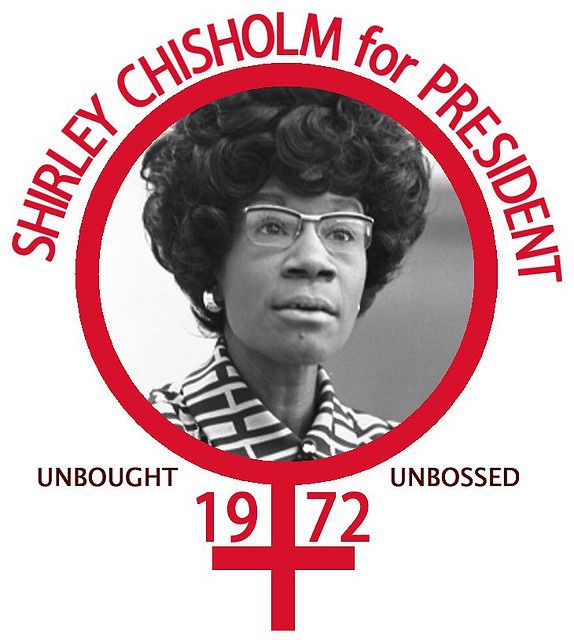
Activities
Take Action
Did you
Distribute Voter Registration Flyer (enclosed) and ask each individual to
sign the Pledge Card (enclosed) promising to vote in the 2020
Presidential Election. If you do not have printed copies of the Voter
know?
Registration Flyer, secure signatures on the Pledge Card and give
instructions to the potential voter on how to access the information
online.
Conduct a Virtual or In-Person Voter Registration Awareness Booth
• Voter Registration Awareness Drives should take place during
Women were not September 25 – 27, 2020.
• Distribute Voter Registration Cards and ask each individual to
allowed to vote sign the Pledge Card (enclosed) promising to vote in the 2020
until 1920. Presidential Election. If you do not have voter registration cards,
secure the pledges on the card and give instructions to the
potential voter on how to download a form.
• You can show people how to register to vote online at
On August 26, 1920, www.usa.gov/register-to-vote/. If someone is already
the 19th Amendment registered, help them check that their registration is up-to-date
and verify the location of their polling place.
to the Constitution
Conduct a Virtual or In-Person Promise to Vote Booth
was finally ratified.
• Promise to Vote Booths should be held on October 24, 2020.
• Distribute voter resources and Promise to Vote stickers. Ask
each individual to sign the Pledge Card (enclosed) promising to
The 19th Amendment vote in the 2020 Presidential Election.
says that women, like
men, deserve all
the rights and
responsibilities of
citizenship!
The year 2020 marks
the 100th anniversary
of the passage of the
19th Amendment,
guaranteeing and
protecting women’s
constitutional right
to vote.
7
Facts about Voting
Myth: It is hard to meet the voters’ registration qualifications.
Fact: You can register to vote if you are:
A United States Citizen
18 years old by election day
A resident of the state in which you are voting
Myth: Someone must register me.
Fact: You can register yourself. Fill out a registration form. Sign the form yourself.
Registration must take place 30 days before an election to be eligible to vote in that
election.
Myth: Forms are hard to get.
Fact: Forms are available at a variety of locations such as: Post offices, libraries, fire
stations, Department of Motor Vehicle offices, city, and county offices. You can
contact the Voter Registration Office in your county to get a form sent to your home.
Myth: Once I fill out the registration form, I am registered.
Fact: You are registered when you receive a voter registration card form from the
Registrar Recorder. It should arrive within 30 days.
Myth: If I do not vote in an election, I must re-register.
Fact: Registration at this time is permanent. You do not have to vote in each or any
election to remain registered as long as you do not move out of the county you’re
registered in. However, you must re-register when you move to a different county or
wish to change political parties.
Myth: I can register for someone else.
Fact: You can only register for yourself.
Myth: If I am away from my home country on Election Day, I cannot vote.
Fact: You can vote absentee. Contact your Voters Registration Office for information
on how to register for absentee voting.
Myth: Women have always been able to vote.
Fact: No. Thank you to abolitionist Elizabeth Cady Stanton and Lucretia Mott who
organized the Women’s Suffrage Movement and gained women the right to vote in
1920.
8Community Scavenger Hunt
Use the Internet, telephone book, local directories, and newspapers to find the
following information. Check off as you fill in each answer!
What are the names of the newspapers in your community?
What is the Declaration of Sentiments?
The President of your country is?
Who is the Secretary of State of the Commonwealth of Kentucky?
Who is the Governor of Kentucky?
If you could create a law, what would it be?
Where do you go to vote?
What are the major issues for the election this year?
When is the Presidential Election?
How many State Senators does Kentucky have? Are any of these people
women?
Obtain and read a campaign pamphlet from someone running for a state or
local office.
9Qualities of a Good Leader
List the characteristics a person needs to be a good leader. Can you think of 40?
1. 21.
2. 22.
3. 23.
4. 24.
5. 25.
6. 26.
7. 27.
8. 28.
9. 29.
10. 30.
11. 31.
12. 32.
13. 33.
14. 34.
15. 35.
16. 36.
17. 37.
18. 38.
19. 39.
20. 40.
10How to Judge a Candidate and See Through Distortion Techniques
Elections present voters with important choices. Whether it is a local race that will affect your community or a
national race that could change the direction of the country, it is a time to consider the issues which you care
about and decide which candidate you support.
Even if you are under 18 and not yet eligible to vote, election campaigns offer an excellent way to learn about the
people and issues that affect your future. But how do voters go about comparing and then judging the
candidates? All too often, slogans, name recognition, and personality are all that come through in the campaign
v
materials. As television has come to dominate political campaigns, it has become difficult to move beyond a
candidate’s image to the substance of the campaign. However, it is possible to move beyond style to substance.
The seven steps outlined here are designed to help you judge a candidate.
Step One: Decide what you are looking for in a candidate
Candidates can be judged in two ways: the positions they take on issues and the leadership qualities and
experience they would bring to the office. Both are important. Your first step in picking a candidate is to decide
the issues you care about and the qualities you want in a leader.
When you consider issues, think about community or national concerns that you want people in government to
address. For example, you may be interested in the threat of nuclear war, government funding for student loans
or teenage unemployment. Those are issues.
Step Two: Find out about the candidates
Use the Internet, magazines, and television to find out about the candidates.
Step Three: Gather materials about the candidates
Put together a “library” of information about the candidates. Collect any information you can find on the
candidates. Call campaign headquarters and watch the press. Sources of information from which you may
choose include:
• Campaign literature
• Direct mail letters (mass mailings sent to selected voters asking for support and funding) • Press reports
(newspaper clippings and television and radio reports)
• Radio and television ads
• Candidates’ speeches
• Candidate debates
Step Four: Evaluate candidates' stands on issues
As you read the materials you collect, keep a journal. Do the materials give you an overall impression of the
candidate? What specific conclusions can you draw about the candidates’ stands on issues? Record what you
have learned about their stands on your priority issues from each source.
Step Five: Learn about the candidates' leadership abilities
Deciding if a candidate will be a good leader is difficult. How can you know if someone will be honest, open or
able to act under pressure if elected to office? Here are some ways to read between the lines as you evaluate
the candidates’ leadership qualities.
• Look at the candidates’ background and their experience. How well prepared are they for the job?
• Observe the candidates’ campaigns. Do they accept speaking engagements before different groups that
might not be sympathetic? Do they accept invitations to debate?
• Review the campaign materials. As you read the materials and watch the campaign develop, add to your
journal information that provides insights into candidates’ personalities and leadership qualities. For
example, do campaign materials emphasize issues or just image?
11How to Judge a Candidate
Step Six: Learn how other people view the candidate
Now that you have accumulated information from campaigns and other sources, you will want to learn what
other people think about the candidates. Their opinions can help clarify your own view, but do not discount your
own informed judgments. You may be the most careful observer of all!
• Seek the opinions of others in your community who keep track of political campaigns. Interview three
people (not family members), such as a shopkeeper, neighbor, or politically active volunteer, to find out
which candidate they support and why.
• Learn about endorsements. This is a way for interest groups and organizations to give a “stamp of
approval” to a candidate. Endorsements provide clues to the issues that a candidate supports. For
instance, a candidate endorsed by the Sierra Club (an environmental organization) will probably be in favor
of legislation that protects the environment. A candidate endorsed by the National Rifle Association will
probably be opposed to gun control laws. Get a list of endorsements from each of the candidates’
websites. Find out what these groups stand for and find out why they are endorsing this candidate.
Step Seven: Sorting it all out
Review the information you have collected and compare all the candidates. Ask yourself these final questions:
• Which candidates’ view on the issues do you agree with the most?
• Who ran a fair campaign?
• Which candidate demonstrated the most knowledge on the issues?
• Which candidate has the leadership qualities you are looking for?
• Is the choice clear? If so, pick a candidate.
See Through Distortion Techniques
Honest and Fair
All the candidates are trying to sell themselves to voters. Sometimes their language is so skillfully crafted that
they distort the truth in ways that are difficult for even the most careful observer to detect. Here are examples
of distortion techniques that you should watch for as you review candidates’ campaign materials.
• Name Calling/Appeals to Prejudice: These are attacks on an opponent based on characteristics that will
not affect performance in office. Accusations such as, “My opponent is arrogant and full of hot air”, do not
give any real information about the candidate. References to race, ethnicity, religion, gender, sexuality,
immigration history, or marital status can be subtly used to instill prejudice.
• Rumor Mongering: These include statements such as, “everyone says my opponent is a crook, but I have
no personal knowledge of any wrongdoing”, which implies, but does not state that the opponent is guilty.
• Guilt by Association: These are statement such as, “we all know Candidate B is backed by big money
interests”, that attack candidates because of their supporters rather than because of their stand on the
issues.
• Catchwords: These are phrases such as “Law and order” or “un- American” that are designed to trigger a
knee-jerk emotional reaction rather than to inform.
• Passing the Blame: These are instances in which a candidate denies responsibility for an action or
blames an opponent for things over which he/she has no control.
• Promising the Sky: These are unrealistic promises that no elected official could fulfill.
• Evading Real Issues: These include instances in which candidates may avoid answering direct questions.
12History of Women's Rights
Did you know about women’s struggle to gain the right to vote?
If you opened up a dictionary and looked up the word Suffrage you would find that it means the right to vote.
Our country is a democracy, identified by the phrase, “one person, one vote.” The framework of our
government, The United States Constitution did not give the right to vote to everyone. In fact, two groups in
this country, African Americans and women were denied this inalienable right for a long time. It was a long
and arduous battle for the citizens of this country to be able to stand side by side and declare their right to
vote in elections.
When the U.S. Constitution was drafted by a group of men in Philadelphia in 1787 they did not include women
as they debated and discussed how to govern the country. Compelled to create a democracy, it was with
limitations that did not extend past white men who qualified by various religious, property, and taxpaying
criteria.
The Fifteenth Amendment provided the right to vote for black men in 1869 but it took until 1920 for women
to gain that right when the Nineteenth Amendment was ratified (passed.
The struggle really began in 1848 at a meeting held in New York called the Seneca Falls Convention. It was at
this convention that people assembled, took the words of Thomas Jefferson in the Declaration of
Independence, and stated their claim to their voting rights in a document called the Declaration of
Sentiments (see below. Just like the Declaration of Independence, which was signed by 56 men, the
Declaration of Sentiments was also signed by those who adopted it-68 women and 32 men. The principle
author was Elizabeth Cady Stanton.
At a time when the role of women was very traditional these women became the foundation of the
Suffragist Movement and fought long and hard but most did not live till 1920 to see their battle won. It
caused a great deal of controversy. People respected their hard fought battle at first but were unwilling to let
go of their traditional mindset. One article in a local newspaper event described it to be the “most shocking
and unnatural paper recorded in the history of womanity.” It was the Declaration of Sentiments that formed
the basis for the movement that eventually won women the right to vote 72 years later!
2020 marks the Centennial of the 19th Amendment giving women the right to vote in the United States.
GSKWRC will celebrate the beginning of women's access to the right to vote by offering a new Women's
Suffrage Centennial Patch Program that honors the legacy and spirit of the women’s suffrage movement.
Bibliography: Arlington, K.M. and Taylor, W., eds (1992). Voting Rights in America; Berghe, G.V. and Cultice, W.W (1992). Youth’s Battle for the
Ballot; Roger, D.W., ed (1992). Voting and the Spirit of American Democracy; Williamson and Chilton (1960). American Suffrage from Property to
Democracy, 1760-1860.
13The Declaration of Sentiments
When, in the course of human events, it becomes necessary for one portion of the family of man to assume
among the people of the earth a position different from that which they have hitherto occupied, but one to
which the laws of nature and of nature’s God entitle them, a decent respect to the opinions of mankind
required that they should declare the causes that impel them to such a course.
We hold these truths to be self-evident: that all men and women are created equal; that they are endowed by
their Creator with certain inalienable rights; that among these are life, liberty, and the pursuit of happiness;
that to secure these rights governments are instituted, deriving their just powers from the consent of the
governed. Whenever any form of government becomes destructive of these ends, it is the right of those who
suffer from it to refuse allegiance to it, and to insist upon the institution of a new government, laying its
foundation on such principles, and organizing its power in such form, as to them shall seem most likely to
affect their safety and happiness.
Prudence, indeed, will dictate that governments long established should not be changed for light and
transient causes; and accordingly all experience hath shown that mankind is more disposed to suffer. While
evils are sufferable, than to right themselves by abolishing the forms to which they are accustomed. But
when a long train of abuses and usurpations, pursuing invariably the same object, evinces a design to reduce
them under absolute despotism, it is their duty to throw off such government, and to provide new guards for
their future security. Such has been the patient sufferance of the women under this government, such is
now the necessity which constrains them to demand the equal station to which they are entitled.
• The history of mankind is a history of repeated injuries and usurpations on the part of man toward
women, having in direct object the establishment of an absolute tyranny over her. To prove this,
let facts be submitted to a candid world.
• He has never permitted her to exercise her inalienable right to the elective franchise.
• He has compelled her to submit to laws, in the formation of which she had no voice.
• He has withheld from her rights which are given to the most ignorant and degraded men—both
natives and foreigners.
• Having deprived her of this first right of citizen, the elective franchise, thereby leaving her without
representation in the halls of legislation, he has oppressed her on all sides.
• He has made her, if married, in the eye of the law, civilly dead.
• He has taken from her all right in property, even to the wages she earns.
• He has made her, morally, an irresponsible being, as she can commit many crimes with impunity,
provided they be done in the presence of her husband, he becoming, to all intents and purposes,
her master—the law giving him power to deprive her of her liberty, and to administer
chastisement.
• He has so framed the laws of divorce, as to what shall by the proper causes, and in case of
separation, to whom the guardianship of the children shall be given, as to be wholly regardless of
the happiness of women—the law, in all cases, going upon a false supposition of the supremacy of
man, and giving all power into his hands.
14The Declaration of Sentiments continued
After depriving her of all rights as a married woman, if single, and the owner of property, he has taxed her to
support a government which recognizes her only when property can be made profi table to it.
• He has monopolized nearly all the profitable employments, and from those she is permitted to
follow, she received but a scanty remuneration. He closes against her all the avenues to wealth
and distinction which he considers most honorable to himself. As a teacher of theology, medicine,
or law, she is not known.
• He has denied her the facilities for obtaining a thorough education, all colleges being closed
against her.
• He allows her in church, as well as state, but a subordinate position, claiming apostolic authority
for her exclusion from the ministry, and, with some exceptions, from any public participation in
the affairs of the church.
• He has created a false public sentiment by giving to the world a different code of morals for men
and women, by which moral delinquencies which exclude women from society are not only
tolerated, but deemed of little account in man.
• He has usurped the prerogative of Jehovah himself, claiming it as his right to assign for her a
sphere of action, when that belongs to her conscience and to her God.
• He has endeavored, in every way that he could, to destroy her confidence in her own powers, to
lessen her self-respect, and to make her willing to lead a dependent and abject life. Now, in view
of this entire disfranchisement of one-half the people of this country, their social and religious
degradation—in view of the unjust laws above mentioned, and because women do feel
themselves aggrieved, oppressed, and fraudulently deprived of their most sacred rights, we insist
that they have immediate admission to all the rights and privileges which belong to them as
citizens of the United States.
Now, in view of this entire disfranchisement of one-half the people of this country, their social and religious
degradation—in view of the unjust laws above mentioned, and because women do feel themselves
aggrieved, oppressed, and fraudulently deprived of their most sacred rights, we insist that they have
immediate admission to all the rights and privileges which belong to them as citizens of the United States.
As cited in Fowler and Wells (1889). Elizabeth Cady Stanton, A History of Woman Suffrage. Rochester, NY: 1. P. 70
15Glossary: Election Terms
Here are some words you will hear or see during an election campaign.
Absentee Voting - A way people can vote when they can’t get to their polling place. They vote on a special form
and mail it.
Ballot - A list of people who are running for public office: a form voters use to show whom they vote for.
Ballot Box - A box people’s votes are put into.
Budget - A plan for spending money.
Cabinet - The group of government department heads who advise the president.
Campaign - What a candidate does to get people to vote for her/him. Campaign Committee - A group of
political party members who plan how to get the party’s candidate elected.
Candidate - A person who runs for a public office: someone who wants to be chosen for public office.
Caucus - A special meeting that only important members of a political party go to.
Chad - Punched out paper in a paper ballot that was difficult to count because it didn’t fully release from the
ballot during the 2008 election.
Chief Executive - The president; the official in charge of our relations with other nations.
Civil Rights - Rights that all citizens have. Those rights are given by law.
Commander in Chief - The president; the head of the army, navy, and other military forces.
Defense Program - A plan or system to protect our country. Weapons and armed forces are part of our
defense program.
Delegate - A party member who is chosen by other members to go to the party’s convention.
Democrat - A member of the Democratic party.
Democratic Party - One of our two main political parties. Its symbol is the donkey.
Domestic Issue - An issue/problem inside our country.
Economic Aid - Help such as money or food that a country provides to another country.
Elected Official - A person who is elected to a public office in the government, as opposed to appointed or
hired. The president of the United States is an elected official.
Election Officer - A person who works at the place where people vote to make sure voting laws are followed; a
poll watcher.
Electoral College - A group of people who meet right after an election for our president. Our constitution says
this group formally elects the president and vice-president.
16Glossary: Election Termscontinued
o ei n o ic - The ways in which our government relates to the government of our nations.
GOP - Acronym which stands for Grand Old Party, the nickname of the Republican party.
n u u tion - January 20, the day when the president is sworn into public office.
ncu ent - A person who holds a public office and wants to be elected to that office again.
nde endent - A person who does not belong to either of the two main political parties.
ue - A point of debate or controversy between the candidates or parties. How to deal with unemployment
or social security would be examples of issues.
o it - More than half. A group or political party whose numbers equal more than half of a body or vote.
i it id - Military help, (soldiers and/or weapons that one or more countries provide to another country.
N tion on ention - An important political meeting for party members from all over the country,
at which republicans, democrats and/or other political party’s choose their party’s candidate for president.
Nation cono - The system a country has which keeps track of how much it spends and
makes.
N tion ection - An election for president and vice-president. All registered voters in the nation can vote in
a national election.
Nominate - To suggest that someone be a candidate for an office. Oath of Office -- The pledge that the new
president makes to uphold and defend the constitution.
t e d u te - An office where party members meet to work for the party and/or candidate.
e ident e ect - The title for the candidate who wins the election for president but who has not yet taken
the oath of office.
i ection - An election that a political party holds in a state, to narrow down the number
of running for an office.
Register - Sign up to vote.
Registered Party Member - Someone who signs a form saying she or he belongs to a certain political party.
Registry of Voters - The office that handles records of voters and information about voting.
(In some places, this office is called the Office of Voter Registration. 23
Republican - A member of the Republican Party.
Republican Party - One of our two main political parties. Its symbol is the elephant.
17Glossary: Election Terms continued
Social Program - A plan or system to help nations citizens. Medicare is a social program that helps to pay
medical bills.
Special Interest Group - A group of people who all want specific things from the government. Environmental
organizations are often special interest groups.
State Convention - A big political event held by each party. This is where national delegates are selected.
Super Delegate - Important players in the National Parties who help decide which candidate will secure the
nomination.
Term - How long a person is elected to a public office. The president’s term is four years.
Third Party - Any political party that is not democrat or republican.
Ticket - A list of all the candidates in one political party who are running in an election.
Treaty - An agreement between the governments of two or more nations.
Voting Machine - A machine people use when voting.
Voter Registration Card -- The form that people receive that shows they are registered to vote.
Ward - A political district that is made up of several precincts.
18NAME DATE
I Promise to Vote
1. _________________________________________________________ ___________________________
2. _________________________________________________________ ___________________________
3. ________________________________________________________ ___________________________ in the
4.
5.
_________________________________________________________ ___________________________
_________________________________________________________ ___________________________
General Election
6. _________________________________________________________ ___________________________
7. _________________________________________________________ ___________________________
8. _________________________________________________________ ___________________________
9. _________________________________________________________ ___________________________
10. _________________________________________________________ ___________________________
11. _________________________________________________________ ___________________________
12. _________________________________________________________ ___________________________
13. _________________________________________________________ ___________________________
14. _________________________________________________________ ___________________________
15. _________________________________________________________ ___________________________
16. _________________________________________________________ ___________________________
17. _________________________________________________________ ___________________________
18. _________________________________________________________ ___________________________
19. _________________________________________________________ ___________________________
20. _________________________________________________________ ___________________________
21. _________________________________________________________ ___________________________
22. _________________________________________________________ ___________________________
23. __________________________________________________________ ___________________________
24. __________________________________________________________ ___________________________
25. __________________________________________________________ ___________________________
26. __________________________________________________________ ___________________________
27. __________________________________________________________ ___________________________ This card belongs to:
28. __________________________________________________________ ___________________________ _____________________________________________
29. __________________________________________________________ ___________________________ Troop Number:
30. __________________________________________________________ ___________________________ _____________________________________________
31. __________________________________________________________ ___________________________
32. __________________________________________________________ ___________________________
33. __________________________________________________________ ___________________________
34. __________________________________________________________ ___________________________
35. __________________________________________________________ ___________________________
36. __________________________________________________________ ___________________________
37. __________________________________________________________ ___________________________
38. __________________________________________________________ ___________________________
39. __________________________________________________________ ___________________________ 19
40. __________________________________________________________ ___________________________PATCH PROGRAM EVALUATION
Troop__________________ Service Unit___________________ Age Level ____________________
Troop Leader's Name ______________________________________________________________
Address___________________________________________________________________________
Street City Zip
Phone (h) ________________ (w) ________________ Email ____________________________
Our troop of _____ girls worked on and completed the GSKWR 2020 Promise to Vote Patch
Program.
Please complete the following evaluation with responses from the girls.
1. Why did you choose this program? ____________________________________________________
___________________________________________________________________________________
2.How much time did you spend on it? __________________________________________________
3.What outside resources did you use? (people, facilities, equipment, etc.) ___________________
___________________________________________________________________________________
4.What part did you like best? _________________________________________________________
___________________________________________________________________________________
5.Who were some of the important voting facts that were discovered?
___________________________________________________________________________________
6.What are some things you learned for the first time? ____________________________________
___________________________________________________________________________________
7. How did the adults feel about the program? ____________________________________________
___________________________________________________________________________________
Please return this form by December 1st, 2020 to:
Girl Scouts of Kentucky’s Wilderness Road
ATTN: Programming Department
2277 Executive Drive
Lexington, KY 40505
OR via email to kmauldin@gswrc.org
21How to host a Virtual Voter Booth
Virtual Voter Booths hosted on social media give girls a way to stay safe, achieve their goals and help others in
the community.
1. Discuss the purpose of a Virtual Voter Booth
Brainstorm how your troop can virtually engage and empower others to understand the voting process in a
patriotic—not political— manner, eagerly anticipate their right to vote, and encourage and enable women to
exercise their right to vote.
2. Choose a virtual platform
There are several different virtual tools you can use to host a Virtual Voter Booth. Here are several suggestions
to help you.
• Google Hangouts Meet
• Microsoft Teams
• Skype
• Zoom
• Facebook Event or Facebook Live
You may have girls in your troop or group who are facing unique issues due to living in remote areas without
Internet access, or with limited access to technology, or other economic circumstances. Make certain you are
able to accommodate and include all girls, regardless of their situations, before moving forward with plans to
go virtual. Ensure that your troop utilizes a video conferencing service that is accessible on all types of
devices. For example, you may need to stay away from Face Time because not everyone has an Apple brand
phone (Face Time is only available on IOS). Also, the video program should work the same on a cell phone as it
does on a laptop or tablet considering that girls may or may not have the same devices.
3. Make it personal and fun!
Emphasize that the Virtual Voter Booth will be girl-led by having girls create a simple action plan to boost
engagement!
• Create a Troop Playlist to play while attendees enter or exit the Virtual Voter Booth or use Virtual Voter
Booth photo props– the options are endless.
4. Consider the logistics
• Plan your agenda ahead of time.
• Prepare some fun and respectful protocols.
• Follow the safety steps under the GSUSA Safety Activity Checkpoints for Virtual Meetings.
• Make sure girls know how to be safe on the Internet by completing the Girl Scout Internet Safety Pledge
• Watch the GSKWR Online Safety Refresher
If you are unsure about a safety or privacy feature on a virtual platform, always contact someone on staff at
council for assistance.
5. Invite friends and family
Send Virtual Voter Booth invitations through social media, email and text. Don’t forget to mention the fact Girl
Scouts are still changing the world even when circumstances are keeping them from meeting up in person.
6. Promote on social media and in your community
Be sure to use the hashtags below and tag @KYGirlScouts on your social media posts.
#VirtualVoterBooth #KYGirlScoutsatHome #PromisetoVote
22VOTE I PROMISE TO
VIRTUAL HIGH FIVE

                           TOVOTE
                     ROMISE
                   #P

I PROMISE A GIRL SCOUT I'D VOTE
I PROMISED (Girl Scout Name) I'D VOTE
Important dates to remember. . .
    Kentucky Primary Registration Deadline: May 26, 2020
    Kentucky Primary Election: June 23, 2020
    Kentucky General Election Registration Deadline: October 5, 2020
    Kentucky General Election: November 3, 2020

National Conventions
v July 13-16, 2020
Democratic Party National Convention
v August 24-27, 2020
Republican Party National Convention

Did you know?
• The first woman to run for U.S. president was Victoria Woodhull, who campaigned
for the office in 1872 under the National Woman’s Suffrage Association.
• Jeanette Rankin of Montana became the first woman elected to Congress in 1916.
• The first female governor of a U.S. state was Wyoming governor Nellie Tayloe Ross,
elected in 1924.
• The first female member of a president’s cabinet was Frances Perkins, Secretary
of Labor under FDR.

                                   Special thanks to our community partners for their
                                   support and assistance on the 2020 Promise to
                                   Vote program: Kentucky’s Secretary of State
                                   office, the Kentucky League of Women Voters and
                                   the Kentucky Historical Society.

                                   Thank you to our Girl Scout sister from the Girl
                                   Scout Council of Eastern Pennsylvania and Central
                                   Indiana for their inspiration and resources that
                                   were used to develop this program.
You can also read


