Doing business in Uzbekistan - An introductory guide to tax and legal issues - EY
←
→
Page content transcription
If your browser does not render page correctly, please read the page content below

Doing business
in Uzbekistan
An introductory guide
to tax and legal issues
Contents
       1. Welcome to Uzbekistan�������������������������������������������������������������� 3
       2. Getting started���������������������������������������������������������������������������� 5
          Arriving in Uzbekistan ���������������������������������������������������������������� 5
           Forms of legal presence available in Uzbekistan������������������������ 6
           Establishing a legal presence������������������������������������������������������ 7
       3. Overview of tax rules in Uzbekistan����������������������������������������11
          Upcoming new Tax Code������������������������������������������������������������11
          Individual income tax and social contributions ������������������������11
          Corporate income tax (CIT)������������������������������������������������������12
          Withholding tax (WHT) — other than individual income tax������13
          Value added tax (VAT)��������������������������������������������������������������14
          Certain other taxes��������������������������������������������������������������������16
          Simplified tax regime����������������������������������������������������������������16
          Tax administration ��������������������������������������������������������������������17
       4. Other laws that affect business administration����������������������19
          Employment regulations�����������������������������������������������������������19
          Banking regulations������������������������������������������������������������������19
          Currency regulations ����������������������������������������������������������������19
       EY in Uzbekistan ��������������������������������������������������������������������������21
       Appendix����������������������������������������������������������������������������������������22
          Double tax treaties��������������������������������������������������������������������22
          List of countries with preferential tax regimes��������������������������24

Cover: Bird-eye view at Tashkent city, TV tower

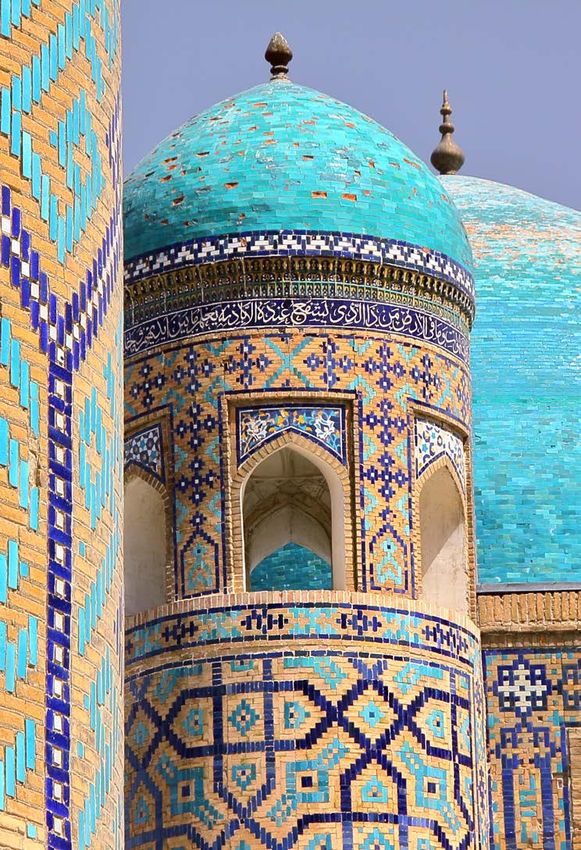
This page: The memorial complex Shahi Zinda, Samarkand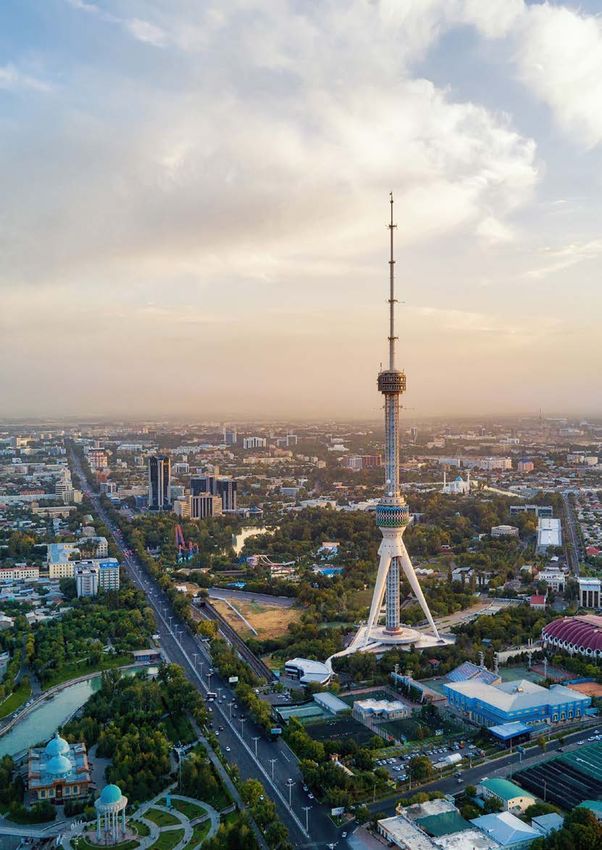
Preface

This booklet is intended to provide useful     This guide is a brief summary of the rules
practical guidance on the legal and tax        in force as of 1 January 2019. It is not a
matters that investors should take care of     substitute for comprehensive professional
when starting a business in Uzbekistan.        advice, which should be sought before
In particular, we hope that it will help       engaging in any significant transaction
investors to avoid common pitfalls and         or investment. It should also be noted
will clarify areas where some forethought      that this guide does not cover all taxes in
and planning will enable problems to           Uzbekistan. Here we cover only the most
be avoided. Uzbekistan offers many             common and important ones, so advice
opportunities, and encouraging foreign         should be sought as to the actual taxes
investment in the main sectors of the          applicable to any particular business.
economy is a key priority for the country.
                                               We wish you every success in this exciting
This guide has four sections:                  and dynamic environment.
1. Welcome to Uzbekistan
2. Getting started
3. Overview of tax rules in Uzbekistan
4. Overview of other laws affecting
   business administration.

    1                                    2

    3                                    4

                                                           Doing business in Uzbekistan      1
                                             An introductory guide to tax and legal issues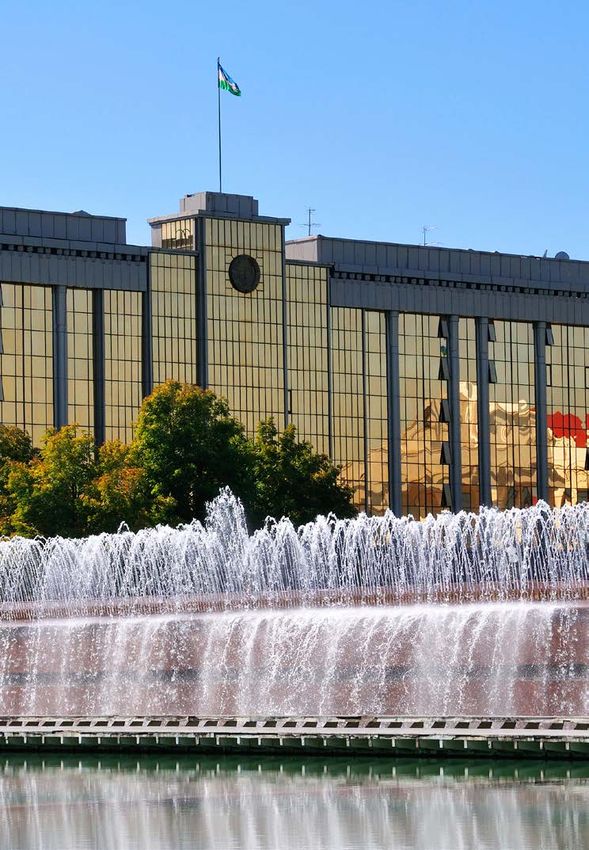
Photo: The fountain near the building of
    the Cabinet of Ministers of the Republic
    of Uzbekistan, Tashkent

2        Doing business in Uzbekistan
         An introductory guide to tax and legal issues
1

Welcome to Uzbekistan

    Land area:                                             Capital:                                            Population:                                 Time:
    448,900 km2                                            Tashkent                                            33.3 million                                +5 GMT

                               Tashkent
               Khiva

                     Bukhara
                   Samarkand

Fact sheet                                                                                                                           Official public holidays
 Uzbekistan                                                                                                                           Holiday                                   Date

 Capital                                              Tashkent                                                                        New Year’s holiday                        1 January

 Administration                                       Uzbekistan consists of the Republic of Karakalpakstan,                          International Women’s Day                 8 March
                                                      12 provinces (viloyats) and Tashkent city
                                                                                                                                      Navruz holiday                            21 March
 Bordering countries                                  Kazakhstan, Kyrgyzstan, Tajikistan, Turkmenistan,
                                                      Afghanistan                                                                     Day of Memory and Honor                   9 May
 Land area                                            448,900 km2                                                                                                               First day,
                                                                                                                                      Ramadan Eid
                                                                                                                                                                                e.g. 5 June*
 Population (1 January 2019)                          33.3 million
                                                                                                                                      Kurban Eid                                First day,
 Languages                                            Uzbek                                                                                                                     e.g. 12 August*

 Central bank                                         Central Bank of the Republic of Uzbekistan                                      Independence Day                          1 September

                                                                                                                                      Teacher’s day                             1 October
 Major cities                                         Tashkent, Samarkand, Bukhara, Khiva
                                                                                                                                      Constitution Day                          8 December
 Currency unit                                        Uzbekistan Soum (UZS)
                                                                                                                                     * The tentative dates of the religious holidays are indicated
 Exchange rate                                        US$ 1=UZS 8,336.25                                                                for 2019. The dates vary from year to year based on
 as of 1 January 2019                                 EUR 1=UZS 9,533.34                                                                lunar calendar.
                                                      RUB 1=UZS 119.85
                                                      CNY 1=UZS 1,212.46

Sources: Official site of the President of the Republic of Uzbekistan, the Central Bank of Uzbekistan,
The State Committee of the Republic of Uzbekistan on Statistics.

Time differences between Tashkent and selected cities during winter hours                                                            Time
    –10            –5           –4           –3             –2             –1                            +1       +3       +4        Uzbekistan’s time zone is five hours ahead
                                                                                                                                     of Greenwich Mean Time (GMT).

                                                                                                                                     Business hours
New York       London         Paris,         Kiev         Minsk         Baku,        Tashkent        Astana,    Beijing   Tokyo,
                            Frankfurt                    Moscow         Tbilisi,                     Almaty,              Seoul      Uzbek offices are generally open from 9:00
                                                         Istanbul      Yerevan                       Bishkek                         AM to 6:00 PM, Monday to Friday, and
                                                                                                                                     closed Saturdays and Sundays.

                                                                                                                                                 Doing business in Uzbekistan                         3
                                                                                                                                   An introductory guide to tax and legal issues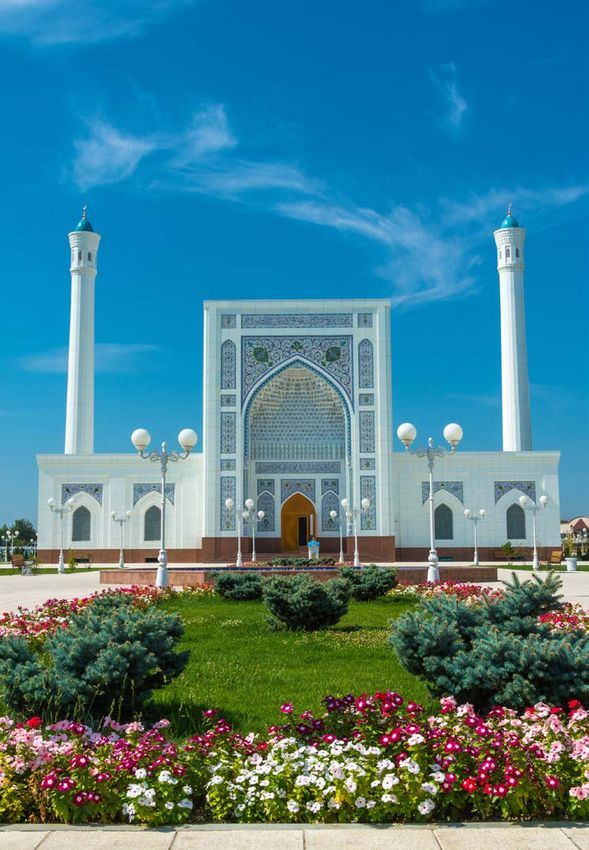
Photo: Minor Mosque, Tashkent

4        Doing business in Uzbekistan
         An introductory guide to tax and legal issues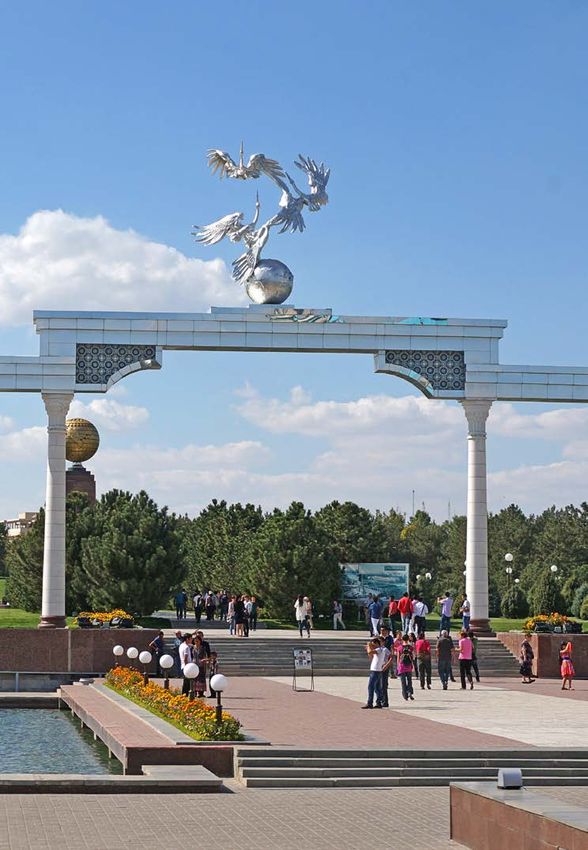
2

Getting started

Arriving in Uzbekistan                         • Passengers in transit who continue their
                                                 journey within 24 hours by the same                  Should you require assistance
Temporary visas                                  or first connecting aircraft if they hold            in planning and managing your
In general, all foreign nationals and            valid onward and return documentation                human capital needs, EY can
stateless persons are required to obtain a       and if they do not leave the airport’s               advise on and assist with
visa to enter Uzbekistan. The general visa       transit area                                         obtaining work permits for foreign
requirements do not apply to the following     • Nationals of certain countries holding               employees, tax registration, tax
individuals:                                     diplomatic passports who have                        and legal compliance for expatriate
• Nationals of the following CIS countries:      respective accreditation                             individuals.
  Azerbaijan, Armenia, Belarus, Georgia,       • Nationals of countries with
  Kazakhstan, Kyrgyzstan (if up to 60            which Uzbekistan has respective
  days), Moldova, Russia, Tajikistan (if up      intergovernmental agreements                    For more convenience in obtaining visas
  to 30 days) and Ukraine                      The visa requirements are subject                 to Uzbekistan, starting from 15 July
• Based on a new visa-free regime              to frequent changes. Consequently,                2018 an electronic visa can be issued to
  (introduced from 10 February 2018)           individuals should verify them before             a foreign citizen through the “E-VISA.UZ”
  for stays up to 30 days of nationals         planning a trip to Uzbekistan.                    system for entry and stay in the Republic
  of the following countries: Japan,                                                             of Uzbekistan for a period of 30 days
                                               Business visas
  Indonesia, Israel, Korea (South),                                                              with a single entry. The issued electronic
  Malaysia, Singapore and Turkey; as           Business visas are issued to foreign              visa is valid for 90 days from the date of
  well as of crew members of aircraft of       individuals arriving in Uzbekistan for            its issue. The time for consideration of
  foreign airlines carrying out regular        business purposes (e.g., a business trip,         applications for registration and issuance
  flights to Uzbekistan. Starting 1 February   negotiations, to sign contracts, attend           of an electronic visa is two working days,
  2019, similar visa-free regime is            conferences, symposiums, forums,                  excluding the day the application was
  applied to the nationals of the following    exhibitions and concerts as well as cultural,     filed. The issued electronic visa is sent to
  countries: Australia, Austria, Argentina,    scientific, sports and other events).             the e-mail address of the foreign citizen
  Bosnia and Herzegovina, Vatican City,        Work visas                                        indicated when applying to the official web
  Luxembourg, Hungary, Brunei, Greece,                                                           portal of the “E-VISA.UZ” system.
                                               Work visas are issued to foreign individuals
  Ireland, Iceland, Italy, Canada, Andorra,
                                               arriving in Uzbekistan for employment. A          Registration
  Liechtenstein, Monaco, Belgium,
                                               work permit and work license should be            As a general rule, temporary stay of foreign
  Denmark, Spain, Netherlands, Norway,
                                               submitted to the Uzbekistan foreign affairs       citizens requires registration with the
  Sweden, Latvia, Lithuania, Mongolia,
                                               authorities in order to obtain a work visa.       Uzbekistan internal affairs departments.
  New Zealand, Portuguese Republic,
                                               See the Work permits section for details.         Registration should be made within three
  Republic of Bulgaria, Cyprus, Malta,
  Poland, San Marino, Serbia, Slovenia,        Issuance of visas                                 (3) days, excluding holidays and weekends
  Croatia, Chile, Romania, Slovak Republic,                                                      (Sundays).
                                               Visas are issued abroad by Uzbekistan
  United Kingdom, Brazil, Finland,             consulates (the Consular Department of
  Montenegro, Czech Republic, Swiss            the Embassy of Uzbekistan). Generally,
  Confederation, Estonia.                      business visas are issued based on a letter
                                               of invitation by a local Uzbekistan company,
                                               or a representative office of a foreign
                                               company, submitted to the Consular
                                               Service Department of Uzbekistan.

                                                                                                             Doing business in Uzbekistan       5
                                                                                               An introductory guide to tax and legal issues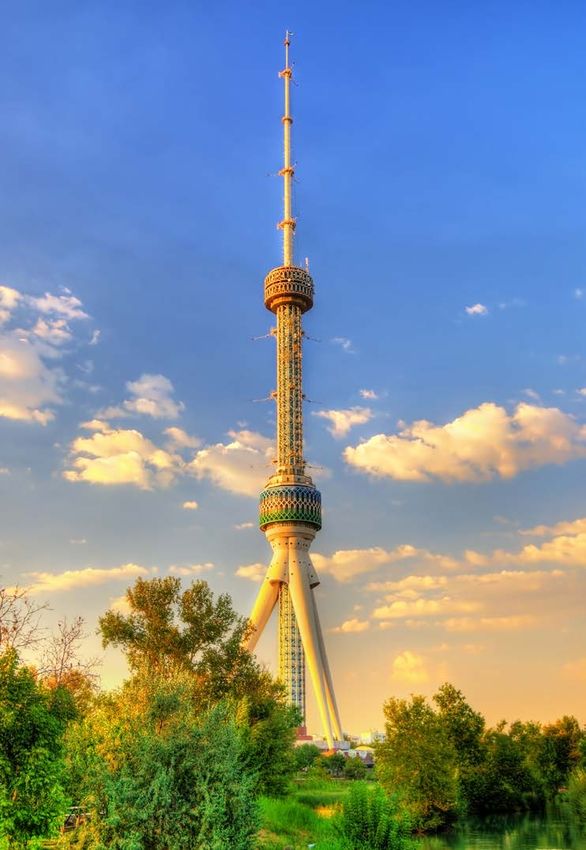
Photo: The Registan square, Samarkand

Forms of legal presence                                   The participants in an LLC are not liable for
                                                          its obligations, and, as a general rule, they
available in Uzbekistan                                   bear the risk of losses from the company’s
                                                                                                              Should you require more information
                                                                                                              on the nature and uses of various
Foreign and local investors are allowed                   activities only to the extent of their
                                                                                                              business entities in Uzbekistan,
to do business in Uzbekistan through a                    personal contributions. The main difference
                                                                                                              EY offers tax and legal advice on
number of legal forms, including but not                  between the two entities is that an LLC
                                                                                                              how to structure a business in
limited to joint stock companies, limited                 does not issue shares; instead, participants
                                                                                                              Uzbekistan as well as the full range
liability companies, representative and                   have ownership interests in the company.
                                                                                                              of legal formation and registration
branch offices, permanent establishments                                                                      or accreditation services.
                                                          The minimum charter capital for LLCs
of foreign entities, etc.
                                                          currently is approx. US$ 970. Participants’
In this section, we expand on the four types              interests are proportional to their
of business vehicles that the investors are               contributions to the charter capital
                                                                                                           Branches
mostly interested in.                                     unless the foundation documents provide
                                                          otherwise.                                       Uzbekistan law does not explicitly restrict/
Joint stock companies (JSCs)                                                                               prohibit legal entities from establishing
A JSC is a legal entity that is separate                  As a legal entity, an LLC is subject to state    branches in Uzbekistan. However, the
and distinct from its shareholders. Its                   registration and taxation in its own name;       registration and activities of such branches
shareholders are not liable for a JSC’s                   i.e., it is not tax-transparent.                 are poorly regulated or not regulated
liabilities in general. It may have one or                                                                 at all. Therefore, in practice Uzbekistan
                                                          Representative offices
more shareholders.                                                                                         authorities do not register branches of
                                                          An RO of a legal entity is a structural          foreign legal entities.
The minimum charter capital of a JSC is                   subdivision of a legal entity that established
the equivalent of approx. UZS 400 million                 it outside the location of the legal entity.     However, there is a possibility to register a
(approx. USD 48,000). The charter capital                 An RO itself is not a legal entity. Thus,        permanent establishment of a foreign legal
of a JSC should be formed with the funds                  rights and obligations are assumed by the        entity for tax purposes in Uzbekistan (i.e. it
collected by payments for shares issued.                  legal entity that established the RO. It is      is a pure tax registration and is not a legal
                                                          explicitly stated in legislation that an RO      form) for each particular project.
Establishment of a JSC is a burdensome                    cannot carry out business activities. An
and formalistic procedure; this is why                    RO is established exclusively to represent
investors prefer the form of LLC when                     and protect the interests of an entity which
deciding on the form of presence (the law                 established it and is limited to marketing
mandates the use of JSC as the form of                    and non-transactional support activities for
business for the banking, investments and                 the head office only. In case commercial
insurance activities).                                    activities are carried out through an RO,
Limited liability companies (LLCs)                        the RO may be terminated by the state
                                                          body, which accredited it.
An LLC is a company established by one
or more individuals or legal entities with a
charter capital whose size is determined
by the foundation documents. An LLC may
not be established by an entity with a single
shareholding structure unless this entity
is a JSC.

6         Doing business in Uzbekistan
          An introductory guide to tax and legal issues
Photo: Mosaic details of Gur-Emir Mausoleum, Samarkand

Establishing a legal presence                            or apostilled where necessary. Otherwise,       Under Uzbek law, the location of a legal
                                                         the Uzbekistan government authorities           entity is determined by the place of its state
As a rule, all legal entities and                        may reject the documents, which will delay      registration. The foundation documents
representative offices in Uzbekistan                     the registration process considerably.          can establish that the location of a legal
must be registered / accredited with the                 Pursuant to the Uzbekistan legislation,         entity is in the same place as its operating
respective state authorities.                            registration of a legal entity should take      governing body (i.e. its director or board
State registration of legal entities                     no more than 30 minutes. In practice it         of directors) or at the main place of its
                                                         should not take longer, provided that the       business activities.
State registration in Uzbekistan is
                                                         documents are in a good order and comply
carried out based on a “one-stop-shop”                                                                   The location plays an important part in a
                                                         with the requirements of the Uzbekistan
principle, which means that all registration                                                             legal entity’s registration and other legal
                                                         legislation.
documents should be submitted to the                                                                     events, such as determining the court
shared centres for the provision of public               Accreditation of representative offices         where an appeal should be filed (appeals
services to business entities (“One-                     There is a separate procedure for               are usually filed with a court in the
Stop-Shop Center”). Upon submission                      establishing representative offices of          defendant’s location) or the state revenue
of a complete set of documents, if the                   foreign entities in Uzbekistan.                 authority to which tax and other payments
government authorities do not raise any                                                                  will be made.
issues, a legal entity should be registered              Representative offices of foreign legal
                                                         entities are subject to accreditation with      Under Uzbek law, state authorities (in
with justice, tax and statistics authorities
                                                         the State Investments Committee of the          particular, the state revenue authorities)
at once.
                                                         Republic of Uzbekistan (the “Registration       require legal entities and representative
There is an option to submit documents                   Authority”). An RO is considered to be          offices (“entities”) to be present at
to the One-Stop-Shop-Center via Internet                 accredited from the date of issuance            the legal addresses indicated in their
through the “electronic government”                      of a certificate of accreditation by the        foundation documents and the authorities’
web-portal in the form of an electronic                  Registration Authority.                         registration data.
document. This option is available only
                                                         Generally, accreditation is granted to          If an entity is not actually present at the
with the use of an electronic digital key.
                                                         an RO for a term of 1 (one) to 3 (three)        legal address, i.e. the state tax authorities
Therefore, in practice, legal entities
                                                         years, which can be extended upon the           cannot find anyone representing this entity
established by foreign entities may not
                                                         request of head office. In practice, the        at the time of observation, such an entity
be registered through the electronic
                                                         Registration Authority issues certificates      may be penalized, i.e. its bank accounts
government, since only Uzbekistan legal
                                                         of accreditation with a limited term not        may be frozen.
entities can obtain an electronic digital key
at the moment.                                           exceeding a 1 (one) year period, subject to     Opening a bank account — for companies
                                                         annual extension. As a rule, there should       and individuals
Uzbekistan legislation requires that a                   be no substantial issues with extension of
standard set of documents be submitted in                                                                Bank accounts can be opened with a local
                                                         the accreditation.
order to complete the state registration of                                                              bank in Uzbekistan in the national currency
a legal entity.                                          It should be noted that it is planned           (Soum) and/or in a foreign currency
                                                         to cancel the accreditation of ROs by           pursuant to the rules established by the
Documents submitted to the One-Stop-                     transferring it to simplified registration      Central Bank of the Republic of Uzbekistan.
Shop Center should be accompanied by a                   procedure in the One-Stop-Shop Center for
bank document confirming payment of the                                                                  Uzbekistan legal entities can open and use
                                                         indefinite term starting from 1 April 2019.
state registration fee (the amount of which                                                              accounts in the national currency and in a
depends on the type of the entity to be                  Location (legal address)                        foreign currency with foreign banks outside
registered). It is essential to ensure that the          A legal entity’s location is the address        Uzbekistan upon permission of the Central
above-mentioned documents have been                      indicated in its foundation (i.e., charter)     Bank of the Republic of Uzbekistan.
duly signed, sealed, notarized and legalized             documents.

                                                                                                                     Doing business in Uzbekistan      7
                                                                                                       An introductory guide to tax and legal issues
Photo: Poi-Kalyan Ensemble, Bukhara

Work permits                                                permit nor a work confirmation may be           A work permit is issued for a period of
As a general rule, a foreign citizen coming                 transferred to other employers. Hence, a        one year and may be extended for one
to Uzbekistan to work (i.e. hired by                        foreign employee’s employment and his/          year. According to Uzbekistan law, only
virtue of an employment agreement) can                      her work confirmation are attached to that      Uzbekistan resident companies may apply
work in the country only upon obtaining                     specific employer.                              for work permits and work confirmations.
confirmation of the right to work in                                                                        However, in practice there is no single
                                                            The authorized government body that
Uzbekistan (“work confirmation”) issued                                                                     interpretation or understanding of this
                                                            issues work permits and work confirmations
in his/her name on the basis of the permit                                                                  provision in Uzbekistan.
                                                            is the Agency for External Labor Migration
to hire foreign labor (“work permit”) to be                 Matters (“Agency”). As a general rule,          In order to further create favorable
obtained by an employer.                                    the Agency has thirty days to review an         conditions for the implementation of labor
This rule applies to all foreign                            application package of documents and            activities by qualified foreign specialists,
employees except for those who are                          issue a work permit.                            to increase the investment attractiveness
specifically exempt, such as employees                                                                      of the Republic of Uzbekistan and raise
                                                            The same timeframe applies to work
of a representative office of a foreign                                                                     it to a completely new level, as well as to
                                                            confirmations. In practice, when a company
legal entity accredited with the State                                                                      stimulate the attraction of competitive
                                                            that is the employer applies for a work
Investments Committee of the Republic                                                                       human resources, starting 1 December
                                                            permit it should simultaneously apply for
of Uzbekistan or those individuals                                                                          2018 the requirement to obtain, as well
                                                            at least one work confirmation. In this case
who are hired within the framework of                                                                       as to extend the employer permits for
                                                            both documents should be issued within
intergovernmental treaties.                                                                                 the recruitment of highly qualified and
                                                            thirty days. In addition, the company that is
                                                                                                            qualified foreign specialists in the Republic
Although a work confirmation appears to                     the employer should take into consideration
                                                                                                            of Uzbekistan is canceled.
be a personal work permit for a foreign                     the amount of time and effort required
citizen, it is the responsibility of the                    for preparing and analyzing the necessary
employer to apply for it. Neither a work                    documentation.

    Photo: Kalta Minor, Khiva

8           Doing business in Uzbekistan
            An introductory guide to tax and legal issues
Photo: Madrasah Tilla-
Kori at Registan square,
Samarkand
Doing business in Uzbekistan 9
An introductory guide to tax and legal issuesPhoto: The building of the Ministry
of Finance of the Republic of
Uzbekistan, Tashkent
10 Doing business in Uzbekistan
An introductory guide to tax and legal issues3
Overview of tax rules
in Uzbekistan
We describe the most significant taxes in Uzbekistan in the sections that follow. There are a
number of other less significant or specific taxes such as excise taxes and a number of taxes on
“subsurface users,” i.e. oil, gas and mining companies. It is important to perform a thorough
review of any proposed business activity to determine the actual taxes that apply to it.
Upcoming new Tax Code Rates
General Uzbek individual income tax of EY offers advice and help with
The Presidential Decree on “The State all aspects of tax compliance for
residents is levied at a flat rate of 12% from
Program for Implementation of Actions on individuals and employers as well
1 January 2019, while for nonresidents a
Five Priority Directions for Development as with payroll processing. EY also
flat rate of 20% is applied.
of the Republic Uzbekistan” stipulates provides tax and legal assistance to
development of the draft of new Tax Code Dividends and interest payable to tax high-net-worth individuals.
during 2019. Information provided below resident individuals are subject to tax at the
is based on the current legislation of rate of 5% from 1 January 2019, while for
Uzbekistan effective for the year 2019. nonresidents the tax rate for dividends and worldwide income earned. The tax
interest is 10%. assessed in the annual tax declaration
(i.e. any resulting outstanding liability)
Individual income tax and Tax compliance
shall be paid by the individual no later
social contributions The tax year in Uzbekistan is the calendar than 1 June following the reporting year.
Taxpayers and residency year. A withholding obligation is placed If foreign individuals who are tax residents
on Uzbek legal entities and foreign permanently leave Uzbekistan, they
Both residents and non-residents of
legal entities operating in Uzbekistan are also obliged to file a ‘departure’ tax
Uzbekistan are subject to individual income
through permanent establishments or declaration no later than one month before
tax. Residents are taxed on their worldwide
representative offices (‘tax agents’), departure and the resulting tax liability
income, while non-residents are taxed only
which make salary-related payments shall be paid within fifteen days of filing the
on their Uzbek source income.
to individuals and provide benefits to ‘departure’ tax declaration.
A resident is generally defined as an employees. The tax agents are responsible
for the proper assessment of individual Mandatory payments to social funds
individual who is physically present in
Uzbekistan for 183 days or more in income tax, withholding and remittance of Employer unified social payment
any period up to 12 months ending in the tax to the budget. Tax agents are also (‘social tax’)
a calendar year. Accordingly, generally obliged to file monthly reports on income Employers are required to assess and pay
non‑residents are those individuals who do assessed and paid to their employees the unified social payment at a current rate
not meet the abovementioned test. and the related individual income tax of 12% (the rate of 25% is for state entities
withheld before the 25th day of the month and the entities with state ownership share
Taxable income
following the reporting month, as well as an of 50% or more) of the gross payroll (i.e.
The income of individuals consists of annual return along with annual financial at the employer’s cost). The assessed
employment income, property income, statements.¹ The individual income tax mandatory payment shall be paid to the
in-kind income and other types of income. should be paid to the budget at the time budget on a monthly basis (no later than
In general, all types of income including the income is paid, but no later than the the monthly tax return filing deadline).
benefits-in-kind are taxable in Uzbekistan, deadline for submission of monthly reports. Similarly, a cumulative return shall be
unless they are specifically exempt. submitted to the tax authorities on a
Income that is specifically exempt from A foreign citizen who becomes a tax
monthly basis no later than the 25th of the
tax includes alimony received, severance resident of Uzbekistan is obliged to file
month following the reporting month, as
pay (up to a maximum amount) and state an annual tax declaration before 1 April
well as an annual return along with annual
pension income. following the reporting year on his/her
financial statements.
1
By 15 February following the reporting year (or by 25 March following the reporting year for companies with
foreign investments and non-residents acting through a PE).
Doing business in Uzbekistan 11
An introductory guide to tax and legal issuesPhoto: The building of the Cabinet of Ministers of the Republic of Uzbekistan, Tashkent
Employee pension fund contributions Corporate income tax (CIT) For tax purposes assets may be depreciated
Employers must make monthly mandatory up to the maximum rates indicated in the
Payers following table:
contributions to individual accumulative
pension accounts of local employees Taxpayers for CIT purposes are (i) Uzbek
resident legal entities on income from Maximum
(foreign citizens without Uzbekistan Type of fixed asset depreciation
residence permits are generally not subject worldwide sources, (ii) foreign legal entities
rate
to such contributions) at a rate of 0.1% of that carry out activities in Uzbekistan
Buildings, structures 3%
gross employment income of employees, through a permanent establishment (PE)
or receive Uzbek source income. Trains, ships, airplanes 4%
while amounts of such contributions
should be deducted from the amounts of Pipelines, communication 8%
Uzbek legal entities, with an annual equipment, electric power lines
accrued individual income tax payable. turnover less than UZS 1 billion and equipment
The individual accumulative pension fund (approximately US$ 120,000) are eligible Production machinery and 15%
contributions are reported in individual for simplified taxation regime instead of CIT equipment
income tax return of the employer, which (see the “Simplified tax regime” section). Cars, computers and office 20%
as mentioned above is to be submitted equipment
to the tax authorities on monthly basis Taxable income
Perennial plants 10%
no later than the 25th of the month Taxable income of Uzbek legal entities is
All other assets 15%
following the reporting month, as well as an determined as aggregated income less
annual return along with annual financial specifically set tax-deductible expenses Land, construction-in-progress, and certain
statements. incurred, taking into account tax relief (if other assets are not depreciated.
applicable) and certain reductions defined
Other individual taxes Intangible assets are amortized for tax
in the Tax Code. The required standards
Property tax purposes over the useful life of an asset,
of documentation (especially those
the life of the company or five years
The property tax is imposed on buildings supporting deductions) are particularly
(if the useful life cannot be determined),
and apartments of individuals. The rates high in Uzbekistan.
whichever is less.
vary from 0.2% to 0.35% applied to the
Depreciation for tax purposes
cadaster value of the property. Tax rate and compliance
To qualify as a fixed asset for tax purposes,
Land tax The regular CIT rate is 12% for the
an asset should be defined as such
year 2019. This rate also applies
An individual granted permanent possession according to the legislation on accounting.
to Uzbek enterprises with foreign
of a land plot is subject to land tax at a fixed
participation and to PEs of foreign
rate, depending on the location of the land.
companies. For commercial banks, mobile
For example, in the city of Tashkent, the
telecommunication operators, for legal
rates vary from UZS 356.8 (approximately
entities carrying out the production
US$ 0.043) to UZS 902.5 (approximately
of cement (clinker) and production of
US$ 0.11) per square meter, depending on
polyethylene granules the CIT rate is 20%.
the location of the land plot.
EY offers the following services in the area of corporate income tax:
• Advisory and structuring
• Help with the tax compliance of legal entities at every step of the process
• Tax review and due diligence services
• Other tax-related services
12 Doing business in Uzbekistan
An introductory guide to tax and legal issuesPhoto: The building of the Senate of the Republic of Uzbekistan, Tashkent
The tax period is a calendar year. CIT Taxable income Most of the double tax treaties (DTT)
declarations must be filed quarterly by Taxable income includes but concluded by Uzbekistan either provide
the 25th day of the month following the is not limited to: for exemption from Uzbek WHT or allow
reporting quarter and an annual return the reduction of WHT rates to 0%-15%.
along with annual financial statements. • Dividends and interest; However, specific requirements are to be
The final tax liability must be paid by the
• Income from the sale of property located met in order to apply the DTT provisions.
in Uzbekistan: shares, stocks, real estate. Please refer to the Appendix hereto for the
deadline for filing the tax declarations.
Taxable income is defined as the surplus list of DTTs.
Certification on quarterly estimates of
between the sale price and the original
the tax payable must be submitted to Withholding tax is remitted by the tax
purchase price;
the tax authorities by the 10th day of agents. The general rules are:
the 1st month of the reporting quarter. • Income from the sale of goods on the
Tax installment payments based on the territory of Uzbekistan. Taxable income • The
► tax must be withheld and paid no
is defined as the surplus between the later than the date the income is paid to
estimates submitted to the tax authorities
amount paid to foreigners and the the non-resident;
are required to be made by the 10th day
of each month. Companies generating original purchase price; • The
► deadline for submitting the WHT
taxable income of less than 200 time the • Royalty; return is no later than 25 calendar days
MMW per reporting quarter (approximately following the reporting calendar quarter;
• Lease fees;
US$ 5,000) are subject to CIT based
• Insurance premiums; • No
► later than 30 days following the
on actual quarterly profits and are not calendar year, the tax agent must provide
required to pay installments of CIT. • Telecommunication and freight fees; a certificate with information about all
• Fees for services rendered in Uzbekistan, entities which received income and the
etc. tax amount withheld.
Withholding tax (WHT) —
Tax rates and compliance Dividends and interest payable to Uzbek tax
other than individual residents are subject to domestic WHT at
income tax Type of income Rate of WHT the rate of 5%.
Uzbek source income of a non-resident Interest, dividends 10%
legal entity (without a PE) doing business Insurance premiums under 10%
in or with Uzbekistan is subject to WHT insurance, co-insurance, and
reinsurance risk agreements
at the source of payment without any
Income from international 6%
deductions.
transportation services and
telecommunication
Tax agents
Other income 20%
Any tax-registered entity that pays
Uzbekistan source income to a foreign
company is potentially a tax agent, who is
responsible to withhold tax from the gross
Uzbekistan source income of a non-resident
(without deductions).
Doing business in Uzbekistan 13
An introductory guide to tax and legal issuesPhoto: The building of the Oliy Majlis of the Republic of Uzbekistan, Tashkent
Value added tax (VAT) Fixed assets related input VAT rules Zero rating
As of 1 January 2019, input VAT incurred Export sales of goods (except for exports
Payers and registration
on acquired fixed assets can be offset of precious metals) for foreign currency,
VAT payers are (i) legal entities that have against output VAT in the following international transportation services,
taxable turnover (output VAT), (ii) legal manner: (i) for immovable property used utilities services provided to individuals,
entities that are obliged to pay VAT on for entrepreneurial activities taxpayer and goods and services supplied for official
taxable turnover of non-residents (reverse- may offset input VAT by equal instalments use by diplomatic missions are taxed at a
charge VAT), and (iii) legal entities and during the period of 36 calendar months, zero rate.
individuals involved in the import of goods and (ii) for fixed assets (except immovable
into the territory of Uzbekistan (import Exempt supplies
property and intangible assets) taxpayer
VAT). may offset input VAT by equal instalments Turnover and imports exempt from VAT
during the period of 12 calendar months. include:
Starting from 1 January 2019, VAT
payers are assigned with VAT registration However, VAT incurred on the purchase • financial
► services;
numbers. of such assets before 1 January 2019 is • insurance
► services;
not eligible for offset for taxpayers, which
VAT is levied at a general rate of 20%. became VAT payers as of 1 January 2019.
• goods
► (works and services) purchased
by legal entities on account of a loan
VATable turnover Purchases of services from provided by international or foreign
VAT is levied on turnover derived from the non‑residents (reverse-charge VAT) government financial institutions under
supply of goods and services, including Under place-of-supply rules, certain international treaties with the Republic of
imports, unless they are zero-rated or services are deemed to be supplied in Uzbekistan, as well as those purchased
specifically exempt. Any excise taxes paid the location of the business activity of through grants;
are included in the taxable base for VAT the purchaser of services. Where such • agricultural
► products of own
purposes. services are rendered by a nonresident production; etc.
VAT payable to the budget is generally of Uzbekistan, the Uzbek purchaser of
VAT compliance
determined as output VAT charged less these services is required to self-assess
and pay VAT to the budget via a reverse- The VAT reporting period is a calendar
allowed input VAT paid on expenses. Input month. The tax return filing and payments
VAT incurred in connection with the supply charge mechanism. It is the obligation
of the Uzbek purchaser of the services deadline is the 25th day of the month
of exempt goods and services and non- following the reporting month. The annual
business costs cannot be offset against any to pay reverse-charge VAT, which should
be allowed to offset against output VAT tax return should be submitted not later
output VAT payable. than the deadlines established for annual
once paid, subject to the general offset
procedure. financial statements.
14 Doing business in Uzbekistan
An introductory guide to tax and legal issuesPhoto: Mustakillik Square, Ezgulik archway, Tashkent
Simplified VAT regime and rates Simplified VAT regime stipulates
Uzbek legal entities, with an annual application of the following differentiated
turnover less than UZS 1 billion rates:
(approximately US$ 120,000) are eligible
for simplified taxation regime instead of Type of entity Rate
charging output VAT (see the “Simplified For legal entities of all sectors of the 7%
tax regime” section). However, such economy (except for provided below)
entities have a right to become VAT payers Construction organizations 8%
voluntarily. Retail and wholesale trade enterprises 6%
Effective from 1 January 2019 till 1 Catering, hotel industry 10%
January 2021, enterprises with an Legal entities providing professional 15%
annual turnover less than UZS 3 billion services (auditing services, consulting
services, brokerage services, etc.)
(approximately US$ 360,000) have a right
to apply a simplified regime for calculating Legal entities engaged in the sale 4%
of agricultural products, with
and paying VAT. the exception of products of own
production
Under simplified VAT regime, VAT payable
to the budget is determined as the gross
amount of output VAT without offset of
input VAT.
EY offers help with VAT
risk identification and the
calculation of VAT compliance
costs as well as with cross-
Photo: The Monument of Independence and
border VAT planning. Humanism, Mustakillik Square, Tashkent
Doing business in Uzbekistan 15
An introductory guide to tax and legal issuesPhoto: The fountain in front of the building of the Cabinet of Ministers of the Republic of Uzbekistan, Tashkent
Certain other taxes Simplified tax regime
The following table summarizes certain other significant taxes. Effective from 1 January 2019, only legal
entities with an annual turnover (revenue)
Nature of tax Rate not exceeding UZS 1 billion (approximately
Excise tax; imposed on an extensive number of specified Various
US$ 120,000) are eligible for simplified tax
services and goods produced in Uzbekistan or imported into regime. The simplified tax regime stipulates
Uzbekistan; goods subject to tax include oil and gas products, payment of a Unified Tax Payment (UTP)
alcohol, tobacco, jewelry, silverware and cars. Services subject
to tax are mobile telecommunication services.
instead of CIT and output VAT.
Property tax; imposed on the annual average depreciated value 2% The tax base for the Unified Tax Payment
of immovable property and certain other assets; land is exempt (UTP) is generally gross revenue (with
Subsurface use tax; imposed on the extraction of natural Sales 2.6% to 30% some adjustments).
resources; tax imposed on the sale price of extracted natural Waste 0.78% to 9%
resources and components and on waste derived from the Multiple UTP rates established for the
extraction or processing of natural resources year 2019 vary depending on the type of
Excess profits tax; imposed on the difference between the actual 50% business and location, e.g. from 1% (for
net sale price and the established threshold price for exported
wholesale/retail trading in very remote
natural gas
areas) up to 30% (for entities renting
Signing and commercial discovery bonuses for subsurface users; Various
payable to the state budget through the tax authorities
out property except financial leasing
companies), while the general UTP rate
Motor transport fee; imposed on purchases of cars and other Various
vehicles is 4%.
Water use tax; general rates per cubic meter Surface water UZS 120 The reporting period for UTP is a calendar
(approximately US$ 0.014) quarter. The tax return filing deadline is
Underground water UZS 150
(approximately US$ 0.018) the 25th day of the month following the
reporting period. The annual tax return
Land tax; imposed at a fixed rate per hectare, and varies Various. Example: rate in
depending on the location, quality and purpose of the land plot Zone 1 of Tashkent is UZS is submitted not later than the deadlines
157,410,563 (approximately established for annual financial statements.
US$ 18,880) per hectare
Photo: Amir Timur Museum,
Tashkent
16 Doing business in Uzbekistan
An introductory guide to tax and legal issuesFor agricultural companies there is also a Assessments Penalties for non-compliance with tax
special regime for paying the Unified Land Upon completion of a tax audit, the state regulations applied in relation to legal
Tax, the tax base of which is the statutory tax authorities usually issue a tax audit act. entities include:
land cost. The tax rate is set at 0.95% for (If no violations of tax law are discovered,
2019. The reporting period is a calendar
• The penalty for non-registration or late
an appropriate note is made in the tax audit registration is:
year. The tax filing deadline is 1 May of the act.) Based on the findings of such an act,
current year. −− if the activities are carried out for
the state tax authorities issue a decision
less than 30 (thirty) days without
of assessed amounts of taxes and other
registration the penalty is 50 times the
Tax administration obligatory payments to the budget as well
minimum wage, but no less than 10%
as related penalties and interest.
In Uzbekistan, the tax administration rules of the net revenue received from such
are complex, and penalties for even minor Appeals activities;
infringements can be significant. Taxpayers have the right, within time limits, −− if the activities are carried out for
to appeal acts of the state tax authorities. more than 30 (thirty) days without
Tax returns
registration the penalty is 100 times
Tax reports (including returns and Penalties and interest
the minimum wage, but no less than
calculations) are compiled and submitted Interest is charged on late tax payments 50% of net revenue received from such
by the taxpayer to the local tax authority at the rate of 0.045% (if assessment of activities.
for the registered address. Legal entities interest is done by the state tax authorities
as a result of a tax audit – the late
• The
► penalty for concealing revenue is
generally prepare and submit tax reports
20% of the concealed revenue.
electronically. payment interest is charged at 0.06%)
of the outstanding tax liability per each • Etc.
Tax audits
day of delay (i.e. at approximately 16.4%- There are also administrative fines that
Taxpayers are subject to tax audits, and it 21.9% per annum), but up to 100% of the may be imposed on company officers for
is vital to manage the tax audit process. outstanding tax liability. tax violations, as well as, in certain cases,
There are various types and categories of
criminal proceedings.
tax audit.
Tax audits can cover any period within the
tax statute of limitations, which is generally
5 years. Tax audits can be intrusive and
time-consuming and may sometimes even
result in criminal proceedings.
EY offers a comprehensive tax
compliance service and tax reviews
to assess in-house tax compliance
risks, as well as onsite tax audit
support and a full range of tax
appeal services, including litigation.
Doing business in Uzbekistan 17
An introductory guide to tax and legal issuesPhoto: Tashkent TV tower, Tashkent
18 Doing business in Uzbekistan
An introductory guide to tax and legal issues4
Overview of other laws
that affect business administration
Employment regulations Banking regulations devalued the local currency, the Soum, on 4
September 2017.
The Uzbekistan Labor Code and other labor The banking system of Uzbekistan consists
regulations apply to both local and foreign of the Central Bank of the Republic of The Decree provides that Uzbek legal
citizens, including individuals without Uzbekistan and commercial banks. Banking entities may purchase foreign currency in
citizenship, working in Uzbekistan on the operations in Uzbekistan must be licensed commercial banks for payments to fulfill
basis of employment agreements with by the Central Bank of the Republic of their obligations under the following types
their employers. In addition, employment Uzbekistan. of international transaction: imports of
relationships within organizations fully or goods, works and services, repatriation of
International financial institutions also profits, repayment of loans, payment of
partially owned by foreign legal entities
operate in Uzbekistan to a certain extent, travel expenses, and other non-commercial
or individuals are also regulated by Uzbek
providing financing to local businesses in transfers.
labor legislation.
the form of loans or equity investments.
An employment agreement with an The Decree further provides that individuals
The Government is now developing new who are Uzbekistan residents may sell
employee should be concluded in written
legislation to establish a more favorable foreign currency at exchange points.
form. Terms of a labor agreement are
framework for the investors coming to In addition, they may purchase foreign
determined by mutual consent of the
Uzbekistan including those in the banking currency at commercial banks provided that
employee and employer and should also
sector. the purchased foreign currency is deposited
reflect the terms established by the
Labor Code and other respective labor on an international payment card and used
regulations. Currency regulations abroad.
There is a specific requirement that Currency law states that cross-border The Decree also cancelled the requirement
foreign citizens coming to Uzbekistan are transactions can be in any currency. for the mandatory sale of foreign currency
allowed to work only upon obtaining a However, transactions within Uzbekistan export proceeds. Prior to the Decree,
work confirmation for the right to work should only be in Soum, the national certain portion of revenue from exporting
in Uzbekistan, issued in his/her name on currency of the Republic of Uzbekistan certain goods and services was subject to
the basis of a work permit to hire foreign (subject to certain exceptions). Currency mandatory conversion.
labor obtained by the employer. It is the operations may be subject to registration
with subsequent monitoring, depending on The Decree places restrictions on the use of
responsibility of the employer to apply foreign currency in Uzbekistan. It specifically
for it. the substance of the operations.
prohibits payments in foreign currency
Employment agreements may be for a The President of Uzbekistan issued a for goods (works and services), except
fixed or indefinite term. An employment decree (the “Decree”) on 2 September for payments by international payment
agreement may establish a probation 2017 to liberalize certain aspects of cards pursuant to international practice.
period that in general should not exceed Uzbekistan’s currency regime, effective 5 Prices and tariffs for goods (works and
three months. September 2017. Also, the Central Bank services) and the minimum charter capital
of the Republic of Uzbekistan effectively requirements for local companies may only
be set in local currency. Furthermore, state
duties and other mandatory payments may
be levied in Soum only.
EY offers employment law services, including the preparation of standard
It is expected that the new draft Law on
legal documents and consultancy on performance and reward planning.
Currency Regulation and Currency Control
EY has a team of law professionals who can advise on these matters. is to be developed and adopted during the
year 2019.
Doing business in Uzbekistan 19
An introductory guide to tax and legal issuesPhoto: Ezgulik archway,
Mustakillik Square, Tashkent
20 Doing business in Uzbekistan
An introductory guide to tax and legal issuesEY in Uzbekistan
EY was one of the first international advisory firms to commence operations in
Tashkent with the opening of its office in 1995. Our firm in Uzbekistan is part
of our EMEIA practice, encompassing Europe, the Middle East, India and Africa.
In Uzbekistan, EY has an office in Tashkent.
Supporting our clients in
a dynamic landscape EY Uzbekistan
office
EY office:
• Tashkent
70+ employees in
EY Uzbekistan
At EY, we know that businesses in established in office
1995
emerging markets need innovative thinking
and practical advice in order to succeed.
We support our clients by facilitating
their sustainable development strategy
and creating new growth opportunities in
today’s dynamic economic environment.
Our major services Contact information
• Assurance For more information on how EY can help you find your bearings in Uzbekistan’s
• Tax & Law tax and legal and business terrain, please contact one of the following EY leaders:
• Transactions
Assurance
• Advisory
Anvar Azamov
Head of Uzbekistan Practice
Office location Tel: +998 78 140 6482
Anvar.S.Azamov@uz.ey.com
Tashkent
Mustaqillik prospect, 75
Tax Services Transactions
Tashkent, 100000, Uzbekistan
Doniyorbek Zulunov Timur Pulatov
Tel.: +998 78 140 6482
Partner, Tax Services, Central Asia Partner, Transaction Advisory
eytashkent@uz.ey.com Tel: +998 78 140 6482 Services
Tel: +7 727 258 5960 Tel: + 7 727 258 5960
Doniyorbek.Zulunov@kz.ey.com Timur.Pulatov@kz.ey.com
Law Services Advisory
Dinara Tanasheva Ruta Makareviciute
Partner, Tax & Law Services Partner, Advisory, Central Asia
Leader for Kazakhstan and Tel: +998 78 140 6482
Central Asia Ruta.Makareviciute@uz.ey.com
Tel: +7 727 258 5960
Dinara.S.Tanasheva@kz.ey.com
Doing business in Uzbekistan 21
An introductory guide to tax and legal issuesAppendix
Double tax treaties
The following table lists the withholding rates under Uzbekistan’s tax treaties.
No. Country Dividends, % Interest, % Royalties, % No. Country Dividends, % Interest, % Royalties, %
1 Austria 5/15 (a) 10 5 31 Luxembourg 5/15 (b) 10 5
2 Azerbaijan 10 10 10 32 Malaysia 10 10 10
3 Bahrain 8 8 8 33 Moldova 5/15 (a) 10 15
4 Belarus 15 (l) 10 15 34 Netherlands (m) 5/15 (b) 10 10
5 Belgium 5/15 (a) 10 5 35 Oman 7 7 10
6 Bulgaria 10 10 10 36 Pakistan 10 10 15
7 Canada 5/15 (a) 10 5/10 (e) 37 Poland 5/15 (c) 10 10
8 China 10 10 10 38 Romania 10 10 10
9 Czech Republic 5/10 (b) 5 10 39 Russian Federation 10 10 0
10 Estonia 5/10 (b) 5 10 40 Saudi Arabia 7 7 10
11 Finland 5/15 (a) 5 0/5/10 (f) 41 Singapore 5 5 8
12 France 5/10 (a) 0/5 (d) 0 42 Slovak Republic 10 10 10
13 Georgia 5/15 (b) 10 10 43 Slovenia 8 8 10
14 Germany 5/15 (b) 5 3/5 (g) 44 Spain 5/10 (b) 5 5
15 Greece 8 10 8 45 Switzerland 5/15 (c) 0/5(d) 5
16 Hungary 10 10 10 45 Tajikistan 5/10 (b) 10 10
17 India 10 10 10 46 Thailand 10 10/15 (l) 15
18 Indonesia 10 10 10 47 Turkey 10 10 10
19 Iran 8 10 5 48 Turkmenistan 10 10 10
20 Ireland 5/10 (a) 5 5 49 Ukraine 10 10 10
21 Israel 10 10 5/10 (h) 50 United Arab Emirates 5/15 (b) 10 10
22 Italy 10 5 5 51 United Kingdom 5/10 (a) 5 5
23 Japan (k) 15 (l) 10 0/10 (i) 52 Vietnam 15 (l) 10 15
24 Jordan 7/10 (b) 10 20 53 Non-treaty countries 10 10 20
25 Kazakhstan 10 10 10
26 Korea (South) 5/15 (b) 5 2/5 (j)
27 Kuwait 5/10 (b) 8 20
28 Kyrgyzstan 5 5 15
29 Latvia 10 10 10
30 Lithuania 10 10 10
22 Doing business in Uzbekistan
An introductory guide to tax and legal issues(a) The lower rate applies if the beneficial owner of the dividends is a
company that owns at least 10% of the payer of the dividends.
(b) The lower rate applies if the beneficial owner of the dividends is a
company that owns at least 25% of the payer of the dividends.
(c) The lower rate applies if the beneficial owner of the dividends is a
company that owns at least 20% of the payer of the dividends.
(d) The 0% rate applies to interest with respect to the following:
• Loans made, guaranteed or insured by the government of the other
contracting state or an instrumentality or agency thereof
• Sales on credit of industrial, commercial or scientific equipment
• Sales on credit of merchandise between enterprises
• Bank loans
(e) The 5% rate applies to royalties paid for certain cultural works (with
exceptions) as well as for the use of, or the right to use, computer
software or patents or for information concerning industrial,
commercial or scientific experience (know-how), with exceptions.
(f) The 0% rate applies to royalties for the use of, or the right to use,
computer software, patents, designs or models, or plans. The 5%
rate applies to royalties paid for the use of, or the right to use, secret
formulas or processes, or for information concerning industrial,
commercial or scientific experience (know-how). The 10% rate applies
to royalties paid for trademarks or certain cultural works.
(g) The 3% rate applies to royalties paid for the use of, or the right to use,
copyrights of scientific works, patents, trademarks, designs or models,
plans, or secret formulas or processes, as well as for the disclosure of
industrial, commercial, or scientific knowledge. The 5% rate applies to
royalties paid for certain cultural works.
(h) The 5% rate applies to royalties paid for certain cultural works (with
exceptions).
(i) The 0% rate applies to royalties paid for the use of, or the right to use,
copyrights of literary, artistic or scientific works, including motion
picture films.
(j) The 2% rate applies to royalties for the use of, or the right to use,
industrial, commercial, or scientific equipment.
(k) These are the withholding tax rates under the USSR-Japan treaty,
which is honored by Uzbekistan.
(l) The domestic withholding tax rate for dividends and interest in
Uzbekistan is 10%. Consequently, the withholding tax rate of 15%
for dividends and interest under treaties does not apply to payments
made by Uzbek companies.
(m) Under the Protocol to the Netherlands-Uzbekistan double tax treaty, Photo: Monument of Amir Temur,
withholding tax rates may potentially be reduced to zero if certain Tashkent
conditions are met.
Doing business in Uzbekistan 23
An introductory guide to tax and legal issuesAppendix
List of countries with preferential tax regimes
Approved by Decree No. 2467 of the State Tax Committee, State Customs Committee and
Central Bank directors of 12 June 2013 (as amended on 7 November 2017).
1. Andorra 21. Liechtenstein
2. Antigua and Barbuda 22. Mauritius
3. Bahamas 23. Malaysia (only with regard to Labuan
4. Barbados Island)
5. Bahrain 24. Maldives
6. Belize 25. Malta
7. Brunei Darussalam 26. Marshall Islands
8. Vanuatu 27. Nauru
9. United Kingdom of Great Britain and 28. Netherlands Antilles
Northern Ireland (only with regard to 29. Niue (New Zealand)
the following areas): 30. United Arab Emirates (only with
1) Anguilla; regards to Dubai)
2) Bermuda Islands; 31. Panama
3) British Virgin Islands; 32. Republic of Portugal (only with regards
4) Montserrat; to Madeira Islands)
5) Gibraltar; 33. Samoa
6) Chagos Island; 34. Seychelles
7) South Georgia and South Sandwich 35. Saint Kitts and Nevis
Islands; 36. Saint Lucia
8) Turks and Caicos Islands; 37. Saint Vincent and the Grenadines
9) Cayman Islands. 38. United States of America (only with
10. Individual administrative units of regard to the following areas):
United Kingdom of Great Britain and 1) US Virgin Islands;
Northern Ireland: 2) Puerto Rico;
1) Channel Islands (Guernsey, Jersey, 3) Wyoming State;
Sark); 4) Delaware State.
2) Isle of Man. 39. Tonga
11. Grenada 40. Fiji
12. Djibouti 41. France (only with regard to the
13. Dominican Republic following areas):
14. Ireland (only with regards to Dublin 1) Kerguelen Islands;
and Shannon) 2) French Polynesia.
15. Cyprus 42. Sri Lanka
16. People’s Republic of China, only as 43. Jamaica
regards the special administrative 44. Palau (Pacific Ocean)
regions of:
1) Siangan (Hong Kong);
2) Aomyn (Macau).
17. Costa Rica
18. Cook Islands (New Zealand)
19. Liberia
20. Lebanese Republic
24 Doing business in Uzbekistan
An introductory guide to tax and legal issuesPhoto: Tashkent at night
EY | Assurance | Tax | Transactions | Advisory

About EY
EY is a global leader in assurance, tax, transaction and advisory services.
The insights and quality services we deliver help build trust and confidence
in the capital markets and in economies the world over. We develop
outstanding leaders who team to deliver on our promises to all of our
stakeholders. In so doing, we play a critical role in building a better working
world for our people, for our clients and for our communities.

EY refers to the global organization, and may refer to one or more, of the
member firms of Ernst & Young Global Limited, each of which is a separate
legal entity. Ernst & Young Global Limited, a UK company limited by
guarantee, does not provide services to clients. For more information about
our organization, please visit ey.com.

© 2019 Ernst & Young LLC Audit Organization.
All Rights Reserved.

ED None

This material has been prepared for general informational purposes only and is not intended to
be relied upon as accounting, tax, or other professional advice. Please refer to your advisors for
specific advice.

ey.com
You can also read


