Proposed PT PLN (Persero) Marketing Capability to Realize Induction Stove as A Preferable Option for LPG Substitution and Electrifying Lifestyle ...
←
→
Page content transcription
If your browser does not render page correctly, please read the page content below
Advances in Economics, Business and Management Research, volume 160
            Proceedings of the International Conference on Business and Management Research (ICBMR 2020)

 Proposed PT PLN (Persero) Marketing Capability to
    Realize Induction Stove as A Preferable Option
for LPG Substitution and Electrifying Lifestyle Growth
                                 Rizda Noverita1,* Dr Jacob Silas Mussry2
1
  PT PLN (Persero); MBA ITB Jakarta
2
  MBA ITB Jakarta
*
  Corresponding author. Email: rizda.noverita@sbm-itb.ac.id

ABSTRACT
The Government of Indonesia has been concerned about the Liquid Petroleum Gas (LPG) subsidy burden since the
supplies from domestic refineries have become limited in recent years. Meanwhile, it can be freely bought by all
segments, instead of only being accessible for the poor. Therefore, the government formulated a program to replace
LPG with induction stove, dimethyl ether, and city gas network. The optimistic target is to reach 18% of households
using an induction stove in 2050. There are some barriers to achieving this target, such as customers perceived that
induction stoves and electricity are expensive. They are also worried about electricity outage, accessibility,
compatibility, durability and security of stoves. However, the business potential of induction stoves is quite promising
that could reach 6.44% additional revenues in 2050. The aim of this study is to analyze how to strengthen the
marketing capability of PT PLN (Persero) in popularizing induction stoves as a preferable option for households to
switch their cooking fuel from LPG to electricity. The results of the study show that marketing capabilities need to be
strengthened in Customer Relationship Management (value delivery network and complaint handling), New Product
Development (features and sales team) and Brand Management (marketing communication). Based on the results,
most of the customers are interested in using an induction stove (63,36%), but just a few of them are willing to switch
(15,7%). Thus, strengthening marketing capability is needed, as well as focusing on defining the market penetration
and customer profiling. Furthermore, a business ecosystem needs to be built through proposing Government
regulation, encouraging innovation of induction stoves from the producers, and collaboration promotion programs.

Keywords: LPG subsidy burden; marketing capability; induction stove; clean cooking; electricity.

1. INTRODUCTION                                                    with demand increase is feared to burden Indonesia's
                                                                   state budget. LPG demand is expected to increase from
    Based on Indonesia Energy Outlook 2019, the                    7.2 million tons in 2017 to 17.4 million tons in 2050 or
assumption of Gross Domestic Product (GDP) growth is               an average increase of 2.7% per year, of which only 2.0
about 5.6% per year, and the rate of population growth             million tons (26%) are fulfilled from refinery production
is 0.7%. GDP and population growth are the underlying              while the rest are imported [1]. The share of LPG import
assumptions of increasing the Liquified Petroleum Gas              to total consumption reached 72% in 2017 and is
(LPG) demand in the household and commercial                       projected to reach 78% in 2050. Import of natural gas
sectors. Moreover, the long-term impact of a successful            (LNG) is inevitable and expected to continue to increase
converting program of the kerosene to LPG has                      due to the decline in natural gas reserves and
increasing LPG consumption. At the same time, the                  production. Therefore, the government is planning to
ability of LPG supplies from LPG refineries and                    substitute LPG.
domestic refineries is limited and continues to decline.
For this reason, the increasing import of LPG that align

                                 Copyright © 2020 The Authors. Published by Atlantis Press SARL.
    This is an open access article distributed under the CC BY-NC 4.0 license -http://creativecommons.org/licenses/by-nc/4.0/.   36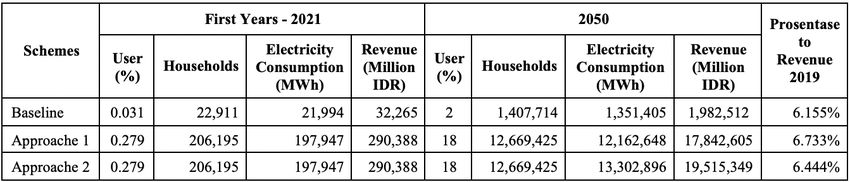
Advances in Economics, Business and Management Research, volume 160

    Furthermore, the government formulated a program         3. RESEARCH METHODOLOGY
to replace LPG with induction stoves, dimethyl ether
(DME), and the city gas network [2]. Since 2017, PT              This study applies the descriptive-analytic method
PLN (Persero) has been appointed by the government to        by analyzing primary, secondary and proxy data as an
socialize the use of induction stoves. The Government        input to analyze the implementation of clean cooking,
of Indonesia plans to convert gas stoves into induction      industry environment analysis and internal environment
stoves, which is projected to be 18% in 2050, with a         analysis. Furthermore, the output of the analysis should
change in a share of LPG usage projected to decrease         show the root cause problem and business solution
from 49% in 2017 to 31% in 2050 [1]. Thus, in 2018           through strengthening marketing capability and building
and 2019 PT PLN (Persero) followed up through                the business ecosystem.
discount promotions of increased power limit to                  Primary Data were taken from surveys and
encourage households to switch the gas stove to              interviews with potential existing customers and
induction stove with a minimum impact. Thus, there is a      expertise. The survey is taken on April 2020, with
need to assess how to strengthen the marketing               around 131 respondents from an existing customer
capability of PT PLN (Persero) to win customer               database of the household segment with criteria as
preferences and obtain their willingness to switch from      Man/Woman, 24 - 55 years old, electricity capacity
LPG stoves to induction stoves? How is product               above at least 1300 VA, Landed Residentials and Non-
acceptance of the induction stove? How strong is             landed Residentials in DKI Jakarta, Banten, West Java,
customer willingness to switch to Induction stoves?          Central Java, East Java, DI Yogyakarta, Bali, and
How is the business ecosystem to support induction           Outside Java and Bali. Furthermore, expert interviews
stoves to become more popular?                               were conducted with the General Manager PT PLN
                                                             (Persero) Research and Development and General
2. LITERATURE REVIEW                                         Manager of PT PLN (Persero) Banten Main Distribution
                                                             Unit.
    Based     on     theoretical   research,    consumer
microeconomic theory explains the transition of                 Secondary data were taken from internal PT PLN
household fuels in developing countries in which the         (Persero) and external parties, including data from the
finding that household fuel use is initially explained by    government, governmental institutions, universities,
the concept of an "energy ladder" largely boils down to      property company/association, and producers of
the effects of traditional income in consumer economic       induction stoves. Additionally, proxy data were needed
models [3]. Furthermore, enriched by generalized logic       for assumptions in calculating forecasting business
model for clean fuel scale-up, which have six key areas,     potential and market definition.
including: beyond income (interrelated social-
economic), upward transition brought, sustained use of       4. RESULTS
modern clean fuels, imperfect markets the fuel - in rural
households, easy access to modern energy sources,            4.1. Implementation of Clean Cooking in
policies to emphasis on supply-driven factors [4].           Indonesia and Benchmarks
     Implementation of clean cooking in Indonesia shows
                                                                 Based on the clean cooking trend, consumers’
success of Indonesia’s “Zero Kero” Program, the
                                                             switch from one fuel to another is strongly influenced
program to switch fuel cooking from Kerosene to LPG
                                                             by income, availability, cost/additional cost of fuel,
that reached 72,38% and Electricity only 0,85% in 2016
                                                             convenience, compatibility, government regulation,
[5]. Furthermore, it is necessary to predict the use of
                                                             incentives, and others. In Indonesia, without a stimulus,
electric fuel in 2050 based on government targets and
                                                             the usage of clean cooking-induction stoves could only
proxy data based on the benchmark implementation of
                                                             increase slightly every year. The trend of fuel cooking
the induction cooker program in Ecuador [6] and Africa
                                                             from 2014 - 2016 could illustrate the success of
[7].
                                                             Indonesia “Zero Kero” Program, the program to switch
    This study conducts Industry Environment Analysis        fuel cooking from Kerosene to LPG which increased
by using Five Porter’s Analysis [8] to know how              about 6.9% in a year and decreased about 6.92% for
competitive PT PLN (Persero) is in this industry. This       other fuel (Kerosene, Bricket woods, etc.), with only an
research area focuses on cross-functional marketing          average of 0.02% increase for electricity.
capability that is defined as Customer Relationship
                                                                 Furthermore, from a benchmark of the
Management, New Product Development, Brand
                                                             implementation of induction stove in Ecuador,
Management [9] to know which capability is needed to
                                                             participants in the registration program must register
strengthen the induction stove program for the company
                                                             through the online system, household purchases cost
and how to realize it. Furthermore, this study also
                                                             500 USD with an installation plan of up to 48 months,
analyzes the penetrated market and customer profiling
                                                             interest of 5.5%, are billed on electricity bills and
[10].

                                                                                                                         37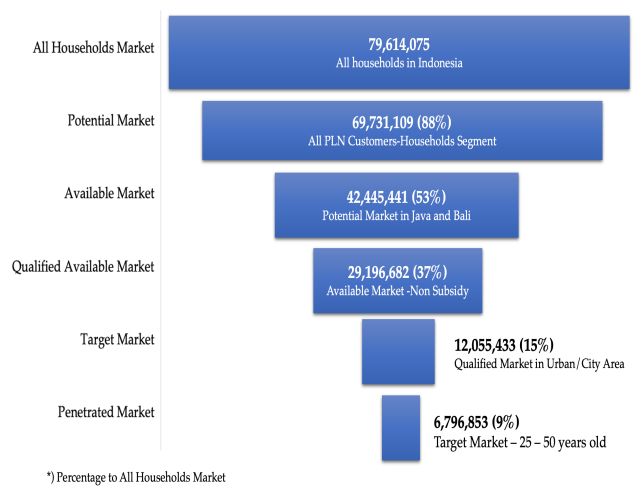
Advances in Economics, Business and Management Research, volume 160

receive 80 kWh / month of free electricity for cooking          options. The bargaining power of suppliers is low
(not billed up 80 kWh / month above average monthly             because of many suppliers. The threat of new entrants is
consumption) [6]. Nevertheless, this program did not            low because regulated tariff makes this industry less
reach the target because costs and access limited               desirable. The threat of substitutes is moderate because
household decisions around cooking fuels. Clean                 of the government support for their growth. Rivalry
cooking programs should recognize non-cooking factors           among the existing industry is at a moderate level
(e.g., compatibility, heating) as well as consistent access     because the growth of competitors in the future would
to fuel, in addition to fuel cost, as significant barriers to   make this industry more competitive.
exclusive use of clean cooking fuels. In addition, the
need for the purpose of each fuel option for cooking,           4.3. Insights from Expert Interviews and
especially for LPG subsidies which are still easily             Survey Results
accessible to all segments, also contributes to the
unfulfilled target of the induction stove adoption                  Insights obtained from the Expert Interviews are as
program in Ecuador. [6].                                        follows:
    Meanwhile, Africa implements a solution for clean           •   Induction stove is “a piece of cake” for increasing
cooking and electrification needs [7]. Thus, there is an            electricity sales of PT PLN (Persero), but it is
opportunity for future technology advancement so that               fundamental for an electrifying lifestyle program
induction stoves could be the most viable option for                that will be the future of business, besides electric
affordable fuel cooking. In the next five years the cost            vehicles, PV Rooftop, and battery storage.
of cooking with such a system will be of the same order         •   Socialization about the ways and benefits of using
as cooking with conventional fuels because battery-                 induction stoves are required.
supported eCook can also strengthen national, mini,             •   Outages due to the maintenance of the electricity
micro and nano grids. One of the lessons learned from               network usually takes 6-8 hours. It needs to be
the implementation in Africa is that there is an                    improved in the implementation so that it can take
opportunity for future technology advance that                      only 4 hours.
induction stoves could be the most viable option for            •   Government intervention is needed in realizing the
affordable fuel cooking like PV Rooftop [7].                        scale-up of using an induction stove. In addition to
                                                                    the issue of the purchase price of an induction
4.2. Industry Environment Analysis - Porter’s                       stove, customers do not feel the urgency to switch,
Five Forces Analysis                                                with the various reasons mentioned above. As long
                                                                    as it is still an introduction and popularization
    The aim of using Porter’s Five Forces Analysis is to            program, using the induction stove will not be the
know a complete picture of what is influencing                      choice of the main customers
profitability in the industry and identify game-changing        •   Collaboration with induction stove producers is
trends. An initial assessment concludes that competition            needed to market the induction stove on a massive
in this industry is high, but with high potential to be             scale. The collaboration includes innovating in
more profitable in the long term.                                   accommodating equipment that is not yet
   This study found that the bargaining power of                    compatible with the current Induction stove and
buyers is low because of regulated tariff and little                reducing the price.
                                                                •   It is necessary to prepare and propose Indonesia
                                                                    National Standards (Standar Nasional Indonesia -
                                                                    SNI) criteria as a condition for the distribution of
                                                                    induction stove products in Indonesia. This can
                                                                    reduce the effect of Total Harmonic Distortion
                                                                    (THD) arising from the use of an induction stove.
                                                                •   There is a need to involve a subsidiary company
                                                                    as the sales team of the induction stove program
                                                                    because the existing sales team members are not
                                                                    enough.
                                                                   This study conducted a survey to find out the
                                                                knowledge and preferences of customers to choose and
                                                                use an electric stove, and experts interviews to find
 Source: Author analysis
                                                                some insight about other factors that should be prepared
                                                                to popularize induction stove, be a preferable choice.
 Figure 1 Porter’s Five Forces Analysis in the
                                                                The results of the survey as shown in Table 1.
 Competition of Fuel for Clean Cooking

                                                                                                                           38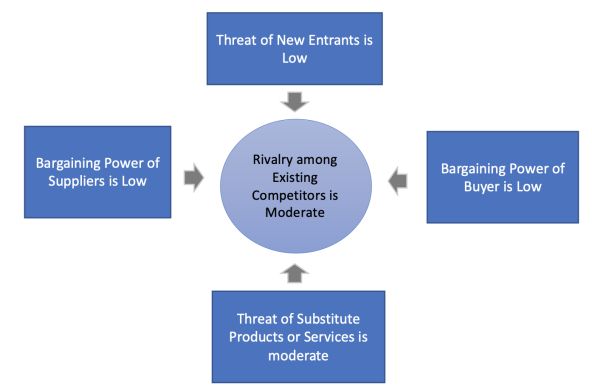
Advances in Economics, Business and Management Research, volume 160

Table 1. Survey Results

                                                       SURVEY RESULTS
  Respondents              Most of respondents are Female (62.6%), 24-50 years old (50.4%), resident in Banten (31.3%) and
  information              DKI Jakarta (22.9%), and have electricity with power limit 1,300 - 4,400 VA (97.7%).
  Usage of Cooking         Most of respondent cooking every day (90.8%), using LPG stove (78.5%), with duration of cooking
  Information              about 1 – 2 hours/day (61,8%), cooking at non-peak time (55.7%) and have fuel costs for cooking
                           about 30,000-150,000 IDR per month (55%).
  Reason to Determine      Most respondents are determining the choice of the stove because of Easy and practical, (73.3%),
  the Choice of Stove      Price/cost (64.1%) and Security (47.3%). Otherwise, Respondents are not willing to buy mostly
  (> 1 choice)             because of the Electricity bill is soaring (63.5%), and should replace existing cookware (45.2%).
  Willingness to Buy       Most of respondents are willing to buy an induction stove in the future (63.35%), with reason Eco-
  Induction Stove          friendly (58.6%) and Easy & practical (59.5%). Otherwise, respondents are not willing to buy mostly
                           because of the Electricity bill is soaring (63.5%), and should replace existing cookware (45.2%).
  Awareness Toward         Most of respondents are aware of Induction Stove (94.4%). Most of them know from print/electronic
  Induction Stove          media (54.3%), social media (37.8%) PLN Promotion (27.6%), Family/friends (24.4%), and Offering
                           from producers/distributors (18.9%).
  Acceptance               The highest price will be accepted at 150,000 to 500,000 IDR (50.4%), and 53,4% respondents are
  Price/Cost of            willing to pay in installment in 12 months (44.6%), 3 months (32.5%) 6 months (22.9%) with mostly
  Induction Stove          amount 100,000 IDR per month. And the highest cost of fuel of stove will be accepted at 20,000 IDR
                           (29%), 50,000 IDR (31.3%), 100,000 IDR (29.8%), 250,000 IDR (15.7%) and 500,000 IDR (1.5%).
  Respondents              Most of respondents are Female (62.6%), 24-50 years old (50.4%), resident in Banten (31.3%) and
  information              DKI Jakarta (22.9%), and have electricity with power limit 1,300 - 4,400 VA (97.7%).
  Usage of Cooking         Most of respondent cooking every day (90.8%), using LPG stove (78.5%), with duration of cooking
  Information              about 1 – 2 hours/day (61,8%), cooking at non-peak time (55.7%) and have fuel costs for cooking
                           about 30,000-150,000 IDR per month (55%).
  Reason to Determine      Most respondents are determining the choice of the stove because of Easy and practical, (73.3%),
  the Choice of Stove      Price/cost (64.1%) and Security (47.3%). Otherwise, Respondents are not willing to buy mostly
  (> 1 choice)             because of the Electricity bill is soaring (63.5%), and should replace existing cookware (45.2%).
  Willingness to Buy       Most of respondents are willing to buy an induction stove in the future (63.35%), with reason Eco-
  Induction Stove          friendly (58.6%) and Easy & practical (59.5%). Otherwise, respondents are not willing to buy mostly
                           because of the Electricity bill is soaring (63.5%), and should replace existing cookware (45.2%).

 Source: Author analysis

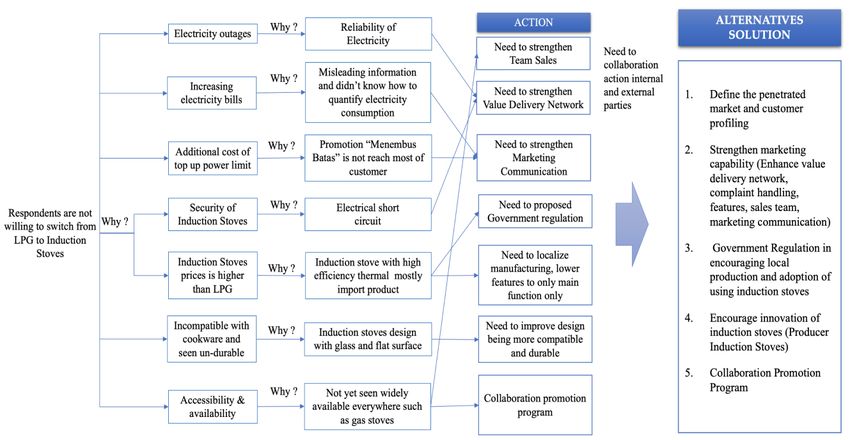
 Figure 2 Barriers in Switching Induction Stove

                                                                     This study found that most of the respondents are
4.4. Root Problem                                                interested in buying an induction stove, but there are
   The root problem findings as shown in Figure 2.               some barriers to switching from LPG stoves to
                                                                 induction stoves, such as electricity outage, increasing

                                                                                                                             39
Advances in Economics, Business and Management Research, volume 160
Table 2. Calculating Business Potential
electricity bills, an additional cost of top-up power limit. (Assumption for two stoves utilizing, from
To overcome this problem, there needs to be assumption one of stoves only 50%). And then to
cooperation with internal and external parties in get annual energy consumption then multiply with
carrying out the stages of the switching process by 350 days (15 days not cooking);
stimulating customer desires and addressing the c. Revenue-based on assumption electricity tariff in
aforementioned obstacles. 1,467 IDR (flat).
d. Annual increase of Users, Electricity
4.5. Business Potential Consumptions, Revenue calculation for other
factors is zero increasing.
Table 2 shows calculation of the business potential
of induction stove. Assumption and calculating: The business potential from the increase in the use
of the induction stove is relatively small for the initial
a. Households in 2021 based on data in 2019 years, so PT PLN (Persero) needs to be careful in
multiplied with 1.011 (if the ratio of electrification defining the program to ensure that it will provide a
reaches 100%, delta from 2019 is 100% minus positive return for the company. However, it is very
98.89%) and multiply again with 1.05 (predicted promising if the company could reach 18% switching
increase of customers from 2019 to 2020); users from LPG to induction stoves, that could get 6.4%
b. Electricity Consumption divided into : additional.
Assumption 1, based on the assumption that every
household needs 80 kWh per month (based on 4.6. Market Penetrated and Customer Profiling
Ecuador’s policy to give a subsidy of 80 kWh for
every household), and multiply with 12 months; Market definition is needed to focus the program on
Assumption 2, every household need 87.5 kWh per the penetrated market (Figure 3). Assumption and
month (from survey findings that average calculating:
households cook for 1-2 hours/day) multiply with 1
a. Total Population: All households in Indonesia in
kWh (1000 Watt for two stoves) and multiply with
2020 are 75,822,929 [11], then proxy data to define
1,5
the number of households in 2021 by multiplying
1.05 (5% estimated increasing). (22.9%), and have
electricity with power limit 1,300 - 4,400 VA
(97.7%).
b. Potential Market: 2021 comes from all existing
households in Indonesia, i.e. about 70,385,696,
which were from proxy data ratio electrification in
2019 (98.89%) multiply with customer for
household segment (69,619,877 customers) minus
existing users of induction/electric stove [12].
c. Available Market: Potential Market in Java and
Bali that have high reserve margin and [12] better
quality in electricity supply, especially SAIDI and
SAIFI.
d. Qualified Market: Available Market but without
Customers that get tariff subsidy. Proxy data is
from 100% minus a percentage of subsidy
Source: Author analysis customers to the available market, about 69% [13].
e. Target Market: Qualified Market who is in range
Figure 3 Market Definition of Induction Stove Program age of 25 to 50 years old, about 41% [14].
40Advances in Economics, Business and Management Research, volume 160
Table 3. Customer Profiling 1) Features that provide prepaid-postpaid electricity bill
system, low-medium-high voltage, and regular-
Geography Demography Psychographic premium electricity supply.
Java Bali, Urban/City Man/Woman, age Family-oriented 2) Pricing is competitive compared to other ASEAN
Area like DKI between 25 – 50 countries. In the household segment, only Malaysian
Jakarta, Bogor, years old, middle tariffs are cheaper than Indonesia.
Depok, Great and middle up 3) The product is regulated by the government, with
Tangerang, Bekasi income, new standard through 13 Quality Service Levels, and 6 of
and Bandung marriage couple 13 have 20-35% penalty from electricity bills
source: author analysis 4) The sales team is not enough to support another new
task. Therefore a new effective structure is needed
f. Penetrated Market: Target Market that is living in to execute a new business model for an electrifying
Urban/City area, about 56.38% [15]. lifestyle.
The market definition begins with the total 5) Selling is still good with little increase in 2019.
population and progressively narrows, that refer to a
group of consumers or organizations who are interested 4.7.3. Brand Management
in a product, have the resources to purchase the product
and are permitted by law and other regulations to Marketing communication is not only used to attract
acquire the product. new customers, but also to communicate with customers
about services. Because electricity is an intangible
Meanwhile, customer profiling is needed to help to product, customers could only feel it when electricity is
define a more specific penetrated market that could be interrupted or unstable voltage. It needs hard work to
used to strengthen marketing capabilities, as shown in keep it always on 24 hours every day, and customers
Table 3. must know about that effort. Thus, a few years later, PT
PLN (Persero) was mindful of the importance of
4.7. Internal Environment Analysis - communication to customers through social media.
Marketing Capability Analysis
Internal competitiveness regarding the marketing
This research focuses on Customer Relationship capability of PT PLN (Persero) is above average for
Management, New Product Development, Brand now because of a majority market share and strong
Management. When talking about the induction stove, fundamental services, with high reserve margin and an
customers will immediately associate it with electricity electrification ratio of about 98,89%. However, it must
as fuel. Thus, analysis about the induction stove will be maintained due to new technologies such as PV
explore more about electricity first, like accessible, rooftop, battery storage and smart home living which
price, reliability, and others. could be a great opportunity for the company.
4.7.1. Customer Relation Management 5. DISCUSSION
This study found that: On the other hand, LPG substitution as part of clean
cooking is highly attractive, which could bring long-
1) Customer perceived value: They feel that electricity term profit and benefit to the company that could win
is expensive. They are very price sensitive about market share. The market is big, so every substitution
electricity costs. option could take in part to reach effectiveness and
2) Customer satisfaction for the household segment is efficiency for Indonesian people. Moreover, it is
88.42% in 2018. necessary to strengthen the positioning of induction
3) Value Delivery Network needs to manage sub- stoves in consider up-coming technology that is relevant
contract & partners. to it, like PV rooftop, battery storage, and smart home
4) Customer loyalty index is 90.29%. appliances.
5) Complaint Handling services are running for 24
hours every day and supported by huge technicians 5.1. Strengthening Marketing Capability
in all over Indonesia through Call Center 123 and
PLN Media Social. Strengthening marketing capability is needed to
convince customers about the affordable price and
4.7.2. New Product Development reliability of electricity, as well as the affordability and
convenience in using induction stoves, which is also a
This study found that: mandatory solution for PT PLN (Persero). They can
collaborate with other alternatives to convince the
program is effective in tackling business problems.
41Advances in Economics, Business and Management Research, volume 160
1) Value Delivery Network: Managing subcontractors power limit of electricity, otherwise, this study proposed
is a vital part of delivering the same value to the only 50% discount of Top-up power limit, and the othe
customer and need to mapping penetrated markets 25% is switching to monthly electricity bills discount or
who live in a mainline zone or maximum in zone similar amount free prepaid. Therefore, by the similar
two, that have an excellent reliable system with amount with previous ones, PT PLN (Persero) can
defence mechanism system. attract customers to experience induction stoves for two
2) Complaint Handling: Improving customer months because the challenge is how to make sure that
experience in each activity to prevent customers customers are really using the induction stoves.
from getting pain experience, the company could
provide a pop-up system to specific customers to 5.2. Building Business Ecosystem
confirm the bills and could be one of the features of
PLN Mobile application. This research aims to multiply the number of
3) Features: Propose a new scheme of electricity customers who switch to induction stoves, so it is
packaging promotion, propose induction stoves that necessary to know the business ecosystem of the
are compatible with a frying pan by designing a induction stoves, as follows:
concave surface, enhance the durability of the stove First, lobbying is needed to convince the
by change material with a durable surface, easier government to support the program. The Ministry of
experience in using stove by convert setting button Mineral and Resources needs to formulate Regulation in
to the manual that similar with LPG stove. limitation of LPG Subsidy. The Ministry of Finance
4) Sales Team: The existing sales team needs new needs to allocate half of reducing LPG subsidies which
competencies and also needs to collaborate with can be converted into induction stoves for people who
others. have difficulty in getting the distribution of LPG. The
5) Marketing Communication: Rebuild the positioning Ministry of Industry needs to localize induction stove
statement for the induction stove program, to direct manufacture to reduce the price. BSN needs to
all other marketing capability factors, as shown in standardize induction with Indonesian National
Table 4 and Table 5. Standards (SNI), to guarantee safety. The Municipal
By defining the Level of I-Stove Promo Program, it Government needs to encourage people to use induction
could strengthen marketing communication. The stoves.
previous program gave 75% discount to increase the Second, it is necessary to encourage innovation of
Table 4. Positioning Statement of Program Popularize Induction Stove
Target Market Brand Frame of Reference Point of Differentiation Competitive Edge
For urban customers I-stoves Electricity discount to provide Electricity discount that Brings you to be
with family-oriented Promo by modern cooking style like serving offers experience healthier, part of the green
PLN food from mastery to your family safety and cleaner cooking future electrifying
at home style lifestyle
The full positioning statement is “I-stove Promo by PLN as Electricity discount to provide modern cooking style like serving
food from mastery to your family at home for urban customers with family-oriented, I-stove Promo by PLN is Electricity
discount that offers experience healthier, safety and cleaner cooking style because I-stove Promo by PLN brings you to be part
of the green future electrifying lifestyle”.
Advertising Tagline: “Great Cooking, Great Family”. (in bahasa could be changed to be: “Memasak yang luar biasa untuk
Keluarga Hebat”)
Table 5 Level of I-stove Promo Program
Customer I-stove Lite I-stove Lite Plus I-stove Max
Types Increase power limit Increase power limit 2 Level Increase power limit minimum
1 Level 3 Level
B2C ▪ Discount 50% of Top-up Power ▪ Discount 50% of Top-up Power ▪ Discount 50% of Top-up
Limit Limit Power Limit
▪ Discount electricity bills 50% of ▪ Discount electricity bills 50% of ▪ Discount electricity bills 50%
increasing bills from average 3 increasing bills from average 3 of increasing bills from
months, for 2 months (with max months, for 2 months (with max average 3 months, for 2
discount or free prepaid 100,000 discount or free prepaid 200,000 months (with max discount or
IDR per month) IDR per month) free prepaid 300,000 IDR per
month)
B2B I-stove Prime
For Developer of landed-house get discount 25% of new electricity connection cost, with minimum 100 houses
for maximum 5500 VA each
Add On Packaging : Stroomnet (TV Cable and Internet), Battery Storage or PV Rooftop
42Advances in Economics, Business and Management Research, volume 160
induction stoves (by induction stove producers). This is offers induction stoves, the customers refer to the
done by focusing on how to innovate the design of increasing electricity sales as a target of PLN.
induction stoves to be more compatible and durable. Therefore, promotion should be done by external
Thus, a new market segment is needed that is not too parties, in particular, the producers and distributors of
low or high, so the price could be more affordable. induction stoves.
Third, Collaboration Promotion Programs are
needed to increase more opportunities and accessibility. 6. CONCLUSION
PT PLN (Persero) needs partners to get customers as The conclusions of the study found that customer
target market, get appeal, and are willing to switch to preferences in using the induction stove need a
Induction Cookers. PT PJB Services which provides PV durability and compatibility stove with cookware and
Rooftop products and services, or others, can be cooking style. The customers are interested (from data
dismantled. Real estate associations are very important of willingness to buy about 63,36%) but only 15,7% of
for companies in providing induction hobs as an them are willing to switch. Given the potential for the
optional bonus in addition to Television or Air induction stove business for PT PLN (Persero) to
Conditioner, distributors of induction cookers through increase by around 6.44% in 2050, it is necessary to
manufacturers can more intensively offer induction strengthen the marketing capabilities of PT PLN
cookers to customers, especially first time entrants. buy (Persero) through value delivery networks, complaint
a stove. Marketplace, supermarket and store are also the handling, features, sales teams and marketing
same as the distribution of induction cookers. The communications.
difference is that they offer multiple brands and
products. Leasing companies also provide installments Furthermore, the need to focus on penetrating
to customers who are going to buy an induction cooker. markets and selecting the right customer profiling is
Communities, Endorsers, Influencers and Media are emphasized in achieving targets. The business
very important channels to build good opinion and ecosystem that is essential to realizing induction stoves
image and educate customers in using induction stoves, as the preferred choice consists of the supply chain of
especially customers who spend their days online on PT PLN (Persero), the government, producers and
social or electronic media. Induction hobs can be distributors of induction stoves, and the promotion of
imagined as one of the preferred gifts for weddings, cooperation. Regulations are needed to convince them
birthdays, etc. to support the need for regulations or incentives in
encouraging domestic production induction stoves,
Moreover, PT PLN (Persero) could focus more on restrictions on LPG subsidies as soon as possible,
maintaining electricity and services. In promoting the localization of induction cooker manufacturing, SNI
use of induction stoves, it needs to realize the customers' standards to ensure safety, and City Government
first impression and feeling of the message. Because PT regulations in encouraging local people to use stoves.
PLN (Persero) is strongly related to electricity, when it
Source: Author analysis
Figure 4 Business Eco-system of Induction Stove
43Advances in Economics, Business and Management Research, volume 160
induction. Encouraging induction stove innovation Centennial. Harvard Business Review 86, no. 1, pp.
(Producer Induction Stove) by providing information 78–93, January 2008.
about market intelligence or other surveys that become a
[9] N. A. Morgan, “Marketing and Business
reference for a manufacturer in designing new products,
Performance, “Journal of the Academy of Marketin
especially to reduce the price of induction stoves. The
Collaboration Promotion Program aims to coordinate Science, vol. 40, pp. 102–119, 2012.
and build bonds between companies and collaborative https://doi.org/10.1007/s11747-011-0279-9
partners by proposing several benefits to them, so that [10] P. Kotler and G. Armstrong, Principles of
mutually beneficial coordination is established. Marketing – 14th Edition. New Jersey. Pearson
Prentice Hall, 2012.
ACKNOWLEDGMENTS
[11] PT Kementerian PPN-Bappenas. (2019). Rencana
In accordance with the publishing of this paper we Pembangunan Jangka Menengah Nasional 2020-
would like to take this opportunity to thank Mr Bagus 2024. https://www.bappenas.go.id/files/rpjmn/
Setiawan and Mr Doddy B. Pangaribuan as expert
interviewees, and also the reviewers for their effort and [12] PLN (Persero). Annual Report 2019.
expertise as a reviewer. [13] Tim Nasonal Percepatan Penanggulangan
Kemiskinan. (2018). Jumlah Rumah Tangga dan
REFERENCES Individu menurut Provinsi dan Status
Kesejahteraan di Indonesia.
[1] Badan Pengkajian dan Penerapan Teknologi.
http://bdt.tnp2k.go.id/sebaran/.
Outlook Energi Indonesia 2019. Dampak
Peningkatan Pemanfaatan Energi Baru Terbarukan [14] Badan Pusat Statistik. (2017). Rata-rata
Terhadap Perekonomian Nasional. 2019. Banyaknya Anggota Rumah Tangga menurut
Provinsi, 2000-2015. Usia (https://www.bps.go.id/)
[2] Dewan Energi Nasional. Outlook Energi Indonesia
2019. [15] Jumlah Penduduk Indonesia, Kota dan Persentase
Penduduk Kota terhadap Jumlah Penduduk
[3] C. Muller and H. Yan, Household Fuel Use in
Indonesia 2015-2025, Worldometer, 2019
Developing Countries: Review of Theory and
Evidence, halshs-01290714, 2016. [16] F. Chris and J. Barbara, Marketing
https://halshs.archives-ouvertes.fr/halshs-01290714 Communication, Edinburgh: Edinburgh Business
School Heriot-Watt university, 2006.
[4] AK. Quinn et al, An analysis of efforts to scale up
clean household energy for cooking around the [17] A. Enders, A. König, H. Hungenberg, and T.
world. Energy for Sustainable Development, vol. Engelbertz, "Towards an integrated perspective of
46, pp. 1-10, 2018. strategy: The value-process framework", Journal of
https://doi.org/10.1016/J.ESD.2018.06.011 Strategy and Management, Vol. 2, no. 1, pp. 76 –
96, 2009.
[5] Badan Pusat Statistik. (2017). Persentase Rumah
http://dx.doi.org/10.1108/17554250910948712
Tangga Menurut Provinsi dan Bahan Bakar Utama
untuk Memasak Tahun 2001, 2007-2016. Available [18] J. J. Lewis and S. K. Pattanayak, “Who adopts
from: https://www.bps.go.id/ improved fuels and cookstove? A systematic
review,” Environmental health perspectives, vol.
[6] C. F. Gould et al., Government policy, clean fuel
120, no. 5, pp. 637–645, 2012.
access, and persistent fuel stacking in Ecuador,
https://doi.org/10.1289/ehp.1104194
Energy Sustain Development, 2018.
https://doi.org/10.1016/j.esd.2018.05.009 [19] W. C. McGaghie, G. Bordage, and J. A. Shea,
“Problem statement, conceptual framework, and
[7] S. Batchelor, E. Brown, J. Leary, N. Scott, A.
research question,” Academic Medicine, vol. 76,
Alsop, and M. Leach M., “Solar electric cooking in
no. 9, pp. 923-924, 2001.
Africa: Where will the transition happen first?,”
https://doi.org/10.1097/00001888-200109000-
Energy Research & Social Science, Vol. 40, pp.
00021
257-272, June 2018.
https://doi.org/10.1016/j.erss.2018.01.019 [20] A. Rafay and A. Khan, “Shift from Next
Generation Networks (NGNs) for sustainability,”
[8] M. E. Porter, "The Five Competitive Forces That
Journal of Cases on Information Technology, vol.
Shape Strategy," Special Issue on HBS
18, no. 3, pp. 1-19, 2016.
44You can also read


