Protecting Pacific Herring: Updates in conservation and management of B.C.'s foundational fish
←
→
Page content transcription
If your browser does not render page correctly, please read the page content below
Protecting Pacific Herring:
Updates in conservation and management of B.C.'s foundational fish

                                                                     Emmie Page

                                                                     Marine Campaigner
                                                                     B.Sc. Oceanography
                                                                     Masters in Fisheries
                                                                     Resource Management

                                                                     February 7th, 2022
Acknowledgement
     I would like to begin by acknowledging that I am currently
     on the traditional, ancestral, and unceded territory of the
     Coast Salish People.

     Learn about where you live at Native-Land.ca.

01
Outline
     01   Pacific Wild Herring Campaign

     02   History and methods in the herring fishery

     03   Indigenous and cultural importance

     04   Current conservation status

     05   Recent management changes

     06   Pacific Wild Recommendations

     07   Emerging research on herring

     08   Take Action

02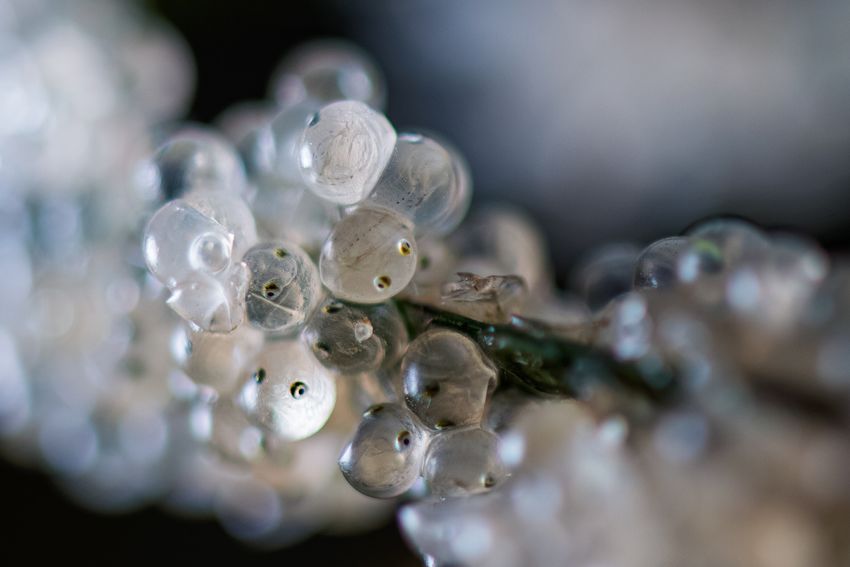
Pacific Wild

                    Pacific Wild is a leading voice for Wildlife Conservation in the Great Bear
       WHAT WE DO   Rainforest and beyond.

                    Using our powerful, trustworthy, visual storytelling (film, photography, books),
                    evidence-based reporting, wildlife monitoring, legal action and community-led
        MISSION     initiatives, Pacific Wild leverages its many partnerships to influence public
                    opinion, policy, and legislative change to protect ecosystems and sustain
                    biodiversity throughout the Pacific Northwest.

                    Wildlife Conservation and Habitat Protection

       CAMPAIGNS    Sustainable Fisheries and Marine Conservation

                    Informed and Emboldened Coalition for Conservation

03
Campaign                                  Campaign
     Goals                                     Projects
      Pacific herring populations rebound to   Responding to management decisions
      healthy levels.
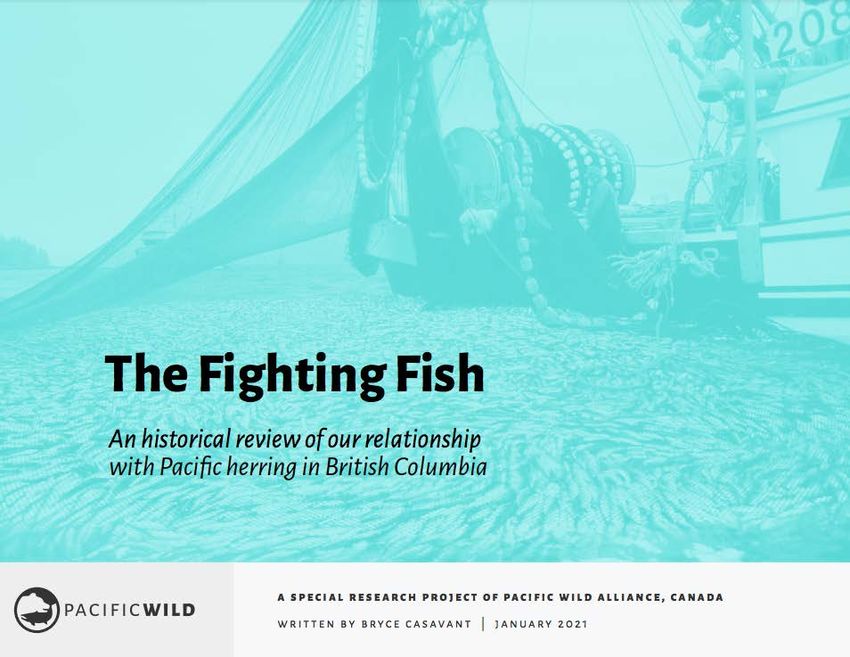
                                               Research: Fighting Fish paper and
      DFO should impose a moratorium on        annotated bibliography
      the commercial herring fishery in the
      Strait of Georgia.                       Herring in the Classroom educational
                                               series
      Widespread support for Indigenous and
      local community stewardship projects     Producing videos and social media
      that enhance Pacific Herring             content for public education and
      populations.                             awareness.

04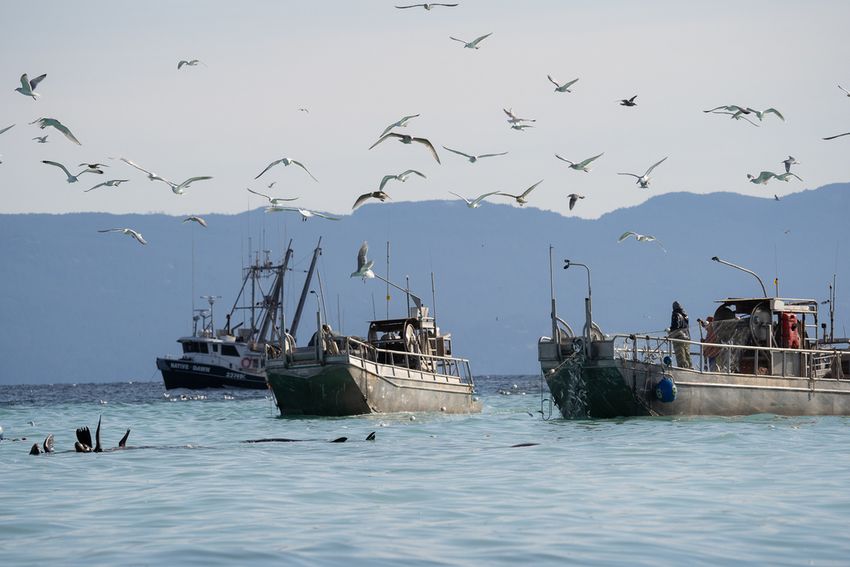
05
06
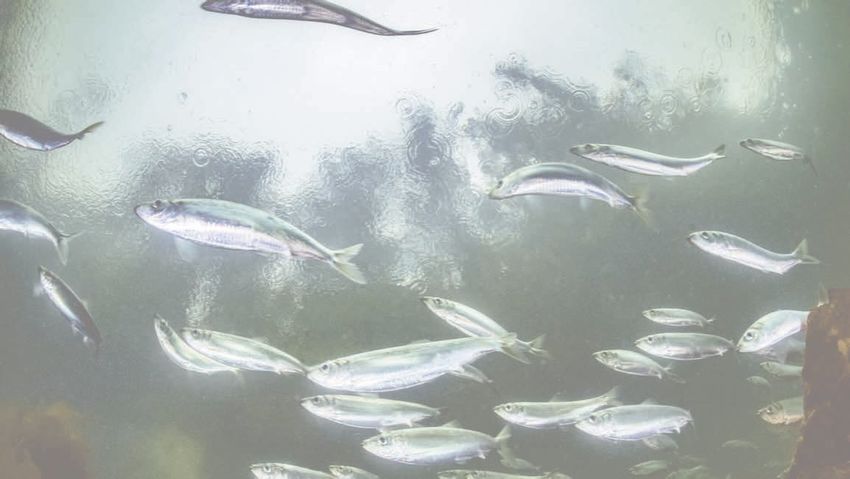
Pacific Herring
     Why are they important?                              Ecosystem Importance
                                                            Pacific herring is a forage fish widely
                                                            considered to be a keystone or foundation
                                                            species.

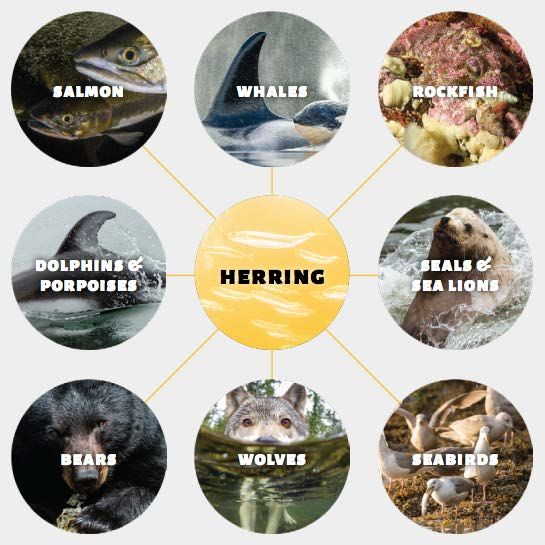
                                                            This small silver fish plays a major role in
        Characteristics                                     the lives of nearly every coastal species on

          Pacific herring are a small, bony, oily fish      land or underwater in British Columbia.

          with a strong smell.
           20.32 cm to 25.4 cm in length                    Herring are an important link between tiny

          silvery sides and dark greenish-blue backs.       plankton and larger animals, from humans

          The tail of herring is comprised of a deep        to whales, wolves, fish, and birds.

          fork.
          The age of herring can be determined by           Herring are integral for the survival of

          certain growth rings located on the loosely       humpback whales, Chinook salmon,

          attached scales of the fish.                      Southern Resident Killer Whales, wolves,

          On average, herring live for 8-10 years and       bears and countless other species along

          can spawn multiple times in their life cycle.     the coast.

07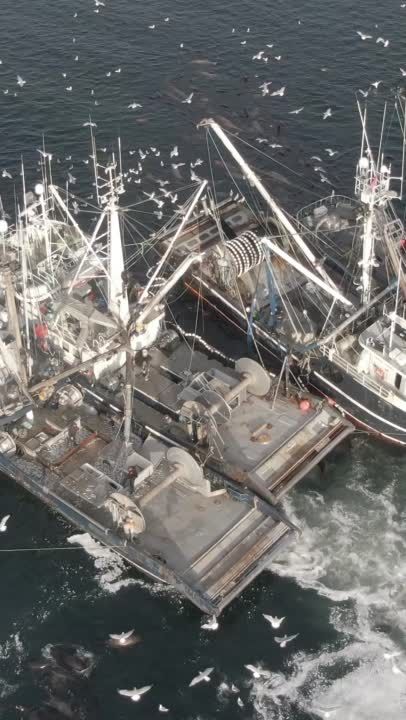
History of the Herring Fishery

08
Harvesting
     Methods

09
Commercial fishing method using vertical
panels of netting to catch fish as they
swim into the net.
10Commercial fishing method using a net
that sits vertically in the water, scooping
up entire schools of fish.
11SOK, or Spawn-on-Kelp
fisheries involve the placing
of lines of kelp (and in some
regions, hemlock boughs) in
the water and eggs
produced during the
spawning period adhere to
the kelp and are harvested.
This method does not
harvest the whole herring
and allows for the fish to
continue spawning.
12Cultural
Importance
First Nations have a long history of sustainably
harvesting herring roe for trade and consumption
using a method that involves collecting eggs that
Herring and their roe are nutritionally
have been deposited on kelp or hemlock branches
suspended near the shore. Such a method allows the valuable and integral to daily lives.
spawning herring to live on and spawn again or be
eaten by predators, therefore maintaining the Many First Nations have traditional
herring’s critical ecosystem function. stories and songs about the importance
of Pacific Herring, reflecting the long-
term connection to herring.
In the 1970s, the Federal Government
introduced Food, Social and Ceremonial
fisheries category.
1314
4/5 Fishing Grounds Collapsed
                    The Strait of Georgia is home to the last large herring population in B.C. Since
                    2000, herring fisheries off Haida Gwaii, the Central Coast, and the West Coast of
                    Vancouver Island have been closed many times under DFO management,
                    because the populations were too small.

     Current        Herring Feed the Coast

     Conservation
                    Herring are an important link between tiny plankton and larger animals and exist
                    as the primary food source for many species including chinook salmon which, in

     Issues
                    turn, are the primary food source for endangered Southern Resident killer
                    whales.

                    First Nations FSC Fisheries Struggling
                    First Nations fished Pacific herring sustainably for thousands of years before
                    industrial fishing. Many First Nation along the coast have expressed that there
                    have been insufficient herring spawns for traditional harvesting. Many Nations
                    have elected not to fish in recent years.

15
16
4/5 Fishing Grounds Collapsed
                    The Strait of Georgia is home to the last large herring population in B.C. Since
                    2000, herring fisheries off Haida Gwaii, the Central Coast, and the West Coast of
                    Vancouver Island have been closed many times under DFO management,
                    because the populations were too small.

     Current        Herring Feed the Coast

     Conservation
                    Herring are an important link between tiny plankton and larger animals and exist
                    as the primary food source for many species including chinook salmon which, in

     Issues
                    turn, are the primary food source for endangered Southern Resident killer
                    whales.

                    First Nations FSC Fisheries Struggling
                    First Nations fished Pacific herring sustainably for thousands of years before
                    industrial fishing. Many First Nation along the coast have expressed that there
                    have been insufficient herring spawns for traditional harvesting. Many Nations
                    have elected not to fish in recent years.

17
18
4/5 Fishing Grounds Collapsed
                    The Strait of Georgia is home to the last large herring population in B.C. Since
                    2000, herring fisheries off Haida Gwaii, the Central Coast, and the West Coast of
                    Vancouver Island have been closed many times under DFO management,
                    because the populations were too small.

     Current        Herring Feed the Coast

     Conservation
                    Herring are an important link between tiny plankton and larger animals and exist
                    as the primary food source for many species including chinook salmon which, in

     Issues
                    turn, are the primary food source for endangered Southern Resident killer
                    whales.

                    First Nations FSC Fisheries Struggling
                    First Nations fished Pacific herring sustainably for thousands of years before
                    industrial fishing. Many First Nation along the coast have expressed that there
                    have been insufficient herring spawns for traditional harvesting. Many Nations
                    have elected not to fish in recent years.

19
20
Harvested Roe
                                                           In the roe fishery, adult herring are
                                                           captured just before spawning, and
                                                           the eggs (roe) are removed from the
                                                           female fish. The roe, which is only 12%
                                                           of the catch on average, is sold in
                                                           Japan as kazunoko, a luxury food. Roe
                                                           is also harvested in SOK fisheries
                                                           (both commercial and First Nations)

     Pacific Herring
     End-Use
                       Fishmeal and Fish Oil
                       Waste product from the roe
                       fishery is ground up and used in
                       fishmeal (served to fish in fish
                       farms) and put into pet food as a
                       protein. Fish oil for supplements
                       is also produced.

21
Current Management Regime
Stock Assessments
Total Allowable Catches and Precautionary Principle
Quotas allocated
Industrial and small-scale vessels, commercial
Bought and sold like stock
Licenses can be purchased by large corporations
Fisheries Officers and Monitoring
DFO and Coastguard
EM, Observers, Dockside
22Current Management Regime
Precautionary Approach
Identifies three stock status zones – healthy,
cautious, and critical – according to upper stock
reference points and limit reference points
Sets the removal rate at which fish may be
harvested within each stock status zone
Adjusts the removal rate according to fish stock
status variations
Precautionary Approach is still designed to
catch the largest amount of fish possible.
23Commercial Fishing Openings
DFO has proposed to open a singular commercial herring fishing ground - the
Strait of Georgia. The other 4 fishing grounds are closed to commercial fishing in
the 2022 management year.
2022 Reduction of Quota by 50%
Management
The 2021/2022 IFMP outlined a Pacific herring quota reduction by 50% - from a
20% harvest rate to 10% harvest rate for a maximum total allowable catch of
Changes
7,850 tons in the Strait of Georgia.
Haida Gwaii Rebuilding Plan
Haida Gwaii has seen extreme declines in Pacific herring stocks since the early
2000s. These declines have resulted in the closure of the fishery for decades.
The new management plan outlines development of a rebuilding plan for Haida
Gwaii herring. This is a long time coming and it is time that DFO upholds its
commitments to working with the Haida Nation to protect their herring.
24Pacific Wild Recommendations 25
1. Move towards Ecosystem-Based Management

     EBM allows for a holistic analysis of the herring fishery in relation to the
     ecosystem, rather than simply at a species level.
     The new Sustainable Fisheries Framework is outlined in the IFMP and includes
     policies for adopting EBM approaches.

26
2. Identify migratory and resident herring
populations in the management plan
The spatial distribution of herring stocks is not recognized in the Pacific
herring management plan.
The difference between migratory and resident herring is under-researched.
There is current and upcoming research that DFO can take note of in order to
consider resident and migratory herring in management plan.
273. Outline a more detailed plan to integrate
Traditional Ecological Knowledge (TEK) into
management
The 2021/2022 herring IFMP mentions the need to integrate Traditional
Ecological Knowledge (TEK) and Indigenous Knowledge (IK) into DFO
management plans.
Consulting with First Nations is a necessary step in Fisheries Reconciliation
and ensuring access to fishing rights.
294. Prioritize Spawn-on-Kelp (SOK) fisheries over
other harvesting methods
Spawn-on-Kelp (SOK) commercial operations are not allowed to open this
season.
SOK fisheries are a sustainable method of harvesting and should not be
suffering while gillnetters and seiners continue to profit.
Additionally, SOK fisheries are not yielding sufficient herring eggs in the
population collapse.
30Emerging Research on Herring
Declines in Chinook salmon
productivity may be result of
poor food availability.
Adult Chinook salmon feed
predominantly on herring in
March - April, while juveniles
fed on herring in the late fall.
This suggests that there is
importance for both the
migratory and residential
stocks in Chinook salmon
feeding and survival.
31Surma, Pitcher &Pakhomov
Emerging Research on Herring evaluated herring fisheries
management strategy
performance in contrast with
ecological and socioeconomic
objectives.
There is evidence of a trade-
off between stable herring
catches and high biomasses of
herring and several predators.
This study suggests trade-offs
among management
objectives should be
considered in pursuing
ecosystem-based fisheries
management for forage fish.
32Emerging Research on Herring This study explores the timing
of reproduction and how it
influences ecological
processes.
In Pacific herring, it was
determined that gene flow is
geographically limited and that
there is seasonal and spatial
variation in spawning. This is
further evidence of resident
versus migratory herring.
Results supported that it is
necessary to conserve genetic
diversity (and spatially distinct
populations) in Pacific herring.
33Take Action
Consume content - social media, research, The Fighting Fish, etc.
Get familiar with your local organizations: Pacific Wild, Conservancy Hornby
Island, SeaLegacy, etc.
Choose wild salmon - farmed salmon rely on the fishmeal produced from the
herring fishery waste product.
Switch pet foods - if accessible, choose a pet food that doesn't contain
herring.
Sign the form letter on our website - Urge Joyce Murray to close the last
remaining herring fishery so that herring can rebound to healthy levels.
34You can also read


