Public HealtH Post Public Health for Primary Care in Wellington, Wairarapa and the Hutt Valley - Regional Public Health
←
→
Page content transcription
If your browser does not render page correctly, please read the page content below
ISSN 2537-8953 (Print)
ISSN 2537-8961 (Online)

Public Health Post
Public Health for Primary Care in Wellington, Wairarapa and the Hutt Valley
 Also
 Also available
      available online
                online at www.rph.org.nz                                                                            Issue 36 - March 2019

 Good news for swimmers and splashers!
 cryptosporidiosis notifications low compared to early 2018
 After a large peak in cryptosporidiosis notifications in early             32, Feb 2018, http://www.rph.org.nz/resources/newsletters/
 2018, there was public health concern of a sustained high                  the-public-health-post/issue-32-february-2018.pdf ). The
 baseline for cryptosporidiosis in our population, either due               resulting response included additional cleaning measures
 to a larger number of infections in the community or as a                  at the time, and subsequent installation of a UV treatment
 result of changes in testing practice. However, indications                filtration system in the splash pad.
 from the later parts of 2018 and early 2019 suggest that
 the trend for increased levels of cryptosporidiosis has not                Others common enteric infections including
 been perpetuated: levels are back at a similar baseline as in              campylobacteriosis, giardiasis, salmonellosis and yersiniosis
 years prior to 2018.                                                       have shown similar trends to previous years.

 This will be a relief to public health officers and to                     Sources:
 swimming pool and splash pad operators alike. Data will                    1. EpiSurv database of notifiable conditions 2019
 continue to be monitored to see if this trend continues. The                  [accessed 18/3/2019].
 2018 peak was at least in part due to cases associated                     2. Regional Public Health. Notifiable condition
 with a local splash pad (see The Public Health Post, Issue                    surveillance records.

 Figure: Cryptosporidiosis norifications by week Source: Episurv database on notifiable conditions 2019 (accessed 18/03/2019)
what are you reporting?
Three months of notified cases in the hutt valley, wairarapa, wellington
Dr Jonathan Kennedy, Medical Officer, Regional Public Health
Table 1. Notified cases by DHB in the Hutt Valley, Wairarapa and Wellington 01/10/2018-31/12/2018.
Table includes ‘confirmed’ cases with additional ‘probable’ cases in brackets.

                                         Number of cases                      Notes (1,2)
                                      (confirmed cases only)                  1.   Dengue fever cases all had visited countries with endemic
                                                                                   dengue fever during their incubation periods.

                                                      Wellington
                                         Wairarapa
    Notifiable Condition                                                      2.   Listeria was notified in an immunosuppressed 80 year old
                                                                                   woman who also had positive tests for yersinia and STEC

                                                                     Total
                               Hutt

                                                                                   infections.
 Campylobacteriosis           69         126          27            222       3.   Mumps cases dropped back in 2018 compared to 2017
                                                                                   with sporadic notification such as the one ‘probable’
 Cryptosporidiosis             5         13             2            20
                                                                                   case reported in a 4 year old boy from Porirua in October
 Dengue fever                           1(1)                        1(1)           2018.
 Gastroenteritis              0(4)      3(5)         0(2)           3(11)
 Giardiasis                    6         31             7            44
 Hepatitis C                               1                          1
 Invasive pneumococcal         5           8            3            16
 disease
 Leptospirosis                                          1             1
 Listeriosis                               1            1             2
 Malaria                                0(1)                        0(1)
 Meningococcal disease         1           4            1             6
 Mumps                                  0(1)                        0(1)
 Paratyphoid fever                         1                          1            Source: ESR. EpiSurv N018 Report. Excludes ‘not a case’
                                                                                   notifications. Accessed 4/2/2019
 Pertussis                   30(3)      86(6)        19(4)         135(13)
                                                                              4.   Confirmed paratyphoid fever was reported in a 27 year
 Rheumatic fever               2        0(1)                        2(1)           old woman who had visited China, and Cambodia during
 Salmonellosis                 7         21             1            29            the incubation period.

 Shigellosis                            2(1)                        2(1)      5.   Rheumatic fever was notified for a 15 year old female
                                                                                   from Porirua and a 13 year old male from Lower Hutt.
 Tuberculosis disease         1(2)      8(2)         0(1)           9(5)
                                                                              6.   Culture positive shigellosis cases had visited countries
 VTEC/STEC infection           8         19             6            33            with endemic shigella during their incubation periods.
 Yersiniosis                  17         25             2            44
                                                                              References
 Grand Total                151(9)    350(18)        70(7)         571(34)    1.   The Institute of Environmental Science and Research Ltd.
                                                                                   EpiSurv database of notifiable conditions. 2018.
                                                                              2.   Regional Public Health. Notifiable condition surveillance
                                                                                   records. 2018.

HEAT HEALTH PLANS
There is conclusive evidence that extreme heat and                           These guidelines are intended to raise awareness of the
heatwaves have negative impacts on health. Even modest                       risks of hot weather to health, and to encourage and
increases above average temperatures can have negative                       support the development of Heat Health Plans. Heat Health
impacts on those most vulnerable to heat, but effective                      Plans outline the actions and systems in place to support
planning can reduce the effects of heat on health. On 21                     those most at risk during periods of extreme heat and it
January 2019, Hon Julie Ann Genter, Associate Minister                       is recommended that individuals, health and community
of Health, released a media statement launching the Heat                     service providers, district health boards, public health units
Health Plan Guidelines published on the Ministry's website                   and local government prepare their own Heat Health Plans
https://www.health.govt.nz/publication/heat-health-plans.                    as part of their emergency planning.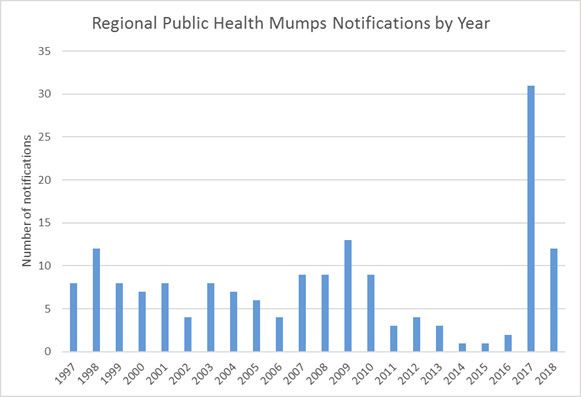
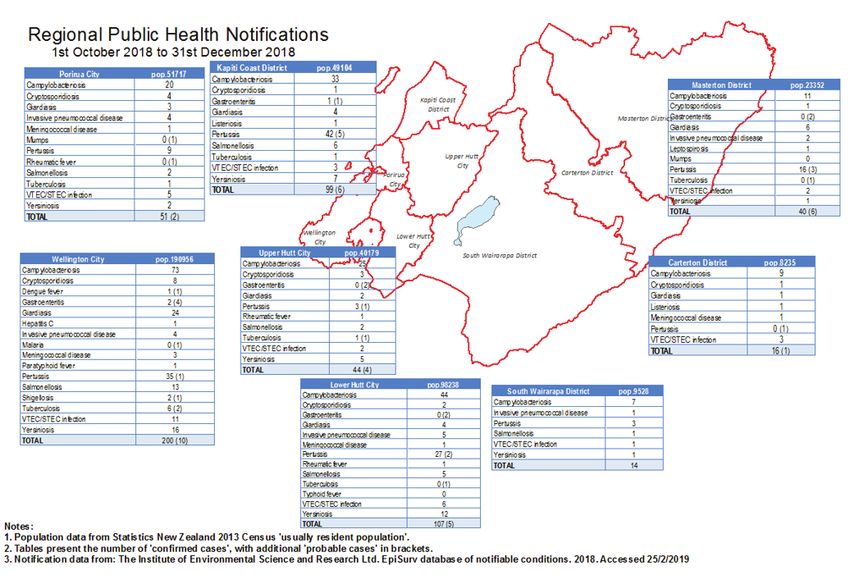
Figure: Notifiable cases in the Hutt Valley, Wairarapa and Wellington 1/10/2018-31/12/2018, tabulated by territorial authority
Health education resources
The Regional Public Health Resource Room stocks public           Order Ministry of Health resources free online through
health resources to educate the community about keeping          the HealthEd website (www.healthed.govt.nz), or contact
well and preventing disease. They are sourced from the           Laurina Francis on 04 570 9691, fax: 04 570 9211, or
Ministry of Health and other public health agencies around       email laurina.francis@huttvalleydhb.org.nz.
New Zealand.

Disease notification – how your general practice can help
To enable our staff to promptly initiate disease follow up we       vs. non-urgent notifications on the Regional Public
need your help in the following ways:                               Health website under Health Professionals > Notifiable
                                                                    Diseases.
1. Inform your patient of the illness they have been
   diagnosed with or exposed to and that public health           3. Complete all sections of the form, especially:
   staff may be in contact.                                         • work/school/early childhood centre information
                                                                    • name of parent or guardian for a child under 16
2. Notify Regional Public Health of the disease within a
                                                                        years old.
   timely fashion (after the case has been informed) - by
   phone for urgent notifications (as soon as you are            The 3D HealthPathways includes a pathway on reporting
   aware), or by faxing a case report form for non-urgent        notifiable diseases: http://3d.healthpathways.org.nz
   (within one working day). You can find a list of urgent

Public Health Alerts
Regional Public Health communicates public health alerts         Please contact Regional Public Health on (04) 570 9002 if
to primary care practices by fax and by email. These             you have not been receiving alerts, or to check and confirm
communications often contain information that needs to           that we have your correct details.
be urgently taken on board by general practitioners and
                                                                 If you are not yet receiving alerts by email, and would like
primary care nurses.
                                                                 to, then you can provide your email address via phoning the
                                                                 number above.

Ordering pamphlets and posters:           To order any Ministry of Health resources, please contact the Health Information
                                          Centre on (04) 570 9691 or email laurina.francis@huttvalleydhb.org.nz

                                          For enquiries regarding the Public Health Post, please contact Dr Jonathan Kennedy,
                                          medical officer, Regional Public Health, by email jonathan.kennedy@huttvalleydhb.org.nz
Produced by: Regional Public Health
                                          or by phone (04) 570 9002. Alternatively contact one of the regional medical officers of
Private Bag 31-907, Lower Hutt 5040
Ph: (04) 570 9002, Fax: (04) 570 9211     health: Dr Jill McKenzie, Dr Craig Thornley, Dr Annette Nesdale and Dr Stephen Palmer.
You can also read


