Purdue e-Pubs Purdue University
←
→
Page content transcription
If your browser does not render page correctly, please read the page content below

Purdue University
Purdue e-Pubs

Midwest Vegetable Trial Reports                                     Purdue Fruit and Vegetable Connection

2021

Colored Sweet Bell and Tapered Pepper Cultivar Evaluation for
High Tunnel Production in West-Central Indiana, 2020
Petrus Langenhoven
Purdue University, plangenh@purdue.edu

Follow this and additional works at: https://docs.lib.purdue.edu/mwvtr

   Part of the Agriculture Commons, and the Horticulture Commons

Recommended Citation
Langenhoven, Petrus, "Colored Sweet Bell and Tapered Pepper Cultivar Evaluation for High Tunnel
Production in West-Central Indiana, 2020" (2021). Midwest Vegetable Trial Reports. Paper 36.
https://docs.lib.purdue.edu/mwvtr/36

This document has been made available through Purdue e-Pubs, a service of the Purdue University Libraries.
Please contact epubs@purdue.edu for additional information.

Colored Sweet Bell and Tapered Pepper Cultivar
Evaluation for High Tunnel Production in West-
             Central Indiana, 2020
  Petrus Langenhoven, Purdue University, Department of Horticulture and Landscape
Architecture, 625 Agriculture Mall Dr., West Lafayette, IN 47907, plangenh@purdue.edu

In Indiana sweet colored pepper is a great summer crop for farms selling to specialty markets or
doing direct-to-consumer marketing. It is a very lucrative crop grown mostly by small to
medium-sized farms in Indiana. Farmland allocated to the production of bell peppers was on
average 0.7 acres and other peppers, which includes chiles, 1.2 acres (USDA NASS, 2019).
Growing warm-season crops in a high tunnel is very popular. High tunnels protect the crop
against severe weather conditions, it lowers the incidence of foliar disease, and it allows growers
to produce a high-quality crop well into the fall. Sweet colored peppers yield well in an unheated
high tunnel. Producing peppers to full maturity in a high tunnel takes longer but rewards the
grower financially. However, information is lacking about varieties that are adapted for high
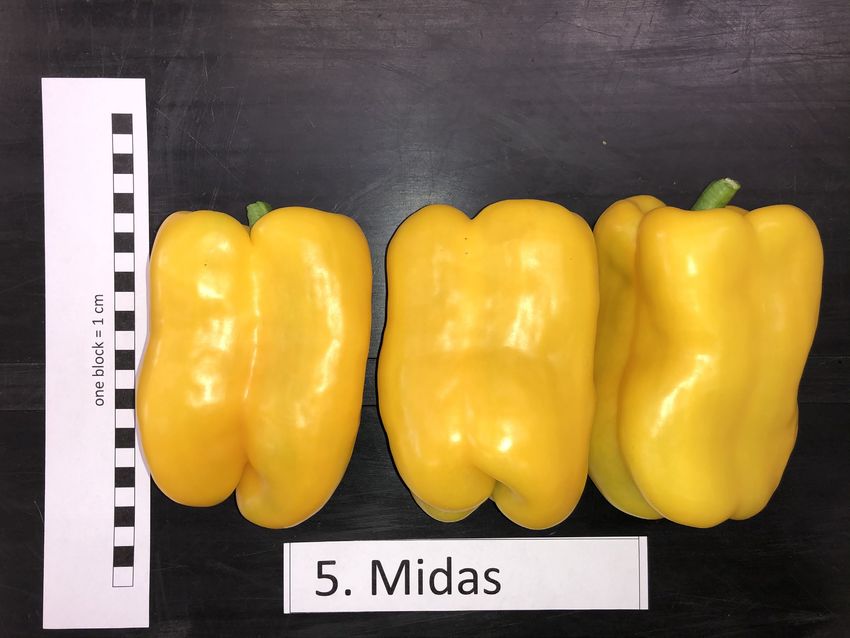
tunnel production in Indiana. In this paper, we report on five sweet bell and five tapered pepper
entries (Table 1; Figures 6 – 15) that were evaluated at the Purdue Student Farm, West Lafayette,
Indiana.
Materials and Methods
The trial was conducted on a Mahalasville (Md), silty clay loam. The spring soil test showed
5.6% organic matter, pH 7.8, and 98 ppm phosphorus (P), 98 ppm potassium (K), 565 ppm
magnesium (Mg), and 2400 ppm calcium (Ca). The cation exchange capacity was 17 meq/100
gram. Nitrogen, 60 lb./A N from Nature’s Source® Professional 10-4-3 liquid plant food, was
applied by fertigating 15 lb./A N four times at 2, 4, 6, and 8 weeks after transplanting.
The trial was set up in a high tunnel that was 30 feet wide and 96 feet long (Nifty Hoops, MI) as
a randomized complete block design with six replications (Fig. 2-5). The high tunnel was
equipped with louvered gable vents (one at each end wall) and roll-up sidewalls. The gable vents
were permanently open, but the side walls were opened when inside temperatures reached 75 °F
and closed when temperatures dropped below 60 °F. Sweet pepper entries were assigned to
individual plots containing one row of five plants that was 7.5 feet long. Peppers were seeded
April 23, 2020, and transplanted into raised beds (2 feet wide) on May 21, 2020, with an in-row
spacing of 1.5 feet and between-row spacing of 4 feet. (7,260 plants per acre). The entire area
between the raised beds (4 feet center-to-center) was covered with a black woven polypropylene
ground cover (DeWitt SunbeltTM). Additionally, a 3 feet wide white woven polypropylene
groundcover was placed between the rows to increase light in the lower plant canopy. Irrigation
was applied once per day using 2 gallons per hour pressure-compensated emitters (Netafim), flex
vinyl spaghetti tubing, and 90-degree angle stakes.
Nature’s Source® Professional 10-4-3 liquid plant food was mixed in a concentrated stock tank
at 100 times the normal concentration and injected at a 1:100 rate using a water-powered
Dosatron D14MZ2 injection unit. Initial plant support was provided with a stake and weave
trellis system. Additionally, plants were treated with RootshieldTM (BioWorks®) at 6 oz per 100
gallons of water. The treatments were applied through the irrigation system. No pruning was
done during the growing season. Weed control was minimal and done by hand. Yellow and blue
sticky cards were used for scouting and monitoring and to attract and capture the adult life stage
of insect pests. Pest pressure was very low and therefore no foliar pesticide applications were
done during the growing season.
Each plot was harvested after the peppers reached their mature color. Harvesting continued once
a week between 91 and 145 days after transplanting. For each plot, the marketable and
unmarketable number of fruits, fruit weight, fruit size (length and width), and flesh thickness
were recorded. During the last harvest (October 13, 2020) all mature colored and mature green
fruit were harvested and recorded. The marketable yield was expressed as yield per plant or yield
per acre. Data were analyzed using ANOVA followed by treatment means separation using
Tukey-Kramer’s least significant difference at P≤ 0.05.
Results
Marketable Yield
Marketable fruit yield and weight results are presented in Table 2. The marketable fruit count per
plant, fruit weight, and yield differences among entries were highly significant (P
Severity of BER
Seventy percent of the unmarketable fruit of the bell pepper Midas were affected by BER,
followed by bell pepper Goliath Gold Rush’s 51% (Fig. 1). Most of the unmarketable fruit of
tapered pepper Marcato (91.9%), Giubileo (85.9%), and Carmen (81.9%) were BER-affected.
Discussion
All entries performed well under high tunnel conditions, despite issues with the trellising system
that resulted in plant lodging. Flavorburst (yellow bell) has been a consistent performer in our
variety trials. Once again, it was the top bell pepper variety in terms of marketable fruit number.
Flavorburst is a relatively compact plant and is one of the early maturing varieties. It continues to
produce fruit all season long and is also the least affected by BER. Midas (yellow bell pepper)
was the surprise this season. The fruit is very uniform, elongated, and weighs 10.3 oz. This
variety is a top performer producing a marketable yield of 106,000 fruits per acre, weighing
67,500 lb. Midas did produce some BER fruit (0.6 fruit per plant), but the abundance of large
fruit made up for it. Goliath Gold Rush produced a disappointing yield (49,232 lb./A). This
blocky pepper is very prone to getting BER and also suffered from other disqualifying quality
issues. The fruit was sometimes covered in necrotic spots with cracks on the fruit's shoulders.
Carmen (red tapered) and Escamillo (yellow tapered counterpart to Carmen) both belong to the
pepper class Corni do Toro. These varieties outperformed all other tapered pepper varieties in
terms of marketable fruit numbers, 244,723 and 197,109 fruit per acre, respectively. Although
Carmen and Escamillo produced the highest marketable yield (about 64,000 lb./A), tapered
pepper varieties did not differ significantly in terms of marketable production. On average
Carmen and Escamillo produce fruit that is 7.5 inches long. If you are interested in growing very
long tapered peppers, then you would appreciate Giubileo (yellow, 10.0 inches long) and
Mattadores (red, 9.2 inches long). However, Giubileo is also very prone to get BER (86% of
unmarketable fruit). However, Marcato (red tapered) was the most affected by BER (92% of
unmarketable fruit). These varieties produced beautiful fruit but the extra-long fruit (>9 inches)
makes them prone to BER under suboptimal growing conditions. Despite the challenges all
tapered pepper varieties experienced with BER, they still produced some of the highest yields in
the variety trial.
Growers have a wide selection of varieties to choose from. Assess your market and choose
varieties accordingly.
Acknowledgments
Chris Adair and Purdue Student Farm summer interns and students who provided on-farm
support.
Reference
USDA NASS 2019. 2017 Census of Agriculture. Accessed on December 8, 2020.
https://www.nass.usda.gov/Publications/AgCensus/2017/index.php

Table 1. Colored sweet bell and tapered pepper cultivar characteristics*.
                                                                                    Recommended
                                       Days to        Immature      Mature Fruit
    Cultivar            Type                                                         Production
                                       Maturity       Fruit Color      Color
                                                                                      Condition
  King Arthur        Bell Pepper           72            green           red          open field
  Goliath Gold
                     Bell Pepper           75            green         yellow         open field
     Rush
  Flavorburst        Bell Pepper           87         lime green    golden yellow     open field
    Socrates         Bell Pepper           75         dark green         red          open field
     Midas           Bell Pepper           80         dark green       yellow         open field
                       Tapered
    Marcato                                70            green           red          open field
                       Pepper
                       Tapered
    Carmen                                 80            green           red          open field
                       Pepper
                       Tapered
   Escamillo                               80            green      golden yellow     open field
                       Pepper
                       Tapered
   Mattadores                              70         deep green         red          open field
                       Pepper
                       Tapered
    Giubileo                               80         dark green       yellow         open field
                       Pepper
*Data obtained from seed company listed information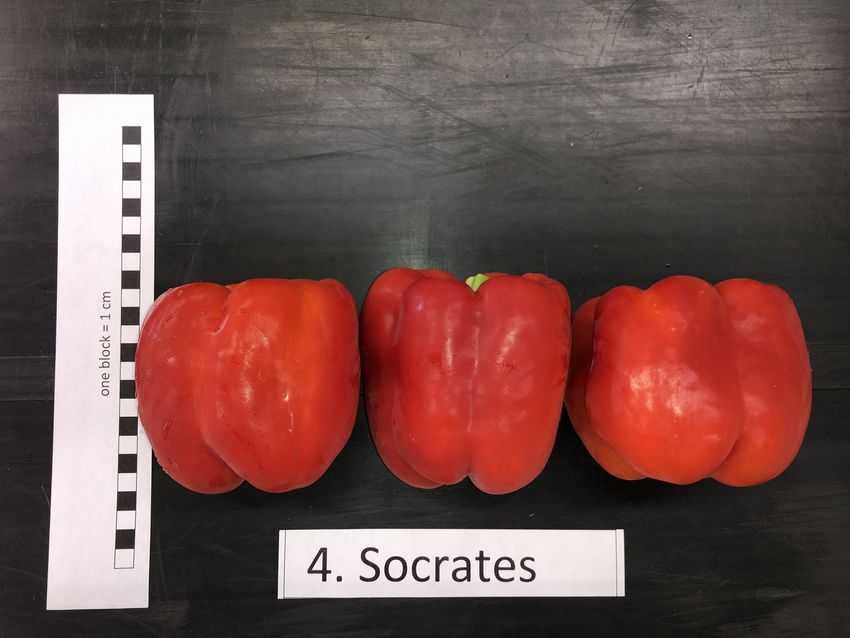
Table 2. Marketable yield of colored sweet bell and tapered pepper cultivars.
                                Number of         Number of          Fruit
                                                                                      Yield           Yield
           Cultivar             fruits per        fruits per         Weight
                                                                                   (lb/plant) z    (lb/Acre) z
                                  plant z           Acre z           (oz) z
    King Arthur                      13.6 d           98,918 d           9.2 b          7.8 bc      56,460 bc

    Goliath Gold Rush                13.8 d         100,067 d            7.9 c          6.8    c    49,232   c

    Flavorburst                      16.6 cd         120,274 cd          7.4 cd         7.7 bc      55,555 bc

    Socrates                          13.8 d          99,946 d           9.4 ab         8.0 abc     58,406 abc

    Midas                             14.6 d        105,936 d           10.3 a          9.3    a    67,469   a

    Marcato                           19.7 c         142,780 c           6.2 e          7.7 bc      55,808 bc

    Carmen                            33.7 a         244,723 a           4.2 f          8.8 ab      64,077 ab

    Escamillo                         27.2 b        197,109 b            5.2 f          8.8 ab      64,100 ab

    Mattadores                        20.7 c         150,403 c           6.5 de         8.5 ab      61,553 ab

    Giubileo                          19.5 c         141,812 c           6.7 de         8.1 abc     58,855 abc

    Pr > F
Table 3. Colored sweet bell and tapered pepper fruit characteristics.

                             Fruit Length           Fruit Width             Fruit             Fruit Shape
         Cultivar
                               (inch) z               (inch) z             Shape y           Classification y

    King Arthur                           3.8 d                4.1 a            0.93 e         very blocky
    Goliath Gold Rush                     3.7 d                3.8 ab           0.99 e            blocky
    Flavorburst                           4.1 d                3.5 bc           1.17 de          elongated
    Socrates                              3.6 d                4.0 a            0.91 e         very blocky
    Midas                                 5.6 c                3.6 bc          1.57 d            elongated
    Marcato                               7.5 b                3.1 cd           2.39 c           elongated
    Carmen                                7.6 b                2.7 e           2.81 b            elongated
    Escamillo                             7.4 b                2.6 e           2.83 b            elongated
    Mattadores                            9.2 a                3.0 de           3.07 ab          elongated
    Giubileo                             10.0 a                3.0 de           3.35 a           elongated
    Pr > F
Table 4. Unmarketable yield of colored sweet bell and tapered pepper cultivars.

                                 Total number of         Number of BER               Yield            Yield
            Cultivar
                                 fruits per plant z      fruits per plant z       (lb/plant) z     (lb/Acre) z

    King Arthur                             0.3     d                 0.1   d           0.16 c         1,196 c

    Goliath Gold Rush                       1.8 bcd                   0.9 cd            0.85 ab        6,148 ab

    Flavorburst                             0.2     d                 0.0   d           0.09 c           655 c

    Socrates                                0.5     d                 0.1   d           0.28 bc        2,064 bc

    Midas                                   0.8    cd                 0.6 cd            0.40 bc        2,936 bc

    Marcato                                 4.1     a                 3.7   a           1.28 a         9,308 a

    Carmen                                  2.6 abc                   2.0 bc            0.53 bc        3,821 bc

    Escamillo                               1.6 bcd                   1.1 cd            0.41 bc        2,967 bc

    Mattadores                              2.1 abcd                  1.5 bcd           0.90 ab        6,524 ab

    Giubileo                                3.5    ab                 3.1 ab            1.20 a         8,722 a

    Pr > F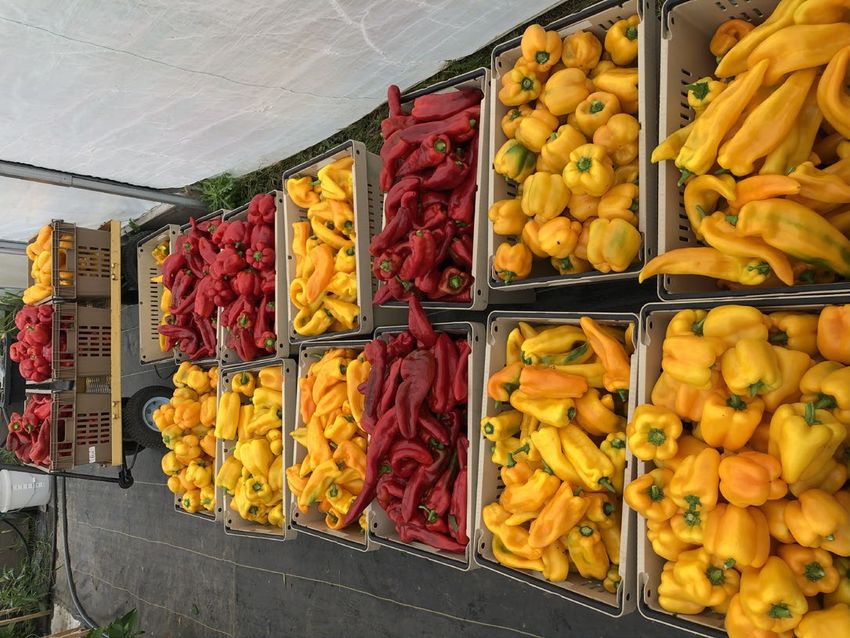
Pr > F

Figure 3. Soil prep, irrigation, crop support and landscape fabric installed

Figure 4. Crop progress, 6 weeks after transplanting
Midas                                        Flavorburst

Figure 5. Crop progress, 10 weeks after transplanting (left, center). Bountiful harvest 16 weeks after planting (right)
Figure 6. King Arthur
Figure 7. Goliath Gold Rush
Figure 8. Flavorburst
Figure 9. Socrates
Figure 10. Midas
Figure 11. Marcato
Figure 12. Carmen
Figure 13. Escamillo
Figure 14. Mattadores
Figure 15. Giubileo
You can also read


