R82 Mustang The walking aid that adapts & develops with you - Workbook | Mustang - R82 UK
←
→
Page content transcription
If your browser does not render page correctly, please read the page content below
Workbook | Mustang

R82 Mustang
The walking aid that adapts
& develops with you

Junior | Walking

What is Mustang?                                                                                                 Positioning Options
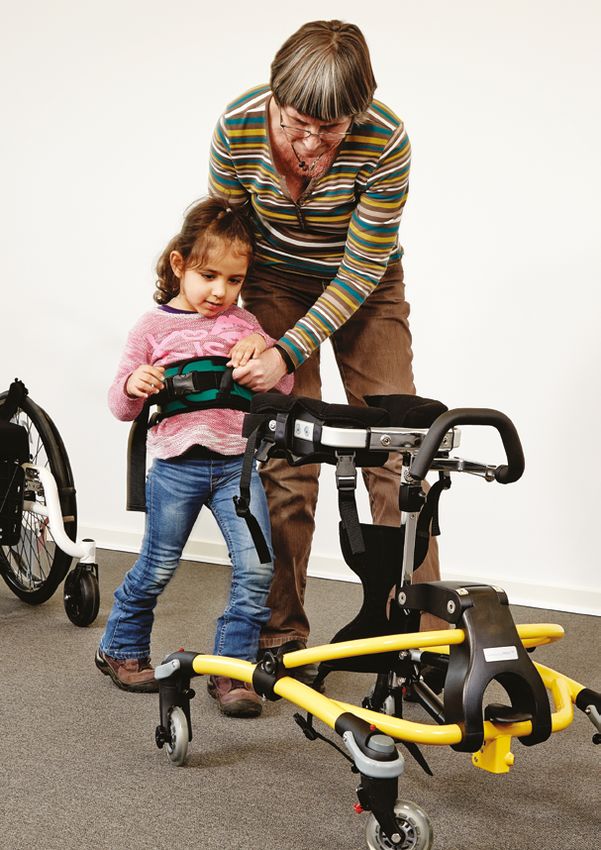
Mustang is a highly adaptable walking aid for        and/or trunk and pelvis support (GMFCS 3-5                  Mustang can be used with anterior or posterior support depending on the stage of the
children and young adults. It can be configured      in CP) to users fully weight bearing with less              child’s walking development.
with anterior or posterior support to meet a         need for postural support (GMFCS 2-3 )
range of walking needs.
                                                     This interactive workbook with contributions
It provides excellent and snug support for the       by Frances George, Highly Specialist
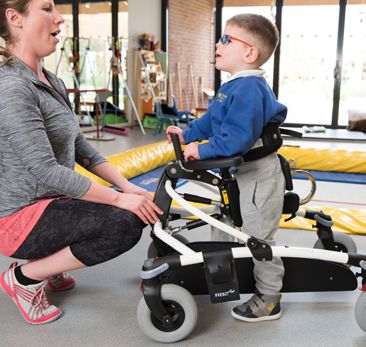
                                                                                                                 Walking with Anterior Support
upper body whilst keeping the child’s pelvis         Physiotherapist, takes a detailed look at                   This position is best suited for children in the early
gently supported. The upright, slightly forward,     Mustang including different positioning options             stages of walking , those who are not able to fully
leaning position, stimulates the walking function    and how it can be used for different stages of              weight bear on their feet, where motor skills are
and encourages the child to participate in daily     walking development. It looks at a case study               impaired or where support is needed round the
activities.                                          following the progress of 3 year old Tommy and              trunk and pelvis.
                                                     also includes a look at accessories.
Mustang is designed to assist gait training for a                                                                The child is protected in this position and having the
wide range of abilities from those with reduced      There are links to clinical research and “how               support at the front of the trunk stimulates a more
motor skills or needing some weight bearing          to” videos.                                                 active extension.
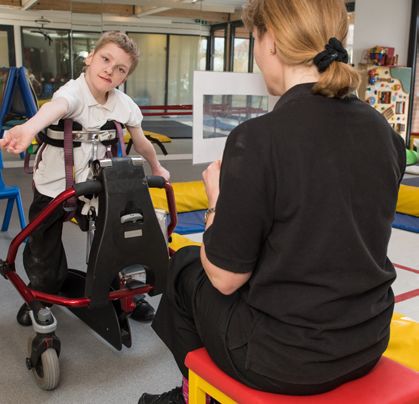
                                                                                                                 In this position, the Mustang can be tilted forward to
                                                                                                                 create a prone position. The chest support and seat
                                                                                                                 move together to keep optimal body alignment and
                                                                                                                 this forward tilt encourages the child to step forward.
                                                                                                                 It also offers easy access to the walker.

                                                                                                                                  Frances explains the                              See a demonstration of the
                                                                                                                                  anterior position in                              Mustangs forward tilt
                                                                                                                                  more detail.

                                                                                                                                                                           Walking with Posterior Support
                                                                                                                                                                           In a this position, the Mustang is suited for
                                                                                                                                                                           children whose walking skills have developed,
                                                                                                                                                                           who have more trunk stability, can fully weight
                                                                                                                                                                           bear and don’t need forward tilt prone position.
Manoeuvrability
Children in the Mustang are close to the centre of   When fixed in a straight line the child can focus                                                                     The open frame makes it possible for the child to
the frame so can turn around their own axis. Many    on their steps. As their walking develops, the                                                                        better access their environment. Not having any-
children with postural asymmetry can have great      front wheels can be unlocked to allow move-                                                                           thing to lean on facilitates a more active posture
difficulty walking straight ahead. Others are weak   ment forward and back or all four released to                                                                         and gives the child more freedom.
so to help them walk, wheels must be low friction.   give the child more control.
Swivel wheels allow maximum manoeuvrability
but where the child’s movements are poorly co-
ordinated or on sloping surfaces the directional     Find out more about                                                                                                   Frances explains the posterior
stabiliser can be used. Also anti-reverse brakes     Mustangs configurable wheels.                                                                                         position
keep the Mustang on course.

2          Mustang | Workbook                                               R82 | Nothing Compares to a smile!    www.R82.co.uk                                                                  Mustang | workbook         3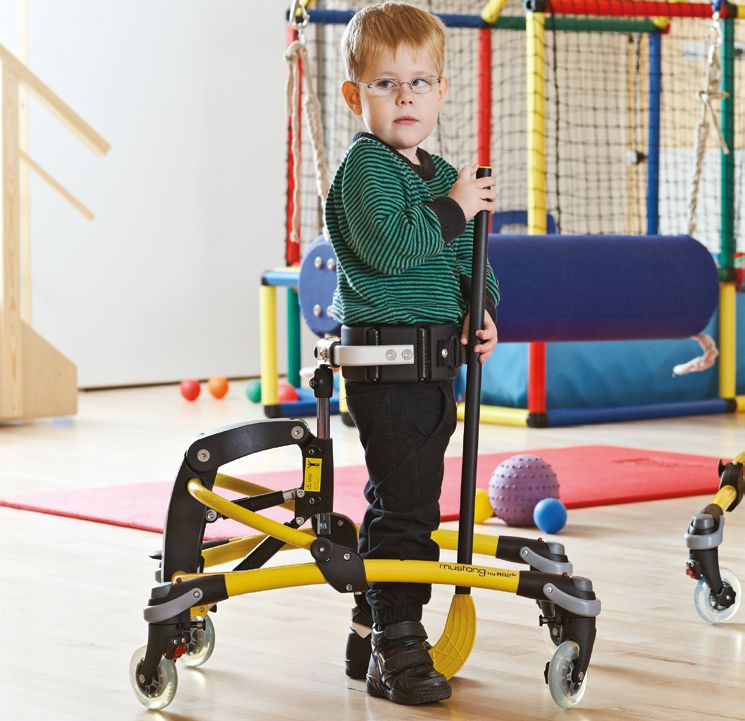
Junior | Walking

                          Mustang - adapts and develops with you
         These videos will help to guide you when configuring your Mustang
Walking Principles                                                                                                                   Targeted Strength Training
The complexity and strength demands of walking are reflected in the length of time it takes                                          Research has shown that the greatest difference in strength between independ-
an infant to start walking and develop a mature gait.                                                                                ent walkers and children needing walking aids was in the hip abductors and knee
Children with disabilities can have difficulty walking for many reasons and                                                          extensors at 30 degrees. These are key muscle groups in sagittal and frontal plane
need to be guided and stimulated in taking first steps.                                                                              walking ability which have implications in targeting strength training to maximise
Frances explains movement patterns in walking.                                                                                       functional outcome.
                                                                                                                                     N Thompson et al – Muscle Strength and walking ability in Diplegic CP:
Stages of Walking Development                                                                                                        Implications for assessment and management, 2011).
In the early stages of walking, children with movement problems, can display various
adaptive standing and walking styles such as bottoms sticking out, flexion of the hips and                                                                           Lewis is 12 and has CP. When Frances started
knees, difficulty stepping, asymmetrical trunk, scissoring and bunny hopping                                                                                         working with him 5 years ago, he was not using any
                                                                                                                                                                     form of walker. Her objective is to get Lewis using his
These walking patterns can persist or emerge as the child grows and they                                                                                             trunk and leg muscles and give him some independ-
have to work harder to maintain an upright position against gravity, effect-                                                                                         ence and the ability to explore his environment.
ing stages of walking development at a later age.
Frances explains in more detail.
                                                                                                                                                                                  Find out how Frances is working with
                                                                                                                                                                                  Lewis to give him some independence
Getting those first steps
When using a walker for the first time, a good standing position is the start point.
Shoulders, trunk, hips and feet should be in line with the child weight-bearing as centrally                                         Improving Walking Patterns
as possible.
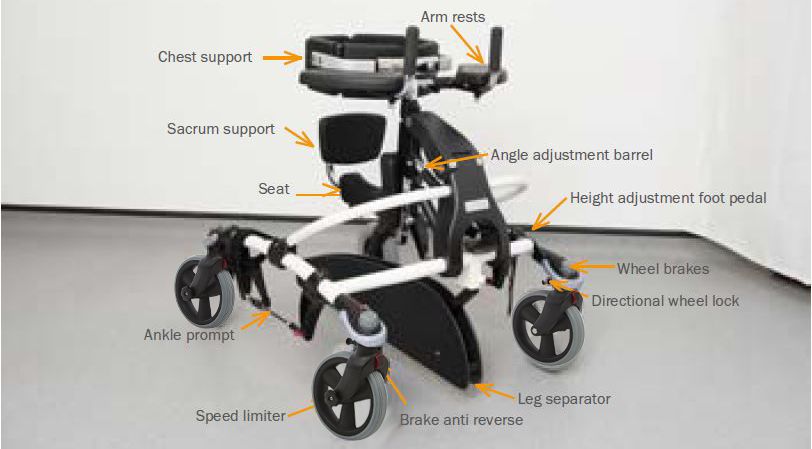
The adjustable seat support allows hip and leg position to be set and the trunk support                                              The Mustang can be adjusted to assist children
allows stable alignment of the trunk with the hips and the feet. The sacrum support brings                                           with different walking patterns. A Gait Analysis
the bottom in to help align the body.                                                                                                study carried out by R82 looked at how a child’s
                                                                                                                                     gait was influenced by adjustments to the Mustang.
When adjusted into a prone position, the seat and chest support tilt                                                                 Children with tightness in their muscles which limit
together to ensure optimal alignment is maintained. The child’s body                                                                 movement in their hips and knees often stand with
weight shifts forward to give the momentum to take their first step.                                                                 bent legs in a crouched position. To help improve
Frances explains how to get a child set up in their walker                                                                           dynamic muscle stretch, the anterior support with
                                                                                                                                     prone tilt can be used.
Tommy - first steps
                                                                                                                                     With altered muscle tone and tightness, children
                                 Frances has recently started to work with Tommy, 3, on                                              often take short steps. To help improve stride
                                 his walking and stepping. He has high tone in his legs so                                           length and for a more efficient walking pattern,
                                 “scissors”. He is in the early stages of walking development                                        the Mustang can be configured to give posterior
                                 and “bunny hops”.                                                                                   support with a forward tilt.

                                           Frances               Read Tommy’s                                                                   Find out how Frances is working with        Read Beth’s Case
                                           explains              case study                                                                                                                 Study
                                                                                                                                                Beth to improve her walking pattern.
                                           more

4           Mustang | Workbook                                                  R82 | Nothing Compares to a smile!   www.R82.co.uk                                                               Mustang | workbook        5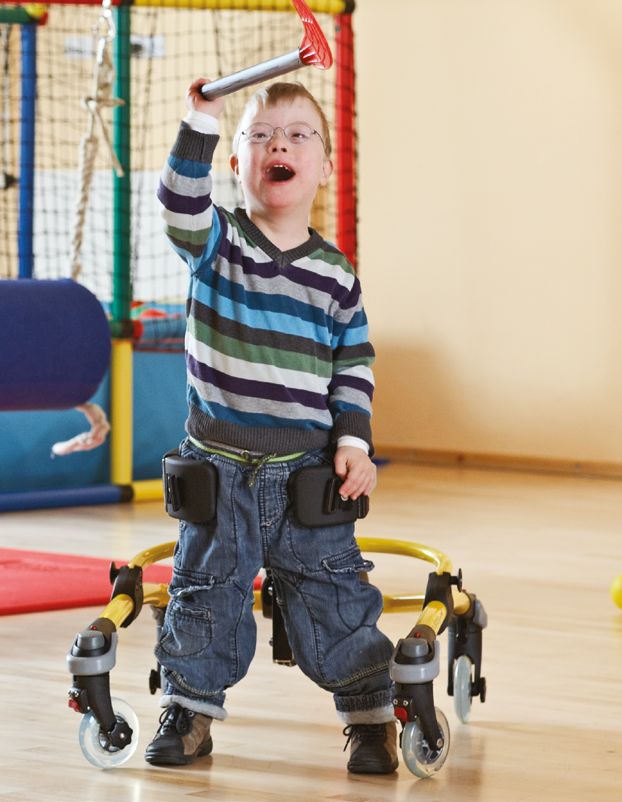
Junior | Walking

Transferring into Mustang                                                                            Key Accessories
Depending on the child’s ability, there are several transfer
options - independent, adult assisted or hoisted using a                                             Chest Support                                        Seat
standing sling/ambulating vest.
Safiya (right) is being assisted from her R82 Kudu into the
Mustang with an Immedia support belt which offers extra
support when standing, sitting, walking or during transfers.
Find out more about the Immedia manual transfer range

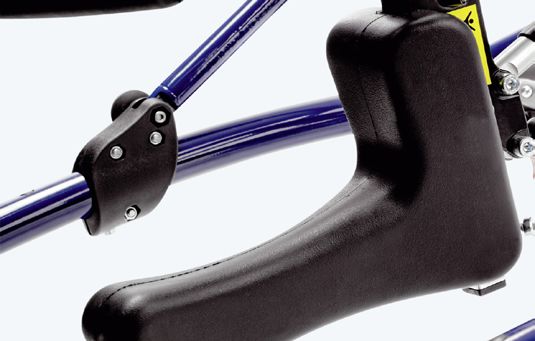
                                                                                                     The Mustang chest support is moulded to hold         The firm saddle seat allows hip and leg position
A hoist can also be used if required with an ambulating                                              the trunk or pelvis like a pair of hands. It is      to be set and hold position even when the child
vest so the child is supported as they sit to stand to access                                        important to create symmetry and stability of        is tired.
the walker.                                                                                          the trunk to facilitate mobility. The support is     The sling seat provides partial weight bearing
Find out more about our Molift range of hoists and slings.                                           height adjustable to allow the child to enjoy the    support for a child who doesn’t need the firm
                                                                                                     greatest degree of mobility whilst still maintain-   seat support but benefits from the sling seat
                                                                                                     ing a stable trunk.                                  when tired.

                                                                                                     Hip Support Options
Moving on...                                                                                         Hip supports                                         Sacrum Support
Once walking development has progressed sufficient-
ly in the Mustang and the child has been using it in a
posterior position, if they have active use of their arm/hand
function, head control and some trunk control, you may like
to consider the Crocodile walker
Frances uses the Crocodile as a ‘final step’ in walking
development where a child’s walking skills have developed
or as a minimal support to aid walking as it challenges
dynamic walking patterns, core stability, trunk control, bal-
ance and co-ordination.                                                                              The curved hip support is used when more             The flat sacrum support pushes the bottom in
                                                                                                     support is needed round the pelvis. It can be        to keep the body correctly aligned and allows
The Crocodile helps the child into a more upright posture.                                           adjusted in height and width. Frances explains       lateral shift as the child walks. It is height
It is placed behind the child. It is lighter making it easy                                          hip support options.                                 adjustable. James shows how.
to move and use. The multi-adjustable handle can be
positioned for height and width and are close to the body
giving better support, stability and walking position.                                               See below for more “How To” videos

              See our Crocodile workbook                                                                             Adjusting configurable wheels                     Adjusting arm rests

6           Mustang | Workbook                                  R82 | Nothing Compares to a smile!   www.R82.co.uk                                                              Mustang | workbook           7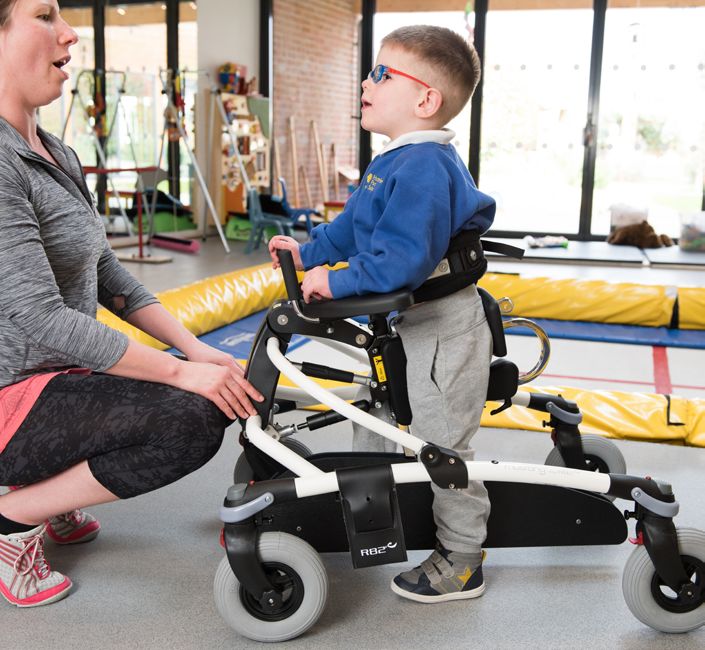
Considerations when Choosing a Walker
1.   Does the child have head control?
2.   Does the child have trunk control?
3.   Does the child have active use of their
     hands?
4.   Can the child actively weight bear on their
     legs?
5.   How does the child stand and with what
     support?

The 3 most important measurements
1. Axilla height - for the correct size of walker
2. Chest width - for selecting correct chest
    support size
3. Total height - ½ the total height will
    approximately be the height for “handle
     height” (Crocodile)

      Contact us to book your free demonstration.
              Call: 0121 561 2222 - Email: uk.education@R82.com

       @R82UK                   Etac R82 UK         @EtacR82UK   Etac R82 UK

8          Mustang | Workbook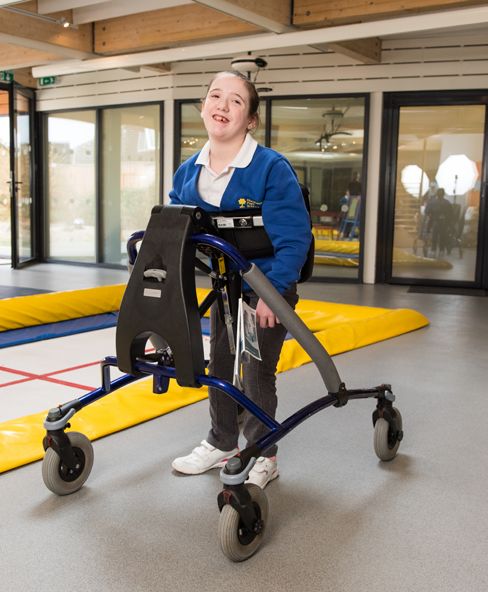
You can also read


