SUMMARY AND KEY PLANS - 2022-2025 SHINE LITERACY
←
→
Page content transcription
If your browser does not render page correctly, please read the page content below
SHINE LITERACY
SUMMARY
AND KEY
PLANS
2022- 2025

                 I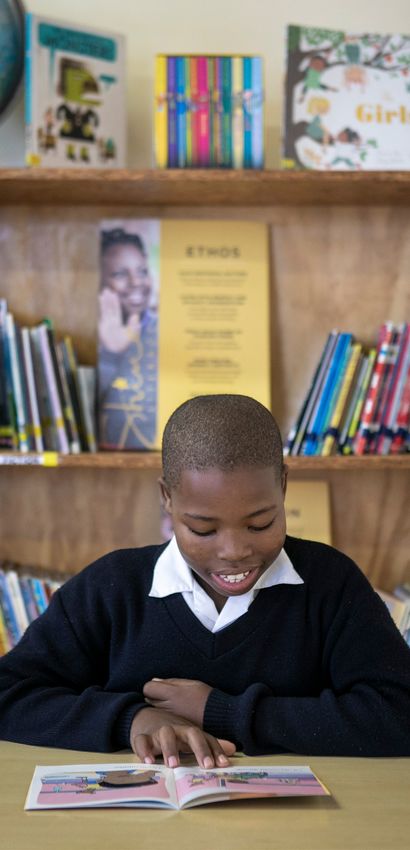
Introduction to Shine Literacy
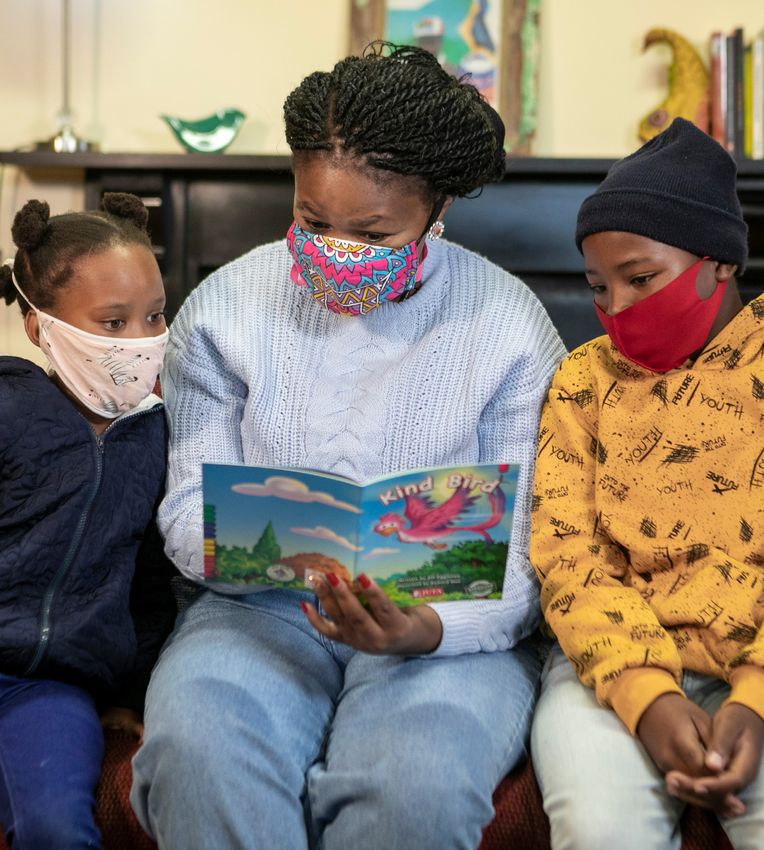
Since its inception in 2000, and in keeping with the National                      Shine Literacy’s response
Development Plan 2030, and the Sustainable Development                             in unstable Covid-19 times,
Goal 4 for quality education, Shine Literacy has tackled the
                                                                                   a change of strategy
country’s stubborn and unacceptably low literacy rates by
focusing on developing the reading, writing and language                           Shine Literacy’s programmes are aligned to the Department of
skills of children in Foundation Phase who live in low-                            Basic Education’s Sector Action Plan for 2024, an evidence-
                                                                                   based, inspiring directive. Focusing on every child in Grades
income communities.                                                                1, 2 and 3, our primary objective is to address systemic chal-
                                                                                   lenges at home and at school while ensuring that children
Shine Literacy has run the Shine Literacy Hour Programme since 2000 using a        have daily access to reading resources and a positive reading
Social Franchise Model which currently operates in 37 schools in the Western       champion.
Cape, Eastern Cape, KwaZulu-Natal and Gauteng.
                                                                                   Shine has worked at delivering well-resourced reading support
In 2013 Shine Literacy developed its own youth led programme called Khanyisa       at homes providing caregivers and children with invaluable
which placed youth reading tutors in Foundation Phase classrooms in township       tools to help reduce the literacy gap between high and low
schools across the Western Cape. Our mission is to scale through strong part-      achieving learners and develop a culture of reading at home.
nerships. From 2022 the programme will be renamed Youth 4 Literacy (Y4L).
                                                                                   As a result of the global pandemic which has resulted in so
Shine Literacy, in collaboration with the Western Cape Government’s Youth          many children being far behind the expected literacy levels
and After School Programme Office (YASPO) is in its sixth year of being the        we have changed our strategy and are focussing on every
Academic Partner for the YearBeyond programme. This programme currently            child in Grade 1, 2 and 3 and our primary objective is to
places 500 trained, unemployed youth (YeBoneers) into Grade 3 and Grade 4          address systemic challenges at home and in the classroom
classrooms to provide children with structured time to practice reading in class   room which prevent children from learning to read and write
which helps improve their English and Afrikaans reading skills.                    at grade level.

                                                                                                                                                    1
Creating a Culture of Reading at School

“       A reading culture provides children and young people the support, encouragement, role
models, resources and opportunity to read for pleasure. School leaders prioritise the develop-
ment of the will to read, not just the skill, among students of all ages. They foster collaboration
among staff, helping to weave reading for pleasure into every class, across the curriculum and
into the daily life of the students

                                                 ”      . (UK Department of Education 2015, p.17).

More than ever, schools need to be a place where daily reading of books and writing activities are
a priority. Systems, policies, activities and daily behaviour must all point towards a strong reading
culture. The emphasis is on activities that need to be school based and school led. Each Foun-
dation Phase class will have a trained youth Reading Champion who will ensure that every child
has individualised reading daily and takes home a reader too. An audit of resources and activities
that support literacy will be taken in Foundation Phase classrooms and teachers will be invited to
belong to a Community of Practice. The objective will be for teachers and literacy specialists to
share ideas, share expertise and encourage and inspire one another.

Creating a Culture of Reading at Home

“       Books in the home are the single biggest indicator of academic success –
surpassing income, parents’ education, family composition and all other factors
(Jeff McQuillan, The Literacy Crisis: False Claims, Real Solutions, 1998).
                                                                                                     ”
                                                                                                     .

Parents are encouraged to participate in the ‘read with your child’ campaign using Paired and
Shared Reading methodology. To this end, Shine Literacy has placed a literacy pack in the home of
every Grade 2 and Grade 3 child in 22 schools each quarter. In collaboration with the Western Cape
Education Department and Wordworks WC@Homelearning Forum, Shine Literacy also delivers a
literacy resource pack to every Grade One child in 46 schools.
The Shine Literacy Home Resource packs include books, stationery, children’s magazines and
parental support materials and flyers. An astonishing 20 771 packs were distributed in the first
two terms of 2021.

                                                                                                         2
Launch of a data-free mobile site where children listen to
stories and play activities that develop literacy skills
Story Time with Shine, a data-free mobile site, is another exciting project that supports learning at home. The site
includes ‘Look and Listen’ and ‘Read to Me’ tabs which allow children to listen to, or read storybooks written in
languages spoken in South Africa. There are currently more than 35 different titles available in IsiZulu, IsiXhosa,
English, Afrikaans and French with more stories in different languages being added regularly. All these resources
are free for users and we are encouraged by the user data which indicates that since inception (April 2021) 10 000
visitors from 41 countries have visited the Shine Literacy Mobi Site.
Youth 4 Literacy
In 2022, Shine Literacy will be implementing the builds self-esteem, pro-social behaviour, and
Youth 4 Literacy (Y4L) programme in 22 schools develops a sense of pride in making a contribution to BIBLIOGRAPHY
in the Western Cape. One hundred and sixty (160) the community which is truly transformative. Shine
McQuillan, Jeff (1998). The Literacy Crisis:
recently matriculated, unemployed youth will Literacy has eight years of experience partnering False Claims, Real Solutions. Portsmouth NH
become Reading Champions in Grades 2 and 3 with Action Volunteer Africa and youth volunteers. (USA), Heinemann.https://www.researchgate.
classrooms. The youth will be trained to conduct We understand the power of individual transforma- net/publication/238259665_Literacy_crises_
paired reading with each child daily and will be tion and the best methods to support vulnerable False_claims_and_real_solution/link/5c7f0175-
92851c695058b686/download
shown how to read stories to the whole class. They young people. We want to continue to grow this
will also be responsible for monitoring books that partnership that provides youth with courses and Story Time with Shine Literacy: a Data-free
children borrow to take home. Shine Literacy will stipends funded from the Youth Employment Mobile Site.
be encouraging Shine Reading Champions to work Service (YES) Programme. This is a crucial part of Sustainable Development Goals in South Africa
with the class teacher and to conduct any other our vision for Shine Literacy. (#SDG_ZA). Goal 4: Quality Education. SA
activities that support a reading culture at school. Government, 2019.
The end result of Y4L would be a school which has UK Department of Education (2015). Reading:
Shine Literacy’s Y4L model also allows for significant optimised on the use of its resources to design and the Next Steps. Supporting Higher Standards
social benefits to develop alongside the attainment appreciate reading spaces, and groups of learners in Schools, p.17 https://assets.publishing.service
of employment targets for the youth. who enjoy reading, are motivated to read, and iden- gov.uk/government/uploads/system/uploads/
attachment_data/file/409409/Reading_the_
tify as readers, and that their scores on literacy next_steps.pdf
Addressing Youth Unemployment assessments show improvements over time. Finally,
ILO Development of a Social Economy Policy
Shine Literacy recognises that the Social Sector the youth will show evidence of having acquired key
for South Africa. https://www.ilo.org/Develop-
offers a unique set of opportunities to boost youth skills to contribute meaningfully to their communi- mentCooperationDashboard/#ape4qvs
employment. It provides meaningful work which ties, or to secure future employment.
Email: info@shineliteracy.org.za Website: www.shineliteracy.org.za NPO Number: 060-696 PBO Number: 930 025 382
3You can also read


