Rediscovered New opportunities for post-lockdown hospitality - | Craft Guild ...
←
→
Page content transcription
If your browser does not render page correctly, please read the page content below

Leisure
 rediscovered
 New opportunities for
 post-lockdown hospitality

Contents

Key takeaways                           Case studies
Leisure rediscovered   					03
                                        Therme Group 						21
Executive summary
                                        Park Holidays						24
The new pleasure principles					   04
                                        Strategies for success					26
Section 1
State of the sector						07             Green solutions 						27
                                        Barclays Market and Customer Insights 		   29
Section 2
The lure of local							11              What our hospitality and leisure
                                        team can do for you 					30
Section 3
                                        About the author						31
Extras and must-haves 					15

Section 4
Changing places 						18

                                                          Previous | 2 | Next page
Key takeaways

Leisure rediscovered
The shape of leisure may have changed for good

Hospitality and leisure businesses are springing back as their customers explore new experiences and make new choices that are set
to endure with the removal of restrictions:

      leasure-seekers are flocking back
     P                                                ther types of business are also
                                                     O                                               he delivery boom has not subsided
                                                                                                    T
     to hospitality and leisure venues: the          benefiting from a focus on home: 41%           since the pandemic, with four in 10
     vast majority of hospitality and leisure        of consumers say they are now more             businesses reporting continued
     businesses (94%) are now confident              drawn to go out for entertainment in           popularity of home delivery and click-
     about their growth prospects this year          their local neighbourhoods                     and-collect services

      he industry’s contribution to GDP could
     T                                                usinesses have seen new types of
                                                     B                                               s a result, tech is a firmly rooted part
                                                                                                    A
     be nearly £3.5bn higher for the post-           customers enjoying their services. For         of the sector’s proposition: 36% of
     lockdown easing months of 2021 (April           example, almost half of pubs report            businesses are earning more from
     to December) than in the same period            welcoming more families; 42% of spas           ecommerce than ever
     in 2019, with London and the West               are seeing more men come through their
     Midlands performing especially well             doors; and more younger customers               oliday parks have done especially well
                                                                                                    H
                                                     are using holiday lets (47%) and holiday       since the pandemic with more than
      he staycation may be here to stay:
     T                                               parks (40%)                                    half of operators now planning to open
     45% of consumers are more likely to                                                            new sites.
     choose a UK holiday location than before         ignificant numbers of consumers are
                                                     S
     the pandemic                                    prepared to pay a premium for added-
                                                     value experiences – equating to £14.5bn
     I f that preference continues into next        extra revenue for healthy food and drink
      year, it could be worth up to an additional    choices, or £13.6bn for food and drink
      £9.2bn for the domestic tourism market         with sustainability credentials

                                                                                                                          Previous | 3 | Next page
Executive summary

The new pleasure principles
The sector is reshaping around customers’ evolving tastes

The hospitality and leisure sector has got              More widely, the mass return to leisure was
its confidence back. This is no surprise.               a huge contributor to the rise of 4.8% in GDP
Businesses were always upbeat about their               in Q2 of 2021.1 Household spending increased
prospects by this point. In our Ready to Go             by 15.4% in the year to August, according to
Again report last year, despite the dire picture        Barclaycard, fuelled by spending on domestic
of Covid-related closures at that time, 98%             holidays, leisure, food and drink.2 Our modelling
of operators were positive about growth                 for this report suggests the increase in
prospects for the summer of 2021 – and they             economic output from the sector in April-
have been proved right.                                 December 2021 will be almost £3.5bn over
                                                        the same period in 2019.
It has been a fraught period of limbo but
businesses have used the time wisely, adapting
their business models and reshaping their
offerings. Since restrictions began to lift in April,
customers have returned with a clear desire to                       Ready to grow again

                                                                     26%                               34%                          £3.48bn
make up for lost time. Operators have told us
their revenue has jumped by an average of more
than 25% over 2019 levels, and that increase is
predicted to rise to one third over the remainder
of 2021.
                                                                     Average increase in H&L           Predicted revenue increase   Expected GVA increase, April-
This resurgence is critical not just for the                         revenue since pandemic            for April-December 2021,     December 2021, compared with
industry but for the UK economy as a whole.                          restrictions were lifted,         compared with same           same period in 2019
A vibrant hospitality and leisure sector will be                     compared with same                period in 2019
one of the critical foundations for bringing                         period of 2019
footfall back to urban centres, for example.

                                                                                                                                    Previous | 4 | Next page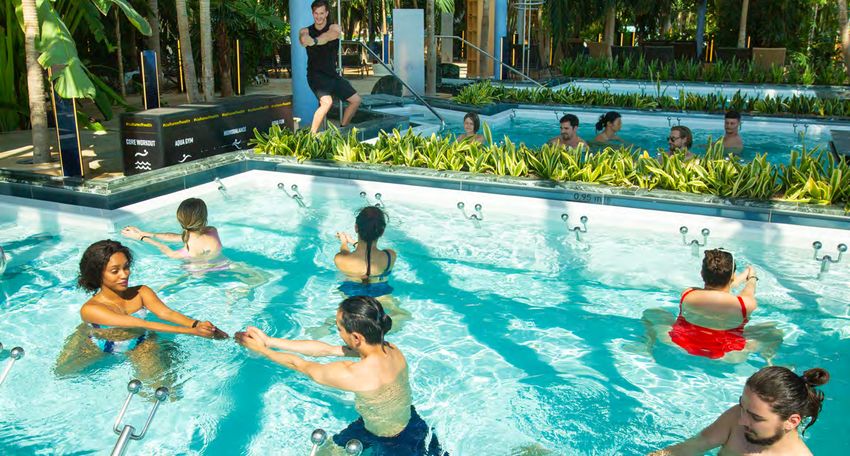
Executive summary

                                     Shifting preferences                                Economic impact of the April-December 2021 leisure
                                     Our survey also reveals new patterns in             bounce-back (compared with same period 2019)
                                     the way people are using hospitality and
                                     leisure services. In line with rising consumer                                                       GVA
                                     confidence and a build-up of many households’                                                   increase (£m)
                                     savings over the pandemic, there is a growth
                                     market for premium experiences, from luxury          Hotels, etc.                                       839
                                     glamping holidays to gourmet tasting menus.
                                                                                          Short stay accommodation                           101
                                     Holiday parks and lets, hotels, bars and spas are
                                     all capitalising on this. At the other end of the
                                                                                          Campgrounds and Caravan parks                      148
                                     market, affordable holidays and leisure pursuits
                                     are a priority for many consumers, reflecting
                                                                                          Other accommodation                                 24
                                     the tough 18 months many have faced.
                                                                                          Restaurants and food outlets                       1,052
                                     Consumers report that their habits have
                                     changed. More plan to take staycations in
                                                                                          Pubs and bars                                      761
                                     future (45%) and to eat, drink and exercise in
                                     local neighbourhood venues (41%). While the          Gyms and other sports activity                     361
                                     trigger for these changes was the distortion of      centres
                                     market choice inflicted by the pandemic, those       Other recreational activities                      197
                                     who enjoy these new experiences could provide
                                     an expanded customer base in the longer term.        Total                                              3,484

                                     Operators have remarked on other new trends
                                     in customer behaviour. For example, younger
                                     customers who might generally have travelled        Unsurprisingly, many consumers are expressing
"The distortion of market choice     abroad have been taking up domestic holiday         strong preferences for services that are safe
inflicted by the pandemic was the    lets – 47% of owners have noticed an increase       and healthy. There are also significant numbers,
                                     in bookings from this age group – or enjoying       again chiefly among younger groups, who are
trigger for changes, but those who   holiday park breaks (40%); while families are       keen to find experiences that offer health and
enjoy these new experiences could    flocking to pubs (47%) and bars (42%). The          wellbeing benefits, or have a strong element
provide an expanded customer base    challenge for businesses is to impress and          of sustainability. Our modelling indicates
                                     retain these new customers, even as their           significant returns for operators that can fulfil
in the longer term."                 options expand again.                               these preferences.

                                                                                                         Previous | 5 | Next page
Executive summary

New habits
We have also found evidence that trends              About the research
embraced during the pandemic, such as home
delivery and click-and-collect services, seem        Surveys were carried out in late July and early
set to become permanent fixtures. Digitisation       August. We questioned:
is reaping rewards, with 36% of operators we
surveyed experiencing higher ecommerce               •   524 senior managers in hospitality and
sales than ever. A similar proportion are                leisure businesses with 10 or more
investing more in data capture and personalised          employees
marketing. By getting closer to their customers,
these businesses are well placed to operate          •   2,008 adults across the UK.
more efficiently and effectively.
                                                     For economic modelling purposes, the
Collaboration is one of the big success stories of   findings have been combined with Office for
the pandemic. 88% of operators are now joining       National Statistics data, including the Annual
forces with their local peers more often to offer    Business Survey and the Business Register
joint deals. This generates the local ‘multiplier’   and Employment Survey.
effect, where an operator becomes the provider
of different experiences for a tourist for the       Because of widespread sector closures in the
duration of their stay.                              sector in 2020, comparisons for current and
                                                     future years use 2019 data as a baseline.
Our findings should give heart to a sector
already buoyed by surging revenues.                  In estimating the potential value for future
Businesses that tweak their propositions to          UK holiday expenditure, the findings from the
delight and excite customers, based on the           consumer survey have been combined with
new trends revealed in their sub-sectors,            baseline year data, using an assumption that
can generate long-term benefits from these           more trips of the main holiday type will be
exceptional times.                                   taken in future, with an increase.

                Mike Saul
                Head of Hospitality and Leisure,
                Barclays Corporate Banking

                                                                                                       Previous | 6 | Next page
Section 1

State of the sector
Businesses are looking beyond recovery to reinvention

Overwhelming confidence in the future is        Revenues soar…                                    Confidence in business growth
the sentiment among the 524 leaders of          This sentiment is founded on an upswell in
hospitality and leisure businesses questioned   revenues since lockdown restrictions began
for our survey. 94% have confidence about       to lift. On average, operators estimate their                                     Very con�dent 33%
business growth this year, and one third are    revenue from that point has risen by 25.7%
                                                                                                                                  Quite con�dent 61%
very confident.                                 over 2019 levels. By the end of 2021, they
                                                expect that figure to have hit 33.6%. According                                   Not too con�dent 5%
Gym and leisure centre managers are most        to our economic modelling, this represents
likely to be very confident (45%), with cafés   a potential £15.4bn boost across the sector.
and spas/wellness retreats (both 42%) also
especially positive. Most wary about the        Operators in the East Midlands (49%) and the
future are hotel owners, 16% of whom            North East (47%) have seen especially large
describe themselves as "not too confident",     revenue hikes. London’s increase was biggest
with 11% of pubs and one in 10 spas also        in terms of sheer value, amounting to £2.28bn,
lacking confidence.                             or 29% of the total gain.

Geographically, the most upbeat mood is         The only regions reporting falls in revenue         "Tech upgrades have paid off:
in London (98% confidence) and the West         over 2019 were the East of England (-12%)           36% of businesses say they are
Midlands (97%), while 100% of businesses        and Yorkshire and the Humber (-6%), though
questioned in the South West expressed          in the latter case businesses expect to hit the     now earning more than ever
confidence, albeit based on a smaller sample.   average national rate of around 33% by the          through ecommerce."
                                                year-end.

                                                                                                              Previous | 7 | Next page
Section 1

Sectors performing especially well in revenue       Economic impact of the April–December 2021 leisure bounce-back (£m)*
terms include holiday parks, which predict
a 55% increase by December, as well as
restaurants (50%) and nightclubs (47%). The
food services sector, including restaurants,
will be the biggest winner in value terms,
accounting for well over one third (37%) of the
£15.4bn gains, with pubs and bars accounting
for over one fifth (22%).

For gyms and spas, recovery was slower, but by                                                            Scotland 250
the year-end they still predict significant rises
of 18% over 2019 levels for spas and wellness
centres, and 24% for gyms and leisure centres.
This is borne out by reports of a widespread
surge in gym memberships to pre-pandemic
                                                                                                                    North East England 157
levels by autumn, with many operators seeking
extra premises due to demand, and PureGym
exploring IPO options.3                                                                                      Northern Ireland 102

…but so do costs                                                                                                           Yorkshire &The Humber -54
Of course, business costs have risen alongside      North West England 465
revenues. We estimate the increase in                                                                                East Midlands 404
operating costs to date over 2019 levels to
be £8.86bn. This is partly explained by the         West Midlands 609
removal of pandemic-related cost reliefs such                                                                                   East of England -161
as renegotiated rents and VAT cuts as well          Wales 216
as staff losses during closures. Almost 40%
                                                                                                                             London 1,003
of the cost-rise is accounted for by restaurants
and other food outlets.                             South West England 440                                                     South East England 53

                                                    *compared with the same period in 2019
                                                                                                            Total 3,484

                                                                                                             Previous | 8 | Next page
Section 1

            Recruitment is almost certainly the biggest         Smaller businesses have seen particular
            element of this increase. Given shortages in        acceleration in app bookings – 44% of firms
            staff, with more than 100,000 vacancies in the      with 10 to 49 employees say apps are bringing
            April to June period, wage rises are likely.4 The   in more bookings than ever, compared with an
            net impact of this, together with the increasing    average of 33%. The largest operators, on the
            cost of food, new rents and rates rebalancing,      other hand, are the ones investing most in data
            will take some time to settle.                      capture and personalised marketing: 43% of
                                                                companies with more than 500 employees are
            Powering the economy                                focusing on this area.
            The scale of these changes underlines the
            sector’s value to the wider economy. The            The enforced pace of digital adoption has not
            overall increase in economic output for             been kind to all: a quarter of businesses (25%)
            the eight-month period from mid-April,              say it has made their lives harder. However,
            compared with the same period in 2019,              over one third (34%) take the opposite
            is estimated at £3.5bn.                             view, with nightclubs (52%), bars (44%) and
                                                                gyms (41%) especially likely to say that the
            Almost £3 in every £10 of this additional           pandemic’s acceleration of tech has changed
            GVA is being generated in London. The West          their lives for the better.
            Midlands accounts for nearly 18% of the extra
            growth. Other significant contributors are the      Deliveries and deals
            North West (13.3%), the South West (12.6%)          There are other significant remnants of the
            and the East Midlands (11.6%).                      pandemic restrictions. Over two-fifths (42%)
                                                                of businesses say that home delivery is still
            Platforms for success                               popular, and a similar number (40%) continue
            Ready to Go Again noted that more than one          to see notable take-up of click-and-collect
            fifth (22%) of hospitality and leisure businesses   services. The recent decision by the Wendy’s
            were responding to the restrictions by              burger chain to open a network of ‘dark
            upgrading their websites to boost digital sales,    kitchens’ to serve the home-delivery market
            while almost as many (17%) were introducing         is one example of operators’ confidence in
            customer apps. This appears to have paid off:       the future of this model.5
            36% of businesses say they are now earning
            more than ever through ecommerce.

                                                                 Previous | 9 | Next page
Section 1

Another enduring trend is the habit of joining    In Newcastle, the Malhotra Group has won
forces with other businesses. A striking 88%      approval for a premium health club, hotel and
of operators are now offering joint deals more    retail complex in listed buildings on a premium
often than they did in 2019, led by holiday and   city-centre site.8 And Manchester is the first
caravan parks (95% and 100% respectively),        site for a planned chain of high-end gym and
nightclubs (96%), and spas and wellness           wellbeing centres, GSquared, featuring infrared
centres (90%).                                    saunas and soundproof sleep pods.9

Premium experiences                               The taste for luxury is a trend noticed
One effect of the pandemic is a somewhat          particularly by holiday parks (55%),
polarised approach to the quality of              hotels (51%), bars (49%), spas (46%) and
experiences consumers are seeking.                holiday lets/B&Bs (45%). At the other end
Household spend increased by 15.4% in the         of the market, affordability takes precedence,
year to August, while leisure spending made       a trend especially noted by the owners of
the August bank holiday the biggest burst         caravan parks (46%) and pubs (44%). While
of consumer activity since Christmas 2019,        holiday lets, for example, are able to specialise,
Barclaycard data shows.6 However, while           most businesses need to be adaptable enough
large parts of the consumer base amassed          to offer great experiences at both extremes
significant household savings during the          of the market.
pandemic, others continue to feel the pinch as
the final furlough support is lifted.             The position today reflects the agility
                                                  and resilience of the sector. Almost half of
Many operators have found their customers         businesses say they are now well prepared            Barclays perspective
keen to splash out on premium experiences.        for another lockdown, while a similar number
Recent openings demonstrate operators’            calculate they would be able to stay afloat.         Our survey strongly suggests that home delivery
confidence that this market will broaden          Only a handful (3%) believe they would be            and click-and-collect options are lockdown habits
further. The new Londoner Hotel in Leicester      unable to survive.                                   that have stuck for the longer term. Operators that
Square, for instance, offers luxury at every                                                           are able to invest in tech are well positioned to take
level, its eight-storey tower matched by eight    Through collaboration, improving                     advantage of this. Notably, many are now investing
underground floors that include a ballroom and    technological capabilities, and offering             more in data capture and personalised marketing,
swimming-pool.7                                   services in new and imaginative ways, the            with two-fifths of pubs, bars, hotels and holiday
                                                  sector is rapidly reshaping itself for whatever      parks focusing on this area to get even closer
                                                  the future brings.                                   to their customers.

                                                                                                                  Previous | 10 | Next page
Section 2
The lure of local
Domestic tourism and neighbourhood outlets are welcoming unfamiliar faces
UK holidays may have been the only practical
option for much of summer 2021, but the
experience has put staycations front of mind
for many consumers. 45% of the 2,008 adults Top five destinations with consumer appeal
we surveyed say they are now more likely to go
on holiday in the UK. 2021
Less than one fifth (19%) of people surveyed are
1. Lake District 27%
now more likely to go on holiday abroad, while 2. South West 23%
the remaining 36% say their holiday preference
has not been changed by the pandemic. While
3. Scottish Highlands 18%
the bias towards more domestic holidays skews 4. Peak District 12%
slightly towards older holidaymakers – 48% of 5. Dorset 11%
over-45s express this intention – it is the most
common response across all age groups. It is 2019*
also more common among women (48%) than 1. South West 31%
men (41%).
2. Scotland 22%
3. Yorkshire & Humberside 20%
“Beyond the traditional 4. Wales 20%
favourites, consumers cite 5. North West 18%
a broad range of preferred
holiday locations, from the *The most popular UK regions respondents to our 2019
'The Great British staycation' report survey planned to visit
Peak District to the North
Wales coast.”
Previous | 11 | Next pageSection 2
Even starker differences are revealed by
studying the net change among those whose
preference has switched, whether towards
UK or overseas trips. Women (32%) are much
more likely to have changed their preference
to UK holidays than men (20%), and over-55s
(41%) are more likely still. The overall net tilt
towards domestic holidays is 26%.
Desirable destinations
The Lake District, cited by 27%, South West
England (23%) and the Scottish Highlands
(18%) are the three clear winners when it
comes to preferred UK destinations. The Lakes
are the most popular choice in every age group
except the over-55s, who favour the South
West more. 22% of the 16-to-24 age group
choose the Lakes but almost as many (19%)
pick London.
Percentage increase in consumers planning to holiday in the UK*
Beyond the traditional favourites, however,
consumers cite a broad range of preferred
locations, with significant support for the 16-24 yrs 1%
Peak District, Dorset, the Isle of Wight, the 25-34 yrs 11%
Cotswolds, South Wales, Edinburgh and the
North Wales coast, among other areas. 35-44 yrs 16%
45-54 yrs 33%
55+ 41%
Overall 26%
*Visual shows net figures, i.e. the proportion of respondents who answered that, compared with pre-pandemic times,
they are now more likely to holiday within the UK, minus those who said that they are now more likely to holiday abroad.
Previous | 12 | Next pageSection 2
This chimes with the findings of our Great Changes in customer base since hospitality reopened
British Staycation report of 2019, which
suggested a broad sweep of favoured
destinations, with businesses in the North More young people More families
East and the Midlands reporting the biggest
rises in visitor numbers. Even then, we found
that more than half of 25-to-24-year-olds B&B/holiday lets 47% Pubs 47%
(52%) planned to increase their UK-based Nightclubs 43% Bars 42%
holiday time, suggesting that the pandemic
has accelerated an existing intention. Holiday parks 40% Average 30%
Spas 40%
The range of desirable destinations raises the
Average 37%
prospect of welcome new revenue streams for
the UK-wide holiday industry, if consumers’
current preferences for more staycations were
to be sustained and become a habit.
£9.2bn reward
For local economies, the effect could be
significant. Using economic modelling, we
have quantified the potential value of such a
shift. In 2019 there were 126.6 million total
overnight visits by UK residents. Based on the
26% net change in consumer preferences,
this figure could increase by an additional 32.9
million trips.
Total holiday expenditure, which stood at "Tourism is not the only potential source of new
£25.3bn in 2019, could then plausibly rise by up income – people have also been encouraged to
to £9.2bn. While this figure includes all tourist
spending, including transport and shopping, make more use of local entertainment in their
it still represents a big gain for hospitality and own neighbourhoods than before."
leisure providers.
Previous | 13 | Next pageSection 2
Let’s stay local
Tourism is not the only potential source of new Barclays perspective
income to arise from the pandemic experience.
People have also been encouraged to make The agility acquired by operators during
more use of local entertainment in their own the pandemic will serve them well beyond
neighbourhoods than before. it. Businesses’ new resilience around use of
outdoor space and a flexible response to the
Asked about their choice of pub, bar, nightclub, weather, for example, could help to extend
restaurant or café, 41% now see more appeal the tourism season beyond previous limits.
in eating and drinking in their local areas, while And the increased collaboration among local
a similar proportion say their preference is providers, noted in the last section, will help
unchanged compared with pre-pandemic ensure the benefits are spread to the widest
times. The lure of local is strongest in the possible range of enterprises.
North West (45%), Scotland (45%), the North
East (44%) and Wales (44%).
Operators have noted this trend, with 32%
reporting a rise in customers local to the area
since the reopening of hospitality. Other
shifts in customer base have become obvious
too. Holiday lets (47%) have welcomed more
younger customers, for example; 47% of
pubs and 42% of bars have seen an increase
in families through their doors over pre-
pandemic times; and 42% of spas and
wellness retreats say they now attract more
male customers.
Providers across the industry can capitalise
on the willingness of customers to try new
experiences by adapting their offering to
keep these new demographics coming
back for more.
Previous | 14 | Next pageSection 3
Extras and must-haves
Safety, wellbeing and sustainability all draw a premium
In the aftermath of a pandemic, health is naturally
high in the minds of the population. While a
commitment to rigorous health and safety has
become the norm, significant numbers feel so
strongly that they are willing to pay extra for
the knowledge that their leisure providers are
adhering to strong hygiene standards.
Customers would pay an extra 20%, on average,
to eat and drink in venues with this kind of
guarantee, according to our survey.
The 16-to-24 age group are particularly
concerned and would pay an average of 39%
extra, while those aged 25 to 35 would pay
33% more. A willingness to link hygiene
standards to price declines with age: the
over-55s would pay 8.4% more.
"While rigorous health and safety has
become the norm, significant numbers
feel so strongly that they are willing
to pay extra for reassurance of strong
hygiene standards."
Previous | 15 | Next pageSection 3
A similar picture emerges in holiday choices,
where nearly one quarter of consumers
(24%) place a high value on good safety and
hygiene standards in their accommodation.
While 38% would not pay more for this kind of
reassurance, many feel strongly enough to
do so. The average premium is 20%. Again,
there is a striking difference between the
youngest adults, who would be willing to
pay most (41%), and the over-55s, who
would pay 9% more on average.
By meeting these customers’ expectations, the
food sector stands to gain an additional £15.2bn
annually, while accommodation providers could
reap a bonus of almost £6bn.
Health matters
The appeal of healthy leisure experiences goes
well beyond infection control. Healthy living
choices, already on the increase in the UK before Potential extra revenues from providing enhanced options
Covid-19 struck, have been further boosted
as lockdown enabled people to reflect on their
lifestyles and their physical and mental health.
Average Food and drink: potential Accommodation: potential
Our recent report, The Wellness Imperative,
revealed a potential £21.1bn revenue boost by increase additional revenues (£m) extra revenues (£m)
2023 for leisure providers able to incorporate
wellness into their offerings. Healthier options 20% £14,543 £5,228
Strong sustainability credentials 18% £13,594 £5,581
Strong safety/hygiene standards 20% £15,152 £5,982
Previous | 16 | Next pageSection 3
"91% of operators say health and Our new research provides confirmation of this,
wellbeing products have become with consumers prepared to pay 19.9% extra Barclays perspective
on average for healthier food and drink options,
an increasing priority since the and 17.8% for holiday accommodation that This part of our survey highlights wide
pandemic restrictions lifted." includes health and wellbeing services such demographic variation in the features
as a gym or spa. that influence consumers’ leisure
choices. A thorough knowledge of
As with safety and hygiene provision, it is the make-up and preferences of their
the youngest consumers who are more customer base will enable operators to
motivated to pay a premium. The total take fuller advantage of this.
potential premium would mean £14.5bn
for food and drink providers, and £5.2bn for
accommodation services.
While eating out or drinking, those aged 16 to 24
Operators are acutely aware of this trend. 91% would be prepared to pay a premium of 35%, on
say health and wellbeing products have become average, for products with strong sustainability
an increasing priority since the pandemic credentials. The average premium for 25-to-
restrictions lifted. And almost three-quarters 35-year-olds is 30%. A sustainable holiday
(73%) agree that the ESG acronym, standing for experience is worth 39% more to the youngest
environmental, social and governance activity, group, and 32% for 25s-to-35s. The potential
should have an ‘H’ appended to recognise the extra value attached to these preferences is
equivalent importance of health in the sector. £13.6bn for food and drink services and £5.6bn
for accommodation providers.
Sustainable experiences
Environmental impact is slightly lower on the As with health and hygiene, the willingness to
agenda for operators than health and wellbeing pay more declines as consumers age. However,
– 76% rate sustainability as an increasing capturing repeat business from sustainability-
business priority. But it remains high in the conscious young audiences will repay operators
minds of younger consumers, in particular. as this demographic gains in affluence.
Previous | 17 | Next pageSection 4
Changing places
The pandemic has triggered a complex property picture
46%
The changes in lifestyle triggered by the
pandemic restrictions have prompted
businesses of all kinds to rethink their
estate. The property decisions of leisure
and hospitality providers will be key to the
continued vibrancy of the UK’s urban scene of businesses are
and local neighbourhoods. planning to expand city
centre locations
With home working increasingly the norm,
42%
sandwich and coffee outlets such as Pret a while
Manger became a symbol of concern over
the future viability of city centres. In practice,
the picture is more complex.
Pret itself has responded recently by tweaking plan to reduce city
its business model: it announced plans to centre locations
open around 100 franchised stores, as well
as more of its own outlets, largely in regional
towns.10 And our survey suggests that
alongside tactical retreats from certain sites,
many businesses are planning to expand their
physical networks.
Previous | 18 | Next pageSection 4
Expansion plans Regions in which the highest proportion of businesses plan to expand their overall number of locations
More than four in 10 firms (43%) plan to add
new outlets. This represents a significant leap
in growth plans over the position a year earlier:
Ready to Go Again found just 18% of firms
looking to expand their number of locations.
Several regions are set for net expansion –
notably the East Midlands, where 61.5% of
businesses plan new sites, the South West
(56%), the West Midlands (55%) and the North
East (52%). Across the board, however, there
is more reduction than expansion: half of firms
want to reduce their estate.
North East England 52%
Of those with plans to expand, the average
ambition is for 5.6 new sites, with holiday
lets/B&Bs averaging 6.5. Holiday parks are also
in ambitious mood, with 56% aiming to expand
their portfolios. Both these results suggest a North West England 42%
bold approach to retaining a large section of East Midlands 62%
the domestic holidaymaker surge noted earlier.
West Midlands 55%
Wales 44%
"Alongside tactical retreats South West England 56%
from certain sites, many
businesses are planning to
expand their physical networks."
Previous | 19 | Next pageSection 4
56% Travelodge, which is opening 17 new UK
hotels this year,11 is among the 47% of hotel
groups which have expansion plans. And the
resurgence in gym membership has triggered
Barclays perspective
Hybrid working habits have provoked
of holiday parks plan a race for new space by 41% leisure clubs with unease about the future of city centres.
to expand the number The Gym Group, for example, considering Our research suggests hospitality and
of physical locations empty retail space as locations for a projected leisure businesses continue to have faith
they have 40 new gyms.12 in these locations, but the government’s
Build Back Better High Streets Strategy,
City, rural and local including measures such as an extension
Fears that city-centres might not regain their of the streamlined pavement licensing
buzz seem unfounded, based on our research. system,13 will be critical to help operators
More businesses are planning to expand their maintain a viable presence.
city-centre bases (46%) than to reduce them
(42%). For instance, 55% of pub chains, 54%
of restaurants and 47% of holiday apartment/
B&B operators aim to open more outlets in New sites in local and suburban areas are
these areas. also on the agenda for 62% of holiday parks.
Caravan sites (46%) and bars (47%) are eyeing
Holiday parks are particularly set on expanding these neighbourhoods too. However, cafes,
in rural locations (62%), as are hotels (44%). gyms, spas and restaurants are all planning
Rural expansion plans are especially common net reductions in local areas – perhaps going
in the East Midlands (54%) and the North East against the trend seen in our consumer
(48%), against an average of 39%. survey, with more people prepared to try
their neighbourhood amenities.
Previous | 20 | Next pageCase studies
Changing places
The Romans started it, but now the spa tradition is being reinvented for a wider audience
Visiting a spa is typically seen as a premium “The UK is a very important market for us,”
experience in the UK. But if the ambitious says Ion, who is responsible for financial
vision of Therme Group is realised, a trip to the strategy and raising capital. “It has a pre-
spa will soon become an everyday activity, akin existing spa culture, going back going back
to going out to a restaurant or cinema. all the way to Roman times and continuing
through the Tudor, Georgian, and Victorian eras
The Therme concept is far from a traditional right up to today. Our mission is to rejuvenate
spa, however. Its four successful facilities in that concept. It’s not just about going to the
Germany and Romania are vast “urban oases” spa, but about creating an environment that
combining multiple pools, saunas, children’s encourages everyone to engage with nature,
water slides, lush relaxation areas and health and culture to achieve a more balanced
treatment centres. lifestyle.”
The Bucharest Therme, for example, A safe place to be
incorporates a 30,000m2 urban beach, three The testing-ground for these ambitions will
themed restaurants, and the city’s biggest be Manchester. The business has secured a
botanical garden in the country with more 12-hectare site within TraffordCity, a retail and
than 800 palm trees. Opened in 2016, it is now leisure destination four miles west of the city
Romania’s most popular attraction. centre. Therme aims to break ground on site at
the start of 2022 for a two-year construction
Therme is confident that Britons will love the programme.
concept too. It has drawn up what Adrian Ion,
Vice President, Therme Group, describes as
a 90/90 roll-out strategy for the UK: ensuring
that 90% of the UK population can reach a
Therme oasis within 90 minutes.
Previous | 21 | Next pageCase studies
These plans have not been delayed by
the pandemic, says Ion. He believes that
customers’ confidence in the product will
be boosted by the large indoor and outdoor
spaces available at Therme and by the
company’s deployment of state-of-the-
art technology such as contactless radio
frequency identification (RFID) access, high-
performance ozone-based water filtration that
recirculates all the water in the pools every four
hours, bacteria-killing UVC light in changing
rooms and large-volume air exchanges with
high-efficiency particulate absorbing (HEPA)
filtration.
A pre-entrance pavilion has been added to the
Bucharest centre, enabling customers to be
health-screened in line with current Romanian
government requirements before entry. “As Therme projects that 60 to 70% of visitors to Accessible and inclusive
the pandemic has eased up and people have its first UK facility will be drawn from the local Manchester’s growth and innovation are
returned, these factors have given them population. The TraffordCity site benefits factors in the company’s choice of site. With a
additional comfort that it’s a safe place to be,” from a catchment population of 13m within mission to deliver wellbeing to all, Therme was
says Ion. a 90-minute journey time. It will also have also drawn to the region by the chance to be
excellent transport links, including a metro part of the ‘levelling-up’ agenda in the North.
Resorts fit for the city station opposite the entrance.
Therme’s concept is a distinctively urban “Our pricing and accessibility are geared
one. “It’s a conscious decision – we believe That’s important not just from a green towards the city dweller. It won’t be a
we provide a solution to many issues in our travel perspective, says Ion, but because it membership-based model because that also
cities and society,” Ion explains. “It’s a place encourages spontaneous use of the centre: involves some element of planning and implies
for people to socialise, to disconnect from “We don’t want people to have to plan in exclusivity,” says Ion. Besides pay-as-you-go
technology and reconnect with nature.” advance to figure out how they can get to entry options, there will be a social inclusion
us. They’ll be able to make that attendance programme to ensure the facility is accessible
decision on the spot.” to people who would normally be unable to
afford it.
Previous | 22 | Next pageCase studies
This policy underlines the broadness of “Our focus is to serve our local community,
Therme’s demographic. Its existing centres see which is a different market from that served
a 60-40 split between adult and child customers, by out-of-town destinations, such as village
while 10 to 15% of the adults are seniors. While resorts and theme parks” says Ion. “And we
traditional spas are still female-dominated, do not have Olympic-sized swimming pools
Therme’s gender split is even. because we believe that is something that
should be part of the local public infrastructure.”
“We find people tend to repeat visit, as they
understand how they can use Therme in Therme therefore sees itself as part of an
different ways,” continues Ion. “They might ecosystem of options that will respond to
come to spend quality time with the children, people’s increasing needs for physical and
then again to meet a friend or colleague in the mental wellbeing. “We are here to enhance
relaxation area or to enjoy some of the many and broaden experiences available to the local
spa treatments on offer.” population, with a razor-sharp focus
on accessibility and affordability. Our aim is to
Online relationship help people live healthier, happier and more
Therme may be a place where people can energised lives and to act as a catalyst for
leave their phones behind, but the company greener, healthier and more liveable cities.
recognises the importance of an online In one phrase, our aim is to deliver
relationship with its customer base. It has a wellbeing for all.”
30-strong digital team that is developing next-
generation customer apps that will evolve from
e-commerce to supporting users’ wellbeing
and include features such as customised food "It's not just about going
and nutrition programmes linked to Therme to the spa, but creating an
restaurant menus.
environment that encourages
While parts of its offering clearly overlap everyone to engage with nature,
with those of other leisure operators, health and culture to achieve
Therme sees its market opportunity as
being somewhat different.
a more balanced lifestyle."
Previous | 23 | Next pageCase studies
Previous | 24 | Next pageCase studies
Previous | 25 | Next pageStrategies for success
Find partners Think ESGH
Join forces with other providers in Review your offering to see how you
your community. Reciprocal deals help could strengthen it in areas close
to widen customers’ leisure options, to your customers’ hearts, such as
drive new business and boost local sustainability and wellbeing.
economies.
Get a competitive edge
Be truly local
Future-proof your business to target
Make your operation stand out new demographics. Consider how
by getting involved in community you might extend your season or
concerns. If you operate in multiple adapt services to compete with the
locations, tailor your offering to each returning lure of overseas travel.
community.
Connect online
Even if your offering is a purely
physical one, consider ways that you
could sustain a mutually valuable
digital relationship with customers –
see the case study on Therme.
Previous | 26 | Next pageGreen solutions
Driving sustainability and transition
We can help your business access flexible financing at competitive rates to support
environmental and sustainable activities – and align your surplus capital with your green
priorities. We can also fund green projects, trading needs and innovation in areas from renewable
energy to green transport and sustainable food production. And we can secure flexible funding at
fixed or floating interest rates.
Our innovative and flexible routes to finance:
Green Loans Green Trade Loans
Our Green Loans can provide Green Trade Loans can support your
funding for a variety of green and green working capital needs, from
environmental projects including procurement through to final sale of
energy efficiency, renewable energy, goods. By securing funding from the
green transport, sustainable food, initial purchase until final payment
agriculture and forestry, waste is received, you can trade with
management and greenhouse gas confidence and plan and manage your
emission reduction. cash flow more accurately.
Green Deposits Green Bonds, Guarantees
and Indemnities
Earmark cash balances against green
assets held on Barclays’ balance sheet*. These can help you demonstrate
that your business can meet the
contractual obligations associated
with an underlying transaction aimed
at advancing your green agenda.
*Available to larger clients.
Previous | 27 | Next pageGreen Selective Receivable Finance Our Sustainability Finance Framework
– developed with Sustainalytics
A cost-efficient method of increasing
your working capital while supporting Our partnership with Sustainalytics
your green agenda. Barclays can means that each facility is issued
purchase your green trade receivables against an externally verified
from highly rated debtors, accelerating framework, and this may assist
your cash flow and mitigating the investors and other stakeholders to
debtors risk of default. Green Selective have confidence in your environmental
Receivable Finance can cover a and sustainability initiatives.
variety of initiatives including energy
efficiency, renewable energy, and
green transport.
Green Bill of Exchange & Promissory
Note Discounting
We can purchase qualifying trade
debts from you at an agreed discount,
enabling you to finance your working
capital needs and support your
environmental goals. These green
projects or transactions can help
prepare your business for a low-carbon
future, reduce your energy costs and
support greener transportation.
Previous | 28 | Next pageBarclays Market and Customer Insights
Customer transactions, strategic actions
Barclays Market and Customer Insights
unlocks a wealth of customer transaction data
and brings it to life so you can take action and
shape your strategy.
We can help you keep up to date with spending
trends, monitor your market position and
enhance your understanding of customer
behaviour, based on actual customer spending
to help you make informed business decisions.
We’re here to guide and support you through
the shifting commercial environment. Market
and Customer Insights can help you navigate
the evolving economic situation and provide
support that includes invaluable data and
useful observations on changing consumer
spending patterns.
If you wish to find out more about how we
can help you and your business, please don’t
hesitate to reach out to us at contact-MCI@
barclays.com.
You can also access our monthly Spending
Reports with the latest consumer spend
trends on our page.
Previous | 29 | Next pageBarclaycard: What our
hospitality and leisure
team can do for you Barclaycard
purchasing
Precisionpay
virtual cards
cards
Barclaycard
As the largest bank-owned acquirer Payment
Card readers
and issuer in Europe, Barclaycard
Intelligence
ing payments
Mak and contactless
payments
processes one in three UK payments.
Hospitality
O p t i m i s i n g p ay
With over 50 years of innovation, you can trust us to
ents
deliver market-leading payment solutions that’ll help your
Dynamic
and leisure Pay at table
business to adapt and grow, whether you’re looking to
p ay m
improve your customer experience, reduce fraud while currency expertise
conversion
boosting sales or make your procurement more efficient.
in g
m
k
ts
Ta
en
From retail to wholesale, across motors, household goods,
food and drink, and fashion, our consumer and retail team
have the expertise to help you find the right solution at the
Smartpay Fuse
right time, including connecting you to opportunities and and Advance
solutions across the Barclays group. Digital gateways
receipts
Transact Bank Pay
Previous | 30 | Next pageAbout the author
Mike is head of Barclays’ UK-based Hospitality
and Leisure team. With more than 30 years’ For further information and to find
experience, he and his team support a out how our sector specialist team
wide-ranging client base with their dedicated can help your business respond to the
specialist approach,industry knowledge, and issues outlined in this report, please
sector-specific products and services. contact Mike Saul.
Mike Saul
Head of Hospitality and Leisure,
Barclays Corporate Banking
mike.saul@barclays.com
Previous | 31 | Next pageAdditional sources
1
NS (2021) ‘GDP first quarterly estimate, UK: April to June 2021’ [Online].
O Walker, T. (2021) ‘Newcastle's new £30m luxury leisure development to include
8
Available at: ons.gov.uk/economy/grossdomesticproductgdp/bulletins/ health club and hotel’, HCM, 10 June [Online]. Available at: healthclubmanagement.
gdpfirstquarterlyestimateuk/apriltojune2021#:~:text=UK%20gross%20domestic%20 co.uk/health-club-management-news/Newcastles-new-30m-luxury-leisure-
product%20(GDP,construction%20output%20over%20the%20quarter development-to-include-large-health-club/347905
2
rmstrong, A. and Narwan, G. (2021) ‘Sun setting on retail sales after holidays’, The
A Begum, S. (2021) ‘UK wide expansion plans for luxury gym brand backed by investor
9
Times, 7 September [Online]. Available at: thetimes.co.uk/article/sun-setting-on- Matt Haycox’, TheBusinessDesk, 9 August [Online]. Available at: thebusinessdesk.
retail-sales-after-holidays-856c96n6q com/northwest/news/2083505-uk-wide-expansion-plans-for-luxury-gym-brand-
backed-by-investor-matt-haycox
3
ancock, A. and Platt, E. (2021) ‘Gym industry gets back into financial shape as
H
members return’, The Financial Times, 6 August [Online]. Available at: ft.com/ 10
Jones, R. (2021) ‘Pret a Manger in post-pandemic plan to expand beyond big
content/4ca0fbd4-0f7a-408b-9b77-8e576e2b62be city centres’, The Guardian, 15 August [Online]. Available at: theguardian.com/
business/2021/aug/15/pret-a-manger-post-pandemic-expand-beyond-city-
4
NS (2021) ‘Coronavirus and its impact on UK hospitality: January 2020 to June
O centres
2021’ [Online]. Available at: ons.gov.uk/businessindustryandtrade/business/
activitysizeandlocation/articles/coronavirusanditsimpactonukhospitality/ 11
ospitality Net (2021) Travelodge To Open 17 New Hotels In 2021, Creating Over 360
H
january2020tojune2021 New Jobs Across The UK’ [Online]. Available at: hospitalitynet.org/news/4104344.
html
5
utler, S. (2021) ‘Wendy’s burger chain to open string of UK delivery kitchens’, The
B
Guardian, 11 August, [Online]. Available at: theguardian.com/business/2021/aug/11/ 12
Wood, Z. (2021) ‘Gyms eye empty shops for extra space as UK returns to the treadmill’,
wendys-burger-chain-to-open-string-of-uk-delivery-kitchens The Guardian, 2 September [Online]. Available at: theguardian.com/business/2021/
sep/02/gyms-eye-empty-shops-for-extra-space-uk-treadmill-gym-group-
6
Elliott, L. (2021) ‘Barclaycard buoyed by August bank holiday spending surge’, The membership
Guardian, 1 September [Online]. Available at: theguardian.com/business/2021/
sep/01/barclaycard-august-bank-holiday-spending-card-payment-transactions 13
inistry of Housing, Communities and Local Government and Jenrick, R. (2021)
M
‘Government strategy to regenerate high streets’, GOV.UK, 15 July, [Online]. Available
7
sborne, S. (2021) ‘The Londoner: can a dazzling £500m hotel save Leicester Square?’,
U at: gov.uk/government/news/government-strategy-to-regenerate-high-streets
The Financial Times, 7 September [Online]. Available at ft.com/content/c34c5853-
0acb-4d71-a604-992f770ccb69
Previous | 32 | Next pageTo find out more about how Barclays can support
your business, please call 0800 015 42 42* or visit
barclayscorporate.com
@BarclaysCorp
Barclays Corporate Banking
*Calls to 0800 numbers are free from UK landlines and personal mobiles, otherwise call charges may apply. To maintain a quality service we may monitor or record phone calls.
Please consider the environment before printing this report.
The views expressed in this report are the views of third parties, and do not necessarily reflect the views of Barclays Bank PLC nor should they be taken as statements
of policy or intent of Barclays Bank PLC. Barclays Bank PLC takes no responsibility for the veracity of information contained in third-party narrative and no warranties or
undertakings of any kind, whether expressed or implied, regarding the accuracy or completeness of the information given. Barclays Bank PLC takes no liability for the
impact of any decisions made based on information contained and views expressed in any third-party guides or articles.
Barclays Bank PLC is registered in England (Company No. 1026167) with its registered office at 1 Churchill Place, London E14 5HP. Barclays Bank PLC is authorised by
the Prudential Regulation Authority, and regulated by the Financial Conduct Authority (Financial Services Register No. 122702) and the Prudential Regulation Authority.
Barclays is a trading name and trademark of Barclays PLC and its subsidiaries.
September 2021
Previous | 33 |You can also read


