Report of the Fourth Heads of Agriculture and Forestry Services (HOAFS) Meeting
←
→
Page content transcription
If your browser does not render page correctly, please read the page content below
Report of Meeting (Technical) ISSN: 0377-452X

           Report of the
 Fourth Heads of Agriculture and
Forestry Services (HOAFS) Meeting

         ‘Agro-biodiversity to address
    climate change, food security and trade’

             14 – 17 September 2010,
            Tanoa International Hotel,
                 Nadi, Fiji Islands
© Copyright Secretariat of the Pacific Community (SPC) 2010

              Original text: English

              Secretariat of the Pacific Community Cataloguing-in-publication data

              Heads of Agriculture and Forestry Services (HOAFS) Meeting (4th :
              14 – 17 September 2010 : Nadi, Fiji) / Compiled by Secretariat of the
              Pacific Community Land Resources Division

              (Report of Meeting (Technical) / Secretariat of the Pacific Community)
              ISSN: 0377-452X

              1. Agriculture — Oceania — Congresses.

              I. Title II. Secretariat of the Pacific Community III. Series

              630.99521                                                                               AACR2

              ISBN: 978-982-00-0445-0

              Compiled by
              Secretariat of the Pacific Community Land Resources Division (LRD)
              Nabua, Suva. Fiji Islands
              phone: (679) 337 0733
              email: lrdhelpdesk@spc.int
              website: www.spc.int/lrd

2   ............................................................................................. Report of the 4th Heads of Agriculture and Forrestry Services Meeting
CONTENTS

Introduction.............................................................................................................................   5
Official Welcome ....................................................................................................................       5
Outcomes Statement ...............................................................................................................          6
Resolutions .............................................................................................................................   7

SESSION ONE
LRD Director’s Report ............................................................................................................          9
Keynote Address.......................................................................................................................      9

SESSION TWO - Country Reports........................................................................................                       10

SESSION THREE
LRD Objectives – implementation issues, challenges
and opportunities.....................................................................................................................      18

SESSION FOUR
     LRD New and Ongoing Initiatives
1.   Increasing Agricultural Commodity Trade .....................................................................                          19
2.   Pacific Organic and Ethical Trade .................................................................................                    19
3.   International Year of Forests...........................................................................................               21
4.   Information and Communication Technology for Development in the Pacific...............                                                 22
5.   Pacific Island Countries as Parties to the International
     Treaty in the implementation of the Multilateral Systems...............................................                                22
6.   Implementation of multilateral environmental Agreements – SPC/LRD-FAO...............                                                   23
7.   Pacific Agribusiness Research for Development Initiative ..............................................                                23
8.   International Society for Horticultural Science …….....................................................                                23
9.   Pacific Horticultural and Agricultural Market Access Programme ..................................                                      24
10. True Pacific Brand …………………………………………………............................                                                                      24
11. Global Soil Mapping and the Oceania Node …………................................................                                           24
12. Coping with Climate Change in the Pacific Island Region .............................................                                   25
13. Establishing a Food Animal Biosecurity Network ……………......................................                                              25
14. Sustainable Land Management for Economic Growth and Security . .............................                                            26
15. Joint Country Strategy …………………………………………………......................                                                                        26
16. SPC Long-term Financing Strategy Overview …….......................................................                                     26
17. Long-term Financing Strategy Overview – LRD ……...................................................                                       27

PRESENTATIONS
Preservation of Forest Ecosystems in PICTS to mitigate climate change ..................................                                    27

Launching of Pacific Youth in Agriculture Strategy...................................................................                       28

SESSION FIVE
Food Security and Sustainable Livelihood Programme (FSSLP) .............................................                                    30
Long Term Sustainable Financing Strategy (LTSFS) -
Validation of LRD core functions exercise ...............................................................................                   31
Panel Discussion One – Agro-biodiversity................................................................................                    31
Panel Discussion Two – Media and Agriculture........................................................................                        32

      Report of the 4th Heads of Agriculture and Forrestry Services Meeting .........................................................................................   3
SESSION SIX – Statements from Partners
Australian Centre for International Agriculture Research (ACIAR) .........................................                                33
Commonwealth Veterinary Association (CVA).........................................................................                        34
European Union (EU)..............................................................................................................         34
Food and Agricultural Organisation (FAO)..............................................................................                    34
South Pacific Applied Geoscience Commission (SOPAC) .......................................................                               34
University of the South Pacific – IRETA .................................................................................                 34
Centre of Excellence for Atoll Agriculture Research and Development in the Pacific ...............                                        35

SESSION SEVEN – Meeting Closure ....................................................................................                      35

ANNEX 1: ENDORSEMENT................................................................................................                      36
ANNEX 2: Long Term Sustainable Financing Strategy - Validation of Core Functions...........                                               37
ANNEX 3: List of Participants and Observers..........................................................................                     38
ANNEX 4: Acronyms..............................................................................................................           44

  4      ............................................................................................. Report of the 4th Heads of Agriculture and Forrestry Services Meeting

INTRODUCTION

The Fourth Regional Meeting of Heads of Agriculture and Forestry Services (HOAFS) was held on 14–17 September 2010 in Nadi,
Fiji. The meeting was attended by representatives from American Samoa, Australia, Cook Islands, Federated States of Micronesia,
Fiji, French Polynesia, Guam, Kiribati, Marshall Islands, Nauru, New Caledonia, Niue, Palau, Papua New Guinea, Samoa, Solomon
Islands, Tokelau, Tonga, Tuvalu and Vanuatu. Observers were also present from the Commonwealth Scientific and Industrial
Research Organisation, Commonwealth Veterinary Association, European Commission, EU-FACT Project, Food and Agricultural
Organisation, International Society for Horticultural Science, Landcare Research NZ, National Agricultural Research Institute, the
Pacific Organic and Ethical Trade Community, and the Pacific Cooperation Foundation.

OFFICIAL WELCOME

The Acting Director of SPC’s Land Resources Division (LRD) (Inoke Ratukalou) welcomed the participants to the 4th HOAFS
meeting and introduced the chief guest. In the opening address, the Minister of Primary Industries, Fiji Islands, Honourable Joketani
Cokanasiga said that in the International Year of Biodiversity, the theme of ‘agrobiodiversity’ chosen by HOAFs was apt. The
theme was also timely considering the challenges faced by the region – in particular how to ensure food security in a changing and
unpredictable climate.

Agricultural practices that build on soil conservation and biological pest control, and systems that included crop and livestock
diversity, could reduce the need for fertilisers and pesticides. Such practices and systems preserved the health of the agricultural
ecosystem, and ensured food production into the future. Conservation and good management of genetic diversity has supported the
improvement of agriculture and helped to sustain increasing populations over the years, providing the resilience required to recover
from environmental stress, and addressing pest and disease problems.

Agro-biodiversity contributed to improved health. Serious health problems have emerged throughout the Pacific as a result of lifestyle
changes, in particular the increased consumption of imported foods of poor nutritional quality and, at the same time, a neglect of
traditional food systems. Rates of diabetes and other non-communicable diseases were escalating, while micronutrient deficiencies,
including vitamin A deficiency and anaemia, also existed. Growing and consuming local island foods can help to improve the
nutritional status and health of Pacific communities.

Agro-biodiversity was essential for Pacific farmers to ensure that farmers were in a position to better manage climate change. The
crops and livestock of the Pacific did not get the same research attention as more globally important crops and livestock such as wheat
and cattle. Therefore the region had to be more self-sufficient and reliant on traditional practices that have sustained agriculture in the
Pacific for generations. The Minister wished the meeting well and declared the meeting open.

     Report of the 4th Heads of Agriculture and Forrestry Services Meeting .........................................................................................   5
OUTCOMES STATEMENT

The Fourth Regional Meeting of Heads of Agriculture and Forestry Services (HOAFS) was held in Nadi, Fiji Islands 14-17 September
2010 on the theme of ‘Agro-biodiversity to address climate change, food security and trade’.
    Participants attended from the member countries and territories of the Pacific Community, development partners, regional and
international organisations and public and private sector bodies. The meeting was chaired by the Colonel Mason Smith, Permanent
Secretary, Ministry of Primary Industries, Fiji Islands.
    The meeting was opened by Fiji’s Minister for Primary Industries, Hon. Joketani Cokanasiga, who said the focus on agrobiodiversity
was apt considering the challenges faced by the region – in particular how to ensure food security within the realities of climate change.
    Agro-biodiversity is essential to better manage climate change. The regional framework is called upon to support self-sufficiency and
recognise traditional practices that have sustained agriculture for generations.
    The meeting noted that most Pacific island systems, though fragile and heavily impacted from human development, had not been
destroyed by intensive agriculture but rather by unsustainable practices. In the search for food security the region should not lose its
competitive advantage – the agro-biodiversity that sustained agriculture and forestry in a changing world.
    Agro-biodiversity is fundamental to supporting development in the organics industry. This builds on traditional practices as well as a
shift in some markets for more sustainable and less harmful farming methods, such as biological farming systems.
    The meeting agreed that initiatives to promote traditional foods would help to address nutrition issues and support healthy lifestyles
for our Pacific communities, thereby reducing the reliance on imported foods.
    Challenges remain with export trade although a regional approach could be a solution to obtaining market access and addressing
biosecurity concerns. Making better use of domestic markets sets the foundation for expanding into other markets as well as
contributing to import substitution, especially with small island states.
    A Pacific Youth in Agriculture Strategy      was launched as part of wider efforts to encourage wider participation by Pacific youth in
the agriculture sector, both in food production and agri-business sectoral areas.
    The meeting agreed that greater efforts were needed in research so as gain a better understanding of the region’s unique and diverse
agricultural systems
    The meeting welcomed the statements by the heads of delegation and the presentations from SPC and partner organisations.

Resolutions

The HOAFS meeting adopted the Resolutions of their meeting.

Next Meeting

The HOAFS meeting welcomed the invitation by Papua New Guinea to host the next meeting in 2012.

Acknowledgements

The HOAFS meeting expressed their gratitude to the Government of the Fiji Islands for their hospitality and excellent meeting
arrangements. The Government of the Fiji Islands thanked the delegations for their valuable contributions to a successful meeting.

     The 4th Regional Meeting of Heads of Agriculture and Forestry Services (HOAFS) was held in Nadi, Fiji Islands 14-17
     September 2010 on the theme of ‘Agro-biodiversity to address climate change, food security and trade’.

     The meeting noted that most Pacific island systems, though fragile and heavily impacted from human development, had not been
     destroyed by intensive agriculture but rather by unsustainable practices. In the search for food security the region should not lose
     its competitive advantage – the agro-biodiversity that sustained agriculture and forestry in a changing world.

 6      ............................................................................................. Report of the 4th Heads of Agriculture and Forrestry Services Meeting
RESOLUTIONS
                                                                                                                       8. Pacific Agribusiness Research for
The Heads of Agriculture and Forestry                      (ii) Consider organising complementary                      Development Initiative
Services meeting agreed to:                                     national activities in support of the
                                                                regional      activities being                         (i) Note the principles, R&D strategy and
1. SPC Land Resources Division -                                organised by SPC LRD.                                     progress already made by PARDI; and
Director’s Report
                                                           4. ICT for Development in the Pacific -                     (ii) Endorse the further development of
i) Note the report of the Director; LRD,                   Agriculture                                                    this initiative, in line with these
   for 2009-2010;                                                                                                         principles.
                                                           (i) Acknowledge that ICT is an
ii) Note the significant outcomes in                           important tool that contributes to the                  9. International Society for Horticultural
    PICTs as result of LRD implemented                         development of the agriculture sector                   Science
    activities under its Integrated Strategic                  and rural areas;
    Plan, 2009-2010;                                                                                                   (i)    Note the steps already taken
                                                           (ii) Note the potential of the Framework                           by ISHS, SPC and partner
iii) Note the effective responses of LRD                        for Action on ICT for Development                             organizations to promote
     to the communiqué of the 2nd                               in the Pacific in assisting the                               collaboration;
     Regional Conference of MOAF and                            agriculture sector; and
     recommendations of the 3rd Regional                                                                               (ii) Nominate Focal Points in each
     Meeting of HOAFS;                                     (iii)Note the LRD ICT initiatives in                             country to promote exchange
                                                                agriculture and rural development.                          of information for the further
iii) Note the challenges facing LRD in                                                                                      development of horticultural R&D;
     securing adequate resources to sustain                5. International Treaty on Plant Genetic
     the services it provides to members;                  Resources for Food and Agriculture                          (iii) Endorse the proposed actions to
     and                                                                                                                     promote capacity building and
                                                           (i) Endorse the scheme for SPC to                                 awareness, including promoting
iv) Endorse the recommendation of the                          provide services on an agency basis to                        the active participation of Pacific
    Heads of Forestry Meeting which was                        Pacific Island Countries and Territories                      horticulturalists in relevant
    held in Nadi, Fiji in September, 2009.                     that are Parties to the ITPGRFA in the                        ISHS symposia, the establishment of
                                                               implementation of the Multilateral                            an internship scheme for on-the-job
v) Endorse the use of the FSFP for                             System.                                                       training and of a fund to support
   the Pacific as the basis to develop                                                                                       these actions; and
   LRD activities to support member                        6. Implementation of multi-lateral
   countries in the implementation of                      environmental agreements                                    (iv) Facilitate the participation of staff of
   the framework.                                                                                                           agriculture and forestry services in
                                                           (i) Revision of national legislations to                         such activities.
2. Pacific Organic and Ethical Trade                           have a common platform for pesticide
Community (POETCOmm)                                           management across the region;                           10. Pacific Horticultural and Agricultural
                                                                                                                       Market Access Program
(i) For LRD to institutionalise and                        (ii) A harmonised system for registration
    implement the Pacific Organic                               at SPC developed in consultation with                  (i) Note the assistance by AusAID for the
    Standard (POS) and POETCom                                  national regulators and with technical                      project;
    through establishing a small                                support by FAO;
    POETCom secretariat within SPC to                                                                                  (ii) Seek the endorsement of those
    provide the administrative structure                   (iii) For LRD to request FAO for                                  countries directly involved in the
    and support.                                                resources through its TCP to support                         project.
                                                                IPM and low input agriculture
(ii)Endorse and support SPCs actions in                         based on a review of existing                          11. Global Soil Mapping and the Oceania
    this area and also in providing support                     initiatives and to develop                             Node
    to organic initiatives at the national                      communication tools to assist farmers
    level.                                                      in pesticide management and safe use                   (i)       Request that Inoke Ratukalou
                                                                of chemicals.                                          be the representative of the nations within
3. International Year of Forests in 2011                                                                               SPC within the Oceania node of the
                                                           7. Development of Plant Protection                          Global Soil Map initiative.
(i)   Note of the regional activities                      Information
      that the Secretariat of the Pacific                                                                              12. Establishing a Food Animal
      Community (SPC) Land Resources                       LRD to seek funding to produce fact                         Biosecurity Network
      Division (LRD) is implementing and                   sheets and other relevant information in
      will be implementing to celebrate                    multiple formats on pests and diseases of                   (i) Note with appreciation the assistance
      the International Year of Forests in                 crops for other PICTs based on the work                       from AusAID, Queensland Department
      2011,                                                undertaken in Solomon Islands.                                of Primary Industry and James Cook
                                                                                                                         University.

      Report of the 4th Heads of Agriculture and Forrestry Services Meeting .........................................................................................   7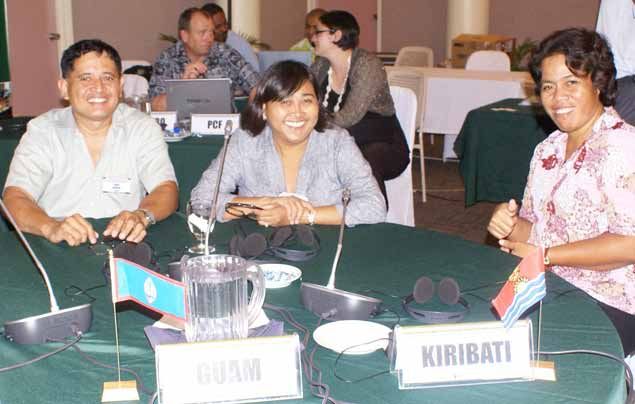
(ii) Note the intended activities to be                     15. Launching of Youth in Agriculture                       (iii) Note the Pacific Media
  undertaken.                                              Strategy                                                          Planning Seminar outcomes and
                                                                                                                             recommendations.
13. Sustainable Land Management for                        (i) Endorse the Pacific Youth in
economic growth and security                                   Agriculture Strategy and request that                    (iv) Note the Pacific Islands News
                                                               SPC seek and mobilise resources for                          Association Climate Change outcomes.
(i)   Note the decision of Pacific                             implementation at the regional level
      Islands Forum Leaders to prioritise                      and support activities at the national                   18. Centre of Excellence for Atoll
      land management and conflict                             level.                                                   Agriculture Research and Development in
      minimisation in the Pacific Plan;                                                                                 the Pacific
                                                           (ii) Endorse the final review of
(ii) Note the findings of the study on                          recommendations.                                         (i) Note the contribution the Centre
     Making land work and the assistance                                                                                     of Excellence for Atoll Agriculture
     that Australia plans to provide to                    (iii) Commit to taking the strategy and                           Research and Development makes to
     support this initiative in the region;                      suggested action plan to the national                       the development of atoll agriculture in
                                                                 level and adapting to your particular                       the region.
(iii) Endorse the joint development                              circumstances.
      by SPC the Pacific Islands Forum                                                                                   (ii) Welcome the Communiqué from the
      Secretariat and the University                       (iv) SPC/LRD and HOAFS to report                                   atoll agriculture conference in Tarawa
      of the South Pacific – with the                           back on progress at the next HOAFS/                           this year and for the Communiqué
      support of national, regional and                         MOAFS meeting.                                                to be used as a guiding document for
      international partners – of a regional                                                                                  sourcing future funding for the centre.
      initiative on land management and                    16. Validation of LRD core functions
      conflict minimisation for economic                                                                                 (iii) Endorse that the Centre of Excellence
      and social development to be                         (i) Note the validation of the core                                for Atoll Agriculture Research and
      implemented by SPC specifically by                       functions of SPC LRD and accepts the                           Development be a framework to which
      its Land Management and Resources                        exercise but requests that SPC does                            donors can make contributions to
      Support Team.                                            not lose sight of the different needs                          research on atoll agriculture research
                                                               and therefore priorities of member                             and development.
14. National and regional capacity to                          countries, and that funding be
prepare, respond and adapt to climate                          directed to those priorities.                            19. EU – Facilitating Agriculture
change                                                                                                                  Commodity Trade (FACT)
                                                           17. Panel Discussion (Agriculture and
(i) Endorse the proposed SPC/GTZ                           Rural Development) – Media                                   (i) Recognize the work done by SPC LRD
   programme ‘climate protection through                                                                                    EU-FACT (Facilitating Agricultural
   forest conservation in the Pacific Island               (i) Note the Pacific Islands Extension                           Commodity Trade) project in the
   Countries’ and its elements funded by                       Summit outcomes.                                             Pacific Islands ACPs to promote
   the German government.                                                                                                   exports of agricultural and forestry
                                                           (ii) Note the Brussels Declaration on the                        exports.
(ii) Support the extended SPC GTZ                               role of the Media in Agriculture and
   programme coping with climate change                         Rural          Development.                             (ii) Look forward to the early
   in the Pacific island region.                                                                                             commencement of the EDF 10
                                                                                                                             funded I-ACT (Increasing Agricultural
                                                                                                                             Commodity Trade) in 2011 which
                                                                                                                             will build on the successes and lessons
                                                                                                                             learnt under FACT, and develop
                                                                                                                             national capacity for exporting of
                                                                                                                             value-added agricultural, forestry and
                                                                                                                             fisheries products.

HOAFS delegates agreed that initiatives to promote traditional foods would help to address
nutrition issues and support healthy lifestyles for our Pacific communities, thereby reducing the
reliance on imported foods.

  8     ............................................................................................. Report of the 4th Heads of Agriculture and Forrestry Services Meeting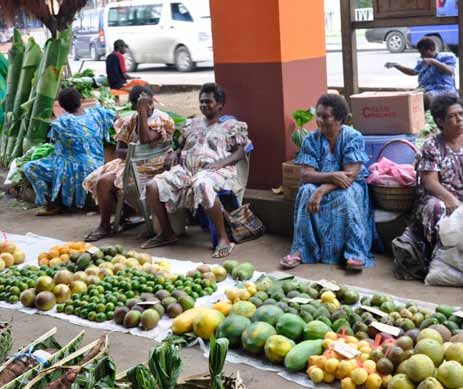
SESSION ONE

The outgoing Chair, Samoa (Asuao Kirifi                   ongoing and new initiatives, supported
Pouono) thanked the members and                           by members and development partners,
development partners for their support                    were outlined. In 2009–2010, LRD
during his tenure. Fiji (Mason Smith,                     implemented more than 400 activities
Permanent Secretary, Fiji Ministry of                     in member countries as well as over 70
Primary Industries) assumed the Chair                     workshops and meetings. After the 2008
and thanked the outgoing Chair for                        HOAFS, 31 recommendations had been
his efforts on behalf of the members.                     implemented with most ongoing. Of
The Chair proposed that co-Chairs be                      the LRD budget, 76% is provided by
appointed, bearing in mind the likely                     project funds. This source of funding
next host of the 5th HOAFS meeting                        was not sustainable, especially when
and gender balance. SPC clarified that                    it could take 3 to 4 years to achieve
because of escalating costs whoever                       quality outputs. Funds were often being
hosted the next HOAFS would have                          depleted as outputs were being achieved.
to cover the costs of the Secretariat. If                 Core funding came from five main
countries were unable to meet these                       sources while 11 donors provided project
costs then Fiji would default as the host.                funding. In 2010 LRD had 88 staff.                           Acting Director of LRD, Mr Inoke Ratukalou,
At the same time SPC reminded the                         The LRD Strategic Focus included a                           welcomed delegates to 4th HOAFS.
meeting that during the 3rd HOAFS                         long-term sustainable financing strategy                     The HOAFS meeting agreed to:
(Samoa, 2008) it had been decided                         (LTSFS), based on a decision by the
that Papua New Guinea (PNG) would                         SPC Committee of Representatives                             i) note the report of the Director, LRD,
be the host for the 5th HOAFS. PNG                        of Governments and Administrations                           for 2009–2010;
confirmed its interest in hosting the                     (CRGA) in 2009. A LTSFS was
2012 HOAFS.                                               conducted to identify core functions of                      ii) note the significant outcomes in
                                                          SPC and LRD. The core functions of                           Pacific Island countries and territories
The meeting appointed as co-Chairs                        LRD were based on the outputs of the                         (PICTs) as result of LRD implemented
the representatives from PNG and                          LRD Strategic Plan for 2009–2012.                            activities under its Integrated Strategic
Kiribati. On the adoption of the agenda,                  Assessing which were the most essential                      Plan, 2009–2010;
Federated States of Micronesia (FSM)                      outputs by LRD, and which were the
said the proposed evening launch of the                   most essential and desirable, required                       iii) note the effective responses of LRD
Pohnpei Agriculture Strategic Plan had                    validation by members.                                       to the communiqué of the 2nd Regional
not yet been endorsed by the Pohnpei                                                                                   Conference of MOAF and recommen-
state government, and requested its                       Joint Country Strategies (JCS) had                           dations of the 3rd Regional Meeting of
withdrawal from the agenda. SPC                           been developed for 19 of 22 members,                         HOAFS;
clarified who would provide the                           which SPC would use as the basis of its
reflections as stated on the agenda on                    annual Work Programme. Food security                         iii) note the challenges facing LRD in
Day 2 and Day 4, and suggested that                       was a key health and developmental                           securing adequate resources to sustain
this be done on a sub-regional basis.                     issue for the region. The Food Security                      the services it provides to members;
Tuvalu queried how the sub-regional                       Framework for the Pacific (FSFP), which
division would be achieved, and                           outlined the Pacific approach to food                        iv) endorse the recommendation of the
suggested a division based on atolls,                     security, was endorsed by all countries                      Heads of Forestry Meeting which was
semi-volcanic and big islands. The                        attending the Pacific Food Summit                            held in Nadi, Fiji in September, 2009;
meeting adopted the agenda as amended.                    (April 2009, Vanuatu). SPC was the
                                                          Chair of the Food Security Working                           vi) endorse the use of the FSFP for the
SPC Land Resources Division -                             Group. SPC had identified resources to                       Pacific as the basis to develop LRD
Director’s Report                                         take on board a Food Security Adviser.                       activities to support member countries in
                                                          The Food Security Framework for the                          the implementation of the framework.
The Director’s Report for the SPC/                        Pacific sought to provide an over-arching
LRD outlined the operations of the                        framework towards ensuring physical,
LRD during 2009–2010. The report                          social and economic access to sufficient,                    Keynote Address
highlighted LRD’s human and financial                     safe and nutritious food. In response to
resources and outlook for the future,                     a query by Tuvalu, the SPC said the new                      The keynote address was presented by
strategic planning undertaken, and                        initiatives including the LTSFS and JCS                      Dr Richard Markham from the Austral-
notable sectoral meetings/workshops and                   would be discussed later. Cook Islands                       ian Centre for International Agricultural
publications.                                             noted how LRD wanted to work on                              Research (ACIAR) on the theme ‘Agro-
                                                          priorities in-country and also supported                     biodiversity to address food security,
The science and technology capacity of                    the recommendations.                                         climate change and trade’. Challenges
the LRD and the finances available for                                                                                 facing Pacific agriculture and forestry
its operations have been robust over the                                                                               included the need to increase production
last few years, thanks to the assistance                                                                               and productivity for economic develop-
of development partners. A range of                                                                                    ment, to correct trade imbalances and
                                                                                                                       improve health and nutrition. Major

     Report of the 4th Heads of Agriculture and Forrestry Services Meeting .........................................................................................   9
constraints included climate change, diffi-               In summary, managing agro-biodiversity                       American Samoa highlighted the shortage
cult trading conditions, land availability and            to meet the challenges in the Pacific would                  of animal health services and requested
fragile resource bases. FAO estimated that                not be easily accomplished, though creativ-                  support from the Parvavet
food production had to increase 75% over                  ity and more research and investment                         programme.
the next 50 years to cope with population                 over a lengthy period were needed. Better
growth and higher expectations for food                   cooperation was needed across disciplines                    Cook Islands
and nutritional security.                                 and sectors because of scarce human and
                                                          financial resources. Pacific Island ecosys-                  Cook Islands was revitalising agricultural
Agro-biodiversity included crop diversity in              tems were fragile and impacted, but had                      production in the Outer Islands due to
the landscape, cropping systems and crops,                not suffered seriously from intensification.                 land space pressure in Rarotonga, which
as well as crop-associated diversity such                 In the quest for better food security and                    had just 7 sq km available for farming
as pollinators, biological control agents,                economic development, the Pacific had                        compared with 237 sq km in the Outer
nutrient recyclers and species reducing                   a competitive advantage in its agro-bio-                     Islands. Vegetable and fruit imports from
erosion. This agro-biodiversity could be lost             diversity, which could sustain agriculture                   NZ were costing NZD$10 million per
through neglect, the search for only highest              and forestry. On behalf of the meeting                       annum. High nutritional density could
yielding varieties and mechanisation,                     the Chair thanked the ACIAR for the pres-                    be achieved using biological agricultural
vested interests, changing market forces                  entation.                                                    practices. Cook Islands is committed to
and consumer expectations, and changes                                                                                 this sustainable agricultural production
in ecosystem services. For example, in the                SESSION TWO:                                                 system, and to working under the
banana industry, 99% of world trade and                   COUNTRY REPORTS                                              leadership of the Titikaveka Growers
35% of world production was based on                                                                                   Association. This approach was aligned
only one variety – Cavendish. Examples                    Country representatives presented                            with nature and gave back to the soil,
were provided from the Pacific to highlight               Country Reports, which covered the                           ensuring a more robust ecosystem. Better
problems that have occurred as a result of                outputs, opportunities and challenges of                     nutrition could be achieved through
limited agro-biodiversity.                                the LRD Strategic Plan.                                      biological practices. A shift in attitude
                                                                                                                       was essential to achieve better health and
Better use of agro-biodiversity could help to             American Samoa                                               lifestyles.
address the challenges in the Pacific. Agro-
biodiversity required good land use plan-                 The SPC had helped American Samoa to                         Biosecurity was being improved through
ning as well as protecting watersheds and                 develop its five year plan. Challenges for                   legislation to give effect to the Biosecurity
reducing erosion. Better access was needed                farmers included land use, with only 10%                     Act 2008. Funds were being sought to
to well-adapted seeds and other planting                  arable land available, and much prone to                     develop and draft regulations which
material, requiring investment in both the                erosion. Challenges for crop production                      would help to provide a revenue stream
conservation and the characterisation of                  included erosion, shift from traditional                     to sustain expansive border management.
genetic resources. Countries needed access                root crops, pests and diseases, soil                         In terms of trade, technical assistance for
to tropically adapted seeds and effective                 degradation, the high cost of farm imports                   the Hot Temperature Forced Air plant
seed systems to enable multiplication. Faced              and the need to build capacity. Livestock                    aimed to revive the export base. In 2001,
with the uncertainties of climate change, a               was mainly pigs and poultry, though                          Cook Islands held 61% of the market
special effort may be needed to ensure that               strict Environmental Protection Agency                       share for pawpaw in New Zealand but this
adequate levels of diversity were available in            guidelines had reduced the number of pig                     share had dropped to zero. There was a
farmers’ fields. Agro-biodiversity could sup-             farmers. The number of poultry farmers                       need to work smarter on production and
port healthier food choices and better diets              had also fallen from 11 operators to one.                    post harvest practices and to broaden the
to promote healthier lifestyles. Traditional                                                                           range of export pathways. Cook Islands
foods provided the nutrition needed by                    Forestry was not generally used for timber.                  expressed interest in developing generic
Pacific communities.                                      Efforts are continuing to encourage                          pathways with other countries to save time
                                                          wider food production to reduce                              and resources in developing market access.
                                                                           imports, generate more
                                                                           income and help the                         The German Technical Cooperation
                                                                           environment. The health                     (GTZ) asked how Cook Islands was
                                                                           status of communities                       managing a change in attitude toward
                                                                           and economic factors                        using biological practices. Cook Islands
                                                                           were the influencing                        said it had a demonstration farm in
                                                                           factors. A major cannery                    Rarotonga using these practices, in
                                                                           had cut jobs and might                      particular, the enhancement of soil health.
                                                                           relocate, prompting                         Samoa supported generic pathways for
                                                                           some people to explore                      market access to New Zealand especially
                                                                           more local farming and                      when the access required consideration of
                                                                           small scale markets. A                      similar pests. Chair said this might be an
                                                                           number of initiatives                       issue to take up as a region with trading
                                                                           were being pursued                          partners.
                                                                           with support from SPC.
Solomon Islands’ delegates, Mr Reeves M Moveni (Commissioner of
Forest) and Mr John Harunari (MAL Undersecretary)

10     ............................................................................................. Report of the 4th Heads of Agriculture and Forrestry Services Meeting
Federated States to meet quarantine export requirements in
of Micronesia Guam, and SPC could help in lobbying for
this activity. FSM sought more LRD support
High logistics costs in FSM and a in the North via more technical assistance.
population shift to the main centres The Micronesia Plant Protection position
have affected food security. Sea level rise had been vacant since 2008 and the reference
was a major threat to food security and lab in Guam had not materialised. FSM
biodiversity in the outer islands of the called upon SPC to lobby for funding for the
FSM. The focus for agriculture was a shift position.
toward food security, including increasing
production based on traditional farming Fiji
systems; increasing volumes of surplus for
market, and promoting environmentally Ongoing challenges included a lack of in-
sound and sustainable production. country funding to do basic DNA work on
plants and animals to evaluate for climate
In March 2010 FSM conducted its change adaptation. Fiji wanted more
food security summit and the outcomes information on the approaches being used
include development of a draft food by other agencies to address climate change.
security and action plan. Recognising the A further challenge was to ensure proper
complexity of food security, the policy project monitoring. Capacity to add value to
calls for multi-sectoral collaboration on products was much needed. Virgin coconut
food security and donor partner support oil promotion was important especially to
for its implementation. Vulnerability ensure it was competitive with other oils.
and adaptation used a multi-disciplinary
approach and included a forestry survey, The migration of vets overseas or to the A home in Lautoka, Fiji, damaged by
subterranean termites, and highlighting the
household income survey and marine private sector was an issue. Coordination of need for more stringent biosecurity measures
rapid ecological assessments. activities by external agencies to reduce the at national borders to prevent pest incursions.
demand on national staff was essential, as
recent termite threat focused attention on
A number of projects cover food often more than one agency was involved in
the need to improve biosecurity. Training
security, planting material distribution, the same project or work area. Fiji stressed the
on certification and other skills would
vulnerability and adaptation assessment, importance of more effective consultations
help with trade development.
and agriculture strategic action planning; with stakeholders on activities and,
food technology training workshops; and importantly, the sharing of information with
Vanuatu raised the issue of vet migration,
food security assessment, training and the Ministry when working with the different
and requested that SPC assist in this area.
capacity building. The Joint FSM-SPC stakeholders. Information networks could
Solomon Islands also requested that SPC
Matching Fund had been very useful in ensure wider access.
support PICTs with regards to limited
supporting these projects.
veterinary capacity.
More assistance was required on market
Some projects addressed issues connected access, especially to develop access
French Polynesia
to the Guam military build-up, for submissions and import risk assessments,
example, the impact on pest risk because Fiji was at the mercy of importing
Both food security and food safety have
analysis, marketing plans and production countries. Fiji was reviewing its forest
improved, thanks to health inspections
assessment. A treatment plant was needed legislation and harvesting guidelines. The
on farm products and implementation
of activities designed to increase
consumption of traditional foods, which
are often neglected for imported products
of low nutritional value. The much
higher cost of local products is one of
the main problems. French Polynesia
is carrying out more than 70 different
activities linked to the objectives set by
the LRD.
The development of agricultural
resources is limited by a lack of farm
land. A special effort has been made to
reduce the use of chemical fertilisers and
pesticides. French Polynesia wants to
increase the quantity of marketable farm
and forestry products by 40% over 10
years, with a third of this increase coming
from the traditional crops sector. The
Managing agro-biodiversity to meet the challenges in the Pacific would not be easily
accomplished, creativity and more research and investment over a lengthy period is needed. obstacles to be overcome are competition
Report of the 4th Heads of Agriculture and Forrestry Services Meeting ......................................................................................... 11with imported products, the lack of
organisation between producers and the
absence of economies of scale.
Food safety is still not completely ensured
on the island of Tahiti, where significant
problems remain. It is also difficult to
achieve in the outer islands due to a lack
of human resources. Measures designed to
protect fresh local produce from the large
range of imports keep local prices high
but do not really encourage increased farm
productivity. Other activities are meant
to stimulate investments in agriculture,
improve the organisation of market
systems, diversify production and support Mr John Correa Borja (Chief of Agriculture, Guam), Ms Belmina I Soliva (Forest Services, Guam),
the creation and work of private forestry and Ms Kina’ai Kairo (Director of Agriculture and Livestock, Kiribati).
companies.
Government support and legislation Programmes. Implementation problems
needed to preserve and dedicate public for forestry ranged from watershed
Tuvalu asked who French Polynesia’s trade
lands for farming. Government priorities protection to soil conservation practices,
partners are in the Pacific. The French
identified with education, public safety awareness programmes on invasive species
Polynesian delegate replied that their main
and health and lack of interest in and protection of existing indigenous
supply country partners are New Zealand
agriculture. In animal husbandry, raising species.
and Australia.
deer as a livestock potential along with
cattle and swine is increasing, but there is Kiribati
Guam GUAM
no slaughterhouse on the island to process
meat products. Replanting staple food crops was a
Guam promoted farming as beneficial to a
challenge because of the soil and lack
healthy lifestyle in response to an increase
Guam acknowledged the importance of suitably adapted crops, but also an
in non-communicable disease cases on
of promoting and encouraging interest opportunity. The people of Kiribati had
island.
in farming and has introduced organic the skills to cultivate the land and earn an
gardening projects at the elementary level, income. Food security was not an issue
Water resources are vital and in limited
ensuring that traditional farming methods in the outer islands, but was a problem in
supply in the country and government
are learned. The mission of forestry was the urban areas. A significant opportunity
efforts to protect water resources from
to conserve, protect and enhance the existed for outer island populations to
pesticide and fertiliser overuse prompted
environment. In collaboration with local support food security, by producing
agriculture officials to encourage
and federal government agencies and food for urban areas, but the problems
local producers to adopt organic
private land owners, the Forestry and Soil surrounding transport, post-harvesting
farming practices. One of the biggest
Resources Division promoted healthy and value adding had to be resolved. In
challenges was the loss of agricultural
and productive forests in both rural and addition, middlemen existed only for
land to urbanisation and development.
urban areas throughout the island through bananas and pumpkin – but this could
five major United States Forest Service be built on. Improving livestock was a
priority. New blood lines were needed
to replace the older genetic material;
pig pens needed replacing to reduce the
high mortality rate of piglets. Kiribati
considered it important to incorporate
agriculture into the primary and secondary
curriculum but currently lacked the
expertise to include agriculture in the
curriculum as well as qualified teachers.
Coconuts were the key commodity in
Kiribati and the priorities were to replant
more atoll-tolerant varieties. Organic
farming was also a priority but certification
was costly. Training had been provided but
little progress made due to lack of funds.
The promotion of multi-purpose trees was
a target, though not seen as important
by the communities and more work was
The people of Kiribati have the skills to cultivate the land and earn an income. Food security
is not an issue in the outer islands, but is a problem in the urban areas......atoll agriculture is a needed to change attitudes. Kiribati had
surmountable challenge.
12 ............................................................................................. Report of the 4th Heads of Agriculture and Forrestry Services Meetinga competitive advantage in producing Nauru
sugar from toddy. The Philippines MARSHALL ISLANDS
sold toddy at a premium market price Nauru faced challenges with climate
(US$8/kg). Sugar from toddy had a low change and the Government fully The Marshall Islands
glycemic index and was better for those supported agriculture. A number of highlighted the unique
suffering from diabetes. PNG raised projects in collaboration with SPC were challenges with respect
the issue of urbanisation which created only partially completed because of a to food security, climate
problems for food security, which could lack of sustainability within Nauru. In change, trade, soil, land
be addressed by creating opportunities response to a request from the National availability and rising sea
for farming in rural areas, so that urban Steering Committee, Nauru has a levels. However the greatest
communities could move back to the breadfruit and root crops programme challenge was one of
land. in place to mass propagate these crops. perception. The shift from
Under the Food Security and Sustainable agriculture to a monetary-
Marshall Islands Livelihoods Programme (FSSLP), two based economy with the
projects have been submitted – water subsequent increase in
The Marshall Islands highlighted the catchment and integrated livestock imported foods meant that
unique challenges with respect to food development. Nauru is also considering children no longer had a
security, climate change, trade, soil, a fruit tree development project to taste for local foods. The
land availability and rising sea levels. complement its breadfruit project. challenge was to encourage
However the greatest challenge was one the consumption of local
of perception. The shift from agriculture The 360 project is a three to six-year foods and to re-educate the
to a monetary-based economy with the plan to replace six agricultural products, public about the importance
subsequent increase in imported foods such as eggs or chickens, to minimise of traditional roots.
meant that children no longer had a import costs. Nauru acknowledged the
taste for local foods. A perception also significant support provided by SPC
existed that only the poor ate local over the years. Current problems where transfers from the French Government
foods, which had led to an alarming Nauru would appreciate assistance and the nickel industry, while agriculture
increase in non-communicable diseases, were fruit fly control; more varieties accounts for 2% of its GDP.
with national health experts declaring of breadfruit trees and root crops; soil
diabetes as an epidemic. The challenge compilation (data) to help with the The questions raised revolved around
was to encourage the consumption of use of PlantGro; training of agriculture these issues:
local foods and to re-educate the public and quarantine staff; sustainable land
about the importance of traditional management; paravet training and a - Diversification and food
roots. This return to traditional food resource centre. security. This involves reducing food
crops and systems would not only boost dependence by developing priority
health but also improve the economy. New Caledonia sectors (meat, fruit, vegetables,
Much had been achieved with support grain, tubers), in particular tubers
from donor partners. In 2010 there New Caledonia’s institutional and traditional vegetable species, so
were two workshops in Republic of arrangements give the Provinces as to bolster producers’ income and
Marshall Islands (RMI) on food safety jurisdiction over economic development. activities and develop crop management
and food standards for pandanus, This presentation covered the needs techniques that respect both the
and on breadfruit conservation and expressed by provincial departments environment and consumers.
identification. Other activities included during formulation of the New
work on invasive species; planting Caledonia Institute of Agricultural - The necessity to develop
trees to strengthen resilience to climate Research’s (Institut Agronomique néo- information systems, because risk
change; FAO Regional Programmes for calédonien) five-year plan. Overall, the management and securing production
Food Security and Telefood supported Territory’s economy is based on financial are achieved by reducing the
livestock projects. vulnerability of producers, consumers
and ecosystems and the Territory’s
biosecurity goal.
- Against the background of
wide-reaching socio-economic mutations
due to industrialisation, new economies
and the rural world are trying to design
economic models to help foster an
attractive and dynamic rural way of life.
In that regard, forestry, which is not
very well developed at the moment, is
a cause of concern and the subject of
close attention because of the capacity
of forests to store carbon, which will
Mr Thiery Mennesson (Director General, IAC, New Caledonia), Mr Poi Okesene (Niue), and Mr
Fernando Sengebau (Director, MNRET, Palau).
Report of the 4th Heads of Agriculture and Forrestry Services Meeting ......................................................................................... 13be produced in significant quantities as a Implementing opportunities were available
result of the smelting plants that are being within the Joint Country Strategy the PAPUA NEW GUINEA
built. Food Security and Sustainable Livelihoods
Project (FAO) and the Taiwan ROC
- Finally, water resources and uses Stimulus Assistance. Palau faced ongoing
Agriculture involved
are a new theme designed to take into challenges with manpower, government more than 82% of the
account the prospects of climate change support and funding. population and provided
and the consequences of water scarcity or marketing at all levels. The
of water damage during tropical storms Palau was working with a range of sector was renewable and
and flooding. This also involves dealing partners to improve food security. Local sustainable.
with the situation on coral atolls, whose participation in agriculture was relatively
water lenses have to be protected. low and the youth were not very interested
Forestry added to the
in this sector. The cost of inputs was high economic and social
Niue and there were other issues relating to pests well-being of the rural
and diseases as well as poor soils. population by providing
Agriculture and Fisheries were key sectors employment and incomes,
in the Niue Islands Strategic Plan for the Papua New Guinea taxes, infrastructure
next three years. Niue faced challenges
with limited human and financial The national food programme covered
development and
resources, lack of interest shown by youth, food availability, access, use and community services.
high input costs and fuel costs, ongoing distribution, sustainability and support The forestry sector was
problems with feral pigs, loss of some services. Agriculture involved more than involved in 10 economic
plant varieties, and a lack of vets. These 82% of the population and provided corridors and 16 major
factors created opportunities to improve marketing at all levels. There were spinoffs agriculture and forestry
taro exports and value added products, lift for other sectors and great potential for
demand for local produce and get more further development. The sector was
projects.
youth involved in farming. The Joint renewable and sustainable.
plantation development. Other work
Country Strategy allows for more focused Forestry added to the economic and
dealt with the management of genetic
assistance by SPC to country priorities and social well-being of the rural population
resources. GTZ asked how PNG would
activities. by providing employment and incomes,
manage the challenge of not transferring
taxes, infrastructure development and
current forestry areas to cash crop projects.
On biosecurity, work activities community services. The forestry sector
PNG replied that the target areas for such
continue with organics, marketing, a was involved in 10 economic corridors and
projects e.g. palm oil, are non-forest such
draft Biosecurity Bill, import/export 16 major agriculture and forestry projects.
as grassland areas.
standards and protocols, and quarantine
arrangements. Niche and organic markets Issues for agriculture included a high
Samoa
offered good prices if transport and other population growth rate (2.7%) and
costs could be managed. Niue would the need to increase the production of
The priority issues are a food security
continue to rely on the assistance of traditional staples. Poverty was an issue for
policy, diversified use and availability of
regional organisations, such as SPC, along rural (40%) and urban (16%) populations.
plant materials. There are opportunities
with other regional and international Services were poor in rural areas including
for international exchange of germplasm,
organisations and donors to meet its aims transport links and rural incomes were also
resistant materials and development to
in agriculture and forestry. low. The implementation of the National
commercial level. Challenges remain
Development Strategic Plan (2010–2030)
from stressed environments and the
Palau would help guide activities in the
management of property rights. Samoa
agriculture and forestry sector. Forestry
was looking at integrated farming with
Palau sought to reduce its reliance on development needed to be sustainable.
biogas applications as well as efforts to help
imported food and to diversify the Agro-forestry projects were being
farmers adopt appropriate technologies.
employment options and incomes. implemented in different areas including
There was a need to build village
acceptance of proposed models for land
use, while taking into account the demand
for residential and commercial areas. The
priorities for biosecurity were to maintain
an appropriate level of protection at the
border, build capacity to meet regulatory
requirements, promote organic agriculture,
build public awareness and also increase
the level of exports.
Forestry staff worked closely with its
stakeholders. Logging was banned in
The Food Security Framework for the Pacific sought to provide an over-arching framework towards 2007 following an FAO-funded forestry
ensuring physical, social and economic access to sufficient, safe and nutritious food. inventory. Government made the move
14 ............................................................................................. Report of the 4th Heads of Agriculture and Forrestry Services Meetingshipping, improved logging practices
to limit damage, and more downstream
processing. National development
programmes aimed to establish more
rice farms, promote more cash crops,
and encourage small livestock projects
including the cattle industry. However,
farmers were basically subsistence
farmers and therefore production
was not consistent. Market access
facilities would need to be developed.
Development and the completion of
the national agriculture sector policy for
agriculture from 2009–2010 highlighted
the importance of agriculture for food
security for the population of the
country. The policy provides a roadmap
for the sector and aims to address food
security in two ways: consolidating the
sectors in order to enhance production
of staple foods; and expanding efforts to
Kiribati have a competitive advantage in
develop commodities for export markets. producing sugar from toddy. The Philippines
sold toddy at a premium market price
Tokelau (US$8/kg). Sugar from toddy have a low
glycemic index.
Atoll soils are very poor and only a few
Salt water intrusion is a serious problem in production and technologies such as
low lying areas. food crops such as breadfruit, coconut,
pandanus, giant swamp taro and banana, hydroponics could provide a sustainable
based on the need to conserve the can be supported. Livestock is limited method for crop production. Given
country’s forests. to poultry and to some extent pigs. Tokelau’s plan to move towards
Quarantine services have been stepped renewable resources to generate energy,
The Chair highlighted two points up, and importing foreign plants into a programme for replanting coconuts in
which had been raised by the presenter: villages is not allowed. villages will need to be implemented to
property rights from breeding ensure the availability of crops.
programmes, and the loss of arable Villages are trying out new seedlings, Tokelau has a relatively species-poor
land to commercial and residential and are promoting the revival of local ecosystem. Atolls do not have a diverse
development. produce such as pulaka (swamp taro), plant and animal gene pool, and further
and applying atoll soil management degradation and/or loss of the limited
Solomon Islands technologies to identify sustainable biodiversity pose a real threat. The status
practices for food security. Land and of endangered plant and animal species
The fate of logging rates was driven by poor soils are two constraints on crop on the atolls has not been assessed in
Asian demand and the current legislation recent years. Several species are generally
does not have the direct legislative ability recognised to be in decline, however,
to control the level of logging. Logging including several timber species, such
was the major form of foreign revenue. as kanava (Cordia sibcordata), puapua
Plantation forests were seen as a sunrise (Guetarda speciosa), puka (Pisconia
sector. Plantation forestry is a substitute grandis), and fala (Pandanua sp.
for natural forestry, and this has been var. ‘Kiekie’). Over harvesting and
encouraged at the level of industry and exploitation for building and handicraft
smallholder plantations nationwide. materials has hastened the reduction
These are industrial estates, focused on of some of these species. Over-zealous
high value species, and small holder clearing for coconut replanting schemes
estates which were village or household has also been cited as a factor for the
based. Forest depletion would have depletion of some of the atolls’ forest
serious economic and fiscal consequences areas in the past.
especially in the next five years. A more
viable plantation sector would emerge Pest management is significant and
and is anticipated through a transition control measures need to be developed
from 2020 and beyond. and adopted. In line with this effort,
would be the need for stringent
Opportunities existed through better Samoa - logging was banned in 2007 quarantine and bio-security measures
revenue capture, fair market prices for following an FAO-funded forestry inventory. and the development of an Emergency
forestry products, better surveillance of Government made the move based on the need Response Plan (ERP), to manage a pest
to conserve the country’s forests.
or disease breakout.
Report of the 4th Heads of Agriculture and Forrestry Services Meeting ......................................................................................... 15You can also read


