Residency and Fellowship Programs - medicine.utah.edupathology/residency | medicine.utah.edupathology/fellowships - University of Utah ...
←
→
Page content transcription
If your browser does not render page correctly, please read the page content below

Residency and Fellowship Programs
medicine.utah.edu/pathology/residency | medicine.utah.edu/pathology/fellowships

                         Huntsman Cancer Hospital              Primary Children’s Hospital

                                ARUP Laboratories

                                                                                             2022–23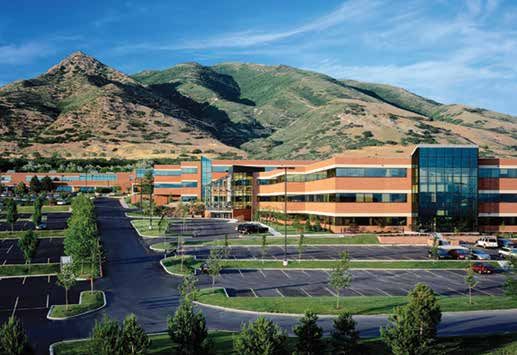
Welcome from the Department Chair
The Department of Pathology at the University of Utah School
of Medicine offers a range of subspecialty training opportunities,
including 14 fellowship programs in anatomic, clinical, pediatric,
forensic, and genetic pathology. The department and faculty make
it a high priority to provide outstanding educational experiences to   Emma Eccles Jones Medical Research Building
expand expertise and facilitate career development in pathology
                                                                       Peter E. Jensen, M.D.
and laboratory medicine. Our postgraduate trainees have the           Department of Pathology Chair
advantage of access to an exceptional range of clinical material       (801) 585-6217

and state-of-the-art technology available at University of Utah        Kristi J. Smock, M.D.
                                                                       Residency Program Director
Health and our national reference laboratory, ARUP, located in
                                                                       kristi.smock@aruplab.com
the foothills of the beautiful Wasatch mountain range. Research is     (801) 583-2787 ext. 2154
encouraged and actively supported for all residents and fellows.       Kimi Crist
Our goal is to prepare trainees for leadership roles as academic       Residency Program Coordinator
                                                                       kimi.crist@path.utah.edu
or community-based pathologists and laboratory directors. We
                                                                       (801) 583-2787 ext. 4514
invite you to join us for residency and fellowship training at the
                                                                       Mark J. Malcolm
University of Utah.                                                    Fellowship Administrator
                                                                       mark.malcolm@path.utah.edu
                                                                       (801) 587-4853

                                                                       University of Utah Department of Pathology
                                                                       Emma Eccles Jones Medical Research Building
                                                                       15 North Medical Drive East
                                                                       Salt Lake City, Utah 84112-0565
                                                                       U.S.A.
                                                                       medicine.utah.edu/pathology/residency
                                                                       medicine.utah.edu/pathology/fellowships
Peter E. Jensen, M.D.           Kristi J. Smock, M.D.
Department of Pathology Chair   Residency Program Director
ARUP Presidential Professor     Professor of Pathology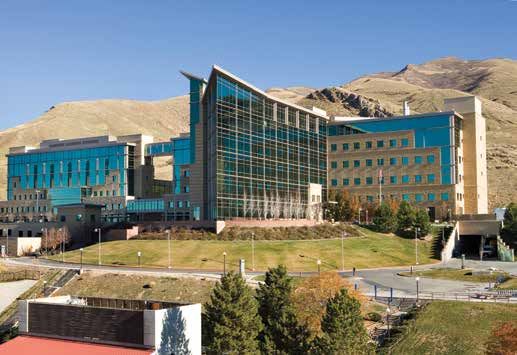
CONTENTS

               2   Residency Program

           6   Fellowship Programs

                             8    Clinical Chemistry

                        9        Clinical Immunology

                                   10   Cytopathology

                                       11   GI Pathology

                             12    Hematopathology

                   13    Medical Microbiology

      14    Molecular Genetic Pathology

                                  15   Neuropathology

                        16    Pediatric Pathology

                        17        Surgical Pathology

               GENETICS FELLOWSHIPS

     18    Medical Genetics/Genomics

 19   Clinical Biochemical Genetics

20   Laboratory Genetics/Genomics

INSIDE BACK COVER                Forensic Pathology

           The University of Utah School of Medicine
           does not discriminate on the basis of gender,
           gender identity/expression, sexual orientation,
           race, age, religion, color, national origin, disa-
           bility, genetic information, or veteran’s status.
RESIDENCY PROGRAM
    General Information
    The Department of Pathology at the University of
    Utah offers training in combined Anatomic Pathology
    and Clinical Pathology, Anatomic Pathology and
    Neuropathology, Clinical Pathology only, Anatomic
    Pathology only, and Physician Scientist tracks. The
    residency training program is approved by the Residency
    Review Committee of Pathology for 20 residents and is
    fully accredited by the Accreditation Council for Graduate
    Medical Education (ACGME). The residency program
    was established in 1960 and has a long, stable history of
    training outstanding residents.
    Our mission is to train exceptional board-certified
    pathologists through flexible training individually tailored      and treatment center that combines research, education,
    for careers in academia or private practice. While striving       and patient care programs and facilities, including the
    to provide residents solid training in all fields of pathology,   Huntsman Cancer Hospital.
    the Department maintains flexibility in the training program      Primary Children’s Hospital is owned by
    to allow and encourage residents to pursue expertise              Intermountain Healthcare, a charitable, community-
    in an area of particular interest. Active participation in        owned, nonprofit health care organization based in Salt
    research is encouraged and supported for all residents.           Lake City. The hospital is equipped to treat children with
    With a faculty of over 120 committed academic                     complex illness and injury and is recognized as one of
    and clinical practitioners at multiple facilities, the            the top children’s hospitals in the United States.
    residency provides exposure to and experience in a full           As the flagship hospital of Intermountain Health Care,
    complement of autopsy, surgical and clinical pathology            Intermountain Medical Center is the largest
    cases and medical problems, as well as eminent basic              tertiary care hospital in the Salt Lake area and sees the
    science and clinical research.                                    highest volume of surgical specimens.

    Requirements                                                      The State Medical Examiner’s Office provides
                                                                      training in forensic pathology and exposure to a variety
    The residency training program looks for candidates with          of medical/legal cases.
    excellent academic performance and who are passionate
    about a future career in pathology. Candidates for the            Assistant Medical Directorships
    pathology residency are selected on the basis of their            Residents are encouraged to act as assistant
    academic credentials, research, communication skills              medical directors in an ARUP lab of their interest as a
    and personal qualities such as motivation and integrity.          moonlighting activity. This provides invaluable experience
    Facilities                                                        in laboratory management, quality improvement, and
                                                                      patient safety. Although available directorships vary from
    ARUP Laboratories was created in 1984 to support                  year to year, some examples are Transfusion Services,
    the academic mission of the University of Utah and                Automated Core Lab, Digital Pathology, Educational
    is located in the 320-acre Research Park adjacent to              Scholarship, Immunohistochemistry, Anatomic
    campus. ARUP is a wholly owned private enterprise of              Pathology, Hematologic Flow Cytometry, Immunology,
    the University of Utah and is recognized for excellence           Endocrinology, and Informatics.
    as a leading national reference laboratory, offering
                                                                      Duties include tasks such as validating new laboratory
    over 3000 tests and test combinations. The test menu
                                                                      assays and instruments, reviewing standard operating
    includes a comprehensive offering ranging from routine
                                                                      procedures, reviewing QA/QC data, and developing
    tests to highly esoteric molecular and genetic assays.
                                                                      educational resources.
    University Hospital is the only academic hospital in
    the geographically vast intermountain area, resulting in a        Stipends/Benefits
    wide variety of sophisticated medical problems available          Stipends vary between $62,588 for PGY-1 and $70,343
    for study.                                                        for PGY-4 for the 2021–22 academic year, depending on
    Huntsman Cancer Institute is the only National                    level of training. All residents are covered by professional
    Cancer Institute-designated cancer center in the                  liability insurance. Other benefits include three weeks paid
    Intermountain West. The Institute is a nonprofit research         vacation, a book/travel fund, and a choice of insurance plans.

2
Curriculum                                                        Anatomic Pathology
                                                                    Required Rotations
                                                                                                               Clinical Pathology
                                                                                                                Required Rotations
The four-year AP/CP residency program includes                        = 24½ months             Mos.                = 18 months         Mos.
24½ months of required anatomic pathology                    Autopsy                            4       Coag/Transfusion Medicine       3
rotations and 17½ months of required clinical                Surgical Pathology                11       Clinical Chemistry              3
pathology rotations, leaving 6 months for elective           Cytopathology                      3       Hematopathology                 3
rotations and research. A wide variety of electives
                                                             Forensic Pathology                 1       Cytogenetics                   ½
are available in both anatomic and clinical pathology
                                                             Pediatric Surgical Pathology       1       Community Clinical Pathology   ½
including molecular oncology, molecular genetics,
                                                             GI Pathology                       2       Molecular Oncology              1
and toxicology/pharmacogenomics. Core rotations
may be repeated to allow for additional graduated            Dermatopathology                   1       Flow Cytometry                  1
responsibility.                                              Neuropathology                     1       Clinical Immunology             1
                                                             Renal Pathology                   ½        Infectious Diseases             2
Recent Graduates                                                                                        Molecular Pathology             1
Recent graduates of our program have secured a                                                          Pediatric and University
                                                                                                                                        1
variety of fellowships including Hematopathology,                                                       Hospital Clinical Chemistry
Cytopathology, Dermatopathology, GI Pathology,                                                          Lymph Node Pathology           ½
Immunopathology, Molecular Genetics, Medical                                                            CP Elective Choice             ½
Microbiology, Surgical Pathology, Forensic Pathology,
Neuropathology, Pediatric Pathology, Transfusion
Medicine and others. These fellowships have been at
the University of Utah as well as in academic centers         Year of Training                 Typical AP/CP Schedule                  Mos.

such as Washington University, Johns Hopkins                                       Autopsy                                              2
University, Stanford University, and MD Anderson                                   Surgical Pathology                                   3
Cancer Center.                                                                     Transfusion & Coagulation                            3
Our graduates are successful in obtaining positions                PGY-1           Clincal Chemistry                                    1
in both academic and private practice settings. For                                Cytopathology                                        1
example, graduates have gone on to work for hospitals                              GI Pathology                                         1
and universities including University of Utah, St. Luke’s,                         Forensics                                            1
Intermountain Healthcare, Veterans Administration,
                                                                                   Autopsy                                              2
University of Washington, University of Chicago,
                                                                                   Surgical Pathology                                   3
University of Western Ontario and St. Jude Medical
Center. Many former residents work locally in the Salt             PGY-2           Hematopathology                                      1

Lake City area at the University of Utah and ARUP                                  Clinical Chemistry                                   3
Laboratories, or in private practice.                                              Other Elective/Required/Research rotations           2
                                                                                   Surgical Pathology                                   3
                                                                   PGY-3
                                                                                   Other Elective/Required/Research rotations           9
                                                                                   Surgical Pathology                                   2
                                                                   PGY-4
                                                                                   Other Elective/Required/Research rotations          10

                                                                                                                                            3
Morning Conference
    The pathology residents have required morning
    conference every day from 8:00 to 9:00 am. Morning
    conference presenters and attendees include
    residents, fellows, faculty, and staff, depending on the
    conference. A variety of learning modalities are used.
    Residents gain experience presenting to a group and
    receive feedback on their presentation skills.

                   Morning Conference Schedule

                       Clinical Pathology
                       • Interesting CP cases*
                       • CP call review*
        Monday
                       • Coagulatoin
                       • CP didactics
                       • Informatices and laboratory management
                       Rotating topics
                       • Pediatric pathology
                       • Infectious disease
        Tuesday        • Hematopathology
                       • Gross/autopsy pathology
                       • Transfusion medicine*
                       • Journal club*
                       Rotating topics
                       • Surgical pathology unknowns
       Wednesday       • Hematopathology unknowns
                       • Cytopathology
                       • Resident Case of the Month*
                       Pathology Grand Rounds once per month          Research
                       • Rosai textbook surgical pathology slide      Many research opportunities are available to our
                       series. Follows an assigned reading
        Thursday                                                      residents covering a wide range of areas from basic
                       schedule. The slide conference is given by
                       a surgical pathologist with expertise in the   science to clinical and translational research. Though
                       topic being covered.                           not required, all residents are encouraged to pursue
                       Rotating topics                                research projects as part of their training.
                       • Surgical pathology unknowns                  Trainees will find enthusiastic support from the
                       • AP call review*
                                                                      faculty, including help in identifying research mentors.
                       • Frozen section conference*
         Friday                                                       Although research costs are usually provided by the
                       • Wellness conference*
                       • Resident group meeting*                      resident’s research mentor, residents may apply for
                       • Resident group meeting with Program          departmental grant funding to assist with the costs of
                         Director                                     their research.
    * indicates conferences where residents routinely present         The residency program also provides funding for
                                                                      research-related travel for residents presenting
                                                                      research at national scientific meetings. Residents
                                                                      have the opportunity to present their research projects
                                                                      at the department’s annual Resident Research Grand
                                                                      Rounds, with awards given at the annual graduation
                                                                      dinner.
                                                                      Most residents collaborate with pathologists and other
                                                                      clinicians on small research projects and case reports
                                                                      as an adjunct to their clinical rotations. Residents may
                                                                      also choose to do research elective rotations, allowing
                                                                      them to have a more extensive research experience.
                                                                      Current CP-only, AP-only, and Physician-Scientist
                                                                      Research Pathway residents incorporate intensive
                                                                      research training during extended elective rotations
                                                                      within their clinical curriculum.

4
offers flexibility and is tailored to meet the individual
                                                           physician-scientist’s career goals and to enable them
                                                           to apply for NIH funding.
                                                           The department has an active Pathology Research
                                                           Interest Mentoring Program (PRIMP) that provides
                                                           mentorship and career guidance. This group holds
                                                           monthly meetings attended by faculty members from
                                                           the clinical and experimental divisions, residents,
                                                           post-doctoral fellows, student researchers, and others.
                                                           Topics discussed include career pathways, research-in
                                                           progress, and grant applications.

Residents specifically interested in an academic
career in pathology will find many opportunities
for career development at the University of Utah.
Abundant opportunities for pathology research exists
in all anatomic, clinical, and experimental areas of the
department.
ARUP Laboratories is unique as a leader in
translational pathology research. ARUP Laboratories
and the ARUP Institute for Clinical and Experimental
Pathology® have developed and validated over 1500
new diagnostic tests and an even larger number
of commercially available tests. Because ARUP
is an enterprise of the University and Utah and
its Department of Pathology, ARUP has a strong
academic mission. The ARUP Institute’s researchers
and Medical Directors publish an average of more
than 120 peer-reviewed publications per year and
average more than 180 annual presentations in
national scientific meetings. This offers unparalleled
opportunities for our residents to participate in
pathology research.
Residents are welcome to develop collaborations with
faculty in any clinical or basic science department
at the University of Utah. Pathology residents have
recently collaborated with researchers in departments
as diverse as bioinformatics, molecular biology and
genetics, internal medicine, cardiology, pulmonary
critical care, hematology-oncology, anesthesiology,
pediatric neurology, pediatric infectious disease, and
dermatology.

Physican-Scientist Track
The Physician-Scientist Research Pathway is
intended for M.D., Ph.D. applicants aspiring to a
physician-scientist career. The track is recognized
by the American Board of Pathology, offers flexible
training in any of our residency tracks, and includes
one dedicated funded year of research in addition
to the clinical training, with additional research
years if grant funding is obtained. The pathway

                                                                                                                       5
FELLOWSHIP PROGRAMS
    General Information
    The Department of Pathology at the University of Utah
    School of Medicine offers a wide range of fellowships in
    anatomic, clinical, pediatric, and genetic pathology for
    both M.D. and Ph.D. candidates.
    With a faculty of over 120 committed academic and
    clinical practitioners at multiple facilities, our fellowships
    provide exposure to and experience in a full complement
    of pathology cases and medical problems, as well as
    eminent basic science and clinical research.

    Requirements
    Requirements and application for each fellowship vary.           with complex illness and injury and is recognized as one
    Please refer to the Summary of Fellowships at right as           of the top children’s hospitals in the United States.
    well as the specific page dedicated to that fellowship.          Clinical Immunology and Medical Microbiology
    J-1 Visa                                                         fellows may also rotate to the Utah Public Health
                                                                     Laboratories where the Bureau of Microbiology
    The J-1 visa is the required visa for international              helps the state and local health departments investigate
    trainees. This policy is governed by the University of           outbreaks, test for infectious diseases, and identify
    Utah Office of Graduate Medical Education and applies            agents that could be used as biological weapons.
    to all Department of Pathology fellowships, regardless of
    program accreditation or associated degree type.                 Stipends/Benefits
    Facilities                                                       Stipends vary between $62,588 for PGY-1 and $79,140
                                                                     for PGY-7 for the 2021–22 academic year, depending
    ARUP Laboratories was created in 1984 to support                 on level of training. Benefits include three weeks paid
    the academic mission of the University of Utah and               vacation, a book/travel fund, and a choice of insurance
    is located in the 320-acre Research Park adjacent to             plans.
    campus. ARUP has one of the largest laboratory test
    menus in the United States, offering more than 3,000
    tests and test combinations in clinical laboratory testing
    and anatomic pathology services. Fellows have the
    opportunity to perform research with faculty members at              With ARUP Laboratories, an established national refer-
    ARUP as well as through the ARUP Institute for Clinical              ence laboratory affiliated with the Department of
    and Experimental Pathology.                                          Pathology, the University of Utah is unique as a leader in
    University Hospital is the only academic hospital                    translational pathology research. In addition to substantial
    in the geographically vast intermountain area, resulting             departmental external grant funding, ARUP Laboratories
    in a wide variety of sophisticated medical problems
                                                                         and the ARUP Institute for Clinical and Experimental
    available for study. The department provides pathology
    consultative services to many hospitals in the area.                 Pathology® spend over 8 million dollars annually on trans-
    Huntsman Cancer Institute is the only National                       lational pathology research and development. This is an
    Cancer Institute-designated cancer center in the
    Intermountain West. The Institute is a nonprofit research
    and treatment center that combines research, education,
    and patient care programs and facilities, including the
    Huntsman Cancer Hospital.
    Primary Children’s Hospital is owned and
    operated by Intermountain Healthcare, a charitable,
    community-owned, nonprofit health care organization
    based in Salt Lake City. PCH serves the needs of
    children in the states of Utah, Idaho, Wyoming, Nevada
    and Montana. The hospital is equipped to treat children

6
Summary of Fellowships
                     FELLOWS HIP                    Degree    Accred.       Boards      Positions    Duration    See page:

                  Clinical Chemistry                Ph.D.     ComACC         ABCC            4         2 yrs        p8

                  Clinical Immunology               Ph.D.      CPEP            —             2        2-3 yrs       p9

                  Cytopathology                      M.D.     ACGME           ABP            2          1 yr        p10
                                                                                                                 inside back
                  Forensic Pathology                 M.D.     ACGME           ABP            3          1 yr        cover

                  GI Pathology                       M.D.        —             —             2          1 yr        p11

                  Hematopathology                    M.D.     ACGME           ABP            3          1 yr        p12

                                                     M.D.     ACGME           ABP            2        1-2 yrs
                  Medical Microbiology                                                                              p13
                                                    Ph.D.      CPEP          ABMM            2        1-2 yrs

                  Molecular Genetic Pathology        M.D.     ACGME       ABP/ABMGG          2        1-2 yrs       p14

                  Neuropathology                     M.D.     ACGME           ABP            2         2 yrs        p15

                  Pediatric Pathology                M.D.     ACGME           ABP            1          1 yr        p16

                  Surgical Pathology                 M.D.        —             —             3          1 yr        p17

                                                    GENETICS FELLOWSHIPS

                  Medical Genetics/Genomics          M.D.     ACGME         ABMGG            2        2-3 yrs       p18

                  Clinical Biochemical Genetics     Ph.D.     ACGME         ABMGG            2        2-3 yrs       p19

                  Laboratory Genetics/Genomics      Ph.D.     ACGME         ABMGG            4         3 yrs        p20

unparalleled resource for trainees who wish to develop       oratories have developed cutting edge technologies, such
academic careers. Over 300 novel diagnostic tests have       as the LightCycler® Systems for Real-Time PCR, and have
been developed at ARUP including multiplexed immuno-         been involved in identifying genes and developing assays
assays for antibodies to pneumococcal capsular poly-         for BRCA1, Friedreich ataxia, Chediak-Higashi syndrome,
saccharides; rapid pregnancy screening tests for Down’s      hereditary hemorrhagic telangiectasia, and other genetic
Syndrome and Fragile X syndrome; and high resolution         traits. It is not unusual for trainees’ research projects to
melting amplicon analysis for c-Kit, PDGFR, and EGFR         spur implementation of new tests at ARUP, which can
mutations in tumors. In addition, faculty at ARUP Lab-       have an immediate clinical impact nationwide.

                                                                                                                               7
Clinical Chemistry
                                                                                   The Department of Pathology at the University
                                                                                   of Utah School of Medicine offers a two-year
                                                                                   fellowship program in clinical chemistry. The
                                                                                   program has four positions.
                                                                                   This fellowship provides broad experience
                                                                                   in clinical chemistry for pathologists and
                                                                                   scientists with appropriate prior training. The
                                                                                   program encompasses preparation in clinical
                                                                                   service, laboratory administration, research,
                                                                                   and teaching. Fellows rotate through clinical
                                                                                   laboratories at ARUP Laboratories, University
                                                                                   of Utah Health, and Primary Children’s
                                                                                   Hospital. The goal of the program is to prepare
                                                                                   individuals for a career in academic laboratory
                                                                                   medicine, clinical practice, or industry.
    Faculty                                                                        The first year includes rotations through the
    Pinar Bayrak-Toydemir, M.D., Ph.D.   Application                               various laboratories, didactic courses and
                                                                                   lectures, participation in medical rounds,
    Irene De Biase, M.D., Ph.D.
                                         Interested candidates should submit       case conferences, seminars, administrative
    Kelly Doyle, Ph.D.
                                         letter of interest, curriculum vitae,     meetings, clinical skills training, and research.
    Elizabeth L. Frank, Ph.D.
    Jonathan R. Genzen, M.D., Ph.D.      and copies of college transcripts         Fellows are expected to begin one or more
    Brian N. Kelley, Ph.D.               showing 30 semester hours (or             research projects in the first year and to
    Lisa M. Johnson, Ph.D.               equivalent) of undergraduate and/or       engage in research throughout their training.
    Kamisha L. Johnson-Davis, Ph.D.      graduate level courses as specified       Fellows in their second year participate in
    Rong Mao, M.D.                       in the Requirements section.              elective laboratory rotations and may assume
    Gwendolyn A. McMillin, Ph.D.         Application materials are due by          responsibility as an acting assistant medical
    Karen A. Moser, M.D.                 September 10 of the year preceding        director for a laboratory at ARUP Laboratories.
    Jayson V. Pagaduan, M.D., Ph.D.      the July start date. Email application
    Marzia Pasquali, Ph.D.               materials to:
                                                                                   The program is accredited by the Commission on
    Lauren Pearson, D.O., M.P.H.                                                   Accreditation in Clinical Chemistry (ComACC).
                                         Tory Martin                               This training program satisfies the requirements
    Lisa K. Peterson, Ph.D.
                                         Fellowship Coordinator                    for the American Board of Clinical Chemistry
    Joseph W. Rudolf, M.D.
                                         ARUP Laboratories                         examination in Clinical Chemistry.
    Patricia R. Slev, Ph.D.
                                         500 Chipeta Way - MS 115
    Kristi J. Smock, M.D.
    Joely A. Straseski, Ph.D.
                                         Salt Lake City, UT 84108                  Requirements
                                         ClinicalChemistryFellowship@aruplab.com
    Yifei Yang, Ph.D.
                                         (801) 583-2787 ext. 2506                  Applicants must hold an M.D. or Ph.D. or other
    Anne E. Tebo, Ph.D.                                                            doctoral degree in chemistry, biochemistry,
                                         fax (801) 584-5207
    Brittany A. Young, M.D., Ph.D.                                                 medicine, or a closely related field from
    Tatiana Yuzyuk, Ph.D.                                                          an accredited institution. Applicants must
                                                                                   have satisfactorily completed a minimum of
                                                                                   30 semester hours in undergraduate and/
                                                                                   or graduate level chemistry or biochemistry
                                                                                   instruction prior to admission into the program.

                                                                                            Provides broad experience in clinical
                                                                                            chemistry to prepare individuals for a
                                                                                            career in academic laboratory medicine,
                                                                                            clinical practice, or industry.
    Elizabeth L. Frank, Ph.D. Patricia R. Slev, Ph.D.     Kamisha L. Johnson-Davis, Ph.D.
    Fellowship Co-Director      Fellowship Co-Director    Fellowship Co-Director

8
Clinical Immunology
The Department of Pathology at the University
of Utah School of Medicine offers clinical
(medical laboratory) immunology training
accredited by the American Society of
Microbiology Committee on Postgraduate
Educational Programs (CPEP). The program
has two positions.
Fellows in the program rotate through ARUP
Laboratories, the Histocompatibility and
Immunogenetics Laboratory at University of
Utah Health, and the Public Health Laboratory
at the Utah Department of Public Health
(UDPH). The rotations at ARUP cover training
in all areas of clinical diagnostic immunology as
outlined in the CPEP essentials for immunology
training. Fellows also participate in research
Application activities with the faculty and staff in the
Department of Pathology and the ARUP Institute
Interested candidates should for Clinical and Experimental Pathology.
submit application, letter of interest
This fellowship offers two tracks—a two-year
including personal statement,
Faculty curriculum vitae, copies of
fellowship in clinical immunology training, and
Julio Delgado, M.D., M.S. a three-year fellowship in clinical immunology
college transcripts (graduate and
with an emphasis on histocompatibility and
Harry R. Hill, M.D. undergraduate) as well as three
immunogenetics testing in the last two years
letters of recommendation through
Eszter Lazar-Molnar, Ph.D. of training. CPEP accreditation is limited to the
the CPEP online submission portal
Rodney R. Miles, M.D., Ph.D. two years of immunology training.
for its postgraduate fellowship
Lisa K. Peterson, Ph.D. training programs. Requirements
Patricia R. Slev, Ph.D. Mishka Foster Prerequisite for admission includes a Ph.D. in
Anne E. Tebo, Ph.D. Fellowship Coordinator immunology or related degree with at least one
ARUP Laboratories year of postdoctoral training in immunology,
500 Chipeta Way - MS 115 or a medical degree (M.D.) or equivalent with
Salt Lake City, UT 84108
residency in internal medicine, pediatrics,
mishka.foster@aruplab.com
or at least two years of research experience
(801) 583-2787 ext. 4505
in immunology. The histocompatibility and
fax (801) 584-5207
immunogenetics training will be performed
according to the American Society for
Histocompatibility and Immunogenetics (ASHI)
Director Training Program guidelines with the
possibility of taking the American Board of
Histocompatibility and Immunogenetics (ABHI)
examination and obtaining accreditation as an
ASHI-approved laboratory director. Applicants
for this track must fulfill all requirements defined
by the Accreditation Review Board and the
Directors Training Review and Credentialing
Committee of ASHI.
Provides broad experience and comprehensive
Eszter Lazar-Molnar, Ph.D.
Fellowship Director
exposure to clinical and diagnostic immunology.
9Cytopathology
The Department of Pathology at the University
of Utah School of Medicine offers an ACGME-
accredited one-year fellowship program in
cytopathology. The program is approved for two
positions.
Experience is provided at the University of Utah
Hospital, Huntsman Cancer Institute, Primary
Children’s Hospital, and ARUP Laboratories.
Diagnostic material covers the spectrum of
cytopathology practice and includes utilization of
specialized, ancillary tests. We see cases from
around the country due to our alliance with ARUP
Laboratories. Over 40,000 cytology specimens
are processed each year, approximately three-
quarters Gyn, one-quarter Non-Gyn. A fellow
can expect to perform at least 50 palpable FNA
Application procedures over the course of the training year.
Interested candidates should submit The fellow participates in all aspects of the
Faculty cover letter with personal statement, service and is given progressive responsibilities.
Barbara E. Chadwick, M.D. curriculum vitae, CAP Standardized Emphasis is placed on the performance and
Georgios Deftereos, M.D. Fellowship Application, and three interpretation of FNA biopsies. The fellow has
letters of recommendation (one of the opportunity to work with an endocrinologist
Rachel E. Factor, M.D. which should be from current/most to gain experience performing ultrasound-
Elke A. Jarboe, M.D. recent program director) to Fellow- guided thyroid FNAs. Diagnostic and research
Lesley C. Lomo, M.D. ship Coordinator Mark Malcolm. facilities are available in molecular biology,
Michael B. Ward, M.D. Rachel E. Factor, M.D. immunohistochemistry, immunofluorescence
Huntsman Cancer Institute (FISH), and flow cytometry. The Cytopathology
Benjamin L. Witt, M.D. 2000 Circle of Hope, Rm 3100 Division has an active clinical UroVision FISH
Salt Lake City, UT 84112 testing laboratory. Training time is dedicated to
rachel.factor@path.utah.edu specimen preparation, laboratory management,
(801) 581-2507 automated cytology, quality control, and
Mark Malcolm regulatory issues. The fellow participates in a
Fellowship Coordinator variety of educational activities including inter-
mark.malcolm@path.utah.edu disciplinary clinical conferences and journal club.
(801) 587-4853 This training program satisfies the requirements
fax (801) 585-7376 for the American Board of Pathology
examination in Cytopathology
Requirements
Applicants must hold an M.D. degree, D.O.
degree (or foreign equivalent with ECFMG
certification), be board eligible or board certified
in anatomic pathology, and be eligible for a Utah
state medical license.
Diagnostic material covers the spectrum of
cytopathology practice and includes utilization
Rachel E. Factor, M.D. Elke A. Jarboe, M.D.
Fellowship Co-Director Fellowship Co-Director of specialized, ancillary tests.
10GI Pathology
The Department of Pathology at the University
of Utah School of Medicine offers a one-year
fellowship program in GI, hepatic and pancre-
aticobiliary pathology. The program has two
positions.
This fellowship is designed to give the fellow
experience at the junior faculty level, including
progressive sign-out privileges for qualified
fellows. Fellows have the opportunity to
learn about the range of diseases within this
subspecialty, including Barrett’s esophagus,
idiopathic inflammatory bowel disease, cancer
and precancerous conditions, mesenchymal
and hematolymphoid lesions, motility disorders,
and hepatic and pancreatic medical, neoplastic
and transplantation pathology. Our program
Application offers in-depth training in molecular diagnosis,
an ever expanding and critical component of GI
Interested candidates should and all pathology.
submit cover letter with personal
Responsibilities include diagnostic sign-out,
statement, curriculum vitae,
including histologic review and reporting of
Faculty CAP Standardized Fellowship
all consultation material, and, in conjunction
Kajsa E. Affolter, M.D. Application, and three letters of
with residents, the in-house GI, hepatic
recommendation (one of which
Katherine E. Boylan, M.D. and pancreaticobiliary biopsy and resection
should be from current/most recent
Mary P. Bronner, M.D. material. Gross room supervision of residents
program director) to Fellowship
and pathology assistants and conference
Frederic C. Clayton, M.D. Coordinator Ashleigh Mckensie.
presentations in this subspecialty area is a
Kimberley J. Evason, M.D., Ph.D. Ashleigh Mckensie requirement and occurs in conjunction with
Gillian L. Hale, M.D., M.P.H. Fellowship Coordinator attending supervision. A well-defined and
Huntsman Cancer Institute supervised clinical, translational, or basic
Jolanta Jedrzkiewicz, M.D. 2000 Circle of Hope, Rm 3100 research project is also required.
Maria A. Pletneva, M.D., Ph.D. Salt Lake City, UT 84112
ashleigh.mckensie@path.utah.edu The overall goal of the fellowship is to provide
Wade S. Samowitz, M.D. in-depth exposure to the full spectrum of GI,
(801) 587-4563
fax (801) 581-7035 hepatic and pancreaticobiliary pathology.
Requirements
Applicants must hold an M.D. degree (or
foreign equivalent with ECFMG certification), be
board eligible or board certified in anatomic or
anatomic/clinical pathology, and be eligible for a
Utah state medical license.
Provides in-depth exposure to the full spectrum of
GI, hepatic and pancreaticobiliary pathology.
Kajsa E. Affolter, M.D.
Fellowship Director
11Hematopathology
The Department of Pathology at the University
of Utah School of Medicine offers an ACGME-
accredited one-year fellowship program in
hematopathology. The program is approved for
three positions.
This fellowship provides a breadth of training
opportunities. Graduates of our program are
well-prepared for a variety of practice settings.
Trainees participate in several services including
a busy national consultation service, lymph
node and bone marrow services from our large
academic medical center and renowned NCCN
cancer center, and see a variety of pediatric
cases from our affiliated children’s hospital.
Rotations include flow cytometry, coagulation,
hemoglobinopathy and molecular pathology
Faculty Application (NGS and non-NGS) in a large reference
Archana M. Agarwal, M.D. Interested candidates should submit laboratory setting. Working in the ARUP
cover letter with personal statement, reference laboratory provides exposure to new
Tracy I. George, M.D. technologies as well as ample opportunities to
curriculum vitae, CAP Standardized
Timothy M. Hanley, M.D., Ph.D. Fellowship Application, and three hone laboratory management skills.
Kristin H. Karner, M.D. letters of recommendation to
Fellows have close interaction with other
Fellowship Director Kristin H. Karner,
Peng Li, M.D., Ph.D. departments in multidisciplinary conferences
M.D., or Fellowship Coordinator
Rodney R. Miles, M.D., Ph.D. and other collaborations including a molecular
Leslie Calvert.
tumor board. Fellows who desire will have the
Karen A. Moser, M.D. Kristin H. Karner, M.D. opportunity to perform bone marrow biopsies.
David P. Ng, M.D. ARUP Laboratories
Dept. of Medical Directors This training program satisfies the requirements
Jay L. Patel, M.D., M.B.A. 500 Chipeta Way - MS 115-G04 for the American Board of Pathology
Sherrie L. Perkins, M.D., Ph.D. Salt Lake City , UT 84108 examination in Hematology.
kristin.karner@path.utah.edu
Josef T. Prchal, M.D.
(801) 584-5240 Requirements
Anton Rets, M.D., Ph.D. Applicants must hold an
Leslie Calvert
George M. Rodgers, M.D., Ph.D. M.D. degree (or foreign
Fellowship Coordinator
Kristi J. Smock, M.D. leslie.calvert@aruplab.com equivalent with ECFMG
(801) 583-2787 ext. 5241 certification), be board
fax (801) 585-5124 eligible or board certified
in anatomic and clinical
pathology, and be eligible for a Utah state
medical license.
Provides a breadth of training opportunities.
Graduates of our program are well-prepared for
a variety of practice settings.
Kristin H. Karner, M.D.
Fellowship Director
12Medical Microbiology
The Department of Pathology at the University
of Utah School of Medicine offers two Medical
Microbiology Fellowship training programs, an
ACGME-accredited program (two positions),
and a CPEP-accredited program (two
positions).
During the one- to two-year program, the
trainee gains hands-on experience in
bacteriology, mycobacteriology, mycology,
parasitology, virology, molecular microbiology,
and serology through a series of structured
bench rotations and independent research.
The trainee also acquires administrative
experience through participation in laboratory
management and hospital committee meetings.
Fellows are selected for their potential as future
Application directors of academic diagnostic microbiology
laboratories and leaders in public health.
Faculty Address inquires to:
Fellows completing the program are expected
Adam Barker, Ph.D. Kimberly E. Hanson, M.D., M.H.S. to apply for subspecialty certification in Medical
Anne J. Blaschke, M.D., Ph.D. ARUP Laboratories Microbiology by examinations by the American
Dept. of Medical Directors Board of Pathology (ABP) or the American
Marc R. Couturier, Ph.D.
500 Chipeta Way - MS 115
Judy A. Daly, Ph.D. Board of Medical Microbiology (ABMM).
Salt Lake City , UT 84108
Mark A. Fisher, Ph.D. kim.hanson@hsc.utah.edu Requirements
(801) 583-2787 ext. 3384
Carlos A. Gomez, M.D. Applicants for the ACGME-accredited program
Kimberly E. Hanson, M.D., M.H.S. Mark R. Couturier, Ph.D. must hold an M.D. degree (or foreign equivalent
ARUP Laboratories with ECFMG certification), be board eligible
Harry R. Hill, M.D. Dept. of Medical Directors or board certified in anatomic and clinical
David R. Hillyard, M.D. 500 Chipeta Way - MS 115 pathology, or have completed one year of
Salt Lake City , UT 84108
Jeanmarie Mayer, M.D. clinical infectious diseases training after board
marc.couturier@path.utah.edu
Salika M. Shakir, Ph.D. certification in internal medicine, pediatrics,
(801) 583-2787 ext. 3406
or both. Applicants must be eligible for a Utah
Patricia R. Slev, Ph.D. Karen Nelson state medical license.
Emily Sydnor Spivak, M.D., M.H.S. Fellowship Coordinator
Applicants for the CPEP-accredited program
karen.nelson@aruplab.com
(801) 583-2787 ext. 3592 must have earned a doctoral degree (Ph.D.,
fax (801) 584-5207 M.D., D.O., Sc.D., Dr.P.H., D.V.M.) with
graduate education in microbiology or
molecular biology to qualify for admission to the
training program.
Trainees gain hands-on experience in bacteriology,
mycobacteriology, mycology, parasitology, virology,
molecular microbiology, and serology.
Marc R. Couturier, Ph.D. Kimberly E. Hanson, M.D., M.H.S.
Fellowship Director (ABMM) Fellowship Director (ABP)
13
13Molecular Genetic Pathology
The Department of Pathology at the University
of Utah School of Medicine offers an ACGME-
accredited, one-year fellowship program in
molecular genetic pathology. A second-year option
can be considered for individuals interested in
pursuing a research-focused academic career.
The program is approved for two positions.
This fellowship provides comprehensive training
in molecular testing for human genetics,
infectious diseases, hematopathology, oncology,
pharmacogenetics, and molecular immunology.
Training includes didactic lectures in molecular
pathology, rotations through a variety of active
clinical laboratories performing molecular testing,
active consultation on clinical problems related to
these tests, and clinical research. A large variety
Application and volume of molecular assays are received
from University of Utah Health and the Associated
Please complete the application
Regional and University Pathologists (ARUP
form found online and send with
Faculty Laboratories) reference testing network. A broad
the required documents to: range of types of molecular testing is performed
Archana M. Agarwal, M.D.
Anna P. Matynia, M.D. ranging from traditional PCR-based assays to next
Pinar Bayrak-Toydemir, M.D., Ph.D. generation sequencing based assays including
ARUP Laboratories
Joshua F. Coleman, M.D. Dept. of Medical Directors multi-gene panels for inherited disorders and
Georgios Deftereos, M.D. 500 Chipeta Way - MS 115-J13 oncology diagnostics, and exome sequencing for
Salt Lake City , UT 84108 inherited disorders.
David R. Hillyard, M.D.
anna.matynia@hsc.utah.edu Opportunities for gaining competence in clinical/
Bo Hong, M.D. (801) 583-2787 ext. 3414 pathological correlation for a variety of molecular
Yuan Ji, Ph.D. Mishka Foster assays are abundant. Active development of new
Kristin H. Karner, M.D. Fellowship Coordinator molecular assays is ongoing, incorporating a broad
mishka.foster@aruplab.com range of traditional and cutting-edge technologies.
Eszter Lazar-Molnar, Ph.D.
(801) 583-2787 ext. 4505 Fellows are expected to participate in projects of
Rong Mao, M.D. fax (801) 584-5207 basic assay development and validation. Exposure
Anna P. Matynia, M.D. to laboratory management is provided.
Jay L. Patel, M.D., M.B.A. This training program satisfies the requirements
Deepika Sirohi, M.D. for the American Board of Pathology and American
Board of Medical Genetics and Genomics
examinations in Molecular Genetic Pathology.
Requirements
Applicants must hold an M.D. degree (or foreign
equivalent with ECFMG certification), be board
eligible or board certified in anatomic, clinical, or
anatomic/clinical pathology, and be eligible for a
Utah state medical license. Prior experience in
molecular biology or genetics is preferred.
Provides comprehensive training in molecular testing
Anna P. Matynia, M.D. for human genetics, infectious diseases, hematopathology,
Fellowship Director
oncology, pharmacogenetics and molecular immunology.
14
14Neuropathology
The Department of Pathology at the University
of Utah School of Medicine offers an ACGME-
accredited two-year fellowship program in
Neuropathology. The program is approved for
two positions with one position available on an
annual basis.
Experience is provided at the University of Utah
Hospital, Huntsman Cancer Institute, Primary
Children’s Hospital, and the Office of the Medical
Examiner.
This fellowship is designed to give fellows a
broad experience in diagnostic neuropathology
with an emphasis on surgical neuropathology,
but also with exposure to autopsy, forensic and
neuromuscular neuropathology. A diverse patient
population, as well as an active consultation
Application service provides adequate volumes of material.
Interested candidates should The overall goal of the fellowship is to provide
submit cover letter with personal in-depth exposure to neuropathology with our
Faculty statement, curriculum vitae, faculty, Dr. Christian Davidson (Fellowship
Christian J. Davidson, M.D. CAP Standardized Fellowship Director), Dr. Cheryl Palmer (Director of
Application, and three letters of Neuropathology), Dr. Andrew Guajardo (Forensic
Andrew R. Guajardo, M.D.
recommendation (one of which Medical Examiner), and Dr. Nick Mamalis (Faculty
Nick Mamalis, M.D. in Ophthalmology).
should be from current/most recent
Cheryl Ann Palmer, M.D. program director) to Fellowship This training program satisfies the requirements
Coordinator Ashleigh Mckensie. for the American Board of Pathology examination
Christian J. Davidson, M.D. in Neuropathology.
Huntsman Cancer Institute
2000 Circle of Hope, Rm 3100 Requirements
Salt Lake City , UT 84112 Applicants must hold an M.D. degree, D.O.
christian.davidson@path.utah.edu degree (or foreign equivalent with ECFMG
Ashleigh Mckensie certification), be board eligible or board certified
Fellowship Coordinator in anatomic pathology, and be eligible for a Utah
ashleigh.mckensie@path.utah.edu state medical license.
(801) 587-4563
fax (801) 581-7035
Provides broad experience in diagnostic neuropathology
with an emphasis on surgical neuropathology, but also
with exposure to autopsy, forensic and neuromuscular
neuropathology.
Christian J. Davidson, M.D.
Fellowship Director
15
15Pediatric Pathology
The Department of Pathology at the University
of Utah School of Medicine offers an ACGME-
accredited one-year fellowship program in
pediatric pathology. The program is approved
for one position.
This fellowship offers extensive experience
in pediatric anatomic and clinical pathology
at Primary Children’s Hospital, ARUP
Laboratories, and University of Utah Health.
Approximately 5,000 pediatric surgical
pathology specimens, 120 perinatal and
pediatric autopsy cases and fetal examinations,
400 placental examinations, and additional
outside pediatric surgical and autopsy
pathology consultations are performed at
the hospitals. Exposure to both general and
Faculty
Mouied Alashari, M.D.
Application esoteric pediatric laboratory testing is available
at Primary Children’s Hospital and ARUP
Interested candidates should send
Jessica M. Comstock, M.D. Laboratories.
(via email) cover letter, personal
Judy A. Daly, Ph.D. Active programs in pediatric hematopathology,
statement, curriculum vitae,
Lance K. Erickson, P.A. molecular diagnostics, cytogenetics,
CAP Standardized Fellowship
immunopathology, pediatric clinical chemistry,
Amy Lowichik, M.D., Ph.D. Application, and three letters of pediatric transfusion medicine, and pediatric
Angelica R. Putnam, M.D. recommendation (one from your microbiology offer additional opportunity for
Theodore J. Pysher, M.D. current Program Director) directly training. Research opportunities are available in
from the author to Fellowship both anatomic and clinical pathology.
Hong Holly Zhou, M.D.
Coordinator Krista Grant. This training program satisfies the requirements
Hong Holly Zhou, M.D. for the American Board of Pathology examination
Division of Pediatric Pathology in Pediatric Pathology.
Primary Children’s Hospital
100 North Mario Capecchi Drive Requirements
Salt Lake City , UT 84113 Applicants must hold an M.D. degree (or
hongholly.zhou@imail2.org foreign equivalent with ECFMG certification),
(801) 662-2153 be board eligible or board certified in anatomic
Krista Grant or anatomic/clinical pathology, and be eligible
Fellowship Coordinator for a Utah state medical license.
krista.grant@imail2.org
(801) 662-2155
fax (801) 662-2165
Offers extensive experience in pediatric anatomic and clinical
pathology. Approximately 5,000 pediatric surgical pathology
specimens and 120 perinatal and pediatric autopsy cases and
fetal examinations are performed at the hospitals.
Hong Holly Zhou, M.D.
Fellowship Director
16
16Surgical Pathology
The Department of Pathology at the University
of Utah School of Medicine offers a one-year
fellowship program in surgical pathology. The
program has three positions.
This fellowship is designed to give the fellow
experience at the junior faculty level, including
sign-out of surgical pathology cases. The
fellowship is based at the Huntsman Cancer
Institute at the University of Utah. Training in
general surgical pathology is emphasized.
We have a great variety of interesting and
challenging cases on a daily basis, including
breast, gynecologic, gastrointestinal,
genitourinary, pulmonary, head and neck, skin,
and soft tissue/bone pathology.
Faculty Electives are available in cytopathology, hemato-
Kajsa E. Affolter, M.D.
Application pathology, neuropathology, gastrointestinal,
Interested candidates should submit renal pathology, and dermatopathology.
Daniel J. Albertson, M.D.
Marc Barry, M.D. cover letter with personal statement, Research activities are available and encouraged.
Katherine E. Boylan, M.D. curriculum vitae, CAP Standardized The fellows will be expected to teach surgical
Mary P. Bronner, M.D. Fellowship Application, and three pathology residents and medical students.
Barbara E. Chadwick, M.D. letters of recommendation (one The overall goal of the fellowship is to provide
Frederic C. Clayton, M.D. of which should be from current/ comprehensive, broad-based training in surgical
Lyska L. Emerson, M.D. most recent program director) to pathology.
Kimberley J. Evason, M.D., Ph.D. Fellowship Coordinator Ashleigh
Rachel E. Factor, M.D. Mckensie. Requirements
H. Evin Gulbahce, M.D. Barbara E. Chadwick, M.D. Applicants must hold an M.D. degree (or
Gillian L. Hale, M.D., M.P.H. Huntsman Cancer Institute foreign equivalent with ECFMG certification),
Elke A. Jarboe, M.D. 2000 Circle of Hope, Rm 3100 be board eligible or board certified in anatomic
Jolanta Jedrzkiewicz, M.D. Salt Lake City, UT 84112 or anatomic/clinical pathology, and be eligible
Ting Liu, M.D. barbara.chadwick@path.utah.edu
Lesley C. Lomo, M.D. for a Utah state medical license.
(801) 587-4294
Jonathon D. Mahlow, M.D.
Maria A. Pletneva, M.D., Ph.D. Ashleigh Mckensie
Monica Patricia Revelo, M.D., Ph.D. Fellowship Coordinator
Wade S. Samowitz, M.D. ashleigh.mckensie@path.utah.edu
Michael B. Ward, M.D. (801) 587-4563
Benjamin L. Witt, M.D. fax (801) 581-7035
We have a great variety of interesting and challenging
general surgical pathology cases on a daily basis, including
breast, gynecologic, gastrointestinal, genitourinary, pulmonary,
head and neck, skin, and soft tissue/bone pathology.
Barbara E. Chadwick, M.D.
Fellowship Director
17
17Medical Genetics and Genomics
The Department of Pediatrics’ Division of Medical
Genetics in collaboration with the Department
of Pathology and ARUP Laboratories offers an
ACGME-accredited two-year fellowship (with
the possibility of an extra year of research and
case review) in medical genetics. The program is
approved for two positions.
Fellows spend two years in clinical rotations,
including training in the general outpatient
genetics clinics, inpatient consultations,
and subspecialty and laboratory rotations.
Opportunities exist for exposure within a
subspecialty practice including craniofacial,
cardiology and neurology-based settings.
Fellows will have significant experience with
the evaluation and treatment of inborn errors of
Faculty Application metabolism and biochemical laboratories.
Areas of expertise among the faculty include
Ashley Andrews, A.P.R.N. Application should be made
neurofibromatosis, hereditary hearing loss,
Lorenzo D. Botto, M.D. through ERAS for positions cardiovascular malformation, skeletal dysplasia,
John C. Carey, M.D., M.P.H. beginning in July. Address birth defects, epidemiology, developmental
Karin M. Dent, M.S., C.G.C. inquires to: biology, dysmorphology, lysosomal storage
David H. Viskochil, M.D., Ph.D. disorders and X-linked mental retardation
Josue Flores-Daboub, M.D. syndromes. The experience of this program is
University of Utah Dept. of
Caroline Hagedorn, A.P.R.N. Pediatric Medical Genetics enriched by the great diversity of presentations
Yuan Ji, Ph.D. 295 Chipeta Way and conscientious efforts the faculty take in
Salt Lake City , UT 84108 mentoring trainees in medical genetics.
Nicola Longo, M.D., Ph.D.
dave.viskochil@hsc.utah.edu This training program satisfies the requirements
Janice C. Palumbos, M.S. (801) 581-8943 for the American Board of Medical Genetics and
Marzia Pasquali, Ph.D. Genomics examination in Medical Genetics.
Ashley Boyington
Audrey M. Rutz, C.G.C. Fellowship Coordinator
Hunter R. Underhill, M.D., Ph.D. ashley.boyington@hsc.utah.edu Requirements
(801) 662-5712 Applicants must hold an M.D. or D.O. degree
David H. Viskochil, M.D., Ph.D.
fax (801) 662-5755 (or foreign equivalent with ECFMG certification)
and be eligible for a Utah state medical license.
International applicants must be eligible
to obtain a J-1 visa. Applicants must have
completed one year of an ACGME-accredited
residency (or international equivalent) before
entering this program.
Fellows spend two years in clinical rotations. Opportunities
exist for exposure within a subspecialty practice including
craniofacial, cardiology, and neurology-based settings.
David H. Viskochil, M.D., Ph.D.
Fellowship Director
18 18Clinical Biochemical Genetics
The Department of Pathology at the University
of Utah School of Medicine offers an ACGME-
accredited, two-year fellowship program (with
the possibility of an additional year of research)
in clinical biochemical genetics. This fellowship
provides training in laboratory testing for the
diagnosis and follow-up of patients with inherited
metabolic disorders. The program is approved
for two positions.
Physicians and Ph.D. scientist fellows participate
in the testing conducted by the Biochemical
Genetics and Newborn Screening laboratories of
ARUP Laboratories, learning chromatographic
and mass-spectrometry techniques. Fellows
rotate in clinical and laboratory departments to
become familiar with medical genetics and inborn
Application errors of metabolism.
Research is directed toward the elucidation of
Application should be made
Faculty the molecular bases/pathophysiology of inborn
by September 15 for positions errors of metabolism and the development of new
D. Hunter Best, Ph.D. beginning in July. Address diagnostic tests for metabolic disorders. Fellows
Lorenzo D. Botto, M.D. inquires to: will be responsible for monthly presentations
John C. Carey, M.D., M.P.H. Marzia Pasquali, Ph.D. to enhance their teaching skills and encourage
ARUP Laboratories publication of highly interesting cases. Fellows
Irene De Biase, M.D., Ph.D.
Dept. of Medical Directors assume progressive independence in conducting
Nicola Longo, M.D., Ph.D. and interpreting biochemical laboratory tests in
500 Chipeta Way - MS 115
Rong Mao, M.D. Salt Lake City , UT 84108 the course of training and need to maintain a
Marzia Pasquali, Ph.D. pasquam@aruplab.com logbook of cases for certification.
Reha M. Toydemir, M.D., Ph.D. Tory Martin This training program satisfies the requirements
Fellowship Coordinator for the American Board of Medical Genetics and
David H. Viskochil, M.D., Ph.D.
tory.martin@aruplab.com Genomics examination in Clinical Biochemical
Tatiana N. Yuzyuk, Ph.D. (801) 583-2787 ext. 2506 Genetics.
fax (801) 584-5207
Requirements
Applicants must hold an M.D. or Ph.D. or other
doctoral degree in genetics, biochemistry,
chemistry or closely related field from an
accredited institution. Previous clinical laboratory
experience or a postdoctoral fellowship in
genetics or training in medical genetics (for
physicians) is highly recommended. Individuals
with an M.D. or Ph.D. earned outside of the
United States or Canada must have their degree
reviewed by the ABMGG Credentials Committee
prior to entering this training program.
Provides training in laboratory testing for the
diagnosis and follow-up of patients with
Nicola Longo, M.D, Ph.D. Marzia Pasquali, Ph.D.
Fellowship Co-Director Fellowship Co-Director inherited metabolic disorders.
19Laboratory Genetics and
Genomics
The Department of Pathology at the University
of Utah School of Medicine offers an ACGME-
accredited, three-year fellowship program
in laboratory genetics and genomics. The
program is approved for four positions.
Specialized training is provided in all aspects
of sample preparation, analyses, and reporting
of various types of samples, with a focus on
detection and interpretation of chromosomal
abnormalities in the Clinical Cytogenetics
laboratory, and testing for mutations in human
disease in the Clinical Molecular Genetics
laboratory.
Fellows participate in clinical test validations
Faculty Application and also take part in the ongoing development
of new assays and assay improvements,
Erica F. Andersen, Ph.D. Application should be made incorporating a broad range of traditional
Pinar Bayrak-Toydemir, M.D., Ph.D. by September 15 for positions and cutting-edge technologies. Didactic
D. Hunter Best, Ph.D. beginning in July. Address lectures, rotations through other non-specialty
Lorenzo D. Botto, M.D. inquires to: laboratories, and participation in biochemical
and medical genetics clinics are also included in
John C. Carey, M.D., M.P.H. Yuan Ji, Ph.D.
this training.
ARUP Laboratories
Bo Hong, M.D.
Dept. of Medical Directors Fellows have the opportunity to develop a
Yuan Ji, Ph.D. 500 Chipeta Way - MS 115 research project based on the ongoing research
Nicola Longo, M.D., Ph.D. Salt Lake City , UT 84108 and development activities within the laboratories,
yuan.ji@aruplab.com which are translational in scope and likely involve
Rong Mao, M.D.
Siara Jasinski collaborations within the Divisions of Medical
Marzia Pasquali, Ph.D. Genetics, Pathology, and ARUP Laboratories.
Fellowship Coordinator
Reha M. Toydemir, M.D., Ph.D. siara.jasinski@aruplab.com This training program satisfies the requirements
David H. Viskochil, M.D., Ph.D. (801) 583-2787 ext. 3205 for the American Board of Medical Genetics
fax (801) 584-5207 and Genomics examination in Laboratory
Genetics and Genomics.
Requirements
Applicants must hold an M.D. or Ph.D. (or
equivalent); the Ph.D. degree must be in
genetics, molecular biology, or a related field
within the biological sciences. Individuals with
an M.D. or Ph.D. earned outside of the United
States or Canada must have their degree
reviewed by the ABMGG Credentials Committee
prior to entering this training program.
Integrates clinical cytogenetics and clinical molecular
genetics to prepare those who wish to specialize in
Bo Hong, M.D. Yuan Ji, Ph.D.
Fellowship Co-Director Fellowship Co-Director
these areas as a laboratory director or co-director.
20 20Forensic Pathology
The Department of Pathology at the University
of Utah offers an ACGME-accredited, one-year
fellowship program in forensic pathology. The
program is approved for three positions.
Training will be at the Utah Office of the Medical
Examiner with additional exposure to forensic
toxicology at the Utah State Laboratory and
criminology at the Utah State Crime Lab. All
three facilities are located in adjacent buildings at
the Utah public health campus.
The Utah Medical Examiner Office is a statewide
office serving a population of over 3 million,
providing exposure to a jurisdictional caseload of
greater than 3,000 death investigations per year.
The fellow will be trained in all facets of
death investigation including initial death
Application scene response, written and photographic
Interested
Applicationcandidates
should be should
made documentation, external and internal examination
Faculty submit cover letter with personal
before October 1 for positions
of the body, evidence collection, death
Michael Belenky, M.D. statement, curriculum vitae, certification, preparation of a forensic autopsy
beginning in July. Address
CAP Standardized Fellowship report and testimony in court on necessary
Erik D. Christensen, M.D. inquires to:
cases. Interaction with law enforcement,
Application, and three letters of
J. Brent Davis, M.D. David H. Viskochil,(one
recommendation M.D.,ofPh.D.
which attorneys, organ and tissue donor agencies, child
Andrew R. Guajardo, M.D. University of Utah Dept.
should be from current/most of recent fatality and domestic violence committees as well
Pediatricdirector)
program Medicalto Genetics
Fellowship as families is integrated into the training.
Amanda L. Ho, MD
295 Chipeta Way
Jamie E. Kallan, M.D.
Coordinator Anna Bond. The structured learning environment will include
Salt Lake City , UT 84108
J. Brent Davis, M.D. regular case reviews, lectures, and journal club as
Kacy Krehbiel, M.D. dave.viskochil@hsc.utah.edu
Utah well as giving presentations to law enforcement,
(801) Office of the Medical Examiner
581-8943
Jason Lozano, M.D. 4451 South 2700 West health professionals and the general public.
Feliz Martinez The fellow will assist in the education of medical
Lily Marsden, M.D. Taylorsville , UT 84129
Fellowship Coordinator students and pathology residents that do elective
Pamela S. Ulmer, D.O. brentdavis@utah.gov
feliz.martinez@hsc.utah.edu rotations through the office.
Anna Bond
(801) 585-6600
Fellowship Coordinator
fax (801) 585-7252 This training program satisfies the requirements
abond@utah.gov for the American Board of Pathology examination
(801) 816-3870 in Forensic Pathology.
fax (801) 964-1240
Requirements
Applicants must hold an M.D. degree (or
foreign equivalent with ECFMG certification),
be board eligible or board certified in anatomic
or anatomic/clinical pathology, and be eligible
for a Utah state medical license.
Fellows will be trained in all facets of
death investigation.
J. Brent Davis, M.D
Fellowship Director
21You can also read


