Residential Schools
         Resources
      for Educators
←
→
Page content transcription
If your browser does not render page correctly, please read the page content below
Residential Schools
Resources
for Educators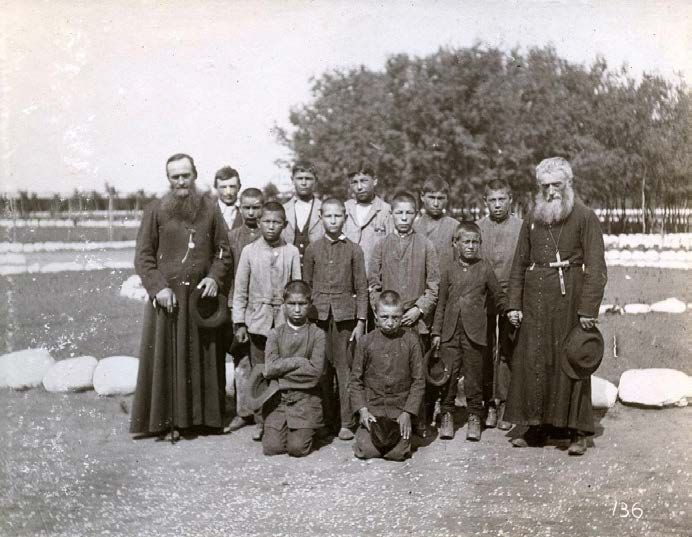
Residential Schools: Resources for Educators

     ISBN: 978-0-7711-6485-9 (pdf)

Copyright © 2021, the Government of Manitoba, represented by the Minister
of Education.
Manitoba Education
Winnipeg, Manitoba, Canada

Cover Photo Credits
Closer front view of Sandy Bay Indian Residential School, Marius,
Manitoba, circa 1939: Copyright © Government of Canada. Reproduced
from www.bac-lac.gc.ca/eng/CollectionSearch/Pages/record.
aspx?app=FonAndCol&IdNumber=4673971 under the terms for non-
commercial reproduction.
Additional photos reproduced under licence from www.istockphoto.com.
Every effort has been made to acknowledge original sources and to comply with
copyright law. If cases are identified where this has not been done, please notify
Manitoba Education. Errors or omissions will be corrected in a future edition.
Sincere thanks to the authors, artists, and publishers who allowed their original
material to be used.
All images found in this resource are copyright protected and should not be
extracted, accessed, or reproduced for any purpose other than for their intended
educational use in this resource.
Any websites referenced in this resource are subject to change without notice.
Educators are advised to preview and evaluate websites and online resources
before recommending them for student use.
Contact Manitoba Education to report any broken hyperlinks.

This resource is available on the Manitoba Education website at
www.edu.gov.mb.ca/k12/cur/socstud.
Une ressource pour le programme d’immersion française et une ressource pour le
programme français sont également disponibles.
While the department is committed to making its publications as accessible as
possible, some parts of this document are not fully accessible at this time.
Available in alternate formats upon request.
Legacy of Residential Schools
The discoveries of unmarked graves of Indigenous children at residential schools, such as at Tk’emlúps te
Secwépemc First Nations community near the Kamloops Indian* Residential School and at Marieval Indian
Residential School in Saskatchewan, represent further evidence of a dark chapter in Canada`s colonial past.
Residential schools were created to force the assimilation of over 150,000 Indigenous children into colonial
society. Churches began building schools for Indigenous children in the mid-1600s, and the federal residential
school system began around 1883. Children were apprehended by government officials, forcibly removed from
their homes, and taken to residential schools. The schools were often located far from their homes, which resulted
in severed ties from their families and communities. Sadly, instances of abuse occurred in these government- and
church-run schools.
As a society, we must recognize the tragic legacy of residential schools and colonialism. Beyond recognition,
however, education has an important role in raising awareness of the impact of residential schools. It is incumbent
upon Canadians to learn from the past and respond to the Calls to Action of the Truth and Reconciliation
Commission of Canada in order to promote healing and reconciliation.

                                           Reproduced from Residential Schools, Culture, and Identity | Provincial Archives of Saskatchewan
                                           (saskarchives.com).

*   Indian is the legal term that the Government of Canada used in describing First Nations individuals who are recognized as being
    status Indians under section 91(24) of the Constitution Act, 1867. In this context, the term Indian refers to status and non-status First
    Nations and can be considered to be derogatory. In this document, the word Indian is used when referencing the names of specific
    residential schools, which underlines the racist and colonial aftermath of these institutions.

Residential Schools                                                                                                                           3
Resources for Educators
Early and Middle Years
Children’s Books about Residential Schools
Note: Preview websites, videos, and books before           Shin-chi’s Canoe by Nicola Campbell (2008)
showing them to your students.                             This is the story of a young brother and sister and
                                                           their life in a residential school. This story about a
When We Were Alone by David A. Robertson
                                                           devastating time in First Nations history is told in a way
(2016)
                                                           that children can understand.
This book explains residential schools to small children
                                                           Video Reading: www.youtube.com/
in a way that they can understand, while still covering
                                                           watch?app=desktop&v=iTDJdJYIdHM&t=167s
that dark history.
Video Reading: www.youtube.com/                            When I Was Eight by Christy Jordan-Fenton and
watch?v=pv6uX0a91dM&t=179s                                 Margaret-Olemaun Pokiak-Fenton (2013)
                                                           Based on the true story of Margaret-Olemaun Pokiak-
Stolen Words by Melanie Florence (2017)                    Fenton, When I Was Eight makes the bestselling Fatty
In this book, a Cree grandfather explains to his           Legs accessible to younger readers.
granddaughter about how the residential school system      Video Reading: www.youtube.com/
in Canada systematically stripped them of their            watch?app=desktop&v=_mJ7GbDfkkw
language and culture, and how many children suffered,
families were torn apart, and much Indigenous culture      Not My Girl by Christy Jordan-Fenton and
was lost.                                                  Margaret-Olemaun Pokiak-Fenton (2013)
Video Reading: www.youtube.com/                            A sequel to Fatty Legs/When I Was Eight, Not My Girl
watch?v=GJxpzyVRc7w                                        makes Margaret-Olemaun Pokiak-Fenton’s memoir A
                                                           Stranger at Home accessible to younger children.
The Boy Who Walked Backwards by Ben Sures                  Video Reading: www.youtube.com/
(2018)                                                     watch?app=desktop&v=StiNCPlI2Fk
This is the story of a young Ojibway boy named Leo
                                                           Phyllis’s Orange Shirt by Phyllis Webstad (2019)
from Serpent River First Nation who is forced to
                                                           This is an adaptation of Phyllis Webstad’s earlier book
attend residential school. He uses a traditional Ojibway
                                                           The Orange Shirt Story, which tells of when she attended
childhood game as inspiration to help him through this
                                                           residential school as a little girl and had her treasured
ordeal. The following video on YouTube shows Ben
                                                           orange shirt taken away from her. This later became the
Sures reading the book, as well as performing the song
                                                           inspiration for the movement of Orange Shirt Day.
it was based on.
                                                           Video Reading: www.youtube.com/
Video Reading:
                                                           watch?app=desktop&v=P-gJ1hF7fOk
www.youtube.com/watch?v=Be7QrhiA-vw
                                                           Tyson’s New Orange Shirt by Bianca Bell and
Shi-shi-etko by Nicola Campbell (2005)
                                                           Lynda Dobbin-Turner (2017)
This is a story of a First Nations girl who must soon
                                                           This is the story of Tyson’s discovery of the meaning
leave her family and go to residential school.
                                                           and importance of wearing an orange shirt on
Video Reading: www.youtube.com/
                                                           September 30th.
watch?app=desktop&v=Sdi6eCrfzlY

4                                                                                       Residential Schools
                                                                                    Resources for Educators
Middle Years—Residential Schools Personal Experiences
and Memoirs
I Am Not a Number by Jenny Kay Dupuis and A Stranger at Home by Christy Jordan-Fenton
Kathy Kacer (2016) and Margaret-Olemaun Pokiak-Fenton (2011)
This is the true story of the author’s grandmother, A sequel to Fatty Legs, this first-person account of a
Irene Couchie Dupuis, who is a residential school young girl’s struggle to find her place will inspire young
Survivor from Nipissing First Nation. readers to ask what it means to belong.
Video Reading: www.youtube.com/
My Name is Seepeetza by Shirley Sterling (1992)
watch?app=desktop&v=p2MP5ioGHAc&t=24s
At six years old, Seepeetza was taken from her family
The Orange Shirt Story by Phyllis Webstad to live at Kalamak Indian Residential School. This
(2018) is an inside look at life in a residential school in the
This is the true story of Phyllis and her orange shirt. It 1950s, and how one indomitable young spirit survived it.
is also the story of how September 30th became Orange
Shirt Day, an important day of remembrance for all
Canadians.
Video Reading: www.youtube.com/
watch?app=desktop&v=hBvA1cNo7o8&t=8s
Fatty Legs by Christy Jordan-Fenton and
Margaret-Olemaun Pokiak-Fenton (2010)
This is the memoir of an Inuit girl’s residential school
experience and her determination to learn to read.
It includes archival photos from Margaret-Olemaun
Pokiak-Fenton’s collection and illustrations by Liz
Amini-Holmes.
Video Reading: www.youtube.com/
watch?v=TmiaWMgV-ms
Residential Schools Information for Children
Residential Schools: With the Words and Images Speaking Our Truth by Monique Gray Smith
of Survivors by Larry Loyie et al. (2014) (2017)
This accessible, 112-page history provides the This book is an active exploration of Canada’s
perspectives of 70 residential school Survivors from collective history, our present, and our future, and how,
across Canada. Written by Larry Loyie, a Cree through reconciliation, we can grow as individuals,
Survivor of St. Bernard Mission residential school families, communities, and as a country. See http://
in Grouard, AB, and co-authored by Constance orcabook.com/speakingourtruth/index.html.
Brissenden and Wayne K. Spear, it explores Indigenous
cultures and traditions, the history of the residential
school system, and the healing that must come after it.
Residential Schools 5
Resources for EducatorsAnswering the Calls: A Child’s View of the Spirit Bear’s Guide to the Truth and
94 Calls to Action by Rhona Churman, Jackie Reconciliation Commission of Canada Calls to
Cleave, Chantelle Brown Cotton, Jill Joanette, Action
and Stefanie Jones Book (editors) (2019) This booklet is written by Spirit Bear as an accessible
This book will help students of all ages further guide for youth to the TRC’s 94 Calls to Action.
understand the Truth and Reconciliation Commission See https://fncaringsociety.com/sites/default/files/
(TRC) Calls to Action. See www.friesens.com/ child_friendly_calls_to_action_web.pdf.
answering-the-call/.
6 Residential Schools
Resources for EducatorsEducator Resources
The following resources are for educators to learn more about residential schools, as well as to support your
understanding of residential schools to help guide your teaching. These resources support Senior Years as well
as Early and Middle Years educators. Always preview websites, videos, and books before showing them to
your students.
Websites 100 Years of Loss
This LHF activity guide provides both facilitators
Orange Shirt Day and participants with resources for examining
The Orange Shirt Day website includes Kindergarten aspects of Canada’s residential school system and
to Grade 12 teacher resources and Orange Shirt Day to recognize the impact it has had, and continues
activities. to have, on generations of Indigenous Peoples in
www.orangeshirtday.org/teacher-resources Canada.
National Centre for Truth Reconciliation https://secureservercdn.net/198.71.233.106/jjk.2f4.
The National Centre for Truth and Reconciliation myftpupload.com/wp-content/uploads/2019/11/100-
(NCTR) is a place of learning and dialogue where the years-print_web.pdf
truths of residential school Survivors, families, and Where are the Children?
communities are honoured and kept safe for future This LHF site is a counterpart to Where are the
generations. Children? Healing the Legacy of the Residential
www.nctr.ca Schools, which is a touring exhibition that explores
Legacy of Hope Foundation the history and legacy of Canada’s residential
The Legacy of Hope Foundation (LHF) is a national school system. It includes Survivor stories, archival
Indigenous charitable organization that educates and photographs, and documents. Warning: This site
creates awareness and understanding about Canada’s contains subject matter that may be disturbing
residential school system, and supports the ongoing to some visitors. Educators should preview any
healing process of residential school Survivors and their material before showing it to their students.
families. https://legacyofhope.ca/wherearethechildren/
www.legacyofhope.ca Witness Blanket
Environmental Scan Resources Inspired by a woven blanket, this art installation has
The LHF provides a list of Kindergarten to Grade been made out of hundreds of items that were reclaimed
6 residential school resources that educators might from residential schools, churches, government
find useful. buildings, and traditional and cultural structures.
https://secureservercdn.net/198.71.233.106/jjk.2f4. www.witnessblanket.ca
myftpupload.com/wp-content/uploads/2019/11/ Stolen Lives: The Indigenous Peoples of Canada
FNMI-K-6-NATIONAL-SCAN-CURRICULUM- and the Indian Residential Schools by Facing
LINKS-DOWNLOADS-Final.pdf History and Ourselves
Stolen Lives is a resource that walks students and
educators through an examination of the devastating
legacy of Canada’s residential schools, helping them
make the essential connection between the history of
Canada and their world today.
www.facinghistory.org
Residential Schools 7
Resources for EducatorsBeyond 94: Truth and Reconciliation in Canada Project of Heart: Illuminating the Hidden History
by CBC News (2018) of Indian Residential Schools in B.C. by British
From 2008 to 2014, the Truth and Reconciliation Columbia Teachers’ Federation (2015)
Commission heard stories from thousands of This ebook is intended to honour the Survivors of
residential school survivors. In June 2015, the residential schools and their families, and to help
commission released a report based on those hearings educate Canadians about the atrocious history and
and, from that report, came the 94 Calls to Action. The ongoing legacy of Canada’s residential schools.
Beyond 94 project was initiated to monitor the progress https://bctf.ca/HiddenHistory/eBook.pdf
of that journey.
Have a Heart Day by British Columbia Teachers’
https://newsinteractives.cbc.ca/longform-single/beyond-
Federation (2021)
94?&cta=1
Have a Heart Day is “a child and youth-led
In Their Own Words by CBC News (2018) reconciliation event that brings together caring
As part of the CBC project Beyond 94: Truth and Canadians to help ensure First Nations children have
Reconciliation in Canada, residential school survivors the services they need to grow up safely at home, get
talk about their experiences and the lasting impact on a good education, be healthy, and be proud of who
their lives. they are.”
https://newsinteractives.cbc.ca/longform/residential- https://bctf.ca/uploadedFiles/Public/
school-survivors AboriginalEducation/Have_A_Heart_booklet.pdf
Project of Heart Indian Horse Next 150 Challenge
Project of Heart is a collaborative, intergenerational. The #Next150 challenge was a 2018 initiative where
hands-on, inquiry-based artistic initiative to seek the new challenges were released throughout the year to
truth about the history of Indigenous people and the advance the understanding of Indigenous issues. The
residential school experience in Canada. This project resources from this challenge are still available and are
is intended to expand the opportunities for the wisdom a useful source of information.
of Indigenous Elders to be heard, recognized, and https://next150.indianhorse.ca
honoured, and to inspire the building of relationships
Every Child Matters: Reconciliation through
between Indigenous and non-Indigenous people in
Education by the National Centre for Truth and
Canada based on mutual understanding, respect, and
Reconciliation (2020)
collective action.
This magazine is intended to deepen students’ empathy
https://projectofheart.ca
and understanding about how the residential school
system directly affected Indigenous children. It
provides stories shared by Survivors and their families
about what life was like at the schools and how they
continue to be affected today.
www.canadashistory.ca/getmedia/577a962b-efe4-407d-
8592-6240945d6658/EveryChildMattersENDigital.pdf.
aspx
8 Residential Schools
Resources for EducatorsEvery Child Matters: Reconciliation through Indian Residential Schools and Reconciliation:
Education, Educators’ Guide by the NCTR A Resource Guide by First Nations Education
(2020) Steering Committee (2015)
The publication Every Child Matters: Reconciliation These learning resources were designed to help Grade
through Education and this complementary educators’ 5 students learn about the relationship between
guide are designed to support educators and students Indigenous and non-Indigenous people over Canada’s
as they learn about Canada’s residential school system. history.
The activities are intended to encourage student www.fnesc.ca/wp/wp-content/uploads/2020/07/
inquiry and investigation and to support action-based PUBLICATION-IRSR-5-rev-2b-Full-
learning. Document-2020-07.pdf
www.canadashistory.ca/CNHS/media/CNHS/
First Nations Child and Family Caring Society
cnhs-media/PDFs and Powerpoints/EN/
The First Nations Child and Family Caring Society
EduEveryChildMattersEdGuideEN.pdf
“stands with First Nations children, youth, and families
Residential Schools in Canada Education Guide so they have equitable opportunities to grow up safely
by Historica Canada (2020) at home, be healthy, get a good education and be proud
This site provides an opportunity for Middle Years of who they are.”
students to develop their inquiry skills to help them https://fncaringsociety.com/
understand why Canada’s residential school system was
“History of Residential Schools” in Indigenous
created and why it continued for more than 100 years.
Peoples Atlas of Canada by Canadian
http://education.historicacanada.ca/files/32/
Geographic
ResidentialSchools_English.pdf
This resource provides a useful history of Canada’s
Orange Shirt Day Lesson Plans by Manitoba residential school system, as well as a detailed map of
Teachers’ Society (2021) school locations throughout Canada.
MTS has created these Early, Middle, and Senior Years https://indigenouspeoplesatlasofcanada.ca/article/
lesson plans for Manitoba educators to use with regard history-of-residential-schools/
to Orange Shirt Day on September 30th.
Plain Talk 6 — Residential Schools: It’s Our Time
www.mbteach.org/mtscms/2016/09/10/lesson-plans-
by the Assembly of First Nations (2015)
and-resources-for-orange-shirt-day/
This resource explores topics such as what residential
Secret Path Lesson Plans by Manitoba Teachers’ schools were, how long they existed, why they were
Society (2021) created, how they operated, as well as the people who
In October 2016, Gord Downie and Jeff Lemire attended and the effects the schools had on them.
released Secret Path, which tells the story of Chanie https://education.afn.ca/afntoolkit/wp-content/
Wenjack, a 12-year-old boy who died in the 1960s uploads/2018/04/Plaintalk-6-Residential-Schools.pdf
after running away from a residential school. MTS
assembled a group of Indigenous and non-Indigenous
Manitoba educators to create lesson plans to support
the use of this resource for teaching about residential
schools.
www.mbteach.org/mtscms/2017/04/26/secret-path-
lesson-plans/
Residential Schools 9
Resources for EducatorsFrom Apology to Reconciliation: Residential The Stolen Generations Resource Kit for
School Survivors: A Guide for Grades 9 and 11 Teachers and Students by the Healing
Social Studies Teachers in Manitoba by Manitoba Foundation (2021)
Education (2013) The Healing Foundation’s Stolen Generations Resource
From Apology to Reconciliation: Residential School Kit for Teachers and Students is a series of lesson plans
Survivors was developed in response to the Government that were created to accompany the Australian resource
of Canada’s formal apology to Indigenous people who The Stolen Generations (above).
attended residential schools. The project was created to https://healingfoundation.org.au/schools
help Grades 9 and 11 Manitoba students understand the
Indigenous Language Apps and Websites by the
history of the residential school experience, its influence
Canadian Language Museum (2021)
on contemporary Canada, and our responsibilities as
This is a useful compilation of digital resources for
Canadian citizens.
learning Indigenous languages.
www.edu.gov.mb.ca/k12/cur/socstud/far/doc/index.html
www.languagemuseum.ca/indigenous-language-apps-
Creating Racism-Free Schools through Critical/ websites
Courageous Conversations on Race by Manitoba
First Voices by the First Peoples’ Cultural Council
Education Indigenous Inclusion Directorate
(2021)
(2017)
This resource is an online space for Indigenous
This support document is intended to encourage
communities to share and promote language, oral
educators, parents, and students to undertake critical
culture, and linguistic history. Language teams work
and courageous conversations on racism to create
with Indigenous Elders to curate and upload audio
inclusive and equitable classrooms and schools for First
recordings, dictionaries, songs, and stories. This
Nations, Métis, and Inuit and all students.
content is shared with community members or the
www.edu.gov.mb.ca/k12/docs/support/racism_free/
broader public.
index.html
www.firstvoices.com/home
The Stolen Generations by the Australian
Indian Residential Schools by the Government of
Institute of Aboriginal and Torres Strait Islander
Canada (2021)
Studies (2021)
This resource discusses the Government of Canada’s
This resource provides an overview of the history
apology to students of residential schools, the history of
of residential schools in Australia, which has many
the residential school system, and efforts made toward
similarities to Canada’s experience.
reconciliation.
https://aiatsis.gov.au/explore/stolen-generations
www.rcaanc-cirnac.gc.ca/eng/1100100015576/15715816
87074
10 Residential Schools
Resources for EducatorsVideos
Note: Always preview websites, videos, and books Residential School Resources by Monique Gray
before showing them to your students. Smith (2021)
Monique Gray Smith is a Cree, Lakota, and Scottish
Death at Residential Schools by CBC News
author who has created these resources for teaching
(2015)
students about residential schools.
This report explores the legacy of Canada’s residential
schools system, including the shocking death-rate Talking to Kids about Residential Schools (9:25 m)
statistics, and includes vintage footage. (8 m, 9 s) In this video, Monique shares tips on both talking
www.youtube.com/ to kids about residential schools and on how to
watch?app=desktop&v=9FydzIzkndA prepare for these conversations.
www.youtube.com/watch?app=desktop&v=ebOJ_
Residential School Resources by Historica (2021)
lMCVvk
Historica has produced the following video resources
for teaching and learning about Canada’s residential Every Child Matters (2:24 m)
school system. Monique provides an overview of the magazine
Every Child Matters: Reconciliation through
Residential Schools in Canada: A Timeline by
Education.
Historica
www.youtube.com/
This video provides a brief history of Canada’s
watch?app=desktop&v=F4p8lyBPUKU
residential school system. (5:39 m)
www.youtube.com/ Speaking Our Truth (11 videos)
watch?app=desktop&v=VFgNI1lfe0A&list= Monique talks about Speaking Our Truth: A Journey
PLiE7YBxN9zmIac1qc5B8faco3fH8Y2fnJ of Reconciliation, her non-fiction book for young
readers.
Residential Schools Podcasts by Historica
www.youtube.com/playlist?app=desktop&list=PLSl
This series of podcasts provides firsthand accounts
NvFav9OEZX-SufX1R7gKbUG6hphb9N
of residential school Survivors’ experiences.
www.youtube.com/watch?v=NmxA1MPNJC8&list= The Stranger by Gord Downie
PLiE7YBxN9zmLQEyOjTVKFbUHL-w5SljTP This is the official video of the song from Gord
Downie’s album The Secret Path. It tells the story of
Intergenerational Trauma: Residential Schools by
Chanie Wenjack’s residential school experience, as well
Historica (2:19 m)
as his death after he escaped and attempted to walk 600
This video explains how the effects of residential
kilometres home to his family.
schools continue to manifest into the present day.
www.youtube.com/
www.youtube.com/watch?app=desktop&v=IWeH_
watch?v=za2VzjkwtFc&list=OLAK5uy_
SDhEYU
l4yO02DbQof86MIRqvpON8vlSJ42Sa_30
Chanie Wenjack Heritage Minute by Historica
(1:01 m)
This episode of Canada’s famous Heritage Minute series
tells the story of Chanie Wenjack, whose death sparked
the first inquest into the treatment of Indigenous
children in Canadian residential schools.
www.historicacanada.ca/content/heritage-minutes/
chanie-wenjack
Residential Schools 11
Resources for EducatorsKamloops Residential School: The Path Forward? with students from Sk’elep School of Excellence
by Niigaan Sinclair (2:11 m) in Tk’emlúps te Secwépemc, Kamloops, British
This video provides the perspective of Niigaan Sinclair, Columbia.
Associate Professor at the University of Manitoba and www.youtube.com/watch?app=desktop&v=
columnist at the Winnipeg Free Press, on the legacy of u0YYkvIWbng&feature=youtu.be
residential schools in Canada and a clear path forward.
“Important to Us” by N’we Jinan Artists (4:28 m)
www.youtube.com/watch?v=oW_o82n0ULg
This song was written, recorded, and filmed in 2017
The Path to Healing and Reconciliation in with students from Pierre Trudeau Elementary in
Canada by David A. Robertson (2:20 m) Gatineau, Quebec.
This CBC National production is a visual essay by www.youtube.com/watch?app=desktop&v=
award-winning Cree author David A. Robertson and u9mJYjUWGS8&feature=youtu.be
Anishinaabe filmmaker Jordan Molaro about the path
Rita Joe Song Project by National Arts Centre
toward healing and reconciliation in Canada.
In her autobiography, Rita Joe challenges Indigenous
www.youtube.com/watch?v=2DMHTaROmbw
youth to find their voices, share their stories, and
Stolen Children: Residential School Survivors celebrate their talents. Inspired by this idea, the
Speak Out by CBC News (18:35 m) National Arts Centre asked educators and students in
This documentary includes many firsthand accounts of five communities across Canada to create a song based
Canada’s residential school experience. on what “I Lost My Talk” means to them and their
www.youtube.com/ community.
watch?app=desktop&v=vdR9HcmiXLA
“The Voices I Gained” by Ted Longbottom (5:30 m)
What is a Residential School? by TVO Digital This song, written by Métis artist Ted Longbottom,
Media (2:10 m) is performed by students of the Helen Betty
This short video explains the history of Canada’s Osbourne Inenew Education Resource Centre in
residential school system in a way that young viewers Norway House, Manitoba.
can understand. https://nac-cna.ca/en/ritajoesong/the-voice-i-gained
www.tvo.org/video/what-is-a-residential-school
“Uqausira Asiujijara/I Lost My Talk” by Nancy Mike
Residential Wreck by Harmony Parent and the and Andrew Morrison (5:05 m)
Harmonyiac Kids (5:21 m) Nancy Mike and Andrew Morrison are part of
This video is a 2013 performance of a song written the northern band The Jerry Cans, which mixes
by Grades 4 and 5 students at Heritage School in Inuktitut, alt-country, throat singing, and reggae.
Winnipeg. The song is performed by students from Inuksuk
www.youtube.com/ High School in Iqaluit, Nunavut.
watch?app=desktop&v=cHisNlnal8s&feature=youtu.be https://nac-cna.ca/en/ritajoesong/uqausira-asiujijara
Residential School Music Videos by N’we Jinan
Artists
The following music videos were created by N’we Jinan
artists to commemorate the struggles of those affected
by Canada’s residential schools system.
“We Won’t Forget You” by N’we Jinan Artists (4:50
m)
This song was written, recorded, and filmed in 2017
12 Residential Schools
Resources for EducatorsFeature-Length Films Rabbit-Proof Fence by Phillip Noyce (2002)
This is the story of three half-Indigenous girls in
We Were Children by Tim Wolochatiuk (2012) Australia in 1931 who escape after being taken from
This film tells the story of two children who were taken their homes to be trained as domestic staff. (1 hr, 34 m)
from their homes and placed in church-run residential www.imdb.com/title/tt0252444/
schools where they suffered years of physical, sexual,
and emotional abuse. (1 hr, 28 m) Where the Spirit Lives by Bruce Pittman (1989)
www.nfb.ca/film/we_were_children/trailer/we_were_ This is the story of a young Canadian Indigenous
children_trailer/ woman who fights to retain her identify after being sent
to live in a residential school. (1 hr, 36 m)
Indian Horse by Stephen S. Campanelli (2017) www.imdb.com/title/tt0103244/
This adaptation of Ojibway writer Richard Wagamese’s
award-winning novel is set in late 1950s Ontario. Eight- Muffins for Granny by Nadia McLaren (2006)
year-old Saul Indian Horse is taken from his Ojibway This is a story of personal and cultural survival.
family and sent to a Catholic residential school, but McLaren tells the story of her grandmother by
he is able to find hope and comfort from the game of combining home movies with the stories of seven Elders
hockey. (1 hr, 41 m) and their experiences in Canada’s residential school
www.indianhorse.ca/en/film system. (1 hr, 28 m)
www.imdb.com/title/tt5146124/
Home from School: The Children of Carlisle by
Geoff O’Gara (2021) Schooling the World: The White Man’s Last
This documentary tells the story of three children Burden by Carol Black (2010)
who died at Carlisle Indian Industrial School in This film explores how the U.S. government has used its
Pennsylvania in the 1880s and of a 2017 delegation boarding schools to try to eliminate ancient Indigenous
that was established to determine the truth. This story cultures, and the long-term effects of this policy. (1 hr,
provides perspective on the United States’ similar 4 m)
history of residential school abuse. http://carolblack.org/schooling-the-world
https://calderaproductions.com/home-from-school/
Residential Schools 13
Resources for EducatorsBooks
48 Books by Indigenous Writers to Read to Understand Residential Schools by David A. Robertson
In June 2021, Cree author David A. Robertson curated a list of 48 books by Indigenous writers that are useful in
helping to understand the legacy of Canada’s residential school system. They include the following:
• Indian Horse by Richard Wagamese • The Red Files by Lisa Bird-Wilson
• Seven Fallen Feathers by Tanya Talaga • The Education of Augie Merasty by Joseph Auguste
Merasty, with David Carpenter
• Dear Canada, These Are My Words: The Residential
School Diary of Violet Pesheens by Ruby Slipperjack • Speaking Our Truth by Monique Gray Smith
• They Called Me Number One by Bev Sellars • 7 Generations: A Plains Cree Saga by David A.
Robertson, illustrated by Scott B. Henderson
• In Search of April Raintree by Beatrice Mosionier
• Amik Loves School by Katherena Vermette,
• The Train by Jodie Callaghan, illustrated
illustrated by Irene Kuziw
Georgia Lesley
• Up Ghost River by Edmund Metatawabin, with
• Porcupines and China Dolls by Robert
Alexandra Shimo
Arthur Alexie
• Broken Circle by Theodore Fontaine
• The Marrow Thieves by Cherie Dimaline
• In My Own Moccasins by Helen Knott
• The Journey Forward by Richard Van Camp &
Monique Gray Smith • Betty: The Helen Betty Osborne Story by David A.
Robertson, illustrated by Scott B. Henderson
• Sugar Falls by David A. Robertson, illustrated by
Scott B. Henderson • The Land Is Our Storybook series by Julie-Anne
Andre & Mindy Willett
• Five Little Indians by Michelle Good
• One Story, One Song by Richard Wagamese
www.cbc.ca/books/48-books-by-indigenous-writers-to-read-to-understand-residential-schools-1.6056204
Acknowledgements
Thank you to Jill Fast of Portage la Prairie School Division and Kim Berezka of Brandon School Division for their
significant contribution to this list of resources.
14 Residential Schools
Resources for EducatorsYou can also read


