Resources for post-primary schools - A guide for teachers - National Gallery of Ireland
←
→
Page content transcription
If your browser does not render page correctly, please read the page content below
Resources for
post-primary schools

A guide for teachers
Overview
At the National Gallery of Ireland we have many     Contents
brilliant resources that you can use in the         On our website …………………………………………….... 3
classroom. You can find them in lots of different   Schools resource packs ………………………………….. 4
places on our website, and we’ve listed them here   Virtual exhibitions …………………………………..……. 11
so you can find them easily. For some resources,    Other resources and activities ……………………... 14
we have provided additional notes and guidance      Apollo Project …………………………………………….… 18
to help you structure a lesson or activity.         Contact us ………………………………………………….... 19

                                                                                                    2
On our website
●   Our Explore and Learn section has loads of        ●   You can search our online collection or
    interesting articles including bite-sized             browse our collection highlights
    guides, in-depth looks at the collection, and     ●   Watch videos of inspirational speakers
    peeks behind the scenes.                              from our Creative Careers Day
●   Listen to Audio Guides of key works on            ●   We have a vast array of resources from
    display.                                              our Library & Archives
●   Through a Lens: self-guided tours of the          ●   Listen in depth to our fascinating Podcasts
    collection.                                       ●   Find out more about some of our
●   Mindfulness & Art: a series of paintings              Conservation projects
    from the collection with prompt questions         ●   Watch curator talks and more on our
    to help you to slow down and reflect. Why             YouTube channel
    not use with your class at the beginning of       ●   Follow the Gallery on Twitter, Instagram
    the day to help them connect and focus?               and Facebook
●   In Focus: a series linking works from our         ●   Sign up to the Teachers & Schools email
    collection with key art historical, theoretical       newsletter to be regularly updated
    or philosophical texts. Aimed at third level          with new ideas and resources
    students, but could be shared with LC
    groups or used for your own CPD.

                                                                                                        3
Schools resource packs

                         4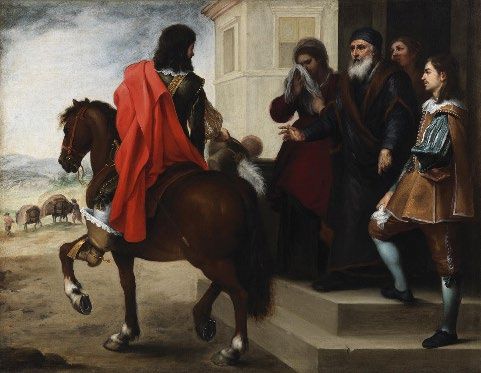
Visual Resources

                    What’s in the resource?                            How do I use it?
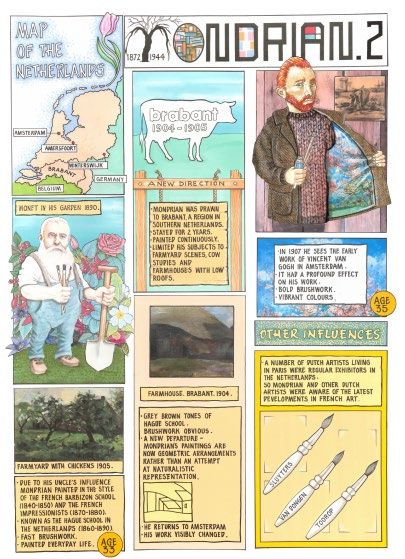
                    ● Graphic resources exploring the life and         Use for introducing or revising the work of Piet
                      work of key artists                              Mondrian and Jack B. Yeats.
                    ● Designed for visual learners
                    ● Embedded in each resource is the link
                                                                       Curriculum links
                      memory technique. Each panel is connected
                                                                       Junior Cycle: Visual Art
                      to the next using a variety of methods: visual
                                                                       Leaving Certificate: Art
                      similarity, colour, shape and idea association
                                                                       Leaving Certificate Applied: Arts Education
                      for easier recall

Link to resource:   Who is it for?
English version     Aimed primarily at Leaving Cert art students
                    who are visual learners, can also be used and
                    enjoyed by other ages and levels

                                                                                                                          6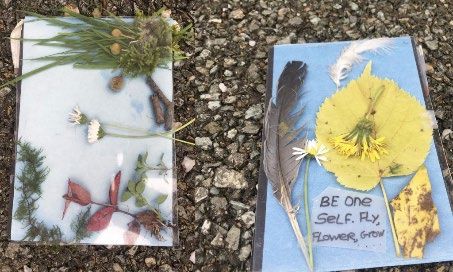
Medium, Materiality & Magic:
                    Photography at the Gallery
                    What’s in the resource?                             How do I use it?
                    ●    A brief history of photography, with lots of   This is a very rich resource with lots of ideas for
                         links to interesting videos                    activities that you can pick and mix, or use to set
                    ●    Research activities                            a larger project
                    ●    Hi-res images of five key works from the
                         Gallery’s collection, with key information
                                                                        Curriculum links
                         and activity ideas
                                                                        Primary: Visual Arts; Cross-curricular links with
                    ●    A glossary of key terms
                                                                        History, Geography, Science, Language &
                    ●    Hints and tips for creating your own
                                                                        Literacy, SESE, SPHE.
                         photographs (you can use a camera or
                                                                        Junior Cycle: Visual Art
Link to resource:        your phone!)
                                                                        Leaving Certificate: Art; Cross-curricular
English version                                                         links with History, Geography, Physics and
Irish version       Who is it for?                                      Chemistry
                    Primary & Post-Primary                              Leaving Certificate Applied: English
                                                                        and Communication, Arts Education

                                                                                                                              5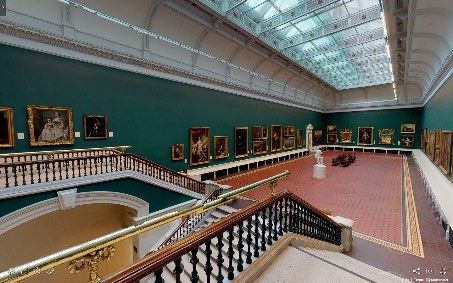
Understanding an Exhibition
                    What’s in the resource?                            How do I use it?
                    Prompt questions and activities to guide you       Whilst this has been designed to accompany a
                    through a visit to an exhibition. Information on   self-guided visit to a Gallery, there are some
                    key aspects of exhibitions, including the hang,    activities you can still do at school (see pages 7,
                    interpretation and education programmes.           12, 14 & 15). You could think back to a previous
                                                                       gallery or exhibition you have visited and use
                    Who is it for?                                     these questions as a revision tool. Or you could
                                                                       go on a virtual museum tour.
                    Students preparing for the gallery question of
                    the Leaving Certificate Art History and
                    Appreciation Exam.                                 Curriculum links
                                                                       Leaving Certificate: Art

Link to resource:
English version
Irish version

                                                                                                                             7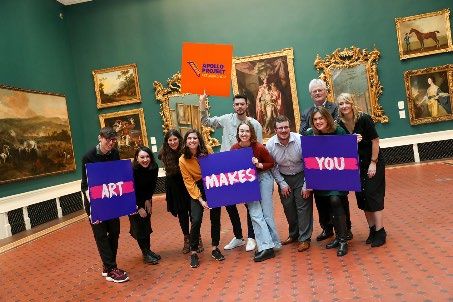
What is a Portrait?
                    What’s in the resource?                          How do I use it?
                    ●   An introduction to portraiture               This is a very rich resource with lots of ideas for
                    ●   Hi-res images of 11 key works from the       activities that you can pick and mix, or use to set
                        Gallery’s collection, with key information   a larger project.
                        and activity ideas
                    ●   DIscussion questions
                                                                     Curriculum links
                                                                     Primary: Visual Arts \ Drawing \ Paint & Colour \
                    Who is it for?                                   Looking & Responding \ Potential to work across
                    Primary & Post-Primary                           all six strands of the Visual Arts Curriculum
                                                                     Cross-curricular links with history, language &
                                                                     literacy
                                                                     Junior Cycle: Visual Art \ Critical and visual
Link to resource:                                                    language \ 1.1, 1.2, 1.3 Visual culture and
English version                                                      appreciation \ 1.7, 1.8, 1.9 Art elements and
Irish version                                                        design principles \ 1.10 Media \ 1.13
                                                                     Leaving Certificate: Art History and
                                                                     Appreciation of Art \ Irish Art

                                                                                                                           8
Exploring the Renaissance
                                   What’s in the resource?                               Curriculum links
                                   Animated introduction to the Italian Renaissance      Primary: History \ 5th-6th Class \ Strand: Eras of
                                                                                         Change and Conflict \ Strand Unit: The
                                   Who is it for?                                        Renaissance; Art \ Looking and Responding
                                                                                         Junior Cycle: Visual Art \ Visual culture and
                                   AImed at Primary level, but is a useful
                                                                                         appreciation
                                   introduction/revision tool for all ages and stages.
                                                                                         Leaving Certificate: Art History and
                                                                                         Appreciation of Art \ European Art
                                   How do I use it?
                                   Watch, learn & enjoy! You could use this to
                                   introduce the topic, and then use some of the
                                   Gallery’s other activity ideas to continue your
                                   lesson.
Link to resource:
https://www.nationalgallery.ie/e
xplore-and-learn/explore-
renaissance-cozimo

                                                                                                                                              9
Resources for past exhibitions
                                  What’s in the resource?                            Who is it for?
                                  Teachers’ notes and resources for past             Varies - Primary & Post-Primary
                                  exhibitions, including:
                                    ●     Bauhaus 100: The Print Portfolios          How do I use it?
                                    ●     Sorolla: Spanish Master of Light
                                                                                     Some of this information won’t be relevant,
                                    ●     Curious Creatures: Frans Post and Brazil
                                                                                     however if you go to the ‘before your visit’ and
                                    ●     Perspectives: World War I stories from
                                                                                     ‘after your visit’ sections you will find lots of
                                          the National Gallery of Ireland
                                                                                     activity ideas. Leaving Certificate resource packs
                                    ●     Leaving Certificate Resource Packs:
                                                                                     can be used as revision tools for Irish &
                                          Canaletto and the Art of Venice
                                                                                     European art history
                                          (resources section from p.9 onwards will
                                          be most useful)
                                    ●     Emil Nolde: Colour is Life (resources
Link to resources:                        section from p.10 onwards will be most
https://www.nationalgallery.ie/           useful)
what-we-do/education-               ●     Roderic O’Conor and the Moderns
department/schools/resources-             (resources section from p.10 onwards
schools-acmhainni-do-                     will be most useful)
scoileanna/secondary-0

                                                                                                                                          10
Virtual exhibitions
What’s in the resource? ● Make it interactive - use look and respond
Digital exhibitions allow us to visit museums and questions & pair with other resources such
galleries across the world from the comfort of as audio guides to aid your students in
our own homes or the classroom. Some, like the exploring the gallery.
Gallery’s virtual tours, attempt to replicate the ● Set a treasure hunt - have students
experience of physically visiting the Gallery. We explore in pairs or small groups. Give them
can navigate through the rooms, see where three things to find. These could be general
paintings are placed on walls, and experience items like ‘a hat’ or ‘something blue’, or
the architecture of the building. Others, like more specific ‘a painting by Joshua
Drawn from Nature, present a selection of Reynolds’. They could then use the Gallery
digital images alongside text written by a website to research their artworks and
curator. present to the class.
● Discuss the architecture of the galleries -
how does visiting a virtual exhibition
How do I use it?
compare with going to a gallery in real life?
If you are unable to take your class on a visit to a
Gallery, then you could set up a virtual tour in
your classroom.
11Create Your Own Lightbox
Exhibition
What’s in the resource? ● It can also be used to help students explore
A step-by-step guide to creating a simple digital the Visual Studies curriculum, by allowing
exhibition using the lightbox tool on the National them to juxtapose artworks, create
Gallery of Ireland Images website. connections and examine similarities and
differences.
● This process can be done in a low-tech way
Who is it for?
in the classroom. Give students a selection
Post-Primary
of postcards or printed images and have
them create an exhibition in groups.
How do I use it? ● For younger children, or for a homework
● This activity can be used to help students activity, you can set students a challenge of
Link to resource: prepare for the exhibition question of the selecting and displaying household objects
https://www.nationalgallery.ie/ Leaving Certificate art history and and taking a photo of their finished
what-we-do/education- appreciation exam. You might want to set exhibition
department/schools/resources- students a theme to work from and ask
schools-acmhainni-do- them to give a presentation explaining their
scoileanna/activity-schools curatorial decisions.
12Murillo: The Prodigal Son Restored
Virtual Exhibition
What’s in the resource? How do I use it?
Prompt questions and activities to guide Could be used as a group activity in class, or
students through a visit to the virtual exhibition, assigned as homework.
Bartolomé Esteban Murillo (1617-1682), Murillo: The Prodigal Son Restored. Information on
The Departure of the Prodigal Son, key aspects of exhibitions, including the hang,
1660s. Photo © National Gallery of Curriculum links
Ireland interpretation and the advantages and
Leaving Certificate: Art
disadvantages of virtual exhibitions.
Who is it for?
Students preparing for the gallery question of
Link to resource: the Leaving Certificate Art History and
English version Appreciation Exam.
Irish version
13Other resources and activities
14Colouring the Collection
What is the resource?
Colouring sheets of key works from the
collection.
Who is it for and how do I use it?
● A colouring activity for younger children -
begin with looking and responding
questions and then explore colour.
Replicate the colours in the paintings, or
encourage students to use their
imaginations!
● A mindfulness activity for all ages.
● A sketching demonstration for LC students -
Link to resource: some teachers have used these resources
https://www.nationalgallery.ie/e to show students how to use sketches in
xplore-and-learn/colouring- their LC exams.
collection
15The Wonder of Weeds
What’s in the resource? Environmental awareness and care: Caring for
Discover the mysterious and surprising qualities my locality; Environmental awareness; Caring for
of plants that emerge from crumbling buildings, the environment
walls, cracks in pavements and the edges of Science: Working scientifically: Observing;
gardens. Field investigation activity with notes Recording & Communicating;
and pictures for identifiying common weeds. Living Things: Plants & Animals
Curriculum links Junior Cycle
Visual art: Drawing
Primary
Science: Biological world
Visual art: Drawing
Systems and interactions: Conduct a habitat
Geography: A sense of place and space;
study; research and investigate the adaptation,
Geographical investigation skills: Observing;
Link to resource: Recording & Communicating;
competition and interdependence of organisms
within specific habitats and communities.
https://www.nationalgallery.ie/a Human environments: Living in the local
Sustainability: Evaluate how humans can
rt-and- community;
successfully conserve ecological
artists/exhibitions/drawn- Natural environments: The local natural
nature-irish-botanical- biodiversity and contribute to global food
environment;
art/wonder-weedss production; appreciate the benefits
that people obtain from ecosystems.
16Shapes & Spatial Relations
What is the resource?
Step by step drawing activity. Students will be
enabled to use their observational skills and
explore spatial relations, forms and negative
spaces.
Who is it for?
Post-Primary
How do I use it?
As a drawing activity at school, or for homework.
Link to resource:
https://www.nationalgallery.ie/d
Curriculum links
rawing-activity-shapes-and- Junior Cycle Visual Art: Drawing; Art Elements
spatial-relations and Design Principles
Leaving Certificate Art
17Apollo Project
Apollo Project is a new way to experience the Masterclass with Nick Roche
Gallery, designed by young people for young Comic-book artist Nick Roche shares tips on
people! storyboarding by examining six paintings by
Murillo which feature in our exhibition Murillo:
Connect with artists, designers, makers and The Prodigal Son Restored.
creatives at our monthly events. Hear about
their journeys and careers, and learn new skills. Artistic License Activity
Network, ask questions, and be inspired to make
Even when artists are inspired by real-life events,
art and creativity part of your life.
they will often use artistic licence to make their
depictions of the events more interesting or
Creativity, education and wellbeing are at the beautiful, or relevant to a contemporary
heart of Apollo Project, with an emphasis on audience. They might relocate the story to a
collaborating and partnering with young people different geographic location, or even to a
Link to resource: to co-create vibrant and fun experiences in the different time.
https://www.nationalgallery.ie/wh Gallery.
at-we-do/education-
department/apollo-project Follow us on Instagram @apolloprojectirl
18Contact us Sign up to the Teachers & Schools email newsletter to be regularly updated with new ideas and resources. Catherine O’Donnell Education Officer With responsibility for Teachers, Schools & Youth T: +353 (0) 1 663 3579 E: codonnell@ngi.ie
You can also read


