Reviewing our progress towards competitiveness - African Mining Indaba 2019 CEO, Neal Froneman 5 February 2019 - The Vault
←
→
Page content transcription
If your browser does not render page correctly, please read the page content below
Reviewing our progress
towards competitiveness

        African Mining Indaba 2019

              CEO, Neal Froneman
                   5 February 2019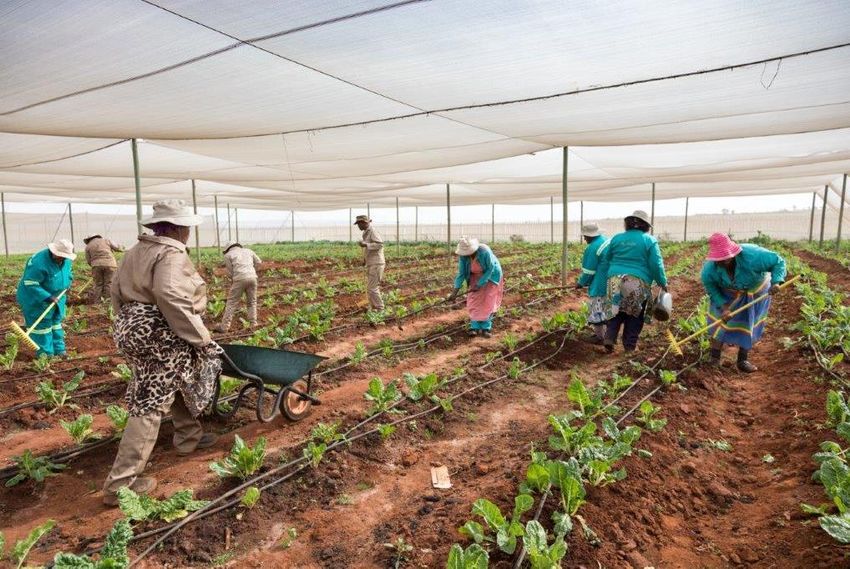
Disclaimer

NOT FOR RELEASE, PRESENTATION, PUBLICATION OR DISTRIBUTION IN WHOLE OR IN PART IN, INTO OR FROM ANY JURISDICTION WHERE TO DO SO WOULD CONSTITUTE A VIOLATION OF THE RELEVANT LAWS OR
REGULATIONS OF SUCH JURISDICTION.
This presentation is for informational purposes only and does not constitute or form a part of any offer or solicitation to purchase or subscribe for securities in the United States or any other jurisdiction nor a
solicitation of any vote of approval, nor shall there be any sale of securities in any jurisdiction in which such offer, solicitation or sale would be unlawful prior to registration or qualification under the securities
laws of any such jurisdiction.
The shares to be issued in connection with the offer for Lonmin plc (“Lonmin” and the “New Sibanye Shares”, respectively) have not been and will not be registered under the US Securities Act of 1933 (the
“Securities Act”) and, accordingly, may not be offered or sold or otherwise transferred in or into the United States except pursuant to an exemption from the registration requirements of the Securities Act. The
New Sibanye Shares are expected to be issued in reliance upon the exemption from the registration requirements of the Securities Act provided by Section 3(a)(10) thereof.
This presentation is not a prospectus for purposes of Directive 2003/71/EC (and amendments thereto, including Directive 2010/73/EU, to the extent implemented in any relevant Member State) (the “Prospectus
Directive”). In any EEA Member State that has implemented the Prospectus Directive, this presentation is only addressed to and is only directed at qualified investors in that Member State within the meaning of
the Prospectus Directive. This presentation is not directed to, or intended for distribution to or use by, any person or entity that is a citizen or resident or located in any locality, state, country or other jurisdiction
where such distribution, publication, availability or use would be contrary to law or regulation or which would require any registration or licensing within such jurisdiction.
No statement in this presentation should be construed as a profit forecast.
Forward looking statements
This presentation contains forward-looking statements within the meaning of the “safe harbour” provisions of the United States Private Securities Litigation Reform Act of 1995. These forward-looking statements,
including, among others, those relating to Sibanye Gold Limited’s trading as Sibanye-Stillwater’s (“Sibanye-Stillwater”) financial positions, business strategies, plans and objectives of management for future
operations, are necessarily estimates reflecting the best judgment of the senior management and directors of Sibanye-Stillwater and Lonmin.
All statements other than statements of historical facts included in this presentation may be forward-looking statements. Forward-looking statements also often use words such as “will”, “forecast”, “potential”,
“estimate”, “expect” and words of similar meaning. By their nature, forward-looking statements involve risk and uncertainty because they relate to future events and circumstances and should be considered
in light of various important factors, including those set forth in this disclaimer. Readers are cautioned not to place undue reliance on such statements.
The important factors that could cause Sibanye-Stillwater’s and Lonmin’s actual results, performance or achievements to differ materially from those in the forward-looking statements include, among others,
our future business prospects; financial positions; debt position and our ability to reduce debt leverage; business, political and social conditions in the United Kingdom, South Africa, Zimbabwe and elsewhere;
plans and objectives of management for future operations; our ability to service our bond Instruments (High Yield Bonds and Convertible Bonds); changes in assumptions underlying Sibanye-Stillwater’s and
Lonmin’s estimation of their current mineral reserves and resources; the ability to achieve anticipated efficiencies and other cost savings in connection with past, ongoing and future acquisitions, as well as at
existing operations; our ability to achieve steady state production at the Blitz project; the success of Sibanye-Stillwater’s and Lonmin’s business strategy; exploration and development activities; the ability of
Sibanye-Stillwater and Lonmin to comply with requirements that they operate in a sustainable manner; changes in the market price of gold, PGMs and/or uranium; the occurrence of hazards associated with
underground and surface gold, PGMs and uranium mining; the occurrence of labour disruptions and industrial action; the availability, terms and deployment of capital or credit; changes in relevant
government regulations, particularly environmental, tax, health and safety regulations and new legislation affecting water, mining, mineral rights and business ownership, including any interpretations thereof
which may be subject to dispute; the outcome and consequence of any potential or pending litigation or regulatory proceedings or other environmental, health and safety issues; power disruptions,
constraints and cost increases; supply chain shortages and increases in the price of production inputs; fluctuations in exchange rates, currency devaluations, inflation and other macro-economic monetary
policies; the occurrence of temporary stoppages of mines for safety incidents and unplanned maintenance; the ability to hire and retain senior management or sufficient technically skilled employees, as well
as their ability to achieve sufficient representation of historically disadvantaged South Africans’ in management positions; failure of information technology and communications systems; the adequacy of
insurance coverage; any social unrest, sickness or natural or man-made disaster at informal settlements in the vicinity of some of Sibanye-Stillwater’s operations; and the impact of HIV, tuberculosis and other
contagious diseases. These forward-looking statements speak only as of the date of this presentation. Sibanye-Stillwater and Lonmin expressly disclaim any obligation or undertaking to update or revise any
forward-looking statement (except to the extent legally required).

                                                                                                                                                                                                                            2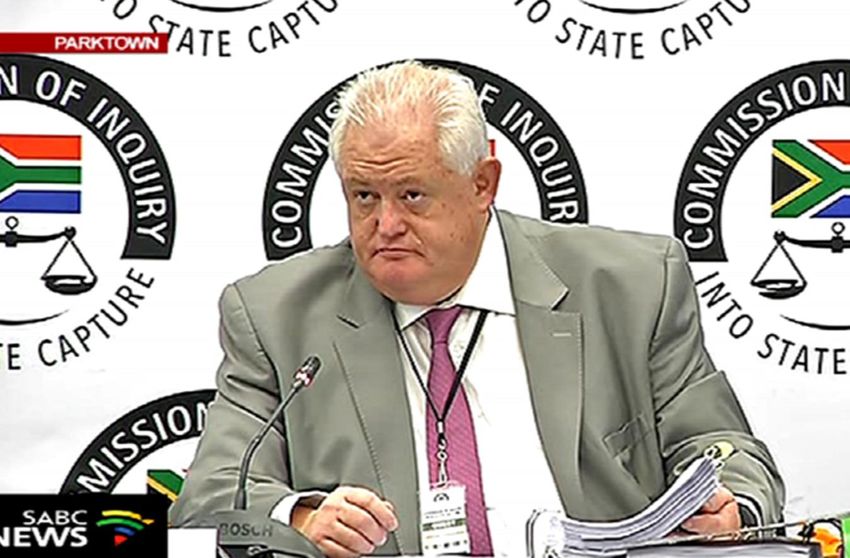
The Zambezi protocol

“Africa’s mining sector is in crisis. At its root is a lack of
trust between mining companies, governments and
indeed, the very nations they lead. A failure to tackle
the crisis will result in serious, adverse implications for
both economic growth and employment prospects at
the moment when the continent's needs are rapidly
increasing.”
 HE Olusegun Obasanjo, Chairman: The Brenthurst Foundation and
former President of the Federal Republic of Nigeria introducing the
                                                  Zambezi Protocol

                                                                      3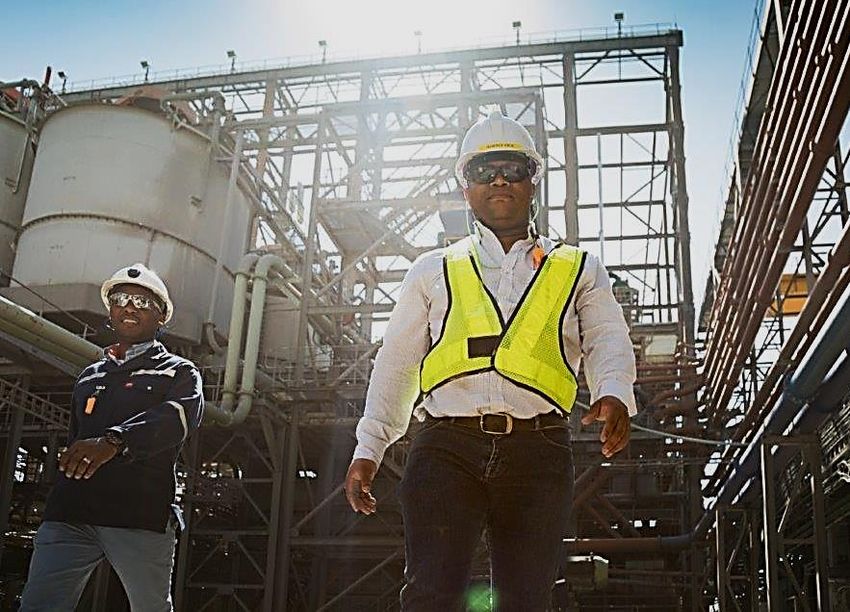
Stakeholder responsibilities - everyone has a role to play

                                                There is a need for a fresh start in stakeholder
                                                relationships given clear common interest. The
                                                vicious cycle needs to be broken, trust needs to be
                                                re-established, a shared narrative developed, and
                    Stakeholders                a fair deal agreed. To start this process, which will
                                                not be easy, new avenues for dialogue need to be
                                                found, and common interests identified.

                                                                                                        4
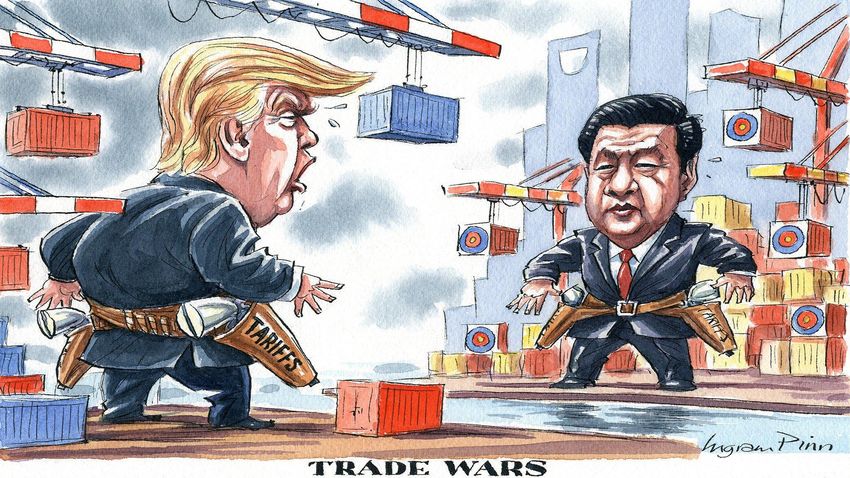
The world has changed over the last two years

Source: Google images                           5

The world has changed over the last two years

Source: Google images                           6
Minerals potential index – South Africa’s mineral endowment is uniquely

                     2017 minerals potential index                                                      South Africa’s potential is
                                                                                                        recognised by investors who
            DRC
                                                                                                        ranked it 21st out of 91
                                                                                                        jurisdictions - a first quartile
         Ghana
    South Africa                                                                                        ranking
           Mali
     Zimbabwe

        Zambia

       Namibia
        Morocco
       Botswana
       Tanzania
   Burkina Faso
     Ivory Coast

         Ethiopia

    Mozambique
         Kenya
                    0                  20            40        60               80              100

Beneficially extracting this superior endowment in order to ensure sustainable economic benefits for all stakeholders is the challenge
Source: 2017 Fraser institute survey
                                                                                                                                           7
Government: policy perception index ranking regressed

                     2017 policy perception index                                                     SA ranking in Policy
                                                                                                      perception index regressed
                                                                                                      to 81st out of 91 jurisdictions
                                                                                                       • Regression likely reflects
       Botswana                                                                                          negative response to
                                                                                                         punitive provisions of 2016
                                                                                                         draft Mining Charter
       Namibia

           Mali
        Morocco
         Ghana
   Burkina Faso

         Ethiopia
           Kenya
      Ivory Coast
      Zambia
   Mozambique
      Tanzania
   South Africa

          DRC
     Zimbabwe

                    0                  20           40       60               80              100

The deteriorating policy and regulatory environment remained as a significant barrier to investment
Source: 2017 Fraser institute survey                                                                                                    8
Labour relations: fraught relations continue and are complex

                      2017 survey for effect of Labour relation/labour militancy on investment          SA ranked 87th out of the 91
                                                                                                        jurisdictions, similar to its
        Botswana                                                                                        ranking in 2015
                                                                                                        • Investor perception in 2015
                                                                                                          already influenced by 5
     Mozambique
             Mali
                                                                                                          month strike in Platinum
                                                                                                          sector in 2014
          Ethiopia                                                                                      • Perception shows no
         Namibia
     Burkina Faso                                                                                         improvement due to public
          Morocco
         Tanzania                                                                                         hostility from unions
       Ivory Kenya
             Coast
           Ghana
                                                                                                        • Historical trust deficit
      Zimbabwe                                                                                            between industry and
         Zambia
                                                                                                          labour needs to be
             DRC                                                                                          addressed
                                                                                                        • Complicated by ancillary
     South Africa
                                                                                                          factors such as union rivalry
                     0%                20%         40%            60%             80%            100%     for membership and
                                                                                                          political machinations
Labour militancy is a significant concern for investors
Source: 2017 Fraser institute survey
                                                                                                                                        9
Community relations: increasing demands on industry unsustainable

                     2017 survey for socioeconomic agreements/community development conditions    SA ranked 87th out of 91
           Serbia
                                                                                                  jurisdictions
    New Mexico
Northern Ireland                                                                                  •     Greater and more regular
       Montana                                                                                          engagement with
          Kenya                                                                                         communities required
       Botswana
Western Australia
                                                                                                      • Direct engagement to
                                                                                                        ensure appropriate
                                                                                                        expenditure on
          Ghana
                                                                                                        sustainable social
            Brazil
         Zambia
             Mali
                                                                                                        development projects
     Ivory Coast
        Namibia
                                                                                                      • But burden cannot be
         Ethiopia
        Tanzania
                                                                                                        carried by industry alone
        China
   Mozambique
                                                                                                        -   Government remains
      Zimbabwe
            DRC
       Indonesia
                                                                                                            primarily responsible for
         Bolivia
    South Africa
                                                                                                            delivery of infrastructure
       Ecuador                                                                                              and services
                     0%                20%      40%            60%           80%           100%

Growing inequality and unemployment increasing risk associated with community relations
Source: 2017 Fraser institute survey
                                                                                                                                         10
Investment attractiveness index - South Africa’s potential reflected
2017 survey - investment attractiveness index
SA ranked 48th out of 91
jurisdictions in 2017
• Investor concerns
Ghana regarding factors
Mali
underpinning policy
perception, detract from
South Africa’s undeniable
Botswana
South Africa
potential and constrain
DRC
Namibia
investment
Zambia
Morocco
Zimbabwe
Burkina Faso
Ivory Coast
Tanzania
Ethiopia
Mozambique
Kenya
0 20 40 60 80 100
Underperforming many other African jurisdictions
Source: 2017 and 2015 Frazer institute survey 11Recent political changes - moving in the right direction?
• Political environment in South Africa has recently
undergone significant change which is being
complemented by tangible actions
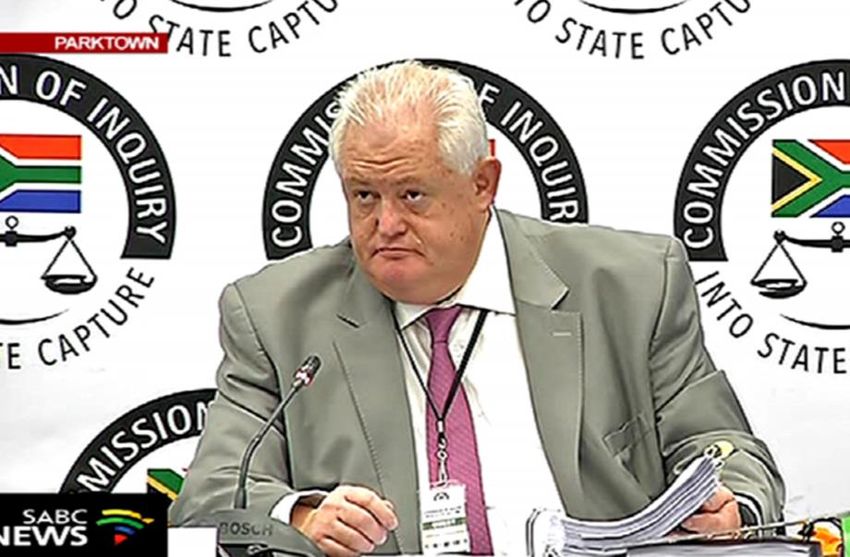
• State capture and corruption are being publicly
exposed and dealt with
• Starting to see an improvement in government
relations in contrast to the fractious environment
of recent years
• Appointment of Gwede Mantashe in early 2018
well received by market
• New mining minister has better understanding of
industry
• Revised Mining Charter released in August 2018
less punitive and provides greater policy
certainty
Is it enough to attract investment?
12Recent political changes - moving in the right direction?
• New mining charter a result of further consultation and a major
improvement
- once empowered, always empowered ownership transactions have
been recognised in new charter
• Mining Leadership Compact is a pleasing and important
development
- signals a first step towards a common vision and hopefully a revitalised
industry in South Africa
- Greater inclusivity needed to fully engage all elements of society
- Stakeholders, who disrupt the industry must either participate
constructively or be marginalised
• A policy and regulatory environment conducive to business
competitiveness will promote investment and growth in the South
African mining industry which remains a critical part of the
national economy and a significant employer
Is it enough to attract investment?
13How we are leading the way to a modern mining industry
Sibanye-Stillwater: our vision and values dictate our actions

           PURPOSE

          Our mining
        improves lives
                                                 VISION
                                       SUPERIOR VALUE CREATION
                                      FOR ALL OUR STAKEHOLDERS
                                        through the responsible
                                        mining and beneficiation
           Underpinned by our
                                             of our mineral
           C.A.R.E.S. VALUES                   resources

Ensuring value creation for all stakeholders is a fundamental requirement for sustainability
                                                                                               15
Significant transformation into a leading precious metals company
Sibanye-Stillwater global PGM ranking – Primary production Sibanye-Stillwater global gold ranking
2018A platinum 2018A palladium 2018A gold and gold equivalents
production (Moz) production (Moz) production (Moz)
Sibanye-Stillwater Norilsk³ 2.7 Barrick³ 4.8
(post-transaction)¹
1.5
Newmont³ 4.7
Sibanye-Stillwater
(post-transaction)¹
1.1
Impala³ 1.3 Sibanye-Stillwater¹ ² 4.3
Amplats³ 1 AngloGold³ 3.3
Amplats 1.2 Freeport-McMoRan³ 2.7
Impala 0.9
Kinross³ 2.5
Norilsk³ 0.7 North American
Palladium³
0.2 Newcrest 2.3
Northam 0.3 Polyus³ 2.2
Northam 0.1
Gold Fields³ 2
RBPlats³ 0.2 RBPlats³ 0.1 Goldcorp³ 1.9
Sibanye-Stillwater pre Lonmin Sibanye-Stillwater gold production
Lonmin’s contribution to Sibanye-Stillwater Sibanye-Stillwater gold equivalents
Source: Company filings, Wood Mackenzie
Notes:
1. Annualised (A) H1 2018 production from Sibanye – Stillwater proforma Lonmin excluding recycling volumes
2. Sibanye –Stillwater gold equivalents included completed on a 4E PGM basis. Gold equivalent ounces calculated as PGM basket price in the period (USD1,007/oz) / average gold price (USD1,286/oz)
in the period multiplied by PGM production (4E) and using the Sibanye – Stillwater H1 2018 prill split
3. Peer group information using public company filings . Platinum and Palladium reflect primary production for H1 2018 annualised
Positioned globally as a leading precious metals producer
16Commodity and regional diversification creates stability and sustainability
Diversification delivering
clear strategic and financial
Adjusted EBITDA* contribution
benefits
• In H1 2016, 99% of EBITDA
1%
from our SA gold
27% operations
• In H1 2018, PGMs
H1 2016 50% H1 2018 generated 73% of EBITDA
• Notably, half of our EBITDA
in H1 2018 came from our
23% US PGM operations
99%
SA gold SA PGM US PGM
Geographical and product diversification providing a balanced risk profile
Source: Company information
*The Group reports adjusted earnings before interest, taxes, depreciation and amortisation (EBITDA) based on the formula included in the facility agreements for compliance with the debt covenant
formula. For a reconciliation of profit/loss before royalties and tax to adjusted EBITDA, refer to the relevant notes in the condensed consolidated interim financial statements 17A proudly South African, globally competitive company
Investing in South Africa and
Group employee numbers: end 2015 vs end 2017 making a substantial
contribution
• 18,000 more South
70 000 66 472 Africans employed
1 970
60 000 between 2015 and 2017, a
39% increase
50 000 46 269
• One of the top five
40 000 customers of Eskom,
64 502 spending more than R5bn
30 000
per annum for its services
20 000 • Substantial contribution to
10 000
communities through
social and labour plans
-
• South African fiscus
Dec 2015 Dec 2017 benefits from taxes and
royalties among other
SA region US region contributions
We are committed to the sustainability of our operations which provide employment to a vast amount of people
Source: Company information
18Conclusion
Conclusion

• The conclusions reached in my speech in 2016,
  remain valid
• SA has regressed in many measures of
  investibility in the last two years
• Alignment of all stakeholders towards a
  common vision remains critical to secure the
  future of the industry
• Recent political changes have been positive
  with Governments showing a greater
  commitment to growth, is addressing
  regulatory shortcomings and tackling
  corruption and mismanagement of State
  owned enterprises
• New Mining Charter and Mining Leadership
  Compact are positive for the mining industry
• Sibanye-Stillwater is committed to South Africa
  and well positioned for modernisation and
  delivery of superior value for ALL stakeholders

Is it enough to attract investment?
                                                    20
Questions?
You can also read


