Revised Version - July 2019
←
→
Page content transcription
If your browser does not render page correctly, please read the page content below
Revised Version – July 2019
CONTENTS

Purpose

Overview: delivery of devolved benefits

  o What has happened so far?
  o What’s next?

Delivery timetable

  o What is happening and when

Factsheets

  o   Background
  o   Factsheet 1: What has happened so far
  o   Factsheet 2: Plans for 2019
  o   Factsheet 3: Delivery of disability and carers benefits
  o   Factsheet 4: Disability Assistance assessments
  o   Factsheet 5: Disability Assistance awards and entitlements
  o   Factsheet 6: Disability Assistance qualifying periods
  o   Factsheet 7: Industrial Injuries Disablement Benefit
  o   Factsheet 8: Severe Disablement Allowance
  o   Factsheet 9: Short-term assistance
  o   Factsheet 10: Social security case transfer
  o   Factsheet 11: Support for carers
  o   Factsheet 12: Terminal Illness and Definition and Rules
  o   Factsheet 13: Cold Spell and Winter Heating Assistance
  o   Factsheet 14: Scottish Child Payment

Spreading the word about the devolved social security benefits

  o   Intranet article – for staff
  o   Website/newsletter article – for clients
  o   Blogs
  o   Social media

Frequently asked questions

                                                                   1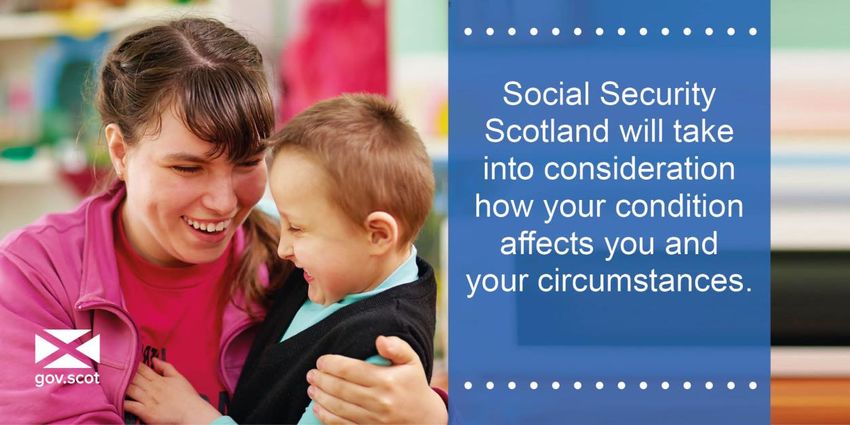
PURPOSE

This stakeholder toolkit is designed for all public, third sector and
charitable organisations who are involved in the delivery of, or providing
advice on, the new social security benefits which are being devolved to
the Scottish Government under the Scotland Act 2016. These include a
range of powers over disability and carers, as well as powers to make
administrative changes to Universal Credit and vary the housing costs
element.

The toolkit has been produced by the Scottish Government and provides
resources and information to help you to communicate with your staff
and clients about the significant changes happening in the field of social
security in Scotland.

You can use the information and facts in this toolkit on your
organisation’s intranet to inform your employees about the changes.
You could also use it on your external website, newsletters and social
media to let your clients and local partners know about the new social
security benefits being introduced and how they might affect them.

                                                                             2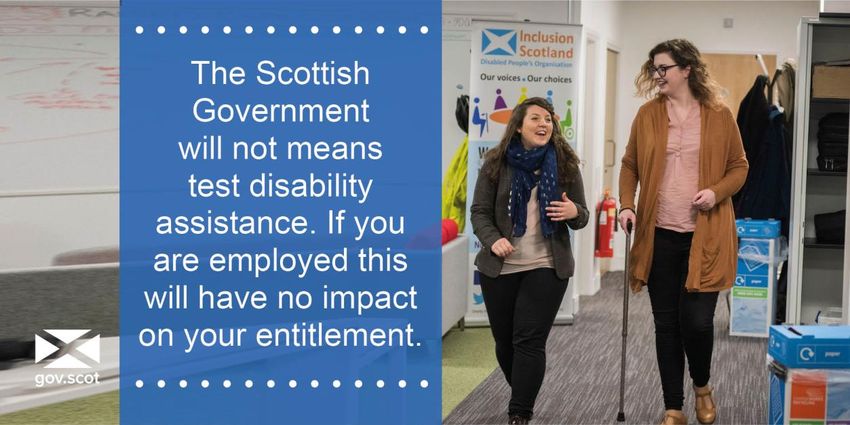
OVERVIEW: DELIVERY OF DEVOLVED BENEFITS

What has happened so far?

The Social Security (Scotland) Act received Royal Assent in June 2018.
Since then, the Scottish Government has:

• Established Social Security Experience Panels – 2,400 people with
  lived experience of the social security system who provide advice and
  guidance on the design and delivery of the new social security
  benefits.

• Established Social Security Scotland with its Head Office in Dundee,
  and an office in Glasgow, and have started recruitment for its local
  presence across the country.

• Introduced a new Carer’s Allowance Supplement, supporting more
  than 83,000 carers across Scotland with an additional £442 a year in
  people’s pockets in 2018/19, to be up-rated annually in line with
  inflation, rising up to £452.40 in 2019/20. This means that in 2019/20
  annual investment in carers will rise to around £37 million.

• Launched the Best Start Pregnancy and Baby Payment, which
  supports low income families at key stages in the life of a child. In the
  first 3 months, more than 9,700 families have benefitted from these
  increased payments of £600 for first child, £300 for subsequent
  children and an additional £300 for multiple births.

• Launched the Best Start Grant Early Learning Payment, a £250
  payment that helps low income families around the time a child would
  normally start nursery. More than 6,000 applications for Best Start
  Grant were received in just two days following the launch of the
  Scottish Government’s new Early Learning Payment.

• Launched the Best Start Grant School Age Payment, a £250 payment
  that helps low income families around the time a child starts school.

• Following the launch of the School Age Payment on 3 June, all three
  Best Start Grant Payments are now open for applications.

                                                                              3
• Launched the Social Security Charter – co-produced by those who rely
  on social security, setting standards for service that will form part of
  everything the Scottish Government does.

What’s next?

By the end of 2019, the Scottish Government will have also delivered:
Funeral Support Payment, Young Carer’s Grant and Best Start Food.

On 1 April next year (2020), the Scottish Government will take full
responsibility - both payment and policy - for the remaining devolved
benefits.

This means that both the UK and Scottish Governments will, for the first
time, share clients and those eligible for benefits on the grounds of
disability and ill health will get payments from both the DWP and Social
Security Scotland. Those payments need to interact with one another, so
both agencies’ systems need to work together seamlessly, to ensure
people get the right money at the right time.

Following transfer of responsibility in April 2020, the Scottish
Government will take on new claims for devolved benefits starting with
disability benefits. Case transfer of clients from the DWP to Social
Security Scotland will start in 2020 after Disability Assistance for
Children and Young People is delivered.

The Scottish Government delivery plans are based on three principles:
  • Protecting people and their entitlements;
  • Acting quickly to reform aspects of the current system which
     research shows cause most stress; and
  • Ensuring that it puts in place a dignified, respectful system, from
     application to appeal, that works for the people of Scotland.

The roll out of devolved benefits will start with the three forms of
disability assistance, then move to carer’s assistance and the other
devolved benefits.

The Scottish Government has announced it will introduce a new benefit
for low income families to reduce levels of child poverty in Scotland. The
Scottish Child Payment will made to children under the age of 6 before
the end of this parliamentary term (March 2021); and all eligible children
aged under 16 by the end of 2022. It will be administered by Social
Security Scotland.
                                                                          4
By early 2022, the Scottish Government will be delivering new claims for
Disability and Carer’s Assistance, and supporting families with their
winter fuel bills.

The Scottish Government will transfer more than half a million client
cases from the DWP to Social Security Scotland (around 10% of the
total population). People have been transferred from one benefit to
another before, but not transferred from one government agency to
another.

The Scottish Government is clear that this must be done in a way which
causes minimal stress, while safeguarding the payments people are
currently getting.

Therefore at the point when the case transfer begins:
  • Payments will be protected;
  • The Scottish Government will not require anyone to make a new
     claim - as is the case with migration to Universal Credit; and
  • No-one will be reassessed - as is the case for the majority moved
     from Disability Living Allowance to Personal Independence
     Payment.

With the DWP’s co-operation, the Scottish Government expects the
majority of people to be transferred by 2024, and all cases fully
transferred in 2025.

                                                                         5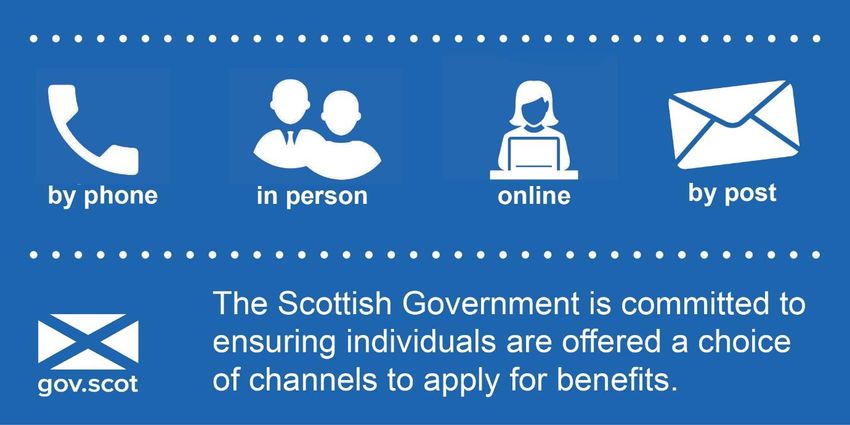
DELIVERY TIMETABLE

What is happening next and when?
When                 What
Summer 2019          Best Start Foods
Summer 2019          Funeral Support Payment
Autumn 2019          Young Carer Grant
As soon as           Job Grant
practicable
By the end of this   Scottish Child Payment (under 6s)
Parliamentary
term (March
2021)
Summer 2020          Disability Assistance for Children and Young People will open
                     to new claims (replaces Disability Living Allowance for
                     children).

Summer 2020          Eligibility for Disability Assistance for Children and Young
                     People extended from age 16 to age 18.

By end 2020          Children who receive the highest care component of Disability
                     Assistance become entitled to Winter Heating Assistance
                     (16,000 children; £200 payment).

Early 2021           Disability Assistance for Working Age People will open to new
                     claims (replaces UK Government’s Personal Independence
                     Payment).

Early 2021           Start new additional payment for carers who look after more
                     than one disabled child.

2021                 Disability Assistance for Older People (over 65) will open to
                     new claims (replaces Attendance Allowance).

Winter 2021          Winter Heating Assistance and Cold Spell Heating Assistance
                     delivered to eligible recipients in their current form and to those
                     in receipt of assistance from Social Security Scotland.
Early 2022           Scottish Carer’s Allowance opens to new claims (this will be
                     one regular payment made up of Carers Allowance, Carer’s
                     Allowance Supplement and, if applicable payments for carers
                     of more than one disabled child).

Autumn 2022          Employment Injury Assistance
By the end of        Scottish Child Payment (all children under 16)
2022

                                                                                           6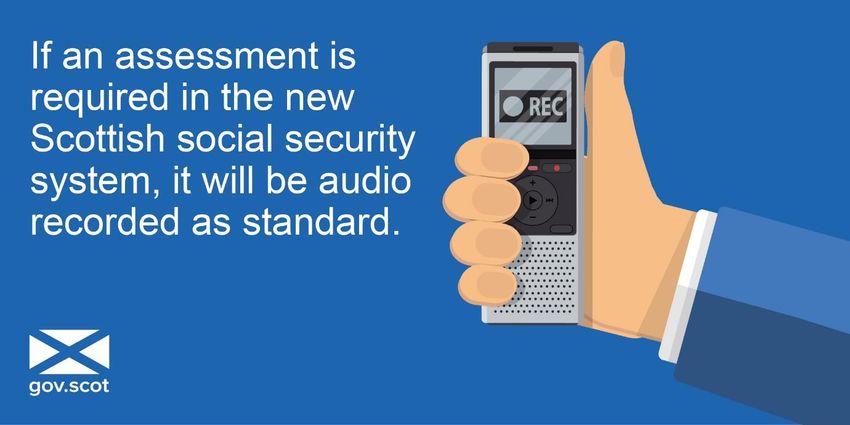
FACTSHEETS

Background

The Cabinet Secretary for Social Security and Older People made a
statement on 28 February to the Scottish Parliament on the timetable for
the remaining devolved benefits to be delivered. You can read it here.

On 26 June, the Cabinet Secretary for Communities and Local
Government announced the Scottish Government will introduce a new
benefit for low income families to reduce levels of child poverty in
Scotland called the Scottish Child Payment. You can read it here.

The Scottish Government has published a full suite of position papers on
various matters relating to the development of the devolved social
security benefits in Scotland. The following pages provide key factsheets
for each paper and, for completion, factsheets on what has happened so
far and plans for 2019.

                                                                        7
FACTSHEET 1:

                  What has happened so far

• The Scotland Act 2016 devolved a number of benefits to the
  Scottish Parliament, including a range of powers relating to
  assistance for disabled persons and carers, as well as powers to
  make administrative changes to Universal Credit and vary the
  housing costs element.

• In July 2016, the Scottish Government launched a consultation on
  social security. 521 responses were received.

• An outline business case for the establishment of a new social
  security agency, with a local presence providing face to face
  advice, and a central administrative function, was published on 27
  April 2017. Social Security Scotland was formally established in
  September 2018.

• The Social Security Bill began its journey through the Scottish
  Parliament on 20 June 2017 and was passed unanimously on 25
  April 2018.

• The Scottish Government set up Social Security Experience
  Panels – 2,400 people with lived experience of the social security
  system who provide advice and guidance on the design and
  delivery of the new social security benefits.

• The first use of the Scotland Act 2016 powers was the introduction
  of Universal Credit Scottish Choices on 4 October 2017, giving
  people in Scotland the choice of being paid Universal Credit twice
  a month rather than monthly, and having their Universal Credit
  housing element paid direct to their landlord.

• The first benefit delivered by Social Security Scotland was Carer’s
  Allowance Supplement, which has put an extra £442 into the
  pockets of more than 83,000 carers, an investment of over £33
  million in 2018/19. This is to be up-rated annually in line with
  inflation rising up to £452.40 in 2019/20. This increases to an
  annual investment to around £37 million in 2019/20.

• There have also been payments of the Best Start Grant Pregnancy
  and Baby Payment, Best Start Grant Early Learning Payment and

                                                                        8
the Best Start Grant School Age Payment to more than 9,700 low
   income households during the first 3 months of operation, totalling
   £3.5 million.

• There was an announcement by the Scottish Government in
  September 2018 that there will be no private sector involvement in
  assessments for disability support. Assessments for disability
  support will be carried out by Social Security Scotland, fully
  supported by public sector healthcare professionals – and people
  will be given greater choice and flexibility over their assessments.

• The Social Security Charter received unanimous Parliamentary
  approval on 6 February 2019. It was co-produced by people with
  lived experience of social security. It outlines in detail what can be
  expected from the Scottish Government and Social Security
  Scotland for anyone accessing Scotland’s new social security
  system.

• On 28 February, the Cabinet Secretary for Social Security and
  Older People made a statement in the Scottish Parliament that on
  1 April next year (2020), the Scottish Government will take full
  responsibility - both payment and policy - for the remaining
  devolved benefits.

• On 26 June, the Cabinet Secretary for Communities and Local
  Government announced the Scottish Government will introduce a
  new benefit for low income families to reduce levels of child
  poverty in Scotland called the Scottish Child Payment.

                                                                           9
FACTSHEET 2:
Plans for 2019
• By the end of 2019, the Scottish Government will have delivered
three new benefits. This is in addition to continuing to deliver the
Carer’s Allowance Supplement and the three payments that make
up the Best Start Grant package. This will bring the number of live
benefits to seven by the end of 2019.
• The new benefits are:
• Best Start Foods Replacement for UK Government’s Healthy
Start Vouchers scheme. Paper vouchers will be replaced by a
Payment Card giving eligible low income families more choice
and flexibility to buy healthy food such as: fresh/ frozen/tinned
fruit and vegetables; cow’s milk and infant formula; eggs; and
dried or tinned pulses e.g. peas, lentils beans and barley.
• Funeral Support Payment (replacing Funeral Expenses
Payment) by summer 2019. Provides eligible low income
families with a contribution towards the cost of a funeral, with
improvements on the equivalent DWP benefit that increase
eligibility by around 40%.
• Young Carer Grant by autumn 2019. The grant will be
awarded to young carers aged 16 to 18 who do at least
16 hours of caring a week, but don’t qualify for Carer’s
Allowance.
• Our delivery plans for 2020 onwards are set out in Factsheets 3
to 14.
10FACTSHEET 3:
Delivery of disability and carers benefits
• The benefits currently being delivered by Social Security Scotland,
or due to be delivered later in 2019, are mainly in the form of one-
off or lump sum payments and grants.
• The delivery of the remaining devolved benefits i.e. carers and
disability benefits from 2020 is more complex. This is because:
o They involve regular payments to individuals, who will have
an ongoing relationship with Social Security Scotland.
o People's circumstances may well change during that
relationship, requiring adjustments to their payments.
o To establish whether someone is eligible for a disability or
carer benefit is complex and will involve information
gathering and more sophisticated decision-making.
o Social Security Scotland will carry out face to face
assessments when it is the only practical way to obtain
information.
• The Scottish Government wants to introduce the devolved benefits
in their Scottish form as quickly as it can - taking into account
some key considerations:
o Ensuring a safe and secure transition;
o Allowing sufficient time between benefit launches; and
o For each benefit, introducing a new claims service before we
transfer existing claims from the DWP to Social Security
Scotland.
• The Scottish Government believes the most sensible approach is
to deliver new claims for the main disability benefits, in increasing
order of complexity and size of caseload, and then to deliver
Carer's Allowance in its Scottish form.
• The timetable for delivery is set out at page 6.
11FACTSHEET 4:
Disability Assistance assessments
• The Scottish Government’s approach to how decisions should be
made about eligibility to Disability Assistance, and the nature of
that process, continues to be informed by the Disability and Carers
Benefits Expert Advisory Group and Experience Panels.
• The Scottish Government is creating a holistic, person centred
approach to providing Disability Assistance to ensure the needs of
individuals are met.
• Individuals will be provided with a choice of application channels
including online, telephone, paper and in-person.
• Case Managers will gather information on an individual’s behalf,
where possible, to inform the decision making process. Various
sources of information, suggested by the individual, will be
accessed. Only in circumstances in which there is no other
practicable way to make a decision about entitlement to Disability
Assistance for Working Age People will an individual be required to
attend a face to face assessment.
• The Scottish Government will provide suitably qualified staff to
undertake assessments for people with conditions that may require
more specialist knowledge. In addition, the Scottish Government
will provide a proportion of assessors with additional training in the
impact of mental health conditions and learning disabilities, to
enable them to carry out face to face assessments of people with
these conditions.
• When invited to attend a face to face assessment an appointment
will be made for the individual at a location that suits them, taking
into account where they live and their access needs.
• No one applying for Scottish Disability Assistance will be assessed
by a private sector provider; all face to face assessments will be
delivered by Social Security Scotland.
• Individuals will have a right to be accompanied to an assessment
and to have that person participate. Social Security Scotland will
also ensure access to advocacy support for disabled people.
12• Individuals will routinely be provided with a copy of the report
written by the assessor without having to request it. Assessments
will be audio recorded as standard.
• The Scottish Government carried out a wide ranging public
consultation on all of our proposals relating to Disability
Assistance, which closed on 28 May 2019.
13FACTSHEET 5:
Disability Assistance awards and entitlements
• The principles being adopted by the Scottish Government for the
duration of disability awards was informed by the Disability and
Carer Benefits Expert Advisory Group and the Ill Health Reference
Group.
• The Duration of Award Principles specify that all awards should be
made on a rolling basis, with no set date for an award ending; and
that there will be no auto-entitlement thus ensuring all decisions
will be person-centred.
• The Principles also make it clear that Disability Assistance should
not stop whilst an award review is being undertaken; that review
dates will be set at a date that takes account of the likelihood of
that person's needs changing; and that reviews will be light-touch
and, as far as possible, minimise stress.
• The Disability Assistance regulations will include a requirement to
set an Award Review date for each individual's award, and also
provide a framework for awards to be made on a rolling basis.
• Under the Scottish Government’s Principles moving into work will
not be regarded as a change of circumstance.
• The Principles will also require Social Security Scotland to give a
reason to individuals where their award is reviewed earlier than the
date set, and to publish the numbers of cases where awards are
reviewed earlier than the date set at initial decision.
• In cases where there is no likelihood of improvement there will be
at least five years between Light-Touch reviews and awards will
have a maximum period of 10 years between Light-Touch
Reviews.
14FACTSHEET 6:
Disability Assistance qualifying periods
• Disability Assistance in Scotland will be made up of three forms of
assistance:
o Disability Assistance for Children and Young People;
o Disability Assistance for Working-Age People; and
o Disability Assistance for Older People.
• Qualifying Period rules are time limits that ensure that people must
have had, or be expected to have, a disability or long-term
condition for a certain period of time to be eligible for Disability
Assistance.
• As part of the Scottish Government’s development of the new
disability benefits it has carefully considered whether any of these
qualifying periods should be changed. It concluded that these
Qualifying Periods should not be changed for the following
reasons:
o Significant policy changes could impact on the fundamental
purpose of Disability Assistance which is to target long-term
conditions. Keeping eligibility targeted to those for whom
Disability Assistance is intended would be a significant
challenge with any reduction in the qualifying periods. If the
qualifying periods are reduced this will extend eligibility to
people with shorter term conditions, who may not have
significant additional financial requirements associated with
their condition as many disabled people have, but who are
able to meet the immediate requirements of the disability
assessment.
o The challenges associated with identifying specific benefits
or age groups for change.
o Any change in policy that increases entitlement may incur
additional costs and threaten eligibility for reserved
passported benefits.
o It would incur significant financial costs.
15FACTSHEET 7:
Employment Injury Assistance
• The Industrial Injuries Benefit Scheme (UK Government) provides
no-fault compensation for people who are disabled because of an
accident at work, or who have one of certain prescribed diseases
caused by their work. The main benefit in the scheme is Industrial
Injuries Disablement Benefit (IIDB).
• The number of new cases has been on a general downward trend
since 2002. Responses to the Scottish Government’s 2016
Consultation on Social Security in Scotland demonstrated that
there is little consensus on the scheme.
• It will be difficult to undertake significant reform of the scheme
since key policies relating to the benefit remain reserved, for
example, employment, insurance, occupational health and safety,
and self-employment.
• While the scheme has a relatively low caseload in Scotland, it is
likely to be one of the most complex to transition. Detailed
information about current and previous scheme recipients is
almost entirely held by the DWP in paper files in remote storage.
Transferring these paper files and cases would require entirely
new processes and an electronic system to be designed, built,
tested and implemented.
• Industrial Injuries Advisory Council (IIAC) has a role in scrutinising
Industrial Injury benefits regulations. The UK Government has
decided that the role of IIAC should remain unchanged and that it
should provide advice to UK Ministers only.
• In advance of transferring the scheme the Scottish Government
will have to decide whether, and how, to provide a Scottish
equivalent of IIAC. Securing the necessary expertise could be
challenging.
• For the above reasons, IIDB will continue to be delivered by the
DWP using an Agency Agreement until we begin delivering new
claims in Autumn 2022. This allows the DWP to carry out functions
on behalf of Scottish Ministers, and specifies what the DWP is
being asked to do.
16FACTSHEET 8:
Severe Disablement Allowance
• Severe Disablement Allowance (SDA) is a work-related benefit
and designed to replace income lost due to someone being unable
to work due to illness or disability. It has been closed to new
applicants since 2001.
• In May 2018 around 2,000 individuals in Scotland received SDA, of
which only 2% of these were under age 65.
• The equivalent benefit available now for people unable to work due
to illness or disability is Employment Support Allowance (ESA),
which is not being devolved to Scotland and is one of the benefits
being replaced by Universal Credit.
• Of those who responded to questions on SDA in the Scottish
Government’s 2016 Consultation on Social Security in Scotland,
83% agreed with the Scottish Government’s proposal to continue
to deliver SDA without making any changes. Responses to a 2018
Experience Panels survey on SDA did not raise any significant
issues.
• The Scottish Government believe that there is no benefit in
transferring SDA, because:
o There will be no new claims for SDA.
o There is a small and declining caseload for SDA.
o The Scottish Government is not proposing to make changes
to the benefit and this proposal is largely supported by
stakeholders and individuals.
o The interaction with the State Pension could cause
unnecessary confusion for clients.
o Transferring the benefit may cause unnecessary disruption
to some SDA clients.
• SDA will continue to be delivered by the DWP using an Agency
Agreement. This allows the DWP to carry out functions on behalf
of Scottish Ministers, and specifies what the DWP is being asked
to do.
17FACTSHEET 9:
Short-term assistance
• The Scottish Government will provide Short-Term Assistance
(STA) where Social Security Scotland has made a decision to
reduce or stop a continuing payment (such as disability, carer's
and employment injury assistance), and that decision is subject to
a request for re-determination or an appeal.
• The purpose of STA is to ensure an individual is not discouraged
from challenging that decision by having to manage, for a period,
with a reduced income.
• Provision for STA is set out in Section 36 of the Social Security
(Scotland) Act (the 2018 Act), along with Schedule 10.
• STA is available for devolved assistance where on-going
payments are made.
• STA cannot be used to support people whose reserved benefit is
reduced or stopped. Similarly, people would not be able to access
any passporting entitlements to the reserved system, or those that
are not controlled by the Scottish Government in the devolved
system during the period that STA is being paid.
• Where there is a successful appeal, an individual's entitlement
record would be adjusted from the point at which it was
reduced/stopped or from the point as decided by the tribunal,
including passport benefits.
• STA can only be made available once the request for a re-
determination or an appeal is made.
• STA will be available until the First-tier Tribunal (FtT) has made a
determination.
• The Scottish Government will undertake a consultation to inform
the detailed design and operation of how STA will operate. In the
first instance, it will consult on residency requirements; fraud
investigations; servicing an overpayment; and process decision
appeals.
18FACTSHEET 10:
Social security case transfer
• Over 500,000 existing cases will be transferred from the DWP to
Social Security Scotland (around 10% of the total population in
Scotland).
• Case transfer will start in 2020 after Disability Assistance for
Children and Young People is delivered. This will replace DWP's
Disability Living Allowance for Children.
• Case transfer for all existing in scope DWP cases is targeted to
complete in 2025 with the majority being completed in 2024. The
scope of transfers includes:
o Adults aged 65 and over, and people in receipt of Disability
Living Allowance for children;
o Working age people in receipt of Personal Independence
Payment; and
o People in receipt of Carer’s Allowance and people in receipt
of Attendance Allowance.
• A transfer strategy for people in receipt of Industrial Injuries
Disablement Benefit from the DWP will be designed when plans
for new claims for this benefit are more advanced.
• The Scottish Government is not proposing to transfer existing
claims of Severe Disablement Allowance.
• The Scottish Government will continue to work with benefit
recipients and stakeholders in the co-design of the case transfer
processes. The case transfer process will be based on a series of
transfer principles including:
o Continuation of the correct payment at the correct time.
o No reapplications for benefits as part of the case transfer.
o No face to face re-assessment by DWP when new claims for
PIP/Disability Assistance for Working Age People are open.
o Completing the transfer as soon as possible, but without
endangering payments.
o Clear communication with clients.
• Experience Panel research on case transfers is now expected to be
published in July 2019.
19FACTSHEET 11:
Support for carers
• The Scottish Government’s first change when the Social Security
(Scotland) Act was passed was to introduce Carer's Allowance
Supplement (CAS) in September 2018, bringing the amount paid
in line with Job Seeker's Allowance through two additional
payments a year.
• CAS has helped more than 83,000 Scottish carers, increasing
Carer's Allowance by 13%, with an investment of over £33 million
in 2018/19, and a commitment to increase CAS annually in line
with inflation. This means that in 2019/20 investment will rise to
around £37 million.
• Carer's Allowance is delivered by the DWP through an Agency
Agreement. This ensured the Scottish Government could pay CAS
ahead of building the systems that Carer's Allowance will require.
• The Young Carer Grant will be introduced in autumn 2019. It will
help around 1,700 young carers each year through an annual
payment of £300. The Scottish Government will also start delivery
of additional financial support to carers of more than one disabled
child in spring 2021.
• We are introducing Scottish Carer’s Allowance after Disability
Assistance because it is one of the most complex benefits to be
transferred, given its interactions with UK Government tax and low
income benefits.
• The Scottish Government will open new applications for all parts of
Carer's Assistance by early 2022. To begin with, new claims for
Carer's Assistance will be on broadly the same terms as the
existing DWP benefit.
20FACTSHEET 12:
Terminal Illness Definition and Rules
• The Scottish Government included provision in the Social Security
(Scotland) Act 2018 to introduce a new definition of terminal illness
that differs from the current UK Government definition.
• The Act says that “An individual is to be regarded as having a
terminal illness …. if ….it is the clinical judgement of a registered
medical practitioner that the individual has a progressive disease
that can reasonably be expected to cause the individual's death”.
• The new definition sets no arbitrary timeframe of prognosis,
recognising instead that a person-centred approach to terminal
diagnosis should be based on the clinical judgement and expertise
of the registered medical practitioner.
• The Chief Medical Officer has established a Short-Life Working
Group on Terminal Illness for Disability Assistance to develop
guidance. A Reference Group (SHRG), which comprises wider
stakeholders, has also been established to enrich the development
of the draft guidance.
• The groups have finalised an initial draft of the guidance. A
managed consultation process was launched on 12 February and
closed on 19 April 2019. Given the clinical nature of the guidance,
it has been issued to a wider group of medical professionals, as
well as representatives of support and advocacy organisations
whose views will inform its continued development.
• Registered Medical Practitioners, who certify that their patient is
terminally ill for the purposes of determining eligibility for disability
assistance under special rules, will communicate this directly and
securely to Social Security Scotland.
• For an eligible person there will be no qualifying period; no
requirement to undergo further assessment; awards will be
calculated from date of application; and entitlement will be to the
highest rate(s) of assistance for the relevant benefit.
21FACTSHEET 13:
Cold Spell and Winter Heating Assistance
• In Scotland, Winter Heating Assistance will replace Winter Fuel
Payments and Cold Spell Heating Assistance will replace Cold
Weather Payments.
• The Winter Fuel Payment is a universal, annual tax-free payment
made to pensioners to help towards their winter heating costs.
• The Scottish Government’s first priority is to ensure current and
new recipients receive the benefit they are entitled to. However we
are working to improve the way that the new Winter Heating
Assistance will be delivered to households, in particular, in remote
rural and island communities that are not on the gas grid.
• From the end of 2020, any family living in Scotland with a child
who is in receipt of the higher rate component of Disability
Assistance for Children and Young People will be eligible for
Winter Heating Assistance.
• Progressively from winter 2021 onwards, the Scottish Government
will pay Winter Heating Assistance to everyone in Scotland as they
reach the female State Pension age. Delivery of the Winter
Heating Assistance will continue on the basis of existing eligibility.
• Cold Weather Payments are made to households in receipt of
certain benefits during prolonged periods of cold weather.
• The first payments of new Cold Spell Heating Assistance will be
made from winter 2021 onwards. It will be designed and delivered
based upon the existing Cold Weather Payment; there are no
plans to change the current eligibility for this benefit or to change
the amount of benefit paid.
• The Scottish Government will seek the views of households who
have received Winter Fuel Payments and Cold Weather
Payments. It has consulted on the introduction of Winter Heating
Assistance for severely disabled children as part of the
consultation on Disability Assistance in Scotland, which closed on
28 May 2019.
22FACTSHEET 14:
Scottish Child Payment
• The Scottish Government has announced it will introduce a new
benefit for low income families to reduce levels of child poverty in
Scotland. The Scottish Child Payment will be made to children
under the age of 6 before the end of this parliamentary term (); and
to all eligible children aged under 16 by the end of 2022. It will be
administered by Social Security Scotland.
• We anticipate that an estimated 410,000 children will be eligible for
the benefit. We anticipate that around 170,000 of those children in
around 140,000 households are in the under age 6 group.
• It will be an application-based payment to families in receipt of
Universal Credit delivered by Social Security Scotland. Given the
lifetime of our plan and our desire to reduce child poverty and as
payments will begin before UC is fully in place to all families, we
have also included other qualifying benefits.
• It will be a regular cash payment for families who are in receipt of
qualifying benefits and who have responsibility for a child. The rate
will be £10 per week, per child, to be paid on a monthly basis.
• The Scottish Child Payment will not have any cap on the number
of eligible children a family can receive a payment for.
• Payments will be made to an individual, on behalf of a household.
The payment process will use technology being built for the
existing devolved benefits, with payments made monthly to the
client's bank account.
23SPREADING THE WORD ABOUT THE DEVOLVED SOCIAL
SECURITY BENEFITS
Intranet Article
You can add this article, for your staff, onto your organisation’s intranet
about the Scottish Government’s social security plans.
The Scottish Government is establishing a new social security system
administered by Social Security Scotland.
Once fully operational, it will deliver benefits to 1.4 million people and
provide £3.5 billion in payments every year.
The benefits (shown in the table below) will include a number of
payments previously offered through the Department for Work and
Pensions (DWP), including Disability Assistance, as well as brand new
benefits such as the Scottish Child Payment and the Young Carer’s
Grant.
The Scottish Government will gradually introduce the benefits that it is
creating, including the ones that will replace the DWP benefits in
Scotland.
On Thursday 28 February, the Scottish Government’s Cabinet
Secretary for Social Security and Older People updated the Scottish
Parliament on the high level delivery timetable for benefits. On the 26
June 2019, the Cabinet Secretary for Communities and Local
Government introduced a new benefit for low income families called
the Scottish Child Payment. These announcements are reflected in the
table below.
The people that we support and work with may have an interest in
what this means for them. The Scottish Government has created a
question and answer document that they will continue to add to. This
can be found at www.gov.scot/policies/social-security
24Department for Work Our replacement Date available
and Pensions benefit benefit
Not applicable – new Carer’s Allowance Available now
benefit Supplement
Sure Start Maternity Best Start Grant Available now
Grant Pregnancy and Baby
Payment
Not applicable – new Best Start Grant Early Available now
benefit Years Payment
Not applicable – new Best Start Grant School Available now
benefit Age Payment
Healthy Start Vouchers Best Start Foods Summer 2019
Funeral Expense Funeral Support Summer 2019
Payment Payment
Not applicable – new Young Carer Grant Autumn 2019
benefit
Not applicable – new Job Grant As soon as practicable.
benefit
No equivalent Scottish Child Payment By the end of this
for under 6s parliamentary term
(March 2021)
Child Disability Living Disability Assistance for Summer 2020
Allowance Children and Young
People
No equivalent Children who receive the By end of 2020
highest care component
of Disability Assistance
become entitled to Winter
Heating Assistance
Personal Independence Disability Assistance for Early 2021
Payments Working Age People
No equivalent Additional payments to Early 2021
carers who look after
more than one disabled
child
Attendance Allowance Disability Assistance for 2021
Older People
Winter Fuel Payment Winter Heating Winter 2021
Assistance
Cold Weather Payment Cold Spell - Heating Winter 2021
Assistance
Carer’s Allowance Scottish Carer’s Early 2022
Allowance
Industrial Injuries Employment Injury Autumn 2022
Disablement Benefit Assistance
No equivalent Scottish Child Payment By the end of 2022
for under 16s
25SPREADING THE WORD ABOUT THE DEVOLVED SOCIAL
SECURITY BENEFITS
Website Newsletter/Article
You can add this news story to your organisation’s website or newsletter
to inform your clients about the Scottish Government’s plans.
Spread the Word about Best Start School Age Payment
Have you a child starting school? You could be due £250
The Scottish Government has increased the level of financial support
available to low income families with children with the launch of its
Best Start Grant School Age Payment.
The £250 School Age Payment is made around the time a child
normally starts Primary 1 to help with the costs of a child starting
school. You can use it for anything from school bags, shoes, a warm
coat, after school clubs, books or days out – it is not a loan so does not
have to be paid back.
Delivered by Social Security Scotland, the School Age Payment is part
of the Best Start Grant, a package of three payments that gives extra
money to parents and carers on certain benefits or tax credits during
the early years of a child’s life. The other payments include the
Pregnancy and Baby Payment - £600 for your first child and £300 for
all other children – and Early Learning Payment - £250 when a child
would normally start nursery.
You should apply for a payment if your child was born between 1
March 2014 and 28 Feb 2015. This also applies to parents who have
deferred entry for their children who should still apply in the 3 June to
29 February window. If you wait until next year it will be too late and
you will miss out on your payment. You do not need to take up a
school place to get this payment.
Are you eligible?
• You have a child starting Primary this August.
• You live in Scotland, regardless of whether you are in work or not.
• You receive certain qualifying benefits including: Universal Credit
26Income Support, Income-Based Jobseeker’s Allowance, Income
Related Employment and Support Allowance, Pension Credit, Housing
Benefit, Child Tax Credit and Working Tax Credit.
• If you are under 18 you are automatically eligible and don’t have to
be on a qualifying benefit.
• If you are 18 or 19, in full time education or training and dependent
on someone else like a parent or carer who is claiming either child
benefit, child tax credit, pension credit or universal credit for you, then
you are eligible.
How do you apply?
• Social Security Scotland are taking applications via their freephone
helpline on 0800 182 2222, by post or online at:
mygov.scot/schoolpayment
How long to get a payment?
• You should receive your money within 14-21 days. If we need any
more information or further evidence to check that you are eligible it
could take longer.
27SPREADING THE WORD ABOUT THE DEVOLVED SOCIAL
SECURITY BENEFITS
Blogs
If you have a blog channel and would welcome guest blogs, please find
below content that can be attributed to the Cabinet Secretary for
Social Security and Older People, Shirley-Anne Somerville. Please
also feel free to use any quotes from this blog in any news pieces that
you wish to produce.
School Age Payment Launched: Fairer Scotland
It is projected that by 2030, one in three children could be living in
poverty in Scotland as a result of UK Government welfare cuts. This is
not acceptable in the 21st century.
We are putting more money into the pockets of low income families
with the Best Start Grant. A package of three payments that will
support over 40,000 families this year – with a total investment of
around £21m this financial year.
Our Pregnancy and Baby Payment launched in December 2018,
replacing the UK Government’s Sure Start Maternity Grant increasing
funding to families with a new baby. The Early Learning Payment
started taking applications in April 2019.
And now eligible families can apply for the new School Age Payment.
The £250 School Age Payment is for low income families with a child
old enough to start Primary One this year.
Like the Early Learning Payment, it is a completely new payment that
does not exist in the UK benefits system. Covering the costs of a child
starting school puts pressure on family finances, and this money will
help ease that burden. It can be used for anything from paying school
clubs, helping travel costs, days out or buying a warm coat.
We want to use our social security powers to invest in young children
and their future. The entire Best Start Grant package will provide total
support of £1,900 to eligible families – that’s £1,400 more than they
would get under the previous UK system.
I have seen for myself the difference this money is making. I recently
met families in Midlothian who have had a number of Best Start Grant
28payments. Some were parents to young babies, while others had
children in nursery or about to start school. It was lovely to hear how
one mum was using her payment to buy “a big boy bed” for her son,
while another family were going to buy a sandpit and a balance
bike. These key transitions in a child’s life can put real financial
pressure on families and I am proud of the difference we are making
with these payments.
Meeting these families and hearing their stories shows what can be
achieved when we do things differently. By simplifying the application
process, providing a range of channels for people to apply and working
with frontline service staff who are promoting payments we are able to
ensure as many people as possible are aware they can access this
support.
Tackling – and ultimately eradicating – child poverty in Scotland is one
of this Government’s top priorities. And I am determined that our new
benefits system plays its part in achieving this.
By building our new public service with people at its heart we can
maximise the income available to low income families and ensure
Scotland is the best place for a child to grow up.
A benefits system with people at its heart
From 1 April next year, responsibility for all devolved benefits,
including their funding, will sit with the Scottish Government.
Beginning from next year, around half a million cases – the equivalent
of around 10% of people in Scotland – will transfer from the
Department for Work and Pensions to Social Security Scotland.
Within a programme which is already the largest transfer of powers
since devolution, these forms of assistance are incredibility complex.
I want to ensure that there is real trust placed in our social security
system in Scotland. To gain this trust we must uphold our values of
treating people with dignity, fairness and respect.
We will continue to listen to people and gather views to inform our
thinking and check that what we are proposing is right before we
progress to developing regulations.
29SPREADING THE WORD ABOUT THE DEVOLVED SOCIAL
SECURITY BENEFITS
For example, in support of the disability benefits due to launch next
year and into 2021, the Scottish Government has completed a
consultation on the Scottish approach to Disability Assistance.
The consultation sought views on whether the policy proposals,
developed on the basis of the findings from 2016 consultation and
continued work with Experience Panels and Stakeholders, will meet
the needs of the children and adults it is intended to help.
The responses, including some from several events held across
Scotland, are now being analysed and they will continue to inform
policy development and service design.
Getting it right for Scotland
We have repeatedly heard about the stress and anxiety caused by the
current UK Government system. We will ensure that the Scottish social
security system is different. We will create a fair, transparent system
which respects the needs of individuals and works for people, not
against them.
We’ve come a long way in a short time. I do not underestimate the
complexity nor the importance of the work still to be done. But the prize
of getting it right is a great one - a social security system with dignity,
fairness and respect at its heart which works for the people of
Scotland.
30Social Media
Here is some social media for you to use.
Tweet 1.
The Scottish Government has set out its ambitious timetable for the
delivery of replacement benefits that will be introduced using its new
Social Security powers.
N/A Scottish Child Payment by the end of this
children under 6 Parliamentary Term
N/A Scottish Child Payment Winter 2022
All children under 16
31Tweet 2.
Got a question about the new social security system in Scotland and
what this could mean for you? Find some common questions and
answers available on the Scottish Government website -
www.gov.scot/publications/social-security-questions-and-answers/
Tweet 3.
The Scottish Government has created a series of documents with
updates on the disability assistance they will introduce -
www.gov.scot/publications/social-security-policy-position-papers/
32Tweet 4.
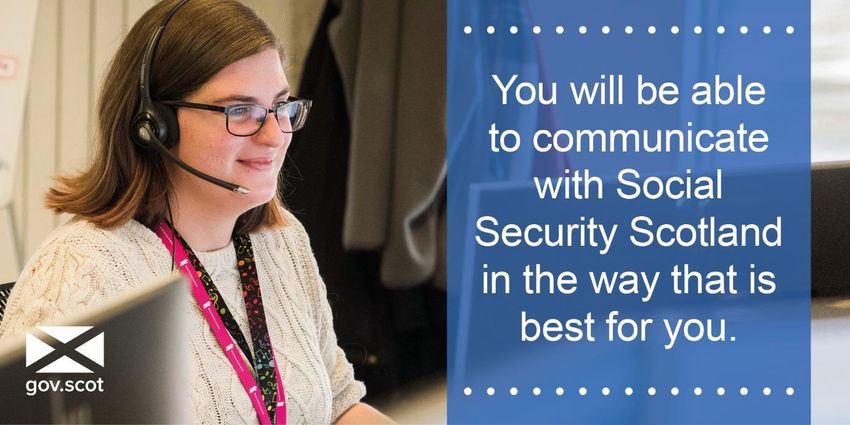
You will be able to communicate with Social Security Scotland in the
way that is best for you.
Tweet 5.
Once fully operational, you will be able to apply for Social Security
Scotland benefits online, by phone, post or in person.
33Tweet 6.
The Scottish Government will not means test disability assistance and if
you are employed this will have no impact on your entitlement.
Tweet 7.
Social Security Scotland will take into consideration how your condition
affects you and your circumstances.
34Tweet 8.
The Scottish Government is committed to reducing the number of
individuals required to attend a face to face assessment.
Tweet 9.
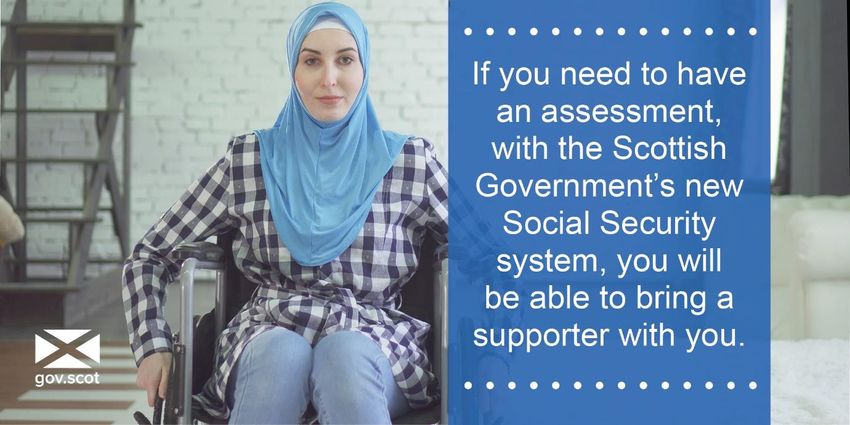
If you do need to have a face to face assessment, you will be able to
bring a supporter with you, or have access to independent advocacy if
you have a disability that means that you would find it difficult to engage
fully in the assessment.
35Tweet 10.
In the new Scottish social security system, if a face to face assessment
is required, it will be audio recorded as standard and individuals will
routinely be provided with a copy of the report written by the assessor
without having to request it.
Tweet 11.
The Scottish Government social security system will make awards that
are person-centred. Awards will be made on a rolling basis, which
means that awards will not be stopped when a review is underway.
36Tweet 12.
The Scottish Government will improve provision for people with a
terminal illness. There will be no requirement to undergo further
assessment, awards will be calculated from the date of application and
entitlement to the highest rate of assistance that a person is eligible for.
37FREQUENTLY ASKED QUESTIONS
What benefits have the Scottish Government delivered so far?
• Since 4 October 2017, we have been giving people in Scotland the
choice to receive their Universal Credit award either monthly or
twice monthly and to have the housing costs in their Universal
Credit award paid directly to their landlord in both the privately and
socially rented sectors. These are known as the Universal Credit
Scottish choices. By the end of February 2019, 133,480 people
making new Universal Credit full service claims had been offered
the choices. Around 63,360 people (almost 50 per cent) took up
the offer of one or both of the choices.
• In 2018 the Scottish Government opened Social Security Scotland
to deliver devolved benefits. It began by delivering the Carer’s
Allowance Supplement which brings Carers Allowance to the same
level as Jobseeker’s Allowance – an increase of 13% and
investment of £33 million in 2018/19 and £37 million in 2019/20.
• The Scottish Government then introduced the new Best Start
Grant Pregnancy and Baby Payment for low income parents and
carers, offering £600 on the birth of their first child, £300 for any
subsequent children and an additional £300 for a multiple birth.
• Best Start Grant Early Learning Payment is now available – a new
£250 payment that will be made to low income families around the
time a child can start nursery.
• Best Start Grant School Age Payment is now available – a new
£250 payment that will be made to low income families around the
time a child can start school.
What benefits are you delivering in 2019?
• Funeral Support Payment, starting in the summer – replacing the
UK Government’s Funeral Expenses Payment and providing
eligible low income families with a contribution towards the cost of
a funeral with improvements that widen eligibility by around 40%.
• Young Carer Grant, starting in autumn 2019 – the grant will be
awarded to young carers aged 16 to 18 who do at least 16 hours
of caring a week, but don’t qualify for Carer’s Allowance.
38• Replacement of the UK Government’s Healthy Start Vouchers
scheme. Paper vouchers will be replaced by a Payment Card
giving eligible low income families more choice and flexibility to buy
healthy food.
• The Scottish Government recently consulted on its new Job Grant,
to provide support for young people moving back into employment.
The consultation closed on 9 April 2019.
What benefits will be delivered from 2020 onwards?
• From April 2020 the Scottish Government take full responsibility for
the remaining devolved benefits, which means benefits will start to
be fully funded by the Scottish Government.
• This means that both the UK and Scottish Governments will, for
the first time, share clients and people will get payments from
DWP and Social Security Scotland. Those payments need to
interact with one another, so both agencies systems need to work
together seamlessly, to ensure people get the right money at the
right time.
• Following the benefit transfer in April 2020, the Scottish
Government will then start to roll out new claims for devolved
benefits starting with disability benefits, then move to carers
assistance and other devolved benefits.
• Following that, the case transfer of clients from the DWP to Social
Security Scotland will take place.
• By early 2022 the Scottish Government will be delivering new
claims for all Disability and Carer’s Assistance, and supporting
families with their winter fuel bills.
• By the end of 2022 the Scottish Government will be delivering the
Scottish Child Payment to low income families for all eligible
children aged under 16.
Factsheets on each of the benefits is available at pages 8 to 23 and the
timetable for the delivery of new claims for devolved assistance is on
page 6.
39How will cases be transferred from the UK Government to Social
Security Scotland?
• Over half a million cases will be transferred from the DWP to
Social Security Scotland. This equates to approximately 10% of
the population of Scotland.
• The Scottish Government will do this in a way which causes
minimal stress, and keep people updated through the transfer.
At the point of transfer the Scottish Government will not require
anyone to make a new claim; payments will be protected; and
people will not be reassessed.
• The Scottish Government will start this transfer next year (2020).
If the DWP is able to match the Scottish Government’s pace, the
majority of cases will be transferred by 2024, and completed by
2025.
How did the Scottish Government choose what to deliver first?
• The Scottish Government asked their Experience Panels - people
with lived experience of the current benefits system – what they
thought.
• The Scottish Government is aiming to strike a balance between
moving at pace and ensuring that it takes over the devolved
benefits safely, with minimal disruption to people who rely on them.
Who decides policy on these benefits?
• As of 1 April 2020 the Scottish Government will have policy and
payment responsibility for all the remaining devolved benefits.
• From next year (2020) when the Scottish Government takes on
responsibility for these benefits, the Scottish Government will
progressively take over administering them, while taking the time
to ensure that it safeguards people’s regular payments.
40• The Scottish Government will work with the DWP to develop
agency agreements to partially administer the devolving benefits
until Social Security Scotland is delivering them in full. Agency
agreements are necessary to ensure there are no gaps in service
for people who rely on these benefits as they are transferred.
What will happen to a person’s current claim with the DWP?
• The Scottish Government will start transferring people’s existing
claims from next year (2020). If a person has an existing award
with DWP for one of the devolved benefits then they don’t need to
do anything.
• They will not need to make a new claim in order to move onto the
Scottish benefits, and he/she won’t be reassessed at the point
when the case transfers.
• The Scottish Government will work with the DWP to arrange for
the transfer to happen automatically, and the Scottish Government
will keep people informed of what will happen and when – before
and during the process.
41© Crown copyright 2019
This publication is licensed under the terms of the Open Government Licence v3.0 except
where otherwise stated. To view this licence, visit nationalarchives.gov.uk/doc/open-
government-licence/version/3 or write to the Information Policy Team, The National
Archives, Kew, London TW9 4DU, or email: psi@nationalarchives.gsi.gov.uk
Where we have identified any third party copyright information you will need
to obtain permission from the copyright holders concerned.
This publication is available at www.gov.scot
Any enquiries regarding this publication should be sent to us at
The Scottish Government
St Andrew’s House
Edinburgh
EH1 3DG
ISBN: 978-1-83960-016-6 (web only)
Published by The Scottish Government, July 2019
Produced for The Scottish Government by APS Group Scotland, 21 Tennant Street, Edinburgh EH6 5NA
PPDAS608150 (07/19)
w w w . g o v . s c o tYou can also read


