ROOSEVELT REVIEW - Roosevelt University Blogs
←
→
Page content transcription
If your browser does not render page correctly, please read the page content below

ROOSEVELT
REVIEW
MAKING A DIFFERENCE
                                                                          in the lives that follow

      “ ,JHWDORWRXWRIP\LQYROYHPHQWZLWKWKHVFKRRO
         ,JHWWKHVDWLVIDFWLRQRIKHOSLQJDQLQVWLWXWLRQWKDW
         SOD\V DQ LPSRUWDQW UROH ORFDOO\ DQG QDWLRQDOO\
         ZLWK \RXQJ SHRSOH GHYHORSLQJ WKHLU WDOHQWV LQ WKH
         SHUIRUPLQJDUWV,PLJKWQRWEHDPDMRUEHQHIDFWRU
         EXWWKHJLIWDQQXLW\LQFUHDVHVP\JLYLQJSRZHU
                                                                       ”

          Why wait? 5HWLUHPHQWLVDORQJZD\R÷IRU-RKQ:DVKEXUQ
          $\HDUROGSDUWQHULQWKH&KLFDJREDVHGODZÀUPRI*RXOG           -RKQEHQHÀWVIURPDWD[GHGXFWLRQULJKWQRZRQWKHSUHVHQW´JLIW
          5DWQHU-RKQ:DVKEXUQLVHQMR\LQJWKHSULPHRIOLIHDQGÀQGVLW       value” of his annuity agreement.
          is the right time of life to fund a charitable gift annuity that will       An amateur musician, John says, “I get a lot out of my
          pay him a retirement income down the line and, ultimately, add to       involvement with the school. I get the satisfaction of helping an
          WKH-RKQ$:DVKEXUQ(QGRZHG6FKRODUVKLS)XQGEHQHÀWLQJVWX-            institution that plays an important role, locally and nationally,
          dents in Roosevelt University’s Chicago College of Performing           with young people developing their talents in the performing arts.
          Arts (CCPA). John is chairman of the CCPA Board.                        I get the pleasure of the performances I attend, and the people I
               John explains his decision for a charitable gift annuity this      meet through them. And, I really enjoy working with the other
          way…“Investing in an annuity lets me make a larger commit-              members of the CCPA Board and Dean James Gandre.”
          PHQWWRWKHVFKRROWKDWGLGQ·WUHDOO\LQWHUIHUHZLWKP\FDVKÁRZ           “I’m not wealthy,” John says. “I might not be a major bene-
          and allowed a very nice tax deduction. I feel like I want to leave      factor, but the gift annuity increases my giving power.”
          something behind. Why wait until after I die to give the money              Why wait when there is so much you can accomplish and
          when I can enjoy doing it now?”                                         enjoy right now? For more information, or a personalized illustra-
               Because John is deferring payments until his scheduled retire-     tion of how a charitable gift annuity could work for you, contact
          ment in 2023, the annuity rate is 14.8 percent. Along with this         David Pattee, Roosevelt University’s director of planned giving,
          income for his retirement, a portion of which will be tax free,         312-341-6455; email, dpattee@roosevelt.edu.

          David E. Pattee
          Director of Planned Giving
          2IÀFHRI,QVWLWXWLRQDO$GYDQFHPHQW
          Roosevelt University
          430 S. Michigan Avenue, Room 827
          Chicago, IL 60605
          Phone: (312) 341-6455
          Fax: (312) 341-6490
          Toll-free: 1-888-RU ALUMS
          Email: dpattee@roosevelt.edu

ROOSEVELT REVIEW           FALL 2006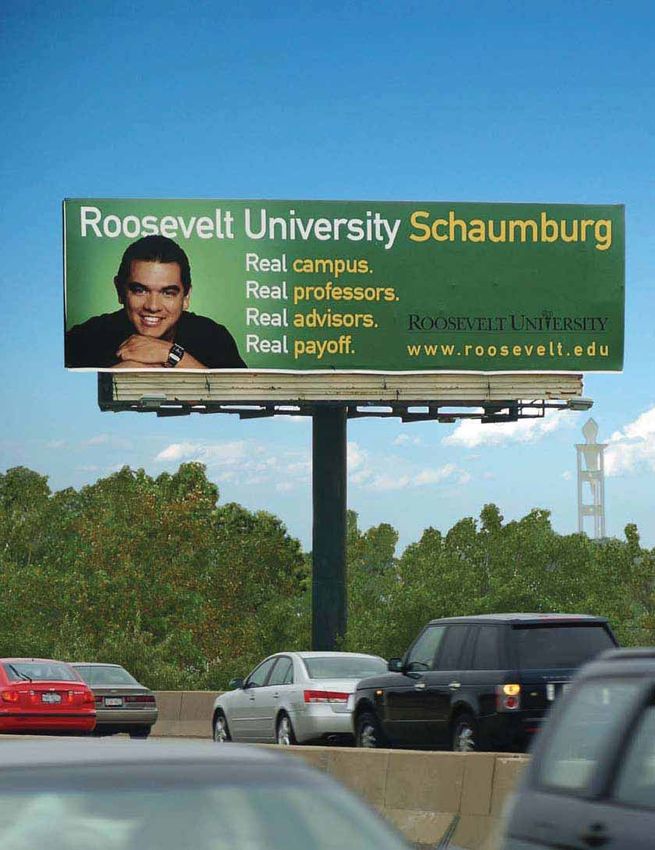
ROOSEVELT
a magazine for alumni and friends of roosevelt university
                                                                      REVIEW               FALL 2006

Spotlight
4        Rising to the Challenge                            32 Technology Emphasized                                    ROOSEVELT                 REVIEW
        6FKDXPEXUJ&DPSXVDGYDQFHVWRPHHW                      Throughout Roosevelt                                  Volume 11, Number 3
        WKHQHHGVRIDJURZLQJFRPPXQLW\                         BY LAURA JANOTA                                       Tom Karow: Editor
         BY LISA ENCARNACION                                                                                            Laura Janota: Associate Editor,
                                                            34 A Glimpse of Early Chicago                               Feature Writer

9        The BGS                                                 )DFXOW\DXWKRUVÊERRNUHPHPEHUV&KLFDJR              Lisa Encarnacion: Assistant Editor
                                                                                                                        Beatrice Francis: Alumni News
         A revolutionary degree in revolutionary times           ODQGPDUNKRWHOV                                       Editor
         BY TOM KAROW                                             BY LAURA JANOTA                                       Patrick Lytle: Art Director
                                                                                                                        Carissa Gilbertson of
12       Better Pay = Better Support                        37    Two Schools, Two Professors;                          Right Angle Studio: Design
                                                                                                                        John McKeith, Bruce Powell,
         How innovation districts can                             One Successful Partnership                            Lisa Encarnacion, Sabrina Elms:
        LPSURYHHGXFDWLRQ                                        5RRVHYHOWDQG&LW\&ROOHJHVRI&KLFDJRMRLQ          Photographers
         BY UNITED STATES SENATOR                                IRUFHVWRSURPRWHOHDGHUVKLSLQHGXFDWLRQ             Roosevelt Review is published
                                                                                                                        three times a year by Roosevelt
         BARACK OBAMA                                             BY LAURA JANOTA                                       University, 430 S. Michigan
                                                                                                                        Avenue, Chicago, Ill 60605.
14       Getting a Head Start                               40 Making the Mission Real                                  There is no subscription fee.

        &KLOGUHQEHQHÏWIURP5RRVHYHOWÊVHDUO\                 58MRLQV&KLFDJRDVKRVWDQGVSRQVRURI              www.roosevelt.edu

        FKLOGKRRGSURJUDP                                        Gay Games 2006                                        Editorial Board

                                                                  BY LISA ENCARNACION                                   J. Michael Durnil, Vice President for
         BY LAURA JANOTA                                                                                                Governmental Affairs and University
                                                                                                                        Outreach
    12                         26                           30                          40                              Laura Janota, Associate Director of
                                                                                                                        Public Relations
                                                                                                                        Thomas R. Karow, Senior Director
                                                                                                                        of Public Relations
                                                                                                                        Charles R. Middleton, President
                                                                                                                        Thomas J. Minar, Vice President for
                                                                                                                        Institutional Advancement
                                                                                                                        Pamela Trotman Reid, Executive
                                                                                                                        Vice President and Provost

17       Faculty Essay: Celebrating Life                    university news
                                                                                                                        ON THE COVER
         through the Story                                  Roosevelt University News .................... 22
         BY MARGARET POLICASTRO
19       Jeff Edwards: Changing Attitudes
                                                            alumni news
         through Grassroots Activism                        Chapter Events .................................... 44
         BY LAURA JANOTA                                    Where RU? .......................................... 45
25 Learning Culture in the Classroom                        In Memoriam ...................................... 47
        &KLQHVHSURIHVVRUVH[SORUHWKHFXOWXUHRI
         American education at Roosevelt University         institutional advancement
         BY LAURA JANOTA                                    Funding Highlights .............................. 48
                                                                                                                        Roosevelt University’s Albert A. Robin
26 Setting Her Words to Music                               Team Green......................................... 49      Campus in Schaumburg celebrates
                                                                                                                        its 10-year anniversary this year as it
        6WDF\*DUURSÊVFRPSRVLWLRQÇIn Eleanor’s
         WordsÈLPPRUWDOL]HV5RRVHYHOWÊVZULWLQJ           departments                                                 continues to evolve to meet the ever-
                                                                                                                        changing needs of the students and
         BY LAURA JANOTA                                    Editor’s Circle ....................................... 2   communities it serves. A marketing
                                                                                                                        campaign focused on strengthening
                                                            President’s Perspective .......................... 3        awareness of the campus featured
30 Students Team Up for a Stronger                                                                                      billboards on major area highways,
         Community                                          Board of Trustees ................................. 51      including I-290 East.

         BY LISA ENCARNACION                                Annual Giving Report ........................... 54
EDITOR’S CIRCLE

         A
                       short time ago I received a letter from a friend and former
                       colleague in which he noted that Roosevelt Review seems to
                       be placing an ever-increasing emphasis on alumni.
                           He’s correct, of course. Under the leadership of President
         Chuck Middleton, the University has been reaching out to alumni more
         than ever, and this magazine, which now comes out three times a year, is
         just one of the ways we are doing that.
             A few years ago, Roosevelt made “Strengthen the University’s life-
         long commitment to its alumni” one of its seven strategic goals, a clear
         indication of the importance we place on alumni involvement. As the
         President asked in a recent speech, “If the alumni don’t care about the
         University, why should anyone else?”
             Each year, Middleton and Tom Minar, vice president for institutional
         advancement, travel to cities throughout the country to tell alumni what’s
         happening at Roosevelt. Frequently they bring faculty members with
         them so that the professors can share the excitement of their work with
         our graduates. The University now has 12 alumni chapters, more than
         double the number we had in 2002.
             Alumni events are also gaining in popularity as evidenced by the 434
         people who attended the annual alumni boat cruise on Lake Michigan
         in August. Alumni Weekend also has seen a surge in interest sparked
         by new activities like medallions for golden alumni, an alumni authors’
         forum and discounted tickets to theatrical events.
             As an alumnus, you are likely to receive one or two phone calls each
         year from Roosevelt students who are happy to tell you about what’s hap-
         SHQLQJDWWKH8QLYHUVLW\LQDGGLWLRQWRDVNLQJIRU\RXUÀQDQFLDOVXSSRUW
         This is a great opportunity to visit with a current student and stay in touch
         with your alma mater.
             Finally, I’d like to take this opportunity to join my colleagues in insti-
         tutional advancement and thank those of you who have made a contribu-
         WLRQWRWKH8QLYHUVLW\GXULQJWKHSDVWÀVFDO\HDU,QWKLVLVVXHRIRoosevelt
         Review we list the names of all our contributors, the vast majority of
         whom are alumni. Thanks to your support, Roosevelt is able to provide
         scholarships for deserving students and enhance the academic quality of
         our programs.
             Please stay involved. Write me at tkarow@roosevelt.edu with news
         about your life or comments about this issue of Roosevelt Review.

         Sincerely,

         Tom Karow
         Editor

                                                                                                 :HZHOFRPH\RXUOHWWHUV3OHDVHVHQGWKHPWR
                                                                                                 Editor, Roosevelt Review
                                                                                                 Roosevelt University
                                                                                                 430 S. Michigan Avenue
                                                                                                 Chicago, IL 60605
         Roosevelt University is reaching out to alumni of all ages by presenting a variety of
         events, including, from top, a day at Arlington Park Racecourse, Alumni Weekend         Letters may be shortened for space consideration.
         activities and a boat cruise on Lake Michigan.

2   ROOSEVELT REVIEW             FALL 2006
PRESIDENT’S PERSPECTIVE

                               6FKDXPEXUJ&DPSXV(YROYLQJZLWKWKH6XEXUEV
                               BY PRESIDENT CHUCK MIDDLETON
                                 Thirty miles isn’t really that far, but         In order to build upon that foundation, the Board of Trustees
                                 ZKHQ\RXDUHVWXFNLQWUDIÀFRQWKH       focused on the future of the Schaumburg Campus at its annual
                                 Kennedy “Expressway” traveling             September retreat. Strategically, Roosevelt must more fully engage
                                 between Roosevelt’s two campuses           the suburban communities in ways that are responsive to their
                                 you sometimes wonder if the odom-          dynamic, changing demographic and economic circumstances. We
                                 eter reading is wrong.                     must listen to the political, business and educational leaders and
    It isn’t, of course, but it is increasingly apparent that despite       then create or expand programs that will provide the appropriate
close proximity the educational needs of the suburban communi-              educated workforce to help enable future economic and commu-
ties are at some level different from those of Chicago.                     nity development in the region to be successful.
    Ten years ago when we occupied the new campus building                       This endeavor is entirely consistent with the University’s mis-
in Schaumburg, the University had enjoyed a period of sustained             sion and history. For instance, the Institute for Metropolitan Affairs
HQUROOPHQWJURZWKWKDWUHÁHFWHGWKHH[SDQVLRQRIHGXFDWLRQDO               at Roosevelt a year or so ago published a study that demonstrated
demand by adult, part-time students in the northwest suburbs.               the popularity of these communities among the immigrants who
,QWKHÀUVWKDOIRIWKHHQVXLQJGHFDGH5RRVHYHOWFRQWLQXHGWR              continue to come to the Chicago area from all parts of the globe.
expand both in numbers of students and in the breadth of pro-               These new and prospective Americans are among our historic stu-
gram offerings.                                                             dent base. We will reach out to them as we have done in every
    Then came 2001, with the tragedies in New York, Washington,             decade since our founding.
'&DQGWKDWÀHOGLQ6KDQNVYLOOH3DDORQJZLWKWKHSUHFLSLWRXV             My own conversations with business and political leaders have
decline in the stock market. Overnight, the world changed.                  DOVRFRQÀUPHGQHZSURJUDPDUHDVIRUWKHFDPSXV$VDQH[DP-
    As economic conditions in the suburban communities were                 ple, the need for more and better educated nurses is both a national
transformed, it is hardly surprising that in the last few years             and a local imperative. In response, Provost and Executive Vice
enrollment levels on our Schaumburg Campus have been slowly                 President Pamela Trotman Reid has authorized the recruitment of
but steadily eroding. Some of that was due to the downsizing of             a director for a new nursing program to be offered initially only
corporate support for employee tuition reimbursement.                       at Schaumburg. Our goal is to enable experienced serving nurs-
    Some of the decline, especially in the last two years, was due          es to complete a bachelor’s degree. This will help them to qualify
to our success in graduating larger numbers of students than at any         for leadership positions at work and it will enhance the quality of
time in the past, both overall and especially from the Schaumburg           health care in the area.
Campus. I see this as the silver lining of a gray cloud.                         We are exploring partnerships with local health care providers
    We have been working diligently to adjust to these trends               as well as community colleges who train nurses in basic skills at the
DQGWRÀQGZD\VWRFRXQWHUWKHP7KDQNVWRWKHKDUGDQGGHG-                associate of arts degree level to identify cohorts of students for this
icated work of our faculty and staff, however, this fall overall            program to begin in the fall of 2007.
Schaumburg enrollments leveled off.                                              One strength of Roosevelt University lies in its historic mis-
    0RUHVLJQLÀFDQWO\WKHQXPEHURIQHZVWXGHQWVLQFUHDVHGIRU            sion of providing high quality degree programs for underrepresent-
WKHÀUVW WLPH LQ ÀYH \HDUV7KLVLVJRRGQHZVWKRXJKLWLV WRR       ed communities. It is clear that while there will continue to be many
early to tell if it is the beginning of a new trend. We certainly are       SURJUDPVWKDWFDQKHOSXVIXOÀOOWKDWPLVVLRQRQERWKFDPSXVHVZH
working hard to make it so.                                                 also know that the two cannot be identical in every respect.
    As we surveyed the landscape of the suburban communities                     Over the next few years, therefore, we will be exploring ways
served by our Schaumburg Campus many features emerged. It                   to ensure that each campus is successful in its own right, and where
was gratifying, for instance, to discover that Roosevelt continues          LWLVDSSURSULDWHGHÀQHVVXFFHVVRQLWVRZQWHUPV,Q6FKDXPEXUJ
to be the largest single four-year institution in the area despite the      this means we will need to encourage the development of programs
DJJUHVVLYHDSSHDUDQFHERWKRIIRUSURÀWXQLYHUVLWLHVDQGVHOHFWDQG        that are responsive to local needs whether or not they would make
popular programs offered by other more traditional institutions.            sense downtown. In this way Roosevelt will be an effective institu-
    We, and only we, offer a wide array of programs at both the             tional citizen of these dynamic and evolving communities, and we
bachelor’s and master’s levels. We alone see our future success             will remain the top provider of baccalaureate and master’s degrees
overall as tied to the successes of these communities. We are com-          in the region.
mitted to ensuring their success through our very presence there.                7KLUW\ PLOHV PD\ QRW EH IDU EXW LW·V VXIÀFLHQW WR SUHVHQW
    We certainly have the strong foundation and history to war-             new opportunities for success. I’m sure that President Edward J.
rant this vision. There is good and useful work to be done here—            Sparling and others in 1945 would have seized the moment had
Roosevelt’s kind of work.                                                   they been presented with it. And so shall we.

                                                                                                                                                         3
Rising
    WRWKHChallenge

4   ROOSEVELT REVIEW   FALL 2006
SCHAUMBURG CAMPUS ADVANCES TO MEET
THE NEEDS OF A GROWING COMMUNITY
                                                         BY LISA ENCARNACION
On Aug. 17, 1996, to much fanfare, Roosevelt University opened             bished, 90,000-square-foot former high school
the largest, most comprehensive university facility in the northwest       opened its doors to Roosevelt students in August
suburbs, the Albert A. Robin Campus in Schaumburg.                         7KHQH[WPRQWKWKHFDPSXVZDVRIÀFLDOO\
     Ten years later that campus remains the largest full-service          named the Albert A. Robin Campus, in honor of
university facility in the area. With more than 2,600 students and         the Chicago real estate developer and philanthro-
a complete array of undergraduate and graduate programs, the               pist who had gifted the University $1 million for
Schaumburg Campus has become a focal point for higher educa-               the facility.
tion and continued learning.                                                    Roosevelt University’s stay at Forest View
     During the past decade, the campus has met the changing               was a complete success. Under the leadership
demographics of the northwest suburbs by adding a number of                of David Hamilton, currently professor of public
amenities, like state-of-the-art computer classrooms, student activ-       administration, the number of academic programs
ities facilities and a childcare center. And, it is currently developing   increased yearly as enrollments grew. To set it
new strategies to respond to the evolving social, cultural and educa-      apart from the competition, Roosevelt offered
tional needs of suburban residents.                                        DFDGHPLF DGYLVLQJ ÀQDQFLDO DLG DVVLVWDQFH DQG
     “This is a campus that is deeply rooted in the community,” said       career services on site. A student government was
Antonia Potenza, vice president and dean of the Albert A. Robin            established, along with various clubs and student
Campus. “Our current challenge is to look at our programs and              activities. An electronic library was installed, with
make sure they still meet the needs of individuals and businesses.         access to computerized databases and all holdings
For example, there is a shortage of nurses and bilingual teachers so       of the Chicago Campus library.
we are seriously exploring the possibility of offering a nursing pro-           The “Robin Campus,” as it came to be known,
JUDPDQGDELOLQJXDOHGXFDWLRQFHUWLÀFDWHµ                                also welcomed members of the surrounding
     Potenza expects the number of classes taught on weekends at           communities for cultural programs and academ-
the Schaumburg Campus will increase. “This fall we launched a              ic lectures. An advisory board was established,
program called Saturdays in Schaumburg and it has been very suc-           consisting of business, political, education and
cessful. I want to continue looking at alternative delivery systems        community leaders, that offered the growing cam-
IRU VWXGHQWV ZKR KDYH GLIÀFXOW\ DWWHQGLQJ FODVVHV EHFDXVH WKH\    pus insight into the educational needs of the area residents.
work full time.”                                                                After enrollment at Forest View grew to more than 2,700 stu-
     Offering classes at times and locations convenient to students        GHQWV8QLYHUVLW\RIÀFLDOVUHDOL]HGLWZDVDJDLQWLPHWRPRYHWRD
is nothing new to Roosevelt University. In fact, Roosevelt has been        larger facility, but this time they sought out space that would be
doing that since the mid 1950s when it taught management classes           permanent, with room to grow, and owned by the University.
at the Fifth Army Headquarters on South Shore Drive in Chicago.                 Former Roosevelt University President Theodore Gross led the
     In 1976, Roosevelt responded to the demand for upper-level            FKDUJHWRÀQGWKLVSHUPDQHQWORFDWLRQZLWKWKHLQWHQWWKDWWKHFDP-
college programs in the growing northwest suburban area by offer-          pus would be full-service and conveniently located. “Roosevelt
ing classes at Rolling Meadows High School, in addition to classes         FRXOGEHFRPH,WKRXJKWWKHÀUVWPHWURSROLWDQXQLYHUVLW\LQ*UHDWHU
it was already teaching in Glenview and Waukegan.                          Chicago and would develop the only comprehensive university in
     In what was considered a bold move at the time, in 1978               the northwest suburbs,” he said.
Roosevelt leased from Arlington Heights School District 25 the                  In 1991 Frank Cassell from the University of Wisconsin-
former North School, an elementary school on Arlington Heights             0LOZDXNHHEHFDPHWKHH[HFXWLYHRIÀFHURIWKH5RELQ&DPSXVDQG
5RDG7KDWÀUVW\HDUVWXGHQWVHQUROOHG                             he joined Gross in the search for a new location.
     It was obvious that Roosevelt had found a market of eager stu-             Internally, opinions varied about the possibility of Roosevelt pur-
dents in the northwest suburbs, and before long the University real-       chasing a permanent campus in the northwest suburbs. “We (the fac-
ized it needed a larger facility to accommodate student enrollment         ulty) were questioning whether it would happen,” said Potenza, who
growth.                                                                    at the time was a faculty member in the College of Education. “We
     In 1985, High School District 214 closed Forest View High             weren’t sure the University had the resources to pull it off. However,
School in Arlington Heights, and Roosevelt signed a long-term              those of us who taught at both campuses certainly understood and
lease for the building. With more than 40 classrooms, the refur-           valued the University’s presence in the northwest suburbs.”
                                                                                                                         continued on next page

                                                                                                                                                      5
It took hard work and months of negotiations, but Roosevelt
                                                                                          was able to raise and borrow $21.5 million to purchase the building
                                                                                          and completely remodel it to meet the University’s needs.
                                                                                               “The establishment of the Albert A. Robin Campus in
                                                                                          Schaumburg, as I often repeated, was the most important event
                                                                                          in the history of the University since Roosevelt moved into the
                                                                                          Auditorium Building in 1947,” said Gross.
                                                                                               Al Larson, the village president of Schaumburg since 1987,
                                                                                          welcomed Roosevelt University into the community with open
                                                                                          arms. “I was thrilled when I was approached by Roosevelt about
                                                                                          the possibility of locating the suburban campus here,” he said.
                                                                                          “What a great addition to the community!”
                                                                                               The new Schaumburg Campus opened its doors on August 17,
                                                                                          ZLWKDQRIÀFLDOULEERQFXWWLQJIHDWXULQJ8QLYHUVLW\OHDGHUV
                                                                                          and community dignitaries. Celebratory events included an open
                                                                                          air dinner in the campus’ circular driveway.
                                                                                               “I’ll never forget that evening and the dinner,” recalled Cassell.
                                                                                          “As Ted (Gross) started to speak, the lights of the campus came on.
                                                                                          There he was talking, lit by theatre lights, very grandiose.”
                                                                                                “The decision to move to Schaumburg made sense,” said
                                                                                          Cassell. “As a campus, we did not have to move too far—and nei-
                                                                                          ther did our students. It also gave us the opportunity to stake out our
                                                                                          WHUULWRU\DQGHVWDEOLVKRXUVHOYHVÀUVWµ
                                                                                               One of the many things Cassell did during his eight years as
                                                                                          head of the campus was to strengthen the Community Advisory
                                                                                          Board (“a remarkable group of leaders”) and forge a strong rela-
                                                                                          tionship with board member Constantine “Dinos” Iordanou, CEO
                                                                                          of Zurich US. This led to a collaboration between Roosevelt and
         A large white torch, the symbol of Roosevelt University, is hoisted into place
                                                                                          Zurich to build and share the Early Childhood Education Center on
         in front of the Schaumburg Campus in 1996. Made possible by a gift from life     the campus’ northeast corner.
         trustee Sidney Port, the torch can be seen for miles.                                 Cassell also worked with Elgin Community College to pio-
                                                                                          neer a dual admission agreement between the institutions. A stu-
         continued from previous page
                                                                                          dent could initially enroll at ECC, complete the program there,
             “When we decided to buy the Schaumburg Campus and devel-                     then transfer seamlessly to Roosevelt and earn a bachelor’s
         op it, it was a gamble for Roosevelt,” commented Cassell. “But we                degree. This program has been expanded to include other area
         were miles ahead of all the other universities.”                                 community colleges.
             The search started with the building Roosevelt was current-                       In 1997, Cassell left Roosevelt to become president of the
         ly renting from High School District 214. Gross approached the                   University of Pittsburgh-Greensburg. He will retire this spring.
         superintendent and later the school board with the idea to purchase                   John Joseph, the former executive assistant to Gross, vice pres-
         the building. Despite support from the superintendent and the may-               ident for development and vice president for administration at
         or of Arlington Heights, Arlene Mulder, the board quashed the                    Roosevelt, succeeded Cassell in 1997. He continued to strength-
         offer, saying they had other plans for the facility.                             en the campus’ relationships in the community and spearheaded
             Next, the team of Gross and Cassell, along with John Allerson,               the efforts to attract full-time students during the day and create
         YLFHSUHVLGHQWRIEXVLQHVVDQGÀQDQFHHPEDUNHGRQDMRXUQH\RI                 distance learning and online programs. He was also the driving
         exploration in the northwest suburbs. “We knew the campus had to                 force behind the creation of the Master’s Degree in Training and
         be extremely well located and accessible—since everyone drove,                   Development, the Institute for Continued Learning and the Future
         the highway system dictated location,” shared Gross, “and all                    Community Leaders Scholars Program.
         routes, as we studied our maps and drove around the region, con-                      Joseph was named president of the University of Maine at
         verged on Schaumburg.”                                                           Machias in 2000. He passed away suddenly in May 2003.
             Cassell recalled “test driving” in various directions. “We had                    The former associate vice president of student services at
         staff members get in their cars at different times of the day to see             Roosevelt, J. Michael Durnil was promoted to the position of cam-
         how long it would take to get to the locations,” he laughed.                     SXVH[HFXWLYHRIÀFHULQ2FWREHU5HPHPEHULQJKRZKHZDV
             The question of location was answered when the 225,000                       offered the position, Durnil recalled, “I’ll never forget being called
         square foot regional headquarters of Unocal, located across from                 LQWR7HG*URVV·RIÀFHDQGKLPVD\LQJ¶6LWGRZQ\RXQJPDQ,ZDQW
         :RRGÀHOG0DOOEHFDPHDYDLODEOH                                                 to share something with you that will change your life.’ And it did.”

6   ROOSEVELT REVIEW             FALL 2006
“ The bottom line is meeting the needs of
SGDBNLLTMHSX 6DLTRSADDWHAKD LNUD
PTHBJKX@MCL@WHLHYDNMNTQONRHSHNM@RSGD
NMKXETKKRDQUHBD BNLOQDGDMRHUDTMHUDQRHSX
B@LOTRHMSGDMNQSGVDRSRTATQAR
$QWRQLD3RWHQ]DYLFHSUHVLGHQWDQGGHDQ
RIWKH6FKDXPEXUJ&DPSXs
“There is a different feel to this position now,” said Potenza.
“There is more of a focus on academic programming and student
life.”
The position Potenza assumed came with challenges.
Enrollment had been declining, due to several factors, includ-
Under the leadership of Antonia Potenza, vice president and dean of the ing corporations reducing or eliminating tuition reimbursement
Albert A. Robin Campus, Roosevelt is meeting the changing needs of the
community by launching new academic programs in Schaumburg. for their employees, few jobs for computer science graduates and
increased competition.
´, ZDV FOHDUO\ DEOH WR UHDS WKH EHQHÀWV RI WKH VXFFHVVHV RI Recognizing the urgency and importance of the Schaumburg
Frank and John,” Durnil said. He continued and expanded their Campus situation, in the spring of 2006, James Mitchell, chair of
efforts for community outreach as an active member of the the University’s Board of Trustees, appointed a committee of trust-
boards of directors for the Schaumburg Business Development ees and Community Advisory Board members to discuss opportuni-
Commission, Northwest 2020, the Northwest Suburban Alliance ties and issues for the campus. In the ensuing discussions, the group
IRU &RPPHUFH DQG ,QGXVWU\ 16$&, WKH *UHDWHU :RRGÀHOG determined that the suburban communities served by Roosevelt
Convention and Visitors Bureau and the Arlington Heights Arts ZRXOGGHÀQLWHO\VXSSRUWDSODQIRUWKHFDPSXVHVWDEOLVKLQJVWURQJHU
Commission. Durnil also served on the inaugural committee that relationships that were focused on needs of the community.
planned the construction of the recently completed Schaumburg continued on next page
Convention Center.
In 2001, Durnil developed a campus mas-
ter plan for Schaumburg, a process in which he
actively engaged the campus community. This
SODQOHGWRÀYHSKDVHVRIEXLOGRXWIRUWKHFDP-
pus, which included the John and Christine Licht/
Duraco Products Student Center, several addi-
tional state-of-the-art classrooms and the Chicago
Tribune Convergence Journalism Lab.
Durnil is currently the vice president for
governmental affairs and university outreach at
Roosevelt.
His former assistant, Kim Gibson-Harman,
ZDV QDPHG DFWLQJ FDPSXV H[HFXWLYH RIÀFHU LQ
July 2003. During her one-year tenure, Gibson-
Harman continued the build-out of the campus as
detailed in the Campus Master Plan, constructing
FODVVURRPVDQGIDFXOW\RIÀFHVRQWKHVHFRQGÁRRU
of the student center.
Potenza was named the vice president and
dean of the Schaumburg Campus in July 2004 and
continues to lead the campus today. She began her
The Albert A. Robin Campus officially opened on Aug. 17, 1996. Shown cutting the ribbon are (from left) John
career at Roosevelt over 20 years ago as an early Allerson, Stuart Fagan, Antonia Potenza, Rolf Weil, David Ferguson, Peter Smith, Arlene Mulder, Al Larson, Terry
childhood education faculty member. Parke, Ted Gross and Albert Robin.
7
continued from previous page
             The conclusions were crafted into a resolution that was
         DSSURYHGE\WKHERDUGRQ6HSW7KHUHVROXWLRQUHDIÀUPV
         Roosevelt’s commitment to the Schaumburg Campus and directs
         President Chuck Middleton to develop a new strategy that focus-
         es on enrollment growth and expands and enhances the role of the
         campus as a community partner.
         The resolution includes three major components:
         • Differentiated academic strategies both between the two
            Roosevelt campuses and between Roosevelt and other four-
            year institutions in the suburbs
         • A managerial structure with greater local decision making
            authority
         • An assessment plan that allows measurement of the success of
            the endeavors.
              “The immediate challenge is how to do this,” Potenza said.
         “We must develop the kinds of programs that meet the communi-
         ty’s interests and needs.” One focus will be on the health sciences
                                                                                Since the Schaumburg Campus opened, much of the land near the cam-
         which will be strengthened by partnerships with local hospitals and    pus has been developed. IKEA, a large home furnishings retailer, is located
         healthcare systems.                                                    across the street from the campus on McConnor Parkway.
             There are also plans down the line to launch a school of pharma-
         cy at the Schaumburg Campus and possibly build a residence hall.           The suburban skyline that surrounds Roosevelt University’s
             “We will continue to serve interests related to the downtown       Schaumburg Campus has changed, along with the needs of those
         campus, but offer them in a slightly different way,” said Potenza.     seeking higher educational opportunities.
             She added, based on community needs, the Schaumburg                    One of the world’s largest distributors of furniture, IKEA, is locat-
         Campus would look at possibly offering programs in the visual arts     ed directly across McConnor Parkway from the campus. The world
         and languages. Considering that the campus is located in one of the    headquarters for Motorola and Zurich are a few minutes away.
         most dynamic hubs of business and industry in the nation, it would         “The northwest suburban area continues to grow,” explained
         make sense to offer programs in retail management, she added.          Durnil. “The fact that so many schools have chosen to settle in the
             “The bottom line is meeting the needs of the community,” stat-     area demonstrates how visionary Roosevelt University was as an
         HG 3RWHQ]D ´:H PXVW EH ÁH[LEOH PRYH TXLFNO\ DQG PD[LPL]H   institution to establish a permanent campus there.
         on our position as the only full service, comprehensive university         “Our goal has always been to be the university of the north-
         campus in the northwest suburbs.”                                      west suburbs.”

         Students study in the McCormick-Tribune Foundation Library at the      Village of Schaumburg trustee Hank Curcio presents President Chuck
         Schaumburg Campus.                                                     Middleton with a proclamation saluting Roosevelt University’s 10 years in
                                                                                Schaumburg during a celebration at the campus on Sept. 6.

8   ROOSEVELT REVIEW          FALL 2006
THE BGS
BY TOM KAROW A revolutionary degree created in revolutionary times
In 1966, at the same time students at Roosevelt University were as well as access to graduate programs at prestigious universities
protesting the Vietnam War, faculty and administrators were across the country.
debating the merits of a new academic degree designed especial- The premise behind BGS is that adults (ages 24 and old-
ly for adults. er) learn differently from traditional 18-year-old students, said
Forty years later, the protests of the 1960s are far behind us, Douglas Knerr, associate professor of social sciences and inter-
but no one disputes the fact that Roosevelt University has been im dean of the Evelyn T. Stone University College, the academic
profoundly affected by those discussions as they produced one home of the program. “Adults have a completely different out-
of the University’s most successful and innovative programs, look on life and bring different skills and abilities to the class-
the Bachelor of General Studies (BGS) degree. Today, the BGS room. They are working, they have families, they’re more mature,
is awarded to liberal arts majors in the adult degree program, and some have had negative experiences with education before.”
while professionally-oriented majors, who take the same gener- Knerr said that when he joined University College in 1998,
al education seminars, earn the Bachelor of Professional Studies he was immediately impressed by the passion long-time profes-
(BPS) degree. sors like Gary Wolfe, Daniel Headrick and Jack Metzgar had for
For students and the University alike, the BGS has been a the BGS program and their students. “I wanted to be a part of that
resounding achievement. More than 9,000 people have earned program,” he said. “They were doing adult education the way it
BGS degrees, and the BGS/BPS program constitutes Roosevelt’s should be done.”
largest single degree program. Alumni have parlayed their BGS The BGS was controversial in 1966 because the baccalaureate
diplomas into new jobs, pay increases and academic enrichment, GHJUHHLVDZDUGHGZKHQVWXGHQWVFRPSOHWHVSHFLÀFFRXUVHVQRWD
CTKSR G@UD @ BNLOKDSDKX CHÈDQDMS NTSKNNJ NM
KHED@MCAQHMFCHÈDQDMSRJHKKR@MC@AHKHSHDRSNSGD
BK@RRQNNL 3GDX@QDVNQJHMF SGDXG@UDE@LHKHDR
SGDXQDLNQDL@STQD @MCRNLDG@UDG@CMDF@SHUD
DWODQHDMBDRVHSGDCTB@SHNMADENQD
'RXJODV.QHUUDVVRFLDWHSURIHVVRURIVRFLDOVFLHQFHVDQG
LQWHULPGHDQRIWKH(YHO\Q76WRQH8QLYHUVLW\&ROOHJH
certain number of credit hours. As a result, students with years of
practical experience may only need to take 100 or fewer semester
hours to graduate, rather than the traditional 120.
´7KHLGHDRIÀQLVKLQJPRUHTXLFNO\ZKLOHEHLQJVXUURXQG-
ed by people closer to my age, was very appealing to me,” said
Laurie Cashman, (BGS, ’02; MS, ’06). “The faculty understood
that all of us had busy lives outside of school.”
According to a 1975 Ph.D. dissertation on the formation of
BGS by former dean James C. Hall, the time-shortened feature of
BGS owes its existence to Otto Wirth, Roosevelt’s dean of fac-
XOWLHVLQWKH
V:LUWKKHVDLGXQGRXEWHGO\ZDVLQÁXHQFHG
by his own university education in Germany “where emphasis
was placed on students accomplishing certain major requirements
Douglas Knerr, interim dean of the Evelyn T. Stone University College,
without regard to credits earned in classroom study or the amount
enjoys the challenge of working with adult students. of time spent at the institution.”
continued on next page
9continued from previous page
The other person who led the charge for adoption of BGS was become a widely accepted degree name in higher education, and
Professor Lucy Ann Marx, director of the Division of Continuing a Google search on the phrase yields more than 24,000 hits—
Education in the mid-1960s. At meetings to discuss the proposed though not all these programs offer the same advantages as
degree program, she deftly answered questions from skeptical Roosevelt’s program.
Roosevelt professors who feared the BGS would be a “cheaper 7KHÀUVWFODVVIRUDOO%*6%36VWXGHQWVLVDVL[FUHGLWFRXUVH
degree” and would diminish the esteem of the faculty and the called the pro-seminar in critical skills, which serves as a bridge
University. Instead, the degree program became a national mod- between the students’ prior education and university life at
el, and alumni surveys show that BGS/BPS graduates have suc- Roosevelt. Through regular interaction with their professors, stu-
ceeded in graduate school and in their careers at least as well as dents learn to develop or sharpen their analytical thinking, expos-
students with more traditional degrees. itory writing and research skills so they are prepared for the rigors
Since that time, dozens of universities have created programs of courses in their major area of study. Their pro-seminar profes-
similar to the BGS, a clear indication that Roosevelt’s program sor also advises them on the selection of a major and the choice
has become an effective and accepted way to educate adults. The of classes for the next semester.
University of Rhode Island, for example, uses the same course “I completed two years of college work and was happy to learn
titles and same course numbers as BGS. And the University of that I could earn my degree at Roosevelt,” said Kathy Dawson,
Virginia has a program called the Bachelor of Interdisciplinary (BPS, ’05), who received the Outstanding Senior Thesis award.
Studies which is organized much like BGS with liberal studies Now a paralegal with a real estate investment trust, Dawson said
seminars, a concentration, elective courses, a pro-seminar and she enjoyed learning with other adult students whom she found to
a capstone project. The term “Bachelor of General Studies” has be “very motivated.”
Adult students working on bachelor of general studies degrees are often very serious and motivated about classroom work.
10 ROOSEVELT REVIEW FALL 2006$SURIHVVRUÊVSHUVSHFWLYH
BY GARY WOLFE • professor of humanities and English and chair,
Bachelor of General Studies/Bachelor of Professional Studies Program
,ÀQLVKHGP\GRFWRUDWHLQ
DQGWKDW
fall I came to Roosevelt and started my
education.
The program that hired me, then only
ÀYH \HDUV ROG UHSUHVHQWHG UDGLFDO QHZ
thinking about how to teach adult college
students, and in some ways it’s still radical
today. The BGS program recognized what
adults knew as well as what they needed to
know, and that they learn in somewhat dif-
ferent ways from younger students. It also
recognized that it takes courage to return
to college as an older student, and stamina
to go to class night after night after a full
day of work or family obligations.
Those courageous and energetic students are what has kept me teaching in
this program for nearly 35 years, without once getting bored. Every class is
unique, because the backgrounds and ambitions of the students are unique. In
every class, I feel I’m learning as much from the students as they are learning
from me, and one of the things I’ve learned is that no two adult students go to
Gregory Buckley, associate professor in the Bachelor of General college for exactly the same reasons. Some want career advancement, some are
Studies Program and an expert on fossils found in Madagascar, teach-
es a BGS class at the Schaumburg Campus. en route to grad school, some are in a race with their own kids to get a degree
ÀUVWEXWZKDWWKH\GRKDYHLQFRPPRQLVWKLV
WKH\ZDQWFKRLFHV7KH\VHHWKH
degree as a door opening to all sorts of possibilities, and what they view as suc-
cess varies widely. Here are some examples:
BGS/BPS offers majors and programs of study in 23 • The brilliant student who attained some of the highest College Level
areas. Courses in the majors are taught by Roosevelt pro- Examination Program (CLEP) exam scores I’ve ever seen, but who after
fessors in the college of arts and sciences and the college graduating decided to move to Alaska to train sled dogs;
of business. BGS faculty teach the general education core 7KH &KLFDJR SROLFH RIÀFHU ZKR EHFDPH WKH ÀUVW %*6 JUDGXDWH WR
made up of the pro-seminar, a seminar in quantitative lit- enter Harvard Law School, and later became a practicing attorney;
eracy, three upper-division seminars in the natural sciences, • The owner of a well-known south side real estate agency who had last
social sciences, and humanities, and a capstone senior the- DWWHQGHGFROOHJHLQWKH
VEXWZKRZHQWRQWRÀQLVKD%*6DQGD
sis course. master’s degree in his 80s;
“So many students in the BGS program come with little • The ex-offender who began taking BGS courses in a downstate pris-
RUQRDFDGHPLFFRQÀGHQFHEHFDXVHVRPHRQHWROGWKHPWKH\ RQ DQG ZKR DIWHU ÀQLVKLQJ KLV GHJUHH EHFDPH D SRSXODU DQWLGUXJ
weren’t good enough,” said Knerr. “But they are successful speaker to school and youth groups and eventually set up his own
in every other metric of American life, jobs, family, commu- painting and decorating business
nity. The only thing they don’t have is a college diploma.”
There are literally hundreds of such stories, and thousands more that other BGS
Today many BGS/BPS students transfer to Roosevelt
faculty over the years could share as well.
from community colleges, and the program has established
And speaking of the faculty, that’s the other reason for choosing to devote
special transfer agreements with many of these community
an entire career to this program. Most degree programs for adults are taught
colleges, enabling students to maximize their transfer credits
entirely by part-time faculty, or moonlighting professors from other depart-
while still shortening their degree programs. “Regardless of
ments, but the decision was made early on that the BGS/BPS program would
their background, we want to teach them to think critically in
GHYHORSDIDFXOW\ZKRVDZLWDVWKHLUPLVVLRQWRÀQGWKHPRVWHIIHFWLYHZD\VWR
all aspects of life and to learn to love learning,” Knerr said.
teach general education seminars to adults, but who would also attain distinc-
WLRQLQWKHLURZQÀHOGV$WRXUIDFXOW\PHHWLQJV,·PQRWMXVWWDONLQJWRSHRSOHLQ
P\RZQÀHOG OLWHUDWXUH EXWWRZHOONQRZQKLVWRULDQVDQGVFLHQWLVWVDQGZULW-
ers who have published scores of books and articles, won awards, and in one
ARE YOU A BGS/BPS ALUM? case even showed up as a name on a display at the Field Museum. But it’s also a
We’d love to hear from you! Write to bgsalums@ IDFXOW\WKDWVKDUHVDYLVLRQDQGDPLVVLRQDQGLI\RXDVNHGWKHP\RX·GÀQGWKDW
roosevelt.edu with stories about your classes or they’re as proud of this program as I am, and just as committed to it. I know,
just tell us what you’re up to. because I have asked them. Some faculties are just faculties, but this faculty is
a team. Just like the students, they know what they’re here for.
11better PAY betterSUPPORT
HOW INNOVATION DISTRICTS CAN IMPROVE EDUCATION
BY UNITED STATES SENATOR BARACK OBAMA
!DENQDGDADB@LD@4MHSDC2S@SDRRDM@SNQHM
!@Q@BJ.A@L@V@R@LDLADQNESGD(KKHMNHR2S@SD
2DM@SDENQRDUDMXD@QRVGDQDGHRCHRSQHBSHMBKTCDC
1NNRDUDKS 4MHUDQRHSX 3GQNTFGNTS GHR ONKHSHB@K
B@QDDQ 2DM@SNQ .A@L@ G@R ADDM @ RTOONQSDQ NE
DCTB@SHNM@MCG@RVNQJDCBKNRDKXVHSG/QDRHCDMS
"GTBJ,HCCKDSNM@MCSGD.ÉBDNE&NUDQMLDMS@K
È@HQR 1NNRDUDKS 1DUHDV HR OKD@RDC SN QDOQHMS
VHSGSGDRDM@SNQRODQLHRRHNM SGDENKKNVHMF@QSHBKD
VGHBGOQDRDMSRGHRHMMNU@SHUDHCD@RENQHLOQNUHMF
BK@RRQNNLSD@BGHMF 3GD@QSHBKDQRS@OOD@QDCHM
the "NKKDFD!N@QC1DUHDV.
From the moment our children step into into a classroom, the
most important factor in determining their achievement is not the
color of their skin or where they come from; it’s not who their
parents are or how much money they have.
It’s who their teacher is, new evidence shows. It’s the mentor
ZKRZLOOEUDYHVRPHRIWKHPRVWGLIÀFXOWVFKRROVWKHPRVWFKDO-
lenged children, and accept the most meager compensation sim-
ply to give someone else the chance to succeed.
But while teachers make all the difference, in too many places
we’ve abandoned them. We send them into some of the most dif-
ÀFXOWVFKRROVLQWKHQDWLRQZLWKRXWPXFKWUDLQLQJDQGZLWKHYHQ
less pay. They’re asked to teach subjects they’re not trained for
without the support that would help them do it. And so it’s no
VXUSULVHWKDWZKHQWKHVHWHDFKHUVDUHÀQDOO\DOORZHGWRFKRRVH
their own school after a few years of experience, most will pick
wealthier, less challenging schools where the pay is higher.
Our children are the ones who suffer as a result. Right now,
six million middle and high school students are reading at levels
VLJQLÀFDQWO\EHORZWKHLUJUDGHOHYHO+DOIRIDOOWHHQDJHUVFDQ·W
understand basic fractions; half of all nine-year-olds can’t per-
form basic multiplication or division.
In a knowledge economy where the best jobs follow the
brightest minds anywhere around the globe, our 12th graders now
score lower on their math and science tests than almost any other
kids in the world. Meanwhile, if current trends continue over the
next few years, more than 90 percent of the world’s scientists and
engineers will be living in Asia.
12 ROOSEVELT REVIEW FALL 2006This kind of future is not only economically untenable for And to help them deal with those few disruptive students who
America, it’s morally unacceptable for our children—and we tend to slow down the rest of the class, we would expand innova-
have to change it. tive programs being used in states like Illinois that teach students
With the current education debate in Washington gridlocked about positive behavior.
between those who only want to pour money into public schools %H\RQGSROLFLHVWKDWKHOSWHDFKHUVVSHFLÀFDOO\ZHZRXOGDOVR
DQGWKRVHZKRRQO\ZDQWWRGLVPDQWOHWKHPWDNLQJWKHÀUVWVWHSV ask Innovation Districts to try reforms that create a more effective
toward real reform by focusing on outstanding educators who teaching environment. To give teachers more time with their stu-
will set high standards for our children is a great place to start. dents and more time to learn from each other, these districts would
We can’t change the country overnight, but by allowing some be asked to restructure their schedules and implement either longer
school districts to transform their approach to teaching, we can days or summer school.
learn what actually works for our kids and then replicate those To hold schools and teachers accountable for the results of all
policies throughout the nation. these reforms, we would provide Innovation Districts with power-
That’s why I’ve proposed what I call Innovation Districts. IXOGDWDDQGWHFKQRORJ\VRWKH\FDQÀQGRXWZKDWZRUNVDQGZKDW
School systems from around the country would apply and we doesn’t. Schools that raised student achievement would be given
would select the 20 with the best plans to put effective, supported bonuses. Schools that don’t improve would face closing by the dis-
teachers in all classrooms and increase achievement for all stu- tricts, which would replace them with new, smaller schools that can
dents. We would offer these districts substantial new resources to
do this, but in return, we’d ask them to try systemic new reforms.
Above all, we’d require results.
In Innovation Districts, we would ask for reforms in four
broad areas: teaching, most importantly, but also how teachers
use their time, what they teach, and what we can do to hold our
schools accountable for achievement.
We’d begin by working with these districts to strengthen their
teaching, and we would start with recruitment. Right now we
don’t have nearly enough effective teachers where we need them
most: in urban and rural schools, and in subject areas like math
and science. One of the main reasons for this, cited by most teach-
ers who leave the profession, is that no one gives them the neces-
sary training and preparation.
We need to change this by giving districts help in creating
new teacher academies that can recruit effective teachers for low-
performing, high-poverty schools. These academies would then
provide each teacher with an extensive training program before
they begin, including classroom observation and participation.
After we recruit great teachers, we need to pay them bet- Sen. Barack Obama (D-Ill.) is proposing improving the nation’s schools by implementing
ter. Right now, teaching is one of the only professions where no an experimental model called Innovation Districts in which a variety of teaching reforms
matter how well you perform at your job, you’re almost never would be introduced.
UHZDUGHG IRU VXFFHVV %XW ZLWK VL[ÀJXUH VDODULHV OXULQJ DZD\
some of our most talented college graduates from some of our replicate some of the successful reforms taking place. Entire dis-
neediest schools, this needs to change. That’s why teachers in tricts that do not improve would be removed from the program.
these Innovation Districts who are successful in improving stu- 7KHVHUHIRUPVZRXOGWDNHDQLPSRUWDQWÀUVWVWHSWRZDUGÀ[-
dent achievement would receive substantial pay increases, as LQJRXUEURNHQV\VWHPE\SXWWLQJTXDOLÀHGVXSSRUWHGWHDFKHUVLQ
would those who choose to teach in the most troubled schools the schools that need them most. But beyond that, they would
and the highest need subject areas, like math and science. The DOORZXVWRÀQDOO\EUHDNIUHHIURPWKH:DVKLQJWRQPHQWDOLW\WKDW
city of Denver is tying pay increases in partnership with the local has put bureaucracy and ideology ahead of what works and what
union, and when Chattanooga, Tenn. offered similar incentives is best for our kids. Our children are just waiting for a chance
for teachers who taught in high-need schools, student reading to succeed. It’s time to help the best and brightest teachers in
scores went up by more than 10 percent. America give them that chance.
Of course, teachers don’t just need more pay, they need more
support. One thing I kept hearing when I visited Dodge Elementary
School in Chicago is how much an encouraging principal or the
advice of an experienced teacher can make a difference. That’s Source: “Better Pay, Better Support” College Board Review,
why teachers would be paired with mentor teachers. After a few Copyright © 2006 the College Board, www.collegeboard.com.
years of experience, they would then have the chance to become Reproduced with permission. Photos are courtesy of David Katz,
mentor teachers themselves. 2IÀFHRI6HQDWRU2EDPD
13GETTING A HEAD START
BY LAURA JANOTA
When Illinois Governor Rod Blagojevich signed a groundbreak-
ing preschool-for-all law over the summer, he opened a window
of opportunity for those dedicated to helping young children.
0DNLQJ,OOLQRLVWKHÀUVWVWDWHLQWKHQDWLRQWRRIIHUWKHSRV-
sibility of preschool to all three and four-year olds, the new law
paves the way for 10,000 more children to attend preschool this
year. What’s more, it promises to give even greater numbers of
new children a chance for preschool in the future.
As a result, the need for early childhood teachers will grow,
predicts Christine Ryan, adjunct professor in early childhood
education at Roosevelt and director of a community partnership
program that is providing early childhood training in Chicago
public schools.
“This is a great time to be in early childhood education,” says
Ryan, who currently is working with 26 Roosevelt students obtain-
ing alternative-track master’s degrees through the program.
Offering tuition breaks for early childhood teaching candi-
dates, the partnership program is one reason why enrollment in
the University’s graduate early childhood program is growing,
said Ann Epstein, assistant professor of early childhood education
Jennifer Ashford (BA, ’04)
and head of the College of Education’s early childhood program.
“These are exciting times for those who have a calling to When Jennifer Ashford graduated in 2004, she remembers it
EHLQJGLIÀFXOWWRJHWVWDUWHGLQWKHÀHOG
work with young children,” she said. Indeed, the personal sto-
6KHODQGHGÀUVWDVDVXEVWLWXWHWHDFKHUIRUDVPDOO+HDG6WDUW
ries about Roosevelt early childhood alumni and a student that program called Westside Holistic on Chicago’s west side, but the
accompany this article are evidence of that. job only lasted a week.
“What we’re most proud of is that our students, when they “I got along so well with the staff, the parents and the children
graduate, are making a difference in so many ways,” said Sheila that it was easy for me to get a full-time job there,” said Ashford,
who was hired full time to work with low-income three, four and
&RIÀQDVVLVWDQWGHDQRIWKH&ROOHJHRI(GXFDWLRQ
ÀYH\HDUROGVLQFOXGLQJVRPHZKRKDYHVSHFLDOQHHGV
“Some are going on to work with infants and toddlers; others The job has been challenging, particularly when classes have
are going on to work with children with special needs; there are grown beyond 30 students. It hasn’t dissuaded her from working
those who get jobs working in the public schools; and still others with young children, though.
“It’s all been worth the effort, working with these children,”
have taken jobs as administrators,” she said.
said Ashford. “I think it’s their curiosity, their eagerness and their
Besides the program with Chicago’s public schools, the
willingness to learn that keeps me going and I know they’re not
University also offers a 120-hour bachelor’s degree and teach- just learning from me. They’re teaching me too.”
HUFHUWLÀFDWLRQSURJUDPDKRXUPDVWHU·VLQHDUO\FKLOGKRRG Patience is the key to working with children, who have made
GHJUHHDQGWHDFKHUFHUWLÀFDWLRQSURJUDPDQGDKRXUPDVWHU·V her proud in so many ways.
“The most rewarding thing for me is seeing my kids and par-
in early childhood professions degree program.
ents come back to the center to tell me that their child made the
The profession isn’t for everyone but as the stories of Roosevelt honor roll in school or that they made some other kind of achieve-
DOXPQLVKRZZRUNLQJLQWKHÀHOGFDQEHUHZDUGLQJ ment,” said Ashford.
14 ROOSEVELT REVIEW FALL 2006&KLOGUHQEHQHILWIURP58ÊVHDUO\FKLOGKRRGSURJUDP
Leticia Ramirez (MA, ’01) Jennifer Bartelli (BS, ’99; MA,’05)
/HWLFLD5DPLUH]·VUHDVRQIRUFKRRVLQJWKHHDUO\FKLOGKRRGÀHOG 7KHÀUVWJUDGXDWHFODVVWKDW-HQQLIHU%DUWHOOLWRRNDW5RRVHYHOW
is two-fold: She believes the early years are most important to was in special education. For it, she observed young children
an individual’s development and she wants to lift Chicago’s with special needs in a classroom at Barrington Community Unit
Latino community to new heights. School District 220.
To date, she has accomplished both goals as public poli- A career changer who tried marketing and events planning
F\GLUHFWRUIRU(O9DORUDQRQSURÀWFRPPXQLW\RUJDQL]DWLRQ before deciding to pursue early childhood, Bartelli was drawn to
providing services for families with special needs in Chicago’s children with autism in the classroom. At the time, however, she
Pilsen area. had no idea she would get a job in District 220 at its Woodland
“Leticia is recognized as an expert on the Latino community Early Learning Center in Carpentersville as a special education/
and the needs and policy issues that exist with regard to immi- early childhood teacher.
gration and the need for early childhood services in the commu- “My Roosevelt professors were great,” said Bartelli, who
nity,” said Vincent Allocco, executive director of El Valor. works with three-year olds with autism at Woodland. “They told
Ramirez began working at El Valor in 1996 as a develop- me what I needed to do to work with kids on the spectrum and
mental therapist helping young children and their parents. She they put me in observation classrooms that dealt with them.”
was promoted to policy director after receiving her master’s In her job, Bartelli loves the challenge of teaching youngsters
degree in early childhood in 2001. who are mainly visual learners.
She currently sits on committees dealing with issues in the “These kids are non-verbal when they come into my class-
community, including the need for more bilingual teachers and room,” she said. “I’m literally teaching them how to speak, how
for incentives for Latinos to go to college. to eat, how to tie their shoes, how to get their backpacks off.
“The children are our future, and I believe that working “It’s been the most rewarding experience of my life,” she add-
with them to give them the tools they need to succeed will help ed. “If you believe in these kids, you see that they make huge
improve their community,” she said. gains, and that you are making a difference in their lives.”
continued on next page
15You can also read


