ROSS SEA WITH HELICOPTERS - FEBRUARY - Wild Earth ...
←
→
Page content transcription
If your browser does not render page correctly, please read the page content below
ROSS SEA WITH HELICOPTERS - FEBRUARY
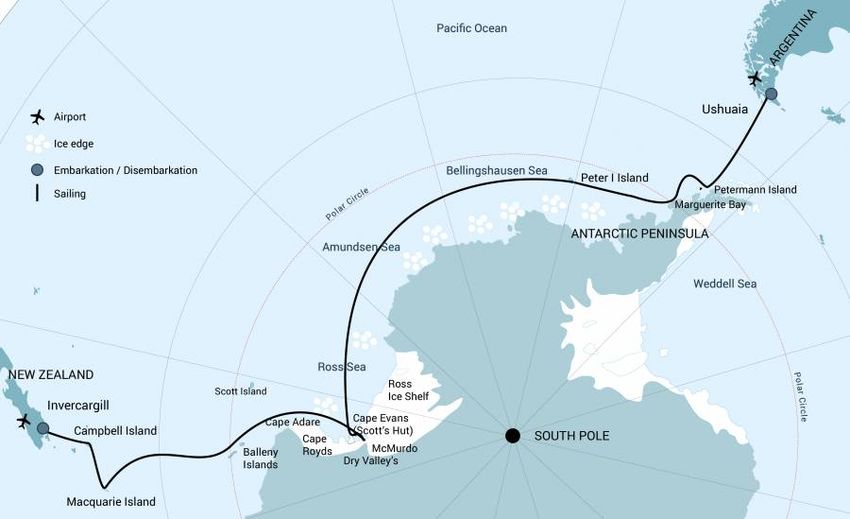
Sail to the southern parts of the Antarctic Peninsula, Peter I
Island, the Bellingshausen and Amundsen Seas into the Ross
Sea. Visiting the Ross Ice-shelf, Dry Valleys, McMurdo Station,
Campbell Island, Enderby Island and the historic huts of Scott
and Shackleton. Please note: your voyage rates include
ship-to-shore helicopter transfers (with no specific amount of
helicopter time guaranteed). Special note: Crossing the
International Date Line Depending on which direction one
travels across the International Date Line, a day is either lost or
gained. (Crossing westward, a day is gained; crossing eastward,
a day is lost.) Please take note of this when calculating your
actual time travelled. The days listed in the itinerary duration
reflect the actual time travelled.                                        ITINERARY

                                                                          Day 1: Bluff, New Zealand *
                                                                          Your voyage begins in Bluff, commonly held to be New Zealand’s most
                                                                          southerly town. Sailing beyond the boundaries of the civilized world, you
                                                                          venture into the untamed regions of the far south.

                                                                          Day 2: Sailing south with the seabirds *
                                                                          Seabirds trail your vessel across limitless horizons toward Campbell Island.

                                                                          Day 3: Enderby Island albatrosses, penguins, and shags *
                                                                          Another jewel in the crown of the New Zealand sub-Antarctic islands is
                                                                          Enderby Island. Part of the Auckland Islands, Enderby offers a vast variety of
                                                                          birdlife, including potential sea sightings of white-capped albatrosses, Buller’s
                                                                          albatrosses, and a number of other tubenoses. On Enderby Island you might
                                                                          also see yellow-eyed penguins, Auckland teals, and perhaps even rare and
                                                                          endemic Auckland shags.

                                                                          Day 4: Campbell Island’s bounteous birdlife *
                                                                          The plan today is to visit the sub-Antarctic New Zealand Reserve and UNESCO
                                                                          World Heritage Site of Campbell Island, enjoying its luxuriantly blooming

                                 0800 945 3327 (within New Zealand) | +64 (0) 3 365 1355 | 1800 107 715 (within Australia)
                                                           info@wildearth-travel.com | wildearth-travel.com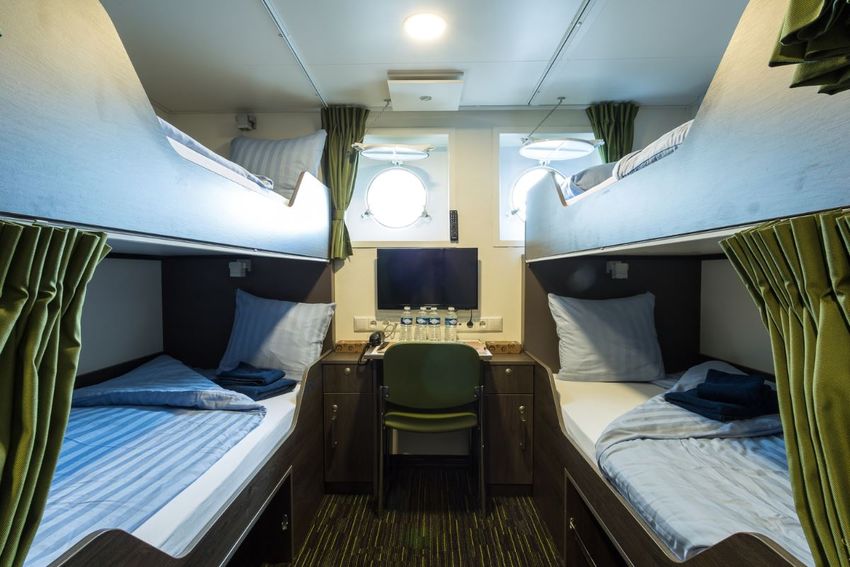
vegetation. The fauna on Campbell Island is also a highlight, with a large and        Day 14 - 16: Highlights of the Ross Sea *
easily accessible colony of southern royal albatrosses on the main island.
Breeding on the satellite islands are wandering, Campbell, grey-headed,               Keeping to the Ross Sea, your aim is now to visit Ross Island. In this location
black-browed, and light-mantled albatrosses. There are also three breeding            you can see Mount Erebus, Mount Terror, and Mount Byrd, as well as many
penguin species present: eastern rockhopper, erect-crested, and yellow-eyed           other famous spots that played an important role in the British expeditions of
penguins. In the 18th century, seals in the area were hunted to extinction, but       the last century: Cape Royds, where Ernest Shackleton’s cabin still stands;
the elephant seals, fur seals, and sea lions have since recovered.                    Cape Evans, where the cabin of Robert Falcon Scott can still be seen; and Hut
                                                                                      Point, from which Scott and his men set out for the South Pole. If ice is
Day 5 - 8: Southern Ocean sailing *                                                   blocking the way but weather conditions are favorable, you may use the
                                                                                      helicopters to land in one or more spots in this area. The American scientific
You once again enter the vast expanse of the Southern Ocean. Sea birds are            base of McMurdo Station and New Zealand’s Scott Base are other possible
also prolific on this leg, during which we hope to enjoy good weather                 locations you might visit. From McMurdo Station you could also make a
conditions.                                                                           10-km hike (6 miles) to Castle Rock, where there are great views across the
                                                                                      Ross Ice Shelf toward the South Pole. Additionally, you may make a helicopter
Day 9: The windswept Balleny Islands *                                                landing in Taylor Valley, one of the Dry Valleys, where conditions are closer to
                                                                                      Mars than anywhere else on Earth.
Your intended route is past Sturge Island in the afternoon, getting an
impression of these windswept and remote islands before crossing the
Antarctic Circle.
                                                                                      Day 17 - 18: The epic Ross Ice Shelf *
                                                                                      The next goal is to enter the Ross Sea from the east, venturing south toward
Day 10: Across the seas to the Antarctic Continent *                                  the Bay of Whales and close to Roosevelt Island (named in 1934 by the
                                                                                      American aviator Richard E. Byrd for President Franklin D. Roosevelt). The Bay
By now you’ve become a veteran of the high seas, if you weren’t when you              of Whales is part of the Ross Ice Shelf, the largest ice shelf in the world, and
started the voyage. You spend today sailing toward the Antarctic Continent.           is constantly changing with the receding ice masses. Large icebergs are
                                                                                      present here, along with great wildlife opportunities. Roald Amundsen gained
Day 11: The residents of Cape Adare *                                                 access to the shelf en route to the South Pole, which he reached on
You next attempt a landing at Cape Adare, where for the first time humans             December 14, 1911. Also, the Japanese explore Nobu Shirase had his camp
wintered on the Antarctic Continent: The Norwegian Borchgrevink stayed in             in this area in 1912, at Kainan Bay. You may make a helicopter landing on
here 1899, taking shelter in a hut that to this day is surrounded by the largest      the ice shelf if conditions allow. During this part of the voyage, we will also
colony of Adélie penguins in the world.                                               cross the International Date Line.

Day 12: Cape Hallett’s abundant Adélies *                                             Day 19 - 25: Sights of the Amundsen Sea *
Sailing south along the west coast of the Ross Sea, you may attempt a                 You then sail through the Amundsen Sea, moving along and through the outer
landing at the protected area of Cape Hallett and its large Adélie penguin            fringes of the pack ice. Ice conditions are never the same from year to year,
rookery.                                                                              though we aim to take advantage of the opportunities that arise if sea ice is
                                                                                      present. Emperor penguins, groups of seals lounging on the ice floes, orca
Day 13: Exploring the inexpressible *                                                 and minke whales along the ice edge, and different species of fulmarine
                                                                                      petrels are possible sights in this area.
Sailing north along the west coast of the Ross Sea, you pass the Drygalski Ice
Tongue and Terra Nova Bay. If ice conditions allow, you then land at                  Day 26: A rare glimpse of Peter I Island *
Inexpressible Island, which has a fascinating history in connection to the
less-known Northern Party of Captain Scott’s expedition. It is also home to a         Known as Peter I Øy in Norwegian, this is an uninhabited volcanic island in the
large Adélie penguin rookery. Should sea ice prevent entry into Terra Nova            Bellingshausen Sea. It was discovered by Fabian von Bellingshausen in 1821
Bay, you may head farther north to the protected area of Cape Hallett and its         and named after Peter the Great of Russia. The island is claimed by Norway
own Adélie rookery.                                                                   and considered its own territory, though it is rarely visited by passenger

                                        0800 945 3327 (within New Zealand) | +64 (0) 3 365 1355 | 1800 107 715 (within Australia)
                                                                       info@wildearth-travel.com | wildearth-travel.com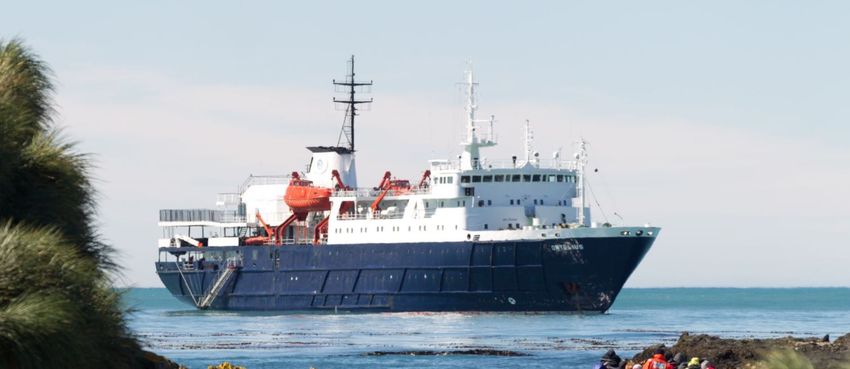
vessels due to its exposed nature. If weather and ice conditions allow, you
may enjoy a helicopter landing on the glaciated northern part of the island.
This is a unique chance to land on one of the most remote islands in the
world.

Day 27 - 28: Braving the Bellingshausen *
You now sail across Bellingshausen Sea, bound for the Antarctic Peninsula.

Day 29: Through the Pendleton Straight *
You arrive at the Antarctic Peninsula near the Antarctic Circle in the afternoon.
If sea ice allows it, you can then continue through Pendleton Strait and
attempt a landing at the rarely visited southern tip of Renaud Island. Here you
have the opportunity to see the first Adélie penguins of the trip as well as
enjoy spectacular views of the icebergs in this surreal, snow-swept
environment.

Day 30 - 32: North via the Drake *
Over the following days on the Drake Passage, you enjoy some of the same
experiences encountered by the great polar explorers who first charted these
regions: cool salt breezes, rolling seas, maybe even a fin whale spouting up
sea spray. After passing the Antarctic Convergence – Antarctica’s natural
boundary, formed when north-flowing cold waters collide with warmer
sub-Antarctic seas – you are in the circum-Antarctic upwelling zone.
Wandering albatrosses, grey-headed albatrosses, black-browed albatrosses,
light-mantled sooty albatrosses, cape pigeons, southern fulmars, Wilson’s
storm petrels, blue petrels, and Antarctic petrels are a few of the birds you
might see.

Day 33: End of the world, last of the journey *
Every adventure, no matter how grand, must eventually come to an end. It’s
now time to disembark in Ushuaia, reputed to be the southernmost town in
the world, and return home with memories that will accompany you wherever
your next adventure lies.

Please note: *
All itineraries are for guidance only. Programs may vary depending on local
ice, weather, and wildlife conditions. The on-board expedition leader will
determine the final itinerary. Flexibility is paramount for expedition cruises.

                                        0800 945 3327 (within New Zealand) | +64 (0) 3 365 1355 | 1800 107 715 (within Australia)
                                                                        info@wildearth-travel.com | wildearth-travel.com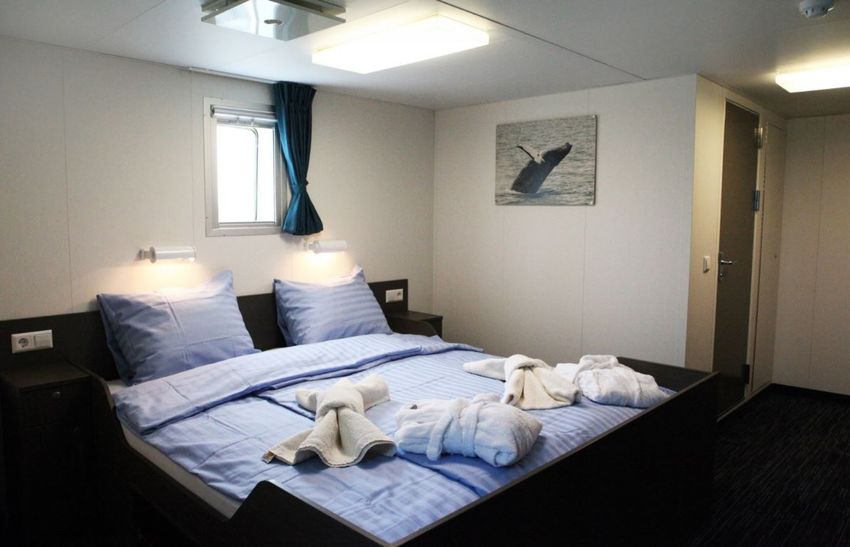
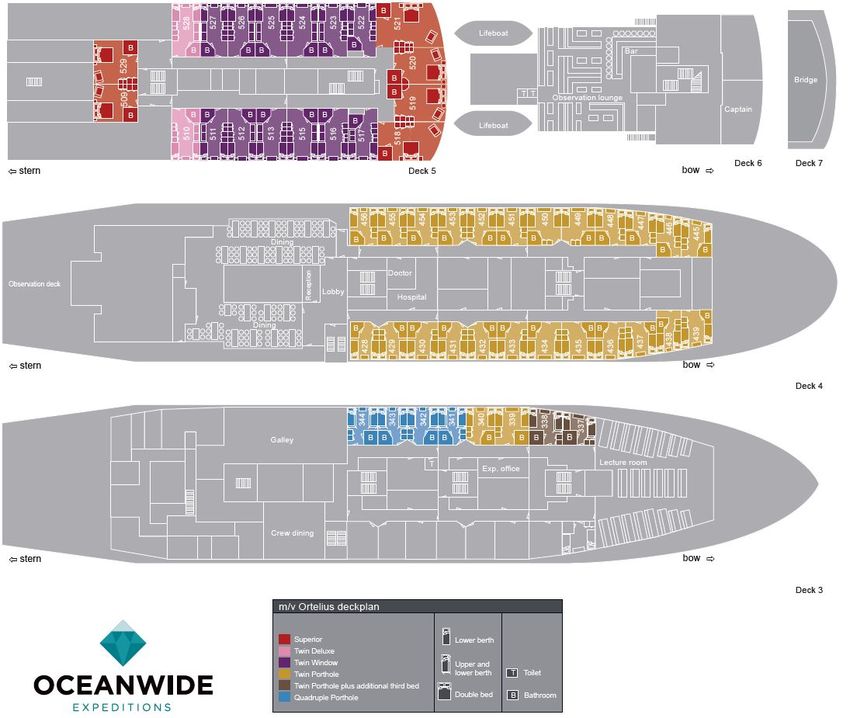
YOUR SHIP: ORTELIUS
YOUR SHIP:                      Ortelius

VESSEL TYPE:                    Expediton

LENGTH:                         91m

PASSENGER CAPACITY:             108-123

BUILT/REFURBISHED:

Built / Refurbished : 1989 / 2015
The vessel has the highest ice-class notation (UL1, equivalent
to 1A) and is therefor suitable to navigate in solid one-year sea
ice as well as loose multi-year pack ice. Ortelius can
accommodate up to 116-123 passengers (108 passengers as
of season Arctic 2020) and has an abundance of open-deck
spaces. It is manned by 22 highly experienced nautical crew
members, 19 hotel staff, eight expedition specialists (one
expedition leader, one assistant, and six lecturer-guides), and
one doctor.
Though our voyages are primarily meant to offer our passengers
an exploratory wildlife program with as much time ashore as
possible, Ortelius offers all the comforts of a standard hotel ―
along with a bar and lecture room. Flexibility assures maximum
wildlife opportunities. As such, Ortelius carries 10 Zodiacs with
60hp Yamaha engines.

                                0800 945 3327 (within New Zealand) | +64 (0) 3 365 1355 | 1800 107 715 (within Australia)
                                                          info@wildearth-travel.com | wildearth-travel.com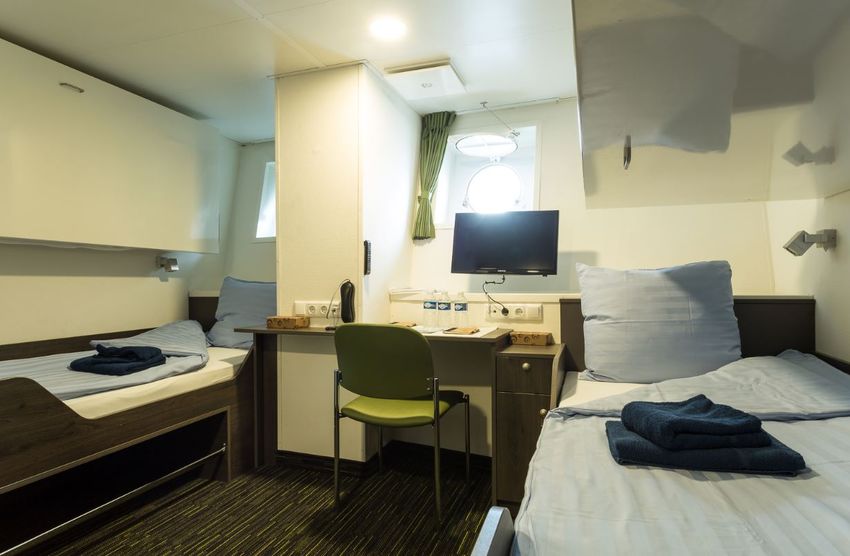
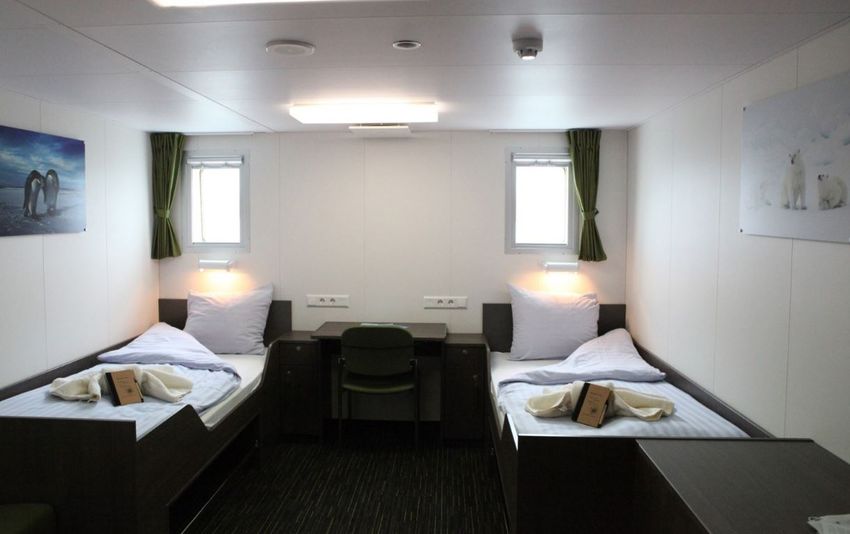
INSIDE YOUR SHIP
                                                                  Quadruple Porthole         Superior

                                                                  Triple Porthole            Twin Deluxe

                                                                  Twin Porthole              Twin Window

                   0800 945 3327 (within New Zealand) | +64 (0) 3 365 1355 | 1800 107 715 (within Australia)
                                          info@wildearth-travel.com | wildearth-travel.com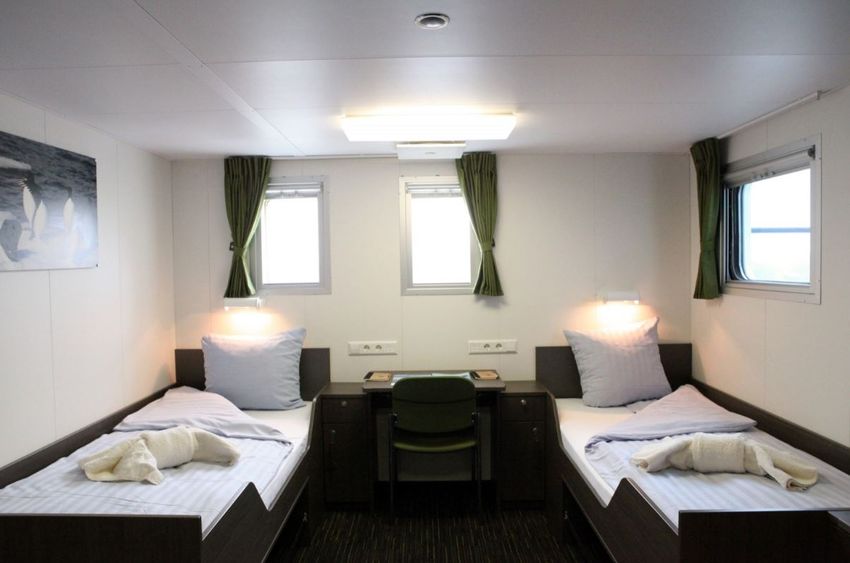
PRICING
16-Feb-2022 to 19-Mar-2022
 Quadruple Porthole           27400 USD pp
 Twin Porthole                34500 USD pp
 Triple Porthole              34500 USD pp
 Twin Window                  35700 USD pp
 Twin Deluxe                  37600 USD pp
 Superior                     39500 USD pp

                             0800 945 3327 (within New Zealand) | +64 (0) 3 365 1355 | 1800 107 715 (within Australia)
                                                    info@wildearth-travel.com | wildearth-travel.com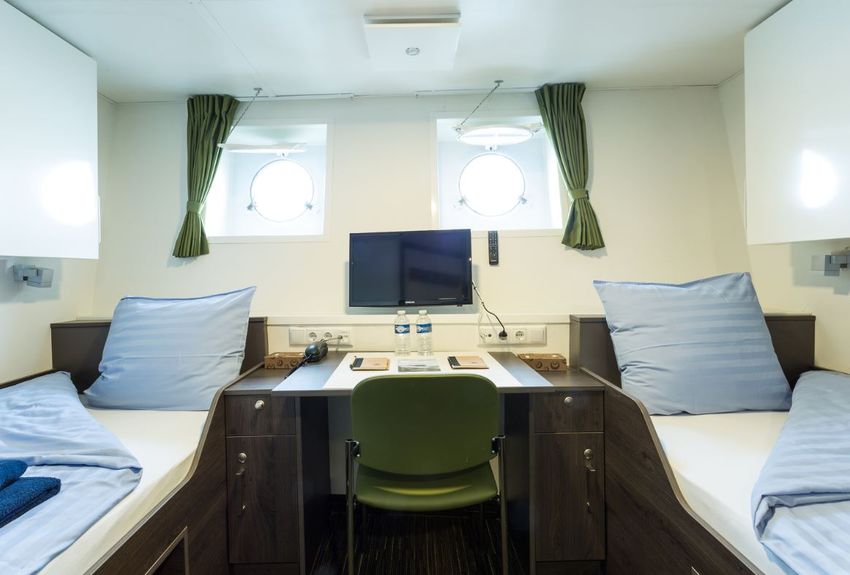
You can also read


