Rural Surgery Futures 2011-2021 - NSW Health
←
→
Page content transcription
If your browser does not render page correctly, please read the page content below
Rural Surgery Futures
               2011–2021
NSW MINISTRY OF HEALTH
73 Miller Street
NORTH SYDNEY NSW 2060
Tel. (02) 9391 9000
Fax. (02) 9391 9101
TTY. (02) 9391 9900
www.health.nsw.gov.au

This work is copyright. It may be reproduced in whole or in part for study or
training purposes subject to the inclusion of an acknowledgement of the source.
It may not be reproduced for commercial usage or sale. Reproduction for
purposes other than those indicated above requires written permission from
the NSW Ministry of Health.

© NSW Ministry of Health 2012

SHPN (HSPI) 120044
ISBN 978 1 74187 686 4

Further copies of this document can be downloaded from the
NSW Health website www.health.nsw.gov.au

Revised February 2012
Acknowledgements

This document is the result of contributions from a number of organisations and individuals from across NSW Health, general
practice and professional bodies. It represents collective expertise and support of the Rural Surgery Futures Project Steering
Group, the Surgical Services Taskforce and NSW Health to work collaboratively in the development of this report.

Rural Surgery Futures Project Steering Committee members

Dr Austin Curtin (Co-Chair)                 Dr Hugh Lukins                               Ms Kylie Mayo
Surgeon, Lismore                            Surgeon, Orange                              Director, KPMG

Dr Tim Smyth (Co-Chair)                     Dr Nigel Peck                                Mr David White
DD-G, HSQPI                                 Surgeon, Port Macquarie                      Executive Associate, KPMG

Dr Geoff Brook-Cowden                       Dr Dan Pettersson                            Ms Chris Lassen
Surgeon, Auburn                             GP/Surgeon, Leeton                           Principal Project Officer (Surgery
                                                                                         Projects), MoH
Ms Deborah Burrows                          Prof Graeme Richardson
Area Perioperative, CNC MLHD                Surgeon, Wagga Wagga                         Prof Donald MacLellan
& SNSWLHD                                                                                Statewide Surgery Program Director,
                                            Dr Jo Sutherland                             MoH
Dr AJ Collins                               Anaesthetist, Coffs Harbour
Surgeon, Bega                                                                            Mr Gavin Meredith
                                            Dr Phil Truskett                             Senior Project Officer, MoH
Ms Bronwyn Cosh                             Surgeon, POWH
Nurse Manager, Moree                                                                     Ms Jennifer Sheehan
                                            Ms Lyn Weir                                  Manager, SSDB MoH
Prof Stephen Deane                          Director of Operations, WNSW LHD
Surgeon, John Hunter                                                                     Ms Judy Willis
                                            Ms Janet Diep                                Principal Project Officer, MoH
Dr Nick Hartnell                            Senior Consultant, KPMG
Surgeon, Bowral

                                                                                  Rural Surgical Futures 2011–2021 NSW Health PAGE 1
Content

Acknowledgements.......................................... 1                     7      Other Clinical Services............................ 19
                                                                                        7.1    Services for Morbidly Obese Patients........ 19
List of Acronyms............................................... 3                       7.2    Surgical Services for Children................... 19
                                                                                        7.3    Radiology Services................................... 19
Foreword............................................................ 4                  7.4    Pathology Services................................... 20
                                                                                        7.5    Critical Care Services................................ 20
Executive Summary.......................................... 5
                                                                                 8      Population Overview............................... 21
1     Introduction................................................ 6                    8.1    Projected Shifts in Population................... 21
       1.1    Aim........................................................... 6
       1.2    Developing Rural Surgery Futures............... 6                  9      Local Health District Specific Issues..... 23
       1.3    Surgery Futures – Greater Sydney............... 7                         9.1 Far West Local Health District................... 23
                                                                                        9.2 Hunter New England Local Health District... 23
2     Regional Surgical Networks..................... 8                                 9.3 Mid North Coast Local Health District...... 24
       2.1    Regional Surgery Networked Model........... 8                             9.4 Murrumbidgee Local Health District......... 25
       2.2    Interhospital Transfers................................ 9                 9.5 Northern NSW Local Health District......... 26
       2.3    Surgical Audit and Peer Review................ 10                         9.6 Southern NSW Local Health District......... 27
                                                                                        9.7 Western NSW Local Health District........... 28
3     Clinical Service Planning........................ 11                              9.8	Shoalhaven District Memorial
       3.1    Clinical Service Delineation....................... 11                         Hospital, Illawarra Shoalhaven
       3.2    Clinical Service Plans................................ 11                      Local Health District................................. 29

4     Rural Workforce....................................... 13                  10     References............................................... 30
       4.1    Hospital Management.............................. 13
       4.2    Rural Specialists....................................... 13        11     Appendices.............................................. 31
       4.3    GP Proceduralists..................................... 14
       4.4    Perioperative Nursing............................... 14            Appendices
       4.5    Allied Health............................................ 15       Appendix A
       4.6    Incentives for Rural Practice...................... 15             Hospitals that account for 80%
       4.7    Credentialing........................................... 15        of the Surgical Procedural activity.............................. 31
       4.8    Locum Services........................................ 16          Appendix B
                                                                                 NSW Peer Group Definitions...................................... 32
5     Infrastructure........................................... 17               Appendix C
       5.1    Equipment............................................... 17        Successful Recruitment and Retention Programs........ 34
                                                                                 Appendix D
6     Rural Clinical Schools............................. 18                     Implementation Plan.................................................. 36

PAGE 2 NSW Health Rural Surgical Futures 2011–2021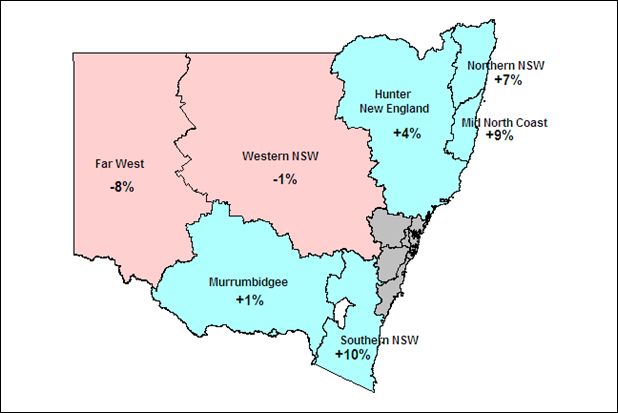
Acronyms

ANU		    Australian National University             LHD		     Local Health District

BMI		    Body Mass Index                            MLHD      Murrumbidgee Local Health District

CMO      Career Medical Officer                     MNCLHD    Mid North Coast Local Health District

CNC		    Clinical Nurse Consultant                  MoH       NSW Ministry of Health

CNE		    Clinical Nurse Educator                    NNSWLHD Northern NSW Local Health District

ED		     Emergency Department                       RFDS      Royal Flying Doctor Service

FWLHD    Far West Local Health District             RGP		     Rural Generalist Pathway

GP		     General Practitioner                       SNSWLHD Southern NSW Local Health District

HETI		   Health Education and Training Institute    VMO       Visiting Medical Officer

HDU		    High Dependency Unit                       WNSWLHD Western NSW Local Health District

HNELHD   Hunter New England Local Health District   WWHS      Wagga Wagga Health Service

ICU		    Intensive Care Unit

JHH		    John Hunter Hospital

                                                               Rural Surgical Futures 2011–2021 NSW Health PAGE 3
Foreword
We are pleased to commend this Rural Surgery Futures The report provides a number of recommendations
report. It has been developed through an extensive that will require a partnership between Local Health
consultation process with clinicians and managers in Districts, clinicians, surgical networks, health professional
regional and rural NSW. The Rural Surgery Futures report training networks, Colleges, professional associations,
provides a framework for public sector surgery (both the Agency for Clinical Innovation and the NSW Ministry
planned and acute) in rural NSW for the next 5-10 years. of Health. These recommendations have been crafted with
the aim of creating sustainability for the future of rural
The Rural Surgery Futures project acknowledged that major surgery services.
challenges exist in surgery that are well identified and quite
unique to regional and rural areas. A comprehensive We endorse the Rural Surgery Futures report to
assessment of rural surgical services has been long overdue readers and anticipate a collaborative and successful
and rural clinicians and managers have embraced the implementation of its recommendations to ensure
opportunity to participate in this process. optimal surgical services are delivered to our regional
and rural communities across NSW.
Dr. Austin Curtin Dr. Joseph Lizzio
Rural Surgery Futures Co-Chair Royal Australasian College of Surgeons Chair (NSW)
CE
Ms Allanah Hazelgrove
Dr. Michael McGlynn NSW Operating Theatre Association President
Surgical Services Taskforce Chair
Professor Donald MacLellan
Dr. Hunter Watt NSW Statewide Director of Surgery
Agency for Clinical Innovation
Dr. Di O’Halloran
NSW General Practice Council Chair
PAGE 4 NSW Health Rural Surgical Futures 2011–2021Executive Summary
The Rural Surgery Futures Project has been undertaken to Workforce Attraction & Retention: targeted
3.
guide the development of surgical services across rural NSW incentives are required to attract and retain a high
over the next 5-10 years. This report is a result of work quality and diverse medical, nursing and allied health
undertaken by the NSW Surgical Services Taskforce in workforce to rural and remote areas. Remuneration,
conjunction with the NSW Ministry of Health. access to training and education, formalisation and
acknowledgement of the role of GP proceduralists
The Rural Surgery Futures Project team visited 26 non- (surgeons, anaesthetists, obstetricians, and ED
metropolitan hospitals across NSW and has undertaken physicians) is critical in achieving and sustaining a
extensive consultations with over 200 rural clinicians and viable rural workforce. The overuse of locums was seen
hospital managers, as well as the key stakeholder as an additional stressor for permanent staff. While
organisations and Colleges. In addition, approximately 200 their use is sometimes necessary, there should not be
clinicians and managers completed the Rural Surgery an over reliance on them to fill workforce shortfalls.
Futures survey and provided invaluable feedback. There is an opportunity to expose newly qualified
surgeons to the rural practice through the
The consultations and site visits revealed wide variation in establishment of Rural Surgical Fellowships.
service provision in rural NSW. The key recommendations
for the future development of rural surgical services that Training and Education: this was identified as a key
4.
have emerged from the project include: constraint for all clinicians (surgeons, anaesthetists,
nurses and allied health staff). A model of integrated
Networking Model: this is considered a key concept
1. training with the local medical clinical school
for the sustainability of rural surgical practice with the demonstrated benefits to all clinical staff. Access to
need to identify and develop the model of a regional dedicated education staff was identified as
resource centre that networks with surrounding district advantageous to improving staff retention and the
hospitals. There are significant benefits to be gained by quality of patient care.
the networking model including: sharing of workforce,
promotion of collegiality, supporting surgical services Senior Hospital and Medical Managers: the lack
5.
in smaller communities, strengthened continuing of continuity in management in many rural hospitals
professional development and training across the places significant barriers to progress the development
network, improved processes for inter-hospital of rural clinical services. Stability in these positions is
transfers, standardisation of equipment and avoiding required to restore confidence with clinicians, build
inappropriate duplication of services. relationships and facilitate local decision making and
planning.
Clinical Services Planning: needs to be updated
2.
regularly, considerably strengthened and have input A number of other issues have been identified and specific
from clinicians into the network clinical services plans. recommendations have been made to address these.
This includes requirements for new technology, future
work force and succession planning and community Rural Surgery Futures is not intended to provide an in-depth
expectations. A current Clinical Service plan provides and detailed services plan. Rather, it is a framework for
clinicians with certainty about service provision and Local Health Districts to establish essential surgical
future requirements. networks and an informed clinical services plan that will
provide sustainable rural surgical services.
Rural Surgical Futures 2011–2021 NSW Health PAGE 5section ONE
Introduction
Over the past 50 years there has been significant 1.1 Aim
demographic, economic and social change across rural
NSW. This has led to major growth in some areas and major The aim of the Rural Surgery Futures is to guide the
contraction in others. The infrastructure and traditional development of public sector surgery (both planned and
referral patterns and patient flows that have served the acute) in rural NSW for the next 5-10 years.
public well in the past in accessing surgical services are
in some instances no longer fit for purpose. In order to Developing
1.2 Rural Surgery
continue to provide high quality care in the future, it is Futures
timely to examine how and where services are provided
and develop contemporary models that will best prepare Over 400 health professionals have either attended one of
the system to meet the significant workforce and the consultation meetings or directly contacted the Rural
technological challenges in the future. Surgery Futures team.
Demand for surgery will continue to grow in NSW. Our The hospitals visited were Wagga Wagga Base, Griffith
current rural workforce projections indicate that we cannot Base, Queanbeyan District, Goulburn Base, Bateman’s Bay
continue to organise services in the same way if we are to District, Bega District, Moruya District, The Maitland Hospital,
provide quality surgical services in the future. The overall Gunnedah District, Narrabri District, Moree District, Inverell
goal of the Rural Surgery Futures project was to build upon District, Armidale Rural Referral, Tamworth Rural Referral,
initiatives and innovative models of care identified through Manning Rural Referral, Coffs Harbour Base, Port Macquarie
the Surgery Futures report to: Base, The Tweed Hospital, Murwillumbah District, Lismore
Base, Grafton Base, Bathurst Base, Orange Health Service,
n Improve access to surgical services for all people across Dubbo Base, Broken Hill Base and Shoalhaven.
rural NSW;
n Improve safety and accountability in all surgical services; There are 92 rural hospitals in NSW providing surgical
and services. 80% of surgical activity is provided by 20 of these
n Improve sustainability of the perioperative workforce rural hospitals (Appendix A).
and promote clinical leadership and collaboration.
The consultation meetings were successful in engaging with
Rural Surgery Futures is a collaborative project between a broad range of hospital staff and provided valuable
NSW Health and the Surgical Services Taskforce under the information which informed the recommendations in this
guidance of the Rural Surgery Futures Project Steering report. The consultations brought out the complexity and
Committee. interdependencies of the issues involved and highlighted
that whilst a few issues may be considered in isolation,
The Rural Surgery Futures report outlines a framework for many were part of broader system issues.
public sector surgery (both elective and emergency) in rural
NSW for the next 5-10 years. This will assist policy makers, Over 200 clinical and management staff from all over the
health service planners, clinicians, surgical services staff, state completed the Rural Surgery Futures survey. This
professional bodies and managers to direct future provided the steering committee with significant information
investment in emerging technology, workforce retention about the issues and challenges that many clinicians and
and training and infrastructure in order to provide the best managers are currently facing, their priorities for change
outcome for patients and the community. and their aspirations and visions for the future. A more
detailed summary of the survey results can be found at
www.archi.net.au/e-library/delivery/surgery/surgery-futures.
PAGE 6 NSW Health Rural Surgical Futures 2011–2021Surgery
1.3 Futures
– Greater Sydney
Surgery Futures was undertaken in 2010 to guide the
development of surgical services across the breadth
of Greater Sydney (including Central Coast and Illawarra)
over the next decade. Its primary aim was to better
position both the Department, Local Health Districts
and surgical services professional bodies to undertake
informed and strategic clinical service and site specific
planning for surgery.
The recommended directions for the future development
of surgical services that emerged throughout the project
included the development of high volume short stay
centres, greater separation of emergency and planned
surgery and the development of specialty centres. Many
of the initiatives and enablers have applicability in the
non-metropolitan setting. The recommendations of the
Surgery Futures report and the Rural Surgery Futures report
should therefore be considered as companion pieces.
Rural Surgical Futures 2011–2021 NSW Health PAGE 7section TWO
Regional Surgical Networks
The major recommendation for the future sustainability providing a more sustainable public surgery service.
of rural surgical services is the development of Regional One public hospital had commenced negotiations with
Surgical Networks. The Network model has a regional the local private hospital provider to undertake shared
resource centre – usually a major Base hospital – that recruitment of a surgical specialist. This will result in sharing
networks with surrounding district hospitals. The Network the costs of recruitment as well as a joint appointment
provides the services required by the local community with between the two facilities.
an agreed sharing of services.
Regional
2.1 Surgery
The Regional Surgical Networks can facilitate the timely Networked Model
movement of patients to services that will best meet their
complex needs beyond the local hospital and/or LHD The Regional Surgery Networked Model is built
boundaries. The Networks can also facilitate the sharing of on a structure that will generally consist of:
innovations and clinical practice improvements and enable
rapid spread. They provide better opportunities for training, n One major non-metropolitan hospital being
research and the maintenance of clinical skills. the regional resource centre
n One or more District Hospitals and/or Community
Better utilisation of operating theatre capacity by Acute – Surgery Hospitals (Appendix B)
networking within or across the LHD could deliver real
benefits. In most Districts, there is available capacity The sharing of the weekend trauma/orthopaedic service
identified in some facilities that can alleviate operating between Armidale and Tamworth is an example of service
theatres at full capacity in neighbouring facilities. Accessing networking that creates a critical mass to support an after-
this available capacity will require implementation of more hours on call roster by orthopaedic surgeons in the two
innovative models of regional networked care that are towns. This approach ensures continuous service provision
resourced and supported to work between local facilities. for both communities.
The Networked model of care would rely on the provision An LHD that does not have a major non-metropolitan
of surgeons from the larger to the smaller facility and can hospital can still develop a functional Regional Surgery
be designed as an outreach shared care arrangement where Network consisting of:
appropriate. The requirement for a networked model is that
adequate numbers of surgeons – and potentially other staff n District Hospitals that work as a combined service to
– are provided at the larger hospital to accommodate the essentially fulfil the role of a regional resource centre.
networked surgery load and to avoid frequent withdrawal The shared surgical service recognises specific facility
or reduction in the surgical service at the smaller facilities if roles.
their staffing is inadequate. Specialists are more likely to be
attracted to a Regional Network of surgical services where Eurobodalla Health Service is a good example of a local
the quantum of surgery is more extensive than available in network model. There is a local arrangement primarily
any independent facility. between Bateman’s Bay Hospital and Moruya Hospital
whereby there has been agreement and implementation
There are other benefits to the development of Regional of a networked model in which surgery service provision
Surgical Networks particularly when there is close proximity is shared across facilities. Key components of this model
to a viable private hospital. It provides the regional network include:
a potential advantage for attracting surgical staff and thus
PAGE 8 NSW Health Rural Surgical Futures 2011–2021n Separation of same day and day only so that this multiple telephone calls sometimes over many hours to find
is undertaken at Bateman’s Bay only; a bed. This increases the time to definitive care, increases
n All emergency surgery and obstetrics is undertaken the chance of an adverse outcome for the patient and is a
at Moruya; highly inefficient system.
n On call and cover arrangements after hours
between the facilities; Clinicians in referral hospitals require a good working
n Portability for staff; and knowledge of the capabilities of the rural facility and the
n Investment in post acute rehabilitation beds clinical expertise available in the town when being
is at Moruya. requested to take a rural patient. There is a need to have
formalised networks and partnerships between rural LHDs
Within some LHD’s there may be more than one local and major tertiary referral centres that are sustained and
surgery network which is reflective of the distances supported for the long term.
between facilities and the need to provide access to
appropriate surgical services within local communities. Relationships between Base hospitals, Rural Referral
hospitals and tertiary referral hospitals is very variable. Rural
Local surgery networks need to provide surgical services clinicians in some locations have great difficulties in
that fit within a comprehensive clinical service plan for achieving an admission for their patients. Rural clinicians
the regional surgery network model. reported they were required to make multiple calls, keep
repeating the reason for transfer and the patient’s history
An outreach shared care arrangement can promote safe to a variety of often junior registrars in the referral hospitals
practice and improved patient experience. It is characterised before eventually having the patient accepted for transfer.
by a visiting surgeon who consults and operates in a rural
hospital and the pre and post-operative care is managed There were many examples of delayed patient transfers for
by local clinicians, often the patient’s General Practitioner, acute treatment or delayed repatriation of patients due to a
a General practice proceduralist or other LHD surgeon. lack of understanding of each hospital’s capabilities, as well
Alternatively, the local General Practitioner proceduralist as a lack of understanding of what ancillary services were
would work in conjunction with a visiting surgeon and available within the local community.
manage the patient’s post operative care.
Some major referral hospitals did not understand that a
Recommendations local hospital could not undertake a simple procedure on a
1. That functional surgical networks be developed complex patient due to lack of equipment or lack of clinical
by each LHD, to enable the effective sharing and support; e.g. no intensive care unit (ICU) / high dependency
deployment of interventional resources (i.e. human, unit (HDU).
technological, physical and financial resources).
Access to specialist clinics in major referral hospitals was
2. That each LHD reviews the role delineation and also seen as a barrier to people receiving timely access to
staffing profile of rural hospitals in view of the surgical procedures. Significant delays were reported,
development of networked services. particularly if the specialist did not provide outreach services
in the local town.
2.2 Interhospital Transfers
Recommendations
Throughout the consultation, it was evident that location 3. That each LHD establishes formal agreements and
has a significant impact on how easily patients can access documented processes with tertiary referral centres to
specialist surgical services including both consultation and facilitate timely and appropriate specialist consultations
procedures. and interhospital transfers.
There are conditions for which access and referral services 4. That each LHD establishes a guide to local facilities and
work well; e.g. major trauma, major burns and acute spinal clinical capabilities and ensure they are widely
injuries. However, when a patient requires a higher level of disseminated within referral hospitals and are regularly
surgical care, the referring clinician may have to make updated.
Rural Surgical Futures 2011–2021 NSW Health PAGE 92.3 Surgical Audit and Peer Review
Surgical audit is a systematic, critical analysis of the quality
of surgical care that is reviewed by peers against explicit
criteria or recognised standards. The audit results are used
to further inform and improve surgical practice with the
ultimate goal of improving the quality of care for patients
(1). The frequency of audits and the level of clinician
contribution are variable across hospitals.
In addition, there did not seem to be a system to facilitate
the participation of GP proceduralists in audit processes.
Formalised partnerships between hospitals within a LHD
would provide an opportunity to undertake more robust
surgical audit and peer review locally.
Recommendations
5. That LHDs develop intra-LHD networks to support
and assist all proceduralists to participate in clinical
audit and peer review.
PAGE 10 NSW Health Rural Surgical Futures 2011–2021section three
Clinical Service Planning
The consultations and responses from the survey 3.2 Clinical Service Plans
highlight the importance of robust, transparent and
inclusive clinical service planning. The reorganisation of Clinical service planning provides an opportunity to
health services in NSW into Local Health Districts presents ensure that services are appropriate for the local community
an ideal opportunity to ensure clinicians and other key and evolve in response to changes in population, disease
stakeholders are engaged in the planning processes, prevalence and changes in models of care and technology.
consider how clinical services work together and clearly Despite this, there were few non-metropolitan hospitals
define the role of individual hospitals within the District. that had a current, contemporary clinical service plan.
There was a genuine interest and desire from clinicians This has consequences for service and infrastructure
to participate and contribute to the planning and delivery development, equipment replacement and investment
of local health services. as well as workforce recruitment and retention.
3.1 Clinical Service Delineation Many clinicians were uncertain of the future role of their
service or hospital. Thus, clinicians are potentially making
While the hospital delineation defines the level of various decisions about their long-term work plans and their private
services considered appropriate for each hospital, the level practice without the requisite service planning.
of health services that the local population should receive
is not clearly described. It is important that services should While there were regional differences in terms of the
be described based on population size, distance from Base appropriate processes for involvement in planning, most
or Rural Referral hospitals as well as the level of hospital clinicians expressed a preference to be involved at the stage
service delineation. when different options were being developed rather than
when solutions were on the table.
Issues also raised in the consultations included the
restriction that hospital role delineation placed on each Clinical service planning should inform capital planning,
single facility. Enhancement of resources should be made be built on appropriate models of care that reflect NSW
to accommodate the networked provision of service rather Health policies and guidelines, network and population
than viewing each facility individually. There is considerable perspectives, and reflect contemporary best practice.
inequity of access to equipment pool funding, especially Clinical service planning should be undertaken prior to
in networked systems, as resources are directed to facilities the development of capital and master plans and be
with a higher role delineation irrespective of actual need. reviewed at least every five years.
Recommendations Clinical service planning requires specialised skills and LHDs
6. That MoH provides a description of the level and require the resources to undertake contemporary and best
type of health services appropriate for the local practice planning. It is important to build the capacity of
populations served by regional surgical networks. staff and teams over time to undertake clinical services
planning on a regular and ongoing basis.
7. That MoH reviews the current approach to role
delineation of facilities to improve recognition A rolling program across NSW of formal clinical service plan
of the networked service model when making development and review would increase certainty for the
capital and equipment allocation decisions. LHD as well as provide an effective process for ongoing
clinician engagement.
Rural Surgical Futures 2011–2021 NSW Health PAGE 11Rural communities in New South Wales rightly expect
access to high-quality health care as close as possible to
where they live. Rural communities are passionate and
committed to their local hospitals. Communities need clarity
about what types of health services are available and how
and where they can access them.
Community awareness and understanding of what is safe
and appropriate to provide locally and what is best provided
at another facility is an important part of any repositioning
of rural surgical services.
Recommendations
8. That MoH provides appropriate resources to assist
LHDs to undertake detailed clinical service planning.
This includes guidelines for service planning, access
to funds to purchase expert planning services and
staff to coordinate regular service planning activities.
9. That MoH ensures that clinical service planning
occurs on a regular basis. Each LHD should have
a plan that is no older than 5 years.
10. That LHDs ensure that clinicians (including resident
and visiting specialists as relevant), the Division of
General Practice / Medicare Local, the Rural Clinical
Schools as well as other key clinical personnel are fully
involved in planning.
11. That LHDs engage relevant community groups
in the development of appropriate local and
networked surgical services.
PAGE 12 NSW Health Rural Surgical Futures 2011–2021section four
Rural Workforce
Many rural staff expressed major concerns about the Recommendation
significant perioperative workforce shortages, difficulties in 12. That LHDs ensure stability of hospital administration
attracting and retaining specialists, deficient succession by the recruitment of General Manager, Director of
planning, the impact of long working hours, on-call Medical Services and other senior hospital
demands and a lack of tertiary hospital support. management roles.
Stakeholders reported that insufficient numbers of specialist
surgical, obstetric, anaesthetic, perioperative nursing, allied 4.2 Rural Specialists
health staff and GP proceduralists are being trained for
non-metropolitan NSW. A key underpinning of the health system in rural NSW is a
reliance on a highly specialised workforce with procedural
The Divisional Group of Rural Surgery identified that skills suitable for rural practice. There are concerns about
between 2006 and 2010, the number of specialist surgeons the adequacy of the future supply of specialists with
has grown by 7 per cent to 177. During the same period, procedural qualifications and skills. According to the
there have been 18 retirements and 30 new surgeons who University of Melbourne Foundation Chair in Rural Health,
have commenced practice, nearly half of whom are Professor David Simmons, only 12 percent of medical
International Medical Graduates. Thus, recruitment of specialists work in rural areas and this workforce is ageing
Australian graduates is not keeping pace with workforce (3). Action needs to be taken to ensure the workforce
requirements (2). needed for rural areas is being trained.
Managers also expressed a high level of frustration with Although there is a desire from medical students and junior
current recruitment processes. Difficulties with the resident doctors to remain in rural areas post-graduation,
mandated electronic system e-Recruit and lack of feedback current vocational training programmes are metropolitan-
mechanisms were causing significant delays with the result based. A revised postgraduate training scheme based in
that potential staff members were choosing to find rural centres, with appropriate attachments to metropolitan
positions elsewhere. hospitals as required for specialty training, would assist in
attracting and retaining postgraduate trainees interested in
Rural specialist and perioperative staff wish to remain a rural practice and lifestyle. In addition, increased numbers
and practice in non-metropolitan NSW. However, it is the of advanced trainee posts in regional centres were
opinion of many staff that there is inadequate emphasis identified as necessary to maintain and support the rural
on resolving rural staffing issues. specialists.
4.1 Hospital Management Succession planning was also identified as a major issue by
specialists. Employment processes that would allow for new
The functional stability of hospitals relies on there being specialists to be employed prior to the specialist in the
robust local administration. Many hospitals in non- position leaving was seen as being an effective mechanism
metropolitan NSW have frequent changes in their senior to ensure skills transfer, minimise the transfer of higher
management ranks including the general manager. Very loads to remaining specialists and build sustainability,
few hospitals had a Director of Medical Services and those continuity and confidence in the service.
that existed were often filling short term locum positions.
This posed significant problems for senior medical staff There was considerable support for the establishment of a
as local decision making was considerably delayed and number of funded rural Fellowship positions. This is seen as
undertaken without local knowledge by distant a method to entice and prepare new specialists for rural
administrators. practice by taking up a one or two year Fellowship position.
Rural Surgical Futures 2011–2021 NSW Health PAGE 13Recommendations In NSW the Health Education and Training Institute (HETI)
13. That MoH negotiates with the NSW State Committees coordinates the management of the General Practitioner
of the relevant Colleges to establish rural based Training Programs. The aim of the these programs is to
training centres in an appropriate number of major provide opportunities for GPs to acquire additional skills in
rural referral hospitals. procedural general practice that will enable them to
practice in rural NSW. (5)
14. That MoH establishes a number of funded Rural
Fellowship specialist positions, in consultation Recommendation
with regional networks, particularly in anaesthetics 16. T hat statewide training programs be commissioned
and surgery. for future and current GP proceduralists under the
auspices of HETI and the relevant specialist colleges.
15. That MoH negotiates with the NSW State Committee This training should be funded and lead to a robust
of the College of Surgeons, the establishment of a and transportable qualification with recognised academic
number of training positions in rural hospitals as the standards leading to a well defined career pathway.
trainee’s principal hospital affiliation.
4.4 Perioperative Nursing
4.3 GP Proceduralists
Access to ongoing education and training is a major priority
Many rural communities rely upon the GP to provide for many clinicians in rural practice. There is a general lack
emergency and obstetric care services and perform surgical of opportunity for clinicians to undertake continuing education
and anaesthetic procedures. Unfortunately, the number of in rural areas without significant cost and inconvenience.
rural GP proceduralists is declining at a concerning rate.
While on-line courses in NSW are offered for perioperative
This has been largely due to fewer options available nurses, access to post graduate perioperative Nurse
for GPs to receive surgical training, too few funded training Educators was almost non-existent in non-metropolitan
positions and a lack of a career pathway with recognised NSW and only a small number of hospitals had a Clinical
qualifications. The shortage of GP Proceduralists has in turn Nurse Educator. Lack of this resource is leading to
resulted in unnecessary referrals to out of town specialist diminished staff satisfaction and has potential to
general surgeons for procedures that could have been compromise patient safety. The establishment of a
performed by the local GP. Perioperative Nurse Educator for networked hospitals
within each LHD will assist in informing and developing
At present, the uncertain career pathway is a major perioperative services, education and training.
drawback. Inadequate support for procedural GPs was also
identified as a concern. Consideration should be given to The perioperative Clinical Nurse Consultant role
adapting a more flexible and supportive model equivalent (Appendix C) has been previously implemented in some
to the Rural Generalist Pathway (RGP) initiated in Area Health Services and this role needs to be created
Queensland to supply the quantum of capable medical within new LHDs to both compliment and support
workforce that rural and remote communities need (4). perioperative Nurse Educators.
The RGP, a Queensland Health funded initiative, is a fully Recommendations
supported, incentive-based career pathway for junior 17. That LHDs appoint Perioperative Clinical Nurse
doctors wishing to pursue a vocationally registered career Consultants supported by Clinical Nurse Educators in
in Rural Generalist Medicine. The recognition of Rural each regional network of hospitals to support ongoing
Generalist Medicine as a medical discipline in its own right training and education of perioperative nursing staff.
provides attractive remuneration and career opportunities
for those medical officers with aspirations of working in 18. That LHDs ensure that perioperative staff have internet
rural and remote Queensland as a Rural Generalist. access for educational purposes.
PAGE 14 NSW Health Rural Surgical Futures 2011–20214.5 Allied Health There is also significant disparity between award conditions
for nurses, doctors and allied health staff in NSW compared
Allied health services are a vital part of any successful to other states. Significantly higher remuneration and better
surgical program. Failure to provide adequate access to employment conditions are available elsewhere and is
allied health leads to longer lengths of stay and impacts leading to loss of staff, particularly across the Queensland
on patient recovery, and ultimately increased costs to the and Victorian borders.
system as patients stay longer and are more likely to be
re-admitted in an unplanned way. In both the hospital Recommendation
workshops and survey results, it was evident that planning 20. T he MoH undertakes a review of the remuneration
for allied health services to support the surgical program of anaesthetists, surgeons, obstetricians, ED
was often overlooked or seen as “an easy target” for specialists, GP proceduralists and other rural based
cost savings. staff to incentivise their rural attachment and remove
any barriers that may diminish the efficient use of
Recruitment and retention and access to ongoing education available resources.
and training were also noted as requiring more attention.
However, there are models in NSW for the recruitment and 4.7 Credentialing
retention of allied health staff that are working well
(Appendix C). Credentialing refers to the formal process used to verify
the qualifications, training, experience, professional
Recommendations standing and other relevant professional attributes of
19. That LHDs ensure an appropriate level of allied health medical practitioners for the purpose of forming a view
staff are appointed and that their regional numbers about their competence, performance and professional
and responsibilities are defined. suitability to provide designated safe, quality health care
services within specific organisational environments.
4.6 Incentives for Rural Practice
The most critical issues are the duplication of process
Recruitment of new staff including surgeons, anaesthetists, and length of time both within and across services.
nurses and allied health professionals was an issue for Examples identified in rural locations included:
almost every service. For many rural towns, the ability to
recruit and then retain experienced staff is often dependent n separate processes between adjacent towns; and
on being able to accommodate the requirements of the n separate credentialing requirements for different
partner and family. Availability of good quality schools and clinical services.
employment for the partner are large draw cards and more
likely to lead to long-term commitment to both the town There is a review of credentialing processes being
and the hospital. undertaken by the MoH which aims to provide a more
efficient and safe credentialing and appointment process
Over the years, there have been a number of different for practitioners. The two main deliverables for this project
employment contracts offered by local health will be a central Information Technology system containing
administrations to attract clinicians. These have increased standardised information regarding a senior medical
the complexity of staff remuneration as clinicians move practitioner’s verified credentials, scope of clinical practice
from hospital to hospital across the LHD. There are and clinical appointments and a standardised statewide
examples where clinicians working at two or more hospitals process for recruiting and credentialing of practitioners.
in the same LHD are under separate award arrangements.
These “special” remuneration arrangements are causing a Recommendation
degree of consternation among clinicians. 21. T hat MoH develops a safe and more efficient
state-wide credentialing system.
Rural Surgical Futures 2011–2021 NSW Health PAGE 154.8 Locum Services Patients should be able to expect the same standards
whether a locum or a permanent member of clinical staff
Locums are an essential part of surgical landscape within provides the care. Some locum staff reported poor
the rural NSW health system. Resources do not allow for orientation to available services, being required to
staffing levels that would mitigate expected and unexpected undertake emergency surgery as their first operating list in
periods of absence or higher clinical demand. Clinical a hospital, and not understanding the capability of either
locums therefore constitute a valuable addition to the the facility or the staff with whom they would work. Some
surgical workforce. locum staff had limited clinical skills and permanent staff
often reported instances of not having an understanding of
The use of locums is variable across the state, ranging from the capability of the locum.
long-term usage across many specialties to the filling of
temporary rostering gaps. The cost of employing locums Recommendation
is increasing and significant resources could be released 22. That each LHD ensures that resources for locum
if the use of locums was managed more carefully. In some employment are used more effectively and permanent
instances, clinicians were choosing not to take up positions are promoted wherever possible.
permanent positions as they were earning much more
as a locum and were able to secure ongoing work.
Thus, the remuneration of locums acted as a disincentive
to obtaining permanent employees. On the other hand,
there were long-term locum clinicians who expressed
a desire to gain full time employment but were not
offered a permanent position as one was not available
(or employment would exceed the NSW Health staff profile
despite being more cost efficient).
PAGE 16 NSW Health Rural Surgical Futures 2011–2021section five
Infrastructure
Asset management is seen as key to ensuring that The adoption of new technologies was not a clear process
equipment is well maintained and replaced when no longer for many clinicians. Firstly, there was no process for
fit for the purpose. However, it is evident that asset dissemination of new technologies that are now common
management is a struggle in many rural hospitals. practice in city based hospitals (e.g. holmium or green
light laser). Secondly, there was no process for identifying
In order to establish a robust asset management system, and funding the introduction of those technologies that
LHDs need to: would significantly improve surgical practice in a rural or
regional setting.
n be able to estimate whole-of-life cycle costs and
operating costs associated with the investment in There is a perception that rural and regional hospitals
surgical equipment; are the last to benefit from new established technologies.
n have a system to determine replacement of medical This is impacting on the ability to offer contemporary
equipment assets and business case principles to and evidence based care in some instances, as well as
consider additional medical equipment asset purchases impacting on the ability to recruit new surgeons to the area.
as part of promotion of a business planning culture.
Access to new technologies by specialists will allow
NSW Health has an asset management framework that is local GP proceduralists and general surgeons to maintain
currently being reviewed and will assist LHDs in creating viable practices within their community. The Surgery
more robust and responsive mechanisms for both the Futures Report recommended that a fund be established
investment in and replacement of key surgical assets. to identify and seed-fund surgical technologies that will
improve patient outcomes and / or create efficiencies.
5.1 Equipment Rural clinicians support the establishment of this mechanism
as a matter of priority.
The process for including clinician input to the prioritising of
equipment requirements was very varied across the state. Recommendations
There was concern that higher cost equipment was 23. T hat LHDs improve Asset Management processes
prioritised when additional funds became available, leaving and procedures to maintain, determine the useful life
routine and low cost items lower down the priority list of and replace key surgical assets.
despite being past the useful life date.
24. T hat LHDs implement transparent and inclusive
There are many examples of where equipment was deemed processes and procedures to ensure clinicians are
past its useful life and was replaced at a Base hospital, but engaged in the prioritisation of equipment purchase
then “gifted” to a smaller hospital with little biomedical and replacement.
support to maintain the older piece of equipment.
25. T hat LHDs develop detailed and transparent processes
The deployment of robust and objective prioritisation and for adoption and dissemination of new clinical
decision-making processes in relation to investments in practices and surgical technologies within the regional
surgical equipment is variable across rural NSW. Clinicians surgical network.
in general were unaware of how prioritisation occurs and
many others did not know that there had recently been 26. T hat MoH establishes a technology fund that
significant Commonwealth funds made available to surgical specifically assists non-metropolitan LHDs and
services for equipment. clinicians to adopt contemporary and efficient
surgical technologies.
Rural Surgical Futures 2011–2021 NSW Health PAGE 17section SIX
Rural Clinical Schools
The future of rural surgery largely depends on the
attraction of the next generation of surgeons. The
consultation found that rural surgeons and other
clinical staff consider that the Rural Clinical School
model is having a positive impact on attracting
rural students and doctors. However, in a number
of larger regional centres the need to increase the
numbers of rural registrars was identified. The principle
is supported that wherever possible, learning and
education should be delivered in a rural setting.
The Rural Clinical Schools are well placed to bring
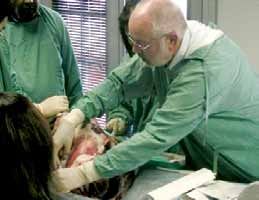
innovative models of teaching to the fore. The Rural Images. Laboratory based simulation training
Clinical School at Wagga Wagga for instance has at a Rural Clinical School
demonstrated significant innovation in providing
access to simulation resources and encouraging There are also examples where the Rural Clinical School is
multidisciplinary practice. integrated vertically and horizontally with the local health
services; e.g. the Rural Clinical School in Dubbo. The close
integration of Rural Clinical Schools with LHDs is essential
to attract appropriate specialist staffing to rural hospitals
and to improve local educational and training opportunities.
Recommendation
27. That relevant LHDs establish links with relevant Rural
Clinical School(s) to explore how to optimise learning
and training opportunities for vocational trainees.
PAGE 18 NSW Health Rural Surgical Futures 2011–2021section seven
Other Clinical Services
Services
7.1 for Morbidly anaesthesia for children and lack of dedicated children’s
Obese Patients facilities. Throughout the consultation process, many
surgeons expressed a desire to be able to undertake more
As the rate of obesity continues to increase, there is a routine surgery for children locally. This is clearly an area
need to assist LHDs and hospitals in ensuring that services that warrants further exploration, particularly for day
can respond to caring for morbidly obese patients when surgical procedures.
they require surgery.
The relationship between the paediatric hospitals and
There is considerable variability in service provision for surgery services across rural NSW is important in ensuring
patients with high Body Mass Index (BMI) in many non- that children have the best access to surgery in a timely
metropolitan hospitals. Most rural hospitals have the manner. There should be clear agreement about what
equipment required for morbidly obese patients. However, surgery for children can be undertaken locally, what
transfer of morbidly obese patients between hospitals often minimum volumes are required and what opportunities
meets with long delays as there are few ambulances in for improvement exist within the current system.
NSW that can cater for morbidly obese patients.
In order for this to occur, the Sydney Children’s Hospitals
A comprehensive approach to bariatric surgery would Network (Randwick and Westmead) and John Hunter
provide more certainly for patients and staff particularly Children’s Hospital in conjunction with the broader
if it covered: surgical community develop models of care that both
encourage participation by rural surgeons and anaesthetists
n assessment and management of the morbidly and support them through outreach, on call or other
obese through a multidisciplinary clinic; service models.
n assessing appropriate morbidly obese patients
for all options of surgery; and Recommendation
n providing bariatric surgery at specified regional centres. 30. T hat the Sydney Children’s Hospitals Network
(Randwick and Westmead) and John Hunter
Recommendations Children’s Hospital lead the development of a state-
28. That the NSW Ambulance Service increases the wide plan for surgery for children which considers
number and considers the location of suitable where and what surgery for children should be
ambulances for the transportation of morbidly obese performed, paediatric anaesthesia and ongoing
patients in non-metropolitan NSW. support, education and skills maintenance.
29. That MoH leads the development of a state wide 7.3 Radiology Services
plan for the management of the morbidly obese
patient within NSW hospitals. Many rural hospitals rely on the private sector to provide
their radiological services. There were many instances of
7.2 Surgical Services for Children radiology services being either inadequate to support an
increase in activity or current contracts with private
There has been a gradual reduction in surgery for children providers not being specific enough to respond to new and
undertaken in rural hospitals, resulting in more routine flexible models of care. While the imaging reporting was
cases being undertaken by the specialist paediatric centres. generally not a problem, of concern was some radiological
The reasons for this are varied and include limited access services not being available; e.g. ultrasound or not being on
to anaesthetists who are skilled and experienced in call when the hospital provided 24 hour emergency surgery.
Rural Surgical Futures 2011–2021 NSW Health PAGE 19The lack of interventional radiologists was commonly 7.5 Critical Care Services
reported. Radiology is a critical aspect of surgery and
contracts and service agreements need to support The provision of ICU and HDU directly impacts on the type
the surgical service rather than radiology availability and complexity of surgery that can be performed at an
restricting available surgery or causing the unnecessary individual site. As LHDs increase networking across sites,
transfer of patients. critical care services require regular review and the location
and level of critical care support reassessed.
7.4 Pathology Services
The consultation identified examples of unfilled ICU Director
As with radiology, the availability of pathology is critical to positions, ICU / HDU services being driven principally by
providing a high quality and safe surgical program. Many local clinician input, facilities where ICU / HDU were no
pathology services were provided by the private sector but longer available due to staffing shortages (medical and
the quality of the service was very variable. There were a nursing) and facilities where surgical cases were transferred
number of concerns raised about the turn-around time and out due to lack of staff and resources within ICU / HDU.
quality of pathology reports. A number of hospitals did not
have access to cytology and frozen sections. Understanding Recommendation
what resources are required on-site and what can be 33. That MoH develops a rural ICU / HDU plan that
effectively provided centrally or privately will assist LHDs recognises the need for consistent ICU / HDU services
better manage contracts with private providers. to support the delivery of surgical services.
Recommendations
31. That LHDs review their contract with radiology and
pathology services and ensure the range and quality
of contracted services meets the needs of the hospitals
and regional networks.
32. That The Royal Australian and New Zealand College
of Radiologists The Royal College of Pathologists
establish non-metropolitan training positions
particularly within the regional surgical network.
PAGE 20 NSW Health Rural Surgical Futures 2011–2021section eight
Population Overview
For LHDs to plan surgical services there needs to be an awareness of population current and projected for the next 5-10 years.
8.1 Projected Shifts in Population
Table 1. Projected shifts in population across rural and regional NSW to 2021/22
Local Health 2009 (ERP) Projections % change % change 2009 pop. 2016 pop. % 2021 pop. %
District 2016 2021 2009-16 2009-21 % age 65+ age 65+ age 65+
Hunter New 877,029 915,385 950,056 4% 8% 16% 19% 21%
England
Northern NSW 294,583 314,957 331,839 7% 13% 18% 22% 24%
Mid North Coast 208,667 228,291 242,397 9% 16% 20% 24% 27%
Southern NSW 197,656 216,995 231,286 10% 17% 16% 19% 22%
Murrumbidgee* 294,704 296,991 301,364 1% 2% 16% 19% 21%
Western NSW 272,472 270,822 272,461 -1% 0% 15% 18% 21%
Far West 32,337 29,783 28,329 -8% -12% 17% 20% 23%
Total 7,134,421 7,603,502 8,008,299 7% 12% 14% 16% 17%
* Murrumbidgee inc Albury LGA
Sources: NSW Health Population Projection Series 1.2009. Department of Planning & Statewide and Rural Health Services and Capital Planning Branch, March 2009
and ABS Estimated Resident Population, Statistical Local Areas, New South Wales, June 2009 Release
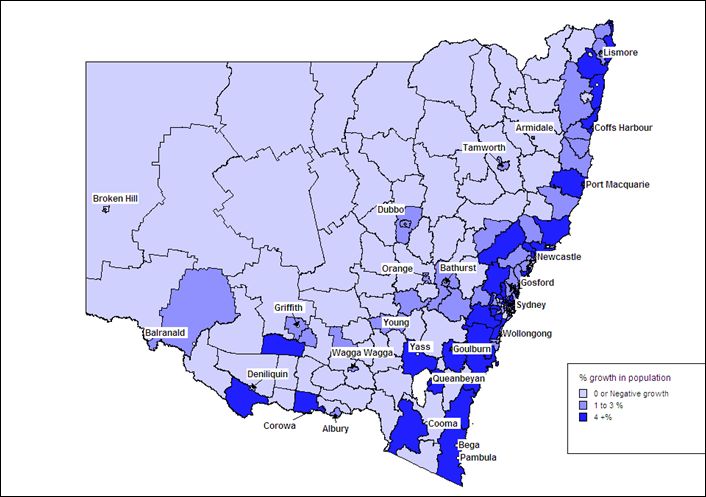
The population projections indicate that Southern NSW LHD will have the largest projected increase in population
over the next 10 years however Mid North Coast will have the largest percentage of age 65s and over.
The current projection for changes in population across rural NSW is variable with growth predominately
in the Northern and Southern areas.
Figure 1: NSW Rural Local Health Districts – projected change in population (all ages) 2009 to 2016
Source: NSW Health Population Projection Series 1.2009. Department of Planning & Statewide and Rural Health Services and Capital Planning Branch,
March 2009 and ABS Estimated Resident Population, Statistical Local Areas, New South Wales, June 2009 Release
Rural Surgical Futures 2011–2021 NSW Health PAGE 21You can also read


