Untapped potential: Investing in health and care data analytics - Analysis May 2019 - Martin Bardsley, Adam Steventon and Garry Fothergill
←
→
Page content transcription
If your browser does not render page correctly, please read the page content below
Analysis
May 2019

Untapped potential:
Investing in health and
care data analytics
Martin Bardsley, Adam Steventon and Garry Fothergill
Untapped potential: Investing in health and care data analytics
is published by the Health Foundation,

ISBN: 978-1-911615-30-9
© 2019 The Health Foundation
Contents

Summary                                                                 2

Introduction                                                            4

Why should we invest in analytical capability?                          8

Do managers underestimate the value of data analysis?                   22

How can we address the shortfall in analytical capability?              24

References                                                              27

                                                             Contents    1
Summary
Improvement in the quality of health and care services depends on good-quality analytical
support. We need to use data to identify areas of poor care, guide choices about priorities
for care, improve efficiency and improve patient care. An organisation's analytical capability
is their ability to analyse information and use it to make decisions. However, we know that
in practice health and care systems are often not able to draw on high-quality analytical
support. There is a shortage of people with the right skills and tools to do analysis, and
collaborate with clinicians and managers on using their insights to improve care. This is
exacerbated when the analysts we do have spend much of their time doing relatively low-
value work – for example, compiling reports that aren't read. By investing in the analytical
workforce, we will be able to unlock the full potential of data.
Better analysis is needed to support:
•• clinical decision-making to help busy clinicians diagnose and manage disease
•• innovation and change in the NHS, and to evaluate the success of new models of
care and whether changes deliver the expected benefits
•• effective board-level oversight of complex organisations and care systems
•• better everyday management of the monitoring and improvement of the quality and
efficiency of care
•• senior decision-makers to respond better to national incentives and regulation
•• the allocation of finite resources
•• better understanding of how patients flow through the system
•• new data and digital tools
•• patients and the public in using information.
Advances in digital technologies have the potential to transform how care is delivered,
but many of these benefits will not be fully realised by organisations without in-house
analytical support. The current analyst workforce needs to develop its skill sets and be
given leadership and support at senior levels in each organisation.
To get the most out of digital technologies, we need to recognise the importance of
investing in the people who shape the information that is communicated and used.
Though specialist academic, data-science roles are welcome, we also need people who
can implement innovation. Where there has been investment in wider analytics (people,
education, tools and techniques), there have been some favourable outcomes, as shown by
the examples included in this report.
2 Untapped potential: Investing in health and care data analyticsThe challenge of developing analytical capability is not new. However, it is becoming ever
more important as new data streams and tools emerge and opportunities for better analysis
are missed.
We suggest action is needed at all levels of the system:
•• National and local agencies should recognise the development of analytical
capability as an important issue. They need to develop local strategies and new
ways of working that support the development of the analytical teams in their
organisations and identify key gaps.
•• Investment in training and development tools to support better analysis is
needed. A particular focus should be placed on developing in-house teams. Such
development needs to apply not just to analysts but also to clinicians and managers
and should encourage good links between the use of analysis and its application.
•• The slow uptake of technologies such as open-source software, and techniques
such as data-science and operational research, is of concern. These technologies and
techniques can bring significant insight and value to health care services but are not
being fully exploited at present.
•• The sharing of skills and experience across organisations should be supported, to
build a culture of 'build it once, share it to everyone'. The analytical community
can be fragmented, with limited opportunity for teams to share learning or access
specialist skills.
•• As much emphasis should be placed on the application and translation of ideas as on
their research and development. Investment in new digital technologies and in data-
science methods needs accompanying investment in the local analytical workforce.
•• The importance of the people who can make sense of data should be recognised, and
investment made in the leadership of analytical roles, for instance by having a Chief
Analytical Officer in each organisation.
•• Most importantly, we need to set higher standards for the way information is used
in delivering care and recognise the full potential of the datasets already held.
Summary 3Introduction
‘One of the greatest opportunities of the 21st century is the potential to safely
harness the power of the technology revolution, which has transformed our society,
to meet the challenges of improving health and providing better, safer, sustainable
care for all.’
National Information Board1
The ability to exploit advances in digital technology in support of better health and better
health care is a priority for health care services.2 The NHS Long Term Plan,3 published in
January 2019, envisages a central role for technology, forecasting that technology will
empower people, support health and care professionals to deliver better care, improve
clinical efficiency and safety and improve population health overall. Alongside service
innovations such as digital-first primary care and the NHS App, there are plans to create
better digital infrastructure and build a digital-ready workforce that can make effective
use of technologies as they are developed. This approach to digital infrastructure largely
consists of the adoption of technology standards, to ensure that data are accessible and
that it is possible for different systems to exchange information, and an expansion of the
number of acute, mental health and ambulance trusts working with the NHS Global Digital
Exemplars on information technology (IT) projects.
All these initiatives involve data, which the NHS has in abundance. A digital footprint
is generated almost every time a person comes into contact with a service (Box 1).
The volume of data will continue to grow as the NHS spends billions of pounds on its
information systems. However, it is failing to make the most of the benefits that can flow
from these systems, because there are not enough people with the right skills to use the
information that is being collected.
Box 1: The volume of electronic information in NHS health care
systems is growing
•• It has been estimated that as much as 30% of the entire world’s stored data is generated
in health care systems. A single patient can typically generate close to 80MB of data
each year in imaging and electronic medical record data.4
•• NHS services see 1 million patients every 36 hours.5 Almost all interactions generate
some form of electronic record or footprint. There are 200 different data collection
systems across health care systems.6
•• A typical hospital stay requires the collection of several hundred individual data items.
•• A GP holds electronic records of every consultation, in coded form, stretching back
decades.
•• 20 million pieces of patient feedback have been received through the Friends and Family
Test alone.
•• Increasingly, individuals themselves are generating data about their own health, using
apps and websites.
4 Untapped potential: Investing in health and care data analyticsStrategies aimed at exploiting the promise of data typically cover:
•• innovation and investment in new technologies
•• managing and accessing new data streams in new ways
•• investing in the analytical workforce, which can use the data to provide actionable
insight.
The third aspect tends to get the least attention – it is less glamorous and solutions are
often challenging and long term. But it is an essential requirement if we are to exploit the
advantages that new technologies offer.
This report explores some of the ways in which good data analytics can support decision-
makers. It also identifies some missed opportunities that flow from our limited ability
to make sense of information relevant to health and health care. It is based on the Health
Foundation’s experience of promoting innovative data analytics in health and social care.
One of our projects in this area is the Advancing Applied Analytics programme, which is
now supporting 23 teams to improve analytical capability in health and care services.*
Better use of patient data can improve the quality and operational efficiency of health care
in various ways (Table 1). However, as we discovered in previous work, health and care
organisations often have problems accessing analytical skills when needed.7 For that work,
we interviewed people across health and care systems in the UK, and many highlighted
the problem of not having the right people to interpret the data and provide useful analysis
to clinicians and managers (Box 2). This problem is not new or unique to health services.
But it is a serious challenge if we want to make the most of the information collected and
realise the benefits of investment in digital technology. Part of the answer is making sure
that health care services have in place the systems designers, training and infrastructure
necessary for new technology. It also means having people and teams who can help make
sense of the growing mountains of data.8
Table 1: Information and intelligence provided by data analysts – who it is for and
how it is applied
Audience Examples
General population •• Identifying information sources that might be useful to patients.
•• Testing the effects of different presentation styles aimed at
patients and the general population.
•• Looking at the effects of new information systems.
All users of health •• Designing and testing the effects of new approaches to sharing
and care services information with service users.
Clinical teams •• Developing decision aids/tools that use data to help diagnose or
manage diseases (eg risk scores and algorithms).
•• Informing the design of improvement initiatives.
•• Monitoring the quality of care delivered over time.
* For further details, see www.health.org.uk/funding-and-partnerships/programmes/advancing-applied-analytics
Introduction 5Service managers •• Identifying service objectives and monitoring tools (performance
indicators).
•• Tracking new care initiatives and providing the information
required to improve them.
•• Devising and adapting mathematical modelling tools (eg to
improve scheduling or patient flow).
•• Synthesising and summarising the literature on the effectiveness
of new interventions and service models.
•• Supporting data collection and analysis of clinical audits.
Commissioners •• Assessing needs and priorities.
and planners •• Reviewing evidence of effectiveness and efficiency of service
delivery.
•• Assessing need and demand and forecasting for populations.
•• Modelling capacity requirements and business planning.
•• Agreeing evaluation frameworks and monitoring effects of
service models.
•• Monitoring the quality of services.
Those running •• Performance analysis.
organisations •• Assessment of the economic impacts of changes (eg new
technology).
•• Quality monitoring.
•• Assessing probable effects of changes before they are made
(eg closure of A&E departments).
•• Forecasting demand for services (eg ahead of winter).
•• Business and strategic planning.
System- and •• Monitoring against strategic priorities.
national-level •• Developing and applying mathematical models to inform policy
decision-makers (eg vaccination or urgent care).
•• Regulation of efficiency and quality.
•• Resource allocation.
•• Programme evaluation so that the NHS can learn from
experience and improve.
This report has been written at a critical moment for the NHS workforce, with over
100,000 vacancies reported by trusts and problems attracting, retaining and motivating
staff.9 Overcoming these wider problems is crucial to building analytical capability in the
NHS. But it is equally important to recognise that analytical capability requires its own
strategy, one that articulates clear roles for analytical teams in the health care system, as
well as leadership models and approaches to supporting collaboration between analysts,
clinicians and managers.
6 Untapped potential: Investing in health and care data analyticsBox 2: Issues limiting analytical capability in health care
organisations
Analyst numbers and priorities
•• In some areas, there are not enough analysts.
•• However, the existing workforce is not always used to its full potential.
Analyst skills
•• Some analytical teams cannot easily access people with skills in more academic
disciplines, such as statistics and economics.
•• Analysts need good communication skills and the ability to explain complex ideas to
senior managers clearly and concisely.
Access to data and tools
•• Lack of the right data can hamper the analysis.
•• Better software tools can free up analysts’ time from mundane tasks.
•• Obtaining data at the right level that satisfies information governance requirements can
be challenging.
Professional and personal development
•• Analysts often lack opportunities to progress their career to a senior level while still
being an analyst.
Fragmentation and isolation
•• The ability to share experiences and learn new methods and techniques is essential,
but health care analysts can become isolated, working as individuals or in small teams
across several organisations.
Senior management recognition
•• Senior managers might not always see the need for or value of analytics.
Analytical leadership
•• Good leaders – people who understand the supply side of the issues and can also
engage with managers at the highest levels – are important.
Adapted from Understanding analytical capability in health care: Do we have more data than
insight?7
Introduction 7Why should we invest in analytical
capability?
‘The failure to use information properly in health and care means people can
experience unnecessary levels of preventable ill health. Those using services can
suffer harm when it could be avoided, could live in greater pain and distress than
they need to, and are less likely than expected to experience a full recovery. Every
day, interactions with health and care services can waste people’s precious time. In
addition, taxpayers do not get full value: the productivity benefits that come from
effective use of new technology – doing more for less – are not widely realised.’
National Information Board1
The consequences of a shortage of analytical expertise are not always obvious or
immediately visible. The effects can be hidden in a range of suboptimal decisions and
choices based on limited or inappropriate evidence. Some of the areas of health care in
which good data analysis is critical are:
•• clinical decision-making
•• innovation and improvement in care
•• board-level oversight of complex organisations and care systems
•• everyday management
•• responding to national initiatives and regulation
•• resource allocation
•• understanding patient flow
•• supporting new data and new digital tools
•• helping patients and the public to use information.
1. To support clinical decision-making
Support for clinical decision-making is one area where new technologies are changing
quickly, as evidenced by the proliferation of tools and algorithms to help clinicians
diagnose and manage disease. Development is rapid in both the public and private
sectors,10,11,12 and in health care the digital future seems rich with possibility. As Robert
Wachter noted, ‘Big-data techniques will guide the treatment of individual patients, as
well as the best ways to organize our systems of care’.13
There is growing interest in the possibilities of ‘big data’ and artificial intelligence (AI).
Although much of this is, for the time being, aspirational, it is clear that such developments
will require a skilled workforce that can ensure that tools are implemented in the right way.
As noted in the Topol review,14 development of the workforce is critical for advancements
8 Untapped potential: Investing in health and care data analyticsto be fully realised, as staff will need to understand the issues of data validity and accuracy.
Indeed, it is possible that the future clinical teams will include data scientists and bio-
informaticians.
Some new technologies are already in widespread use: for example, analytical tools such
as predictive-risk algorithms that use historical information to make predictions about a
future event. These might use patients’ electronic records to predict the probability that
an individual might suffer an adverse event (such as requiring an emergency admission
to hospital). These tools can help clinicians identify where to focus preventive services to
avoid acute health problems occurring. Such tools cannot replace clinical judgement, but
they might enhance it.
At their best, these predictive tools can operate within existing information systems
and seamlessly provide input to a clinical decision. In many cases, they can function as
standalone tools. But for the best results they will often require analytical support, which
means that using them becomes something more than simply switching on a software
module.15
So, when applying predictive risk algorithms, several questions need to be considered:
•• Are you able to extract the right data from operational systems?
•• Can you analyse aggregate patterns across patients?
•• Do you need to calibrate predictive models on local data?
•• Will the model perform as expected, given the differences in the way information is
collected and coded at a local level?
•• What are the characteristics of high-risk patients and how can interventions be
designed to improve the care they receive?
Other predictive tools are being tested as part of the Health Foundation’s Advancing
Applied Analytics programme in areas such as general practice and mental health (Boxes 3
and 4).
Box 3: Exploring the use of a frailty measure in general practice
Example from the Health Foundation’s Advancing Applied Analytics programme
The Electronic Frailty Index (eFI) uses general-practice read codes to identify frailty in
the practice population. It was developed by the National Institute for Health Research
Collaboration for Leadership in Applied Health Research and Care in Yorkshire and Humber.
The eFI tool is now available to all general practices in Midlothian. Midlothian Health and
Social Care Partnership is running a project that draws on analysis and QI methods to explore
how eFI can be used in primary care, and the implications for community health care as well
as hospital services. The approach was to consider the whole system to identify all patients
with frailty in Midlothian. Support was then provided to general practices to analyse their own
data.
Why should we invest in analytical capability? 9Box 4: Applying a risk-prediction tool in mental health settings Example from the Health Foundation’s Advancing Applied Analytics programme Risk-stratification tools are currently used across the NHS, for example to help identify which general practice patients are at the highest risk of being admitted to hospital. The potential benefits of this are that patients are prevented from experiencing an adverse event and emergency-care costs are avoided. Birmingham and Solihull Mental Health NHS Foundation Trust is applying risk stratification to mental health by building models that predict the likelihood of an individual being admitted to psychiatric hospital. The aim is to develop and implement a risk-stratification model that will help clinicians prevent mental-health patients from requiring urgent hospital care. The model uses 4 years of historical clinical and sociodemographic data to provide an overall indication of the risk of a patient experiencing a mental health crisis. The data is drawn from a range of sources and is not limited to a set of patient characteristics such as age, diagnosis and previous hospital admissions. The project looks at how the models can be used in practice, working with a number of the Trust’s community mental-health teams to pilot the risk-stratification model. Analysts will work with clinicians and managers to refine, test, implement and see how they can embed it into systems for routine clinical care. The goal is to understand its impact on clinical decision- making and make improvements as part of a continuous cycle of learning via a comprehensive evaluation process. 2. To support innovation and improvement in care The NHS is awash with innovations designed to deliver ‘better’ care, triggered by a desire to improve quality of care, the need for financial solvency, or both.16 Examples include integrated models of care, digital-first approaches to primary care, new algorithms to detect diseases, and the establishment of rapid diagnostic services to detect cancers. Despite the hunger for innovation, however, there is often no way to know whether these changes will actually improve care (eg around reducing emergency admissions).17,18,19 While traditional evaluation can help understand what works, the process can also be too slow or too restrictive, requiring the process of care to remain unchanged until the study has been completed (or allowing only for small changes). What is needed is an approach to monitoring the effects of innovation in close to real time, so that teams (local or national) can ‘course correct’ along the way. An example of such an evaluation model is given in Box 5. These evaluations can reveal higher-quality care, such as a recent evaluation from the Improvement Analytics Unit. It found that residents of care homes who received enhanced support experienced 23% fewer emergency admissions than expected.20 Even when an evaluation reveals that the intervention has not delivered the gains that were anticipated, it still produces valuable learning. In a complex environment, not every change will produce the intended effect and it is important to identify where the results were not as expected. 10 Untapped potential: Investing in health and care data analytics
Box 5: Improvement Analytics Unit and NHS vanguard local
evaluation21

 The Improvement Analytics Unit is an innovative partnership between NHS England and the
 Health Foundation. It provides rapid feedback on whether progress is being made by local
 health care projects that focus on improving care and efficiency in England.
 Robust statistical methods are used by the unit to evaluate local initiatives and interventions
 in health care, such as those being delivered as part of major national programmes (eg
 the integrated care systems). The unit aims to provide rapid feedback to local services and
 decision-makers to enable them to improve care.
 The unit assesses whether the care outcomes for patients covered by the new initiatives are
 different in any significant way from the outcomes of patients who are not part of the initiative.
 The unit’s analysis will inform ongoing learning and improvement. This analysis can be
 combined with intelligence at a local level, guiding the development of improvement projects
 and change to services on the ground.

Implementing new approaches to the delivery of services can be challenging and take
considerable time and effort from front-line teams. If these teams are going to have the
best chance of improving patient care, they need better analytical support to help them
understand the effects of their work to date and make improvements.

Questions that recur when supporting change are whether and how to provide help
to clinical and managerial teams. It is often done using external consultants, but the
downsides, apart from the initial expense, include the fact that the consultants’ skills and
expertise are not transferred to the internal teams. The newly achieved solutions may not
be sustainable. In 2016, the board of Taunton and Somerset NHS Foundation Trust took
the bold step of making a big investment in developing permanent, internal improvement
capability: creating the right culture, structure, tools and processes to enable and empower
their workforce to improve from within. The decision was prompted by a concern that the
use of external consultants had proved too costly and unsustainable. As a result, the Trust
has successfully minimised spend on external consultants and now has a thriving team
within the organisation to support improvement work. Box 6 outlines the model they have
adopted.

Box 6: Developing in-house capability to support change22

 Taunton and Somerset NHS Foundation Trust
 Historically, Taunton and Somerset NHS Foundation Trust’s approach was to use external
 ‘experts’ and management consultants to bolster the Trust’s ability to deliver improvement.
 This was costly and unsustainable. The results and benefits that promised were not always
 delivered, measured or sustained. The ‘experts’ the Trust worked with each had their own
 approach, tools and processes for delivering change. Projects often operated in organisational
 silos. There was no single, clear picture of improvement projects across the Trust and
 accountability between projects was inconsistent.
 Staff at the Trust mapped the current structure of improvement projects, who was working on
 them and where they reported. This generated a proliferation of boards, steering groups and
 projects. They quickly realised that the Trust needed to radically rethink how it implemented
 improvement if it wanted to survive and thrive.

                                                       Why should we invest in analytical capability?   11
The Trust’s model
Based on internal data and mapping, as well as evidence of what had worked elsewhere, staff
at the Trust proposed a new structure for improvement, comprising five elements:
1. A proprietary ‘blended’ methodology that combines proven Institute for Health
Improvement methodology with project management and benefits realisation. This
blended approach is designed to ensure effective governance and monitoring of
projects, and to drive out and capture project benefits.
2. A dedicated improvement team with the technical skills and experience to partner with
and coach clinical and operational teams to deliver improvement projects in their areas.
The improvement team is centrally financed and structurally detached, and is focused
on delivering results at the organisational level.
3. A governance structure of clinician-led ‘improvement boards’ based on ‘constant’
themes within the hospital.
4. A comprehensive and ambitious training plan to equip individuals and teams with the
skills they need to improve their part of the organisation using Institute for Healthcare
Improvement methodology.
5. An evidence-based approach to improvement, ensuring that the Trust leverages the
experience and best practice of others and proactively shares its own learning.
3. To facilitate board-level oversight of complex
organisations and care systems
‘IT and information is the ownership of the board and the senior management,
if they’re not using it to run their organisation they’re in the wrong job. There is
nothing more complicated than running the NHS and if we don’t do it as smart as
any organisation in the world then we’re really betraying the taxpayer and we’re
betraying our patients.’
Matthew Swindells23
Good-quality information and intelligence is critical for a board to be effective. Box 7 gives
an example from a study looking at the quality of care. A study of NHS providers suggested
that one of the key elements in achieving successful provider transformation is insight
from data analysis that enables a fact-based understanding of problems, informed decision-
making and performance-tracking.24
The task of organising complex information and presenting it in ways that are meaningful
and relevant to board-level decision-makers should be one of the fundamental roles of the
analysts. However, in many cases, reporting at board level falls short of what is required
and relies on long, unprocessed lists of tables. Sometimes, the problem is not a shortage of
information but rather an 'overabundance of irrelevant information’.25
One study looking at how boards work on improving the quality of care ranked organisations
in terms of the maturity of their approach to quality improvement (QI). They found that
organisations with high levels of QI maturity received reports in which the data were clear and
readable, and in which different sources of data were discussed together (eg data on staffing
levels considered alongside data on staff wellbeing and patient experience). By contrast, reports
to boards with low levels of QI maturity were characterised by a large volume of data, which
was often not clearly presented, reviewed in silos and not linked to improvement actions.26
12 Untapped potential: Investing in health and care data analyticsAn experienced NHS manager observed that ‘the NHS gathers a massive amount of data
but largely fails to use it intelligently. Energy is misplaced … most is spent downloading
and gathering data, followed by preparing reports, analysing data, and ultimately using the
data to make decisions’.25
A recurring issue is how board-level reports handle statistical uncertainty. Most measure-
ment contains some degree of uncertainty arising from chance variation and basic
statistical methods; this is a widely accepted way to distinguish a systematic trend from an
ambiguous one. Yet one study found that of a total of 1,488 charts found in board reports,
only 6% acknowledged the role of chance.27 This presents a risk that boards react to changes
in metrics that are the result of chance and do not reflect any real change to the underlying
care processes – wasting time and resources. One approach to addressing these problems is
to move from Red Amber Green ratings to statistical process control charts, as suggested by
NHS Improvement in the initiative Making Data Count.28
Box 7: Analysing quality at the organisational level
To improve the quality of care and identify risk in the system, it is important that high-quality
intelligence is available to teams across the organisation. One study of hospital boards found
this could vary widely, despite organisations 'putting considerable time, effort and resources
into data collection and monitoring systems'.29
The study report describes how the better organisations typically used a variety of data
sources: routinely collected data, data collection initiatives, and other sources like spot
checks and audits. However, there were significant differences between organisations in how
effectively that data was turned into 'actionable knowledge' and organisational response.
Some organisations used information to detect issues (problem-sensing behaviour), while
others used information less usefully to provide reassurance (comfort-seeking behaviour).
'Problem-sensing involved actively seeking out weaknesses in organisational systems,
and it made use of multiple sources of data—not just mandated measures, but also softer
intelligence […] Senior teams displaying problem-sensing behaviours tended to be cautious
about being self-congratulatory; perhaps more importantly, when they did uncover problems,
they often used strategies that went beyond merely sanctioning staff at the sharp end, making
more holistic efforts to strengthen their organisations and teams.'29
4. To improve everyday management
In terms of basic operational management, there are many opportunities for good analysis
to make everyday tasks more efficient. New software tools allow better reporting and allow
managers and clinicians to access information closer to where the decisions get made.30
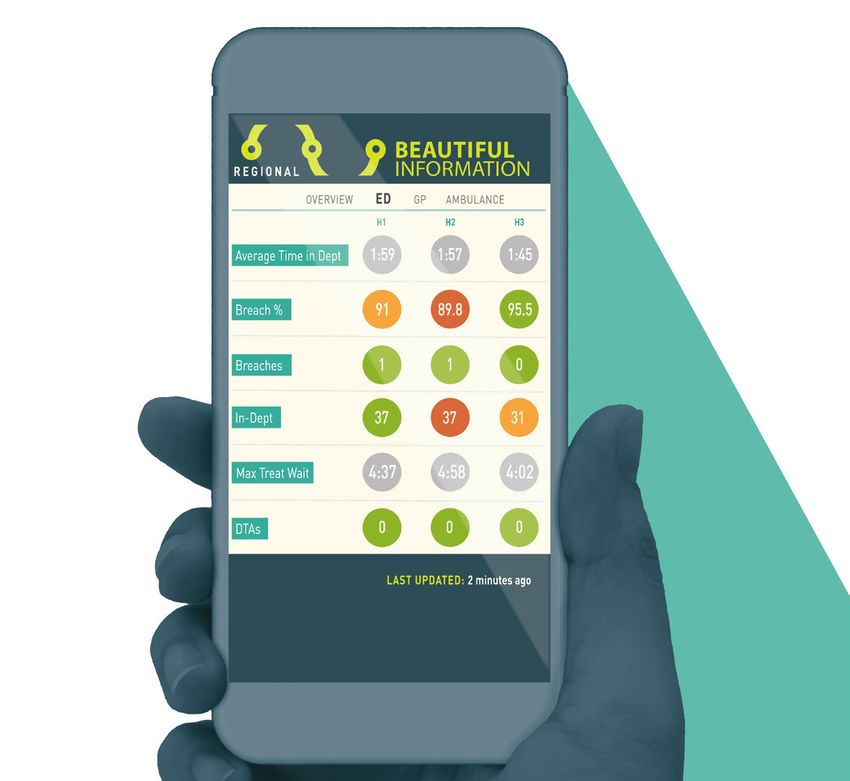
Examples include Qlik, Tableau and Beautiful Information (Box 8).*
Wrightington, Wigan and Leigh NHS Financial Trust has developed a suite of analytical
apps that support the organisation and its provision of healthcare from ward to board.
Their most renowned app supports their A&E department in monitoring demand (both
current and predicted), wait times, decisions to admit and other aspects of patient flow.
* For more information, go to www.qlik.com, www.tableau.com/learn/webinars/transforming-healthcare-data-
insight or http://beautifulinformation.org/solutions/performance
Why should we invest in analytical capability? 13The app has become the ‘single version of the truth’ and supports both the department and
the Trust executives in their decision-making. Since its introduction, the app has helped
reduce the median length of stay by 30 minutes: improving discharge levels, reducing
delays and minimising readmissions. Although the app may look simple, it contains
complex algorithms that use things like weather data to determine how many people are
likely to turn up at A&E in the hours and days ahead.
The Trust has developed other apps that support the organisation's referral-to-treatment
times, theatre efficiency, budget management, outpatient and inpatient care, and
monitoring of variations in care.
Mark Singleton, Associate Director of Information Management and Technology for the
Trust, said ‘We are so lucky to have such as a fabulous Business Intelligence team that
have developed a recipe for success when it comes to working with Clinical Services and
producing ground-breaking apps that support the organisation in so many different ways
but ultimately to ensure the organisation provides the best care for its patients.’*
Box 8: Example of an information tool for managers31
Operational Control Centre
•• A web-based app available on any smartphone, tablet or desktop platform.
•• Provides aggregated, real-time data.
•• A proactive management tool that highlights bed capacity and delays in the system.
•• Available anytime and anywhere, in the hospital or off-site.
•• Control over access to unlimited users.
•• Developed by Beautiful Information, an NHS/private partnership.
* M Singleton, personal communication, 2019.
14 Untapped potential: Investing in health and care data analyticsData analytics have also been beneficial to commissioners (Box 9).
Box 9: Using data analytics to support better commissioning
decisions.32
Bradford Districts Clinical Commissioning Group used the three-stage RightCare methodology
(where to look, what to change, how to change) to focus on clinical programmes and identify
value opportunities. They employed evidence-based methods with a clear emphasis on
outcomes to inform the commissioning and delivery of programmes to improve heart health.
In its first year of operation, Bradford’s Healthy Hearts helped 14,000 patients in the Bradford
area and has already potentially prevented 50 heart attacks and 50 strokes. More than 960
people in the Bradford area are now on vital stroke-preventing medicine, which has reduced
the risk of stroke by up to 75% in these patients, and avoided nearly 88 devastating strokes
a year. This is an anticoagulation rate of nearly 82%, the highest in the region. Over 4,500
patients at moderate to high risk of heart attack and stroke have been prescribed statins to
reduce their risk. By switching to different statins, over 6,000 patients have reduced their
cholesterol level. The risk of stroke for people with atrial fibrillation has been reduced by more
than two-thirds by anticoagulant medication prescribed by a doctor.
5. To better respond to national initiatives and regulation
The local health and care agenda is often shaped by external demands from national
government and arm’s-length bodies (Box 10). These will typically have a framework
for accountability and performance assessment that is applied to local providers and
commissioners of care. The tools used as the basis for these performance assessments
frequently rely on complex analytical methods when defining performance targets or
metrics, such as the Summary Hospital Mortality Index. Very often, local analytical teams
are needed to interpret these national information measures and put them into local
context.
For example, as part of the annual planning round, providers are obliged to generate
demand forecasts for their key points of delivery (eg emergency admissions, outpatient
referrals). For many organisations, these forecasts have been relatively naive in
construction, ignoring core concepts like trends and seasonality. To bridge the gap and
generate good-quality returns, NHS Improvement decided to develop univariate-time-
series forecasting tools to help providers increase the level of sophistication and statistical
rigour of their forecasts. The tools and outputs developed were delivered at scale using
web-based interfaces and dedicated output files. The code driving the tools was developed
on an open-source platform. It could then be shared with local analysts, who could re-use
and amend it as necessary. This univariate-forecasting approach is now a standardised
methodology for both NHS Improvement and NHS England.
It can be difficult for an individual organisation to ignore some of the approaches developed
by national bodies, such as NHS England or the Care Quality Commission, when these
are used in performance management or regulatory discussions. An organisation without
sufficient analytical capability will be at a distinct disadvantage in such discussions.33
Why should we invest in analytical capability? 15Box 10: How government requirements and expectations can shape how data analysis is used within a service Performance measurement and targets For some time, a system of nationally mandated indicators and targets has been a national tool for driving policy changes. Interpreting changes in these indicators is often a more complex process than a superficial analysis suggests. Population health management As part of The NHS Long Term Plan, the NHS ‘will deploy population health management solutions to support [integrated care systems] to understand the areas of greatest health need and match NHS services to meet them’.3 Analytical methods such as population segmentation and impactibility modelling are key, and integrated care systems will need to be able to use them effectively. Case-mix analysis The increasingly complex language of healthcare resource groups has been used for almost 20 years in funding acute care. A fairly basic scheme has seen a variety of refinements and adaptions to incentivise changes to care. Patient and staff surveys Established as a national requirement some years ago and still one of the most commonly used comparative performance tools. Understanding mortality differences Over the past decade, the monitoring of hospital fatality rates has been the subject of intense national and local debate.34,35,36 However, a number of local organisations had begun to monitor hospital mortality rates; government interest following the Francis report added momentum to work on standardised measures, such as the Summary Hospital-level Mortality Indicator.37 Variation in care and GIRFT More recently, initiatives such as RightCare and Getting it Right First Time (GIRFT) have used a combination of centralised analysis to develop benchmarking data that local organisations cannot generate themselves and support to interpret and analyse the implications for the local context. 6. To better allocate resources Moving resource allocation from simply reinforcing historical funding patterns to a system that represents need has been a recurrent theme in health policy since the 1960s.38 It is an area in which local interests battle hard for their share of the pot, and one where good analytical support is essential to understanding the evidence and weigh different arguments. At a national level, the analysis can be complex and often involves expert teams advising on government strategies. As the National Audit Office noted, ‘Given the amount of money involved – equivalent to nearly £1,400 per person each year – the way in which the Department [of Health and Social Care] and NHS England allocate funding to local commissioners is a crucial part of the way the health system works. These decisions are complex, involving mathematical formulae and elements of judgement.’39 16 Untapped potential: Investing in health and care data analytics
There is some evidence that national policy of resource allocation had an impact on
reducing inequalities between areas. Between 2001 and 2011, the proportion of resources
allocated to deprived areas in England compared with that allocated to more affluent areas
was associated with a reduction in absolute health inequalities from causes amenable to
good health care.40

Aside from the implementation of national allocation methods, there is also a need for
better analysis to support ways to identify local priorities in allocating resources. As
Geraldine Strathdee, Chair of the National Mental Health Intelligence Network, noted,
without benchmarking data, NHS resources are allocated on the basis of historical patterns,
guesswork or the ‘loudest voice’.41

7. To understand patient flow
The past few years have seen a recognition of the importance of understanding the way
patients flow through the care system.42 Often, the best way to achieve that is through the
use of sophisticated methods such as modelling, yet their uptake has been patchy.

Good examples do exist: for example, work to understand demand for long-term care in
Kent (Box 11). Others have used tools such as simulation and queueing theory to look at
scheduling community mental-health assessments.43 In Sheffield, local teams have applied
simulation modelling to evaluate the reconfiguration of stroke services in Sheffield and
South Yorkshire and this work has been integral to decision-making.

The challenge in adopting these tools routinely has been linked to a lack of capacity in
health services; too few staff members are felt to have the training or ability to use the
models.44 This is especially relevant considering current concerns with managing urgent
and emergency care and flows.45,46

Box 11: Modelling demand for long-term care47

 The Kent public health team began supporting the Kent and Medway Primary Care Trust
 cluster with the local Long Term Conditions Year of Care Commissioning Programme in 2012.
 At the time, there was limited understanding of how to quantify and estimate the benefits of
 the Quality, Innovation, Productivity and Prevention (QIPP) 'long term conditions' model of
 care on the wider Kent health economy, other than high-level national evidence. Intelligence
 and analysis of service use within integrated care models focused on the effects on individual
 organisations, but did not reflect wider patient journeys across all care settings. The aim of the
 public-health, whole-population approach was to create a baseline profile of how individuals
 with complex care needs affect hospital services during periods of crisis, alongside their use of
 other services, compared with other individuals.
 The information is being used to model demand for services and to assess the impact
 of service-change interventions across the whole health and care system. Analysis and
 dashboard metrics have been referenced in several key needs-assessment documents and
 other strategic plans. For example, a recent evaluation of a falls-prevention service by a
 community health provider used a linked, whole-population community health and hospital
 dataset to examine falls-related admissions before and after patients were referred to the falls
 service. This enabled a more sophisticated evaluation of whether the change in trends might
 actually be caused by patients using the new service.

                                                       Why should we invest in analytical capability?   17
The Health Foundation has been promoting local work to look at patient flow through the service. One recent review of a flow training programme in Wales noted the challenges of accessing the analytical time needed to support this work: ‘Another substantial constraint was that none of the local health boards had sufficient capacity and expertise in data collection and analysis to provide ongoing support to clinicians and make sure they had the right information in the right format for effective decision-making.’48 8. To support new data and new digital tools Another reason to support analytical capability is that it could open the way to new data- driven technologies, for example machine-learning algorithms and AI, that could help with the diagnosis and management of health conditions. Data are essential to the development of these technologies, and the NHS has some of the best health care data in the world. The NHS Long Term Plan envisages a role for private-sector companies, with an aim to ‘encourage a world leading health IT industry in England with a supportive environment for software developers and innovators’.3 Successful delivery of this innovation agenda is likely to depend on joint working between NHS teams and industry. NHS analytical teams have a lot to contribute in this area. They understand how NHS data are being collected and why, and they can act as a valuable bridge between NHS clinicians and managers and data scientists in industry. To take advantage of new methods, analysts must have access to the right software tools, particularly open-source programming tools that allow analysts to learn from each other (eg R and Python). In the early 2000s, open-source software began to gain acceptance, even among the sceptics. Today, open-source software is practically embedded in large, commercial organisations such as Facebook, Google, Twitter and banking and blue-chip corporations. They are taking full advantage and seeing the benefits of its power and scale. Some, such as Facebook, are actively developing and sharing their software tools within the wider open-source community, and some of those tools have been embraced in health care (eg Prophet49). The NHS has been much slower in accepting and seeing the value of open-source software, although the Department of Health and Social Care has recently announced that the newly created NHSX will ensure that all source code is open by default.50 One of the main barriers to wider deployment of open-source tools has been the reluctance of IT staff to install open-source software on secure health care systems. One analytics manager confided: ‘Getting an open-source application installed on my NHS laptop was a lengthy and arduous process. IT professionals were particularly risk averse to deploy software on their systems especially given the highly sensitive information they contain. We battled with the reluctance because we saw the value add it would give us. Now the software is installed, we are starting to realise the value add, why it’s so popular, and the awesome things it can do – you can see the reason why all the big organisations have embraced it. We are doing some things very differently now, it has allowed us to work more on our methodologies rather than churn.’* * P. Stroner, personal communication, 2019. 18 Untapped potential: Investing in health and care data analytics
Open-source tools such as 'R', a statistical programme that is gaining recognition in
commercial and public-sector applications, present an opportunity. Open-source offerings
include generalised tools such as Python (used as the platform for GCSE computing) as
well as niche analytical disciplines such as JaamSim (used for discrete-event simulation).
Open-source tools enable analysts to explore and sample an array of new analytical tools
and techniques they can ultimately deploy in their organisations. The challenge for the
future is to take advantage of these exciting analytical tools by building analytical capability.
This includes the networks needed to allow collaboration, such as the NHS-R Community
(Box 12).

Box 12: How open-source software tools can support better analysis in
health care

 The NHS-R Community was established in 2017 with an Applied Analytics Award from the
 Health Foundation. It is an online and face-to-face community dedicated to promoting the
 learning, application and use of the open-source 'R' tool in the NHS in the UK.
 One key aspect of this project was the way analysts can share resources (typically code)
 and expertise, and so improve analytical capability in the system. Moreover, the network
 had stimulated a wider conversation about what analysts can contribute to health care and
 the features of high-performing analytical teams. This is the kind of cross-organisational
 collaboration that the Health Foundation is seeking to encourage.
 The NHS-R Community has so far achieved:
 ••    a dedicated website (https://nhsrcommunity.com)
 ••    delivery of problem-oriented workshops in Wales and Yorkshire
 ••    the 2018 NHS-R Community Conference to promote the use of R in the NHS, which
       was attended by 119 delegates from across the UK and Europe.

The UK government, in its Life Sciences Industrial Strategy,51 sees health-service data as
being of value to those developing new digital tools. For example, the Open Prescribing
project52 uses existing data streams on prescribing collected from GP practices by NHS
Digital. The raw data files are huge, with more than 700 million rows, so a team at Oxford
have put together some analytical tools that are freely available to GPs, managers and the
public.52

Over the coming years, NHS organisations may wish to provide private companies with
access to NHS data, for example to help with the development of new algorithms or drugs.
The benefit for the NHS might include seconded data scientists working alongside NHS
teams. In that situation, we'd recommend an emphasis on skills transfer, so that the NHS
builds its capability to conduct analysis in a sustainable way.

                                                     Why should we invest in analytical capability?   19
9. To help patients and the public use information
Investing in data analytics enables new information flows to and from patients and the
general public.53 This information can help people make better-informed decisions about
their care, as well as contribute more effectively to the development of their local services.
There are also opportunities to engage the public in decisions about how data are used.
Table 2 lists some of the ways in which these information flows operate. Although many
revolve around the use of new technological tools, it is important to recognise that there is
still a significant analytical role in reporting, presenting and understanding the data.
Table 2: How analysts can support information-sharing
Flow of information Role of analysts
Sharing information about Organising and presenting information on organisational
performance and running of performance in accessible and easily interpreted ways (eg
health services websites).
Applying tools to discover The design and analysis of questionnaires and other tools to
patients’ views on the quality assess patient experience and satisfaction with services. It is
of services important to do this well – there are many examples of poorly
conducted or analysed questionnaires in use.
Applying tools that capture A person’s perception of their own wellbeing is widely
aspects of a person’s health accepted as an outcome measure and there are a range
or wellbeing (eg smartphone of tools to explore this. New technology is also growing
apps) to enable people to record information about their health.
Choosing and using the right instrument and correctly
interpreting derived data is an important analytical role.
Information flows between The use of remote monitoring of health information is seen
new monitoring tools and as increasingly important in the management of chronic
telehealth illness. It also finds its way into many people’s everyday lives.
But there are still challenges in how this information flows
through health care systems at an individual or aggregate
level, and there are ways that its power can be exploited.
Engaging patients and the The challenge here is to help summarise information in a
population in decisions about way that can help the public understand how the health care
health services and delivery system works. This means selecting which information is
used and how it is best presented so that it is both accurate
and easily understood.
Helping manage information Information from patients about their experiences of
about patients’ experiences care has come to be recognised as a key dimension in
of care understanding the quality of care. The design, administration
and interpretation of such tools need to be undertaken with
caution. For example, survey results are often presented in
meaningless rankings that do not acknowledge statistical
variability and sampling errors.
20 Untapped potential: Investing in health and care data analyticsDo managers underestimate the
value of data analysis?
People make decisions under constraints. These might be knowledge constraints or
constraints imposed by analytical ability. Decision-making is therefore based on heuristics:
experience-based techniques for problem-solving, or ‘knowing by trying’. The ‘recognition
heuristic’ is when people make a decision based on only one piece of information,
recognition – the knowledge that many others have chosen the same option.54
Analytical input can be considered too slow, misguided or irrelevant to the problem at
hand. The divide between analyst and senior manager can be further widened by:
•• The challenge of choosing the right analytical approach to fit the managerial
problem. This is partly an issue of whether analysts have effective communication
skills. It is also a question of whether analytical teams have the skills to unpick
problems and questions from senior managers in ways that match the analysis they
can do. This is an area in which external management consultants often excel.
•• Expectations of what constitutes good (enough) analysis. If senior managers have
little experience in data analysis, they may not be able to recognise the value that
data analysis can bring and the difference that it can make.
One way to bridge the divide is to invest in people who span professional boundaries. In
our previous report, Understanding analytical capability in health care: Do we have more
data than insight?, many interviewees described the importance of analytical leadership,
in particular people who understand the possibilities that good analysis can engender (and
how analytical teams work), yet who can also engage with managers at the highest levels to
influence and shape demand for analysis.7 Organisations with a well-developed analytical
workforce also tend to have strong leaders who are influential within the organisation,
whether these are chief analysts or in Chief Information Officer roles, and in some cases
they may be strong clinical professionals. The implication is that enhancing the profile
of good-quality analytics within an organisation must involve recognising the current
generation of leaders as well as investing in the next generation. A key skill is to spot
opportunities for analysis that other senior staff don’t see, and manage expectations around
requests for analysis.
The right presence at the organisation’s decision-making level can help shift the
relationship between decision-makers and their in-house analytical teams. The direction
of change is from a relationship where the analysts unquestioningly provide whatever they
have been asked to provide, to one where the requests received will address the problems
and begin to be anticipated, and to an extent shaped, by the analytical team (Box 13).
Do managers underestimate the value of data analysis? 21You can also read


