Safely Back to Work Best Practice Protocols - May 2020 - Randstad
←
→
Page content transcription
If your browser does not render page correctly, please read the page content below
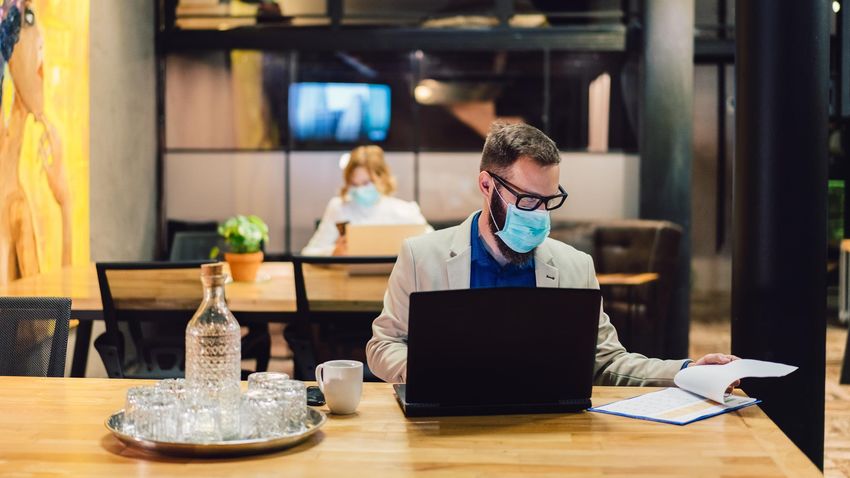
Safely Back to Work
Best Practice Protocols
         May 2020
Version 1.0

Context & Objectives
Safely back to work
Examples of safe & next work solutions
Industry Examples in Practice
Appendix: Overview of measures in checklist

                                                       2
Version 1.0

Enabling workers to return to work
safely
The COVID-19 health crisis and continued lockdown in many
markets is posing unparalleled challenges to people and
economies around the world

To limit the economic downturn and impact on people’s ability to
earn a living, the labor market and all its stakeholders
must quickly adjust to a new reality

The alliance of HR services industry players, launched by
Randstad NV, the Adecco Group and ManpowerGroup on April 16,
pledges to apply their collective experience, fostering connection
between the various stakeholder groups and supporting the
sharing of best practices

Best Practice Health and Safety Protocols contains >100
collected measures in their markets. These measures can help
to complement country and sector specific protocols. Industry
bodies, unions, employers, governments, healthcare authorities
and others can help shaping these protocols

Disclaimer
This document is a summary of relevant provisions which we believe have been
implemented and have not been independently verified. Care should be taken with how the
content is to be implemented in each case to ensure that all applicable laws and
regulations and (local) government guidance are observed.
                                                                                                   3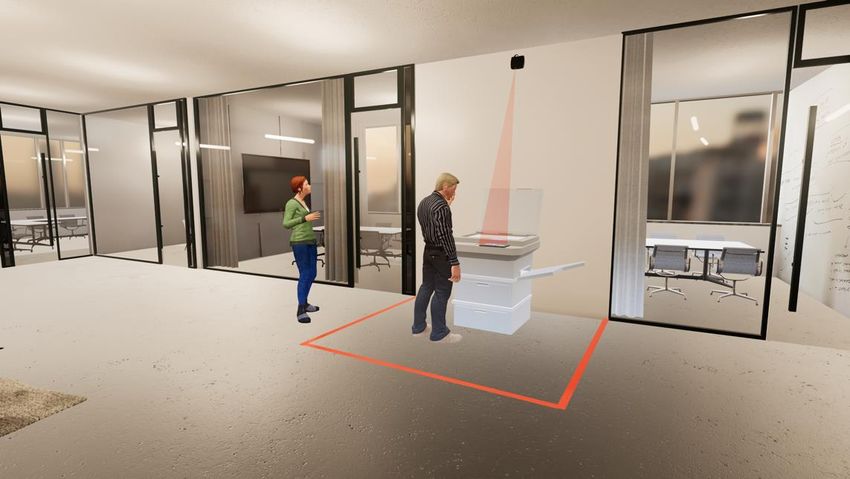
Version 1.0

Overview of categories in the best practices checklist
                                                                                                                                                                                                             Details next page

Control level
Levels of Control - adapted based on NIOSH's (National Institute for       Elimination - physically remove the hazard e.g. do not work
Occupational Safety and Health) Hierarchy of Controls, which is grounded   Substitution - replace the hazard e.g. work from home
in Safety management Systems such as the ISO 45001 and ANSI 1-10
models                                                                     Engineering controls - isolate people from the hazard e.g. arrange access point controls
                                                                           Administrative controls - change the way people work e.g. enable sanitation with hand sanizers
                                                                           Personal protective equipment - protect the worker with PPE e.g. provide face masks

Measure categorization
Type of measure                                                            Personal - safety instruction which a person can do him/herself
                                                                           Inter-relational - with regard to interacting with others
                                                                           Organizational - with regard to business facilities, rooms as well as organization such as planning shifts of personnel
                                                                           Machines - with regard to machines, technical installations etc.
                                                                           Compliance - with regard to checking whether measured are followed-up on

Industry                                                                   The industry for which this protocol measure is important/relevant

Country                                                                    The country (or region within) for which this protocol measure is important/relevant

COVID policy and source                                                    The policy that was enforced by a government or another institution (e.g., sector organization), which is the main reason why a measure needs to be put in
                                                                           place. This will support us in identifying what measures need to change when policies are tightened and/or alleviated

Measure description
Topic name                                                                 A topic name for the measure

Measure                                                                    The preventive measure to be taken to mitigate the H&S risk and in line with the obliged policy

Work situation                                                             A situation related to work for the which the measure is valid

Effect measurement                                                         The aspired effect of the measure and how this can be measured (e.g., no infections within a shift, to measure by the number of reported cases)

Work instructions                                                          How to put the preventative measure into action at work; a practical and clear, the "how to"

Infrastructure requirements                                                Any items that are required to make the work instructions happen

                                                                                                                                                                                                                                        4
Version 1.0

Levels of Control to categorize the measurements
Adapted based on NIOSH's (National Institute for Occupational Safety and Health) Hierarchy of Controls

 High                                                                    Country context
 economic                                                                                                              Most        High human
 impact          Elimination                                                                                           effective   impact
                 physically remove the hazard
                                                                                5    No
                                                                                    work
                 Substitution
                 Replace the hazard
                                                                          4    Work remote,
                                                                                close 1 site
 Levels of                                              Primary                                             Host
 risk control    Engineering controls                                                                                              Impact on
                 Isolate people from the hazard         employer           Barrier devices, access          employer               personal life
                                                                     3    point control, working in
                                                                             fixed tested teams
                 Administrative controls
                 Change the way people work                  2     Enable sanitation with hand sanitizer,
                                                                       cleaning (before/after shifts)

 Low             PPE                                               Provide personal protective equipment,
 economic        Protect the worker with Personal                                                                      Least       Low human
                                                        1              masks/respirators, COVID tests                              impact
 impact          Protective Equipment                                                                                  effective

Share sector/ country practices: achieving acceptable
levels of risk as well as limiting economic impact

                                                                                                                                                   5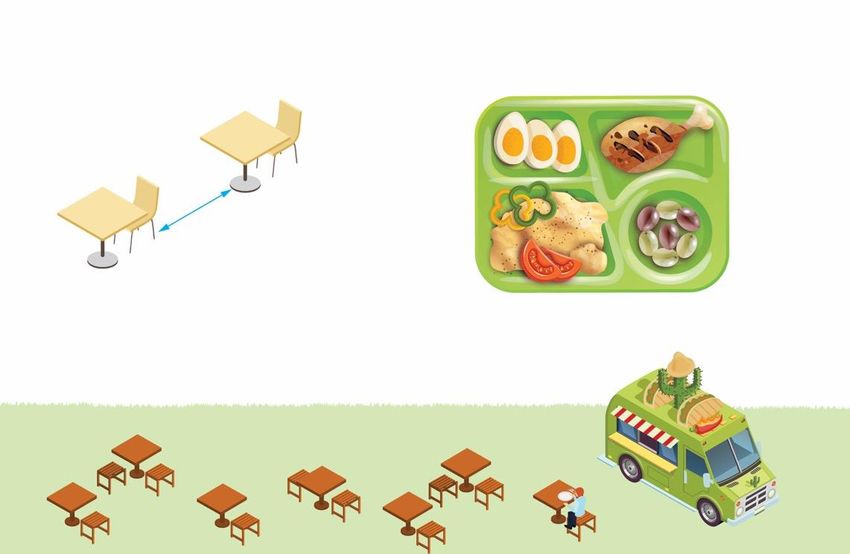
Version 1.0

How a COVID-19 health & safety protocol can address the various risks
at the workplace
Illustrative example

Level of risk control                Canteen and / or breaks measures a company could consider to adopt

  Elimination                        n/a
  physically remove the hazard

  Substitution                       Instruct employees not to congregate in breakrooms/canteens for their breaking time
  Replace the hazard

  Engineering controls               Identify dedicated eating areas on site and ask employees to bring prepared meals and
  Isolate people from the hazard     refillable drinking bottles from home

  Administrative controls            Set up lunch / breaks shifts (by teams) with staggered start and finish times to guaranty
  Change the way people work         physical distancing during lunch time and / or breaks

  PPE                                Install temporary disposable cardboards or plastic separators in lunch rooms and common
  Protect the worker with Personal   areas
  Protective Equipment

                                                                                                                                     6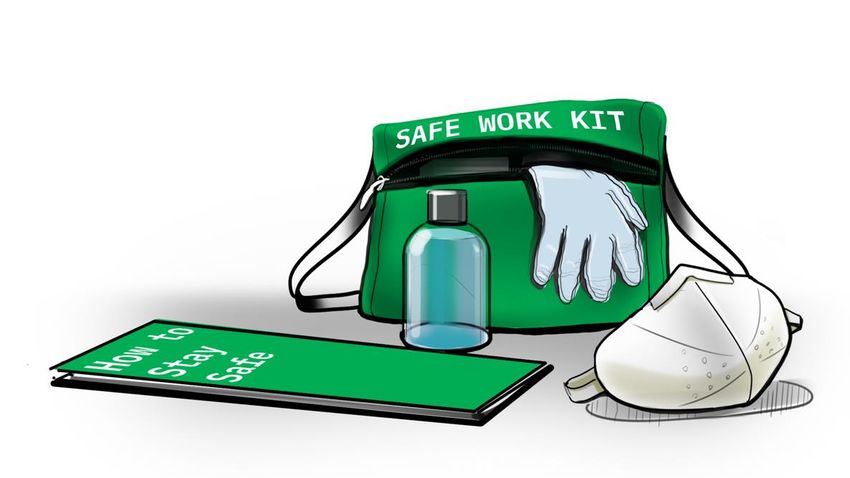
Version 1.0

Context & Objectives
Safely back to work
Examples of safe & next work solutions
Industry Examples in Practice
Appendix: Overview of measures in checklist

                                                       7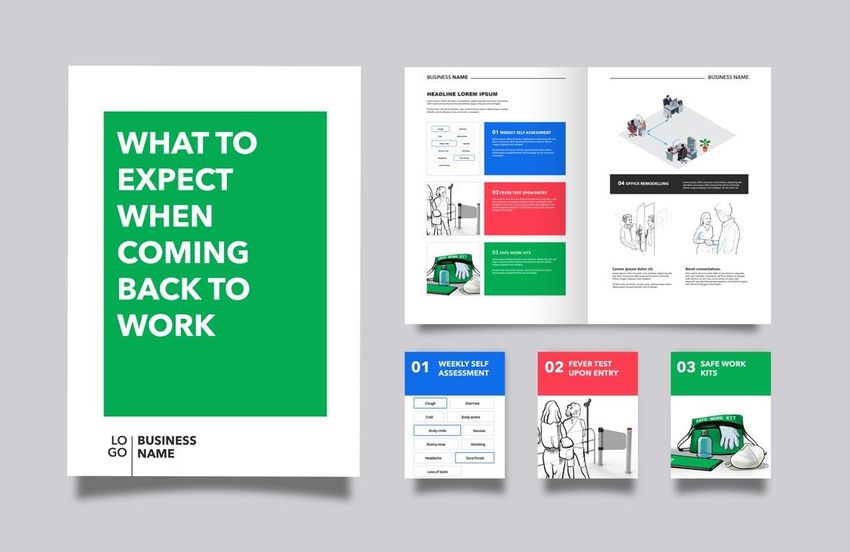
Illustrative Approach
Approach for getting Safely Back to Work Version 1.0
Focus of this document
1. Co-assess current work 2. Setting the course 3. Develop concepts/ 4. Develop roadmap 5. Implement solutions 6. Evaluate & iterate 7. Ongoing support
environment regarding for a tailored path solutions for the path back to /check-ins
back-to-work-readiness back to work safe work
Adoption layer
• Identification of workplace Optional: Fast lane, focusing on employee adoption of existing ideas
Successful adoption
needs & opportunities
(operational & cultural), through Co-create transition Facilitate adoption of Adoption success- Sustaining the
A: Accelerator module – Take existing journey transition journey reflection adoption journey
• benchmarking your situation initiatives/MVPs
today against scientifically quick win path
into a rapid A set of workable Collaborate with internal What works/doesn't work Organisational change-
established MVPs of safely You already consider test- & learn- coach advises on
agreements and rules of stakeholders to ensure the on a behavioural
coming back to work (spacing, implementing concrete back- loop implementation adoption-
conduct, that put the successful adoption of adoption-level?
virus protection, etc.) to-work-initiatives? aspects of sustaining the
safety and needs of necessary behavioural
Alignment with everyone first. shifts at the workplace. → If needed: iterate & journey.
• researching needs & attitudes We help you getting what
regarding adoption of key stakeholders establish course-
you already have onto the and testing with corrections
workplace safety measures with road at the speed of light. Optional:
relevant stakeholders key target
audiences Model the
impact of
solutions Operational layer
• Prioritization of initiatives B: Build & Test Co-Create using
Safe Operations
prototypes advanced Operational Implementation Sustaining the
Module – holistic Define prioritized
• Quick wins (Sprint-/agile- analytics implementation of success-reflection implementation
development path concept launch-plan
→ "the path back to work based "Develop, journey
initiatives/ideas What works/doesn't work on
tomorrow" test, & iterate"-
You know you need to safely A toolbox of concepts an idea/initiative-level?
setup) Collaborate with internal Implementation-coach
• vs. get back to work, but don't (incl. backlog) for an
exactly know how? adapted and fully stakeholders to realize the advises on operational-
Alignment with → If needed: iterate & aspects of sustaining the
• Moon shots equipped workplace at successful implementation
key stakeholders establish course-corrections journey.
→ "sustaining the journey” We help with an agile end-to- which employees can of the prioritized “safely-
and testing with work safely and thrive, back-to-work”-solutions at
end process to co-create
key target the workplace.
concrete tailored initiatives again.
audiences
Example tools
Back-to-work-readiness Setting-the-Course-Workshop Ideation Prototyping Testing Adaption of toolbox Collision Workshop: Agenda-set Safe workplace dashboard/control Follow up and coaching
scorecard: review of floor plan, Iteration (KPIs x Impact) (transformation co-creation kit) ownership for implementation & room & reflection — weekly with session
PPE guidance, policies and responsibilities key stakeholders
Back-to-work transition journey
training methods Employee and stakeholder
Operations implementation sprint
Back-to-work implementation evaluative survey
roadmap
8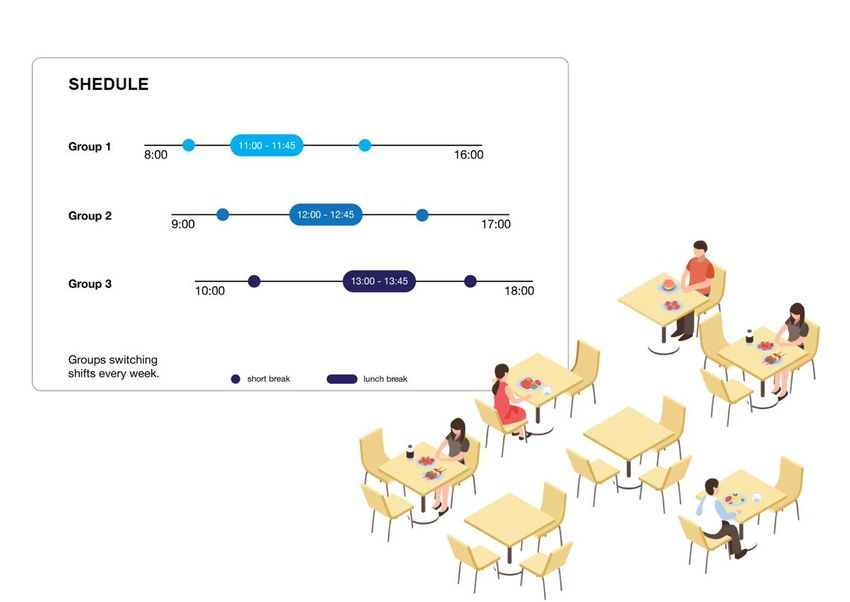
Version 1.0

Example of the journey to implement a “Safely Back to Work” Action plan
Illustrative example
           Lockdown / remote period                                                                          Transition period                                                     Planning and set up for return
•                         Planning transition period, prototyping temporary and permanent                •   Monitoring impact of implemented measures, evaluating, refining   •   Gradually scaling back all temporary measures
                          measures to implement.                                                             and tweaking where needed.
                                                                                                                                                                               •   Maintaining strategy to quickly implement temporary measures in
                                                                                                         •   Monitoring overall COVID-19 development, being ready to scale         case of new emergency/virus outbreak.
             Research and                                                                                    up and down measures as needed.
        co-creation to develop
       action plan and roadmap                           Coaching and check-ins

                                                                                        Visual Social-Distancing/Sanitization Cues
                                                                                        Highly Visible Workspace Cleaning
    Successful adoption

                                  Worker
                               behaviour and                                            Designated Team Guard1
                                  policies                                              Staggered Shifts and Lunch Times
                                                                                        Canteen Tables Spaced and Food Served Portioned in Re-usable / Disposable Boxes             Re-usable / disposable Boxes

                                                           Communication plan to reach and reassure employees
                               Return to work
                                                           Web conferences (pre-return)
                                  training
                                                                  Online Trainings (Pre and Post Return)

                                                           Work from home kit
                                 Separation                                    Re-modelled workspace
                                – space and
                                                                               More Touch-free Handles/Interfaces
                                    time
    Safe Operations

                                                                               Improved air filtration and ventilation

                                                                                        Temperature measurement upon entry
                              Control, testing                                          Hygiene zones with checkpoints between
                              and surveillance                                          Health ID and Employee Risk Categorization
                                                                                        Hotspots marked with colour

                              Personal health                                           Upgraded PPE
                                measures                                                Clean working kits

1.                        To ensure any new hygiene standards are maintained and to provide workers with a voice in maintaining these standards

Source: McKinsey article: Europe needs to prepare now to get back to work—safely, team analysis and press search                                                                                                                               9
Version 1.0

Context & Objectives
Safely back to work
Examples of safe & next work solutions
Industry Examples in Practice
Appendix: Overview of measures in checklist

                                                      10
Separation – Space and Time
Version 1.0
Re-modeling/Re-tooling of the workplace
Factory
Ensuring greater spacing between employees/functions/cubes Office
Illustrative Local governmental rules and decisions should always be followed carefully
Concept Description
Lines, offices and cubes could be
redesigned or re-tooled to provide for
greater spacing between employees
and reduce the risk of contamination
between functions.
Impact
• This may help to reduce the
spread of any infection
• May also provide
compartmentalisation of the
organisation in the event of a wider
spread allowing the maintenance
of some company functions.
Source/Supporting Rationale: American Centre for Disease Control – “Implementation of Mitigation Strategies for Communities with Local COVID- 11
19 Transmission“ OSHA - ”Guidance on Preparing Workplaces for COVID-19”Separation – Space and Time
Version 1.0
Improved Air Filtration & Ventilation
Factory
More efficient removal of hazardous particles from the environment Office
Illustrative Local governmental rules and decisions should always be followed carefully
Concept Description
Workplace ventilation and filtration
could be improved to reduce any
hazardous particles which may be
airborne.
Impact
• Reduces the concentration of
airborne viral or bacterial particles
which may help to reduce the
likelihood of worker infection
Source/Supporting Rationale: OSHA - ”Guidance on Preparing Workplaces for COVID-19” 12Separation – Space and Time
Version 1.0
More Touch-free Handles/Interfaces
Factory
Fewer handles and physical interfaces and introduce motion control Office
Illustrative Local governmental rules and decisions should always be followed carefully
Concept Description
Greater use of motion-control or
touchless doors and interfaces
throughout the workspace.
Impact
• It can reduce the risk of workers
contacting a contaminated surface.
• Could help reduce cleaning
requirements
13Separation – Space and Time
Version 1.0
Visual Social-distancing/Sanitization Cues
Factory
Providing quick checks/reminders to maintain distancing and hygiene Office
Illustrative Local governmental rules and decisions should always be followed carefully
Concept Description
Visual cues such as markings or
projections on the floors, walls and
interfaces could indicate to workers of
safe distances and provide reminders
as to when they should change PPE1
or wash their hands as the go through
the working environment.
Impact
• May Increases the frequency with
which employees wash their hands
• Increases employee awareness of
hygiene
1. E.g., paper tissues could be provided to press photocopier buttons
14Separation – Space and Time
Version 1.0
Staggered Shifts and Lunch Times
Factory
Employee shifts and breaks can be staggered to prevent queues and crowds Office
Illustrative Local governmental rules and decisions should always be followed carefully
Concept Description
Easy and clear instruction about work
shifts and breaks could be provided
(e.g., where employees should sit and
for how long they can be in the
breakroom/canteen)
Impact
• Can help reduce queues and
crowds, especially relevant if
screening measures are
introduced requiring more time to
pass through.
• Could make it easier for workers to
maintain social distance.
Source/Supporting Rationale: American Centre for Disease Control – “Implementation of Mitigation Strategies for Communities with Local COVID- 15
19 Transmission“Separation – Space and Time
Version 1.0
Canteen Tables Spaced and Food Served
Factory
Portioned in Re-usable / Disposable Boxes
Serving pre-packed food in re-usable boxes Office
Illustrative Local governmental rules and decisions should always be followed carefully
Concept Description
01 Canteen tables spaced 02 Pre-portioned re-usable / disposable boxes Replace self-service style lunches from
canteen with catered, portioned food in
re-usable / disposable boxes. This could
take the form of food trucks during
summer months to get the workforce into
fresh air.
Canteen tables could ensure spacing
between employees so no-one sits
03 Food trucks in summer season directly beside or in front of the worker.
(via checker-board arrangement). Strict
cleaning procedures need to be in place.
Impact
• May help to reduce queues and
physical contact between workers
16Personal Health Measures
Version 1.0
Hygiene Zones with Checkpoints Between
Factory
Workspace separated into zones with mandatory sanitization between each Office
Illustrative Local governmental rules and decisions should always be followed carefully
Concept Description
The workplace could be separated
into various zones with mandatory
sanitization between each and
recording of who is moving between
each zone.
Impact
• Increases the frequency with which
workers must wash hands/change
PPE.
• Provides an indicator of which
zones are most at risk of infection
and enables contact tracing
Source/Supporting Rationale: American Centre for Disease Control – “Implementation of Mitigation Strategies for Communities with Local 17
COVID-19 Transmission“Worker Behavior and Policies
Version 1.0
Highly Visible Workspace Cleaning
Factory
Confirmation of cleaning is displayed confirming cleanliness of workspace Office
Illustrative Local governmental rules and decisions should always be followed carefully
Concept Description
Cleaners should update a
‘confirmation of cleaning’ list or display
in a highly prominent location upon
completion of cleaning.
Impact
• Instils confidence in workers that
the workspace is clean and well
maintained.
18Worker Behavior and Policies
Version 1.0
Hotspot Surfaces Marked with Colour
Factory
Frequently contacted surfaces highlighted and prioritized for cleaning Office
Illustrative Local governmental rules and decisions should always be followed carefully
Concept Description
Surfaces that are frequently contacted
by workers could be brightly colour-
coded as a reminder to cleaning staff
to ensure they are effectively sterilized
and a visual cue to workers to wash
hand or change PPE.
Impact
• Increases employee awareness of
surface contact and hygiene
• Provides greater direction to
cleaning staff
Source/Supporting Rationale: EU OSHA “COVID-19: guidance for the workplace” 19Worker Behavior and Policies
Version 1.0
Clean Working Kits
Factory
Each employee has a personal kit of cleaning essentials i.e. alcogel, wipes… Office
Illustrative Local governmental rules and decisions should always be followed carefully
Concept Description
Each employee could be issued with a
personal “Clean Working Kit” which
would include items such as alcogel,
sanitary wipes and PPE disposal
bags.
Impact
• This could help to ensure each
employee has the tools they need
to maintain good personal and
workplace hygiene.
20Worker Behavior and Policies
Version 1.0
Designated Team Guard
Factory
A team member who ensures new standards are being followed Office
Illustrative Local governmental rules and decisions should always be followed carefully
Concept Description
To ensure any new hygiene standards
are maintained and to provide workers
with a voice in maintaining these
standards, a Team Guard could be
appointed.
Impact
• This Team Guard would be
responsible for ensuring their team
have what they need in terms of
knowledge and equipment to
maintain personal and workplace
hygiene.
21Version 1.0
Printed Media Campaign
Factory
An information and learning campaign comprised of printed info packs Office
Illustrative Local governmental rules and decisions should always be followed carefully
Concept Description
Leveraging printed media to inform
employees about the changes they
can expect when returning to work.
Impact
• Can increase transparency and
give clarity about current situation
and the way that it is handled
• Could increase mental and
emotional preparedness of staff
upon return to work
22Returning to Work Training
Version 1.0
Web Conferences (Pre-Return)
Factory
A series of web conferences to keep workers informed throughout process Office
Illustrative Local governmental rules and decisions should always be followed carefully
Concept Description
Gathering employee groups to video
conferences where they can get the
latest information from their employer.
Allowing questions and concerns to be
raised prior or during call.
Impact
• Helps keep everyone up to date
• Can enforce transparency and
trust within organisation
23Returning to Work Training
Version 1.0
Online Trainings (Pre and Post Return)
Factory
Online learning courses providing latest info. to prepare workers for return Office
Illustrative Local governmental rules and decisions should always be followed carefully
Concept Description
These online training sessions may
form a part of a larger series preparing
the worker to return to the site.
Beginning in their home and continuing
for a time after return
Impact
• Can be deployed within the workers
home (pre-return) or on-site (post-
return)
• Can be tailored to match workers
preferred learning style
• Can be gamified to provide learning
incentives
• Can provide continuity across the
pre and post return horizons
24Returning to Work Training
Version 1.0
Large Format Visual Displays in Workplace
Factory
Prominent displays highlighting new processes, policies, tools and layouts Office
Illustrative Local governmental rules and decisions should always be followed carefully
Concept Description
Large format posters or digital displays
providing prominent, frequent reminders
to employees of the new workplace
situation and (crucially) the rationale
behind it.
Impact
• Large format should make the
messaging “unmissable”
• Simple messaging can be delivered in
an highly accessible way
• Can be deployed standalone or part
of a wider messaging strategy
25Version 1.0
Context & Objectives
Safely back to work
Examples of safe & next work solutions
Industry Examples in Practice
Appendix: Overview of measures in checklist
26Version 1.0
Manufacturing safeguarding measures - overview PRELIMINARY
NON-EXHAUSTIVE
Theme Safeguarding measures
Travel / movement to work (incl. work from home measures)
i Workforce protection Entry to worksite
Employee health policy measures
These examples are
Personal protective equipment
broadly applicable to
Workplace distancing and workstation barriers
working environments in
Employee protection Sanitization measures
ii Manufacturing
Worksite facility conditions
Public health knowledge and capability-building Assembly line
Social distancing measures Build-in-place
iii Non-employee protection
Sanitization measures Small job shop
Limitations against exposure to individuals
…
Preventions against material contamination
Physical workspace adaptations
Digital workspace adaptations (incl work from home measures)
iv Business process adaptations
Operational and productivity process adaptations
Communication and continuous improvement adaptations
Detection and tracing
v Employer-led public health interventions
Personal behavior reinforcement
Governance and councils
vi Industry-wide safeguards
Standards and protocols
Local governmental rules and decisions should always be followed carefully Last updated 4/21/2020 27Version 1.0
Manufacturing safeguarding measures PRELIMINARY
NON-EXHAUSTIVE
Local governmental rules and decisions should always be followed carefully
i Theme: Workforce protection
Protection area Considerations1
Provide dedicated transportation for all employees with social distancing (50% capacity) and sanitize vehicle after
Travel / movement to work
use
(incl. work from home
measures)
Establish controlled means of entrance (single point, multiple entrances, etc.)
Separate points of entry and points of exit
Establish sign-in stations or check points restricting access to employee workstations / production areas
Workforce protection
Ensure controlled measures to minimize visitor/contractor access to facility when entering property (escorted, PPE
requirements)
Limit visitors/contractors entry unless necessary to production
Visitors/contractors to fill out health questionnaire prior to entering facility
Entry to worksite
Install hand sanitizing stations at entrances and in common areas
Select list of people allowed to work based on strict criteria (e.g., age profile, previous medical history, etc.)
Suspend fingerprint-entry keypad
Arrival times staggered by 10-minute intervals over 1-2 hours to reduce congregation on entry and exit
Staggered breaks to reduce large group gatherings
Mandatory 14-day quarantine in case person identified as high risk
Employee health policy
measures
1. Aggregation from case studies across different countries and US states. Please consider the list as examples of actions; level of importance to Last updated 4/21/2020 28
contamination containment have not been assigned and is up to client and state/federal public health regulations and recommendationsVersion 1.0
Manufacturing safeguarding measures PRELIMINARY
NON-EXHAUSTIVE
Local governmental rules and decisions should always be followed carefully
ii Theme: Employee protection
Protection area Considerations1
Personal protective Ensure gloves, masks and goggles for employees on the shop floor
equipment Designate at least one person to track usage of PPE and one person per team to procure PPE
Create operating “pods” (~2 employees per pod) in a production line, divided by physical barriers
Air-gap connected workspaces, with a “clean room” to allow employees to sanitize
Workplace distancing and Ensure commercial drivers' access is limited to shipping area and separate from staff
workstation barriers Increase hygiene protocols for shipping/receiving areas - PPE requirements and enhanced cleaning
Minimize physical presence of non-core workers
Employee protection
Postpone large group training or on-site visits; set up virtual training or on-site visits
Enhanced sanitization of all common areas and of common touch points (doors, stairwell handles, light switch,
elevator switch, etc.)
Sanitization measures Procure increased amounts of soap, hand sanitizer, cleaning materials and equipment
Designate one person per shift whose sole job is to clean surfaces
Staggered sanitation breaks for mandatory hand washing
Set up an infrared video camera; Use of UV light lamps to sanitize work area and equipment
Ventilation per OSHA guidance
Worksite facility Reduce high touch surfaces (e.g., prop open bathroom doors); Apply copper tape onto high-touch surfaces that
conditions can’t be avoided. New England Journal of Medicine study found that COVID survives on copper surfaces the least
amount of time, 4 hours
No-touch trash bins/ waste receptacles
Public health knowledge Use promotional programs around hand washing and other best practices ("Do the 5")
and capability-building
1. Aggregation from case studies across different countries and US states. Please consider the list as examples of actions; level of importance to Last updated 4/21/2020 29
contamination containment have not been assigned and is up to client and state/federal public health regulations and recommendationsVersion 1.0
Manufacturing safeguarding measures PRELIMINARY
NON-EXHAUSTIVE
Local governmental rules and decisions should always be followed carefully
iii Theme: Non-employee protection
Protection area Considerations1
Limit use of common dining area/ cafeteria (e.g. group orders delivered to site, designated seating areas)
Limit number of people within elevator (1 person per at a time or at 50% capacity)
Social distancing
Physical ring fencing by re-organizing into cellular layouts across buildings in facility
measures
Enhanced sanitization of common touch points (doors, stairwell handles, light switch, elevator switch, etc.)
Non-employee protection
Regular disinfection of high-touch surface areas (e.g., door handle, light switch, common tools)
Sanitization measures
Facility will disclose infection to state DOH bodies and follow processes in line with health department guidelines
On detecting positive infection, consider mandatory shutdown for full deep-sanitation and testing for staff (at
Limitations against minimum for those in close proximity to detected case/s)
exposure to individuals
Enhanced hygiene protocols for shipping/receiving areas
Consider 2-step inventory model
Preventions against
— Designated space for warehousing new inbound inventory, quarantined for 24 hours
material contamination
— Move inventory after 24 hours into “safe for use” warehousing space for use by facility
1. Aggregation from case studies across different countries and US states. Please consider the list as examples of actions; level of importance to 30
contamination containment have not been assigned and is up to client and state/federal public health regulations and recommendationsVersion 1.0
Manufacturing safeguarding measures PRELIMINARY
NON-EXHAUSTIVE
Local governmental rules and decisions should always be followed carefully
iv Theme: Business process adaptations
Protection area Considerations1
Reduce seating in breakroom / common areas to ensure >6ft physical distance
Designate rooms to quarantine individuals until health officials are contacted / individual can safety return home or to
Physical workspace a health facility, making sure to deep clean after use
adaptations Park vehicles one spot away from each other, where feasible
Mark designated areas with physical markers to reinforce compliance with measures
Business process adaptations
Digital workspace Require non-core functions to work from home until further notice
adaptations (incl work Divided critical function teams with groups alternating work in-office or using satellite sites
from home measures) Digitize shift handovers and group discussions within facility
Mandatory hand washing every 2 hours, installation of additional hand sanitization and soaps in toilets and common
areas
Shift work for white collar workers as well as for blue collar workers. Increase number of shifts, including spreading
Operational and work over the weekends
productivity process Staggered breaks to reduce large group gatherings
adaptations Avoid meetings of more than 5 participants; obligatory face mask during face-to-face meetings
Signaling to alert employees before a maintenance event, allowing teams to social distance before beginning
maintenance on the line
Provide daily updates to all employees on latest facts concerning COVID-19 in community, updated policies, and
impact on business and employment
Communication and
continuous improvement Establish team or communication chain to collect questions and concerns from community
adaptations Extensive signage and communication on stepped-up cleaning and hygiene practices, with visible air purifiers etc.
placed
1. Aggregation from case studies across different countries and US states. Please consider the list as examples of actions; level of importance to Last updated 4/21/2020 31
contamination containment have not been assigned and is up to client and state/federal public health regulations and recommendationsVersion 1.0
Manufacturing safeguarding measures PRELIMINARY
NON-EXHAUSTIVE
Local governmental rules and decisions should always be followed carefully
v Theme: Employer-led public health interventions
Protection area Considerations1
Check and log daily body temperature (with contactless thermometer) for all employees, visitors, contractors, and
personnel entering and reentering facility
Ensure appropriate procedures if employees exceed normal body temperature (e.g., employees get tested/allowed
to work remotely/relieved from work for 2 weeks) and set up tracking of tested or sick employees and their point of
Employer-led public health interventions
contacts for contact tracing
Notify health officials of suspected sick employees
Group employees into teams that stick together (work, travel, live, and eat) to facilitate health tracking
Detection and tracing
Use promotional programs around hand washing and other best practices ("Do the 5")
Personal behavior
reinforcement
1. Aggregation from case studies across different countries and US states. Please consider the list as examples of actions; level of importance to Last updated 4/21/2020 32
contamination containment have not been assigned and is up to client and state/federal public health regulations and recommendationsVersion 1.0
Manufacturing safeguarding measures PRELIMINARY
NON-EXHAUSTIVE
Local governmental rules and decisions should always be followed carefully
vi Theme: Industry-wide safeguards
Protection area Considerations1
Coordinate with industry associations and union organizations on best practices and capability checklists in
reference to WHO, DOH, and CDC guidelines
COVID-19 Inspection service to clear sites before reopening
Industry-wide safeguards
Governance and councils Local enforcement officers to regularly visit sites, physically or virtually, and fine for safeguard infractions
National COVID-19 standards for Health Inspections, for specific industry/ workplace environment
Standards and protocols
1. Aggregation from case studies across different countries and US states. Please consider the list as examples of actions; level of importance to Last updated 4/21/2020 33
contamination containment have not been assigned and is up to client and state/federal public health regulations and recommendationsVersion 1.0
Foodservices safeguarding measures - overview PRELIMINARY
NON-EXHAUSTIVE
Theme Safeguarding measures
Travel / movement to work (incl. work from home measures)
i Workforce protection Entry to worksite
Employee health policy measures
This playbook is broadly
Personal protective equipment
applicable to working
Workplace distancing and workstation barriers
environments in
Employee protection Sanitization measures
ii Manufacturing
Worksite facility conditions
Public health knowledge and capability-building Restaurant / bar
Social distancing measures Counter service / fast
Sanitization measures food
iii Non-employee protection
Limitations against exposure to individuals Cafeteria
Preventions against material contamination
Physical workspace adaptations
Digital workspace adaptations (incl work from home measures)
iv Business process adaptations
Operational and productivity process adaptations
Communication and continuous improvement adaptations
Detection and tracing
v Employer-led public health interventions
Personal behavior reinforcement
Governance and councils
vi Industry-wide safeguards
Standards and protocols
Local governmental rules and decisions should always be followed carefully Last updated 4/21/2020 34Version 1.0
Foodservices safeguarding measures PRELIMINARY
NON-EXHAUSTIVE
Local governmental rules and decisions should always be followed carefully
i Theme: Workforce protection
Protection area Considerations1
Dedicated transportation facilities for employees
Gas subsidies for car commuters
Travel / movement to work Passenger limits on public transit
(incl. work from home
“Health pass” for COVID free riders to access public transit
measures)
Mandatory sanitation procedures upon entry (hand washing, putting on PPE, setting up workstation)
Workforce protection
Install hand sanitizing stations at entrances and in common areas
Entry to worksite
Mandatory 14-day quarantine in case person identified as high risk
Paid sick leave
“Dog bag” meal delivery for at-home workers
Employee health policy Worker subsidies for home care
measures Flexible hours/part time to accommodate family needs
1. Aggregation from case studies across different countries and US states. Please consider the list as examples of actions; level of importance to Last updated 4/21/2020 35
contamination containment have not been assigned and is up to client and state/federal public health regulations and recommendationsVersion 1.0
Foodservices safeguarding measures PRELIMINARY
NON-EXHAUSTIVE
Local governmental rules and decisions should always be followed carefully
ii Theme: Employee protection
Protection area Considerations1
Ensure gloves and masks for employees, regardless of customer-facing, food prep, or management in restaurant
Personal protective No shared equipment between employees; individual daily refreshed PPE or daily disinfecting of employees’
equipment uniforms
Maintain 6 ft distance between employees
No contact delivery model – delivery workers to leave food at doorstep
Workplace distancing and
workstation barriers
Employee protection
Deep cleaning of restaurant seating and kitchen areas
Sanitization measures Hourly or bihourly cleaning
Ventilation per OSHA guidance
Worksite facility No-touch trash bins
conditions Virtual recruitment tools and onboarding
Use promotional programs around hand washing and other best practices ("Do the 5")
Public health knowledge Regular training on customer-facing protocols, such as looking for symptoms in customers and themselves
and capability-building
1. Aggregation from case studies across different countries and US states. Please consider the list as examples of actions; level of importance to Last updated 4/21/2020 36
contamination containment have not been assigned and is up to client and state/federal public health regulations and recommendationsVersion 1.0
Foodservices safeguarding measures PRELIMINARY
NON-EXHAUSTIVE
Local governmental rules and decisions should always be followed carefully
iii Theme: Non-employee protection
Protection area Considerations1
Placing all seating and tables 6+ ft apart for all customers
Set up screens between tables for dine-in
Social distancing
Adopt virtual waiting area / queue / Marked queue stations
measures
Enhanced sanitization of common touch points (doors, stairwell handles, light switch, elevator switch, etc.)
Non-employee protection
Regular disinfection of high-touch surface areas (e.g., door handle, light switch, common tools)
Sanitization measures Cleaning of surfaces (tables, chairs) with 75% alcohol after each customer’s use
Facility must immediately disclose infection to state DOH bodies
On detecting positive infection, mandatory shutdown for full deep-sanitation and testing for staff (at minimum for
Limitations against those in close proximity to detected case/s)
exposure to individuals Customers’ temperatures checked upon entry to foodservice space
For dine in - Temperature checks, signage at door to ask patrons who have symptoms to stay home
Enhanced hygiene protocols for shipping/receiving areas
Preventions against
material contamination
1. Aggregation from case studies across different countries and US states. Please consider the list as examples of actions; level of importance to Last updated 4/21/2020 37
contamination containment have not been assigned and is up to client and state/federal public health regulations and recommendationsVersion 1.0
Foodservices safeguarding measures PRELIMINARY
NON-EXHAUSTIVE
Local governmental rules and decisions should always be followed carefully
iv Theme: Business process adaptations
Protection area Considerations1
Physical workspace Disposable, individually wrapped plastic utensils / dishes / packages only
adaptations
Digital workspace Require non-core functions to work from home until further notice
adaptations (incl work
from home measures)
Business process adaptations
Mandatory hand washing every 2 hours, installation of additional hand sanitization and soaps in toilets
Touchless electronic payments
No direct physical contact by delivery with restaurants/ patrons
No in-person queuing / lines; tables cleaned with disinfectant after each customer leaves; no self-service; raw food
Operational and not allowed; no condiments or items at tables that persist between customers
productivity process Staggered breaks to reduce large group gatherings
adaptations Avoid meetings of more than 5 participants; obligatory face mask during face-to-face meetings
Manage high level of compliance with third party delivery (UberEats, Doordash) to ensure gloves and masks are
worn by delivery personnel
Encourage take-out only for vulnerable populations
Provide daily updates to all employees on latest facts concerning COVID-19 in community, updated policies, and
Communication and impact on business and employment
continuous improvement Establish team or communication chain to collect questions and concerns from community
adaptations Extensive signage and communication on stepped-up cleaning and hygiene practices, with visible air purifiers etc.
placed
1. Aggregation from case studies across different countries and US states. Please consider the list as examples of actions; level of importance to Last updated 4/21/2020 38
contamination containment have not been assigned and is up to client and state/federal public health regulations and recommendationsVersion 1.0
Foodservices safeguarding measures PRELIMINARY
NON-EXHAUSTIVE
Local governmental rules and decisions should always be followed carefully
v Theme: Employer-led public health interventions
Protection area Considerations1
Check and log daily body temperature (with contactless thermometer) for all employees, visitors, contractors, and
personnel entering and reentering facility
Ensure appropriate procedures if employees exceed normal body temperature (e.g., employees get tested/allowed
to work remotely/relieved from work for 2 weeks) and set up tracking of tested or sick employees and their point of
Employer-led public health interventions
contacts for contact tracing
Detection and tracing Notify health officials of suspected sick employees
Group employees into teams that stick together (work, travel, live, and eat) to facilitate health tracking
Use promotional programs around hand washing and other best practices ("Do the 5")
Online module completion certificates required for entry to work
Personal behavior
reinforcement
1. Aggregation from case studies across different countries and US states. Please consider the list as examples of actions; level of importance to Last updated 4/21/2020 39
contamination containment have not been assigned and is up to client and state/federal public health regulations and recommendationsVersion 1.0
Foodservices safeguarding measures PRELIMINARY
NON-EXHAUSTIVE
Local governmental rules and decisions should always be followed carefully
vi Theme: Industry-wide safeguards
Protection area Considerations1
Coordinate with industry associations and union organizations on best practices and capability checklists in
reference to WHO, DOH, and CDC guidelines
COVID-19 Inspection service to clear sites before reopening
Industry-wide safeguards
Governance and councils Local enforcement officers to regularly visit sites, physically or virtually, and fine for safeguard infractions
National COVID-19 standards for Health Inspections
Standards and protocols
1. Aggregation from case studies across different countries and US states. Please consider the list as examples of actions; level of importance to Last updated 4/21/2020 40
contamination containment have not been assigned and is up to client and state/federal public health regulations and recommendationsVersion 1.0
Office safeguarding measures - overview PRELIMINARY
NON-EXHAUSTIVE
Theme Safeguarding measures
Travel / movement to work (incl. work from home measures)
i Workforce protection Entry to worksite
Employee health policy measures
This playbook is broadly
Personal protective equipment
applicable to working
Workplace distancing and workstation barriers
environments in offices
Employee protection Sanitization measures
ii
Worksite facility conditions
Public health knowledge and capability-building Large corporate office
Social distancing measures Small branch office
iii Non-employee protection
Sanitization measures …
Limitations against exposure to individuals
Preventions against material contamination
Physical workspace adaptations
Digital workspace adaptations (incl work from home measures)
iv Business process adaptations
Operational and productivity process adaptations
Communication and continuous improvement adaptations
Detection and tracing
v Employer-led public health interventions
Personal behavior reinforcement
Governance and councils
vi Industry-wide safeguards
Standards and protocols
Local governmental rules and decisions should always be followed carefully Last updated 4/22/2020 41Version 1.0
Office safeguarding measures PRELIMINARY
NON-EXHAUSTIVE
Local governmental rules and decisions should always be followed carefully
i Theme: Workforce protection
Protection area Considerations1
Provide dedicated transportation for all employees with social distancing (50% capacity) and sanitize vehicle after use
Travel / movement to work
(incl. work from home Subsidize parking/sponsor carpool to encourage use of private transport
measures)
Establish controlled means of entrance (single point, multiple entrances, etc.)
Establish sign-in stations or check points restricting access to employee workstations / production areas
Routine temperature checks upon building or office entry,
Workforce protection
Ensure controlled measures to minimize visitor/contractor access to facility when entering property (escorted, PPE
requirements)
Limit visitors/contractors entry unless necessary
Visitors/contractors to fill out health questionnaire prior to entering facility
Entry to worksite
Install hand sanitizing stations at entrances and in common areas
Select list of people allowed to work based on strict criteria (e.g., age profile, previous medical history, etc.), in line
with local labor laws
Suspend fingerprint-entry keypad
Arrival times staggered by 10-minute intervals over 1-2 hours to reduce congregation on entry and exit
Staggered breaks to reduce large group gatherings
Mandatory 14-day quarantine in case person identified as high risk
Employee health policy
Ensure sick leave policies are flexible and consistent with public health guidance
measures
1. Aggregation from case studies across different countries and US states. Please consider the list as examples of actions; level of importance to Last updated 4/22/2020 42
contamination containment have not been assigned and is up to client and state/federal public health regulations and recommendationsVersion 1.0
Office safeguarding measures PRELIMINARY
NON-EXHAUSTIVE
Local governmental rules and decisions should always be followed carefully
ii Theme: Employee protection
Protection area Considerations1
Common screening protocol; temperature checks, face masks for all professional personnel, gloves in common
Personal protective areas
equipment Requiring personal protective equipment (cloth masks) and gloves when in common spaces
Establish barriers between workstations, workstations deep cleaned / sanitized after each day;
Increase hygiene protocols for delivery areas - PPE requirements and enhanced cleaning
Workplace distancing and
workstation barriers Minimize physical presence of non-core workers
Employee protection
Postpone large group training or on-site visits; set up virtual training or on-site visits
Enhanced sanitization of all common areas
Sanitization measures Enhanced sanitization of common touch points (doors, stairwell handles, light switch, elevator switch, etc.)
Procure increased amounts of soap, hand sanitizer, cleaning materials and equipment
Ventilation per OSHA guidance
Worksite facility No-touch trash bins/ waste receptacles
conditions
Signage on handwashing, social distancing and what to do if you or a colleague is feeling sick (full list of protocol for
separating sick employees)
Public health knowledge
Use promotional programs around hand washing and other best practices ("Do the 5")
and capability-building
Clear posting of hygiene requirements, testing/monitoring requirements and promotion materials on "stay home" / no
handshakes
1. Aggregation from case studies across different countries and US states. Please consider the list as examples of actions; level of importance to Last updated 4/22/2020 43
contamination containment have not been assigned and is up to client and state/federal public health regulations and recommendationsVersion 1.0
Office safeguarding measures PRELIMINARY
NON-EXHAUSTIVE
Local governmental rules and decisions should always be followed carefully
iii Theme: Non-employee protection
Protection area Considerations1
Density requirements to enable 6 feet of space between all employees or 25-50% office capacity
Limit use of common dining area (e.g. group orders delivered to site, designated seating areas)
Social distancing
Step down protocol for social distancing, staged hours for vulnerable populations
measures
Ensure customers and employees stay at least 6 feet apart
Daily cleaning of office spaces and full cleaning of high-touch areas throughout the day (printing rooms, kitchens,
Non-employee protection
bathrooms, etc.)
Sanitization measures Enhanced sanitization of common touch points (doors, stairwell handles, light switch, elevator switch, etc.)
Facility must immediately disclose infection to state DOH bodies
Employer and building must immediately report notification of infection, number of infected employees, timing of
Limitations against infection and remediation plan, all staff who came in contact with employee need to be tested, full-deep sanitization
exposure to individuals required, close building including non-affected offices until all common areas in building are sanitized, require all
staff be tested)
Going remote / work from home for teams interacting with infected individual
Enhanced hygiene protocols for delivery areas
Preventions against
material contamination
1. Aggregation from case studies across different countries and US states. Please consider the list as examples of actions; level of importance to Last updated 4/22/2020 44
contamination containment have not been assigned and is up to client and state/federal public health regulations and recommendationsVersion 1.0
Office safeguarding measures PRELIMINARY
NON-EXHAUSTIVE
Local governmental rules and decisions should always be followed carefully
iv Theme: Business process adaptations
Protection area Considerations1
Reduce seating in breakroom / common areas to ensure >6ft physical distance
Designate rooms to quarantine individuals until health officials are contacted / individual can safety return home or to
Physical workspace a health facility, making sure to deep clean after use
adaptations Access to common spaces (kitchens, bathrooms, storage rooms) limited
Business process adaptations
Require non-core functions and vulnerable populations to work from home until further notice
Digital workspace Divided critical function teams with groups alternating work in-office or using satellite sites
adaptations (incl work Opt-in model to remote work / telework
from home measures) Clear resources, procedures and expectations for remote work; contingency plans for continuity, cross train
employees to cover for business essential positions,
Mandatory hand washing every 2 hours, installation of additional hand sanitization and soaps in toilets and common
areas
Operational and
No overlap between shifts for direct and indirect labor
productivity process
adaptations Staggered breaks to reduce large group gatherings
Avoid meetings of more than 5 participants; obligatory face mask during face-to-face meetings
Provide daily updates to all employees on latest facts concerning COVID-19 in community, updated policies, and
impact on business and employment
Communication and
continuous improvement Establish team or communication chain to collect questions and concerns from community
adaptations Extensive signage and communication on stepped-up cleaning and hygiene practices, with visible air purifiers etc.
placed
1. Aggregation from case studies across different countries and US states. Please consider the list as examples of actions; level of importance to Last updated 4/22/2020 45
contamination containment have not been assigned and is up to client and state/federal public health regulations and recommendationsVersion 1.0
Office safeguarding measures PRELIMINARY
NON-EXHAUSTIVE
Local governmental rules and decisions should always be followed carefully
v Theme: Employer-led public health interventions
Protection area Considerations1
Check and log daily body temperature (with contactless thermometer) for all employees, visitors, contractors, and
personnel entering and reentering facility
Ensure appropriate procedures if employees exceed normal body temperature (e.g., employees get tested/allowed
to work remotely/relieved from work for 2 weeks) and set up tracking of tested or sick employees and their point of
Employer-led public health interventions
contacts for contact tracing
Notify health officials of suspected sick employees
Group employees into teams that stick together (work, travel, live, and eat) to facilitate health tracking
Detection and tracing
Use promotional programs around hand washing and other best practices ("Do the 5")
Personal behavior
reinforcement
1. Aggregation from case studies across different countries and US states. Please consider the list as examples of actions; level of importance to Last updated 4/22/2020 46
contamination containment have not been assigned and is up to client and state/federal public health regulations and recommendationsVersion 1.0
Office safeguarding measures PRELIMINARY
NON-EXHAUSTIVE
Local governmental rules and decisions should always be followed carefully
vi Theme: Industry-wide safeguards
Protection area Considerations1
Coordinate with industry associations and union organizations on best practices and capability checklists in
reference to WHO, DOH, and CDC guidelines
COVID-19 Inspection service to clear offices before reopening
Industry-wide safeguards
Governance and councils ▪ Local enforcement officers to regularly visit large corporate offices, physically or virtually, and fine for safeguard
infractions
National COVID-19 standards for Health Inspections
Clear standard on division of responsibility for screening between buildings/landlords with multiple tenants and
businesses
Setup clear protocols based on indicators
Standards and protocols
— Leading indicator: Thermometer temp spikes, thermal scanning spikes, increased absenteeism
— Lagging indicator: Staff health visits above pre-defined rate, community spread in retailer locale
Statewide reporting tool for measures of performance and effectiveness
Hotline for suspected case reporting and hygiene violations
1. Aggregation from case studies across different countries and US states. Please consider the list as examples of actions; level of importance to Last updated 4/22/2020 47
contamination containment have not been assigned and is up to client and state/federal public health regulations and recommendationsVersion 1.0
Context & Objectives
Safely back to work
Examples of safe & next work solutions
Industry Examples in Practice
Appendix: Overview of measures in checklist
48Version 1.0
Description of measures in checklist
100 measures are included in the checklist, of which
88 are relevant to all industries (not industry specific). Most industry specific measures were collected in the food
sector (10 measures), e.g., about packaging and safe delivery.
66 are relevant to all countries (not country specific). Most country specific measures were collected in the United
States (12 measures)
91 are reactions to government policies, with significant variation across countries (e.g., temperature check,
distance, usage of app). 32 measures are linked to the government imposed measure of physical distancing
39 are measures the organization should undertake (e.g., change shifts). Only 10 measures are within the domain
of compliance
Most (38 measures) are administrative controls (changing the way people work), followed by engineering controls
(29 measures, isolating people from the hazard). Only 7 measures are elimination (physically removing the
hazard)
Most work situations (e.g., meetings / canteen) can have several measures, varying in levels of risk control (e.g.,
from avoiding meetings to washing hands after every meeting)
49You can also read


