San Joaquin Valley Health Fund 2017-2018 Funding Opportunity
←
→
Page content transcription
If your browser does not render page correctly, please read the page content below
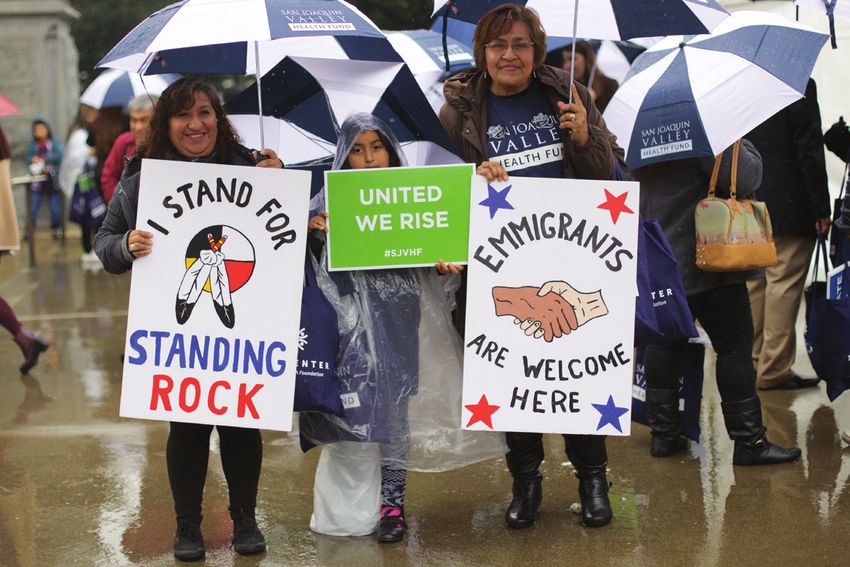
San Joaquin Valley
                                                 Health Fund
                                                 2017-2018 Funding
                                                 Opportunity

                                                   Funding for this opportunity is made available through support from

       The San Joaquin Valley Health Fund is a program managed by The Center with funding from Sierra Health Foundation,
 The California Endowment, The California Wellness Foundation, Rosenberg Foundation, W.K. Kellogg Foundation, Blue Shield of
California Foundation, Wallace H. Coulter Foundation, Dignity Health, Tides, Hellman Foundation and The James Irvine Foundation.

                                               www.shfcenter.org/sjvhealthfund

 The Center is an independent 501(c)(3) nonprofit bringing people, ideas and infrastructure together to create a collective impact that reduces health
    disparities and improves community health for the underserved living in California. For information about The Center, visit www.shfcenter.org.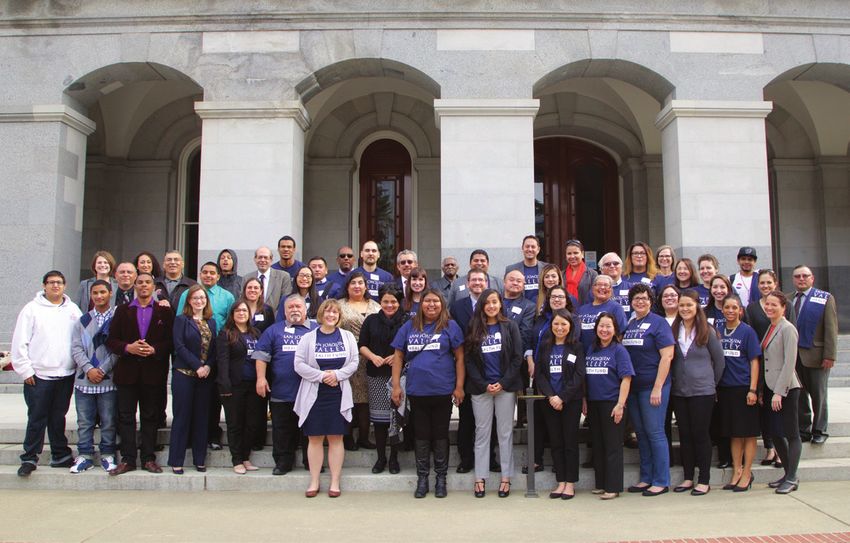
San Joaquin Valley Health Fund – 2017
Application Instructions and Criteria
READ ALL INSTRUCTIONS AND CRITERIA CAREFULLY

Background                                                          by many factors, including socioeconomic conditions,
                                                                    environment, education, income and individual behavior
The goal of the San Joaquin Valley Health Fund is to
                                                                    choices – factors that have come to be known as the Social
strengthen the capacity of communities and organizations
                                                                    Determinants of Health. Where we live, work and play has a
in the San Joaquin Valley to improve health and well-being
                                                                    significant influence on our health.
through measureable and equitable program, policy and
system changes.                                                     The Center also believes in the need for health equity and
                                                                    racial equity. Health equity means achieving the highest
                                                                    possible standard of health for all people and giving special
The Funding Opportunity                                             attention to the needs of those at greatest risk of poor health,
The Center will award San Joaquin Valley Health Fund                based on social conditions.1 Racial equity “is the condition
(SJVHF) grants up to $20,000 to networks and                        that would be achieved if one’s racial identity no longer
organizations located and working in any of the nine                predicted, in a statistical sense, how one fares.” When we use
counties of Fresno, Kern, Kings, Madera, Mariposa,                  the term, we are thinking about racial equity as one part of
Merced, San Joaquin, Stanislaus and Tulare. We are                  racial justice, and thus we also include work to address root
particularly interested in funding policy and systems               causes of inequities, not just their manifestation. This includes
change efforts designed to improve outcomes for                     elimination of policies, practices, attitudes and cultural
populations that are disproportionately experiencing poor           messages that reinforce differential outcomes by race or fail
health. Requests for direct services are not accepted. The          to eliminate them.”2 Reducing health disparities is a key factor
Center has a broad definition of health, believing there is         in striving toward better health for all and reflects our
much more to health than health care. Health is influenced          commitment to ensuring that people throughout our
                                                                    funding region have the opportunity to lead healthy lives.
                                                                    We are particularly interested in policy and systems change
                                                                    efforts designed to improve outcomes for populations that are
                                                                    disproportionately experiencing poor health. Strategies of
                                                                    particular interest are capacity building, policy development
                                                                    and community engagement with an emphasis on advocacy
                                                                    and organizing that have the potential to change public policy
   San Joaquin                                                      and increase resources and opportunities to promote health
      Stanislaus Mariposa
                                                                    and racial equity for the long term.
          Merced Madera
                      Fresno

                               Tulare                              1 Braveman, Paula. “What Are Health Disparities and Health Equity?
                   Kings
                                                                   We Need to Be Clear.” Public Health Reports. 2014 Supplement 2, Volume 129.
                                                                   https://www.ncbi.nlm.nih.gov/pmc/articles/PMC3863701/
                                Kern
                                                                   2 http://www.racialequityresourceguide.org/about/glossary

                           S A N J O A Q U I N VA L L E Y H E A LT H F U N D – 2 0 1 7           | PA G E 2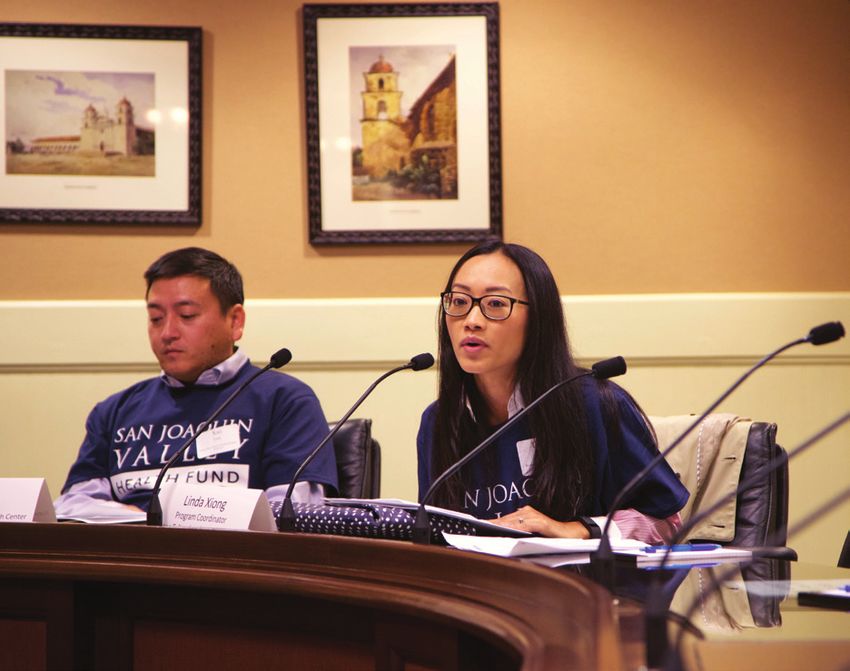
Eligibility Criteria                                              Selection Criteria
The Center will fund nonprofit organizations that are             The most competitive applications will:
tax-exempt under Section 501(c)(3) of the Internal Revenue        •   Support activities that reduce health disparities and
Code and are designated as a 509(a)(1) or 509(a)(2)                   promote health and racial equity;
organization. The Center also will fund public agencies,
                                                                  •   Focus on advocacy and policy or systems change;
including local government agencies. Fiscal sponsors for
                                                                  •   Clearly explain why the applicant organization is best
entities that are not qualifying 501(c)(3) nonprofits are
                                                                      suited to be successful with the proposed project;
eligible to apply. Fiscal sponsors may apply on behalf of
more than one organization or collaborative group.                •   Demonstrate innovative approaches and partnerships;

Proposed activities must benefit people living in one or more     •   Address systemic barriers that cause vulnerability for
of the nine counties of the San Joaquin Valley Health Fund’s          individuals and families;
funding region. We will not fund direct services.                 •   Focus on populations facing significant health barriers,
SJVHF applicants must propose work to take place in                   such as low-income populations, boys and men of color,
Fresno, Kern, Kings, Madera, Mariposa, Merced, San Joaquin,           immigrants, persons with disabilities, and geographically
Stanislaus and/or Tulare counties and meet one of the                 isolated communities;
following criteria:                                               •   Leverage social and financial resources to deepen
1.   Be a funded organization in the Round 3 SJVHF cohort;            program impact;

2.   Not a current funded organization in Round 3                 •   Include a reasonable project scope and budget;
     SJVHF cohort, but is applying to address the social          •   Create partnerships for long-term changes; and
     determinants of health and focusing on at least one of the
                                                                  •   Describe the anticipated difference the project would
     following populations: Native American, Asian and Pacific
                                                                      make or the anticipated outcomes the project will have.
     Islander, African American, LGBTQ, disability rights, farm
                                                                      Additionally, the overall geographic and demographic
     workers, immigrants, and/or those who speak indigenous
                                                                      diversity of the region will be considered in the
     languages; or
                                                                      selection process.
3.   Organization received a written invitation from
     The Center staff to apply.
                                                                  Funding Information
Please send all questions and inquiries related to the SJVHF
                                                                  •   Applicants may request an amount up to $20,000.
funding opportunity to sjvhealthfund@shfcenter.org with the
subject line: Round 4 SJVHF Question.                             •   The grant term is one year.

                                                                  •   Up to 15% of direct costs may be requested for
                                                                      indirect costs.

                                                                  •   Direct costs may include, but are not limited to, staff
                                                                      compensation, consultants, operating costs, meeting
                                                                      costs, travel and equipment.

                         S A N J O A Q U I N VA L L E Y H E A LT H F U N D – 2 0 1 7 | PA G E 3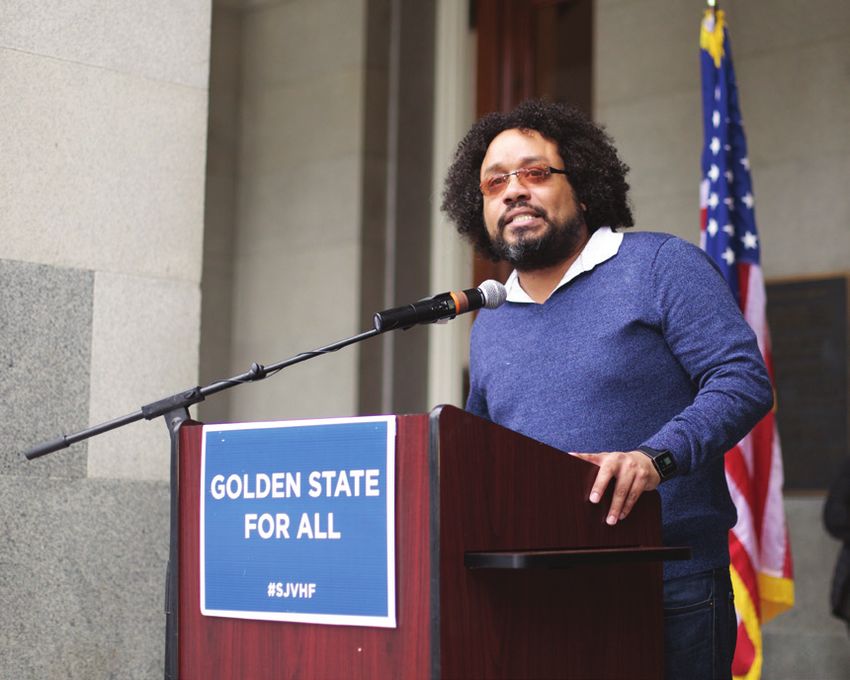
•   Those receiving awards are required to participate in         •   Pursuing infrastructure policy approaches that
    four grantee learning community convenings. The first             encourage basic infrastructure improvements in
    convening will be on Thursday, April 12, 2018. Three              unincorporated communities (safe drinking water and
    additional learning community convenings will be                  wastewater systems)
    scheduled throughout the grant period. Outside of the         •   Implementing planning policies that create safe and
    grant awarded, mileage reimbursements are available for           healthy neighborhoods
    funded organizations to attend the convenings.
                                                                  •   Promoting clean air and preventing pollution through
•   Those receiving awards will be required to submit a final         leveraging cap and trade funding or enforcement of
    report 30 days following the end of the funding period,           relevant air quality policies
    reporting on activities and outcomes included in the
                                                                  •   Protecting children from hazardous agricultural pesticide
    proposal, as well as a financial report. Interim progress
                                                                      exposure by advocating for stricter pesticide buffer zones
    also may be shared at learning convenings and during
                                                                      around schools through community engagement,
    site visits.
                                                                      education and trainings

                                                                  •   Strengthening Sustainable Communities Strategy in a
Examples of What We Will
                                                                      local regional transportation plan that demonstrates
Consider Funding
                                                                      how the region will promote active transportation and
Examples of types of outcomes considered for funding
                                                                      public transit options and involve traditionally
(not limited to these examples):
                                                                      underrepresented communities in the planning and
•   Adoption of policy or a system’s practice that promotes           implementation phases
    health and well-being, especially for populations
                                                                  •   Increasing access to social and emotional health services
    experiencing health disparities
                                                                      for children, youth or young adults through establishing
•   A change in a public agency’s approach that improves              service networks and partnerships
    accessibility to high-quality, healthy food in low-income
                                                                  •   Increasing employment and economic development
    neighborhoods
                                                                      opportunities through new partnerships with workforce
•   Building conscious commitment of the community to                 development agencies
    promote the availability of housing/shelter services for
                                                                  •   Planning Community Reinvestment Act financing strategies
    low-income or homeless populations
                                                                      that increase the level of investment in rural communities
•   Development of a cadre of leaders who make strides
                                                                  •   Promoting entrepreneurship and small business
    toward ending domestic violence through advocacy,
                                                                      development through economic development strategies
    policy and systems change
                                                                  •   Promoting regional and local policies for immigrant
•   Leveraging county indigent care funding to increase
                                                                      integration in communities by strengthening regional
    access to and quality of health services for
                                                                      collaborative
    undocumented persons
                                                                  •   Adoption of policies designed to reduce exposure to
•   Simplifying local enrollment efforts to connect eligible
                                                                      second-hand tobacco smoke in multi-unit housing where
    populations to available local, state and federal resources
                                                                      low-income residents live

                         S A N J O A Q U I N VA L L E Y H E A LT H F U N D – 2 0 1 7 | PA G E 4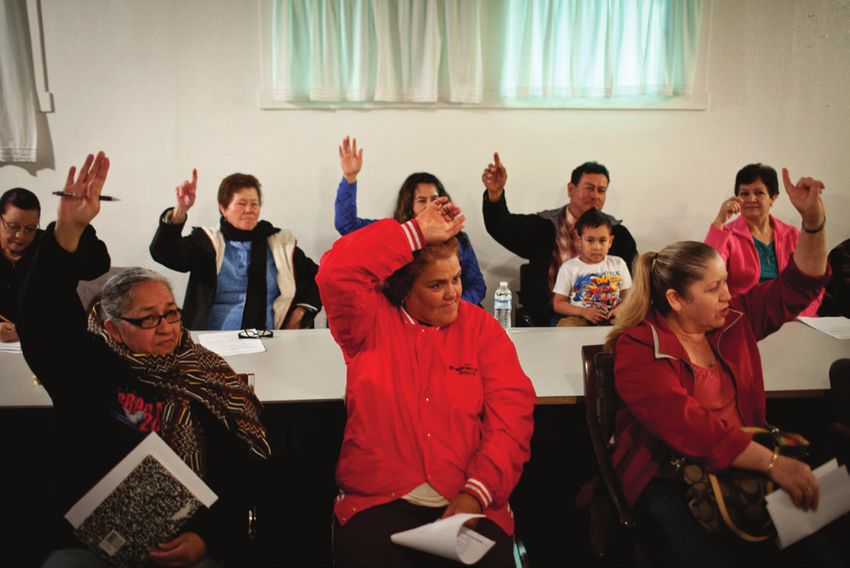
Examples of approaches that could be used to implement           What We Do Not Fund
projects (proposed approaches are not limited to these
                                                                 The Center does not fund:
examples):
                                                                 •   Direct services (see description at left)
•    Coalition building/Partnership development
                                                                 •   Debt retirement
•    Policy development
                                                                 •   Operational deficits
•    Leadership development
                                                                 •   Partisan activities
•    Community engagement, organizing and advocacy
                                                                 •   Individuals
•    Research/Participatory action research
                                                                 •   Religious organizations for explicit religious activities
•    Multi-Ethnic/Multi-racial collaboration
                                                                 •   Activities that exclusively benefit the members of
•    Organizational capacity building
                                                                     sectarian or religious organizations
•    Communications/outreach and education
                                                                 •   509(a)(3) supporting organizations
•    Youth engagement, organizing and advocacy
                                                                 •   501(c)(4) organizations or lobbying activities

    Proposals for direct services will not be
    considered. Direct services are those that tend
                                                                 Application Timeline
    to meet people’s more immediate needs, such as               APPLICATION DEADLINE:

    food, shelter, clothing, literacy, life skills, individual   November 30, 2017, at 1 p.m. (Pacific Standard Time)
    development or physical or mental health care,
                                                                 APPROXIMATE AWARD ANNOUNCEMENT:
    rather than activities designed to result in policy
                                                                 Mid to Late-March 2018
    and systems change. For example, a proposal that
    aims to purchase and provide meals to individuals            APPROXIMATE DATE FUNDS AVAILABLE:

    is considered a direct services proposal. A proposal         Early April 2018
    that expands access to the federal Supplemental
    and Nutritious Assistance Program or SNAP is an              To be considered, your proposal must be submitted via The
    advocacy or systems change proposal.                         Center’s online grants portal by 1 p.m. (PST) on the deadline
                                                                 date. Submission guidelines follow. Proposals received after
                                                                 the due date/time will not be reviewed. Submission before
                                                                 the deadline date is advised in case you experience technical
                                                                 difficulties with submitting your application through the
                                                                 portal. We may not be able to respond to your requests for
                                                                 help on the deadline date.

                           S A N J O A Q U I N VA L L E Y H E A LT H F U N D – 2 0 1 7 | PA G E 5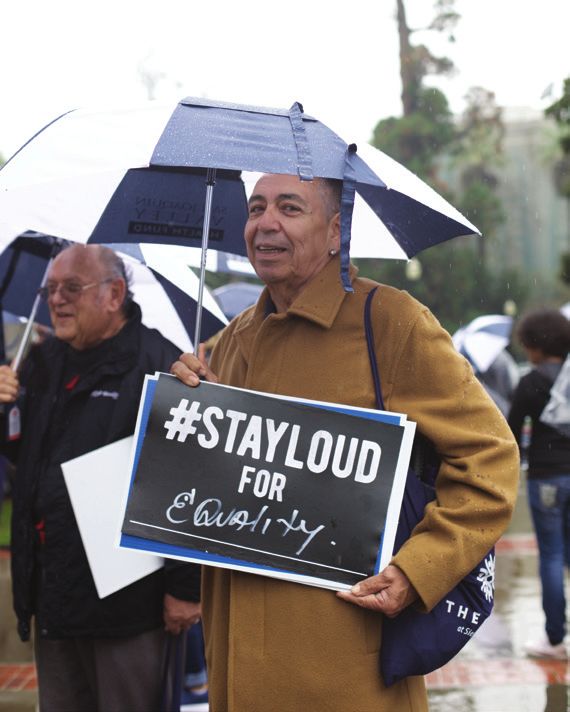
Proposers’ Webinar                                               •   On the portal, you may click “Save & Finish Later.” You will
                                                                     receive an e-mail with a link to return to your in-progress
We have scheduled one proposers’ webinar on October 31
                                                                     application. https://www.grantrequest.com/
to review this San Joaquin Valley Health Fund opportunity
                                                                     SID_5509?SA=AM Use this link each time you return to
and the application process, and to answer your questions.
                                                                     your in-progress application.
Participation in the webinar is strongly recommended,
                                                                 •   Click “Save & Finish Later” any time you will not be working
though not required. The webinar will be recorded and
                                                                     in your application for a few minutes.
posted on The Center’s web site for review. The proposers’
webinar registration link is posted on The Center’s web site,    •   You may submit your application only once. Be sure your
                                                                     application is complete and accurate, including required
www.shfcenter.org/sjvhealthfund. Please review the applica-
                                                                     documents, before submitting it. Revised applications will
tion materials prior to registering for the webinar.
                                                                     not be accepted.
October 31, 12 p.m. to 1:30 p.m.
                                                                 •   If you are unable to submit your application online or need
Register online by October 30.
                                                                     help, please contact us at sjvhealthfund@shfcenter.org with
                                                                     the subject line: Round 4 SJVHF Online Help.
Important Application Guidelines                                 •   If you are not a 501(c)(3) incorporated nonprofit
To help us process your application, please follow these             organization, you may identify a 501(c)(3) entity to apply

submission guidelines.                                               as your fiscal sponsor.

•   We encourage you to submit your application before
    the deadline date in case you need help with any of the
    guidelines below.

•   Applications are due no later than 1 p.m. PST on the
    deadline date.

•   Submit the application via our online grants
    portal [https://www.GrantRequest.com/
    SID_5509?SA=SNA&FID=35058 .] New users of the
    portal will need to create an account as the first step in
    the application process.

•   For optimal functionality, please use Internet Explorer

•   Respond to all required fields (marked with an *).

•   Upload all documents listed under “Application
    Attachments Checklist” below.

                         S A N J O A Q U I N VA L L E Y H E A LT H F U N D – 2 0 1 7 | PA G E 6
Send questions about this
          grant program and the
           application process to
       sjvhealthfund@shfcenter.org
             with the subject line:
          Round 4 SJVHF Question

Application Attachments Checklist
Access the San Joaquin Valley Health Fund application
form at https://www.GrantRequest.com/
SID_5509?SA=SNA&FID=35058

        Proposed budget Excel form in The Center’s
        template. This form will allow you to include your
        budget narrative with each line item. Find the
        form in the Attachments section of the online
        application, fill it in and upload it.

        501(c)(3) IRS determination letter (if not a
        government entity)

        Financial Report – must show organizational/
        institutional revenue and expenses for a full
        fiscal year (not IRS form 990).

                          S A N J O A Q U I N VA L L E Y H E A LT H F U N D – 2 0 1 7 | PA G E 7
You can also read


