SANS Institute Information Security Reading Room - SANS.org
←
→
Page content transcription
If your browser does not render page correctly, please read the page content below
SANS Institute
Information Security Reading Room

Which Disney© Princess
are YOU?
______________________________
Joshua Brower

Copyright SANS Institute 2020. Author Retains Full Rights.

This paper is from the SANS Institute Reading Room site. Reposting is not permitted without express
written permission.
                                        Which Disney© Princess are YOU?

                                      (Web 2.0) Social Engineering on Social Networks


                                                      GIAC (GCIH) Gold Certification


                                          Author: Joshua Brower, Josh@ToTheLastTribe.com


                          Key
  fingerprint
  =
  AF19
  FA27
  2F94
  998D
  FDB5
  DE3D
  F8B5
  06E4
  A169
  4E46

                                                                         Abstract

                      Social engineering for identity theft has always been around. But now, with the advent of
                       social networking sites such as Facebook, MySpace, and a host of others, it has become
                       easier than ever to harvest personal information from unsuspecting targets. This paper
                          looks into just how much personal information can be gathered by the seemingly-
                        harmless “What type of personality are you?” quizzes that are so prevalent on social
                      networking sites. The paper will then look at what the information could be used for, and
                                  how to protect against this particular vector of social engineering.

       © 2010 The SANS Institute                           As part of the Information Security Reading Room                     Author retains full rights.
                                                                                       Which Disney© Princess are YOU?
   2


                   1. Introduction


                                Social engineering takes many form; some obvious, some not so obvious. One


                   not so obvious form is that of questionnaires—be it a knock on the door to answer a

                   survey for a “census” worker, or a “harmless” quiz found on a social networking site.


                   Depending upon their content, they can serve as a very powerful means of capturing and

                   correlating information for nefarious purposes.


                                The following example of an unedited quiz recently found on a popular social


                     networking website illustrates just how seemingly unsuspecting, yet powerful, these


                   questionnaires can be.


                                                     What does your password say about you?


                          Is your password good or is it easily going to be hacked and also what does it say about


                                                                               you?


                               1. How long is your password?
                               Key
  fingerprint
  =
  AF19
  FA27
  2F94
  998D
  FDB5
  DE3D
  F8B5
  06E4
  A169
  4E46

                                 A) 3-5 letters/numbers

                                  B) 6-8 letters/numbers

                                  C) 11-14 letters /numbers

                                  D) 9-10 letters/numbers

                                  2. Is your password your name with some other numbers or somebody in the
                                       family?

                                  A) Yep

                                  B) No way! That’s too easy for me!

                                  C) Its exactly my name

                                  D) It’s my family members name with some other numbers.

                     Joshua
  Brower,
  Josh@ToTheLastTribe.com


       © 2010 The SANS Institute                                As part of the Information Security Reading Room                     Author retains full rights.
                                                                                    Which Disney© Princess are YOU?
   3


                               3. Does your password have any numbers?


                             A) Yea, it’s all numbers actually!


                             B) Yea it’s got a couple of mixed up numbers.


                             C) Nope!


                             D) Yea one number!


                             4. Has your password/account have ever been [sic] hacked into?


                             A) No never!


                             B) No but I told one of my friends it.


                               C) Yea once.


                               D) Twice actually.


                            * (Apps.Facebook.com)
                            Key
  fingerprint
  =
  AF19
  FA27
  2F94
  998D
  FDB5
  DE3D
  F8B5
  06E4
  A169
  4E46


                               According to the quiz statistics, eight-hundred people have already taken this
                     particular quiz. (Apps.Facebook.com) What is remarkably staggering, is that while a quiz
                     of this nature seems relatively harmless at first glance, the amount of information that can
                     be captured, compiled, correlated, and acted upon with harmful results to the end user is
                     quite large. What the end user does not realize is that even a seemingly harmless quiz
                     like this is a form of social engineering.

                     Joshua
  Brower,
  Josh@ToTheLastTribe.com


       © 2010 The SANS Institute                             As part of the Information Security Reading Room                     Author retains full rights.
                                                                                 Which Disney© Princess are YOU?
   4


                   1.1      Definition and History of Social Engineering


                              Ian Mann, (2008) author of “Hacking the Human,” defines social engineering as


                   the following: “To manipulate people by deception, into giving out information, or

                   performing an action” (p. 11). This definition encompasses not only the gleaning of


                   information, but also the possibility of “performing an action.” In general terms, when

                   social engineering is thought of, it is usually in relation to harvesting information and not


                   necessarily in relation to performing an action. For example, if a security guard is

                   manipulated into allowing an attacker through a security checkpoint, the attacker has not


                   gained any particular information. However, they have manipulated the security guard

                   into allowing them into an area (performing an action) where they were not authorized to


                   be. (Mann, 2008)


                            Social engineering has been around since the beginning of time. In fact, one of the

                   earliest documented examples of a phishing attack can be found in The Old Testament.


                     In Genesis 27, Isaac had gone blind in his old age, and was on his deathbed. After his


                   wife heard that he wanted to give the family blessing to the eldest son, she told their


                     youngest son, Jacob, to go and deceive his father and receive the blessing instead. The
                         Key
  fingerprint
  =
  AF19
  FA27
  2F94
  998D
  FDB5
  DE3D
  F8B5
  06E4
  A169
  4E46

                     problem was that the eldest son was a very hairy man, and Jacob was not. To deceive
                     Isaac, Jacob covered himself in goatskins. This deception worked, and Isaac blessed
                     Jacob instead of his eldest son. In this example, Isaac had fallen prey to what is known as
                     a simple phishing scheme. (Dang, 2008)

                              Throughout history up to the modern day, there have been countless other
                     examples which illustrate the effectiveness of social engineering. In the story of the
                     Trojan horse of the Greeks, the Trojans had fallen prey to the Greek’s social engineering
                     tactics through their own over-confidence and gullibility. (Dang, 2008) Twentieth
                     century social engineers, such as Frank Abaganale, portrayed in the movie, “Catch Me if
                     you Can,” pulled off astonishing stunts through social engineering methods. And Kevin
                     Mitnick, one of the most well-known social engineers of the modern era, uttered these
                     words as he was testifying before Congress of his misdeeds: “I explained that I could
                     often get passwords and other pieces of sensitive information from companies by
                     pretending to be someone else and just asking for it.” (Mitnick, 2002)

                     Joshua
  Brower,
  Josh@ToTheLastTribe.com


       © 2010 The SANS Institute                           As part of the Information Security Reading Room                   Author retains full rights.
                                                                                    Which Disney© Princess are YOU?
   5


                             1.2       Current Day Social Engineering


                             With the advent of the Internet and the rapid advancement in mobile

                   telecommunications devices and communications platforms, social engineering has, and


                   continues to be, more prevalent than ever before. One major reason for this is that there

                   is far less risk to social engineer across the Internet than in person. (Mann, 2008)


                   Consider the personal risk, such as arrest or fines, between the following two social

                   engineering scenarios: 1) An attacker social engineering their way into a physical “audit”


                     of Company X, looking for an exploitable vulnerability to siphon their intellectual


                   property out. 2) An attacker social engineering their way into Company X by sending a


                     targeted phishing e-mail (spear phishing), to an employee, gaining their remote login


                   credentials to access Company X’s intellectual property over the Internet. Obviously, the


                     personal risk would be much less in the second scenario.


                             Current day social engineering vectors take on many forms. They can vary from


                   in-person exchanges, to over the phone conversations, through e-mail, or even through

                   online social networking sites.


                     1.3 Key

                           Socialfingerprint
   =
  AF19
  FA27
  on
                                        Engineering                    2F94

                                                                         Social998D
  FNetworking
                                                                                         DB5
  DE3D
  F8B5

                                                                                                           Sites06E4
  A169
  4E46


                               As the Internet continues to evolve, new and unique social engineering
                     opportunities continue to come to light, such as the “Web 2.0” social networking sites.
                     MySpace, Facebook, and Orkut, are just a few of the more popular examples of such sites
                     that are among the most widely used today. These social networking sites are a gold mine
                     for social engineering attacks as there is oftentimes an implicit trust assumed in the
                     “befriending” of someone the user may or may not know that well.

                               One particular social engineering vector that is often found on many of the widely
                     used social networking sites today is the “What Type of Personality are You?” quiz.
                     These types of quizzes when taken by the end user will oftentimes yield a specific result,
                     such as what Lord of The Rings character they are, or how long they will live, or who
                     they are most compatible with. On the outside, they appear harmless and fun to the end
                     user, and provide an entertainment value that is enticing, to say the least. However, on a
                     deeper level, the quizzes themselves are one of the most insidious vectors of social

                     Joshua
  Brower,
  Josh@ToTheLastTribe.com


       © 2010 The SANS Institute                             As part of the Information Security Reading Room                      Author retains full rights.
                                                                                    Which Disney© Princess are YOU?
   6


                   engineering on social networks, because of the type and sheer amount of information

                   gathered, and who has access to it. With these quizzes, the information is gathered in


                     small amounts, in very unsuspecting ways, and the end user has absolutely no idea who


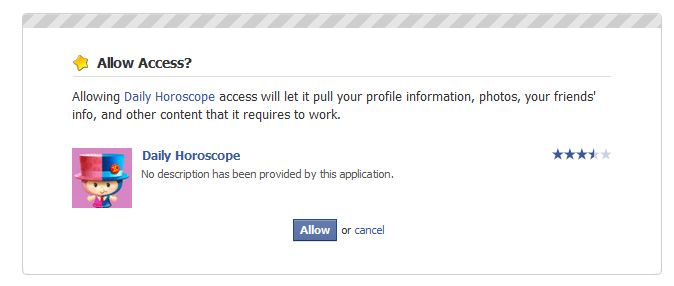
                   has access to it. At least when a user adds an application on Facebook, it asks the user’s


                     permission to give the developers access to their information. Consider the following


                   example:


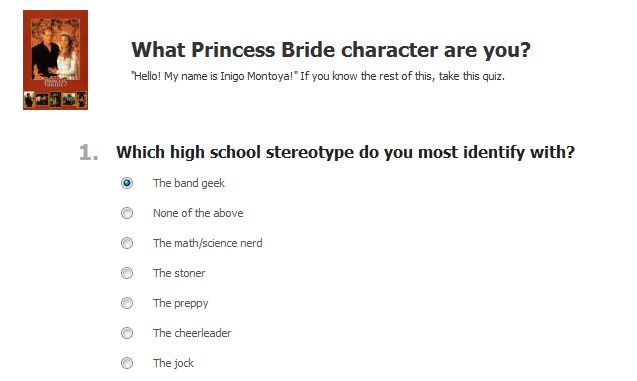
                                                      Which would more likely give a user pause?


                                                                                  Or


                                                                                 Or
                            Key
  fingerprint
  =
  AF19
  FA27
  2F94
  998D
  FDB5
  DE3D
  F8B5
  06E4
  A169
  4E46

                                                                                       \

                     Joshua
  Brower,
  Josh@ToTheLastTribe.com


       © 2010 The SANS Institute                             As part of the Information Security Reading Room                     Author retains full rights.
                                                                                  Which Disney© Princess are YOU?
   7


                            More than likely, the first example would be the one to make a user pause and

                   consider their actions, rather than the harmless quiz pictured in the second example. As


                     such, the focus of this paper will look at, and concentrate on this particular vector of


                   social engineering on social networks.


                     2. Main

                   2.1. Background


                            Although there are a number of social networking websites on the Internet, out of

                   all of them, Facebook is currently the most-widely used. Numbers show, that as of


                   February 2010, Facebook has four-hundred million active users. (Facebook.com) Recent

                   reports show MySpace as having approximately sixty-six million active users


                   (Insidefacebook.com), and Orkut at nearly fifty million active users. (Orkut.com)

                   Facebook also provides an open API for developers to write their own applications,


                   making Facebook the most prevalent social networking site for these types of quizzes.

                   After considering the above reasons, it was decided to use Facebook as the social


                     networking website of choice for the research, instead of the other social networking
                         Key
  fingerprint
  =
  AF19
  FA27
  2F94
  998D
  FDB5
  DE3D
  F8B5
  06E4
  A169
  4E46

                     websites.

                     2.2. Goals & Procedures
                              The goal of the following procedure was to take a passive look into what quizzes
                     users have already taken, and compile the results from the questions asked. In this
                     scenario, five Facebook users were profiled. Next, all of the quizzes that the five users
                     had taken over a two month span were noted and, using a sample Facebook account,
                     those same quizzes were taken with the questions being noted. Finally, using the
                     questions from the quizzes that each profiled user had taken, a personal profile was built.
                     Since it was not possible to know exactly how each user had answered each question, the
                     profiles were generated by using possible answers. Keep in mind that the quiz creator
                     would know exactly how the users had answered. Finally, this procedure assumes a few
                     things. As mentioned earlier, since the user allowed the quiz access to their Facebook
                     profile, the developers of the application also have access to a lot more information, such

                     Joshua
  Brower,
  Josh@ToTheLastTribe.com


       © 2010 The SANS Institute                           As part of the Information Security Reading Room                    Author retains full rights.
                                                                                    Which Disney© Princess are YOU?
   8


                   as pictures, status updates, etc. For this procedure, and the remainder of this paper, it

                   will be assumed that the developers of the quizzes also know 1) The e-mail of the user,


                     and 2) The name of the user. It may be that the developer knows a lot more, but for our


                   purposes, this is all that needs to be assumed.


                   2.3. Results


                             For each Facebook user that was profiled, the answers to the questions on the

                   quizzes have been compiled, and a simulated target profile of each was built as follows:


                            Key
  fingerprint
  =
  AF19
  FA27
  2F94
  998D
  FDB5
  DE3D
  F8B5
  06E4
  A169
  4E46


                     Joshua
  Brower,
  Josh@ToTheLastTribe.com


       © 2010 The SANS Institute                             As part of the Information Security Reading Room                     Author retains full rights.
Which Disney© Princess are YOU?
9
Target #1 Profile
Information from Allowing Quiz Access to Profile
Name: Tiffany Radenberg
E-mail: tiffr83@gmail.com
Information from Quizzes
Basic Personal
Gender: Female
Birthday: Dec 12, 1983
Age: 26
Hair Color: Brown
Eye Color: Brown
Favorites
Key
fingerprint
=
AF19
FA27
2F94
998D
FDB5
DE3D
F8B5
06E4
A169
4E46
Favorite Color: Red
Favorite Music: Country
Favorite Animal: Horses
Personality
-Has at least 1 child, would like to have more kids -‐Competitive
-Usually dresses nice, but casual -‐Independent
-Religious, to some extent (Prays before meals) -Organized
-Greatest Fear: That harm will befall loved ones
-Perfectionist
-OCD to some extent
Joshua
Brower,
Josh@ToTheLastTribe.com
© 2010 The SANS Institute As part of the Information Security Reading Room Author retains full rights.
                                                                                  Which Disney© Princess are YOU?
   10


                                                                        Target #2 Profile


                   Information from Allowing Quiz Access to Profile

                   Name: Jeff Luken


                   E-mail: vegies539@hotmail.com


                   Information from Quizzes


                   Basic Personal


                   Gender: Male

                   Birthday: November 13, 1979


                   Favorites


                   Favorite Drink: Smoothies


                     Favorite Ice Cream: Cooke Dough


                   Favorite Color: Blue


                     Favorite Musician: Weird Al Yankovic
                         Key
  fingerprint
  =
  AF19
  FA27
  2F94
  998D
  FDB5
  DE3D
  F8B5
  06E4
  A169
  4E46

                     Favorite Genre of Music: Classical
                     Favorite Movie: E.T.
                     Favorite Olympic Sport: Curling
                     Favorite Sport: Lacrosse

                     Personality
                     -Vegetarian
                     -Loves History & Non-Fiction books
                     -Drives a Volkswagen Bug
                     -Real Life Hero is Barack Obama
                     -Believes that self-defense is the only acceptable form of violence

                     Joshua
  Brower,
  Josh@ToTheLastTribe.com


       © 2010 The SANS Institute                           As part of the Information Security Reading Room                    Author retains full rights.
                                                                                  Which Disney© Princess are YOU?
   11


                                                                   Target #3 Profile


                     Information from Allowing Quiz Access to Profile


                     Name: Mellissa Ourthe


                   E-mail: mali437@Juno.com


                   Information from Quizzes


                   Basic Personal


                   Height: 5’1”

                   Hair: Blonde and Wavy


                   Eyes: Brown

                   Pierced Nose


                   Favorites


                   Favorite Color: Purple


                     Favorite Candy: Reese’s Peanut Butter Cups
                         Key
  fingerprint
  =
  AF19
  FA27
  2F94
  998D
  FDB5
  DE3D
  F8B5
  06E4
  A169
  4E46

                     Favorite food: Mexican
                     Favorite drink: Soda
                     Favorite Movie: Wall-E & Finding Nemo
                     Favorite Animal: Cats

                     Personality
                     -Drives a minivan
                     -Most important thing is family
                     -Always carries cell phone with her
                     -Self-proclaimed procrastinator

                     Joshua
  Brower,
  Josh@ToTheLastTribe.com


       © 2010 The SANS Institute                           As part of the Information Security Reading Room                    Author retains full rights.
                                                                                  Which Disney© Princess are YOU?
   12


                                                                 Target #4 Profile


                     Information from Allowing Quiz Access to Profile


                     Name: Blake Keyes


                   E-mail: coldandchilly73@Yahoo.com


                     Information from Quizzes


                   Basic Personal


                   N/A


                   Favorites


                   Favorite TV Show: Heroes

                   Favorite Beverage: Black Coffee


                   Favorite Movie: Terminator

                   Favorite type of food: Italian


                         Key
  fingerprint
  =
  AF19
  FA27
  2F94
  998D
  FDB5
  DE3D
  F8B5
  06E4
  A169
  4E46

                     Personality
                     We know they have a family and they love to spend time with them.
                     Last vacation went camping and hiking

                     Joshua
  Brower,
  Josh@ToTheLastTribe.com


       © 2010 The SANS Institute                           As part of the Information Security Reading Room                    Author retains full rights.
Which Disney© Princess are YOU?
13
Target #5 Profile
Information from Allowing Quiz Access to Profile
Name: Megan Jergens
E-mail: easygirlz174@yahoo.com
Information from Quizzes
Basic Personal
Gender: Female
Birthday: March 15, 1988
Age: 21
Hair Color: Blonde
Eye Color: Green
Lives in Defiance, Ohio
Favorites
Key
fingerprint
=
AF19
FA27
2F94
998D
FDB5
DE3D
F8B5
06E4
A169
4E46
Favorite Color: Pink
Favorite Music: Pop
Favorite Movie: Save the Last Dance
Favorite Animal: Cat
Favorite Flavor: Vanilla
Personality
-Dreams of working as a personal trainer -‐Sleeps
on
her
back,
facing
the
ceiling
-Does not want kids -‐Snores
-Is not close with her family -‐Usually
goes
to
bed
between
8-‐9pm
or
-Curses a lot, mainly “shit” earlier
-Does not like to cook -‐Drives
a
white
97
Oldsmobile
Cutlass
-Loves Material Girl by Madonna -‐Has
a
credit
card
Joshua
Brower,
Josh@ToTheLastTribe.com
© 2010 The SANS Institute As part of the Information Security Reading Room Author retains full rights.
                                                                                 Which Disney© Princess are YOU?
   14


                   2.4. Taking It to the Next Level


                            As can be seen from the previous profiles, the first procedure garnered a very rich


                   set of results to work with. To really take this particular social engineering vector to the

                   next level, the goal of this next procedure would be to actively create a situation for users


                     to take the quizzes like usual, but also be able to consolidate their results across multiple


                   quizzes. Finally, a report would be able to be run on any given quiz taker.


                            This could be accomplished by creating a Facebook application that allows users

                   to both take and create quizzes. There are currently well over fifty of these types of


                   applications available on Facebook. The difference is thus: As a user takes a quiz, the

                   application contacts a back-end database that creates a unique ID for the user, and stores


                   all of the answers to the quiz that the user is taking. It does this for every quiz that the

                   user takes. To generate a profile for a user, a report is run that pulls all the information in


                   the database for a given user, runs algorithms on it that categorizes and consolidates the

                   data, formats it, and displays it for viewing. Considering that the top three quiz


                   applications have over thirty-two million active users, the quantity of data that could be
                         Key

                     mined forfingerprint

                                 each user is=staggering.

  AF19
  FA27
  2F94
  998D
  FDB5
  DE3D
  F8B5
  06E4
  A169
  4E46

                                                             (Facebook.com)

                                 Following are two aspects of the proposed program in flowchart form.

                     Joshua
  Brower,
  Josh@ToTheLastTribe.com


       © 2010 The SANS Institute                           As part of the Information Security Reading Room                  Author retains full rights.
                                                                                    Which Disney© Princess are YOU?
   15


                                                                      User Takes Quiz


                            Key
  fingerprint
  =
  AF19
  FA27
  2F94
  998D
  FDB5
  DE3D
  F8B5
  06E4
  A169
  4E46


                     Joshua
  Brower,
  Josh@ToTheLastTribe.com


       © 2010 The SANS Institute                             As part of the Information Security Reading Room                     Author retains full rights.
                                                                                    Which Disney© Princess are YOU?
   16


                                                            Run a report on a given user


                            Key
  fingerprint
  =
  AF19
  FA27
  2F94
  998D
  FDB5
  DE3D
  F8B5
  06E4
  A169
  4E46


                     Joshua
  Brower,
  Josh@ToTheLastTribe.com


       © 2010 The SANS Institute                             As part of the Information Security Reading Room                     Author retains full rights.
                                                                                    Which Disney© Princess are YOU?
   17


                   This would be trivial for a competent programmer to develop. For those non-


                     programmers, it would still be easily done, as some Facebook quiz applications are up for


                   sale for as little as $500 for an exclusive license to the code. V. Fazilov (personal


                     communication, December 18, 2009)


                            Key
  fingerprint
  =
  AF19
  FA27
  2F94
  998D
  FDB5
  DE3D
  F8B5
  06E4
  A169
  4E46


                     Joshua
  Brower,
  Josh@ToTheLastTribe.com


       © 2010 The SANS Institute                             As part of the Information Security Reading Room                     Author retains full rights.
                                                                                    Which Disney© Princess are YOU?
   18


                   2.5.        How the Resulting Profiles Could Be Used


                            There are three ways that the harvested information could be used: Spear

                   Phishing, Impersonation or Identity Theft, and In-Person Attack or Scam.


                            2.5.1         Spear Phishing


                            Spear phishing is a very specifically-targeted phishing attempt. Reasons for spear


                   phishing can vary from downloading some type of malware or adware on the target’s

                   machine, to being the next step in the process of gathering more information needed for


                   the next pretext. Using the first target’s profile, here is how a spear phishing attack could

                   play out.


                                                                        Attack Scenario:


                                                                         Spear Phishing


                            Using the profile for Target #1, it is known that the user loves country music. An

                   e-mail could be crafted, with the title having something to do with a country music star.


                     i.e. “Breaking    News: =Tim
                           Key
  fingerprint
         McGraw

  AF19
   FA27
  on deathbed
                                                                       2F94
  998D
  Fafter
                                                                                         DB5
  car accident!”
                                                                                                 DE3D
            To see
                                                                                                         F8B5
  06E4
    the4linked
                                                                                                                         A169
   E46

                     video of this breaking news, the target is supplied with a link in the e-mail. When the link
                     is clicked, the target is prompted to download an updated “codec” for their video player.
                     However, what is not known to the target is that this “codec” is actually a key logger that
                     silently installs, and sends captured usernames and passwords back to the attacker.
                     Because it is known that the target loves country music, there is a much higher
                     probability that the target will actually open the e-mail, and try and watch the linked
                     video, than if the e-mail included some other random subject line.

                              2.5.2        Impersonation & Identity Theft

                              The second way of using the results is for the basis of building a profile on the
                     target for some type of impersonation or even identity theft. With over ten million cases
                     of identity theft reported in 2008, (a twenty-two percent increase from 2007), the US
                     Department of Justice has identified identity theft as passing drug trafficking as the

                     Joshua
  Brower,
  Josh@ToTheLastTribe.com


       © 2010 The SANS Institute                             As part of the Information Security Reading Room                     Author retains full rights.
                                                                                 Which Disney© Princess are YOU?
   19


                   number one crime in the USA. (The ID Theft Resource Center, 2010) There are different

                   types of identity theft, with credit card fraud remaining the highest at twenty-six percent


                     in 2008. Other types include utilities fraud, bank fraud, and employment fraud, among


                   others. (Identity Theft Statitistc: Spend On Life, 2009) The following is a scenario of


                     how Target #2’s harvested information could be used in a case involving identity theft.


                                                                      Attack Scenario:


                                                          Building a Profile for Identity Theft


                            The attacker’s goal is bank fraud. Using the profile for Target #2 as the basis, the


                   attacker can start to build a more in-depth profile of information about the target.

                   Considering that the attacker has the target’s name, gender, birthday, and e-mail address,


                     it will take just a little bit of searching on Google to find out the target’s location and


                   phone number. From there, the attacker has a few different avenues on which he could


                     proceed. One option would be to attack the target via a spear phishing scheme. The


                   other option could involve an over-the-phone social engineering attack. Either way, the


                     goal of the attacker is to find out where the target does their banking, and any other


                     pertinent
                          Key
  finformation
                                   ingerprint
  =that   mayFA27


  AF19
   be valuable.  Since
                                                                    2F94
  998D
    the attacker
                                                                                    FDB5
           has quite
                                                                                            DE3D
  F8B5
  06E4
  aAbit of 4personal
                                                                                                                       169
   E46

                     information on the target already (i.e. vegetarian, Volkswagen Bug, favorites, etc) there
                     are quite a few possibilities of pretexts. After obtaining the information, the attacker,
                     with a well-developed profile of the target, directly attacks the bank. As a side note, as
                     more and more banks are adding the concept of security questions as part of their
                     authentication process, the questions are varied, but do include such questions as are on
                     the quizzes that Target #2 answered. Favorite Movie, Favorite Sport, and Real Life Hero,
                     are all questions that have been spotted in certain financial institutions’ inventory of
                     security questions. With such a detailed personal profile built on the foundations of the
                     target’s answers on the quiz, the chance of success in this scenario is very high.

                     Joshua
  Brower,
  Josh@ToTheLastTribe.com


       © 2010 The SANS Institute                           As part of the Information Security Reading Room                   Author retains full rights.
                                                                                Which Disney© Princess are YOU?
   20


                             2.5.3       In-Person Attack or Scam


                             This type of attack targets the victim in a face to face attack or scam. As can be

                   seen from the profiles, only Target #5 answered a question on a quiz that gave away their


                     location. Also keep in mind that depending on the social network, the application


                   developer may have been given location information for users of his application.


                                                                Attack Scenario:


                                                                In-Person Attack


                             The attacker’s goal is simple theft. With the attacker knowing so much detail

                   about Target #5, it would be trivial to do some research online and find out where the


                   target lives and the street address. The attacker can assume that with the target being

                   twenty-one years of age and not being close with family, then the target probably does


                   not live with family. Knowing that the target goes to bed by 9:00 pm and drives a white

                   1997 Oldsmobile allows the attacker to profile when the best time for him to break in is.


                     Once again, knowing so much detailed information about Target #5 makes it much easier
                          Key
  fingerprint
  =
  AF19
  FA27
  2F94
  998D
  FDB5
  DE3D
  F8B5
  06E4
  A169
  4E46

                     to successfully pull off this type of attack.

                            2.5.4      Probability
                            Three types of attacks have been considered. One question that remains is whether
                     any of these attacks are actually probable, as they may seem quite far-fetched. Would an
                     attacker really conduct a physical theft against a user, using the information gathered
                     from the user’s quiz answers?
                            In fact, some of these scenarios are much more probable than others. The reason for
                     this comes down to threats. A threat is “a party with the capabilities and intentions to
                     exploit a vulnerability in an asset.” (Bejtlich, 2005) In this case, the vulnerability would
                     be a weakness that was created by the release of the target’s personal information. There
                     are two types of threats: structured and unstructured. Richard Bejlitch (2005) sums up
                     each: “Structured threats are adversaries with a formal methodology, a financial
                     sponsor, and a defined objective. They include economic spies, organized criminals,

                     Joshua
  Brower,
  Josh@ToTheLastTribe.com


       © 2010 The SANS Institute                          As part of the Information Security Reading Room                  Author retains full rights.
                                                                                   Which Disney© Princess are YOU?
   21


                   terrorists, foreign intelligence agencies, and so-called ‘information warriors.’

                   Unstructured threats lack the methodology, money, and objective of structured threats.


                     They are more likely to compromise victims out of an intellectual curiosity or as an


                   instantiation of mindless automated code. Unstructured threats include ‘recreational’


                     crackers, malware without a defined object beyond widespread infection, and malicious


                   insiders who abuse their status.”(p. 7) Just having a threat does not make a particular

                   attack more probable—the threat must have not only the intentions, but also the


                   capabilities. In this particular social engineering vector, it is more likely that the threat to

                   a user would be unstructured than structured, since this type of vector is more trolling for


                   information that could reveal a vulnerability, than what a structured threat would do, i.e.,

                   identifying the target first, and using their answers to quizzes as a means to build a profile


                   of information.

                          The point is that if there is a threat that is targeting the user, whether structured or


                   unstructured, that possesses both intentions and the capabilities, then it is much more

                   probable that one of the above attack scenarios could happen. For example, what if, in


                   the identity theft scenario, as the attacker is learning more about the target, he came
                         Key

                     across thefingerprint

                                 fact that the=
  target
                                                    AF19
  works
                                                            FA27
  2asF94
  998D
  FDB5

                                                                        an accountant    for  DE3D
  F8B5
  500
                                                                                               a Fortune       06E4
  A169
  4E46

                                                                                                                  company?
                     Depending on the attacker’s proclivities, it may be worth it to him to attempt a physical
                     attack on the target’s home to steal the target’s computer in hopes of gaining some
                     confidential financial records of the company.

                            2.6.         Managing the Risk
                               How does a user or an organization manage the risk of this particular vector of
                     social engineering attack? It must be considered first from an individual perspective, and
                     then from an organizational perspective

                               2.6.1       Managing the Individual Risk

                                   As in the case of many such things, abstinence is the only 100% foolproof way
                     of not falling prey to a social engineer through this particular vector. But, if the need

                     Joshua
  Brower,
  Josh@ToTheLastTribe.com


       © 2010 The SANS Institute                            As part of the Information Security Reading Room                      Author retains full rights.
                                                                                 Which Disney© Princess are YOU?
   22


                   arises to find out which of the Simpsons© character the user resembles, the following

                   guidelines will help safeguard the vigilant user.


                   -Depending on the social network, a user needs to remember that if they install the quiz

                   application, the developers of the application will have access to the majority of the users,


                   and the user’s friends, profile information.


                   - A few specific types of information that should never be given out on these types of

                   quizzes include:


                                 •    Mother’s maiden name


                                 •    Personal banking details


                                 •    Personal password details


                                 •    Personally Identifiably Information (where the user lives, social security

                                      number, phone number, e-mail, etc.)


                         Key
  fingerprint
  =
  AF19
  FA27
  2F94
  998D
  FDB5
  DE3D
  F8B5
  06E4
  A169
  4E46

                     -The most important thing to remember when a user take these kinds of quizzes is to be
                     keenly aware of what kind of information they are giving up. They need to ask
                     themselves, “If someone was out to get me, my family, or the company I work for, could
                     any of this information help them in any way?”

                     This may seem paranoid to the point of extreme, but by this point it is clear from the
                     earlier attack scenarios how easy it would be to nefariously use this information.

                     Joshua
  Brower,
  Josh@ToTheLastTribe.com


       © 2010 The SANS Institute                           As part of the Information Security Reading Room                  Author retains full rights.
                                                                                      Which Disney© Princess are YOU?
   23


                              2.6.2          Managing the Organizational Risk

                   Because the actions that an individual user takes can directly affect the organization they


                   work for, each organization must factor this type of attack into their risk management

                   program. As was mentioned previously, abstinence is the only 100% foolproof way of


                   not falling prey to a social engineer through this particular vector. From an organizational

                   perspective, this could mean one of three different approaches to managing this risk.


                          1) User Education Only:


                              Depending on the organizational risk appetite specific to this vector, the

                              organization may feel comfortable with not blocking social networking websites,


                                but just educating their users to be aware, and to not fall for this particular attack.


                              The individual risk management guidelines in the preceding section are a good


                                place to start.


                            2) User Education and Blocking Social Networking Websites:


                            If an organization feels that the risk warrants this option, the organization can use
                            Key

                              I.T.  fingerprint
   =
  AF19
  FIn
                                       security controls.          A27

                                                                     this2situation,
                                                                           F94
  998D
  using
                                                                                           FDB5

                                                                                                aD   E3D
  F8B5

                                                                                                    content  filter,0the
                                                                                                                     6E4
  organization
                                                                                                                             A169
  4E46
  can

                                block social networking websites. Since this attack is just one vector of social
                                engineering, it must be understood that users need to be continually educated on
                                the risks, since the organization cannot block social networking websites outside
                                of the networks in its purview—for example, the users’ home internet connection.

                            3) Do Nothing:
                                Whether the reason for this choice is ignorance or apathy, the outcome remains
                                the same: through this particular vector or another one, social engineers will take
                                advantage of the organization through its uneducated users, and the lack of I.T
                                security controls. The only uncertain aspect of this outcome is how big the fallout
                                will be.

                     Joshua
  Brower,
  Josh@ToTheLastTribe.com


       © 2010 The SANS Institute                              As part of the Information Security Reading Room                        Author retains full rights.
                                                                                       Which Disney© Princess are YOU?
   24


                   3. Conclusion


                          Social engineering is like putting together a puzzle. As the social engineer gathers


                   the little bits and pieces of seemingly unimportant information, a much larger picture

                   starts to emerge. Whether it is a profile from a target for simple identity theft, or various


                   information needed for a complex robbery, it can all start with simple social engineering

                   tactics.


                          As social networking sites have exploded in popularity in the last five years, so has


                   the risk of personal information exposure. This is because, at the crux of it, users do not

                   know and/or care how easy it is to abuse the information that they so freely give out. It is


                     a sad state of affairs when it is commonplace to see countless examples of users’ social


                   networking accounts spamming their friends, all because they had fallen prey to a social


                     engineering attack that resulted in the compromise of their account authentication


                   information.


                            Quizzes,   that are so
                            Key
  fingerprint
   =
  Aprevalent  on2social
                                                          F19
  FA27
           networking
                                                                          F94
  998D
  FDB5
  Dsites,
                                                                                                   E3D
  can be0one
                                                                                                          F8B5
   6E4
  such tool
                                                                                                                           A169
    that
                                                                                                                                   4E46

                     can bleed significant amounts of personal information from unsuspecting users.
                     Although a wide-scale implementation of this attack would be difficult to implement, as
                     data-mining fifty-million users on Facebook would be resource intensive, it does not
                     negate the fact that the world is continuing towards the crest of a perfect storm: the
                     continuing disinterest and ignorance of users to the theft of their personal information,
                     and the ever-lowering bar of the difficulty of low-risk, electronic social engineering
                     attacks.

                            With the continuing evolution of the Internet, malicious social engineers will continue
                     to find and develop new and more complex ways of bilking unsuspecting users out of
                     their personal information. Users and organizations must continue to be vigilant for these
                     new avenues of guile and deception, and remember that they hold the key to the success
                     or failure of the perpetrator.

                     Joshua
  Brower,
  Josh@ToTheLastTribe.com


       © 2010 The SANS Institute                               As part of the Information Security Reading Room                       Author retains full rights.
                                                                                   Which Disney© Princess are YOU?
   25


                   4. References


                   Mann, Ian. (2008). Hacking the human. Aldershot, Hampshire, England: Gower


                   Mitnick, Kevin (2002). The art of deception. Indianapolis, Indiana: Wiley Publishing, Inc


                   Dang, H. (2008). The Origins of Social Engineering. McAfee Security Journal, Fall 2008,


                            4-8.


                   Bejtlich, R. (2005). The Tao of Network Security Monitoring. Boston: Pearson Education,

                   Inc.


                   Identity Theft Statitistc: Spend On Life. (2009). Retrieved January 1, 2010, from Spend


                     On Life Web site: http://www.spendonlife.com/guide/identity-theft-statistics


                     The ID Theft Resource Center. (2010). Workplace Facts: ID Theft Center. Retrieved


                     January
                         Key
  1,fingerprint

                                    2010, from=ID       Theft

  AF19
     Center:
                                                               FA27
  2F94
  998D
  FDB5
  DE3D
  F8B5
  06E4
  A169
  4E46

                     http://www.idtheftcenter.org/workplace_facts.html

                     (n.d.). Retrieved Feburary 9, 2010, from Facebook.com:
                     http://www.facebook.com/press/info.php?statistics

                     (n.d.). Retrieved February 9, 2010, from Orkut.com:
                     http://www.orkut.com/html/advertise/ROW/overview.html

                     (n.d.). Retrieved February 9, 2010, from http://www.insidefacebook.com:
                     http://www.insidefacebook.com/2009/10/14/the-latest-numbers-on-facebooks-september-
                     us-traffic-from-comscore-quantcast-compete/

                     Joshua
  Brower,
  Josh@ToTheLastTribe.com


       © 2010 The SANS Institute                            As part of the Information Security Reading Room                      Author retains full rights.
                                                                                    Which Disney© Princess are YOU?
   26


                   (n.d.). Retrieved December 2009, from Facebook.com:

                   http://www.facebook.com/search/?q=quiz&init=quick#!/search/?flt=1&q=quiz&o=128&


                     sid=100000317983047.2752707218..1


                            Key
  fingerprint
  =
  AF19
  FA27
  2F94
  998D
  FDB5
  DE3D
  F8B5
  06E4
  A169
  4E46


                     Joshua
  Brower,
  Josh@ToTheLastTribe.com


       © 2010 The SANS Institute                             As part of the Information Security Reading Room                     Author retains full rights.
Last Updated: October 10th, 2020

                    Upcoming SANS Training
                    Click here to view a list of all SANS Courses

SANS October Singapore 2020                                   Singapore, SG         Oct 12, 2020 - Oct 24, 2020   Live Event

SANS Community CTF                                            ,                     Oct 15, 2020 - Oct 16, 2020   Self Paced

SANS Sydney 2020                                              Sydney, AU            Nov 02, 2020 - Nov 14, 2020   Live Event

SANS Secure Thailand                                          Bangkok, TH           Nov 09, 2020 - Nov 14, 2020   Live Event

APAC ICS Summit & Training 2020                               Singapore, SG         Nov 13, 2020 - Nov 28, 2020   Live Event

SANS FOR508 Rome 2020 (in Italian)                            Rome, IT              Nov 16, 2020 - Nov 21, 2020   Live Event

SANS Community CTF                                            ,                     Nov 19, 2020 - Nov 20, 2020   Self Paced

SANS Local: Oslo November 2020                                Oslo, NO              Nov 23, 2020 - Nov 28, 2020   Live Event

SANS Wellington 2020                                          Wellington, NZ        Nov 30, 2020 - Dec 12, 2020   Live Event

SANS OnDemand                                                 OnlineUS                       Anytime              Self Paced

SANS SelfStudy                                                Books & MP3s OnlyUS            Anytime              Self Paced
You can also read


