Schluter-DITRA Installation Handbook 2018 - The Universal Underlayment for Ceramic and Stone Tile
←
→
Page content transcription
If your browser does not render page correctly, please read the page content below
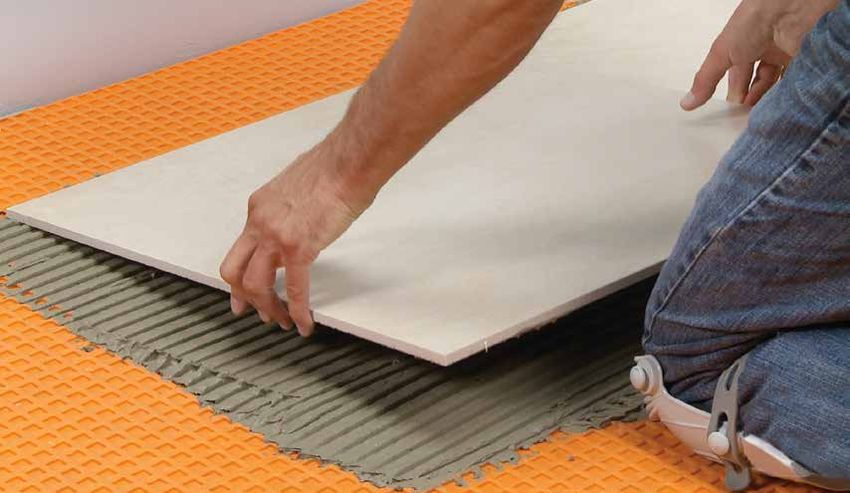
Schluter®-DITRA Installation Handbook 2018

The Universal Underlayment for Ceramic and Stone Tile

Schluter®-DITRA
Specifically designed as an underlayment for
ceramic and stone tile
Ceramic and stone tiles are durable, easy to maintain, and hygienic, representing the ideal surface coverings.
However, today’s lightweight construction methods can make the installation of hard surface coverings particularly
challenging. In order to protect the integrity of the tile assembly, an underlayment that performs multiple functions
is required.
Schluter®-DITRA is specifically designed to allow the installation of ceramic and stone tile over any even and
load-bearing substrate. The integration of DITRA’s uncoupling, waterproofing, load-distribution, and vapor
management functions makes consistent results viable.

                       Uncoupling
                       Tile has been successfully installed for thousands of years by incorporating an uncoupling layer, or
                       forgiving shear interface, within the tile assembly. DITRA provides uncoupling through its open rib
                       structure, which allows for in-plane movement that effectively neutralizes the differential movement
                       stresses between the substrate and the tile, thus eliminating the major cause of cracking and
                       delaminating of the tiled surface.

                       Waterproofing
                       DITRA provides reliable waterproofing. Its polyethylene composition protects the substrate from
                       moisture penetration, which is particularly important in today’s building environment where most
                       substrates are moisture sensitive.

                       Vapor Management
                       The distinguishing feature of DITRA is the existence of free space created by the configured
                       channels on the underside of the matting. The free space provides a route for excess moisture
                       and vapor to escape from the substrate that could otherwise cause damage to the tile layer above.
                       Thus, DITRA effectively manages moisture beneath the tile covering.

                       Support/Load Distribution
                       When placed on a solid foundation, columns or pillars can support tremendous loads. The same
                       physical principle applies to DITRA installations. Column-like mortar structures are formed in
                       the cutback cavities of the matting. Loads are transferred from the tile covering through these
                       column-like mortar structures to the substrate. Since DITRA is virtually incompressible within the
                       tile assembly, the advantages of uncoupling are achieved without sacrificing point load distribution
                       capabilities. The ability of DITRA installations to support and distribute heavy loads while preserving
                       the integrity of the tiled surface has been verified through extensive laboratory and field testing,
                       including applications exposed to vehicular traffic.

 Legend
 ★★★       Essential
 ★★        Significant
 ★         Helpful
                                                                                DITRA will forever change
                                                                                the way you lay tile.
CONTENTS
                                        WOOD       4 Floors, Interior - 16, 19.2, & 24-inch o.c. joist spacing
                                                       Floors, Interior - Natural Stone Tile
                                                       Floors, Interior - Existing Vinyl
                                                       Floors, Interior - Structural Plank Subfloor
                                CONCRETE           8 Floors, Interior - Ceramic or Stone Tile
                                                       • Young concrete
                                                       • Concrete subject to moisture migration
                                                       • Pre-stressed/post-tensioned concrete
                                    GYPSUM         9 Floors, Interior - Ceramic or Stone Tile
                       HEATED FLOORS              10 Wood Substrate - Electric thin-mat or wire system
                                                       Wood Substrate - Thin slab (lightweight or gypsum concrete)
                                                       Concrete Substrate - Structural concrete slab
                     WATERPROOFING                12 Floors, Interior - Ceramic or Stone Tile
         EXTERIOR APPLICATIONS                    13 Floors, Exterior - Ceramic or Stone Tile

                                                  14 Exterior Systems Planning Guide

                   MOVEMENT JOINTS                15 Placement guidelines and descriptions
           WOOD UNDERLAYMENT                      18 Installation guidelines
                           INSTALLATION           19 Schluter®-DITRA installation instructions
                        THIN-SET FACTS            20 Discussion of thin-set mortar types to be used with
                                                       Schluter®-DITRA

              THIN-SET DISCUSSION                 21 Evaluation of mortar types used with Schluter®-DITRA
                                                       • ASTM C627
                                                       • Shear bond strength
                                                       • Freeze/thaw exposure

     TESTING & CERTIFICATIONS                     22 Product Evaluation
                 HOW DOES IT WORK                 23 Explanation of how Schluter®-DITRA functions
                       NATURAL STONE              24 Discussion of natural stone and single-layer wood subfloors
                     SOUND CONTROL                26 Discussion of sound control in conjunction with ceramic
                                                       and stone tile
               PRODUCT SELECTION                  27 Choosing between Schluter®-DITRA and DITRA-XL
   PRODUCT & ORDERING INFO                        28
                             WARRANTIES           34
                                                  Schluter®-Systems’ written installation instructions shall have
                                                  precedence over referenced industry standard guidelines and installation
This installation handbook is subject to change   procedures insofar as referenced information may contain overlapping or
without notice. Please visit www.schluter.com     conflicting requirements. Type, thickness, and format of the ceramic or
for the latest version.                           stone tile surface covering must be suitable for the intended application.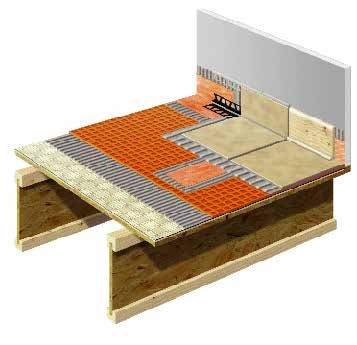
WOOD
Every substrate presents unique challenges
All wood materials, including OSB, plywood, and framing members, are subject to expansion, contraction, bending, and deflection as a
result of changes in moisture content and loading. Further, these deformations fluctuate over the life of the building structure.
                       Schluter®-DITRA’s uncoupling function protects the ceramic or stone tile covering from the aforementioned deformations
                       by neutralizing the differential movement stresses between the wood structure and the tile, thus eliminating the major
                       cause of cracking and delaminating of the tiled surface. Therefore, DITRA can replace a second layer of plywood in most
                       applications.

                       Since wood structures are sensitive to moisture, DITRA’s waterproofing function adds an essential element to the flooring
                       assembly by providing simple, effective, and permanent moisture protection.

                       Wood continually absorbs and releases moisture. The free space beneath the DITRA membrane allows the wood to
                       breathe and provides a route for any residual moisture in the wood substrate to escape.

                       Since DITRA is virtually incompressible within the tile assembly, the advantages of uncoupling are achieved without
                       sacrificing point load distribution capabilities.

By addressing all of the challenges associated with today’s fast, lightweight construction methods, DITRA provides a durable installation
system for ceramic and stone tile over wood substrates.

                                                         Floors, Interior - Ceramic or Porcelain Tile
D-W16-T-18                                              16" (406 mm) o.c. joist spacing, single layer OSB
                                                        or plywood subfloor
Ceramic or porcelain tile                               Areas of Application                              Setting and Grouting Materials
Schluter SET™, Schluter ALL-SET™,                         over any even and structurally sound OSB or       modified thin-set mortar – ANSI A118.11
Schluter FAST-SET™, or unmodified                         plywood subfloor with 16" (406 mm) o.c.           unmodified thin-set mortar – ANSI A118.1
thin-set mortar                                           joist spacing                                     grout – ANSI A118.3, A118.6, A118.7,
DITRA or DITRA-XL                                         interior dry or wet areas                         A118.8
uncoupling membrane
                                                        Limitations                                       Setting and Grouting Specifications
Schluter ALL-SET™,                                        minimum 2" x 2" (50 mm x 50 mm) tile              tile – ANSI A108.5
Schluter FAST-SET™,                                       for natural stone, see detail D-W-S (page 6)      grout – ANSI A108.6, A108.9, A108.10
or modified thin-set mortar
                                                          and natural stone discussion (page 24)
Single layer of plywood                                                                                   Other Considerations
or OSB                                                  Requirements                                        tightly butted and/or tented plywood or OSB
                                                          maximum spacing of joists, I-joists, or floor     seams must be addressed prior to installing
Joists, I-joists, or
trusses                                                   trusses is 16" (406 mm) o.c.                      DITRA and DITRA-XL
                                                          minimum subfloor thickness – 19/32", 5/8"         vapor barrier on crawl space floors according
                                                          nom. (16 mm) tongue-and-groove with 1/8"          to regional building codes
                                                          (3 mm) gap between sheets                         where a waterproof floor is required, all
                                                                                                            DITRA and DITRA-XL seams and floor/wall
                                                        Substrate Preparation
                                                                                                            transitions must be sealed with Schluter®-
                                                          verify that subfloor panels are properly
                                                                                                            KERDI-BAND using Schluter SET™, Schluter
                                                          fastened to framing members
                                                                                                            ALL-SET™, Schluter FAST-SET™, or
                                                          any leveling of the subfloor must be done
                                                                                                            unmodified thin-set mortar; see page 12
                                                          prior to installing DITRA and DITRA-XL
                                                        Movement Joints
                                                         DITRA and DITRA-XL do not eliminate the
                                                         need for movement joints, including perimeter
                                                         joints, within the tiled surface. Movement
                                                         joints must be installed in accordance with
                                                         industry standards and norms; see page 15
                                                         of this Handbook, TCNA EJ171, and TTMAC
                                                         301 MJ

    ★★★        ★★★            ★       ★★

4    WOOD — Floors, Interior - Ceramic or Porcelain Tile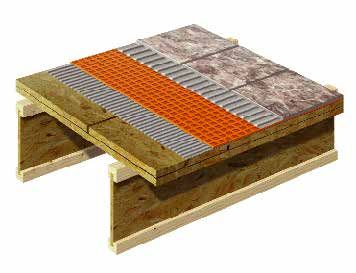
D-W19-T-18                             19.2" (488 mm) o.c. joist spacing, single layer OSB
Ceramic or porcelain tile
                                       or plywood subfloor
                                       Areas of Application                              Setting and Grouting Materials
Schluter SET™, Schluter ALL-SET™,
Schluter FAST-SET™, or unmodified        over any even and structurally sound OSB or       modified thin-set mortar – ANSI A118.11
thin-set mortar                          plywood subfloor with 19.2" (488 mm) o.c.         unmodified thin-set mortar – ANSI A118.1
                                         joist spacing                                     grout – ANSI A118.3, A118.6, A118.7,
DITRA or DITRA-XL                        interior dry or wet areas                         A118.8
uncoupling membrane
                                       Limitations                                       Setting and Grouting Specifications
Schluter ALL-SET™,                       minimum 2" x 2" (50 mm x 50 mm) tile              tile – ANSI A108.5
Schluter FAST-SET™,                      for natural stone, see detail D-W-S (page 6)      grout – ANSI A108.6, A108.9, A108.10
or modified thin-set mortar
                                         and natural stone discussion (page 24)
Single layer of plywood                                                                  Other Considerations
or OSB                                 Requirements                                        tightly butted and/or tented plywood or OSB
                                         maximum spacing of joists, I-joists, or floor     seams must be addressed prior to installing
Joists, I-joists, or                     trusses is 19.2" (488 mm) o.c.                    DITRA and DITRA-XL
trusses
                                         minimum subfloor thickness – 23/32", 3/4"         vapor barrier on crawl space floors according
                                         nom. (19 mm) tongue-and-groove with 1/8"          to regional building codes
                                         (3 mm) gap between sheets                         where a waterproof floor is required, all
                                                                                           DITRA and DITRA-XL seams and floor/wall
                                       Substrate Preparation
                                                                                           transitions must be sealed with Schluter®-
                                         verify that subfloor panels are properly
                                                                                           KERDI-BAND using Schluter SET™, Schluter
                                         fastened to framing members
                                                                                           ALL-SET™, Schluter FAST-SET™, or
                                         any leveling of the subfloor must be done
                                                                                           unmodified thin-set mortar; see page 12
                                         prior to installing DITRA and DITRA-XL
                                       Movement Joints
                                        DITRA and DITRA-XL do not eliminate the
                                        need for movement joints, including perimeter
                                        joints, within the tiled surface. Movement
                                        joints must be installed in accordance with
                                        industry standards and norms; see page 15
                                        of this Handbook, TCNA EJ171, and TTMAC
                                        301 MJ
  ★★★          ★★★            ★   ★★

D-W24-T-18                             24" (610 mm) o.c. joist spacing, double layer OSB
Ceramic or porcelain tile
                                       or plywood subfloor
                                       Areas of Application                              Setting and Grouting Materials
Schluter SET™, Schluter ALL-SET™,
Schluter FAST-SET™, or unmodified        over any even and structurally sound double       modified thin-set mortar – ANSI A118.11
thin-set mortar                          layer OSB or plywood floor                        unmodified thin-set mortar – ANSI A118.1
                                         Interior dry or wet areas                         grout – ANSI A118.3, A118.6, A118.7,
DITRA or DITRA-XL                                                                          A118.8
uncoupling membrane                    Limitations
                                         minimum 2" x 2" (50 mm x 50 mm) tile            Setting and Grouting Specifications
Schluter ALL-SET™,
Schluter FAST-SET™,                                                                        tile – ANSI A108.5
                                       Requirements
or modified thin-set mortar                                                                grout – ANSI A108.6, A108.9, A108.10
                                         maximum spacing of I-joists or floor trusses
Double layer of plywood                  is 24" (610 mm) o.c.                            Other Considerations
or OSB                                   double layer wood floor consisting of:            tightly butted and/or tented plywood or OSB
Joists, I-joists, or                     • minimum subfloor thickness – 23/32",            seams must be addressed prior to installing
trusses                                     3/4" nom. (19 mm) tongue-and-groove            DITRA and DITRA-XL
                                         • minimum underlayment thickness –                vapor barrier on crawl space floors according
                                            11/32", 3/8" nom. (10 mm)                      to regional building codes.
                                                                                           where a waterproof floor is required, all
                                       Substrate Preparation
                                                                                           DITRA and DITRA-XL seams and floor/wall
                                         verify that subfloor panels are properly
                                                                                           transitions must be sealed with Schluter®-
                                         fastened to framing members
                                                                                           KERDI-BAND using Schluter SET™, Schluter
                                         underlayment – minimum 11/32", 3/8" nom.
                                                                                           ALL-SET™, Schluter FAST-SET™, or
                                         (10 mm)-thick Exposure 1, plugged-face
                                                                                           unmodified thin-set mortar; see page 12
                                         plywood or OSB with 1/8" (3 mm) gap
                                                                                           ceramic or porcelain tile can be installed over
                                         between sheets; see page 18 for
                                                                                           single layer wood subfloors on joists spaced
                                         underlayment installation guidelines
                                                                                           at 24" (610 mm) o.c. when using DITRA-XL;
                                         any leveling of the assembly must be done
                                                                                           see detail D-W24-XL-T on page 6
                                         prior to installing DITRA and DITRA-XL
                                       Movement Joints
                                        DITRA and DITRA-XL do not eliminate the
                                        need for movement joints, including perimeter
                                        joints, within the tiled surface. Movement
                                        joints must be installed in accordance with
                                        industry standards and norms; see page 15
                                        of this Handbook, TCNA EJ171, and TTMAC
                                        301 MJ
  ★★★          ★★★            ★   ★★

                                                             WOOD — Floors, Interior - Ceramic or Porcelain Tile                        5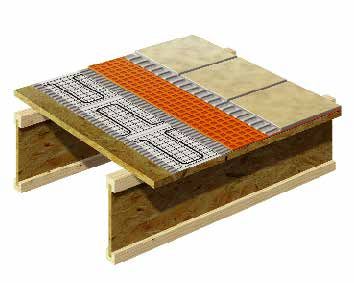
D-W24-XL-T-18                          24" (610 mm) o.c. joist spacing, single layer OSB
Ceramic or porcelain tile              or plywood subfloor
Schluter SET™, Schluter ALL-SET™,      Areas of Application                              Setting and Grouting Materials
Schluter FAST-SET™, or unmodified        over any even and structurally sound OSB or       modified thin-set mortar – ANSI A118.11
thin-set mortar
                                         plywood subfloor with 24" (610 mm) o.c.           unmodified thin-set mortar – ANSI A118.1
DITRA-XL                                 joist spacing                                     grout – ANSI A118.3, A118.6, A118.7,
uncoupling membrane                      interior dry or wet areas                         A118.8
Schluter ALL-SET™,                     Limitations                                       Setting and Grouting Specifications
Schluter FAST-SET™,
or modified thin-set mortar              minimum 2" x 2" (50 mm x 50 mm) tile              tile – ANSI A108.5
                                         for natural stone, see detail D-W-S (page 6)      grout – ANSI A108.6, A108.9, A108.10
Single layer of plywood                  and natural stone discussion (page 24)
or OSB                                                                                   Other Considerations
                                       Requirements                                        tightly butted and/or tented plywood or OSB
Joists, I-joists, or                     maximum spacing of I-joists or floor trusses      seams must be addressed prior to installing
trusses
                                         is 24" (610 mm) o.c.                              DITRA-XL
                                         minimum subfloor thickness – 23/32", 3/4"         vapor barrier on crawl space floors according
                                         nom. (19 mm) tongue-and-groove with 1/8"          to regional building codes
                                         (3 mm) gap between sheets                         where a waterproof floor is required, all DITRA-
                                       Substrate Preparation                               XL seams and floor/wall transitions must be
                                         verify that subfloor panels are properly          sealed with Schluter®-KERDI-BAND using
                                                                                           Schluter SET™, Schluter ALL-SET™, Schluter
                                         fastened to framing members
                                                                                           FAST-SET™, or unmodified thin-set mortar;
                                         any leveling of the subfloor must be done
                                                                                           see page 12
                                         prior to installing DITRA-XL
                                       Movement Joints
                                        DITRA-XL does not eliminate the need for
                                        movement joints, including perimeter joints,
                                        within the tiled surface. Movement joints must
                                        be installed in accordance with industry
                                        standards and norms; see page 15 of this
                                        Handbook, TCNA EJ171, and TTMAC 301
                                        MJ
    ★★★        ★★★            ★   ★★

                                        Floors, Interior - Natural Stone Tile
D-W-S-18                               Double layer of OSB or Plywood subfloor
Natural stone tile                     Areas of Application                              Setting and Grouting Materials
Schluter SET™, Schluter ALL-SET™,        over any even and structurally sound double       modified thin-set mortar – ANSI A118.11
Schluter FAST-SET™, or unmodified        layer OSB or plywood floor                        unmodified thin-set mortar – ANSI A118.1
thin-set mortar                          interior dry or wet areas                         grout – ANSI A118.3, A118.6, A118.7,
                                                                                           A118.8
DITRA or DITRA-XL                      Limitations
uncoupling membrane                      requires double layer wood floor regardless     Setting and Grouting Specifications
Schluter ALL-SET™,                       of joist spacing                                  tile – ANSI A108.5
Schluter FAST-SET™,                      minimum 2" x 2" (50 mm x 50 mm) tile              grout – ANSI A108.6, A108.9, A108.10
or modified thin-set mortar            Requirements                                      Other Considerations
                                         maximum spacing of joists, I-joists, or floor     certain moisture-sensitive stones, e.g., green
Double layer of plywood                  trusses is 24" (610 mm) o.c.                      marble, or resin-backed tiles may require
or OSB                                   double layer wood floor consisting of:            special setting materials. Consult stone
Joists, I-joists, or                     • minimum subfloor thickness – 23/32",            supplier and Schluter®-Systems for more
trusses                                     3/4" nom. (19 mm) tongue-and-groove            information
                                         • minimum underlayment thickness –                tightly butted and/or tented plywood or OSB
                                            11/32", 3/8" nom. (10 mm)                      seams must be addressed prior to installing
                                                                                           DITRA and DITRA-XL
                                       Substrate Preparation
                                                                                           vapor barrier on crawl space floors according
                                         verify that subfloor panels are properly
                                                                                           to regional building codes
                                         fastened to framing members
                                                                                           where a waterproof floor is required, all
                                         underlayment – minimum 11/32", 3/8" nom.
                                                                                           DITRA and DITRA-XL seams and floor/wall
                                         (10 mm)-thick Exposure 1, plugged-face
                                                                                           transitions must be sealed with Schluter®-
                                         plywood or OSB with 1/8" (3 mm) gap
                                                                                           KERDI-BAND using Schluter SET™, Schluter
                                         between sheets; see page 18 for
                                                                                           ALL-SET™, Schluter FAST-SET™, or
                                         underlayment installation guidelines
                                                                                           unmodified thin-set mortar; see page 12
                                         any leveling of the assembly must be done
                                         prior to installing DITRA and DITRA-XL
                                       Movement Joints
                                        DITRA and DITRA-XL do not eliminate the
                                        need for movement joints, including perimeter
                                        joints, within the tiled surface. Movement
                                        joints must be installed in accordance with
                                        industry standards and norms; see page 15
    ★★★        ★★★            ★   ★★    of this Handbook, TCNA EJ171, and TTMAC
                                        301 MJ

6    WOOD — Floors, Interior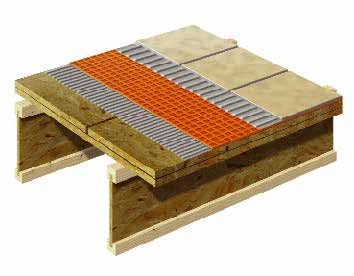
Floors, Interior - Existing Vinyl Floors
D-V-T-18
Areas of Application Setting and Grouting Materials
Tile or wood base over any even and structurally sound Fast-setting modified thin-set mortar – ANSI
Ceramic, porcelain or stone tile substrate with existing vinyl flooring A118.4 or ANSI A118.11
interior dry or wet areas unmodified thin-set mortar – ANSI A118.1
RONDEC
grout – ANSI A118.3, A118.6, A118.7,
Limitations
DILEX-EKE A118.8
minimum 2" x 2" (50 mm x 50 mm) tile
Schluter SET™, cushioned vinyl unacceptable Setting and Grouting Specifications
Schluter ALL-SET™, perimeter bonded vinyl flooring unacceptable tile – ANSI A108.5
Schluter FAST-SET™, multiple layers of vinyl unacceptable grout – ANSI A108.6, A108.9, A108.10
or unmodified
thin-set mortar Requirements Other Considerations
KERDI-BAND for wood substrates, subfloor/underlayment DITRA and DITRA-XL are adhered to the vinyl
configuration according to detail D-W16-T, flooring using Schluter FAST-SET™ or fast-
DITRA or DITRA-XL D-W19-T, D-W24-T, D-W24-XL-T, or D-W-S; setting modified thin-set mortar suitable for
uncoupling membrane D-W24-XL-T for use with DITRA-XL only bonding to vinyl. As an alternative, a suitable
cement-based embossing leveler or Schluter
Schluter FAST-SET™, Substrate Preparation
or fast-setting modified ALL-SET™ or an appropriate modified thin-
ensure that the structure beneath the vinyl is
thin-set mortar set mortar can be used to skim coat the vinyl
sound and adequate
to provide a bonding surface. When skim
Existing vinyl ensure that vinyl is well adhered
coat is cured, DITRA and DITRA-XL are
remove any wax and clean vinyl
Plywood or OSB adhered to the skim coat using Schluter
for wood substrates, nail off floor with ring
SET™ or unmodified thin-set mortar. See
Joists, I-joists, or shank flooring nails every 4" (102 mm) o.c.
page 21 for discussion on latex-modified
trusses – fasteners must pass through entire thick-
thin-set mortars sandwiched between two
ness of assembly with minimal penetration
impervious layers
into joists
seaming DITRA and DITRA-XL, including
any leveling of the assembly must be done
floor/wall connections, with Schluter ®-
prior to installing DITRA and DITRA-XL
KERDI-BAND may be appropriate in cases
Movement Joints where a break in the water line of an ice
DITRA and DITRA-XL do not eliminate the maker or dishwasher can damage pre-
need for movement joints, including perimeter existing moisture-sensitive substrates and
joints, within the tiled surface. Movement underlayments. KERDI-BAND floor/wall
joints must be installed in accordance with connections are just as easily concealed with
industry standards and norms; see page 15 wood base as with tile. KERDI-BAND floor/
of this Handbook, TCNA EJ171, and TTMAC wall connections in dishwasher alcoves are
301 MJ parged with thin-set mortar; see page 12
vapor barrier on crawl space floors according
to regional building codes
certain moisture-sensitive stones, e.g., green
marble, or resin-backed tiles may require special
setting materials. Consult stone supplier and
★★★ ★★★ ★★ Schluter®-Systems for more information
D-SP-TS-18
Floors, Interior - Structural Plank Subfloor
Ceramic, porcelain or stone tile
Schluter SET™, Schluter ALL-SET™, Areas of Application industry standards and norms; see page 15
Schluter FAST-SET™, or unmodified over structural plank subfloors of this Handbook, TCNA EJ171, and TTMAC
thin-set mortar interior dry or wet areas 301 MJ
DITRA or DITRA-XL Limitations Setting and Grouting Materials
uncoupling membrane
minimum 2" x 2" (50 mm x 50 mm) tile modified thin-set mortar – ANSI A118.11
Schluter ALL-SET™, unmodified thin-set mortar – ANSI A118.1
Schluter FAST-SET™, Requirements
grout – ANSI A118.3, A118.6, A118.7,
or modified thin-set mortar maximum spacing of joists is 24" (610 mm) o.c.
A118.8
double layer wood floor consisting of:
Plywood or OSB • minimum structural plank subfloor Setting and Grouting Specifications
underlayment thickness – 3/4" (19 mm) tile – ANSI A108.5
Structural plank • minimum underlayment thickness – grout – ANSI A108.6, A108.9, A108.10
subfloor 15/32", 1/2" nom. (13 mm)
Other Considerations
Joists Substrate Preparation vapor barrier on crawl space floors according
verify that subfloor planks are properly to regional building codes
fastened to framing members where a waterproof floor is required, all
underlayment – minimum 15/32", 1/2" nom. DITRA and DITRA-XL seams and floor/wall
(13 mm)-thick Exposure 1, plugged-face transitions must be sealed with Schluter®-
plywood or OSB with 1/8" (3 mm) gap KERDI-BAND using Schluter SET™, Schluter
between sheets; see page 18 for ALL-SET™, Schluter FAST-SET™, or
underlayment installation guidelines unmodified thin-set mortar; see page 12
any leveling of the assembly must be done certain moisture-sensitive stones, e.g., green
prior to installing DITRA and DITRA-XL marble, or resin-backed tiles may require
special setting materials. Consult stone
Movement Joints
supplier and Schluter®-Systems for more
DITRA and DITRA-XL do not eliminate the
information
need for movement joints, including perimeter
joints, within the tiled surface. Movement
joints must be installed in accordance with
WOOD — Floors, Interior 7
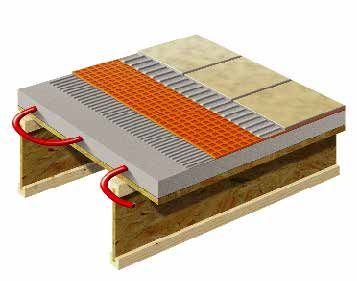
★★★ ★★★ ★ ★★
CONCRETE
Every substrate presents unique challenges
There are various challenges associated with the installation of hard surface coverings on concrete substrates.
To begin, the coefficient of thermal expansion of concrete is close to twice that of ceramic tile. Additionally, tile contractors are often expected
to install tile over young concrete (concrete cured less than 28 days). However, rigid surface coverings installed over young concrete are
susceptible to damage as a result of shrinkage during curing. Pre-stressed/post-tensioned concrete slabs are also commonplace in today’s
construction environment. Although pre-stressing is used to help control deflections in concrete structures, these slabs are still subject to
deformations caused by changes in moisture, temperature, and loading. Many concrete slabs on or below grade are subject to moisture
migration, which can be problematic. Furthermore, these structures experience the same deformations as stated above.
                   Schluter®-DITRA’s uncoupling function protects the ceramic or stone tile covering by neutralizing the differential
                   movement stresses between the concrete substrate and the tile, thus eliminating the major cause of cracking and
                   delaminating of the tiled surface.

                   DITRA’s waterproofing ability not only protects the substrate from moisture and harmful substances, it also slows the
                   drying of fresh concrete, which reduces the chances of cracking and curling of the slab.

                   The free space beneath the DITRA matting provides a route for any residual moisture in the concrete slab to escape. This
                   allows the installation of DITRA and the tile covering as soon as the slab can be walked upon. Vapor management is also
                   essential for slabs subject to moisture migration.

                   Since DITRA is virtually incompressible within the tile assembly, the advantages of uncoupling are achieved without sacrificing
                   point load distribution capabilities. This allows DITRA to be installed in commercial and industrial applications exposed to
                   heavy vehicular traffic, provided the type, format, and thickness of the tile is appropriate for the application.

By addressing all of the challenges associated with today’s fast construction methods, DITRA provides a durable installation system for
ceramic and stone tile over concrete substrates.

                                                       Floors, Interior - Ceramic or Stone Tile
D-C-TS-18                                             Concrete subfloor
                                                      Areas of Application                                  Movement Joints
Ceramic, porcelain or stone tile                        over any structurally sound and even                 DITRA and DITRA-XL do not eliminate the
Schluter SET™, Schluter ALL-SET™,                       concrete subfloor                                    need for movement joints, including perimeter
Schluter FAST-SET™, or unmodified                       young concrete (concrete cured less than 28 days)    joints, within the tiled surface. Movement
thin-set mortar                                         on or below grade concrete subject to                joints must be installed in accordance with
                                                        moisture migration                                   industry standards and norms; see page 15
DITRA or DITRA-XL
uncoupling membrane                                     post-tensioned or pre-stressed concrete              of this Handbook, TCNA EJ171, and TTMAC
                                                        cracked concrete                                     301 MJ
Schluter SET™,
Schluter ALL-SET™,                                    Limitations                                            concrete floors may incorporate various
Schluter FAST-SET™,                                     minimum 2" x 2" (50 mm x 50 mm) tile                 movement joints; see page 18 of this
or unmodified                                           concrete slabs subject to moisture migration         Handbook for guidelines on how to treat the
thin-set mortar                                         must have all seams in DITRA and DITRA-XL            different types of joints (control/contraction
Concrete                                                sealed with Schluter®-KERDI-BAND using               joints, expansion joints, etc.)
                                                        Schluter SET™, Schluter ALL-SET™, Schluter          Setting and Grouting Materials
                                                        FAST-SET™, or unmodified thin-set mortar              unmodified thin-set mortar – ANSI A118.1
                                                        any cracks in concrete subfloor must exhibit          grout – ANSI A118.3, A118.6, A118.7, A118.8
                                                        in-plane movement only; thin-set tile
                                                        assemblies, including those incorporating           Setting and Grouting Specifications
                                                        DITRA or DITRA-XL, cannot accommodate                 tile – ANSI A108.5
                                                        differential vertical displacement                    grout – ANSI A108.6, A108.9, A108.10
                                                      Requirements                                          Other Considerations
                                                        slab to be structurally sound                         where a waterproof floor is required, all
                                                        slab to be free of waxy or oily films and curing      DITRA and DITRA-XL seams and floor/wall
                                                        compounds (when present, mechanical                   transitions must be sealed with Schluter®-
                                                        scarifying is necessary)                              KERDI-BAND using Schluter SET™, Schluter
                                                        the installation of DITRA or DITRA-XL and tile        ALL-SET™, Schluter FAST-SET™, or
                                                        can begin as soon as the slab can be walked           unmodified thin-set mortar; see page 12
                                                        upon                                                  certain moisture-sensitive stones, e.g., green
                                                        slab to be free of standing water                     marble, or resin-backed tiles may require special
                                                      Substrate Preparation                                   setting materials. Consult stone supplier and
    ★★★        ★        ★★★         ★                   any leveling or sloping of the slab or                Schluter®-Systems for more information
                                                        assembly must be done prior to installing
                                                        DITRA and DITRA-XL

8    CONCRETE — Floors, Interior - Ceramic or Stone Tile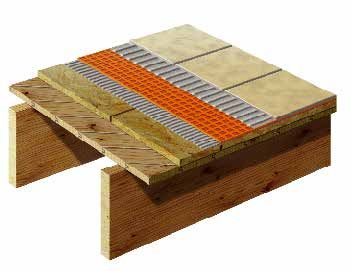
GYPSUM
Every substrate presents unique challenges
Bonding ceramic or stone tiles directly to gypsum concrete substrates is generally considered questionable or not recommended. The
challenges associated with gypsum-based underlayments include the requirement of an extended drying period before installing tile and
continued sensitivity to the reintroduction of moisture throughout the life of the installation. In addition, since the coefficient of thermal
expansion of gypsum concrete is substantially greater than that of ceramic tile, shear stresses caused by temperature fluctuations can
result in delamination or cracking of the tile covering. This is particularly important when gypsum concrete is used as a thermal mass for
radiant heated floors. With the increasing popularity of radiant heated floors, which typically utilize gypsum concrete, tile installers need a
reliable installation system to address these issues.
                   Schluter®-DITRA’s uncoupling function protects the ceramic or stone tile covering by neutralizing the differential
                   movement stresses between the gypsum concrete substrate and the tile, thus eliminating the major cause of cracking
                   and delaminating of the tiled surface.

                   DITRA’s waterproofing function prevents the reintroduction of moisture to gypsum concrete underlayments, which,
                   if not prevented, could significantly compromise performance of the underlayment and lead to damage of the
                   tiled surface.

                   The residual moisture in gypsum concrete is allowed to escape through the air channels on the underside of the DITRA
                   matting. This is particularly important since gypsum concrete must dry in order to gain strength.

                   Since DITRA is virtually incompressible within the tile assembly, the advantages of uncoupling are achieved without
                   sacrificing point load distribution capabilities.

By addressing all of the challenges associated with today’s fast, lightweight construction methods, DITRA provides a durable installation
system for ceramic and stone tile over gypsum substrates.

                                                     Floors, Interior - Ceramic or Stone Tile
D-G-TS-18                                           Gypsum concrete
Ceramic, porcelain or stone tile                    Areas of Application                              Setting and Grouting Materials
                                                      over gypsum concrete underlayment placed          unmodified thin-set mortar – ANSI A118.1
Schluter SET™, Schluter ALL-SET™,
Schluter FAST-SET™, or unmodified                     over structurally sound wood or concrete          grout – ANSI A118.3, A118.6, A118.7,
thin-set mortar                                       subfloors                                         A118.8
                                                      interior dry or wet areas
DITRA or DITRA-XL                                                                                     Installation Specifications
uncoupling membrane                                 Limitations                                         tile – ANSI A108.5
                                                      minimum 2" x 2" (50 mm x 50 mm) tile              grout – ANSI A108.6, A108.9, A108.10
Schluter SET™,                                                                                          gypsum – follow manufacturer’s
Schluter ALL-SET™,                                  Requirements
Schluter FAST-SET™,                                                                                     recommendations
                                                      for wood substrates, subfloor/underlayment
or unmodified                                         configuration according to detail D-W16-T,      Other Considerations
thin-set mortar
                                                      D-W19-T, D-W24-T, or D-W24-XL-T;                  since DITRA and DITRA-XL must bond to the
Gypsum concrete                                       D-W24-XL-T for use with DITRA-XL only             gypsum       concrete,     follow    gypsum
                                                      where radiant heat tubes are laid over the        manufacturer’s recommendations regarding
                                                      subfloor, gypsum poured to a height that is       primers and/or special surface preparation
                                                      3/4" (19 mm) above the tops of the tubes is       before installing DITRA and DITRA-XL
                                                      required before installing DITRA and DITRA-XL     where a waterproof floor is required, all
                                                                                                        DITRA and DITRA-XL seams and floor/wall
                                                      residual moisture in gypsum screed, 2.0%
                                                                                                        transitions must be sealed with Schluter®-
                                                      (percentage by volume) or less before
                                                                                                        KERDI-BAND using Schluter SET™, Schluter
                                                      installing DITRA and DITRA-XL                     ALL-SET™, Schluter FAST-SET™, or
                                                    Substrate Preparation                               unmodified thin-set mortar; see page 12
                                                      gypsum – follow manufacturer’s directions         certain moisture-sensitive stones, e.g., green
                                                                                                        marble, or resin-backed tiles may require
                                                    Movement Joints                                     special setting materials. Consult stone
                                                     DITRA and DITRA-XL do not eliminate the            supplier and Schluter®-Systems for more
                                                     need for movement joints, including perimeter      information
                                                     joints, within the tiled surface. Movement         vapor barrier on crawl space floors according
  ★★★        ★★★        ★★★        ★★                joints must be installed in accordance with        to regional building codes
                                                     industry standards and norms; see page 15
                                                     of this Handbook, TCNA EJ171, and TTMAC
                                                     301 MJ

                                                                           GYPSUM — Floors, Interior - Ceramic or Stone Tile                        9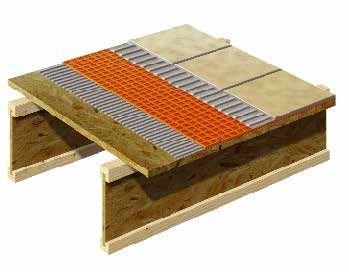
HEATED FLOORS
Every substrate presents unique challenges
Radiant heating is one of the fastest growing market segments in the construction industry. Unlike other surface coverings, the low
thermal resistivity of ceramic and stone tiles allows them to be used in radiant heat applications without sacrificing the energy efficiency
of the system. However, there are inherent challenges in combining rigid surface coverings with radiant panel heating systems. A viable
installation system must address the magnified fluctuations in temperature that contribute to increased shear stresses between the heated
assembly and the tile covering. The system must also limit thermal striping by promoting even heat distribution and protect the assembly
from moisture, which is particularly important when gypsum concrete is used as the thermal mass.
                       Differential movement stresses are magnified in radiant-heated floor applications because of significant temperature
                       gradients. Schluter®-DITRA’s uncoupling function protects the ceramic or stone tile covering by neutralizing the
                       differential movement stresses between the heated assembly and the tile, thus eliminating the major cause of cracking
                       and delaminating of the tiled surface.
                       DITRA’s waterproofing function provides simple, effective, and permanent protection for moisture-sensitive substrates,
                       such as gypsum concrete and wood, used in heated floor applications.

                       The open rib structure of the DITRA matting allows the residual moisture in the substrate to escape. This is particularly
                       important for gypsum concrete since it must dry in order to gain strength. In addition, the free space beneath the matting
                       limits thermal striping by promoting even heat distribution throughout the assembly.

                       Since DITRA is virtually incompressible within the tile assembly, the advantages of uncoupling are achieved without
                       sacrificing point load distribution capabilities.

DITRA provides a reliable installation system that allows the integration of radiant heat and rigid surface coverings, enabling the tile
contractor to take advantage of this rapidly growing market segment.

                                                          Wood Substrate
D-RE-18
Ceramic, porcelain or stone tile                        Electric thin-mat or wire system
Schluter SET™, Schluter ALL-SET™,                       Areas of Application                                 heating system – follow manufacturer’s
Schluter FAST-SET™, or unmodified                         over any even and structurally sound substrate     directions
thin-set mortar                                           interior dry or wet areas according to heating
                                                                                                           Other Considerations
DITRA or DITRA-XL                                         system manufacturer’s recommendations
uncoupling membrane                                                                                          install heating cable system per heating
                                                        Limitations                                          manufacturer’s directions; encapsulate
Schluter SET™,                                            minimum 2" x 2" (50 mm x 50 mm) tile               heating cables in a skim coat of Schluter ALL-
Schluter ALL-SET™,                                                                                           SET™, Schluter FAST-SET™, modified thin-set
Schluter FAST-SET™,                                     Requirements
or unmodified                                                                                                mortar or a cement-based leveling compound
                                                          for wood substrates, subfloor/underlayment
thin-set mortar                                                                                              and allow to cure before installing DITRA or
                                                          configuration according to detail D-W16-T,
                                                                                                             DITRA-XL with Schluter SET™ or unmodified
Electric thin-mat or wire                                 D-W19-T, D-W24-T, D-W24-XL-T, or D-W-S;
                                                                                                             thin-set mortar
                                                          D-W24-XL-T for use with DITRA-XL only
Schluter ALL-SET™,                                                                                           install electric thin-mat per heating
Schluter FAST-SET™,                                       for concrete substrates, see detail D-C-TS
                                                                                                             manufacturer’s directions and install DITRA
or modified thin-set mortar                             Substrate Preparation                                or DITRA-XL with Schluter SET™, Schluter
Plywood or OSB                                            any leveling of the assembly must be done          ALL-SET™, Schluter FAST-SET™, or
Joists, I-joists, or                                      prior to installing DITRA and DITRA-XL             unmodified thin-set mortar
trusses                                                   additional preparation according to heating        vapor barrier on crawl space floors according
                                                          system manufacturer’s directions                   to regional building codes
                                                        Movement Joints                                      where a waterproof floor is required, all
                                                         DITRA and DITRA-XL do not eliminate the             DITRA and DITRA-XL seams and floor/wall
                                                         need for movement joints, including perimeter       transitions must be sealed with Schluter®-
                                                         joints, within the tiled surface. Movement          KERDI-BAND using Schluter SET™, Schluter
                                                         joints must be installed in accordance with         ALL-SET™, Schluter FAST-SET™, or
                                                         industry standards and norms; see page 15           unmodified thin-set mortar; see page 12
                                                         of this Handbook, TCNA EJ171, and TTMAC             certain moisture-sensitive stones, e.g., green
                                                         301 MJ                                              marble or resin-backed tiles, may require
                                                                                                             special setting materials. Consult stone
                                                        Setting and Grouting Materials
                                                                                                             supplier and Schluter®-Systems for more
                                                          modified thin-set mortar – ANSI A118.11
                                                                                                             information
                                                          unmodified thin-set mortar – ANSI A118.1
                                                                                                             Schluter®-DITRA-HEAT is an uncoupling
                                                          grout – ANSI A118.3, A118.6, A118.7,
                                                                                                             membrane designed to secure heating
                                                          A118.8
                                                                                                             cables without encapsulating them in leveling
  ★★★          ★★★            ★       ★★                Setting and Grouting Specifications                  compounds; see schluter.com for more
                                                          tile – ANSI A108.5                                 information
10     HEATED FLOORS                                      grout – ANSI A108.6, ANSI A108.9, ANSI
                                                          A108.10
Wood Substrate
D-RHTS-18 Thin slab (lightweight or gypsum concrete)
Ceramic, porcelain or stone tile Areas of Application industry standards and norms; see page 15
over lightweight or gypsum concrete thin of this Handbook, TCNA EJ171, and TTMAC
Schluter SET™, Schluter ALL-SET™, slab placed over structurally sound wood or 301 MJ
Schluter FAST-SET™, or unmodified
thin-set mortar concrete subfloor Setting and Grouting Materials
interior dry or wet areas unmodified thin-set mortar – ANSI A118.1
DITRA or DITRA-XL grout – ANSI A118.3, A118.6, A118.7,
uncoupling membrane Limitations
minimum 2" x 2" (50 mm x 50 mm) tile A118.8
Schluter SET™,
Schluter ALL-SET™, Requirements Setting and Grouting Specifications
Schluter FAST-SET™, for wood substrates, subfloor/underlayment tile – ANSI A108.5
or unmodified configuration according to detail D-W16-T, grout – ANSI A108.6, A108.9, A108.10
thin-set mortar D-W19-T, D-W24-T, or D-W24-XL-T; heating system – follow manufacturer’s
Lightweight or D-W24-XL-T for use with DITRA-XL only directions
gypsum concrete where radiant heat tubes are laid over the Other Considerations
Even and structurally subfloor, gypsum or concrete fill poured to if gypsum concrete is used, follow gypsum
sound substrate a height that is 3/4" (19 mm) above the tops manufacturer’s recommendations regarding
of the tubes is required before installing primers and/or special surface preparation
DITRA and DITRA-XL before installing DITRA and DITRA-XL
residual moisture in gypsum concrete, 2.0% vapor barrier on crawl space floors according
(percentage by volume) or less before to regional building codes
installing DITRA and DITRA-XL where a waterproof floor is required, all
DITRA and DITRA-XL seams and floor/wall
Substrate Preparation transitions must be sealed with Schluter®-
gypsum or concrete – follow manufacturer’s KERDI-BAND using Schluter SET™, Schluter
directions and/or design specifications ALL-SET™, Schluter FAST-SET™, or
additional substrate preparation according to unmodified thin-set mortar; see page 12
heating system manufacturer’s directions certain moisture-sensitive stones, e.g., green
marble, or resin-backed tiles may require
Movement Joints
special setting materials. Consult stone
DITRA and DITRA-XL do not eliminate the
supplier and Schluter®-Systems for more
need for movement joints, including perimeter
information
joints, within the tiled surface. Movement
joints must be installed in accordance with
★★★ ★★★ ★★★ ★★
Concrete Substrate
D-RHSS-18 Structural concrete slab
Ceramic, porcelain or stone tile Areas of Application Movement Joints
over structurally sound and even radiant- DITRA and DITRA-XL do not eliminate the
Schluter SET™, Schluter ALL-SET™, heated concrete floors need for movement joints, including perimeter
Schluter FAST-SET™, or unmodified joints, within the tiled surface. Movement
thin-set mortar young concrete (concrete cured less than 28 days)
on or below grade concrete subject to joints must be installed in accordance with
DITRA or DITRA-XL moisture migration industry standards and norms; see page 15
uncoupling membrane cracked concrete of this Handbook, TCNA EJ171, and TTMAC
301 MJ
Schluter SET™, Limitations
Schluter ALL-SET™, concrete floors may incorporate various
minimum 2" x 2" (50 mm x 50 mm) tile movement joints; see page 16 of this
Schluter FAST-SET™,
or unmodified concrete slabs subject to moisture migration Handbook for guidelines on how to treat the
thin-set mortar must have all seams in DITRA and DITRA-XL different types of joints (control/contraction
sealed with Schluter®-KERDI-BAND using joints, expansion joints, etc.)
Concrete Schluter SET™, Schluter ALL-SET™, Schluter
FAST-SET™, or unmodified thin-set mortar Setting and Grouting Materials
any cracks in concrete subfloor must exhibit unmodified thin-set mortar – ANSI A118.1
in-plane movement only; thin-set tile grout – ANSI A118.3, A118.6, A118.7,
assemblies, including those incorporating A118.8
DITRA or DITRA-XL, cannot accommodate Setting and Grouting Specifications
differential vertical displacement
tile – ANSI A108.5
Requirements grout – ANSI A108.6, A108.9, A108.10
slab to be structurally sound
Other Considerations
slab to be free of waxy or oily films and curing
where a waterproof floor is required, all
compounds (when present, mechanical
DITRA and DITRA-XL seams and floor/wall
scarifying is necessary)
transitions must be sealed with Schluter®-
the installation of DITRA or DITRA-XL and KERDI-BAND using Schluter SET™, Schluter
★★★ ★ ★★★ ★ tile can begin as soon as the slab can be ALL-SET™, Schluter FAST-SET™, or
walked upon unmodified thin-set mortar; see page 12
slab to be free of standing water certain moisture-sensitive stones, e.g., green
Substrate Preparation marble, or resin-backed tiles may require special
any leveling or sloping of the slab or setting materials. Consult stone supplier and
assembly must be done prior to installing Schluter®-Systems for more information
DITRA and DITRA-XL
HEATED FLOORS 11WATERPROOFING
Every substrate presents unique challenges
Today’s construction methods, which include the use of lightweight, moisture-sensitive
materials, such as plywood, OSB, and gypsum concrete, have made the installation of
hard surface coverings particularly challenging. If wood or gypsum concrete substrates are
exposed to moisture, the tile layer above can be damaged as a result.
Typical areas that require waterproofing include tub surrounds, showers, and barrier free
showers. Barrier-free tiled showers eliminate the use of a curb and rely on the slope of
the floor to keep water inside the stall, thus improving accessibility. Waterproofing must
be installed in all areas subjected to water exposure in barrier-free shower applications.
Ideally, the entire floor is protected. There are other commonly tiled areas that may, through
unexpected circumstances, become exposed to significant amounts of water; for example,
an overflowed toilet, or ruptured dishwasher, icemaker, or washing machine lines, which can
result in flooding.
Waterproofing these floors can save an owner from replacing the tile assembly and
substructure in the event of a leak. Schluter®-DITRA and Schluter®-DITRA-XL
installations can be made waterproof with minimal effort. Since the mattings are
made of waterproof polyethylene, the only extra step necessary is to seal the seams
and floor/wall connections. This is easily accomplished by applying Schluter®-KERDI-
BAND to these areas using Schluter SET™, Schluter ALL-SET™, Schluter FAST-
SET™, or unmodified thin-set mortar. The result is a waterproof installation that will not
suffer damage in the event of an unexpected water leak. Schluter®-KERDI-DRAIN or
Schluter®-KERDI-LINE may be used to provide drainage in DITRA and DITRA-XL installations.
DITRA and DITRA-XL meet the requirements of the American National Standard for Load
Bearing, Bonded, Waterproof Membranes for Thin-Set Ceramic Tile and Dimension Stone
Installations (ANSI A118.10), and are listed by cUPC® and evaluated by ICC-ES (ESR-2467
and PMG-1204).
Floors, Interior - Ceramic or Stone Tile
D-WP-18
Areas of Application Other Considerations
Tile or wood base over any even and structurally sound seaming DITRA and DITRA-XL, including
Ceramic, porcelain or stone tile substrate where waterproofing is desired floor/wall connections, with KERDI-BAND
RONDEC may be appropriate in cases where a break
Limitations
in the water line of an ice maker or dishwasher
DILEX-EKE minimum 2" x 2" (50 mm x 50 mm) tile
can damage pre-existing moisture-sensitive
Schluter SET™, Requirements substrates and underlayments. KERDI-
Schluter ALL-SET™, all seams in DITRA and DITRA-XL matting BAND floor/wall connections are just as
Schluter FAST-SET™, and floor/wall transitions must be sealed with easily concealed with wood base as with tile.
or unmodified KERDI-BAND using Schluter SET™, Schluter KERDI-BAND floor/wall connections in
thin-set mortar ALL-SET™, Schluter FAST-SET™, or dishwasher alcoves are parged with thin-set
KERDI-BAND unmodified thin-set mortar. Note: KERDI- mortar
BAND must lap DITRA at seams and at floor/ in some applications the vertical section of
DITRA or DITRA-XL wall transitions by a minimum of 2" (50 mm)
uncoupling membrane the floor/wall transition will not accept a bond
in order to maintain waterproof integrity to unmodified thin-set mortar. Connections
Thin-set mortar to such elements can be achieved using
per appropriate
detail Schluter®-KERDI-FIX or suitable trowel-
applied waterproofing materials, such as
those that require atmospheric moisture to
cure (e.g., urethane sealant)
KERDI-DRAIN or KERDI-LINE may be used
to provide drainage in DITRA and DITRA-XL
applications. DITRA/DITRA-XL is sealed to
the fleece-laminated KERDI-DRAIN bonding
flange with a section of KERDI membrane
using Schluter SET™, Schluter ALL-SET™,
Schluter FAST-SET™, or unmodified thin-set
mortar. KERDI-FIX is used to seal the section
of KERDI to the stainless steel KERDI-DRAIN
bonding flange. DITRA/DITRA-XL is sealed
to the KERDI waterproofing collar on KERDI-
LINE using Schluter SET™, Schluter ALL-
SET™, Schluter FAST-SET™, or unmodified
12 WATERPROOFING — Floors, Interior thin-set mortarEXTERIOR APPLICATIONS
Every substrate presents unique challenges
Ceramic and stone tiles are ideal surface coverings for the exterior and have been used successfully for thousands of years. Exterior
balconies and terraces are ideal opportunities for the installation of tiled surfaces. However, these installations have typically presented
significant challenges to tile setters. Since hard surface coverings are rigid by nature and have different physical properties compared to
virtually every substrate, they cannot be bonded directly to the substrate, particularly in exterior applications where they are exposed to
potentially severe climatic changes and the recurring introduction of moisture.
Schluter®-DITRA’s uncoupling function protects the ceramic or stone tile covering by neutralizing the differential
movement stresses between the substrate and the tile, thus eliminating the major cause of cracking and delaminating of
the tiled surface. This is particularly important since these stresses are magnified by the significant temperature gradients
common to exterior applications.
DITRA provides effective waterproofing that will protect the tile assembly from the recurring introduction of water, which
is common in exterior applications.
The free space beneath the DITRA matting provides a route for any residual moisture in the substrate to escape. This is
especially important when installing tile over a young slab, concrete slabs subject to moisture migration, or a fresh mortar
bed.
Since DITRA is virtually incompressible within the tile assembly, the advantages of uncoupling are achieved without
sacrificing point load distribution capabilities.
Because DITRA is uniquely engineered to provide uncoupling, vapor management, and waterproofing, all of which are essential functions in
exterior environments, it provides a reliable installation system for ceramic and stone tile surface coverings in exterior applications.
EXTERIOR APPLICATIONS — Floors, Exterior 13Exterior Systems Planning Guide
A successful installation involves proper planning and following the appropriate exterior detail. This checklist is designed to help you
evaluate the conditions when planning an exterior tile assembly. If all items listed cannot be satisfied, there is risk of assembly
failure and no warranty will be provided. In that case, we recommend not proceeding with the project. If all items can be
satisfied, please contact Schluter®-Systems for recommended details.
q Ensure suitability of the balcony structure
The structure must be able to support the weight of the proposed tile assembly. The typical weight of an exterior tile assembly with a 1-1/2" (38 mm) -thick
mortar bed weighs 24 pounds/square foot according to the TCNA Handbook for Ceramic, Glass, and Stone Tile Installation. This will vary depending on
materials selected for your particular installation. The owner should work with a design professional (e.g., engineer, architect, etc.) to ensure the structure
is suitable for the intended use and complies with applicable building codes.
q Ensure adequate room for proper installation
The structure must allow for the height of the installed tile assembly. Provide adequate room to ensure the installer can create or maintain slope away from
the building, which will allow for the installation of roofing membrane flashing, particularly at door openings. Additionally, sufficient elevation drop from the
interior to exterior at door thresholds is recommended to keep water from entering the building.
q Ensure moisture management throughout the assembly
q Sufficient slope (1.5 – 2.0%).
q Protect the balcony structure with a roofing membrane. Membrane installation to be completed by roofing professional. Schluter®-Systems
does not supply roofing membranes or warranty structural waterproofing in exterior applications.
q Appropriate flashing must be installed where required and all protrusions must be sealed.
q Include a drainage membrane (e.g., TROBA or TROBA-PLUS) in assemblies with mortar beds.
q Water must be directed away from the structure including the use of flashing and a drip edge (e.g., BARA) at the perimeter of the
assembly. A gutter system (e.g., BARIN) installed with edging profiles is the most complete solution. This combination provides
edge finishing and water management at balcony and terrace perimeters. When parapet walls are surrounding the assembly, a floor
drain may be used. Considerations of drain installation should be taken into account during design of the assembly.
q Ensure full thin-set mortar coverage during tile installation
ANSI A108.5 requires 95% contact area between tiles and thin-set mortar in exterior applications. The coverage must be distributed to give full support
to the tile with particular attention to the corners. Back-buttering is a useful way to help ensure proper coverage, particularly when installing large-format
tiles. By back-buttering, it is possible to fill in the concave area on the back of the tile (ceramic tiles are not perfectly flat) and improve contact with the
mortar combed on the substrate. Combing the mortar in one direction can also improve coverage by making it easier to collapse the mortar ridges when
embedding the tiles.
q Ensure installation of movement joints
DITRA does not eliminate the need for movement joints, which are essential in any installation. Provide perimeter joints at all restraining surfaces (e.g., walls,
railings, etc.). In exterior applications surface movement joints must be placed every 8' - 12' (2.4 m – 3.7 m) in each direction.
q Ensure appropriate railing design and installation
It is recommended to choose under- or side-mounted railing systems when practical to avoid roofing membrane penetration. While not recommended, if
a top-mounted railing system is the only option available, care must be taken to ensure that protrusions through the waterproofing layer(s) are sealed by
the roofing professional.
q Materials Selection
q Exterior applications have the potential for surface water, which may create slippery surfaces. Therefore, consider the slip resistance
of the tile and select a material recommended by the manufacturer for the intended use. It is recommended that tiles are
tested according to the ANSI A137.1 DCOF AcuTest method to evaluate Dynamic Coefficient of Friction. Please refer to the TCNA
Handbook for Ceramic, Glass, and Stone Tile Installation for further information.
q For assemblies exposed to freeze-thaw conditions, the tile must be frost-resistant and recommended by the tile manufacturer for the
intended use. It is recommended that the tiles are tested according to the ASTM C1026 Standard Test Method for Measuring the
Resistance of Ceramic and Glass Tile to Freeze-Thaw Cycling.
q When selecting profiles, use color-coated aluminum, PVC, or stainless steel. When stainless steel profiles are exposed to de-icing salts,
use stainless steel 316L (1.4404 = V4A).
q Respect exterior working conditions
Working in exterior environments involves considerations during installation and curing of the tile assembly. Observe temperature ranges required by the
setting material manufacturer during both installation and curing. Tenting of working area may be necessary to shade the surfaces from direct sunlight
and/or rain. Direct sun or high temperatures may cause issues such as flash setting or skinning of the mortar. If an installation is to be completed in cold
temperatures, heat will be required in the space before, during and after installation to ensure proper curing of the mortar. Combustion heaters must be
vented for carbon monoxide safety.
If acceptable working conditions cannot be maintained, stop the installation.
Lastly, efflorescence is considered to be a natural occurrence with cementitious materials and is therefore not to be considered a defective condition. Since
exterior tile assemblies are installed with cementitious thin-set mortars and grouts and exposed to water, there is always the possibility of efflorescence.
14 EXTERIOR APPLICATIONS — Exterior Systems Planning GuideMOVEMENT JOINTS
Every substrate presents unique challenges
DISCUSSION
Movement joints are an integral part of any tile assembly. The various components of a tile
assembly (tile, mortar, substrate, etc.) have unique physical characteristics that affect
their behavior. Specifically, these components will expand and contract at different
rates, according to each component’s intrinsic physical properties, with changes
in moisture, temperature, and loading (both dead and live loads). This differential
expansion/contraction of attached components results in internal stresses.
Furthermore, structures that restrain overall expansion of the tile field (walls, columns,
etc.) cause stress buildup within the system. If the aforementioned movements
are not accommodated through the use of movement joints in the tile field and at
restraining structures, the resulting stresses can cause cracking of the grout and tile
and delamination of the tile from the substrate. Thus, movement joints are an essential
component of any durable tile assembly.
SOLUTIONS
Movement joints must be incorporated within the tile field, at doorsills, and at transitions
to walls and other restraining structures to allow movement of the assembly and prevent
stresses that can damage the system. Schluter®-Systems’ prefabricated movement joint
profiles protect tile edges and prevent sound bridges and surface water penetration,
resulting in a permanent, maintenance-free installation. The family of Schluter®-DILEX
prefabricated movement profiles includes a variety of shapes, sizes, and materials to suit
different applications. Please see Schluter®-Systems’ Illustrated Price List and visit www.
schluter.com for more detailed information on DILEX movement profiles.
TECHNICAL NOTES
The Tile Council of North America (TCNA) and the Terrazzo, Tile, and Marble Association
of Canada (TTMAC) provide guidelines (EJ171 and 301MJ, respectively) for the
placement and construction of movement joints in and around the tile field. Schluter®-
Systems accepts these guidelines. However, given the increased use of larger tiles,
smaller grout joints, and lighter building materials, which are more susceptible to
movement, Schluter®-Systems recommends that movement joints within the tile field be
placed at more frequent intervals, as indicated below.
Guidelines for the placement of movement joints
Field size not to exceed 400 ft2 (37.0 m2)
Interior applications: 16' - 20' (4.9 m - 6.1 m) in each direction
Interior areas exposed to direct sunlight, moisture, or heated floors: 12' - 16'
(3.7 m - 4.9 m) in each direction
Exterior: 8' - 12' (2.4 m - 3.7 m) in each direction
Place around the perimeter of any size floor and/or against all restraining surfaces
Fields should be as square as possible. The ratio between length and width should
not exceed 1:1.5.
MOVEMENT JOINTS 15You can also read


