School of Health & Social Services - Bachelor of Health Science (Paramedic) - Whitireia
←
→
Page content transcription
If your browser does not render page correctly, please read the page content below
School of Health & Social Services
   0800 944-847 » info@whitireia.ac.nz » www.whitireia.ac.nz

                     Bachelor of Health Science
                                   (Paramedic)
Programme Overview
The Bachelor of Health Science (Paramedic) is a three-year full-time programme, run in conjunction with
Wellington Free Ambulance (WFA), designed to prepare students for practice as contemporary ambulance
paramedics.

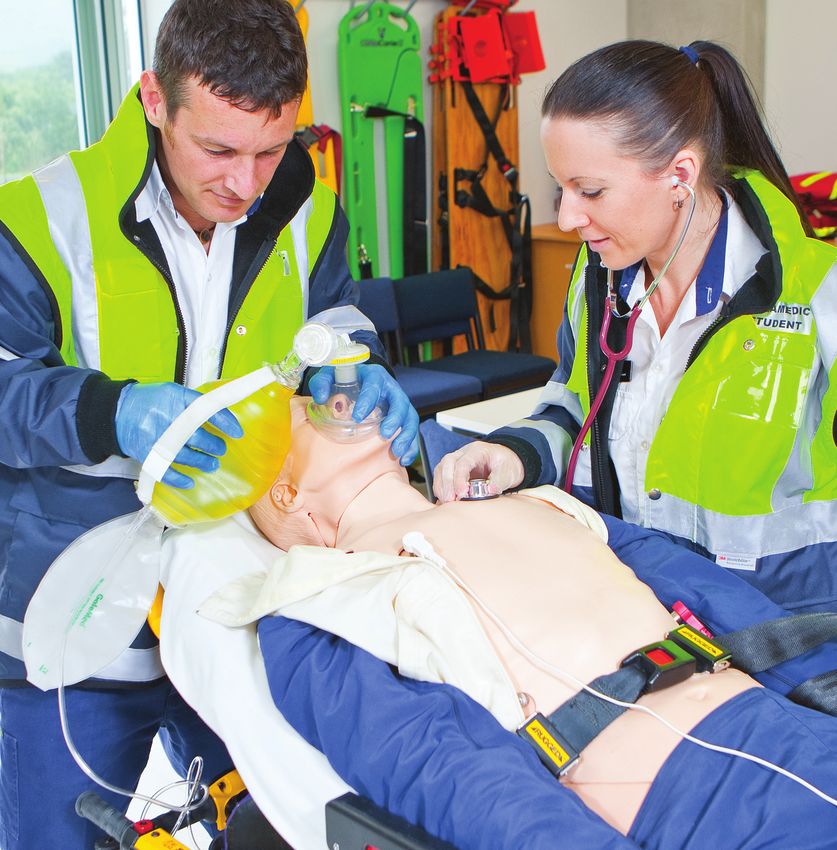
Paramedics provide acute health care and
emergency and urgent medical services to the
community through a specialised body of
professional knowledge, delivering care in
variable environments. Through the use of
clinical   assessment,       advanced    medical
procedures and treatment, they stabilise
patients in clinically challenging environments,
refer to primary and secondary care and
provide on-going emergency medical care
during transportation.

The BHSc (Paramedic) programme is delivered
with a combination of theory classes, self-
directed learning, practical sessions on
campus, and clinical placements.

The programme involves considerable study and serious thought should be given before a student
undertakes paid employment that will make it difficult to maintain sufficient study time, or to attend clinical
experience. It is suggested that no more than ten hours per week are worked.

Why Choose Whitireia?
•      The School of Health and Social Services has an excellent reputation for offering a friendly and
       supportive learning environment.
•      We utilise a variety of teaching processes, which focus on discovery learning and active participation
       in workshops, lectures, tutorials and online activities.
•      We provide supported clinical experiences which lead to a work-ready graduate.
•      Whitireia has a vibrant student community that is rich in diversity.
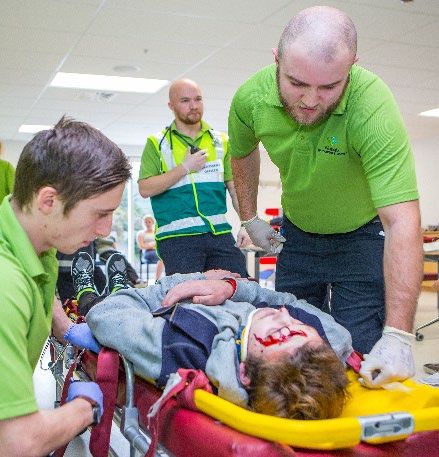
•      The Wikitoria Katene building provides state-of-the-art simulated clinical learning environments for
       nursing and paramedic students. These simulation suites give students access to the latest
       technology for clinical learning.

Student Support
At Whitireia, we are committed to students' success and therefore offer a range of services to meet the
learning needs of individual students. These include Learning Support Services where one-to-one and
small group assistance, peer tutoring, workshops and study skills sessions on a variety of topics, and online
material are available.

To increase students’ chances of success, we provide support for students in other ways such as financial
advice, counselling, childcare facilities, and a service for students who have a disability, illness, or health
problems that may interfere with their studies.

Māori and Pacific Engagement Advisors are available to provide pastoral care for Māori and Pacific
students, and information on alternative support networks and grants.

2021 Information for Applicants: Bachelor of Health Science (Paramedic)
Fees, programmes and dates are subject to change                                                              1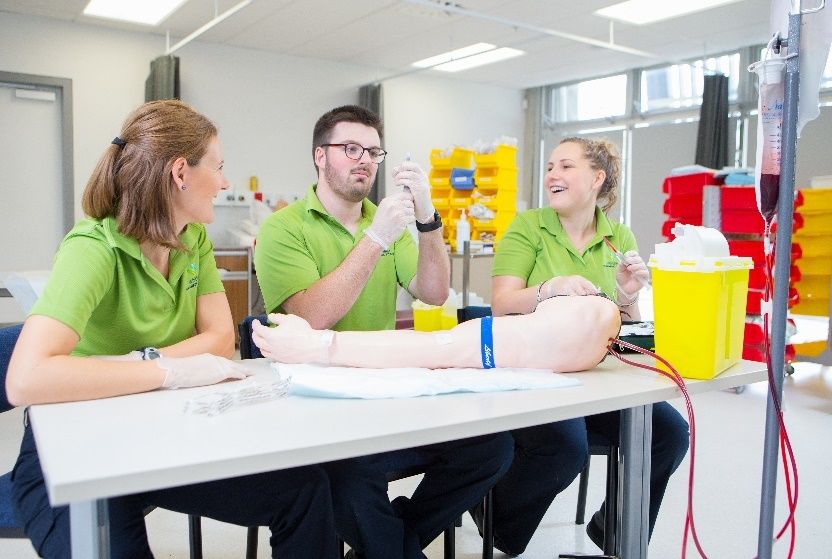
Programme Outline
 Programme Length              Three years full time
 Programme Dates               Term   1:           9 February-16 April
                               Term   2:           03 May-18 June
                               Term   3:           12 July-1 October
                               Term   4:           18 October-19 November
                               Please note the July mid-semester break does not match the primary and secondary
                               school holidays.
 Learning Mode                 This programme is delivered by blended learning i.e. face to face and online learning.
                               This means some of your lessons may be delivered via Moodle (our online learning
                               platform) which will require you to have a computer and internet access at home.
                               Students will also need to be able to work from home should Covid-19 Alert Levels
                               change.
 Programme Fees                2021 fees will be on the programme webpage from October; as a guide, the 2020 fees
                               were $7,073.00. These fees apply to NZ Citizens & Permanent Residents only.

 Required course               Full details on course related requirements and costs will be available on the programme
 related costs                 webpage from October.
 (all costs are                Health screening:                  $250      must be completed prior to programme start
 approximate)                  Uniform:                           $320      must be ordered prior to programme start
                               Stethoscope                        $150
                               Laptop/tablet/internet:            Prices vary
                               Vaccinations (if required by       Costs will vary depending on vaccination required i.e.
                               clinical placement):               flu, whooping cough.
                               Clinical Practice Guidelines       $50
 Other course costs            Stationery:                       $50

 E-resources/textbooks         Students will be provided with access to online resources including textbooks, journals
                               and, if required by the programme, the vSIM online simulation package.
                               Any required hardcopy textbooks will be noted on the course related requirements list.

Age
Both WFA and St John Ambulance (St John) policies state that observers on ambulance shifts must be
aged 18 years or above, therefore applicants must be 18 years of age by the start date of the programme.

Driver's Licence
It is strongly recommended that students hold a full driver’s licence before starting the BHSc (Paramedic)
programme. A full clean New Zealand Class 1 driver’s licence, held for a minimum of three years (without
convictions and free of demerit points within the last two years) is a requirement of both WFA and St John
before the student may be considered for either volunteer or permanent employment.
If students do not hold a full driver’s licence at the beginning of the programme, this will not prevent the
student from undertaking the paramedic programme, but may restrict their opportunity for employment
with an ambulance service until such time that they have held a full licence for three years.
If students do not hold a full driver’s licence, they must consider the implications of the start and finish
times of their clinical placements in relation to the restrictions of their licence.

Employment
If an applicant has any medical or physical concerns, or any criminal convictions it is recommended that
the applicant contacts the Human Resource Department of WFA and/or St John to discuss any impact this
may have on future employment.

2021 Information for Applicants: Bachelor of Health Science (Paramedic)
Fees, programmes and dates are subject to change                                                                      2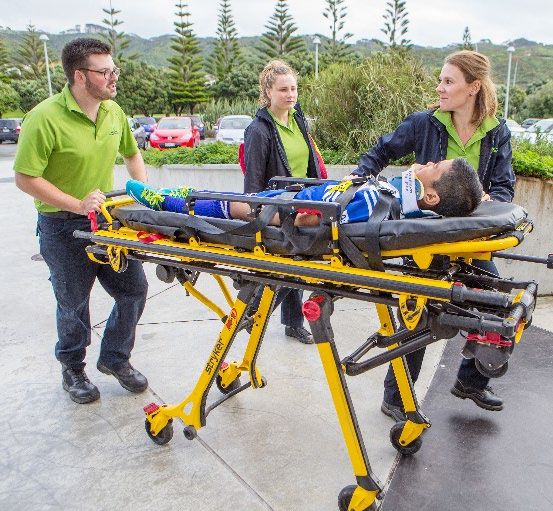
Programme Content
Detailed course information (i.e. course aims, learning outcomes, credits etc.) is available on the BHSc
(Paramedic) page on the Whitireia website.

In Years One and Two, students will spend approximately half of each semester on campus, and the other
half in clinical placements. There are variations to this pattern – the actual classroom and clinical timetable
is provided to the student at the beginning of each semester.

In Year Three, courses are delivered online, with some block weeks spent on campus, to enable a greater
amount of time spent on clinical placements. This requires the student to be particularly diligent and
focussed in their studies, and to take more responsibility for their own learning and time management.

Year One
Year One introduces new students to human anatomy and physiology, pharmacology, and paramedic
practice. Utilising context based learning; students explore the structure and function of the ambulance
industry; roles and responsibilities of the paramedic; legal and ethical issues, including the implications of
te Tiriti o Waitangi on paramedic practice; and the assessment and treatment of medical and trauma
patients to a beginning practitioner level. The time spent on campus is divided between classroom theory
and practical sessions in the simulation suites, where ‘hands-on’ skills are practiced and developed.

Students will attend a variety of clinical placements, including emergency ambulance, non-emergency
ambulance, ambulance communications centre and rest homes. During these placements students are
able to apply and develop the knowledge and skills from the classroom whilst under direct supervision.

Year Two
Year Two consolidates and builds on Year One, with pathophysiology and pharmacology integrated into
clinical context, and more invasive paramedic practice. The student will transition from task focussed
technical skills to critical thinking in relation to patient care, as well as continuing to develop skills in
academic scholarship and research.

In a similar structure to Year One, the students will spend time in the classroom, in the clinical labs, and
attend clinical placements – this year ranging from emergency ambulance, hospital emergency
department, hospital operating theatre, delivery suite, and mental health.

Year Three
The structure of Year Three is significantly
different to the previous years. Courses in this
year are delivered online, with some block
weeks spent on campus. Whilst the courses are
a mix of clinical and non-clinical courses (as in
the previous years), there is a greater focus on
clinical reasoning, teamwork and leadership,
along with in depth exploration of legal, ethical
and      sociological  issues,     and    further
development of research in relation to
paramedic practice. The amount of time spent
on clinical placements is increased in Year
Three and is almost exclusively based in an
emergency ambulance environment.

2021 Information for Applicants: Bachelor of Health Science (Paramedic)
Fees, programmes and dates are subject to change                                                              3
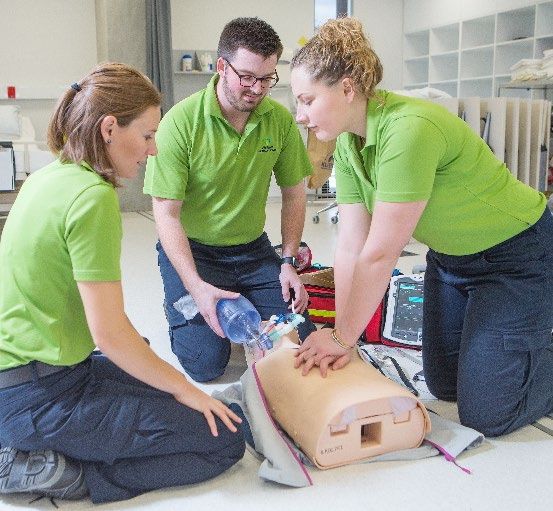
Theory
In Year One, theory hours are usually 9.00am-4.00pm, four days
a week and these sessions are divided between the various
courses being studied concurrently. This time on campus is also
divided between classroom learning and practical sessions in the
simulation suites where ‘hands-on’ skills are learnt and practiced.

A variety of teaching processes are used in the programme,
including lectures, tutorials, and self-directed online learning.

The BHSc (Paramedic) programme follows a context-based
learning philosophy – this requires the student’s commitment to
completing required online learning before attending classroom
sessions, where the focus will be on the application of the new
knowledge.

Where there are no timetabled classes, students are expected to
utilise this time on independent study. Students will also be
required to complete independent study and work on assignments
during weekends and term breaks.

Clinical
Over the course of the programme, the student will complete 1040
hours of clinical placements. The theory learnt in the classroom,
and the practical skills covered in the simulation suites are applied
in clinical settings under the direct supervision of health care
personnel.

Whitireia delivers the BHSc (Paramedic) programme in partnership
with WFA, and the required ambulance placements will be
arranged for the student with WFA. Whitireia also has a close
working relationship with St John to ensure that the content of the
programme meet the needs of both NZ ambulance service
providers.

Whitireia also has working partnerships with other clinical
providers, including both the Hutt Valley and Capital & Coast
District Health Boards to allow the student to attend clinical
placements within the hospital and primary health care
environments.

Due to the hours of work and location of placements throughout
the greater Wellington region, it may be difficult to get public
transport to attend clinical placements. The cost of transport to
and from clinical placements is the student’s responsibility. These
placements will include a variety of shift start and finish times, and
may include days, nights, weekends and public holidays.

Students complete a portfolio of evidence which includes both
clinical and non-clinical learning. This will form the basis of the
graduate’s professional practice portfolio.

2021 Information for Applicants: Bachelor of Health Science (Paramedic)
Fees, programmes and dates are subject to change                          4
Entry Requirements
Applicants must meet both the Academic and Suitability entry requirements.

Applicants must be 18 years of age by the start date of the programme.

Academic Entry Requirements
Whitireia degree academic entry requirements (i.e. University Entrance) or equivalent.

Evidence of equivalence may include successful completion of high school studies overseas or recent
tertiary study at Level 4, with a “B” average, (i.e. the Whitireia Pre-entry to Degrees or the New Zealand
Certificate in Study and Career Preparation programmes), and/or relevant work experience (paid or
unpaid); application considered on a case-by-case basis with entry granted at the discretion of the Head
of School.

International Students:
Academic IELTS score of 6.5 in each band.

Suitability Requirements:
Applicants will be invited to attend an interview to determine their preparedness for study and ability to
meet the Health Practitioners Competence Assurance Act 2003 (if applicable), as well as any registration
board requirements. Applicants must be able to demonstrate the following qualities:
-      Effective interpersonal communication skills
-      Understanding of, and capability to, work in the professional health and social services sector
-      Commitment and motivation to succeed

Suitability will also be assessed with reference to the applicant’s health screening, safety check* and
referee reports.

*Safety Check: The Children’s Act (2014) requires all students, who may work with children during the
course of their study, to be safety checked. Safety checking includes reference checking, work history,
identity check, police vet and an overall assessment of the applicant’s safety to work with children.

2021 Information for Applicants: Bachelor of Health Science (Paramedic)
Fees, programmes and dates are subject to change                                                         5
Application Closing Date: Friday 30 October 2020
Applications received after this date will only be processed if places are still available.

How to Apply
1.     We recommend you apply online from the Whitireia website.
2.     Before you start your online application, you will need to have the following documentation available
       to upload when requested:
       •      Completed ‘Supplementary Application for Health & Social Service Programmes’*
       •      Referee reports* (refer to step 3 below)
       •      Verified ID
       •      Verified official transcripts
       •      Curriculum Vitae
              *These additional forms are available on the programme webpage.
3.     Give the referee reports to two people who are willing to be your referees. Ask them to complete
       the forms and either return to yourself (so you can upload with your application), or scan and email
       to enrolments@whitireia.ac.nz within 10 days. Please note applications will not be processed until
       both referee reports have been received.
4.     Alternatively, completed applications can be printed off and either:
       Mailed to:                                               Dropped into:
       Enrolments, Whitireia New Zealand                        Enrolments, Whitireia New Zealand
       DX SX33459, Porirua 5022                                 3 Wi Neera Drive, Porirua.

Application Process
1.     We will confirm receipt of your application by
       email.
2.     Completed applications will be forwarded to
       the School to review. If your application is
       incomplete you will be emailed and asked to
       provide the missing documentation.
3.     Applications are processed in order, by the
       date the School receives the completed
       application. Important note: Occasionally,
       due to demand, all places in a programme
       may be allocated before the programme
       closing date. We recommend you apply early
       and ensure your application is complete.
4.     Applicants who meet the academic entry requirements will be interviewed by members of the
       Selection Committee to determine their suitability.
5.     Applicants who do not meet the academic entry requirements will be contacted and advised of other
       possible pathways i.e. completion of a foundation programme.

2021 Information for Applicants: Bachelor of Health Science (Paramedic)
Fees, programmes and dates are subject to change                                                           6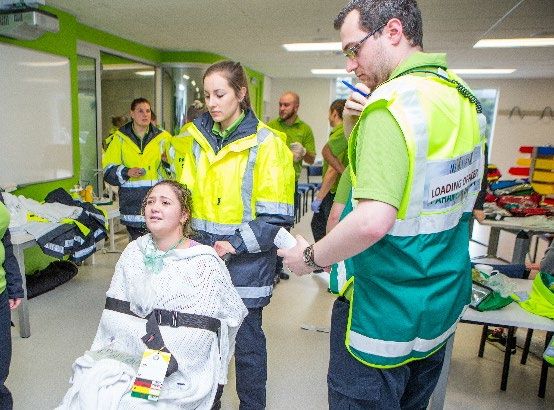
Student Loans and Allowances
This programme is approved for Student Loans and Student Allowances through StudyLink. You can use
the StudyLink website tools to check to see whether you are eligible for a student loan and/or allowance.

For full information on student loans and allowances visit the StudyLink website www.studylink.govt.nz or
contact them on 0800 88 99 00.

Foundation Studies
Whitireia offers a choice of programmes to assist you to gain skills and
knowledge in preparation for a variety of education or employment
pathways. Programmes are offered at different levels, to provide you with
a pathway suitable to your background, and are offered at different
campuses, so you can study closer to home. Within the programmes,
different strands are also available to support you to go onto further
education or employment in a specific field.

Credit Recognition
If you have relevant skills and knowledge through study or experiences in
work or other activities, you may be able to receive credit for them when
enrolling in a programme of study. This is done through a process called
credit recognition. Credit recognition may not exceed two-thirds of your
chosen programme.

If you think you may qualify for credit recognition, please contact one of
our Enrolment Advisors. It is important to do this as soon as possible so
that you know which course/s you may have credit for, and therefore
should not enrol in. They can then assist you to check the potential impact
of credit recognition on your full-time status for eligibility for loans and
allowances (domestic students) and immigration requirements
(international students). They will also be able to provide information on
the application process, evidence required and fees.

Information (including the application form) is also available on our
website under enrolment information.

Fees
There is an Application Fee of $75 for domestic students only. For both
domestic and international students, the fee for assessing evidence is
$100 per hour. The assessment fee is capped at three hours and is
invoiced to all applicants at the end of the process regardless of the
application outcome.
We recommend applying for credit recognition well before your
programme starts.

Further Information                                                            Above: students completing
                                                                                   a simulated exercise
Should you have any questions, please contact an Enrolment Advisor on
0800 944 847.

2021 Information for Applicants: Bachelor of Health Science (Paramedic)
Fees, programmes and dates are subject to change                                                            7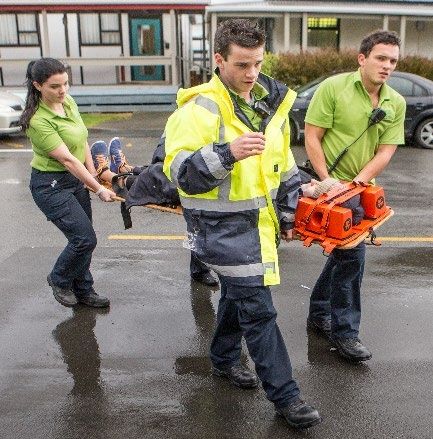
You can also read


