SCIENCE TE WĀHANGA PŪTAIAO - POSTGRADUATE STUDY - Victoria University of Wellington
←
→
Page content transcription
If your browser does not render page correctly, please read the page content below
2022
POSTGRADUATE
STUDY

WELLINGTON FACULTY OF

SCIENCE
TE WĀHANGA PŪTAIAO
“There’s always something going on in Wellington. It was very easy to
find volunteer opportunities, which helped me to network and gain
great experience. It also allowed me to give back to the
community, which I feel is very important.”

Holly Lane
Master of Marine Conservation
CONTENTS
                    Welcome                                                                               3
                    Studying and living in Wellington                                                     4
                    Qualifications available                                                              6
                    Programme overview                                                                    8
                    Qualification spotlight
                        Master’s by coursework                                                           10
                    Biological Sciences                                                                  14
                    Chemical and Physical Sciences                                                       16
                    Geography, Environment and Earth Sciences                                            18
                    Mathematics and Statistics                                                           20
                    Psychology                                                                           22
                    Centre for Science in Society                                                        24
                    Our stories                                                                          26
                    Who to contact                                                                       32

uni-overall-6star

                                                           Te Herenga Waka—Victoria University
                                                           of Wellington has been awarded
                                                           five stars plus overall in the QS Stars
                                                           university ratings system. In addition, the
                                                           University received five stars in all eight
                                                           categories on which it was evaluated.

                    IMPORTANT NOTICE: Te Herenga Waka—Victoria University of Wellington
                    uses all reasonable skill and care to ensure the information contained
                    in this document is accurate at the time of being made available.
                    However, matters covered by this document are subject to change due
                    to a continuous process of review and to unanticipated circumstances,
                    including those caused by COVID-19. The University therefore reserves the
                    right to make any changes without notice. So far as the law permits, the
                    University accepts no responsibility for any loss suffered by any person
                    due to reliance (either whole or in part) on the information contained in this
                    document, whether direct or indirect, and whether foreseeable or not.
WELCOME
Welcome to the Wellington Faculty of Science at                   Postgraduate students are a key part of our research community.
Te Herenga Waka—Victoria University of Wellington.                Carrying out work that leads to scientific breakthroughs,
Postgraduate study is an opportunity for you to extend your       students regularly present at international conferences and
undergraduate experience, become an expert in your chosen         publish in peer-reviewed international journals.
field, and take the next step in your career. It will challenge
                                                                  Wellington is home to the highest concentration of scientific
your ideas and satisfy your search for new knowledge.
                                                                  research organisations in New Zealand. These organisations
The Wellington Faculty of Science is home to a large              contribute to our programmes and enhance the experience
community of postgraduate students who come from all              we provide to our students by ensuring the content of our
around the world. We’re also one of New Zealand’s top             courses is industry relevant and at the cutting edge of
research institutions, and our academics are some of the          knowledge, and through research placements and future
most respected in the world. This commitment to research          employment opportunities.
is reflected in the most recent Performance-Based Research
                                                                  We hope you’ll be excited at the prospect of undertaking your
Fund rankings, which rated the University first for research
                                                                  postgraduate study here and being part of our mission to
quality in New Zealand; the 2021 QS World University Rankings
                                                                  educate the next generation of scientists. We wish you every
by Subject, which ranked Development Studies, Earth and
                                                                  success in your future study.
Marine Sciences, Geology, and Psychology in the world’s top
100; and the awarding of the 2019 Prime Minister’s Science
Prize, New Zealand’s most valuable science award, to our
Antarctic Research Centre.

                                                                                                   Postgraduate Study 2022 3
STUDYING AND LIVING
IN WELLINGTON
LEADING RESEARCH                                              OUR NATURAL LABORATORY
Te Herenga Waka—Victoria University of Wellington is ranked   Situated at the southernmost point of the North Island,
number one in New Zealand for intensity of high-quality       Wellington is a beautiful city that makes the most of its natural
research* and ranked in the top 2 percent of universities     setting. Wellington is home to conservation island Matiu/Somes
worldwide in the 2021 QS World Rankings.                      Island, a gateway to the rugged beauty of the South Island,
Our students and staff engage in key research projects that   and is located on two major highways that provide easy access
often lead to scientific breakthroughs. Read about how our    to North Island regions, including Egmont, Tongariro, and
researchers are creating new knowledge:                       Whanganui National Parks. In just minutes, you can escape our
                                                              compact city life to explore our varied biodiversity.
■   Study shows a short time to save coral reefs, page 26
■   Making memories with nanotechnology—Associate
    Professor Ben Ruck and Dr Franck Natali, page 28
■   Improving mental health in rainbow communities—
    postdoctoral research fellow Gloria Fraser, page 30.
*Performance-Based Research Fund 2019.
INTERNATIONAL COMMUNITY
Students come to study here from all over the world—each
year, students from more than 100 different countries make
up the student population, with more than 120 university
partners worldwide. There are many international communities
in Wellington—Chinese, Indonesian, Japanese, and Malaysian
among others—that help to make international students feel
at home in their new learning environment. The programmes
and research within the Wellington Faculty of Science draw on
examples and findings worldwide but have a special focus on
New Zealand and the Asia–Pacific region.

THE BUSTLING CAPITAL LIFESTYLE
Wellington has an excellent public transport system, vibrant
nightlife centred on Cuba Street and Courtenay Place, and
something for everyone with great shopping, beaches, bush
walks, reserves, mountain-bike trails, museums, restaurants,
festivals, and live shows every night of the week. You can
swim, kayak, surf, windsurf, and sail within 15 minutes’ travel
from the centre of the city.

SCIENCE CAPITAL OF
NEW ZEALAND
Wellington has the highest concentration of science
organisations in the country.
Our location means Te Herenga Waka—Victoria University
of Wellington is at the heart of scientific discovery. Our
postgraduate students have opportunities for research
collaboration with many organisations, including Callaghan
Innovation, the Department of Conservation, GNS Science,
NIWA, and Zealandia eco-sanctuary.

CAREER OPPORTUNITIES
The opportunity to make lasting connections in the science
capital of New Zealand opens doors for our graduates. Our
students have gone on to work in exciting careers as policy
analysts, marine biologists, environmental scientists, data
scientists, and much more. Many of our students also move
into academia. Read more about our recent graduates:
■   Kyle Clem—PhD in Physical Geography, page 27
■   Hayley Stirling—Master of Applied Statistics, page 29
■   Naomi Puketapu-Waite—Master of Science in Society,
    page 31.

                                     Postgraduate Study 2022 5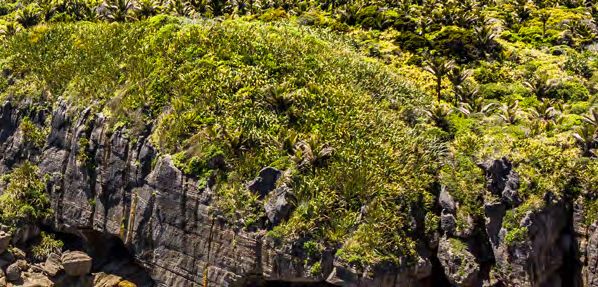
QUALIFICATIONS
AVAILABLE
To explore the available subjects in the following qualifications,
see page 8.
                                                                                BACHELOR’S DEGREE
                                                                                WITH HONOURS
GRADUATE CERTIFICATE                                                            An Honours degree is a one-year full-time programme of coursework
                                                                                following a Bachelor’s degree. A research project is an important
The Graduate Certificate in Science (GCertSc) is designed to
                                                                                part of the work and provides practical training in research
help you upskill or learn a new subject and is a convenient
                                                                                methods. An Honours degree can lead directly to PhD study.
qualification if you wish to undertake a limited amount of study
in an area of interest.                                                          DURATION               One year full time or two years part time (with
                                                                                                        permission from the head of school)
 DURATION                One trimester full time or up to two years part time
                                                                                 ENTRY REQUIREMENTS     Bachelor’s degree in a relevant subject area
 ENTRY REQUIREMENTS      Bachelor’s degree in any discipline

                                                                                MASTER’S DEGREE BY
GRADUATE DIPLOMA                                                                COURSEWORK AND THESIS
The Graduate Diploma in Science (GDipSc) enables you to
                                                                                In a Master’s degree by coursework and thesis, you’ll complete
transition to postgraduate study in a new area, or to learn
                                                                                one year of coursework, followed by a 120-point thesis where
about new developments in your original discipline.
                                                                                you’ll work under the supervision of an academic staff member.
 DURATION               One year full time or up to four years part time        If you already have a postgraduate diploma or an Honours
                                                                                degree in a relevant subject area, you may be permitted to
 ENTRY REQUIREMENTS     Bachelor’s degree in any discipline
                                                                                advance to the thesis year without completing the coursework.
                                                                                A Master’s degree by thesis is a way of advancing your
POSTGRADUATE CERTIFICATES                                                       understanding and skill in your undergraduate major or,
Postgraduate certificates are designed to deepen your                           in some cases, to undertake study in a new professional
knowledge in an area of expertise or in a new branch of                         area. This Master’s degree is evidence of the ability to work
science. Many interesting courses are offered, and a research                   independently, critically evaluate research, and interpret and
project is not required.                                                        communicate with a high level of skill.

 DURATION               Six months full time or up to two years part time        DURATION               Two years full time or equivalent part time

 ENTRY REQUIREMENTS     Bachelor’s degree in a relevant subject area*            ENTRY REQUIREMENTS     Bachelor’s degree in a relevant subject area

POSTGRADUATE DIPLOMAS                                                           MASTER’S DEGREE BY
Postgraduate diplomas provide an alternative to Honours for                     COURSEWORK
graduates who wish to extend their subject expertise. They                      In a 180-point Master’s degree by coursework, you’ll gain an
do not require a research project, although a project may be                    internationally recognised qualification in one year of
included in some programmes.                                                    full-time study, or you can study part time.
                                                                                You’ll take some core courses and choose from a range of
 DURATION               One year full time or two years part time
                                                                                elective courses, so you can tailor your programme to your
 ENTRY REQUIREMENTS     Bachelor’s degree in a relevant subject area*
                                                                                interests and career aspirations.
*You may also qualify for entry if you have appropriate                         With small class sizes you’ll learn through seminar-style
experience, as approved by the associate dean (postgraduate).                   discussions with leading researchers and academics.
                                                                                You’ll also have the opportunity to undertake a
                                                                                trimester-long research project, or practical placement, where
                                                                                you’ll apply what you’ve learnt.
                                                                                Admission to these programmes is at the discretion of the
                                                                                programme coordinators.
                                                                                To explore your options in the Master’s degree by coursework
                                                                                programmes, see pages 10–13.

                                                                                 DURATION               One year full time or equivalent part time

6   Wellington Faculty of Science                                                ENTRY REQUIREMENTS     Bachelor’s degree in a relevant subject area
MASTER’S DEGREE BY THESIS                                                                        DOCTOR OF PHILOSOPHY
Develop your technical, laboratory, and academic writing                                         The Doctor of Philosophy (PhD) programme requires a major piece
skills to prepare for a career in science. The Master of                                         of original research that makes a significant contribution to the
Science by thesis will take you between 12 and 15 months                                         knowledge or understanding of a field of study.
to complete. You’ll carry out in-depth supervised research
                                                                                                 Although coursework does not form an integral part of a PhD,
and write a thesis. During your studies you might also author
                                                                                                 you may be required or encouraged to undertake a limited
publications for peer-reviewed journals.
                                                                                                 amount of coursework.
                                                                                                 On completion, each thesis is assessed by three examiners,
    DURATION                        12 to 15 months full time
                                                                                                 one of whom is from an overseas university. This assessment is
    ENTRY REQUIREMENTS              Honours degree or postgraduate diploma
                                                                                                 followed by an oral examination.
                                    with an average grade of at least a B+ in the
                                    relevent subject area                                        Supervision for PhD research is available in almost all subject
                                                                                                 areas offered by the Wellington Faculty of Science.

                                                                                                    DURATION        The PhD programme normally requires at least
                                                                                                                    three years of full-time study.
                                                                                                                    A PhD may also be undertaken part time.
                                                                                                    ENTRY           You’ll need a First Class or Second Class Honours
                                                                                                    REQUIREMENTS    degree or a Master’s degree to apply for a PhD.
                                                                                                                    However, meeting this requirement does not guarantee
                                                                                                                    a place, as you also need to be accepted by the School
                                                                                                                    and assigned a supervisor.
                                                                                                    ENROLMENT       The Wellington Faculty of Graduate Research provides
                                                                                                                    a first point of contact for all students enrolling in a
                                                                                                                    PhD, including international students.
                                                                                                                    Application is available online. There are three
                                                                                                                    application deadlines each year—1 March, 1 July, and
                                                                                                                    1 November.
                                                                                                                    For any enquiries about PhD admission and
                                                                                                                    enrolment, contact pg-research@vuw.ac.nz

                                                                                        BACHELOR’S
                                                                                          DEGREE

             POSTGRADUATE                                                                   HONOURS                                              GRADUATE
              CERTIFICATE                                                                                                                       CERTIFICATE

             POSTGRADUATE                                                                   MASTER’S                                              GRADUATE
               DIPLOMA*                                                                     DEGREE**                                               DIPLOMA

                                                                                              PhD

Broken line indicates pathways that are possible in some programmes.
*   Some postgraduate diploma courses can lead to Master’s study.
    For details, contact the postgraduate liaison officer at postgrad-enquiries@vuw.ac.nz
** Some Bachelor’s degrees offer pathways straight into a Master’s programme.

                                                                                                                                       Postgraduate Study 2022 7
PROGRAMME
OVERVIEW
BIOLOGICAL SCIENCES
                                                             MASTER’S BY   MASTER’S BY    MASTER’S
                         GDipSc   PGCert   PGDip   HONOURS   COURSEWORK    COURSEWORK     BY THESIS    PhD
                                                              AND THESIS

BIOLOGY

BIOMEDICAL SCIENCES

BIOTECHNOLOGY

CELL AND MOLECULAR
BIOSCIENCE

CLINICAL IMMUNOLOGY

CLINICAL RESEARCH

CONSERVATION BIOLOGY

ECOLOGICAL
RESTORATION

ECOLOGY AND
BIODIVERSITY

MARINE BIOLOGY

MARINE CONSERVATION

MOLECULAR
MICROBIOLOGY

CHEMICAL AND PHYSICAL SCIENCES
                                                             MASTER’S BY   MASTER’S BY   MASTER’S BY
                         GDipSc   PGCert   PGDip   HONOURS   COURSEWORK    COURSEWORK      THESIS      PhD
                                                              AND THESIS

APPLIED PHYSICS

CHEMISTRY

DRUG DISCOVERY
AND DEVELOPMENT

PHYSICS

GEOGRAPHY, ENVIRONMENT AND EARTH SCIENCES
                                                             MASTER’S BY   MASTER’S BY   MASTER’S BY
                         GDipSc   PGCert   PGDip   HONOURS   COURSEWORK    COURSEWORK      THESIS      PhD
                                                              AND THESIS

CLIMATE CHANGE SCIENCE
AND POLICY

DEVELOPMENT STUDIES

ENVIRONMENTAL SCIENCE

ENVIRONMENTAL STUDIES

GEOGRAPHIC
INFORMATION SCIENCE

GEOGRAPHY

GEOLOGY

GEOPHYSICS

METEOROLOGY

PHYSICAL GEOGRAPHY
MATHEMATICS AND STATISTICS
MASTER’S BY MASTER’S BY MASTER’S BY
GDipSc PGCert PGDip HONOURS COURSEWORK COURSEWORK THESIS PhD
AND THESIS
APPLIED STATISTICS
DATA SCIENCE
MATHEMATICS
STATISTICS
STOCHASTIC PROCESSES
IN FINANCE AND
INSURANCE
PSYCHOLOGY
MASTER’S BY MASTER’S BY MASTER’S BY
GDipSc PGCert PGDip HONOURS COURSEWORK COURSEWORK THESIS PhD
AND THESIS
CLINICAL PSYCHOLOGY
COGNITIVE AND
BEHAVIOURAL
NEUROSCIENCE
CROSS-CULTURAL
PSYCHOLOGY
FORENSIC PSYCHOLOGY
PSYCHOLOGY
SCIENCE IN SOCIETY
MASTER’S BY MASTER’S BY MASTER’S BY
GDipSc PGCert PGDip HONOURS COURSEWORK COURSEWORK THESIS PhD
AND THESIS
SCIENCE COMMUNICATION
SCIENCE IN SOCIETY
ENGINEERING AND COMPUTER SCIENCE*
MASTER’S BY MASTER’S BY MASTER’S BY
GDipSc PGCert PGDip HONOURS COURSEWORK COURSEWORK THESIS PhD
AND THESIS
ARTIFICIAL INTELLIGENCE
COMPUTER GRAPHICS
COMPUTER SCIENCE
ELECTRONIC AND
COMPUTER SYSTEMS
*See the 2022 Wellington Faculty of Engineering postgraduate study handbook for more information, or visit www.wgtn.ac.nz/engineering
Postgraduate Study 2022 9QUALIFICATION
SPOTLIGHT
MASTER’S BY COURSEWORK
Stand out, get ahead, or change career with a 180-point The programme is taught by the Ferrier Research Institute and
Master’s degree from the Wellington Faculty of Science. Each partners with the School of Chemical and Physical Sciences,
degree focuses on a distinct area within its field and allows you the Centre for Biodiscovery, and the School of Biological
to gain an internationally recognised Master’s qualification in Science. Graduates from the programme have enjoyed
just one year of full-time study. You can also study part time. success with pharma-company drug development, veterinary
therapeutics, further research undertaking PhD studies,
patent assessment, and activities with a range of government,
BIOTECHNOLOGY research, and commercial organisations.
Every year, millions of people are affected by disease and health
conditions for which there are no treatments. Learn alongside To apply for this programme, you’ll need an undergraduate
world-leading experts to understand how immunology can be degree in a relevant subject area or you must complete some
leveraged to keep us healthy, or how to identify and develop prerequisite papers, in consultation with the programme director.
drugs and vaccines for untreated medical conditions. Study in this www.wgtn.ac.nz/master-drug-discovery
area will put you at the forefront of the global health industry.
Master of Clinical Immunology CLIMATE AND THE
Clinical immunology sits at the centre of all aspects of human ENVIRONMENT
health and is one of the most exciting and active areas of The impact of climate change and environmental degradation
biological discovery. This Master’s degree will equip you are two of the most pressing challenges we face. Gain the
with the skills required to assess, analyse, and undertake skills you need to become a leader in protecting the natural
clinical research in immunology. You’ll be trained in clinical world. With headlines dominated by stories of polluted oceans,
trial design, biostatistics, and advanced immunological theory rising sea levels, and biodiversity loss, the time to act is now.
and techniques. In addition to coursework, you’ll have the
opportunity to do a research project or take part in work Master of Climate Change Science
experience in clinical research.
and Policy
We have close ties to the Malaghan Institute of Medical See page 13.
Research; the Medical Research Institute of New Zealand;
Wellington Regional Hospital; and the Wellington School of Master of Conservation Biology
Medicine, University of Otago. Clinicians and researchers from With 13 national parks, a diverse dramatic coastline, and
these organisations contribute to this programme by delivering breath-taking native bush, New Zealand’s natural living space is a
lectures, sharing their expertise, and leading research. biological scientist’s dream. Study Conservation Biology to make
To apply for this programme, you’ll need a Biomedical Science a valuable contribution to the preservation of native species in
degree majoring in Molecular Pathology or an equivalent their natural environments in New Zealand and abroad.
qualification. In this programme, you’ll take three core courses, including a
www.wgtn.ac.nz/master-clinical-immunology three-week field course to key conservation sites throughout
New Zealand, and choose further relevant electives that suit
Master of Drug Discovery your interests. You’ll learn from internationally respected
and Development scientists whose work informs the management of
New Zealand’s unique biota and conservation.
Human quality of life and longevity has improved immensely
because of modern medicinal chemistry. This course introduces You’ll need an undergraduate degree in a relevant subject
how we discover, develop, produce, and commercialise area, or to be accepted by the programme coordinator.
new therapeutics. In this programme, you’ll learn about drug www.wgtn.ac.nz/conservation-biology
discovery, the chemistry of drug delivery systems, and
scaled-up syntheses. The course also introduces how we
protect drug-candidate intellectual property and aspects of
clinical trial processes. The programme is tuned to provide the
practical and theoretical skills required for further postgraduate
research or entry into a range of career opportunities.
10 Wellington Faculty of ScienceMaster of Environmental Science Master of Meteorology
Environmental science is about how humans connect with, and Study for New Zealand’s only Master’s degree in Meteorology
change, the natural environment and is taught through a range and become an expert in studying and predicting weather
of scientific disciplines such as biology, chemistry, geography, and climate, and the relationship they have with other
mathematics, and physics. environmental processes and humanity.
Wellington is the ideal place for students to see how The programme is recognised throughout the world and
environmental science ranges from the field to policymaking. complies with the World Meteorological Organization
The region has active city and regional councils as well as the standards. It is taught in partnership with New Zealand’s
Zealandia eco-sanctuary, GNS Science, and NIWA, all of which official weather forecaster, MetService, which will provide you
are involved in the programme. with practical work experience. This practical work is formally
recognised as part of the qualification, preparing you for a role
You’ll need an undergraduate degree in Biology, Chemistry,
in industry.
Earth Sciences, Environmental Science, Mathematics, Physical
Geography, or Physics with a B average. To apply for this programme, you’ll need an undergraduate
degree in Mathematics or Physics—other majors will be
www.wgtn.ac.nz/master-environmental-science
considered providing you have completed relevant maths and
Master of Marine Conservation physics courses during your undergraduate degree.
With the increasing pressures on the marine environment, www.wgtn.ac.nz/master-meteorology
experts in the conservation and management of marine
organisms and ecosystems are in demand.
In this programme, you’ll examine marine conservation issues
and practices using examples from New Zealand, Australia,
the South Pacific, and the wider Indo–Pacific region. Two of
the three core courses are field-based, and you’ll visit several
world-renowned marine conservation sites in New Zealand
and overseas.
You’ll be prepared for a career in a range of marine
conservation areas worldwide, including the conservation and
management of marine organisms and ecosystems.
To apply for this programme, you’ll need an undergraduate
degree in a relevant subject area with a B+ average.
www.wgtn.ac.nz/master-marine-conservationIn order to do this Master’s degree in one year, you must have
DATA AND STATISTICS completed a Bachelor’s degree in Data Science or a double
Learn how to leverage data to solve problems, uncover major in Computer Science and Statistics with an average grade
insights, and inform decision-making. Our programmes focus of B+ or higher. Other qualification options are shown in the
on real-world applications, giving you a mix of theoretical and table on page 9.
practical skills ideal for starting your career.
www.wgtn.ac.nz/master-data-science
Master of Applied Statistics Master of Geographic
Statisticians are in demand. The huge variety and quantity of
data generated today means more people are needed who Information Science
can analyse and make sense of it. Geographic information science (GIS) relates to the concepts
behind the creation and use of computer-based systems that
This programme is designed to train you in a range of
allow you to explore, store, manipulate, analyse, and visualise
advanced techniques and to provide you with an appreciation
data with a spatial or geographic component. These skills are
of the variety of work undertaken by professional statisticians
in high demand.
and consultants. It is made up of both coursework and
practical training, allowing you to develop skills in research and In this programme, you’ll learn to harness data to enable a
consultancy. You’ll then apply these skills in a work placement better understanding of what happens on Earth for both the
in a relevant government department or business. physical environment and human populations. Postgraduate
certificate and diploma options are also available.
For this programme, you’ll need an undergraduate degree in a
relevant subject area with at least a B+ average. Wellington is a key employment market for GIS professionals, and
we have close ties to government agencies at both central and
www.wgtn.ac.nz/applied-statistics
local levels, Crown research institutes, and private companies.
Master of Data Science You’ll need an undergraduate degree with a B average and
Fifteen years ago, the role of data scientist was unheard of. two undergraduate GIS courses or extensive relevant
Today, it’s an established role in business and government industry experience.
departments around the world. The nature of the role is www.wgtn.ac.nz/master-geographical-information-science
constantly shifting as data sources, software tools, and
techniques change. Equip yourself with the skills and
knowledge to move and adapt to these changes.
Our graduates will leave with an advanced understanding
of techniques in data science, including machine learning and
statistical methods, and their uses in the world of big data.
They’ll be able to critically analyse the data requirements and
sources relevant in a variety of areas of application from the
sciences, humanities, social sciences, business,
or government.POLICY AND ENGAGEMENT Master of Communication
Science is an important part of our society, and scientific Science Communication Specialisation
knowledge belongs outside the lab. Policy and The Master of Communication programme offers an optional
decision-making informed by science and a scientifically specialisation in science communication. This features
literate population are vital if we are going to successfully specialist courses run through the Science in Society Centre,
address the challenges we face. including SCIS 410 Science Communication and SCIS 414
Master of Climate Change
Science and Humanities, and entails a more specialised
research essay or field project.
Science and Policy To apply for this programme, you’ll need a Bachelor’s degree
Globally, we are already seeing some of the consequences of with at least a B average (or equivalent) in a relevant subject.
climate change.
www.wgtn.ac.nz/mc
How we go about reducing our emissions and how we adapt
to changes that have already happened require scientists and Master of Science in Society
policymakers with a broad understanding of both the physical This programme is perfect for those with science qualifications
science and human systems that are involved. or relevant expertise who are interested in developing skills
This programme will give you the necessary combination or careers in public engagement around scientific issues,
of policy and science knowledge to address the real-world mātauranga Māori, science policy or advocacy, or research in
problems of climate change. It is taught by world-renowned the social aspects of scientific knowledge.
experts in climate change, and we have close relationships Taught by award-winning teachers, researchers, and
with government bodies, research institutes, and other key practitioners, you’ll develop critical thinking and communication
agencies in Wellington and in New Zealand. skills. You’ll look at the theory and practice of science
To apply for this programme, you’ll need an undergraduate communication, gain an understanding of contemporary
degree with a B average (or equivalent) or extensive and scientific issues in their social context, and explore science from
relevant practical, professional, or scholarly experience. feminist, Māori, and a range of other perspectives.
www.wgtn.ac.nz/master-climate-change-science-policy To apply for this programme, you’ll need an undergraduate
degree with a B+ average (or equivalent) or extensive and
relevant practical, professional, or scholarly experience.
www.wgtn.ac.nz/master-of-science-in-society
Postgraduate Study 2022 13BIOLOGICAL
SCIENCES
Our postgraduate programmes in the School of Biological In addition, we have excellent networks within the University.
Sciences span molecules to ecosystems and high-tech labs Our staff collaborate with researchers in several other schools,
to exotic field studies. You’ll have opportunities to explore including the School of Chemical and Physical Sciences and
the science underpinning conservation and the environment, Te Kawa a Māui (School of Māori Studies).
health and disease, drug discovery and biotechnology, and
much more. OUR STUDY ENVIRONMENT
We are committed to fostering an environment in which all
OUR STRENGTHS individuals can thrive, and we work closely with Āwhina and
Te Herenga Waka—Victoria University of Wellington is ranked the Pasifika Hub to foster Māori and Pasifika student success.
in the top three universities nationally for Ecology, Evolution
The School has world-class, award-winning research facilities,
and Behaviour, and Molecular, Cellular, and Whole Organism
including the Te Toki a Rata building that has state-of-the-art
Biology in the most recent Performance-Based Research Fund
teaching and research laboratories as well as dedicated
quality evaluation.
spaces for postgraduate students to work and study. Our
Our academics are passionate about their research and Coastal Ecology Laboratory overlooks the spectacular exposed
teaching. The School provides a culture that embraces rocky reef systems of the Taputeranga Marine Reserve.
intellectual curiosity and crosses a range of fields. An ecologist
with an interest in native plants may well use many of the YOUR STUDY OPTIONS
tools and techniques required by a molecular geneticist.
Our postgraduate programmes offer students diverse
This integrative approach provides the freedom to explore
opportunities for research and career development. If you
questions that transcend traditional disciplinary boundaries.
want to complete a research thesis, check out our options for
Honours, Master’s, and doctoral programmes on pages 8–9.
RESEARCH LINKS
Alternatively, if you are interested in a one-year postgraduate
We have close ties with a number of external organisations,
programme, we offer Master’s by coursework degrees in the
including the Malaghan Institute of Medical Research, NIWA,
following topics: Clinical Immunology, Conservation Biology,
Zealandia, and many more. The breadth of our partnerships
Drug Discovery and Development, or Marine Conservation.
reflects the incredible diversity of research in the School of
Find out more on pages 10–13.
Biological Sciences. We also take advantage of being in the
capital city, with many of our researchers forming connections
with local and national government agencies to undertake
research that has direct links to policy.
14 Wellington Faculty of ScienceCAREER OPPORTUNITIES
Upon graduation, our students are poised to succeed in a
range of careers including conservation, education, laboratory
and technical services, policy development, and research.
PROGRAMME COORDINATORS RESEARCH CENTRES
For more information on a particular programme, contact the
appropriate coordinator listed below. Centre for Biodiscovery
The Centre for Biodiscovery facilitates cutting-edge research
BIOLOGY Dr Monica Gerth at the interface of biology and chemistry. Major research
monica.gerth@vuw.ac.nz themes of the Centre include mātauranga-guided biodiscovery,
BIOMEDICAL SCIENCE Associate Professor Peter Pfeffer natural products chemistry, protein engineering and directed
peter.pfeffer@vuw.ac.nz evolution, synthetic biology, and vaccine design.
BIOTECHNOLOGY Professor David Ackerley www.wgtn.ac.nz/biodiscovery
david.ackerley@vuw.ac.nz
CELL AND MOLECULAR Associate Professor Peter Pfeffer Centre for Biodiversity and
BIOSCIENCE peter.pfeffer@vuw.ac.nz
CLINICAL IMMUNOLOGY Professor Anne La Flamme
Restoration Ecology
anne.laflamme@vuw.ac.nz Research in the Centre for Biodiversity and Restoration
CLINICAL RESEARCH Professor Elaine Dennison Ecology explores a range of topics in the areas of reservation,
elaine.dennison@vuw.ac.nz restoration, and reconciliation ecology. Specialist topics
include ecology, invasive plant and insect species,
CONSERVATION BIOLOGY Professor James Bell
james.bell@vuw.ac.nz mammalian pest management, meta-population management
and monitoring, and translocation. The Centre works in
DRUG DISCOVERY Associate Professor Simon Hinkley
AND DEVELOPMENT simon.hinkley@vuw.ac.nz collaboration with local, city, and regional government, and
non-governmental agencies.
ECOLOGICAL Dr Julie Deslippe
RESTORATION julie.deslippe@vuw.ac.nz www.wgtn.ac.nz/biodiversity
ECOLOGY AND Professor Phil Lester
BIODIVERSITY phil.lester@vuw.ac.nz
MARINE BIOLOGY Professor James Bell SCHOOL OF BIOLOGICAL SCIENCES
james.bell@vuw.ac.nz Te Toki a Rata Building, Kelburn Campus
MARINE CONSERVATION Professor James Bell 04 463 5339 or 0800 22 77 55
james.bell@vuw.ac.nz biosci@vuw.ac.nz
MOLECULAR Dr Joanna Mackichan www.wgtn.ac.nz/sbs
MICROBIOLOGY joanna.mackichan@vuw.ac.nz
Postgraduate Study 2022 15CHEMICAL AND
PHYSICAL SCIENCES
Physics and chemistry are the disciplines that form the basis
of our technological society. If your intellectually curious and
RESEARCH LINKS
innovative mind is seeking challenge and inspiration, join us The School interacts closely with the nation’s leading research
at the cutting edge of science in New Zealand. institutes such as Callaghan Innovation, Ferrier Research Institute,
GNS Science, NIWA, and the Paihau—Robinson Research Institute.
OUR STRENGTHS In addition, we have excellent links with the School of
Biological Sciences, the Centre for Biodiscovery, and the
The calibre of scientists in the School of Chemical and Physical Malaghan Institute of Medical Research, with joint programmes
Sciences attracts significant external and internal funding. in the discovery and evaluation of new bioactive compounds
Our alumni and faculty members are often awarded for the treatment of disease.
prestigious national and international science awards. Notably,
in 2000, alumnus Professor Alan MacDiarmid was awarded the
Nobel Prize in Chemistry.
OUR STUDY ENVIRONMENT
You’ll have access to state-of-the-art research equipment,
including nuclear magnetic-resonance and Raman
spectrometers, X-ray-diffraction and ultra-fast laser facilities, an
electron microscope suite, and a clean-room facility.
Our postgraduate student workshop series is a popular
ongoing event and will allow you to better your communication
and research skills.
An interdisciplinary approach is celebrated within the School.
We often conduct research at the intersections of biology and
chemistry, psychology, or earth sciences.
YOUR STUDY OPTIONS
The nature of our disciplines provides a learning environment
in which chemists and physicists enable each other to
find solutions to things that matter. You might look at
renewable energy, marine natural products, astrophysics, or
computational modelling.
Alternatively, if you are passionate about the intersection
of biology and chemistry, then consider the Master of Drug
Discovery and Development. Find out more on page 10.
16 Wellington Faculty of ScienceRESEARCH CONNECTIONS
Centre for Biodiscovery
PROGRAMME COORDINATORS Find out more on page 15.
Contact a programme coordinator to discuss your potential
www.wgtn.ac.nz/biodiscovery
research projects or study options.
Chemistry Ferrier Research Institute
The Ferrier Research Institute consists of a team of
HONOURS Professor Kim McKelvey internationally recognised carbohydrate chemistry experts
kim.mckelvey@vuw.ac.nz
and analysts working to bring better drugs, materials, and
MASTER’S Professor Patricia Hunt technology to the world. Their work includes a broad range of
AND PhD patricia.hunt@vuw.ac.nz applied research projects and commercial work for clients.
www.wgtn.ac.nz/ferrier
Drug Discovery and Development MacDiarmid Institute for Advanced
PGCert, PGDip, Dr Simon Hinkley Materials and Nanotechnology
AND MASTER’S simon.hinkley@vuw.ac.nz
The MacDiarmid Institute for Advanced Materials and
Nanotechnology is a national network of leading scientists who
Physics create high-tech solutions to problems such as climate change.
The Institute creates materials and devices from atoms and
HONOURS Professor Michele Governale
michele.governale@vuw.ac.nz molecules through developing and applying cutting-edge
techniques in physics, chemistry, and engineering.
MASTER’S Professor Uli Zuelicke
AND PhD uli.zuelicke@vuw.ac.nz www.macdiarmid.ac.nz
Paihau—Robinson Research Institute
CAREER OPPORTUNITIES The multidisciplinary Paihau—Robinson Research Institute melds
Your chemistry skills will be in demand in industries ranging innovative engineering and applied physics to build advanced
from food and wine production to cosmetics companies and technologies for businesses worldwide. Master’s students and
Crown research institutes. Our graduates are employed in PhD candidates can apply to study with the Institute.
analytics and production monitoring, biotechnology, the energy
www.wgtn.ac.nz/robinson
sector, environmental protection, government departments,
and pharmaceutical industries.
The principles of physics are essential in many applied SCHOOL OF CHEMICAL AND PHYSICAL SCIENCES
disciplines and, with a postgraduate degree, you’ll have a Laby Building, Kelburn Campus
diverse range of career options, from fundamental physics
04 463 5335
research to analyst and consultant roles. Our graduates work
scps@vuw.ac.nz
for technology companies, government laboratories, hospitals, www.wgtn.ac.nz/scps
traffic and aviation engineering, and in related fields such as
environmental and earth science.
Postgraduate Study 2022 17GEOGRAPHY,
ENVIRONMENT AND
EARTH SCIENCES
To become an expert in your field, you must consider multiple
disciplinary takes on a subject. The School of Geography,
OUR STUDY ENVIRONMENT
Environment and Earth Sciences covers the spectrum of We are situated within easy access of the volcanic plateau to
earth and environmental studies from fundamental sciences the north, glaciated landscapes to the south, and many other
to present-day processes and issues, and the impact these unique geological and geographic features throughout
have on people. We are one of New Zealand’s leading voices New Zealand. Your research could even take you around the
in the race to understand and address climate change and globe, to the Pacific, Latin America, Antarctica, and beyond.
environmental hazards such as earthquakes and volcanoes. The School has state-of-the-art laboratories and facilities and
you’ll experience first-hand a fascinating range of urban, rural,
OUR STRENGTHS and remote environments through field work, which is at the
core of our teaching.
Earth Sciences at Te Herenga Waka—Victoria University of
Wellington was ranked first among New Zealand universities Based in Wellington, we are a short walk from key agencies
for research quality in the most recent Performance-Based in environmental policy. Our students and graduates have
Research Fund quality evaluation. ready access to policymakers at all levels of government.
Development Studies, Earth and Marine Sciences, and Our students often have two supervisors, one from
Geology at the University were all ranked in the top 100 in the University and another from an external science
the most recent QS rankings. organisation. These relationships provide opportunities to
work on large-scale projects.
The School of Geography, Environment and Earth Sciences
covers all aspects of the environment and related societal
concerns, from climate change to geophysical hazards, and YOUR STUDY OPTIONS
how humans cause, and are affected by, these issues. If you are interested in a one-year postgraduate programme,
consider a Master’s by coursework in Climate Change Science
and Policy, Environmental Science, Geographic Information
RESEARCH LINKS Science, or Meteorology. Find out more on pages 10–12.
The School has strong, longstanding links with key national
Alternatively, if you want to complete a research thesis, or
science organisations such as GNS Science, MetService,
pursue another area in the School, check out your options in
and NIWA, and with governmental and non-governmental
the postgraduate diploma, Honours, Master’s by thesis, and
organisations, including the Ministry for the Environment,
Doctoral programmes on pages 8–9.
the Ministry of Foreign Affairs and Trade, NZAID, and the
Earthquake Commission.
18 Wellington Faculty of ScienceRESEARCH CENTRES
Antarctic Research Centre
The Antarctic Research Centre seeks to improve
understanding of Antarctic climate history and processes and
PROGRAMME COORDINATORS their influence on the global climate system. This field provides
exciting opportunities and challenges for postgraduate
Contact a programme coordinator to discuss your potential researchers, and they will gain insight that is the basis for
research projects or study options. international debate and policy development on global climate
change issues.
CLIMATE CHANGE Dr Alex Lo
SCIENCE AND POLICY alex.lo@vuw.ac.nz
Our recent research has had a particular focus on paleoclimate
reconstructions, glaciology, and glacier and climate modelling.
DEVELOPMENT Professor John Overton
STUDIES john.overton@vuw.ac.nz www.wgtn.ac.nz/antarctic
EARTH SCIENCES* Professor Colin Wilson Institute of Geophysics
colin.wilson@vuw.ac.nz
The Institute of Geophysics coordinates research in
ENVIRONMENTAL Dr Andrew Rees geophysics, meteorology, and tectonics, including studies
SCIENCE andrew.rees@vuw.ac.nz of earthquakes and earth structure, within the School
of Geography, Environment and Earth Sciences, and in
ENVIRONMENTAL Associate Professor Ralph Chapman
STUDIES ralph.chapman@vuw.ac.nz collaboration with other schools in the Wellington Faculty
of Science.
GEOGRAPHIC Professor David O’Sullivan
INFORMATION david.osullivan@vuw.ac.nz www.wgtn.ac.nz/institute-geophysics
SCIENCE
New Zealand Climate Change
Research Institute
GEOGRAPHY Associate Professor Sara Kindon
sara.kindon@vuw.ac.nz
PHYSICAL Associate Professor Kevin Norton The New Zealand Climate Change Research Institute develops
GEOGRAPHY kevin.norton@vuw.ac.nz interdisciplinary climate change research, with emphasis on
work that spans the natural and social sciences. Our aim is to
*Geology, Geophysics, and Meteorology. produce high-quality and decision-relevant climate change
research for decision makers in the private and public sectors.
CAREER OPPORTUNITIES To do this, we draw on the skills and experience of our staff
and postgraduate students to produce leading collaborative
Our graduates work in a range of roles that have a focus on research that is relevant to policymakers.
the environment or society using the skills they have learnt.
Students with a focus on human geography may work as www.wgtn.ac.nz/climate-change
community liaison officers, development officers, emergency
management officers, immigration advisers, logistics
coordinators, policy analysts, programme coordinators,
refugee support coordinators, or volunteer coordinators. SCHOOL OF GEOGRAPHY, ENVIRONMENT
AND EARTH SCIENCES
Physical geography students may work in these areas as well
Cotton Building, Kelburn Campus
as in more scientific, technical, or analytical focused roles
such as cartographers, compliance officers, environmental 04 463 5337 or 04 463 6108
specialists, land advisers, modelling or statistical analysts, geo-enquiries@vuw.ac.nz
resource consent planners, supply chain analysts, transport www.wgtn.ac.nz/sgees
analysts, or urban planners.
Postgraduate Study 2022 19MATHEMATICS
AND STATISTICS
Mathematics is renowned for its precision, subtlety, and
beauty, while at the same time providing the powerful tools
OUR STUDY ENVIRONMENT
that underpin technological advances in the physical and life A degree in Mathematics, Statistics, or Data Science will help you
sciences, engineering, computing, and the social sciences. develop skills in finding patterns, drawing conclusions, dealing
with abstract concepts, analysing large quantities of data, and
approaching problems in an analytical and rigorous way.
OUR STRENGTHS You might research the sustainability of fisheries, the analysis
The School of Mathematics and Statistics has leading of native birdsong, fundamental advances in the theory of
international and early-career researchers who are forging computation, the structure of matroids, or high-dimensional
new directions in a range of theoretical and applied disciplines. statistical analysis.
We are ranked in the top three universities nationally in Our approachable staff undertake research at an international
Pure and Applied Mathematics in the most recent level. When you study with us, you’ll experience a collegial
Performance-Based Research Fund quality evaluation. learning environment.
RESEARCH LINKS YOUR STUDY OPTIONS
We have active partnerships with a range of government, In the Master of Applied Statistics, and the Master of Data
business, and public and private research organisations, Science, you’ll develop skills in research and consultancy
including the Accident Compensation Corporation, or software design and then apply these skills in a practical
Contact Energy, the Department of Conservation, the Ministry work placement with a relevant government department or
of Business, Innovation and Employment, the Ministry of business. Find out more about these programmes on page 12.
Health, NIWA, GNS Science, and Statistics New Zealand.
If you choose to take a Master of Science or PhD, you’ll
undertake research on academic or externally funded
projects with our academic supervisors. While your thesis
topic might be linked to broader academic research, these
topics are flexible with room for you to set your own course.
20 Wellington Faculty of Scienceinform better decision-making. Graduates with degrees in
Mathematics and Statistics are recognised as earning the
third-best salaries in the United Kingdom, according to a
recent study by QS Digital Solutions, and mathematics-related
occupations have been ranked among the top 10 careers over
several years in an annual survey run by the United States
PROGRAMME COORDINATORS company CareerCast.
Contact a programme coordinator to discuss your potential The scope for careers in mathematics, statistics, and data
research projects or study options. science is constantly expanding as new research and ideas
are discovered.
APPLIED STATISTICS Dr Yuichi Hirose Our recent graduates work in research, analysis, policy and
yuichi.hirose@vuw.ac.nz
Associate Professor Ivy Liu management in education, finance, government, IT, and
ivy.liu@vuw.ac.nz science sectors. More specifically, graduates have taken on
roles as actuaries, data scientists, meteorologists, risk analysts,
DATA SCIENCE Professor Richard Arnold and statisticians, in computer-generated imagery development,
richard.arnold@vuw.ac.nz
Dr Yuichi Hirose fisheries management, digital games, and a range of creative
yuichi.hirose@vuw.ac.nz and research organisations.
MATHEMATICS Professor Noam Greenberg
noam.greenberg@vuw.ac.nz RESEARCH
Professor Astrid an Huef
astrid.anhuef@vuw.ac.nz The demand from industry for applicants with postgraduate
qualifications in statistics, data science, and applied
STATISTICS Dr Nokuthaba Sibanda mathematics is high. Our researchers and thesis supervisors
nokuthaba.sibanda@vuw.ac.nz are highly knowledgeable across a range of mathematics and
Dr Yuichi Hirose
yuichi.hirose@vuw.ac.nz statistics disciplines and areas including applied mathematics,
data science, geometry and analysis, logic and algebra, and
STOCHASTIC Professor Estate Khmaladze probability and statistics.
PROCESSES IN estate.khmaladze@vuw.ac.nz
FINANCE AND Dr Yuichi Hirose
INSURANCE yuichi.hirose@vuw.ac.nz
SCHOOL OF MATHEMATICS AND STATISTICS
Cotton Building, Kelburn Campus
CAREER OPPORTUNITIES 04 463 5341
sms-office@vuw.ac.nz
There is a growing demand for expertise in mathematics,
www.wgtn.ac.nz/sms
statistics, and data science due to the increasing volume
of data worldwide, and an appreciation of how this can
Postgraduate Study 2022 21PSYCHOLOGY
The human mind presents some of science’s greatest
challenges, and an understanding of behaviour is the key
YOUR STUDY OPTIONS
to solving some of humanity’s most pressing problems. If you want to independently design your own programme
As a postgraduate student in Psychology, you’ll have the and explore several areas of psychology, then consider a
opportunity to deepen your understanding of the human postgraduate degree in Psychology. Alternatively, if you are
condition and collaborate with active scholars across all interested in one specific area of psychology, you might
fields of psychology. choose to undertake one of our specialised degrees.
Clinical Psychology
OUR STRENGTHS Clinical psychology involves the assessment, understanding,
Psychology at the University was ranked in the world’s top 75 and treatment of psychological disorders. The School
in the most recent QS rankings. offers the highly regarded Postgraduate Diploma in Clinical
Psychology that is studied alongside a research degree.
The School of Psychology offers a range of Psychology
Students will graduate as qualified clinical psychologists.
programmes, including New Zealand’s only programme in
forensic psychology and one of the only programmes in www.wgtn.ac.nz/clinical-psychology
cross-cultural psychology worldwide.
Cognitive and
RESEARCH LINKS Behavioural Neuroscience
We have links with Capital and Coast District Health Board, the Cognitive and behavioural neuroscientists study neural
Department of Conservation, the Department of Corrections, mechanisms that determine how we think, feel, and act. The
the Ministry of Justice, Oranga Tamariki, and the New Zealand postgraduate programme provides students with a strong
Police, among others. foundation in relevant theory, and the opportunity to conduct
research in animal and human participants using a range of
technologies.
OUR STUDY ENVIRONMENT
www.wgtn.ac.nz/neuroscience
We address a range of questions about human behaviour. You
might look at why only some drug users develop addiction,
Cross-cultural Psychology
why some people are violent and how we can prevent this,
how we can treat, and prevent, depression, how culture Cross-cultural psychology is the study of the relationship
influences business negotiations, or how emotions influence between culture and human behaviour. Our programme assists
behaviour. students to develop the skills needed to critically assess and
engage in research that spans indigenous, culture-specific,
We have state-of-the-art laboratories with eye-tracking
and culture-general perspectives.
equipment, a brain stimulation lab, an EEG-recording suite, and
an infant observation lab. www.wgtn.ac.nz/cross-cultural-psychology
22 Wellington Faculty of SciencePROGRAMME COORDINATORS
If you have further questions, contact the relevant programme
coordinator to discuss your research plans.
CLINICAL Professor Karen Salmon
Forensic Psychology PSYCHOLOGY karen.salmon@vuw.ac.nz
COGNITIVE AND Dr Tirta Susilo
Forensic psychology is the study of human behaviour
BEHAVIOURAL tirta.susilo@vuw.ac.nz
applied to the legal and criminal justice system. The PSYCHOLOGY
postgraduate programme aims to equip students with a
sound understanding of antisocial and offending behaviour CROSS-CULTURAL Dr Rita McNamara
PSYCHOLOGY rita.mcnamara@vuw.ac.nz
and its effects on victims, and the necessary skills to produce
and apply psychological evidence to a variety of legal and FORENSIC Professor Louise Dixon
criminal justice issues. PSYCHOLOGY louise.dixon@vuw.ac.nz
www.wgtn.ac.nz/forensic-psychology PSYCHOLOGY Dr David Carmel
(HONOURS AND david.carmel@vuw.ac.nz
GRADUATE DIPLOMA)
RESEARCH CENTRES PSYCHOLOGY Dr Matt Crawford
Centre for Applied (MASTER’S AND PhD) matt.crawford@vuw.ac.nz
Cross-cultural Research
The Centre links cross-cultural and social scientists who are CAREER OPPORTUNITIES
interested in culture, including disciplines such as cultural Graduates from our postgraduate programmes have skills
anthropology, developmental studies, international business, suited to a range of careers. The value of research-based
linguistics, and sociology. The Centre has links to community degrees is growing in industry and government positions, as is
groups, government, and international associations. the need for graduates who can measure, analyse, and change
www.wgtn.ac.nz/cacr human behaviour.
Clinical Psychology Centre Our graduates work in research roles, counselling and
therapy, education, government policy, healthcare, human
Our Clinical Psychology Centre provides a training-based facility resources, information technology, law, police, and
for the School’s Clinical Psychology programme. It offers a range corrections and social services.
of psychological services to members of the public who work
with trainees in the programme and their supervisors.
SCHOOL OF PSYCHOLOGY
www.wgtn.ac.nz/psychology-clinic Easterfield Building, Kelburn Campus
04 463 5373
psychology@vuw.ac.nz
www.wgtn.ac.nz/psyc
Postgraduate Study 2022 23CENTRE FOR
SCIENCE IN SOCIETY
Many of the most pressing issues facing society today—including
climate change, loss of biodiversity, and how to respond to
RESEARCH LINKS
new technologies—cannot be solved using Western scientific We have strong and active connections with a range
methods alone. The Centre for Science in Society looks at the of practitioners and institutions, including the Science
relationships between science, environment, mātauranga Māori, Communicators Association of New Zealand, the Science
and society and explores how we think and talk about science. Media Centre, and Te Pūnaha Matatini, which facilitate
placements and funding.
OUR STRENGTHS
The Centre is a leader in the fields of science communication,
public engagement with science, mātauranga Māori, and the
interconnections between the natural and social sciences, the
humanities, and the arts.
Our research looks at science in its wider social context,
exploring it from feminist, Māori, and a variety of other
perspectives, and investigates contemporary and historical
issues in science, technology, and the environment.
We offer the only qualifications in Science in Society in
New Zealand.
24 Wellington Faculty of ScienceAlternatively, if you’re conducting independent research on the
intersection of science and society and would like to explore
this from a practical, creative, and academic perspective, then
consider a Master of Science or a PhD at the Centre for Science
in Society.
OUR STUDY ENVIRONMENT
You’ll be taught and supervised by award-winning teachers, CAREER OPPORTUNITIES
researchers, and practitioners. You might work as a policy analyst, researcher, or science
communicator at a government agency, a non-governmental
Wellington is the centre of media, government, and
organisation, or a Crown research institute such as
policymaking in New Zealand, and has thriving scientific and
GNS Science or NIWA.
cultural communities, making it an ideal city in which to learn
about science in society. Alternatively, you might use your knowledge of scientific
concepts and processes to support your career in areas such
as journalism, communications, and public relations. We also
YOUR STUDY OPTIONS offer further research study for those interested in an academic
If you would like to develop practical skills in communication career in Science in Society.
and critical thinking and develop a broader understanding
of science in its social context, then the one-year Master of
Science in Society might be for you. Find out more about this CENTRE FOR SCIENCE IN SOCIETY
programme on page 13. First floor, 22 Kelburn Parade, Kelburn Campus
If you want to focus more closely on communication, you might 04 463 5474
be interested in the science communication specialisation scienceinsociety@vuw.ac.nz
in the Master of Communication. Find out more about this www.wgtn.ac.nz/science-in-society
programme on page 13.
Postgraduate Study 2022 25OUR STORIES
reduces calcification and survival. Calcifying red algae, known
STUDY SHOWS A SHORT TIME as coralline algae, glue these reefs together and even form
TO SAVE CORAL REEFS their own reefs in certain places in the world’s oceans.
An international study, jointly led by Te Herenga Waka—Victoria “While corals are highly susceptible to ocean warming,
University of Wellington marine biologist Dr Christopher coralline algae are more vulnerable to ocean acidification.
Cornwall and French colleague Dr Steeve Comeau, has Coral reef growth is also dictated by the removal of this
calculated how coral reefs are likely to react to ocean calcium carbonate through either bioerosion—living organisms
acidification and warming under three different climate change eating the reef—or the dissolution of sediments that help fill in
carbon-dioxide scenarios—low, medium, and worst case. the cracks between larger pieces of calcium carbonate. Both
processes are likely to accelerate under ocean acidification
Dr Cornwall, a recent winner of the $200,000 Prime Minister’s
and warming.”
MacDiarmid Emerging Scientist Prize, says if the world can
reduce carbon dioxide emissions drastically, coral reef growth The study used data on net calcification, bioerosion, and
will be reduced “but many reefs will still be able to grow”. sediment dissolution rates measured or collated from
233 locations on 183 distinct reefs, 49 percent of them in the
“Some of them will even keep pace with sea-level rise.
Atlantic Ocean, 39 percent in the Indian Ocean, and 11 percent
Even if we fail with those reductions but do keep within the
in the Pacific Ocean.
intermediate-emissions scenario, some coral reefs will keep
growing for a short while, but, by the end of the century, they This was then modelled against three Intergovernmental Panel
will all be eroding.” on Climate Change emissions scenarios for low-, medium-, and
high-impact outcomes on ocean warming and acidification for
The research, by academics in New Zealand, Australia,
2050 and 2100.
the United States, France, the Netherlands, and the United
Kingdom, breaks new ground. Dr Cornwall says their projections show most coral reefs will
be unable to maintain growth from carbonate production by
The new study gives broader projections of ocean warming
the end of the century under the medium- and high-impact
and acidification, and their interaction, on the net carbonate
scenarios. Even under the low-impact scenario, reefs will suffer
production of coral reefs.
severely reduced accretion rates.
“We have known for more than a decade that ocean
Drastic reductions in carbon dioxide emissions are now
acidification will affect the ability of calcifying coral reef taxa
needed to give coral reefs the best chance of continuing
to form their calcium carbonate skeletons, a process called
to accrete in a future ocean, he says.
calcification,” says Dr Cornwall.
“Also, we have known ocean warming brings increasing
frequencies of marine heatwaves that cause coral mass
bleaching, but that this warming itself alsoYou can also read


