Global Summit of Research Museums - 4-6 November 2018 Berlin - Stiftung Preußischer Kulturbesitz
←
→
Page content transcription
If your browser does not render page correctly, please read the page content below
Global Summit of
Research Museums
4–6 November 2018
Berlin
TABLE OF CONTENTS

                                                         Organisation ...................................................................................................   4

                                                         Welcome notes ...............................................................................................      5

                                                         Programme overview .......................................................................................         7

                                                         Floor plan – Museum für Naturkunde ................................................................                8

                                                         Scientific programme
                                                            Sunday, November 4th ................................................................................ 9
                                                            Monday, November 5th ............................................................................... 9
                                                            Tuesday, November 6th ............................................................................... 13

                                                         Speakers, chairs and moderators ...................................................................... 19

                                                         General information ........................................................................................ 33

                                                         Imprint .......................................................................................................... 34

free WIFI
Network     GSRM2018
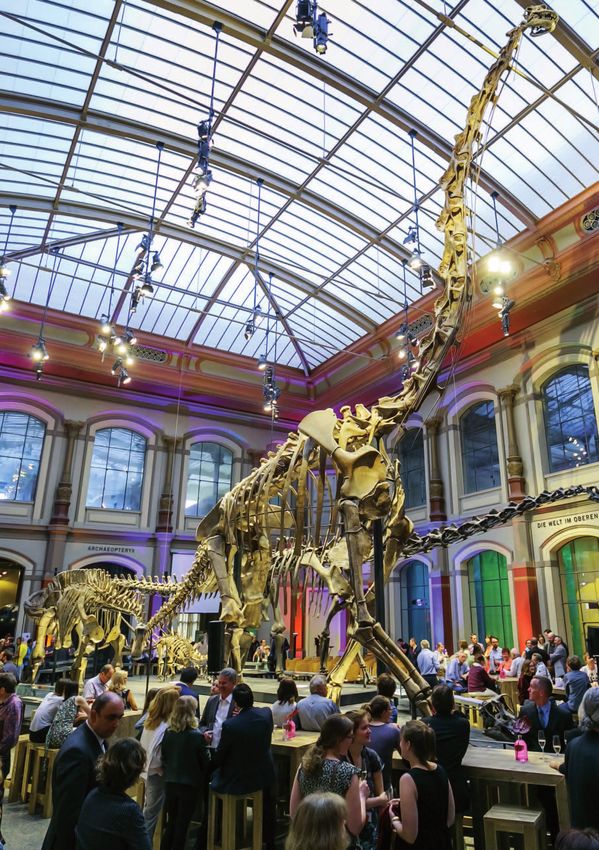
                       © Thomas Rosenthal – MfN Berlin

Password    GSRM2018
#gsrm2018
 2                                                                                                                                                                          3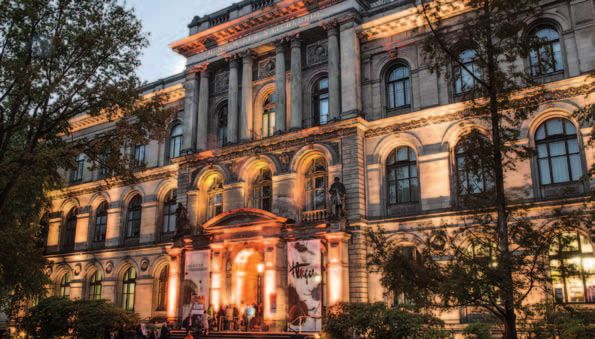
ORGANISATION                                                                                                                                                                                                     WELCOME NOTES

Venue and date

Welcome reception (November 4th)
Leibniz Association, Headquarters
Chausseestraße 111 • 10115 Berlin


                                                                                                                                                                                 © Hwa Ja-Götz – MfN   © Photo Oliver Lang

                                           © Atrium in der Geschäftsstelle/Peter Himsel

                                                                                                                                  The Global Summit of Research Museums – the Transformative Potential of Research
Dinner (November 5th)                                                                                                             will bring together leaders from museums worldwide to reflect and discuss the manifold
Hamburger Bahnhof – Museum für Gegenwart                                                                                          nature, responsibilities and future of research in museums and on collections.
Staatliche Museen zu Berlin
Invalidenstraße 50–51 • 10557 Berlin                                                                                              Research museums are the most visited scientific institutions globally, and reach
                                                                                                                                  hundreds of millions worldwide – year after year, virtually or through visits. They generate
                                                                                                                                  and showcase scientific knowledge and they illuminate the process of science and knowl-
                                           © bpk/Nationalgalerie im Hamburger Bahnhof, Staatliche Museen zu Berlin/Thomas Bruns
                                                                                                                                  edge generation. Thus, research museums play a vital role in explaining the relevance of
                                                                                                                                  science and research to a wider public. We believe that research on collections and in
                                                                                                                                  museums offers unique insights into culture, heritage, science and nature. We want to
Conference (November 5th–6th)                                                                                                     bring together different museum sectors (arts, culture, humanities, technology, nature,
Museum für Naturkunde Berlin (MfN)                                                                                                etc.) with their unique challenges and opportunities. We also want to engage with different
Invalidenstraße 43 • 10115 Berlin                                                                                                 disciplines and want to be open for museum leaders from all over the world.

                                                                                                                                  The purpose of the summit is to review current imaginations, understandings and practices
                                           © Carola Radke – MfN Berlin
                                                                                                                                  of collection-based research in museums in order to explore and develop perspectives for
Conference website                                                                                                                more comprehensive and transdisciplinary methods and collaborations. Our museums are
www.gsrm2018.com                                                                                                                  uniquely placed at the intersection of inquiry, questioning, science, politics and society.
                                                                                                                                  This summit seeks to look at ways to increase relevance and to enhance visibility. A
Organised by                                                                                                                      central objective is to collectively think through ways in which research museums can
Museum für Naturkunde Berlin                                                                                                      or indeed should be part of and / or engage with social transformations on local or even
                                                                                                                                  global scales.
on behalf of
Leibniz Research Museums
Leibniz Association

in cooperation with
Stiftung Preußischer Kulturbesitz Berlin                                                                                          Johannes Vogel        Matthias Kleiner                                             Hermann Parzinger
Smithsonian Institution Washington                                                                                                Director General      President                                                    President
Natural History Museum London                                                                                                     Museum für Naturkunde Leibniz Association                                          Stiftung Preußischer
British Museum London                                                                                                             Berlin		                                                                           Kulturbesitz

Conference organisation
Conventus Congressmanagement & Marketing GmbH
www.conventus.de

4                                                                                                                                                                                                                                       5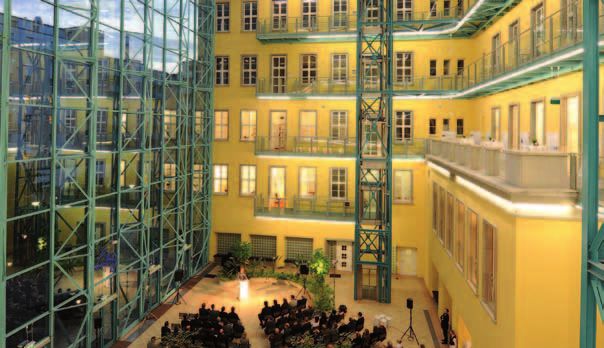
WELCOME NOTES PROGRAMME OVERVIEW
Sunday, November 4th Monday, November 5th Tuesday, November 6th
08:30–09:30
Registration and coffee
Museum für Naturkunde
Invalidenstr. 43
p. 9
© Lena Giovanazzi 09:30–10:00 09:30–12:30
Opening/Welcome address Session III
Welcome to Berlin, and welcome to the first Global Summit of Research Museums! Museum für Naturkunde p. 9 (Plenary and workshops) –
Collectives and collaborations
10:00–12:45
Museum für Naturkunde
Representatives of leading museums from more than 20 different countries are gath- Session I
ering in Berlin for this summit. The conference will also be taking up the issue of the (Plenary and workshops) –
What makes a research
social responsibility of research museums. I am delighted about this particular focus, museum?
since research museums can contribute a great deal to public awareness of and solu- Museum für Naturkunde
tions to worldwide challenges like climate change and land-use conflicts. Networks and
exchanges make this contribution more effective – and that is precisely what the Global
Summit of Research Museums is helping to promote. p. 13
p. 9 12:30–13:30
I believe that Berlin is the right host for the world premiere of this important summit. Our 12:45–14:00 Lunch Break
city is not only a prominent center of science and learning and home to a diverse and Lunch Break
Museum für Naturkunde
fascinating range of museums, it is also distinguished by a unique culture of coopera- Museum für Naturkunde
p. 15
tion between its institutions and partners from all over the world. That’s especially clear
p. 11 13:30–17:00
during the Berlin Science Week, which is providing the framework for the Global Summit
of Research Museums. 14:00–17:00 Session IV
(Plenary and workshops) –
Session II
Vision and future of research
(Plenary and workshops) –
My sincere thanks go to the Museum für Naturkunde Berlin, as the conference host, museums
Challenges for research museums
as well as the Leibniz Association and all of the cooperation partners. I wish all of the today
Museum für Naturkunde
participants a very interesting conference with many new insights and a very pleasant Museum für Naturkunde
stay in our city. p. 11 p. 15
17:00–17:30 17:00–18:15
Plenary Final plenary – Panel discussion
Museum für Naturkunde p. 13 Museum für Naturkunde
p. 17
Michael Müller
Governing Mayor of Berlin
19:00–21:00 19:00–22:00
Welcome reception and Dinner
registration Hamburger Bahnhof – Museum
Leibniz Association für Gegenwart
Chausseestr. 111 Invalidenstr. 50–51
p. 9
p. 13
6 7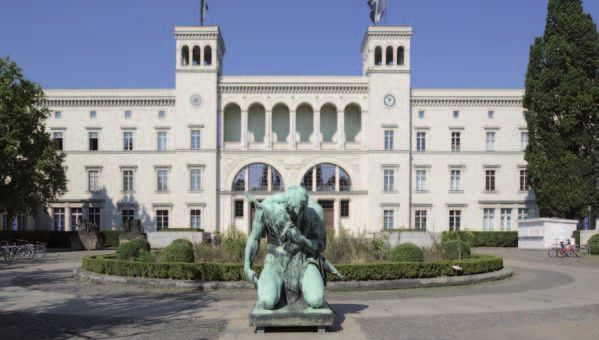
FLOOR PLAN – MUSEUM FÜR NATURKUNDE                                                                                                           SCIENTIFIC PROGRAMME

                                                                                        SUNDAY, NOVEMBER 4th, 2018

                      4                                                                 Leibniz Association, Headquarters • Chausseestr. 111 • 10115 Berlin

                                                                                         19:00–21:00            Welcome reception and registration
                                                                                              Atrium            WELCOME ADDRESSES
                                                                                        		                      Prof. Dr. Matthias Kleiner

                                              special exhibition
                                                                                        		                      President, Leibniz Association, Berlin, Germany

                                                ARTEFAKTE
                                                                                        		 Prof. Johannes Vogel, Ph.D.

                                                                          COLLECTION
                                                                                        		 Director General, Museum für Naturkunde – Leibniz
                      3

                                                                             WET-
                                                                                        		 Institute for Evolution and Biodiversity Science, Berlin,
                                                                                        		Germany

                                                                                         Atrium OPENING STATEMENT
                                                                                        		 Michelle Müntefering
                                                                                        		 Minister of State at the Federal Foreign Office, Germany

        2                                                                                             Atrium    Presentation of the Leibniz Research Museums
                                          5
                                                                                        MONDAY, NOVEMBER 5th, 2018
                                              special exhibition

                                 1
                                                    ARA

                                                                                        Museum für Naturkunde Berlin • Invalidenstr. 43 • 10115 Berlin

                                                                                               08:30–09:30      Registration and coffee
                                                                                                      Foyer

                                                                                         09:30–10:00            Opening / Welcome address
                                                                                         Dinosaur Hall          WELCOME ADDRESSES
                                                                                        		                      Prof. Johannes Vogel, Ph.D.
                                                                                        		                      Director General, Museum für Naturkunde Berlin, Germany

                            Main entrance                                               		 Prof. Dr. Matthias Kleiner
                                                                                        		 President, Leibniz Association, Berlin, Germany

                                                                                         10:00–11:00 I Plenary Session
    1   Dinosaur Hall/Catering            Lockers                       Cloakroom
                                                                                         Dinosaur Hall WHAT MAKES A RESEARCH MUSEUM?
    2   Tristan Hall/Lounge                                                             		             Past and present examples of collection-based research in
                                        Coffee Break/                   First aid and
    3   Evolution Hall                                                                  		 museums that illustrate the transformative potential of
                                     		 Lunch                      		   nursing room
    4   Seminar Room                                                                    		 research museums for science and society
    5   Lecture Hall/1st Floor            Picnic area                   Elevator                Chair Prof. Dr. Sunhild Kleingärtner
                                                                                        		 Deutsches Schifffahrtsmuseum, Bremerhaven, Germany

8                                                                                                                                                                         9
SCIENTIFIC PROGRAMME                                                                                                                  SCIENTIFIC PROGRAMME

 Keynotes Museum research: a broad church                                           Lecture Hall          WORKSHOP I-3: KEY ROLE IN SOCIETY AND EXCELLENT
		 Prof. Samuel Alberti, Ph.D.                                                     		                     RESEARCH AGENDA – A CONTRADICTION?
		 National Museums of Scotland, Edinburgh, United Kingdom                            Moderator           Prof. Dr. Alar Karis
                                                                                   		                     Estonian National Museum, Tartu, Estonia
		 The transformative potential of collection-based research in
		 museums for science and society: a UNESCO perspective                            Speakers Beyond the archive: building knowledge from many sides
		 Bernard Alens Zako                                                              		 Bonita Bennett
		 World Heritage Centre – UNESCO, Paris, France                                   		 District Six Museum, Cape Town, South Africa

      11:00–11:15     Coffee break                                                 		 Putting a value on museums‘ research – contradictions and
      Dinosaur Hall                                                                		synergies
                                                                                   		 Prof. David Throsby, Ph.D.
  11:15–12:45         Parallel workshops                                           		 Macquarie University, Sydney, Australia
 Evolution Hall       WORKSHOP I-1: INNOVATIVE APPROACHES FOR
		                    CUTTING-EDGE SCIENCE, COLLECTION-BASED RESEARCH,                    12:45–14:00     Lunch Break
		                    AND PUBLIC OUTREACH                                                 Dinosaur Hall
     Moderator        Dr. Daniel Hess
		                    Germanisches Nationalmuseum, Nürnberg, Germany                14:00–15:00 II Plenary Session
                                                                                    Dinosaur Hall CHALLENGES FOR RESEARCH MUSEUMS TODAY
 Speakers             The inquisitive museum: bridging the gap between curiosity   		             Rethinking the institution ‘research museum’ from national
		                    and social value                                             		 to global scales in light of new global users and issues
		                    Prof. Dr. Ken Arnold                                                 Chair Prof. Dr. Alexandra Busch
		                    Wellcome Trust, London, United Kingdom                       		 Römisch-Germanisches Zentralmuseum, Mainz, Germany

		 Connecting cutting-edge science in a changing world                              Keynotes              Research Museums in Dialog with a Global Audience:
		 Prof. Carl Heron, Ph.D.                                                         		                     Challenges and Opportunities
		 The British Museum, London, United Kingdom                                      		                     Prof. Dr. Hermann Parzinger
                                                                                   		                     Stiftung Preußischer Kulturbesitz, Berlin, Germany
 Seminar Room         WORKSHOP I-2: DEVELOPMENT OF INTERDISCIPLINARY
		                    RESEARCH AGENDAS                                             		 Inside Rhythm: research as an audience development
    Moderator         Dr. Andrew J. Perchuk                                        		catalyst
		                    Getty Research Institute, Los Angeles, USA                   		 Gus Casely-Hayford, Ph.D.
                                                                                   		 Smithsonian National Museum of African Art,
 Speakers Development of interdisciplinary research agendas for                    		 Washington D.C., USA
		research-museums
		 Prof. Dr. Bernhard Graf                                                                15:00–15:30     Coffee Break
		 Institut für Museumsforschung, Staatliche Museen zu Berlin,                            Dinosaur Hall
		Germany

		 Ceci n’est pas un musée. In search for a transdisciplinary
		approach
		 Paul Dujardin
		 Centre for Fine Arts of Brussels, Brussels, Belgium

10                                                                                                                                                             11
SCIENTIFIC PROGRAMME                                                                                                           SCIENTIFIC PROGRAMME

  15:30–17:00 Parallel workshops                                          		 Between Timelessness and Change – Research in Cultural and
 Evolution Hall WORKSHOP II-1: DIGITAL COLLECTIONS, VIRTUAL               		 Scientific Collections
		 MUSEUMS AND OPEN SCIENCE – OPPORTUNITIES AND                           		 Prof. Karin Tybjerg, Ph.D.
		CHALLENGES                                                              		 Medical Museum, Copenhagen, Denmark
     Moderator Prof. Dr. Markus Hilgert
		 Kulturstiftung der Länder, Berlin, Germany                              17:00–17:30           Plenary
                                                                           Dinosaur Hall         REPORTING FROM WORKSHOPS AND DISCUSSION
 Speakers From videogames to social media: researching the                        Chair          Prof. Dr. Katrin Böhning-Gaese
		 collecting of complex digital objects and the creation of              		                     Senckenberg Biodiversität und Klima Forschungszentrum,
		 digital experiences at the V&A                                         		                     Frankfurt am Main, Germany
		        Joanna Norman                                                      Moderators          Workshop I-1, I-2, I-3 and Workshop II-1, II-2, II-3
		 Victoria & Albert Research Institute, London, United Kingdom

		 Discoverable, Accessible, Reusable, and Transparent (DART):            Hamburger Bahnhof – Museum für Gegenwart • Invalidenstr. 50–51 • 10557 Berlin
		 Scholarly Communications and the Research Museum
		 Martin R. Kalfatovic                                                    19:00–22:00 Dinner
		 Smithsonian Libraries – Biodiversity Heritage Library,                 		           WELCOME ADDRESSES
		 Washington D.C., USA                                                   		 Prof. Dr. Hermann Parzinger
                                                                          		 President, Stiftung Preußischer Kulturbesitz, Berlin, Germany
 Seminar Room       WORKSHOP II-2: COLLECTION ORIGINS AND HISTORY:
		                  HOW TO SHARE COMMON HERITAGE                          		 Prof. Dr. Michael Eissenhauer
    Moderator       Rune Frederiksen, Ph.D.                               		 Director General, Staatliche Museen zu Berlin, Germany
		                  Ny Carlsberg Glyptothek, Copenhagen, Denmark

 Speakers Managing collections from colonial context and collaborations
		 with source communities, challenges for new exhibitions                TUESDAY, NOVEMBER 6th, 2018
		 Prof. Dr. Lars-Christian Koch
		 Ethnologisches Museum, Staatliche Museen zu Berlin,
		Germany                                                                 Museum für Naturkunde Berlin • Invalidenstr. 43 • 10115 Berlin

		 Rum, Colonial Heritage and Transitional Justice                         09:30–10:30 III Plenary Session
		 Imani Tafari-Ama, Ph.D.                                                 Dinosaur Hall COLLECTIVES AND COLLABORATIONS
		 University of The West Indies – Mona, Kingston, Jamaica                		             The benefit of collaborative and cross-disciplinary approaches
                                                                          		 for generating innovative research methods and new
 Lecture Hall       WORKSHOP II-3: MOBILIZING AND TRANSFERRING            		 knowledge on museum collections
		                  KNOWLEDGE FROM COLLECTIONS                                    Chair Richard Lariviere, Ph.D.
   Moderator        Prof. Dr. Volker Mosbrugger                           		 Field Museum of Natural History, Chicago, USA
		                  Senckenberg Gesellschaft für Naturforschung,
		                  Frankfurt am Main, Germany                             Keynotes              The ethically accountable and responsible museum,
                                                                          		                     participatory practices and vision for research in museums
 Speakers Horizon for museum collections: facing new challenges           		                     Suay Aksoy
		 Bruno David                                                            		                     ICOM – International Council of Museums, Paris, France
		 Muséum national d’Histoire naturelle, Paris, France

12                                                                                                                                                            13
SCIENTIFIC PROGRAMME                                                                                                             SCIENTIFIC PROGRAMME

		 Museums in times of change: revisiting the roles of museums                      Lecture Hall          WORKSHOP III-3: PRESERVATION AND CONSERVATION OF
		 as generators of knowledge through introspective collaborative                  		                     CULTURAL HERITAGE IN MUSEUM COLLECTIONS
		research                                                                            Moderator           Prof. Dr. Stefan Brüggerhoff
		 Prof. George Okello Abungu, Ph.D.                                               		                     Deutsches Bergbau-Museum Bochum, Germany
		 Okello Abungu Heritage Consultants, Nairobi, Kenya
		 (Emeritus Director General of the National Museums of Kenya)                     Speakers ‘Whatever affects one directly affects all indirectly’ – What
                                                                                   		 Sharing Heritage Really Means
      10:30–11:00     Coffee Break                                                           Prof. Dr. Stefan Simon
      Dinosaur Hall                                                                		 Global Cultural Heritage Initiatives, Yale University,
                                                                                   		 New Haven, USA
  11:00–12:30         Parallel workshops
 Evolution Hall       WORKSHOP III-1: COOPERATION WITH CIVIL SOCIETY AND           		 Living on the edge – can ‘bad practice’ be best practice?
		                    NGOS IN MUSEUMS                                              		 Dr. Alison Wain
     Moderator        Prof. Dr. Wolfgang Wägele                                    		 University of Canberra, Canberra, Australia
		                    Zoologisches Forschungsmuseum Alexander Koenig, Bonn,
		                    Germany                                                             12:30–13:30     Lunch Break
                                                                                          Dinosaur Hall
 Speakers             Natural History Museums of Los Angeles County: Becoming
		                    of, for and with Los Angeles                                  13:30–15:00 IV Plenary Session
		                    Dr. Lori Bettison-Varga                                       Dinosaur Hall VISION AND FUTURE OF RESEARCH MUSEUMS
		                    Natural History Museum of Los Angeles County, Los Angeles,   		             Speculative scenarios to imagine what research museums
		                    USA                                                          		 could or indeed should be
                                                                                           Chair Hilary J. Goodson
		 Te Papa‘s Taiao I Nature exhibition and NGOs                                    		 EOSC-Hub, Amsterdam, The Netherlands
		 Dr. Dean Peterson
		 Museum of New Zealand Te Papa Tongarewa, Wellington,                             Keynotes Rush D. Holt, Ph.D.
		 New Zealand                                                                     		 American Association for the Advancement of Science (AAAS),
                                                                                   		 Washington D.C., USA
 Seminar Room         WORKSHOP III-2: CROSS-CULTURAL, TRANSDISCIPLINARY
		                    AND INTERNATIONAL COLLABORATIONS                             		 One World Collection: Unlocking Global Natural History
    Moderator         Molly Fannon                                                 		 Collections to Tackle the Anthropocene
		                    Smithsonian Institution, Washington D.C., USA                		 Dr. Kirk Johnson
                                                                                   		 Smithsonian National Museum of Natural History,
 Speakers More interdisciplinary, more collaborative, more connected.              		 Washington D.C., USA
		 A five-year research horizon for the encyclopaedic metro
                                                                                   		and
		museum
		 Dr. David Gaimster                                                              		 Prof. Ian Owens, Ph.D.
		 Auckland Memorial Museum, Auckland, New Zealand                                 		 Natural History Museum London, United Kingdom

		 Bilateral projects: research and capacity building – the
		 cooperation between the Egyptian Ministry of Antiquities and
		 the Egyptian Museum Berlin
		 Prof. Dr. Friederike Seyfried
		 Ägyptisches Museum und Papyrussammlung,
		 Staatliche Museen zu Berlin, Germany

14                                                                                                                                                           15
SCIENTIFIC PROGRAMME                                                                                                               SCIENTIFIC PROGRAMME

		 Toward a sustainable future.                                                    		 Capacity building and technology transfer in museum science:
		 Museums in a time of distraction, some preliminary                              		 A Kenyan perspective
		 observations on navigating the Anthropocene                                     		 Dr. Purity Kiura
		 Morien Rees                                                                     		 Kenya National Museums, Nairobi, Kenya
		 Varanger Museum, Vadsø, Norway
                                                                                    Lecture Hall     WORKSHOP IV-3: PARTICIPATION AND NEW AUDIENCES
     15:00–15:30     Coffee Break                                                  		                FOR RESEARCH MUSEUMS
     Dinosaur Hall                                                                    Moderator      Paul Spies
                                                                                   		                Stiftung Stadtmuseum Berlin, Germany
  15:30–17:00        Parallel workshops
 Evolution Hall      WORKSHOP IV-1: MUSEUMS FACING THE ANTHROPOCENE:                Speakers         Citizen science: Harnessing the power of the crowd for a
		                   THE ROLE OF COLLECTION BASED RESEARCH                         		                sustainable future
     Moderator       Prof. Dr. Helmuth Trischler                                   		                Lucy Robinson
		                   Deutsches Museum, München, Germany                            		                Natural History Museum & ECSA, London, United Kingdom

 Speakers            Intimate Connections: researching and sharing Anthropocene    		 Open MEK – transforming exhibitions and collections
		                   perspectives in the museum                                    		 Dr. Iris Edenheiser
		                   Dr. Jennifer Newell                                           		 Museum Europäischer Kulturen, Staatliche Museen zu Berlin,
		                   Australian Museum, Sydney, Australia                          		Germany

		 Building an Anthropocene scholarship center within the                           17:00–18:15      Final Plenary
		 museum: collections, community, and collaboration                                Dinosaur Hall    REPORTING FROM WORKSHOPS AND DISCUSSIONS
		 Nicole Heller, Ph.D.                                                                    Chair     Prof. Dr. Katrin Böhning-Gaese
		 Carnegie Museum of Natural History, Pittsburgh, USA                             		                Senckenberg Biodiversität und Klima Forschungszentrum,
                                                                                   		                Frankfurt am Main, Germany
 Seminar Room WORKSHOP IV-2: THE FUTURE OF CAPACITY BUILDING                          Moderators     Workshop III-1, III-2, III-3 and Workshop IV-1, IV-2, IV-3
		 AND TECHNOLOGY TRANSFER FOR MUSEUM SCIENCE
    Moderators Dr. Freda Nkirote M’Mbogori                                         		         Panel discussion: The role of museums in research and
		 British Institute in Eastern Africa, Nairobi, Kenya                             		 society – desire and reality
		                                                                                  Moderator Dr. Andreas Görgen
               and
                                                                                   		 Directorate-General for Culture and Communication, Federal
		 Prof. Dr. Friedemann Schrenk                                                    		 Foreign Office, Berlin, Germany
		 Senckenberg Gesellschaft für Naturforschung,
		 Frankfurt am Main, Germany                                                       Panelists Prof. George Okello Abungu, Ph.D.
                                                                                   		 Okello Abungu Heritage Consultants, Nairobi, Kenya
 Speakers            Desires of a country in transition and building capacity in   		 (Emeritus Director General of the National Museums of Kenya)
		                   a museum (Georgian case)
		                   Mikheil Tsereteli                                             		 Molly Fannon
		                   Georgian National Museum, Tbilisi, Georgia                    		 Smithsonian Institution, Washington D.C., USA

                                                                                   		 Rush D. Holt, Ph.D.
                                                                                   		 American Association for the Advancement of Science (AAAS),
                                                                                   		 Washington D.C., USA

16                                                                                                                                                                17
SCIENTIFIC PROGRAMME SPEAKERS, CHAIRS AND MODERATORS
Prof. Dr. Sharon Macdonald Speakers
Institute of European Ethnology,
Humboldt-Universität zu Berlin, Germany Prof. George Okello Abungu, Ph.D.
George Okello Abungu is a Cambridge-trained archaeologist and former Director-General of the
National Museums of Kenya. He has been a guest scholar at the Getty Conservation Institute
Dr. Freda Nkirote M’Mbogori and Getty Research Institute, Los Angeles, and a visiting lecturer at the University of Western
British Institute in Eastern Africa, Nairobi, Kenya Cape, South Africa and the University of Florida, Gainesville, USA.
Among distinctions received, he is a recipient of the ‘Ife Prize in Museology’, the ‘Passeur du
Patrimone’ by the Ecole du Patrimoine Africain, the Chevalier de l’Order de Arts et des Lettres
Summary, farewell, next steps
by the Government of France, and the first African World Heritage Fund Award.
Prof. Johannes Vogel, Ph.D. Prof. Dr. Abungu has numerous publications in the disciplines of archaeology, heritage
Director General, Museum für Naturkunde Berlin, Germany management, museology, culture and development. He has been Vice President of the Inter-
national Council of Museums (ICOM), and was Kenya’s Representative to the UNESCO World
Heritage Committee, and Vice-President of its Bureau. He has been an advisor to the Mellon
Foundation, and the Global Heritage Fund, and serves as an international expert for the
establishment of the Humboldt Forum, Berlin, Germany.
He is a Fellow of the Stellenbosch Institute for Advanced Studies, University of Stellenbosch
South Africa, and is the immediate former and founding Professor of Heritage Studies, at the
University of Mauritius.
Suay Aksoy
Suay Aksoy is President of ICOM, and served as Chair of the Advisory Council, as Board
member, and then Chair of ICOM’s International Committee for City Museums, CAMOC.
Her initial academic career was in Political Science at Istanbul University, and later she taught
Museum Management and Cultural Heritage at Istanbul’s Fine Arts University and Bogazici
University. She edited and published reference books of history and social sciences as well as
a range of journals. She headed museum projects at the History Foundation of Turkey where
she later served as Board member and Vice-President for consecutive terms.
Suay Aksoy worked as Director of Cultural Heritage and Museums at the Istanbul 2010
European Capital of Culture Agency where she led major projects like the Model Proposition
for the Rehabilitation of Museums in Turkey and the Strategic Vision Report for the Imperial
Courtyard of Topkapi Palace. She has been a committed and active supporter of NGO work,
taking part in the establishment and management of the Association for Supporting Woman
Candidates and the Open Radio.
Aksoy has a BA in Economics (Bogazici University), an MA in Political Science (JW Goethe
Universitaet Frankfurt) and a Post Graduate Diploma in Museum Studies (University of
Leicester).
Prof. Samuel Alberti, Ph.D.
Sam Alberti is Keeper [head] of Science & Technology at National Museums Scotland, and
Honorary Professor in the Centre for Environment, Heritage and Policy at the University of
This event is supported by the Aktionsplan Leibniz-Forschungsmuseen: The German Federal Ministry of Educa- Stirling. He trained in the history of science and medicine; after teaching at the University
tion and Research and the state governments of Bavaria, Berlin, Bremen, Hessen, North Rhine-Westphalia, and of Manchester he was Director of Museums and Archives at the Royal College of Surgeons
Rhineland-Palatinate are launching a joint effort of the Leibniz Association to promote and stimulate transna- of England (which includes the Hunterian Museum). He has worked on exhibitions tackling
tional and multidisciplinary collaboration in natural sciences, technology, art and culture. race; museum history; anatomy models; and the First World War. His books include Nature
and Culture: Objects, Disciplines and the Manchester Museum (2009); and (with Elizabeth
The Leibniz Research Museums: Hallam) Medical Museums: Past Present Future (2013).
Deutsches Bergbau-Museum Bochum – Leibniz Research Museum of Georesources
Deutsches Museum, München
Deutsches Schifffahrtsmuseum – Leibniz Institute for Maritime History, Bremerhaven
Germanisches Nationalmuseum – Leibniz Research Museum of Cultural History, Nürnberg
Museum für Naturkunde Berlin – Leibniz Institute for Evolution and Biodiversity Science
Römisch-Germanisches Zentralmuseum – Leibniz Research Institute for Archaeology, Mainz
Senckenberg Gesellschaft für Naturforschung, Frankfurt am Main, Görlitz and Dresden
Zoologisches Forschungsmuseum Alexander Koenig – Leibniz Institute for Animal Biodiversity, Bonn
18 19SPEAKERS, CHAIRS AND MODERATORS SPEAKERS, CHAIRS AND MODERATORS
Prof. Dr. Ken Arnold Paul Dujardin
Ken Arnold has been Professor and Director of Medical Museion in Copenhagen since June Paul Dujardin is a leading figure in Europe’s cultural landscape. He has been CEO and Artistic
2016, while continuing to be a Creative Director at Wellcome in London. There he oversees Director of the Centre for Fine Arts of Brussels (BOZAR) since 2002. Under his leadership,
international cultural projects. He arrived at Wellcome in 1992, where he spearheaded a BOZAR has turned into a respected and internationally recognized multidisciplinary European
number of multidisciplinary initiatives, culminating in 2007 with the establishment of the cultural hub, attracting around 1 million visitors each year and playing a crucial role as a
new venue Wellcome Collection. He directed a lively programme of exhibitions, events and meeting place for the various international communities established in Belgium and for the
publications for its inaugural decade. He regularly writes and lectures on museums and European Union. Paul initially graduated in Arts history and Management Sciences. In addi-
on contemporary intersections between the arts and sciences. His book Cabinets for the tion to BOZAR, he was also founder and CEO of Ars Musica, General Manager of the Brussels
© Stephen Papandropoulos
Curious (Ashgate, 2006) explored what can be learned from looking back at England’s earliest Philharmonic Society, Co-Administrator at the National Orchestra of Belgium, President of
museums. He is currently researching a book about the increasingly important cultural role the International Music Council (2013–2017) or President of Europa Nostra Belgium (since
for these enduring institutions. 2018).
Bonita Bennett Dr. Iris Edenheiser
Bonita Bennett was appointed as director of the District Six Museum in 2008. Her profes- Iris Edenheiser, cultural anthropologist, is vice director of the Museum of European Cultures
sional training is as an educator with strong anti-apartheid activist roots and she completed (MEK), Staatliche Museen zu Berlin – Stiftung Preußischer Kulturbesitz. Before taking up
both her under- and post-graduate degrees at the University of Cape Town. Her Masters her current post she worked as head of the ‘World Cultures’ department at the Reiss-Engel-
dissertation focused on narratives of people who were forcibly removed from various areas in horn-Museums Mannheim. Until 2014 she was curator for ‘The Americas’ at the Staatliche
the Western Cape under Apartheid. She is currently registered as a doctoral student at the Ethnographische Sammlungen Sachsen (Grassi Museum für Völkerkunde zu Leipzig, Museum
University of Pretoria. für Völkerkunde Dresden, Völkerkundemuseum Herrnhut)/Staatliche Kunstsammlungen
Both her parents are from District Six, and she grew up in a township on the Cape Flats with Dresden and also served as acting director and head of the research department. Her research
other families who were displaced. interests are the colonial entanglements of ethnographic collections, provenance research
The District Six Museum provides a wonderful platform from which to confront the legacies of and the interdependencies of art and anthropology. Currently she is designing a provenance
Apartheid displacement, and to also raise awareness about the indivisibility of human rights. research project for the Sami collections from Scandinavia at the MEK and an exhibition
project on East German everyday worlds.
Lori Bettison-Varga, Ph.D.
Lori Bettison-Varga joined NHMLAC in October 2015, overseeing management and programs Dr. David Gaimster
of the Natural History Museum in Exposition Park, the La Brea Tar Pits in Hancock Park, David Gaimster joined the Auckland Museum as Director in April 2017. Previously David was
and the Hart Museum in Newhall. At over 35 million objects, the museums hold one of the Director of The Hunterian at the University of Glasgow, Scotland’s oldest museum. He began
largest natural and cultural collection in the United States. With this collection serving as his career at the British Museum as Assistant Keeper for Medieval & Later Antiquities and has
a foundation, Bettison-Varga has inaugurated new major initiatives in research, exhibitions, worked in a number of heritage leadership roles in the UK, including as Senior Policy Advisor,
education, community science, and community engagement. She served six years as Presi- Department for Culture, Media & Sport and as CEO of the Society of Antiquaries of London.
dent of Scripps College in Claremont, California, before arriving at NHMLAC, a tenure that David has published extensively on historical archaeology and material culture, museology
included implementation of policies to foster greater transparency and community engage- and on international cultural property. He is a Fellow of the Society of Antiquaries of London,
ment, and strategic planning for diversity and sustainability. As a professor of geology prior the Royal Society of Edinburgh and of the Museums Association (UK).
to her administrative career, she published extensively and was a recipient of a prestigious
National Science Foundation Young Investigator Award. Prof. Dr. Bernhard Graf
Bernhard Graf is director of the Museum of Museum Research of the Staatliche Museen zu
Gus Casely-Hayford, Ph.D. Berlin – Preußischer Kulturbesitz. He works on the fields of historical museology, museum
Augustus (Gus) Casely-Hayford is the Director of the Smithsonian National Museum of African management, visitor research, media research and visitor-related museum issues. His profes-
Art, Washington D.C.’s museum devoted to the arts of Africa from antiquity to modernity. A sional activities relate in particular to research museums and science centers as well as
frequent radio and television presenter about Africa, Casely-Hayford led Tate Britain’s Great exhibition projects for historical and archaeological museums. In addition to directing the
British Walks for Sky Arts and two series of Lost Kingdoms of Africa for the BBC. Casely- Institute for Museum Research, he also teaches honorary professorship for knowledge and
Hayford is the author of a new Ladybird Expert book, Timbuktu. cultural communication at the Freie Universität Berlin, Institute for Journalism and Communi-
Casely-Hayford was educated at the School of Oriental and African Studies and remains a cation Science. He has developed several certificate programs for museum management and
SOAS research associate and a member of its Centre of African Studies Council. In October provenance research in the further education institute of Freie Universität Berlin.
of 2018, Her Majesty the Queen of England presented Casely-Hayford as a member of the
Order of British Empire in recognition of his work on African art and history. Nicole Heller, Ph.D.
Nicole Heller is a museum fellow and curator of the Anthropocene at the Carnegie Museum
Bruno David of Natural History. Heller’s primary research is concerned with sustaining biodiversity in the
Bruno David is President of the French National Natural Science Museum (Muséum national face of global changes associated with the Anthropocene. For 10 years, Heller has worked at
d’Histoire naturelle). Formerly, he was CNRS director of research and founder of the laboratory the research-practice interface to help pioneer climate change adaptation in urban ecosys-
BIOGÉOSCIENCES, University of Burgundy. Originally trained in geology and paleontology, his tems. Heller’s secondary research and practice is about science communication. For four
works focused on evolutionary biology tackled both on fossil and living forms. He participated years, Heller worked at Climate Central, a science and news organization, and for two years
to scientific expeditions in the Southern Ocean and in Antarctica, in the West Indies, South at Duke University, where she directed an art and science initiative, including curating a
America, Africa, and in the Pacifica where he doved with the submersible Nautile. He was hybrid environmental art exhibition and visitor engagement experiment. Heller received a
president of the scientific council of the Muséum National d’Histoire Naturelle, Deputy Director Ph.D. from Stanford University in Biological Sciences and a BA from Princeton University in
at the CNRS Institute for Ecology and Environment, and member of many scientific councils. Ecology and Evolution.
20 21SPEAKERS, CHAIRS AND MODERATORS SPEAKERS, CHAIRS AND MODERATORS
Prof. Carl Heron, Ph.D. Prof. Dr. Matthias Kleiner
Carl Heron is Director of Scientific Research at the British Museum. He is responsible for a team Matthias Kleiner completed his habilitation in the field of forming technology in 1991. In
of scientists charged with integrating scientific investigation of the collection with curatorial 1994, he joined the faculty of the newly founded Brandenburg Technical University of Cottbus
and conservation priorities. Carl joined the British Museum in 2016 after an academic career as Professor of Forming Technology in the Chair in Design and Manufacturing. Professor
spanning 30 years that took him to University College, Cardiff, the University of Liverpool and Kleiner was awarded the most prestigious prize in German research, the DFG’s Gottfried
the University of Bradford. He was made Professor of Archaeological Sciences in 2004. In Wilhelm Leibniz Prize in 1997. He responded to the call to the TU Dortmund University in
2014–2015, Carl was a Humboldt Research Fellow at the Christian-Albrechts-Universität zu 1998, where he held the Chair of Forming Technology. From 2004 to 2006, he served as
Kiel/Zentrum für Baltische und Skandinavische Archäologie, Stiftung Schleswig-Holsteinische managing director of the newly established Institute of Forming Technology and Lightweight
© Photo Oliver Lang
Landesmuseen, Schloss Gottorf, Schleswig, Germany. He holds honorary professorships at the Construction (IUL). He has played an instrumental role in a number of international and
University of Bradford, University College London and the University of York. interdisciplinary research projects and research networks and acts as a member of numerous
international professional committees and academies. In 2011, he co-chaired the German
Rush D. Holt, Ph.D. ‘Ethics Commission for a Safe Energy Supply’. Matthias Kleiner was elected President of the
Rush D. Holt became the 18th chief executive officer of the American Association for the German Research Foundation (DFG) in 2007. His six year-term of office as President of the
Advancement of Science (AAAS) and executive publisher of the Science family of journals DFG ended in December 2012. Matthias Kleiner assumed office as President of the Leibniz
in February 2015. In this role, Holt leads the world’s largest multi-disciplinary scientific and Association in July 2014.
engineering society. Over his career, Dr. Holt has held positions as a teacher, scientist, admin-
istrator, and policymaker. From 1987 to 1998, Holt was assistant director of the Princeton Prof. Dr. Lars-Christian Koch
Plasma Physics Laboratory (PPPL), a Department of Energy national lab, which is the largest Lars-Christian Koch is Director of the Ethnological Museum Berlin and Head of Collections at
research facility of Princeton University and one of the largest alternative energy research the Humboldt Forum Berlin. He is Professor for Ethnomusicology at the University of Cologne
facilities in the country. Holt then served for 16 years as a member of the U.S. House of and Honorary Professor for Ethnomusicology at the University of the Arts in Berlin.
Representatives, representing New Jersey’s 12th Congressional District. Holt is a Phi Beta He has conducted field work in India, as well as in South Korea. His research focuses on the
Kappa graduate of Carleton College and holds M.A. and Ph.D. degrees in physics from New theory and practise of North-Indian Raga-Music, organology with special focus on instrument
York University. manufacturing, Buddhist music, popular music and urban culture and historical recordings.
His publications include Sitar – Manufacturing: The Tradition of Kanailal & Bros., Calcutta /
© K-Photographie
Dr. Kirk Johnson Berlin (SMB) 2011 and My Heart Sings – Die Lieder Rabindranath Tagores zwischen Tradition
Kirk Johnson is a field paleontologist whose research focuses on fossil plants and the extinc- und Moderne / Berlin (LIT) 2011 / Sebastian Klotz, Philip V. Bohlman, Lars-Christian Koch
tion of the dinosaurs. He is also Sant Director of the Smithsonian’s National Museum of (Eds.) Sounding Cities - Auditory Transformations in Berlin, Chicago, and Kolkata / Berlin
Natural History where he oversees the world’s largest natural history collection. Kirk is known (LIT) 2018
for his scientific articles, popular books, museum exhibitions, documentaries, and collabora-
tions with artists. Kirk’s recent PBS documentaries include Ice Age Death Trap (2012), Making Prof. Dr. Sharon Macdonald
North America (2015), and The Great Yellowstone Thaw (2018). Kirk has worked with artist Sharon Macdonald is Alexander von Humboldt Professor for Social Anthropology in the Insti-
Ray Troll for 20 years. In 2011, they received a joint Guggenheim Fellowship to create their tute of European Ethnology, Humboldt-Universität zu Berlin and Anniversary Professor of
new book Cruisin’ the Fossil Coastline. Cultural Anthropology at the University of York. In Berlin, she founded and directs CARMAH,
the Centre for Anthropological Research on Museums and Heritage, and its major research
Martin R. Kalfatovic project, Making Differences. Transforming Museums and Heritage in the 21st Century (funded
Martin R. Kalfatovic is the Associate Director, Digital Programs and Initiatives at Smithsonian by the Alexander von Humboldt Foundation, the Humboldt-Universität, the Berlin Museum
Libraries and Program Director of the Biodiversity Heritage Library. At Smithsonian Libraries, of Natural History and the Prussian Cultural Heritage Foundation). She also leads the Profu-
© Humboldt Foundation
he is involved with scholarly communications, mass digitization, education and outreach, Sven Müller sion theme of Heritage Futures (AHRC), and the Contentious Collections work-package of the
and product development and licensing. As the Program Director for the Biodiversity Heri- Horizon 2020-funded TRACES (Transmitting Contentious Cultural Heritages with the Arts:
tage Library (BHL), a consortium of sixteen natural history, research, and botanical garden From Intervention to Creative Co-Production) project.
libraries, he participates in the global coordination of the BHL project working with BHL
partners in China, Brazil, Australia, the European Union, Egypt, Singapore, Mexico, and Dr. Jennifer Newell
Africa. A regular contributor to popular and scholarly publications, he also writes on a variety Jennifer Newell is Manager of Pacific and International Collections at the Australian Museum.
of topics on his blog at UDC793. He can be found on Twitter @udcmrk and has an inordinate She works in the environmental humanities, focusing on climate change in the Pacific and
fondness for dodos. Australia. Jenny has worked with Pacific communities, histories, and collections at the
British Museum, American Museum of Natural History, National Museum of Australia and the
Dr. Purity Kiura Australian Museum. She has published Trading Nature: Tahitians, Europeans and Ecological
Purity Kiura is the Director of Antiquities, Sites and Monuments and a Senior Research Exchange (2010). Pacific Art in Detail (2011); and the co-edited volume Curating the Future:
Scientist at the National Museums of Kenya. She is a trained geologist and an archaeologist. Museums, Communities and Climate Change (2017). She convenes the Museums and Climate
As the Director of Antiquities, Sites & Monuments, she is in charge of all the museums, sites Change Network (www.mccnetwork.org).
and monuments in Kenya and this involves heritage management and conservation through
surveying, mapping and gazzettment. In addition, other duties include information dissemina-
tion through development of exhibitions and public programs within the different museums
in Kenya. She is also in charge of policies which relate to the protection and care of Kenya’s
antiquities, sites and monuments. As a Senior Research Scientist her research interests
include human origins and technology as well as human subsistence and settlement patterns
especially during the Holocene period.
22 23SPEAKERS, CHAIRS AND MODERATORS SPEAKERS, CHAIRS AND MODERATORS
Joanna Norman Morien Rees
Joanna Norman is Director of the V&A Research Institute at the Victoria and Albert Museum, Morien Rees studied architecture at the Universities of Wales and art history in Oslo. He prac-
London. Joanna currently oversees all the V&A’s research activities, including postgraduate ticed architecture until 1994. Since 1994 he has worked in the museum sector. At present, he
programmes, exhibition research and development and externally-funded research projects, is employed in Varanger Museum on the Norway’s arctic coast. He is chair of ICOM’s Working
including a major current programme of research and partnerships generously supported Group on Sustainability.
by the Andrew W. Mellon Foundation. She was Project Curator for Europe 1600–1815, the
redevelopment of the V&A’s permanent galleries of 17th- and 18th-century European art and
design, and Lead Curator for the Scottish Design Galleries at V&A Dundee, which opened in
September 2018. Her research interests include early modern history of performance and
furniture. She is particularly interested in period rooms and the reconstruction of historic
Lucy Robinson
Lucy D. Robinson is Citizen Science Manager at the Natural History Museum, London and
interiors in the museum environment.
Vice Chair of the European Citizen Science Association. She has worked in the field of citizen
science for the past ten years, coordinating a broad programme of citizen science research.
Prof. Ian Owens, Ph.D. To promote knowledge exchange and excellence in the field Lucy has authored the Guide to
Ian Owens is Director of Science at the Natural History Museum, London, where he oversees Citizen Science (2012), Guide to Running a BioBlitz 2.0 (2013) and Ten Principles of Citizen
the work of over 350 scientists and is responsible for the Museum’s collection of 80 million Science (2015). She is PI of the international LEARN CitSci consortium studying the learning
specimens. He sets the strategic direction of the Museum’s scientific activities including digi- and behavioural impacts of participating in citizen science for young people aged 5–19 years.
tisation and informatics, citizen science, postgraduate training and international partnerships. Lucy holds a BSc in Zoology and an MSc in Biodiversity and Conservation.
Before moving to the Natural History Museum, Professor Owens held a chair in Evolutionary
Ecology at Imperial College London and before that at the University of Queensland in
Australia and the Institute of Zoology in London. He has published over 100 peer-reviewed
Prof. Dr. Friederike Seyfried
Friederike Seyfried is since 2009 Director of the Egyptian Museum and Papyrus-Collection at
papers, including publications in leading journals such as Science, Nature and Proceedings
Staatliche Museen zu Berlin and holds an honorary professorship for Egyptology at the Freie
of the National Academy of Science of the USA, has supervised more than 20 Ph.D. students,
Universität Berlin since 2011. Before taking these positions Friederike Seyfried has worked
and has led a series of major awards as principal investigator. He has also sat on a wide range
for ten years as a curator of the Egyptian Museum at the University of Leipzig. She received
of international review, editorial and examination boards, funding panels and trustee bodies.
her Ph.D. ‘The Theban Necropolis: The development of tomb architecture’ from the Univer-
His research interests use a combination of field, phylogenetic and molecular approaches to
sity of Heidelberg. Since 1991 she has been field director of the Ramesside Tomb project
study the large-scale patterns of diversity and evolution in vertebrates, particularly birds. He
(Egypt). Her main research interests are the archaeology of the ancient Egypt with a focus on
was awarded the Scientific Medal of the Zoological Society of London in recognition of his
the new empire, the architecture and decoration of graves in this period and the archaeology
contributions to his field.
and history of the Amarna period. Her professional interest also includes the field of Museum
education and especially the inclusion of people with disabilities.
Prof. Dr. Hermann Parzinger
Hermann Parzinger has been the president of the Stiftung Preußischer Kulturbesitz since
2008. An internationally renowned archaeologist and prehistorian, he has researched various
Prof. Dr. Stefan Simon
Stefan Simon is Director of Global Cultural Heritage Initiatives at Yale University.
aspects of early human history.
Trained as a heritage scientist, Simon earned his Ph.D. in Chemistry from the Ludwig Maxi-
milian University, Munich. Simon served as Director of the Rathgen Research Laboratory with
the National Museums in Berlin and as a Council Member and Vice President of ICCROM, the
International Centre for the Study of the Preservation and Restoration of Cultural Property.
As Inaugural Director of Yale’s Institute for the Preservation of Cultural Heritage (IPCH), Stefan
Dr. Dean Peterson Simon prioritized the advancement of sustainable conservation strategies triggered by global
Dean Peterson graduated from Michigan State University with a Ph.D. in Physical Chemistry. climate change and the green museum debate. Dr. Simon is a leading voice in the international
He worked in the field of Atmospheric Research from 1988 to 1998 at the Jet Propul- ‘Culture in Crisis’ debate, and also acting on public stage as advocate against illicit traffic of
sion Laboratory, USA. From 1994 to 1997, he was appointed to NASA Headquarters as cultural property and for the study of authenticity questions.
Co-Program Manager for the Upper Atmosphere Research Program (UARP). From June 1998 Between 2001 and 2005 he led the Building Materials Section at the Getty Conservation
to July 2008 Dr. Peterson was Science Strategy Manager for Antarctica New Zealand, New Institute, Los Angeles. He has co-authored and published more than 150 articles on the
Zealand’s government organisation in charge of Antarctic operations. From July 2008 to May preservation of cultural heritage.
2014 Dr. Peterson managed research portfolio at the Royal Society of New Zealand, which
included the Marsden Fund of New Zealand. From June 2014 to May 2016 Dr. Peterson Prof. Dr. Imani Tafari-Ama
was the Group Manager – National Technology Networks. Dr. Peterson has been at Te Papa Imani Tafari-Ama is Research Fellow at the Institute for Gender and Development Studies,
since June 2016, starting there as Head of Science and currently in a new role as Director of Regional Coordinating Office, University of the West Indies, Mona Campus, following assign-
Strategy & Performance. ments as International Fellow and Curator at the Flensburg Maritime Museum (2016–2017)
and Fulbright Scholar-in-Residence at Bridgewater State University (2017–2018).
With a Ph.D. in Development Studies and Masters degree in Women and Development Studies,
Tafari-Ama is the author of Blood, Bullets and Bodies: Sexual Politics Below Jamaica’s Poverty
Line, Up For Air: This Half Has Never Been Told (an award-winning novel) and Lead in the
Veins (poetry) as well as several book chapters and articles.
24 25SPEAKERS, CHAIRS AND MODERATORS SPEAKERS, CHAIRS AND MODERATORS
Prof. David Throsby, Ph.D. Prof. Dr. Alison Wain
David Throsby is Distinguished Professor of Economics at Macquarie University in Sydney, Alison Wain trained as an archaeological conservator before discovering a passion for large
Australia. He holds a Master’s degree from the University of Sydney and a Ph.D. from the technology conservation. She worked on the development of the Scienceworks campus of
London School of Economics. He is internationally recognised for his research and writing on Museum Victoria in Melbourne, Australia, moved to Canberra to head up the Large Technology
the economics of art and culture. His current research interests include heritage economics, Workshop and Small Objects laboratory at the Australian War Memorial, and undertook a
the creative industries, the economic circumstances of creative artists, culture in sustain- Ph.D. exploring the ways in which people value, use and care for large technology heritage.
able economic development, and the relationships between economic and cultural policy. She is now course convenor of the Bachelor of Heritage, Museums and Conservation at the
His recent books include Economics and Culture (2001), which has been translated into University of Canberra. Her current research interests include applying ultrafast pulse lasers
eight languages, and The Economics of Cultural Policy (2010), both published by Cambridge to conservation, and aligning movement and performativity with the preservation of complex
University Press. functional objects.
Mikheil Tsereteli Bernard Alens Zako
Mikheil Tsereteli is Deputy General Director of the Georgian National Museum, a network of Bernards A. Zako was graduated from the Ecole du Louvre, the Institute of Oriental Languages
11 museums and five research centres. Since 2005 he works on the leadership position of and Civilisations and the Institute of Political Studies, in Paris, and also studied in the Insti-
the National Museum and is an active member of the team that works on the reforms at the tute of Arab Studies, Damascus. He has over 20 years of working experience at UNESCO in
organization, aiming to improve museums, develop new permanent exhibitions. During past planning, managing and implementing international cultural cooperation projects. He worked
decade the six large renovation projects of the museums united under the Georgian National mainly on intercultural dialogue and on museums. From 2014–2017, Zako was in charge of
Museum umbrella have been completed. He is part of the management body that defines the the Culture Unit at UNESCO Office in Jakarta. He is currently Programme Specialist in the
concept and the strategy of the Institution. His main area of responsibility is public programs Movable Heritage and Museums Section.
and education, he has managed various large and middle scale international projects.
Prof. Karin Tybjerg, Ph.D.
Karin Tybjerg is an associate professor at Medical Museion at University of Copenhagen. She
did her Ph.D. and a research fellowship at Department of History and Philosophy of Science at
University of Cambridge and has been Keeper of Modern History and Ethnographic Collections
at the National Museum of Denmark. At Medical Museion she has curated The Body Collected
a combined research project and major exhibition investigating human material from the 19th
century pathological collections to modern biobanks. She has written on epistemic objects in
museums, co-curation, pathological collections and biobanks as well as on history of science
both ancient and modern.
Prof. Johannes Vogel, Ph.D.
Johannes Vogel is the Director-General of the Museum für Naturkunde Berlin and Professor
for Biodiversity and Public Science at the Humboldt University Berlin. His interests and
drivers are the role of museums in science and society, public engagement with science,
open science, democracy, innovation, (inter-) national science policy, biodiversity and plant
evolutionary biology.
He chairs Falling Walls Engage, an international platform for all forms of science engage-
ment, the Leibniz Research Alliance Biodiversity and is Deputy Chair of the German National
© Hwa Ja-Götz – MfN
Bioeconomy Council. Supporting bottom-up scientific and civic engagement he chairs the
European Citizen Science Association (ECSA). From 2016–2018 he chaired the European
Open Science Policy Platform (OSPP), which advises the EU Commission, the Intergovern-
mental Competiveness Council / national governments on a Europe-wide transition towards
Open Science.
Studying biology in Bielefeld and the University of Cambridge in 1989, where he obtained a
Ph.D. in Genetics in 1995. He pursued a research career at the Natural History Museum in
London, becoming Keeper of Botany in 2004 then moving to Berlin in 2012.
26 27SPEAKERS, CHAIRS AND MODERATORS SPEAKERS, CHAIRS AND MODERATORS
Chairs Richard Lariviere, Ph.D.
Richard Lariviere has been the President and CEO of The Field Museum since 2012. In his
time at the Field, he has overseen the museum’s brand revitalization to better convey the
Prof. Dr. Katrin Böhning-Gaese museum as a scientific leader and an active research institution, and he has endeavored to
Katrin Böhning-Gaese is member of the directorate of the Senckenberg Gesellschaft für Natur- make the museum accessible to all audiences regardless of age, background, and abilities.
forschung since 2013 and responsible for the science and society programme at Senckenberg. Prior to his work at the Field, Richard held academic appointments at the universities of
The trained biologist who holds a Ph.D. in zoology is head of the Senckenberg Biodiversity and Pennsylvania, Iowa, Texas, Collège de France, Kansas, and Oregon where he was president.
Climate Research Centre, Frankfurt, and professor for Biogeography and Range Dynamics at He was founding principal in the business development firm, Sinha & Lariviere. A Fellow of
the Goethe University Frankfurt since 2010. Her research focuses on the influences of climate the Royal Asiatic Society of Great Britain, a Life Member of the Council on Foreign Relations,
and land-use change on biodiversity and ecosystem services. Katrin Böhning-Gaese is a and a Fellow of the American Oriental Society, in Chicago, Richard is a member of Economic
member of the German Academy of Sciences Leopoldina, of the Akademie der Wissenschaften Club, Commercial Club, Arts Club, and Chicago Club. He holds a B.A. (Phi Beta Kappa) from
und Literatur Mainz and vice-president of the Leibniz Association. the University of Iowa and a Ph.D. from the University of Pennsylvania.
Prof. Dr. Alexandra Busch
Alexandra W. Busch is Director General of the Römisch-Germanisches Zentralmuseum
(RGZM), Leibniz-Research Institute and Museum of Archaeology and Professor of Roman
Archaeology at Johannes Gutenberg University, Mainz. The RGZM comprises 5 institutes
with 200 employees, including four museums in Mainz, Neuwied and the Eiffel. Its research
focuses on the material legacy of mankind from the Pleistocene to the Middle Ages and aims
to understand human behaviour as well as the development and transformation of societies.
Busch received her doctorate in Roman Archaeology from the University of Cologne. Her main
research interests are cultural and social practices; Erinnerungskultur; resilience of individuals
and societies and settlement archaeology. She has worked extensively on the Roman Military
and on the archaeology of the Roman provinces, including field work and periods based in
Rome. Busch is a member oft he German Archaeological Institute.
Within the Leibniz association she coordinates the cooperation between the Leibniz Institutes
for Education and the research museums that aims to develop new standards for Knowledge
transfer in museums.
Hilary J. Goodson
Hilary Goodson is a research infrastructure specialist in open science policy and development,
working to develop eResearch strategy and coordination across research institutes, specifically
museums, to achieve the full potential of scientific and public engagement across collections.
Her work involves leading inter-institutional and international collaborations on infrastructure.
She previously led initiatives to develop national storage and repository systems at the Austra-
lian Academic and Research Network, to create a dispersed infrastructure at collections-level
scale. She is currently working in strategy and policy development for the EOSC hub project.
Hilary holds a MA (Philosophy) from the University of Melbourne.
Prof. Dr. Sunhild Kleingärtner
Sunhild Kleingärtner is executive director of the Deutsches Schifffahrtsmuseum/German Mari-
time Museum, Bremerhaven, and professor of maritime history and archaeology at Bremen
University. She received her Ph.D. from the University of Kiel. Deutsches Schifffahrtsmuse-
um’s research focuses on the interaction between mankind and the sea. Its main question
concerns the footprint on the ocean caused by human use. Her main research interest are
shipwrecks under and above water and ways of protecting knowledge about their biographies.
She and her team are responsible for a fundamental restructuring process of Deutsches
Schifffahrtsmuseum, which means re-thinking of how research in a museum can amaze a
wide audience and to consider about the kind of mission maritime museums should follow
in the 21st century.
28 29You can also read


