UNDERGRADUATE PROGRAMMES 2021 - Faculty of ...
←
→
Page content transcription
If your browser does not render page correctly, please read the page content below
2021
UNDERGRADUATE
 PROGRAMMES

NUS Law                                                   NUS Law is the

                                                          #1
                                                                      Law
The National University of Singapore Faculty of Law                   School
(NUS Law) is widely regarded as Asia’s leading law                    in Asia
school. Staffed by an outstanding permanent faculty

                                                          #12
diverse in origin and qualifications, NUS Law is
dedicated to building a vibrant community and creating
an environment that facilitates critical thinking and
reflection on the fundamental legal issues confronting                          Source: Quacquarelli Symonds
our interconnected world. Located in Singapore, which                           World University Rankings by
for more than a century has been a commercial hub                               Subject 2020: Law
at the crossroads of Asia, NUS Law is very much Asia’s

                                                          #12
Global Law School.

Since 1957 the School’s curriculum has been infused
                                                                                Source: Times Higher Education
with perspectives from other jurisdictions and                                  World University Rankings by
disciplines. This tradition has accelerated in recent                           Subject 2021: Law
years, providing a legal education that is comparative,
international and multidisciplinary. NUS Law hosts many
visiting faculty and students from every continent,
offering a lively, cosmopolitan atmosphere both inside
and outside the classroom. The strength of the NUS
Law curriculum lies in the broad and diverse range
of subjects it offers. In addition to a rigorous core
curriculum, students can choose from more than a
hundred electives in areas such as Asian legal studies
and comparative law, commercial law, IP and technology
law, law and society, legal theory, maritime law, and
public and private international law.
Dean’s Message
                                     You are about to make one of the more important decisions in your life.
                                     The choice of degree and university has a major impact on the trajectory of
                                     your career. But as you contemplate your course of study, I urge you to think
                                     broadly. Don’t just think about “what” you want to be. Rather, think about
                                     whom you want to be.

                                     NUS Law graduates occupy the highest legal offices in the land, including the
                                     Chief Justice, the Attorney-General, and senior practitioners in all areas of
                                     law. Our alumni include partners in top international firms in New York and
                                     London, Hong Kong and Shanghai.

                                     Some of our graduates assume public office, like President Halimah Yacob and
                                     Law Minister K. Shanmugam. Others join academia or represent Singapore on
                                     the international stage, like former Dean and Ambassador-at-Large Tommy
                                     Koh. Still others use their legal training to start new ventures in the corporate
                                     world, like Tan Min-Liang, CEO of gaming giant Razer, or apply their skills with
                                     language as playwrights or actors, like Eleanor Wong and Ivan Heng.

                                     NUS Law offers rigorous legal training, but we also teach personal and
                                     professional skills that enable our graduates to operate across boundaries.
                                     This includes national boundaries, through the chance to spend a semester
                                     or more of your third year at partner law schools in twenty countries, or
                                     your fourth year earning a Master of Laws degree from New York University,
                                     King’s College London, or other leading institutions. We also cross imaginary
                                     boundaries, as you may take subjects outside law from across the University
                                     — in some cases earning you a second degree from life sciences to liberal
                                     arts — and participate in activities that broaden you as a person, such as the
“Don’t just think about ‘what’ you   many opportunities for public service.
 want to be. Rather, think about
    whom you want to be.”            At NUS Law, you will be part of the conversation. Our professors expect you to
                                     challenge them, to share new ideas, and debate different perspectives. In my
                                     own classes, the good students can answer my questions; the best students
                                     can predict those questions. But the truly great students pose questions I had
                                     never imagined!

                                     We don’t aim, then, to produce “lawyers”. We aim to produce leaders who can
                                     be successful in whatever path they choose.

                                     You have an important decision to make. Choose well.

                                     Simon Chesterman
                                     Dean and Professor of Law
                                     National University of Singapore
Contents   03   Asia’s Global Law School

           06   Student Life

           11   International Competitions and Moots

           13   Undergraduate Programmes

           16   Elective Law Modules

           21   Double Degree and Concurrent
                Degree Programmes

           22   Special Programmes

           23   Exchange Plus Programme

           24   Global Student Exchange Partnerships

           26   Explore the World

           28   Admissions

           30   Scholarships, Bursaries, Grants and Prizes

           32   Careers and Internships

           35   Our Alumni
Asia’s Global Law School

A Brief History

NUS Law is part of the National University of Singapore (NUS),   Emeritus Professor Koh Kheng Lian, former Solicitor-General
the oldest tertiary institution in Singapore. The roots of NUS   Koh Eng Tian and former Police Commissioner Goh Yong Hong.
Law lie in the establishment of the Department of Law in
the then University of Malaya in 1956. The first law students    With the decision of the Governments of Singapore and the
were admitted to the Bukit Timah Campus of the University        Federation of Malaya that the Singapore Division and the Kuala
in 1957. In 1959, the Department attained Faculty status         Lumpur Division of the University of Malaya should become
with Professor Lionel Astor (“Lee”) Sheridan serving as the      autonomous national universities in their respective countries,
founding dean.                                                   the University of Singapore, with its campus in Bukit Timah, was
                                                                 established on 1 January 1962.
The pioneer class of law students graduated in 1961,
counting among its most illustrious members Professor            In 1980, the University of Singapore and Nanyang University
Tommy Koh (Ambassador-at-Large and former Dean), former          (Nantah) merged to form NUS. With that, the Faculty of Law
Chief Justice Chan Sek Keong, former Dean Thio Su Mien,          became part of the modern NUS.

      “Our ambition is to be the best law school in Asia and one of the
     best in the world. This is where civilisations of the world meet and
      co-mingle. We offer faculty and students a unique multi-cultural
                         milieu for study, research and mutual learning.”

                                                                 Professor Tommy Koh
                                                                                 Class of 1961
                                                                          Ambassador-at-Large
                                                                       Former Dean of NUS Law

                                                                                              UNDERGRADUATE PROGRAMMES 2021 | 3
Excellence in Teaching and Research

There are many reasons why students seek and value education         the fundamental legal issues that affect societies in today’s
at NUS Law. Among them are the strength of our teaching and          globalised world.
research, the diverse range of undergraduate programmes we
offer, and the exciting local and international opportunities that   With a rich heritage spanning over 60 years, NUS Law is one
a law degree at NUS offers.                                          of the finest law schools in the world and is widely regarded
                                                                     as Asia’s leading law school. We believe in creative and
Home to over 70 permanent faculty members with law degrees           independent learning. Research opportunities, continuous
from more than a dozen jurisdictions, NUS Law is an institution      assessment, tutorials, presentations and seminar-style
dedicated to building a community and an environment                 teaching are emphasised, bolstered by the finest law library
in which faculty and students can discuss and reflect on             in all of Asia.

                                 “The most important things you will do to make a difference to
                                 society are ahead of you. Use what you learn here to bring new
                                 perspectives to the cause of making the world a better place.
                                 And care about injustice. That is why you have chosen to
                                 become lawyers.”

                                 Sundaresh Menon
                                 Class of 1986
                                 Chief Justice
                                 Supreme Court of Singapore

4 | UNDERGRADUATE PROGRAMMES 2021
“NUS Law has always emphasised and encouraged pro-bono work.
With the Faculty’s support, we started COV-AID to help the layperson
        understand the COVID-19 laws and their implications for the
community. COV-AID is our collective effort at making a difference in
           these precarious times – we hope we have done just that.”

                                         Anders Seah and Mark Tang
                                                            Class of 2022
                                                     Founders of COV-AID
                                                     www.nus-covaid.com
Student Life
Law Club
                                    Law Club
                                    The NUS Students’ Law Club (Law Club) is a constituent club of the NUS Students’
                                    Union (NUSSU) and is made up of law undergraduates and graduates. The Law Club
                                    Management Committee and its six subsidiary clubs organise events throughout
                                    the year. These range from the Law Careers Fair to Open Day, Freshmen Orientation
                                    and other social events on campus.

Law Sub-Clubs
                                    NUS Criminal Justice Club
                                    ‘In Truth and Justice’ is the guiding motto of the Criminal Justice Club (CJC). The
                                    club organises annual signature events such as the Attorney-General’s Cup and
                                    the Forensic Science Conference, which is a collaboration with the NUS Faculty of
                                    Science, and also hosts dialogues with distinguished guests to discuss issues of
                                    criminal law.

                                    The CJC’s flagship projects are ‘The Recourse Initiative’, the ‘Military Justice Project’,
                                    and ‘On the Ground’. The club also facilitates collaboration and internships with the
                                    Legal Assistance Scheme for Capital Offences (LASCO) and the Criminal Legal Aid
                                    Scheme (CLAS).

                                    NUS Pro Bono Group
                                    The NUS Pro Bono Group (PBG) is a student-run organisation dedicated to the
                                    promotion of pro bono service among law students. The PBG’s projects include
                                    court attachments (e.g. with the State courts and Syariah courts), clinical
                                    placements, community outreach programmes (e.g. Students 4 Migrants), peer
                                    support (e.g. via the Student Disciplinary Assistance Scheme) and an annual Pro
                                    Bono Awareness Week. In addition to local efforts, the PBG also works with regional
                                    universities and non-profit organisations to promote greater access to justice.
                                    The PBG’s international projects include Thai-ed With Love, where students have
                                    worked with migrant worker beneficiaries in Thailand.

                                    Singapore Law Review
                                    The Singapore Law Review (SLR) is an independent legal publication body,
                                    exclusively run by students. Founded in 1959, the Review provides a platform for
                                    legal scholarship and aims to raise awareness of current legal issues, promote
                                    critical legal thinking, writing, and discussion amongst students, academics and
                                    members of the legal fraternity, and empower the Review members to hone their
                                    own editing and writing skills.

                                    The SLR produces an annual journal which features articles written by Justices of
                                    the Supreme Court, eminent scholars, legal practitioners, and law students from
                                    Singapore and abroad. The Review also manages an online legal newsletter, Juris
                                    Illuminae. Beyond these publications, the Review organises an annual lecture
                                    featuring legal luminaries on topics of their specialisation or interest.

6 | UNDERGRADUATE PROGRAMMES 2021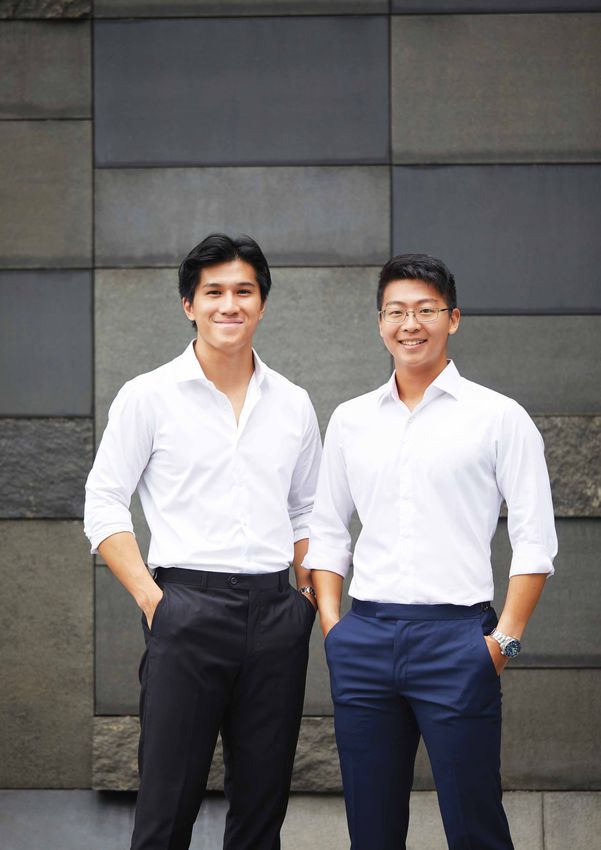
Law Students’ International Relations Committee
The NUS Law Students International Relations Committee (LSIRC) engages
international students through events and activities that introduce our foreign
friends to Singapore and help them integrate into the law school community.
The LSIRC also plans internal school events, such as panel discussions (e.g. Practice
Beyond Borders) and welfare parties. The LSIRC is a local chapter of the Asian Law
Students Association (ALSA) Singapore which organises overseas study trips.

Mooting & Debating Club
The Mooting and Debating Club (MDC) promotes oratorical skills and the passion
for mooting, debating and advocacy among law students.

The MDC is responsible for organising various local mooting competitions, such
as the B.A. Mallal Moots, the Advocacy Cup, the WongPartnership International
Commercial Arbitration Moot and the Gowling WLG IP Moot. It also hosts a series of
informal sessions for members to engage in informal debates and discussions.

The MDC also focuses on nurturing each new generation of mooters through
its robust training and mentorship programme, affording aspiring mooters
personalised coaching for crucial advocacy skills. The MDC’s flagship Young Mooters
Programmes provide students invaluable opportunities to develop further and cut
their teeth (on a not-for-academic-credit basis) at international competitions.

Justified
Justified is a student sub-club that chronicles happenings around the School and
beyond on its website. Besides event coverage, it also covers an array of other
interesting stories, ranging from food reviews and lifestyle articles to creative
pieces written by the students.

                                                  UNDERGRADUATE PROGRAMMES 2021 | 7
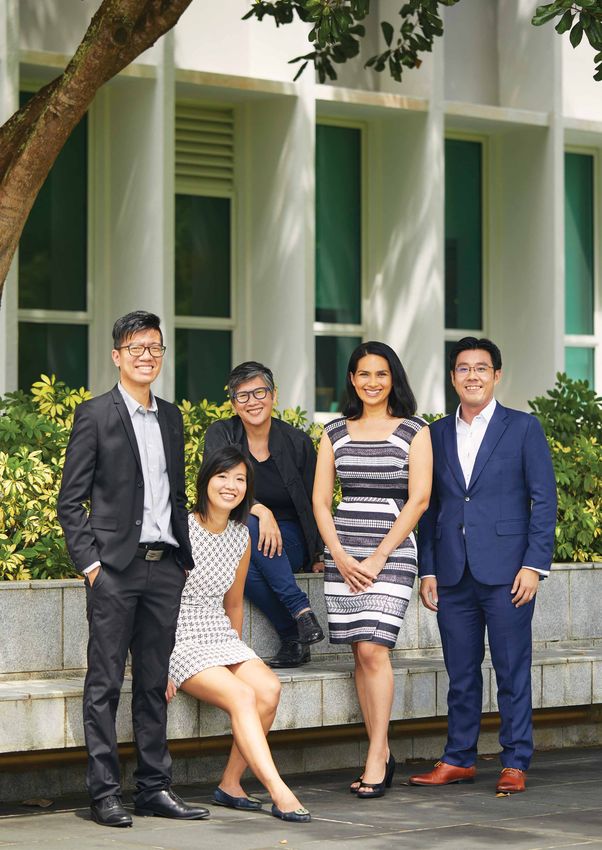
The team at the Centre for Pro Bono &
Clinical Legal Education (CPBCLE)

(From left)
Benny Tan, Deputy Director
Ang Si Yi, Centre Fellow
Eleanor Wong, Director
Sonita Jeyapathy , Deputy Director
Mervyn Cheong, Centre Fellow
Interest Groups

                  alt+Law
                  alt+Law is a student-led legal technology interest group. The group, with
                  sponsorship from WongPartnership, organised Singapore’s first Legal Tech
                  Competition in 2018, which was open to all NUS students. In 2019, it held a round-
                  table session to discuss the future of legal education in NUS Law. alt+Law is also a
                  founding member of the Asia-Pacific Legal Innovation and Technology Association.

                  Intellectual Property Students’ Association
                  Founded in 2016, the Intellectual Property Students’ Association (IPSA) is dedicated
                  to various aspects of intellectual property (IP) law and IP-related issues with an
                  interest in (1) Arts, Design & Media, (2) Privacy & Information Technology, and (3)
                  Start-ups & Enterprise. Members interact with start-ups and schools, attend IP and
                  technology conferences, and contribute frequently to the legislative process by
                  tendering written submissions for IP-related Bills in the Singapore Parliament.

                  Collaborative Dispute Resolution Club
                  The Collaborative Dispute Resolution Club (CDRC) aims to promote alternative
                  dispute resolution methods. In 2019, the group hosted Singapore’s first local
                  (Mediation Advocacy Competition) and international (International Mediation
                  Singapore Competition) mediation competitions. The latter preceded the
                  Singapore Convention on Mediation, which involved 46 countries.

                  Environmental Law Students Association
                  Environmental Law Students Association (ELSA) is a student-led interest group
                  affiliated to the Asia-Pacific Centre for Environmental Law (APCEL). Founded in
                  2016, it provides a platform to raise awareness of environmental law and policy in
                  the law school community.

                  Law IV
                  Law IV is an NUS Law tradition that started more than 30 years ago, where the
                  graduating class will write, direct and stage a full dramatic piece, usually a musical.
                  Proceeds from the production would be donated to a nominated charity.

                                                                     UNDERGRADUATE PROGRAMMES 2021 | 9
“The legal-tech sector is an exciting space that enables me to apply my legal education and express my deep-rooted passions in business, innovation, and challenging the status quo. The support from the NUS Law community also unlocks a myriad of collaborative opportunities to facilitate greater access to justice through technology.” Zane Chong Class of 2022 President of alt+Law Head of Secretariat, Asia-Pacific Legal Innovation & Technology Association (ALITA) National Athlete, Singapore Track & Field team
International Competitions and Moots
One of the most intense and valuable educational experiences a student can have at the Faculty is to represent NUS in an
international competition. NUS Law has an unparalleled track record in international mooting competitions.

Major International Competitions                                     BlackOak Transactional Competition
                                                                     •   Champion (2017, 2019, 2020)
Philip C. Jessup International Law Moot Court Competition            •   Best Oralist (2017)
This competition attracts more than 500 law schools from
over 80 countries. Many former Jessup mooters from NUS now           Copenhagen Competition on the Protocol on
occupy the upper echelons of the legal fraternity in Singapore       Climate Change
in both the public and private sectors.                              •   Champion (2009)
•   Champion (1982, 1985, 1994, 2001)                                Frankfurt Investment Arbitration Moot
•   12-time finalist
                                                                     •   Champion (2018)
•   Multiple memorial and oralist awards
                                                                     •   Gary Born Award
Willem C. Vis International Commercial Arbitration Moot
                                                                     Foreign Direct Investment International Arbitration Moot
Widely considered as the most prestigious private international
law moot worldwide, more than 300 law schools participate in
                                                                     •   Grand Champion (2018)
this competition each year.
                                                                     •   Best Oral Team (2018)
                                                                     •   Best Memorial (2018)
•   First Asian school champion (2002)
•   Best Respondent Memorial (2013)                                  Herbert Smith Freehills Competition Law Moot
•   Best Oralist (2015)                                              •   Champion (2015)
Other Competitions                                                   Intercollegiate Negotiation Competition (“Sophia Moot”)
ADC-ICC Asia-Pacific Commercial Mediation Competition                •   Champion (2015, 2020)
•   Champion (2009, 2020)
                                                                     •   Best Team in the Negotiation Category (2020)
•   Best Interaction with Mediator award (2020)                      Intercollegiate Negotiation Competition, Chartered
                                                                     Institute of Arbitrators (CIArb) Japan Chapter Award
ADR-ODR International Ad Hoc Negotiation Competition
(Dubai)                                                              •   Champion (2016, 2017)
•   Gold Award (2019)                                                International Air and Space Law Academy (IASLA) Space
•   Best Negotiation Phrase/Strategy Award (2019)                    Law Moot Court Competition
ADR-ODR International Online International                           •   Champion (2015, 2016)
Mediation Competition                                                •   Asia Pacific Regional Champion (2017, 2018, 2019)
                                                                     •   Best Memorial (2015)
•   Champion (Negotiation Category) (2020)                           •   Best Oralist Award (2015)
Allen & Overy Private Law Moot Competition                           International Criminal Court Moot
•   Champion (2017)                                                  •   Best Oralist (2020)
•   Best Oralist Award (2017)                                        •   Best Government Team (2020)
ALSA International Moot Court Competition                            •   Best Prosecution Team (2020)
                                                                     •   Best Defence Team (2020)
•   Overall Champions (2018)
                                                                     •   Team with the Highest Average Scores (2020)
•   Champion (2019)
•   Best Oralist (2019)                                              International Maritime Law Arbitration Moot

Asia-Pacific Commercial Mediation Competition                        •   Champion (2001, 2002, 2010, 2015, 2017)
•   Champion (2017, 2020)                                            International Negotiation Competition
Asia Cup Moot Court Competition                                      •   Champion (2011, 2012)
•   Champion (2016, 2017, 2018)                                      International Trademark Association (INTA) Asia-Pacific
•   Best Memorial (2016)                                             Moot Court Competition
•   Best Oralist (2016, 2018)
                                                                     •   Champion (2018)
•   Best Overall Team (2016)
                                                                     •   1st place Brief (2020)
                                                                                                  UNDERGRADUATE PROGRAMMES 2021 | 11
Lex Infinitum 2020 Philip C. Jessup International Law Moot Court Competition
IV NLS Negotiation, Mediation and Client Consulting Online Dispute Resolution Competition 2.0
Competition • Champion (2020)
• Champion (2018) • Best Opening Statement (2020)
• Top Negotiating Team in the Preliminary Rounds (2020)
Jean-Pictet Competition
Oxford International Intellectual
• Champion (2015, 2020)
Property Moot Competition
Leiden Sarin International Air Law Moot Court Competition • Champion (2006, 2008)
• Champion (2017, 2019) • Best Written Submissions (2007, 2016, 2017)
• Best Oralist (2019)
• Best Oral Argument – Applicant (2019) Price Media Law Moot Court Competition
• Best Oral Argument – Respondent (2019) • Asia Pacific Champion (2019)
Lex Infinitum Red Cross International Humanitarian Law
• Champion (2017, 2019) Moot Competition
• Best Negotiating Pair (2019) • Champion (2004, 2008)
• Champion (Negotiation Category) (2020)
• Champion (Mediator Category) (2020) Regional International Humanitarian
• Best Mediator from an International Team (2020) Law Role-Play Competition
• Champion (2018)
Manfred Lachs Space Law Moot Court Competition
• Best Memorial (2019)
• Regional Champion (2000, 2005, 2010, 2011)
• World Finals Champion (2001) Stetsons International Environmental Moot Court
Competition
NLIU-Justice R.K. Tankha Memorial International
• Southeast Asia Champion (2019)
Arbitration Moot
• Regional Champions (2020)
• Best International Team (2020)
Tun Suffian International Human
Nuremberg Moot Court Competition Rights Moot Court Competition
• Champion (2016, 2019) • Champion (2017, 2019)
• Best Speaker (2016, 2019) • Best Oralist (2019)
Jean-Pictet Competition 2020 B.A. Mallal Moot Competition 2020
12 | UNDERGRADUATE PROGRAMMES 2021Undergraduate Programmes
Whether you pursue a four-year Bachelor of Laws (LLB) degree or any of our Double or Concurrent Degree programmes, you will be
assured of a quality legal education at NUS Law.
Bachelor of Laws (Honours) Degree (LLB) (Four Years)
Most of our LLB students enter NUS Law after completing their pre-university studies and read the four-year LLB degree.
Successful completion of the LLB programme leads to the award of the following classes of degrees: First Class Honours, Second
Class Honours (Upper Division and Lower Division), and Third Class Honours.
The LLB degree is recognised for admission to practise in Singapore*. Our graduates have also been admitted to practise in Malaysia,
in several Commonwealth jurisdictions such as Australia, Canada and the United Kingdom, and some states in the USA such as
California and New York.
*Visit the Singapore Institute of Legal Education website sile.edu.sg for the requirements to become a Qualified Person.
UNDERGRADUATE PROGRAMMES 2021 | 13Curriculum
The LLB degree is an honours degree. Students in the four-year LLB programme must complete a minimum total of 160 credits in
four years.
Curriculum-wise, around half of the required subjects in the LLB programme are compulsory common law courses that are critical for
legal practice.
Year One Year Two Year Three/Four
All students must take the same compulsory core law modules With most compulsory modules completed by Year Two, there is
during the first two years of their studies. flexibility for you to craft your own menu of elective modules in
Years Three and Four. You can select electives in the areas
listed below.
• Criminal Law • Company Law • Asian Legal Studies
• Introduction to Legal Theory • Constitutional & • Civil Law (Compulsory)
• Law of Contract Administrative Law • Corporate & Financial Services Law
• Law of Torts • Corporate Deals or Trial • Intellectual Property & Technology Law
• Legal Analysis, Research & Advocacy • International & Comparative Law
Communication • Equity & Trusts • International Arbitration & Dispute Resolution
• Singapore Law in Context • Legal Systems of Asia • Law & Society
• Principles of Property Law • Maritime Law
• Pro Bono Service • Private Law
• Research
• Skills
All students must also take one compulsory module, Evidence,
in their third or fourth year.
Visiting Professors
Every year, NUS Law hosts over two dozen visiting professors. They come from some of the top universities in the world including
Harvard, Yale, Oxford, Cambridge, the LSE, Melbourne and Hong Kong University among many others.
Our international visiting faculty conduct classes on their area of expertise during their time with us and they add to the
cosmopolitan nature of our law school by bringing their own unique perspectives to the legal education offered by NUS Law.
Non-Law Minor
NUS Law students also benefit from being enrolled in Singapore’s only fully comprehensive university, one that offers truly diverse
subjects ranging from aquatics to theatre studies, nano-science to e-finance, across our 17 faculties and schools. Our Law students
not only read the occasional non-Law module; some students choose to specialise in a targeted non-Law Minor. Minors like Business
Analytics, Communications & New Media, Economics, and Management perfectly complement Law and ready our graduates for a
future in which law is not practised in isolation and law graduates may not only practise law.
To declare a Minor, the student must take a specified minimum number of credits in the minor discipline. A Minor is completed within
the LLB candidature. Currently, students can choose from over 60 minors offered by our Business School, and our Faculties of Arts &
Social Sciences, Science, and Engineering, just to name a few.
14 | UNDERGRADUATE PROGRAMMES 2021“In addition to a world-class compulsory core curriculum,
NUS Law offers over 100 elective subjects each year
in fields as diverse as aviation law, entertainment
law, international commercial arbitration, mergers &
acquisitions and human rights in Asia.”
Professor David Tan
Vice Dean (Academic Affairs)
Head (Intellectual Property), EW Barker Centre for Law & Business
Deputy Director, Centre for Technology, Robotics, Artificial Intelligence & the LawElective Law Modules
One formidable strength of NUS Law is the broad and diverse range of elective modules that we offer. Students choose modules from
many clusters including Asian Legal Studies, Civil Law, Corporate & Financial Services Law, Intellectual Property & Technology Law,
International & Comparative Law, International Arbitration & Dispute Resolution, Law & Society, Maritime Law, Private Law, Research,
and Skills.
While the modules range from the theoretical to the practical, the overriding objective is to provide students with a liberal education
through the medium that will allow them to maximise their potential to the fullest degree.
Accordingly, many of the modules integrate relevant cross-disciplinary and policy perspectives to give students a deep and rich
understanding of how the law operates within society and the factors that influence the development and application of the law.
(The elective modules offered in any given year are subject to change.)
Asian Legal Studies
Arbitration and Dispute Resolution in China Future of Int’l Commercial Arbitration in APAC Region
ASEAN Economic Community Law and Policy Human Rights in Asia
ASEAN Law and Policy Indian Business Law
Asian Legal Studies Colloquium Indonesian Law
China and International Economic Law International & Comparative Law of Sale in Asia
China, India and International Law International Arbitration in Asian Centres
Chinese Banking Law International Law and Asia
Chinese Commercial Law Islamic Law
Chinese Contract Law Japanese Corporate Law and Governance
Chinese Corporate and Securities Law Law and Democracy in East Asia
Chinese Intellectual Property Law Law and Society in Southeast Asia
Chinese Legal Tradition & Legal Chinese Law of the Sea: Theory and Practice
Climate Change Law Law, Economics, Development and Geography
Climate Change Law and Policy in Asia Law, Governance & Development in Asia
Comparative Civil Law: Thai Contract Law Law, Institutions and Business in Greater China
Comparative Constitutional Law Ocean Law & Policy in Asia
Comparative Corporate Law in Asia Regulation and Geography
Comparative Corporate Law in East Asia Strategies for Asian Disputes - A Comparative Analysis
Comparative State and Religion in Southeast Asia The Practical Realities of Dispute Resolution in Asia
Constitutionalism in Asia Trade and Investment Law in the Asia-Pacific
Crossing Borders: Law, Migration & Citizenship Traditional Chinese Legal Thought
Civil Law
Arbitration and Dispute Resolution in China Constitutionalism in Asia
China and International Economic Law European Company Law
China, India and International Law EU Maritime Law
Chinese Banking Law Indonesian Law
Chinese Commercial Law Japanese Corporate Law and Governance
Chinese Contract Law Law and Democracy in East Asia
Chinese Corporate and Securities Law Law, Institutions, and Business in Greater China
Chinese Intellectual Property Law Principles of Civil Law: Law of Obligations & Property
Chinese Legal Tradition & Legal Chinese Traditional Chinese Legal Thought
Comparative Civil Law: Thai Contract Law
16 | UNDERGRADUATE PROGRAMMES 2021Corporate & Financial Services Law
Advanced Contract Law International Commodity Trading Law Clinic
Advanced Trusts Law International Contract Law: Principles and Practice
Alternative Investments International Economic Law & Relations
Arbitration of Investment Disputes International Investment Law
ASEAN Economic Community Law and Policy International Investment Law and Arbitration
Bank Documentation International Legal Protection of Investment Flows
Banking Law International Litigation: Themes and Practice
Business & Finance for Lawyers International Projects Law and Practice
Charity Law Today International Regulation of Finance & Investment Markets
China and International Economic Law Japanese Corporate Law and Governance
Chinese Banking Law Law & Economics of Corporate Bankruptcy & Insolvency
Chinese Commercial Law Law of Agency
Chinese Contract Law Law of Insurance
Chinese Corporate and Securities Law Law and Practice of Investment Treaties
Comparative Civil Law: Thai Contract Law Law, Institutions and Business in Greater China
Comparative Corporate Law Liability of Corporate Groups and Networks
Comparative Corporate Law in Asia Maritime Conflict of Laws
Comparative Corporate Law in East Asia Mergers & Acquisitions
Competition Law and Policy Mergers and Acquisitions: A Practitioner’s Perspective
Conflict of Laws in Int’l Commercial Arbitration Monetary Law
Construction Law Multinational Enterprises and International Law
Core Aspects of Private International Law Partnership and Alternative Business Vehicles
Corporate Insolvency Law Personal Property Law
Corporate Tax: Profits & Distributions Principles of Restitution
Credit & Security Regulation & Private Law in Banking & Financial Service
Crime and Companies Restitution of Unjust Enrichment
Cross-Border Litigation Secured Transactions Law
Deals: The Economic Structure of Business Transactions Securities and Capital Markets Regulation
Domestic & International Sale of Goods Singapore Corporate Governance
European Company Law Tax Planning & Policy
European Union Law Taxation Law & the Global Digital Economy
Financial Regulation and Central Banking Taxation Issues in Cross-Border Transactions
Globalisation & International Law Taxation of Cross-Border Commercial Transactions
Government Contracts: Int’l & Comparative Perspectives The Economic Analysis of Law
Government Regulations: Law, Policy & Practice The Regulatory State: Selected Topics
Indian Business Law Topics in Law & Economics
International & Comparative Law of Sale in Asia Trade and Investment Law in the Asia-Pacific
International & Comparative Oil and Gas Law Trade Finance Law
International Commercial Arbitration Wealth Management Law
International Commercial Litigation World Trade Law
Intellectual Property & Technology Law
Advanced Copyright International Intellectual Property Law
Art & Cultural Heritage Law International Patent Law, Policy and Practice
Artificial Intelligence, Information Science & Law International Trademark Law and Policy
Biomedical Law & Ethics IP and Human Rights
Biotechnology Law IT Law I
Chinese Intellectual Property Law IT Law II
Copyright in the Internet Age Law of Intellectual Property
Electronic Evidence Patent Law & Practice: Perspectives from the U.S.
Entertainment Law: Pop Iconography & Celebrity Privacy & Data Protection Law
Fair Use in Theory and Practice Private International Law of IP
Foundations of IP Law Protection Overlaps in IP Law
Global Data Privacy Law Public & Private International Copyright Law
Imitation, Innovation and Intellectual Property Regulation of Digital Platforms
Intellectual Property in Body, Persona & Art Sports Law
Intellectual Property Rights and Competition Policy The Law of Cybersecurity, Privacy and Data Compliance
International Copyright Law and Policy
UNDERGRADUATE PROGRAMMES 2021 | 17International & Comparative Law
Administration of Criminal Justice International Economic Law Clinic
Advanced Issues in the Law & Practice of Int’l Arbitration International Environmental Law & Policy
Advanced Torts International Humanitarian Law
Arbitration and Dispute Resolution in China International Intellectual Property Law
Arbitration of Investment Disputes International Investment Law
ASEAN Economic Community Law and Policy International Investment Law and Arbitration
ASEAN Law and Policy International Investment Law Clinic
Aviation Law & Policy International Law and Asia
Character Evidence in the Common Law World International Law and Development
Charity Law Today International Legal Process
China and International Economic Law International Legal Protection of Investment Flows
China, India and International Law International Litigation: Themes and Practice
Climate Change Law International Organisations in International Law
Climate Change Law and Policy in Asia International Refugee Law
Comparative Civil Law: Thai Contract Law International Regulation of Shipping
Comparative Constitutionalism International Regulation of the Global Commons
Comparative Constitutional Law International Space Law
Comparative Corporate Law IP and Human Rights
Comparative Criminal Law Islamic Law
Comparative Environmental Law Law and Practice of Investment Treaties
Comparative Human Rights Law Law of the Sea: Theory and Practice
Conflict of Laws in Int’l Commercial Arbitration Law, Governance & Development in Asia
Constitutionalism in Asia Maritime Conflict of Laws
Core Aspects of Private International Law Multinational Enterprises and International Law
Cross-Border Litigation Ocean Law & Policy in Asia
Current Problems in International Law Principles of Civil Law: Law of Obligations & Property
Developing States in a Changing World Order Principles of Conflict of Laws
Domestic & International Sale of Goods Public & Private International Copyright Law
European Company Law Public Health Law and Regulation
European Union Law Public International Law
EU Maritime Law State Responsibility: Theory and Practice
Foundations of Environmental Law Singapore at the UN – A Clinical Externship
Freedom of Speech: Critical & Comparative Perspectives The Evolution of International Arbitration
Global Legal Orders: Interdisciplinary Perspectives The Fulfilled Life and the Life of the Law
Globalisation & International Law The Int’l Litigation & Procedure of State Disputes
Government Contracts: Int’l & Comparative Perspectives The Law and Politics of Forced Migration
Human Rights in Asia The Law of Global Governance
Intelligence Law The Trial of Jesus in Western Legal Thought
International & Comparative Law of Sale in Asia Trade and Investment Law in the Asia-Pacific
International & Comparative Oil and Gas Law Trade Finance Law
International Commercial Arbitration Traditional Chinese Legal Thought
International Commercial Litigation Transnational Terrorism and International Law
International Contract Law: Principles and Practice United Nations Law and Practice
International Criminal Law Water Rights & Resources: Issues in Law & Development
International Dispute Settlement World Trade Law
International Economic Law & Relations
International Arbitration & Dispute Resolution
Advanced Issues in the Law & Practice of Int’l Arbitration International Commercial Arbitration
Advanced Practicum in International Arbitration International Contract Law: Principles and Practice
Arbitration and Dispute Resolution in China International Dispute Settlement
Arbitration of Investment Disputes International Investment Law
Comparative Evidence in International Arbitration International Investment Law and Arbitration
Complex Arbitrations: Multiparty - Multicontract International Legal Protection of Investment Flows
Conflict of Laws in Int’l Commercial Arbitration Law and Practice of Investment Treaties
Core Aspects of Private International Law Mediation
Current Challenges to Investment Arbitration Mediation/Conciliation of Inter-& Investor-State Disputes
Energy Arbitration Negotiation
Future of Int’l Commercial Arbitration in APAC Region SIAC and Institutional Arbitration
Government Contracts: Int’l & Comparative Perspectives Strategies for Asian Disputes - A Comparative Analysis
ICC Arbitration The Evolution of International Arbitration
Interim Measures in International Arbitration The Practical Realities of Dispute Resolution in Asia
International Arbitration in Asian Centres World Trade Law
International Arbitration & the New York Convention
18 | UNDERGRADUATE PROGRAMMES 2021“The Minor in Information Systems enables me to complement
my legal education with advanced knowledge in technology
and business through courses involving Programming, Software
Architecture Design, and IT-Enabled Business Innovations. I am
confident that my holistic education will equip me to thrive in a
world where technology is disrupting both law and legal practice.”
Utsav Rakshit
Class of 2021
Young Intellectual Property Mediator at
the Intellectual Property Office of SingaporeLaw & Society
Advanced Criminal Legal Process Harms and Wrongs
Behavioural Economics, Law & Regulation Jurisprudence
Civil Justice and Procedure Law and Religion
Comparative Criminal Law Medical Law and Ethics
Comparative State and Religion in Southeast Asia Regulation & Political Economy
Corporate Social Responsibility Regulatory Foundations of Public Law
Criminal Practice Restitution of Unjust Enrichment
Crossing Borders: Law, Migration & Citizenship The Trial of Jesus in Western Legal Thought
Environmental Law Theoretical Foundations of Criminal Law
Family Law Transnational Terrorism and International Law
Freedom of Speech: Critical & Comparative Perspectives
Maritime Law
Admiralty Law & Practice Law of Marine Insurance
Carriage of Goods by Sea Law of the Sea: Theory and Practice
Charterparties Maritime Conflict of Laws
Domestic & International Sale of Goods Maritime Law
EU Maritime Law Multimodal Transport Law
International & Comparative Oil and Gas Law Ocean Law & Policy in Asia
International Carriage of Passengers by Sea Trade Finance Law
International Regulation of Shipping
Private Law
Advanced Contract Law Domestic & International Sale of Goods
Advanced Torts International Contract Law: Principles and Practice
Carriage of Goods by Sea Law of Insurance
Charterparties Law of Marine Insurance
Comparative Civil Law: Thai Contract Law Principles of Civil Law: Law of Obligations & Property
Corporate Insolvency Law Restitution of Unjust Enrichment
Credit & Security
Research
University Research Opportunities Programme / Directed Research (DR)
Skills
Advanced Criminal Litigation - Forensics on Trial Law in Action: Legal Policymaking Externship
International Commodity Trading Law Clinic Legal Argument & Narrative
International Economic Law Clinic Legal Research: Method & Design
International Investment Law Clinic Mediation
International Legal Process Negotiation
International Moots and Other Competitions Singapore at the UN – A Clinical Externship
Law & Practice - The Law Clinic
20 | UNDERGRADUATE PROGRAMMES 2021Double Degree and Concurrent Degree
Programmes
Double Degree in Economics Yale-NUS BA (Hons) & NUS LLB (Hons)
(BSocSci (Hons)) & Law (LLB (Hons)) Double Degree Programme
The double honours degree in Economics and Law is a The five-year double honours degree programme in Law
five-year programme offered jointly by the Faculty of Arts and Liberal Arts is an innovative programme offered jointly
and Social Sciences and NUS Law. Economics and Law by Yale-NUS College and NUS Law for those seeking a
are, in some areas, complementary disciplines. Singapore broad liberal arts education in addition to their professional
is a regional centre for legal services, and much of our training in the law. The programme will provide an
international legal work involves commercial, corporate and interdisciplinary legal education in a residential, liberal arts
financial law. This means there is-and will continue to be-a setting. The academic breadth and depth offered best suits
demand for lawyers with a strong background in Economics, intellectually curious students who are interested in both
as well as for economists trained in law. Likely future the fundamental legal underpinnings of society, and the big
employers include law firms, large commercial banks, and ideas that have shaped legal thoughts.
institutions such as the Monetary Authority of Singapore and
the Competition Commission of Singapore.
Double Degree in Business Concurrent Degree in Law (LLB (Hons))
Administration (BBA (Hons)) & Law & Master in Public Policy (MPP)
(LLB (Hons))
The concurrent degree programme in Law and Public Policy
offers law students, particularly those interested in a career
The double honours degree in Business Administration and
in the legal, civil, or foreign service, the opportunity to
Law is a five-year programme offered jointly by the Business
complete in four-and-a-half years, two degrees that normally
School and NUS Law. The programme is established in line
take six years to complete if pursued separately. The Lee
with NUS’ aim of attracting the best students from Singapore
Kuan Yew School of Public Policy helps its students to
and around the world, keen on having a quality education
understand the complex issues that challenge policymakers
and leveraging on interdisciplinary opportunities in a
daily and offers a strong curriculum anchored firmly within
university ranked amongst the world’s best.
an Asian context. NUS Law on the other hand, offers rigorous
training in public law, international law, and governance,
and has a long history of placing its graduates in leading
positions within the government and public service.
“I look forward to coming to NUS each year. The student body
is wonderfully cosmopolitan. I’m glad that
many students have kept in touch over the years
and some have even visited me in Oxford.”
Professor Mindy Chen-Wishart
Dean
Law Faculty, Oxford University
UNDERGRADUATE PROGRAMMES 2021 | 21Special Programmes Law-University Scholars Programme (USP) The USP is an interdisciplinary academic programme for NUS undergraduates housed within the USP residential college. The NUS Law-USP partnership seeks to add a deeper dimension to the classroom and curricular experiences to further enhance intellectual inquiry beyond the disciplinary boundaries. Students who study in USP and NUS Law will follow a curriculum that combines the rigorous aspects of both the USP and the LLB curriculum. Students of the NUS Law-USP can also look forward to an enhanced and informal learning opportunity through residential living. Law-Ridge View Residential College Programme (RVRC) The RVRC Programme is a two-year residency which takes an integrated inter-disciplinary approach, designed to cultivate students’ holistic development to help them prepare for, and embrace life in the university and the work environment after graduation. The key to the unique RVRC integrated curriculum is the value of interconnectivity between knowledge building and the role of interaction and conversations within the learning community. At RVRC, co-academic activities are well integrated and interconnected to become the catalyst for strategic learning outcomes beyond the classroom. Law-University Town College Programme (UTCP) The UTCP is a multidisciplinary academic programme offered in the College of Alice & Peter Tan, Residential College 4 and Tembusu College at University Town. This unique programme offers students an opportunity to read prescribed electives outside their majors and pursue other subjects of interest while living and learning with the College community. Through this programme, students will develop strategies for clear and impactful writing skills, to chisel their inquiry and critical reasoning skills. It also grooms them to be able to clearly articulate their ideas on issues that are of global and Asian concern. 22 | UNDERGRADUATE PROGRAMMES 2021
Exchange Plus Programme
Exchange Plus programmes are available to students on the four-year LLB programme. Under these arrangements, students will
complete three years at NUS and then go to one of the partner universities listed below to read an LLM for one year. Upon successful
completion of the LLM, NUS Law students will graduate with an LLB (Hons) from NUS and an LLM from the partner university.

           New York University                            Boston University                         Erasmus University

          King’s College London                       University of Melbourne                      University of Toronto

                                                                     “
                                                                         The NUS-King’s College London LLB-LLM Exchange Plus
                                                                         Programme was a fantastic experience. For one, King’s
                                                                         offers some unique modules focusing on cutting-edge
                                                                         technologies like blockchain and artificial intelligences.
                                                                         Being in the heat of legal London, the faculty line-up also
                                                                         includes luminaries like former High Court judges, leading
                                                                                                                             “
                                                                         Queen’s Counsel and arbitrators. The sheer diversity of
                                                                         the student population also made for lively and pointed
                                                                         discussions in class. I’m immensely grateful to have
                                                                         benefited from this tie-up between NUS and King’s.

                                                                         Jonathan Tan Ming En
                                                                         Class of 2020
                                                                         King’s College London

“
    The day I finished my exams, I walked Central Park from
    end to end. Spring was cool and the sun, a phosphorous
    yolk in the sky. I had no serious meditations and could not
    pretend to either. In a city like New York, absent-minded
    ambles are luxurious. You’re reading this in a brochure right
    now, no doubt baffled about how any of this is relevant.
    It is. You dont need me to recite a full academic catalogue
    (easily available on the website) or to name-drop academic
    celebrities. You don’t need to hear pitches on academic
    rigour and opportunities. What’s already been promised to
    you is true and more. My best pitch is to convey a taste of
    the city’s lessons - the astonishing demand and value of
                                                      “
    both rudeness and courtesy, the steeled jaw in the face of
    curb side crudeness and the constant negotiation with your
    senses. Is this romantic? Hardly - but certainly compelling.
    Need proof? Why don’t you find out for yourself?

    Kim Bumsoo
    Class of 2019
    New York University

                                                                     “
                                                                         My time at NYU under the NUS-NYU programme was
                                                                         nothing short of amazing. I had the opportunity to learn
                                                                         from some of the world’s leading professors, and to interact
                                                                                     “
                                                                         with lawyers and legal scholars from various jurisdictions.
                                                                         This, coupled with living in one of the most exciting cities
                                                                         in the world, made the LLM at NYU an unforgettable
                                                                         experience.

                                                                         Sim Hong
                                                                         Class of 2019
                                                                         New York University

                                                                                                 UNDERGRADUATE PROGRAMMES 2021 | 23
Global Student Exchange Partnerships
53
THE AMERICAS
CANADA
Dalhousie University
McGill University
Osgoode Hall Law School of York University
Queen’s University at Kingston
University of British Columbia
University of Toronto
University of Victoria
Western University
USA
Boston University
Duke University
Georgetown University
New York University
Northwestern University
Stanford Law School
The University of Texas at Austin
University of Illinois @ Urbana Champaign
Washington University, St. Louis
24 | UNDERGRADUATE PROGRAMMES 2021EUROPE
BELGIUM ITALY UK
Katholieke Universiteit Leuven Bocconi University Center for Transnat’l Legal Studies
Durham University
DENMARK SPAIN King’s College London
University of Copenhagen IE Law School Newcastle University
Queen Mary University of London
University of Bristol
GERMANY SWEDEN University College London
Bucerius Law School Stockholm University
University of Manchester
University of Nottingham
IRELAND THE NETHERLANDS
Trinity College Dublin Erasmus University Rotterdam
University College Dublin Tilburg University
ASIA-PACIFIC
AUSTRALIA
University of Melbourne
University of Queensland
University of Sydney
PEOPLE’S REPUBLIC OF CHINA
China University of Political Science and Law
East China University of Political Science & Law
Fudan University
Peking University
Renmin University of China
Tsinghua University
HONG KONG SAR
University of Hong Kong
INDIA
National Law School of India University
INDONESIA
Universitas Indonesia
JAPAN
Kyushu University
NEW ZEALAND
MIDDLE EAST University of Auckland
Victoria University of Wellington
ISRAEL VIETNAM
Hebrew University of Jerusalem Hanoi Law University
UNDERGRADUATE PROGRAMMES 2021 | 25Explore the World
The Student Exchange Programme offers an excellent opportunity to study the laws of a foreign legal system up close. Exchange
students experience different cultures and lifestyles, make new acquaintances, and of course, travel. The Programme enables NUS
Law students to spend either one or both semesters of their third year in one of our partner law schools.
Students in the concurrent degree programme may spend one semester of their third year and students in the double degree
programme may spend one semester of their fourth year in one of our partner universities. NUS Law also hosts incoming exchange
students from our partner universities, adding to the vibrancy of the Law School.
“
My exchange experience was so much more than I
anticipated. I ticked off things on my bucket list such as
bungee jumping and sky diving, solo travelled and became
fast friends with people from all over the world. Meeting
people from all walks of life, from different cultures, with
different worldviews, shaped my values and allowed me
“
to grow. My advice: step outside your comfort zone. Do
what scares you. Be open to new experiences, meeting new
people and different ways of thinking.
Clara Nah
Class of 2021
Victoria University of Wellington
“
Exchange at Washington DC opened up my eyes to
different cultures and perspectives. My classmates were all
postgraduates and older than me, so classes were pretty
intimidating for me at first. DC is also a food paradise -
owing to the population immigrant population, I managed
to taste different cuisines like Salvadoran, Ethiopian,
Mexican, Afghani etc. Nonetheless, my favourite memory
“
is driving 3 hours every weekend to the east coast at
Assateague Island to camp and surf with other
local surfers!
Cheng Wai Yee
Class of 2021
Georgetown University
26 | UNDERGRADUATE PROGRAMMES 2021From Polytechnic to NUS Law
Charis Sim
Class of 2022 (Formerly from Temasek Polytechnic)
Bryan Lim
Class of 2022 (Formerly from Ngee Ann Polytechnic)
Jolene Aberlade
Class of 2023 (Formerly from Ngee Ann Polytechnic)Admissions
Each year, around 240 students enter the LLB programme at NUS Law. Although most of the LLB students are Singaporeans,
the programme is also open to international students.
For more information, please visit the NUS Law website at law.nus.edu.sg/admissions
Four-Year LLB Programme
Local Qualifications
Qualifications Requirements
• Good overall ‘A’ level results and
• At least B grade in H1 General Paper (GP), or a good pass in H2 Knowledge & Inquiry (KI); or a minimum SAT
Critical Reading / Evidence-Based Reading and Writing score of 700 accompanied by a minimum E grade for
Singapore- GP/KI.
Cambridge ‘A’ level
Note: An improved GP grade of B or better or a good pass in KI from another sitting can qualify one for application
to Law, but only the GP or KI grade obtained in the same sitting as the other main ‘A’ level content papers can be
used for computation of the admission score.
• Good IB results, including at least grade 5 for:
- SL/HL English A: Language and Literature;
- SL/HL English A: Literature;
- SL/HL English B; or
International - SL Literature & Performance
Baccalaureate (IB)
Notes: A minimum SAT Critical Reading / Evidence-Based Reading and Writing Score of 700 accompanied by a
minimum grade 4 for SL English or SL Literature & Performance can also qualify one for application to Law.
Those completing IB in the year of admission to NUS may apply based on their projected results.
• Excellent polytechnic results
Diplomas from
• At least A2 grade in English Language at ‘O’ level and preferably a Certificate of Merit (COM) from the
Local Polytechnics
polytechnic studies
NUS High School • At least B+ grade for English modules EL5101 AND EL6103 or a minimum SAT Critical Reading / Evidence-
Diploma Based Reading and Writing score of 700, with at least C grade for English modules EL5101 AND EL6103.
International Qualifications
Detailed admissions requirements for those presenting international qualifications (including Singaporeans / Singapore PRs) are
available at the NUS Office of Admissions website: www.nus.edu.sg/oam/apply-to-nus
Those who possess equivalent high school qualifications, which are in the non-English medium are required to submit proof
of their proficiency in the English language, for example, a minimum TOEFL score of 600 (paper-based) or 100 (internet-based)
or IELTS score of 7.0. International applicants presenting the International Baccalaureate (IB) are required to meet the stated
admissions requirements.
28 | UNDERGRADUATE PROGRAMMES 2021Double Degree Programmes
For Double Degree programmes, applicants must meet the admission requirements of both NUS Law and NUS Business School,
Faculty of Arts and Social Sciences, or Faculty of Science.
Application Procedures
The NUS Office of Admissions (OAM) administers all applications for undergraduate programmes. Different application deadlines and
procedures apply to different categories and high school qualifications. For more information, please visit nus.edu.sg/oam/. Under
“Apply To NUS”, please select the relevant category to file your application.
Shortlisting and Selection
To be considered for shortlisting for the written test and interview, applicants should indicate Law as the first or second choice under
the choice of courses. If you are interested in the Double Degree Programmes or Concurrent Degree Programme, you should opt for
these in the same application form.
Written Test and Interview
Shortlisted applicants will be required to sit for a written test and attend a formal interview, usually held in mid-April.
Tuition Fees
The cohort-based fee system has been implemented since Academic Year (AY) 2008/2009. Under this system, tuition fees for the new
undergraduate intake cohort of students will be fixed throughout the student’s entire candidature. This enables students to better
plan the financing of their undergraduate studies.
The table below reflects the applicable fees (per annum amounts) for the Undergraduate Intake Cohort of AY2020/2021:
Subsidised Fees Singapore Dollars (S$)
Singapore Citizens S$12,650
Singapore Permanent Residents S$17,700
International Students S$27,050
Details of tuition fees for AY2021/2022 will be published at the Registrar’s Office website at www.nus.edu.sg/
registrar/administrative-policies-procedures/undergraduate/undergraduate-fees
UNDERGRADUATE PROGRAMMES 2021 | 29Scholarships, Bursaries, Grants and Prizes
Scholarships, Bursaries & Grants Faculty Awards
NUS offers a variety of scholarships in recognition of The Faculty also has a number of medals and prizes that are
outstanding academic achievements, leadership qualities and awarded to students who have achieved outstanding academic
special talents. We are also committed to a needs-blind merit- performance. Prizes for the top students in the respective LLB
based admission policy that ensures no deserving student is cohorts and numerous subject prizes are awarded after the
denied a university education because of financial difficulty. semester two examinations.
Faculty-Level Donated Scholarships
Allen & Gledhill Scholarship Kwa Geok Choo Graduate Scholarship
Ashurst ADTLaw Scholarship Lee Seng Tee Scholarship
Bala Reddy Scholarship in Law Lo Hwei Yen Memorial Scholarship
Chandra Mohan K Nair Scholarship Nesadevi Sandrasegara Scholarship
Class of 1986 Scholarship NUS Law Scholarship
Ella Cheong Intellectual Property Scholarship NUS Law UVic Exchange Scholarship
Ella Cheong LLM (Intellectual Property & Technology Law) Scholarship Singapore Academy of Law Undergraduate Scholarship
HL Wee Scholarship Wee Chong Jin Scholarship in Law
KK Menon Scholarship
Faculty-Level Donated Bursaries
Allen & Gledhill Bursary Faculty of Law Bursary
Betty Wu Lee Bursary Helen Yeo Bursary
Chew Gek Khim Bursary John & Lydia Ewing-Chow Bursary
Class of 1982 Bursary Justice, Mercy, Humility Bursary
Class of 1983 Bursary Kwa Geok Choo Bursary
Class of 1985 Bursary Mr & Mrs Ang Yian Leng Bursary
Class of 1987 Bursary Nesadevi Sandrasegara Bursary
Class of 1989 Bursary NUS Law Canada Exchange Bursary
Class of 1992 Bursary NUS Law Student Bursary
Class of 1993 Bursary Saw Swee Hock Bursary
Class of 2008 Bursary Tan Han Boon Bursary
Ella Cheong Bursary Tommy Koh Bursary
EW Barker Bursary Woon Eng Chwee Memorial Bursary
NUS-Level Donated Scholarships
CJ Koh Scholarship Shook Lin & Bok Scholarship
Dentons Rodyk Scholarship
30 | UNDERGRADUATE PROGRAMMES 2021You can also read


