Housing Master Plan 2020 - UNIVERSITY OF NEBRASKA OMAHA - November 2014
←
→
Page content transcription
If your browser does not render page correctly, please read the page content below

UNIVERSITY OF NEBRASKA OMAHA

Housing Master Plan
       2020
          November 2014

              Prepared by:
     Hastings+Chivetta Architects, Inc.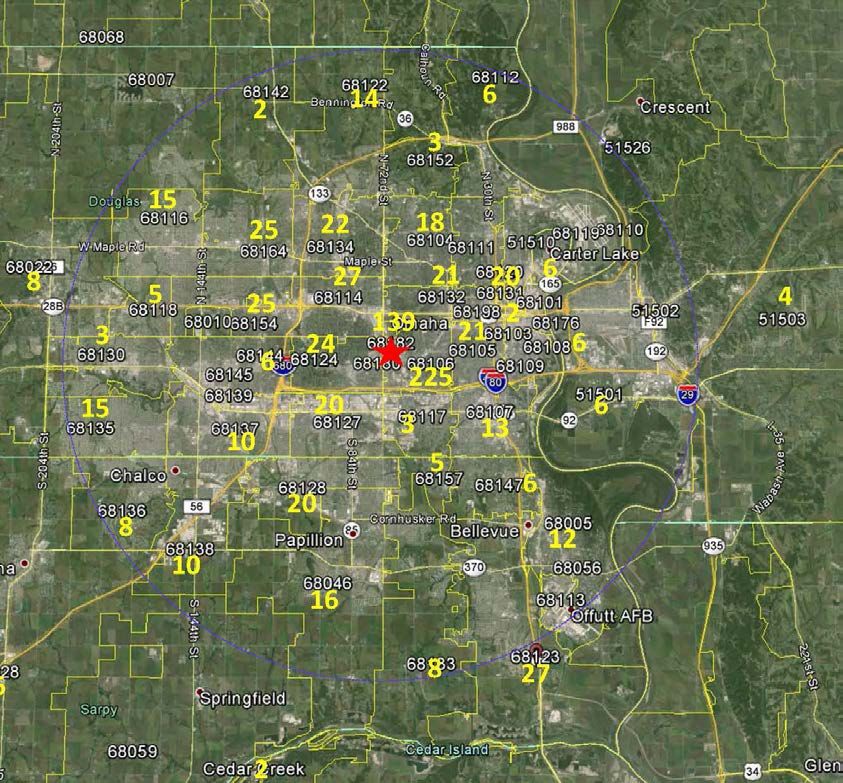
University of Nebraska at Omaha - Housing Master Plan 2014

                                                                                Preface
                        Acknowledgement
                                   ----
   Hastings+Chivetta Architects would like to express their gratitude
   to all campus stakeholders for their participation during the master
   planning process, especially the Steering Committee members,
   named below, who provided the leadership and guidance necessary
   for decision making.
                                  -----

            Dan Shipp, Associate Vice Chancellor for Student Affairs
    Bill Pickett, Director of University Housing and Student Involvement
       William E. “Bill” Conley, Vice Chancellor for Business & Finance
         John Amend, Director of Facilities Management & Planning
George Killian, Manager of Architectural Engineering, Planning & Construction

                                                                                            PAGE i
University of Nebraska at Omaha - Housing Master Plan 2014

    Preface

PAGE ii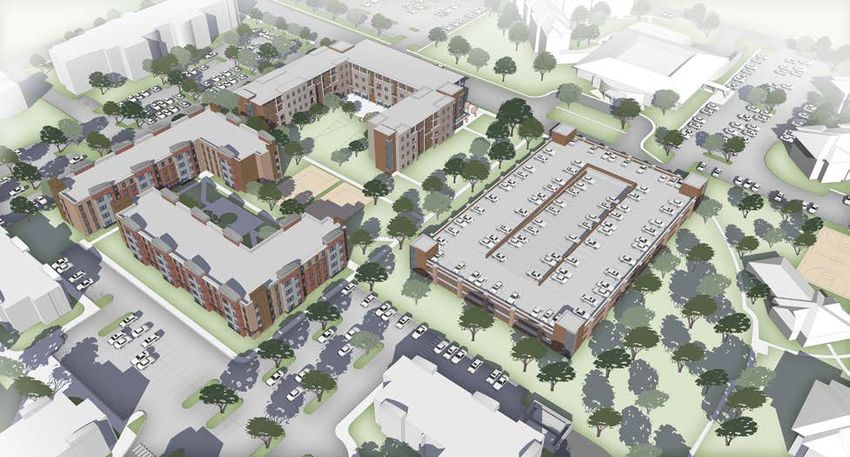
University of Nebraska at Omaha - Housing Master Plan 2014

                                                                                                Preface
                                            Table of Contents
     EXECUTIVE SUMMARY                                                                               page 1-4

I    Background
     A. Campus History                                                                               page 5
     B. Historic Enrollment                                                                          page 7
     C. Population Characteristics & Density                                                         page 8

II   Housing Master Plan Goals
     A. UNO Strategic Plan                                                                           page 9
     B. Campus Macro Environment Changes                                                             page 11

III Existing Conditions
  A. Campus Environment & Living Styles                                                              page 13
  B. On-Campus Housing:
		   i. Type and Quantity                                                                            page 15
		ii. Pricing Strategies                                                                             page 15
		iii. Facilities Assessment                                                                         page 16
  C. Off-Campus Housing:
		i. Type                                                                                            page 26
		ii. Pricing Strategies                                                                             page 27

IV Needs Assessment
     A. Workshop Findings                                                                            page 29
     B. Online Survey                                                                                page 35
     C. Peer Comparisons                                                                             page 45

V    Implementation Plan
     A.   Housing Trends                                                                             page 49
     B.   Marketing and Recruiting Strategy                                                          page 52
     C.   Proposed Housing Master Plan - Dodge Campus (Caniglia Field)                               page 53
     E.   Proposed Housing Master Plan - Pacific Campus                                              page 56

                                                                                                                PAGE iii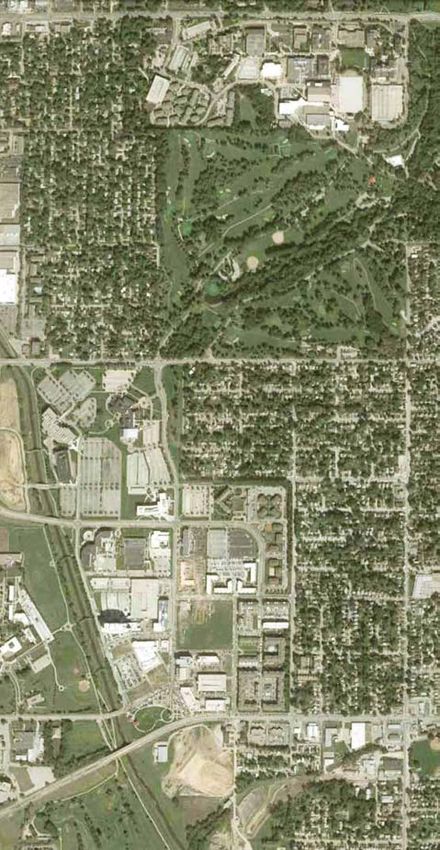
University of Nebraska at Omaha - Housing Master Plan 2014

    Preface
                                          this page intentionally left blank

PAGE iv
University of Nebraska at Omaha - Housing Master Plan 2014

                                                                                Executive Summary
In January 2014 the University of Nebraska at Omaha                  Existing Housing
(UNO) engaged Hastings+Chivetta Architects to perform                UNO’s housing stock totals 2,080 beds in private
a Housing Master Plan (HMP). The HMP builds upon the                 bedrooms. Ninety-two percent (92%) of these beds are
2013 Campus Master Plan which projects housing needs                 located in four-bedroom apartments with a full kitchen
relative to enrollment growth and University residency               and living room. The remaining beds (164) are located
goals. Based on a goal of twenty percent (20%) residency             in suite-style units in Scott Residence Hall. The suite-
and overall enrollment growth to 20,000, the Master                  style units have four private bedrooms, a living room
Plan recommends a phasing strategy that requires 392                 and kitchenette. Full kitchens are not required in Scott
new beds in zero to seven years and 2,237 new beds in                Residence Hall as all students participate in a full meal
sixteen or more years (Chart 1).                                     plan served in the building’s dining hall.

Chart 1                                                              Currently UNO does not have designated housing for
             2013      0-7 years   8-15 years   16+ years   TOTALS   Greek, honors, internationals, wellness, athletics or
New Beds                  392         463         1382       2,237   other living and learning communities. UNO creates
Total Beds   2,080       2,472       2,935        4,317      4,317
                                                                     communities by group apartment assignments. The
Although the 2013 Master Plan projects housing needs                 strategy of creating communities through contiguous
at defined intervals, it does not provide guidance on                room assignments is utilized by many of UNO’s peers,
types of housing. Thus, the key objectives of the 2014               however, at most peer campuses living communities
Housing Master Plan are:                                             are housed within a single residence hall, not through
                                                                     the assignment of adjacent apartments. In addition,
1.   Perform a housing inventory (type and popularity)               peer residential halls include shared community space
2.   Analyze off- and on-campus housing demand                       such as lounges, meeting rooms and study rooms. With
3.   Evaluate current room assignment procedures for                 the exception of Scott Residence Hall for engineering
     on-campus housing                                               students, the majority of UNO apartment buildings
4.   Provide recommendations that may be required                    provide limited interior gathering space.
     to bring UNO into conformance with best practice
     standards, current trends and peer parity                       Enrollment & Residential Population
                                                                     In the 2013 Common Data Set (CDS), UNO reported that
The HMP process included interactive stakeholder                     forty-six percent (46%) of freshman and fourteen percent
workshops, an online survey of student housing                       (14%) of undergraduates live on-campus. The averages
preferences and the compilation of benchmark data                    at Metropolitan Peers are forty-eight percent (48%)
from the ten Metropolitan Universities and two Nebraska              and sixteen percent (16%) respectively; the averages at
Universities listed below.                                           Nebraska System Peers are seventy-five percent (75%)
                                                                     and thirty-five percent (35%) respectively (see page 46).
                     METROPOLITAN PEERS (10)
 • Northern Illinois University • U of Missouri St. Louis            Based on UNO Fall 2013 enrollment data, a twenty
 • Wichita State University         • U of Colorado at Denver        percent (20%) resident population would require 2,908
 • U of Texas at San Antonio        • U of Arkansas Little Rock      beds after adjusting for online enrollment. The five-
 • U of Northern Iowa               • Portland State University      year median for online enrollment is four and eight-
 • U of NC – Charlotte              • Cleveland State University     tenths percent (4.8%) resulting in an adjustment of total
                        NEBRASKA SYSTEM                              enrollment from 15,227 total enrollment to 14,543.
 • U of Nebraska at Kearney         • U of Nebraska at Lincoln

                                                                                                                           PAGE 1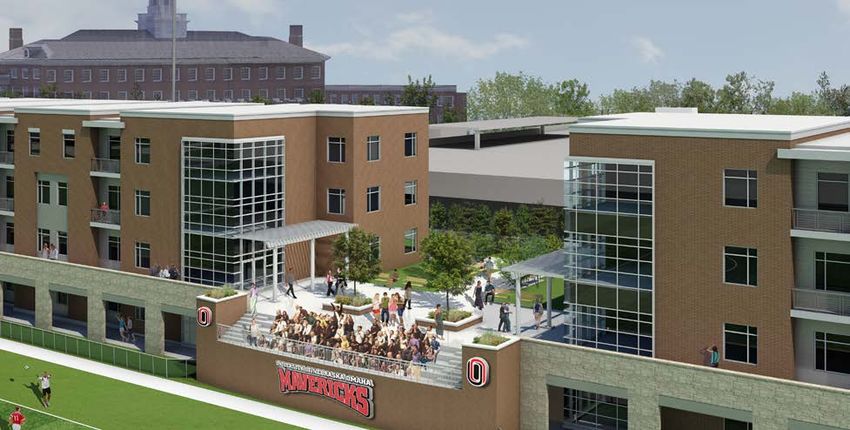
University of Nebraska at Omaha - Housing Master Plan 2014

   Executive Summary
   Housing Demands                                               Currently UNO does not have traditional housing, which,
   Nine-hundred and sixty (960) UNO students participated        for the purpose of this report, refers to semi-private or
   in an online survey about housing preference. The survey      double rooms. Double rooms are considered to be more
   reveals that a large majority of on-campus participants       affordable, and more appropriate for freshman and
   rate housing as excellent to good. The number of              some living communities. During workshops, students
   respondents citing this level of satisfaction ranged          noted that apartment dwelling causes siloing, especially
   from seventy-two percent (72%) at University Village to       among freshman. Stakeholder participants unanimously
   eighty-nine percent (89%) at Scott Court. All participants,   agreed that UNO requires a greater diversity of housing
   both on- and off-campus, cited total cost as the number       options.
   one factor for selecting a college. Off-campus students
   indicated a lower cost of living, more independence and       Peer Comparison/Benchmarking
   privacy as their top three reasons for living off-campus.     The project team compiled a significant amount of data
   Among all survey participants, the five most desirable        that was used for benchmarking UNO’s existing facilities.
   housing features in order of priority are:                    The three primary categories of data include:

         1.    Private bedroom                                       1. Peer Housing by Category (page 45)
         2.    Kitchen in unit                                       2. Peer Housing by Type (page 46)
         3.    Private living space                                  3. Peer Housing by Cost (page 47)
         4.    Laundry in unit
         5.    Near classes                                      Peer benchmarking validates that UNO has a significant
                                                                 shortage of housing options. The disparity emanates
   Housing Needs                                                 from a lack of physical space and under-reported national
   The design team conducted a series of meetings to             data. In the past, UNO’s Common Data Set reported
   discuss housing needs with campus stakeholders. The           “Coed” as the only housing type which places UNO below
   process was led by Dan Shipp and Bill Pickett; stakeholder    its peers in national statistics such as those published in
   groups that participated in two separate on-campus            the US News & World Reports Best Colleges issue. Bill
   workshops include the following:                              Pickett is working with UNO’s Institutional Research to
                                                                 update future CDS reports to include living communities
         -    Residential Life (Dodge & Pacific Campuses)        created by apartment assignments. However, even after
         -    Business and Finance                               revising the CDS typologies, UNO will still lag behind its
         -    Students (on- and off-campus)                      peers in housing options as illustrated in Chart 2.
         -    Student Affairs
                                                                 Chart 2
         -    Learning Communities
                                                                 CDS Housing Types       Yes Metro Peers Yes NE Peers   UNO
         -    Facilities Management
                                                                 Fraternity / Sorority     6 out of 10    1 out of 2     0
                                                                 Married Housing           6 out of 10    2 out of 2     0
   During workshops, each group shared their vision for          One-Person Apartment      7 out of 10    1 out of 2     0
   residential housing. Detailed remarks are provided            Theme Housing             5 out of 10        0          0
   in Section IV. In summary, participants requested             Semi-Private (Double)         10         2 out of 2     0

   new housing that is more flexible, responds to market
                                                                 Many UNO peers require that freshman live in double
   demand for living and learning communities and creates
                                                                 rooms; at UNO 100% of freshman are housed in private
   the conditions for bonding with campus and achieving
                                                                 bedrooms. Interestingly, when UNO housing costs are
   greater student success.
                                                                 compared with peers, UNO costs are below the average
                                                                 (page 47).

PAGE 2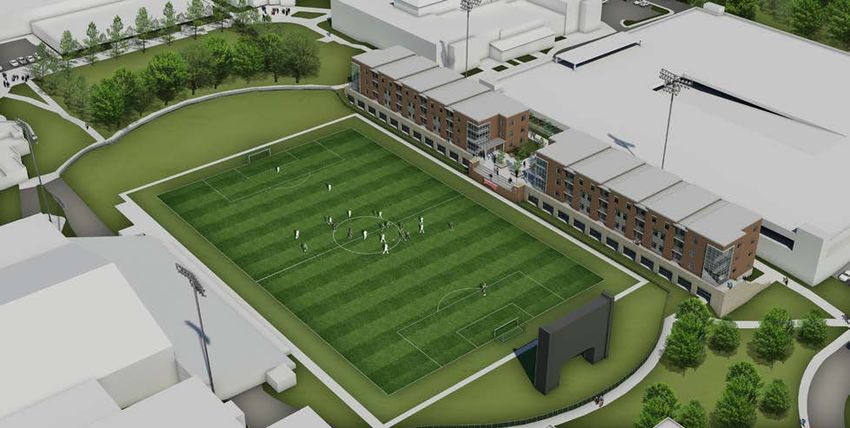
University of Nebraska at Omaha - Housing Master Plan 2014

                                                                         Executive Summary
Summary of Findings                                           The HMP design team explored alternatives for housing
To support stronger living/learning communities, UNO          development on the Caniglia Field site. The concepts
should add new housing types over time as increased           included architectural styles in keeping with the historic
bed counts are required. In Fall 2014, UNO will be at         Arts & Sciences Hall, and styles in context with the more
100% capacity, thus the need to add housing is at hand.       modern expression of recent campus buildings. Concepts
The Housing Master Plan proposes two opportunities for        were vetted with UNO constituents who selected a
expanding housing summarized below.                           modern expression as the preferred approach. The
                                                              preferred concept provides two buildings connected by
#1 Dodge Campus - Caniglia Field (285 Beds)                   an elevated courtyard with an outdoor gathering space
The 2013 Campus Master Plan recommended adaptive              that also functions as a spectator overlook for soccer
reuses for the east Caniglia Field spectator bleachers that   competition. The units are primarily semi-private suites
are no longer required after UNO eliminated its football      with one bath per four beds. Shared floor amenities
program. Eliminating football was required by NCAA as         include lounge, quiet study, laundry and student
part of UNO’s transition to the Division I Conference.        commons. The total bed count is approximately 285.

  Caniglia Field Housing Concept

  Elevated Courtyard Overlooking Caniglia Field

                                                                                                                     PAGE 3
University of Nebraska at Omaha - Housing Master Plan 2014

   Executive Summary
                                                              #2 Pacific Campus - Parking Site (608 Beds)
                                                              An expansion of housing on the Pacific Campus is
                                                              proposed on the site of an existing surface parking lot.
                                                              The concept is in context with other campus buildings
                                                              and provides a variety of room types that include private
                                                              and semi-private rooms. A proposed new parking
                                                              garage replaces lost parking displaced by the residential
                                                              buildings and provides a net gain of 118 spaces.

     Pacific Campus Housing Concept Site Plan

     Pacific Campus Housing Concept Aerial View

     Pacific Campus Housing Concept Perspective

PAGE 4
University of Nebraska at Omaha - Housing Master Plan 2014
Background
A. Campus History By 1917 two new buildings were added to the campus:
Jacobs Memorial Gymnasium (1912) and a three-story
classroom building named Joslyn Hall (1917). After
Joslyn was complete, functions in Redick were moved
to Joslyn and the vacated Redick Hall was sold for its
material value. The Hall was disassembled and shipped
to Lake Shetek, Minnesota where the materials were
used in the construction of the Valhalla Dance Pavilion
and Cafe. The Valhalla was destroyed by fire in 1928 and
no architectural artifacts of Redick Hall are known to
exist.
In 1930, the citizens of Omaha voted to take control
of Omaha University making it the City’s first and only
Redick Hall
municipal university. OU was renamed the Municipal
University of Omaha. In 1938 the University moved
The University of Nebraska at Omaha (UNO) is a thriving
from North Omaha to its current location at 60th and
public institution that was originally founded in 1908 as a
Dodge Street. The new campus was sited to align with
private, coeducational college named Omaha University
Omaha’s projected east-west expansion. In 1968 the
(OU). The University was located in North Omaha’s
Municipal University of Omaha joined the Nebraska
Kounze Park neighborhood in the vacated residence
System thereby becoming the University of Nebraska at
of businessman John Redick. Although the University’s
Omaha. In addition to UNO, the University of Nebraska
initial class of 26 students was instructed by faculty
System operates three other campuses: University of
that were largely recruited from a nearby Presbyterian
Nebraska at Kearney (UNK), University of Nebraska-
Seminary, OU was committed to offering an accessible,
Lincoln (UNL) and Nebraska Medical Center (UNMC).
non-sectarian higher educational experience which
UNO is classified as a doctoral/research university by the
continues to be an important tenet of the University’s
Carnegie Classification system.
mission and vision.
1908 Redick Campus site
N. 24th & Pratt Street
(Joslyn Hall & Jacobs
Gymnasium demolished 1964)
1938 Dodge Campus site
60th & Dodge Street
N
mid-1990 South Expansion
Pacific Campus site
PAGE 5University of Nebraska at Omaha - Housing Master Plan 2014
Background
Alumni
Center Resource
Conservation Strauss Milo Eppley Raskens
& Recovery Performing Bail Administration Hall
Durham Criss Arts Student Building Kayser
Science Center Library Henningson Center Center Hall
Memorial
Campanile
Child Pep Bowl
Care College of Public Allwine
Center Weber
Fine Arts Community Affairs & Community Hall
Welcome Engagement Service Arts & Sciences
Center Building Hall
Center
West
Parking Sapp Caniglia
Garage Sculpture & Fieldhouse Field
Maverick Ceramics East
Village Studio Parking
Garage
University Health, Physical Education,
Village & Recreation Building
University
Village Central Biomechanics
Utilities Research N
Plant Building
DODGE CAMPUS
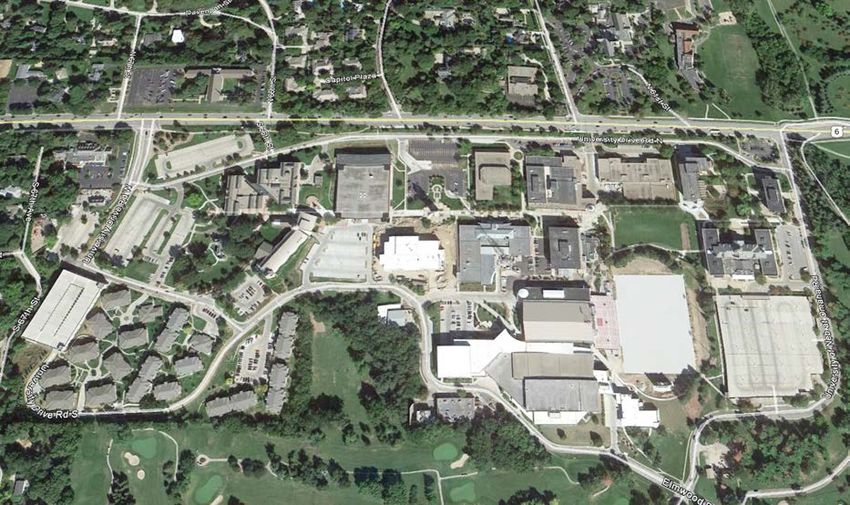
The UNO campus totals 235 acres comprised of the historic
1938 Dodge Campus to the north and the Pacific Campus
south of Elmwood Park. Recent property acquisitions
south of the Pacific Campus are proposed for future
athletic and recreation facilities.
Peter
Kiewit
Institute
Campus Key
Dodge
Campus
Scott Scott
Residence Conference Scott
Hall Center Village
Mammel
Hall
Scott
Village
Pacific
Campus
N N
Scott
Village
PACIFIC Scott Future
Scott Court
CAMPUS Court Expansion
PAGE 6University of Nebraska at Omaha - Housing Master Plan 2014
Background
B. Historic Enrollments Chart 3
The Fall 2013 breakdown of enrollment by gender FALL 2013 FULL-TIME PART-TIME
is fifty-three percent (53%) women and forty-seven Undergraduates M W M W
percent (47%) men. Undergraduate women total forty- Degree-seeking, 1st time freshmen 846 948 50 45
two percent (42%), undergraduate men total thirty-nine Other first-year, degree-seeking 413 402 160 129
percent (39%) (Charts 3 and 4). All other degree-seeking 3,203 3,634 1,187 1,136
Total degree-seeking 4,462 4,984 1,397 1,310
Others enrolled in credit courses 41 24 60 57
Enrollment data from Nebraska’s Department of Higher
Total undergraduates 4,503 5,008 1,457 1,367
Education (Chart 5) indicates that over the past eleven Graduate M W M W
years UNO’s full-time (FT) enrollment has risen while Degree-seeking, first-time 118 151 136 183
part-time enrollment (PT) has declined. Between 2002 All other degree-seeking 276 284 640 922
and 2013, FT undergraduates grew at an average of Others enrolled in credit courses 23 11 58 90
1.28% annually while PT declined at an annual rate of Total graduate 417 446 834 1195
-0.74%. Although overall graduate enrollment declined, Total all undergraduates 12,335
Total all graduate 2,892
there is a shift to FT which is growing at an annual
TOTAL HEAD COUNT 15,227
average of 1.53%; PT is declining at -1.48%
Chart 4
The target market for UNO housing is FT students. When
the ratio of FT to PT enrollment is calculated as a percent
of total head count from 2002 to 2013, FT has risen from
62.3% to 68.1%, which is an increase of 1.3% annually.
This shift from PT to FT will eventually put pressure on all
UNO residential life resources as students spend longer
hours on campus.
Chart 5
Total Head UNDERGRADUATE GRADUATE FULL-TIME PART-TIME
Count (HC) FT PT Total % of HC FT PT Total % of HC Total % of HC Total % of HC
2002 14,451 8,270 3,063 11,333 78.4% 730 2,388 3,118 21.6% 9,000 62.3% 5,451 37.7%
2003 13,997 8,120 2,982 11,102 79.3% 701 2,194 2,895 20.7% 8,821 63.0% 5,176 37.0%
2004 13,824 8,172 2,869 11,041 79.9% 658 2,125 2,783 20.1% 8,830 63.9% 4,994 36.1%
2005 14,093 8,532 2,797 11,329 80.4% 669 2,095 2,764 19.6% 9,201 65.3% 4,892 34.7%
2006 13,906 8,503 2,653 11,156 80.2% 713 2,037 2,750 19.8% 9,216 66.3% 4,690 33.7%
2007 14,156 8,660 2,671 11,331 80.0% 690 2,135 2,825 20.0% 9,350 66.0% 4,806 34.0%
2008 14,213 8,793 2,534 11,327 79.7% 705 2,181 2,886 20.3% 9,498 66.8% 4,715 33.2%
2009 14,620 9,064 2,490 11,554 79.0% 789 2,277 3,066 21.0% 9,853 67.4% 4,767 32.6%
2010 14,665 9,356 2,477 11,833 80.7% 812 2,020 2,832 19.3% 10,168 69.3% 4,497 30.7%
2011 14,712 9,328 2,636 11,964 81.3% 802 1,946 2,748 18.7% 10,130 68.9% 4,582 31.1%
2012 14,786 9,147 2,989 12,136 82.1% 782 1,868 2,650 17.9% 9,929 67.2% 4,857 32.8%
2013 15,227 9,511 2,824 12,335 81.0% 863 2029 2892 19.0% 10,374 68.1% 4,853 31.9%
PAGE 7University of Nebraska at Omaha - Housing Master Plan 2014
Background
C. Population Characteristics & Density In 2013 UNO reported only one type of housing on its CDS
In addition to state enrollment data, the 2013 Common which is Coed. Bill Pickett is working with Institutional
Data Set was reviewed to analyze current student Research to include living communities that are created
residency and housing characteristics. The Common Data through apartment assignments.
Set (CDS) is a series of standardized data gathered from
accredited colleges and universities in the U.S. The CDS While UNO reports that ten percent (10%) of the 2013
format was developed in 1995 by representatives from enrollment are members of sororities or fraternities,
the College Board, Peterson’s and U.S. News & World currently there is no identifiable Greek Housing on
Report. CDS information is updated annually. campus. Workshop discussions with students and
student life representatives indicate that Greek life is
According to UNO’s 2013 CDS, forty-six percent (46%) of under-served at UNO.
first-time, first-year freshman live on-campus; fourteen-
percent (14%) of all degree-seeking undergraduates live Approximately three percent (3%) of UNO’s enrollment
in on-campus housing (Chart 6); the CDS does not collect are internationals, classified as “non-resident aliens”
data on graduate student residency. in the CDS (Chart 7). Many international students live
off-campus because there is no dedicated housing at
UNO. In the online survey, sixty-one percent (61%) of
internationals identified themselves as living off-campus.
Chart 6
Chart 7
PAGE 8University of Nebraska at Omaha - Housing Master Plan 2014
Housing Master Plan Goals
A. UNO Strategic Plan
In October of 2012, the University took steps to
strengthen its commitment to the Mission, Vision and
Values of the institution by updating the Strategic Plan
Goals. The Housing Master Plan has considered these
institutional objectives in the siting and development of
new housing types.
MISSION
• Place students at the center of the educational
enterprise;
VALUES
• Expand the educational achievement, intellectual The University of Nebraska at Omaha community is a
aspirations and horizons of our students with local, diverse group of individuals sharing core values and
state, national and global communities; working together to accomplish a common mission and
vision. UNO:
• Offer comprehensive educational programs and
services of the highest quality; • Believes that knowledge enriches the lives of all
people and is committed to preparing students to
• Serve as a recognized center for research, scholarship, face the challenges of living and learning in an ever-
creative expression and artistic performance changing world;
designed to meet the broader community’s needs;
• Strives for an ideal educational partnership
• Provide outreach partnerships that address the characterized by the commitment of: students to
concerns and interests of the broader external learning; faculty to the highest ideals of teaching,
community and, in doing so, become an integral part research, service; and staff to the highest standards
of the community; of education and service;
• Build understanding and respect in academic and • values the welfare, talents and future of our
human relationships by reflecting the dynamic and employees and commits to expanding their
culturally rich nature of the metropolitan area; professional development;
• Exercise statewide responsibility for selected • values the educational, cultural and economic
graduate and undergraduate programs. strengths of our communities and is committed to
enhancing these through teaching, research, service
and outreach;
VISION
• The University of Nebraska at Omaha will be a • values educated and healthy citizens and is committed
metropolitan university of high distinction - a to offering programs that improve their quality of life;
university with strong academic and scholarly values
distinguished by creative relationships with the • Encourages, celebrates and adopts the principles of
communities we serve. inclusion, representation, openness and diversity.
PAGE 9University of Nebraska at Omaha - Housing Master Plan 2014
Housing Master Plan Goals
STRATEGIC PLAN GOALS iii. Goal Three: UNO will be recognized for its
i. Goal One - UNO will be recognized as a student- outstanding engagement with the urban, regional,
centered metropolitan university. national and global communities.
UNO has a strong town and gown relationship that is The new Community Engagement Center positions
considerably better than most metropolitan universities; UNO to achieve great success in Goal Three. Residential
UNO actively participates in city affairs and has recently life facilities can also play a role in building strong
taken the unprecedented step of building a Community global communities by providing shared space where
Engagement Center in the campus core. As a reward for students can express their cultural traditions, prepare
its outreach, UNO is the beneficiary of philanthropic international food to share with friends and display
involvement from Omaha businesses. By extension, images of home or from overseas study programs. The
students benefit from this involvement in terms of donor- existing apartment units at UNO are not designed with
funded resources and opportunities for internships and community space; strong consideration should be given
employment. to including lounge, meeting and community cooking
space in future housing units.
While the University has assimilated into the Omaha
community outside its boundary, campus housing does
not provide the conditions for community development
inside the campus boundary. If UNO is to be successful
in Goal One, housing options should be expanded to
provide space where living and learning communities can
flourish. The current housing stock consists primarily of
apartment buildings. Unlike several of its metropolitan
peers, UNO does not offer the type of housing that is
conducive to forming Greek, honors, international and
other living communities. These needs are currently
met by group apartment assignments in Maverick and
University Villages. Housing options presented in Section
V. illustrate new housing that is designed to strengthen Henningson Memorial Campanile
student interaction and engagement.
ii. Goal Two: UNO will be recognized for its academic
excellence as a leading metropolitan university.
An assessment of academic standing or instructional
environments is not included in the Housing Master Plan
scope of work, however, much attention has been given
to developing housing that supports academic success.
UNO has a goal of increasing undergraduate and graduate
enrollment to 20,000 and to attract a culturally and
socially diverse student population. Housing alternatives
for honors, non-traditional students, internationals and
married students should be considered as a means of
achieving this goal.
PAGE 10University of Nebraska at Omaha - Housing Master Plan 2014
Housing Master Plan Goals
B. Campus Macro Environment Changes ii. Pacific Campus
In 2013 UNO completed an update of its Master Plan - Increase density in the Scott Village area
(Facilities Development Plan). The update addresses - Create outdoor space for active/passive recreation
changes to the macro environment that are required - New academic facilities adjacent to Mammel Hall
to support plans for enrollment growth. UNO aspires - Expand the Peter Kiewit Institute
to grow total enrollment to 20,000 and increase its - Provide for future growth along Pacific Street
residential population from 14% to 20% which requires - Create a campus Quad along 67th Street
approximately 4,000 beds. The University does not - Improve connections to Dodge Campus
anticipate the acquisition of land to implement future - Extend Elmwood Park character into Pacific Campus
projects that support enrollment growth, instead the - Parking garage to compensate for lost surface lots
use of existing land will maximized within the framework - Improve internal neighborhood circulation
of UNO’s commitment to maintaining open green space.
Future projects are described below with housing iii. Center Campus Fields - Future
projects highlighted. - Community Arena
- Varsity Tennis Courts
- Indoor Athletic & Rec Facilities
i. Dodge Campus - Varsity Baseball Field
- Landscape enhancements at Dodge Street edge - Varsity Softball Field
- Additional campus entry - Event / athlete parking
- Improve campus arrival by Henningson Campanile - Recreation Outdoor Fields
- Expand Strauss Performing Arts Center - Future Indoor Court Facility
- Renovate Milo Bail Student Center - Improved circulation via 67th Street extension
- New competitive Soccer Field at campus core - Connection to Aksarben Village
- Enhance the Pep Bowl as significant green space - Improved stormwater management/detention
- Develop housing adjacent to the Pep Bowl - Consolidated facilities and landscape services
- New Science Building
- Create Arts & Science neighborhood
- Expand Weber Fine Arts Building
- New Academic Building in A&S neighborhood
- New Visitor Center / Alumni Center on Dodge St.
- Redevelop University Village as mixed use area
- Enhance connections to Elmwood Park
- Improve vehicular and pedestrian circulation
Pep Scott
Bowl Village
University Scott
Village Village
PAGE 11University of Nebraska at Omaha - Housing Master Plan 2014
Housing Master Plan Goals
iv. Facilities Development Plan
The long-range development plan for residential life
is illustrated below (Chart 8). The total time line for
improvements envisioned by the 2013 Master Plan is
16+ years.
Chart 8
Project Existing Beds 0-7 years 8-15 years 16+ years
Dodge Campus:
Maverick Village 380 380 380 380
University Village 576 576 576 0
University Village Replacement 0 0 0 732
New Residence 1 (Caniglia Field) 0 217 217 217
Allwine Hall Replacement Building 0 0 463 463
Pacific Campus:
Scott Residence Hall 164 164 164 164
Scott Village (Buildings A-J) 480 432 432 0
Scott Court 480 480 480 480
Scott Village Building A Replacement 0 223 223 223
Scott Village Buildings B-J Replacement 0 0 0 1,435
Pacific & 67th Street New Residence Hall 0 0 0 223
Center Campus:
Residential Housing 0 0 0 0
UNO Approximate Bed Count 2,080 2,472 2,935 4,317
PAGE 12University of Nebraska at Omaha - Housing Master Plan 2014
Existing Conditions
A. Campus Environment & Living Styles
i. Campus Locale UNO Dodge Street
UNO is a vibrant metropolitan university located in Campus
Map Dodge
the center of Omaha, the largest city in Nebraska and Campus
the county seat of Douglas County. The University
takes a leading role in building strong town and gown
relationships with local businesses, residents and arts
and civic foundations. UNO actively participates in Elmwood Park &
neighborhood association meetings and city planning Golf Course
studies. The University recently celebrated the opening of Pedestrian Path
its landmark Community Engagement Center (CEC) which
provides event and office space to foster collaborations
between the UNO community and regional non-profit
organizations.
Pacific Street
The UNO Campus is oriented to the north facing Dodge
67th Stree
Street, a major east/west thoroughfare with excellent
access to downtown. The close proximity of Elmwood
Park to the south prevents contiguous land acquisition,
t
Woolworth Ave.
thus campus growth has occurred 3/4 miles to the south
across Pacific Street. A recent property acquisition south Pacific
of the Pacific Campus is planned for future athletic and
Pine Street Campus 64th Street
recreation development.
The Dodge Campus (north) is pedestrian-friendly
67th Street
with a major walkway on an east/west axis. Vehicular
circulation and parking occur along the loop road at the
campus edge. The Pacific Campus (south) does not have
well-separated pedestrian and vehicular circulation, W. Center Street
but strategies to improve circulation are proposed in
the recent master plan update. A walking path through Future
Elmwood Park connects the two campuses. Currently, Expansion N
UNO provides shuttle transportation between Dodge
and Pacific. During in-session semesters, the shuttle
operates from 6:30am to 10:30pm Monday through
Friday; weekend and summer hours are reduced.
“...collaborations that will
transform our community
and campus into world-class
metropolitan partners.”
Excerpted from the CEC Vision Statement
PAGE 13University of Nebraska at Omaha - Housing Master Plan 2014
Existing Conditions
Omaha is home to several Fortune 500 and 1000 ii. Student Life
companies some of which include ConAgra Foods, UNO refers to the Milo Bail Student Center as the
Union Pacific Corporation, Mutual of Omaha, Kiewit “campus living room.” Currently, the University has plans
Corporation, Berkshire Hathaway, TD Ameritrade, West for a significant renovation of the Student Center which
Corporation and Valmont Industries. provides food service, bookstore, retail, meeting rooms/
classrooms, student organization/government offices
The business community of Omaha is very diversified and event space. Student services are located in the
with a strong foundation of knowledge-based jobs. Eppley Building east of Milo Bail.
The University’s proximity to the business community
provides students with opportunities for hands-on Food service is available at both Dodge and Pacific
learning, internships, community service and job campuses, however food service in Milo Bail does not
placement. In addition, the University benefits from include dinner. During the Fall and Spring semesters Milo
philanthropic entrepreneurs like Walter Scott Jr., former Bail’s hours of operation are 7am to 10:30pm; weekend
CEO of Kiewit Corporation. Mr. Scott provides funding and summer hours are reduced. During workshops,
for the Kiewit Institute and residential housing projects, students indicated a preference for evening meals at
one of which houses engineering and computer science Milo Bail, although they can purchase dinner on the
students attending UNO on Scott scholarships. Pacific Campus. The online student survey reveals that
many students cook fresh or packaged food in their on-
or off-campus apartments. With the exception of Scott
Residence Hall most housing units at UNO include full
kitchens.
Dodge Campus Map
Milo Bail
Student
Center
Eppley
Admin.
Bldg.
Community
Engagement
Center
N
PAGE 14University of Nebraska at Omaha - Housing Master Plan 2014
Existing Conditions
In addition to the planned renovation of Milo Bail Student B. On-Campus Housing
Center, UNO has recently taken steps to expand student i. Type and Quantity
life opportunities. In 2010, the University completed a The current UNO housing stock consists of 2,080 beds
$38.6M renovation and expansion of its Health, Physical in four apartment complexes and one residential hall.
Education and Recreation Building (HPER). The HPER The first apartment complex, University Village (UV),
offers open recreation and a variety of fitness programs was built and operated by a private developer but is
for students, faculty, staff and their dependents. The now owned and operated by UNO. All campus housing
renovated HPER is an essential part of the long-range plan consists of private bedrooms with shared bathrooms
to double UNO’s student resident population; it provides entered from within the unit. Laundry is provided in each
the type of comprehensive facility that distinguishes building or in a commons building with other amenities.
UNO as a major metropolitan university. All apartments have a full kitchen; suite-style units in
Scott Residence Hall (SRH) include a small kitchenette
The 2013 UNO Common Data Set reports the average age and a full meal plan.
of all undergraduates is 23, for FT students the average is
22. The CDS also reports that twenty-two percent (22%) Privacy is cited by students as a major factor in housing
of UNO students are 25 or older. During workshops, choice, however, during campus workshops students also
older students noted that no alcohol is permitted on the noted that apartment dwelling was a barrier to meeting
UNO campus; they cited this as a major reason for living new friends and expanding social circles. Students
off-campus. Notwithstanding this restriction, UNO’s suggested that including common areas in apartment
location within an urban environment provides multiple buildings such as lounges, meeting rooms and study
sources of entertainment for students of all ages. The rooms would provide more opportunities to mingle. On
Aksarben Village, near the Pacific campus, includes the other hand, Student Life staff recommended that
sports bars, wine bars, movies, dining and live music in the Milo Bail Student Center should become the hub for
adjacent Stinson Park. The renovated downtown historic social interaction to avoid students becoming isolated
Old Market District is lined with cobblestone streets inside their apartments or residential halls.
and offers shopping, nightlife, galleries, dining and
entertainment. Other districts with similar amenities ii. Pricing Strategies
include Midtown Crossing, North Downtown and the The majority of student leases at UNO are twelve
ethnic district of South Omaha. There is no shortage of months; Scott Resident Hall offers nine month leases and
entertainment opportunities for adult students. a meal plan. The average twelve month lease at UNO is
$6,210 per bed without a meal plan (Chart 9)
Chart 9
UNO HOUSING CONTRACT BEDS COST/BED
Maverick Village 12 mos. 380 $6,480
University Village 12 mos. 576 $6,120
Scott Court 12 mos. 480 $6,300
Scott Village 12 mos. 480 $5,940
Scott Residence Hall 9 mos. 164 $8,750
AVERAGE W/O MEALS 2,080 $6,210
Milo Bail Student Center
PAGE 15University of Nebraska at Omaha - Housing Master Plan 2014
Existing Conditions
iii. Facilities Assessment
The first campus housing project, University Village,
was built by a third party; Residential Life staff believe
that the open corridors leading to apartments are more
appropriate for a warmer climate. Campus-led projects Club
that followed UV include: Scott Residence Hall (Fall House
2000), Scott Village (Fall 2003), Maverick Village (Fall
2008) and Scott Court (Fall 2011). Residential housing University
Village University
on the Pacific Campus is managed by Scott Properties; Village
housing on the Dodge Campus is managed by UNO.
Dodge Campus - University Village (UV), 1999 N
The UV consists of seven (7) three-story apartment
buildings and a detached Club House. The complex is University Village - Site Plan
entirely coed with individual apartments assigned as
single-sex. The complex totals 173,616 gross square
feet (gsf), the Club House is 3,840 gsf. Construction is
brick veneer with concrete lap siding; UNO housing staff
characterize the architecture and materials as more
appropriate for a warm weather climate. The exterior
materials require continual maintenance. UV Apartments
include four private bedrooms, two baths, living room
and full kitchen. Total UV bed count is 576; annual cost
per bed is $6,120 for 12 months; annual gross revenue is
$3,525,120.
The UV Club House includes a Mail Room, Four Offices,
Maintenance Area, Student Laundry, Club Room, Study,
University Village - Exterior Elevation
Boiler and Communications Telephone / Data. The Club
House is used for student events, movie night, social
gatherings and other student events.
Among the five UNO housing complexes, students
rate UV the lowest with seventy-two percent (72%) of
students rating UV as Excellent or Good. Twenty-two
percent (22%) rate UV as Fair and the remaining eight
percent (8%) rate the facility as Poor. During workshop
interviews, the greatest concerns raised by students
were from females who found the open walkways to
be less safe than other UNO residences with enclosed
corridors.
University Village - Club House
PAGE 16University of Nebraska at Omaha - Housing Master Plan 2014
Existing Conditions
All students agreed that during inclement weather the
UV apartments are less comfortable; the main entry/exit
opens directly to the outdoors which allows cold and hot
air into the living room. Students also agreed that the
UV has fewer opportunities for socialization within the
apartment building structure.
UV - Apartment Living Room (typical)
University Village - Typical Apartment (not to scale)
University Village Club House - Study Room
University Village Club House - Laundry
University Village - Club House (not to scale)
University Village Club House - Club Room
PAGE 17University of Nebraska at Omaha - Housing Master Plan 2014
Existing Conditions
Dodge Campus - Maverick Village (MV), 2008
The MV consists of eight (8) three-story buildings and a
detached Commons Building. The apartment buildings
are coed with single-sex apartment assignments. The Commons
complex totals 140,648 gsf, the Commons Building is
7,500 gsf.
Maverick
Village
Maverick Village is constructed of brick veneer accented
with pre-cast and cast stone banding. The apartment
buildings are six years old and appear to be in good
condition. Individual apartment units include four
N
private bedrooms, two baths, living room and full
kitchen. Laundry rooms for MV are in the lower level
of each building. The distribution of apartment units is Maverick Village - Site Plan
four per floor for a total of twelve per building. There
is one central entry point with a card reader, individual
apartments are accessed through a common corridor.
The total MV bed count is 380; annual cost per bed is
$6,480 for 12 months with an annual gross revenue of
$2,462,400.
Although each stand-alone building has connecting
stairwells and corridors, there are no common lounges
or group study rooms within the buildings which reduces
the opportunities for socialization or group work.
The MV Commons Building includes a Mail Room in
the lobby, Office Suite, Student Lounge, Seminar Room
Maverick Village - Exterior Elevation
and Building Support. During workshop interviews, and
online surveys, students rated Maverick Village very
highly. Eighty-six percent (86%) of survey participants
rate MV as Excellent or Good, twelve percent (12%) rate
MV as Fair and two percent (2%) rate MV as Poor.
Maverick Village - Commons Building Entry
PAGE 18University of Nebraska at Omaha - Housing Master Plan 2014
Existing Conditions
Maverick Village - Connecting Stairwells (typical) Maverick Village - Private Bedroom (typical)
Maverick Village - Apartment Kitchen (typical)
Maverick Village - Typical Apartment (not to scale)
Maverick Village - Commons Building Lounge Maverick Village - Commons Building Seminar Room
PAGE 19University of Nebraska at Omaha - Housing Master Plan 2014
Existing Conditions
Pacific Campus - Scott Residence Hall (SRH) 2000
The SRH consists of one (1) four-story apartment
building located west of the Scott Conference Center.
Administrative Offices for SRH are located in the Scott
Village Commons Building which also provides Club
House functions for Village residents. Each of the four
Scott
floors in SRH contains eleven (11) or twelve (12) four- Residence
Hall Scott
bedroom suites with private bedrooms, one bath, a Conference
living room and a kitchenette with microwave and Center
under-counter refrigerator. The building also includes
four (4) two-bedroom faculty apartments, community
student kitchens on each floor, a student study room
with computers and printer, theater room, fitness area, N
game room and a variety of student services such as
laundry and printing/copying.
Scott Residence Hall - Site Plan
SRH is constructed of brick veneer with EIFS accents
(exterior insulating finish system); the residential hall
is attached to the Scott Conference Center and the
two structures share some mechanical systems. The
approximate building area of the SRH is 59,955 gsf.
The building condition is good and appears to be well-
maintained. The SRH bed count is 164; annual cost per
bed is $8,750 which includes a meal plan. Terms of lease
at SRH are nine months.
Many SRH occupants are engineering students on Scott
scholarships. Students participating in the online survey
have a favorable opinion of SRH; eighty-six percent (86%) Scott Residence Hall - Building Entrance
rated the facility as Excellent or Good, the remaining
fourteen percent (14%) rated the facility as Fair.
Scott Residence Hall offers a more traditional housing
experience with shared socialization and study space
outside the apartment unit. The food service has a large
selection of healthy, nutritional food and is available
to all UNO students, not just SRH residents. The hours
of operation are Monday-Friday: 7am - 8pm, Saturday-
Sunday: 10am -7pm. Scott Cafe is the default dining
facility on-campus as the Milo Bail Student Center does
not offer a dinner menu.
Scott Residence Hall - Street View
PAGE 20University of Nebraska at Omaha - Housing Master Plan 2014
Existing Conditions
Scott Residence Hall - Group Study Room Scott Residence Hall - Theater Room
Scott Residence Hall - Typical Suite
(not to scale)
Scott Residence Hall - Scott Cafe’ Dining Room Scott Residence Hall - Scott Cafe’ Serving Line
PAGE 21University of Nebraska at Omaha - Housing Master Plan 2014
Existing Conditions
Pacific Campus - Scott Village (SV), 2003
The SV consists of ten (10) three-story apartment
buildings. A Commons Building provides administrative
and recreational functions. Each building has four
(4) apartments per floor for a total of twelve (12) per
building. Each apartment has four private bedrooms,
two baths, a living room and open kitchen.
The buildings are constructed of brick veneer on the
first and second floors and vinyl siding on the third floor.
Each ground-level apartment has a concrete patio, upper
level apartments have wooden decks. The SV complex is
approximately 173,810 gsf. The total bed count is 480;
annual cost per bed is $5,940. Terms of lease at SV are 12
months, annual gross revenue is $2,851,200. The Scott
Commons Building contains the offices for Scott housing
management, central mailboxes, student laundry, game
room and staff break room. A tornado shelter is provided Scott Village - Site Plan
in the basement. The SV Commons is approximately
7,361 gsf.
Student survey results for SV indicate that eighty-nine
percent (89%) of students rate the facilities as Excellent
or Good, approximately ten percent (10%) rate SV as Fair
and one-percent (1%) rate the SV as Poor.
The SV is the only housing complex at UNO with outdoor
sport facilities which include a basketball court, sand
volleyball and open field space for touch football or Scott Village Complex
frisbee.
Scott Village Outdoor Court
PAGE 22University of Nebraska at Omaha - Housing Master Plan 2014
Existing Conditions
Scott Village - Apartment Living Room (typical) Scott Village - Apartment Kitchen (typical)
Scott Village - Typical Apartment (not to scale)
Scott Village Commons (not to scale)
PAGE 23University of Nebraska at Omaha - Housing Master Plan 2014
Existing Conditions
Pacific Campus - Scott Court (SC), 2011
The SC consists of four (4) three-story apartment
buildings, the Scott Village Commons provides
administrative services for the SC complex. Each building
in SC has ten (10) four-bedroom suites per floor in an “L”
shaped building footprint. Each apartment includes four
private bedrooms, two baths, a living room and open
kitchen.
The SC buildings are constructed of brick veneer and
concrete panels, building accent materials include
EIFS and prefinished metal panels. Scott Court is
approximately 185,812 gross square feet. The total bed
count in SC is 480. Terms of lease at SC are 12 months,
annual rent is $6,300 for an annual gross revenue of Scott Court - Site Plan
$3,024,000.
Students living in SC have access to some amenities not
provided in other apartment housing such as fitness
equipment; SC residents also have privileges at the
SV Commons Building. Student survey results for SC
indicate that eighty-nine percent (89%) of students rate
the facilities as Excellent or Good, nine percent (9%) rate
SC as Fair and two-percent (2%) rate SC as Poor.
Each building in SC has shared amenities that include:
a study lab with computers/printers and AV equipment,
laundry and vending in lower level and 24-hour fitness
room. Scott Court Complex
Scott Court - Building Entry
PAGE 24University of Nebraska at Omaha - Housing Master Plan 2014
Existing Conditions
Scott Court - Building Study Room / Lounge (typical) Scott Court - Apartment Kitchen (typical)
Scott Court - Typical Apartment (not to scale) Scott Court -Private Bedroom (typical)
Scott Court -Building Laundry (typical) Scott Court -Building Fitness Room (typical)
PAGE 25University of Nebraska at Omaha - Housing Master Plan 2014
Existing Conditions
C. Off-Campus Housing During workshops, students cited two major factors in
i. Type choosing off-campus housing: cost and independence.
There are over two hundred rental properties within Survey results indicate the total cost of education as
a five mile radius of UNO. As previously noted, eighty- the number one factor in the choice of college; many
six percent (86%) of undergraduates at UNO live off- students believe that living off-campus is cheaper. The
campus. While many of these students commute from number two reason students cited for living off-campus
their permanent residence in Omaha, a large percentage is independence. UNO has no ability to alter its status as
of students live in rental property within the city limits a “dry” campus and for that reason many older students
of Omaha. Currently the University has a stock of 2,080 will continue to choose rental property in Omaha over
beds capable of housing twenty-two percent (22%) of its campus housing. As noted previously, the average age of
full-time undergraduate enrollment (9,511). Although a full-time undergraduate student at UNO is 22; the U.S.
the University is focused on growing the residential Department of Education reports the median age for an
population, some students continue to be attracted to undergraduate as 21, the average age is 24.
off-campus accommodations.
Rental Properties - 5-Mile
Radius from Campus
Rental Properties - 3-Mile
Radius from Campus
Rental Properties - 1-Mile
Radius from Campus
PAGE 26University of Nebraska at Omaha - Housing Master Plan 2014
Existing Conditions
ii. Pricing Strategies
Gross rents for properties within a five-mile radius of
UNO campus were researched by the Housing Master
Plan team using online resources and telephone contact.
The research finds that the average annual cost per bed
for a studio or apartment in Omaha is $5,868 (Chart 10).
By comparison, the average cost of a 12-month contract
in UNO owned housing, without a meal plan, is $6,210
(Chart 11)
No empirical data for off-campus utility costs is available, Examples of Rental Property within 30-minute walk of UNO
however, student survey results indicate the average
utility costs among students that pay utilities is $116.50/
month. Several students renting off-campus reported
a utility cost of zero which implies that utility costs are
included in the monthly rent, or that they reside in their
family residence.
Chart 10
OMAHA APARTMENT CONTRACT AVG. SQ. FT. AVG. COST/UNIT COST/BED
Studio Apartment 12 Month 473 SF $6,540 $6,540/Bed
1 Bedroom Unit 12 Month 705 SF $7,488 $7,488/Bed
2 Bedroom Unit 12 Month 1,074 SF $10,488 $5,244/Bed
3 Bedroom Unit 12 Month 1,295 SF $12,636 $4,212/Bed
AVERAGE 12 Month 887 SF $9,288 $5,868/Bed
Chart 11
UNO HOUSING CONTRACT UNIT TYPE TOTAL BEDS COST/BED
Maverick Village (MV) 12 month 4 br/2 bath apt 380 $6,480
University Village (UV) 12 month 4 br/2 bath apt 576 $6,120
Scott Court (SC) 12 month 4 br/2 bath apt 480 $6,300
Scott Village (SV) 12 month 4 br/2 bath apt 480 $5,940
Scott Residence Hall (SRH) 9 month 4 br/1 bath suite 164 $8,750*
AVERAGE FOR HOUSING W/O MEAL PLAN (*excludes SRH) 2,080 $6,210/Bed
PAGE 27University of Nebraska at Omaha - Housing Master Plan 2014
Existing Conditions
This page intentionally left blank
PAGE 28University of Nebraska at Omaha - Housing Master Plan 2014
Needs Assessment
A. Workshop Findings ii. Workshop Committees
On January 22-23, 2014, the housing master plan team Over the course of two days the master plan team toured
conducted a series of workshops at UNO. The workshops all campus housing and met with representatives from
provided a forum for various groups to share their several groups that include:
goals for housing improvements. Summaries from each
workshop group are provided below. - Residential Life (Dodge & Pacific Campuses)
- Business and Finance
i. Steering Committee - On-campus Students
The Housing Master Plan process is led by a Steering - Off-campus Students
Committee that includes the Associate Vice Chancellor - Student Affairs
for Student Affairs, Dan Shipp and the Director of - Learning Communities
University Housing and Student Involvement, Bill Pickett. - Facilities Management
Prior to the first campus workshop, Dan and Bill met with Key recommendations from each group include the
the master planning team to identify their primary goals following:
and objectives which are:
Residential Life:
The Housing Master Plan should provide a footprint for • Organize housing to change the impression of a
the next five to ten years; the recommendations for commuter campus
housing should be based on student demand, workshop • Provide housing with unifying elements such as
discussions and the over-arching goal of supporting Greek, Honors, International, etc.
academic success. Currently UNO has several learning • Draw students out of the seclusion of their
communities which will be significantly expanded in the apartments by providing social and common space,
2014-2015 academic year. These learning communities especially for freshman.
do not have community housing alternatives, nor do • Locate new housing near food service and other
other campus groups such as honor students, Greek student life amenities.
Chapters, international students, married students, • Include outdoor activity areas to build the sense of a
veterans, etc. Dan believes there are many drivers for neighborhood.
housing besides enrollment growth; the Housing Master • Provide accommodations for faculty, visiting faculty
Plan should identify specialized housing needs as well as and graduate students.
opportunities for growing the overall housing stock. • Include classrooms within the complex to facilitate
learning community development.
Bill Pickett manages housing operations at the Dodge • Streamline maintenance by incorporating design
Campus. Pacific Campus housing is managed by standards.
Scott Properties. Notwithstanding the separation of • Provide more nine month contracts.
management duties, the primary responsibility for the
safety of students and enforcement of campus policies
rests with Bill Pickett and his staff.
PAGE 29University of Nebraska at Omaha - Housing Master Plan 2014
Needs Assessment
Business and Finance: Prior to discussing housing needs, each student was
• Adjust the Housing Master Plan bed count objectives asked to indicate why they selected UNO. The most
to exclude online students from the long-term common responses were: the University really cares
enrollment projections. about students, UNO has strong academic programs in
• Provide flexibility in housing units that expands the specific areas of interest, overall UNO is cost effective,
University’s options for resolving conflicts, academic housing options are better than competitors and UNO
incompatibilities and other problems that arise. has good proximity to home for weekend visits. Off-
• Incorporate opportunities for energy savings for the campus students cited lower cost and independence as
University and cost savings for students. the main reasons for living off-campus.
• Justify housing rates for the Board of Regents.
• Note that nine-month contracts are more workable On-Campus Students:
when a meal plan is included. Common eating areas • Provide expanded food service hours on Dodge.
help build community. • Incorporate community space in housing units for
• Consider Allwine Hall for future housing; this socialization. Traditional suites with public living
building will be vacated when a new STEM project is rooms will increase opportunities for making new
built. friends, however, less personal space should equate
• Provide a housing strategy that meets demand; do to a lower cost.
not over-build. Currently there are outside interests • Reflect the actual housing conditions in apartment
that have proposed housing such as the Newman models for tours. Quality matters to students.
Center for Catholic Students which could include • Provide housing with a strong architectural identity
140 Beds for students from UNO and other adjacent and good security systems such as card swipe;
universities. students do not like keys.
• Base peer comparisons on the Board of Regents’ • Enclose University Village corridors, female students
approved peer group which includes: feel less safe at the UV.
- Cleveland State • Maintain the current housing affordability.
- Northern Illinois • Increase parking for visitors and parents. Include
- Portland State
outdoor courts and provisions for pets on-campus.
- University of Arkansas at Little Rock
- University of Colorado at Denver
- University of Missouri - St. Louis Off-Campus Students
- University of North Carolina at Charlotte • Provide outdoor recreation areas to offset the
- University of Northern Iowa limited human contact associated with apartment
- University of Texas at San Antonio
dwelling - students that live on-campus tend to stay
- Wichita State University
in their apartments.
• Provide more options for on-campus housing - the
negative aspects of living off-campus are driving
distance and fewer opportunities to meet people.
• Design units to be appealing with privacy as a high
priority.
• Include Wi-Fi, cable TV, etc.
• Increase parking if enrollment continues to grow.
• Provide separate freshman housing and a Greek
Row.
PAGE 30University of Nebraska at Omaha - Housing Master Plan 2014
Needs Assessment
Student Affairs: Facilities Management
• Include data on housing mixes and rates in peer • Design buildings to LEED standards; UNO does not
housing analysis. UNO requires a better variety of yet require certification.
housing options. All housing should be affordable • Provide a good return on investment from building
and designed for student success. systems; currently there are campus guidelines for
• Consider smaller groups than four per suite. code issues, but no equipment standards.
• Make safety and security the top priority. • Incorporate preferred campus building materials
• Select housing sites that are suitable for the capacity, of brick, pre-cast limestone, anodized frames and
do not under- or over-use the land. limited metal panels. The current campus context is
• Include group kitchens and study space to provide a considered “Eclectic.”
higher quality residential life experience • Design practical room sizes; currently there are
• Improve retention by providing social spaces. no campus standards for office size, bedrooms, or
• Provide a cohesive, single management system. other rooms.
• Dedicate resources for counselors and other on- • Observe the campus building height restrictions.
call staff such as assigned parking space and crisis • Utilize landscape guidelines provided in the master
room - counselors feel uncomfortable meeting with plan that also include guidance for siting, distance
students privately in their bedrooms. and experience-based design.
• Improve weekend food service which is currently
inadequate to serve prospective students, parents
and other visitors.
Learning Communities:
• Foster a stronger campus connection for international
students. Currently many internationals live off-
campus and some cannot meet rental requirements
of a social security number or resident status.
• Reduce costs for international students by providing
smaller housing units; these students usually have
fewer personal possessions and require less space.
• Provide lower cost housing for first-generation
students; many first-generation students live at Examples of Modern and Classical campus architecture
home to save money, but the lack of connection to HPER Building (above) Arts & Sciences Building (below)
campus impacts academic success and retention.
• Incorporate dedicated housing for honor students
• Group students by major and include classrooms
within housing; classrooms should be flexible.
• Provide Greek housing - the apartment-style units
do not provide the traditional sorority or fraternity
experience that students seek. Most existing off-
campus housing rented by Greeks is in disrepair.
• Provide housing options for visiting scholars with
durations of 3-8 months and options for faculty /
family apartments within the complex.
PAGE 31You can also read


