Information Technology - Postgraduate Courses 2020 - UTS
←
→
Page content transcription
If your browser does not render page correctly, please read the page content below
Information
Technology
                                 Postgraduate
                                 Courses
 Faculty of Engineering and IT   2019
                                 2020
Entrepreneurial.
    Creative.

1
Authentic.
Vibrant. Dynamic.

                    2
3

Contents
05   Why IT at UTS?
07   Your questions answered
                                                               Faculty snapshot
08   Program articulations
                                                               11,171    Total number of enrolments
09   IT precinct
                                                               7694      Undergraduate enrolments
11   Academic leaders                                          2510      Postgraduate coursework enrolments
13   Scholarships                                              967       Higher Degree Research enrolments
15   Short courses                                             UTS at a glance
17   Information Technology                                    2199      Higher degree research
19   Technical courses                                         10,208    Postgraduate coursework
19   Graduate Certificate in Information Technology Studies    33,752    Undergraduate, enabling and non-award

19   Graduate Certificate in Information Technology            UTS student diversity
20   Master of Information Technology                          29%       are 25 or older
23   Master of Information Technology (Extension)              49%       are female
                                                               50%       were born outside of Australia
24   Master of Information Technology (Advanced)
25   Majors                                                   Please note the above numbers are approximate as of
27   Graduate Certificate in Information Systems              January 2020.

28   Master of Information Systems                            Contact us
29   Master of Information Systems (Extension)
                                                              Domestic students
29   Master of Information Systems (Advanced)
                                                              Tel: 1300 ASK UTS (1300 275 887)
32   Internetworking courses                                  Online inquiry: ask.uts.edu.au
                                                              Email: FEIT@uts.edu.au
32   Graduate Certificate in Internetworking
                                                              International students
33   Master of Science in Internetworking
                                                              Tel: 1800 774 816 (free call within Australia)
35   Master of Science in Internetworking (Extension)         Tel: +61 3 9627 4816 (for international calls)
36   Interaction Design                                       Web: international.uts.edu.au
                                                              Email: international@uts.edu.au
39   Master of Technology
39   Graduate Certificate in Technology
                                                              Connect with us
39   Graduate Diploma in Technology
                                                                     UTSFEIT
41   Master of Professional Practice                                 UTSengineeringandIT
41   Graduate Certificate in Professional Practice                   UTSFEIT
41   Graduate Diploma in Professional Practice
                                                                     UTSInternationalstudents
43   Research at UTS                                                 UTSINT
44   Master of Science (Research) in Computing Sciences
44   Master of Analytics (Research)                           Acknowledgement of Country
44   Doctor of Philosophy                                     UTS acknowledges the Gadigal People of the Eora
                                                              Nation, the Boorooberongal People of the Dharug
45   Research centres and institutes                          Nation, the Bidiagal people and the Gamaygal people
                                                              upon whose ancestral lands our university stands. We
46   Student services
                                                              would also like to pay respect to the Elders both past
47   Research facilities                                      and present, acknowledging them as the traditional
                                                              custodians of knowledge for these lands.
49   How to apply

                                                                                                                       4
Why Information
Technology at
UTS?
The role of a technology professional is evolving.
You’re expected to guide new possibilities, drive
strategy and innovation all whilst delivering
improvements and end-to-end customer experience.
Join the future of Information Technology at UTS.

BE AMONG THE BEST                               COLLABORATIVE ECOSYSTEM
We’re ranked in the top 200 universities        Our building is an incubator for creativity,
globally placing us in the top 1%. We’re also   knowledge and innovation. Its design
the no.1 young university in Australia.         facilitates agile project work and
                                                integrates of latest technology systems
JOIN THE GLOBAL                                 allowing students to collaborate, ideate
KNOWLEDGE ECONOMY                               and innovate, all based on the CBD fringe.
We have over 1000 industry partners and
together we are advancing and exploring         CERTIFIED CISCO ACADEMY
future technologies to benefit our world.       CISCO certifications confirm your ability
Join this network of experts and go beyond      to use the best networking and business
the expected to deliver the next generation     communication systems, giving you a             ROB JARMAN – ASSOCIATE DEAN,
of innovation.                                  competitive edge. UTS is equipped with
                                                                                                LEARNING & TEACHING
                                                five networking labs, using the latest
BECOME THE INTRAPRENEUR                                                                        “UTS offers transformative learning
                                                CISCO Systems to ensure you have hands-
Do you have what it takes to lead and                                                           experiences. We prepare students for
                                                on experience with routing, switching,
innovate? We need intrapreneurs                                                                 their future careers through practical,
                                                security, wireless and VoIP.
to take business to the next level                                                              real-world experience. For example,
and keep our economy competitive                                                                our students engage with industry and
on a global scale. We challenge you                                                             researchers in studio learning and
to build your IT skills in a business                                                           practical projects, define problems
context, giving you the knowledge and                                                           and develop solutions through design
practice-oriented skills to do so.                                                              thinking, have internship opportunities,
                                                                                                and showcase their skills and capabilities
                                                                                                through industry networking, career and
                                                                                                award events.
                                                                                               Our facilities have undergone a one billion
                                                                                               dollar redevelopment to offer one of
                                                                                               the most dynamic, interconnected and
                                                                                               student-focused spaces in the world. The
                                                                                               UTS Software Studio, 3D Data Arena and
                                                                                               ProtoSpace 3D printing facility are giving
                                                                                               students real experience that promotes
                                                                                               innovation and collaboration.
                                                                                               At UTS, we’re preparing students for the
                                                                                               future of work.”
5
NO.      1
            in Australia for
                                                                                  69th
                                                                                   Globally for graduate
            Computer Science                                                       employability and
            & Engineering*                                                         7th in Australia
                                                                                   QS Graduate Employability Rankings 2020
            Academic Ranking of World
            Universities (ARWU) 2019

                                                    Top 100
                                                    universities globally

      5stars
                                                    Engineering/Technology
                                                    & Computer Science

                                                                                                  1
                                                    Academic Ranking of World
                                                    Universities (ARWU) 2019

for excellence across
                                                                                         NO.
     7 categories                                                                        UTS ranked
                                                                                         Australia’s
  (QS Stars Rating 2018–2021).
                                                                                         #1 young* uni
                                                                                         *Times Higher Education 150
                                                                                         Under 50 rankings, 2015 - 2018.
                                                                                         QS World University Rankings Top
                                                                                         50 Under 50, 2016-2019

                                                     UTS ranked 1st in
     NO.29                                           Australia and 13th
      in Computer                                    globally in the Times
      Science                                        Higher Education
      Academic Ranking of World                      Young University
      Universities (ARWU) 2019
                                                     Rankings
                                                     2019 Global Rankings

     Almost 80%                                                                 Top 50
     of UTS’s assessed                                                          Global ranking
     research areas rated as                                                    Computer Science
                                                                                Academic Ranking of World Universities
     having a “high” impact                                                     (ARWU) conducted by the Shanghai
                                                                                Rankings 2019
     beyond academia (the
     highest proportion in
     the country)
     2018 Engagement and Impact Assessment (EIA).
                                                                                                                             6
Postgraduate Course Guide

Your questions
answered
DO I NEED A BACHELOR’S DEGREE                    CAN I STUDY PART-TIME?                          ARE THE IT COURSES
TO DO A MASTER’S DEGREE?                         Yes. All postgraduate courses are available     PROFESSIONALLY RECOGNISED?
The traditional path to postgraduate study       part-time to domestic students. UTS class       Graduates of certain Master’s courses
is via a completed bachelor’s degree,            times are designed with busy professionals      are eligible to apply for professional-level
but if you have other qualifications and         in mind, with day and evening options           membership of the Australian Computer
professional experience, you may be              available. Part-time students undertake         Society. Refer to the individual course
eligible to enter a graduate certificate.        less than 18 credit points per session and      information for further details.
                                                 have the option to vary their study load
Graduate certificates set you on the path        each session to suit their schedule. You        HOW CAN I APPLY?
to postgraduate study, and you finish            can view the timetable at:                      Please refer to page 49 for full details on
with a respected qualification after only                                                        the application process.
                                                 timetable.uts.edu.au
4 subjects. They make up the first four
subjects of a master’s, so if you complete                                                       For questions and further information,
                                                 AM I ELIGIBLE FOR RECOGNITION                   please contact:
the graduate certificate at the required
                                                 OF PRIOR LEARNING (CREDIT)?
level you can continue your studies in the                                                       Email: feit@uts.edu.au
                                                 All applicants are assessed individually
related master’s course.                                                                         Phone: +61 2 9514 2666
                                                 based on relevant tertiary qualifications.
HOW MUCH WILL IT COST?                           If you have a recent tertiary qualification
Postgraduate study is an investment in           in information technology, you may be
your future, not just financially, but in time   eligible for up to 24 credit points that
as well. Tuition fees are determined by the      cover the basics you already know.
course in which you are enrolled and the         uts.edu.au/future-students/
credit point value of the subjects.              information-technology/essential-
You can calculate an approximate course          information/recognition-prior-learning
fee using the UTS Course Fee Calculator.
                                                 CAN I TRANSFER BETWEEN A
uts.edu.au/future-students/                      GRADUATE CERTIFICATE AND A
postgraduate/essential-info/what-will-
                                                 MASTER’S DEGREE?
it-cost
                                                 Yes. The majority of our courses are
IS THERE A STUDENT LOAN                          articulated, meaning you can begin with
                                                 a 24 credit point (4-subject) graduate
SYSTEM FOR POSTGRADUATE
                                                 certificate and apply to have your subjects
STUDENTS?                                        credited towards an appropriate Master’s
Yes. Domestic coursework students
                                                 course. Alternatively, if you successfully
may qualify for FEE-HELP, a government
                                                 complete the first 24 credit points of the
loan scheme. FEE-HELP allows eligible
                                                 Master’s and choose not to continue on
students to defer payment of some or
                                                 with your studies, you may still graduate
all of their tuition fees. The loan is repaid
                                                 with a graduate certificate†. See
through the taxation system.
                                                 articulation chart on page 8.
studyassist.gov.au/help-loans-and-               †
                                                  International students may have visa
csps/fee-help                                    restrictions that prevent course articulation

Alternatively, if what you are studying is
directly related to your current job and
you pay your fees up front, you may also
be able to claim your fees and other study
related expenses as a tax deduction. See
the ATO website for more details.

7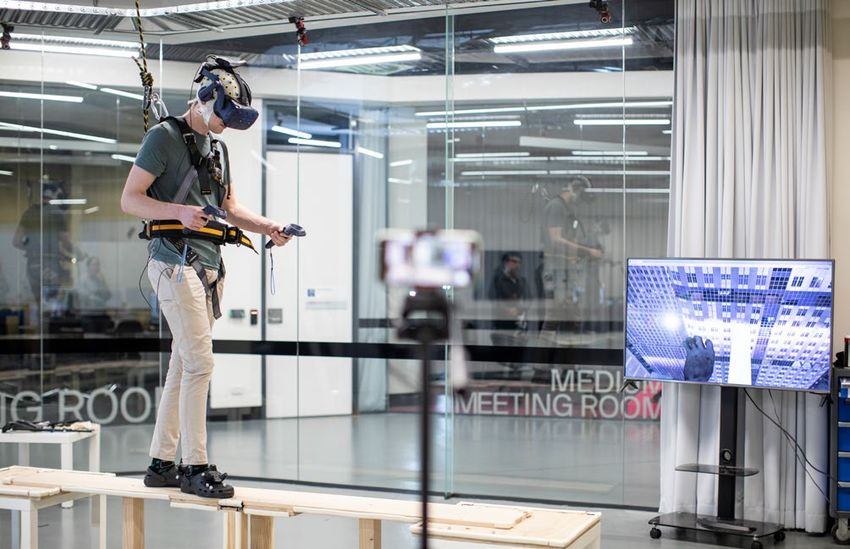
Faculty of Engineering and Information Technology

Program articulation

Our postgraduate programs are offered in a range of formats
that provide alternative entry paths and study durations.
They are linked qualifications, meaning they can be
combined towards a higher qualification if you decide to
continue your studies.

GRADUATE CERTIFICATE
Duration: 1 session (full time),
1 year (part time)
Start with a graduate certificate and study
the first four subjects of a master’s. These
courses will help you put the foundations in
                                                Graduate
                                                Certificate
                                                                            4
                                                                       Subjects
place before you pursue advanced studies        (IT Studies)
in a master’s.                                                            24 CP

GRADUATE DIPLOMA
Duration: 1 year (full time),
2 years (part time)                             Graduate                    4
                                                Certificate            Subjects
You can choose to exit a master’s degree
early with a graduate diploma.                                            24 CP

MASTER’S
Duration: 1.5-2 years (full time),
3-4 years (part time)                           Graduate                    4                    4
                                                Diploma                Subjects             Subjects
Theoretical knowledge, practical
application: a master’s degree combines                                   24 CP                24 CP
both in perfect balance. You’ll gain a
professional level skillset, thorough
                                                                            4                    4                    4
                                                Master of
theoretical foundations, and an                 Science in
understanding of how to apply them              Internetworking
                                                and Master of          Subjects             Subjects              Subjects
in your chosen field. Depending on the
                                                Interaction
discipline you study, you might also            Design
                                                                          24 CP                24 CP                24 CP
gain recognition or qualifications from
associated professional organisations.

MASTER’S (EXTENSION)
                                                Master of IT
                                                                            4                    4                    4                     4
Duration: 2 years (full time),                                         Subjects             Subjects              Subjects                Subjects
4 years (part time)
                                                                          24 CP                24 CP                24 CP                  24 CP
Take your knowledge one step further with
an extension master’s. This qualification
provides depth and expertise in your
area of interest, beyond the conventional       Master’s                    4                    4                    4                     4
master’s structure. You’ll benefit from         (Extension)            Subjects             Subjects              Subjects                Subjects
flexible subject choices and a specialist                                 24 CP                24 CP                24 CP                  24 CP
qualification that sets you apart.

                                               - Credit points can vary across courses. See credit points listed for a specific course.
                                               - Academic requirements must be achieved to transfer to the next stage.
                                               - Applications are assessed on academic merit and work experience.

                                                                                                                                                     8
Postgraduate Course Guide

IT precinct
There is no better place to see
your future from.

                                                                                          TECH LAB
                                                                                          Tech Lab is an engineering and IT facility
                                                                                          inspiring innovation and collaboration
                                                                                          between expert researchers, industry
                                                                                          partners and government.
                            PROTOSPACE                                                    The multi-functional site features 9000
                            ProtoSpace is our purpose-built                               square meters of office and laboratory
                            additive manufacturing facility,                              space dedicated to technology
                            incorporating 3D printing designed                            innovation.
                            to bring prototype testing and
                            product manufacture within
                            the reach of UTS students.

                                                                     SOFTWARE
                                                                     DEVELOPMENT STUDIO
                                                                     A rich environment for you to become
                                                                     professionally competent via an industry
                                                                     collaborative software development
                                                                     experience throughout your degree.

                                   IN-BUILT RESEARCH SENSORS
                                   The building itself is a living, breathing
                                   laboratory embedded with wireless
                                   sensors to monitor temperature, air
                                   quality, noise and dust particles.

9
Faculty of Engineering and Information Technology
LEARNING PRECINCT
In between classes, you can study
or conduct group work in the FEIT
Learning Precinct. This student space
is where you can access teachers for
individual and small group support,
as well as reference material and
software and hardware resources.
DATA ARENA
This 3D data visualisation arena aids
researchers to visually present and
interact with complex data sets and
3D-spatial modules. It utilises projectors
and stimulates weather such as wind
and lightning to provide the experience
of being immersed in a huge 3D virtual
reality experience.
UTS LIBRARY
The UTS Library has expanded to
include an underground storage system
that uses robotic cranes for the retrieval
of less- demanded books, making
borrowing faster and simpler. This
library upgrade is part of the larger UTS
City Campus Master Plan, a $1 billion
investment to redevelop UTS.
DATA LOUNGE
Equipped with a next-generation
multi-user, multi-touch interactive
LCD video wall and host for virtual
applications, UTS Data Lounge is
part of a broad suite of offerings
aimed at democratising access and
knowledge to new technologies for
industry and UTS community.
10Postgraduate Course Guide
Academic leaders
In the Faculty of Engineering and IT
we teach from experience.
Rene Leveaux, Senior Lecturer
School of Professional Practice and
Leadership
Dr. Wenjing Jia
With a longstanding track record in School of Electrical and
both academia and sport, Rene, is a Data Engineering
key member of the teaching team in
the School of Professional Practice and Wenjing is a key member of the teaching
Leadership. His research interests include team for internetworking-related subjects.
contract management, service level She has been a Cisco qualified instructor
agreements, sports and technology. since 2008, Cisco Certified Instructor
Trainer since 2012. Wenjing’s research
uts.edu.au/staff/rene.leveaux delves into image and video analysis,
algorithms and applications for computer
vision, and visual pattern recognition.
Associate Professor Qiang Wu
School of Electrical and uts.edu.au/staff/wenjing.jia
Data Engineering
Qiang’s research interests include
computer vision, image processing,
pattern recognition, machine learning
and multimedia processing. His research
outcomes have been published in many
leading international conferences and
international journals.
Qiang is a principal investigator and/
or a technology lead in several industry
research projects collaborating with
Toshiba, Microsoft, Nokia, Huawei, and
Westpac Bank. He also serves as a
reviewer for leading journals and has
been involved in a number of international
conferences.
uts.edu.au/staff/qiang.wu
11Faculty of Engineering and Information Technology
Professor Francesca Iacopi, School
of Electrical and Data Engineering
Francesca is a materials scientist and
nanoelectronics expert with nearly 20
years’ industry and academic experience.
Among her accolades is a Global Innovation
Award at the 2014 TechConnect World
Summit in Washington DC, for discovering
new graphene fabrication processes. Professor Paul Kennedy,
School of Computer Science
Her research interests involve designing
nanodevices with ultra-low energy Paul has received an Office for Distinguished Professor Jie Lu
consumption and minimal loss that Learning and Teaching (OLT) Citation for
contribute to a sustainable future. Outstanding Contributions to Student Jie is the Director of Decision Systems &
Francesca’s teaching areas include IoT Learning as well as a UTS Learning and e-Service Intelligence Lab in the Centre
components and technologies, micro and Teaching Award for Strengthening the for Quantum Computing and Information
nanofabrication, materials science and UTS Model of Learning for “a decade Systems. Her main research interests lie
semiconductor technology. long contribution to data analytics in the area of decision support systems,
teaching, learning and academic recommender systems, knowledge-based
Collaborating, among others, with partners leadership.” His research focuses on prediction and warning systems, fuzzy
from Intel, AMD, Samsung and Texas the data analytics of biomedical data, and uncertain information processing
Instruments on electronics miniaturisation, primarily childhood cancer. and e-Service intelligence. She has won
Francesca enabled the use of nanoporous seven Australian Research Council (ARC)
insulators in modern semiconductors. uts.edu.au/staff/paul.kennedy Discovery Project grants and 10 other
uts.edu.au/staff/francesca.iacopi research grants. She received the first UTS
Research Excellence Medal for Teaching
and Research Integration in 2010. In 2019
she received the 2019 Australian Laureate
Fellowship.
uts.edu.au/staff/jie.lu
12Postgraduate Course Guide
Scholarships
uts.edu.au/scholarships
UTS is making a big investment in high-achieving international
students. We’ve dedicated A$30 million in grants and
scholarship support over a five-year period.
As part of our ongoing commitment to
educating the world’s future leaders,
Australian – Ecuador: Secretaría de Educación
Superior, Ciencia, Tecnología e
we’re recognising students from around
the globe who’ve put in the hard work
Government Innovación (SENESCYT) Program
– Guatemala: Guatafuturo - loans and
and perseverance to excel in their scholarships scholarships program for Guatemalan
chosen field. citizens who want to study a Master,
dfat.gov.au/people-to-people/
Through offering scholarships to australia-awards/pages/australia- PhD or Graduate diploma overseas.
deserving students, we’re sharing awards-scholarships.aspx – Indonesia – Direktorat Jenderal
our passion for education, equity and The prestigious Australia Awards Pendidikan Tinggi (DIKTI) and
innovation. International Scholarships and Fellowships Lembaga Pengelola Dana Pendidikan
offer the next generation of global leaders (LPDP)
We want our international students
to return home equipped with an opportunity to undertake study, research – Mexico: Fondo para el Desarrollo de
specialised knowledge, technological and professional development in Australia. Recursos Humanos (FIDERH)
innovation and global perspectives Funded by the Australian Government’s – Peru: Programa Nacional de Becas y
so they can contribute to their home Department of Foreign Affairs and Trade, Crédito Educativo (PRONABEC)
country’s future. the awards help international students – Vietnam: Vietnam International
gain qualifications that will allow them Education Development (VIED)
to contribute to development success
Check with your home government for
Faculty scholarships back home.
current information.
uts.edu.au/scholarships
Many UTS faculties offer international
Home country Alumni advantage
scholarships to reward achievement and sponsored alumni.uts.edu.au/advantage
recognise motivation to succeed.
As these scholarships are always evolving
scholarships UTS graduates who are thinking of pursuing
further study could be eligible for a 10 per
visit our website for current information. A number of countries offer scholarships or cent saving on their tuition fees through the
sponsorship opportunities to citizens who Alumni Advantage Program. This discount
wish to study in Australia:
Postgraduate applies to full-fee-paying courses and will
be applied automatically when you enrol.
– Brazil: Program for Institutional
scholarships and Internationalisation of the Higher
grants Education Institutions and Research Financial aid
Institutions of Brazil (PrInt)
uts.edu.au/scholarships – Colombia: Fundación para el
and loans
Our scholarships are for top performers. Futuro de Colombia (COLFUTURO) If you’re from Canada, Denmark, Germany,
These highly competitive scholarships scholarship program Norway, Sweden or the USA, you may be
and grants are open to international eligible for financial aid to support your
– China: China Scholarship Council and
students and are awarded on the basis studies at UTS. Check with your government
Dr Chau Chak Wing Scholarships and
of academic achievement. To be eligible, for requirements.
China Scholarship Council
you must meet the selection criteria and
have been admitted to, or are eligible
for admission to, a course at UTS.
Note: several UTS scholarships, including full
tuition scholarships, also require a personal
written statement.
13Faculty of Engineering and Information Technology
14Postgraduate Course Guide
Short courses
Stay up to date with emerging trends via a
UTS Short Course.
Technology is at the core of the current digital revolution. As a working professionals you
are challenged to stay up to date with emerging trends, understand the latest technology,
integrate opportunities into business practice and importantly, drive innovation.
A short course is a step in the right direction to discover these new areas of innovation,
and how exactly you can apply it to your business.
Choose a half-day, one-day or five-day program that aligns with your individual learning
goals, career aspirations or business strategy.
it.uts.edu.au/short-courses
GLOBAL EXPERTS PRACTICAL TAKE-AWAYS
Through collaborative partnerships with industry and Apply your learning outcomes to
government sectors, UTS experts design and deliver business strategy and develop
short courses on trending topics in the technology and an action plan that creates
industry. new opportunities for business
transformation.
These topics meet industry demand and future
predictions on key areas of innovation.
FLEXIBILITY
Choose a half-day, one-day or five-day TAILORED COURSES
program that aligns with your learning Does your team need something more
goals. Programs run multiple times specific? We can tailor the course to
during the year giving you options that meet your learning objectives and
allow for your current work and family specific organisational goals.
commitments.
FACE-TO-FACE LEARNING
Located on the CBD fringe, the UTS Faculty of Engineering
and IT offers face-to-face courses in state-of-the-art
facilities. This includes access to next generation
visualisation and collaboration technologies. HAVE A QUESTION?
Contact
t: +61 2 9514 2666
e: datalounge@uts.edu.au
15Faculty of Engineering and Information Technology
Choose your program
– Master of Information Technology
– Master of Information Technology (Extension)
– Master of Information Technology (Advanced)
– Graduate Certificate in Information Technology
– Graduate Certificate in Information Technology Studies
Majors
INFORMATION TECHNOLOGY – Business Information Systems
– Cyber Security
– Data Analytics
– Interactive Media
– Internetworking
– Software Development
– Choice (No specified major)
– Master of Information Systems
– Master of Information Systems (Extension)
INFORMATION SYSTEMS
– Master of Information Systems (Advanced)
– Graduate Certificate in Information Systems
– Master of Interaction Design
INTERACTION DESIGN – Master of Interaction Design (Extension)
– Graduate Certificate in Interaction Design
– Master of Science in Internetworking
INTERNETWORKING – Master of Science in Internetworking (Extension)
– Graduate Certificate in Internetworking
PROJECT MANAGEMENT – Graduate Certificate in IT Project Management
– Master of Technology
TECHNOLOGY – Graduate Diploma in Technology
– Graduate Certificate in Technology
– Master of Professional Practice
PROFESSIONAL PRACTICE – Graduate Diploma in Professional Practice
– Graduate Certificate in Professional Practice
– Doctor of Philosophy
HIGHER DEGREES BY RESEARCH – Master of Science (Research) in Computing Sciences
– Master of Analytics (Research)
16Postgraduate Course Guide
Information
Technology
Business Information Systems | Cyber Security | Data Analytics | Interactive Media |
Internetworking | Software Development | Choice (No-specified major)
Rapid advances in
IT are reshaping
the future of work.
Stay connected with
FLEXIBLE WORK-LIFE BALANCE
the latest technical We understand there’s more to life than study.
knowledge and gain Schedule classes for day or night around your
other life commitments.
key leadership skills
BE AMONG THE BEST
to get a competitive We’re ranked in the top 200 universities
edge. Work with global globally placing us in the top 1%. We’re also
the no. 1 young university in Australia.
experts in state-of-
the-art facilities and PIONEERS IN RESEARCH
revolutionise the Our research centres are recognised as world leading by our partners
and industry.
future you. INNOVATION HUB
UTS is located in an innovation precinct surrounded by 40% of
Australia’s top startup firms.
INTERNATIONAL PERSPECTIVES
Address global challenges through interdisciplinary connections
with international universities, researchers and industry partners.
17Faculty of Engineering and Information Technology
18Postgraduate Course Guide
Technical courses
Which graduate certificate in IT is right for me?
Graduate Certificate The Graduate Certificate in Information Technology
in Information Studies enables those without a first degree in IT to
undertake an introductory sequence of four subjects to equip
Technology Studies them with foundation skills in databases, information systems,
networking and software development. Candidates who
complete this course with a minimum weighted average mark
of 60 have the option to continue their studies in the Master
Course code: C11247 of Information Technology.
CRICOS code: 084252G The Graduate Certificate in Information Technology is
designed for IT graduates who wish to update their knowledge
Duration: Domestic
and skills. Candidates have the option to choose three
0.5 year full-time
subjects from one of seven streams which forms the basis
1 year part-time
of their major should they choose to continue their studies in
International the Master of Information Technology or Master of Information
0.5 year full-time Technology (Extension).
Study load: 24 credit points
(4 subjects)
Study mode: Standard mode
(weekly attendance with
some evening classes)
Available intakes: Autumn (March) /
Graduate Certificate
Spring (July)
in Information
How to apply: See page 49
English language See page 49
Technology
requirements:
Course structure: See page 21 Course code: C11142
Admission requirements: CRICOS code: 084251G
A UTS recognised bachelor’s degree, or an equivalent Duration: Domestic
or higher qualification, with no more than 25 percent of 0.5 year full-time
subjects failed. 1 year part-time
International
0.5 year full-time
Study load: 24 credit points
(4 subjects)
CAREER OPPORTUNITIES Study mode: Standard mode
Depending on the major selected, career options include a (weekly attendance with
wide variety of positions in the IT industry, including business some evening classes)
intelligence expert, e-business developer, games developer,
information systems manager, IT security analyst, IT security Available intakes: Autumn (March) /
manager, ICT security analyst, IT security consultant, pen testing, Spring (July)
IT project manager, movie animator, software architect, software How to apply: See page 49
quality/testing specialist and systems analyst.
English language See page 49
requirements:
Course structure: See page 21
Admission requirements:
A UTS recognised bachelor’s degree in information
technology, or an equivalent or higher qualification,
with no more than 25 percent of subjects failed.
19Faculty of Engineering and Information Technology
This course is designed to enable students
to achieve a comprehensive and greater
understanding of information technology
in specialised technical or management
areas. It provides students with an enhanced
understanding of the business context and
technical developments shaping contemporary
Master of Information information and communications technology
Technology (ICT), and equips them to meet the challenges
of working in the IT industry.
Who is this program for?
Course code: C04295
For those without a first degree in IT, it enables students to
CRICOS code: 084256C undertake an introductory sequence of four subjects to equip
them with the necessary foundation knowledge and skills in
Duration: Domestic
databases, information systems, networking, and software
2 years full-time
development, before selecting a major.
4 years part-time
For IT graduates who wish to update their knowledge and
International
skills, the program can be completed in 1.5 years of full-time
2 years full-time
study (3 years part-time).
Study load: 96 credit points
(16 subjects)
Study mode: Standard mode
(weekly attendance with
some evening classes)
Available intakes: Autumn (March) /
Spring (July)
How to apply: See page 49
English language See page 49
requirements:
Course structure: See page 21
Professional recognition:
ANASTACIA SHELYUKHINA
Graduates are eligible to apply for professional-level
membership of the Australian Computer Society.
Master of Information Technology/Data Analytics
Anastacia Shelyukhina was bound for a career in marketing
Admission requirements:
when she realised her true passion for data and analysis—and
A UTS recognised bachelor’s degree, or an equivalent or UTS was the best place to make a bold career change.
higher qualification, with no more than 25 percent of
“At UTS, you can get a master’s degree with no prior
subjects failed.
background in IT,” she says. “It was important that it was a
good environment where I got enough guidance.”
The degree’s emphasis on self-directed learning was an
attraction. “The teaching process is very industry oriented,
and we have a lot of hands-on experience.”
Anastacia also joined the Lucy Mentoring Program, where
students are assigned to industry professionals for four
months. “You can ask for advice and what it’s like to work in
information technology. It’s been a great experience.”
At UTS Startups, she developed her passion for sustainability
through entrepreneurial pursuits. “I met a lot of people;
some create plastic alternatives, others build 3D printing
prototypes. I learned about pitching and developing ideas.”
But it’s not all about study. Anastacia says the atmosphere at
UTS is very diverse and welcoming. “I met people that I’ll stay
friends with for life. It’s a feeling of inclusion and community.”
Read more student profiles
uts.edu.au/it-student-profiles
20Postgraduate Course Guide
COURSE STRUCTURE
Graduate Certificate in Master of Information Master of Information
Subjects
Information Technology Technology (Extension) Technology (Advanced)
Core Stream (MIT) Complete 1 of the following: Complete the following subjects: Complete the following subjects:
Project Management • • •
IT Professional and Society • • •
Technology Research Preparation • • •
Complete 3 subjects from your Complete 6 subjects from your Complete 5 subjects from your
Major/Stream
chosen stream chosen major chosen major
Complete 4 subjects from your
Sub-major choice N/A N/A
chosen sub-major
IT Project and Electives N/A Complete 3 subjects N/A
Complete 48 credit points from
Research N/A
research project choice
COURSE STRUCTURE
Graduate Certificate in Information
Subjects Master of Information Technology
Technology Studies
Professional Stream (IT) Complete the following subjects: Complete the following subjects:
Enabling Enterprise
• •
Information Systems
Fundamentals of
• •
Software Development
Database • •
LANS and Routing • •
Core Stream (MIT) N/A Complete the following subjects:
Project Management •
IT Professional and Society •
Technology Research Preparation •
Major N/A Complete 6 subjects from your chosen major
IT Project and Electives* N/A Complete 3 subjects
*
See the Handbook www.handbook.uts.edu.au/it for details.
Please note: Elective subjects are taken from postgraduate-level faculty subjects and may need prior approval.
You may also need pre-requisite knowledge for some electives.
21Faculty of Engineering and Information Technology
MAGGIE LIUZI
Maggie Liuzi, an international student from Argentina, had
done her homework before choosing to study at UTS.
Before even beginning her course, she knew it would be
“industry-oriented in many ways” with academic staff who
possess “practical work experience outside of what they teach.”
This was exactly what Maggie was looking for in a degree.
“In my last semester, I was more in touch with machine learning
and robotics, and Artificial Intelligence. So I kind of knew that I
wanted to do work more on that on that aspect,” she says.
Throughout her studies, Maggie was active in the UTS
Engineering and IT Society and partook in the group’s “I was helping with [HELPS], which was really good. I did that
mentoring program. Through this program, she was able with a few different students [who initially weren’t] confident
to meet her mentor who works at Qantas and expand her in their language ability. I met with them quite a few times and
professional network within her field. saw how they were progressing, making friends starting to like
their subjects more and every day.”
These experiences paid off, given that she currently works as a
Software Engineer at Baaja. Maggie has sage wisdom for those wanting to break into the
technology industry but feel they don’t know enough.
Maggie also completed the UTS Accomplish Award, a year-
long work-ready program designed to prepare students for “In this industry, people come from so many different fields…
securing work opportunities in their chosen industry. there are people who didn’t know this world existed at all.” And
she says that that’s okay.
In addition, Maggie enjoyed giving back to other International
students within the UTS community. She volunteered for the “Career-wise, it’s amazing. Every industry requires [experts in
UTS Higher Education Language and Presentation Support technology]”.
(HELPS) Buddy program.
22Postgraduate Course Guide
Go a step further. SUB MAJORS
– Business Information Systems
The Master of Information Technology (Extension) provides
the opportunity to complete a sub-major consisting of 4 – Cyber Security
subjects (24 credit points). The sub-major is your chance to – Data Analytics
deepen your knowledge in a secondary area of interest in the – Interactive Media
field of IT.
– Internetworking
– Software Development
– Choice (no specified major)
See majors on page 11.
COURSE STRUCTURE
See page 21
Master of Information
Technology (Extension)
Course code: C04296
CRICOS code: 084254E
Duration: Domestic
2 years full-time
4 years part-time
International
2 years full-time
Study load: 96 credit points
(16 subjects)
Study mode: Standard mode
(weekly attendance with
some evening classes)
Available intakes: Autumn (March) /
Spring (July)
How to apply: See page 49
English language See page 49
requirements:
Course structure: See page 21
Professional recognition:
Graduates are eligible to apply for professional-level
membership of the Australian Computer Society.
Admission requirements:
A UTS recognised bachelor’s degree in information
technology, or an equivalent or higher qualification,
with no more than 25 percent of subjects failed.
23Faculty of Engineering and Information Technology
Master of Information
Technology (Advanced)
Course code: C04297
CRICOS code: 084255D
Duration: Domestic
2 years full-time
4 years part-time
International
2 years full-time
Study load: 96 credit points
(16 subjects)
Study mode: Standard mode
(weekly attendance with
some evening classes)
Available intakes: Autumn (March) /
Spring (July) Explore an in-depth research study in a
How to apply: Internal course transfer major IT field.
English language See page 49 As part of this course you will complete three core subjects,
requirements: five subjects as part of your major and a research project
(over a period of 1 year) or a combination of electives and a
Course structure: See page 21 research project. This course may also improve your chances
of being considered for higher degree by research programs
Admission requirements:
such as a PhD.
Applicants are required to have: (i) completed 48 credit
points in the Master of Information Technology (Extension)
(C04296); and (ii) received approval from a member of
academic staff to act as their research project supervisor.
24Postgraduate Course Guide
Majors
Cyber Security
The major in Cyber Security has been
designed to cover a complete cyber
security solution. It will give you a critical
understanding of information governance
and assurance, combined with technology
risk management practices. The major is
broken into three main areas; policy (20%),
application (30%) and technology (50%).
Business Information Systems
Learn the processes, tools and
technologies required to transform data
into information and information into
knowledge so as to enable sound business
decision-making.
Learn how to apply business intelligence
techniques to extract information on
market trends and behaviour, effectively
analyse and utilise data, and create
business intelligence systems to support
decision-making.
Data Analytics
Learn to develop and apply business
analytics systems and enhance
the technology services within your
organisation. Data analytics is an
emerging and rapidly- expanding area
where mathematics and statistical
methods interact with powerful
information technologies to improve
the flow of massive amounts of data for
business.
25Faculty of Engineering and Information Technology
Internetworking
Gain the necessary knowledge and skills
in network design and management,
helping you to tackle networking issues
that come with an ever-more connected
world. Learn about network and systems
security, and develop enterprise-scale
web applications involving technologies
such as .NET, Web Services and Java 2
Enterprise Edition (J2EE). UTS IT is a Cisco
Interactive Media Networking Academy.
Learn to better respond to and manage the
fast-evolving needs of the industry. Learn
more about the software and hardware
technologies utilised in the development and
maintenance of websites, create strategies
for web- presence and develop detailed
proposals and specifications. Engage with
interdisciplinary approaches to information
and interaction design and immerse yourself
in a blend of design, media and technology.
Software Development
Choice (no specified major)
Discover how to solve typical software development challenges for
If you would like to choose subjects from
a business such as: integrating commercial off-the-shelf systems
a variety of areas within IT, then this major
with legacy applications; managing and deploying outsourced
may suit you. Subjects include 4G Mobile
development or maintenance; integrating software systems when
Technologies, Digital Media Technologies,
companies merge; deploying and managing web-based systems
Data Mining and Visualisation and
such as business to business (B2B) and business to consumer
many more.
(B2C), and managing the challenges of identity and access in
Visit handbook.uts.edu.au/it for details. publicly exposed systems. Choose a number of subjects in various
programming languages to enhance your technical skills in your
work as a developer, programmer or software engineer.
26Postgraduate Course Guide
Information Systems
Graduate Certificate This course focuses on the role of information systems
in a data-rich world. You will study information system
models, processes and management, data analytics,
in Information decision-making and knowledge management. As a
graduate, you will be able to harness the transformative
Systems power of Information Systems to drive sustainable and
resilient environmental, economic and social practices—
think business, government, community, health, non-
government organisations and more.
Course code: C11296
This course is for you—whether your first qualification is in
CRICOS code: 0100828
technology or other areas. It is designed for professionals
Duration: 0.5 years interested in moving into an information systems career as
much as for those working in information systems or related
Study load: 24 credit points jobs (such as IS/IT Manager, Information Management
Study mode: Standard mode Specialist, Data/Enterprise Architect, or IT consultant) to
(weekly attendance with extend expertise and develop their career.
some evening classes)
Available intakes: Autumn (March) /
Spring (July)
How to apply: See page 49
English language See page 49
requirements:
Admission requirements:
A UTS recognised bachelor’s degree, or an equivalent
or higher qualification, with no more than 25 percent of
subjects failed.
CAREERS
– IS/IT Manager
– Information Management Specialist
– Data/Enterprise Architect
– Business Analyst
– Systems Analyst
– Digital Transformation Consultant
– Business Process Manager
– Supply Chain Manager
– System Modeller
– Data Visualisation Expert
27Faculty of Engineering and Information Technology
Master of
Information Systems
Course code: C04405
CRICOS code: 0100830
Duration: 1.5 years
Study load: 72 credit points
Study mode: Standard mode
(weekly attendance with
some evening classes)
Available intakes: Autumn (March) /
Spring (July)
How to apply: See page 49
English language See page 49
requirements:
Admission requirements:
A UTS recognised bachelor’s degree, or an equivalent
or higher qualification, with no more than 25 per cent of
subjects failed.
28Postgraduate Course Guide
Master of Information
Systems (Extension)
Course code: C04401
CRICOS code: 0100831
Duration: 2 years
Study load: 96 credit points
Study mode: Standard mode
(weekly attendance with
some evening classes) Master of Information
Available intakes: Autumn (March) /
Spring (July)
Systems (Advanced)
How to apply: See page 49
Course code: CO4402
English language See page 49
requirements: CRICOS code: 0100832
Admission requirements: Duration: 2 years
A UTS recognised bachelor’s degree, or an equivalent Study load: 96 credit points
or higher qualification, with no more than 25 percent of Study mode: Standard mode
subjects failed. (weekly attendance with
some evening classes)
Available intakes: Autumn (March) /
Spring (July)
How to apply: Internal course transfer
English language See page 49
requirements:
Admission requirements:
Applicants are required to have: (i) completed 48 credit
points in the Master of Information Systems (C04405) or
Master of Information Systems (Extension) (C04401); and (ii)
received approval from a member of academic staff to act
as their research project supervisor.
29Faculty of Engineering and Information Technology
COURSE STRUCTURE
Subjects GradCertIS MIS MIS (Ext) MIS (Adv)
Core
Fundamentals of Information Systems • • • •
Project Management • • • •
Enabling Enterprise Information Systems • • • •
Introduction to Complex Systems • • • •
Business Intelligence • • •
Technology and Innovation Management • • •
Information Systems Architecture Design •
Sustainability and Information Systems •
Studio
Studio 1 Project • • •
Studio 2 Project • •
Complex Systems Stream (core)
Introduction to Complex Systems • • •
Complex Data Analysis and Design • • •
Complete 2 of the Complete 2 of the Complete 2 of the
Complex Systems Stream (choice)
following: following: following:
Business Process Management for Digital Transformation • • •
Modelling for Complex Systems • • •
Systems Development Methodologies • • •
Electives Complete any 2 Complete 1
Graduate Project
Technology Research Preparation •
IS Graduate Project •
30Postgraduate Course Guide 31
Faculty of Engineering and Information Technology

Internetworking
Networking skills are in demand
in almost every sector.                                 Graduate Certificate
Expand your expertise with a postgraduate
Internetworking program where you can
                                                        in Internetworking
tailor your subject choices to suit your
interests and advance your career path.
                                                        Course code: 			                C11145
Designed to meet industry demand for computer
                                                        CRICOS code:			                 063424K
network professionals, this course is ideal for
computing science, engineering and IT graduates,        Duration: 			Domestic
with or without networking experience.                                0.5 year full-time
                                                                      1 year part-time
Enjoy hands-on learning experience using a variety of
resources, as well as support from Cisco Systems for    			International
broad computer network and relevant applications.           0.5 year full-time
This includes routing, switching, security, wireless    Study load:			24 credit points
and VoIP, mobile computing, web systems, and                           (4 subjects)
cloud computing and operating systems.
                                                        Study mode: 			Standard mode
Develop in-depth knowledge with a program that                          (weekly attendance with
covers all aspects of the organisational use of                         some evening classes)
networks such as design, implementation, security,
                                                        Available intakes: 		Autumn (March) /
management, end systems and applications.
                                                                              Spring (July)
                                                        How to apply: 			               See page 49
                                                        English language 		             See page 49
                                                        requirements:
                                                        Course structure:			            See page 34
                                                        Admission requirements:
                                                        A UTS recognised bachelor’s degree in
                                                        information technology or a related discipline,
                                                        or an equivalent or higher qualification, with no
                                                        more than 25 percent of subjects failed.

                                                                                                                       32
Postgraduate Course Guide
Master of Science in
Internetworking
Course code: C04160
CRICOS code: 043341A
Duration: Domestic
1.5 years full-time
3 years part-time
International
1.5 years full-time
Study load: 72 credit points
(12 subjects)
Study mode: Standard mode
(weekly attendance with
some evening classes)
Available intakes: Autumn (March) /
Spring (July)
How to apply: See page 49
English language See page 49
requirements:
Course structure: See page 34 YEE CHING LEUNG
Master of Science in Internetworking
Professional recognition:
As a senior software developer at Tabcorp Holdings, Yee Ching
Students can prepare for Cisco CCNA and CCNP
Leung is familiar with the skills required to succeed in the IT
industry certification.
sector.
Admission requirements:
Now a postgraduate student at UTS, Yee Ching believes
A UTS recognised bachelor’s degree in information that the course content of the Master of Science in
technology or a related discipline, or an equivalent or Internetworking will provide her with expertise that is directly
higher qualification, with no more than 25 percent of relevant to her future career aspirations.
subjects failed.
“The networking and technology knowledge that I have
acquired from the course, such as routing, security, mobile
and internet computing are invaluable. As a result, I am better
equipped to design and develop more reliable, robust and
efficient software applications,” she says.
Working full-time and studying part- time has been a
challenging proposition, but one that Yee Ching has managed
effectively by prioritising time and tasks in order to achieve
her study goals.
The experience of being surrounded by other postgrad
students in similar positions has also proven useful,
expanding Yee Ching’s networks in a way she never expected.
“Many of the students in this course are studying part-time
and have a full-time professional job. This has provided a lot of
opportunities for me to meet professionals in other business
areas, creating social networking opportunities and exploring
different industry practices,” she says.
Read more student profiles
uts.edu.au/it-student-profiles
33Faculty of Engineering and Information Technology
COURSE STRUCTURE
Master of Science
Master of Science in Graduate Certificate in
Subjects in Internetworking
Internetworking Internetworking
(Extension)
Professional Stream (Internetworking)
Complete the following subjects:
(24cp)
Project Management •
IT Professional and Society •
Enabling Enterprise Information Systems •
Database •
Internetworking Core (30cp) Complete the following subjects: Complete the following subjects: Complete the following subjects:
LANS and Routing • • •
Technology Research Preparation • •
Mobile Communications and Computing • • •
CyberSecurity • •
Complete 1 of the following: Complete 1 of the following: Complete 1 of the following:
UNIX Systems Programming • • •
Advanced Internet Programming • • •
.NET Application Development • • •
Internetworking Choice (36cp) Complete 6 subjects Complete 6 subjects Complete 1 subject
Research Choice (6cp) Complete 1 of the following: Complete 1 of the following:
Research Project • •
Industry Project • •
34Postgraduate Course Guide
Master of Science
in Internetworking
(Extension)
Course code: C04224
CRICOS code: 055279C
Duration: Domestic
2 years full-time
4 years part-time
International
2 years full-time MICHAEL ASCHARSOBI
Bachelor of Science in Information Technology
Study load: 96 credit points
Master of Science in Internetworking
(16 subjects)
Michael Ascharsobi says UTS’s breadth of relevant
Study mode: Standard mode
and practical course content was invaluable for his
(weekly attendance with
career. Industry events also helped build contacts
some evening classes)
and create interview opportunities for a seamless
Available intakes: Autumn (March) / transition to work. A stint at Cisco utilised Michael’s
Spring (July) skills with networks; he’s currently reimagining the
customer technical support experience at Google.
How to apply: See page 49
“I joined Google as a network engineer but started doing
English language See page 49 software development because I had that background—I
requirements: could read code. I moved into a project management
Course Structure: See page 34 role, which was again covered as a part of my degree.”
Recognition: An asylum seeker after escaping from Iran when he
was 16, Michael learned English and taught himself
Graduates are eligible to apply for professional-level computing while detained with his extended family in
membership of the Australian Computer Society. South Australia. He received a Temporary Protection Visa
Admission requirements: in 2004 and was awarded a UTS scholarship the following
year. “Coming from detention with no proper work, no
A UTS recognised bachelor’s degree, or an equivalent or savings, it’s almost impossible [to pay the fees],” says
higher qualification, with no more than 25 percent of Michael. “The scholarship covered studying altogether.”
subjects failed.
The university environment was daunting at first,
however. “I wasn’t confident at all,” he recalls. “You
second guess yourself—can I do this? Is my English
good?” Michael considered quitting, but credits the course
coordinator, his lecturers and tutor for encouraging him
to continue. Now he’s giving back to UTS as an alumni.
Besides working at Google, Michael also teaches Network
Fundamentals as UTS as a Casual Academic. “Everybody
says: how do you do a full time job and teach?” For him, the
latter isn’t work; it’s a passion. “I absolutely love it.”
His UTS student life inspires and informs the way he
teaches the next generation. “I tell the students that
I’ve been here, I’ve done what you’re doing. I try to make
it fun,” he says. “It’s collaborative. I like to say: I’m not
going to give you water. I will lead you to the fountain,
you’re going to drink and have as much as you want.”
Read more student profiles
uts.edu.au/it-student-profiles
35Faculty of Engineering and Information Technology
Interaction Design
Are you inspired by the intersection of technology, design, innovation and entrepreneurship?
New technological developments e.g. 3D printing, drones, driverless vehicles, social robotics and augmented reality, will fuel the growth
of the global digital economy. To meet this growth, interaction designers will be tasked with creating user-centric solutions, overseeing
the design of every digital touch point and creating a holistic experience.
By deeply understanding people’s practices, environments and values, you can create products which fit meaningfully into users lives.
Graduate Certificate Master’s (Extension)
Course code: C11272 Course code: C04234
Course duration: Domestic: 1 year (part-time) CRICOS code: 096324G
Study load: 24 credit points (4 subjects) Course duration: Domestic: 2 years (full-time); 4 years
(part-time)
Master’s
International: 2 years (full-time)
Course code: C04222 Study load: 96 credit points (16 subjects)
CRICOS code: 096325G
Course duration: Domestic: 1.5 years (full-time); 3 years Intake: Autumn (March) and Spring (July)
(part-time) Admission requirements: A UTS recognised bachelor’s degree, or
International: 1.5 years (full-time) an equivalent or higher qualification, with no more than 25 percent
Study load: 72 credit points (12 subjects) of subjects failed.
COURSE STRUCTURE*
Grad Certificate Master Master (Extension)
Core subjects A Complete the following: Complete the following: Complete the following:
Fundamentals of Interaction Design • • •
Advanced Interaction Design • • •
Prototyping Physical Interaction • • •
Storytelling and • • •
Sense-making Studio
Core subjects B Complete the following: Complete the following:
Human-Centred Design Research
• •
Methods
Digital Experience Design • •
Digital Media Studio
• •
(12 credit points)
Choice Complete the following: Choose 1 of the following:
Data Analytics module • •
Games Design Module • •
Graduate Research Project +
• •
Elective option
Interaction Programming module • •
Extension choice Choose 1 of the following:
Graduate research project
•
and elective option
Innovation Studio •
*Elements of the course structure may change.
36You can also read


