Scottish Episcopal Church Diocese of Brechin - Diocesan Synod St John's the Baptist Church and Diocesan Centre, 38 Langlands Street, Dundee, DD4 6SZ
←
→
Page content transcription
If your browser does not render page correctly, please read the page content below
Scottish Episcopal Church
   Diocese of Brechin

       Diocesan Synod

      Saturday 7th March 2020
   St John’s the Baptist Church and
Diocesan Centre, 38 Langlands Street,
          Dundee, DD4 6SZ
Membership of Synod
     Rules of Order of Synod
      Constitution of Synod
Can be found at the end of the book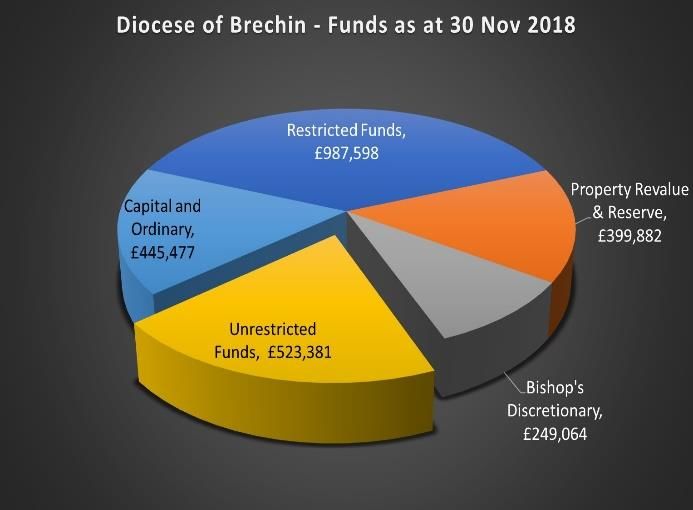
Scottish Episcopal Church
                              DIOCESE OF BRECHIN
                            Scottish Charity No SC 016813
            Agenda for Diocesan Synod – Saturday, 7th March 2020
 9.30am   Registration and Coffee
10am      Synod Eucharist and Charge
10.45am   Commencement of business which will consist of the following sessions
          Session 1: 10.45am – 11.45am: Mission & Ministry
          Session 2: 11.45am – 12.45pm: Governance & Diocesan Constitution
          Lunch:     12.45pm – 1.30pm
          Session 3: 1.30pm – 2.30pm: Elections & Finance

Session 1    10.45am – 11.45am: Mission & Ministry
                • Opening Business
                   Roll Call of Members
                   Minutes of previous Diocesan Synod March 2019
                   Minutes of previous Diocesan Synod September 2019
                 •   Diocesan Mission & Ministry
                     Diocesan Statistics
                     Clusters & Transitions
                 •   Environmental Issues & Climate Change
                     Diocese of Swaziland Synod 2019: Environmental Motions

                       Motion: “That this Synod receive the Diocese of Swaziland synod
                       motions on Climate change, plastics and season of creation” (see
                       attached paper)

                     Review Motions received from the Diocese of Swaziland:

                       Motion: “That this Synod pass the actions in these motions, in
                       forms appropriate for Scotland, to the Diocesan Council and the
                       charges of the Diocese of Brechin”

                       Motion: “That this Synod pass the actions from the Diocese of
                       Swaziland synod motions on climate change, plastics and season
                       of creation to the Provincial Standing Committee for inclusion in
                       the business of the Scottish Episcopal Church General Synod
                       2020”
                 •   Questions on reports received:
                     In this session the following reports will be received as read:
                         • Report from Diocesan Mission Officer
                         • Report from Diocesan Ministry Officer
                         • Report from Diocesan Companion Links Officer
                         • Report regarding Diocesan Youth activities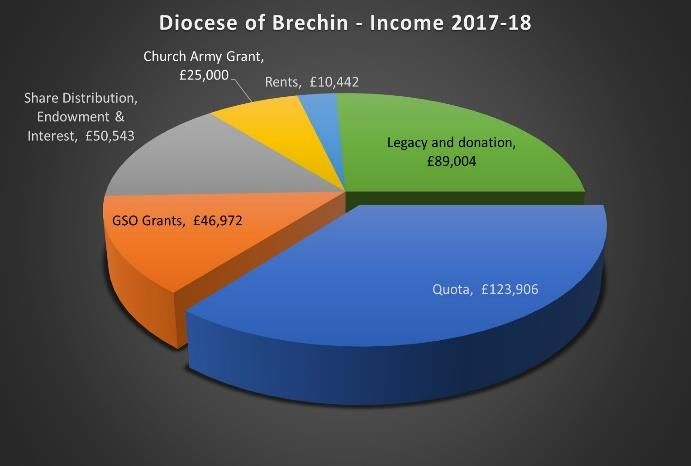
Session 2   11.45pm – 12.45pm Governance & Diocesan Constitution
               • Review and Revision of Diocesan Constitution
                  Summary of proposed changes
                    Motion: “That this Synod approve the amended Diocesan
                    Constitution and direct the Diocesan Council to proceed to make
                    the changes in governance, structures and trusteeship”
               •   Questions on reports received:
                   In this session the following reports will be received as read:
                       • Report of the Diocesan Council
                       • Report from Diocesan Protection of Vulnerable Groups
                            Officer
                       • Report from Diocesan Buildings Committee
                       • Report on Diocesan Communications
                   Lunch
Session 3   1.30pm – 2.30pm: Elections & Finance
               • Elections: (The Dean will take the chair of the Synod)
                  Diocesan Elections & Appointments (on approved constitution)
                  Provincial Elections & Appointments
               • Finance
                  Annual Report & Accounts for 2018-19
                  Deficit Reduction Progress Report
                  Transitional Ministry Funding Report
                  Budget/Quota for 2019-2020

                      Motion: “That this Synod approve the budget and quota for
                      financial year 2019-2020 as presented”

                   Date of Next Meeting of Synod: Saturday 6 March 2021

                   Confirmation of the Acts of Synod.

                   Final Prayers, the Blessing, Dismissal

                   Conclusion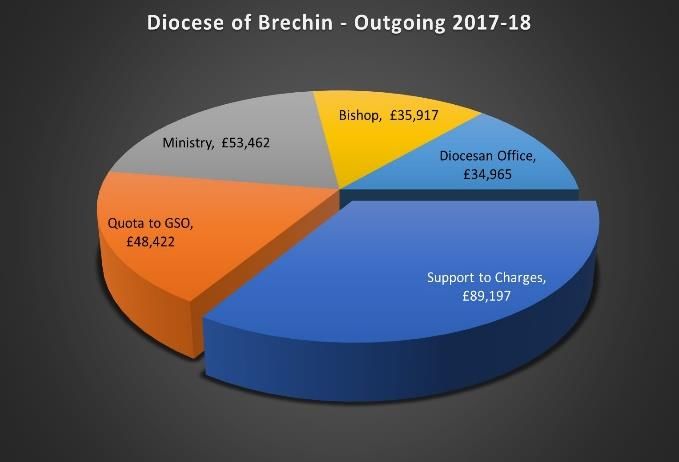
Session 1 Mission & Ministry

Minutes of the Meeting of the Brechin Diocesan Synod
Held on Saturday, 9 March 2019 at
St Ninian’s Church, Kingsway East, Dundee DD4 7RW

Synod Eucharist
The Eucharist was celebrated at 9.30am. Bishop Andrew presided, assisted by Reverend Helen
Bridger.

The bishop gave the charge as the sermon in the eucharist:

       “Greetings to you all – thank you for coming to our Synod for 2019! You have had a busy
       year as a Diocesan Synod in 2018 – electoral synods as well as usual business – so I am
       grateful for all the work that you have done.
       “This charge is here, as the sermon in our Synod Eucharist, to place it at the heart of our
       worship, of our encounter with God. Everything we do is about proclaiming the Gospel of
       Jesus Christ: in worship, in community life, in outreach: and every decision that we make
       must be prayerful and rooted in the power of the Holy Spirit!
       “This is my first time with you in Synod as your Bishop – maybe I should be wearing my ‘L’
       Plates now and as I travel around Brechin. I am the new boy here! I am very conscious
       that you will have met in synod many times and have heard many ideas, suggestions and
       directions about the way we should be going as a diocese: so what new insights can I bring
       as your new bishop? We talked about this as part of your electoral process (the last time I
       addressed the Synod here in St Ninian’s!).
       “Firstly, I want to share the one overwhelming feeling I have gained from my short time with
       you: and that overwhelming feeling is encouragement!
       “In the six months that I have been your bishop I have come to almost all the communities
       of the diocese to share worship and fellowship: and I have met wonderful, faithful disciples
       in all those church communities. It has been a spirit-filled experience to meet you, to start
       to learn your stories and to start to share your hopes and fears for our future as a church.
       “It has been encouraging to meet so many leaders, lay and ordained, who are ministering
       so faithfully in our communities. The Province and the Diocese have plans to support and
       grow those leaders and others in that ministry.
       “I am also encouraged by the various mission and ministry initiatives that my predecessors
       put before you: plans to share ministry in groups of charges; plans to develop
       congregational confidence and outreach; plans to become outward focused as well as
       strong worshipping communities. I can understand why there might be a bit of cynicism
       about ‘yet another’ plan from ‘yet another’ bishop: so we are putting those existing plans, in
       various forms, into action. We’ll hear more about that in the Synod business a bit later:
       let’s get on and do some of this!
       “This next piece of encouragement is one that is really important: I am also very
       encouraged as I have engaged with the finances of the diocese. Allan, and Admin Boards
       over the years, have done an effective job of stewarding the diocese’s resources. You, in
       your charges, are all very gracious and generous in supporting the work of the diocese
       through quota: it can feel quite a burden (I have been there as a charge rector for many
       years) so I thank you!
       “This means we have a sound financial base in the Diocese of Brechin, with enough
       historical funding to give us time to make decisions where our immediate priorities will lie.
       And I want to start some conversations in Synod today about freeing up, prudently, some of
       that historical funding to let us run new projects to help us in our lives as churches and to
1|Page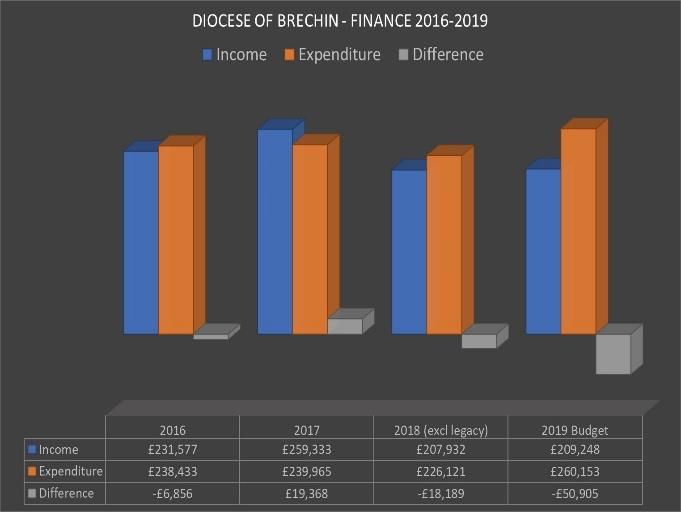
help us make changes that we MUST make to let the Scottish Episcopal Church flourish in
       the future.
       “The Gospel reading, we just heard has a stark but encouraging Lenten message for us,
       with Jesus teaching his disciples.
              “Then (Jesus) said to them all, ‘If any want to become my followers, let them deny
              themselves and take up their cross daily and follow me. For those who want to save
              their life will lose it, and those who lose their life for my sake will save it.” (Luke
              9.23-24)
       “What does that look like for us, as Christians, in our charges and in our diocese? What
       does it mean to deny ourselves? What does it look like to take up our crosses? What do we
       do to be ‘followers’ of Christ? This whole idea of losing our lives for the sake of Jesus is at
       the heart of Christian discipleship and is at the heart of all that we do as a church and as
       Christians…
       “We have to be willing to trust God, we have to be willing to deny our fears and cynicism,
       we have to be willing to take up new ways of letting ourselves be challenged, be built up,
       be made more confident, be turned into something new: following Jesus applies to the
       institution of the church just as much as each and every one of us…
       “And that message of denying ourselves, taking up our crosses daily and following Jesus is
       a message of the most life changing encouragement that we could possibly imagine!
       “So, I am excited and encouraged that we are here today for this Synod. We will hear
       reports on the life of the diocese and its churches, we will reflect upon the future and what
       that might look like. You will all have a chance to see and hear this new bishop of yours
       (‘L’ plates and all). But most importantly, we have a chance to gather, to worship, to spend
       time together and to help shape what it means to be followers of Jesus Christ, here, in this
       place, in the 21st century.
       “I thank you again for being here today: may we be encouraged and filled with the Holy
       Spirit in all of our business and all of our fellowship! In Jesus’ name, Amen.”

At the end of the eucharist, the bishop formally constituted the Brechin Diocesan Synod 2019.

Refreshments followed.
                                             Session 1
Bishop Andrew opened the first session of the Synod, accompanied by the Assessor, Mr Gregor
Mitchell (Diocesan Chancellor) and the visitor from General Synod Office, the Rev Dr Mike Hull,
Director of Studies of the Scottish Episcopal Institute.
Bishop Andrew presented Synod with a letter received from Bishop Alan Scarfe, Bishop of Iowa,
one of our Companionship dioceses:
       9 March 2019
       To Bishop Andrew Swift, Clergy and People of the Diocese of Brechin, Dundee, Scotland
       Greetings from the Clergy and People of the Diocese of Iowa in the Name of the Lord
       Jesus Christ.
       While you gather together in this first Synod as Bishop and People, we remember you in
       prayer, and wish God’s blessing on your procedures. We give thanks for our
       companionship in God’s mission and remember fondly your presence with us at the
       Diocesan Convention last October.
        As we look forward into the coming year, there are several opportunities for ministering
       together. Next month and in the summer, we anticipate engaging together with our smaller
Page |2
churches, as we consider what it means to be vital in mission though not very large in
numbers. In the late summer, we are making plans for our young people to complete the
three-fold pilgrimage with young people from the Dioceses of Swaziland, Brechin and Iowa,
as we host you in the late summer. And finally, God willing, we will be together in eSwatini
at the Synod of the Diocese of Swaziland in October.
Pray too for a successful capital campaign, GILEAD, during which we are all diocesan
funds raised will be tithed and shared among our three companion dioceses including
Brechin. All of these things are intended to strengthen our companionship and fulfil the
prayer that I often quote from Evening Prayer “O God, you manifest in your servants the
signs of your presence; Send forth upon us the Spirit of love, that in companionship with
one another your abounding grace may increase among us; through Jesus Christ, our
Lord. Amen”
In the love and peace of Christ,
+Alan Scarfe Bishop of Iowa
Roll Call of Members
The roll call of those present was represented by the signing in register. 57 were in attendance with
apologies received from 23.
Minutes of the Previous Meeting
Mrs Judy Robinson requested an update regarding section 6 – Report of the Standing Committee &
Diocesan Council, “St Margaret’s” should be amended to “St Martin’s”.
Mr Allan Duffus requested amendments to be made to section 17 – Annual Report and Accounts
2016: Budget and Quota 2017. “£11,859” amended to show the correct figure of “£118,539”. Also,
paragraph 6, “unrealistic” to be changed to “unrealised”.
With these amendments, the minutes from Synod dated 10 March 2018 were accepted.
Proposed: Very Rev Jeremy Auld
Seconded: Rev Canon Fay Lamont
Page |3Diocesan Reports Received – the first four reports were received
• Report from Diocesan Mission Officer – Kerry Dixon thanked for his report and all his work.
• Report from Diocesan PVG Officer – Denise Herbert thanked for her report and all her work
as PVG Officer.
• Report from Diocesan Companion Links Officer – Pat Millar thanked for her report and all
her work as Companion Links Officer.
• Report from Diocesan Youth Officer – Bishop Andrew thanked Judey Struth and Denise
Scobie for all their recent work on the Network Youth project and thanked Robson in his
absence for this report. Mary Swift welcomed anyone who may be interested in assisting with
the Youth Network and made Synod aware that forms were available to leave contact
information.
All reports received with no questions.
Statistics
Bishop Andrew guided the Synod through the previous year’s church statistics from Advent 2017-
Advent 2018:
• Decrease of 83 out of 2124 of ‘belonging’ – 4% decline
• Decrease of 107 out of 1310 communicants – 8% decline.
• Number of Eucharists showed an increase in the year. This is a typo – more likely level.
• Total communions in the year – down 4%.
The underlying story is a gentle decline in numbers attending and worshipping. The same story is
repeated, overall, throughout Scotland and throughout churches in Scotland. There are exceptions:
churches that are remaining steady or even seeing growth. This is not necessarily do with the style
of worship or location or denomination.
The Rev Pete Mead raised concerns as to how the statistics are compiled. He stated that Arbroath
were currently recording numbers differently and it showed growth. He stated that the current way
of recording statistics would not show correct numbers until the end of a seven year period.
Diocesan Strategy
The Bishop spoke: How do we respond as a church to decline? There have been projects in Brechin
Diocese to share priests to cope with falling numbers (and finance): those can work but here have
often not ended that well. And it is hard work for churches, just standing still. It is hard work, looking
after our churches, worshipping and giving pastoral care.
What makes a church grow? There are so many theories and strategies one can follow: but a key
factor that the bishop suggested is confidence in leadership and in belonging to that church
community.
So what is the Diocesan Strategy? The Episcopal electoral process asked that question of
candidates. There is a danger of a certain cynicism in the Diocese. Each new bishop for over twenty
years or more has produced their strategy. “Sharing” with Bishop Neville. “Expand or Expire” with
Bishop John and ‘hubs’ or “Vision 2020” with Bishop Nigel. These all have good ideas, good analysis
and good reflection on the Diocese and its charges. But the cynicism comes from what has
happened. Each strategy was launched, work started to a greater or lesser extent, then the bishop
retired and the process started over again.
Our present diocesan strategy, as proposed by the present bishop, is to adapt and actually deliver
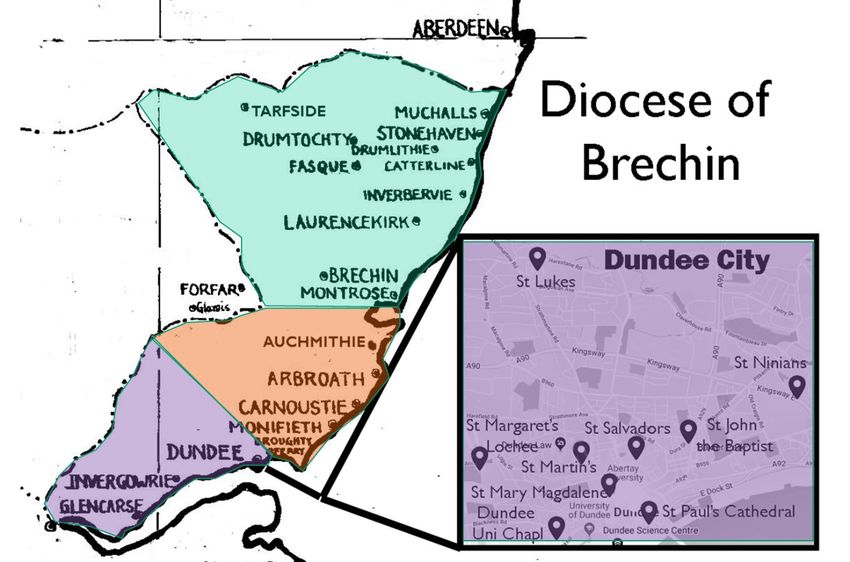
some of those projects and plans! The bishop presented a map of the Diocese.
Page |4“Sharing” and “hubs” – the strategies developed by Bishops Neville and Nigel – proposed grouping
the charges to share ministry/activity. The plan is to develop that idea in the North, East and City
areas (actual names to be confirmed) with groupings of charges, gathering as an to share worship,
share food, and share areas of common interest or where they can collaborate. This is NOT a plan
to merge charges, although some sharing of resource may be possible if charges decide this for
themselves.
These areas (now known as ‘Clusters’) will become a normal part of our life as a diocese and as
charges. We will get to know each other in them and we will receive input and guidance and training.
Objectives? To get to know each other better; to be part of something bigger than just charges; to
have a natural grouping that can lead to more sharing of worship leaders and strategic thinking about
our resources. The Diocese will support this process and work with you to organise the area events.
Aspiration: when we do something in the Diocese, the clusters will be natural grouping that we do it
in.
Pilot – the “North” day last year – leading to dates for Faith Sharing; Creative Worship and Practical
Sharing of e.g. grant application and property experience. East: a date set for an initial roadshow.
City – looking at a date in summer 2019 to start the process.
The Synod broke into table groups to discuss the Diocesan Strategy and raise questions and
clarification points. Back in plenary the members of Synod asked questions and gave feedback to
the bishop.
Session 2
Diocesan Reports Received – the next report was received
• Report from Diocesan Ministry Officer – Fay Lamont thanked for her report on vocations and
ministry and all her work in the year.
Her report was received by Synod with no questions.
Diocesan Strategy: Vocations & Lay Ministries
The bishop presented an overview of how we can grow and support the leaders (ordained and lay)
that we need to help our churches in worship and community.
Page |5“Clusters” of churches will be a way of working. But our churches have to be individually led, in
worship, in strategy and in governance. Priests – clergy – are the historical leaders. And the aim is
for every charge to have a clergyperson who is taking care of them, spiritually and practically. But
the reality of the 21st century church is that those priests may be shared between charges or may
be part-time and the work of ministry and mission will be shared with lay ministers. The lay
ministries that can support the life of the charges are also under review at a national level.
At the same time, the Scottish Episcopal Church (SEC) is changing the national system for
selecting clergy and lay readers. Rev Dr Mike Hull, Director of Studies from the Scottish Episcopal
Institute (SEI) (which delivers the training for our clergy & lay readers), was the General Synod
Office (GSO) representative at the Synod this year brought greetings from GSO and then took part
in a dialogue on vocation and ministry with the bishop.
This dialogue included an overview of this new SEC system for selection and recruitment: what will
be different, how it should improve the process. The ministries in that system remain ordained
(including to the permanent diaconate) and lay readers – but the other lay ministries were
discussed/ These might be supported at a local level, with emphasis on training and formation in
dioceses as well as the offer of accessing elements of SEI training. Dr Hull also shared other SEI
news with developments in e.g. mixed mode training, numbers of students etc.
The bishop stated that it was planned to hold a Festival of Lay Ministry to explore and showcase
the range of lay ministries (post meeting note – the 2019 date was postponed to one in 2020).
Synod expressed thanks to Dr Hull for his greetings from GSO and his presentation and dialogue.
Session 3
Diocesan Reports Received – the final three reports were received
• Report of the Standing Committee & Diocesan Council
• Report from Diocesan Buildings Committee – Peter Sharp thanked for his report and all his
work in his role as Convenor and he has stepped down. This post is now vacant.
• Report from Information & Communications Officer – Karen Willey thanked for her report and
all her work. The bishop confirmed that Karen Willey has stepped down from Diocesan
Council but would continue with her role on the Provincial Information & Communications
Board.
All reports received with no questions and thanks expressed to the officers.
John Lansley commented on the success of the recent Buildings Committee meeting held on
Wednesday 20 March and found it to be very proactive and a vehicle to assist with changes within
charges.
The bishop informed Synod that Karen Willey and Doug Aitken were present today and were keen
to discuss any issues or ideas that Synod may have regarding communications and charge
websites. Synod were encouraged to leave contact details to receive any future information.
Page |6Diocesan Elections and Appointments
Dean Bridger took the chair to manage the electoral process.
Diocesan Officials
Diocesan Secretary Mr Michael Duncan Proposed by Very Rev Jeremy Auld
Seconded by Dr Cathy Mitchell
Appointed by Synod.
Diocesan Treasurer Mr Allan Duffus Appointed by Synod.
Synod Clerk Rev Kenneth Proposed by Rev Canon Fay Lamont
Gibson Seconded by Rev Ashley Cummins
Appointed by House of Clergy
PVG Officer Rev Denise Appointed by Synod
Herbert
Diocesan Council 2019-20
*The Bishop Rt Rev Andrew Swift
*The Dean Very Rev Dr Francis Bridger
*Diocesan Secretary Mr Michael Duncan
*The Treasurer Mr Allan Duffus
*The Convener Diocesan Buildings Committee No nominations, Diocesan Council to
seek temp Convener
*Mission Officer Rev Canon Kerry Dixon
*Ministry Officer Rev Canon Fay Lamont
*Ex Officio
Appointed by their respective houses:
Clergy Member (2015-2019) Very Rev Jeremy Auld
Clergy Member (2015-2019) Vacant
Lay Member (2015-2019) Mrs Patricia Millar
Lay Member (2015-2019) Prof Peter Sharp
Nominations had been received for the Very Rev Jeremy Auld (second term) and Rev Kenneth
Gibson (first term) as Clergy representatives on Diocesan Council.
Nominations had been received for Mrs Pat Millar (second term) and Professor Peter Sharp
(second term) as Lay Representatives on Diocesan Council.
Diocesan Buildings Committee
Convener No nominations, Diocesan Council
to manage convenorship
*Diocesan Secretary Mr Michael Duncan
*The Dean Very Rev Dr Francis Bridger
Member (2014 - 2018) Dr David Bertie
Member (2014 - 2018) Mr Mel Christie
Member (2019 - 2023) Mrs Judy Robinson
Member (2018 - 2022) Rev Clive Clapson
Member (2018 - 2022) Mr Peter Nelson
Member (2018 - 2022) Dr Aileen Black
Member (2018 - 2022) Dr Martine van Ittersum
Member (2018 - 2022) Mr John Lansley
*ex officio
Page |7The bishop reminded Synod that a) no convener had been nominated and b) there were too many
members on the Diocesan Buildings Committee for current Diocesan Constitution. He proposed
that the Diocesan Council will manage convenorship on an ad-hoc basis unless a new convener is
found before the next Synod. Rather than dismissing members of the current committee the bishop
suggested leaving membership as it was and having a review at the 2020 Diocesan Synod.
Provincial Elections and Appointments 2019
Members of General Synod.
The Brechin system is to have four members of each house (clergy/laity) appointed based on
charges and two elected by Synod. This last occurred in 2018, so no elections in 2019. Alternates
are elected each year.
House of Clergy
2018 – 2021
St Pauls Cathedral Very Rev Jeremy Auld
St Martin’s/St Margaret’s Very Rev Dr Francis
Bridger
Stonehaven/Catterline/Muchalls Vacant
Brechin/Tarfside Vacant
Diocesan Elected Rev Peter Mead
Diocesan Elected Rev Canon Fay Lamont
Three alternates elected by Diocesan Synod 2019
1. Rev Canon Kerry Dixon
2. Rev Denise Herbert
3. Ven Canon Ian Young
House of Laity
2018 – 2021
St Mary Magdalene Mrs Judy Robinson
St Ninian’s/St Luke’s Mrs Vina Strachan
Montrose/Inverbervie Mr Harold Jack
Monifieth/Carnoustie Mrs Jean Forbes
Diocesan Elected Dr Jaap Jacobs
Diocesan Elected Mr Graeme Stirling
Three alternates elected by Diocesan Synod for 2019
1. Prof David Balfour
2. Mr Paul Hastie
3. Dr Aileen Black
Members of Boards and Committees of General Synod
Mission Board Rev Canon Kerry Dixon (2019-2023)
Alternate – Very Rev Dr Francis Bridger
Administration Board Prof Peter Sharp (2016 – 2020)
Alternate – Mr Allan Duffus
Information & Communication Board Mrs Karen Willey
(2016-2020)
Faith & Order Board Clergy – Very Rev Dr Francis Bridger (2019–23)
Laity – Dr Jaap Jacobs
Members of the Provincial Panel for Episcopal Elections
Clerical Member (2018 – 2021) Rev Canon Fay Lamont
Lay Member Prof Peter Sharp OBE
Page |8The dean having completed the elections, the bishop resumed as chair of the Synod.
Canonical Changes: Diocesan Advisory Votes
The Diocesan Synod is asked to vote on Canonical changes that have passed their first reading at
the General Synod the year before. These Diocesan Synod votes are advisory for the General
Synod’s second and final vote the next year.
• Canon 35 (Of the Structure, Furniture and Monuments of Churches, and the Due Care Thereof):
Section 1 of the Canon was altered to include reference to stained well as painted windows and
also to extend the scope of the Canon to include the curtilage of any church used for public
worship. A similar reference to curtilage was included in Section 3 of the Canon. There were
significant exclusions to this amendment (e.g. the interior of rectories & halls, the design of grave
markers. There would be constraint on e.g. the planting of trees around churches, the exteriors
of relevant halls and rectories and the installation of e.g. car parking areas.
Resolution 3 under Canon 35 was altered to delete reference to the Architectural Heritage
Society of Scotland, the Scottish Civic Trust and local civic or amenity societies affiliated to the
Scottish Civic Trust as bodies to whom notice of any proposed change to a listed building was
required to be advertised. These bodies generally do not respond to consultation queries and
latterly have requested that they are no longer contacted with these requests.
The Synod discussed the proposal around the amendments to Canon 35 then voted.
In favour – 31
Against – 2
Abstaining – 0
• Canon 52 – Boards & Committees
Canon 52 (Of the General Synod): Section 23 of the Canon was altered to delete reference to
an Information and Communication Board
Karen Willey, who had served on the I&C Board for some years presented her report to this
change. She said:
“What I can add to the report is my personal experience of attending I and C Board
meetings for the last 6 years – immense frustration. In preparing for this talk I had a look
back at some of the meetings I had attended - the work we have done has involved trying
to standardise diocesan crests, trying to work out who is responsible for the red book,
ongoing, rewording the welcome leaflets for the SEC, rubber stamping the making of the
provincial video and hearing about press releases from the GSO – not the sharing of ideas
and practical help with websites I had hoped for. Also talking about these rather than
doing them.
“The board is a group of decent people, feeling dissatisfied that we aren’t doing what our
church needs us to do. Clearly there is much that is needed in terms of good
communication, both internal and external, in terms of churches and dioceses sharing good
practice, Boards and committees communicating what they do, and how we use modern
communication tools to further our mission. But this is not what the Board does and it is
not in the remit of the board to do this.
“Communication in our church, like in many other organisations, is done by professionals
and as a result the I and C Board has become ineffective. That is not to say that it should
all be left to the two paid professionals at the GSO: it should be embedded in everything we
do and in all boards and committees rather than being a separate board.
“The two paid professionals at the GSO, the director of comms and the digital
communications co-ordinator, are not managed by the I and C Board but by Standing
Committee which is made up from laity and clergy from different dioceses. There is
Page |9representation from the dioceses on the Provincial Boards and Committees so we would
not be losing influence by this move.
“I am passionate about communication in the church. Without it we can do no mission, and
we cannot be in good relationships with one another. I think communication is vital to our
work and worship as a church, but there are better ways of going about it than having
people who do it, the professionals and people who meet and talk about doing it, the I and
C Board. I firmly believe we should dissolve the board in order to make way for
communication methods more suited to the 21st Century.”
Discussion took place on the canonical change and information and communications in the life
of the church at every level.
• Diocesan Synod voted:
In favour – 33
Against –0
Abstaining –0
Finance
Annual Report & Accounts – 2017-2018
Mr Allan Duffus, Diocesan Treasurer, presented Synod with the Annual Report and Diocesan
financial statement.
The bishop then presented some amplification of the report with the following graphics for income
and expenditure.
Income for 2017-2018
P a g e | 10Outgoing expenses for 2017-2018 The funds of the Diocese as at the balance sheet at the year-end were shown in the following graphic. The grey segment is not strictly diocesan funds, as this is the capital behind the Bishop’s Discretionary Fund and is not in the control of Diocesan Synod: The unrestricted reserves (the yellow segment) are ones that the Synod might draw down for mission or ministry purposes as it saw fit. P a g e | 11
Budget 2019-2020 & Quota
The budget for 2019-2020 was then presented by Mr Duffus, with the request that Synod approve
this budget and the related quota request from charges.
Queries were addressed to Mr Duffus and the chair

   •   Dr Martine van Ittersum questioned the specific items of Office Expenditure, telephone,
       insurance costs, repairs to property and queried where these figures came from. Mr Duffus
       explained that all budgets are best estimates based on previous years’ outturns.
   •   Rev Peter Mead questioned the £50,000 budget deficit and requested that a budget forecast
       be produced for the next few years to show how this deficit would be reduced.
       Mr Duffus and the bishop agreed to this proposal, noting that deficits would have to be met
       from cash and investment reserves.
   •   Rev Clive Clapson raised his concerns with St Salvador’s accounts submitted to the Diocese
       and therefore to the quota levels that would be requested from the charge. He needed to
       confirm but thought there was an error and will report back when its clarified. This would be
       investigated between the charge and the Diocese.
The bishop presented a graphic on unrestricted income over the past few years and the proposed
budget for the year ahead.

The bishop explained that this filtered out the restricted elements and an £89k unrestricted legacy
received in 2017-18, so the unrestricted narrative is one of small deficit or small surplus outcomes
on the past few years, depending on the detail of each year’s activities.
The coming year’s larger budget deficit is not a drastic change in this direction. The support from
GSO for Ministry (Grants for Ministry) has been greatly reduced, a bishop is now appointed and is
being paid for and various charges receive different levels of financial support for their mission and
ministry. The deficit could be reduced by setting a higher level of quota, but this was not felt to be
fair or reasonable for the charges.

P a g e | 12
The bishop stated that the deficit budget is a sustainable way of moderating this quota increase to
a smaller level while we take the time to plan for alternative income, cost constraint or big decisions
on the future of charge financial support. The bishop suggested that the budget and quota as
presented is credible and pragmatic, given planning and the right decisions in the next few years.
Dr Jaap Jacobs proposed accepting the deficit budget resolution with a Rule 10 motion with five
amendments, seconded by Dr Martine van Ittersum. The Rule 10 motion was accepted by the
bishop as chair, noting that the conditions for a Rule 10 motion might not strictly have been met
but the issues raised were important. The text was fine-tuned for some time in the Synod,
producing the following motion:
“That this Synod resolves to approve the budget and quota for 2019, subject to the
following conditions:
1) that the Diocesan Council shall within a reasonable period of time provide to members of
Diocesan Synod a full and complete breakdown of the item “Shortfall on Stipend Support”
under “General Expenditure”;
2) that the item “St John the Baptist Fund” under Office Income is raised to be equal to the
amount of the item “Repairs to Property” under “Office Expenditure”;
3) that the amount of item “Lambeth Conference” is amended from £5000 to £4950;
4) that Diocesan Council shall within a reasonable period provide to Members of Diocesan
Synod a revised overview of “Quota Receivable from Churches”, taking into account the
changes outlined in points 2 and 3 above;
5) that Diocesan Council shall within a reasonable period provide to members of Diocesan
Synod a forecast budget for the next 3-5 years.
Proposed by Dr Jaap Jacobs
Seconded by Dr Martine van Ittersum
Each amendment was then voted for.
Votes cast:
1. Yes – 27, No – 2, Abstain – 2
2. Yes – 29, No – 1, Abstain – 2
3. Yes – 27, No – 1, Abstain – 4
4. Yes – 28, No – 0, Abstain – 2
5. Yes – unanimous
Motion for approval of Budget & Quota were therefore all agreed subject to the amendments.
The bishop thanked Mr Duffus for all his work.
The bishop proposed calling an Autumn Synod later in 2019 to discuss the Diocesan Strategy and
the Finances and to respond to the Rule 10 amendments, at a date to be confirmed.
AOCB
Dean Bridger thanked the bishop for chairing the Diocesan Synod.
He also confirmed that he intended to step down as dean from the middle of May 2019 to concentrate
on his ministry at St Mary’s Broughty Ferry and St Martin’s Dundee. He was thanked by the bishop
for his work as dean.
Date of Next Meeting of Synod
Saturday 7 March 2020. The bishop confirmed the Acts of Synod and said final prayers. He then
gave the blessing and dismissal. The Synod closed.
P a g e | 13Minutes of an Autumn Meeting of Brechin Diocesan Synod
Held on Saturday, 28th September 2019
Diocesan Centre, St John the Baptist, Diocesan Centre, 38 Langlands Street,
Dundee, DD4 6SZ.
Synod Eucharist
The Eucharist was celebrated at 9.30am. Bishop Andrew presided and preached and constituted
the Synod.
1. Roll Call of members
The roll call of those present was represented by the signing of the register. 46 were in attendance
with apologies received from 16.
2. Voting Rights
Clergy – those holding a commission, licenced, instituted incumbents are entitled to vote.
Laity – Each charge has 1 vote. If the Lay Representative is absent, then the alternative Lay
Representative can vote. In addition, lay members of General Synod (elected) and certain
members (canonically) can vote.
3. Deficit Reduction Planning - Progress since Spring Synod
There were five elements in the motion passed at Spring Synod (see minutes of the meeting)
Action 1
In the budget Stipend Support was estimated at a total of £105,436 leaving a shortfall of £41,882.
The figure of £66,000 in the budget presented excluded the grant of £25,000 from the Church
Army leaving a shortfall of £66,882. The actual budget shortfall funded from Diocesan funds is
therefore £41,882 and is included in the forecast budget.
Action 2 (St John the Baptist Repair item) The budget has been amended as directed.
Action 3 (Lambeth Conference precision item) The budget has been amended as directed.
Action 4
Quota receivable from churches has not changed as a result of the minor changes above.
Action 5
Forecast Budget: +A explained the work done so far and reported that Council is working towards
a projection in discussion with supported charges. It is anticipated that more progress will have
been made by the Spring Synod in 2020.
Thank’s were expressed to the Finance Working Group; reporting will be on-going at future
synods.
4. Mission Strategy
Bishop Andrew made a presentation.
Three strands: Clusters; Transitions; Support
Clusters
Geographical groupings for mutual support, training and other activities. Each cluster
decides for itself what matters and linkages/mission partnerships may subsequently
emerge.
There are three planned pilots: Montrose/Brechin/Inverbervie
P a g e | 14Stonehaven/Muchalls Dundee.
Transitions
This is being discussed in the American Episcopal Church, the Church of Scotland and is
being developed and planned to be rolled out throughout the SEC.
The strategy is to help churches who have no priest or not enough money to pay for a
priest by themselves or uncertainty about the future.
The churches will work in partnership with the diocese for a fixed period with the diocese to
form a ministry for a fixed period of time to a) support the charges and b) produce plans
and a direction for the future sustainable life of the charges. The diocese may fund (where
required) an element of this ministry, or the diocese will assist with recruitment, planning
and monitoring of the transitional ministry.
Support
The aim is to help ordained and lay ministries flourish through providing training for every
charge and pastoral support for all in licensed and authorised ministries.
This three-strand approach is not a blueprint for what to do but to create an environment where
healthy, sustainable church community can flourish.
It is not a top-down mission strategy that tells charges what to do; it is a programme to bring
health (spiritual and financial) to churches to let mission grow.
There then followed a period for group discussion with feedback.
The motion: “That this Synod receives the presentations on Diocesan mission initiatives and
will support the Council and Officers and others in developing and growing these
initiatives” was passed unanimously.
5. Money for Mission
Using Diocesan reserves.
Diocesan reserves for Strategy such as Transitional Ministries are limited.
Only unrestricted funds can be used. This stood at £523K in November 2018 and now is £680K in
September 2019.
A chart of the analysis of unrestricted reserves was presented. Any historical reserves can only be
used once. Short term measures without creating change would drain reserves and only put off
future cost cutting or other changes.
Policy on using Reserves
When is it acceptable to use this money?
The Bishop’s proposal was to use some of the reserves to fund the ‘Transitions’ from the Mission
Plan already presented.
Four questions for discussion were given to small groups:
1. Can the Diocese live with using reserves?
2. Is the proposal prudent enough?
3. Is the proposal radical enough?
4. Other feedback
After discussion, the Bishop presented an amended motion from that published in the agenda.
This motion as amended had the outcomes that are sharper and where synod will know the details
with on-going reporting to synod annually.
P a g e | 15The amended motion was therefore put:
“That this Synod authorises Diocesan Council to prudently use reserves (cash and
investment) to support mission and ministry projects, subject to the condition that each
project must:
a) be for a fixed period of time
b) have measurable outcomes
c) be supported financially by local charges as well as the Diocese
d) be outlined in a written agreement which is communicated to Diocesan Synod and
followed up by annual progress reports.”
The motion was passed unanimously.
6. AOB
The Rev Denise Herbert, Safeguarding Officer reminded charges that reports are required to be
made to AGM and copies sent to her.
The minutes of both meetings of Synod in 2019 will be dealt with at the Synod on 7 March 2020.
Vote of Thanks
Thank’s were expressed to Sharon for her immense work, to the catering team, the Assessor, The
Diocesan Secretary, Diocesan Treasurer and the Council.
The Dean expressed her thanks to the Bishop for his work at this synod.
Date of Next Meeting of Synod
Saturday, 7 March 2020
The bishop then confirmed of the Acts of Synod, said final prayers, and pronounced the Blessing
and Dismissal.
P a g e | 16P a g e | 17
DIOCESE OF BRECHIN - DIOCESAN SYNOD - 7 March 2020

STATISTICS (Returns relating to gender)

                           Persons of all ages      Persons on         Communicants on        Attendance on
      Name of Church         belonging to         Communicants'       Sunday next before    Sunday next before
                             congregation             Roll                Advent                 Advent
                             M     F      Total    M     F    Total     M     F     Total    M     F     Total
Dundee
Cathedral Church of St. Paul 70    104    174     65     83    148     42    61      103     53   77     130
Arbroath
St. Mary the Virgin          30     49     79     28     42    70      10    18      28      10   20     30
Auchmithie
St. Peter                     5     7      12      1     5      6       1     4       5      1     4      5
Brechin
St. Andrew                   30     58     88     27     54    81      12    20      32      12   20     32
Broughty Ferry
St. Mary                     30     55     88     30     52    82       9    22      31      10   24     34
Carnoustie
The Holy Rood                31     64     95     17     45    62       9    24      33      10   24     34
Catterline *Combined with Stonehaven
St. Philips
Drumlithie
St. John the Baptist          4     7      11      3     3      6       0     0       0      0     0      0
Drumtochty
St. Palladius                10     12     22      5     5     10       0     0       0      0     0      0
Dundee
St. Luke                     38     30     68     29     30    59      16    14      30      17   15     32
Dundee
St. Margaret                 13     30     43      6     18    24       3     8      11      3     9     12
Dundee * combined with St Martin's
St. John the Baptist
Dundee
St. Martin                   19     55     74      4     23    27       3    11      14      21   36     57
Dundee
St. Mary Magdalene           82    165    247     43     87    130     19    37      56      21   39     60
Dundee
St. Ninian                   41     84    125     21     74    95       8    26      34      8    28     36
Dundee
St. Salvador                 50     66    116     24     22    46      12    12      24      26   36     62
Dundee
University of Dundee          0     0      0       0     0      0       0     0       0      0     0      0
Fasque
St. Andrew                   10     16     26      6     11    17       2     5       7      3     5      8
Glencarse
All Saints                   35     51     86     21     35    56       5    10      15      5    10     15
Inverbervie
St. David of Scotland         2     6      8       4     6     10       3     6       9      3     6      9
Invergowrie
All Souls                    31     39     70     12     16    28       4     7      11      4     8     12
Laurencekirk
St. Laurence                 24     54     69     13     23    36       4     4       8      5     4      9
Monifieth
Holy Trinity                 34     28     60     30     24    54      13    15      28      13   15     28
Montrose
St. Mary and St. Peter       24     41     65     22     32    54       9    16      25      9    16     25
Muchalls
St. Ternan                   19     29     48     16     21    37       7    13      20      7    13     20
Stonehaven
St. James                    54     69    123     30     41    71      10    10      20      11   11     22
Tarfside
St. Drostan                   6     9      15      5     7     12       1     2       3      1     3      4

P a g e | 18
Cluster & Transitions
Slide presentation by Bishop Andrew
Environmental Issues & Climate Change
Diocese of Swaziland Synod 2019: Environmental Motions:
The following motions were presented in October 2019 at the Diocese of Swaziland Synod. Brechin
have been asked by +Ellinah to receive and debate them at our Synod.
They will need adapting for the SEC and Scotland, we will do this at the Synod.
Season of Creation
Proposer: The Right Rev. Ellinah Wamukoya
Seconder:
Care for creation is our mandate as the Church and noting that the Anglican Fifth Mark of Mission
calls for the care for creation:
Resolves that:
• All Parishes of the Diocese of Swaziland observe the Season of Creation, to raise
awareness, pray and take action towards Creation care.
• The Season of Creation readings as may be provided are considered in this season.
• All Parishes appoint an Environmental coordinator to facilitate environmental education and
ensure that materials from the Provincial Environment Office is disseminated at their
Parishes and ensure the environment ministry is rolled out in their Parishes.
• Promote the occasional holding of services outdoor, in natural settings in order to connect
people to nature.
Combating Plastic Pollution
Proposer: The Right Rev. Ellinah Wamukoya
Seconder:
This Synod noting that:
It is becoming increasingly clear that plastic is proving to be extremely damaging to the health and
well-being of people and the planet;
And that the quantity is polluting water, air and land and threatening the survival of millions of
species;
And that this applies in particular to micro plastics which can enter the respiratory system and the
blood stream;
Nothing that: Kenya, Rwanda and other African countries have banned plastic bags.
This Diocesan Synod respectfully request;
• The Bishop to communicate to the Chairperson of Swaziland Council of Churches that
member churches under the Council of Churches start having a Dialogue on use of plastics
in the country and find solutions and recommendations to make the policy makers.
We further request that the Bishop and all Clergy and Guild leaders to encourage all parishioners
to:
1. Put pressure on local shops to stop using non-biodegradable plastic bags
2. Combat plastic pollution by joining with local communities/churches in clean-up
P a g e | 193. Support the Bring Your Own Bag (BYOB) Campaign and pledge to stop using single-use
plastic bags and encourage parish sewing groups to make materials bags and both income
generating project and environmental project.
Wildfires
Proposer: The Right Rev. Ellinah Wamukoya
Seconder:
This Synod noting:
The damage caused by Forest Fires on Biodiversity, commercial forest, household property
damage, human life, livestock and wile animals;
And also recognising the contribution of commercial forest in the country’s economy through taxes
and job creation and how forest fires have hindered forest companies and the society in general to
reap most benefit from forest investment.
This Diocesan Synod respectfully request;
• The Bishop to communicate to the Chairperson of Swaziland Council of Churches that
member churches under the Council of Churches start having a Dialogue on the issue of
Forest Fires and finding solutions and recommendations to make all affected stakeholders
and policy makers on the issue of forest fires.
• Also the Council of Churches collectively put pressure on the Legislative body of the country
to pass polices and regulations on use of veld fires which will be more applicable to today’s
world over the old Grass Fire Act 1955
We further recommend that the Period of April – September, which is the Fire Season, Parishes
should start raising awareness about the damage of veld fires to the environment and social
economics.
Climate Change
Proposer: The Right Rev. Ellinah Wamukoya
Seconder:
This Synod, recognising:
How climate change has affected the Agriculture sector and food security, Water sector, Health
Sector, Biodiversity and ecosystems in the country:
And also recognising that of all the most affected sectors by climate change; most of the rural poor
depend for their livelihood and women and girls are the most affected;
Respectfully requests;
• The Bishop to communicate to the Chairperson of Swaziland Council of Churches that
member churches under the Council of Churches start having a Dialogue on climate change
issues to find the role that the church can play in the country on climate justice advocacy and
finding adaption and mitigation measures that can be applicable within the church as means
of taking actions
• The Council of Churches start looking for funding to run Climate Actions
P a g e | 20We further resolve that:
1. Parishes Embark on Rainwater harvesting in Churches and Rectories and their individual
households
2. Planting vegetable gardens for income generation and food security
3. Teach Parishioners about Climate Smart Agriculture
4. Use of Energy serving light bulbs and appliances and invest in solar geezers in rectories
5. Invest in renewable energy projects where possible and applicable
6. Encourage planting of trees as Carbon sinks in special occasion such as Baptism,
Confirmation, wedding anniversaries and birthdays and/or funerals
P a g e | 21Mission Officer’s Report
Diocesan Synod March 2020
Clusters
Following a number of meetings across the diocese the three Clusters have begun to take shape.
Work is currently being done to identify a link person in each cluster with the aim of aiding
communications. While there has been some good sharing across some of the clusters there is
more work to be done to fully establish the identity and purpose of each of the clusters.
Centre of Mission
The Centre continues to reach out beyond the confines of the church. Stuart Budden left the
centre of mission in November and it was decided that this was a good opportunity to take stock of
the scope and direction of the Centre of Mission. This work is being led by the Bishop.
Attendance at Café Church Has Continued to grow and outreach through Soup and Soul, Pirate
Monks and Soul sisters is continuing.
AWA at Café Church
Mission Board
1. Next year has been designated at a year of pilgrimage. There are provincial pilgrimages to
the Holy Land planned and each Diocese is asked to plan their own pilgrimage. The
Diocese of Brechin has tentative plans for a pilgrimage across the diocese taking in a visit
most charges and or holy sites. A pilgrimage badge has been designed and will be given
to all who go on pilgrimage. According to Pope Benedict XVI to go on pilgrimage really
means to step out of ourselves in order to encounter God where he has revealed himself,
where his grace has shone with particular splendour and produced rich fruits of conversion
and holiness among those who believe.
2. Work is being done on understanding intentional discipleship and a working group chaired
by Richard Tiplady has been set up. The group has met once so far, and has begun to
scope out the wide range of views on what intentional discipleship means. It had however
concluded that there is a close connection between discipleship and evangelism since both
involved an ability to articulate matters of faith. The Group has also raised the idea of
holding some form of cascade conference or provincial conference to address intentional
discipleship.
3. The Church in Society Committee have decided to focus on one main issue in future
namely the climate crisis and hope to show congregations what steps they themselves
could take as well as speaking truth to power. The hope is to build towards the COP 26
Conference in Glasgow in 2020 and the Committee has set up a working group on climate
change. The central theme for the Lambeth Conference 2020 is the climate crisis.
Rev Canon Kerry Dixon
Mission Officer
kerry.dixon@churcharmy.org
P a g e | 22Ministry Officer’s Report Diocesan Synod March 2020 Our baptismal vows in the Scottish Episcopal Church call and commit us to minister in God’s Church, to proclaim the good news, serve Christ in all people and to work for justice and peace, as well as to continue our faithful ministry of Christian worship. Some members of the Scottish Episcopal Church. are called to minister in particular ways. As lay people through their local congregation and/or in a wider authorised public ministry. But it is vital for the life of the church that we all carry out our ministry as we are called and to encourage people to do this was my task as Diocesan Ministry Officer. From June 2019 the job of Ministry Officer was handed over from Diocesan level to a full time Provincial Director of Ordinands (PDO) who was the former Dean of Glasgow and Galloway the Rev Ian Barcroft. The PDO is appointed by the College of Bishops and advises them directly. There are many different forms of authorised ministry including: Lay Readers who are called to preach and teach as lay theologians and are often involved in pastoral work too. They may take services using the Reserved Sacrament, and also funerals. Permanent Deacons who are heralds of God’s kingdom, proclaiming the good news in church and community. Working closely with the Bishop and the priests with whom they serve, they seek out ways to serve others, and bring the concerns of the world back to the congregation in preaching and intercession, and encouraging Christians to bring the love of God to their communities in mission. Priests who are called to gather and nurture communities of Christians through preaching, teaching, sacramental ministry and pastoral care. They lead congregations in mission, encouraging God’s people to share the good news of the Kingdom with those around them. Chaplains who may be lay or ordained ministers called to work as a chaplain in a school, hospital or university. They will normally have had some experience of congregational ministry first. The Religious Life to which some are called may be as nuns, monks, friars or sisters may live in community, or continue their life outside as an oblate, or associate member. The new process If you think you or someone you know may be called to ordained ministry you should speak about it first with your Rector who will then contact the Provincial Director of Ordinands. In the case of Lay Readers speak to Dr Peter Smart Brechin Diocesan Warden of Lay Readers. The enquirer will then be referred to a ‘Vocations Advisor’ who can help to discern the ministry the enquirer may be called to and inform the enquirer about future steps. With the involvement of an Assistant Director of Ordinands (ADO), an Advisory Selection Panel and the Diocesan Bishop, the PDO will then decide the next most helpful step for them and formal training may begin at the Scottish Episcopal Institute (SEI). Current situation Brechin Diocese currently has Rev. Roxanne Campbell, our Diocesan Curate based at St. Ninian’s in Dundee under Bishop Andrew as her training incumbent and 3 enquirers engaged in the discernment process. Although hard work, I very much enjoyed being involved in this exciting step in someone’s life discerning their future vocation and ministry, but I am sure that the new process is robust and will introduce some fine leaders for the future of the church. Dean Diocese of Brechin & Ministry Officer flamont53@sky.com P a g e | 23
Companion Links Officer
Report to Diocesan Synod March 2020
During the past twelve months, our commitments to and involvement with our Companion
Dioceses in Iowa and eSwatini have continued and strengthened.
Contacts via social media platforms have been regular and purposeful and Companion
relationships have again been renewed and strengthened by visits, which always bring valuable
opportunities to renew existing friendships, share in worship, discuss issues of common interest
and make new connections.

Diocese of Swaziland.
The Anglican Diocese of Swaziland held the 18th session of its triennial Synod from 3rd – 5th
October 2019. Bishop Andrew and I accepted invitations to attend and flew to Johannesburg on
30th September, where we met up with a group from Iowa led by Bishop Alan. Onward travel to
eSwatini was by hired minibus, arriving in Mbabane on 2nd October.
Bishop Andrew and I returned home on 10th October.

The theme for this Synod was ‘Walking the Extra Mile’ and this was the focus of Bishop Ellinah’s
Charge to Synod. (Matthew 5:38 – 41,b).

During the opening Eucharist of Synod, at All Saints Cathedral, Bishop Andrew was installed as a
Canon of the Cathedral and I was installed as a Lay Canon. This was truly a great honour and a
very special occasion.

Following Synod, there were opportunities for Bishop Andrew to travel to visit on-going projects
and see some new initiatives. Both he and Bishop Alan were also invited to preside and preach at
church services.
I used this time to visit projects and to meet with Bishop Ellinah and Social Development Office
staff to review existing projects and to discuss some new proposals. There is a continuing need to
support feeding programmes for OVCs and the work of the HBC teams, along with the newer
parish vegetable gardens’ projects: these projects remain priorities for our financial support.

Bishop Ellinah is very keen to establish a new initiative – a Forest Bee Keeping Project. This is a
most worthwhile project both environmentally and in terms of future income generation.
I sought Bishop Andrew’s advice, since this new project needs start-up funding and we are not
able financially to add it to our current range of projects.
He had visited the wattle forest site of this proposed new initiative and has decided to make this
project the focus of his Diocesan Advent Appeal for 2020: information on the project has been
circulated to all charges. We hope that it will be well supported.

Our fundraising efforts for projects in eSwatini have continued and I am most grateful for all the
donations received.
At the time of writing, the total amount transferred to the Social Development account at the
Diocesan Office in Mbabane, since our last Synod, is £11,548. This is broken down to show
changing trends.
I made two successful grant applications in 2019:-
    1. SECMA - £1,500
    2. Far and Wide, Stonehaven. - £6,000.
Further Diocesan donations - £1,638. Total = £9,138

In addition, £2,410 was sent from one church, which for the past 11 years has raised funds to
support the education of some OVCs through secondary school and college or university.
This figure is recorded separately to make it clear that no diocesan donations are used to support
this project: it is managed solely by one congregation.

Total amount sent to the Diocese of Swaziland since March 2019 is £11,548.
At SECMA’s request, I wrote another article, which was published in their Autumn 2019 magazine.
I am most grateful to SECMA for their encouragement and continuing support for our Companion
Links work in the Diocese of Swaziland.

P a g e | 24
The grant from Far and Wide, Stonehaven was incredibly generous and made a real difference to the support we were able to offer to the Neighbourhood Care Point feeding programmes, the work of the Homebased Care teams and the parish vegetable gardens. We were also able to make a small grant to a new ‘indigenous chickens’ project, where chickens are being raised by some of the younger unemployed men and then used to improve the diets of children and are also sold to sustain the project. I am as always indebted to Keith Florence, Treasurer at Holy Trinity, for his continuing commitment to our involvement with our Companions in eSwatini and for his administration of all donations, funds and bank transfers. Donations large or small are most welcome at any time and as usual donations by cheque should be made payable to Holy Trinity Church and sent to me – my details are in ‘The Red Book’. Continuing to support essential projects over so many years presents challenges and sometimes creates anxieties, since our Companions rely on us and food prices have increased worldwide. From the figures, it can be seen that we are relying more now on successful grant applications, as donations from Charges are declining. Situations change and some Charges, which used to be actively involved in fundraising for Swaziland, are now less so: some people have retired from active involvement and for other congregations there are changing demands on available funds. Our people are generous, and I am extremely grateful to congregations and individuals who continue to support our Companion Links work. The figures show continuing support from our small diocese and reflect the kindness of our people. When arranging seasonal appeals or fundraising activities, please do remember the need for continuing support for our shared projects in the Diocese of Swaziland. In eSwatini, daily challenges of survival continue for the poorest people. While some problems may shift, the overall situation remains grim. I have first hand experience of the levels of extreme poverty, of the isolation of small communities in deeply rural areas - visited only sporadically because of access and transport problems - and of the cumulative effects of constant hunger, malnourishment, poor sanitation, ill health, lack of medical care and unsafe living conditions. My thanks and gratitude go to all who support our Companion Links’ work. It is encouraging to know that our people believe in what we are trying to do, in working alongside our Iowan and Swazi Companions. Diocese of Iowa. Young Adults’ Pilgrimage – Phase 3. Phase three of the young adults’ pilgrimages will take place in Iowa in August 2020. Along with the Diocese of Swaziland, our Diocese is invited to select 6 young adults – aged between 18 – 34 – to visit Iowa from 6th – 18th August 2020. The Brechin group for this pilgrimage will be led by Bishop Andrew and his wife Mary. A draft programme is now in place and promises an interesting range of experiences around outreach and mission, styles of worship, environmental protection, urban and rural life, social justice and traditions. Funding arrangements are agreed – travel costs will be provided for the Brechin participants and our Diocese will also assist Iowa by covering travel and living costs for two of the participants from the Diocese of Swaziland. Notice of and invitations for this visit were first circulated in February 2019 and then again in October 2019. Bishop Andrew will confirm the final group in February 2020. Small Churches Group: At our Diocesan Synod in 2019, I marked a hope expressed by Bishop Alan that “the Dioceses of Iowa and Brechin might work together more intentionally and explicitly on joint development projects around the particular characteristics and needs of small church P a g e | 25
You can also read


