Second edctp programme - second edctp programme
←
→
Page content transcription
If your browser does not render page correctly, please read the page content below
high-level conference on the

 second  edctpconference
                 programme
       high-level conference on the
      high-level         on the
 second edctp programme
second    edctp
   cape town, southprogramme
                    africa
   cape town,  south
          5 november 2012africa

  cape town,   south africa
       proceedings
         5 november 2012

               5 november 2012

      high-level conference on the

second edctp programme
  cape town, south africa
               5   november 2012
Towards the second EDCTP programme

The High-Level Conference was held as part of        is to accelerate the development of new and
preparations for the second EDCTP programme          improved drugs, vaccines and microbicides
(EDCTP2, 2014-2024). It aimed to provide a           against HIV/AIDS, tuberculosis and malaria
forum to discuss stakeholders’ needs, opportuni-     through a balanced partnership of European
ties and expectations, as well as an occasion to     national research programmes on PRDs with
endorse the programme and to announce com-           their African counterparts in collaboration with
mitments and pledges.                                the pharmaceutical industry and like-minded
                                                     organisations.
This meeting was supported by the European
Union through an FP7 grant to the support            The second EDCTP programme is expected to
action project EDCTP-Plus (FP7-304786). This         start in 2014 as part of the European research
report reflects the views of the authors. The        framework programme Horizon 2020. Its scope
European Union is not liable for any use that may    is based on the current objectives and achieve-
be made of the information contained herein.         ments and will be expanded to include: all
                                                     clinical trial phases I-IV including health services
EDCTP was created in 2003 as a European              optimisation research; other neglected infectious
response to the global health crisis caused by the   diseases; closer collaboration with industry,
three main poverty-related diseases (PRDs) of        like-minded product development partners
HIV/AIDS, tuberculosis and malaria. Currently        and development agencies; and collaborative
EDCTP is a partnership between 16 European           research with other developing countries outside
countries, the European Union and sub-Saharan        sub-Saharan Africa when possible and desirable.
African countries. The aim of the programme
Contents

Acronyms and abbreviations – 2

1. Executive summary – 3

2. Key achievements of EDCTP1 – 6
   Increased public and private investment in clinical trials – 6
   Building of clinical research capacity in sub-Saharan Africa – 6
   Aligning the European research landscape for PRDs – 7

3. The High-Level Conference on EDCTP2 – 8
   Opening presentations – 8

4. Lessons learned from EDCTP1 – 12

5. Towards EDCTP2 – 15

6. Closing session – 20

7. Discussion, analysis and conclusions – 23

Annex 1. Conference programme – 26

Annex 2. List of participants – 29
Acronyms and abbreviations

ACP                African Caribbean Pacific Group of
                   States
ANDI               African Network for Drugs and
                   Diagnostics Innovation
ARROW              Antiretroviral Research for Watoto
                   (children)
ARV                antiretrovirals
CANTAM             Central African Network for TB, AIDS
                   and Malaria
DART               Development of Antiretroviral Therapy
                   in Africa
DFID               (UK) Department for International
                   Development
EC                 European Commission
EDCTP              European & Developing Countries
                   Clinical Trials Partnership
EDCTP2             Second phase of the EDCTP
                   programme
EFPIA              European Federation of Pharmaceutical
                   Industries and Associations
EU                 European Union
FP7                EU Seventh Framework Programme
Gates Foundation   Bill & Melinda Gates Foundation
GSK                GlaxoSmithKline
KEMRI              Kenya Medical Research Institute
MEP                Member of the European Parliament
MRC                Medical Research Council
NEPAD              New Partnership for Africa’s
                   Development
PanACEA            Pan-African Consortium for Evaluation
                   of Anti-tuberculosis Antibiotics
PDP                product development partnership
PRD                poverty-related disease
SATVI              South African Tuberculosis Vaccine
                   Initiative
TASO               The AIDS Support Organisation
TB                 tuberculosis
UK                 United Kingdom
UNAIDS             United Nations AIDS programme
WHO                World Health Organization

                                  high-level conference on edctp2   2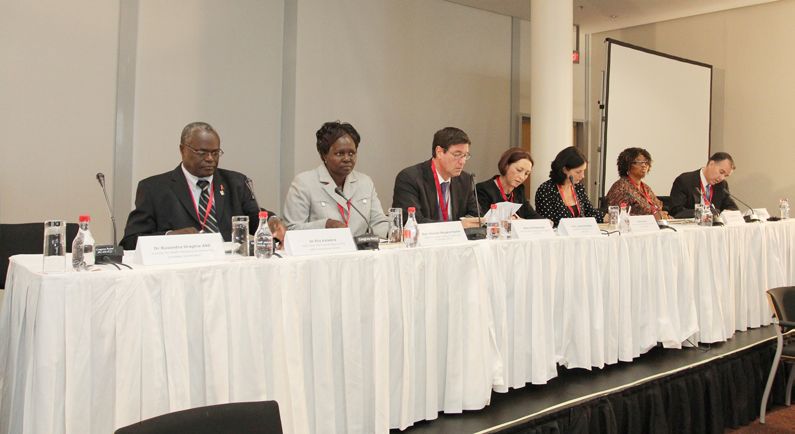
1. Executive summary

The European & Developing Countries Clinical       story for EU–Africa research cooperation”. She
Trials Partnership (EDCTP) is a partnership        said the fight against PRDs was a global
between Europe and sub-Saharan Africa.             challenge in which Europe could and must
EDCTP aims to accelerate the research and          make a major contribution. Appreciation and
development of new or improved drugs, vac-         continued support for the work of EDCTP was
cines, microbicides and diagnostics in the fight   also expressed by representatives from African
against poverty-related diseases (PRDs). During    and European countries, research institutions,
the Partnership’s first phase, which began in      the Bill & Melinda Gates Foundation, and
2003, funding has been provided to over 200        GlaxoSmithKline.
projects in 30 sub-Saharan Africa countries to
support research on HIV/AIDS, tuberculosis
and malaria. Currently EDCTP is funded by 16
European partner countries and the European
Union under Article 185 (ex Article 169) of the
EU Treaty. The anticipated second phase of the
programme (EDCTP2) is scheduled to begin in
2014 and will see a broadening of the remit of
EDCTP as under EDCTP2 neglected infectious
diseases will also receive attention. All phases
of clinical trials (I-IV) will also be included.

As part of preparations for EDCTP2 a high-
level conference was held in Cape Town,
                                                   Ms Máire Geoghegan-Quinn, European Commissioner for Research,
South Africa on 5 November 2012, in order to       Innovation and Science at the opening session
provide a forum to discuss stakeholders’ needs,
opportunities and expectations, as well as an      Many speakers highlighted the importance of
occasion to endorse the programme and to           equality within the Partnership. For example,
announce commitments and pledges. A further        Maria da Graça Carvalho Member of the
aim was to raise the level of public and private   European Parliament (MEP), described EDCTP
engagement in the programme. Invited partici-      as, “a genuine partnership with Africa, in which
pants included mainly African and European         African partners have retained a high degree of
high-level representatives from government,        ownership and leadership”. Nevertheless, the
industry, patient organisations and the research   need for African governments to participate
community. The 244 participants in the             more actively was stressed by several speakers.
meeting heard presentations from 15 senior         Also much referred to was the need to increase
speakers and also two panel discussions, each      the involvement of other partners – including
of which was followed by contributions from        industry, product development partnerships
the floor.                                         (PDPs), charities and foundations, and com-
                                                   munities themselves. It was regarded as essen-
The speakers were unanimous in praising the        tial that research supported by EDCTP should
achievements so far made by EDCTP and in           be translated into effective new products that
welcoming the broadening of the Partnership’s      reach those most in need.
remit. Máire Geoghegan-Quinn – European
Commissioner responsible for Research,             All of those who addressed the meeting
Innovation and Science – described EDCTP           emphasised that there is much that still needs
as “a beacon of hope” and “a brilliant success     to be done and that lessons should be learned

                                 high-level conference on edctp2                                                   3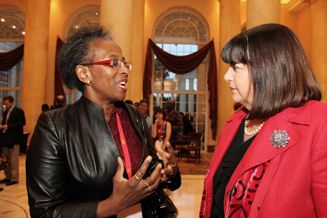
from what has been achieved so far. These            6. Ethics review and regulatory oversight –
lessons must be put to use in the preparation        These are essential aspects of clinical trials,
of EDCTP2. This was also clear from the panel        but they are often associated with unnecessary
discussions and the contributions from the           delays. EDCTP must continue its activities as
floor. Seven themes emerged from the meet-           a broker to find ways of reducing these delays,
ing that will be central in the planning of the      particularly through training, infrastructure
second phase of the programme.                       development and harmonisation of procedures
                                                     as appropriate.
1. Partnership and co-ownership – EDCTP’s
focus on these principles as a means of              7. Communication – Researchers, governments
achieving progress against the PRDs must be          and other partners are often poor communica-
maintained, but more effort should be made to        tors. Essential feedback is often lacking. Again
expand the range of partners and to ensure that      acting as a broker, EDCTP should continue to
all partners participate actively. Co-ownership      build bridges between partners by facilitating
requires co-investment.                              effective communication. It must also continue
                                                     its efforts to streamline its own procedures.
2. Africa’s contribution – Africa itself has many
resources to contribute to PRD research. Its
governments should engage more fully as
partners in EDCTP, and this includes contrib-
uting financially. Every effort must be made to
enable Africa’s people – particularly those with
the greatest needs, including women and chil-
dren – to be given attention in the programme.
Their voices must be heard.

3. Capacity building – This has always been
central to the goals of EDCTP and should
remain so. Through enhancing its resources,
Africa can be made stronger.
                                                     Commissioner Máire Geoghegan-Quinn and Prof. Hannah Akuffo,
4. Expanded remit – EDCTP’s plan to broaden          Chair of the EDCTP General Assembly, at the welcome reception
its focus to include all phases of clinical trials
and to address the burden caused by neglected
infections has been endorsed by the meeting.
(While some participants suggested further
expansion, notably to include non-communi-
cable diseases, others considered this would
result in resources being spread too thinly.)

5. Translation – EDCTP must ensure that the
findings of research are translated into policy
and practice, and that new products reach com-
munities and individuals in most need. This
will require that support is given to implemen-
tation trials and health systems research.

                                   high-level conference on edctp2                                                   4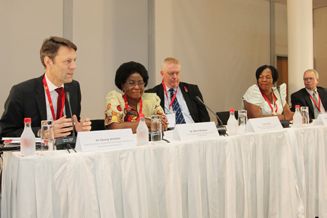
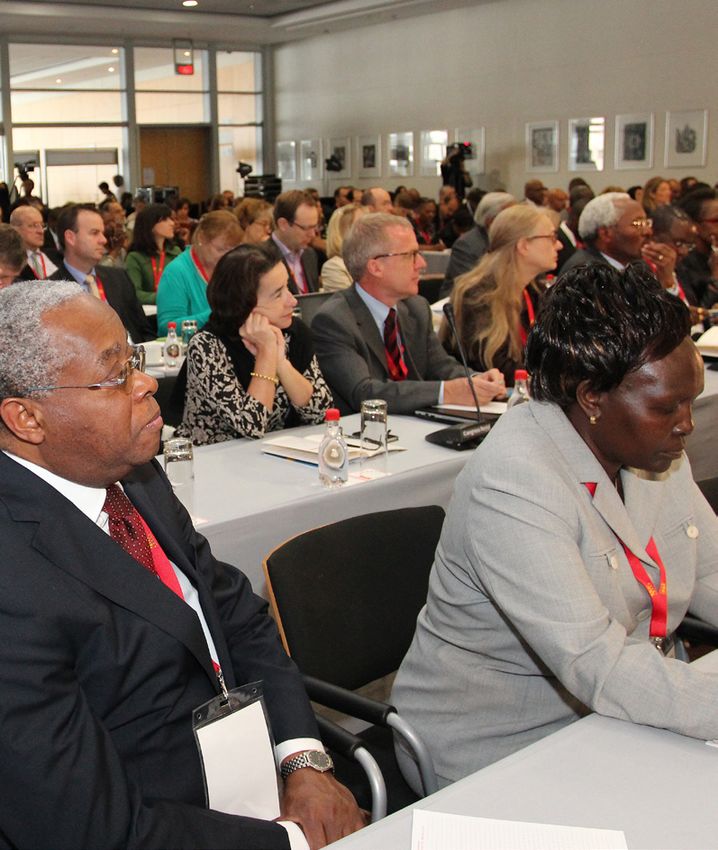
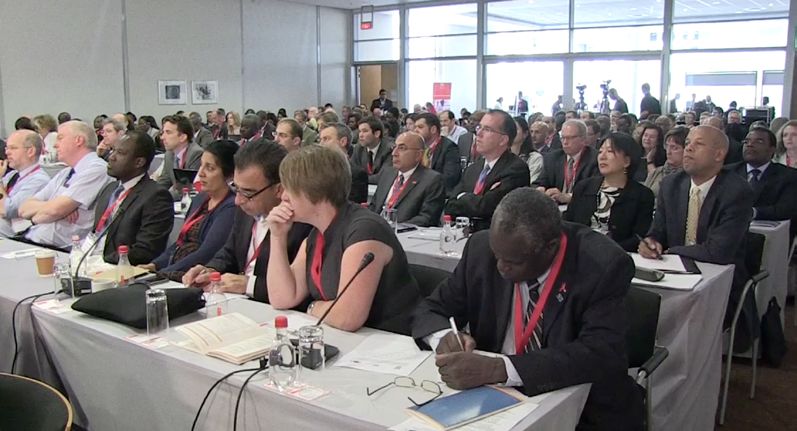
Participants of the High-Level Conference
on EDCTP2

                                        high-level conference on edctp2   5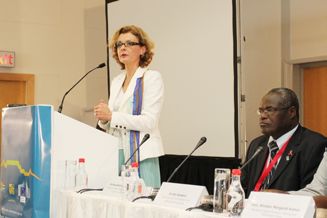
2. Key achievements of EDCTP1

                                                       More than 10,000 children between 6 and
Increased public and private                           59 months old were screened and a total of
investment in clinical trials                          4,116 children were included in the study
                                                       and treated. Three novel artemisinin-based
Funding clinical trials constitute the co-activity     combination drugs were found to be safe
of EDCTP. Under EDCTP1, a total of 88 clinical         and efficacious in treating children with
trials have been funded, promoting African-            uncomplicated malaria. The study informed
European and notably trans-African partner-            African Ministries of Health on relative
ships in clinical trials involving more than           safety and efficacy of available artemisinin-
80,000 African patients: 31 trials on HIV/AIDS         based combination therapies, and its results
(including one early termination), 25 trials on        supported the WHO recommendation of
TB, 32 trials on malaria.                              dihydroartemisinin-piperaquine (DHAPQ)
                                                       as a treatment option for uncomplicated
Many of the clinical trials supported by               malaria
EDCTP1 address the improvement and adapta-           • Severe Malaria in Children (SMAC)
tion of existing medical interventions and             network: demonstrated that 3 doses of iv
drug treatments to specific, vulnerable target         artesunate over 2 days is as effective as
groups such as malnourished children or                the 5 doses over 3 days regimen) thereby
pregnant women. These trials were launched             contributing to the development of a lower
in accordance with International Conference            cost regimen with the potential to reduce
on Harmonisation (ICH) standards on good               the risk of incomplete treatment. A phase
clinical practice.                                     III follow-up clinical study completed enrol-
                                                       ment of a total of 1046 children with severe
Most clinical trials are still on-going (64 out of     malaria, and aims to further optimise the
the 88). However, some first positive results          drug administration in the treatment of
have been achieved:                                    patients
                                                     • CHAPAS trial: contributed to the FDA
• Kesho Bora study of highly active anti-              approval and WHO prequalification of
  retroviral therapy during pregnancy                  Triomune Baby/Junior, a fixed-drug com-
  and breastfeeding: demonstrated a 43%                bination formulation for the treatment of
  reduction in HIV infections in infants and           HIV in children.
  more than 50% reduction of mother-to-
  child transmission during breastfeeding.
  Findings were influential for the new 2010
  WHO guidelines on prevention of mother-            Building of clinical research capacity
  to-child transmission of HIV                       in sub-Saharan Africa
• HIV-TB Pharmagene: evaluated drug
  regimens for optimisation of tuberculosis          • EDCTP1 has provided 400 career and train-
  and HIV co-treatment in Africa. The phar-            ing awards to African scientists, including
  macokinetic and pharmacogenetic data col-            50 senior fellowships that almost without
  lected on drug-drug interactions will guide          exception have remained in their own coun-
  treatment policy on optimum dosage                   tries after the training
• 4ABC study: conducted at twelve trial              • More than 800 research collaborators in
  centres in seven sub-Saharan African coun-           Africa and almost 450 in Europe were
  tries (Burkina Faso, Gabon, Mozambique,              cooperating in EDCTP-funded activities
  Nigeria, Rwanda, Uganda, and Zambia).

                                   high-level conference on edctp2                                     6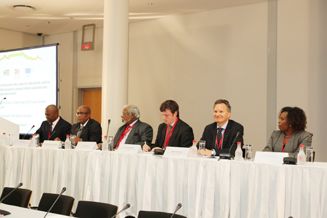
and benefitting directly or indirectly from      EDCTP provides a single common European
  EDCTP support                                    platform for research cooperation with sub-
• Establishment of four regional networks of       Saharan Africa in the fight against PRD. It is
  excellence, one in each sub-Saharan African      instrumental in:
  region, i.e. in Western, Eastern, Southern
  and Central Africa. These networks               • Bringing together and aligning European
  facilitate the interaction between individual      public funders and authorities towards
  African research teams, help exchange              common objectives
  knowledge and pool resources for the             • Brokering new partnerships between
  conduct and management of clinical trials,         European and African researchers, research
  including mentoring of less experienced            institutes and clinical centres
  research institutions with experienced ones.     • Designing common funding strategies
• A milestone has been the support to the          • Responding to African needs and cooperat-
  establishment of the Pan-African Clinical          ing with national authorities in Africa
  Trials Registry (PACTR, www.pactr.org),          • Attracting and leveraging additional
  which since 2010 has been officially recog-        investments from other public and private
  nised as WHO Primary Registry                      funders.
• EDCTP has also funded 74 projects for
  ethics and regulatory capacity building.         Competitive funding provided by EDCTP
  This includes support to the establishment       through open calls for proposals raises the
  of the African Vaccine Regulators Forum          level of competition from national levels
  (AVAREF), National Ethics Committees             to European level, which in turn results in
  (NECs) in Benin, Gabon, Mozambique and           spill-over effects on the quality of research
  Rwanda, and the MARC (Mapping African            partnerships and projects funded (from bilat-
  Research Ethics and Drug Regulatory              eral to multi-lateral teams and projects), on
  Capacity) project, which created an inter-       the development of European capacities and
  active, online map of African countries’         competences, and on the outcome and impact
  capacity to conduct ethics review of health      of public investments.
  research (www.researchethicsweb.org).
                                                   EDCTP is instrumental in raising EU’s vis-
                                                   ibility on the international agenda for global
                                                   health. It has been mentioned in high-level
Aligning the European research                     international meetings, i.e. G8 Declaration on
landscape for PRDs                                 the Fight against Infectious Diseases (2006)
                                                   at the G8 Summit in St Petersburg (2006) and
Clinical trials are of such scale and complexity   referred to as success story and role model for
that no single country alone can provide the       international partnerships between developed
necessary financial/personnel resources or         and developing countries.
number of patients, as regards multicentre
and/or late stage clinical trials. The EU-level    This reputation reflects the growing attractive-
approach on which EDCTP is built allows            ness of EDCTP to private funders, such as
achieving the required critical mass of            the Bill & Melinda Gates Foundation. Such
resources, with EU-funding complementing           developments could lead other major private
MS investments.                                    funders in the field to join, thus leveraging on
                                                   private investments.

                                  high-level conference on edctp2                                     7
3. The High-Level Conference on EDCTP2

EDCTP is approaching the launch of the sec-
ond phase of the programme (EDCTP2) which                        Opening presentations
will run from 2014 to 2024. It is planned that
the scope of the programme will be broad-                        The meeting was opened by the Honourable
ened. All phases of clinical trials (I, II, III and              Derek Hanekom, South Africa’s Minister of
IV) will now be included. So far the disease                     Science and Technology, who said that South
focus has been on HIV/AIDS, tuberculosis                         Africa has benefited from its collaboration with
and malaria but, under EDCTP2, neglected                         EDCTP; its support in areas such as TB has
infectious diseases1 (NIDs)will also receive                     been particularly valued. The high-level meeting
attention.                                                       marked a broader strengthening of EU–African
                                                                 collaboration in research and offered an oppor-
As part of preparations for the second phase,                    tunity that should be seized. However, it is
the High-Level Conference on EDCTP2                              important to be critical, to strive to do more and
was held in Cape Town, South Africa on 5                         to do it better. He highlighted some important
November 2012. The intention was to provide                      recent research findings from South Africa and
a forum to discuss stakeholders’ needs, oppor-                   pledged the country’s active participation in
tunities and expectations of EDCTP2, as well                     EDCTP2.
as an opportunity to endorse the programme
and to announce commitments and pledges.
A further aim was to raise the level of public
and private engagement in the programme.
Invited participants included mainly high-
level African and European representatives
from government, industry, patient organisa-
tions and the research community. A total of
244 participants attended the event, which
was jointly organised by the South African
Department of Science and Technology, the
European Commission (EC) and EDCTP. The
four strategic issues the meeting was intended
to address were:
                                                                 Hon. Derek Hanekom, South Africa’s Minister of Science and
• Lessons learned from EDCTP1                                    Technology, at the opening session
• The scope of EDCTP2
• The role and commitment of the participat-                     Stressing the importance of co-ownership in
  ing European and African countries                             EDCTP2, he made clear that this will require
• Third-party participation and engagement                       co-investment; African governments must con-
  in EDCTP2, in particular of industry, foun-                    tinue to expand their commitment to medical
  dations and charities.                                         research. He went on to tell the meeting that:

                                                                   “South Africa is already investing signifi-
                                                                   cantly from our national budget to support
                                                                   the participation of South African researchers
                                                                   in EDCTP projects. We will continue to do
1 The list of NIDs in EDCTP2 has not yet been defined; for the     so and stand ready to enter into discussions
  purpose of this report reference is made to the WHO-TDR
  list. (source: http://whqlibdoc.who.int/hq/2012/WHO_HTM_         with our partners for even more ambitious
  NTD_2012.1_eng.pdf)

                                             high-level conference on edctp2                                                  8
cooperation during the next phase of the Research and Innovation) is intended to “act
EDCTP. It is my hope that we will be joined as a magnet” to attract more funding. Trials are
by many of our African partners in this expensive undertakings and few organisations
endeavour”. can run them alone. The Commissioner called
on European countries, African governments,
Máire Geoghegan-Quinn, European industry, charities and foundations to match
Commissioner responsible for Research, the EU contribution of €1 billion. The successes
Innovation and Science, described EDCTP as “a of EDCTP represent “many saved lives” and
beacon of hope”, providing “a brilliant success story must now be built upon.
for EU–Africa research cooperation”. It was also:
EDCTP’s High Representative and former
“a fine example of a principle that we advo- Prime Minister of Mozambique, Honourable
cate in Europe: to open our research and Pascoal Mocumbi, outlined the scale of the
innovation to worldwide collaboration”. PRD burden and said that:
She gave examples of successful EDCTP- “To address global health challenges, we
supported studies conducted in South Africa. urgently need to scale up the existing initia-
EDCTP has also been successful in supporting tives of clinical research and integrate them
the setting up of new initiatives (e.g. the Pan with capacity building. In collaboration
African Clinical Trials Registry and ethics review with other partners we have to accelerate the
bodies) and in capacity building, including the development of public goods for the effective
training of health professionals. But much more control and eventual eradication of the main
remains to be done to make possible access to poverty-related diseases”.
innovative health care products in Africa.
He summed up the partnership’s achieve-
Europe conducts two-thirds of global vaccine ments to date and went on to discuss EDCTP’s
research and has a duty to extend health ben- structure, governance and decision making
efits achieved by such research to other parts processes, to which adjustments will be made
of the world, though it must not do so alone; in the course of EDCTP2. Improvements in
the EU contribution to EDCTP2 will require the process of collaboration will be of particular
similar contributions from other partners. importance.
At this time of economic crisis, many would
ask, “Why should Europe pay?” The answer, He was confident that, through partnerships,
the Commissioner said, lies in the scale of the the objectives of EDCTP can be realised, but
disease burden and the many tragic individual two “burning practical issues” are how to better
stories that underlie the statistics; Africa bears integrate sub-Saharan African countries into
the greatest PRD burden but eliminating these the EDCTP decision making process, and to
infections is a global challenge. It is also worth find ways to encourage African ownership and
noting that efforts to defeat the PRDs where thus create a stronger African voice:
they are most common will help safeguard
European health. Knowledge must flow both “African ownership, stewardship and leadership
ways, she said. will ensure that the clinical trials and the research
funded by EDCTP will address the needs and
EU funding for EDCTP2, which will be pro- priorities of African countries”.
vided under the Horizon 2020 programme
(the next EU Framework Programme for
high-level conference on edctp2 9Honourable Maria da Graça Carvalho MEP, Support Team for East and Southern Africa.
described EDCTP as: She focused on the role of civil society, noting
that while there is often said to be a need to
“a genuine partnership with Africa, in which “empower Africa”, in her view Africa is already
African partners have retained a high degree empowered – all that is needed is to enhance
of ownership and leadership”. Africa’s capacity. In particular, she looked
forward to the day when Africa makes its own
The Partnership had: drugs. There were many challenges to be over-
come, including the human rights of key popu-
“proven itself to be remarkably effective in lations, stigma against people living with HIV
improving medical intervention and the and other infections, keeping mothers alive
quality of the research designed to combat and avoiding the orphaning of children, and
poverty-related diseases” [and would serve as] the current over-reliance on external funding.
“a model that will guide us in the future”.
Much of her presentation centred on the control
She said she hoped to hear from the meeting of HIV/AIDS; Africa’s response to this major
how the EU might improve its contribution health challenge will determine other achieve-
to EDCTP, and spoke of how the Horizon ments in the future. There are many success
2020 funding programme due to begin in stories, but Africa’s HIV transmission rates are
2014 would facilitate the work of EDCTP2. still far too high, and women remain at particu-
Ms Carvalho is member of the European lar risk. Better drugs are needed, ideally with
Parliament’s Committee on Industry, Research treatment regimens of one dose taken orally.
and Energy (ITRE) and the Delegation to the The African region’s roadmap on AIDS, TB and
ACP-EU Joint Parliamentary Assembly. malaria has three action pillars: a more diversi-
fied approach; improved access to medicines;
Horizon 2020, like EDCTP itself, will be a and better leadership, governance and oversight
partnership that includes member states, – with zero tolerance of corruption. EDCTP
industry and others. It will cover the whole cycle is “a vital component of the response” to AIDS
of product development and will feature many and can be regarded as “a model partnership”;
improvements over its forerunner, Framework EDCTP2 will increase Africa’s ability to conduct
Programme 7 (FP7). The first challenge it will trials. Research efforts must, however, be cou-
address will be health and wellbeing; the need pled with advocacy for global health justice.
for new vaccines will be an area of emphasis.
Horizon 2020 is more than just a funding pro- The second keynote address was from Trevor
gramme and will seek to enable collaboration in Mundel, President of the Bill & Melinda Gates
research. It will avoid duplication of efforts and Foundation’s (Gates Foundation) Global Health
ensure end-users benefit from research findings Program. He described the Gates Foundation’s
as rapidly as possible. Access to finance will be activities in Africa, focusing mainly on HIV/
simplified, and funds from public and private AIDS, TB, malaria and polio. He used, however,
sectors will be brought to together. She said the example of the meningococcal A conjugate
every effort will be made to ensure that the new vaccine (MenAfriVac™) project as an illustra-
programme’s processes are flexible and simple, tion of the major impact that should be aimed
so that EDCTP2 can make good use of it. for in the fight against PRDs. Previously, there
was no cost-effective meningococcal vaccine;
The meeting then heard two keynote addresses, now Neisseria meningococcal disease caused by
the first from Sheila Tlou, UNAIDS Regional serogroup A has been dramatically reduced in
high-level conference on edctp2 10areas where vaccination has been done. He gave
details of the Gates Foundation’s current research
& development programme matrix, noting that
quality manufacturing and regulatory pathways
are new priority areas. The Gates Foundation will
shortly be establishing two other regional offices
in Africa, in Ethiopia and Nigeria in addition to
South Africa.
Dr Mundel described the cost of late-stage
clinical trials as “the Everest we need to climb”.
The risk of these costly trials could be reduced
through more thorough and effective research
at the proof-of-concept stage. He is looking for- Dr Trevor Mundel, President of the Bill & Melinda Gates Foundation’s
ward to seeing the development of next-genera- Global Health Program at the opening session
tion malaria vaccines; translational approaches
to HIV and TB vaccine research; and novel In his summary of the first part of the meeting,
treatments and vaccines for neglected diseases. the session Chair Phil Mjwara (Director-General
Regulatory delays are also a huge concern; new of the South African Department of Science &
initiatives are needed here with harmonization Technology) said some of the challenges faced
as one of the aims. He also pointed out that by EDCTP together with the lessons learned had
disease prevalence monitoring is another area received attention, and that the meeting had got
where improvements are needed. a sense of the needs of the various stakeholders.
He ended by outlining the advantages of part-
nership between the Gates Foundation, the EU
and EDCTP: joint investments, sustaining EU
leadership in global health innovation, and the
acceleration of the development and delivery of
life-saving tools.
high-level conference on edctp2 114. Lessons learned from EDCTP1
After brief introductory comments from the Honourable Margaret Kamar described the
Chair, Ruxandra Draghia-Akli (EC Director for current meeting as a “stock-taking exercise”. She
Health Research & Innovation), the first pres- hoped that it would help in the development
entation was made by Honourable Margaret of effective strategies for coordination, and
Jepkoech Kamar, Kenya’s Minister of Higher improve synergies for research and develop-
Education, Science and Technology. She ment. Other challenges are how to stimulate
said that health is seen by the African Union African governments to support research and
as a flagship programme. Many important more effective targeting of populations most at
initiatives in health are now in operation, risk. Redefining what centres of excellence can
including those of the African Network for do best was also on the agenda. Kenya is com-
Drugs and Diagnostics Innovation (ANDI), mitted to supporting EDCTP2 and appreciates
the New Partnership for Africa’s Development the support and commitment provided so far
(NEPAD), Research for Health Africa and by both European and African countries.
EDCTP. The activities of EDCTP to date have
had several impacts on health research in Honourable Mauro Dell’Ambrogio, the Swiss
Africa. She focussed on capacity building (par- State Secretary for Education and Research,
ticularly as regards the availability of research said that recent visits he had made to research
fellowships), improved collaboration (greatly institutions in Africa had reinforced his view
assisted by the creation of the EDCTP regional that African centres are important partners in
networks of excellence) and other funding the global fight against the PRDs. We must
opportunities or activities. Examples included tackle these global challenges together because
the work of the Pan-African Consortium for of their broad effect on humanity. EDCTP
Evaluation of Anti-tuberculosis Antibiotics has evolved into an instrument capable of
(PanACEA) and of TB vaccine trials. Research achieving scientific goals and training young
funded by EDCTP had been used in the formu- scientists. It has made it possible to fund large
lation of policy and guidelines by governments clinical trials that one organisation could not
and international agencies. support alone. Switzerland will maintain its
strong support for EDCTP and will be commit-
ting new funding to the partnership.
Linda-Gail Bekker, Research Professor of the
Desmond Tutu HIV Centre, acknowledged
the importance of capacity building, and of
both South-North and South-South collabora-
tion. However, while trial capacity has been
increased, it should be noted that “once primed
the cogs of a pump can become rusty”. It is
important to keep research activities flowing,
in order to make the most of investments made
in capacity. Other important issues included
ensuring community engagement and good
participatory practice. Voices from the South
Dr Ruxandra Draghia-Akli and Prof. Elly Katabira at the session ‘Lessons must help determine research priorities. As
learned from EDCTP1’ examples of priority needs, she referred to the
search for anti-TB drugs that were compat-
ible with antiretroviral drugs (ARVs), and for
high-level conference on edctp2 12methods to prevent HIV transmission intended candidates. Without European investment this
for use by women. She had been encouraged would not have been achieved. The training of
by the diversity shown in the work of EDCTP local investigators and expansion of Africa’s
and its support for research focusing on the research capacity are other EDCTP achieve-
needs of marginalised people, for example fish- ments. Other partners are now interested in
ing communities. matching support; Aeras has just signed a
collaborative agreement with GlaxoSmithKline
Marja Esveld, Vice-Chair of the EDCTP General (GSK) for a project that will include research
Assembly, spoke of the need for correct use of conducted at African trial sites. But while pro-
terminology – collaboration is not the same as gress against TB is being made the situation is
integration. She pointed out that her country, still challenging, especially with regard to drug
the Netherlands, did not have a national resistance. He described EDCTP as ‘a model
programme for the support of clinical trials for the past and for the future’.
until one was established to collaborate with
EDCTP. This has additional benefits for the Linda Sibeko, Community Representative
Netherlands. She is encouraged by EDCTP’s of The South African Tuberculosis Vaccine
plans to increase collaboration with industry. Initiative (SATVI), addressed the question
Even at this time of economic crisis, it remains of how the patient community has benefited
important to continue support for PRD from EDCTP-funded research. She said it gave
research. Crises can even be helpful, because the community hope to know that something
they force us to do things more efficiently. is being done about diseases such as HIV/
AIDS and TB. “We are now starting to see the
James Connolly, President and CEO of Aeras, results”. Referring to her own experiences in
described EDCTP as an “incredible partner”. It schools and elsewhere in the community, she
has, for example, made possible the creation said that many people are still being left out.
by Aeras of a dynamic pipeline of TB vaccine As examples she referred to Xhosa-speaking
From left to right: Prof. Elly Katabira, Hon. Margaret Kamar, Hon. Mauro Dell’Ambrogio, Prof. Linda-Gail Bekker,
Ms Marja Esveld, Mrs Linda Sibeko and Dr James Connolly at the session ‘Lessons learned from EDCTP1’
high-level conference on edctp2 13people, women and the elderly. Older people help in empowerment, people should be
still have an important part to play in the com- asked what they would like to do to improve
munity; grandmothers help by telling stories their own situation
and one story they could tell is of the search for • We need to move on from efficacy trials to
vaccines. research at implementation level
• Vector control deserves more attention from
Contributors from the floor raised a diverse EDCTP
range of issues. • African governments should step up their
poverty eradication programmes. This
• National ethics committees should col- would have a big impact on many infectious
laborate with global initiatives. (For EDCTP, diseases
Charles Mgone responded that ethics • Several contributors remarked that the
groups and regulatory authorities do work name “EDCTP” is not memorable and is
together; EDCTP, WHO and NEPAD not accurate; for example, the functions of
Agency are all active in this area) the partnership extend beyond clinical tri-
• Research conducted at African universities als. There is a case for changing the name.
has produced data that have not yet been The contrary position is that the name
put to use in the process of product develop- and “brand” of EDCTP have become well
ment. Collaboration, brokered by EDCTP, known; renaming could cause confusion
could rectify this and a loss of impetus.
• More research is needed on fighting disease
transmission through behavioural change; In closing the session, the Chair, Ruxandra
TB control was achieved in the North before Draghia-Akli, noted that much of the discus-
the advent of drugs and vaccines, as a result sion had focused on the need to improve
of community mobilisation and changes collaboration – at all levels, from community
in behaviour. Some fear that if a vaccine is upwards. Session Moderator Elly Katabira
developed against HIV it will give a false said that it is also clear that scientists need to
sense of security and lead to reverses in become more effective communicators.
behaviour change
• Ethics review boards continue to cause
unnecessary delays, holding back the
launch of clinical trials. Contributors called
on EDCTP to continue to strengthen board
capacities and to find out where the bot-
tlenecks really are. In the case of National
Regulatory Authorities, joint review of clini-
cal trial applications might help streamline
the process. The training of regulators – in
which EDCTP is already involved – will also
assist
• Participants in trials need adequate protec-
tion. Ethical review is not enough to achieve
this; some form of insurance is required
• Empowerment of those most at risk of PRD
infection is a key issue – most notable is the
gender imbalance in HIV infection risk. To
145. Towards EDCTP2
Opening the meeting as Chair of the session, late-phase trials for the development of new
Honourable Georg Schütte (State Secretary at interventions through partnership with
the German Federal Ministry of Education and funders across Europe, with the European
Research) said that ownership and partnership Commission and through partnership with
had emerged as key issues from the morn- African scientists.”
ing sessions. But people have different ideas
of ownership. For some it is something that Many MRC trials have also involved collabora-
is shared within the scientific and political tion with industry, including Development of
communities. For others it involves sharing Antiretroviral Therapy in Africa (DART) and
between countries. Here there are issues antiretroviral research for watoto (children)
concerning reliability, responsibility and sus- (ARROW). An “open innovation” programme
tainability; these can be affected by frequent with AstraZeneca has allowed MRC research-
changes of personnel within government bod- ers access to 22 compounds in partnership
ies. A much wider concept of shared ownership with the company. The Stratified Medicine
is now emerging that includes the public and Initiative, which aims to boost understanding
private sectors and communities themselves. of why groups of patients with the same diag-
Dr Schütte went on to say that Germany nosis differ in their response to treatment, will
regards EDCTP as a cornerstone of its engage- also involve industry collaboration. He believes
ment with international research; it is commit- that MRC can achieve more through partner-
ted to supporting EDCTP2 through both cash ship and that partnerships could and should
and in-kind contributions. involve industry. Building bridges is a priority.
John Savill, Chief Executive of the Medical
Research Council, United Kingdom (UK),
reminded the audience that the first ever
randomised, controlled clinical trial was con-
ducted by the MRC. He went on to describe the
MRC’s current strategic plan and its approach
to international engagement; the MRC com-
mits 10% of its spending to research relevant
to developing countries. Many of its research
programmes are longstanding; for example, 65
years in The Gambia and 25 years in Uganda.
MRC has noted the rise of non-communicable
disease prevalence in developing nations and
is a founder member of the Global Alliance for From left to right: Hon. Georg Schütte, Dr Olive Shisana, Sir John
Chronic Disease. Savill, Hon. Nkandu Luo and Dr Ripley Ballou at the session ‘Towards
EDCTP2’
MRC works with many partners, including
the Wellcome Trust and the UK Department Honourable Nkandu Luo, Zambia’s Minister
for International Development (DFID). for Chiefs and Traditional Affairs, was
Collaboration with EDCTP is regarded as par- another participant who praised EDCTP for
ticularly important because: its successes and for its focus on partner-
ships. Nevertheless, partnerships need to be
“EDCTP enables the UK funders, MRC and improved and redefined. Power relationships
DFID, to deliver our strategy of supporting within a partnership are often unbalanced – for
high-level conference on edctp2 15example, between the North and the South. If Ripley Ballou, Vice-President of GSK Clinical
partnerships are weak and unbalanced they will Research and Translational Science, explained
not achieve their goals. his company’s open innovation strategy. Many
advances have been made against disease
It is time for African governments to stop and in his view 90% of them have been due
being passive partners; they should participate to the efforts of the pharmaceutical industry.
actively in EDCTP. This will require a redefin- Infectious diseases in tropical countries do
ing of budgets and putting money on the table, not present a commercial opportunity, but
“how ever little it may be”. Contributions in the industry has a duty to help address the
kind will also be important. African govern- burden they cause. In 2009 GSK became the
ments should also ensure partnership between first company to give access to compounds
their own health and science and technology from its library; seven other companies have
ministries. African countries were invited to since followed. The entire library has now
participate in EDCTP’s General Assembly, been screened for compounds with malaria or
but the response has been poor. Governments TB activity, with the intention that these com-
should seize the opportunity now that EDCTP2 pounds will be shared by a research consor-
is in preparation. Africans should decide who tium. GSK trial results will also become openly
will represent them in EDCTP2; perhaps there available. These measures are fundamental
should be envoys who travel widely and consult changes to the way in which the pharmaceuti-
before speaking on Africa’s behalf. cal industry operates.
Honourable Nkandu Luo said that many Ripley Ballou described the development of the
companies operating in Africa have no interest RTS,S malaria vaccine, using it as an example
in the health of their workers; she used the of the way in which GSK is already working in
example of high TB prevalence among mine partnership with other organisations. Other
workers. The private sector must be made vaccine candidates are now under investigation
to contribute towards the costs of medical and partners will be found to help develop
research. them further. Pharmacovigilance is another
area in which the company is eager to collabo-
Researchers must become better at communi- rate with partners.
cation. To illustrate this point, she said that the
development of effective microbicides against The London Declaration – in which phar-
HIV is the only way to empower women to maceutical companies were amongst those
reduce their risk of HIV infection, but media endorsing a new WHO roadmap for reducing
misrepresentation of a microbicide study in the burden of neglected tropical diseases by
Zambia had led to public unease, forcing the 2020 – is another instance of the support the
abandonment of the programme. Amongst the industry is now willing to provide to such ini-
other issues she raised were the importance of tiatives. Further announcements of expanded
developing the capacity of Africa’s centres of commitment from the industry, particularly
excellence and the need to involve social sci- with regard to drug donation, may be expected.
entists in research. She concluded by empha-
sising the need to monitor the translation of A second panel discussion then followed.
research findings into policy and benefits for Answering a question as to the main oppor-
populations. tunities for research under EDCTP2, Hannah
Akuffo, Chair of the EDCTP General Assembly,
said there will be a wide scope with trial
high-level conference on edctp2 16phases I to IV now being covered, although industry. While it is the least dynamic of the
the emphasis on phase II and III will still African regions and faces many challenges
remain. Targeted implementation research will (including gender issues and the loss of
also now be part of the EDCTP remit. She is talented young scientists to jobs overseas),
particularly excited by the broadening of the progress is being made. EDCTP has
disease focus; this will provide an opportunity assisted through the creation of its Central
to study co-morbidities. The bringing of public African Network (CANTAM).
and private sectors together will make it pos-
sible to achieve more in a shorter time. It will Honourable Louis Augusto Pelembe,
also become possible to collaborate with a Mozambique’s Minister of Science and
wider range of African countries, particularly Technology, said that his country strongly sup-
in Central Africa. However, there will also be ports the EDCTP programme, considering it
challenges. Partnerships must become more to be part of its own agenda. It was important
equal and there needs to be ownership by that research efforts should consider the whole
African policy makers. Partnerships need to of the production chain, through to access for
be nurtured; it can take time for partners to end users. The management aspects of medical
get to know each other. Professor Akuffo also research and health care delivery were also of
cautioned that with so many needs to be met paramount importance. He emphasised the
there was a danger of spreading resources too need for African countries, in partnership with
thinly and that EDCTP should maintain its the private sector, to financially contribute to
existing focus. the EDCTP2 programme.
Adeyinka Falusi, Professor of Haematology Salim Abdool Karim, President of the South
with a strong interest in Bioethics, University African Medical Research Council, addressed
of Ibadan, Nigeria, addressed the challenges the issue of how the MRC might enhance
faced by Central Africa in undertaking medical its support for EDCTP. The responsibility of
research. She identified the language barrier EDCTP is to develop excellence in research
(French versus English) as one factor, saying that responds to priority issues, and MRC’s
that this impinges on academic leadership. scientists are well placed to participate in this
Transport is also more of a problem in Central process. Drugs, vaccines, diagnostics and
Africa; communication with other African preventive strategies are all part of MRC’s port-
countries is difficult. While governments folio. It works with many international partner-
across Africa tend to be insufficiently proactive ships, for example ANDI and MMV. MRC aims
and fail to engage adequately with science, this to ensure that African investigators “are not just
did seem to be a particular problem in Central on the receiving end”; it is able to allocate funds
Africa. Her view – subsequently challenged by and thereby lever further support. MRC also
contributors from the floor – is that the posi- helps develop South Africa’s national research
tion of women is generally worse in Central agenda and does so both through research and
Africa; women tend not to become scientists so bringing people and organisations together for
50% of human potential is wasted. discussion.
• Contributors from the floor later referred François Bompart, Vice-President and
to new laboratories and other research Medical Director of the Access to Medicines
initiatives in Central Africa, specifically in Department at Sanofi, speaking in his capacity
the Republic of Congo (Brazzaville) and as the Chair of the European Federation of
Cameroon, some with funding from the oil Pharmaceutical Industries and Associations
high-level conference on edctp2 17(EFPIA) Global Health Initiative, noted that society do not get left out. Professor Menéndez
although pharmaceutical companies have to also looked forward to further development
balance their books, the industry believes in of South-South collaboration, noting that this
advancing global health. EFPIA wants to cre- could involve such countries as Brazil and
ate a virtuous circle from which everyone will Thailand.
benefit. With this in mind the industry is now
doing more to benefit developing countries. Noerine Kaleeba, the Patron and Founder of
With regard to PRDs, however, market forces The AIDS Support Group (TASO) in Uganda,
are not strong enough to justify major financial spoke on the theme was involving communi-
investments. Nevertheless, the industry can ties in the search for new tools to fight disease.
share its resources; the EDCTP–Industry fel- She described EDCTP as an excellent partner-
lowship scheme2 is an example of the way in ship that could have an important impact on
which companies can assist. He addressed the the lives of ordinary people. These people were
issue of industry providing support to enable not physically present in the meeting but they
Africa to build its own research capacity. One were with us in spirit – she asked participants
way would be for companies to invest in epi- to imagine them sitting in the empty chairs.
demiological research. Much still needs to be Particularly for HIV/AIDS, we cannot ignore
known about disease in Africa, including non- the role of communities in fighting disease.
communicable diseases, and we “need to know Partnerships with communities must be made
our foe”. He sees capacity building as a two-way more meaningful. We need to involve children
process; pharmaceutical companies stand to and adolescents. The term “community” does
gain by working with African scientists, from not necessarily mean, for example, a village – it
whom there is much to be learned. is about different sectors of the population. The
role of traditional healers and healing systems
Clara Menéndez, Research Professor of the in Africa must not be forgotten; we need a
Barcelona Centre for International Health strategic partnership that involves healers. The
Research, Spain, said that involving more gatekeepers to healthcare services play a crucial
women is one way to develop Africa’s research role. Capacity building and training are impor-
capacity. Translating the findings of research tant – but what are we training people in?
into practice is, nevertheless, the main chal- Expertise in the social sciences is also needed;
lenge. For example, the effectiveness of inter- she would like to see united research groups
mittent preventive therapy in pregnancy (IPTp) in which both science and social science are
against malaria is now well established, but represented.
only 25% of African women currently receive it.
It is also important that more reliable informa- Jutta Reinhard-Rupp, Head of Scientific
tion should be obtained on causes of death, Innovation and Partnerships, MerckSerono,
despite the limitations imposed by Africa’s said that pharmaceutical companies have
poor vital registration systems. For example, traditionally focused on wealthier markets
half of child mortality is due to neonatal deaths and have searched for “blockbuster” drugs,
(i.e. occurring within the first 28 days), but very but this model is changing. Since 1990s some
little is known about what these neonates are companies have been donating drugs under
dying from. More about the causes of death of social responsibility programmes. The London
women also needs to be known. In our efforts Declaration is another step forward. The
we must ensure that the weakest members of research and development of new products
where there is no financial investment cannot
2 On 24 January 2013, EDCTP and EFPIA signed a memorandum
of Understanding for this scheme, the Clinical Research Fellow- be conducted in the same way that research and
ship.
high-level conference on edctp2 18development is done for other products; it would • Natural products from Asia and from South
take too long. Other incentives and push-pull America have been used in the develop-
mechanisms must be found. There is a need ment of effective antimalarials. So far few
to be creative – for example, compounds with if any African natural products have been
antimalarial activity should be tested against developed in this way. High quality trials are
other diseases. Researchers from endemic needed of traditional medicines
countries need to be more involved; their • If products developed do not reach those
knowledge is needed. In common with the who need them, then the efforts of EDCTP
representatives of other pharmaceutical com- will be wasted. This is an ethical issue and
panies, she is in favour of open innovation – demands more attention
there is no need to keep candidate compounds • Mozambique is one African country that is
against PRDs a secret. She agreed with the increasing its support for research. It will
decision to include neglected tropical diseases also try to convince companies involved in
in EDCTP2 – they contribute to the disease the exploitation of the country’s mineral
burden, but there is as yet no research pipeline resources to provide funding for research
established for these diseases. and disease control.
Olive Shisana, CEO of the Human Sciences Summing up the discussions as Chair, George
Research Council and the session moderator, Schütte said an important lesson for EDCTP
noted that despite agreement on the impor- was that, “We have to be more inclusive in numer-
tance of capacity building some were uncom- ous ways”. He referred in particular to the need
fortable with the term – perhaps we should in to include more African governments, more
future refer to “capacity enhancement”. research phases, more types of data and more
societal groups. He returned to the theme of
Contributors from the floor then made known the people whose spirits were represented by
their own views. the empty chairs in the conference hall:
• Health ministers in African governments “Their voices are often not heard but the pur-
generally may not be receiving regular pose of all our activity is to provide them with
feedback on the progress of EDCTP in the help and support that will enable them to
the African region. Frequent changes of achieve the dream of a long and healthy life.”
ministers make the problem worse. Those
whose role it is to represent the position of
Africa will not be able to do their job effec-
tively until feedback structures are in place.
While a system is in place for all countries
to be represented on the EDCTP General
Assembly, experiences are still not being
adequately shared
• Despite pledges, African governments are
still not making enough money available for
medical research.
• Africa has much in the way of natural
resources; EDCTP should ensure that these
are used
high-level conference on edctp2 196. Closing session
South Africa’s Minister of Health, Honourable Partnership projects that have led to improve-
Aaron Motsoaledi, said that Africa as a conti- ments in malaria control have saved 1.2 mil-
nent can be proud of the achievements it has lion lives in Africa; this shows what can be
made in development. EDCTP is playing an achieved. There are 31 PRDs – but AIDS, TB
important part in this process. Through work- and malaria take three-quarters of research
ing together sub-Saharan Africa can achieve funding. The European Parliament there-
more. South Africa has established a national fore welcomes the extension of the EDCTP
clinical trials register and drafted guidelines remit to cover neglected infectious diseases.
for good clinical practice. He reaffirmed South Nevertheless, while EDCTP’s work is impor-
Africa’s wish to be a part of the EDCTP2 tant good health services must also be avail-
programme. able. EDCTP is a good example of cooperation
but further effort is needed to bring in new
partners.
Transparency, ethics and investment are all
issues that need to be discussed in the plan-
ning of EDCTP2. Building capacity in Africa
will have many advantages. He noted that
clinical trials not acceptable to EU ethics com-
mittees are being approved in Russia, India
and China. He concluded that EDCTP could
become, “one of the EU’s most effective mecha-
nisms of innovation in healthcare”. There are,
however, lessons that should be learned from
the experience of the programme so far.
From left to right: Dr Phil Mjwara, Hon. Aaron Motsoaledi, Hon. Nirj
Deva, Hon. Tomáš Hruda, Mr Robert-Jan Smits and Dr Pauline Mwinzi
at the closing session Pauline Mwinzi, Principal Scientist at the
Kenya Medical Research Institute (KEMRI)
Honourable Nirj Deva MEP and Second Vice- spoke on behalf of Honourable Beth Mugo,
Chair of the European Parliament’s Committee Minister of Public Health and Sanitation,
on Development, speaking on behalf of the Kenya. Kenya is pleased to be a part of EDCTP
President of the European Parliament, said and hails the achievements that have been
that millions still live in poverty and suffer made to date. KEMRI also welcomes the expan-
from poor health. He asked how this could be sion planned under EDCTP2, particularly
allowed to continue in the 21st century. Health the broader disease remit. KEMRI has a long
inequalities occur when medical research is record of collaboration with EDCTP and this is
focused, “not on the needs of people, but on the expected to continue.
value of potential markets exclusively in the devel-
oped world”. The lack of an adequate diagnostic Honourable Tomáš Hruda, Vice-Minister for
test for TB is just one consequence. Changing Higher Education and Research of the Czech
the situation presents an enormous challenge, Republic spoke of medical research in his
but it is not just a question of money. Europe’s country that had been crucial to the develop-
economies are broken and need to be mended, ment of ARVs. Such drugs are now available
but the EU is rightly increasing its funding for at very low price in developing countries.
EDCTP. Nevertheless, he recognised that bringing the
results of research to those who need them is
high-level conference on edctp2 20You can also read


