Self Care. Caring for yourself and your colleagues - The Cambridge Clinic
←
→
Page content transcription
If your browser does not render page correctly, please read the page content below
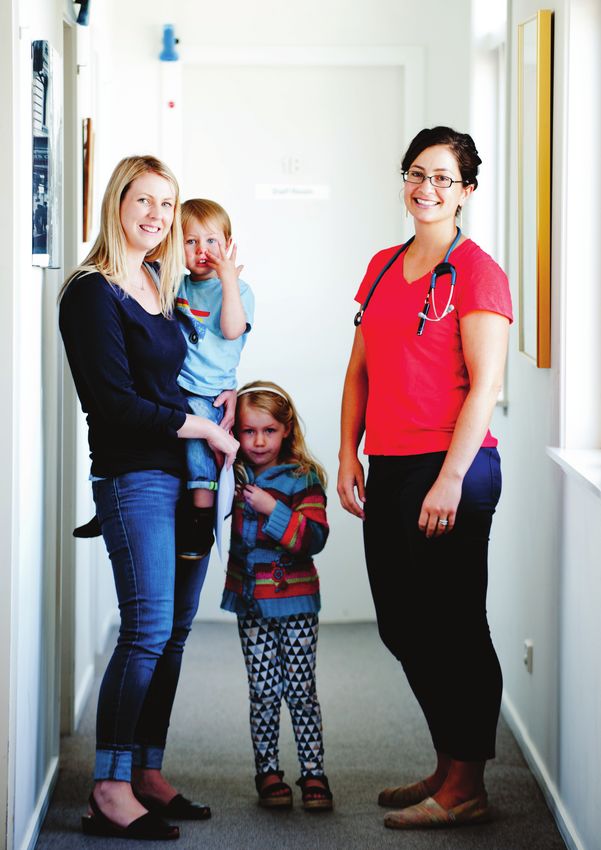
Self Care. Caring for yourself and your colleagues

Acknowledgements
This resource was written for The Royal New Zealand College of General
Practitioners (the College) by Dr Sam Murton. It follows on from a resource
developed by the College and a self-care working party in 1996 and revised in
2000. Many thanks to all of those who contributed their time and expertise to the
development of this resource.

Contact
RNZCGP policy team email: policy@rnzcgp.org.nz

ISBN: 978-1-927240-41-0

© The Royal New Zealand College of General Practitioners, New Zealand, 2016.

The Royal New Zealand College of General Practitioners owns the copyright of this work
and has exclusive rights in accordance with the Copyright Act 1994.

In particular, prior written permission must be obtained from The Royal New Zealand
College of General Practitioners for others (including business entities) to:

■■   copy the work
■■   issue copies of the work, whether by sale or otherwise
■■   show the work in public
■■   make an adaptation of the work

as defined in the Copyright Act 1994.

Contents

Introduction.  .  .  .  .  .  .  .  .  .  .  .  .  .  .  .  .  .  .  .  .  .  .  .  .  .  .  .  .  .  .  .  .  .  .  .  .  .  .  .  .  . 3
            Why self-care?. . . . . . . . . . . . . . . . . . . . . . . . . . . . . . . . . . . . . . . . . . . . . . .  3

Caring for colleagues. .  .  .  .  .  .  .  .  .  .  .  .  .  .  .  .  .  .  .  .  .  .  .  .  .  .  .  .  .  .  .  .  .  . 5
            How do we approach a colleague we are worried about? . . . . . . . . . . . .  5

Things that put our self-care at risk. .  .  .  .  .  .  .  .  .  .  .  .  .  .  .  .  .  .  .  .  .  .  . 7
            Complaints . . . . . . . . . . . . . . . . . . . . . . . . . . . . . . . . . . . . . . . . . . . . . . . . .  8
            Workplace factors. . . . . . . . . . . . . . . . . . . . . . . . . . . . . . . . . . . . . . . . . . . .  8

What can I do about self-care?.  .  .  .  .  .  .  .  .  .  .  .  .  .  .  .  .  .  .  .  .  .  .  .  .  .  . 9
            Take action . . . . . . . . . . . . . . . . . . . . . . . . . . . . . . . . . . . . . . . . . . . . . . . . .  9
            Finding help . . . . . . . . . . . . . . . . . . . . . . . . . . . . . . . . . . . . . . . . . . . . . . .  10

Appendices .  .  .  .  .  .  .  .  .  .  .  .  .  .  .  .  .  .  .  .  .  .  .  .  .  .  .  .  .  .  .  .  .  .  .  .  .  .  .  .  . 11
            Appendix 1: Supporting doctors to take care of themselves. . . . . . . . . .  11
            Appendix 2: Recovering from a serious medical error . . . . . . . . . . . . . .  13
            Appendix 3: A framework for dealing with inappropriate
            behaviour in the medical profession . . . . . . . . . . . . . . . . . . . . . . . . . . . .  17
            Appendix 4: Surviving the South Dunedin floods . . . . . . . . . . . . . . . . . .  19

References and resources.  .  .  .  .  .  .  .  .  .  .  .  .  .  .  .  .  .  .  .  .  .  .  .  .  .  .  .  .  . 21

RNZCGP | NOVEMBER 2016 |                           1

Introduction

Why self-care?
As doctors, we encourage people every day to care for themselves: exercise more,
eat the right things, drink less alcohol, quit smoking, get enough sleep, have a
holiday, make time with friends and develop interests outside work. We also care
for people when these things start to unravel. This unravelling usually starts with
a single thread that comes loose but, if left unattended, can progress to involve
the whole garment of our lives. Do you have any loose threads in your life?

Knowing what we should do does not mean we always do it.1 Self-care
requires us to recognise when we are not self-caring. It takes reflection and time.

When did you last take time to reflect on how you are? When was your last
holiday/time out? Was it hard to get away and did you feel guilty? Did the cost
outweigh the benefits? Was it exhausting?

The answer should be no, but sometimes we are trapped into thinking that other
people’s wellbeing is more important than our own. Doctors are well known for
going to work when they are not physically well.2,3 How often does this occur
when we are not mentally at full capacity?4,5,6

We go to great pains to explain to our depressed, anxious and stressed patients
that their condition did not turn up overnight. Conditions sneak up on us, so we
often do not realise how low our mood is until it is overwhelming. How often do
health professionals ignore the signs? Is depression more common amongst
physicians? And do we get more depressed than our patients before we notice?           “Self-care enables me
Research suggests the answer to all of these questions is yes1,4,7 and for a variety
of reasons.5,8
                                                                                        to be a better doctor.
                                                                                        If I am not taking care
There is no doubt the role of a doctor has many stressors. These include
excessive workloads, organisational changes, poor management and                        of myself, it is difficult
insufficient resources, as well as dealing with mistakes, complaints and litigation,
and patient suffering. These are not unique to medicine. The uniqueness is that
                                                                                        to have patience with,
we have to lead teams, adhere to higher standards of regulation and put patients’       sensitivity to or empathy
needs ahead of our own.
                                                                                        for my patients.”
It is not only the nature of the work that increases a doctor’s risk of depression.
The personality traits of many medical professionals, such as perfectionism,
can lead to individuals becoming increasingly self-critical. Unhelpful coping
strategies, such as emotional distancing, an excessive sense of responsibility, a
desire to please everyone, guilt for things outside of one’s control, self-doubt and
obsession, all contribute to the risk.9,10

We often cope with a busy professional life, but our lives outside the practice
can be as complex as those of the patients we treat. We forget that we may also
be parents, partners, friends, sons, and daughters. And all the life events that
patients experience might come our way too.

RNZCGP | NOVEMBER 2016 |      3
SELF-CARE: CARING FOR YOURSELF AND YOUR COLLEAGUES
Of course, our self-care is as essential to our health and wellbeing as it is for our
patients.
Doctors are more susceptible to drug use and addiction,11 relationship break-
ups/divorce, significant mental health issues and suicide12,13,14,15 than the general
population. The incidence of these issues amongst New Zealand doctors is
similar to our counterparts in the UK, Canada and the US.16
The six-year review of the NHS Practitioner Health Programme17 showed that
the average age of those engaging with the service was 30–39 years for female
health practitioners and 40–49 years for males. Eighty percent of presentations
are for mental health issues and 20 percent are addiction related. Similarly the
experience of the Medical Council of New Zealand’s (MCNZ’s) Health Committee
shows that the majority of doctors receiving support from the Committee have “When the kids were little
either psychiatric or substance dependence problems.
I felt like the juggle did
“The secret to survival boils down to having the humility to recognise that we
are all vulnerable and fallible, and the wisdom to recognise when we need
my head in. I would not
help and accept it.” quite finish all the tasks
– Dr Joanna MacDonald, former Chair of the MCNZ’s Health Committee, in the practice, rush out
personal communication, 2016.
the door, pick up the
This resource contains some ideas on how to manage your own self-care. It
identifies when we are more at risk and when, therefore, self-care is essential
kids, go to after-school
and also shares stories from fellow doctors. In addition, it suggests assessment activities and be ‘on’
tools and resources that may be helpful in sustaining you in your important and
demanding role as a doctor. for whatever the kids
wanted – then I had to
respond intelligently to
my partner at the end of
an untidy day. I often felt
that I was on a zooming
escalator and would just
like to step to one side
for a moment and let it
all rush past me. Then I
could pat myself down
and see if I was still in
one piece.”
RNZCGP | NOVEMBER 2016 | 4Caring for colleagues Many of us have seen a colleague who is not performing at their best or are not providing the best care for their patients.18 They could be considered to be a ‘disruptive’ doctor,19,20 a stressed doctor or an unwell doctor. Providing support to these colleagues can be difficult. Doctors are masters at hiding their vulnerability. In addition, doctors are not very good at treating other doctors.10,21 We often don’t take our colleagues’ advice.1 Sometimes we believe that someone else will take action, that ‘nothing will happen if I report a colleague’ or there may be fear of retribution.18 Inflammatory terms like ‘whistleblower’22 and ‘dobbing in’ are used. The privacy issues and complexity of treating a fellow doctor as a patient are not straightforward.16 Any underperforming health professional may put patient care at risk. Poor patient care causes harm and can engender complaints. Although a complaint may be seen as less important than harm caused to a patient, complaints can have devastating effects on the doctor involved. In the UK, the suicide of depressed doctors under investigation for complaints has resulted in the development of several practitioner health programmes.15 With this in mind, early recognition of health-related deterioration in the performance of colleagues or ourselves is preferable. Terms like ‘burnout’23,24 are often used, and there are recognised causes of burnout in all employment situations. There are also other everyday risk factors for deterioration in performance. How do we approach a colleague we are worried about? The MCNZ has several guidance documents25 and states that raising a concern is about support, education and/or rehabilitation (Appendix 1) rather than administering discipline. Under Section 45 26 of the Health Practitioners Competence Assurance Act 2003 (HPCAA), doctors, their colleagues and their employers must advise the MCNZ if they have reasonable belief that a doctor or other health professional has a mental or physical condition that could affect their performance. For the most part, early referral to the MCNZ’s Health Committee means that many practitioners can resolve their issues while remaining at work.16,17 In any situation, approaching the individual is the first step. If the individual lacks insight into their condition, it may be necessary to involve a higher authority. Apart from everyday colleague-to-colleague interactions, there are two other formalised interactions where we may become concerned about another doctor. These are when the doctor is our student or our patient. As an educator As a teacher, supervisor or mentor, it is important to be aware not only of the clinical skills of the trainee but also their general wellbeing. Most trainees will experience times when they feel disempowered, overworked, unsure of RNZCGP | NOVEMBER 2016 | 5
SELF-CARE: CARING FOR YOURSELF AND YOUR COLLEAGUES

themselves or even bullied.7,27 Providing opportunities during the educational
programme, mentoring sessions or in quiet moments to discuss a student’s
                                                                                        “I noticed that one of
wellbeing is essential to reveal any potential issues. This will enable appropriate      my colleagues was
strategies and changes to be put in place to help.
                                                                                         not doing so well. I
Many of the presentations in the NHS Practitioner Health Programme are for
those aged 30–39 years old.17 This is often a time in our career when we are
                                                                                         tried to talk with them
transitioning into a vocation or gaining Fellowship. Commonly, these transition          about it, but was not
periods are when difficulties occur,28 and it is critical to take care, to observe or
support doctors during these times.                                                      in such a good place
                                                                                         myself. Both of us
As a doctor’s doctor
                                                                                         had workplace and
There is much written about being a doctor for other doctors. The reason for
this is because it can be tricky. However, for all of us, having our own general         home life stressors.
practitioner (GP) is essential. We should avoid treating our own family or
ourselves, except in emergency situations, as we cannot be objective and it
                                                                                         Somehow, I managed
interrupts continuity of care.29 Many practitioner health programmes provide             to get through. He
specific training for those providing care to fellow doctors. There are also
conferences30 and guidance available on the subject.12,16,31                             left his job and may
                                                                                         not come back. That
   “If a doctor is doctoring a doctor
    Does the doctor doing the doctoring                                                  is a sad outcome for
    Doctor the doctor being doctored                                                     him and the medical
   The way the doctor being doctored
    Wants to be doctored,                                                                profession.”
   Or does the doctor doctoring the doctor
    Doctor the doctor being doctored
   The way the doctoring doctor usually doctors?”31

   Courtesy of Dr Clare Gerada, Medical Director
   NHS Practitioner Health Programme

RNZCGP | NOVEMBER 2016 |        6
Things that put our
self-care at risk
If an athlete is gearing up for a big race, they will train harder and focus most
of their activities around that race while also maintaining their wellbeing. They
will eat better, exercise more, sleep regularly, use their time wisely, listen to their
coach, take advice, and maybe have a massage. They know the challenges and
hurdles they face.
When we are dealing with (or about to deal with) things that are more stressful/
intense than usual, we also need to be more focused. Recognising when these
challenges might come about can allow us to put things in place that will help
us get through a difficult time without jeopardising our health or the care of our
patients. It also helps if we recognise situations when we may need to provide
more support for our colleagues.
It is commonly accepted that about two percent of health professionals will
have a health issue that compromises their performance.32 Burnout is even
more common.33 Outside the nature of the job, the following are common
demographics for those who are at risk:12
■■ Male >50 years
■■ Female >45 years
■■ Divorced, single or in relationship break-up
■■ Depressed
■■ History of risk taking
■■ Chronic pain or illness
■■ Change in financial or occupational status.
“Deal with chronic
stress in your non-
work relationships
because it will impact
on your work.”
RNZCGP | NOVEMBER 2016 | 7SELF-CARE: CARING FOR YOURSELF AND YOUR COLLEAGUES
There are some life-changing events that may have an impact on anyone –
whether they work in the health profession or not. They include buying a house,
the death of a loved one, having children, changing jobs, moving to another city
or country, ageing parents, or children leaving home. When several of these
‘everyday occurrences’ happen at the same time, it can increase the burden of
an already burdensome occupation.
Complaints
It is said that we will all have a complaint made against us during our career as a
health professional. Whether we are resigned to this or not, it is still a distressing
and difficult process (Appendix 2) to go through, no matter how well the
situation is managed.14,15,21 Having support34 throughout a complaint process is “I am lucky enough
important, but many of us tend to keep complaints to ourselves. This is unhelpful
and definitely unhealthy. How many of us have found out after the fact that our to have some great
colleague has gone through a complaint?
work partners. They
know me well enough
Workplace factors to know when I am
The majority of us work in some form of institution, whether it is a small practice feeling stressed and
or a large tertiary hospital. Structures, resources, policies and politics can
all have their impact on us. Colleagues and team dynamics can either make care enough to check.
our work easier or harder.35 Compliance issues, bureaucracy and clinical or They do not need to
governmental demands extend our work beyond patient contact alone. Bullying
(Appendix 3) and sexual harassment could also cause significant harm.36 say anything, but the
Leadership brings its own challenges. As we progress through our careers, we fact that they are asking
may take on responsibilities beyond patient care. Apart from developing our own is enough for me to
personal skills, working with others, managing services, improving services and
setting the direction of a practice or workplace can also create stressors.37 reflect on where I am
Living in New Zealand, we all know people who have had their practice at. It emphasises the
disrupted (Appendix 4) or who have been caught up in an emergency. Stories importance of working
from people involved in natural disasters don’t tend to show disastrous
outcomes. For the most part, people tend to pull together, support each other closely with a caring
and make do, rebuilding as soon as possible and restoring normality.38 Despite
this, such situations can put us under unexpected stress39 that we need to stop team – it is not a job we
and recognise. can do alone.”
RNZCGP | NOVEMBER 2016 | 8What can I do
about self-care?
There are various tools available for self-assessment. Some we are familiar with,
others have been used in research. An objective assessment is often valuable
“Of course we all need
for gauging how we are managing. As mentioned before, doctors are expert to practise what we
at hiding how they are5 or what habits they have adopted.40 It is time for some
honest evaluation. preach. It is good for
How resilient are you? Studies have shown that resilience is associated with
us when we go to our
a personality trait pattern that is mature, responsible, optimistic, persevering colleagues to try and
and cooperative.9,41 There has been some debate recently in the UK about
doctors needing resilience training – like soldiers – but in fact most of us are learn to be in a patient
quite resilient. Try this test42 (there are also other websites that have similar
assessments). If you do register low on resilience, then Dennis Charney’s
role, as it gives us
resilience prescription43 may be helpful. valuable insight…”
Have you ever talked through the Kessler 10 or PHQ-9 with a depressed patient
and felt that you could tick the same boxes? These are valid tests and provide
a good indication of function deterioration.44 If you think you are at a low ebb
but not actually depressed, then a burnout assessment could be useful. There
are many burnout questionnaires available. The British Medical Association
has a burnout questionnaire in its ‘Doctors for doctors’ area.45 Our own New
Zealand Medical Association has a one-page list of signs of burnout/anxiety/
depression and substance abuse.46 A quick look on the internet will bring
up an overwhelming array of questionnaires. Websites such as Mindgarden,47
which is aimed at professionals, uses the Maslach Burnout Inventory and various
other validated measures.
Take action
In every international article about self-care and doctors’ wellbeing, the first step
is to appoint yourself a GP/family physician. As William Osler said “The physician
who treats himself has a fool for a patient”.48
There are essential everyday things that are important – such as food, exercise
and sleep. Then there are the other beneficial assets and activities, such as
family, friends, holidays and interests outside of work. Osler also said, “The
young doctor should look about early for an avocation, a pastime, that will take
him away from patients, pills, and potions…”49
The old adage ‘work hard, play hard’ makes sense sometimes, but if our work is
getting stressful, we need to put more energy into the things that make us feel
uplifted – the ‘play’ in our lives – to balance things out.
RNZCGP | NOVEMBER 2016 | 9SELF-CARE: CARING FOR YOURSELF AND YOUR COLLEAGUES
Reading can increase your knowledge and skills in this area. At a recent seminar
on developing resilience in our workforce, there were several book suggestions:
“I spend time with my
young family, read, go
■■ Inside-out: the practice of resilience – Sven Hansen
■■ Flourish – Martin Seligman to movies, pursue other
■■
■■
The seven habits of highly effective people – Stephen Covey
Thinking fast and slow – Daniel Kahneman
interests and spend time
■■ Time to think – Nancy Kline with pets. I try to make
■■ Rainy brain, sunny brain – Elaine Fox
■■ What doctors feel – Danielle Ofri my free time completely
■■ The chimp paradox – Dr Steve Peters.
separate from medicine,
As a mentor, supervisor or teacher, it is worth developing our skills in aiding our so that the two worlds
colleagues, as suggested by Hilton Koppe.16 Scheduling time into educational
programmes to enable discussion on health and wellbeing, stress, burnout and don’t collide.”
illness and their effects on performance is essential. Articles such as Top ten tips
for flourishing in residency50 may be worth discussing in a small group situation.
The Council of Medical Colleges also provides guidance on dealing with
inappropriate behaviour (Appendix 3).
Finding help
There is free counselling available for doctors who are Medical Protection Society
or Medical Assurance Society members.51 This is confidential counselling
and psychological support and has been well utilised since its inception.52 Supervision assists
Online counselling services such as Big White Wall53 are targeted to health
professionals. A survey of character strengths54 or mindfulness training55 can GPs to resolve personal
also be beneficial. The University of Auckland and Penn State University and professional work-
both have free-access online tools and resources aimed at managing stress and
depression and developing resilience. There are a large variety of alcohol and related issues, it helps
drug assessment tools available online.56,57 Formally assessing how you are is
useful, but seeking help and taking action is more important. GPs become more
aware of the self in
Supervision is commonplace for social workers, psychologists and counsellors,
but not so common amongst doctors. A study undertaken by Hamish Wilson the work environment,
looking at supervision concluded that “supervision had a positive impact on the
participant’s style and philosophy of practice. It helped to counter the stresses of and it provides insight
long-term work as a helping professional.”58 into the doctor–patient
relationship.58
RNZCGP | NOVEMBER 2016 | 10APPENDIX 1 Supporting doctors to take care of themselves Mr Andrew Connolly Chairman, Medical Council of New Zealand Other people’s health is something we all think about every day as doctors, but what about taking care of our own health? Get yourself a GP if you don’t have one The old aphorism ‘a doctor who treats herself or himself has a fool for a doctor and an idiot for a patient’ strikes a chord with me. I genuinely believe that we all should have our own GP. I certainly do. We are better served by an objective and informed evaluation of any symptoms we have and advice on our health generally. Supporting rehabilitation of doctors back into the workforce As doctors, we are constantly exposed to stresses and hazards that can impair our relationships and ourselves: working long hours, fatigue, sleep deprivation, patient demands, secondary traumatic stress, consequences of mistakes, debt, demands of external bodies (including the MCNZ and colleges), fear of complaints and litigation, and infectious diseases. In addition, we are, of course, vulnerable to the same illnesses as the rest of the population. Anecdotal comments suggest there may be a reluctance by some doctors to notify health concerns about colleagues or themselves to the MCNZ because of the possible impact on a doctor’s career and ability to practise. The MCNZ has an important role in assessing and supporting the treatment of doctors with health problems affecting their practice, through the work of its Health Committee. The Committee’s key objective is to ensure public health and safety. We believe that, with appropriate treatment, management and monitoring, doctors who have health problems can often continue to practise medicine safely. We see ourselves as having a role in promoting the rehabilitation of doctors back into the workforce. The reward of managing ill doctors The reward is that most of the doctors who come to the Committee are helped to continue working or to return to work in some capacity, by being helped to manage their illness in a way that allows them to practise safely. This obviously benefits the public and the doctors. Few doctors would remain under its supervision for longer than five years, and most for less than that length of time. RNZCGP | NOVEMBER 2016 | 11
SELF-CARE: CARING FOR YOURSELF AND YOUR COLLEAGUES

Despite their initial reactions to involvement with the Committee, which are often
of fear or anger, many doctors express gratitude for the help they have received
when they reach the point of no longer being under its supervision. And some
choose to stay under its supervision, albeit at arm’s length, as a form of safety net.

Getting help
If you need help with a health-related issue, your GP should be high on the list
of people you talk to. Some colleges, like The Royal New Zealand College of
General Practitioners, have their own early warning systems and programmes.
Support is also available from indemnity organisations and groups such as
the Association of Salaried Medical Specialists and the New Zealand Resident
Doctors’ Association.

Quick links
These quick links will take you to websites that offer support and understanding
to ill doctors.

■■ Australian Doctors in Recovery (ADR)
■■ Medical Council of New Zealand – Supporting doctors’ health
■■ Medical Protection Society
■■ New Zealand Resident Doctors’ Association
■■ The Association of Salaried Medical Specialists (ASMS)
■■ The Doctors’ Health Advisory Service
■■ The Royal New Zealand College of General Practitioners – Self-care

RNZCGP | NOVEMBER 2016 |       12
APPENDIX 2

Recovering from a serious
medical error
Dr Brett Mann 2011

A registrar recently asked a medical teacher, “How can I be a confident general
practitioner after making a serious mistake resulting in injury to a patient?” I was
asked to respond to this important question.

Doctors know that sudden sick feeling of anxiety and dread when hearing that a
patient they have looked after has experienced a serious adverse event – usually
one the doctor did not consider. For the reporting year of 2007/08 district health
boards reported 258 people treated in New Zealand hospitals who were involved
in serious preventable adverse clinical events.59 Some of these resulted in major
disability or death.

When the patient is disabled or dies, it is easy to understand the doctor’s
severe self-recrimination, painful rumination, feelings of inferiority and loss of
confidence. Fear of medicolegal consequences and the often protracted and
sometimes injurious nature of complaint procedures60 may make return to
emotional equilibrium especially difficult. I think there are a number of issues to
grapple with that help doctors recover from these situations. Dealing with any
one issue is unlikely to be sufficient in itself, and sometimes keeping four or five
things in mind will be necessary to find greater psychological stability.

The wider social context                                                                 It is a painful and
Doctors should remember that they are not the only group in our society                  unpalatable reality
regularly facing the risk of responsibility for mistakes that result in serious injury
or death – others such as police, fire fighters, the armed forces and some
                                                                                         that some things
politicians do too. It is vital for the good of society that individual members are      will only be learned
willing to serve society by stepping into these roles and part of that service is
living with the risk of being seriously criticised and occasionally having to grapple    in the crucible of
with the burden of personal guilt resulting from one’s human imperfection. This
service and willingness deserves the community’s appreciation and respect.
                                                                                         ongoing clinical
Most doctors are motivated by altruism and will be responsible for improving and         experience.
extending the lives of many patients. This perspective sets medical errors within
a wider positive context, and doctors and the community they serve should not
lose sight of this during the intense focus on a single medical error.

Society and its doctors also have to accept that there is a limit to what doctors
can learn from books and other formal educational activities. These activities
can never fully prepare doctors for the myriad complexities of clinical practice.
It is a painful and unpalatable reality that some things will only be learned in the
crucible of ongoing clinical experience.

RNZCGP | NOVEMBER 2016 |       13
SELF-CARE: CARING FOR YOURSELF AND YOUR COLLEAGUES
Who or what is responsible?
The doctor immediately involved in a medical error is an easy target for blame.
It is easy for the doctor to be over-burdened with blame even though much
or all of the responsibility may lie elsewhere. Regardless of who is being
blamed, it is important to stand back and look at exactly what happened and
consider carefully how much is the fault of the doctor, the fault of the patient,
inadequate supervision, system errors or gaps in medical education. Of course,
sometimes there is no fault. Sometimes poor outcomes are simply part of
the unpredictability of life; for example, the person who turns out to have an
undiagnosed life-threatening pulmonary embolus despite the doctor following
best practice guidelines.
Doctor psychodynamics
Unrealistic personal expectations
On one hand doctors must do all they can to avoid mistakes, and learn as much
as possible from those that happen. On the other, human imperfection must be
acknowledged and integrated into doctors’ understanding of themselves and
their colleagues. While this difficult process of integration is probably never fully
achieved, unrealistic expectations contribute to excessively harsh self-judgments
or judgment of colleagues and surely contribute to a lack of openness about
mistakes in the profession.
Splitting
Splitting is the psychological process of ‘all or nothing’ thinking, dividing
assessment of events into good or bad, black or white, with little, if any,
psychological space between. If the doctor bears some responsibility for the
error, it is important to avoid ‘splitting’ in which the doctor passes wide-ranging
judgment upon him or herself as ‘bad’, ‘incompetent’ or ‘a failure’. It is important
for a doctor not to automatically assume that he or she is less competent, less
professional, less of a ‘good’ doctor than other colleagues. Mostly, it will mean
the doctor is human, imperfect, just like every other doctor.
Parent–child dynamics Human imperfection
Our earliest deeply imprinted painful experiences of criticism usually arise from must be acknowledged
parents during childhood, and thoughts and feelings associated with these
experiences are easily activated by a complaint. Introspection will commonly and integrated into
identify that the doctor feels like the ‘powerless child’ criticised by ‘the powerful
parent’. This ‘parent–child’ dynamic is very disempowering and makes it
doctors’ understanding
much harder for the doctor to ‘stand up on the inside’ and defend against of themselves and their
the criticisers. Simply recognising the presence of this dynamic can be very
helpful as the doctor recognises the interactions should be ‘adult to adult’ on a colleagues.
much more equal footing. The criticisers are not all powerful but rather fallible,
imperfect human beings who can make big mistakes just like everyone else, and
the doctor has the right and the capacity to stand up and appropriately defend
him or herself.
Patient psychodynamics
The natural response of most patients to suffering caused by a medical error is
anger, usually directed towards the doctor most closely involved. Justified anger
may be exacerbated by two additional dynamics of anger, and recognising these
can mitigate an excessive sense of responsibility generated by patient anger.
RNZCGP | NOVEMBER 2016 | 14SELF-CARE: CARING FOR YOURSELF AND YOUR COLLEAGUES
Projected anger
Projection is the unconscious denial of one’s own unacceptable attributes,
thoughts, and emotions, which are then ascribed to another. Some of the anger
towards doctors from patients or patients’ families may result from their lack of
acceptance of their own imperfections and ultimate mortality. Part of the patient’s
anger may be a projection of these unresolved issues. While it is difficult to know
how much this is present in a specific case, awareness of this dynamic may help
doctors take less personal responsibility for some of the anger directed their way,
particularly when it seems to be excessive.
Displaced anger
Some of the anger towards a doctor may be displaced anger from a patient’s The natural response
previous negative experience. I remember a complaint for an alleged medical
error against a colleague made by a very angry patient. The complaint was
of most patients to
largely motivated by the patient’s unresolved anger relating to a previous suffering caused by
doctor’s handling of his wife’s cancer. The patient believed the previous doctor
had been too late in diagnosing his wife’s cancer and displaced this anger onto a medical error is
the next available doctor when an opportunity presented.
anger, usually directed
Inadequate supervision towards the doctor
I remember as a first-year house surgeon making a diagnosis of biliary colic in a most closely involved.
patient who turned out to have a ruptured duodenal ulcer. The patient ended up
in intensive care with adult respiratory distress syndrome. I had discussed the
case with the surgeon on call, but despite this, the surgical registrar was harshly
critical of my diagnosis the next day. I was disturbed but not devastated by the
error, realising that the problem was more lack of adequate supervision of an
inexperienced junior doctor.
Gaps in medical education
As a young practitioner, I ‘failed’ to diagnose a scaphoid fracture. I was taught
that this fracture was caused by a fall on an outstretched hand. The patient
played as goalkeeper in a soccer team and his scaphoid was fractured
while diving through the air to fend off the ball in full flight. I had not been
taught that scaphoid fractures are actually avulsion fractures caused by wrist
hyperextension. A fall on an outstretched hand was simply the most common
mechanism of injury. The patient needed a bone graft and still has a chronically
stiff wrist.
I well remember another patient, also a doctor, who did not realise an otherwise
benign looking lesion on his toe could be an amelanotic melanoma. It had been
present for two years by the time it was excised, and the doctor died within 12
months, leaving behind a wife and young family. On reflection, as with the scaphoid
fracture, it seemed the fault was less that of the doctor and more of the gaps in
his medical education. How often do general practitioners blame themselves
or are they blamed by others for mistakes that are more accurately recognised
as imperfections of medical education? Nevertheless, while striving to improve
medical education, it is important to accept that it also will never be perfect.
Systems error
It is well recognised that many other causes of error could be avoided by better
systems; systems reducing the likelihood of human imperfection leading to
patient harm. Programmes like CORNERSTONE® can help to improve our
systems and processes. In addition to the current drug interaction alerts, further
RNZCGP | NOVEMBER 2016 | 15SELF-CARE: CARING FOR YOURSELF AND YOUR COLLEAGUES reductions in general practice error will require development of information technology regarding problems to beware of with particular illnesses, and interactions of medications with specific illnesses. Medicine is increasingly complicated and no doctor can remember everything relevant to their scope of practice, so better systems are even more important. Again, it must be acknowledged that these systems will never be perfect either. Self-care Once a complaint occurs, emotional support is essential and can be sought from a spouse, trusted friends and colleagues. An understanding, empathic colleague can ‘join’ the doctor through relating his or her own experiences, leaving the doctor feeling less isolated and alone. Maintaining healthy dietary, sleep, and exercise patterns is very important. Consideration should be given to reducing workload until emotional equilibrium and confidence improves. Using distraction and making sure there are enjoyable activities outside of work to look forward to each week will help provide relief from the stress of the complaint. Doctors of all people should not be reluctant to seek psychological help but it seems they often are. They should be quick to see their own GPs regarding stress and mood issues and avoid any temptations to self-medicate. In addition, the Medical Protection Society and Medical Assurance Society offer a well-received, jointly funded counselling service for stressed doctors.61 Psychotherapy and/or cognitive behavioural therapy is likely to be very useful in addressing thinking patterns that exacerbate the doctor’s suffering, for example, unrealistic expectations, splitting, perfectionism, ‘what if’ thinking, over- generalisation, catastrophising, excessive focus on the negative, rumination and other more complex psychodynamics. It is imperative to consider seeking medicolegal advice early in a complaint process irrespective of whether the Health and Disability Commissioner or the Medical Council is involved. Medicolegal advice will provide perspective on how to approach the patient or the patient’s family and other potential legal issues and help the doctor avoid falling into unforeseen traps at a time of great stress and when their thinking processes may be less reliable. Conclusion Doctors provide a vital service to their communities and ease the suffering and save the lives of many people. Doctors need to address unrealistic expectations and better integrate the knowledge that doctors and the systems they work in are imperfect and that the complexities of the human condition can exceed the ability of doctors to get it right every time. Recovery for the doctor may be complex and detailed consideration of who or what is responsible for the error is essential. Avoiding splitting, parent–child dynamics, awareness of the psychodynamics of patient anger and receiving comprehensive psychological support can markedly reduce suffering. Good self-care and early medicolegal advice is vital. In the end, it is important to take the long-term perspective, realising that one day the intensity of the current situation will be over. The doctor will be wiser for the experience and will have paid the emotional price that most doctors pay as members of this demanding but very rewarding profession. RNZCGP | NOVEMBER 2016 | 16
APPENDIX 3

A framework for dealing with
inappropriate behaviour in
the medical profession
Adapted from a Council of Medical Colleges in New Zealand document

  Underlying principles
  1. Commitment by leadership of the organisation
  2. Mission/goals/values of the organisation support respectful workplace behaviours
  3. Tools in place to monitor and provide reports on behaviours in clinical and educational areas
  4. Processes in place to review those reports
  5. Graduated scale of interventions
  6. Training and education available
  7. Resources available to address inappropriate behaviour (for the person exhibiting the behaviour)
  8. Resources available to support those affected (the complainant/bystanders)

 Culture

 Area                                                                              Who should implement it?

 Behavioural competence – everyone at all levels                                   Medical professionals and their
 ■■ What is/isn’t acceptable                                                       employers, MCNZ, Colleges
 ■■ What is above the line/below the line:

                              Above the line behaviours
                                (what is acceptable)

                        Respect, collegiality, teamwork

                              Below the line behaviours
                               (what is unacceptable)

 Accreditation                                                                     MCNZ, Colleges

 Specific training in:                                                             Colleges, DHBs, MCNZ
 ■■ how to teach adults
 ■■ adult learning
 ■■ teach the teacher
 ■■ 360° feedback
 ■■ difficult conversations

 Building and maintaining a positive team culture                                  DHBs, practices

 Appointments process – transparent and unbiased                                   DHBs, MCNZ, Colleges (note:
                                                                                   for selection of trainees, training
                                                                                   supervisors etc.), GP and urgent
                                                                                   care practices

RNZCGP | NOVEMBER 2016 |       17
SELF-CARE: CARING FOR YOURSELF AND YOUR COLLEAGUES
Bystanders stand up
Area Who should implement it?
Encourage bystanders to stand up DHBs, Colleges, MCNZ, NZMA,
CMC, NZRDA, ASMS, NZMSA,
practices
Protection and supports in place for those bystanders who do report instances NZRDA, MCNZ, DHBs, ASMS,
of inappropriate behaviour Colleges, practices
Consequences of not reporting incidents under the Health and Safety at Work DHBs and all agencies employing
Act 2015 doctors
We’re all in this together – appealing to health practitioners’ moral compass – NZRDA, MCNZ, Colleges, DHBs,
‘the standard you walk past is the standard you are willing to accept’ NZMA, NZMSA, CMC, ASMS etc.
Safe environment
Area Who should implement it?
Surety provided around confidentiality and no retaliation after making a DHBs, Colleges, MCNZ, NZRDA,
complaint ASMS, practices
Career consequences:
■■ For those that are found to be exhibiting inappropriate behaviour MCNZ, DHBs, Colleges, practices
■■ Surety that there will be no career consequences for those who do raise DHBs, MCNZ, Colleges, practices
complaints
Where to go for: DHBs, NZRDA, Colleges, ASMS
■■ good advice
■■ knowledge
Actively advertise who/where people can go to for support DHBs, RACS, NZRDA
Moving towards openness and transparency DHBs, MCNZ, Colleges, all
■■ References given by supervisors/superiors etc. made available to the subject organisations employing doctors
Complaints process
Area Who should implement it?
Spectrum of feedback – using the right approach for the right circumstances All
Informal Formal
■■ Having a chat ■■ Verbal/written warnings
■■ Direct approach ■■ MCNZ sanctions
■■ Reliant on insight
■■ Support offered
–– Help available
–– Training
Graduated approach; move up (to the right of the spectrum)
when ‘having a chat’ doesn’t work
Consistent approach to escalation required nationwide
Role to assist doctors identify what they are experiencing (bullying, inappropriate NZRDA, ASMS, Colleges
behaviour, performance management etc.) and to support valid complaints
coming forward
Senior management through to board chairs’ commitment to action (not backing DHBs, organisations employing
away if dismissal is a possibility) doctors
Responsiveness and definitive action (to be seen to be acting) ASMS, NZRDA, DHBs and any
Keeping Union (confidentially) advised of any complaints/concerns raised to organisations receiving complaints
enable indirect reassurance for complainants
RNZCGP | NOVEMBER 2016 | 18APPENDIX 4
Surviving the
South Dunedin floods
Jill McIlraith
Aurora Health Centre
No matter how well prepared you think are, you can never be too prepared for a
natural disaster.
This was brought home to Aurora Health Centre in June 2016 when large
swathes of South Dunedin were flooded, resulting in thousands being
evacuated, hundreds of business affected – and our health centre inundated with
sewage-contaminated flood waters.
The first day, while standing calf deep in freezing dirty water in what became
our standard attire – gumboots and old clothes – we realised taking care of
ourselves, our staff and our most vulnerable patients was the priority.
Staying calm, reassuring staff that no one would lose their jobs, and by being
positive, pragmatic and organised, we could survive this while still meeting our
duty of care to a badly affected community in the middle of a Dunedin winter.
Self-care in the midst of such upheaval came down to caring for each other, “Self-care in the midst
recognising that everyone had families they still needed to care for, being patient
with each other and communicating well.
of such upheaval came
down to caring for each
Several things made this easier:
other, recognising that
■■ Holding regular but short meetings of all staff every day for the first few
weeks, so we could check everyone was okay and tasks could be allocated
everyone had families
■■ Setting up a large white board to keep track of prioritised tasks they still needed to
■■ Encouraging staff to step up and solve problems, and praising them when care for, being patient
they came up with solutions (and thanking afterwards with a bonus)
■■ Delegating and trusting each other to get on and do the job with each other and
■■ Keeping a sense of humour and perspective (no one had died, our database communicating well.”
was secure even if we didn’t have computers for five days, we were fully
insured, we had emergency plans, we got on well with our landlord, the PHO
offered practical help, etc.)
■■ Making sure everyone took breaks and had access to somewhere dry and
warm away from the cold and chaos (we hired a cabin on wheels, parked it
outside the back door and equipped it with a new fridge, heaters, tea, coffee
and biscuits)
■■ Asking for help from colleagues, friends, family and experts, for example,
decontamination experts and accountants to keep track of insurance claims
RNZCGP | NOVEMBER 2016 | 19SELF-CARE: CARING FOR YOURSELF AND YOUR COLLEAGUES ■■ Accepting that the practice would work differently while in crisis and rebuilding mode, for example, once the phones were operating later the first day, a doctor and nurse were allocated to do phone triage, repeat scripts, contact our most vulnerable patients, arrange house visits and refer patients to the Dunedin Urgent Doctors; all routine reviews and recalls were suspended and lots more was done by phone, such as WINZ work capacity certificates ■■ Taking the long view, not getting anxious over small things and thinking how we could end up with a better practice, for example, redesigning the utility room and converting the record room into an clinical admin room. While it certainly wasn’t fun for the several months it took to rebuild the practice, and we worked in limited space, moving around to accommodate builders, it did have positives: it built team spirit, everyone contributed, it cost less in the end than we had anticipated (thank goodness for good insurance and meticulous accountants) and the consulting rooms ended up with better furniture and equipment. RNZCGP | NOVEMBER 2016 | 20
References and resources

1. Doctors don’t take advice they give to patients [Internet]. British Medical
    Association; 2015 Dec 15 [updated 2016 Oct 24]. http://www.bma.org.uk/
    support-at-work/doctors-well-being/not-taking-care
2. Szymczak JE, Smathers S, Hoegg C, et al. Reasons why physicians and
    advanced practice clinicians work while sick: a mixed-methods analysis. JAMA
    Pediatr. 2015;169(9):815–21.
3. Bracewell LM, Campbell, DI, Faure PR, Giblin ER, Morris TA, et al. Sickness
    presenteeism in a New Zealand hospital. N Z Med J. 2010;123(1314):31–42.
4. Singh D. NHS criticised over suicide of mentally ill doctor. BMJ.
    2003;327(7422):1008.
5. Department of Health. Mental health and ill health in doctors. UK: Department
    of Health; 2008. Available from: http://www.em-online.com/download/medical_
    article/36516_DH_083090%5B1%5D.pdf
6. Health and Safety Executive. Self-reported work-related illness (SWI) and
    workplace injuries: results from the Labour Force Survey (LFS). Table
    STROCC2—2011/12: Estimated prevalence and rates of self-reported stress,
    depression or anxiety caused or made worse by current or most recent job, by
    occupation, for people working in the last 12 months, 2011/12.
7. Beyond blue. National mental health survey of doctors and medical students;
    October 2013 [cited 2016 March 2]. Available from: https://www.beyondblue.org.
    au/docs/default-source/research-project-files/bl1132-report---nmhdmss-full-
    report_web
8. Riley GJ. Understanding the stresses and strains of being a doctor. Med J Aust.
    2004;181:350–3.
9. Eley DS, Cloninger CR, Walters L, et al. The relationship between resilience
    and personality traits in doctors: implications for enhancing well being. PeerJ.
    2013;1:e216. doi:10.7717/peerj.216
10. NHS Practitioner Health Programme. The first five years of the NHS Practitioner
    Health Programme 2008–2013. Available from: http://php.nhs.uk/wp-content/
    uploads/sites/26/2014/05/Five-Year-Report.pdf
11. Merlo LJ, Singhakant S, Cummings SM, Cottler LB. Reasons for misuse of
    prescription medication among physicians undergoing monitoring by a physician
    health program. J Addict Med. 2013;7(5):349–53.
12. Silverman M. Physicians and suicide. In: The handbook of physician health:
    essential guide to understanding the health care needs of physicians. Goldman
    LS, Myers M, Dickstein LJ, editors. Chicago, IL: American Medical Association;
    2000. p.95–117.
13. Andrew LB, Physician suicide [Internet]. Updated 2016 Oct 3 [cited 2016 Mar 2].
    Available from: http://emedicine.medscape.com/article/806779-overview
14. Bright RP, Krahn L. Depression and suicide among physicians [Internet].
    Current Psychiatry. 2011;10(4):16–30. Available from: http://www.
    currentpsychiatry.com/home/article/depression-and-suicide-among-physicians/
    b1d152751a0bb7bf9e4c2b5aeb2a416e.html
15. General Medical Council. Doctors who commit suicide while under GMC fitness
    to practise investigation. Internal review; 2014 Dec 14. Available from: http://cms.
    pulsetoday.co.uk/uploads/2014/12/18/a/s/r/Internal-review-into-suicide-in-FTP-
    processes----FINAL-EMBARGOED.pdf
16. Medical Council of New Zealand. Medical Council News. Issue 46 Dec 2008.
    Available from: https://www.mcnz.org.nz/assets/News-and-Publications/
    Newsletter/DEC08.pdf

RNZCGP | NOVEMBER 2016 |        21
SELF-CARE: CARING FOR YOURSELF AND YOUR COLLEAGUES
17. NHS Practitioner Health Programme. Annual Report 2013/2014. Available from:
http://php.nhs.uk/wp-content/uploads/sites/26/2012/04/Six-Year-Report.pdf
18. DesRoches CM, Rao SR, Fromson JA, et al. Physician perceptions and
preparedness for reporting, and experience related to impaired and incompetent
colleagues. JAMA. 2010;304(2):187–93. [cited 2016 Mar 2]. Available from: http://
jama.jamanetwork.com/issue.aspx?journalid=67&issueid=4520
19. Molea J. When behavior disrupts the physician-healer. Available from: http://www.
medscape.com/viewarticle/521971
20. Davies M, Dinwoodie M. The disruptive doctor [Internet]. 2015 Oct 20. Available
from: http://careers.bmj.com/careers/advice/The_disruptive_doctor
21. Brooks SK, Gerada C, Chalder T. Review of the literature on the mental health of
doctors; are specialist services needed? J Ment Health. 2011;20(2):146–56.
22. General Medical Council. GMC policy on whistleblowing. Available from: http://
www.gmc-uk.org/DC5900_Whistleblowing_guidance.pdf_57107304.pdf
23. Paterson R, Adams J. Professional burnout – a regulatory perspective. N Z Med J.
2011;124(1332). Available from: https://www.nzma.org.nz/journal/read-the-journal/
all-issues/2010-2019/2011/vol-124-no-1333/view-paterson
24. Clark S. From burnout to resilience: a general practice perspective. N Z Med J.
2011;124(134). Available from: http://www.nzma.org.nz/journal/read-the-journal/
all-issues/2010-2019/2011/vol-124-no-1341/letter-clark
25. MCNZ. Supporting doctors’ health [Internet]. Available from: https://www.mcnz.
org.nz/support-for-doctors/supporting-doctors-health/
26. Health Practitioners Competence Assurance Act 2003. Available from: http://www.
legislation.govt.nz/act/public/2003/0048/latest/DLM203826.html
27. Larkin SL, Spillman M, Vanlint VW, et al. Stress, personal and educational
problems in vocational training. A prospective cohort study. Aust Fam Physician.
2003;32(6)473–5,480.
28. Peters M, Hasan O, Puddester D, et al. Doctors’ health: taking the lifecycle
approach. BMJ. 2013;347:f7086. Available from: http://www.bmj.com/
content/347/bmj.f7086
29. MCNZ. Statement on providing care to yourself and those close to you.
Wellington: Medical Council of New Zealand; 2013. Available from: https://www.
mcnz.org.nz/assets/News-and-Publications/Statements/Statement-on-providing-
care-to-yourself-and-those-close-to-you.pdf
30. International Conference on Physician Health™ Theme: Increasing joy in
medicine. 2016 September 18–20. Renaissance Boston Waterfront Hotel 606
Congress St., Boston, MA, 02210 USA.
31. Guidance and competencies for the provision of services using practitioners with
special interest; Health for Health Professionals NHS (unpublished document,
quoted with permission)
32. MCNZ. Doctors’ health. Wellington: Medical Council of New Zealand; 2004.
Available from: https://www.mcnz.org.nz/assets/News-and-Publications/
Booklets/doctors-health.pdf
33. Shanafelt TD, Boone S, Tan L, et al. Burnout and satisfaction with work life
balance among US physicians relative to the general US population. Arch Intern
Med. 2012;172(18):1377–1385. Available from: http://archinte.jamanetwork.com/
article.aspx?articleid=1351351
34. General Medical Council. A guide for doctors referred to the GMC [Internet].
Available from: http://www.gmc-uk.org/concerns/doctors_under_investigation/a_
guide_for_referred_doctors.asp
35. BMA. Promoting a positive working environment [Internet]. 2015 Aug 12 [updated
2016 Oct 25]. Available from: http://www.bma.org.uk/support-at-work/doctors-
well-being/promoting-a-positive-working-environment
36. Tonini S, Lanfranco A, Dellabianca A et al. Work related stress and bullying:
gender differences and forensic medicine issues in the diagnostic procedure. J
Occup Med Toxicol. 2011;6:29. doi: 10.1186/1745-6673-6-29
37. NHS Institute for Innovation and Improvement and Academy of Medical Royal
Colleges. Medical leadership competency framework: enhancing engagement
in medical leadership. 3rd ed. UK: NHS Institute for Innovation and Improvement;
2010. Available from: http://www.leadershipacademy.nhs.uk/wp-content/
uploads/2012/11/NHSLeadership-Leadership-Framework-Medical-Leadership-
Competency-Framework-3rd-ed.pdf
RNZCGP | NOVEMBER 2016 | 22SELF-CARE: CARING FOR YOURSELF AND YOUR COLLEAGUES
38. Jacob B, Mawson AR, Payton M, et al. Disaster mythology and fact: hurricane
Katrina and social attachment. Public Health Rep. 2008;123(5):555–566.
Available from: http://www.ncbi.nlm.nih.gov/pmc/articles/PMC2496928/
39. Forbes D, Alkemade N, Waters E, et al. The role of anger and ongoing
stressors in mental health following a natural disaster. Aust N Z J Psychiatry.
2015;49(8):706–13.
40. Reese S. Drug and alcohol abuse: why doctors become hooked. Medscape
Business of Medicine. 2015 May 06. Available from: http://www.medscape.com/
viewarticle/843758.
41. Jensen PM, Trollope-Kumar K, Waters H, et al. Building physician resilience. Can
Fam Physician. 2008;54(5):722–9. Available from: http://www.ncbi.nlm.nih.gov/
pubmed/18474706
42. PsychTests Test Yourself. Resiliency test [Internet]. Available from: http://
testyourself.psychtests.com/testid/2121
43. Charney D. The resilience prescription [Internet]. Available from: https://icahn.
mssm.edu/files/ISMMS/Assets/Files/Resilience-Prescription-Promotion.pdf
44. Kroenke K, Spitzer RL, Williams JB. The PHQ-9. Validity of a brief depression
severity measure. J Gen Intern Med. 2001;16(9):606–613. Available from: http://
www.ncbi.nlm.nih.gov/pmc/articles/PMC1495268/
45. BMA. Doctors for doctors: burnout questionnaire [Internet]. Available from:
https://web2.bma.org.uk/drs4drsburn.nsf/quest?OpenForm
46. NZMA. Signs of burnout/anxiety/depression/substance abuse [Internet]. Available
from: https://www.nzma.org.nz/about-nzma/nzma-structure-and-representatives/
councils/dit-council/are-you-ok/warning-signs-And-support/warning-signs
47. Mind Garden. Available from: http://www.mindgarden.com
48. Bean WB, editor. Sir William Osler aphorisms from his bedside teachings and
writings. Springfield, Illinois: Charles C Thomas; 1961.
49. Osler W. The medical library in post-graduate work. BMJ. 1909;2:925–8.
50. Skakum K, Katz LY, Fleisher W. Top ten tips for flourishing in residency. Acad
Psychiatry. 2015;39(4):492–3.
51. Medical Protection. Counseling services [Internet]. Available from: http://www.
medicalprotection.org/newzealand/help-advice/counselling-service
52. Cunningham W, Cookson T. Addressing stress-related impairment in doctors. A
survey of providers’ and doctors’ experiences of a funded counselling service in
New Zealand. N Z Med J. 2009; 122(1300):19–28.
53. Big White Wall. Available from: https://www.bigwhitewall.com/landing-pages/
defaultnz.aspx?ReturnUrl=%2f
54. University of Pennsylvania. Authentic Happiness. VIA survey of character strengths
[Internet]. Available from: https://www.authentichappiness.sas.upenn.edu
55. Mental Health Foundation of New Zealand. Mindfulness [Internet]. Available from:
http://www.mentalhealth.org.nz/home/our-work/category/21/mindfulness
56. National Institute on Drug Abuse. Chart of evidence-based screening tools for
adults and adolescents [Internet]. Updated 2015 Sept. Available from: https://
www.drugabuse.gov/nidamed-medical-health-professionals/tool-resources-your-
practice/screening-assessment-drug-testing-resources/chart-evidence-based-
screening-tools-adults
57. Alcohol.org.nz. Interactive tools [Internet]. Available from: http://alcohol.org.nz/
resources-research/alcohol-resources/interactive-tools
58. Wilson H. Self-care for GPs: the role of supervision. N Z Fam Phys.
2000;27(5)51–57.
59. Quality Improvement Committee. Sentinel and serious events in New Zealand
hospitals 2007–2008. Wellington: Quality Improvement Committee; 2009.
Available from: https://www.hqsc.govt.nz/assets/Reportable-Events/Publications/
SSE-report-2007-08.pdf
60. Cunningham W, Dovey S. The effect on medical practice of disciplinary
complaints: potentially negative for patient care. N Z Med J. 2000;113:464–7.
61. Cunningham W, Cookson T. Addressing stress-related impairment in doctors. A
survey of providers’ and doctors’ experiences of a funded counselling service in
New Zealand. N Z Med J. 2009;122(1300):19–28.
RNZCGP | NOVEMBER 2016 | 23You can also read


