Freshwater Harmful Algal Blooms: Causes, Challenges, and Policy Considerations - Updated July 8, 2020
←
→
Page content transcription
If your browser does not render page correctly, please read the page content below
Freshwater Harmful Algal Blooms: Causes,
Challenges, and Policy Considerations

Updated July 8, 2020

                             Congressional Research Service
                              https://crsreports.congress.gov
                                                     R44871
SUMMARY
R44871
Freshwater Harmful Algal Blooms: Causes,
July 8, 2020
Challenges, and Policy Considerations Laura Gatz
Scientific research indicates that in recent years, the frequency and geographic Analyst in Environmental
distribution of harmful algal blooms (HABs) have been increasing nationally and Policy
globally. Because the impacts of HABs can be severe and widespread—often with
interstate implications—these issues have been a perennial interest for Congress. While
algal communities are natural components of healthy aquatic ecosystems, under certain
conditions (e.g., increased temperatures and nutrient concentrations), algae may grow excessively, or “bloom,”
and produce toxins that can harm human health, animals, aquatic ecosystems, and the economy.
In 2014, a cyanobacterial HAB in Lake Erie affected the drinking water for more than 500,000 people in Toledo,
Ohio. In 2016, a massive HAB in Florida’s Lake Okeechobee negatively impacted tourism and aquatic life. HABs
have been recorded in every state and have become a concern nationwide.
Many types of algae can cause HABs in freshwater systems. The most frequent and severe blooms involve the
proliferation of cyanobacteria. Some cyanobacteria species can produce toxins—cyanotoxins—that can cause
mild to severe health effects in humans and kill aquatic life and other animals.
HABs can also contribute to deteriorating water quality and ecosystem health. As masses of cyanobacteria or
other algae die and decompose, they consume oxygen, sometimes forming “dead zones” where life cannot
survive. These areas can kill fish and organisms, such as crabs and clams, and have detrimental economic effects.
Scientists widely consider nutrient enrichment to be a key cause of HAB formation. While nutrients are essential
to plants and natural parts of aquatic ecosystems, excessive amounts can overstimulate algal growth. Sources
include point sources (e.g., municipal wastewater discharges) and nonpoint sources (e.g., fertilizer runoff from
agricultural and urban areas).
Congress, federal agencies, and states have taken steps to address HABs and nutrients that contribute to their
occurrence. The Harmful Algal Bloom and Hypoxia Research and Control Act of 1998 (HABHRCA), as
amended, established an interagency task force, required the task force to prepare reports and plans addressing
marine and freshwater HABs, and authorized funding for research, education, monitoring activities, etc.
In June 2019, the Environmental Protection Agency (EPA) used its authority under the Clean Water Act (CWA) to
publish final water quality criteria for two algal toxins in waters used for recreational purposes. States may
consider such criteria when developing water quality standards—measures that describe the desired condition or
level of protection of a water body and what is needed for protection. Alternatively, they may use these values as
the basis of swimming advisories for public notification purposes at recreational waters.
Further, EPA has emphasized the need to reduce nutrient pollution from all sources to reduce public health and
environmental impacts associated with HABs. The CWA does not authorize EPA to regulate all sources. It
authorizes EPA to regulate point (direct) sources of nutrients but does not authorize EPA to regulate nonpoint
(diffuse) sources of nutrient pollution.
Some states have developed guidelines for algal toxins, primarily for use in guiding swimming advisories. Also,
states have listed waters as impaired, or not meeting water quality standards, for algal blooms or algal toxins.
Some of these states have begun to develop Total Maximum Daily Loads (TMDLs)—essentially pollution
budgets—to address them. Most states have identified nutrient-related pollution as a priority to be addressed by
their TMDLs and/or alternative restoration plans. States rely heavily on financial assistance from EPA in
implementing these plans and, more broadly, in addressing nonpoint source pollution that leads to degraded water
Congressional Research ServiceFreshwater Harmful Algal Blooms: Causes, Challenges, and Policy Considerations quality and HAB formation. Congress has long provided financial assistance through EPA for regional, state, and local programs through CWA Sections 106 and 319 grants, geographic programs (such as the Chesapeake Bay and Great Lakes), and other sources. The President’s FY2021 budget request proposes to either eliminate or significantly reduce funding for most of these programs. Congress continues to show interest in addressing HABs. This interest has largely focused on funding research to close research gaps identified by scientists and decisionmakers and to coordinate the efforts of federal agencies and their partners to study and address HABs. Congressional Research Service
Freshwater Harmful Algal Blooms: Causes, Challenges, and Policy Considerations

Contents
Introduction ..................................................................................................................................... 1
Background ..................................................................................................................................... 2
    What Are Harmful Algal Blooms? ............................................................................................ 2
        HAB Types and Impacts ..................................................................................................... 3
        Factors Contributing to HAB Formation ............................................................................ 6
    Incidence and Trends................................................................................................................. 8
Efforts to Address Harmful Algal Blooms ...................................................................................... 9
    Enacted Legislation ................................................................................................................... 9
    Federal Agency Efforts............................................................................................................ 14
    Regulatory Efforts and Guidelines .......................................................................................... 17
        HABs, Cyanobacteria, and Cyanotoxins........................................................................... 17
        Nutrient Management ....................................................................................................... 21
    Federal Funding ...................................................................................................................... 23
Research Gaps ............................................................................................................................... 26
Legislation in the 116th Congress .................................................................................................. 27
Conclusion ..................................................................................................................................... 29

Figures
Figure 1. Aerial View of a July 2016 Harmful Algal Bloom in Lake Okeechobee, Florida........... 2
Figure 2. Generalized Distribution of Selected Freshwater Harmful Algal Blooms
  (HABs) in the United States ......................................................................................................... 9

Tables
Table 1. Selected Freshwater Harmful Algal Bloom (HAB) Taxa and Toxins and Their
  Effects........................................................................................................................................... 5
Table 2. Anthropogenic Sources of Nutrients in Water ................................................................... 7
Table 3. Selected Freshwater Harmful Algal Bloom (HAB)-Related Acts .................................... 11
Table 4. Interagency Task Force on Harmful Algal Blooms (HABs) and Hypoxia ...................... 15
Table 5. EPA Efforts to Coordinate Freshwater HAB-Related Activities...................................... 16
Table 6. Summary of EPA, WHO, and State Guidelines for Cyanotoxins in Recreational
  Waters ......................................................................................................................................... 17
Table 7. State Algal Bloom and Algal Toxin Impaired Waters Listings and TMDLs ................... 21
Table 8. FY2016-FY2020 Enacted Appropriations and FY2021 Requested for Selected
  EPA Grants and Programs That Include Assistance to Address Nonpoint Source
  Pollution ..................................................................................................................................... 25

Contacts
Author Information........................................................................................................................ 30

Congressional Research Service
Freshwater Harmful Algal Blooms: Causes, Challenges, and Policy Considerations
Introduction
Scientific research indicates that in recent years, the frequency and geographic distribution of
harmful algal blooms (HABs) have been increasing nationally and globally.1 HABs can be
detrimental to human health, animals, aquatic ecosystems, and local economies. For example:
In 2014, a major HAB in Lake Erie caused the City of Toledo, Ohio, to issue a
“do not drink” order for tap water that left more than 500,000 people without
drinking water for two days and had an estimated impact of $65 million in lost
benefits.2
In the summer of 2016, a massive HAB in Lake Okeechobee—Florida’s largest
freshwater lake—resulted in beach closures, losses to the tourism industry, and
negative impacts on marine life.
According to the U.S. Environmental Protection Agency (EPA), between June 2
and August 1, 2017, states reported at least 281 notices for freshwater HABs,
including cautions, warnings, public health advisories, and public health
warnings.3
In 2018, the City of Salem, Oregon, issued a drinking water advisory for
vulnerable populations following the detection of algal toxins in the drinking
water supply.4
Congress, many federal agencies, states, localities, and other partners have taken and continue to
take steps to address the rising trend in HABs and their impacts. However, there are many gaps in
current scientific understanding of HABs among the research and management communities and
considerable debate as to how best to address the issue from a regulatory standpoint. This report
explores these issues as they pertain to HABs in freshwater systems. Specifically, it addresses the
conditions and activities that contribute to the occurrence of freshwater HABs; steps that
Congress, federal agencies—particularly EPA—and their partners are taking to address and
mitigate their occurrence; and the current knowledge gaps on this issue. This report is focused on
freshwater HABs, not marine or coastal HABs or issues associated with HABs in drinking water
1 NOAA, State of the Science Fact Sheet—Harmful Algal Blooms, September 2016, http://nrc.noaa.gov/
CouncilProducts/ScienceFactSheets.aspx; U.S. Environmental Protection Agency, “Causes of CyanoHABs,”
https://www.epa.gov/cyanohabs/causes-cyanohabs; U.S. National Office for Harmful Algal Blooms at Woods Hole
Oceanographic Institution, “Recent Trends: National Changes,” https://hab.whoi.edu/maps/regions-us-distribution/
regions-us-recent-trends/. C. B. Lopez et al., Scientific Assessment of Freshwater Harmful Algal Blooms, Interagency
Working Group on Harmful Algal Blooms, Hypoxia, and Human Health of the Joint Subcommittee on Ocean Science
and Technology, 2008.
2 M. Bingham et al., Economic Benefits of Reducing Harmful Algal Blooms in Lake Erie, Environmental Consulting
and Technology, submitted to the International Joint Commission, October 2015.
3 EPA, Recommended Human Health Recreational Ambient Water Quality Criteria or Swimming Advisories for
Microcystins and Cylindrospermopsin, EPA 822-R-19-001, May 2019, https://www.epa.gov/sites/production/files/
2019-05/documents/hh-rec-criteria-habs-document-2019.pdf.
4 City of Salem, Oregon, “Salem Continues Drinking Water System Improvements in 2020,” press release, April 23,
2020, https://www.cityofsalem.net/Pages/salem-continues-drinking-water-system-improvements-in-2020.aspx. The
Oregon Health Authority defined vulnerable populations to include infants (particularly those formula-fed), children
younger than six years, people with pre-existing liver conditions, people receiving dialysis treatment, and pregnant
women and nursing mothers.
Congressional Research Service 1Freshwater Harmful Algal Blooms: Causes, Challenges, and Policy Considerations
supplies.5 However, some of the discussion is applicable to marine HABs, as many issues and
efforts to address them are cross-cutting.
Background
What Are Harmful Algal Blooms?
Algal communities are naturally occurring components of healthy aquatic ecosystems, such as
lakes, rivers, and estuaries. However, under certain environmental conditions, such as increased
temperatures and nutrient concentrations (e.g., nitrogen and phosphorus), colonies of algae can
grow excessively, or “bloom,” and produce toxins that pose a threat to human and aquatic
ecosystem health and potentially cause economic damage. These HABs sometimes produce
discolorations in the water that can appear as scums, paint-like slicks, clotted mats, or foam that
may vary in color (i.e., light to dark green, yellow, red, or brown). Even when visible signs of a
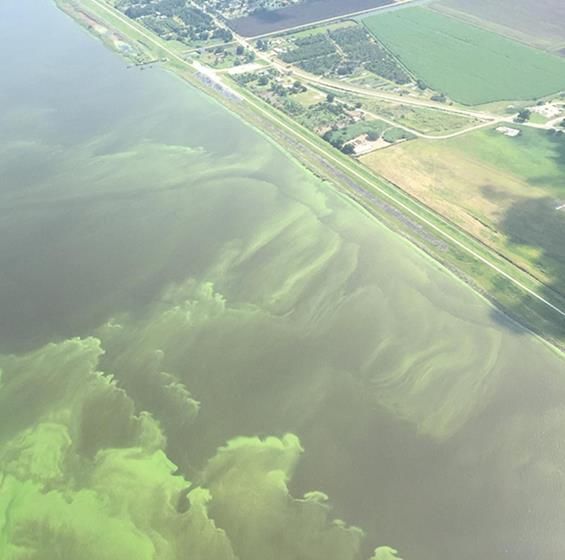
bloom are absent, however, algal toxins may still cause harmful effects.6 Figure 1 shows an aerial
view of a HAB that produced visible green scums in Lake Okeechobee, Florida, in July 2016.
Figure 1. Aerial View of a July 2016 Harmful Algal Bloom in
Lake Okeechobee, Florida
Source: U.S. Geological Survey, https://www.usgs.gov/news/science-harmful-algae-blooms.
5 For a discussion of algal toxins in drinking water, see, Algal Toxins in Drinking Water: EPA Health Advisories, by
Mary Tiemann.
6 Lopez et al., Scientific Assessment of Freshwater Harmful Algal Blooms.
Congressional Research Service 2Freshwater Harmful Algal Blooms: Causes, Challenges, and Policy Considerations HAB Types and Impacts While many types of algae can cause HABs in bodies of freshwater, cyanobacteria (sometimes referred to as blue-green algae) typically cause the most frequent and severe blooms. 7 Cyanobacterial HABs pose a threat to human and aquatic ecosystem health and can kill pets, livestock, and wildlife. Some species of cyanobacteria produce toxins, called cyanotoxins, which can cause hepatic (liver-related), neurologic, respiratory, dermatologic, and other symptoms.8 These may be acute or chronic, mild or severe, and in some cases may be fatal. Humans may be exposed to cyanotoxins by consuming tainted drinking water, fish, or shellfish; swimming or recreating in waters with certain concentrations of cyanotoxins present; or inhaling aerosolized toxins.9 The cyanotoxins associated with these HABs can contaminate fish, interfere with a variety of recreational activities, and cause other economic and environmental damages. There are many types of cyanotoxins, which may have multiple variants with a wide range of toxicities.10 The most commonly occurring and most studied cyanotoxin is microcystin.11 Although cyanobacterial HABs are considered to be the most prevalent and toxic types of HABs, blooms of “golden algae” (Prymnesium parvum) are likely the most problematic of noncyanobacterial freshwater HAB taxa (i.e., group of related organisms classified as a unit).12 Golden algal HABs have caused large fish kills worldwide, including millions of fish in Texas. Most of the major fish kills have occurred since 2000. Golden algae thrive in brackish water, such as the rivers and reservoirs found in areas of Texas, Oklahoma, and Wyoming. The toxins produced by golden algae target gill-breathing organisms, such as fish, clams, and mussels. According to information from two states that experience golden algal blooms, there is currently no evidence that golden algal toxins pose a direct threat to humans, other mammals, or birds.13 Effects of cyanobacterial HABs and golden algae HABs are detailed in Table 1. In addition to the effects of algal toxins on human and animal health, HABs can also contribute to deteriorating water quality and ecosystem health. An overabundance of cyanobacteria or other algae can block out sunlight and clog fish gills. In addition, as the algae die and decompose, they consume oxygen, leaving waterways in a hypoxic (or low oxygen) state, sometimes forming “dead zones”—areas where life cannot survive due to lack of oxygen. Low oxygen areas can suffocate and kill fish and bottom-dwelling organisms such as crabs and clams. According to EPA, over 166 dead zones have been documented nationwide, including in waterbodies such as 7 J. L. Graham et al., Cyanobacterial Harmful Algal Blooms and U.S. Geological Survey Science Capabilities, U.S. Geological Survey, 2016. 8 Centers for Disease Control and Prevention, “Harmful Algal Bloom (HAB)-Associated Illness,” https://www.cdc.gov/ habs/illness-symptoms-freshwater.html. 9 Graham et al., Cyanobacterial Harmful Algal Blooms. 10 Graham et al., Cyanobacterial Harmful Algal Blooms. 11 Graham et al., Cyanobacterial Harmful Algal Blooms; and Keith A. Loftin et al., “Cyanotoxins in Inland Lakes of the United States: Occurrence and Potential Recreational Health Risks in the EPA National Lakes Assessment 2007,” Harmful Algae, vol. 56 (2016), pp. 77-90. Other common cyanotoxins that can have adverse environmental health effects include anatoxins, cylindrospermopsins, and saxitoxins. 12 National Office for Harmful Algal Blooms at Woods Hole Oceanographic Institution, “Golden Algae, Prymnesium Parvum,” https://hab.whoi.edu/impacts/impacts-golden-algae/. 13 Texas Parks and Wildlife, Texas Commission on Environmental Quality, and U.S. Fish and Wildlife Service, “Golden Alga Facts,” http://www.tceq.texas.gov/assets/public/comm_exec/pubs/gi/gi-378.pdf; Arizona Game and Fish Department, “Golden Alga Information,” https://www.azgfd.com/fishing/golden-alga/. Congressional Research Service 3
Freshwater Harmful Algal Blooms: Causes, Challenges, and Policy Considerations

the Chesapeake Bay and the Gulf of Mexico.14 Significant economic losses have occurred as a
result of hypoxia.15

14EPA, “Nutrient Pollution, The Effects: Environment,” https://www.epa.gov/nutrientpollution/effects-environment.
15White House, Executive Office of the President, National Science and Technology Council, Committee on
Environment and Natural Resources, An Assessment of Coastal Hypoxia and Eutrophication in U.S. Waters, November
2003, https://www.whitehouse.gov/ostp/nstc/.

Congressional Research Service                                                                                  4
Table 1. Selected Freshwater Harmful Algal Bloom (HAB) Taxa and Toxins and Their Effects
                                                    Human Health           Animal Health              Environmental                                 Affected Areas
     HAB Taxa                   Toxins                 Effects                Effects                     Effects           Economic Effects            in U.S.

 Cyanobacteria           Microcystins,            Liver and kidney       Pet, farm animal, and      Water discoloration,   Loss of tourism,       Great Lakes and
                         cylindrospermopsin,      toxicity,              wildlife mortality; fish   foul odors             contamination of       many inland water
                         anatoxin-a, saxitoxins   neurotoxicity,         kills                                             drinking water         bodies
                                                  paralysis,                                                               requiring additional
                                                  gastrointestinal                                                         expensive water
                                                  effects, dermatitis,                                                     treatment or
                                                  respiratory illness                                                      alternate water
                                                                                                                           sources, taste
                                                                                                                           problems in farmed
                                                                                                                           and wild-caught fish
                                                                                                                           (making them
                                                                                                                           inedible)
 Haptophytes (e.g.,      Prymnesins,              No apparent adverse    Kills fish and other       Water discoloration,   Loss of fishing        Alabama, Alaska,
 Prymnesium parvum,      ichthyotoxins (i.e.,     effects                gill-breathing             foam formation         income, clean-up       Colorado, Florida,
 or “golden algae”)      fish toxin)                                     organisms, such as                                costs                  Georgia, Nebraska,
                                                                         clams and mussels                                                        New Mexico, North
                                                                                                                                                  Carolina, Oklahoma,
                                                                                                                                                  Pennsylvania, South
                                                                                                                                                  Carolina, Texas, and
                                                                                                                                                  Wyoming

    Source: Adapted from National Science and Technology Council, Subcommittee on Ocean Science and Technology, Harmful Algal Blooms and Hypoxia Comprehensive
    Research Plan and Action Strategy: An Interagency Report, Interagency Working Group on the Harmful Algal Bloom and Hypoxia Research and Control Act, February 11,
    2016, p. 49.
    Notes: Table includes information only on Freshwater HAB taxa and toxins discussed in this report. For a complete list of freshwater and marine HABs, toxins, and
    their effects, see the source above, Appendix 1, pp. 49-52.

CRS-5
Freshwater Harmful Algal Blooms: Causes, Challenges, and Policy Considerations Factors Contributing to HAB Formation Many factors may influence the occurrence and prevalence of HABs in freshwater, including nutrient concentrations, water temperature, availability of light, pH, and water circulation. Nutrient enrichment is widely recognized as one of the key causes of HAB formation.16 Nutrients, such as nitrogen and phosphorus, are essential to plant growth and natural parts of aquatic ecosystems. However, when high levels of nutrients enter a body of water, they stimulate plant and algal growth, which can lead to depletion of dissolved oxygen (as explained above), reduced transparency (i.e., turbidity), changes to the biological community (e.g., loss of sportfish, such as bass), and degradation of the aesthetic appeal of the water (i.e., from odor and scums). This process is called eutrophication.17 While some sources of nutrients in water bodies are natural, many anthropogenic activities contribute nutrients to waterbodies from a number of point and nonpoint sources. Point sources include municipal and industrial wastewater discharges and concentrated animal feeding operations (CAFOs).18 Nonpoint sources include urban stormwater runoff, failing septic systems, atmospheric deposition of nitrogen from fossil fuel emissions, runoff from fertilized cropland, and manure runoff from cropland, pastures, and animal feeding operations. See Table 2 for more information on these sources. Studies also indicate that increased temperatures and changes in frequency and intensity of rainfall associated with climate change may also favor HAB formation.19 HABs generally proliferate in warmer waters. In addition, some studies have found that swings between flooding and drought may enhance HAB formation. For example, if intense rainfall is followed by a drought, the nutrients washed into receiving water bodies may remain in them longer, increasing the potential for HABs.20 16 Graham et al., Cyanobacterial Harmful Algal Blooms; and Lopez et al., Scientific Assessment of Freshwater Harmful Algal Blooms. 17 EPA, “Preventing Eutrophication: Scientific Support for Dual Nutrient Criteria,” February 2015, https://www.epa.gov/sites/production/files/documents/nandpfactsheet.pdf. 18 CAFOs are point sources, as defined by CWA Section 502(14). CAFOs are agricultural operations where animals are kept and raised in confined situations that meet criteria established in EPA’s CAFO regulation (40 C.F.R. 122.23). These criteria include specific numbers of confined animals and designation as a significant contributor of pollutants. 19 H. W. Paerl and J. Huisman, “Climate Change: A Catalyst for Global Expansion of Harmful Cyanobacterial Blooms,” Environmental Microbiology Reports, vol. 1, no. 1 (February 2009), pp. 27-37; National Science and Technology Council, Subcommittee on Ocean Science and Technology, Harmful Algal Blooms and Hypoxia Comprehensive Research Plan and Action Strategy: An Interagency Report, Interagency Working Group on the Harmful Algal Bloom and Hypoxia Research and Control Act, February 11, 2016; Jerry M. Melillo et al., Climate Change Impacts in the United States: The Third National Climate Assessment, U.S. Global Change Research Program, October 2014, pp. 79, 198, 216. 20 Paerl and Huisman, “Climate Change,” pp. 27-37. Congressional Research Service 6
Freshwater Harmful Algal Blooms: Causes, Challenges, and Policy Considerations

                       Table 2. Anthropogenic Sources of Nutrients in Water
         Source            Source Type                                       Details

 Municipal wastewater      Point             Municipal wastewater treatment plants process wastewater from
 discharges                                  homes and businesses. The wastewater contains nitrogen and
                                             phosphorus from human waste, food, and phosphate-containing soaps
                                             and detergents. Some wastewater treatment plants have upgraded
                                             their systems and are able to remove more nitrogen and phosphorus
                                             than others.
 Industrial wastewater     Point             Industrial wastewater treatment plants process wastewater from a
 discharges                                  variety of manufacturing or industrial activities. According to EPA,
                                             certain types of industrial waste tend to possess higher quantities of
                                             nutrients, such as those from processors of food, beverages, livestock,
                                             and agricultural products.
 Concentrated animal       Pointa            CAFOs are animal feeding operations (see entry below) that meet
 feeding operations                          numeric thresholds for the number of animals they contain and/or
 (CAFOs)                                     meet certain pollution discharge criteria.b Manure discharge can
                                             contribute nitrogen and phosphorus to waterways.
 Animal feeding            Nonpoint          AFOs are facilities in which livestock or poultry are kept and raised in
 operations (AFO)                            confinement that meet certain conditions. Manure runoff and
                                             wastewater from AFOs can contribute nitrogen and phosphorus to
                                             waterways.c
 Agricultural runoff       Nonpoint          Excess fertilizer applied to crops and fields, animal manure, and soil
                                             erosion can all contribute to increased nitrogen and phosphorus
                                             entering water bodies during rainfall events.
 Urban stormwater          Nonpoint          During rainfall or snowmelt events, water carries nitrogen and
 runoff                                      phosphorus across paved surfaces and buildings and into local water
                                             bodies or storm drains. Fertilizers, yard and pet waste, and phosphate-
                                             containing soaps and detergents can contribute to higher nutrient
                                             concentrations in stormwater.
 Failing septic systems    Nonpoint          If septic systems are improperly managed, elevated nitrogen and
                                             phosphorus levels can be released into local water bodies or
                                             groundwater. Common causes of failure include aging, inappropriate
                                             design, overloading the system, and poor maintenance.
 Fossil fuels              Nonpoint          Combustion of fossil fuels by electric power generation, industry,
                                             transportation, and agriculture release nitrogen oxides into the
                                             atmosphere. Nitrogen oxides are deposited back onto land and can be
                                             washed into nearby waters during rainfall events.

    Sources: EPA “Nutrient Pollution: Sources and Solutions,” https://www.epa.gov/nutrientpollution/sources-and-
    solutions; EPA, Office of Water, A Compilation of Cost Data Associated with the Impacts and Control of Nutrient
    Pollution, EPA 820-F-15-096, May 2015, pp. IV-23.
    Notes:
    a. Under CWA Section 502(14), CAFOs are point sources. However, the definition of point sources
          specifically excludes agricultural stormwater discharges. Therefore, agricultural stormwater discharges from
          CAFOs are nonpoint sources.
    b. For EPA’s regulatory definitions of Large CAFOs, Medium CAFOs, and Small CAFOs, see 40 C.F.R. Section
          122.23.
    c. The conditions for an AFO include (1) animals are confined or maintained for a total of 45 days or more in
          any 12-month period, and (2) crops are not sustained in the normal growing season over any portion of the
          lot or facility. See 40 C.F.R. Section 122.23.

Congressional Research Service                                                                                          7
Freshwater Harmful Algal Blooms: Causes, Challenges, and Policy Considerations Incidence and Trends Scientists largely agree that the frequency and distribution of HABs, the economic losses from them, the types of resources affected, and the number of toxins and toxic species have all increased in recent years.21 Some scientists note that factors such as better detection methods and increased reporting have contributed to the upward trend. HABs, including cyanobacterial HABs, have been recorded in the waters of all 50 states, with some HABs crossing state lines.22 Figure 2 shows the generalized distribution of selected freshwater HAB events (cyanobacterial HABs and golden algal HABs) that took place between 2006 and 2015 across the United States. The findings of EPA’s most recent national assessment of lakes23 are consistent with other reports of the rising trend in HABs. In EPA’s 2012 National Lake Assessment, EPA concluded that there was little change from its 2007 survey of lakes, with two exceptions—trends in algal toxin and nutrient measures.24 In 2012, EPA and its partners detected microcystin in 39% of lakes, a 9.5% increase from 2007.25 EPA noted, however, that for both studies, the concentrations of microcystin remained low and rarely exceeded the levels of concern established by the World Health Organization (WHO) for recreational uses (see “Regulatory Efforts and Guidelines”). EPA also found an 8.3% increase in the percentage of lakes in the “most disturbed condition” category when analyzing the density of cyanobacterial cells (i.e., an indicator of risk for exposure to algal toxins because the cells may produce toxins).26 Finally, EPA found an overall increase in the median concentration of phosphorus across all lakes27 and a “dramatic” decline (18.2%) in the percentage of lakes with low nutrients and high oxygen levels.28 These findings are important because in many lakes, phosphorus is considered the limiting nutrient, meaning that the available quantity of this nutrient controls the pace of algal production. It also means that even small increases in phosphorus can lead to very rapid increases in algal growth.29 More broadly, the study found that nutrient pollution is a widespread problem across the country. Approximately 35% of lakes have excessive levels of total nitrogen, and 40% of lakes have excessive levels of total phosphorus.30 21 See footnote 1. 22 National Office for Harmful Algal Blooms at Woods Hole Oceanographic Institution, “Distribution of HABs in the U.S.,” https://hab.whoi.edu/maps/regions-us-distribution/. 23 EPA, National Lakes Assessment 2012: A Collaborative Survey of Lakes in the United States, EPA 841-R-16-113, December 2016, https://nationallakesassessment.epa.gov/. Every five years, EPA and its partners sample more than 1,000 lakes to inform the agency’s National Lakes Assessment, a statistically based assessment of the biological, chemical, physical, and recreational condition of the nation’s lakes. 24 EPA, National Lakes Assessment 2012, pp. 1-2. 25 EPA, National Lakes Assessment 2012, pp. 1, 18. 26 EPA, National Lakes Assessment 2012, p. 28. Note that according to the assessment, 15% of lakes are in the most disturbed condition using cyanobacteria cell counts as an indicator of risk for exposure to algal toxins. 27 EPA, National Lakes Assessment 2012, pp. 2, 13. The median concentration of phosphorus increased from 20 µg/L in 2007 to 37 µg/L in 2012. 28 EPA, National Lakes Assessment 2012, pp. 2, 13. In 2012, EPA found 18.2% fewer oligotrophic lakes (i.e., lakes with low nutrients and high oxygen levels) than in 2007. 29 EPA, National Lakes Assessment 2012, p. 12. 30 The terms total nitrogen and total phosphorus include all forms of the nutrient in the sample. For example, total phosphorus includes a measurement of orthophosphate, condensed phosphate, and organic phosphate. Congressional Research Service 8
Freshwater Harmful Algal Blooms: Causes, Challenges, and Policy Considerations

     Figure 2. Generalized Distribution of Selected Freshwater Harmful Algal Blooms
                               (HABs) in the United States

       Sources: Graphic adapted from a National Office of Harmful Algal Blooms at Woods Hole Oceanographic
       Institution map of HABs that occurred between 2006 and 2015 (available at http://whoi.edu/redtide/regions/us-
       distribution) and an EPA adaptation of the map that reflects input from HAB experts with broad experience in
       HAB events and reports to the U.S. National Office for Harmful Algal Blooms (see EPA, Recommended Human
       Health Recreational Ambient Water Quality Criteria or Swimming Advisories for Microcystins and Cylindrospermopsin,
       EPA 822-R-19-001, May 2019, p. 39). Note that the Woods Hole Oceanographic Institution Harmful Algae
       website (https://hab.whoi.edu/maps/regions-us-distribution/) states that all 50 states are impacted by
       cyanobacterial HABs and at least 23 states are impacted by golden algal HABs.
       Notes: Each state that has experienced one or more cyanobacterial HABs or golden algal HABs is indicated
       with a single dot. Larger green ovals mark areas where more widespread cyanobacterial HAB problems
       occurred.

Efforts to Address Harmful Algal Blooms
Enacted Legislation
Congress has recognized the increasing frequency of HABs and has passed legislation in an effort
to address public health, economic, and environmental consequences of HABs. In 1998, Congress
passed the Harmful Algal Bloom and Hypoxia Research and Control Act (HABHRCA), which
established an Interagency Task Force on Harmful Algal Blooms and Hypoxia.31 It required the
task force to prepare reports assessing HABs and hypoxia with a focus on coastal waters and
authorized funding for HAB and hypoxia-related research, education, and monitoring activities.

31   P.L. 105-383.

Congressional Research Service                                                                                              9
Freshwater Harmful Algal Blooms: Causes, Challenges, and Policy Considerations The Department of Commerce’s National Oceanic and Atmospheric Administration (NOAA) chaired the task force. In 2004, Congress reauthorized HABHRCA and expanded it to include assessments of HABs in freshwater.32 In 2014, Congress again reauthorized HABHRCA and established a national HAB and Hypoxia Program to be maintained by NOAA through the task force.33 It identified NOAA and EPA as the lead federal agencies for marine and freshwater aspects of the program, respectively, and required additional reports and a comprehensive research plan and action strategy. Congress most recently amended and reauthorized appropriations for HABHRCA in January 2019 through the Harmful Algal Bloom and Hypoxia Research and Control Amendments Act of 2017, included within the National Integrated Drought Information System Reauthorization Act of 2018 (P.L. 115-423, §9). The HABHRCA amendments require the task force to submit a scientific assessment of HABs in U.S. coastal and freshwater systems once every five years to Congress, require NOAA to develop and maintain a public website that provides information on HAB and Hypoxia Program activities, and authorize NOAA or EPA to determine that a hypoxia or HAB event is an event of national significance (for marine and freshwater systems, respectively). If an event is designated, the legislation authorizes NOAA or EPA to make funds available to the affected state or locality to assess and mitigate the detrimental environmental, economic, subsistence use, and public health effects of the event.34 NOAA and EPA separately published notices of intent to develop a policy for determining HAB and hypoxia events of national significance in the Federal Register in July and September 2019, respectively.35 In 2015, in response to public safety concerns arising from the Toledo, Ohio, HAB event, Congress passed legislation addressing algal toxins in drinking water. The Drinking Water Protection Act amended the Safe Drinking Water Act to require EPA to develop a strategic plan to assess and manage the risks associated with algal toxins in public drinking water supplies.36 The following year, Congress included a provision in the Water Infrastructure Improvements for the Nation (WIIN) Act that required EPA to designate a Harmful Algal Bloom Coordinator to coordinate projects and activities under the Great Lakes Restoration Initiative involving HABs in the Great Lakes.37 Table 3 provides a list and description of selected HAB-specific legislation enacted since 1998 that pertains to freshwater HABs.38 32 P.L. 108-456. 33 P.L. 113-124. 34 P.L. 115-423, §9(g). 35 NOAA, “Notice of Intent to Develop a Policy for Determining Harmful Algal Bloom (HAB) and Hypoxia Events of National Significance in Marine or Coastal Waters; Opportunity to Provide Information,” 84 Federal Register 35854, July 25, 2019; EPA, “Notice of Intent to Develop a Policy on the Determination of a Harmful Algal Bloom (HAB) and Hypoxia as an Event of National Significance in Freshwater Systems,” 84 Federal Register 48610, September 16, 2019. 36 P.L. 114-45. 37 P.L. 114-322. 38 Congress has also passed legislation authorizing appropriations for grant programs and research that includes HABs as a focus area, but these laws are not included in the table. For example, Congress has reauthorized the National Sea Grant College Program to provide funds for competitive grants for university research on HABs (P.L. 105-160, P.L. 107-299, and P.L. 110-394) and has amended the CWA’s National Estuary Program to authorize the Administrator to provide competitive grants to certain recipients to address urgent and challenging issues, including HABs (P.L. 114- 162). Congressional Research Service 10
Freshwater Harmful Algal Blooms: Causes, Challenges, and Policy Considerations
Table 3. Selected Freshwater Harmful Algal Bloom (HAB)-Related Acts
Law Description
Harmful Algal Bloom Established an Interagency Task Force of Harmful Algal Blooms and Hypoxia,
and Hypoxia Research chaired by the Department of Commerce, to consist of representatives from nine
and Control Act federal agencies, the Office of Science and Technology Policy, the Council on
(HABHRCA), 1998 (P.L. Environmental Quality, and “such other Federal agencies as the President considers
105-383) appropriate”
Required the task force to prepare reports assessing HABs and hypoxia, with a
focus on coastal waters
Authorized funding for research, education, and monitoring activities related to
HABs and hypoxia: $15,000,000 for FY1999; $18,250,000 for FY2000; and
$19,000,000 for FY2001
Harmful Algal Bloom Retained the Interagency Task Force (which the President could have
and Hypoxia disestablished under the 1998 act)
Amendments Act of Expanded the focus of the act to include assessments of HABs in freshwater
2004 (P.L. 108-456)
Mandated five reports, one of which was to assess current knowledge about HABs
in freshwater, including a research plan for coordinating federal efforts to better
understand freshwater HABs
Required the task force to complete a scientific assessment of HABs at least once
every five years—an assessment that shall examine marine and freshwater blooms
after the initial assessment was complete
Reauthorized funding for research, education, and monitoring activities:
$23,500,000 for FY2005; $24,500,000 for FY2006; $25,000,000 for FY2007; and
$25,500,000 for FY2008a
Harmful Algal Bloom Established a National HAB and Hypoxia program to be maintained and enhanced
and Hypoxia Research by the National Oceanic and Atmospheric Administration (NOAA)b through the
and Control interagency task force
Amendments Act of Identified NOAAb as the lead federal agency with primary responsibility for
2014 (P.L. 113-124) administering the program and directed EPA to lead the freshwater aspects of the
program
Added the Centers for Disease Control and Prevention as a member of the
interagency task force
Required the interagency task force to develop a comprehensive research plan and
action strategy to address marine and freshwater HABs and hypoxia
Required regional reports, including a progress report on Northern Gulf of Mexico
hypoxia and an integrated assessment of and plan to address hypoxia and HABs in
the Great Lakes
Reauthorized funding to implement the program and research plan and action
strategy: $20,500,000 for each of FY2014-FY2018
Harmful Algal Bloom Requires the interagency task force to complete, and submit to Congress, a
and Hypoxia Research scientific assessment of HABs in U.S. coastal waters and freshwater systems once
and Control every five years
Amendments Act of Added the Army Corps of Engineers as a member of the interagency task force
2017 (P.L. 115-423)c
Requires NOAA to develop and maintain a publicly accessible website that
provides information on the HAB and Hypoxia Program activities
Added an objective for peer-reviewed, merit-based, competitive grant funding to
include accelerating the use of effective methods of intervention and mitigation to
reduce the frequency, severity, and impacts of HABs and hypoxia events
Added a section that allows NOAA or EPA to determine that a hypoxia or HAB
event is an event of national significance, which then authorizes NOAA or EPA to
make sums available to the affected state or locality for the purposes of assessing
Congressional Research Service 11Freshwater Harmful Algal Blooms: Causes, Challenges, and Policy Considerations
Law Description
and mitigating the detrimental environmental, economic, subsistence use, and
public health effects of the event (additionally outlines federal share requirements
and authorizes the acceptance of donations)
Reauthorized funding to implement the HAB and Hypoxia program: $20,500,000
for each of FY2019-FY2023
Drinking Water Amended the Safe Drinking Water Act to require EPA to develop—and submit to
Protection Act (P.L. Congress—a strategic plan to assess and manage the risks associated with algal
114-45) toxins in public drinking water suppliesd
Required EPA to include in the plan steps and schedules for EPA to
(1) assess health risks of algal toxins in drinking water,
(2) publish a list of toxins likely to pose risks and summarize their health effects,
(3) determine whether to issue health advisories for listed toxins,
(4) publish guidance on feasible methods to identify and measure the algal toxins in
water,
(5) recommend feasible treatment and source water protection options, and
(6) provide technical assistance to states and water systems.
Required the Government Accountability Office to report to Congress on federal
funds expended for each of FY2010-FY2014 to examine toxin-producing
cyanobacteria and algae or address public health concerns related to harmful algal
bloomse
Water Infrastructure One of the act’s provisions directed the EPA Administrator to designate a Harmful
Improvements for the Algal Bloom Coordinator to coordinate—with federal partners, Great Lakes
Nation (WIIN) Act (P.L. states, Indian tribes, and other nonfederal stakeholders—projects and activities
114-322) under the Great Lakes Restoration Initiative involving HABs in the Great Lakesf
Source: CRS.
Notes: This table does not include enacted legislation that authorizes appropriations for grant programs that
include HABs as one of several focus areas.
a. The reauthorization expired in 2008, however, the Consolidated Appropriations Act of 2008 (P.L. 110-161)
provided authorizations of $30,000,000 for each of FY2008-FY2010.
b. The act specifies that the Under Secretary of the Department of Commerce shall have this role. The Under
Secretary of Commerce for Oceans and Atmosphere is the administrator of NOAA.
c. The Harmful Algal Bloom and Hypoxia Research and Control Amendments Act of 2017 was enacted as P.L.
115-423 on January 7, 2019.
d. EPA, Algal Toxin Risk Assessment and Management Strategic Plan for Drinking Water: Strategy Submitted
to Congress to Meet the Requirements of P.L. 114-45, 810R04003, November 2015.
e. U.S. Government Accountability Office, Environmental Protection: Information on Federal Agencies’ Expenditures
and Coordination Related to Harmful Algae, GAO-17-119, October 2016.
f. According to EPA, the administrator designated the Great Lakes National Program Office Director as the
Harmful Algal Bloom Coordinator.
In addition to HAB-specific legislation, the Clean Water Act (CWA) authorizes EPA to address
water quality concerns associated with HABs.39 The act establishes a system, under Section 303,
for states to adopt ambient water quality standards consisting of the designated use or uses of a
water body (e.g., recreational, public water supply, or aquatic life) and the water quality criteria
that are necessary to protect the use or uses.40 States then use their water quality standards to
39 Clean Water Act, as amended (33 U.S.C. §1251 et seq.).
40 33 U.S.C. §1313.
Congressional Research Service 12Freshwater Harmful Algal Blooms: Causes, Challenges, and Policy Considerations determine which waters must be cleaned up, how much effluent may be discharged, and what is needed for protection. Section 304(a) requires the EPA Administrator to publish and, from time to time, revise water quality criteria that accurately reflect the latest scientific knowledge on the kind and extent of all identifiable effects on human health and the environment that might be expected from the presence of pollutants.41 These criteria constitute guidance that states use in adopting their water quality standards. As recognized by Section 510 of the CWA,42 states may develop water quality standards that are more stringent than required by EPA regulations. EPA’s water quality standards regulations43 require that in developing water quality standards, states must adopt water quality criteria that protect the designated use. States are to establish numerical criteria—based on (1) EPA’s recommended criteria, (2) EPA’s criteria modified to reflect site-specific conditions, or (3) other scientifically defensible methods—and establish narrative criteria or criteria based on biomonitoring methods where numerical criteria cannot be established or to supplement numerical criteria. Section 303(d) of the CWA requires states to identify waters that are impaired by pollution, even after application of pollution controls.44 For those waters, states must establish a Total Maximum Daily Load (TMDL) of pollutants to ensure that water quality standards can be attained. A TMDL is a quantitative assessment of pollution sources and pollutant reductions needed to restore and protect U.S. waters; it is also a planning process for attaining water quality standards. TMDLs may address all pollution sources, including point sources, such as municipal sewage treatment or industrial plant discharges, and nonpoint sources such as urban runoff and agricultural runoff. Also, Section 118 of the CWA provides that the United States should seek to attain the goals embodied in the Great Lakes Water Quality Agreement of 1978, as amended by the Water Quality Agreement of 1987 and any other agreements and amendments.45 It tasks EPA to take the lead in the effort to meet the agreement’s goals, working with other federal agencies, states, and localities. As seen in the text box, the most recent amendment includes a HAB-related goal. 41 33 U.S.C. §1314. 42 33 U.S.C. §1370. 43 40 C.F.R. §131. 44 33 U.S.C. §1313. 45 33 U.S.C. §1269. In 1987 amendments to the CWA (P.L. 100-4) Congress affirmed the goals of the amended Great Lakes Water Quality Agreement of 1978. Congressional Research Service 13
Freshwater Harmful Algal Blooms: Causes, Challenges, and Policy Considerations
Great Lakes Water Quality Agreement
The Great Lakes Water Quality Agreement, which was first signed in 1972, is a commitment between the United
States and Canada to restore and protect the waters of the Great Lakes.46 It was amended most recently in 2012
to better identify and manage current environmental issues and prevent emerging environmental issues from
affecting the waters of the Great Lakes while upholding and modernizing commitments made in previous
agreements. One of the nine objectives of the 2012 agreement is that the waters of the Great Lakes should “be
free from nutrients that directly or indirectly enter the water as a result of human activity, in amounts that
promote growth of algae and cyanobacteria that interfere with aquatic ecosystem health, or human use of the
ecosystem.” Although previous agreements had also included efforts to reduce nutrients and prevent excessive
algal growth, the 2012 amendments were the first to specifically include cyanobacteria.
Federal Agency Efforts
Many federal agencies are involved in carrying out various HAB-related activities, including
conducting HAB research, monitoring algal toxins and water quality, forecasting HABs,
supporting projects to improve water quality, and facilitating community outreach efforts. Some
in Congress, however, have expressed concern about the activities and expenditures of various
agencies and potential redundancies. In the Drinking Water Protection Act (P.L. 114-45), enacted
August 7, 2015, Congress directed the Government Accountability Office (GAO) to inventory
funds expended by federal agencies to examine toxin-producing cyanobacteria and algae or
address public health concerns related to harmful algal blooms. GAO was to recommend ways to
improve interagency coordination and reduce duplication of efforts. According to the 2016 GAO
report that responded to the mandate, 17 agencies conducted research, monitoring, response, or
other HAB-related activities between FY2013 and FY2015.47 The GAO report provides detailed
information on federal agencies’ key HAB-related activities, expenditures, and specific statutory
authorities, and, thus, this report will not discuss these in detail.48 Rather, this section identifies
the federal agencies involved in a key interagency effort and highlights actions EPA specifically is
taking in its role as the leader of freshwater HAB issues.
As previously mentioned, HABHRCA established an interagency task force that is charged with
promoting a national strategy to help communities understand, predict, control,
and mitigate freshwater and marine HAB and hypoxia events;
enhancing, coordinating, and assessing the activities of existing HABs and
hypoxia programs; and
providing for development of a comprehensive research plan and action strategy.
Table 4 provides a list of the federal agencies and organizations specifically required in
HABHRCA to participate on the task force. The reauthorization of HABHRCA in 2014
reconstituted the task force as the Interagency Working Group on the Harmful Algal Bloom and
Hypoxia Research and Control Act (IWG-HABHRCA), responsible for maintaining a national
HAB/hypoxia program. NOAA and EPA share primary responsibility under HABHRCA for
46 Great Lakes Water Quality Agreement, U.S.-Canada, as amended, September 7, 2012.
47 GAO, Environmental Protection: Information on Federal Agencies’ Expenditures and Coordination Related to
Harmful Algae, GAO-17-119, October 2016, p. 5. Note that GAO identified 17 agencies that have conducted research,
monitoring, or other HAB-related activities in FY2013-FY2015. However, the report focuses on 12 federal agencies
whose data was sufficiently reliable for the purposes of the report.
48 In addition, Members of Congress have requested a follow-on study from GAO regarding HABs. See House Science,
Space, and Technology Committee, “Bipartisan, Bicameral Group of Members Request GAO Study on Harmful Algal
Blooms,” press release, April 29, 2020, https://science.house.gov/news/press-releases/bipartisan-bicameral-group-of-
members-request-gao-study-on-harmful-algal-blooms.
Congressional Research Service 14Freshwater Harmful Algal Blooms: Causes, Challenges, and Policy Considerations
administering the national HAB and hypoxia program, with NOAA leading marine aspects of the
program and EPA in charge of freshwater aspects.
Table 4. Interagency Task Force on Harmful Algal Blooms (HABs) and Hypoxia
Representatives Specifically Named in HABHRCA
Agency
Department of Commerce, National Oceanic and Atmospheric Administration (NOAA)a
Environmental Protection Agency (EPA)a
Department of Agriculture
Department of the Interior
Department of the Navy
Department of Health and Human Services
National Science Foundation
National Aeronautics and Space Administration
Food and Drug Administration
Office of Science and Technology Policy
Council on Environmental Quality
Centers for Disease Control and Prevention
Army Corps of Engineers
Source: CRS.
Notes: NOAA and EPA serve as co-chairs of the interagency task force. HABHRCA states that the task force
shall also include “such other Federal agencies as the President considers appropriate.”
a. NOAA and EPA serve as co-chairs on the task force.
In its role under HABHRCA and the CWA, EPA’s efforts to address HABs include coordinating
the efforts of multiple entities, developing regulations and guidelines to protect water quality (see
“Regulatory Efforts and Guidelines” section), conducting research, providing financial assistance
through grants and other agreements, and educating the public.49 In its coordination role, EPA
leads, chairs, or co-chairs several working groups or task forces, including the IWG-HABHRCA,
the Inland HAB Discussion Group, the Great Lakes Interagency Task Force, and the Mississippi
River/Gulf of Mexico Watershed Nutrient Task Force (Hypoxia Task Force). See Table 5 for a
description of these efforts.
EPA has also conducted internal research on HABs and their toxins focused on water quality
(including how different factors such as nutrients, light, temperature, etc., affect HAB occurrence
and toxicity), human and ecological health effects, monitoring and analytical methods research,
and drinking water treatment research.50 The agency also provides research grants, such as those
provided through the Science to Achieve Results (STAR) program, focused on topic areas
49 Education efforts include communication and outreach, such as newsletters and videos, to increase public awareness
regarding the adverse effects of nutrient pollution and HABs.
50 GAO, Environmental Protection: Information on Federal Agencies’ Expenditures and Coordination Related to
Harmful Algae, GAO-17-119, October 2016.
Congressional Research Service 15Freshwater Harmful Algal Blooms: Causes, Challenges, and Policy Considerations
including the prediction, prevention, control, and mitigation of freshwater HABs and the fate and
effects from less-common emerging HABs.51
EPA also provides financial assistance to states, tribes, and others to address water pollution,
including nonpoint source pollution. Examples of such assistance include nonpoint source
implementation grants under CWA Section 319, capitalization grants under the Clean Water State
Revolving Fund, and grants under CWA Section 106, which are provided to states, interstate
agencies, and tribes to administer programs that prevent, reduce, and eliminate water pollution.
Table 5. EPA Efforts to Coordinate Freshwater HAB-Related Activities
Coordination Effort Description
Interagency Working Group on the Created after the HABHRCA amendments of 2014, this interagency
Harmful Algal Bloom and Hypoxia working group is the primary, government-wide mechanism through which
Research and Control Act (IWG- federal agencies coordinate their HAB-related activities and report on
HABHRCA) specific topics to Congress, such as research plans and action strategies for
addressing HABs and hypoxia. The group meets twice a month and is co-
chaired by the NOAA and EPA.
Inland HAB Discussion Group Led by EPA, the U.S. Geological Survey, and the Centers for Disease
Control and Prevention to share information among federal, state, local,
and industry stakeholders through free webinars, this informal discussion
group was created out of an expressed need by federal researchers and
state agencies to bridge a communication gap with respect to inland HAB
research, monitoring, human and ecological health risk assessment,
education, and outreach.
Great Lakes Interagency Task Chaired by EPA, this task force consists of 11 Cabinet and other federal
Force agency heads to coordinate the restoration of the Great Lakes. Created by
a May 18, 2004, executive order,a the task force, among other things,
coordinates the development of consistent federal policies, strategies,
projects, and priorities pertaining to the restoration and protection of the
Great Lakes. According to EPA officials, since 2009, the task force has
overseen the implementation of the Great Lakes Restoration Initiative
(GLRI),b a federally led effort to carry out programs and projects for Great
Lakes protection and restoration. In particular, the task force has overseen
the development of comprehensive, multiyear action plans that identify
goals, objectives, measurable ecological targets, and specific actions for four
GLRI focus areas. One of these focus areas is reducing nutrient runoff that
contributes to harmful/nuisance algal blooms.
Mississippi River/Gulf of Mexico Through this EPA-led task force, federal agencies coordinate with 12 states
Watershed Nutrient Task Force and a national tribal representative to address hypoxia in the Mississippi
(Hypoxia Task Force) River and the northern Gulf of Mexico.
Source: Excerpted from U.S. Government Accountability Office, Environmental Protection: Information on Federal
Agencies’ Expenditures and Coordination Related to Harmful Algae, GAO-17-119, October 2016, p. 23.
Notes:
a. Executive Order 13340, “Establishment of Great Lakes Interagency Task Force and Promotion of a Regional
Collaboration of National Significance for the Great Lakes,” 69 Federal Register 29043-29045, May 18, 2004.
b. The 114th Congress codified the GLRI in P.L. 114-322, Section 5005. As noted, this provision directed the
EPA Administrator to designate a coordinator for GLRI HAB activities.
51EPA “Freshwater Harmful Algal Blooms,” Funding Opportunity Announcement Number EPA-G2017-STAR-A1,
Office of Research and Development, October 28, 2016.
Congressional Research Service 16You can also read


