TWO-WAY MOBILITY OF PHD STUDENTS BETWEEN INDIA AND AUSTRALIA 2017 - REPORT OF THE GO8-INDIA PHD ADVISORY TASKFORCE ON - GROUP OF EIGHT
←
→
Page content transcription
If your browser does not render page correctly, please read the page content below
Report of the Go8-India PhD Advisory Taskforce on

Two-way Mobility
of PhD Students
Between India
and Australia
2017

Go8-India PhD Advisory
Taskforce Members

Name                                  Title                             Institution
Professor Peter Høj                   Chair                             Group of Eight
(Co-Chair)
                                      Vice Chancellor & President       The University of Queensland
Professor Devang V.                   Director                          Indian Institute of Technology
Khakhar (Co-Chair)                                                      Bombay (IIT-B)
Professor Arun K. Grover              Vice Chancellor                   Panjab University
                                      Chair, Advisory Committee         Chandigarh Region Innovation
                                                                        and Knowledge Cluster (CRIKC)
Mr Datta K. Kuvalekar                 Director, Technology              Forbes Marshall, India
                                      & Engineering
Mr Jang Sangha                        Managing Director                 Sangha Group of Companies
Professor Veena                       Director, Scientia Professor      Centre for Sustainable Materials
Sahajwalla                                                              Research & Technology
                                                                        (SMaRT@UNSW), UNSW Sydney
Professor Mohan                       Pro-Vice Chancellor               University of Queensland
Krishnamoorthy                        (Research)
Professor Craig Jeffrey               CEO & Director                    Australia India Institute (AII)

(right)
Professor Peter Høj,
Co-Chair of the Taskforce,
Chair of the Go8, Vice-
Chancellor and President
of the University of
Queensland
(far right)
Professor Devang Khakhar,
Co-Chair of the Taskforce,
Director of IIT Bombay

2 – TWO-WAY MOBILITY OF PHD STUDENTS BETWEEN INDIA AND AUSTRALIA 2017
Contents

Executive summary                                                                        4

Recommendations                                                                          5

Background – the Go8 in the Australia-India
knowledge partnership                                                                  10

1. Indian PhD student numbers and mobility                                             14
  Indian PhD students in India                                                          14
  Indian PhD students in Australia                                                      16
  Indian PhD students in the United States and other countries                          17

2. Australian PhD student numbers and mobility                                         22
  Australian PhD students in Australia                                                  22
  Australian students in India                                                          23
  Australian students in the United States                                              23

3. Understanding the choices of international students                                 24

4. Barriers for Indian students coming to Australia                                    26
  Perceptions and information                                                           26
  Addressing Financial barriers                                                         31
  Addressing Regulatory and Administrative issues                                       42

Conclusion                                                                             50

                      TWO-WAY MOBILITY OF PHD STUDENTS BETWEEN INDIA AND AUSTRALIA 2017 – 3
Executive summary

                        The mobility of university students at          the Hon. Simon Birmingham, in New
                        all levels of study between India and           Delhi on 10 April, 2017. The Taskforce,
                        Australia is currently heavily one-way,         jointly chaired by Professor Peter Høj,
                        from India to Australia, reflecting             Chair of the Go8 and Vice-Chancellor
                        differences in the per capita capacity          of the University of Queensland, and
                        of the higher education systems of              Professor Devang Khakhar, Director
                        both countries. The educational sector          of IIT Bombay, was established
                        represents one of the most dynamic              specifically to identify initiatives which
                        segments of the growing relationship            will increase the two-way flow of PhD
                        between Australia and India and the             students between Australia and India.
                        growth in joint PhD degrees and the
                                                                        Specifically, the Taskforce’s mandate
                        spread of joint research projects
                                                                        is to:
                        will underpin this sector into the
                        decades to come. The Group of                   1. identify existing barriers and
                        Eight Universities (Go8), comprising               disincentives that currently limit
                        Australia’s leading research intensive             the two-way flow of students
                        universities is looking to redress this            between Australia and India;
                        current imbalance, particularly as it
                                                                        2. examine how the business sector
                        relates to PhD mobility.
                                                                           can promote the need for a PhD-
                        This report takes a step towards                   skilled workforce to provide
                        remedying this imbalance, firstly by               industry-ready PhD graduates, and;
                        identifying the barriers to collaboration,
                                                                        3. develop strategies to increase the
                        and then suggesting measures
                                                                           mobility of PhD students between
                        to address them. The report and
                                                                           the two countries.
                        recommendations have been informed
                        by extensive consultations with                 To prepare the groundwork for
                        Indian and Australian stakeholders              further informed dialogue about the
                        from government, universities and               barriers to cross-border PhD mobility,
                        industry, including at two workshops            this report examines the regulatory,
                        held in Delhi in 2017. The report is the        financial, perceptual and informational
                        first formal output of the Go8-India            issues affecting the flow of PhD
                        PhD Advisory Taskforce, which was               students between Australia and India
                        announced by the Australian Minister            and makes recommendations for
                        for Education and Training, Senator             action to address these barriers.

4 – TWO-WAY MOBILITY OF PHD STUDENTS BETWEEN INDIA AND AUSTRALIA 2017
Recommendations

Addressing perceptual/                            »» the benefits of studying at
information barriers                                 a comprehensive, multi-
                                                     disciplinary university.
The mobility of students between any          2. The Go8 work with their Indian
two countries is clearly affected by             partners to develop the pipeline
the perceptions and knowledge that               of Indian students undertaking
students hold about the other country,           PhDs in Australia, and increase
and its higher education and research            the number of Australian students
sector. Measures therefore are needed            at all levels spending time studying
to address students’ lack of knowledge           or researching in India. In support
or appreciation of benefits by promoting         of these aims:
the research strengths of the other
country and creating opportunities for            a. The Go8 develop a program(s)
short-term ‘exposure’ to the research                that provides opportunities for
environment in the other country.                    Indian undergraduate students
                                                     to undertake short-term (6–8
It is recommended that:                              weeks) or semester-length
1. The Go8, in conjunction with                      research internships at Go8
   organisations such as the Australia               universities. Such a program(s)
   India Institute (AII) and Austrade,               could potentially operate either
   collaborate to identify the key                   at an institutional level, or
   attributes that make Australian                   collectively across the Go8.
   universities distinctive and                   b. The Go8 should increase
   attractive for Indian students. This              the number of Australian
   should include an emphasis on:                    undergraduate students spending
   »» the strong geographical focus on               time in India by expanding
                                                     programs to India funded under
      and linkages with the Indo Pacific
                                                     the New Colombo Plan.
      region of Australian universities.
                                                  c. The Australian Government
   »» the quality of Australia’s research-
                                                     should widen the scope of New
      intensive universities in research
                                                     Colombo Plan funding to provide
      and post-graduate supervision.
                                                     opportunities for both Masters
   »» the value for money offered by                 and PhD students.
      Australian PhD programs.

                       TWO-WAY MOBILITY OF PHD STUDENTS BETWEEN INDIA AND AUSTRALIA 2017 – 5
3. Where possible, existing Indian              Many international PhD students
                           Government programs such as GIAN             also take up opportunities that the
                           (the Global Initiative of Academic           universities offer for paid work as
                           Networks) should be leveraged to             tutors and research assistants, to
                           increase the engagement of Go8               help cover their living costs. These
                           academic staff and PhD students              forms of support might not be well
                           with Indian partners.                        known in India. For Australian PhD
                        4. The Go8 should undertake a                   students, the fees and living costs
                           stocktake of Go8 India Studies               in India are likely to be less of a
                           courses, study opportunities in              barrier, but financial incentives in
                           India for Go8 students and Indian-           the form of travel/study grants and
                           born and India-engaged faculty               scholarships will nevertheless still
                           in order to promote and enhance              be important to persuade more
                           undergraduate students’ interest             Australian students to engage
                           in and knowledge of India.                   with India during their PhD.
                                                                        It is recommended that:
                        Addressing
                                                                 5. The Go8 promote awareness
                        financial barriers                          among Indian students in
                        Even if students would like to spend        India of existing forms of
                        either part or the duration of their        financial support that might
                        PhD candidacy in India or Australia,        be available to them if they
                        financial implications will be an           undertake a PhD program at
                        important consideration. For many           a Go8 university. This should
                        perhaps most, Indian students, the          include all forms of scholarship
                        decision to spend a few months, a           support and work opportunities
                        year or an entire PhD candidacy in          provided by the university, as
                        Australia is likely to be contingent on     well as support available from
                        the availability of funding support. Go8    relevant Australian Government
                        universities provide support for many       programs.
                        of their international PhD students in   6. The Go8 universities should
                        the form of tuition fee scholarships        seek to leverage the Australian
                        and, in some cases, living allowances.      Research Council’s Linkage

6 – TWO-WAY MOBILITY OF PHD STUDENTS BETWEEN INDIA AND AUSTRALIA 2017
Program to establish research            a. Commit to continued Australian
   partnerships with industry in India,        Government funding of the
   and encourage the recruitment               AISRF beyond its current
   and mobility of PhD students as             commitment to 2018–19.
   part of Linkage projects. The Go8
                                            b. Together with the Indian
   should work with Indian partners
                                               Government, review the grant
   to advocate for/take advantage of
                                               assessment criteria for the
   similar programs in India with an
                                               AISRF with a view to making the
   emphasis on PhD mobility.
                                               recruitment and mobility of PhD
7. A collaborative program be                  students from both countries
   developed for Indian companies              a compulsory requirement for
   and Australian companies based              some AISRF project grants.
   in India to sponsor scholarships
                                            c. With the Indian Government,
   for Indian students to study in
                                               review the timelines for AISRF
   Australia on PhD projects relevant
                                               grants to ensure they enable
   to their businesses.
                                               the recruitment of PhD students
8. The Go8 together with Indian                funded by AISRF.
   university and industry partners,
                                            d. With the Indian Government,
   investigate innovative PhD
                                               design and fund a sub-program
   modalities – including co-
                                               under the AISRF to allow short-
   supervision – that integrate
                                               term mobility for PhD students
   employment with the industry
                                               from both countries, along the
   partner and PhD research
                                               same lines as the programs that
   collaboration between the Go8
                                               already facilitate mobility for
   and India aimed at solving an
                                               early and mid-career researchers.
   industry partner R&D problem.
                                            e. Broaden the AISRF from its
9. The Australian Government
                                               current exclusive STEM focus
   leverage the Australia India
                                               to include Humanities and Social
   Strategic Research Fund (AISRF)
                                               Science (HASS) disciplines, with a
   to support increased PhD mobility
                                               requirement that projects address
   between Australia and India.
                                               areas of mutual national need.
   Specifically, it should:

                                          TWO-WAY MOBILITY OF PHD STUDENTS BETWEEN INDIA AND AUSTRALIA 2017 – 7
10. Go8 universities explore with                 enable Australian PhD students
                            Indian partner institutions                   to spend around one month in
                            possibilities for new jointly-badged          each year of their candidature,
                            PhD programs, along the lines                 and up to 3 months in total, at
                            of the IITB-Monash Research                   an Indian partner institution.
                            Academy. Any new jointly-badged 12. Go8 universities make available
                            PhD programs between Go8                   travel grants to their Australian
                            universities and Indian institutions       PhD students to spend up to
                            should include from the outset a           three months as a visiting scholar
                            ‘reciprocal’ program for Australian        at Indian institutions separate
                            domestic PhD students to spend             but related to their PhD studies.
                            time working on their research             PhD candidature and funding
                            in India.                                  would be adjusted accordingly
                                                                       to accommodate the time in India.
                        11. Go8 universities implement
                            mechanisms to facilitate
                            Australian domestic PhD students
                                                                  Addressing regulatory /
                            conducting some of their research administrative barriers
                            at Indian universities, including by:
                                                                  The international mobility of students
                           a. Designing and recruiting for        and researchers is also affected
                               PhD projects that address India- by the ease with which they can
                               relevant research problems         navigate bureaucratic processes,
                               across all disciplines;
                                                                  both government and university.
                           b. Making a period of research at      It is important therefore that visa
                               an Indian university or research settings on both sides help as much
                               institution a compulsory element as possible to facilitate the movement
                               of PhD projects that align with    of researchers and research students,
                               Indian research strengths;         including for shorter-term stays.
                           c. Encouraging Go8 academics to        The opportunities that immigration
                               spend sabbaticals in India and     regulations provide for foreign
                               take a PhD student with them; and researchers and PhD graduates
                                                                  to work in a country also shape the
                           d. Coordinating with Indian partner
                                                                  perceptions of prospective students
                               institutions to create formal
                               co-supervision programs that       about the country in general as a place

8 – TWO-WAY MOBILITY OF PHD STUDENTS BETWEEN INDIA AND AUSTRALIA 2017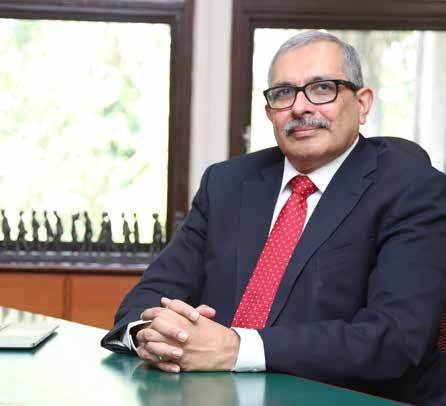
to undertake a PhD or spend time         16. The Australian Government
during a PhD candidacy.                      (Department of Education
                                             and Training) and the Indian
It is recommended that:
                                             Government (Ministry of Human
13. The Australian Government – in           Resource Development) schedule
    consultation with the University         the next meeting of the Australia
    sector – should develop a special        India Education Council (AIEC) as
    class of visa for researchers and        a matter of urgency. The meeting
    PhD graduates to work in Australia       agenda should include a focus
    that would help attract the best         on mutual recognition of credits,
    research talent from around the          quality assurance frameworks and
    world.                                   increasing two-way PhD mobility
                                             between India and Australia.
14. Both Australian and Indian
    Governments, notwithstanding      17. Go8 universities leverage their
    in-country security provisions,       existing relationships with Indian
    minimise visa processing times        partner institutions to implement
    and application requirements for      credit recognition and quality
    academic and PhD student mobility     assurance arrangements to
    between India and Australia.          enhance undergraduate student
                                          mobility through existing student
15. That a secretariat body be
                                          exchange programs.
    established to support Australian
    undergraduate students            18. Opportunities to access
    participating in in-country study     entrepreneurship training and
    programs in India. The body would     experience be included in all Go8 –
    be similar to that which already      India PhD mobility initiatives. This
    exists to oversee programs for        could include through courses,
    Australian students to study in       participation in innovation/start-
    Indonesia and would provide           up incubator and accelerator
    administrative, immigration           programs and engagement
    and pastoral care support for         with industry facilitated through
    Australian students through           the Go8 and partner Indian
    offices in Australia and India.       institutions.

                                          TWO-WAY MOBILITY OF PHD STUDENTS BETWEEN INDIA AND AUSTRALIA 2017 – 9
Background – the Go8
                        in the Australia-India
                        knowledge partnership
                        Australia and India are at different                       levels) could benefit by seeking out
                        points in the evolution of their higher                    more overseas study and research
                        education system facing different                          opportunities.
                        challenges. Australia’s is a mature
                                                                                   The Indian Government is in the
                        system supported by an advanced
                                                                                   process of simultaneously pursuing
                        economy. It has the capacity to
                                                                                   two enormous challenges for its
                        accommodate 100 per cent of
                                                                                   higher education system:
                        domestic demand for university
                        study, while also receiving enough                         1. expanding access to higher
                        international students to make it one                         education to meet growing
                        of the top destination countries for                          demand from its young
                        international students in the world.                          population, and;
                        Seven of its universities (all members
                                                                                   2. lifting quality at the top end
                        of the Go8) are ranked in the top 100
                                                                                      of the system, particularly in
                        in the world.
                                                                                      science, technology, engineering
                        Attracting the best PhD students                              and mathematics, to a world
                        from around the world is an important                         class standard.1 In addition, the
                        element in maintaining the quality                            Indian Government has also
                        of Australia’s higher education                               expressed interest in ‘globalizing’
                        system. On the other side of the                              Indian higher education, including
                        equation, relatively few Australian                           by making India an international
                        students currently undertake PhD                              education destination.2
                        studies overseas. Arguably, however,
                                                                                   Outside academia, India’s
                        Australian university students (at all
                                                                                   universities also need to supply the

                        1 Ranjit Devraj, ‘STEM focus to drive ‘world-class’ universities scheme’, World University News, 26 May, 2017,
                          Issue No. 461.
                        2 Government of India, Ministry of Human Resource Development, ‘National Policy on Education 2016
                          – Report of the Committee for Evolution of the New Education Policy’, April, 2016. Pp. 144–45.
                           See also, ICEF Monitor, ‘India is a key source of international students – can it become a destination’,
                           18 February, 2015. (http://monitor.icef.com/)

10 – TWO-WAY MOBILITY OF PHD STUDENTS BETWEEN INDIA AND AUSTRALIA 2017
growing research needs of industry in Taken together, the differences
a rapidly changing and modernising outlined above in the two countries’
economy. The ‘youth bulge’ in India’s economies, demographic profiles
demographic profile also means it and higher education systems reveal
expected to have a substantial labour complementary needs that suggest
surplus for many years from 2020, opportunities for collaboration on
with the opportunity to become a PhD training. The differences also
‘global hub for talent’ and skilled imply a different set of challenges for
labour.3 increasing the flow of PhD students
in each direction. Any measures to
To achieve these objectives, India
increase the flow therefore need to be
will need a much larger PhD-trained
shaped with these different starting
workforce than it has now. Currently,
points and challenges in mind.
the Indian higher education system
on its own does not have the capacity The outputs from collaborative
to expand the annual cohort of research between Australia and
PhD graduates to the level needed. India have increased significantly
Although the proportion of Indian over the past two decades, as India’s
PhD students who choose to go researchers have also steadily
overseas for their doctoral training increased their co-publishing output
has decreased, intense competition with international authors from all
for places in PhD programs at India’s countries.5 Australia has recently
top institutions forces a significant moved up to become one of the top
number of talented students to look five or six countries for international
for opportunities overseas.4 research collaboration by Indian
researchers.6
3 EY, ‘Higher Education in India: Moving towards global relevance and competitiveness’, FICCI Higher
Education Summit 2014. P.11.
4 Malini Goyal, ‘Indian students with foreign degrees returning home: Lessons India can learn from China’,
The Economic Times, 23 March, 2014.
5 ACOLA, ‘Australian Research Collaboration in Asia’, 2014.
6 Cited by Dr Arabinda Mitra, Adviser & Head, International Cooperation, (Bilateral) Go8-India PhD Colloquium,
New Delhi, 11 April, 2017.
TWO-WAY MOBILITY OF PHD STUDENTS BETWEEN INDIA AND AUSTRALIA 2017 – 11However, there is clearly scope for a substantial share of Australia’s
further improvement. Between 2011 collaborative research effort with
and 2017, India has consistently India. Go8 universities were the lead
ranked either 16th or 17th among all Australian institution in 46 per cent
countries for Australian collaborative of grants awarded under the AISRF
research projects funded by the scheme between 2007 and 2015.8
Australian Research Council (ARC). Perhaps not coincidentally, since
The number of projects in which 2007, the co-publishing output of
grantees indicated an intention to Go8 and Indian-based researchers
partner with Indian researchers was has steadily increased. In 2007,
also relatively steady during this Go8-India collaborations produced
period. To illustrate the potential 154 co-authored articles and reviews.
for greater collaboration, in 2016, This had risen almost 5-fold, to 727,
the number of ARC-funded projects by 2016.9
where grantees indicated an intention
The significance of the Go8 in
to collaborate with Indian-based
Australia’s research partnership with
partners was just 17 per cent of
India is also already reflected in Indian
the number of grantees planning to PhD students’ choices of university in
partner with researchers from China.7 Australia. While the Go8 universities
All Go8 universities have long- receive only a small proportion of
standing research ties with India. As Indian students studying in Australia
Australia’s leading research-intensive for Bachelor and Masters by
universities, the Go8 account for coursework degrees (both less than
7 Australian Research Council, ‘Number of new and ongoing projects with international research
collaborations on ARC-funded research projects since 2011, by funding allocation year’, 2017.
(www.arc.gov.au/international-research-collaboration)
8 Australian Government, Department of Industry, Innovation and Science, ‘Australia-India Strategic
Research Fund (AISRF) Consolidated List of Funding Outcomes 2007–2016’, 2016.
9 InCites, data supplied by the University of Queensland, updated March 2017.
12 – TWO-WAY MOBILITY OF PHD STUDENTS BETWEEN INDIA AND AUSTRALIA 201710 per cent), almost half of Indian
PhD students who come to Australia
choose Go8 universities.10
These existing collaborations provide
a strong foundation on which to
build even greater links through the
increased movement of PhD students
between Australia and India.
Individual Go8 universities
already have many institutional
agreements with Indian universities
and higher education institutes.
According to the collation of such
agreements on the Australia-India
Education Council website, based
on input from the universities, as
of 2016, Go8 universities had 99
agreements covering research,
academic engagement, student
exchange and broad Memoranda
of Understandings.11
10 Australian Government, Department of Education
and Training, Australian Education International
(AEI), Go8 Combined Dataset, 2016.
11 Australia India Education Council (AIEC),
New Collaboration List, 2016. (www.
australiaindiaeducation.com/active-
collaborations.html)
TWO-WAY MOBILITY OF PHD STUDENTS BETWEEN INDIA AND AUSTRALIA 2017 – 131 Indian PhD student
numbers and mobility
Indian PhD students in India
To give some sense of the significance of numbers of
Indian students going to Australia and other countries
to undertake doctoral studies, it is useful to look first at
how many Indian students are pursuing PhDs in India.
The relatively small number of PhD students in India
relative to both the entire population and all university
students represents a challenge both for expanding
access to university and raising the quality of India’s
research output.
Data from the 2015–16 All India To put this figure in comparative
Survey of Higher Education conducted perspective, the corresponding
by the Indian Ministry of Human ratio of PhD students to all student
Resource Development shows PhD enrolments in Australia in 2015 was
enrolment in India is also a very 4.1 per cent, or 57,775 PhDs out of
small proportion of the total student 1,410,133 enrolled university students
population. In 2015–16, only 126,451 (domestic and international).13 In
students were enrolled in PhD 2015, Indian institutions awarded just
programs in India, equivalent to less 24,171 PhDs across all disciplines.14
than 0.4 per cent of the total student The table below shows the breakdown
enrolments in university courses at all of graduates by broad discipline.
levels (from certificate up).12
12 Government of India, Ministry of Human Resource Development, ‘All India Survey Higher Education,
2015–16’, 2016, p.iv.
13 Australian Government, Department of Education and Training, ‘2015 Student Summary Tables’, 2015.
14 Government of India, Ministry of Human Resource Development, ‘All India Survey Higher Education,
2015–16’, p. T105–T107.
14 – TWO-WAY MOBILITY OF PHD STUDENTS BETWEEN INDIA AND AUSTRALIA 2017Table 1. Discipline distribution of PhD graduates
from Indian institutions, 2015.
Field of Study Graduates in 2015 Percentage of Total
Science 6607 27.3%
Social Science 3248 13.4%
Engineering & Technology 2785 11.5%
Agriculture 1956 8.1%
Indian Language 1669 6.9%
Medical Sciences 1226 5.1%
Commerce 1179 4.9%
Management 983 4.1%
Education 822 3.4%
Foreign Language 635 2.6%
IT & Computer 487 2.0%
Other 2,574 10.6%
Total 24,171 100%
Source: All India Survey of Higher Education, Indian Ministry of Human Resource Development.
These data highlight the continuing past five years, it still trails well
importance of overseas-trained Indian behind countries such as the United
PhD graduates to India’s ability to meet States and China. In STEM subjects
domestic demand for higher education, combined, India graduated 10,618
particularly in science, technology, PhDs in 2015. This was less than one
engineering and mathematics (STEM). third of the US output of STEM PhDs
in 2015, of 32,162 (includes domestic
Although India has increased its
and international).15
PhD output in these areas over the
15 National Science Foundation (US), ‘Science and Engineering Doctorates by broad field of study and sex
of doctorate recipients’, 2015. (www.nsf.gov/statistics/2017/nsf17306/data.cfm)
TWO-WAY MOBILITY OF PHD STUDENTS BETWEEN INDIA AND AUSTRALIA 2017 – 15Indian PhD students Nevertheless, the number of Indian
in Australia students who come to Australia to
do a PhD represents a very small
Numbers of Indian PhD students proportion of all Indian students
enrolled in all Australian universities studying for a Bachelor degree
and Go8 universities have increased or above. In 2016, 41,745 Indian
every year from 2002 to 2016, albeit students were enrolled in a Bachelor
from a relatively low base. In 2016, degree course or higher at an
there were 1,093 Indian PhD students Australian university. The greatest
enrolled in Australia. This represented proportion of these students,
a 30.7 per cent increase compared 71.3 per cent (29,779), was enrolled
to 2012, and a 60.7 per cent increase in Masters degrees. The remaining
compared to 2006. 26 per cent (10,873) were enrolled
in Bachelor degrees.
It is worth noting that this upward
trend year-on-year was maintained The 1,093 Indian PhD students
even during the period 2009–2012, enrolled in 2016 represented just
when Indian enrolments in Bachelor 2.6 per cent of all Indian students
and Masters by coursework degree enrolled at Bachelor level or above.
declined by 34.6 per cent and Indian students were less likely
64.8 per cent respectively. than students from China or all
16 – TWO-WAY MOBILITY OF PHD STUDENTS BETWEEN INDIA AND AUSTRALIA 2017other countries (combined) to be Indian PhD students
enrolled in a PhD program. PhD in the United States
students represented 4.1 per cent
of all Chinese enrolments at Bachelor
and other countries
level or above, while 7.7 per cent India’s annual domestic cohort of
of students from all other countries PhD graduates is also supplemented
were PhD students. by a significant number of students
Indian PhD students in Australia awarded PhDs in other countries.
are heavily concentrated in Go8
universities. Almost half (48.2 per cent) United States
of Indian PhD students in 2016 were The US is the leading destination
at Go8 universities. country for international PhD students
By far the most favoured fields of study from many countries. US universities
by Indian students at PhD level in 2016 also enrol and graduate significantly
(at any Australian university) were more Indian PhD students than any
Engineering & Related Technologies country other than India.
(26.2 per cent), and the Natural & A comparison of enrolment figures
Physical Sciences (26.2 per cent), for international undergraduate,
followed by Health (17.2 per cent), Masters and PhD students from
and Society & Culture (13.4 per cent). all countries studying in the US
This was in stark contrast to Indian and Australia reveals Australia’s
students studying at both Masters strong competitiveness with the
and Bachelor degree level. At Masters US for international students at
level, Management and Commerce undergraduate and Masters degree
(46.3 per cent) and Information levels, but also the continued
Technology (28.7 per cent) were by dominance of the US for attracting
far the fields most studied by Indian international PhD students. These
students, followed by Engineering outcomes also hold true for Indian
(12.2 per cent).16 students. In other words, the ratio of
16 Australian Government, Department of Education and Training, Australian Education International (AEI),
Go8 Combined Dataset, 2011 and 2016.
TWO-WAY MOBILITY OF PHD STUDENTS BETWEEN INDIA AND AUSTRALIA 2017 – 17Indian students in Australia to Indian Unfortunately, the available IIE data
students in the US is far higher for does not disaggregate enrolled foreign
undergraduate and Masters degree PhD students by nationality. The IIE
students than for PhD students. data that disaggregates students by
nationality merges all postgraduate
According to data published by the
students (PhD, Masters, Professional
Institute of International Education
and other). There were 101,850 Indian
(IIE), in 2015/16, there were 122,655
postgraduate students in the US in
international students enrolled in
2015/16.19 By comparison, in 2016,
PhD programs in the US and 233,463
there were 31,653 Indian students
international Masters students.17
enrolled in postgraduate courses
By comparison, in 2016, Australia
in Australia (including graduate
had 18,145 enrolled international
diplomas, Masters and PhDs).
PhD students, and 121,397 Masters
students.18 These combined figures for all
postgraduate students suggest
This means the ratio of international
Australia is highly competitive with the
PhD students to Masters students in
US for attracting Indian postgraduate
the US was approaching one to two,
students, particularly given the
while in Australia, it was almost one
difference in size between the US
to seven. The figures cited above
and Australian higher education
include students from all countries,
systems. The key difference, however,
but suggest that international students
is that PhD students represent a
undertaking PhDs, regardless of their
much greater proportion of the Indian
country of origin, are more likely to
postgraduate student numbers in the
choose the US over Australia than are
US than in Australia.
students undertaking Masters degrees.
Although enrolment figures for Indian
The question is whether this is
PhD students only are not available
also the case for Indian students.
17 Institute of International Education (IIE), ‘Open Doors 2016’, survey data tables, ‘Academic Level’, 2015/16.
(www.iie.org/Research-and-Insights/Open-Doors/Data/International-Students/Academic-Level)
18 Australian Government, Department of Education and Training, Australian Education International (AEI),
Go8 Combined Dataset, 2016.
19 Institute of International Education (IIE), ‘Open Doors 2016’, Academic Level and Place of Origin, 2015/16.
(www.iie.org/Research-and-Insights/Open-Doors/Data/International-Students/Academic-Level-and-Place-of-Origin)
18 – TWO-WAY MOBILITY OF PHD STUDENTS BETWEEN INDIA AND AUSTRALIA 2017for the US, this can be extrapolated fewer than this, it strongly suggests
from available data on the number that Indian doctoral students, like
of PhDs awarded annually to Indian those from other source countries
students by US institutions. The US of international students, are also
National Science Foundation (NSF) far more likely to choose the US than
‘Survey of Earned Doctorates’ reports are Indian Masters students. This
that in 2015, US universities awarded raises questions about what factors
2,230 doctorates to Indian students, might be drawing international PhD
second only to Chinese students students to the US that apparently
(5,384). In percentage terms, 13.9 exert less influence on students
per cent of the 16,083 doctorates enrolling in Masters degrees.
awarded to international students
At undergraduate level, too, Australia
in the US in 2015 were awarded to
is far more competitive with the US
Indian students.20
as a destination for Indian students
If Indian students also accounted for than at PhD level. In 2016, 12,333
roughly the same proportion – 13.9 Indian students were enrolled in
per cent – of the 122,655 international undergraduate courses at Australian
PhD students who, according to the universities. This was only 36
IIE data, were enrolled in the US in per cent fewer students than the
2015/16, there would have been 19,302 Indian students enrolled in
around 17,049 Indian PhD students undergraduate courses in the US
enrolled in the US in that year. If in 2015/16.21 So while Indian PhD
broadly accurate, this would be equal students in the US outnumber Indian
to around 15 times the number of PhD students in Australia by at least
Indian doctoral students enrolled in 10 to one, there were only 1.6 Indian
Australia in 2016. undergraduate students in the US for
every Indian undergraduate student
Even if the actual number of Indian
in Australia.
PhD students enrolled in the US was
20 National Science Foundation, National Center for Science and Engineering Statistics, ‘Survey of Earned
Doctorates’, 2015. (www.nsf.gov/statistics/2017/nsf17306/data/tab25.pdf)
21 Institute of International Education (IIE), ‘Open Doors 2016’, Academic Level and Place of Origin.
TWO-WAY MOBILITY OF PHD STUDENTS BETWEEN INDIA AND AUSTRALIA 2017 – 19The fields of study chosen by Indian HESA data also reveals a 44 per cent
students (all levels) in the United downturn in Indian enrolments (all
States are similar to those of Indian degree levels) from 29,900 to 16,745
students in Australia. Engineering is between 2011/12 and 2015/16, it
the most studied field (36.0 per cent), would be reasonable to conclude that
followed by Mathematics/Computer current enrolments of Indian PhD
Science (34.9 per cent), and Business students in the UK might also have
Management (10.3 per cent).22 declined from their 2011/12 level.24
United Kingdom Other countries
The UK also awards significant Between them, the US, Australia, UK,
numbers of PhDs to Indian students, Canada and New Zealand account for
although overall numbers of Indian 85 per cent of international student
students enrolling in UK universities mobility by Indian students. Except
have been declining for several years. for the UK, overall numbers of Indian
Freely available data published by students to all of these countries have
the UK’s Higher Education Statistics been growing for several years, with
Agency (HESA) for the past four growth to the US by far the strongest
years does not specify the number in 2015. Other increasingly significant
of Indian students enrolled in PhD destination countries for Indian
or Higher Degree by Research (HDR) students include China and Germany.
programs, or how many PhDs have One report on Indian outbound
been awarded to Indian students. student mobility noted that Indian
student numbers to China increased
However, data from 2011/12 show
by 23 per cent in 2015 to 16,694,
there were 1,610 Indian HDR students
while students going to Germany
in that year.23 Given that 2015/16
grew by 24 per cent to 11,655.25
22 Institute of International Education (IIE),’Fields of study by place of origin, 2015/16’. (www.iie.org/
Research-and-Insights/Open-Doors/Data/International-Students/Fields-of-Study-by-Place-of-Origin)
23 HESA, ‘Non-UK domiciled HE students by country of domicile, location of HE institution and level of study,
2011/12’, 2012. (www.hesa.ac.uk/data-and-analysis/publications)
24 HESA, ‘Top 10 non-European countries of domicile in 2015/16 for HE students enrolments, 2011/12 to
2015/16’, 2016. (www.hesa.ac.uk/news/12-01-2017/sfr242-student-enrolments-and-qualifications)
25 MM Advisory Services, ‘Indian Students Mobility Report, 2016: Latest trends from India and globally’, 2016.
20 – TWO-WAY MOBILITY OF PHD STUDENTS BETWEEN INDIA AND AUSTRALIA 2017TWO-WAY MOBILITY OF PHD STUDENTS BETWEEN INDIA AND AUSTRALIA 2017 – 21
2              Australian PhD student
                        numbers and mobility
                        Australian PhD students in Australia
                        In 2015, 37,735 new and continuing Australian
                        (domestic) PhD students were enrolled at all
                        Australian universities.26

                        Although data is not available to show                  students (including Masters by research)
                        the broad field of study of PhD students                shows that Society and Culture, Health
                        alone, a breakdown by field of study                    and Natural and Physical Sciences were
                        for domestic postgraduate research                      the leading fields of study.

                        Table 2. Discipline distribution of Australian PhD students

                         Field of Study                                                 HDR students                              %
                                                                                             in 2015
                         Society & Culture                                                        11,401                    25.3%
                         Health                                                                     8,363                   18.6%
                         Natural & Physical Sciences                                                8,201                   18.2%
                         Engineering & Related Technologies                                         4,357                     9.7%
                         Education                                                                  3,532                     7.8%
                         Creative Arts                                                              3,167                     7.0%
                         Management & Commerce                                                      2,659                     5.9%
                         Agriculture, Environment & Related Studies                                 1,462                     3.2%
                         Information Technology                                                     1,210                     2.7%
                         Architecture & Building                                                       723                    1.6%
                         Total                                                                    45,075                     100%
                        Source: Australian Department of Education and Training (u-Cube).27

                        26 Australian Government, Department of Education and Training, ‘2015 All Students’ Table 2.2 – ‘All Domestic
                           Students by Age Group and Broad Level of Course’, 2015. (https://docs.education.gov.au/node/41696)
                        27 Australian Government, Department of Education and Training, uCube.
                           (http://highereducationstatistics.education.gov.au/)

22 – TWO-WAY MOBILITY OF PHD STUDENTS BETWEEN INDIA AND AUSTRALIA 2017
Australian students Australian students
in India in the United States
The All India Higher Education Survey To obtain some guide as to the
2015/2016 reports that in 2015, there numbers of Australian students who
were 45,424 foreign students enrolled are prepared to travel overseas, and,
in higher education in India from 165 in many cases, pay for their university
countries. This included just 1,139 education, numbers of Australian
foreign PhD students, including one students in the US can provide a
PhD student from Australia. Other reference point. According to the
advanced economies represented Institute of International Education (IIE),
among foreign PhD students in India 2,218 Australian students were enrolled
included the United States (22), at undergraduate level at US universities
South Korea (8), France (6), Japan in 2015/16, and a further 1,143 at
(6), United Kingdom (3), Germany (2), postgraduate level (Masters and PhD).29
Spain (2), Canada (2), and Switzerland
According to the NSF Survey of Earned
(2). There were also 53 Australian
Doctorates, 52 Australians were
students at undergraduate level
awarded doctorates by US universities
and nine students at Postgraduate
in 2015. This ranked Australia in 40th
(excluding PhD) level enrolled in an
position among countries whose
Indian institution in 2015.28
citizens received doctorates from
While these numbers are small, they US universities.30
capture only those students who
Although, these numbers are much
were formally enrolled in a program
greater than the numbers of Australian
of study. It is worth noting that there
postgraduate students in India, they
might also be Australian PhD students
are nevertheless relatively tiny in
who spend time in India working on
comparison to the numbers of Indian
their PhD project in various ways,
students in the US. This is to be
possibly including consulting and
expected given the different drivers
collaborating with Indian academics
and population sizes, but nevertheless
informally, without being enrolled at
provides some perspective to inform
an Indian institution.
expectations about what might be
achievable in terms of Australian
students studying in India.
28 Government of India, Ministry of Human Resource Development, ‘All India Higher Education Survey
2015–16’, 2016. Pp. iv, 20, T51–T58.
29 Institute of International Education (IIE), ‘Open Doors 2016’, Academic Level and Place of Origin.
30 National Science Foundation (NSF), ‘Survey of Earned Doctorates’, 2015.
TWO-WAY MOBILITY OF PHD STUDENTS BETWEEN INDIA AND AUSTRALIA 2017 – 233 Understanding
the choices of
international students
The direction and volume of flows of higher education
students between countries can be explained by a
combination of widely recognised ‘push’ and ‘pull’
factors that inform students’ decisions.31 Push factors
relate to conditions in the country of origin that limit
access to higher education, or to the desired quality
of education, and cause students to look overseas
for opportunities. Pull factors relate to conditions and
opportunities in other countries that inform outward-
bound students’ preferences regarding the destination
country and institution.
Push factors most often occur in Mazzarol & Soutar have identified
emerging economies such as India, the following pull factors, which are
as rapid industrialisation creates a generally accepted as significant.
level of demand for quality higher
yy The overall level of knowledge and
education that the domestic system
awareness of the host economy
cannot meet. Pull factors, on the
possessed by potential international
other hand, are relevant to the
students;
decision-making process for outward-
bound students from all countries yy Personal recommendations or
faced with a choice about the country referrals regarding the host country;
and institution where they will study.
yy Cost of studying and living in
Where such pull factors are absent
the host country, along with other
they are effectively barriers to
social costs;
mobility.
31 Bilal Rafi & Phil Lewis, ‘Indian higher education students in Australia: Their patterns and motivations’,
Australian Journal for Educational Research, Vol 57 (2), 2013. Pp. 159.
24 – TWO-WAY MOBILITY OF PHD STUDENTS BETWEEN INDIA AND AUSTRALIA 2017yy The relative host country Clearly, this list includes issues that
environment with respect to can be compared and considered in
lifestyle, physical climate and relatively objective terms—the costs
education system; of studying and a country’s post-
graduation migration regulations—
yy The presence of expatriate social
as well as more subjective matters
networks from the home country
of perception and reputations. It is
in the host country;
important to recognise, however,
yy The quality and reputation of that even consideration of objectively
host country institutions; and comparable factors such as tuition and
living costs or migration regulations
yy An intention to assimilate into
can ultimately come down to students’
the host country’s culture and
perceptions of these things, which
to migrate after graduation.32
might be based on partial or
inaccurate information.
32 T. Mazzarol & G.N. Soutar, ‘Push-pull factors influencing international student destination choice’,
International Journal of Educational Management, Vol 16, 2002.
TWO-WAY MOBILITY OF PHD STUDENTS BETWEEN INDIA AND AUSTRALIA 2017 – 254 Barriers for Indian
students coming
to Australia
Perceptions and information
Australia as a place to live
The 2017 International Student Survey that samples
the views of international students from all countries
ranked Australia as the most welcoming country for
international students, ahead of Canada, the USA
and the UK. The same survey also ranked Australia as
the ‘safest’ country for international students, ahead
of Canada, the UK, and the USA, and as the country
offering the ‘best lifestyle’ for international students
(ahead of the USA, UK and Canada).33
Another survey that offers insights into (26 per cent disagreed). While 48 per
Indian perceptions of Australia and its cent agreed that Australia ‘is a safe
higher education system is the India- place’, 62 per cent agreed that it ‘is a
Australia Poll, conducted in 2012, by good place to live’.34
the Lowy Institute and Australia India
Institute. This poll was not limited Australian universities
to Indian students, or prospective Although Australian universities are
students, but surveyed a sample of the generally well-regarded in India, it
Indian adult population. It found 51 is also widely accepted that Indian
per cent of respondents either strongly students tend to view US institutions
agreed or agreed that Australia is ‘a as the leaders in terms of quality,
country with a welcoming people’ followed by the UK’s. The Australia
33 Hobsons, ‘International Student Survey 2017’, 2017.
34 Rory Medcalfe, ‘Partners, problems and prospects: Indian attitudes to Australia’, India-Australia Poll,
Lowy Institute for International Policy & Australia India Institute, 2013.
26 – TWO-WAY MOBILITY OF PHD STUDENTS BETWEEN INDIA AND AUSTRALIA 2017India Institute in 2012 asked about their views on various aspects
respondents to rate seven countries of higher education in six potential
as a place to be educated. Overall, host destinations. Respondents
respondents ranked Australia second, overwhelmingly indicated the US as
but still significantly fewer people their first choice study destination
gave Australia the strongest possible (90.7 per cent), with only 1.2 per cent
endorsement compared to the US. nominating Australia as their first
While 61 per cent of respondents choice, and a further 10.5 per cent
regarded the US as a ‘very good’ as their second choice.
place to study, only 42 per cent
The same survey also asked
said the same of Australia. This put
respondents whether they agreed with
Australia slightly ahead of Canada,
the statement that each of the six
(39 per cent), Singapore (36 per cent)
study destinations had a ‘high quality
and Great Britain (35 per cent).
higher education system’. Respondents
Another 34 per cent of respondents
could agree with the statement for
said Australia was a ‘somewhat
all six destinations if they so wished.
good’ place to study, compared to
However, while 87.9 per cent agreed the
22 per cent for the US, 33 per cent
US had a high quality higher education
for Canada and Singapore, and
system, and 31.6 per cent the UK, only
32 per cent for the UK.35
9 per cent agreed that the statement
The view that Indian students regard applied to Australia.36
US higher education institutions
These findings appear to support the
as superior was also reinforced by
general view that Indian students who
findings from a 2009 survey by the
choose an overseas study destination
Institute of International Education
based primarily on their perception of
(IIE). This survey asked more than
the quality of education on offer are
1000 Indian students (in India)
most likely to choose a US university.
35 Medcalfe, ‘Partners, problems and prospects’, 2013.
36 Institute of International Education (IIE), ‘What International Students Think about US Higher Education:
Attitudes and Perceptions of Prospective Students from Around the World’, IIE, 2015.
TWO-WAY MOBILITY OF PHD STUDENTS BETWEEN INDIA AND AUSTRALIA 2017 – 27Barriers for Australian at least until quite recently, overall
Students coming to India declining interest among Australian
students in India studies.37
Little data is available about Australian
students’ perceptions of countries The Indian Government’s plans to
as potential study destinations. develop 20 ‘world-class’ universities
Nevertheless, Australian students will, if realised, enhance India’s
who choose to study in Australia, reputation for quality research in
or head to North America or the UK, Australia and around the world, and
rather than to universities in Asia would support the Government’s
are motivated in part by the same aim of making India a significant
estimations of quality that influence destination country for international
the mobility of Indian students. students.38
Clearly, this does not mean centres Whether or not this ambition is
of research excellence do not exist realised, just as the continued
in Asia, or that positive change is preference of Indian students for
not occurring. The research output the US over Australia also highlights,
of India’s universities and research changing long-standing perceptions
institutions has increased dramatically about the quality of higher education
in recent years, and the quality of in India among international students
India’s best research institutions, will require both effort and time.
including the Indian Institutes
This suggests that for the foreseeable
of Technology, are increasingly
future, persuading Australian students
recognised globally. However,
of the value proposition of undertaking
Australian students’ knowledge of
an entire research degree in India
India’s research institutions and recent
is likely to be quite difficult. Of
achievements is likely to be low,
course, increasing student mobility
given the relatively low profile of India
does not necessarily mean students
studies in Australian universities, and
37 Fazal Rizvi, Radhika Gorur and Carola Reyes, ‘India-Australia Institutional Collaborations in Higher
Education: Potential, Problems, Promises’, A report for the Australia India Education Council, 2013. Pp. 21.
38 Ranjit Devraj, ‘Budget bolsters top institutions’ bid for world-class status’, University World News,
27 July 2017. (www.universityworldnews.com/article.php?story=20170203150724229)
28 – TWO-WAY MOBILITY OF PHD STUDENTS BETWEEN INDIA AND AUSTRALIA 2017undertaking entire degrees in another element of efforts to increase student
country. At both undergraduate and mobility.
postgraduate level, opportunities for
The issues of India country knowledge
students to spend even short periods
and cultural familiarity are already
studying, conducting research and
being addressed through programs
engaging with the local students
such as the New Colombo Plan, which
and faculty of a foreign institution
creates opportunities for Australian
bring their own benefits, for both
undergraduate students to spend
the international student and host
time at universities throughout Asia,
institution.
including India, and is discussed in
Australian students’ demonstrated the following section. The significant
preference for universities in North representation of the Indian diaspora
America and Europe might also in Australian universities also
indicate that familiarity with the presents an opportunity to deepen
culture and societies of host countries Australian students’ understanding
is playing a part. If so, this would of contemporary India.
suggest another reason for increased
investment in India studies programs Recommendations –
at the undergraduate level.39 Addressing perceptual/
information barriers
Research students’ choices of
overseas institutions and countries It is recommended that:
to visit are also likely to be informed 1. The Go8, in conjunction with
by their supervisors and other faculty, organisations such as the Australia
and where they have connections, India Institute (AII) and Austrade,
collaborations and knowledge about collaborate to identify the key
current research. To the extent that attributes that make Australian
is the case, initiatives, such as the universities distinctive and
AISRF, that promote more linkages attractive for Indian students. This
between academics in both countries should include an emphasis on:
would appear to be an essential
39 Rizvi et al, ‘India-Australia Institutional Collaborations in Higher Education’, 2013. Pp. 21.
TWO-WAY MOBILITY OF PHD STUDENTS BETWEEN INDIA AND AUSTRALIA 2017 – 29»» the strong geographical focus could potentially operate either
on and linkages with the Indo at an institutional level, or
Pacific region of Australian collectively across the Go8.
universities.
b. The Go8 should increase
»» the quality of Australia’s the number of Australian
research-intensive universities undergraduate students spending
in research and post-graduate time in India by expanding
supervision. programs to India funded under
the New Colombo Plan.
»» the value for money offered by
Australian PhD programs. c. The Australian Government
should widen the scope of New
»» the benefits of studying at
Colombo Plan funding to provide
a comprehensive, multi-
opportunities for both Masters
disciplinary university.
and PhD students.
2. The Go8 work with their Indian
3. Where possible, existing Indian
partners to develop the pipeline
Government programs such as GIAN
of Indian students undertaking
(the Global Initiative of Academic
PhDs in Australia, and increase the
Networks) should be leveraged to
number of Australian students at
increase the engagement of Go8
all levels spending time studying or
academic staff and PhD students
researching in India. In support of
with Indian partners.
these aims:
4. The Go8 should undertake a
a. The Go8 develop a program(s)
stocktake of Go8 India Studies
that provides opportunities for
courses, study opportunities in
Indian undergraduate students
India for Go8 students and Indian-
to undertake short-term (6-8
born and India-engaged faculty
weeks) or semester-length
in order to promote and enhance
research internships at Go8
undergraduate students’ interest
universities. Such a program(s)
in and knowledge of India.
30 – TWO-WAY MOBILITY OF PHD STUDENTS BETWEEN INDIA AND AUSTRALIA 2017Addressing The results for perceptions about the
Financial barriers cost of living were similarly divided.
Living costs were thought to be more
Perceptions of tuition
expensive in Australia than Canada by
and living costs
59 per cent of agents, more expensive
Analysing differences in tuition and than New Zealand by 61 per cent,
living costs between destination than the UK by 56 per cent, and the
countries is complex, given the US by 44 per cent.40
many variables in terms of support,
university fees, fluctuations in The timing of such surveys is likely
exchange rates, rental markets and to influence the results. The survey
other living costs. This complexity was conducted in 2011, when the
is reflected in the mixed perceptions Australian dollar reached its highest
of students (and agents) about the ever level against the US dollar, and
relative costs of studying in different was equal to more than USD 1 for
countries. most of the year, peaking at around
USD 1.10. From mid-2013, the
The 2011 survey of Indian students Australian dollar steadily declined
by Australian Education International in value before settling at around
found that many Indian students USD 0.75 from mid-2015 until now.
believed Australia’s tuition costs Depreciation of more than 30 per cent
were more expensive than those in in the Australian dollar since 2011
Canada (46 per cent), New Zealand suggests Australia’s competitiveness
(46 per cent), the UK (41 per cent) in terms of both tuition and living
and the US (37 per cent). Education
costs for Indian students is now
agents in India were similarly divided.
significantly enhanced.
Australia’s tuition fees were thought
to be more expensive than Canada’s The IIE survey in 2009 that reported
and the UK’s by 50 per cent of agents, an overwhelming preference for
than New Zealand’s by 53 per cent, studying in the US also found that
and the US by 34 per cent. Indian students regarded both tuition
40 Lawson, ‘Studying in Australia’. Pp. 5–6.
TWO-WAY MOBILITY OF PHD STUDENTS BETWEEN INDIA AND AUSTRALIA 2017 – 31and living costs in the US as more the same discipline across all Go8
expensive than Australia. Asked universities, in the US tuition fees
whether they agreed that tuition in vary a great deal.
the US was expensive, 50.4 per cent
The situation is further complicated
if respondents agreed, compared to
by the fact that many international
only 10.2 per cent for Australia. Asked
students receive various forms and
about the cost of living, 42.4 per cent
amounts of financial assistance from
of Indian students agreed the US had
their host universities, particularly in
a high cost of living, compared to only
the US.
9.8 per cent for Australia.41
Nevertheless, with these caveats in
Respondents to the Global
mind, it is useful to note what full-fee
International Student Survey 2017,
paying international PhD students
prospective students from 196
studying at the Go8 pay, and how these
countries, ranked Australia as the
compare with a US university with a
top destination country for value for
large international student population.
money, ahead of the US, and UK and
Canada, in equal third position.42 In 2017, average tuition fees for
international students enrolling in
Actual tuition costs PhD programs in Engineering, Arts,
Comparison of actual tuition costs Natural and Physical Sciences, Health
between Australia and major Sciences and Society & Culture (the
competitor countries for PhD students four most heavily subscribed fields
is difficult for a variety of reasons. for Indian PhD students in Australia)
While there is relatively little variation across the Go8 universities were USD
in the tuition fees international $30,592 per year (based on exchange
PhD students pay for a program in rate at 26 July 2017).
41 IIE, ‘What International Students Think’, Pp.15.
42 Hobsons, ‘The Global International Student Survey’. Pp.11.
32 – TWO-WAY MOBILITY OF PHD STUDENTS BETWEEN INDIA AND AUSTRALIA 2017You can also read


