Professional development of lecturers: The missing link in internationalisation - Hanze University of ...
←
→
Page content transcription
If your browser does not render page correctly, please read the page content below
The Centre of Expertise for Global Learning
presents
an international conference on

Professional development of lecturers:
The missing link in internationalisation

                                              %%   19 and 20
                                                   September 2017

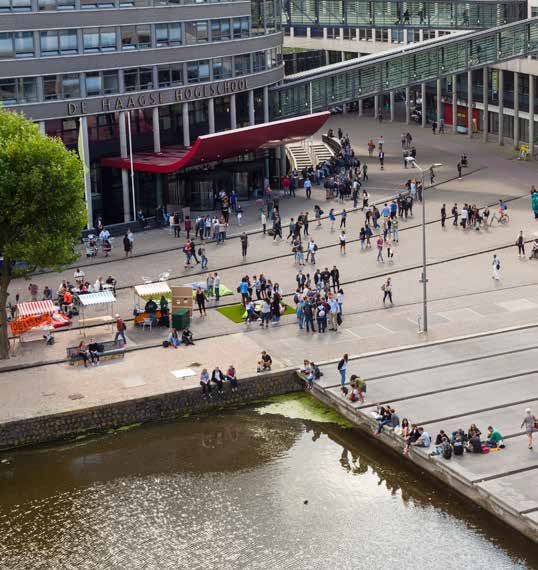
                                              The Hague University of
                                              Applied Sciences
                                              Johanna Westerdijkplein 75
                                              The Hague
Mission statement
                                              Over the past years, the demands on university
                                              graduates have increased. They are now
                                              expected to have an international knowledge
                                              base and skills to work with colleagues and
                                              clients from other countries and cultures.
                                              Employers indicate that they seek graduates
                                              with a range of transversal or employability
                                              skills that include intercultural communication,
                                              creativity and critical thinking.
                                              Graduates are also expected to be ethically
                                              responsible professionals and citizens that
                                              make a meaningful contribution to local and
                                              global societies.

                                              Educating these graduates puts additional
                                              demands on universities and their lecturers.
                                              Many universities have high ambitions but
THE CENTRE OF EXPERTISE                       do not offer much support for the new
FOR GLOBAL LEARNING                           tasks that lecturers are facing. There are
                                              but few professional development options
The Centre of Expertise for Global            that purposefully support lecturers in
Learning is a joint initiative of the         internationalising learning and teaching.
research groups on internationalisation
                                              The overall aim of the Centre of Expertise
of higher education at The Hague
                                              for Global Learning is contributing to global
UAS, Rotterdam UAS and Stenden                education for all students, primarily in higher
UAS, in collaboration with Zuyd UAS,          education but also in secondary and primary
Amsterdam UAS, Hanze UAS and Nuffic.          education. One of these contributions is the
The Centre engages with researchers           development of tools that raise students’
with similar interests at universities        awareness of the value of international and
                                              intercultural competences for future study,
and other organisations within The
                                              development and employment.
Netherlands and beyond. It particularly
fosters international collaboration and       The Centre’s direct field of attention is
comparative research with universities        equipping lecturers in Dutch universities of
of applied sciences across borders.           applied sciences with the skills to design and

                                          2
facilitate internationalised domestic learning A key focus in the Centre’s practice based
environments, within both Dutch and English research is the effects of purposeful professional
medium programmes of study. development for internationalisation on lecturers.
This professional development can take a range of
The Centre initiates and actively engages shapes, such as seminars, training, action research
in research into the requirements of an and mobility. Another research focus is the effect
internationalised curriculum as expressed by of internationalised curricula on the development
internal and external stakeholders, such as of competences by students. The Centre aims
students, alumni, employers and professional to make the outcomes of research benefit profes
and societal organisations. sional development and training of lecturers.
Members of the Centre of Expertise for Global Learning
Dr. Jos Walenkamp, Professor of International Cooperation,
The Hague University of Applied Sciences
Dr. Robert Coelen, Professor of Internationalisation of Higher Education,
Stenden University of Applied Sciences, Leeuwarden
Leo Klienbannink MA, Professor of Internationalisation of Higher Education,
Rotterdam University of Applied Sciences
Dr. Mark Pluymaekers, Professor of International Relationship Management,
Zuyd University of Applied Sciences, Maastricht
Dr. Jos Beelen, Senior researcher at The Hague University of Applied Sciences,
researcher at Amsterdam University of Applied Sciences
Dr. Els van der Werf, Senior Policy Advisor on Internationalisation and International Relations
Hanze University of Applied Sciences, Groningen
Roos Hogenkamp MA, Head Knowledge & Innovation department, Nuffic, The Hague
3
THE MISSING LINK IN INTERNATIONALISATION:
PROFESSIONAL DEVELOPMENT OF LECTURERS
Conference Programme

Tuesday 19 September 2017
16.30-17.30   Registration                                                                           Lighthouse Cafe
17.30-17.45   Welcome by Liduine Bremer, Dean, Faculty of Public Management, Law and Safety at The   Speakers’ Corner
              Hague University of Applied Sciences
17.45-18.45   Introduction to the student experience by Elspeth Jones                                Speakers’ Corner
              Panel discussion with students and lecturers, chaired by Mark Pluymaekers              Speakers’ Corner
19.00-21.00   Networking reception with finger food                                                  Lighthouse Cafe

Wednesday 20 September 2017
08.30-09.00   Registration                                                                           Lobby
09.00-10.00   Opening keynote by Marijk van der Wende                                                Speakers’ Corner
10.00-10.30   Break                                                                                  Exhibition Room
10.30-12.00   Parallel sessions
              1: Diverse classrooms                                                                  Mandela Room
                  Chair: Jos Walenkamp
                  Speakers: Nico Keuning, Marloes Ambagts-van Rooijen, Fatima El-Bouk
              2: Preparing lecturers for cross border on line collaboration between students         Kennedy Room
                  Chair: Rajash Rawal
                  Speakers: Eva Haug, Daniel Villar-Onrubia, Katherine Wimpenny
              3: Preparing lecturers for teaching in the international classroom                     Speakers’ Corner
                  Chair: Els van der Werf
                  Speakers: Marcel van der Poel, Kevin Haines
              4: Internationalising learning outcomes                                                Room SL 1.29
                  Chair: Leo Klienbannink
                  Speakers: Jos Beelen, Elspeth Jones, Catherine Meissner
12.00-13.30   Lunch                                                                                  Exhibition Room
              Meet and greet for participants involved in the Dutch Basic Teaching Qualification
              Programme (BDB)
13.30-15.00   Parallel sessions
              5: The role of teaching and learning centres                                           Kennedy Room
                  Chair: Jos Beelen
                  Speakers: Eveke de Louw, Claudia Bulnes, Tanja Reiffenrath, Angelika Thielsch,
                  Brinder Rajpal, Claire Simmons
              6: Lecturers as facilitators of reflecting on international experiences                Room SL 1.29
              Chair: Mark Pluymaekers
              Speakers: Mark Pluymaekers, Ankie Hoefnagels, Veronica Lifrieri
              7: Continuous learning pathways from primary to tertiary education                     Mandela Room
                  Chair: Freddy Weima
                  Speakers: Susanne Feiertag, Robert Coelen
              8: International and intercultural competences in (higher) education                   Speakers’ Corner
                  Chair: Gerry Geitz
                  Speakers: Gerry Geitz, Joëlle Hietbrink, Corina Tabacaru, Miranda de Hei
15.00-15.30   Break                                                                                  Exhibition Room
15.30-16.30   Panel discussion with session chairs, chaired by Robert Coelen                         Speakers’ Corner
16.30-17.15   Closing keynote by Jos Walenkamp                                                       Speakers’ Corner
17.15         Drinks

                                                           4
PANEL DISCUSSION WITH OPENING KEYNOTE:
STUDENTS AND LECTURERS RETHINKING INTERNATIO
NALISATION: LOOKING
Tuesday 19 September,
17.45-18.45, Speakers’ Corner BACK AND AHEAD,
LOOKING WEST AND EAST
Students and lecturers exchange
views on international education Wednesday 20 September,
and engage with the audience. 09.00-10.00, Speakers’ Corner
Why is international education
Marijk van der Wende, Utrecht University
important and for whom? What
constitutes good international Recent geopolitical events and intensified
education? Which skills should populist tendencies are promoting a turn
lecturers in have to facilitate learning away from internationalism. Support for open
environments with meaningful borders, multilateral trade and cooperation is
being weakened, globalisation is criticised, and
international and intercultural
nationalism is looming. Internationalisation is
dimensions? What can we learn
criticised as an elite cosmopolitan project in
from employers and others about the Netherlands and elsewhere. Questions are
these dimensions? And finally, raised on the costs and benefits of international
how should we involve students in students, on the use of English as the language
the internationalisation of teaching for teaching and learning, and arguments
that students are to be primarily trained for
and learning?
domestic labour markets are being made.
Brexit, questions around the (dis)integration of
Chair: Mark Pluymaekers, Zuyd the European Union, the US turning its back on
University of Applied Sciences the world, and attacks on universities in Turkey
and Hungary (CEU) create waves of uncertainty
Introduction: Elspeth Jones in higher education regarding international
cooperation, the free movement of students,
academics, scientific knowledge and ideas. At
the same time, China is launching new global
initiatives such as the New Silk Road (or One Belt
One Road) project, which could potentially span
and integrate major parts of the world across
the Euro-Asian continents, but likely on new and
different conditions, also for higher education.
These changes require a critical review of our
assumptions regarding globalisation and the
international development of higher education.
Should we revise our expectations and what can
we learn from reviewing our previous scenarios?
5
Marijk van der Wende is Professor of Higher (Centre for International Higher Education),
Education at Utrecht University’s Faculty of Shanghai Jiao Tong University (Center for
Law, Economics and Governance. Her research World-Class Universities and Graduate
focuses on the impact of globalisation and School of Education), and the University of
internationalisation on higher education. She California Berkeley (Center for Studies in Higher
has published widely on the impact of these Education). She has been a chair and member
processes on higher education systems, of numerous national and international advisory
institutions, curricula, and teaching and learning committees and editorial boards.
arrangements. Marijk holds BA degrees in teaching and
She is also an affiliate faculty and research pedagogy, and MA and PhD degrees in
associate at the Center for Studies in Higher educational sciences, from the University
Education (CSHE) at the University of California of Amsterdam and the University of Utrecht
Berkeley, member of the member of the respectively.
Academia Europaea (the Academy of Europe),
of the International Advisory Board of the
Centre for the Study of World Class Universities,
Shanghai Jiao Tong University, of the Board
of the Rathenau Institute for Science and
Technology in Society, the Supervisory Board
of the Open University of the Netherlands, and
the Board of the Amsterdam University College
Scholarship Fund (ASF).
Previously, she was Dean of Graduate Studies at
Utrecht University (2015-2017), founding Dean of
Amsterdam University College (2007-2014) and
held full professorial positions at VU University
Amsterdam (2006-2015) and the University of
Twente (2001-2016).
She served as the President of the programme
on Institutional Management in Higher
Education (IMHE) of the OECD (2005-2011), as
a member of the Higher Education Authority
Ireland (2011-2015), the Scientific Board of
the Dutch Military Academy (2007-2013),
and worked at NUFFIC (the Netherlands
Organisation for International Cooperation
in Higher Education) (1992-1998), and the
Academic Cooperation Association (ACA) in
Brussels (1994-1998).
She was a visiting scholar at Harvard University
(Fairbank Center for Chinese Studies and
Graduate School of Education), Boston College
6
PARALLEL SESSION 1                                    Education and Research, the Nuffic: Department
DIVERSE CLASSROOMS                                    Head and Director Development Cooperation
                                                      and Director Knowledge and Innovation.
Wednesday 20 September 2017,                          Since January 2009, Jos Walenkamp works at
10.30-12.00, Mandela Room                             The Hague University for Applied Sciences as
                                                      professor International Cooperation. The aim
The increasing diversity, also in                     of his research is to generate the knowledge,
domestic classrooms, requires a range                 which makes it possible to engage the Dutch
of skills of lecturers in order to make this          universities of applied sciences more and more
                                                      effectively in development cooperation through
diversity benefit education. What are
                                                      capacity building. That will serve profession
ways in which lecturers can prepare for               oriented higher education in developing countries
this? Which skills are needed to create               and thus their social and economic development,
a culturally inclusive classroom? How                 and it will serve the Dutch higher education
can participation in a culturally diverse             institutes which will become more international
classroom enrich the experience of the                and more responsive the ambitions of their
                                                      students and the demands of the labour market.
non-mobile student? Which processes
                                                      His latest research focuses on the acquisition of
occur in culturally diverse classroom
                                                      international competencies by students, during
and what is the role of the lecturer’s own            internships or study abroad and in international
cultural background?                                  and multicultural classrooms at home.

Chair: Jos Walenkamp, The Hague                       The task of the teacher
University of Applied Sciences                        Nico Keuning, Amsterdam University of Applied
Jos Walenkamp was originally trained as a             Sciences
biologist. He read biology and geology at
Leiden University and obtained Master of              Nico Keuning will share his experiences with the
Science degrees from the universities of              role of the teacher, who has a key role to play in
Leiden (general biology) and Wales (fisheries         offering opportunities for students and creating
biology and management). He obtained a                chances for students to succeed. This is
PhD degree from Leiden University with a              determined by the interaction between teacher
dissertation on the zoogeography, evolution and       and student, which involves understanding,
systematics of starfishes from the Caribbean.         recognizing and encouraging. It is the teacher
He was curator of the Palaeontological and            who has to deal on a daily basis with the laws
Mineralogical Cabinet of Teyler’s Museum in           of (In)equality. Keuning will explain what he
Haarlem. He worked for six years at the Eduardo       considers transformative learning and discuss
Mondlane University in Mozambique, as dean            the transformation students will undergo in the
of the Biology Faculty. In Nigeria, he led a          course of their study period.
team that managed the Training and Research
Programmes supported by the European                  Nico Keuning studied Dutch Language and
Commission. That work formed a suitable bridge        Literature at the University of Amsterdam. He
to the subsequent positions at the Netherlands        has been a lecturer in Language Proficiency
Organisation for International Cooperation in         in the Dutch Language for more than thirty

                                                  7
years. Keuning is a writer, publisher and lecturer       programs focused on strategies to adapt their
Creative Writing for an excellence programme             didactics, pedagogy, curriculum design to their
of various faculties of the Amsterdam University         diverse classrooms and implemented new
of Applied Sciences. He wrote some literary              insights in their (future) education straight away.
biographies and the novel Boternacht (2015),             Looking back, the participants shared that the
situated in in Elten, his place of birth at the          training made them aware that teaching an
border, which is now part of Germany.                    international classroom is more than translating
Nico Keuning also wrote some portraits of                their education in English.
many different kind of students in relation to           This session explores a number of good
their success in school, sports or society. In           practices in staff training to support lecturers in
an essay called ‘The Law of (In)equality’ in the         teaching diverse classrooms. After discussing
book The key to success (2013) he explores the           the design of TILT, I would like to share the
characteristics of a good teacher as well as the         highlights of the participants’ evaluation and
teacher’s tasks vis-à-vis student diversity.             make recommendations for further research
                                                         and further training.
Preparing lecturers for diverse
classrooms: looking back at a pilot                      Marloes Ambagts- van Rooijen has worked in
Marloes Ambagts-van Rooijen, The Hague                   education in an international context in a variety
University of Applied Sciences                           of roles throughout the educational landscape
                                                         since 2007 and has been working for The Hague
Research suggests that diverse, international            University of Applied Sciences since 2014.
classrooms can be a powerful tool for                    Besides teaching Business Communication
internationalisation at home, providing an               for the Faculty of Business, Finance and
authentic intercultural learning experience to           Management, she works as a teacher trainer for
both home and mobile students. Lecturers are             The Hague Centre for Teaching and Learning.
considered the essential factor in making these          In this role, she delivers the Curriculum
international classrooms effective (or not).             Design and Development module in the
However, there seems to be little structured             English-taught Foundation Course Didactic
training available to prepare lecturers for              Competence, preparing new international
adjusting their teaching practice, curriculum            lecturers for their job as a lecturer at THUAS.
design and assessment to accommodate an                  Additionally, she specialises in developing and
(international) student population with diverse          delivering (tailored) staff trainings to support
cultural and educational backgrounds.                    THUAS lecturers in putting the university’s
Over the past academic year, The Hague                   internationalisation policy into practice, such
Centre for Teaching and Learning developed               as a training focused on Content and Language
and piloted a Training for International Learning        Integrated Learning (CLIL) in Higher Education
and Teaching (TILT) in which we aimed to                 and a training for international learning and
translate the latest insights from research on           teaching (TILT).
internationalisation at home into a hands-on
staff training for THUAS lecturers, who tach to a
combination of Dutch and mobile students.
In six interactive sessions and six workplace
assignments, twelve lecturers from five

                                                     8
Stimulating positive interactions in zusjes: Een etnografisch onderzoek op een
super-diverse class rooms superdiverse mbo-opleiding Helpende Zorg en
Fatima El-Bouk, The Hague University of Applied Welzijn [We are all sisters here: An ethnographic
Sciences study at a super diverse vocational programme
in care]. The Hague: Lectoraat burgerschap en
This presentation is based on a study (El Bouk, Diversiteit, The Hague University of Applied
Lovert-Reindersma, Van der Staaij-Los & Prins, Sciences.
2017) that explored how conditions of super- El Hadioui, I. (2011). Hoe de straat de school
diversity impacted the everyday life of and binnendringt: Denken vanuit de pedagogische
social dynamics in a school of upper secondary driehoek van de thuiscultuur, de schoolcultuur
vocational training in the Dutch city of The en de straatcultuur. Amsterdam: Van Gennep.
Hague. The fieldwork took place in 2014 and
2015 at a ‘level 2’ school for ‘Assistant in Care and Fatima el Bouk is a lecturer at the department
Wellbeing’, mainly attended by female students, of Social Work and Education of The Hague
on average between 17 and 27 years old, from University of Applied Sciences, where she
a variety of ethnic, religious and linguistic teaches sociology and research courses.
backgrounds. With the help of Atlas-ti, a detailed She conducted a qualitative study for the
analysis was made of the repertoire of strategies research group Citizenship and Diversity
teachers have at their disposal to channel of The Hague University of Applied Sciences
tensions and conflicts in class and to make that focuses on the interethnic interactions
successful matches between students’ various between teachers and students at a vocational
home and street cultures on the one hand, school in The Hague.
and the requirements of school on the other. Fatima is also working on her PhD-Study
In this paper, we argued that the Bourdieuan at the department of Pedagogy at Leiden
notion of ‘a feel for the game’ (Bourdieu 1990) as University. This study focuses on the future
elaborated by Dutch sociologist Iliass El Hadioui orientations of Moroccan-Dutch and Turkish-
(2011), provides a useful tool for analyzing the Dutch youth and adults in the Netherlands and
micro dynamics occurring in mixed schools, the role of entrepreneurship in this. In case of
and consequently of the factors hampering or the youngsters, she investigated their future
contributing to a positive classroom environment. orientations in several live domains (education,
To corroborate this, we zoomed in on some work - also entrepreneurship - and romantic
cases to analyse how successful matches, but relationships) and serval factors that influence
also mismatches or no matches between the these orientations (under which ethnic identity
life worlds of students and the requirements of and perceived and experienced discrimination).
the school culture are brought about. During the In the adult population, she focused on the
presentation, I will reflect on these cases with entrepreneurial activities of a small sample of
the audience. Moroccan-Dutch, Turkish-Dutch and native
Dutch entrepreneurs. Special attention was
References: paid to business growth, learning strategies
Bourdieu, P. (1990). The logic of practice. and networking behavior. Fatima obtained her
Cambridge: Polity Press. master’s degree in Sociology at the University
El Bouk, F., Lovert-Reindersma, T., Van der Staaij- of Amsterdam in 2005.
Los, V. & Prins, B. (2017). We zijn hier allemaal
9PARALLEL SESSION 2 that play a role in the implementation of an
PREPARING LECTURERS international virtual experience in your classroom.
FOR CROSS BORDER
In the last 5 years, I’ve done many COIL projects
ON LINE COLLABORATION myself and have experienced first-hand what
BETWEEN STUDENTS a lecturer needs. Last year I also coordinated
25 virtual projects, which gave me insight into
Wednesday 20 September 2017, faculty needs. Lecturers at AUAS participated
10.30-12.00, Kennedy Room in a two day workshop to prepare for their COIL
project. What worked and what needs work?
Collaborative Online International Some recurring topics we see are: intercultural
Learning (COIL) is an emerging practice sensitivity for faculty, IT challenges, internatio
that is gaining importance as a tool nalising your learning outcomes and assessment,
and the need for synergy, both within our
to internationalise home curricula.
universities as (inter)nationally.
Lecturers need special skills to. Which In this session, we will look at preparing faculty
educational, cultural and language for COIL, institutionalising COIL and creating
related processes are at work in on line enhanced synergy between COIL practitioners
collaboration between students. How and universities.
do lecturers collaborate to facilitate on
Eva Haug is the Internationalisation- and COIL
line collaboration between students?
coordinator at the Business School, of the
Which forms of training for designing and
Amsterdam University of Applied Sciences,
facilitating on line learning environments where she develops internationalisation policy
have been found effective? and strategies. The focus of the Business School
is on internationalisation at home, which includes
Chair: Rajash Rawal, The Hague COIL as a tool to facilitate cross cultural learning.
University of Applied Sciences As a lecturer in Intercultural Competence
Rajash Rawal is Director of the Faculty of Eva trains students to work in multicultural
Management and Organisation at The Hague and virtual teams. She has five years of COIL
University of Applied Sciences and head of the experience and has worked with partners in
THUAS COIL committee. Vietnam, Australia, Mexico, US and Europe.
Ready? Steady? COIL: Supporting academics to design and
Preparing faculty for COIL deliver virtual exchanges: A research
Eva Haug, Amsterdam University of Applied design proposal
Sciences Daniel Villar-Onrubia & Katherine Wimpenny,
Coventry University
What do lecturers need to successfully do a COIL
project? How can we prepare them to implement The idea of providing students, lecturers,
a COIL experience in their curriculum? We need researchers and non-academic staff members
to walk the walk, before we can talk the talk. with opportunities to travel abroad and spend
In this session, we will look at several aspects time – from just days to whole academic years
10– at other institutions has arguably been the discipline-specific needs and the actual impact
dominant approach to date in internationalisation of such learning experiences on student
strategies and policies in the education sector. development. One of the most crucial aspects
As a mechanism for Internationalisation of the relates to the capabilities that academics need
Curriculum (IoC), international mobility is expected to have in order to be able to successfully
to help students develop valuable competences design and deliver learning activities aimed at
and attributes (e.g. to support graduate internationalising the curriculum through student
employability and global citizenship) after being online cross-institutional interactions.
exposed to different pedagogical practices, This paper shares some preliminary analysis of
collaborating and building relationships with peers data collected from examples of virtual exchange
from dissimilar backgrounds and, more generally, evaluated at Coventry University and presents a
living in unfamiliar socio-cultural contexts. research design that could help shed light on the
Over the last two decades, the possibility of key attributes that academics facilitating virtual
embedding opportunities into the curriculum exchanges need to have and how institutions
for virtual exchange between students based can build that capacity. The proposed study aims
at different countries has attracted the interest to generate findings that could be relevant for
of educators, institutional leaders and policy- theory-building purposes – in both the field of
makers as another possible approach to IoC and educational technology – as well as have
internationalising the curriculum. Whereas important practical implications for institutions
mobility is being considered as the gold standard wanting to support their staff by means of
for IoC, in most institutions the proportion of academic development opportunities and other
students engaging in these kinds of international mechanisms.
experiences is considerably smaller than those
who do not do so. Universities need to adopt Daniel Villar-Onrubia works as Principal Project
policies and practices to ensure they are not Lead at the Disruptive Media Learning Lab
disadvantaging students, for whom international (DMLL) of Coventry University and is a Senior
mobility is less feasible due to, for example, Fellow of the Higher Education Academy.
financial constraints or carer responsibilities. He joined Coventry as Online International
In addition, it is imperative that the higher Learning Programme Manager after completing
education (HE) sector adapts to accommodate his doctorate at the Oxford Internet Institute,
the diverse needs of disabled students. Virtual University of Oxford, where he also worked as
student exchanges offer the promise of a more a research assistant. Prior to moving to the UK,
equitable and inclusive approach to IoC, which he worked at the International University of
could play a key role within a broader mix of Andalusia and the University of Seville. Daniel
Internationalisation at Home (IaH) initiatives aimed is interested in the fields of open education,
at benefiting all students, not just the travelling digital literacy and the intersection between
elite. Likewise, they can provide students with online learning and internationalisation of the
scenarios akin to those they are likely to face in curriculum.
their future professional lives.
In order for the potential of virtual exchanges to Katherine Wimpenny, PhD, MSc, DipCOT, Cert
be realised, it is essential to address important HEd, is a Reader in Higher Education Research
challenges and build evidence-based knowledge and Pedagogy in the new Centre for Research
on suitable pedagogical models, infrastructures, in Global Education, Coventry University.
11Katherine’s research focuses on intercultural
sensitivity in open, international online learning;
and creative, experimental, participatory and
interdisciplinary pedagogies that nurture
creativity and problem solving, bridging
academic, artistic, intercultural, vocational and
technological divides. Katherine works with a
range of national and international partners and
has track record in the design and coordination
of research and innovation projects both
nationally and internationally. She publishes her
work widely in media of high repute and currently
supervises six PhD students and has five PhD
completions.
12PARALLEL SESSION 3 as a member of the Dutch team of Bologna
PREPARING LECTURERS Experts since 2004 and is currently a member
of the General Council of EAIE. Her research
FOR TEACHING IN
in the field of internationalisation focuses on
THE INTERNATIONAL professional development for the international
CLASSROOM higher education environment. She has
developed the International Competences
Wednesday 20 September 2017, Matrix.
10.30-12.00, Speakers’ Corner
Seven colours of the rainbow:
Internationalisation of higher education universities collaborating on
has resulted in a greater diversity of supporting educational developers
students. This means that teaching Kevin Haines, University of Groningen
staff are required to develop skills and
Internationalisation of higher education
competences to create an international has created new challenges for university
learning environment that benefits all lecturers; they are expected to function within
learners. What are these skills? Is it a complex educational context for which
enough to focus on foreign language they are not always fully prepared. It has also
skills and intercultural awareness? created new challenges for the educational
developers who are to support the lecturers
How do educational backgrounds of
teaching in this space. The Erasmus+ EQUiiP
students and teaching staff influence
project (2016-2019) is a partnership of seven
the teaching and learning process? European universities with a broad range of
How can these issues be addressed in experience in this field. We are developing
the international classroom? a comprehensive modular set of materials
and descriptions of appropriate practices for
Chair: Els van der Werf, Hanze educational developers. The outcomes will
University of Applied Sciences be made available on an electronic platform
Els van der Werf is Senior Policy Adviser and will be widely disseminated to educators
on Internationalisation and International and policy makers in higher education across
Relations at Hanze University of Applied Europe.
Sciences in Groningen, the Netherlands. She
studied English language and literature at the Kevin Haines has worked in international
University of Groningen and the University Higher Education programmes in the
of Sheffield, England before starting her Netherlands since 1992 and has been working
career in higher education in 1982. Since 1990, on the International Classroom project
Els has worked with virtually all aspects of at University of Groningen since 2013. He
internationalisation of higher education, both specialises in guiding university lecturers
strategic and operational, at departmental, and students in international classrooms and
faculty and institutional levels. In addition, she English Medium Instruction (EMI) programmes.
has been active in national and international He has published several articles on the
platforms and bodies. She has been serving impact of the international classroom and EMI
13on learning processes in both the formal and in Intercultural Relations (MAIR, Portland OR,
the informal curriculum. He is co-author of USA) in 2013, and is currently working on his
the IntlUni Principles (www.intluni.eu) and dissertation research on ‘the conditions that
is currently coordinating the EQUiiP foster intercultural competence’.
Erasmus+ project. For full details please
see: http://www.rug.nl/staff/k.b.j.haines/
Effects of an Intercultural Competence
Learning Lab
Marcel van der Poel, Hanze University of Applied
Sciences
The Intercultural Competence Learning Lab
(ICLL) started in 2011. Since then 8 groups
participated; 4 more groups will start in
September 2017. Meanwhile, 7 groups (77
participants) completed pre- and post-testing.
The design of the ICLL has been discussed in
previous conferences, and in literature (Jones
et al., 2016). During this session, I would like to
present the effects of the ICLL, both in scores
(IDI pre- and post-test results), as well as in
comments and observations from participants
in interview and in feedback forms. I hope to
engage session participants in a discussion
on the need for cultural learning as part of
professional development in the context of
internationalisation of higher education.
Marcel H. van der Poel is a senior lecturer,
researcher and an independent trainer in
intercultural communication. He is the co-
initiator of the award-winning Intercultural
Competence Learning Lab (2011); he published
about his experiences with the Lab in 2016.
Marcel is currently involved with Intercultural
Competence Development at Hanze University
of Applied Sciences, freelance at the University
of Groningen, and commercially at various
companies and NGO’s. Marcel worked for over
20 years in managerial positions, of which 10
years in East-Africa. Sociologist by training
(RUG, 1988), he earned a second Master degree
14PARALLEL SESSION 4 used to develop a model and a plan of steps
INTERNATIONALISING for benchmarking learning outcomes with
international partners that can be adapted for
LEARNING OUTCOMES
use by other programmes.
Wednesday 20 September 2017,
10.30-12.00, Room SL 1.29 Jos Beelen is senior policy advisor for interna
tionalisation at the Amsterdam School of Inter
Internationalised learning outcomes are national Business and senior researcher at the
gaining importance, yet we know that research group ‘International cooperation’ at
lecturers are struggling in the process of The Hague University of Applied Sciences. He
is also Honorary Research Fellow at Coventry
‘crafting’ them. What is known about the way
University.
lecturers deal with learning outcomes and He was the editor EAIE’s ‘toolkit’ Implementing
about the kind of support that they need? Internationalisation at Home (2007) and has
What is the role of the discipline in this? since written a range of articles on this topic,
often co-authored with researchers from
Chair: Leo Klienbannink, Rotterdam Europe and Australia. He acts as reviewer for the
University of Applied Sciences Journal of Studies in International Education.
His research focuses on internationalisation of
Benchmarking across the Baltic: learning outcomes in academic programmes,
engaging lecturers in crafting particularly on developing the skills of academic
learning outcomes staff that enable them to assume ownership of
Jos Beelen, Amsterdam University of Applied curriculum internationalisation.
Sciences
Internationalising learning outcomes:
The framework of the Accreditation an approach across disciplines
Organisation of The Netherlands and Flanders Elspeth Jones, emerita professor at Leeds
(NVAO) requires programmes of study to Beckett University
demonstrate their relevance from a national
and international perspective. Self-evaluation “The building blocks of curriculum design
reports therefore generally contain a are the intended learning outcomes for a
benchmark with international partners. However, programme of study and the modules/courses/
these are often superficial and do not touch units within it … [They] offer a focal point for
upon the core of similarities and differences and curriculum internationalisation.” (Jones, E.
the choices and considerations that informed (forthcoming 2017) Internationalisation of the
learning outcomes. Curriculum: Challenges, Misconceptions and
In this session, the outcomes of experimental the Role of Disciplines. In Casper-Hehne, H. &
action research are presented, in which two Reiffenrath, T. (Eds) Internationalisierung der
programmes of study, one in Finland and one in Curricula an Hochschulen: Konzepte, Initiativen,
The Netherlands, benchmarked their learning Maßnahmen. Bielefeld: WBV (W. Bertelsmann
outcomes, including their international and Verlag).
intercultural dimensions. The insights from this
intensive benchmarking exercise have been
15This presentation will offer a case study of their curricula and their teaching and learning
a curriculum internationalisation process at environment and subsequently, the learning
Leeds Beckett (formerly Leeds Metropolitan) outcomes.
University, UK, which used learning outcomes
as the starting point to internationalise the Internationalising learning outcomes is a
curriculum. The presentation will consider how prime concern within the approach of the
subject staff can offer refreshing insights to IC project in order to provide evidence of
other discipline areas during curriculum review the internationalisation process. One good
and explore learning points from the process, practice of the IC project focuses on graduate
which may be of value to others undertaking a attributes as a tool to provide guidance
similar initiative. and ensure alignment of international and
intercultural learning at all levels. This approach
Elspeth Jones received the 2014 Tony Adams is complemented with activities that focus
award in recognition of her extensive research on facilitating and supporting the different
on many aspects of the internationalisation of stakeholders and providing a platform for
higher education. She was acknowledged for sharing good practices.
making her research widely and easily available
as a frequent contributor to publications such Catherine Meissner works as a curriculum
as University World News and the Chronicle developer and educational advisor on
of Higher Education, as well as being a prolific internationalisation of higher education at the
tweeter. When she was presented with this University of Groningen. Before joining the
award, Elspeth was Emerita Professor of the International Classroom project in 2014, she
Internationalisation of Higher Education, Leeds gained experience as an educational advisor
Beckett University, and Honorary Visiting Fellow, and trainer at the Faculty of Medical Sciences
Centre for Higher Education Internationalisation, and the Faculty of Economics and Business.
Università Cattolica del Sacro Cuore, Milan. The focus of Catherine’s work is the develop
ment of an approach on internationalising
Internationalising learning outcomes learning outcomes and, subsequently, the
in the disciplines: the case of the internationalisation of curricula throughout
University of Groningen all disciplines and across all programs at the
Catherine Meissner, University of Groningen UG. Catherine has presented the International
Classroom approach at international
This presentation will illustrate the ‘case’ of conferences and platforms and frequently
the International Classroom (IC) project at the facilitates workshops on internationalising
University of Groningen in order to provide an higher education to academics within and
example of internationalisation at home and a outside the UG.
specific approach on internationalising learning
outcomes throughout disciplines.
There will be an overview of the IC concept and
approach, the outcomes and resources of the
university-wide IC project (2013-2020).
The overall aim of the IC project is to enable
staff and students to further internationalise
16PARALLEL SESSION 5 has not been involved in internationalisation
THE ROLE OF TEACHING until recently. The approach can be charac
terised as follows:
AND LEARNING CENTRES
●● comprehensive: the training offer aligns
Wednesday 20 September 2017, with the THUAS 10-point compass of
13.30-15.00, Kennedy Room internationalisation, which THUAS uses as a
basis for its institutional policy, and degree
Teaching and learning centres play programmes are supported in creating
an important role in the development purpose, coherence and connection in their
of educational skills of lecturers. In formal curriculum, informal curriculum, their
pedagogy and organisational structures.
enhancing these educational skills, they
●● multi-stakeholder: some trainings require
can also spread internationalisation. What all relevant stakeholders to be present
approaches have to been successful and (management, curriculum boards,
would these work in other contexts as educational developers, lecturers, support
well? What expertise do staff of teaching staff) and other trainings focus on one
and learning centres need to further particular stakeholder group.
●● emphasis on internationalising learning
internationalisation of home curricula?
outcomes: the recently issued Educational
Guidelines at THUAS establishes a
Chair: Jos Beelen, Amsterdam binding framework for all THUAS degree
University of Applied Sciences programmes and stipulates that all of
them will need to have internationalised
A university of applied sciences in learning outcomes so that all THUAS
flux moving in the right direction graduates are equipped with international
Claudia Bulnes Sanchez & Eveke de Louw, and intercultural competences. Team
The Hague University of Applied Sciences Internationalisation and the research group
will play a vital role in its implementation.
Professional development in internatio
nalisation at THUAS is set in a context of Claudia Bulnes Sanchez is a lecturer of Spanish
organisational change, where a new unit (Team and an International Policy Advisor at The
Internationalisation), a researcher on global Hague University of Applied Sciences. In her
learning and a to be established research professional career at the degree programme of
group (Global Learning) are the main driving European Studies, Claudia has performed in key
forces in staff training. In order to meet coordinating roles ranging from international
THUAS’ internationalisation ambitions, their student coordinator, programme coordinator
initiatives are focused on mainstreaming and mobility coordinator. In her current role,
internationalisation in a setting where there her main responsibility is to develop and
is compulsory Basic Teaching Qualification provide staff training and consultancy on
Programme (BDB) for lecturers but which internationalisation of the curriculum and co-
is lacking internationalisation and a staff curriculum. Being an experienced practitioner of
professional development unit (The internationalisation, she has given presentations
Hague Centre for Teaching & Learning) that at, among others, AIEC (2015), AIEA (2016) and
17EAIE (2016). Claudia holds a degree in Teaching are specific courses which have a salient focus
English and Spanish as a Foreign Language around internationalisation and intercultural
from the University of Oviedo and the University awareness as part of teaching and learning.
of Antonio de Nebrija in Spain. There are also cases where staff have created
their own opportunities for internationalising
Eveke de Louw is a lecturer of English and their curricula, which are situated within
an International policy advisor at The Hague a course but not part of a wider school or
University of Applied Sciences. In her profes institutional strategy. The research community
sional career at the degree programme of around internationalisation of the curriculum
European Studies, Eveke has performed in key (IoC) is well-established and this helps to bring
coordinating roles ranging from International on staff who want to embed IoC into their
Student Co-coordinator, team leader and research and teaching. However, these present
coordinator of Internationalisation. She has a network of pockets rather than a strategic
also chaired various committees and played imperative to an institution.
a leading role in curriculum design projects. Coventry University is an HEI that uses an
In her current role, her main responsibility integrated approach to IoC as part of its
is to develop and provide staff training and corporate strategy and brings together all
consultancy on internationalisation of the staff, academic and professional, into a united
curriculum and co-curriculum. Being an mission and set of values. This presentation
experienced practitioner of internationalisation, explains how this has happened, from an
she has given presentations at, among others, incremental beginning to a cogent and cohesive
AIEC (2015), AIEA (2016) and EAIE (2016). Eveke institutional plan. The importance placed on
holds a master’s degree in English Language students’ intercultural engagement is written
and Literature from Leiden University, the into the Corporate Education strategy and every
Netherlands. course must have IoC as an integral thread.
A dedicated team of academic developers
Using an integrated institutional work across all schools and departments with
approach to Internationalisation of a clear remit to develop staff, enabling students
the Curriculum (IoC) and international to benefit from enhanced experiences around
engagement for students. intercultural competency and international
Brinder Rajpal & Claire Simmons, Coventry engagement. Driven top down from the
University University Leadership Team (ULT) decision to
incorporate IoC into overall strategy, academic
This presentation posits that the key to creating developers use a number of approaches to
a cohesive internationalisation strategy for build staff capabilities. The policy is that as staff
Higher Education Institutions (HEIs) is to engage are developed across all areas of university
and develop academic and professional staff systems, processes, teaching and learning, the
across the whole organisation. benefit to the students becomes holistic and
We know there are areas of excellence across integrated. Thus, a central team of academic
global institutions where dedicated teaching developers engaged in current IoC pedagogy
and learning centres as well as individual and good practice, can work with staff across
staff engage with enhancing the intercultural the university group to enhance knowledge,
competences of their students. We know there understanding and skills.
18From strategy to policy and course design monitoring, ensures a shared purpose which
to content, IoC weaves into every aspect of does not differentiate between academics and
the processes underpinning teaching and administration.
learning at Coventry university – all of which are
implemented specifically with the shared aim of Brinder Rajpal is an Academic Developer at
enhancing students’ intercultural experiences. Coventry University. She holds a MSc. in Finance
This has required staff to embrace change and is a Senior Fellow of The Higher Education
management where quality processes on IoC Academy (HEA). After gaining extensive industry
are written into all course documentation with experience working in business recovery
annual monitoring. Further, staff performance Brinder began her academic career and has
reviews include questions around how they been teaching in Higher Education since
have engaged in IoC work and give them 2009. Her current responsibilities include the
opportunities to state what extra development academic development of staff, delivering
they require. A series of open workshops are the University’s central program for academic
regularly given, along with one-to-one advice practice (leading to HEA recognition), and
for specific staff/student projects. There are supporting faculty teams to internationalise
also dedicated academic developers assigned their curricula. Prior to this, Brinder worked as
as part of their fractional work to faculties and Intercultural Engagement Manager and focused
schools with the explicit task to encourage specifically on creating and designing virtual
teaching staff to increase IoC. The fact that exchange opportunities to develop students’
the academic developers sit within the Group intercultural competence. Brinder also works
Organisational Development team and not in the as a consultant for a global asset management
schools, means the team share knowledge, case company on intercultural interactions and is
studies and university examples with each other currently studying for her PhD on the impact of
to create a constant epistemology of innovative intercultural diversity in corporate boards on
IoC practice that is then disseminated to staff. firm performance and governance.
Understanding the barriers and enablers of
IoC therefore, becomes a central concern and Claire Simmons is a senior lecturer and
the academic development team can move a member of the academic development
quickly and effectively towards areas identified team at Coventry University. Her role is to
as needing enhanced support. In order to work with staff to enhance their capabilities
remain responsive, Academic Developers must across the university’s education strategy, of
continuously feed their own development. This which internationalisation is an integral part.
can be facilitated through training programmes, In her professional career at Coventry, she
research and/or subject experts both internal has been deputy director of the Centre for
and external to the university thus ensuring their Global Engagement, Associate Head of the
own competence, capability and confidence Media Department, and Course Director for
in the field. Incentivising staff is also a key part Journalism. She has worked for other HEIs in
of the drive towards implementing IoC with a leadership capacity and is a Senior Fellow of
an annual staff conference where excellence the Higher Education Academy. Her research
awards are given for innovative practice. Thus, interests span internationalisation, graduate
the university’s wide strategy, which comes employability, media ethics and celebrity
with targeted metrics for evaluation and culture. She holds a master’s degree in Mass
19Communications from the University of their teaching competencies and thereby reflect
Leicester and is widely published. She is also their mode of teaching as well. In (internationally
a journalist and broadcaster, having worked in organised) trainings the participants share
the media industry for 20 years before joining their teaching experiences, discuss theoretical
academe. concepts on higher education teaching and
learning and, in the process, start altering
Linking strategy and training; A multi their perception of their students’ learning
faceted approach to foster internationa processes. Instead of focusing on what
lisation in higher education students in general and mobile students in
Tanja Reiffenrath & Angelika Thielsch, University particular need, the University’s section for
of Gõttingen teaching and learning in higher education
supports academics to become aware of the
Taking their purpose as Higher Education individuality of each learning process and the
institutions – to shape academically educated implications this has for (internationalised)
and open-minded, globally concerned citizens teaching and curriculum design.
– seriously, universities increasingly shift their In this paper, we introduce both approaches
strategic focus on ways to internationalise by referring to cases and experiences. In doing
teaching and learning. Currently, discourses so, we seek to highlight what may be gained in
on internationalisation in German higher internationalisation processes when institution-
education institutions are gaining considerable wide strategy is linked to faculty training.
momentum, as efforts to enhance the
mobility of teaching staff and students are Tanja Reiffenrath is a member in the Student
increasingly complemented by measures to and Academic Services Team at the University
support Internationalisation at Home (IaH). of Göttingen, Germany, where she coordinates
While different in their outlook and their the project “Internationalization of the
respective target groups, both strands of Curricula.” She holds a PhD in American Studies
internationalisation share a main objective, i.e.to and has taught and published on diversity
broaden the perspectives of those involved in issues, transnationalism, and transcultural
academic teaching and learning processes. encounters. She is particularly interested in
At the University of Göttingen, Germany, issues revolving around learning and teaching
such a strategic approach has been further in international and virtual classroom settings,
strengthened in 2015 by initiating a process intersections between internationalisation,
to internationalise the curricula of various digitalization, and diversity, and the ‘de-
disciplines. Inherent in this content-related and Westernisation’ of the curriculum.
organisational focus is an open invitation, and,
for the sustainability of the process indeed Angelika Thielsch finished her studies in Social
actually a need, to critically reflect discipline- and Cultural Anthropology, Gender Studies, and
specific epistemologies and possible normative Roman Philology and then started to combine
instances in a syllabus or the curricular design her (inter)disciplinary knowledge with the
of a study program. Complementary to this challenges arising in academic teaching and
widening understanding of what should be – in learning situations. In her work as educational
a broad sense – the content of one’s teaching, developer (since 2008), she focuses on
academics have the opportunity to enhance individual learning and the various influences
20shaping a persons’ learning biography. At the
Georg-August-University of Göttingen she is
mainly responsible for the offers for teaching
newcomers in higher education as well as offers
regarding teaching in international contexts.
21PARALLEL SESSION 6 Phonetica, Journal of the Acoustical Society of
LECTURERS AS America International Business Review. In 2011,
his textbook on presentation skills for students
FACILITATORS OF
in higher education (Overtuigend presenteren)
REFLECTING ON was published by Coutinho.
INTERNATIONAL
EXPERIENCES In this session, the focus will be on internationa
lisation within the curriculum of two faculties
Wednesday 20 September 2017, at Zuyd University of Applied Sciences: the
13.30-15.00, Room SL 1.29 Hotel Management School and the faculty of
International Business and Communication.
To enhance the effectiveness of interna In the first presentation, Ankie Hoefnagels
tionalisation activities in the curriculum, will introduce the two instruments that were
it is important that students get the created within Zuyd to help students reflect
on their international experiences: the Global
opportunity to reflect on international
Mind Monitor and the Global Mind Blog. The
experiences and the learning outcomes Global Mind Monitor is a scientifically validated
they led to. In recent years, several tools quantitative survey that students can complete
have been developed that can help longitudinally or before and after taking part
students make sense of their learning in an internationalisation activity. The survey
process. However, lecturers also play a tool generates a personalised report which can
serve as input for a reflection meeting between
key role in facilitating student reflection.
the student and their coach. The Global Mind
In this session, we focus on the role(s)
Blog provides students with a platform on which
lecturers could take to help their students they are expected to write three blogs about
reflect, lecturers’ current perceptions intercultural experiences during their internship
of their role and the extent to which abroad. The content and language style of the
lecturers feel equipped to facilitate blogs are analysed to see to which extent they
provide information about the intercultural
student reflection.
competence of the author.
In the second presentation, Veronica Lifrieri
Chair: Mark Pluymaekers, Zuyd will present the results of an interview study
University of Applied Sciences that she conducted among lecturers who
Mark Pluymaekers is professor at the have discussed the results of the Global Mind
Research Centre for International Relationship Monitor with their students. In the interviews,
Management at Zuyd University of Applied she focuses on the facilitating role of lecturers
Sciences. He holds a PhD in Linguistics from in developing intercultural competence and
Radboud University Nijmegen. His research the problems that lecturers encounter while
interests include professional communication executing this role.
skills and message strategies, particularly
in the context of international business and
international service delivery. His scientific
work has been published in journals such as
22You can also read


