2019 UNDERGRADUATE GUIDE - ANU College of Business & - ANU College of Business & Economics
←
→
Page content transcription
If your browser does not render page correctly, please read the page content below

2 0 1 9 U N D E R G R A D U AT E G U I D E

ANU College of
Business &
Economics
We develop
leaders who
transform
business, society
and economies

Sebastian Robertson
Bachelor of Commerce/Economics 2009
Social entrepreneur Sebastian Robertson is the founder
and chairman of batyr, an organisation which aims to deliver
innovative peer-to-peer programs that engage, educate and
empower young people to address youth issues.

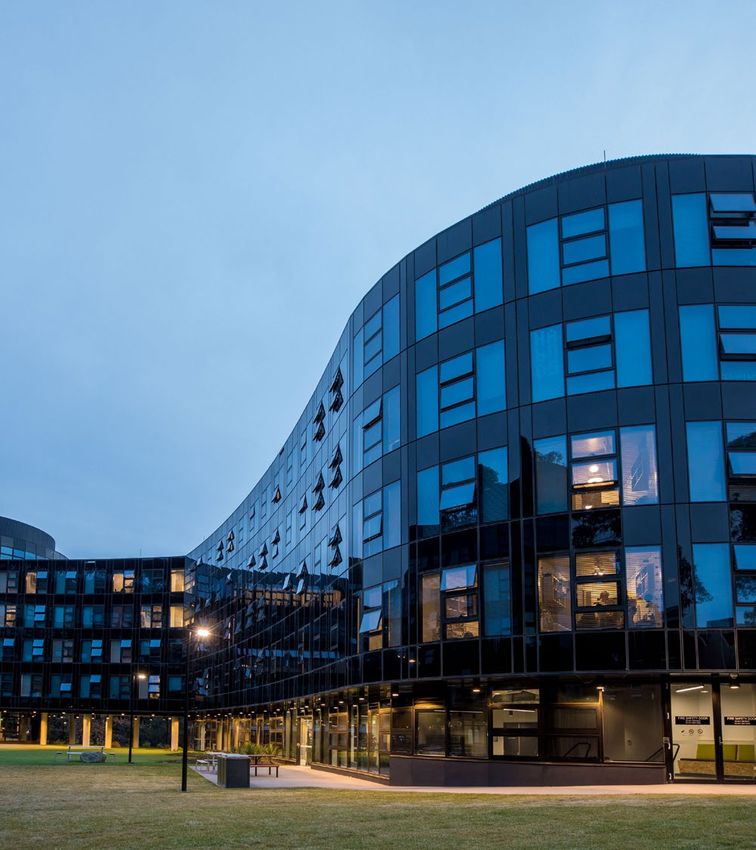
          Photo: | Cover photo: Australian National University
Join us at ANU					 4
                                    World-class education				 6

                         CONTENTS   Employability					 8
                                    Graduate outcomes				10
                                    Global learning					12
                                       Bachelor of Accounting			             14
                                       Bachelor of Actuarial Studies		       15
                                       Bachelor of Business Administration		 16
                                       Bachelor of Commerce			               17
                                       Bachelor of Economics			              26
                                       Bachelor of Finance				               27
                                       Bachelor of Finance, Economics
                                       and Statistics (Honours)			           30
                                       Bachelor of International Business		  31
                                       Bachelor of Social Sciences (Honours
                                       in Actuarial Studies and Economics)		 32
                                       Bachelor of Statistics			             33
                                    Student life					38
                                    Support for success				40
                                    Accommodation				42
                                    How to apply					44

Photo: Holly Treadaway                                               2019 Undergraduate Guide   3
J O I N U S AT A N U

Australia’s
                                                                                                                                                             International outlook                           Top 25 student cities
                                                                                                                                                            Ranked 1st in Australia and                   Canberra ranks among the top
                                                                                                                                                                10th in the world3                        25 student cities in the world4

finest
For over 70 years, the Australian National University (ANU) has worked to realise the ambitions of its visionary
                                                                                                                                   Ranked #1 in Australia for
                                                                                                                                   business and economics5
                                                                                                                                                                                        6 Nobel Laureates
                                                                                                                                                                                      The highest number of all
                                                                                                                                                                                       Australian universities
                                                                                                                                                                                                                                       World’s best city
                                                                                                                                                                                                                               Canberra ranked the world’s most
                                                                                                                                                                                                                                liveable city two years in a row6

founders to become Australia’s finest research institution.
                                                                                                                                 “Well above” world standard                              ANU is ranked #1 in                            Guaranteed
We now invite you to join our community of world-leading academics, alumni and students who make us
                                                                                                                               95% of ANU research is rated “above”                       Australia and #20 in                         accommodation
Australia’s #1 university, and #20 in the world.1                                                                                                                                             the world1                                 on campus
                                                                                                                                 or “well above” world standard7
Our mission is to provide Australia with intellectual leadership on critical issues. Our influence in global research
and teaching has made us Australia’s most international university, and our dedication to our students has
made them Australia’s most employable graduates.2

We are committed to excellence in our education, our student cohort, and student outcomes and experience.

You are committed to better outcomes for your community, the environment, our nation and the world.                                              Home to 12 national institutions                            More than just the capital city
                                                                                                                                        including the Australian Parliament, the High Court of           Home to national festivals like the National
Embrace your global citizenship in our inclusive, open and respectful community. Learn from research as it                                  Australia, and the National Library of Australia              Multicultural Festival, with plenty of other
happens, create in our state-of-the-art facilities, unlock your future and change the world.                                                                                                             community events on throughout the year

                                                                                                                        1 QS   World University Rankings 2018
                                                                                                                        2 Global   Employability Ranking 2017
                                                                                                                        3 Times    Higher Education International Outlook Indicator 2015/2016
                                                                                                                        4 QS   Best Student Cities 2017
                                                                                                                        5 Times    Higher Education World University Rankings 2017/2018 by subject
                                                                                                                        6 OECD     Better Life Index 2014
                                                                                                                        7 Excellence   in Research for Australia 2015

4   ANU College of Business & Economics   Photo: Australian National University                                                                                                                                                             2019 Undergraduate Guide   5
Connect
W O R L D - C L A S S E D U C AT I O N
to a global network of researchers and industry
Impact
society at large
Inspire
the changes you want to see in the world ...
at the ANU College of
Business and Economics
We are proud to be part of the Australian National University, which is the
nation’s finest university. Our unique mission, as the national university, is to
address major issues of national and international importance through our
research and teaching. We take that mission very seriously.
Our focus, within the College of Business and Economics (CBE), is on
developing leaders who transform business, society and economies.
The strength of our international reputation attracts exceptional students from
Australia, the wider Asia–Pacific regionand beyond. We offer every student
the opportunity to develop their strengths and the space to decide how they
will make their future mark in the world.
Our undergraduate degree programs cover a wide spectrum of subject areas
within business and economics. Students have great flexibility in their study
options, and can study most of our degrees as part of a combined program
with other degrees, either within the college or elsewhere at ANU.
Supported by a dynamic team of academic and professional staff, students
are offered a full suite of engaged learning opportunities to increase their
employability and globalise their education experience.
Through their studies, our graduates gain the knowledge and skills to lead
organisations, develop public policy, create new companies and undertake
research. Our alumni can be found in the world’s leading companies, policy
agencies and universities.
6 ANU
Photo: HollyCollege of Business & Economics
Treadaway 2019 Undergraduate Guide 7
E M P L O YA B I L I T Y
Your student journey
Real world
skills We prepare you from day one
ANU offers a range of services to ensure our
students succeed at university.
»» Academic workshops
»» Program advice sessions
Across the world, demand for business and economic »» Student networking events
»» Orientation program Set4ANU Real-life skills
graduates is escalating in industry, business and »» Student clubs and societies
Our programs offer real-world experience through
anu.edu.au/study/student-experience innovative course design, and award-winning
government. internship and professional development programs.
»» CBE Internship Program
Studying at CBE will provide you with skills and attributes that World of opportunities »»
»»
Australian National Internships Program
CBE Special Industry Project
Study overseas as part of your degree.
will remain relevant and keep you competitive in the evolving job Form a global network
»»
»»
MomentuM Professional Development
Student Managed Fund
and expand your career options.
market. »» CBE Global Business Immersion
course
»» ANU exchange program
Take an internship with the award-winning CBE Internship Program. »» IARU Global Summer Program
»» PRIMO First Year Learning Abroad Programs
The internship program gives students an opportunity to undertake
an internship in either Semester 1 or Semester 2 as an elective for
CBE I N T ER N S H I P
PR O G R A M
course credit. Each internship is project-based with deliverables
set out in an agreement between the intern, workplace supervisor
and academic supervisor.
cbe.anu.edu.au/study/internship
Job ready
Examples of CBE Internship Program host organisations Embrace opportunities to expand your professional
skills and become job ready.
Optus Invest Canberra Innovate Canberra »» Industry networking events
»» Career fairs
PwC Royal Australian Mint Pharmacy Guild of Australia Community of business leaders »» Recruiter in Residence
National Australia Bank Embassy of Mexico Transport Canberra Our graduates are lifelong members of our alumni »» Career consultations
Australian Chamber of Commerce & National Disability Insurance Agency Conservation Council ACT community stretching across the globe. »» Job listings
Industry Australian Research Alliance for UnitingCare Australia
»» We have over 22,000 alumni
BAE Systems Children and Youth »» Our alumni work and live in 90+ countries
ACT China Business Council »» Our graduates are ranked as most employable in
Canberra Business Chamber Australian Institute of Health and
Welfare
*Internship hosts can change each intake
based on business requirements and
Australia* anu.edu.au/students
Cushman & Wakefield availability of internship projects. * Global University Employability Ranking 2017
Photo 1: Australian National University | Photo 2: Holly Treadaway
8 ANU College of Business & Economics Photo 3: Australian National University | Photo 4: Holly Treadaway 2019 Undergraduate Guide 9
G R A D U AT E O U T C O M E S
Average income
Ranked 1st for CBE graduates with an
in Australia and undergraduate degree
21st in the world was approximately
for graduate employability 1 $60,0002
84% of
59% of 38% of
graduates reported
CBE graduates CBE graduates
their qualification
are employed are employed
prepared them “very
in the private in the public
well” or “well” for
sector 2 sector 2
employment 2
Employers of CBE graduates and alumni
ACT Government Citigroup Hewlett Packard RSM Bird Cameron
Aesop Coca-Cola Company HSBC Saatchi & Saatchi
AIA Group Commonwealth Bank IBM Samsung
Allianz CPA Australia JPMorgan Chase Singtel
American Express Credit Suisse KPMG Standard Chartered Bank
ANZ Bank DBS Bank LG Electronics HK Ltd The Walt Disney Company
ASOS Dell Macquarie Group Unilever
Australian Public Service Deloitte Mercedes-Benz United Nations
AXA Deutsche Bank Merrill Lynch Vodafone Global Enterprise
Baker Tilly Dixon Advisory Microsoft Warner Bros. Entertainment
Group of Companies
Bank of China Etihad Airways National Australia Bank
(NAB) Westfield Corp
Bank of Korea EY
PepsiCo Westpac Banking Corporation
BNP Paribas Facebook Inc
PwC World Bank
Boston Consulting Group Goldman Sachs
Royal Bank of Canada Other international
China Eastern Airlines Google Inc
governmental organisations
Royal Bank of Scotland
Top five industries in which Top 10 occupations for CBE
CBE alumni work 3 alumni 3
»» Accounting services »» Accountant
»» Banking »» Analyst/finance analyst/financial planner
»» Central government administration »» CEO
»» Management advice and related consulting services »» CFO
Developed in collaboration with industry experts, MomentuM is CBE’s »» State government administration »» Consultant
flagship professional development program. »» Director
»» Economist
MomentuM develops employability and soft skills, essential for job market
»» Manager
readiness.
»» Partner
Get mentored by professionals who will share first-hand insights into how to »» President/vice president
thrive in today’s business world, giving you the competitive edge. 1
Global University Employability Ranking 2017
2
2016 Graduate Outcomes Survey: ANU College of Business and Economics
cbe.anu.edu.au/study/momentum
3
2017 data from ANU Alumni database
10 ANU College of Business & Economics Photo: Holly Treadaway 2019 Undergraduate Guide 11
GLOBAL LEARNING
                                           London,

Explore                                    Stockholm,
                                           Dubai, Beijing,
your world                                 Seoul, Taipei,
                                           Moscow
                                           Take your education to the
                                           next level on an in-country
                                           intensive study tour.
                                           The CBE Global Business Immersion study tours expose you to the
                                           business environment in a selected country where you will gain an
                                           understanding of the cultural and historical dimensions that shape
                                           business practice.

                                           Grow personally and professionally through a program designed to
                                           develop in-demand skills valued by global employers, such as
                                           leadership, management, marketing, entrepreneurship and
                                           international business.

                                           Student exchange
                                           You can undertake a traditional exchange opportunity with one
                                           of our 175+ partner universities across 37 countries. Apply to
                                           spend one or two semesters at a leading university in one of these
                                           distinctive destinations while you earn credit towards your ANU
                                           degree.
                                           Europe                  Asia-Pacific               Americas
                                           Austria                 Brunei                     Brazil
                                           Czech Republic          China                      Canada
                                           Denmark                 French Polynesia           Chile
                                           Finland                 Hong Kong                  Colombia
                                           France                  Indonesia                  Mexico
                                           Germany                 Japan                      Peru
                                           Hungary                 Myanmar                    United States
                                           Ireland                 New Caledonia               of America
                                           Italy                   New Zealand
                                           Netherlands             Singapore
                                           Norway                  South Korea
                                           Portugal                Taiwan
                                           Spain                   Thailand
                                           Sweden
                                           Switzerland
                                           Turkey
                                           United Kingdom

                                           Photo   left:                        Photo 4:
                                           Photo   1:                           Photo 5:
                                           Photo   2:
                                           Photo   3:

12   ANU College of Business & Economics                                                   2019 Undergraduate Guide   13
BACHELOR OF ACCOUNTING BACHELOR OF ACTUARIAL STUDIES
The Bachelor of Accounting is designed to develop your knowledge and skills in reporting, analysing and managing financial Actuaries combine skills from mathematics, statistics, economics and finance to assess, evaluate and manage future financial risk,
resources in business and government entities. thereby addressing a wide range of practical problems in long-term financial planning and management.
ANU program code: 3406 UAC code: 133503 CRICOS code: 079653K Duration: three years full-time ANU program code: 3401 UAC code: 134403 CRICOS code: 028147F Duration: three years full-time
The program information below is current for students commencing in 2018. The Bachelor of Actuarial Studies is being redeveloped
STRUCTURE for 2019 because of changes to the Actuaries Institute education program. The information below will be updated once the program
changes for 2019 are finalised. Please see the programs and courses website for the most recent information about the program.
The program consists of 24 courses, –– Management Accounting >> a minimum of one elective course from
of which: –– Company Accounting List 1 of the ANU College of Business
–– Accounting Theory and Economics STRUCTURE FOR 2018 COMMENCING STUDENTS
>> a maximum of 10 courses can be taken
at level 1000 (first-year classes) >> two courses from the following: >> eight elective courses, which can be The program consists of 24 courses, –– Macroeconomics 1 or –– Credibility Theory
taken from any ANU college. of which: Economics 1(H)
>> a minimum of 14 courses must be taken –– Law of Business Entities –– Life Contingencies
at levels 2000 and 3000 (second- and –– Financial Statement Analysis * The minor in Business and Economics –– Macroeconomics 2 or –– Actuarial Techniques
>> a maximum of 10 courses can be taken
third-year classes). –– Accounting Information Systems Essentials comprises the core courses, Economics 2(H)
at level 1000 (first-year classes) >> two elective courses from within
Business Reporting & Analysis, –– Quantitative Research Methods
The 24 courses must include: >> three courses from the following list: >> a minimum of 14 courses must be taken the ANU College of Business
Macroeconomics 1, Microeconomics 1 –– Introductory Mathematical Statistics
–– Auditing at levels 2000 and 3000 (second- and and Economics
>> the four courses that comprise and Quantitative Research Methods. As a –– Regression Modelling
the minor in Business and –– Advanced Management Accounting compulsory component of the Bachelor of third-year classes). >> eight elective courses, which can be
–– Financial Mathematics
Economics Essentials* –– Public Sector Accounting Accounting, the minor will not be separately The 24 courses must include: taken from any ANU college.
–– Introduction to
–– Financial Reporting by Corporations listed in your academic transcript.
>> the following six compulsory courses: >> 14 compulsory courses as follows: Stochastic Processes
–– Principles of Tax Law –– Survival Models
–– Accounting Processes & Systems –– Business Reporting & Analysis
–– Corporate Social Responsibility, –– Risk Theory
–– Introduction to Commercial Law –– Microeconomics 1
Accountability & Reporting
–– Foundations of Finance
CAREER OPTIONS T Y P I C A L F U L L - T I M E PAT T E R N O F S T U D Y
CAREER OPTIONS T Y P I C A L F U L L - T I M E PAT T E R N O F S T U D Y There are many attractive career opportunities for fully qualified actuaries For 2018 commencing students:
in Australia. Actuaries may apply their skills in insurance, superannuation,
Accounting is an integral part of all businesses and accountants are Meeting professional accounting requirements investment banking and finance, government, and a wide variety of other Year Semester 1 Semester 2
constantly in demand. With continuing high global demand for qualified
areas where quantitative skills are valued.
accountants, graduates of the Bachelor of Accounting have a wide range Year Semester 1 Semester 2 1 Microeconomics 1 Mathematical Foundations for
of employment opportunities working in the public and private sectors. Typical roles that utilise actuarial skills are in liability valuation, risk Actuarial Studies
1 Business Reporting & Macroeconomics 1 Business Reporting & Analysis
management and data analytics. Actuaries also work as consultants, Corporate Finance
Some of the roles available to a qualified accountant are: financial officer, Analysis Accounting Processes & Systems Foundations of Finance
providing advice on financial decisions to both private and commercial Macroeconomics 1
auditor, tax accountant, management accountant, consultant and Microeconomics 1 Introduction to Commercial Law Quantitative Research
clients. Methods University elective
business risk analyst. Accounting graduates from ANU have secured Quantitative Research Methods College elective (List 1)
roles in large accounting firms, government departments, banking and Foundations of Finance Many actuaries move into high-level administrative and senior managerial 2 Introductory Mathematical Macroeconomics 2
finance organisations, and large corporations. positions, reflecting the strong interdisciplinary nature of the profession, Statistics
2 Company Accounting Management Accounting Life Contingencies
which mixes theoretical skills with sound practical knowledge. Regression Modelling
Law of Business Entities Accounting Information Systems Introduction to Stochastic
Financial Mathematics Processes
2 x university electives 2 x university electives
Derivatives University elective
3 Accounting Theory Principles of Tax Law
P R O F E S S I O N A L A C C R E D I TAT I O N
Auditing Accounting major 3000-level course^ P R O F E S S I O N A L A C C R E D I TAT I O N 3 Investments Credibility Theory
A Bachelor of Accounting student can undertake a sequence of courses 2 x university electives 2 x university electives
Continuous Time Finance Actuarial Techniques
that meets tertiary education requirements for direct entry into the The Bachelor of Actuarial Studies enables students to undertake
^ 3000-level Accounting course must be chosen from Advanced Management a sequence of accredited courses that satisfy certain educational Risk Theory 2 x university electives
professional programs of the accounting bodies in Australia. Students
Accounting, Public Sector Accounting, Financial Reporting by Corporations or requirements of the Actuaries Institute. Survival Models
wishing to discuss the sequence should contact the college office for
Corporate Social Responsibility, Accountability & Reporting.
details or refer to the following link: For more information on accreditation visit 4 Actuarial Studies (Honours)
Students in the combined program with Law should note they cannot take the cbe.anu.edu.au/about/professional-organisations-accreditation/
www.cbe.anu.edu.au/about/professional-organisations-accreditation
courses Introduction to Commercial Law, Law of Business Entities and Principles of
actuaries-institute-requirements
Tax Law towards the requirements of the Accounting major, if they have undertaken
equivalent courses in the ANU College of Law.
14 ANU College of Business & Economics 2019 Undergraduate Guide 15
B A C H E L O R O F B U S I N E S S A D M I N I S T R AT I O N BACHELOR OF COMMERCE
The Bachelor of Business Administration develops students’ leadership and management skills. The Bachelor of Commerce includes courses in core areas such as business reporting, economics, quantitative methods and
techniques, and communication for business.
ANU program code: 3410 UAC code: 133403 CRICOS code: 062745A Duration: three years full-time ANU program code: 3400 UAC code: 133003 CRICOS code: 002289F Duration: three years full-time
STRUCTURE STRUCTURE
The program consists of 24 courses, –– Management, People & >> four elective courses from within The program consists of 24 courses, >> an eight-course major from the * The minor in Business and Economics
of which: Organisations the ANU College of Business of which: following list: Essentials comprises the core courses,
–– Communication for Business and Economics –– Accounting Business Reporting & Analysis,
>> a maximum of 10 courses can be taken >> a maximum of 10 courses can be taken
–– International Business –– Business Information Systems** Macroeconomics 1, Microeconomics 1 and
at level 1000 (first-year classes) >> eight elective courses, which can be at level 1000 (first-year classes)
Quantitative Research Methods. As a core
–– Human Resource Management & taken from any ANU college. –– Corporate Sustainability
>> a minimum of 14 courses must be taken >> a minimum of 14 courses must come part of the program, the minor will not be
Strategy –– Economic Studies
at levels 2000 and 3000 (second- and from levels 2000 and 3000 (second- listed on transcripts for students completing
–– Marketing –– Finance
third-year classes). Note: Students intending to take electives and third-year classes). the Bachelor of Commerce.
–– Corporate Strategy –– International Business
in Marketing should note that the course
The 24 courses must include: –– Leadership The 24 courses must include: ** The major in Business Information
Marketing Research has Quantitative –– Management
Systems is not available for students in
>> the following 11 compulsory courses: –– Entrepreneurship & Innovation Research Methods as a prerequisite. >> the four courses that comprise –– Marketing
the Bachelor of Commerce/Bachelor of
–– Business Reporting & Analysis >> a minimum of one of the following two the minor in Business and Information Technology and Bachelor
>> a minimum of three elective courses
–– Microeconomics 1 core courses: Economics Essentials* of Commerce/Bachelor of Software
from within the ANU College of Business
–– Macroeconomics 1 or –– Business Decision Making >> one compulsory course: Communication and Economics Engineering combined degree programs.
Economics 1(H) –– Quantitative Research Methods for Business
>> eight elective courses, which can be
taken from any ANU college.
CAREER OPTIONS T Y P I C A L F U L L - T I M E PAT T E R N O F S T U D Y
CAREER OPTIONS T Y P I C A L F U L L - T I M E PAT T E R N O F S T U D Y
The Bachelor of Business Administration provides a comprehensive
grounding in the key business skills that are essential in any workplace. Year Semester 1 Semester 2
With its combination of core business courses and major specialisations,
With its focus on developing leadership and management skills, 1 Business Reporting & Macroeconomics 1 Year Semester 1 Semester 2
Analysis the Bachelor of Commerce provides an ideal springboard for careers in
graduates of the program will be well equipped to take up management 2 x college electives 1 Business Reporting & Macroeconomics 1
Microeconomics 1 the private or public sectors.
and senior administrative positions in both the public and private sectors. University elective Analysis Quantitative Research Methods
Management, People & Depending on your chosen major, you could work in the following areas Microeconomics 1
Additionally, with its broad coverage of the different components of Organisations
Major course
after graduating with a Bachelor of Commerce: Communication for Business
business and management, the Bachelor of Business Administration University elective
University elective
provides an ideal foundation for careers in human resources, >> Accounting: business analysis, management accounting, public Major course
2 Human Resource International Business
communications, marketing and business strategy. accounting, company accounting, auditing 2 Major course 2 x major courses
Management & Strategy Marketing
Graduates gain a good understanding of the innovation and College elective College elective
Communication for Business Quantitative Research >> Business information systems: consultant or business analyst,
entrepreneurship essential to creating new commercial ventures and 2 x university electives Methods or Business Decision
2 x university elective University elective
database administrator, system analyst or architect, programming
developing existing businesses. Making 3 2 x major courses Major course
and other professional careers in ICT
University elective College elective 3 x university electives
>> Corporate sustainability: sustainable development manager, University elective
3 Corporate Strategy Leadership
ethical supply chains, corporate social responsibility consultant, or
College elective Entrepreneurship & Innovation
corporate sustainability communications
2 x university electives College elective
University elective >> Economic studies: economics, financial markets, government policy,
investment banking, consulting and business administration P R O F E S S I O N A L A C C R E D I TAT I O N
>> Finance: financial trader, broker, analyst, statistician, corporate
Students taking majors in Accounting (with the sequence of courses
treasurer, financial consultant or financial planner
required by the professional accounting bodies) or Business Information
ANU has always been consistent >> International business: international trade, global sourcing, import/ Systems can qualify for membership of the relevant professional
in their ranking in the region export and supply chain management, or business specialist for a bodies through their sequence of study. For more information, see the
and for producing world-class multinational corporation descriptions of the Accounting and Business Information Systems majors
graduates. ANU equips students not only on the following pages.
>> Management: human resources, recruitment, business consulting,
with academic knowledge, but also essential business analysis
exposure to industry environments that
>> Marketing: marketing research, marketing communications,
provide a deeper level of engagement with
advertising and sales, business development.
your learning experience.
Nicholas Chen
Bachelor of Business Administration
President of the ANU Singaporean Students’
Association 2017
Singapore
16 ANU College of Business & Economics Photo: Holly Treadaway 2019 Undergraduate Guide 17ACCOUNTING MAJOR B U S I N E S S I N F O R M AT I O N S Y S T E M S M A J O R
Accounting is concerned with the measurement, analysis, reporting and evaluation of information, which assists in the management The major in Business Information Systems is about the study of business information and its production, flows and usage within
of resources in business entities and government organisations. organisations. It encompasses both manual activities and those involving computing and telecommunications.
If you see yourself as a financial officer, auditor, tax accountant, or management accountant, the accounting major equips you with This major cannot be counted towards the Bachelor of Commerce component of the Bachelor of Commerce/Bachelor of Information
the knowledge and skills to start you on that path. Technology and Bachelor of Commerce/Bachelor of Software Engineering combined degree programs.
STRUCTURE STRUCTURE
This major requires the completion of eight –– Public Sector Accounting –– Auditing This major requires the completion of eight >> one core course from the following: –– Information Technology in
courses including: –– Financial Reporting by Corporations –– Advanced Management Accounting courses, which must include: –– Introduction to Programming & Electronic Commerce
–– Corporate Social Responsibility, –– Public Sector Accounting Algorithms –– Advanced Databases & Data Mining
>> the following four compulsory courses: >> the following four compulsory courses:
Accountability & Reporting –– Financial Reporting by Corporations –– Web Development & Design –– Accounting Information Systems
–– Accounting Processes & Systems –– Relational Databases
–– Principles of Tax Law –– Enterprise Systems in Business
–– Management Accounting >> two core courses from the following list –– Business Information Systems >> three core courses from the
(if not already completed towards the –– Corporate Social Responsibility, following list: –– Project Management &
–– Company Accounting –– Information Systems Analysis
requirements of the major): Accountability & Reporting Information Systems.
–– Accounting Theory –– Information Systems Management –– Networked Information Systems
–– Introduction to Commercial Law –– Financial Statement Analysis
>> one core course from the following list: –– Accounting Analytics.
–– Law of Business Entities
–– Advanced Management Accounting
T Y P I C A L F U L L - T I M E PAT T E R N O F S T U D Y
Bachelor of Commerce with a major in Business Information Systems (BIS) meeting Australian Computer Society requirements
T Y P I C A L F U L L - T I M E PAT T E R N O F S T U D Y
Year Semester Courses
Bachelor of Commerce with a major in Accounting that meets professional accounting requirements 1 1 Business Reporting & Analysis Microeconomics 1 Introduction to Programming Business Information Systems
& Algorithms
Year Semester Courses
2 Macroeconomics 1 Quantitative Research Methods Relational Databases Communication for Business
1 1 Microeconomics 1 Business Reporting & Analysis Foundations of Finance Quantitative Research Methods
2 1 Information Systems Analysis University elective University elective University elective
2 Macroeconomics 1 Accounting Processes & Systems Introduction to Commercial Law Communication for Business
2 BIS major course College elective College elective University elective
2 1 Company Accounting Law of Business Entities University elective University elective
3 1 Information Systems College elective University elective University elective
2 Management Accounting Accounting Information Systems University elective University elective Management
3 1 Accounting Theory Principles of Tax Law University elective University elective 2 Project Management & Enterprise Systems in Business University elective University elective
2 Auditing Accounting major course from University elective University elective Information Systems
3000 level (third-year)
Students in the combined program with Law should note they cannot take the courses Introduction to Commercial Law, Law of Business Entities, and
Principles of Tax Law towards the requirements of the Accounting major, if they have undertaken equivalent courses in the ANU College of Law.
P R O F E S S I O N A L A C C R E D I TAT I O N
The internship I took
A student undertaking the Accounting major can take a few additional courses in order to meet tertiary education requirements for direct entry into the
through CBE has
professional programs of the accounting bodies in Australia. Students wishing to discuss the necessary sequence should contact the college office for
details or refer to:
definitely made me job
ready. It’s made me really excited
www.cbe.anu.edu.au/about/professional-organisations-accreditation to get out there and experience the
real-world work environment.
Megan Stokes
Bachelor of Economics/Commerce
Intern with CHC Affordable
Housing, Canberra
Sydney, Australia
18 ANU College of Business & Economics Photo: Holly Treadaway 2019 Undergraduate Guide 19C O R P O R AT E S U S TA I N A B I L I T Y M A J O R FINANCE MAJOR
The major in Corporate Sustainability examines the increasing constraints placed on business by both the natural environment and The major in Finance introduces students to the concepts underpinning finance, applying them to the study of financial instruments
society, and how corporations create long-term value through innovative responses to these constraints. It is multidisciplinary, drawing and markets, financial decisions facing firms, investment decisions and portfolio management, derivatives and risk management. In
together insights from management, marketing, accounting, economics, environmental science, law, politics and philosophy. addition, depending upon the electives chosen, students may study portfolio construction, corporate valuation and debt markets.
STRUCTURE STRUCTURE
This major requires the completion of eight >> three core courses from the following list –– Business & the Natural Environment This major requires the completion of eight >> one core course from the following: >> two core courses from the following list:
courses, which must include: (if not already completed towards the –– Business & its Social Stakeholders courses, which must include: –– Statistical Techniques –– Corporate Valuation
requirements of the major): –– Social Marketing –– Quantitative Research Methods –– Financial Intermediation &
>> the following three compulsory courses: >> the following four compulsory courses:
–– Resource & Environmental –– Sustainable Marketing Debt Markets
–– Corporate Social Responsibility, –– Foundations of Finance >> one core course from the following list:
Economics (P) or Resource & –– Applied Portfolio Construction.
Accountability & Reporting –– Sustainability, System & Agency –– Corporate Finance
Environmental Economics (H) –– Foundations of Economic &
–– Corporate Sustainability –– Development & Change –– Derivatives Financial Models
–– Human Ecology or
–– Corporate Strategy –– Australian National –– Investments –– Marketing for Financial Services
Society & Environmental Change or
Internships Program.
>> one core course from the following: Climate Change Science & Policy or –– Financial Mathematics
–– Business & the Natural Environment Environmental Policy Note: Some courses have the completion of
–– Human Futures or four courses listed as a prerequisite.
–– Business & Its Social Stakeholders T Y P I C A L F U L L - T I M E PAT T E R N O F S T U D Y
Climate Change Science & Policy
>> one core course from the following: in Practice
Bachelor of Commerce with a major in Finance
–– Resource & Environmental –– Law & the Environment
Economics (P) or Resource & –– Negotiation Year Semester Courses
Environmental Economics (H) –– Managing Organisational Change 1 1 Business Reporting & Analysis Microeconomics 1 Quantitative Research Methods Foundations of Finance
–– Sustainable Marketing –– Business Ethics 2 Macroeconomics 1 Corporate Finance Communication for Business Marketing for Financial Services
2 1 Investments University elective University elective University elective
2 Derivatives College elective University elective University elective
T Y P I C A L F U L L - T I M E PAT T E R N O F S T U D Y 3 1 Finance major course from College elective University elective University elective
3000 level (third-year)
Bachelor of Commerce with a major in Corporate Sustainability 2 Finance major course from College elective University elective University elective
3000 level (third-year)
Year Semester Courses
1 1 Business Reporting & Analysis Microeconomics 1 Quantitative Research Methods Communication for Business
2 Macroeconomics 1 College elective College elective University elective CAREER OPTIONS
2 1 Corporate Sustainability Corporate Strategy University elective University elective
2 Corporate Sustainability major Corporate Sustainability major University elective University elective The aim of the major in Finance is to develop skills and competencies in students that will enable them to embark upon a professional career in the
course course fields of financial management, financial consulting and planning, funds management, investment banking and stockbroking.
3 1 Corporate Sustainability major Corporate Sustainability major University elective University elective
course course
2 Corporate Social Responsibility, Corporate Sustainability major College elective University elective
Accountability & Reporting course
I wanted to
move away, be
my own person,
find my strengths, be bold,
travel, experience living in a
foreign country, interact with
international people and do
everything on my own. So I
decided to come to ANU.
Palak Bhatia
Bachelor of Accounting
India
20 ANU College of Business & Economics Photo: Holly Treadaway 2019 Undergraduate Guide 21ECONOMIC STUDIES MAJOR I N T E R N AT I O N A L B U S I N E S S M A J O R
The major in Economic Studies introduces students to the core concepts and techniques used in economic analysis with applications The major in International Business combines concepts from many disciplines to analyse the principal issues and considerations in
to a wide variety of issues, including economic development, public policy, macroeconomic forecasting, the design of financial the growth and functioning of international business organisations and activities.
contracts and industrial strategy. It is an exciting and broad-ranging major which offers insight into the ways that individuals make
decisions and interact, the ways that businesses are structured and compete, and the role of government in economic activity.
STRUCTURE STRUCTURE
This major requires the completion of eight –– History of Economic Thought –– Development, Poverty & Famine This major requires the completion of eight >> one core course from the following list: –– Global Business Immersion
courses, which must include: –– The World Economy Since 1800 –– Financial Economics courses, including: –– International Marketing –– Dynamics of European Business
>> four core courses from the following list: –– Japanese Economy & –– Southeast Asian Economic Policy & >> two compulsory courses: –– International Human –– International Marketing
Economic Policy Development Resource Management –– Business in China
–– Microeconomics 1 –– International Business
–– Labour Economics & –– International Economics –– Cross-Cultural Management
–– Macroeconomics 1 –– International Strategic Management >> four core courses from the following list
Industrial Relations –– Economic Policy Issues –– International Supply
–– Economics 1 (if not already completed towards the
–– Behavioral Economics –– Political Economy of >> one core course from the following list: Chain Management
–– Microeconomics 2 requirements of the major):
–– Managerial Economics Macroeconomic Policy –– Dynamics of Business in –– Negotiation
–– Macroeconomics 2 –– Dynamics of Business in
–– Money & Banking –– Industrial Organisation the Americas
the Americas –– Career Planning & Management
–– Economics 2 –– Dynamics of Asian Business
–– The Economy, Politics & the State –– Microeconomics 3 –– Dynamics of Asian Business –– International Human
>> one core course from the following list: –– Law & Economics –– Macroeconomics 3 –– Dynamics of Business in the Resource Management
–– Dynamics of Business in the
–– Microeconomics 3 Middle East
–– Resource & –– Game Theory Middle East –– Australian National
–– Macroeconomics 3 Environmental Economics –– Dynamics of European Business Internships Program.
–– Foundations of Economic & –– Development of Modern Business
>> three core courses from the –– Public Sector Economics Financial Models
following list: –– Cost–Benefit Analysis –– Economies of Emerging Asia.
–– The Australian Economy: Past & –– Strategic Thinking: An Introduction
T Y P I C A L F U L L - T I M E PAT T E R N O F S T U D Y
Present to Game Theory
Bachelor of Commerce with a major in International Business (IB)
Year Semester Courses
T Y P I C A L F U L L - T I M E PAT T E R N O F S T U D Y
1 1 Business Reporting & Analysis Microeconomics 1 Quantitative Research Methods Communication for Business
2 Macroeconomics 1 International Business College elective University elective
Bachelor of Commerce with a major in Economic Studies
2 1 IB major course IB major course University elective University elective
Year Semester Courses
2 IB major course IB major course University elective University elective
1 1 Business Reporting & Analysis Microeconomics 1 Quantitative Research Methods Elective course
3 1 International Strategic Management IB major course University elective University elective
2 Macroeconomics 1 or Communication for Business College elective (List 1) Elective course
2 IB major course College elective College elective University elective
Economics 1(H)
2 1 Microeconomics 2 Economics core course College elective (List 1) Elective course
2 Macroeconomics 2 or Economics core course College elective (List 1) Elective course
Economics 2(H)
3 1 Microeconomics 3 College elective (List 1) Elective course Elective course
2 Economics core course College elective (List 1) Elective course Elective course
My time in China
completing my
internship with
National Australia Bank in
Shanghai has absolutely
changed my life and broadened
my horizons. I will not hesitate to
work overseas again.
Stephanie Otten
Bachelor of Commerce/
Asia–Pacific Studies
Melbourne, Australia
22 ANU College of Business & Economics Photo: Holly Treadaway 2019 Undergraduate Guide 23MANAGEMENT MAJOR MARKETING MAJOR
The major in Management incorporates disciplines to analyse the principal issues and considerations in business. The major in Marketing combines aspects of economics, commerce, psychology, sociology and statistical analysis in the assessment
of market behaviour and the development of appropriate business responses.
STRUCTURE STRUCTURE
This major requires the completion of eight >> three core courses from the following list –– Techniques for Business This major requires the completion of eight –– International Marketing –– Entrepreneurship & Innovation
courses, including: (if not already completed towards the Project Management courses, which must include: –– Global Business Immersion –– Regression Modelling
requirements of the major): –– Business Ethics –– Services Marketing –– Advanced Marketing Research
>> the following four compulsory courses: >> the following four compulsory courses:
–– Cross-Cultural Management –– Leadership –– Sustainable Marketing Methods or Generalised
–– Management, People & –– Marketing Research
–– Global Business Immersion –– International Human –– Marketing for Financial Services Linear Modelling
Organisations –– Marketing
–– Labour Economics & Industrial Resource Management –– E-Marketing –– Services Marketing
–– Organisational Behaviour –– Consumer Behaviour
Relations (P) or Labour Economics –– Entrepreneurship & Innovation –– Australian National
–– Human Resource Management & –– Strategic Marketing –– Advertising
& Industrial Relations (H) –– Australian National Internships Program.
Strategy –– Social Marketing
–– Corporate Sustainability Internships Program. >> four core courses from the following list:
–– Corporate Strategy
–– Employment Relations
>> one core course from the following: –– Negotiation
–– Leadership –– Career Planning & Management
–– Entrepreneurship & Innovation –– Managing Organisational Change T Y P I C A L F U L L - T I M E PAT T E R N O F S T U D Y
Bachelor of Commerce with a major in Marketing
Year Semester Courses
T Y P I C A L F U L L - T I M E PAT T E R N O F S T U D Y
1 1 Business Reporting & Analysis Microeconomics 1 Quantitative Research Methods Communication for Business
Bachelor of Commerce with a major in Management 2 Macroeconomics 1 Marketing College elective University elective
2 1 Consumer Behaviour Marketing major course University elective University elective
Year Semester Courses
2 Marketing Research Marketing major course University elective University elective
1 1 Business Reporting & Analysis Microeconomics 1 Quantitative Research Methods Management, People &
Organisations 3 1 Strategic Marketing Marketing major course University elective University elective
2 Macroeconomics 1 Organisational Behaviour Communication for Business University elective 2 Marketing major course College elective College elective University elective
2 1 Human Resource Management University elective University elective University elective * Students intending to undertake honours in Marketing should take at least two of the following courses: Regression Modelling, Advanced Marketing Research Methods
& Strategy and Generalised Linear Modelling.
2 Management major course Management major course College elective University elective
3 1 Corporate Strategy Management major course University elective University elective
2 Management major course* College elective College elective University elective
* The Management major core course must be chosen from Leadership or Entrepreneurship & Innovation.
I chose to study
at ANU because
of its exceptional
reputation, modern facilities
and highly qualified teachers.
The environment at ANU is
one that stimulates intellectual
curiosity and inspires students
to aim for excellence.
Alex Dalczynski
Bachelor of Law (Honours)/
Commerce
Canberra, Australia
24 ANU College of Business & Economics Photo: CY Creations 2019 Undergraduate Guide 25BACHELOR OF ECONOMICS BACHELOR OF FINANCE
The Bachelor of Economics program offers rigorous training in analytic tools, providing a better understanding of a wide variety of The Bachelor of Finance is a specialised program offering rigorous training in the theory and applications of finance.
topical policy issues.
ANU program code: 3200 UAC code: 134003 CRICOS code: 002290B Duration: three years full-time ANU program code: 3408 UAC code: 133203 CRICOS code: 039746C Duration: three years full-time
STRUCTURE STRUCTURE
The program consists of 24 courses, –– Quantitative Research Methods –– Money & Banking The program consists of 24 courses, –– Macroeconomics 1 or –– Capital Markets
of which: –– Microeconomics 2 –– The Economy, Politics & the State of which: Economics 1(H) –– Quantitative Finance
–– Macroeconomics 2 or –– Law & Economics –– Foundations of Finance –– Asian Capital Markets
>> a maximum of 10 courses can be taken >> a maximum of 10 courses can be taken
at level 1000 (first-year classes) Economics 2(H) –– Strategic Thinking: An Introduction at level 1000 (first-year classes) –– Quantitative Research Methods
>> two elective courses from List 1
–– Econometrics 1: to Game Theory –– Microeconomics 2
>> a minimum of 14 courses must come >> a minimum of 14 courses must come of the ANU College of Business
Econometric Methods –– Development, Poverty & Famine
from levels 2000 and 3000 (second- from levels 2000 and 3000 (second- >> one core course from the following list: and Economics
–– Microeconomics 3
and third-year classes). >> three elective courses from List 1 and third-year classes). –– Foundations of Economic & >> eight elective courses, which can
–– Macroeconomics 3
of the ANU College of Business Financial Models be taken from the ANU College of
The 24 courses must include: The 24 courses must include:
>> one course from the following list: and Economics –– Marketing for Financial Services Business and Economics or any other
>> the following nine compulsory courses: –– The Australian Economy: Past & >> six compulsory courses: –– Financial Mathematics ANU college.
>> three courses from List 2 of the ANU
–– Microeconomics 1 Present College of Business and Economics –– Business Reporting & Analysis
>> an eight-course major from
–– Macroeconomics 1 or –– History of Economic Thought –– Microeconomics 1
>> eight elective courses, which can be the following:
Economics 1(H) –– The World Economy Since 1800
taken from any ANU college.
–– Foundations of Economic & –– Behavioral Economics
Financial Models –– Managerial Economics
CAREER OPTIONS T Y P I C A L F U L L - T I M E PAT T E R N O F S T U D Y
Finance has applications in many fields including banking, financial
CAREER OPTIONS T Y P I C A L F U L L - T I M E PAT T E R N O F S T U D Y Year Semester 1 Semester 2
consulting and planning, funds management, merchant banking,
stockbroking and treasury. 1 Business Reporting & Macroeconomics 1
The Bachelor of Economics provides a platform for a wide variety of Analysis
Year Semester 1 Semester 2 Corporate Finance
careers across the public and private sectors. Possible jobs for finance graduates include: financial trader or broker; Microeconomics 1 Finance core course
Economists play a crucial role in public policy, and are much in demand 1 Microeconomics 1 Macroeconomics 1 financial manager or analyst; mathematical statistician; corporate Foundations of Finance University elective
in many government departments and corporate organisations. There Quantitative Research Foundations of Economic & treasurer; operations manager; financial consultant; and financial planner. Quantitative Research Methods
Methods Financial Models
are also many opportunities for economists in international agencies,
College elective (List 1) College elective (List 1) 2 Major course 2 x major courses
in areas such as global economic analysis, development, resource
University elective University elective College elective College elective
management and the environment.
2 x university electives University elective
Many firms employ economists to help understand the wider business 2 Microeconomics 2 Macroeconomics 2
Econometrics 1: College elective (List 2) 3 2 x major courses Major course
environment and guide their business development strategies.
Econometric Methods Economics core course College elective 3 x university electives
Consultancy and accounting firms also employ economists to help guide
College elective (List 2) University elective
their clients. University elective
University elective
Financial institutions including banks, and in particular the Reserve Bank
of Australia, actively recruit economists to advise them on the state of the 3 Microeconomics 3 Macroeconomics 3
economy and on risks from factors such as interest rate changes and College elective (List 1) College elective (List 2)
exchange rate movements. 2 x university electives 2 x university electives
There is also a thriving national and international market for academic
economists in high schools, colleges and universities.
I chose ANU because
my flexible double
degree allowed me to
combine my interests, and I wanted
to study at a university that is
surrounded by national institutions.
This is currently my fourth year
on campus, and living here whilst
studying has really enhanced my
university experience.
Alma Jovanovic
Bachelor of Laws (Honours)/
Commerce
Perth, Australia
26 ANU College of Business & Economics Photo: Holly Treadaway 2019 Undergraduate Guide 27C A P I TA L M A R K E T S M A J O R * * A S I A N C A P I TA L M A R K E T S M A J O R * *
The major in Capital Markets applies the basic concepts introduced The major in Asian Capital Markets is designed for students who want
T Y P I C A L F U L L - T I M E PAT T E R N O F S T U D Y T Y P I C A L F U L L - T I M E PAT T E R N O F S T U D Y
in the core Finance course, Foundations of Finance, to study to specialise their study of finance within the Asian region. Students in
financial decisions facing the firm; investment decisions and portfolio this major can spend one semester of study at a university within the
Bachelor of Finance with a major in Capital Markets Bachelor of Finance with a major in Asian Capital Markets
management; derivatives and risk management; portfolio construction; Asian region, giving them invaluable exposure to the study and practice
corporate valuation; and debt markets. Year Semester 1 Semester 2
of finance within Asia. This major is aimed at students who are keen to Year Semester 1 Semester 2
equip themselves with a program that will prepare them to excel in the
The major in Capital Markets develops skills and competencies in 1 Business Reporting & Macroeconomics 1 1 Business Reporting & Analysis Macroeconomics 1
Asian financial marketplace.
Analysis Corporate Finance Foundations of Finance Corporate Finance
students that will enable them to embark upon a professional career in
corporate financial management, financial consulting and planning, funds Microeconomics 1 Finance core course* The major requires the completion of eight compulsory Microeconomics 1 Finance core course*
management, investment banking and stockbroking. Foundations of Finance University elective courses, including: Quantitative Research Methods Elective
Quantitative Research –– Corporate Finance
This major consists of eight compulsory courses: 2 Investments Asian Capital Markets
Methods –– Derivatives
–– Corporate Finance Regression Modelling Derivatives
2 Investments Derivatives –– Investments
–– Derivatives Microeconomics 2 Elective
Corporate Strategy College elective –– Regression Modelling
–– Investments Elective Elective
Regression Modelling 2 x university electives
–– Corporate Valuation AND either: 3 Corporate Valuation Portfolio Construction
Microeconomics 2
–– Financial Intermediation & Debt Markets –– four courses (24 units) from an approved university exchange Financial Intermediation & Debt College elective
3 Corporate Valuation Portfolio Construction Markets
partner in Asia Elective
–– Portfolio Construction Financial Intermediation & College elective Elective Elective
–– Corporate Strategy Debt Markets 2 x university electives OR:
Elective
–– Regression Modelling. 2 x university electives –– Corporation Valuation
–– Financial Intermediation & Debt Markets * The Finance core course must be chosen from Foundations of Economic &
* The Finance core course must be chosen from Foundations of Economic & –– Portfolio Construction Financial Models, Marketing for Financial Services or Financial Mathematics.
Financial Models, Marketing for Financial Services or Financial Mathematics.
–– Asian Capital Markets. ** Students may not take both a major in Asian Capital Markets and in Capital
** Students may not take both a major in Asian Capital Markets and in Capital Markets.
Markets.
The Bachelor of Finance with the Capital Markets major is recognised as
a CFA Program Partner by the CFA Institute.
Q U A N T I TAT I V E F I N A N C E M A J O R
The major in Quantitative Finance builds skills in the concepts
T Y P I C A L F U L L - T I M E PAT T E R N O F S T U D Y
and techniques required for statistical analysis and modelling, risk
management, model calibration, and derivatives pricing in the
Bachelor of Finance with a major in Quantitative Finance
financial market.
Students develop competency in both the theory and Year Semester 1 Semester 2
the implementation. 1 Microeconomics 1 Macroeconomics 1
Foundations of Finance Corporate Finance
The analytic skills obtained are highly beneficial for a career in a
Quantitative Research Mathematical Foundations for
hedge fund, funds management, derivatives trading and sales, risk
Methods Actuarial Studies
management or consulting.
Business Reporting & Analysis University elective
This major requires the completion of eight compulsory courses: 2 Investments Derivatives
–– Corporate Finance Introductory Mathematical Introduction to Stochastic Processes
–– Derivatives Statistics Finance core course* Thomas Deighton
–– Investments Regression Modelling University elective
–– Continuous Time Finance Microeconomics 2 Bachelor of Finance/Asian
–– Advanced Derivatives Pricing & Applications 3 Continuous Time Finance Advanced Derivatives Pricing & Studies
College elective Applications
–– Introductory Mathematical Statistics
–– Regression Modelling 2 x university electives 3 x university electives Internship
–– Introduction to Stochastic Processes. National Australia Bank,
* The Finance core course must be chosen from Foundations of Economic &
Singapore
Financial Models, Marketing for Financial Services or Financial Mathematics.
28 ANU College of Business & Economics Photo: Holly Treadaway 2019 Undergraduate Guide 29You can also read


