Self-Evolving Adaptive Learning for Personalized Education - SUTD
←
→
Page content transcription
If your browser does not render page correctly, please read the page content below
Self-Evolving Adaptive Learning
                                                           for Personalized Education
                                         Junhua Liu*                                                Lionell Loh†
                                         junhua_liu@mymail.sutd.edu.sg                              lionell_loh@mymail.sutd.edu.sg
                                         Singapore Uni. of Technology and Design                    Singapore Uni. of Technology and Design

                                         Ernest Ng†                                                 Yijia Chen†
                                         ernest_ng@mymail.sutd.edu.sg                               yijia_Chen@mymail.sutd.edu.sg
                                         Singapore Uni. of Technology and Design                    Singapore Univ. of Technology and Design

                                         Kristin L. Wood‡                                           Kwan Hui Lim
                                         kristin.wood@ucdenver.edu                                  kwanhui_lim@sutd.edu.sg
                                         University of Colorado Denver                              Singapore Uni. of Technology and Design

                                         ABSTRACT
                                         Primary and secondary education is a crucial stage to build a strong foundation before diving
                                         deep into specialised subjects in colleges and universities. To excel in the current education
                                         system, students are required to have a deep understanding of knowledge according to
                                         standardized curriculums and syllabus, and exam-related problem solving skills. In current
                                         school settings, this learning normally occurs in large classes of 30-40 students per class.
                                         Such a “one size fits all” approach may not be effective, as different students proceed on their
                                         learning in different ways and pace. To address this problem, we propose the Self-Evolving
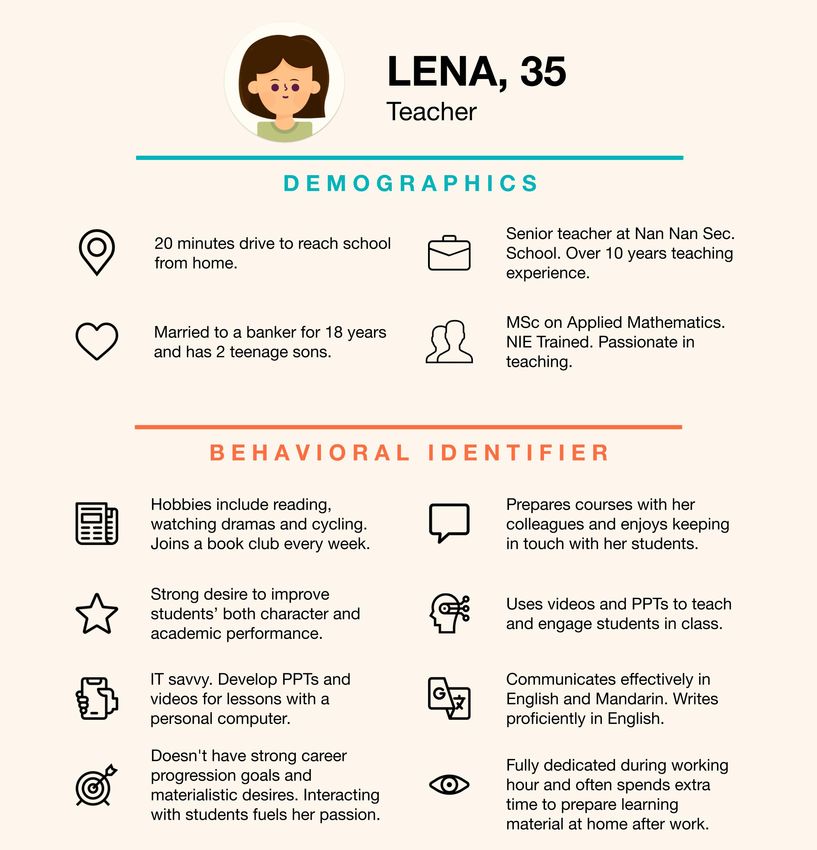
Figure 1: Personas of SEAL’s main        Adaptive Learning (SEAL) system for personalized education at scale.
users, teachers and students
                                         Permission to make digital or hard copies of part or all of this work for personal or classroom use is granted without fee
* Also   with Forth AI.                  provided that copies are not made or distributed for profit or commercial advantage and that copies bear this notice
                                         and the full citation on the first page. Copyrights for third-party components of this work must be honored. For all other
† Contributedduring Undergraduate Re-    uses, contact the owner/author(s).
search Opportunity Program (UROP).       CSCW ’20 Companion, October 17–21, 2020, Virtual Event, USA
‡ Also
     with Singapore Uni. of Technology   © 2020 Copyright held by the owner/author(s).
                                         ACM ISBN 978-1-4503-8059-1/20/10.
and Design.
                                         https://doi.org/10.1145/3406865.3418326
ACM Reference Format:
                                           Junhua Liu, Lionell Loh, Ernest Ng, Yijia Chen, Kristin L. Wood, and Kwan Hui Lim. 2020. Self-Evolving
                                           Adaptive Learning for Personalized Education. In Companion Publication of the 2020 Conference on
                                           Computer Supported Cooperative Work and Social Computing (CSCW ’20 Companion), October 17–21,
                                           2020, Virtual Event, USA. ACM, New York, NY, USA, 5 pages. https://doi.org/10.1145/3406865.3418326

                                           INTRODUCTION
                                           Primary and secondary education serves as an important foundation for specialised subjects
                                           in colleges and universities. To excel, students are required to have a deep understanding of
                                           knowledge according to standardized curriculums and syllabus, and exam-related problem
                                           solving skills [7]. However, general education has long faced the tradeoff between quality
                                           and scalability. There exists a notable advantage of small-group tuition over group instruction.
                                           Nonetheless, group instruction with large classes, i.e. over 30 students per class, remains the
                                           norm in the current school settings. As a result, the effectiveness of learning is compromised
                                           as teachers could hardly tailor personalized guidance to each student in such settings.
Figure 2: Server-side endpoint modules        To address this problem, we propose the Self-Evolving Adaptive Learning (SEAL) system to
and databases                              allow personalized learning at scale, leveraging Artificial Intelligence (AI) to solve the problem
                                           related to the trade-off between quality and scalability. SEAL aims to benefit the two most
                                           important stakeholders in the general education setting, i.e. teachers and students (Fig. 1), and
                                           delivers intelligent features, such as customised reports and tailor-made study guides. With AI,
                                           we solve the problem of scalability, but ensure that students still have a personalised learning
                                           experience to give them the help they need. While our use case is currently for pre-tertiary
                                           education, the SEAL system will be useful for any formal subjects or general topics.

                                           Significance of SEAL
                                           Most works on AI-enabled education focus on the automated assessment of student assign-
                                           ments, particularly those relating to programming exercises [2, 3, 8, 11]. While assessment
                                           is an important aspect of education, existing web-based systems, such as eTutor [13] and
                                           AyudasCBI [12], and Jill Watson SA [14], only measure student performance to some extent but
                                           do not personalize or influence how a student is able to acquire knowledge in specific subjects.
                                           Various works also utilize augmented reality for a more interactive learning experience [1, 4, 5].
                                              Recently, large technology enterprises, such as Google, Microsoft and Amazon, compete
                                           in offering Machine Learning as a Service, or MLaaS [10, 15]. The advent of X-as-a-service
                                           came about as internet connectivity became widely available at reasonable speeds, allowing
Figure 3: Client-side users, clients and   software services to be delivered over the internet [9]. In the same spirit, our proposed SEAL
key features                               system will be offered via a similar approach.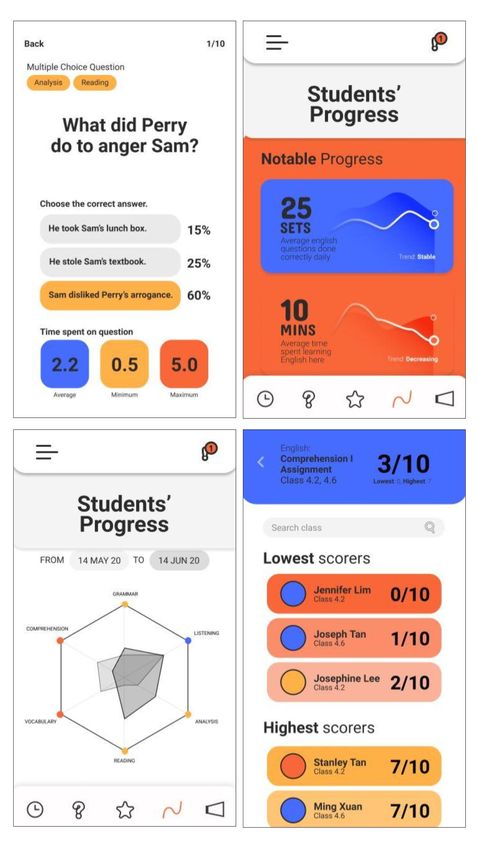
Our proposed SEAL system demonstrates significant advantages over existing systems in
                                        the following aspects: (i) instead of individual questions making up a subject, SEAL models the
                                        syllabus based on a knowledge graph that represents the topics, sub-topics, questions and
                                        question difficulty, which is versatile and extendable to other subjects; (ii) instead of modelling
                                        student history based on past questions answered, SEAL uses a student knowledge profile
                                        adapted from the earlier knowledge graph and the student’s past performance, which allows
                                        us to better measure student competency in specific topics of that subject; (iii) SEAL offers
                                        an intuitive analytics dashboard that enables students to understand their performance and
                                        potential knowledge gaps, and track their performance over time; and (iv) SEAL adopts a
                                        service-oriented architecture that loosely couples features, endpoints and databases, which
                                        enables scalability and robustness of the system.

                                        SYSTEM ARCHITECTURE
                                        The system architecture can be broadly divided into two segments - server-side (Fig. 2) and
                                        client-side (Fig. 3). We adopt a Service Oriented Architecture to allow decoupling different
                                        components of the system while communicating purely via application programming interfaces
                                        (APIs). Such a loose coupling allows the system to be easily extensible to different use
                                        cases, as different web clients may choose to consume different services, and be developed
                                        independent of how the backend services or database layer have been implemented.

                                        Server-side: SEALaaS
                                        We implement the server-side architecture as SEAL-as-a-service (SEALaaS), similarly to
                                        conventions of other MLaaS systems [9, 10]. Our implementation and infrastructure is designed
                                        for the wide spectrum of users to leverage our algorithms and system with varying ease and
                                        customizability. SEALaaS is designed to prioritise the following considerations: (i) Scalability of
                                        the solution different use cases (ii) Usability of the system for our intended audiences. Services
                                        on their own are stateless and serve to apply computation to data Such data, which could
                                        include a student’s history of question attempts, as well as their interaction with education
                                        content, are queried from the relevant databases when a request is made.

                                        Client-side: Key Features
                                        Adaptive Assessment. The Adaptive Assessment feature is the core to the SEAL system. The
                                        system recommends questions to assess the student’s understanding, and learning content
Figure 4: Analytics dashboard of SEAL   based on the students’ profile, learning preferences and the state of their knowledge. A com-
                                        prehensive question recording and multi-dimensional tagging system (Fig. 5) is implemented
                                        to assist teachers create adaptive content. Depending on what the system or user is trying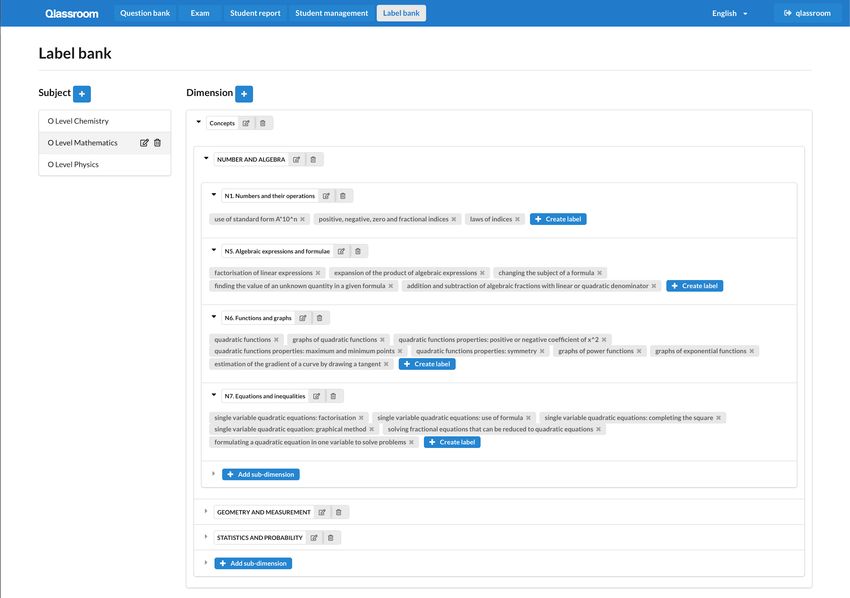
to optimise for, the system will adapt to give the most efficient set of questions or answers.
                                       Some examples of optimisation objectives include the student’s mastery of difficult concepts in
                                       a subject or to optimise for a students’ confidence in their own ability.
                                          Learning Analytics. The Learning Analytics service aggregates student activity data such
                                       as their question attempts, content interactions and teacher’s feedback to provide insight into
                                       a student’s learning progress, as well as the effectiveness of various content. The analytic
                                       reports are generated for each problem set and made accessible to both teachers and students.
                                       The forms of the reports are largely graphical, coupled with short descriptions and suggestions
                                       that are automatically generated with templates. A sample report is shown in Fig. 4. The
                                       report comprises information such as the student’s performance on individual quizzes, ability
Figure 5: Teacher’s tagging system.    to answer questions of varying difficulty, identification of areas/topics the student is weak
                                       in, among other information. This component will enable students to understand their own
                                       performance and educators to track the progress of their students.
                                          Recommender. The recommender service dynamically queries the Learning Profile Service,
                                       Content Service as well as the Content Relationship Service to get the most suitable set of
                                       questions or lessons for the student. The personalized and dynamic recommendation [6] takes
                                       into account the students’ learning preference - i.e. a student may prefer video explanation over
                                       textual, the students’ learning state - i.e. a student may have mastered first-order differentiation
                                       but not second-order differentiation as well as students’ aptitude - i.e. a student performs well
                                       for easy questions but not for high-order questions. The recommender service takes as input
                                       what it is trying to optimise for - i.e. students’ confidence, increase in student’s aptitude or just
                                       breadth of knowledge and make a recommendation.

                                       CONCLUSION AND FUTURE WORK
                                       We propose the Self-Evolving Adaptive Learning (SEAL) system for personalized education,
                                       which comprises: (i) a loosely coupled SEALaaS that provides stateless endpoints; (ii) an
                                       AI-based recommender component that models students’ knowledge profile, then recommends
                                       personalised content to achieve specific learning outcomes; and (iii) feature-rich client ends
                                       that facilitate teacher’s teaching and student’s independent learning. In future, we plan to design
                                       experiments to test the effectiveness and experience of knowledge delivery and acquisition
                                       with partners from public and private education institutions. We also intend to extend the scope
                                       of SEAL beyond general education to continuing education and training for adult learners.

                                       Acknowledgements. This research is funded in part by the Singapore University of Technology
Figure 6: Mobile app user interface.   and Design under grant SRG-ISTD-2018-140 and SUTD-UROP-1036.
REFERENCES
[1] Rula Al-Azawi, Ali Albadi, Raziyeh Moghaddas, and Jonathan Westlake. 2019. Exploring the potential of using
augmented reality and virtual reality for STEM education. In International Workshop on Learning Technology for
Education in Cloud. Springer, 36–44.
[2] Kirsti M Ala-Mutka. 2005. A survey of automated assessment approaches for programming assignments.
Computer science education 15, 2 (2005), 83–102.
[3] Michael Blumenstein, Steve Green, Shoshana Fogelman, Ann Nguyen, and Vallipuram Muthukkumarasamy.
2008. Performance analysis of GAME: A generic automated marking environment. Computers & Education 50, 4
(2008), 1203–1216.
[4] Peng Chen, Xiaolin Liu, Wei Cheng, and Ronghuai Huang. 2017. A review of using Augmented Reality in
Education from 2011 to 2016. In Innovations in smart learning. Springer, 13–18.
[5] Muhammad Zahid Iqbal, Eleni Mangina, and Abraham G Campbell. 2019. Exploring the use of Augmented
Reality in a Kinesthetic Learning Application Integrated with an Intelligent Virtual Embodied Agent. In 2019 IEEE
International Symposium on Mixed and Augmented Reality Adjunct (ISMAR-Adjunct). IEEE, 12–16.
[6] Junhua Liu, Kristin L Wood, and Kwan Hui Lim. 2020. Strategic and Crowd-Aware Itinerary Recommendation. In
Proceedings of the 2020 European Conference on Machine Learning and Knowledge Discovery in Databases
(ECML-PKDD’20).
[7] Junhua Liu, Yue Zhang, Ruths Justin, Moreno Diana, D Jensen Daniel, and L Wood Kristin. 2013. Innovations
in Software Engineering Education: An Experimental Study of Integrating Active Learning and Design-based
Learning. In 120th ASEE Annual Conference & Exposition.
[8] Kevin A Naudé, Jean H Greyling, and Dieter Vogts. 2010. Marking student programs using graph similarity.
Computers & Education 54, 2 (2010), 545–561.
[9] Mike P Papazoglou and Dimitrios Georgakopoulos. 2003. Introduction: Service-oriented computing. Commun.
ACM 46, 10 (2003), 24–28.
[10] Mauro Ribeiro, Katarina Grolinger, and Miriam AM Capretz. 2015. Mlaas: Machine learning as a service. In 2015
IEEE 14th International Conference on Machine Learning and Applications (ICMLA). IEEE, 896–902.
[11] Raheel Siddiqi, Christopher J Harrison, and Rosheena Siddiqi. 2010. Improving teaching and learning through
automated short-answer marking. IEEE Transactions on Learning Technologies 3, 3 (2010), 237–249.
[12] Álvaro Tejeda-Lorente, Juan Bernabé-Moreno, Carlos Porcel, Pablo Galindo-Moreno, and Enrique Herrera-
Viedma. 2015. A dynamic recommender system as reinforcement for personalized education by a fuzzly linguistic
web system. Procedia Computer Science 55 (2015), 1143–1150.
[13] Cem Tekin, Jonas Braun, and Mihaela van der Schaar. 2015. etutor: Online learning for personalized education. In
2015 IEEE International Conference on Acoustics, Speech and Signal Processing (ICASSP). IEEE, 5545–5549.
[14] Qiaosi Wang, Shan Jing, Ida Camacho, David Joyner, and Ashok Goel. 2020. Jill Watson SA: Design and
Evaluation of a Virtual Agent to Build Communities Among Online Learners. In Extended Abstracts of the 2020
CHI Conference on Human Factors in Computing Systems. 1–8.
[15] Yuanshun Yao, Zhujun Xiao, Bolun Wang, Bimal Viswanath, Haitao Zheng, and Ben Y Zhao. 2017. Complexity
vs. performance: empirical analysis of machine learning as a service. In Proceedings of the 2017 Internet
Measurement Conference. 384–397.You can also read


