Senior School Parents' Handbook 2019/2020 - St Dunstan's College
←
→
Page content transcription
If your browser does not render page correctly, please read the page content below
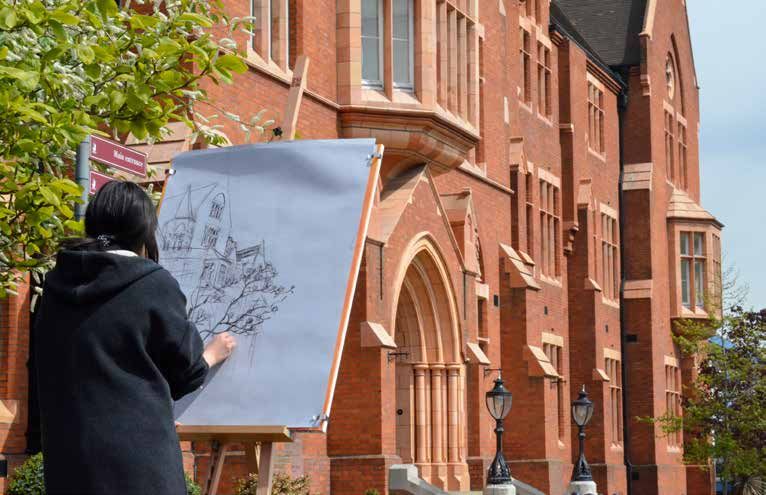
Senior School
   Parents’
  Handbook
   2019/2020

2   S T D U N S TA N ’ S C O L L E G E                                                                                S E N I O R S C H O O L PA R E N T S ’ H A N D B O O K   3

                                                               Table of Contents

                                                               Introduction to St Dunstan’s College          Inclusion, Enrichment
                                                               Senior School                                 and Learning Support
                                                               •   Welcome from the Headmaster               •   Special Educational Needs and Disabilities (SEND)
                                                               •   Vision and Values of the College          •   English as an Additional Language (EAL)
                                                               •   College Contact Details                   •   Scholarship and Enrichment
                                                               •   Structure of the College
                                                                                                             Pastoral Procedures
                                                               •   Sixth Form and the St Dunstan’s Diploma
                                                                                                             •   Senior School Pastoral Leadership Team
                                                               Daily Routine                                 •   Pastoral Systems
                                                               •   The School Day                            •   Bullying
                                                               •   Assemblies                                •   House System
                                                               •   Events                                    •   Leadership Opportunities
                                                               •   Tutor Time                                •   Student Health
                                                               •   Breaks                                    •	Personal, Social Health and Economic Education (PSHEE)
                                                               •   Arrival and Departure                     •   Health Sex and Relationships Education (HSR)
                                                               •   Coaches                                   •   Clothes and Possessions
                                                               •   Cycling and Driving to School             •   Lost Property
                                                               •   Attendance                                •   Rewards
                                                               •   The School Uniform                        •   Behaviour Management
                                                               •   Senior School Equipment List              •   Detentions
                                                                                                             •   Tobacco, Alcohol and Drugs
                                                               Communication
                                                               •   Parent Portal                             Co-Curricular Procedures
                                                               •   Who to contact                            •   The Forder Programme
                                                               •   Communication pyramids                    •   Music Lessons
                                                               •   Family Contact Information                •   Sporting Fixtures and Other Events
                                                               •   Telephones                                •   Special Events
                                                               •   Calendars                                 •   St Dunstan’s Festival
                                                               •   Newsletter and Mailings                   •	Combined Cadet Force (CCF) and
                                                               •   Website                                      Community Service
                                                                                                             •   Drama
                                                               Academic Procedures
                                                                                                             •   Duke of Edinburgh’s Award Scheme (DofE)
                                                               •   Senior School Academic Leadership Team
                                                                                                             •   Trips and Visits
                                                               •   Curriculum
                                                               •   Higher Education and Careers              Additional Information

                                                               •   Examinations                              •   Catering

                                                               •   Academic Tracking and Student Progress    •   Events

                                                               •   Homework                                  •   Financial Matters

                                                               •   Reporting and Parents’ Evenings           •   Health and Safety

                                                               •   Academic Transition                       •   Information and Communication Technology (ICT)

                                                               •   Learning Resource Centre (LRC)            •   Transport
                                                                                                             •   Visiting the School
                                                                                                             •   Dunstonian Association
                                                                                                             •   Policies

                    w w w. s t d u n s t a n s . o r g . u k                                                                                           info@sdmail.org.uk
4   S T D U N S TA N ’ S C O L L E G E                                                                                                                                                S E N I O R S C H O O L PA R E N T S ’ H A N D B O O K   5

    Welcome from
    the Headmaster

                                                               not get lost, but rather thrive in their
    St Dunstan’s College is
                                                               own way. The comfort provided by our
    a community that is                                        rigorous approach to pastoral care
                                                               enables our students to take risks, ask
    grounded in the real-                                      uncomfortable questions of themselves
    life vibrancy of its                                       and others, and above all else develop
                                                               the humility, confidence and tenacity
    South London setting.                                      needed to find success in all aspects of
    We celebrate the                                           life beyond school.
    opportunities afforded                                     As a Nursery to Year 13 College, we
    to us by being located                                     pride ourselves on genuinely knowing
                                                               the children under our care, and we hope
    in such a diverse                                          that our families will feel an important
    environment, allowing                                      part of this community.

    for all manner of views,                                   This Handbook is designed to help
    opinions and styles –                                      improve the communication between
                                                               the College and home. If you feel that     Mr Nicholas Hewlett
    what better foundation                                     any useful information has been omitted,   Headmaster,
    to an exceptional                                          please do not hesitate to let us know so   St Dunstan’s College
                                                               that the next version can be amended.
    education?
                                                               The working partnership that already
    With our name taken from a great                           exists between home and College is
    polymath, our education enjoys the                         crucial for the enhancement of learning.
    riches of breadth, whilst not forsaking                    I hope that you will read this handbook
    the importance of rigour and depth                         carefully to ensure that, together, we
    of ability.                                                are giving a carefully considered and
                                                               consistent message to the young people
    We know co-education to be the                             under our care.
    right platform for developing the
    interpersonal skills necessary to succeed
    in the modern world. The importance
    we place on nurturing individuality
    and the manageable size of our school
    is such that we ensure students do

    Vision and Values of the College                                                                                                                 College Contact
                                                                                                                                                     Details
    Translating as ‘Adorn the White’, our                      We cherish our school of unique            the Curiosity always to want to discover
    College motto, Albam Exorna, is as                         characters, each being encouraged to       more.
    relevant today as it was at the time                       navigate their own journey through                                                    St Dunstan’s College
    of our Lewisham foundation, in 1888.                       life whilst being nurtured to develop      In line with our ethos, we believe in      Stanstead Road
    The white shield that serves as three                      the Courage to be who they are, the        being: ‘An ambitious, forward-thinking     London SE6 4TY
    quarters of our College crest is a blank                   Creativity to develop new ideas and        community that inspires and supports
    canvas onto which is emblazoned                            approaches, the Confidence to try,         individuals to thrive’                     Telephone: 020 8516 7200
    the as yet unwritten story of each                         succeed and fail, the Compassion to                                                   Facsimile: 020 8516 7300
    St Dunstan’s pupil.                                        understand and appreciate others, and                                                 Website: www.stdunstans.org.uk

                    w w w. s t d u n s t a n s . o r g . u k                                                                                                                                                           info@sdmail.org.uk
6   S T D U N S TA N ’ S C O L L E G E                                                                                                                                                                                             S E N I O R S C H O O L PA R E N T S ’ H A N D B O O K   7

    Structure of the College
                                                                                                                                                         DAILY                                                             The timing of the day is as follows:

                                                                                                                                                         ROUTINE
                                                                                                                                                                                                                           Registration/Assembly/Tutor time       0820-0845

    The Governors have a statutory role to fulfil the charitable aims of the                                                                                                                                               Period 1				                           0850-0945
    Foundation “to provide an education for boys and girls in South East London”.
                                                                                                                                                                                                                           Period 2				                           0950-1045
    To do this they set the strategic targets for the Foundation and carry out the
    duties of charity trustees, looking after legal and financial matters as well                                                                        The School Day                                                    Break				                              1045-1105

    as setting the strategic vision for the College and the various priorities that                                                                      Students can arrive at College any time between 0745 and          Period 3				                           1110-1205
    stem from it.                                                                                                                                        shortly prior to 0820 each morning. Registration begins
                                                                                                                                                         promptly at 0820 in form rooms. Please ensure that your           Period 4				                           1210-1305
    There are 17 Governors in total. Three                      parents of former and current pupils and    constructing and implementing an             children do not arrive before 0745, as they will not be able to
    are ex officio: The Alderman of the                         educational professionals. Governors        agreed College Development Plan in           enter the buildings and there is no supervision provided before   Lunch				                              1310-1350
    Ward of Tower in the City of London                         normally serve for five years though this   line with the strategic priorities agreed    this time. Afternoon registration takes place at 1435 during
    and two of the four church wardens                          can be extended.                            by the Governing Body. The College is        afternoon tutor time.                                             Forder time (Co-curricular)		          1350-1430
    of All Hallows by the Tower with St                                                                     divided into two Schools. The Junior
    Dunstan in the East. A further two are                      The College provides an education for       School for pupils aged between 3 and                                                                           Tutor time			                          1435-1500
    nominated by the Parochial Church                           girls and boys between the ages of 3        11 is a member of the Incorporated
    Council of All Hallows. The remaining                       and 18. It is expected that, subject to     Association of Preparatory Schools                                                                             Period 5				                           1505-1600
    12 are known as co-opted Governors                          satisfactory progress and behaviour,        (IAPS) with its own Head. All matters
    and are selected by their predecessors.                     children joining the College will remain    relating to the Junior School should                                                                           After school activities		              1615-1715
    Members of the Governing Body bring                         until the completion of their Sixth Form    first be directed to its Head. The Senior
    a wide range of skills and experience                       education at the age of 18.                 School is divided into three sections
    to their task. The Governing Body is                                                                    comprising:
    broadly based and normally consists of                      The Headmaster is appointed by the
    a number of Old Dunstonians along with                      Governing Body and responsible for

     Lower School            Key Stage 3 (Years 7 to 9 for ages 11 to 14)

     Middle School           Key Stage 4 (Years 10 and 11 for ages 15 to 16)

     Sixth Form              Key Stage 5 (Years 12 and 13 for ages 17 and 18)

    There is a Head of each Section (Lower School, Middle School and Sixth Form) supported by Heads of Year. Each student is a
    member of a tutor group and that tutor is the first point of contact for students and parents.

    Sixth Form and the
    St Dunstan’s Diploma
    Entry requirements for the Sixth Form                       preparation for exciting future journeys.   the ability to make informed choices are
    are currently set at six grades 9-6                         The St Dunstan’s Diploma is a defining      all at the core of what we seek to achieve
    (A*-B equivalent) at GCSE, with 9-7                         aspect of Sixth Form life. All students     within the Sixth Form.
    (A*/A equivalent) grades in the subjects                    embark on this exciting, individually
    appropriate to the student’s choice of                      tailored programme designed to inspire,     More information about the St Dunstan’s
    A-Levels.                                                   challenge and assist them to fulfil their   Sixth Form, including details about the
                                                                unique ambitions and potential. It allows   Diploma, are available on the College
    The Sixth Form at St Dunstan’s                              the College to support the pursuit of       website, Sixth Form Student Handbook
    represents the pinnacle of a pupil’s                        a vast range of students’ interests and     and in the Sixth Form Prospectus.
    time at the College; as such, it is a                       goals both within and in addition to the
    celebration of self-discovery and                           academic curriculum. Critical thinking,
    individual spirit, as well as a rigorous                    leadership, independent scholarship and

                     w w w. s t d u n s t a n s . o r g . u k                                                                                                                                                                                                       info@sdmail.org.uk
8   S T D U N S TA N ’ S C O L L E G E                                                                                                                                                                                S E N I O R S C H O O L PA R E N T S ’ H A N D B O O K    9

                                                                      Breaks                                                              Coaches                                                            Cycling and Driving
                                                                      The Refectory is where students have lunch and snacks at            There are coach routes operating between common areas              to School
                                                                      lunch and breaktime. Once students have made use of the             of residence and College. The service is co-ordinated by the
                                                                      Refectory, they are required to spend mid-morning and               College but provided by outside coach companies. College           Students may cycle to school with parents’ permission and with
                                                                      lunchtime breaks outside the College buildings but within the       staff monitor the operation of the services but are not directly   appropriate safety marking on their clothing. Helmets must
                                                                      College grounds, except in rainy weather. Some students will        in charge of these or responsible for performance standards.       be worn. Bicycles should be securely locked in the designated
                                                                      be engaged in music lessons or other activities under staff or      Services are scheduled to arrive at College by 0800 and depart     area under the Refectory when left at the College. No cycling is
                                                                      senior student supervision; others may be engaged in private        at 1610. The nature of traffic in south-east London make these     permitted within the College grounds.
                                                                      work and study in the Learning Resource Centre. Students            timings approximate. Students are expected to conform to
                                                                      are not permitted to remain in the school building unless part      the same high standards of behaviour on the coaches as they        When delivering their children at the start of a school day or
                                                                      of one of these supervised activities. A variety of seated areas    would within the College. The College does not provide staff       when collecting in the evening, parents are requested not to
                                                                      and heated canopies are available outside. There are staff and      supervision on the coaches. Seat belts must be worn on all the     park and wait within the grounds. If their children are not
                                                                      prefect duty teams that patrol the building and College grounds     journeys. When a child has an after school commitment beyond       ready in the evening, parents are requested not to congest the
                                                                      during breaks.                                                      1610, parents are required to make their own alternative           drive, but to return later. The limited parking spaces on the
                                                                                                                                          arrangements for the journey home. Further details of the          drive are pre-allocated. The Jubilee Ground can be used for
                                                                      A selection of snacks is available for purchase in the Refectory    routes and charges are available from the College Office.          parents to turn in, drop off and then exit. If coming from the
                                                                      during breaks. Students are permitted to bring a small amount                                                                          other direction, there are many side streets, just a short walk
                                                                      of cash to school if they wish to make use of this service but                                                                         away from the College, where children can be dropped off and
                                                                      are advised that they are responsible for keeping this safe at                                                                         picked up. The College actively encourages all parents to limit
                                                                      all times.                                                                                                                             congestion by avoiding use of the front drive. We would be
                                                                                                                                                                                                             extremely grateful if parents of students in Year 10 or above
                                                                                                                                                                                                             do not pick up or drop off children at the front of the College
    Assemblies                                                        Arrival and Departure                                                                                                                  between 0800 and 0840 and 1500 and 1620. Please note, also,
                                                                                                                                                                                                             that parking or waiting on the College site during the school
    Sections of the College meet together in the Great Hall or        Students must arrive at College in time for registration at 0820                                                                       day is not possible.
    Refectory for assembly on a regular basis. Assemblies are         from Monday to Friday but no earlier than 0745. Students who
    compulsory for all students. A whole Senior School assembly       are late for registration (arriving between 0820 and 0850) must
    on Monday morning introduces the pastoral theme for the           enter the College through the Refectory door, where a teacher
    week, linking with our aims, pastoral priorities and values. In   will be stationed to register latecomers.
    addition, throughout the week there are separate assemblies
    for the Lower School, Middle School and the Sixth Form, led       No student may leave the College during normal lesson time
    by the pastoral teams and often by the students themselves.       without the approval of their parents, the Head of Section
    House assemblies also occur regularly on a Friday. These          or the medical staff in the Wellness Centre. Permission must
    involve students from across the Senior School – please see the   be obtained in advance should a parent wish to request their
    section on Houses for more details of our House system.           child to leave the College during the school day, for example
                                                                      to attend a medical appointment. Normally, such requests are
                                                                      sent via email to the student’s form tutor. Students who leave
    Events                                                            the College during the school day with permission must sign
                                                                      out in the College Office as they go. The Head of Sixth Form
    Important services and events away from the College, such as      can agree special arrangements for Sixth Form attendance, as
    the Commemoration Day Service at Southwark Cathedral, the         explained in the Sixth Form handbook.
    Carol Service and Prize Giving, are compulsory for particular
    year groups, as is attendance on a number of College Open         All students are expected to leave the premises by 1615 (this
    Days and other marketing events. Advance notice is always         includes the driveway) if they are not involved in an activity
    given so that appropriate arrangements can be made.               under the supervision of a member of staff. The only exception
                                                                      to this is for students wishing to work in the Learning Resource
                                                                      Centre (LRC). Students working in the LRC must be there by
    Tutor Time                                                        1615 at the latest. Students loitering in the common areas of
                                                                      the College or found unsupervised on the grounds will be asked
                                                                      to leave or join a supervised activity. When in the LRC, students
    Students meet as a tutor group every day for registration
                                                                      are expected to work quietly. Students who are being collected
    followed by tutor activities or assembly. Additional tutor time
                                                                      from the College between 1615 and 1730 must go to the LRC
    takes place each afternoon, and includes the delivery of the
                                                                      and wait there until they are due to be picked up. The front
    Senior School PSHEE curriculum.
                                                                      drive is not a waiting area. All students must leave the College
                                                                      site by 1730, unless there is a special evening event.
    Tutors quickly get to know their tutees as individuals and work
    with them to help support their studies and development
    throughout the year. The tutors should be seen as the routine
    point of contact between the College and parents. In addition
    to working with individual students, activities are undertaken
    as a group, based on the pastoral theme of the week, to help
    develop and embed our values as a community.

                    w w w. s t d u n s t a n s . o r g . u k                                                                                                                                                                                            info@sdmail.org.uk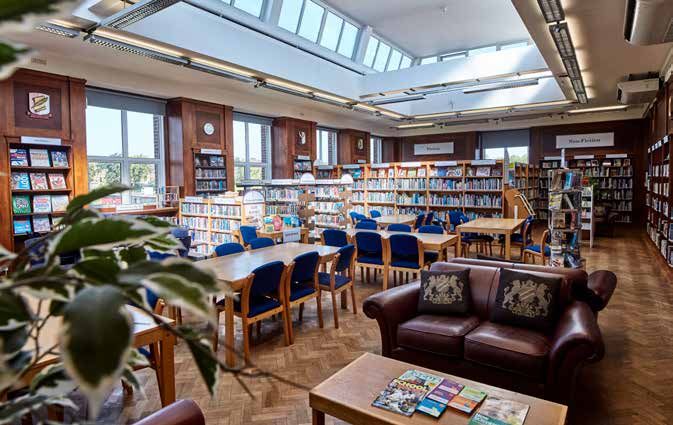
10   S T D U N S TA N ’ S C O L L E G E                                                                                                                                                                                   S E N I O R S C H O O L PA R E N T S ’ H A N D B O O K   11

     Attendance                                                            The School Uniform                                                   Senior School Equipment List
     Parents are legally responsible for ensuring that their children      All St Dunstan’s students are expected to conform to the
     attend school. It is the responsibility of the College to maintain    College Dress Code at all times during the school day, and            All students should have the following equipment:
     an accurate attendance record and to take seriously problems          when representing the College at events and fixtures.
     that may lead to non-attendance.                                      The Dress Code is reviewed and published annually on
                                                                           the College website and in the student planners. It is the            • Sturdy school book bag (to be left in locker during lessons)
     If students are absent from College for any reason, parents           responsibility of the students and parents to check the Dress
     should email absence@sdmail.org.uk or telephone the College           Code each academic year to ensure compliance.                         • Ink pen & cartridges
     Office before 0900 on each morning of absence. The College
     switchboard (020 8516 7200) is open from 0800 to 1730,                The uniform is available from SchoolBlazer (www.schoolblazer.         • Spare ink pen & cartridges
     Monday to Friday, during term time.                                   com). Additional items (such as shoes, socks, tights, etc., can be
                                                                           purchased elsewhere, although it is essential that they meet          • Pencils
     On returning to the College, students must provide their              the Dress Code requirements (for example, shoes for students
     tutor with a letter from their parents explaining the reason          in Years 7 through 11 must not be trainers or ankle boots. The        • Pencil sharpener
     for their absence. An email from the parental address which           College website contains further details about school uniform,
     the College holds on file is acceptable in lieu of a letter. Tutors   including an illustrated guide to appropriate items.                  • Assortment of coloured pencils and/or crayons (felt tip pens should not be used)
     are responsible for keeping a watching brief over student
     attendance and will contact parents if they feel there is a
     matter of concern, such as frequent absence.
                                                                                                                                                 • Pencil eraser

     It is expected that all family holidays will be arranged outside                                                                            • Small 2-hole punch
     term time, the dates of which are published at least twelve
     months in advance in the termly Calendar.                                                                                                   • Small stapler

     Whenever possible, visits to the doctor or dentist should be                                                                                • Geometry set – which should include a compass, protractor and set square
     arranged out of school hours. Unavoidable absence for part
     of a day should be requested from the tutor and for a full day                                                                              • Scientific calculator - (the Mathematics department recommends Casio fx 83 ES up to the end of GCSE. Casio fx 9750GA
     from the Head of Year. Only the Deputy Head Pastoral or                                                                                       PLUS is recommended for A-level Further Mathematics)
     Headmaster has the discretionary power to grant any leave
     of absence for more than one day. This should always be
                                                                                                                                                 • Glue stick
     requested well in advance by way of a letter or email.

     Important note: Within the registration software that
                                                                                                                                                 • English dictionary
     the school uses there is an important distinction between
     ‘authorised’ absence (which occurs if the Deputy Head Pastoral                                                                              • Language pocket dictionary (Spanish, French, or German as appropriate)
     or Headmaster has given permission) and ‘unauthorised’
     absence (when permission has not been given). This                                                                                          • Scissors (with rounded tips)
     information would appear on a school transcript and might, for
     example, impact adversely on the university application process                                                                             • 30cm ruler
     for the student in question.
                                                                                                                                                 Please ensure students’ possessions are labelled as necessary
     The College wishes to work closely with parents to ensure
     that attendance is maximized. Should the College identify                                                                                   Students will be issued with planners and all necessary exercise books and textbooks. These should be taken to all lessons.
     a student who is absent without having received any notice
     or explanation, the aspiration is to contact home within 24
     hours but it is not possible to guarantee that this will always be
     possible.

                      w w w. s t d u n s t a n s . o r g . u k                                                                                                                                                                                             info@sdmail.org.uk
12 S T D U N S TA N ’ S C O L L E G E S E N I O R S C H O O L PA R E N T S ’ H A N D B O O K 13
COMMUNICATION 1 THE PASTORAL PYRAMID
E.g. I have a question about my child’s wellbeing.
2 THE ACADEMIC PYRAMID
E.g. I have a question about my child’s
academic progress in a subject.
Headmaster Headmaster
Deputy Head Pastoral
Deputy Head Academic
Head of Section
Head of Department
Head of Year
Tutor Teacher
3 THE CO-CURRICULAR PYRAMID
E.g. I have a question about my child’s participation
with the co-curricular programme. 4 THE FINANCIAL PYRAMID
E.g. I have a question about my fee bill.
Headmaster Bursar
Deputy Bursar
Deputy Head Pastoral
(Finance and resources)
Assistant Head Co-Curricular Director of Finance and HR
Co-Curricular Administrator Finance Officer
Parent Portal Who To Contact
Parents have access to the St Dunstan's College web- To support effective communication between parents and St
based Parent Portal and the associated iSAMS Parent App. Dunstan’s College Senior School staff, the College has created
5 6
The College uses these platforms as the primary means a brief guide to communication which sets out some possible THE SEND PYRAMID
of communicating important information to parents such scenarios and who to contact in each case. There are bound to THE ABSENCE PYRAMID E.g. I have a question about my
as termly Learning and Attainment Scores, letters about be situations that are not covered in these suggestions, in which Please report absence as indicated below: child’s progress across multiple subjects.
parents' evenings, school trips and events, and other specific case parents should contact their child’s form tutor who will be
information which may require your attention. In addition, they able to arrange contact with the most appropriate person.
provide quick and easy access to everything you need to know
about your child's school life, including attendance records, It is always better to talk to somebody early on to avoid
reward and sanction notifications, timetables, teacher contact letting a minor concern turn into a big issue and we encourage Prolonged absence
information, school news and events, and more. parents to notify us of changes to their child’s circumstances Headmaster Headmaster
to facilitate our most effective support of them. In some
More than 1 day Deputy Head Academic
situations, you may feel external help (e.g. counsellor or Deputy Head Pastoral
educational psychologist) is necessary. If this is the case, please
Assistant Head - I and E
keep your child’s Head of Year informed. To request a whole day
E-mail to the Head of Year
SENDCo
If you wish to contact a specific member of staff, email contact To request part of a day
is encouraged in the first instance. If you prefer a face to face E-mail to the Tutor Head of Year
conversation with a member of staff, please contact them in
Reporting Sickness
advance to arrange an appointment. It is our expectation that absence@sdmail.org.uk Tutor
parental emails will, if possible, be acknowledged by staff within
48 working hours.
w w w. s t d u n s t a n s . o r g . u k info@sdmail.org.uk
14   S T D U N S TA N ’ S C O L L E G E                                                                                                            S E N I O R S C H O O L PA R E N T S ’ H A N D B O O K     15

     Family Contact
     Information
                                                                           ACADEMIC
     Parents are asked to inform the College Office immediately
     of any change of address, telephone number or email so that
                                                                           PROCEDURES
     our records can always be up to date. This applies equally to
     work and emergency contacts and is particularly important if
     custodial arrangements change.

     It would also be helpful if parents would inform the tutor of any     Senior School                                                  Curriculum
     issues at home (e.g. bereavements, family members in hospital),
     which might affect your child’s wellbeing.                            Academic Leadership                                            Our forward-looking curriculum offers every student the
                                                                                                                                          opportunity to develop their own academic knowledge,
     All contact information and educational records are held in an        Team                                                           skills and understanding. By exploring new and challenging
                                                                                                                                          material, and being encouraged to take intellectual risks,
     electronic central management of information database called
     iSAMS. The routine information that we hold on your child can         The academic progress of all students in the Senior School     we hope each individual discovers and develops their
     be checked via the Parent Portal or iSAMS app.                        is promoted, overseen and monitored by the Senior School       own strengths and interests.
                                                                           Academic Leadership Team (SSALT). This team is led by the
                                                                           Deputy Head Academic who is supported by three Assistant       Students follow an ambitious, common curriculum until the
     Telephones                                                            Heads Academic (of the Curriculum, Inclusion and Enrichment,
                                                                           and a Director of Studies.) All subject areas have a Head of
                                                                                                                                          end of Year 9 when decisions are made for their course of
                                                                                                                                          study at GCSE. The only exception to this is in Modern Foreign
                                                                           Department or Subject Coordinator who takes responsibility     Languages, where students choose languages before arrival
     The telephone switchboard is manned from 0800 to 1730 on
                                                                           for the teaching and learning that takes place in these        at the College in Year 7. Choices regarding future Sixth Form
     Monday to Friday during term time. The receptionist will try
                                                                           disciplines.                                                   courses are made during the Lent Term of Year 11.
     to connect you with members of staff and will relay a message
     if that member of staff is unavailable. The receptionist cannot
                                                                                                                                          In Years 7, 8, and 9 all students also follow our Skills for Life
     deliver routine messages to students but will make every
                                                                                                                                          course which develops knowledge, skills and awareness beyond
     attempt to ensure that an emergency message is forwarded.
                                                                                                                                          the subject specific curriculum, including a course focused on
                                                                                                                                          enhancing the global outlook and perspectives of the students
     Mobile phones are brought into College entirely at their
                                                                                                                                          at all ages.
     owner’s risk. Use of mobile devices is governed by the College’s
     Bring Your Own Device (BYOD) Policy which is available on the
     website.

     Calendars
     An online calendar of events can be found on the College
     website. Term dates are normally published twelve months
     in advance on the College website.

     Newsletter and
     Mailings
     Parents are sent a copy of the College Bulletin each Friday
     during term time via the Parent Portal or iSAMS app. This
     contains details of students’ achievements, as well as links to all
     letters and forthcoming events. In addition, the website has live
     feeds for all news items and current events are publicised via
     the College Twitter feed.

     Website
     www.stdunstans.org.uk is the College website and it aims to
     keep parents informed about current and forthcoming events.

                     w w w. s t d u n s t a n s . o r g . u k                                                                                                                        info@sdmail.org.uk
16   S T D U N S TA N ’ S C O L L E G E                                                                                                            S E N I O R S C H O O L PA R E N T S ’ H A N D B O O K     17

     Higher Education                                                 Examinations
     And Careers                                                      Students are well prepared for the appropriate public
                                                                      examinations. The College makes the decision as to which
     Students at St Dunstan’s College are encouraged to think about   examinations a student takes and at what time, but such
     their future from an early age, but not to develop too fixed a   decisions will only be finalised after communication with
     view, too soon. The best career and further education choices    parents. Parents are billed separately to their school fees for
     are made by students who reflect on, review, and update their    the specific entry fees associated with Public Examinations.
     thinking based on the development of their true strengths and    This is to ensure that parents only pay for the entries of their
     interests over time.                                             own children at the time they are sitting Public Examinations.
                                                                      Any parent wishing to enter their child for an examination in
     From the beginning of Year 9, students are encouraged to start   a subject outside of the normal College curriculum must first
     considering possible career options and how their academic       seek the advice and approval of the Deputy Head Academic.
     choices and strengths might relate to those early thoughts.
     Careers events, careers profiling and careers role-playing       End of year internal examinations for students not taking public
     activities feature as key components of the Lower and Middle     examinations take place after the Trinity Exeat, with dates
     School careers pathway.                                          published in the Calendar, and a detailed timetable is always
                                                                      given to students in good time before the examinations.
     When students enter Year 12, they will be focused towards
     their UCAS or other Higher Education applications via a          Guidance as to how to prepare for examinations forms part
     sequence of information events that prepares them well for       of the tutorial programme, and teacher support is provided
     the decisions to be taken in Year 13. They are encouraged to     within lesson and tutorial time. Revision lists and suggestions     pressure can be at its height. The amount and type of assistance
     find and research suitable courses or areas of employment        are published annually. Parents can help their children revise      parents provide will of course depend on the age of their child.
     before the end of Year 12 and to use Work Experience and         for examinations by giving encouragement and by ensuring a          It is important to let the students feel that they are making
     their summer break to develop these thoughts long before the     suitable environment at home in which their children can work       the decisions regarding their examination preparation whilst
     Autumn deadlines of Year 13, the first of which is 15 October    with focus. It is also important to ensure that a healthy balance   encouraging them in the right direction.
     for Oxbridge and Medical applications. The deadline for most     is achieved between work, exercise and other social activities.
     other courses is 15 January, but we expect students to have      This last point is particularly relevant during the Easter
     submitted applications long before then.                         holidays and the Trinity Exeat when examination preparation

     The College’s Head of Careers also organises a Careers
     Convention, aimed primarily at those in Year 10 to Year 13.
     This welcomes experts from a wide range of professions
     including publishing, theatre, journalism, medicine, law and
     accountancy. Also present at the Careers Convention are                                                                              • Trial Examinations. These are sat in formal exam conditions
     Higher Education providers as well as representatives from
     the armed forces. The College aims to provide careers advice
                                                                      Academic Tracking                                                   and happen twice per academic year for students in Year 11
                                                                                                                                          and once per year for students in Year 13. They are designed
     tailored specifically to the needs of our students.              and Student Progress                                                to give students as realistic an experience as possible of Public
                                                                                                                                          Examination, to guide staff over making forecast grades for
                                                                      St Dunstan’s College is not a school that seeks to test and         public examinations, and to shape follow up conversations
                                                                      re-test students as the main driver of academic development.        regarding support, targets, and choices.
                                                                      However, we do believe that regular, timely, and meaningful
                                                                      assessment at important stages across an academic journey           The progress of Years 7, 8, 9 and 10, for whom there are no
                                                                      is the best way to help students and teachers understand            public examinations at the end of the year, is driven less by
                                                                      academic strengths and weaknesses, and hence empower                grade awareness and more by the need to track and develop
                                                                      them to respond constructively. Central to achieving this is        strong approaches and behaviours associated with effective
                                                                      student awareness and ownership of their own development,           and enjoyable learning. End of year examinations do result in
                                                                      supported and encouraged by staff. To that end, the following       grades that can indicate likely potential at GCSE, but tracking
                                                                      outlines our assessment and tracking cycle.                         through the year will focus as much on approaches to study as
                                                                                                                                          actual attainment. Students who focus on improving the quality
                                                                      For Years 11, 12, and 13 the following types of assessment          and consistency of their learning behaviours rather than being
                                                                      occur across the year.                                              fixed mainly on grades will be happier, more creative thinkers,
                                                                                                                                          and will also, in the long run, be more successful academically.
                                                                      • Platform Tests are sat in lesson time soon after the start        As a College we champion this approach to developing strong
                                                                      of the year and are designed to ensure students beginning           learning approaches through our reporting and tracking of
                                                                      new courses have an early, secure grounding in the basics           Learning Scores, which reflect student engagement with
                                                                      to build on.                                                        subject, response to feedback, collaboration, strategies for
                                                                                                                                          study, and homework. These characteristics of strong learning
                                                                                                                                          are, of course, still championed and reviewed in the Middle
                                                                      • Benchmark Tests are sat in lesson time at key points in the
                                                                                                                                          School and Sixth Form, too.
                                                                      year and are designed to provide students and staff with an
                                                                      indicator of current attainment levels in relation to examination
                                                                      mark schemes. They inform follow up conversations regarding
                                                                      support, targets, and sometimes choices.

                     w w w. s t d u n s t a n s . o r g . u k                                                                                                                         info@sdmail.org.uk
18   S T D U N S TA N ’ S C O L L E G E                                                                                                                                                                                    S E N I O R S C H O O L PA R E N T S ’ H A N D B O O K    19

     Homework                                                                                                                                 Academic Transition                                                 Learning Resource
     Each student is issued with a homework timetable at the start                                                                            It is expected that all students gaining successful entry into      Centre (LRC)
     of the academic year. The length of time each child takes to                                                                             the College via what is an academically competitive and
     complete homework will vary depending on the child and the                                                                               selective process should go on to thrive in their studies here.     The Learning Resource Centre is situated at the top of the West
     subject. For Years 7 to 11, the setting of homework by teachers                                                                          In the instances where there is concern this may not be the         end of the building and is open for students’ use on term-time
     is intended to result in students being able to complete set                                                                             case, the College’s first response will always be to understand     weekdays between 0800 and 1730. It is also open from 0900-
     work across the evenings of the week at a rate of about one                                                                              the obstacles to progress and to establish how to support           1300 on Saturdays in term-time, and between 0900-1600 over
     hour per evening (Year7) up to one and a half hours (Year 11).                                                                           the necessary progress then will be made. Individualized and        half-term Exeats and for the entire Easter holiday Exeat.
     Managed in this way, homework would be completed before                                                                                  coordinated intervention will planned and enacted out of
     the weekend. In the Sixth Form, students should expect to                                                                                dialogue between staff, students, and families. Where student       Students are permitted and encouraged to use the Learning
     complete a minimum of four hours’ work per subject studied                                                                               engagement with that support is not absolute, or where              Resource Centre in order to do learning preparation, research,
     per week outside of lesson time.                                                                                                         academic outcomes indicate a student will not be able to access     personal reading, or homework. Newspapers, subject-specific
                                                                                                                                              or benefit from the next phase of the curriculum journey,           magazines, and other periodicals are available for students. The
     Homework tasks will be explained in class and also always                                                                                consideration will be made as to whether or not transition into     LRC is fully wi-fi enabled, allowing students to use their own
     made visible on Firefly, the College’s Virtual Learning                                                                                  that next phase of the school will be permitted. This is a rare     personal internet-capable devices to assist in their academic
     Environment (VLE) which can be accessed remotely and which                                                                               and unwelcome situation, and the details governing how the          study, as outlined in the College BYOD Policy. There are laptops
     also contains subject based learning and revision resources. It                                                                          College will manage it as well as seek to pre-emptively avoid it,   for students to borrow.
     is standard practice for optional enrichment or challenge tasks                                                                          can be found in our Policy on Academic Transition though the
     to be identified alongside the core homework tasks so that                                                                               College, available on the website.
     the most enthusiastic or able students in any year group may
     pursue passions and extend their learning further. Homework is
     expected to be completed with ambition and thoroughness, and
     always to be submitted on time.

     The College believes in the value of formative and
     developmental feedback on student work. All teachers in all
     subjects and for all year groups will, when appropriate, provide
                                                                          Reporting And
     feedback in terms of What Went Well (WWW) and either Even
     Better If (EBI) or a specific Student Development Challenge
                                                                          Parents’ Evenings
     (SDC). Feedback of this nature may not be provided for every
                                                                          Communication with parents about children’s progress is
     single task set and marked, but it will be regular and is designed
                                                                          essential. Students receive either a Learning Score (a review of
     to promote a culture of reflection and positive student
                                                                          academic engagement and approach as opposed to attainment)
     engagement with growth and development in their studies, and
                                                                          or an Attainment Score (a review of academic attainment as
     not just a reaction to a mark or grade.
                                                                          opposed to effort) each half term. This cycle will include end of
                                                                          year examinations and Trial Examinations where relevant. All
     Students should complete work at home regularly and
                                                                          such scores are available to parents via the Parent App.
     methodically. If a parent is concerned that homework seems
     not to be being set, or if their child claims not to have any
                                                                          Written reports are provided by Tutors at the end of each
     homework, or that it is becoming too burdensome, Firefly
                                                                          academic year for Years 7-10 and 12. For Years 11 and 13,
     should provide clarification over what is required. Where
                                                                          subject teacher and tutor written reports are provided before
     doubt remains, please do contact the relevant teacher or
                                                                          Easter and specifically to support revision ahead of summer
     Tutor directly.
                                                                          Public Examinations.

                                                                          Every academic year there will be a Parents’ Evening for each
                                                                          year group at which parents can meet with subject teachers
                                                                          for up to 5 minutes for face to face dialogue. These operate on
                                                                          an appointment system. Your son or daughter will be asked to
                                                                          fix the times of those appointments for you in the week before
                                                                          the meeting. In Year 9 and above students are expected to
                                                                          accompany their parents to such meetings wearing full school
                                                                          uniform. Details will be published in the College Calendar.
                                                                          Where longer discussion is warranted, or in the event that
                                                                          parents are not able to see every teacher at the event, teachers
                                                                          are always ready to make follow up phone calls or to make
                                                                          appointments outside of these events to discuss matters of
                                                                          concern.

                                                                          As a point of principle and culture at the College, we encourage
                                                                          all staff to make contact with home as soon as concerns emerge,
                                                                          and vice-versa. Early dialogue is the most effective way to
                                                                          ensure that academic or pastoral difficulties do not escalate
                                                                          into problems.

                     w w w. s t d u n s t a n s . o r g . u k                                                                                                                                                                                                info@sdmail.org.uk
20 S T D U N S TA N ’ S C O L L E G E S E N I O R S C H O O L PA R E N T S ’ H A N D B O O K 21
Inclusion, English as Scholarship
Enrichment, and an Additional and Enrichment
Learning Support Language (EAL) The College is an academically selective school with a
significant number of higher ability students across the
St Dunstan’s College is committed to being an inclusive The College is a proudly diverse community, with strong links various aspects of our curriculum. It is an entitlement that
teaching and learning environment that supports and abroad as well as within our own diverse, local setting. Entry all students should be valued, challenged and supported
challenges every individual student to meet his or her own into the school requires a level of English that will enable a to learn at an appropriate pace and to consequently fulfill
potential. The College seeks to ensure that students of all child to access the curriculum and school life, but once here, their own individual potential. The College views potential
abilities and educational needs are able to access, enjoy, and the College is committed to supporting the full inclusion of as something that can be developed and enhanced, and not
benefit from the education of offer. Any concerns regarding a students for whom English is an additional language. For this as a fixed or limited outcome. For those students who show
student’s general progress should be addressed to the Tutor in reason, the College has a Coordinator of EAL who works with particular or exceptional potential, progress, or achievement,
the first instance. The following sections identify some of the students, teachers, and families in this position. Details of the the school will nurture and support the very highest
structures we have in place to meet this commitment. school’s guidance in this area can be found in our Inclusion ambitions – both academically, and in co-curricular contexts.
and Enrichment and EAL policies. The Enrichment and Scholarship Coordinator (ESCo) audits
and monitors the enrichment opportunities for all students
Special Educational in order to realise these ambitions. There are also specific
programmes for our Academic and Co-Curricular scholars,
Needs And Disabilities overseen by relevant staff and the ESCo. All scholarships
are reviewed annually at the Awards’ Committee, where the
(SEND) performance of all students is also analysed for the purpose
of any additional scholarships to be awarded. There is no
separate application system for scholarships; all students
The College welcomes input from students and families that
are reviewed and considered for awards on an annual basis.
will support learning. Our Learning Support Policy is reviewed
Details of the school’s guidance in this area can be found in
annually and is available on our website. In the Lower School,
our Enrichment and Scholarship policies.
timely and sensitive communication between home and school,
as well as between classroom teachers, tutors, and the Special
Educational Needs and Disabilities Coordinator (SENDCo), are
all vital to identifying, supporting, and monitoring the progress
of students with SEND.
Candidates with a specific learning difficulty who are taking
public examinations may be entitled to access arrangements.
To qualify for these arrangements, the College must submit an
application to the relevant awarding bodies on the student’s
behalf. In order to make that application, evidence is required of
the student’s needs, and a professional report must be carried
out no earlier than two years prior to the public examination
period. Government regulations are updated regularly in
regard to this process, and two points of information are
vital to emphasise here. Firstly, reports from educational
psychologists engaged by families without liaison with schools
are not automatically valid for the purpose of securing access
arrangements for public examinations. Secondly, reports
undertaken earlier than Year 9, no matter what they state,
must be updated and replaced by new assessments at that
stage, or thereafter, before access arrangements can be
made for public examinations. For both these reasons, it is
essential that students and families of students with historic
or potential SEND must be in contact with, and seek advice
from, the College’s SENDCo. Whilst the College and its staff
will do all they can to identify, support and monitor learning
once a student has started at the College, it is the parent’s
responsibility to ensure that background information or
previous reports are sent to the SENDCo.
For more information about learning support, please contact
our SENDCo. Details of the school’s guidance in this area can be
found in our Inclusion and Enrichment and SEND policies.
w w w. s t d u n s t a n s . o r g . u k info@sdmail.org.uk22 S T D U N S TA N ’ S C O L L E G E S E N I O R S C H O O L PA R E N T S ’ H A N D B O O K 23
PASTORAL PROCEDURES Leadership
Opportunities
Senior students are appointed as prefects to help in the day-
to-day running of the College. All students should treat the
Senior School Pastoral prefects with respect and follow their instructions. Some
Lower School and Middle School students are also given
Leadership Team responsibilities to assist staff and prefects in the organisation of
the school day.
The pastoral progress of all students in the Senior School In addition, there are plenty of opportunities for students
is overseen and monitored by the Senior School Pastoral of all ages to develop their leadership skills whether
Leadership Team (SSPLT) which consists of the Deputy Head through involvement in a co-curricular activity or by taking
Pastoral and three Assistant Heads (Heads of Section – Lower responsibility for a House activity. The Pupil Parliament
School, Middle School and Sixth Form). provides a channel for direct communication between the
student body and the College Leadership Team. It is chaired by
Pastoral Systems the Head of School and includes an elected representative from
every year group.
Each student is allocated a form tutor. That tutor may remain
with them for one, two or three years. The tutor will be
responsible for the supervision, guidance and care of the
Student Health
students in the form, meeting them every day for registration. Any student feeling unwell during the day is instructed to
In many cases the tutor will also teach one of their subjects.
Tutors will keep records of attendance, academic progress and
Bullying report to the College Pupil Wellness Centre, the Pavilion.
There, the College Nurse, Medical Assistant or First Aider will
involvement in other school activities. They will also advise make a decision as to whether the student can return to class,
The College is opposed to all forms of bullying; such behaviour
students, in conjunction with parents, on subject options, should remain in the medical room, should be collected by a
constitutes a breach of College Rules and will not be tolerated.
university applications and careers. parent and taken home or should be taken to hospital. If the
If bullying does occur, students involved should understand
that they will be listened to and supported by the College illness is serious enough, the student will be taken to hospital
As well as monitoring a student’s academic progress, it is even if contact cannot be made with his/her parent. Accidents
community. The College adopts a No Blame Approach to
part of the tutor’s role to monitor their tutees’ co-curricular occurring during the school day are responded to in the
tackling bullying and the initial stages of this approach are
participation and to deliver PSHEE content in conjunction with same way.
focused on restorative justice. Where the No Blame Approach
the week’s pastoral theme.
does not improve the outcomes for the victim(s) of bullying
behaviour, disciplinary sanctions will be implemented which In the event that a student is deemed too unwell to remain at
The Head of Section, supported by appropriate Heads of Year, reflect the seriousness of the incident and convey a deterrent school, a member of staff (normally the College Nurse) will
will co-ordinate the work of the tutors. They will exercise effect. If students feel that they are being bullied, or know that contact parents to arrange for the student to be sent home.
an overall supervision of the welfare, morale, conduct and someone else is being bullied, they should tell their parents, Under no circumstances should the student make their own
academic progress of the students, as well as organising year- teacher, form tutor, Head of Section or Head of Year. If a arrangements – any communication regarding early dismissal
group assemblies and parents’ meetings and taking an active parent suspects or knows that their child is being bullied, they from school must be agreed with College staff. In compliance
and particular interest in the student’s co-curricular activities. should contact the form tutor or Head of Section/Head of Year with the College BYOD Policy, students are prohibited from
immediately and encourage their child to do the same. Our using their mobile phones without the express permission of
Anti-Bullying Policy is available on our website. a member of staff, and therefore should not phone parents
themselves to request to be collected or allowed to leave
school early.
House System Accidents or illness occurring during activities taking place
Each student is allocated to a House in which he or she will outside normal school times will be dealt with by the teacher
remain throughout their time in the College. The four Houses on duty or by the teacher in charge of that activity following
are Forder, Hecker, Stuart and Usherwood; these are named the same guidelines.
after the first four Headmasters of the College. Siblings are
usually placed in the same House. We have an extensive The College will not dispense any medicines (including
programme of House events which allows a variety of house paracetamol) to a student unless the student’s parents have
activities to take place in the co-curricular slot on Mondays signed a Consent to Medication form (available from the
including House Drama; debating; tug of war; a science College Nurse or the College Office).
competition and many more. Students are expected to get
involved, and will gain points for participation and support Children should not be sent to school if unwell and unable
as well as winning. Students will also be encouraged to lead to participate in lessons. The Health Protection Agency
activities and Heads of Houses will be keeping this in mind recommends that those students presenting with diarrhoea
when they pick House Captains at the end of Year 8 and Year or vomiting should remain at home for a period of 48 hours
12. These activities will allow the students a chance to explore after the resolution of symptoms. If a student returns to school
the nature of competition, teamwork and leadership, whilst within 48 hours of an episode of vomiting or diarrhoea, the
also trying new experiences. College may require the student to be sent home.
w w w. s t d u n s t a n s . o r g . u k info@sdmail.org.uk24 S T D U N S TA N ’ S C O L L E G E S E N I O R S C H O O L PA R E N T S ’ H A N D B O O K 25
Personal, Social,
Health and Economic
Education (PSHEE)
The PSHEE curriculum is taught in tutor time in throughout
the Senior School. The curriculum is age-appropriate and
incorporates topics such as as sex and relationships education
and what it means to be British both in a multicultural society
and the wider global context.
Active participation in lessons is encouraged through
discussion and role-play. Personal reflection is also encouraged.
Speakers from the police and health service visit regularly
to talk to students. Although primarily delivered by tutors,
PSHEE is not limited just to tutor time; it is a recurring theme
in many aspect of College life: academic subjects, assemblies
and co-curricular activities.
Health Sex and
Relationships
Education (HSR)
HSR will continue the work done in primary school. Although
many aspects of sex and healthy relationships education
are taught through PSHEE by form tutors, we also employ
outside agencies to help deliver aspects of this curriculum in
a non-threatening, open environment. Our Health Sex and
Relationships Education Policy is available on our website.
Clothes and Rewards
Possessions Students who make outstanding contributions to their own
development will be rewarded. This will be the case in all
Parents are asked to ensure that all items of students’ clothing aspects of College life – academic or otherwise. The standard
and property are clearly marked, including watches, calculators reward of this type is a Commendation. The Head of Section
or any item of value. The College is unable to operate an keeps a record of all such Commendations. Certificates
insurance policy for personal items at school. Please ensure are awarded for cumulative totals and presentations made,
that expensive possessions are not brought to school and that depending on the total achieved, at assemblies.
all items are fully insured. Students are not allowed to use
electronic equipment with headphones in around the College. Colours Awards are also given to students who have made a
During PE and Games lessons, all valuables must be secured in significant contribution to College life, community and values.
students’ own lockers or placed in a designated valuables bag The awards available are Half or Full Colours which, for the
and then handed to a member of staff. most senior students, are accompanied by the presentation of
ties or badges (depending on student preference).
Lost Property The annual Prize Giving ceremony, normally held in July,
reviews and celebrates the major achievements of the
Any unlabelled or uncollected items will be taken to Lost previous year.
Property, which is located in the basement and will be open at
1320-1350 and 1600-1630 daily during term time. If a lost item
of clothing is labelled, the student will be informed that it needs
to be collected. These items will be kept in Lost Property until
collection. Unclaimed items will be donated to charity during
the following academic year.
w w w. s t d u n s t a n s . o r g . u k info@sdmail.org.uk26 S T D U N S TA N ’ S C O L L E G E S E N I O R S C H O O L PA R E N T S ’ H A N D B O O K 27
Behaviour
Management
Detentions CO-CURRICULAR
PROCEDURES
Academic and Conduct Detentions are given by individual
teachers, in line with the College Behaviour Management
St Dunstan’s College endeavours to foster self-discipline Policy. These are held on Tuesdays and Thursdays from 1615-
and an understanding of the values necessary for living in a 1715. Parents will be informed via email of such detentions
community. We will praise and reward students for positive with at least 24 hours’ notice being given. If a detention is
contributions in work, behaviour and activities. Unacceptable necessary within 24 hours you will be contacted directly
work or behaviour is firmly dealt with first by the teacher by telephone
concerned and subsequently by the form tutor, Head of
Department, Head of Year, or Head of Section as appropriate,
and ultimately by one of the Deputy Heads and finally by
Very occasionally it is necessary to put a student into
a Saturday Detention. This is reserved for very serious
The Forder
the Headmaster. transgressions of College rules and expectations or cumulative
and persistent failure to adhere to College behaviour
Programme
In the most serious cases, the Headmaster may ask parents to expectations. Saturday Detentions are held from 0830 until
remove a student from the College or permanently exclude 1030 on Saturday mornings. Parents will be informed by email The Forder Programme is the
a student from the College. Although all the individual and/or telephone if their child has earned a Saturday Detention. name given to our co-curriculum
circumstances will be considered, the interests of others in
at St Dunstan’s College.
Tobacco, Alcohol
the school community and the nature of the offence will be
of particular significance.
Its name is taken from the pioneering second Headmaster
All sanctions are described on the College Rewards, Sanctions
and Leadership Pyramids available on the school website.
And Drugs of St Dunstan’s, the Revd Forder, who believed passionately
that schools should offer more to the education of young
Senior School Rules are also available on the website and Through the PSHEE curriculum, students will be taught to people than classroom learning, and who established an
are printed in the students’ homework diaries. make healthy, well-informed choices about the use of tobacco, additional programme of activities for his pupils, operating
alcohol and drugs by increasing their knowledge, challenging on three days after school, often well into the evenings. The
attitudes and developing and practicing their decision-making Forder Programme today operates alongside the Examined
skills. Students will be provided with accurate information and Additional curricula, to augment the broad and varied
about tobacco, alcohol and drugs use and misuse, as well as the educational experience the pupils at St Dunstan’s receive. This
possible consequences of using or misusing such substances. ambitious, forward-thinking programme gives each individual
Furthermore, students are provided with information to help the freedom to create their own unique journey, with each
them identify and access sources of appropriate personal pathway providing the opportunity for the development of
support should they require. character, in its broadest possible context.
The Policy on Tobacco, Alcohol and Drugs is available on the The Forder Programme deliberately enriches the values
College website. we champion as a College. Each individual at St Dunstan’s
is inspired and nurtured to develop the Courage to push
themselves out of their comfort zone, as they embrace the
challenge of Adventurous Activity, the Creativity to develop
their own ideas with the freedom of expression offered by the
Performing Arts, the Compassion to understand the world
around them and to make a positive contribution to it through
Community Service and Volunteering, the Curiosity to want
to discover more through Academic Enrichment and Societies,
and the Confidence to try, succeed and fail by trying new things.
Underpinning all of this is a belief in the importance of the Core,
a programme deliberately designed to ensure a healthy body
and healthy mind; something we see as essential in today’s
challenging world. Further detail on the five activity areas we
encourage students to participate in is found below.
w w w. s t d u n s t a n s . o r g . u k info@sdmail.org.ukYou can also read


