YEAR 7 2021 HANDBOOK FOR PARENTS AND STUDENTS - Marymount College
←
→
Page content transcription
If your browser does not render page correctly, please read the page content below
YEAR 7 2021
 DE
   US M            NIA
          EUS ET OM

HANDBOOK
FOR PARENTS
AND
STUDENTS

                                   1
PRINCIPAL’S WELCOME

CONTENTS                                                               Our vision is life-giving
Uniform & Textbook        4                                            lifelong learning to
Dates                                                                  support parents and
First Week Procedures     5                                            families in the formation
College Uniform Policy    6                                            of their children as
College Policies          8                                            Christians who want to
Getting to school         9                                            learn, grow and be good
Code of Expected          10                                           citizens throughout their
Behaviour
                                                                       lifetime.
Complaints Policy         11
Homework Policy–Year 7,   12     Welcome to Marymount College. We hope you enjoy your experience
8 and 9                          in Year 7. We hope you appreciate the subjects on offer, the extra
Assessment Policy–Year    13     expectations and the challenge to be organised for each day. We
7, 8 and 9                       appreciate the excitement and energy new students bring. You are our
                                 future.
Attendance Procedures     14
Social Media and Smart    16     We want you to enjoy each day. We want you to succeed. We intend
Devices                          to help you develop the organisational skills, work habits and social
                                 skills required to do so. Your enthusiasm, planning and perseverance
Parent Communication      17
                                 is needed. There are Pastoral Teachers, Subject Teachers and Parents
CURRICULUM                       to help. Using the Student Diary will help. Our intention is to help you
Year 7 Curriculum         18     help yourself to be successful at school, in work and with your care
                                 and concern for others.
Religious Education       20
Humanities                21     Chris Noonan
English                   22     Principal
Health & Physical         23
Education                                    Appendix 1b

French                    24
Japanese                  25
Mathematics               26
Science                   27
Digital Technology        28
Food Technologies         29
Design and Technologies   30
Drama                     31
Music                     32
Visual Art                34
  2 7 Camp
Year                      35
ASSISTANT PRINCIPAL’S WELCOME

                                     Throughout the years                PHONE NUMBERS
                                     at the College, students
                                                                         Attendance       5586 1095
                                     will encounter many
                                                                         Careers Centre   5586 1073
                                     new experiences and
                                                                         Enrolments       5586 1023
                                     opportunities. I encourage          Finance          5586 1088
                                     them to embrace the                 IT Help Desk     5586 1024
                                     challenges and make the             Library          5586 1020
                                     most of the opportunities           Reception        5586 1000
                                     offered to them.                    Sick Bay         5586 1007
                                                                         Student Office   5586 1006
I hope this booklet provides you with the answers to many of your
questions and alleviates any of your concerns. It also describes the     Text Hire        5586 1087
Year 7 curriculum in 2021.                                               Tuckshop         5586 1028

Year 7 is a very exciting, but sometimes challenging year for students   Uniform Shop     5586 1014
as they move to a different structure of schooling. The Information
Evening and Orientation Day assist with the smooth transition to the
College. The Orientation Day provides an opportunity for the students
to have a taste of the routines and experiences of Junior Secondary
and also a chance to meet other students and teachers who are part
of the supportive environment that is Marymount College.

Throughout the years at the College, students will encounter many
new experiences and opportunities. I encourage them to embrace the
challenges and make the most of the opportunities offered to them.
Embrace academic excellence!

Learning is our core business and at the core of all learning is the
ongoing relationship between students, parents and the College. We
aim to build a positive environment where open communication is
encouraged as we work in partnership to ensure your son or daughter
achieve their academic goals.

Welcome to Marymount College.

Katrina Nicholson
Assistant Principal Junior Curriculum

                                                                                                  3
UNIFORM & TEXTBOOK DATES
2021 TERM DATES
Term 1 Wed 27Jan–Thurs 1 April
Term 2 Mon 19 April–Fri 25 June
Term 3 Mon 12 July–Fri 17 Sept
Term 4 Tues 5 Oct–Fri 3 Dec
2021 PUBLIC
HOLIDAYS
Australia Day–Tue 26 Jan
Good Friday–Fri 2 April
Easter Saturday–Sat 3 April
Easter Monday–Mon 5 April
NOVEMBER UNIFORM FITTINGS
Anzac Day–Mon 26 April
Labour Day–Mon 3 May Uniforms are available to try on and purchase on the Textbook and
Stationery Collection days, however there will be no Uniform Fitting
Gold Coast Show–Fri 27 Aug
appointments available in January.
Queen’s Birthday–Mon 4 Oct
TUCKSHOP Online Uniform Fitting Bookings
19 October 2020 Online Uniform Appt Bookings Open
Please Note: The Tuckshop will
NOT be open during Week 1. 3 November 2020 Online Uniform Appt Bookings Close
Fittings
From Week 2 Students can
purchase healthy, nutritious food Saturday 7 November 2020 Bookings essential
from the Tuckshop each day Textbook & Stationery Collection / Uniform Shop Open
during Recess and Lunch.
Tuesday 19 January 2021 8:00am - 3:30pm
Orders for sandwiches, rolls and Wednesday 20 January 2021 8:00am - 3:30pm
wraps are placed by writing in
an order book located at the Thursday 21 January 2021 8:00am - 12:00pm
Tuckshop during recess.
TEXTBOOK & STATIONERY COLLECTION
For students convenience, the
Tuckshop has EFTPOS facilities. Textbooks and stationery for all Year levels is available for collection
on these days.
Two vending machines are • Year 7 stationery packs will be available for sale in January when
located adjacent to the Tuckshop, textbooks are collected from the Doyle Centre
for students wanting to purchase • Bucket hats are compulsory and will be prepaid and issued at the
drinks or other items. begining of Term 1 once Sporting Houses are determined.
The Tuckshop is always looking • Should you be unable to attend and collect your books, please
for volunteers, so if you can spare make arrangements to have someone collect books on your
one day a week, a month, or a behalf. If this is not possible, please email
term ndicks@marymount.qld.edu.au
4 please contact Mrs Maher
or Mrs Viney on 5586 1018.
FIRST WEEK PROCEDURES

Monday 25/01        Student Free Day                                 SWIMMING
Tuesday 26/01       Australia Day                                    CARNIVAL
Wednesday           Year 7 First Day (8:25am start)
                                                                     Parents, please check your
27/01               •    Parents drop off at the Kiss & Go
                                                                     email for an electronic
This is an          •    Bring: food for recess and lunch, pencil    permission slip which will be
important day for        case, half of your books                    sent to Year 7 parents early on
Year 7 students.    •    Wear formal school uniform                  Thursday 28 January.
                    •    Students will be met by Senior Peer
                         Support Students and escorted to the        Our permission slip system will
                         Doyle Centre                                only populate with details the
                    •    You will be allocated a locker              day after a student has been
                                                                     marked present for the first
                    •    Parents pick up from the Kiss & Go.
                                                                     time. Please action this once
Thursday 28/01      All Students attend                              received.
                    •     Bring food for recess and lunch, pencil    Nominations to swim will be
                          case, the other half of your books         taken on Thursday 28/1 during
                    •     Wear sport uniform                         House meetings.
                    •     Meet PC Teacher in the P&F Courtyard.
                                                                     Note: No student will be
Friday 29/01        Whole School Swimming Carnival
                                                                     dismissed early from the
                    Palm Beach Aquatic Centre
                                                                     carnival without a signed
                    •   Buses will depart and return to/from         note written by their parent.
                        Marymount College. Students may              Students not leaving with
                        arrange their own transport, but must        their parent/guardian must
                        check in with PC teacher upon arrival        provide a note with parent
                    •   Bring food for recess and lunch, hat,        permission. Staff are unable
                        towel, swimmers (not bikini), sunscreen.     to take parent phone calls at
                        House colour swimming caps will be           the pool.
                        provided.
                    •   Wear sun safe free dress (preferably house
                        colours).                                                               5
COLLEGE UNIFORM POLICY

UNIFORM
EXPECTATIONS
It is expected that:
•       Students will be role
        models of College values
        in word, deed and action
        in the College uniform
•       The College uniform will
        be worn in its entirety
        and not with other non-
        approved items
•       The College uniform will
                                     The Marymount College Uniform Policy is an agreed standard of dress
        be worn in accordance
                                     for all students who attend Marymount. The uniform for students was
        with all aspects of the
                                     developed through a thorough consultation process with parents,
        Uniform Code
                                     staff and the wider community. The policy also covers other aspects
•       The College uniform must     of personal presentation of students especially as ambassadors of the
        be kept clean, neat and in   College and its name.
        a good state of repair
                                     The Marymount College Uniform Policy applies to all students when:
•       Students will not harm
        the reputation of the        •    attending or representing our school
        College while wearing the    •    travelling to and from school
        uniform                      •    engaging in school activities out of school hours including school
•       Students will not upload,         excursions
        through the use of any       •    wearing of the College uniform inside or outside of school hours.
        data carriage service,       The Marymount College Uniform Policy aims to contribute to a safe,
        images and videos of         disciplined and supportive learning environment through:
        themselves, or others, in
        the College uniform to any   •    ready identification of students and non-students at school
        digital platform.            •    fostering a strong sense of belonging
                                     •    developing mutual respect among students by minimising visible
REQUEST FOR                               evidence of economic or social difference
UNIFORM                              •    being sun-smart
VARIATIONS                           •    being respectful of the College community and its reputation.
Students require a note written      Sport and PE
by their parent/carer to seek a
uniform variation. The note is       Students training or representing the College in a sport are required
to be presented to their Head        to wear full sports uniform to/from training and are to change into
of Year (HOY) upon arrival at        formal uniform at the completion of training.
school. If granted, the student
                                     If the sport has a special training shirt and/or team uniform it is
receives a uniform variation
                                     permitted to be worn at training and before/after school.
slip, signed by their HOY.
                                     Students wear Formal School Uniform Monday, Tuesday, Wednesday
    6                                and Friday. Sports Uniform is worn on Thursday only.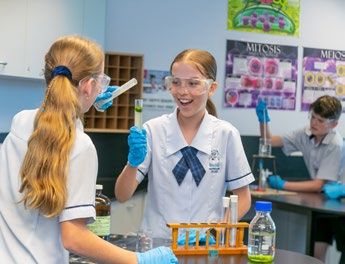
Girls’ Formal Uniform YEARS 7-9                    Boys’ Formal Uniform YEARS 7-9
            Years 7– 9 blue Marymount blouse
            with compulsory crossover tie                      Years 7 - 9 blue Marymount shirt
Blouse      Due to the light colouring of          Shirt       with embroidered pocket, worn
            the blouses, only white or flesh                   tucked in
            coloured bras/crops may be worn.
            Marymount tartan skirt                             Marymount charcoal dress shorts,
            Skirts come in two different                       worn with plain black leather belt
            lengths as to eliminate the need to                with silver buckle
Skirt                                              Shorts
            shorten.                                           Marymount charcoal trousers may
            Skirt cannot be higher than 10cm                   be worn in winter, with plain black
            from the middle of the knee.                       leather belt with silver buckle
                                                               Marymount long grey marle socks
            Socks short plain white with navy
                                                               worn up to the knee
            trim
Socks                                              Socks       Short grey or Marymount long
            Navy blue 70 denier opaque tights
                                                               grey marle socks may be worn
            may be worn in winter
                                                               with long trousers in winter
            Black, laced, traditional style with               Black, laced, traditional style with
Shoes                                              Shoes
            leather uppers and blocked heel                    leather uppers and blocked heel
Jumper      Marymount V-neck navy jumper           Jumper      Marymount V-neck navy jumper
            Marymount College navy backpack                    Marymount College navy backpack
Bag                                                Bag
            Marymount College laptop bag                       Marymount College laptop bag
            Marymount navy embroidered                         Marymount navy embroidered
            bucket hat with house colours on                   bucket hat with house colours on
Hat         reverse side                           Hat         reverse side
            Navy blue formal hat is optional                   Navy blue formal hat is optional

 Girls’ Sport Uniform                               Boys’ Sport Uniform
Shorts      Marymount navy blue shorts             Shorts      Marymount navy blue shorts
            Marymount light blue with navy                     Marymount light blue with navy
Polo                                               Polo
            trim                                               trim
            Socks short plain white with navy                  Socks short plain white with navy
Socks                                              Socks
            trim                                               trim
            Traditional joggers with a gripped                 Traditional joggers with a gripped
            sole, may be coloured                              sole, may be coloured
Shoes                                              Shoes
            Canvas, flat soled skate, ankle high               Canvas, flat soled skate, ankle high
            basketball shoes are not permitted                 basketball shoes are not permitted
            Sky blue swimming cap with                         Sky blue swimming cap with
Swimmers                                           Swimmers
            Marymount College print                            Marymount College print
            Custom navy embroidered zip-up                     Custom navy embroidered zip-up
            jacket with light blue trim (Not to                jacket with light blue trim (Not to
Tracksuit   be worn with formal uniform)           Tracksuit   be worn with formal uniform)
            Custom navy stadium pant                           Custom navy stadium pant
COLLEGE POLICIES

SUN SAFE POLICY
The purpose of the Sun Smart
policy is to ensure that all
students attending our College
are protected from the harmful
effects of the sun throughout
the year.

Students will:
•    be aware of the school’s
     Sun Smart Policy
•    take responsibility for their
     own health and safety by
     being Sun Smart
•    use shaded or covered
     areas, where possible, for
     outdoor activities
•    comply with Sun Smart
     rules and guidelines by
     wearing suitable hats,
     clothing, sunscreen
•    apply SPF 30 broad-
     spectrum, water-resistant
     sunscreen 20 minutes            ANTI-BULLYING
     before going outdoors
•    act as positive role models     Each member of the Marymount Community, be it staff, student, or
     for other students in all       parent has the right to feel safe and free from any form of intimidation
     aspects of Sun Smart            including physical, verbal, emotional or sexual. The school community
     behaviour.                      will provide a safe, secure and supportive learning and social
                                     environment for all students.
Excerpt from Marymount
College Sun Safe Policy. Full        As a school community we will not allow cases of bullying to go
policy availble on the College       unreported but will speak up, even at risk to ourselves.
website under Our College >
Policies                             Marymount College Anti-Bullying Policy is available on the College
  8                                  website under Our College > Policies
GETTING TO SCHOOL

                                                                           BUS
                                                                           College Bus Bays are
                                                                           supervised in the morning and
                                                                           afternoon until 3:30pm.
                                                                           •   There will be no eating,
                                                                               no littering and no
                                                                               throwing of rubbish from
                                                                               buses
                                                                           •   Students must follow the
                                                                               Department of Transport
TRANSPORT                                                                      guidelines for bus travel
•    No skateboards or scooters are allowed
                                                                           Routes and timetables, as well
•    Students are to cross roads at designated crossings or at traffic     as information on bus passes
     lights.                                                               and travel assistance can be
BIKE                                                                       accessed from these websites:

There are bike pathways leading into the school and students must          Surfside Buslines
lock their bikes up in a secure area during the day.                       5571 6555
                                                                           www.surfside.com.au
•    Students riding bikes will obey all traffic laws which include
     wearing a helmet                                                      •   Tweed Heads, Tugun and
•    Students should not ride their bikes in the school premises and           Palm Beach
     bikes to be locked in school bike racks upon arrival with chain       •   Bonogin & Reedy Creek
     and lock.                                                                 Link Way
                                                                           •   Westminster Bvd,
CAR                                                                            Elanora, Tallebudgera
Reedy Creek Rd Pick-up & Parking Facility                                      & West Burleigh
                                                                           •   Mudgeeraba, Worongary
Drivers using the ‘Kiss & Go’ have 30 seconds to pick-up or drop-off           & Tallai
their children. The child must be ready to exit the vehicle to the side    •   Broadbeach, Miami
walk immediately, with all they need to take with them. At pick-up, if         & Burleigh Waters
the child is not ready or present, drivers will be asked to move on and
                                                                           •   Robina, Varsity Lakes,
re-join the queue.
                                                                               Cottesloe Dr &
If parents need to exit the car for any reason, it is recommended that         Rio Vista Blvd
they park in the Reedy Creek Road public car park.                         •   Carrara & Robina
                                                                               (Ron Penhaligon Way)
Sunlight Drive Pick-up & Parking Facility
                                                                           Koala Koaches
A ‘Kiss & Go’ Drop off facility and an additional 114 carpark spaces are   5535 2711
available, at the top of Sunlight Drive.                                   www.koalakoaches.com.au

FINANCIAL ASSISTANCE                                                       •   Tallebudgera
                                                                               (Len Dickfos Rd)
You may be eligible for financial assistance for bus fares. Further        •   Tallebudgera
information on the College website www.marymount.qld.edu.au >                  (Goolabah Dr)         9
Parent/Guardian Information > Bus Service Information.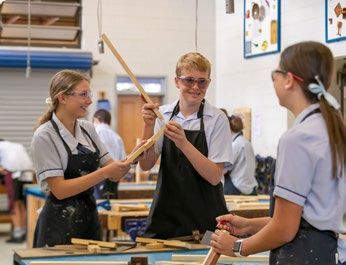
CODE OF EXPECTED BEHAVIOUR

BEHAVIOUR
MANAGEMENT
The basis of Marymount’s
Behaviour Management
Structure is the use of the
Responsible Thinking Process
which is based on the principle
that – “No one has the right to
violate the rights of others.”

The rules that apply in all
circumstances in our school
are:                              School-wide expectations encourage consistent communications and
                                  establish a common language of expectations for all staff and students
•        Bring the right thing    and across all settings. Agreed upon student expectations promote
•        Do the right thing       the school’s Catholic Identity and provide consistency across the staff
•        Say the right thing      and school community.
In this way, students learn to    Our expectations are:
show respect and use good
                                  •    Be Respectful
manners so that the rights of
others will not be violated.      •    Be Responsible
                                  •    Be Safe
In the classroom, this means      •    Be Prepared
the teacher’s right to teach      •    Be a Learner.
and a student’s right to learn
                                  Our school behaviour matrix is a visual tool that outlines the
cannot be disrupted by the
                                  expectations of behaviours we expect all students and staff to learn,
disruptive actions of others.
                                  practice and demonstrate. They allow us to teach proactively and
In the playground, this means     to provide students and parents with a positive message about
every student’s right to feel     behaviours for learning at school.
safe and free from harassment     Code of Expected Student Behaviour
cannot be threatened by
others. Each person is            As members of the Marymount College Community we commit to:
encouraged to use their gifts     •    show care and concern for ourselves and others through enjoying
and talents fully.                     relationships that are courteous, just and respectful
                                  •    moving, working, learning and playing safely
                                  •    actively learning and assisting others with their learning
                                  •    communicating justly
                                  •    respect our own and others’ property and the College
                                       environment.
                                  These expectations are contained in the College Record Book and all
                                  College publications that deal with this area.

    10                            Marymount College Student Behaviour Support Policy is available on
                                  the College website under BCE Policies > Student Protection
COMPLAINTS POLICY
Marymount College applies the following principles when managing
Request for review
complaints:
• Students, parents and guardians have a right to voice complaints. If dissatisfied with the school’s
• Complaints are resolved promptly and at the point of receipt, complaints processes, a
where possible. student, parent or guardian
• Complaints will be handled fairly, objectively, and confidentially. may submit a written request
for a review to the Principal.
• Students, parents and guardians will not be adversely affected by
making a complaint. Complaints about the Principal
• Complaints help us to improve our services. must be submitted in writing
Responsibilities to:
The Principal has delegated responsibility for the everyday operations Brisbane Catholic Education
of the school in accordance with Brisbane Catholic Education policies, School Operations
procedures and guidelines. GPO Box 1201
Brisbane QLD 4001.
Student, parent and guardian’s are required to:
• work with school employees to resolve the complaint The time required to resolve
• provide the school with a clear description of the complaint and a complaint depends on
desired outcome its complexity, nature and
• provide all relevant information and documentation to the school employee availability.
when the complaint is made Receipt of a complaint will
• understand that resolving complaints may take some time be acknowledged as soon as
• inform the school of changes affecting the complaint possible.
• cooperate in a respectful way with school employees and
understand that unreasonable conduct may lead to the Additional time may be
complaint not being processed. required if a complaint is
submitted toward the end of
How to make a complaint a school term or outside of
1. In the first instance, the student, parent or guardian talks with school terms.
a teacher or other school employee and they work together to
More information
resolve the complaint.
2. If the matter cannot be resolved, the student, parent or guardian Contact the school office and
talks with a senior school employee e.g. Deputy Principal, visit the BCE website.
Assistant Principal or other nominated school employee and they
work together to resolve the complaint.
3. If the matter cannot be resolved, the student, parent or guardian
talks with the Principal and they work together to resolve the
complaint.
11HOMEWORK POLICY–YEAR 7, 8 AND 9
Homework is any work or activity which students are asked to do
HOMEWORK CLUB outside lesson time.
This support is provided from
The Purpose of Homework is to:
3.10pm - 4.30pm on Thursdays.
Students are welcome to utilise • help students deepen their knowledge
as much of that time as is • help students to develop fluency
required. There is no need to • introduce content to students in preparation to learn new
make a booking, students come content
to the Library. • extend school learning through additional reading
• work on projects and assignments or prepare oral presentations
MATHS TUTORING • encourage students to become independent learners.
Maths Tutoring is available for
all students on Friday during Student’s Responsibility is to:
lunchtimes in Room A2. • take their record books to every class and record homework in it
Students can work on • accept that deadlines must be kept.
homework, or assignments and
receive help from Maths Parent’s/Carers Responsibility is to:
Teachers. Assistance with maths • support students with their homework but accept that their role
especially for students in Year 7 will become less and less important as students become more
and 8 is provided on Tuesday responsible and independent
lunch times. • make it clear to students that they value homework
• check the Record book at least once a week
LIBRARY & • encourage students to meet homework deadlines
RESOURCE CENTRE If parents/ Carers feel that insufficient or too much homework is being
The Library and Resource set, they should contact the class teacher who will respond to the
Centre provides easily situation. If necessary the Academic Coordinator will also investigate
accessible, relevant resources to the situation.
support student learning. Non Completion of Homework
The Teacher Librarian is • When homework has not been done, appropriate action will be
available to offer guidance to taken by the classroom teacher.
students in completing their • The teacher will ‘stamp’ the record book in order to alert the
research assignments and parents/carers that homework has not been completed for a
locating appropriate resources particular subject. If the student receives three stamps for a
both online and from the book subject, the Academic Coordinator will contact the Assistant
Principal who will alert the parents/carers that further action
collection. We encourage
may be necessary.
students to be cooperative,
critical thinkers and problem- Homework should not prevent students from participating in an
solvers who make informed activity after school such as sport, music, clubs of any kind or family
decisions. Our Makerspace commitments. Students should plan such activities to allow time to
allows dynamic learning of complete homework.
a self-driven kind, inspiring
students to succeed and
boosting their confidence in
hands-on learning.
12ASSESSMENT POLICY–YEAR 7, 8 AND 9
ASSESSMENT LATE
CALENDAR SUBMISSIONS
Students should become Failure to submit an
familiar with the Assessment assignment on the due date
Calendar that is available on will result in an email being
the Student and Parent Portal. issued to parents. A grade may
be awarded on the draft copy
It is the student’s responsibility
or on the evidence of work as
to retain the necessary task
seen by the teacher.
sheets handed out by their
teacher. • If a student is absent
on this date, they may
submit their assignment
Below is an excerpt of the Junior Assessment Policy. The full policy is electronically or arrange
available on the College website under Our College > Policies for it to be delivered to
SAO.
An Assessment may be in the form of: • An assignment or oral is
• An assignment completed during school time or at home. deemed to be late if the
• An exam which is a written piece of work or a practical (that may student fails to submit it
be performance based) that is supervised by a teacher and is on the due date, unless
completed in class time which is designed to evaluate knowledge the student has a parent
letter to confirm illness
and skills covering contents of a subject.
prior to and/or on the day
Illness or Absenteeism of submission or there are
• Parents are expected to contact the College immediately if a mitigating circumstances.
student is absent from school when an exam is scheduled. • Students must present
• Students who are absent from exams, must provide valid reasons their assignment to their
for their absence. teacher at the beginning
of the first day they return
• Catch up of missed exams/tests will be done during Thursday
to school, together with
afternoon sport or an alternate time negotiated with the
a note signed by a parent
Assistant Principal Junior Secondary. explaining the reason for
Assignment Principles their absence.
• Repeated absences on
• Students must keep a copy of all assignments submitted
due dates for students
electronically on OneDrive.
will be monitored by the
• Written scripts must be submitted for orals on the due date. The subject teacher.
order of presentation will be decided by the teacher.
• Students must be present on the set day and be prepared to
present.
• If a task sheet specifies a due date for submitting a draft,
students must submit two copies of the draft, one of which will
be returned with feedback. Teachers will keep the other copy.
• Students should always have some evidence of work in progress
to show to their teacher if necessary.
13ATTENDANCE PROCEDURES
EXTENDED
ABSENCE
Marymount College does
not support the practice of
scheduling holidays during term
time and does not consider the
taking of a holiday during term
time an authorised explanation
of absence from school.
Requests for leave of absence
for more than two days must be
made via the Extended Absence ABSENCE
icon in the parent portal.
Providing Absence Notifications
All requests for extended
student absence must be This is important for the safety and wellbeing of all students. When a
made by a parent, two weeks student cannot attend school for any reason, it is expected that the
in advance via the following legal guardian will notify Student Reception by 8:00am on the day of
method: absence.
1. Log into the Parent Portal It is College preference that ALL absence notifications are received by
2. Select the ‘Application for one of the four methods below:
Extended Leave’ icon
1. Parent Portal: Click on Report Student Absence
3. Complete the online form
2. BCE Connect App: Absences
4. You will receive an
3. Verbally or via a hand-written letter (in advance) by the parent or
automatic email
carer. This may take the form of a medical certificate if the child
confirming your request
has been absent for multiple days with illness.
has been received.
4. Telephone: 5586 1007 or 5586 1095 (not the preferred option)
While requests for leave of SMS Messages
absence are necessary from
time to time, students must A SMS will be sent by approximately 9:30am each day to the main
accept responsibility for the contact of any student who is absent unexplained in Pastoral Care.
impacts their absence may
have on their learning and
IF YOU ARE UNWELL DURING THE DAY
achievement. Students who become unwell during the school day should:
1. inform their Class Teacher who will send them to Sick Bay
The Head of Year 7 will
2. report to Sick Bay and show staff diary signed by teacher
endeavour to assist the student,
3. staff in Sick Bay will call a parent to collect the student if
provided they make a timely
necessary.
and reasonable request for
details of work and assessment Students should NOT call their parents to collect them. If this is
prior to their absence. Special necessary, a staff member will contact a parent/caregiver.
Consideration will be given
where necessary. Marymount College Attendance Policy is available on the College
website under Our College > Policies
14STUDENT
RESPONSIBILITIES
• To attend school for the
whole school day, every
day and be on time for all
timetabled classes
• To not leave school during
school hours without a
parent permission note
and approval from Head
of Year via their signature,
and without obtaining an
early departure slip from
Student Administration
Office (SAO).
• To always report to SAO
if arriving to school later
than 8:35am.
• To ensure work missed
during any periods or
days absent from school is
completed.
• To monitor own
attendance at the end of
each term.
• To ensure days absent are
explained by your Legal
Guardian.
• To discuss day(s) absent
with your class/Pastoral
Care teacher if either
attending regularly
SIGNING IN LATE OR OUT EARLY or getting your Legal
If your child is late for school (even if school has been notified) they Guardian’s notification for
must sign in at SAO. an absence is difficult.
If your child needs to depart school early, they must present a note
from a parent/guardian and have this signed by their Head of Year
before coming to SAO to sign out.
We do not allow students to meet parents in the Main Carpark, as this
is unsupervised during the school day. Please come to SAO to collect
your child. There is short term visitor parking in the driveway outside
the Main Office.
15SOCIAL MEDIA AND SMART DEVICES
STUDENT USE OF SMART DEVICES
SOCIAL MEDIA Our core business of teaching and learning needs to be conducted in
an environment free from unnecessary distractions or disruptions.
Students engaging in social
media will ensure that any This policy ensures that Smart device use during school hours is
activity complies with the managed in a consistent way and therefore ensures that students,
guidelines set out in the parents/carers and teachers all understand the rules of the College
Student Behaviour Support regarding the use of Smart devices during school hours, in particular,
Policy (Including Anti-Bullying learning time.
Provisions).
Smart Devices (mobile phones, Smart watches, and similar devices)
• You do not attempt to
connect, request ‘friends’ are not to be used during school days between 8:00am—3:00pm and
or follow any teachers or all school related activities.
employees of Marymount
The College accepts no responsibility for the security of Smart Devices.
College.
• You take reasonable steps • The Smart device must be turned off and secured in the student’s
to exclude the College, locker when the student arrives at school.
including uniforms and • Students are permitted to check messages briefly during breaks
logos from any personal at their lockers.
posts or uploads. • Teacher permission is granted for use in the relevant class only.
• No representations or • Safe keeping of Smart devices is the responsibility of the owner.
statements on behalf of
• The use of the Smart device, within the scope of this policy, is
Marymount College are
made unless authorised by during the normal hours of the school day —8:00am to 3:00pm.
the Principal. • Please note that this policy includes no Smart devices in the
• No statements or uploads Library from 8:00am to 3:30pm.
are made, that are • Misuse outside these hours, but while on school premises will fall
perceived to be disparaging, within the scope of the Student Behaviour Support Plan of the
abusive, harmful or College.
derogatory towards
In Class Use
Marymount College or any
students, staff or families. • School Rule: Smart devices, if brought to school are to be kept in
• You do not breach any the students’ locker during school hours.
confidentiality, trust or • The device must be turned off, unless permission is granted
privacy of any students, to use during class time. In such instances the class teacher
staff or families. will liaise with the Head of Department and will notify all staff
• You do not engage in any members of the use of Smart devices by students in that lesson.
on-line activity which could
bring Marymount College Marymount College Smart Device Policy is available on the College
or any students, staff or website under Our College > Policies
families reputation into
disrepute. Marymount College Student Behaviour Support Policy is available on
the College website under BCE Policies > Student Protection
• You do not create any page
or false identity which could
cause harm or damage to
Marymount College or any
16 students, staff or families.PARENT COMMUNICATION
Newsletter
The fortnightly newsletter contains all the information you need to
RECORD BOOK
know about what is happening at Marymount College. You will receive Parents are asked to sign
an email with a link every second Friday afternoon (Week B). Please their child’s record book
take the time to read this information. Previous issues are available on weekly. It is a very important
the College website. communication tool between
school and home. Stamps are
Email
received in the record book for
We will regularly send email with information about upcoming events. non-completion of homework
Permission for excursions is now sent electronically via EdSmart. and class work, and for not
Please ensure you have supplied a current email address. bringing the correct equipment
to class. (3 stamps = letter
SMS
home). Email notifications
The College will send SMS reminders to the Main Contact, for will be sent advising parents
important events, and also to advise if your child was absent from if student’s work habits in the
Pastoral Class. areas of homework, equipment
and classwork are of concern.
Parent Portal
Use the Parent Portal to notify an absence, view student information, A notification will also be
reports, assessment schedules, excursion letters and more. An email emailed if assignments are not
with information on how to access will be sent to you early in the submitted by the due date.
school year.
REPORTING
Website
Reports are completed three
There is a range of useful information for parents on our website times a year. You will be sent
www.marymount.qld.edu.au an email to let you know when
reports are available on the
BCE Connect App Parent Portal.
Download the College App from Apple Store or Google Play. Once you • Interim Report (End of
download BCE Connect, search for Marymount College and mark as a Term One)
favourite. The app is a useful way to access information on the go. We • Semester One Report
can also send you push notifications if there are announcements.
• Semester Two Report
Facebook Page
PARENT/TEACHER
www.facebook.com/marymountcollegeburleighwaters
The facebook page is updated regularly with news and photos of INTERVIEWS
student life and events happening at College. There are two opportunities to
meet with your child’s teachers
It is important that the College is kept up to date with any changes in
each year. Information
address, phone numbers, and email addresses, so that we are able
regarding online bookings will
to contact you quickly.
be sent home with reports.
• Term Two, Week Two
• Term Three, Week Two
17YEAR 7 CURRICULUM
CO-CURRICULAR
ACTIVITIES
Many opportunities are
available for extra curricular
involvement in College life,
including:
• Chess
• Code Club
• Choir
• Dance Extension
• Debating
• Environment Club
• Families Back on Track
• Insiders: reporting and
photographers
• Instrumental lessons YEAR 7 SUBJECTS
• Interact
Term 1 Term 2 Term 3 Term 4
• Makerspace
Religious Education
• Mooting
English
• Musical
• Opti-MINDS Mathematics
• Public Speaking Science
• Readers Cup Humanities
• Rosies - Friends on the Health & Physical Education
Street
Elective 1 Elective 3 Elective 5 Elective 7
• Rostrum Voice of Youth
Elective 2 Elective 4 Elective 6 Elective 8
• St Vincent de Paul
• Vinnies Youth Students continue studying the National Curriculum in Year 7 with
Students are encouraged access to core and elective subjects. All students study Religion and
to ‘have a go’ beyond the the National Curriculum demands a major focus on core subjects:
classroom and develop their English, Maths, Science, History, Geography and Health & Physical
personal confidence, social skills Education.
and capacity to contribute to
the community. Students also complete core elements from Civics & Citizenship and
Personal & Social Development Education, which are embedded
across the core subject areas.
Most significantly, students will be introduced to elective subject
areas completing two rotations each term.CORE SUBJECTS
LEARNING
RELIGIOUS EDUCATION MATHEMATICS SUPPORT
HEALTH & PHYSICAL Learning Support at
ENGLISH EDUCATION Marymount is based on an
inclusive model of education
HUMANITIES SCIENCE where most support is
delivered in the classroom.
Students in Year 7 will study the following elective subjects:
The Learning Support staff is
made up of three Support
ARTS LANGUAGES Teachers- Inclusive Education,
• Drama • French a School-based Speech
• Music • Japanese Pathologist and a team of
teacher aides who work with
• Visual Arts
class teachers to provide
support and adjustments for
TECHNOLOGIES those experiencing barriers to
• Design and Technologies their learning, whether short
• Digital Technologies term or long term.
• Food Technologies
A number of extra-curricular
activities to extend students
looking for a challenge, such
BELL TIMES as Chess and Opti-Minds are
MON TUES/WED/FRI THURS offered through the Centre.
Homework Club is another
Staff Briefing 8:20am opportunity available to
students who want to access
Warning Bell 8:30am 8:25am 8:25am
extra assistance from the
Pastoral Care 8:35am 8:30am 8:30am Support Teachers- Inclusive
Education.
Period 1 8:53am 8:48am 8:48am
Students and parents are
Period 2 9:44am 9:40am 9:31am encouraged to contact the
Learning Support Centre when
Recess 10:32am 10:29am 10:11am
they have concerns regarding
Period 3 10:55am 10:52am 10:34am issues that may affect
learning.
Period 4 11:46am 11:44am 11:17am
Lunch 1 12:34pm 12:33pm 11:57am
Lunch 2 12:54pm 12:53pm 12:20pm
SPORT
Period 5 1:18pm 1:16pm
Period 6 2:09pm 2:08pm 2:37pm 19CORE SUBJECT
RELIGIOUS EDUCATION
Topics Studied
• Where It All Began
• The Power of Words
• Doing Good
• Sacraments and
Sacramentality
Assessment
• Construction of a
Brochure as a Visual
Representation of
a Religious Order in
Australia
• Analysis of Sacred Text
and Journal Reflection
• Oral/Multimodal
Presentation
• Knowledge and At Marymount College a Catholic view about Learning and Teaching
Understanding Test is reflected in both dimensions of Religious Education, namely, the
classroom teaching and learning of religion and the Religious Life of
Pathways to Year 9 and 10
the School. We draw upon the Catholic Christian tradition in ways
Subjects
that are mindful of local contexts and the ecumenical and multi-faith
• Religious Education realities of contemporary culture. Students at Marymount College are
Pathways to Senior Subjects expected to participate fully in the Religious Education Program. This
includes the formal in-class work and the broader religious life of the
• Study of Religion College (Reflection Days off campus, Liturgies, Prayer Life, Feasts and
Celebrations, Outreach and Social Justice).
• Religion & Ethics
Religious Education is a compulsory subject and is studied for five
periods per fortnight. Students are expected to complete set tasks
encouraging them to be lifelong learners and to develop their religious
literacy. The Religious Education program at Marymount College
has been prepared in accordance with Archdiocesan guidelines and
approved by the Brisbane Archdiocesan Accreditation panel. It is not
static and continues to develop to meet the students’ needs.
Students are provided with opportunities to demonstrate overall
performance according to the year level achievement standard and
learning intentions. This is monitored and recorded in student folios.
The four strands studied are: Beliefs, Church, Christian Life and
Sacred Texts. Course content is integrated across the four strands and
designed appropriately for the Marymount College context.
20CORE SUBJECT
HUMANITIES
Topics Studied
History Topics
• Investigating the Ancient
Past and Ancient Rome
Geography Topics
• Water in the World, Place
& Livability
Civics and Citizenship Topics
• Government &
Democracy, National
Identity
Assessment
• Assignment
• Source and Knowledge
tests
The Year 7 Humanities course combines courses in History, Geography • Field Study
and Civics & Citizenship.
Pathways to Year 9 and 10
In History, students study units on archaeological evidence from Subjects
the Ancient World and Ancient Rome, including the discoveries (the • History
remains of the past and what we know) and the mysteries (what we • Geography
do not know) about this period.
• Civics
The Geography course covers two units. Water in the World examines Pathways to Senior Subjects
the many uses of water, its value as a resource, its scarcity, the
water cycle and specific water hazards. The Place and Liveability unit • Modern History
examines factors that influence liveability, including the services • Ancient History
and facilities needed to support and enhance our lives. It develops • Geography
students’ ability to evaluate the liveability of their own suburb and to • Legal Studies
investigate whether it can be improved through planning.
In the Civics and Citizenship component of Government & Democracy,
students will explore the key features of Australia’s system of
government, the Australian Constitution and how its features,
principles and values shape Australia’s democracy, the responsibilities
and freedoms of citizens and how Australians can actively participate
in their democracy. In the Citizenship, Diversity & Identity unit,
students will identify the influences that shape Australia’s national
identity.
21CORE SUBJECT
ENGLISH
Topics Studied
• Poetry to Prose:
Imaginative
• Take a Stand: Persuasive
• A Novel Idea: Analytical
• Beyond Words: Visual
Literacy
Assessment
• Written imaginative
(exam conditions)
• Spoken persuasive
• Written analytical (exam
conditions)
• Spoken multimodal
• Multiple choice
comprehension (exam
conditions) The Year 7 English program is developed in accordance with the
Australian National Curriculum and is built around the three
Extension Activities
interrelated strands of Language, Literature and Literacy. Each of the
• Readers Cup
program’s four units is designed to develop students’ knowledge,
• Debating understanding and skills in preparation for their senior years of
• Write a Book in a Day schooling.
• Marymount Insiders
• Spelling Bee Students examine a range of contemporary literature, including poetry
and novels, as well as media material that is directly relevant to their
Pathways to Junior Subjects present and future lives. An increased level of challenge is built into
• English tasks throughout each year as students move through their middle
years of schooling. These tasks are purposefully aligned with the text
Pathways to Senior Subjects structures and cognitive demands of the senior ATAR system.
• English
Technical control of language is emphasised through a strong focus on
• English Literature
grammar, vocabulary, spelling and expression. Students learn how to
• Essential English master writing for a particular purpose and audience. Comprehension
is also an integral part of the English program in the middle years,
with students developing their skills in literal, inferential and
evaluative understanding.
The English program is designed to assist students to become self-
directed learners. Feedback is purposefully shaped to help them
develop independence in editing and refining ideas.
22CORE SUBJECT
HEALTH & PHYSICAL EDUCATION
Topics Studied
• Swimming
• Introduction to Athletics
• Oztag
• Athletics
• Growing & Changing
• Bodyworks (Anatomy)
• Super Snacks
• The Wealth of Health
Assessment
• Practical Assessment of
Performances in Physical
Activities (50% of Course)
• Theory Assessment
is a combination of
content in workbooks,
Health and Physical Education is one of the five mandatory subjects
written tests, multi-
from the Australian Curriculum. In Health and Physical Education at
model presentations
Marymount College students develop the knowledge, understanding
and assignments (50% of
and skills to strengthen their sense of self and build and manage
Course)
satisfying relationships. The curriculum helps them to be resilient, and
to make decisions and take actions to promote their health, safety Pathways to Year 9 and 10
and physical activity participation. As students mature, they develop Subjects
and use critical inquiry skills to research and analyse the knowledge • Health & Physical
of the field and to understand the influences on their own and others’ Education
health, safety and wellbeing.
• Advanced Sports Program
Healthy, active living benefits individuals and society in many ways. Pathways to Senior Subjects
This includes promoting physical fitness, healthy body weight,
• Physical Education
psychological wellbeing, cognitive capabilities and learning. A healthy,
active population improves productivity and personal satisfaction, • SIS20115 Cert II in Sport
promotes pro-social behaviour and reduces the occurrence of chronic & Recreation/ SIS30315
disease. Health and Physical Education teaches students how to Cert III Fitness
enhance their health, safety and wellbeing and contribute to building • Health
healthy, safe and active communities.
Sport Uniform
Because of the importance of participation in appropriate physical
exercise, students who are not prepared for PE lessons and/or sport
i.e. not wearing correct uniform, shoes or hat will receive a RTC
referral after 3 breaches per term.
Students are not permitted to arrive at school or leave at the end of
the day while wearing their Sports Uniform. The only exception is on
Thursday or when special permission is given. 23LANGUAGES
FRENCH
Topics Studied
• Personal identity
• Family & Animals
• Numbers
• Pets
• Key Verbs
Assessment
• Speaking Exam
• Listening Exam
• Reading Exam
• Writing Exam
• Research projects
Pathways to Year 9 and 10
Subjects
• French
Learning French is both interesting and rewarding! When you learn
Pathways to Senior Subjects French at school you will have the opportunity to
• French • use French in everyday situations
• meet French-speaking people and learn about their way of life
• read and order from French menus, read French magazines
about sport, fashion, music and the cinema
• view French films and sing French songs
• write to a French pen friend
Learning French is an investment in your future. Look at these facts!
French is the living and working language of over 300 million of the
world’s people.
French is the official language of the United Nations, WHO, UNESCO,
OECD, EU, NATO, Red Cross and International Olympic Committee and
is widely used in international law, business and diplomacy.
French is a language of business, trade, journalism and science.
24LANGUAGES
JAPANESE
Topics Studied
• Greeting
• Q&A – personal details
• Numbers
• Japanese culture
• Japanese writing script -
Hiragana
Assessment
• Speaking Exam
• Listening Exam
• Hiragana Test
Extension Activities
• Japanese Visitors
• Biennial trip to Japan
(Years 10-12)
Studying a foreign language enhances meta cognitive ability (thinking
about thinking) and complex reasoning processes. Not only do Pathways to Year 9 and 10
foreign language learners communicate in different modes, but study Subjects
how to appropriate language forms to different social contexts. An
• Japanese
awareness of the functions of one’s first language is derived from
studying Japanese, as well as recognising how culture is embedded Pathways to Senior Subjects
within language. As a result, one grows educationally, intellectually, • Japanese
personally, socially and culturally from study in this area. This in turn
benefits study in other curriculum areas.
In particular, Japanese language is relevant to students of Marymount
College because of the school’s position on the Gold Coast. The
thriving tourism industry in the area provides many real life
contexts in which students can use their second language. This is
complementary to the fact that Australia as a nation prides itself on
having positive relations between our Asia Pacific neighbours. Such
relations provide endless opportunities for students to use Japanese
language in the workforce internally and internationally.
25CORE SUBJECT
MATHEMATICS
Topics Studied
• Number and Algebra
• Measurement and
Geometry
• Statistics and Probability
Proficiency Strands
• Understanding
• Fluency
• Problem Solving
• Reasoning
Assessment
• Term and Semester Exams
• Problem-solving and
modelling tasks
Extension Activities
Mathematics is organised around the interaction of three content
• Lunchtime Maths strands and four proficiency strands, following the Australian
Tutoring Curriculum. The proficiency strands are Understanding, Fluency,
• Canterbury College Maths Problem Solving and Reasoning. These strands describe how
Comp content is explored or developed, that is, the thinking and doing of
• Maths Trust Challenge mathematics.
• Mangahigh Competitions
The Mathematics curriculum provides the opportunity to apply
Pathways to Year 9 and 10 mathematical understanding and skills in context, both in other
Subjects learning areas and in real world contexts.
• Mathematics Students develop the capacity to recognise and understand the
• Mathematics Extension
role of mathematics in the world around them and the confidence,
Pathways to Senior Subjects
willingness and ability to apply mathematics to their lives. All students
• General Mathematics will be exposed to content and experiences in all strands which will
• Mathematical Methods develop understanding and higher order thinking processes necessary
• Specialist Mathematics for the more difficult mathematics subjects in senior school.
• Essential Mathematics
Year 7 students take learning into their own hands with the support
of several online resources. The additional support to classroom
activities allows students to develop their autonomy, problem-
solving and ability to work independently. Online platforms, such as
Mangahigh and HOTmaths are relevant to 21st century learners with
attention grabbing activities and stimulating challenges.
26CORE SUBJECT
SCIENCE
Topics Studied
Investigating Science – An
introduction to Science
• Chemistry – Going
separate ways
• Physics – Let’s get Moving
• Space Science – To Infinity
and Beyond
• Biology – Classification
Where do I fit in?
Assessment
• Topic exams
• Scientific prac reports
• In class tasks
• Marble run
In Year 7, students explore the diversity of life on Earth and continue • Making a Telescope
to develop their understanding of the role of classification in ordering • Skills tests
and organising information. They use and develop models such as
food chains, food webs and the water cycle to represent and analyse Pathways to Year 9 and 10
the flow of energy and matter through ecosystems and explore the Subjects
impact of changing components within these systems. They consider • Science
the interaction between multiple forces when explaining changes in
an object’s motion. They explore the notion of renewable and non- Pathways to Senior Subjects
renewable resources and consider how this classification depends • Agricultural Science
on the timescale considered. They investigate relationships in the • Biology
Earth-sun-moon system and use models to predict and explain events. • Chemistry
Students make accurate measurements and control variables to • Marine Science
analyse relationships between system components. They explore and • Physics
explain these relationships through appropriate representations and • Psychology
consider the role of science in decision making processes. • Aquatic Practices
By the end of Year 7, students describe techniques to separate pure
substances from mixtures. They represent and predict the effects
of unbalanced forces, including Earth’s gravity, on motion. They
explain how the relative positions of Earth, the sun and moon affect
phenomena on Earth. They analyse how the sustainable use of
resources depends on the way they are formed and cycle through
Earth systems. They predict the effect of human and environmental
changes on interactions between organisms and classify and organise
diverse organisms based on observable differences.
27TECHNOLOGIES
DIGITAL TECHNOLOGY
Topics Studied
• Algorithms
• Software programming
• Iteration
• Loops
• Design-Develop-Evaluate
cycle
Assessment
• Folio of work
Extension Activities
• Code Club
• ICT Explorers
• Drone Academy
• Girls’ STEM Day
• Maker Space
Digital Technologies in Year 7 is a core subject for two terms. Students
Pathways to Year 9 and 10 will extend their understanding and skills in computational thinking
Subjects such as decomposing problems and prototyping.
• Digital Technologies Students will be introduced to computational problem solving, using
• STEM algorithms and text-based coding.
Pathways to Senior Subjects
Students will also engage with cyber-security, interacting with a
• Digital Solutions simulated social media accounts to determine data leaks. They will
• Information & reflect on the information shared publicly through social media and
Communication the problems this may cause.
Technology
• ICT30118 Certificate III
in Information, Digital
Media and Technology
28TECHNOLOGIES
DESIGN & TECHNOLOGY (FOOD)
Topics Studied
• Bring It On
Assessment
• Design Task
Extension Activities
• Junior Culinary
Competition
Pathways to Year 9 and 10
Subjects
• Food Technology
• Textile & Design
Pathways to Year 9 and 10
Subjects
• Design & Technologies
In Year 7, students study Food Technology for one term. The course (Food)
offers students the opportunity to explore food in an exciting and
practical way. Students study food as an essential need for the Pathways to Senior Subjects
function of the human body and its relationship with good health. • Food & Nutrition
• Fashion
They also learn about the importance of safety and hygiene in the
kitchen environment and preparing food. Students learn through • SIT30616 Certificate III in
developing their practical skills and being exposed to a range of food Hospitality
items.
In practical classes, students prepare a variety of recipes using a
number of different cooking methods, including baking, grilling and
frying and begin to develop skills in the kitchen which will become an
invaluable tool for the rest of their life.
29TECHNOLOGIES
DESIGN AND TECHNOLOGIES
Topics Studied
• Engineering Principles
and Systems
• Materials and
Technologies
Specialisations
Assessment
• Design Folios
• Practical Design
Responses
Pathways to Year 9 and 10
Subjects
• Design & Technologies
(Graphics)
• Design & Technologies
(Engineering Principles
Design Technology is an exciting subject that enables students
and Systems)
to become creative and responsive designers. They will consider
• Design & Technologies ethical, legal, aesthetic and functional factors and the economic,
(Materials and environmental and social impacts of technological change and how
Technologies) the choice and use of technologies contributes to a sustainable future.
Pathways to Senior Subjects The students will develop the knowledge, understanding and skills
required to become discerning decision-makers.
• CPC10111 Certificate I in
Construction Studying Design Technology will motivate students and engage them
• UEE22011 Certificate II in in a range of learning experiences that are transferable to family and
Electrotechnology home, constructive leisure activities, community contribution and the
• MEM20413 Certificate II world of work.
in Engineering
Students will use emerging technologies, such as Laser Cutter and 3D
Printers to produce effective and meaningful solutions to identified
problems or opportunities in personal, family, community and global
context.
30You can also read


