Years 11 & 12 Curriculum - Pathways 2020 - Concordia College
←
→
Page content transcription
If your browser does not render page correctly, please read the page content below
Years 11 & 12 Curriculum
Pathways 2020
Senior School Pathways 2020

                              Contents
                              A Message from the Principal                 3
                              SACE 2020                                    5
                              The SACE at Concordia                        7
                              Research Project                             8
                              Vocational Education and Training            9
                              Making the Grade – Assessment in the SACE   10
                              Tertiary Entrance using the SACE            11
                              IB Diploma Programme 2020                   13
                              Core Programme                              15
                              SACE & IB Diploma Comparison                19
                              SACE Subjects in 2020                       24
                              IB Diploma Programme Subjects               26
                              Making the Decision!                        27
                              Other Key Information                       28
                              Where to Go for Advice                      30
                              Useful Websites                             31

2 | Concordia College
Senior School Pathways 2020

A Message from
the Principal
Dear Year 10 Students and Parents/Caregivers,
I hope that this booklet will give you a useful
introduction to Year 11 and Year 12 curriculum
pathways for 2020. The booklet contains information
about the diverse pathways on offer at Concordia.
You will also find information to help your family
navigate the options available, understand the
requirements of each pathway, and consider how your
decisions will affect future tertiary education and
career choices.
We trust that the information contained in this
booklet will be useful for students and parents
alike, and will assist parents in guiding their children
through the pathway and subject selection process.
We have a Course Counselling Team that can assist
with both career pathway and subject selection if
you have any queries throughout this process. The
Team includes the Assistant Head of Senior School,
the Head of Senior School, the Director of Student
Learning, the SACE Coordinator, the IB Diploma
Coordinator and the VET Coordinator.
We look forward to assisting your child to attain their
goals next year.
Paul Weinert
Principal – Concordia Campus

                                                                        Concordia College | 3
Senior School Pathways 2020

Diverse Pathways
At Concordia College we deeply understand and recognise that every student is unique, each with
diverse strengths, passions, interests and future aspirations. From a Year 11 and 12 perspective, our
goal is to support and enable all students to undertake a learning pathway which assists them to
achieve their goals and successfully transition into their chosen future pathway.
To achieve this, the College offers a broad range of high-quality curriculum and subject pathways
for our students, all centred around enabling students to choose a personalised pathway best
suited to their aspirational goals.

The Options
In Years 11 and 12, students have a choice of the following pathways:
   ++ The International Baccalaureate Diploma Programme (IBDP)
   ++ The South Australian Certificate of Education (SACE)
   ++ Vocational Education and Training (VET) in the SACE

The IB Diploma Programme (IBDP)
The IB Diploma is a balanced framework designed to thoroughly prepare students for university
education and beyond. The IB Diploma Programme is a two-year pre-university education
pathway that focuses on diverse academic studies, developing ethical understanding and
promoting international-mindedness. Students are encouraged to ask challenging questions,
learn how to learn, develop a strong sense of their own identity and culture, and develop the
ability to communicate with people from diverse backgrounds. This is a programme which
contains depth and breadth across multiple curriculum areas.

The South Australian Certificate of Education (SACE)
The South Australian Certificate of Education (SACE) is a qualification awarded to students who
successfully complete the necessary Year 11 and 12 requirements that include a range of skills
and subjects studied at school or acquired through other education, training or experience. The
SACE is highly flexible and is designed to allow students to choose highly personalised pathways
that match their goals and future aspirations. In particular, the SACE is designed to help students
develop the skills and knowledge needed to succeed in a range of pathways, including further
education and training, university, TAFE, or workplace apprenticeships or traineeships.

Vocational Education and Training in the SACE (VET)
Vocational Education and Training (VET) enables students to acquire skills and knowledge for
work through a nationally recognised industry-developed training package or accredited course.
VET is delivered, assessed and certified by Registered Training Organisations (RTOs). Students
can count their VET studies towards their SACE completion, thereby creating highly flexible
pathways that suit their individual strengths and interests.

4 | Concordia College

Senior School Pathways 2020

SACE 2020
South Australian Certificate of Education

                                       Concordia College | 5
Senior School Pathways 2020

SACE 2020
South Australian Certificate of Education

The SACE – How do I get it?
There are two stages of the SACE – Stage 1 and Stage 2
Most students start Stage 1 in Year 10 and finish it in Year 11. Stage 2 is usually studied in Year 12.

Your SACE journey
To complete the qualification, you will need to attain 200 credits from a selection of Stage 1 and
Stage 2 subjects. A 10-credit subject is usually one semester of study, and a 20-credit subject is
usually over two semesters. Here’s how it works.

COMPULSORY SUBJECTS                STUDENT SELECTED SUBJECTS
50 credits                         90 credits                                60 credits
The Personal Learning              Choose and successfully                   Choose and successfully
Plan (PLP) (10 credits)            complete a selection of Stage 1           complete a selection of
Literacy requirement (20           and Stage 2 subjects, recognised          Stage 2 or VET subjects
credits) demonstrated              VET courses, or community                 worth at least 60
                                   learning.                                 credits in total.
from a range of English
subjects at Stage 1 or
                               +                                        +
                                                                             Stage 2 subjects are
Stage 2                                                                      externally assessed
Numeracy requirement                                                         by the SACE Board of
(10 credits) demonstrated                                                    South Australia.
from a range of
Mathematics subjects at
Stage 1 or Stage 2
The Research Project (10
credits)

For a brief overview of the SACE from the SACE Board of South Australia,
visit www.sace.sa.edu.au/documents/652891/070100de-122c-48b5-a032-17b584e14c8a

6 | Concordia College
Senior School Pathways 2020

The SACE at Concordia
Year 10                           In Year 11, Concordia students    at Concordia and checked
                                  complete the compulsory           by moderators outside the
All students start their SACE
                                  Stage 1 literacy and numeracy     school.
in Year 10 with the Personal
                                  requirements by studying both
Learning Plan (PLP). At                                             The remaining 30 percent
                                  English and Mathematics for
Concordia, students undertake                                       will be assessed outside of
                                  the full year. You will need to
the PLP through the Pastoral                                        the school. This assessment
                                  achieve a C grade or better in
Care program.                                                       type could take the form of an
                                  both. Students then select a
                                                                    examination, a performance or
The PLP is a 10-credit Stage 1    range of other subjects (10 or
                                                                    an investigation.
subject. All students need to     20 credits) to make up a total
achieve a C grade or better in    of 120 Stage 1 credits.           See page 24 for a list of the
this subject.                                                       SACE subjects offered at
                                  Year 11 students at Concordia
                                                                    Concordia College.
Studying the PLP at the start     also complete the compulsory
of the SACE provides an           Stage 2 Research Project. It
excellent foundation for your     is a one-semester (10-credit)
Year 11 and Year 12 studies       subject that gives you the
                                                                    Additional
by supporting you to explore      chance to research in depth a
                                                                    Flexibilities and
your interests, strengths,        topic of interest to you.
                                                                    Considerations
subject choices, and style of                                       One IB Diploma subject can
learning. It is an invaluable                                       be counted towards both the
opportunity to reflect on your    Year 12                           completion of Stage 2 SACE
future pathways and how the                                         and the ATAR for university
                                  Like Year 11, you choose
SACE can help you achieve                                           entrance.
                                  your subjects and courses
your preferred outcomes.
                                  from the Stage 2 subjects         The College can also offer
                                  offered at Concordia. At          modified subjects at both
                                  Year 12, all students are         Stage 1 and 2 for eligible
Year 11                           expected to select and study      students with identified
Most students begin a full        five 20-credit subjects. Any      significant disabilities.
year of SACE study in Year        students wishing to study
11. You can choose from a         only four 20-credit subjects
range of Stage 1 subjects         must have this approved by
offered at Concordia, as well     the Head of Senior School. All
as Vocational Education and       students study Faith Issues for
Training (VET) courses and        Semester 1.
other options. In Year 11, all
                                  At Stage 2, 70 percent of your
students study Stage 1 Religion
                                  assessment tasks (reports,
Studies (10 credits).
                                  tests, presentations, etc.)
                                  will be marked by teachers

                                                                               Concordia College | 7
Senior School Pathways 2020

Research Project
The Research Project subject gives you the chance to direct your own learning
while expanding on your planning, research, analysis and communication
skills. These are tools you can use throughout your life, both in your career and
in further education.
The Research Project is a one-semester, 10-credit Stage 2 subject, and you will
need to get a C- grade or higher to gain your SACE.

Assessment                      Choice and                       The capabilities that have

The Research Project is split
                                Capabilities                     been identified are:
                                                                     ++ literacy
into three sections, each       Take time to consider what it
                                                                     ++ numeracy
worth a different portion of    is you may want to research –
                                                                     ++ information and
your final grade:               something you are interested
                                                                        communication
++ School Assessment (70%)      in or passionate about. Your
                                                                        technology capability
   Assessment Type 1:           idea should be challenging but
                                                                     ++ critical and creative
   Folio (30%)                  achievable.
                                                                        thinking
   Assessment Type 2:
                                In the Research Project you          ++ personal and social
   Research Outcome (40%)
                                can choose which capability             capability
++ External Assessment (30%)    or capabilities to develop and       ++ ethical understanding
   Assessment Type 3:           reflect on.                          ++ intercultural
   Evaluation (30%)                                                     understanding.
                                The purpose of the
                                                                 The capabilities enable
More information about          capabilities is to develop in
                                                                 students to make connections
each section of the Research    students the knowledge, skills
                                                                 in their learning within and
Project can be found in         and understanding to be
                                                                 across subjects in a wide
the Learning section of the     successful learners, confident
                                                                 range of contexts.
SACE Board website, under       and creative individuals, and
Research Project.               active and informed citizens.

8 | Concordia College
Senior School Pathways 2020
Vocational Education and Training
Why study VET? How do I get SACE Want more
VET is an excellent choice
credits for my VET? information?
of study for many students. Each qualification is different Students who are interested in
It always includes practical, and has compulsory and exploring VET options should
hands-on learning, and elective options, so the SACE visit the SACE website and
it can benefit students’ credits you end up gaining make an appointment to see
exploration of a variety of may vary depending on the the VET & Careers Counsellor,
career pathways. It is not just VET qualification you are Mr Robert Gogel.
reserved for a pathway within working towards.
the trades (e.g. plumbing,
You can earn up to 150 out
automotive, and construction).
of 200 SACE credits using Vetamorphus
Students can complete VET
VET, as long as you meet the Vetamorphus is a VET course
qualifications in a diverse
literacy, numeracy, Personal delivered on-site at Concordia
range of industries, including
Learning Plan, and Research College. If you would like to
business administration,
Project requirements. explore this option, please
veterinary nursing, aged care,
visit the Vetamorphus website
or sport and recreation.
www.vetamorphus.com or
Studying VET as part of the What is the VET speak to Mr Jason Kupke,
SACE gives students a head Recognition Student Welfare Worker.
start on a qualification, which Register?
is a great way to fast-track
The VET Recognition Register
progress towards a rewarding
is a useful tool that lists
career, while also developing
more than 300 of the most
independence and time-
common VET qualifications
management skills.
undertaken by SACE students,
and indicates how each
qualification can contribute
towards the SACE. The
register can tell you the SACE
level (Stage 1 or Stage 2), and
the maximum and minimum
SACE credits you could earn.
You can find the VET
Recognition Register on
the SACE website under
Vocational Education and
Training.
Concordia College | 9Senior School Pathways 2020
Making the Grade –
Assessment in the SACE
Your work is assessed against part of each subject you of all subjects. This assessment
the performance standards are studying. Teachers can take the form of oral
outlined for each subject. undertake training to assess and/or written examinations,
students’ work in line with the investigations or performances.
Teachers and assessors
performance standards.
use these standards to
determine how well you have Examinations
demonstrated your learning, Validating school
Some Stage 2 subjects have
and apply a grade: assessment
written exams, which are
From A to E for Stage 1 (C or A sample of student work produced and assessed by the
higher to pass) from the school, representing SACE Board. The majority of
From A+ to E- for Stage 2 (C- or a range of grades across every these examinations take place
higher to pass) Stage 2 subject, will be sent to in Term 4, during October and
the SACE Board. Assessment November.
To ensure your work is marked
experts will check to confirm
fairly, thousands of samples The exam timetable is made
that the grades that have been
of student work are reviewed available on the SACE Board
given are accurate, fair and
to ensure that assessment website during the first
comparable with other students
decisions are consistent with semester of each year.
across the state.
the performance standards for
the subject across the state.
Confirming or adjusting Investigations
These processes are called
marking and moderation.
grades Many Stage 2 subjects
Teachers across the state have externally assessed
mark with reference to the investigations. These are first
assessed by your teacher, then
Stage 2 Assessment performance standards in the
subject outlines. There is a sent to the SACE Board for
At Stage 2, you will be awarded external assessment.
state-wide process at the end
grades for your assessments
of each year to ensure that
from A+ to E-, and for your
grades given at one school Performances
final grade. Your teachers
are comparable with grades in
will internally assess 70% of A range of Stage 2 subjects
another school. The process of
your work, while 30% will be (Drama, Dance and some
confirming and adjusting school
assessed externally by the Music subjects) have externally
assessment grades is referred to
SACE Board. assessed performances. They
as ‘moderation’.
are marked independently by
subject teachers and SACE
School Assessment: 70% External Assessment: 30% Board assessors at the time of
These are the tasks set and The SACE Board marks the each performance.
assessed by the school, as external assessment component
10 | Concordia CollegeSenior School Pathways 2020
Tertiary Entrance using the SACE
For the most up-to-date information about entry to university and to TAFE, please refer to the
SATAC website: www.satac.edu.au
The new edition each year is accessible to all Senior School students.
The information below outlines the calculation of the ATAR (the Australian Tertiary Admission
Rank) for university entrance.
The ATAR, a percentile from 0 – 99.95, is calculated from the university aggregate.
A student’s university aggregate is the best possible score, out of 90 credits, calculated from
the options below, subject to counting restrictions and precluded combinations. The counting
restrictions and precluded combinations are explained on the SATAC website.
How the university aggregate is calculated: 60 credits + 30 credits
Best scaled score (60-credit score)
Scaled score from the three best 20-credit Tertiary Admissions Subjects (TAS).
Normally, 10-credit subjects do not count towards this requirement. However, some 10-credit
subjects in the same subject area, when studied in pairs, can substitute for a 20-credit subject.
These are called Valid Pairs. Such subjects are identified by SATAC.
Flexible Option (30-credit score)
Score from the next best 30 credits of scaled scores or equivalents from:
++ the scaled score of a 20-credit TAS;
++ half of the scaled score of one or more 20-credit TAS;
++ the scaled score of one or more 10-credit TAS;
++ scaled score equivalents for Recognised Studies up to a maximum of 20 credits.
Concordia College | 11Senior School Pathways 2020 12 | Concordia College
Senior School Pathways 2020

IBDP 2020
International Baccalaureate Diploma Programme

                                     Concordia College | 13
Senior School Pathways 2020
IB Diploma Programme 2020
International Baccalaureate
IB Diploma Programme at Concordia
Concordia College offers its students the opportunity to earn the International Baccalaureate
(IB) Diploma. The IB Diploma Programme is a two-year senior secondary education pathway. It
encourages students to balance their studies with outside interests and service.
The non-profit IB Organization, founded in the 1960s, grew out of international school efforts to
establish a common curriculum and university entrance credentials for geographically mobile
students. Beyond these practical considerations, IB programmes promote the education of
the whole person, emphasising intellectual, personal, emotional, and social growth through all
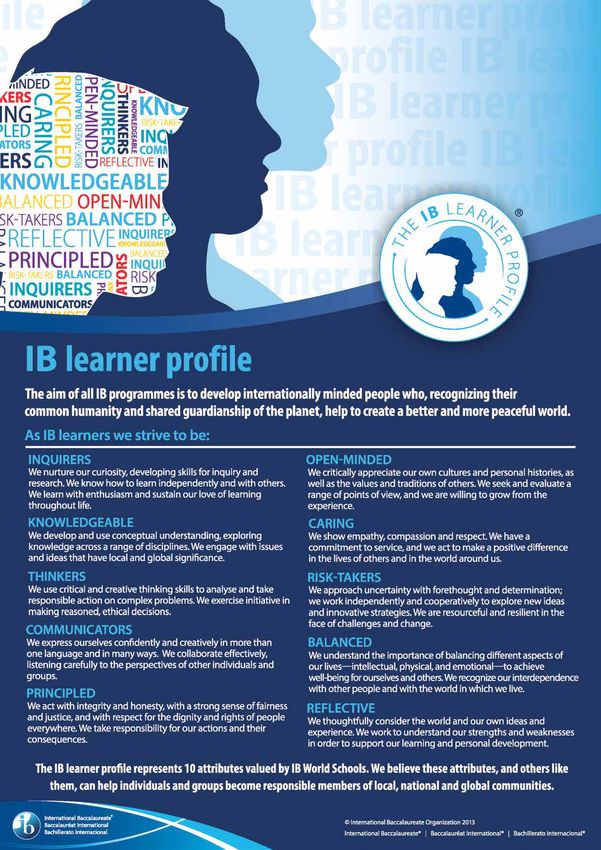
domains of knowledge. The attributes of the IB Learner Profile express the values inherent to
the IB continuum of international education. IB learners strive to be: inquirers, knowledgeable,
thinkers, communicators, principled, open-minded, caring, risk-takers, balanced, and reflective;
together these are called the IB Learner Profile.
How is the Diploma Compulsory depending on student course
structured? participation in the selections. Some courses are
‘core’ of the programme: taught in combined HL and SL
classes.
Study six subjects: ++ Theory of Knowledge
course (TOK)
++ Students study six Subject Groups
++ Creativity, Activity and
subjects, one from each
Service programme Group 1 : Language A – studies
of the six groups, or they
(CAS) in language and literature
may opt to study an
++ Extended Essay (EE) ++ A : Literature
additional Experimental
Science, Language, or Students are advised to Group 2 : Language
Individuals and Societies discuss the subject options Acquisition
course instead of a carefully with their teachers. ++ B : Several years of study
course in the Arts. The IB Diploma Coordinator, ++ ab initio : new learner
++ Three subjects are Mr Brendan Toohey Group 3 : Individuals and
studied at higher level (btoohey@concordia.sa.edu. Societies
(HL – 240 hours, or two au), is also available for further
advice. Group 4 : Sciences
full years) and three at
standard level (SL – 150 There is also the possibility of Group 5 : Mathematics
hours, or equivalent to studying other subjects online Group 6 : The Arts
about five terms). or language courses off-site.
See page 26 for a list of the IB
Each course will run at the Diploma subjects offered at
discretion of the Principal, Concordia College.
14 | Concordia CollegeSenior School Pathways 2020
Core Programme
What is Theory of Students also consider their What is CAS
Knowledge? own learning in the Areas (Creativity, Activity,
Theory of Knowledge (TOK)
of Knowledge: Arts, Maths, Service)?
Natural Sciences and Human
is part of the IB Core, and a CAS encourages students to
Sciences, History and Ethics,
‘keystone’ which fits into the strive for balance in their lives;
and ask:
middle of students’ courses, along with rigorous academic
ideally relating to each subject ++ What are the central work, they undertake creative
area and providing a forum questions that each pursuits, physical activities,
where links and connections discipline addresses? and service projects. A good
across the subject areas ++ What are the methods CAS experience should
can be explored. This offers that have developed in be both challenging and
opportunities for students each area to produce enjoyable, a journey of self-
to reflect on the process of certainty and progress discovery which, at times,
learning as a whole. in the pursuit of takes students out of their
knowledge? comfort zones. The spirit
In TOK, students learn
++ What are the links of CAS is important. It can
concepts which help them
between areas and be challenging to maintain
to examine ‘How we know
how is technology now focus on the ideals of CAS
what we claim to know’, and
impacting the creation amidst the daily realities of
which are central to critical
of knowledge for all? course requirements and
thinking. We explore the ways
TOK teaches us all to ask busy schedules. Sometimes
in which we all, as knowers,
good questions, to test the the challenge is time
acquire knowledge: through
knowledge we acquire and management, sometimes
our senses, via reasoning,
to consider not only the lack of confidence in a
through language, through
perspectives of others but particular type of activity,
emotion and through intuition.
also our own particular lenses. sometimes reluctance to value
We consider how these work
In a world served by Google experiences that do not earn
and weigh up their strengths
– where we are immersed in Diploma points. Eventually,
and limits. How far can we
information from authorities, though, many students
trust our senses? Is seeing
experts and others – these recognise the merits of
believing? How far do reason
skills are all the more vital, and accepting personal challenge,
and logic help us to work out
reach naturally beyond the of working collaboratively as
what is true? We cannot know
classroom to help us navigate well as individually for the
everything by experiencing it
through our everyday world. benefit of someone else, and
first-hand and need others to
of learning about the world in
give us information, but how
a very ‘local’ way.
does the language used select
and structure this information? Students can gain profound
and diverse experiences in
their CAS programme, which
Concordia College | 15Senior School Pathways 2020
can include such things What is the Extended of the biggest challenges is
as developing a sense of Essay? the sustained effort required
commitment to the homeless, by the students over a period
The extended essay is the
involvement in Concordia’s of approximately a year. The
requirement that most fully
international service projects, essay requires motivation
acquaints students with the
performing for the elderly in and organisation from the
type of independent research
retirement homes, undertaking student. Many students are
and writing skills expected
a personal fitness challenge very proud of their essay
at university. The student
or learning to make a mosaic. upon completion, and some
chooses a topic of interest,
Students are free to create will even take it to university
often in one of the student’s
their own list of challenges. admission interviews as
HL subjects, and produces
Students complete the CAS a discussion piece. It is
the essay with guidance
requirement through evidence recommended that the essay
from a faculty supervisor.
of learning outcomes achieved take a total of 40 hours of
Students are introduced to
across approximately 150 private study and writing. The
the essay in Semester 2 of
hours of activities balanced maximum word limit is 4,000.
Year 11 during IB Core class.
among creativity, activity, and The final draft is due in the
Beyond these times students
service. The most ‘successful’ candidate’s second year.
are independently responsible
CAS students, however,
for progress on their essay,
concentrate less on numbers
and for initiating contact
of hours and more on quality
and discussion with their
of experience.
supervisor throughout the
essay-writing process. One
16 | Concordia CollegeSenior School Pathways 2020
IBDP FAQs the Diploma Programme However, should other
receive training in skills priorities be such that an
++ What is different about IB
that are important for alternative course of study
courses?
university success, such is believed to be the better
IB courses are studied over
as writing the extended fit for the student, there
two years, thus allowing
essay, and the approach is scope for change to the
for a broader study of
to knowledge provided by SACE program in Year 11.
a discipline linking a
TOK. IB Diploma students This can possibly take place
greater number of topics.
should feel confident that at the end of Semester 1,
In addition, threaded
they have been given but preferably at the end of
throughout each subject
the preparation needed the year.
are the questions that
for success at even the
students consider in their ++ How can I best prepare for
most highly competitive
Theory of Knowledge IB classes as a student in
universities.
course. Years 9 and 10?
++ What is IB Core class? Work for excellence in the
++ Is the IB Diploma only for
During Semester 2 of Year courses you are already
‘top’ students?
11, each Diploma student is in. The courses you take
The answer is a definite
scheduled into a semester and the level you achieve
no. The rigours of the
long IB Core class. During already help to inform
IB Diploma should not
these classes, students are where your passions and
be construed to mean
introduced to the academic abilities lie. Above all,
that only the very best
writing processes leading whatever you choose to
students can benefit
to the beginnings of their study in Years 9 and 10,
from the programme.
extended essay. IB Core enjoy it, work well and keep
An average student with
class is compulsory for all it in perspective. The best
good motivation and
Diploma students. advice is to excel at and
time-management skills
enjoy what you choose!
is an appropriate Diploma ++ Do all students who start
candidate. the IB Diploma complete ++ How much does it cost?
it? To accommodate the
++ What benefits are there in
Students are thoroughly assessment fees and
doing the diploma?
counselled in regard to implementation of the
Being part of the Diploma
the overall expectation Programme, an additional
Programme is one very
involved in the IB Diploma. per annum cost is charged.
tangible way of showing
Therefore, there is an Fees can be found on the
yourself to be a highly
expectation that they school website. In 2019 the
motivated and inquisitive
should be able to cope cost is $1420.
student with a willingness
with, and complete, the
to embrace challenges.
IB Diploma successfully.
Furthermore, students in
Concordia College | 17Senior School Pathways 2020
Tertiary entrance To be eligible for selection into Some universities provide
using the IB Diploma a university course/program direct entry programs for IBDP
students must: students using their IB score
Universities are keen to attract
++ Successfully complete rather than an ATAR.
IB Diploma graduates because:
their IB Diploma.
++ They have successfully Please note that the
++ Fulfil any prerequisite
accepted educational equivalent ATAR is subject
requirements for the
challenges. to minor adjustment from
course.
++ They have been exposed year to year. For the most
In Australia, the Australasian
to university standard up-to-date information on
Conference of Tertiary
material. university requirements,
Admissions Centre (ACTAC)
++ They have carried out please refer to the latest
then calculates an ATAR
independent research IB Diploma SATAC booklet
equivalent for Diploma
and study. which can be accessed
students across Australia. To
++ They have focused online at www.indd.adobe.
view current ATAR equivalents
on thinking and com/view/882b2076-9bf0-
for the IBDP, please visit www.
communication skills. 4637-b8f6-a4274a5e8c8e.
ibaustralasia.org/university-
++ They have engaged in The new edition each year is
entrance
co- and extra-curricular distributed to all IB Diploma
activities alongside students. The SATAC booklet
academic studies. is also available online at www.
++ They have thought in satac.edu.au.
global terms.
++ They have intercultural
awareness and an
international orientation.
18 | Concordia CollegeSenior School Pathways 2020
SACE & IB Diploma Comparison
The following information provides a summary of the key features of each curriculum pathway,
along with a comparison of some key similarities and differences between them. This section also
includes a summary of the subjects offered in each curriculum pathway.
Developing a genuine and clear understanding of the key features, benefits and differences of
each option is critical for enabling students and their families to make choices regarding the
curriculum pathway which will most effectively enable students to achieve their goals and future
aspirations.
Summary of Key Features of Curriculum Pathways
IB DIPLOMA SACE VET
Some features of the IBDP Some features of the SACE Some features of VET programs
include: include: undertaken while at school
++ the study of six subjects, ++ standards moderated within include:
three at a higher level South Australia ++ provide credit points towards
++ an extended essay in an area ++ widely recognised for the SACE
of interest university entry, including ++ one Certificate III course (or
++ the study of the nature of internationally higher) can count towards
‘knowledge’ itself ++ 30% external assessment the ATAR
++ academically rigorous at Stage 2 (Examinations, ++ are often completed through
while still accessible to Practical Projects, partnerships with outside
a range of students with Presentations) organisations
good motivation and time ++ one Certificate III (or higher) ++ provide authentic
management VET course can count opportunities for students
++ 50-80% external assessment towards the ATAR who want to learn about
(examinations) but significantly ++ ability to count one IBDP Year the workplace or would like
fewer assignments 12 subject towards the SACE to move directly into the
++ internationally moderated and their ATAR workforce
standards ++ wide range of subjects ++ enable students to develop
++ criteria based assessment ++ ability to focus on areas of industry recognised
++ allows for inclusive learning strength e.g. the Arts, Science competencies
and special provisions (as or Technology ++ provide a springboard for
required), and is recognised ++ a Research Project in an area commencing apprenticeships
globally for its breadth and of interest ++ NOTE: VET cannot be used as
depth ++ option to design courses to credit towards the IB Diploma
++ is readily accepted for entry to suit individual pathways
universities around the world, ++ provides students with skills
is highly regarded and includes for work, future study and life
the potential for advanced ++ highly flexible
placement ++ allows for inclusive learning
++ has a global outlook in its and special provisions (as
requirement of a second required)
language
++ helps students see service to
others as an essential part of
their lives
Concordia College | 19Senior School Pathways 2020
SACE and IB Diploma Comparison
SACE IB Diploma
Nature of the Comprehensive but allowing for Invites the senior student to tackle a
programme specialisation balanced education, across subject areas
Challenging and broad range of subjects and life skills and experiences
offered Challenging and broad range of subjects
required
Student Willing to follow the prescribed course Willing to be challenged and to question
requirements of study with diligence and sustained Willing to participate and become an
effort active learner
Willing to develop independent Willing to develop independent
learning, good time management and learning, good time management and
organisational skills organisational skills
Willing to develop as a well-rounded
individual and an engaged citizen of a
multicultural world
Styles of Critical thinking, higher order thinking, Critical thinking, higher order thinking,
Learning and analytical skills required and analytical skills required
Opportunity for in-depth research Opportunity in the EE for in-depth
available in some subjects research beyond the confines of a
Research Project allows for independent syllabus
learning beyond the standard International in outlook and focus
curriculum. Students develop their Cooperative learning
research, writing and referencing skills
Breadth of Allows students to specialise Structure demands students to
Curriculum Five subjects in Year 12 preferred plus undertake broad based programme of
Research Project study
Opportunity for Opportunity to explore strengths and Most subjects offered at both standard
Extension interests in Research Project and higher levels
Opportunity to undertake in-depth
exploration of an academic topic in any
subject through the extended essay
Differentiation Separate subjects at Years 11 and 12 Subjects are studied for the full two
between Year 11 External assessment in Stage 2 worth years of the programme
and 12 30% of grades in each Stage 2 subject Final exams based on work covered over
both years
Number of Students study 10 and 20-credit Three Higher Level
subjects studied subjects Three Standard Level
Minimum of 200 credit points Theory of Knowledge (TOK)
Generally, six subjects in each semester Extended Essay (EE)
in Year 11 and five in Year 12
20 | Concordia CollegeSenior School Pathways 2020
SACE IB Diploma
Compulsory The Personal Learning Plan (PLP) (10 One subject from each of the following
subjects credits) groups:
Literacy requirement (20 credits) Group 1: Language A - studies in
achieved at Stage 1 language and literature
Numeracy requirement (10 credits) Group 2: Language Acquisition
achieved from a range of Mathematics (ab initio subjects are offered for
subjects at Stage 1 students with no prior learning of that
The Research Project (10 credits) language)
Completing three Stage 2 subjects (60 Group 3: Individuals and Societies
credits) Group 4: Sciences
Group 5: Mathematics
Group 6: The Arts (or another subject)
TOK, CAS, EE
Assessment Variety of assessment types Formative Assessment: tasks undertaken
Types for learning and teacher feedback
Internal Assessment – counts for 20%-
50% (depending on subject)
External – exam/s or other
Assessment Performance standards Uses global standards-based referencing
Standards
Assessment Students receive a final mark per Students receive Grade of 1 to 7 in each
Grading System subject out of 20 (Stage 2) academic subject
A+ to E- converted to a score out of 20 Total out of 45 (six subjects with a
maximum of seven points and three from
TOK and EE)
Criterion-referenced assessment with
performance measured against well-
defined levels of achievement consistent
from one examination session to the
next, and applied equally to all schools
Ensuring equity Moderation of assessment materials Moderation of a substantial sample of
in achievement submitted by the school to the SACE student work on every internally marked
between schools Board to validate Stage 2 school-based assessment task
assessment
Ratio of Internal 70% school based and 30% external Most subjects have a high examination
to External assessment in all subjects weighting (up to 80% exam)
Assessment School-based assessments are spread Up to 50% internally and 80% externally
across Year 12 and encompass a wide assessed components depending on
range of assessment types in every subject
subject Internal assessments either integrated
into the teaching programme or
completed in Term 3 in Year 12
Concordia College | 21Senior School Pathways 2020
SACE IB Diploma
Internal Emphasis is on summative assessment Assessment is both formative and
Assessment Include a wide range of assessment summative
types, such as essays, written Include a wide range of assessment
assignments, orals, fieldwork projects, types, such as essays, research essays,
lab work, artistic performances, written assignments, orals, fieldwork
and scientific and mathematical projects, scientific and mathematical
investigations investigations, and artistic performances
Internal examinations do not count Internal examinations do not count
towards final mark
Flexibility of assessment structure
Allows schools to plan study in local
cultural or geographical context
Timing of internal Year 11: Summative tasks throughout the Formative assessment throughout to
assessments year and exam at end of each semester prepare for Internal Assessment/s and
Year 12: Summative tasks throughout Examinations.
the year may include a trial exam at the Summative (Internal) Assessment spread
end of Term 3 over two years but more concentrated in
Year 12.
TOK essay and EE completed end of
Term 2/early Term 3 in Year 12 to allow
for maturity and experience to be
incorporated into finished works.
External SACE Exams – November IB Diploma Exams – November
Examinations Exams marked externally by local Exams marked externally by IB
teachers through SACE examiners
Marking guidelines for examiners highly
prescriptive
Number of One exam per subject (not all subjects Up to three exam papers per subject
Examinations have exams) (not consecutive)
Maximum exam length per subject = Most papers are one and a half to two
three hours hours, some are less
SACE/IB Diploma A student passes the SACE provided To receive the Diploma, students must
Completion they have satisfactory course achieve a minimum score of 24, achieve
completion and achievement in the minimum levels in HL subjects and meet
compulsory components minimum requirements for CAS, EE and
Must achieve a minimum of 200 credits TOK
22 | Concordia CollegeSenior School Pathways 2020
SACE IB Diploma
Release of Mid December First week of January
Results
University After scaling, best three 20-credit All components count to overall IB
Entry (local subjects and two best 10-credit subjects Diploma score, which is converted to an
universities) Eligible for an Australian Tertiary ATAR for entry to Australian universities
Admissions Rank (ATAR) by achieving Provides direct access to Australian
90 credits in Stage 2 universities
An increasing number of Australian
universities are offering IB students
guaranteed entry and early university
offers based on predicted IB grades
University Students needs to negotiate with Diploma provides direct and recognised
Entry (overseas overseas institutions on an individual entry to approximately 4,000
universities) basis universities worldwide – includes every
university in the US and UK.
Information on IB access to international
universities including Oxford, Harvard,
British Columbia and Auckland is
available at: www.ibo.org/diploma/
recognition
Concordia College | 23Senior School Pathways 2020
SACE Subjects in 2020
As indicated, some subjects can be taken as a semester subject (10 credits) OR as a full year
subject (20 credits).
Please note that a subject will only run in a particular calendar year if there is a viable class size.
Please refer to the SACE Subject Handbook (available on the College website) for more detailed
information about the subjects offered in each pathway. Concordia College offers a wide range
of subjects but sometimes students wish to study subjects which are not available at Concordia.
In those circumstances, it may be possible to arrange for instruction in one or more subjects
through the Open Access College or the School of Languages.
Stage 1 Stage 2
LEARNING AREA 10 CREDITS 20 CREDITS 10 CREDITS 20 CREDITS
ARTS
Creative Arts
Drama
Music – Advanced
Music – Experience
Music Performance –
Ensemble
Music Performance –
Solo
Music Explorations
Music Studies
Visual Arts – Art
Visual Arts – Design
BUSINESS, ENTERPRISE & TECHNOLOGY
Business Innovation
Design, Technology &
Engineering
Digital Technologies
Media Studies
Photography
CROSS-DISCIPLINARY
Community Studies
Workplace Practices
24 | Concordia CollegeSenior School Pathways 2020
Stage 1 Stage 2
LEARNING AREA 10 CREDITS 20 CREDITS 10 CREDITS 20 CREDITS
ENGLISH
English
English Literacy Studies
English As An
Additional Language
HEALTH AND PHYSICAL EDUCATION
Food and Hospitality
Physical Education
HUMANITIES AND SOCIAL SCIENCES
Ancient Studies
Economics
Geography
Legal Studies
Modern History
Religion Studies
Society and Culture
LANGUAGES
German
Indonesian (Continuers
– IB Diploma course)
French (Beginners – IB
Ab Initio course)
MATHEMATICS
Essential Mathematics
General Mathematics
Mathematical Methods
Specialist Mathematics
SCIENCES
Biology
Chemistry
Physics
Psychology
Scientific Studies –
Humanitarian STEM
Concordia College | 25Senior School Pathways 2020
IB Diploma Programme Subjects
The two-year course comprises six subjects chosen from groups 1-6, as
indicated in the table below, and the completion of the core of the programme.
There is also the possibility of studying other subjects online or language courses off-site. For
subjects available online, please see the end of the IB subject listings.
Please note that a subject will only run in a particular calendar year if there is a viable class size.
Group 1 Group 2 Group 3 Group 4 Group 5 Group 6
Language Language Individual and Experimental Mathematics The Arts
A - studies in Acquisition Societies Sciences
language &
B : several
literature
years of study
A : literature only
ab initio: new
learner
English A: French History HL/SL Biology HL/ Mathematics Music
literature HL/ ab initio SL Analysis and HL/SL
Psychology
SL SL only Approaches
HL/SL Chemistry Visual Arts
SL/HL
Self-taught German B HL/SL HL/SL
Economics
language A: SL only Mathematics
HL/SL Physics HL/SL or
literature SL Applications
Indonesian B Environmental Systems and
only and another
SL only Societies
interpretations subject from
English B SL only groups 1-4
SL/HL
HL only
or
another
language from
group 1
26 | Concordia CollegeSenior School Pathways 2020
Making the Decision!
Considerations a useful sounding board, they Year 10 into 11
can give you the confidence Process
and support to make choices
Review your Personal that are right for you.
The Year 11 in 2020 Parent
Learning Plan Information Evening provides
parents and students with
In the Personal Learning Plan,
Think about future the opportunity to gain a
you considered your strengths
career requirements greater understanding of both
and interests – consider how
Consider the type of career the SACE and IB Diploma
these relate to the range of
you may want to enter after curriculum pathways offered
subjects available in Year 11
school and what pathways at Concordia. The evening
and Year 12. Have another look
there are to that sort of career. will provide details regarding
at the personal and learning
the benefits of both of
goals you identified, and think If you want to study at
these pathways and involve
about how these might flow university, you can use both
a Q&A panel consisting of
into choices about further the SACE and the IB Diploma
current and past Concordia
study and work after you to gain an Australian Tertiary
students who will discuss
finish secondary school. Let Admission Rank (ATAR)
their experiences regarding
your interests and strengths for entry into courses in SA
the SACE and/or IB Diploma.
guide you. and around Australia. Some
Key staff will also be available
university courses also have
to answer specific questions.
Talk to teachers, parents prerequisite subjects. Be sure
Attendance for Year 10
and friends to attend University Open
students and parents is
Days, research their websites
You may have an idea about strongly recommended, as this
and ask lots of questions!
the areas of learning you information evening is critical
Many students each year enter
are interested in, such as for students in discerning their
top universities around the
the sciences, mathematics curriculum pathway choice.
world – if this is something
or humanities, but have you you are interested in, you The evening finishes with
decided on the particular will want to look at the entry the opportunity for parents
subjects you want to study? requirements. and students to meet with
Your teachers can advise you mentors in a variety of career
about the subjects offered at If you want to study at TAFE
pathways.
Concordia, and what might fit SA, you will be looking at
getting a TAFE SA Entry The Student Subject
best with your goals.
Score, which has its own Selection Information and
Talk to people who know you requirements. Expo process occurs over the
well, such as your parents first three weeks of Term 3,
and friends. As well as being where students will be
Concordia College | 27Senior School Pathways 2020
Other Key Information
provided with opportunities
to gather critical information
regarding the subject offerings
in Year 11. This will assist them
to select an appropriate Year
11 curriculum pathway and set The Pastoral Care Program
of subjects. During the Subject
A relevant Pastoral Care program is delivered at each year level.
Expo, experienced teachers
In this program students undertake a range of units of study
are available to offer advice
appropriate to the year level. The units of study include Study
and answer specific questions
Skills, Goal Setting, Drug and Alcohol Education, Friendships,
students have, thereby
Bullying & Harassment, and Career Education. In the Senior
enabling students to make
School, there are individual mentoring programs in place to
informed decisions.
assist students to select their academic pathways and post-
Year 10 Course Counselling school directions. As part of this program, Year 10 students
sessions enable students complete a Personal Learning Plan (PLP). There are Peer
to present their curriculum Support and Mentor Programs to help Years 7 and 8 students
pathway and subject make the transition to a secondary school environment.
selections and to provide
the rationale behind their
choices. It also provides Christian Studies
an opportunity for parents
At Concordia College, all students in Years 7 to 12 study a
and students to clarify any
Christian Studies subject. The Christian Studies Curriculum
questions they might have
Framework, from Lutheran Education Australia, has been
with a Course Counsellor.
used as a basis for the curriculum. In Year 11 Religion Studies
Course Counselling interviews
students earn 10 SACE credits. All students attend Chapel three
are compulsory for all Year 10
mornings per week.
students.
It is also an expectation that the Christian ethos of the school is
Finally, please note that
reflected in the design and delivery of all courses and subjects.
timetable lines and subject
classes offered are based on
student subject selections.
Students are permitted to Inclusive Learning
change subjects at a later The Inclusive Learning Program provides support services for
date, however possible all students in the College, regularly for some students and for
changes are restricted by line others as required. Literacy and numeracy support programs
structures and class numbers. are in place, and extension opportunities and activities are
provided for any student requiring extension and enrichment in
their learning.
28 | Concordia CollegeSenior School Pathways 2020
Community and Digital Resources Co-curricular programs and
Service Extensive ICT and digital
activities offered include
national subject competitions,
There is a strong emphasis resources are provided at
career counselling and work
on Community and Service Concordia College for class
experience, excursions, field
activities at all year levels, and individual student use
camps and instrumental music
for example, cross-age to enhance learning, develop
tuition.
tutoring, the 40 Hour Famine key skills and promote
and other fundraising for individual confidence. In the Concordia competes in a
charities. Students are IB Middle Years Programme, wide range of interschool
encouraged to use their ICT skills are taught across sports competitions that
initiative and implement their the curriculum in a range of include the following sports:
own community and service subjects as appropriate. In athletics, basketball, cricket,
projects and activities. There Years 11 and 12, students can cross country, football,
are also opportunities for select ICT specialist subjects. netball, soccer, softball, tennis,
service to others through swimming and volleyball.
All students have a personal
service trips. Examples in Examples of other extra-
laptop computer for use
recent years have included the curricular programs include
at school and at home. As
Kalahari Experience, Habitat Middle & Senior School choirs,
a result of the 1:1 laptop
for Humanity and the Red the annual College musical,
program, teaching pedagogies
Centre Experience. Big Bands, School Orchestra,
have changed and Concordia
is particularly well-placed to Concert Band, Music
prepare students for life in the Ensembles (Concert Vocal,
Student Leadership 21st century. String, Percussion), Chapel
music, Chess Club, Debating,
Student leadership is strongly
Duke of Edinburgh’s Award,
encouraged at Concordia and
Pedal Prix, Ski Trip, Writers’
leadership opportunities are Other School
Club, Mind and Body Club,
offered at each year level. Programs and
Electronics Club and House
Students from each year level Activities
competitions.
may participate in Forum
Students also participate in
(Student Representative
a range of co-curricular and
Council) or become a School
extra-curricular programs and
or House Captain in Year 12.
activities. Some programs
Students may also volunteer
and activities are compulsory,
for one of the leadership roles
but others are selected by
at their year level, such as Year
students according to their
12 Action Leader.
individual interests and
abilities.
Concordia College | 29Senior School Pathways 2020 Where to Go for Advice Head of Senior School: Mrs Fiona McAuliffe fmcauliffe@concordia.sa.edu.au Assistant Head of Senior School: Mr Clark Roberts-Thomson crthomson@concordia.sa.edu.au Director of Student Learning: Mr Paul Bannister pbannister@concordia.sa.edu.au SACE Coordinator: Ms Aliki Papapetros apapapetros@concordia.sa.edu.au Diploma Coordinator: Mr Brendan Toohey btoohey@concordia.sa.edu.au VET & Careers Coordinator: Mr Robert Gogel rgogel@concordia.sa.edu.au Inclusive Learning Coordinator: Ms Cheryl Jercic cjercic@concoerdia.sa.edu.au Heads of Faculty Christian Studies: Mr Stewart Kleidon English: Mr Chris Finch Humanities: Mr Neil Fletcher Languages Other Than English / ESL: Ms Kim Bennett Mathematics: Mr Tony McCusker Physical Education: Mr David Serotzki Science: Dr Joanne Rogers Heads of Department The Arts Visual Art: Ms Jane Robson Drama: Ms Emma Williams Music: Mr Mat Noble Media and Photography: Ms Chrissie File Design Design, Technology & Enterprise: Mr Shane Beitz Digital Technologies: Mr Matthew Smart Food Design: Ms Hannah Rosie 30 | Concordia College
Senior School Pathways 2020

Useful Websites
www.sace.sa.edu.au           For information about the South Australian Certificate of
                             Education and individual subjects
www.satac.edu.au             For information about applying for tertiary entry
www.tafesa.edu.au            For information about TAFE courses

For information about courses available and entry to each university
University of Adelaide        www.adelaide.edu.au
Flinders University           www.flinders.edu.au
University of South Australia www.unisa.edu.au
Charles Darwin University     www.cdu.edu.au
Tabor College                 www.taboradelaide.edu.au

                                                                          Concordia College | 31
Senior School Pathways 2020
St John’s Campus – ELC-Year 6 Concordia Campus – Years 7-12
20 Highgate Street, Highgate SA 5063 24 Winchester Street, Highgate SA 5063
t. 08 8271 4299 t. 08 8272 0444
e. mail@concordia.sa.edu.au www.concordia.sa.edu.au
32 | Concordia CollegeYou can also read


