YEAR 10 OPTION BOOK 2019 - BOTANY DOWNS Secondary College
←
→
Page content transcription
If your browser does not render page correctly, please read the page content below

YEAR 10 OPTION BOOK 2019
BOTANY DOWNS   Secondary College
CONTENTS
         3    Information for Parents and Students                        Year 10 Compulsory Subjects

         4    School Contacts                                             15    English (10ENG)                      & Health & Physical Ed (10HPE)

         5    BDSC Junior School Curriculum                               16    Mathematics and Statistics (10MAT)   & Mathematics - Accelerated (MAX1)

         6    BDSC Subject Structure                                      17    Science (10SCI)                      & Science - Accelerated (SCX1)

         7    BDSC subject flow diagram - ENGLISH                         18    Social Studies (10SOS)

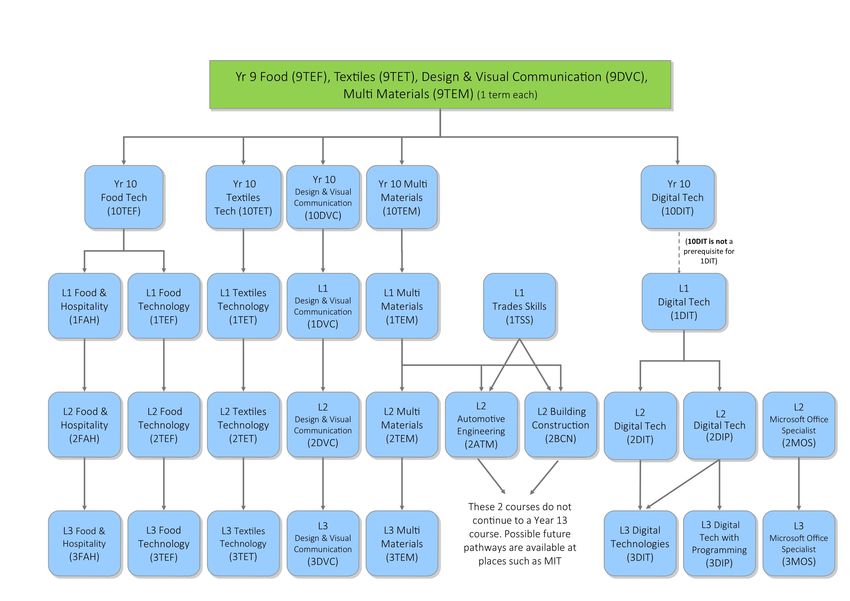
         8    BDSC subject flow diagram - HEALTH AND PHYSICAL EDUCATION   Year 10 Optional Subjects

         9    BDSC subject flow diagram - LANGUAGES                       19    Ancient Civilisations (10ANC)        & Art (10ART)

         10   BDSC subject flow diagram - MATHEMATICS AND STATISTICS      20    Business Pathways (10BUP)            & Dance (10DAN)
                                                                                Design and Visual Communication
         11   BDSC subject flow diagram - SCIENCE                         21                                         & Digital Technologies (10DIT)
                                                                                (10DVC)
         12   BDSC subject flow diagram - SOCIAL SCIENCES                 22    Digital Art (10DRT)                  & Drama (10DRA)
                                                                                                                         English as an Additional Language
         13   BDSC subject flow diagram - TECHNOLOGY                      23    Electronics (10ELE)                  &
                                                                                                                         (10ENS/10ENP)
PAGE 2

         14   BDSC subject flow diagram - VISUAL AND PERFORMING ARTS      24    Food Technology (10TEF)              & French (10FRE)

                                                                          25    Investigative Geography (10IGO)      & Japanese (10JAP)

                                                                          26    Maori (10MAO)                        & Media Studies (10MED)

                                                                          27    Multi Materials Technology (10TEM)   & Music (10MUS)

                                                                          28    Outdoor Leadership (10ODL)           & Physical Education (10PED)

                                                                          29    Spanish (10SPH)                      & Textiles Technology (10TET)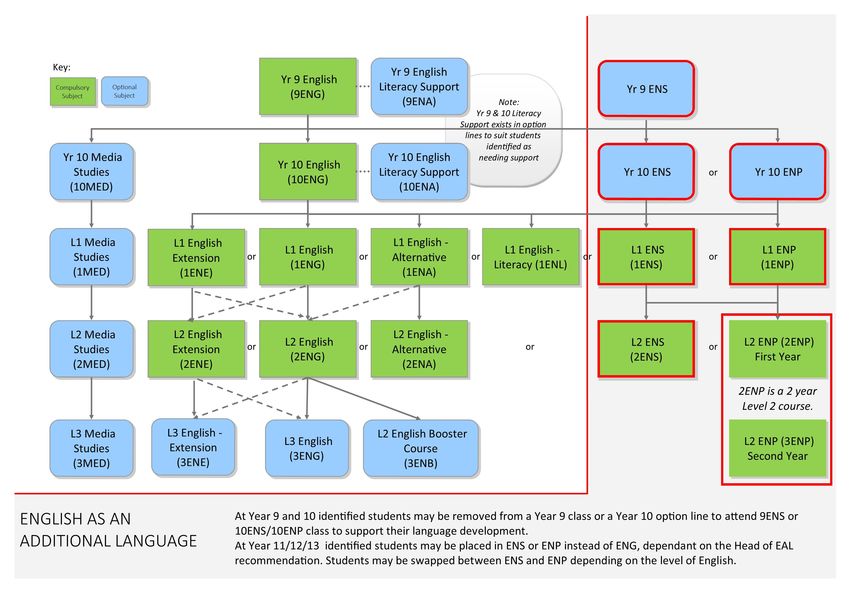
INFORMATION FOR PARENTS AND STUDENTS
          1.   SIX of the subjects studied in Year 9 continue in Year 10.                  5.   This booklet contains a schedule of proposed subjects at all levels.
               These subjects are:        English                                               Choosing a subject in Year 10 does NOT commit the student to take it
                                          Mathematics and Statistics                            in Year 11.
                                          Health and Physical Education
                                          Science                                          6.   If students require guidance they should seek this as soon as possible
                                          Social Studies                                        from the following people:
                                          Tutor Mentoring
                                                                                                      Careers Advisor                 Senior Leadership Team
          2.   The other subjects studied this year become optional in Year 10.                       Subject teacher                 Whanau Tutor / Mentor
               Students are required to choose THREE option subjects for Year 10. The
               option courses will be for the whole of the Year 10 school year.            7.   Students must make their option choices during Week 5 of Term 3.
                                                                                                Option selection must be completed online by Monday 27 August (Week
          3.   Consider carefully these two questions:                                          6). Late selection of options may mean that students will not receive
               (a) What is the highest level you hope to reach at school?                       their first choice of options.
               (b) What subjects are you likely to take at that level?
                                                                                           8.   Course costs listed for each subject include resources, activities and
               Then work backwards to the lower levels to choose your Year 10                   trips that are highly recommended as being conducive to optimal
               subjects. Remember that ability, interest and future usefulness are              student learning. Please refer to each individual course descriptor for
               important reasons for your choices. All students should read the Levels          the compulsory items required for that course.
               1-3 2019 Information Book as well as the preamble in each of the senior
               option booklets. Scan the prerequisites for the senior subjects that you    9.   Note:
               may wish to study in the future. All option booklets as well as the              You cannot take both 10DRT (Digital Art) and 10ART (Visual Art)
               Auckland University Undergraduate prospectus can be accessed on
               Office 365 or the BDSC website. It is important to note that many Visual
PAGE 3

               and Performing Art, Technology and Languages courses require
               students to have taken the course in the previous year. Students must
               plan their courses to ensure that they meet all the prerequisites. If you
               are considering future university study then you should become familiar
               with all university requirements e.g. university entrance, literacy,
               numeracy, approved subjects and Table A/Table B subjects. Careful
               planning now will prevent future problems in accessing courses.

          4.   Although every effort will be made to provide the subjects chosen, no
               guarantee can be given that all will be possible. Because of the need to
               have classes of a certain size, some students may be asked to change
               options. Similarly if not enough students choose a particular option it
               may be cancelled.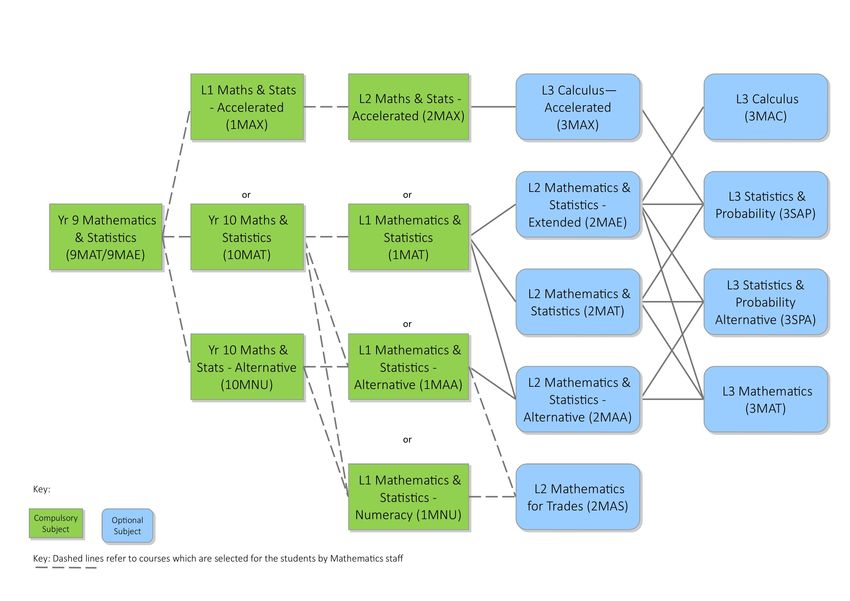
SCHOOL CONTACTS
                                                                             SENIOR LEADERSHIP TEAM
                                                                          Principal    K. Brinsden
                                                                   Deputy Principal    K. Holmes
                                                                   Deputy Principal    M. Hart
                                                                   Deputy Principal    C. Williams
                                                                   Deputy Principal    M. Andrew
                                                                   Deputy Principal    C. Van Kralingen

                                                                            HEADS OF LEARNING AREAS
                                                                            English    K. Pinnell
                                                      Health and Physical Education    J. Saville

              Botany Downs Secondary College                            Languages      M. Lodge
                 575 Chapel Road, Howick                 Mathematics and Statistics    I. Bennet
                      Auckland 1706
                                                                           Science     L. Kumar

                   Phone (09) 273-2310                              Social Sciences    N. Burridge
                                                                       Technology      D. Achary
                    Fax (09) 273-8551
                                                         Visual and Performing Arts    J. Hood, L. Treneman, T. Clapperton, A. Rakanui

               Email admin@bdsc.school.nz                                    WHÄNAU HOUSE LEADERS
PAGE 4

                                                                     Blake Whänau      A. Taylor
               Web Site www.bdsc.school.nz
                                                                   Britten Whänau      D. McGregor
                                                                 Discovery Whänau      N. Folks
                                                                Endeavour Whänau       K. Adams
                                                                     Koru Whänau       J. Clark
                                                                     Spirit Whänau     S. Jackson

                                                                                 STUDENT SERVICES
                                                               Guidance Counsellor     I. Thomson (Head of Guidance), R. Tucker & S. Domigan
                                                                   Careers Advisor     A. Brook
                                               Trade Academies/Vocational Pathways     K. Stewart
                                                                          Gateway      N. Shand-Marcusson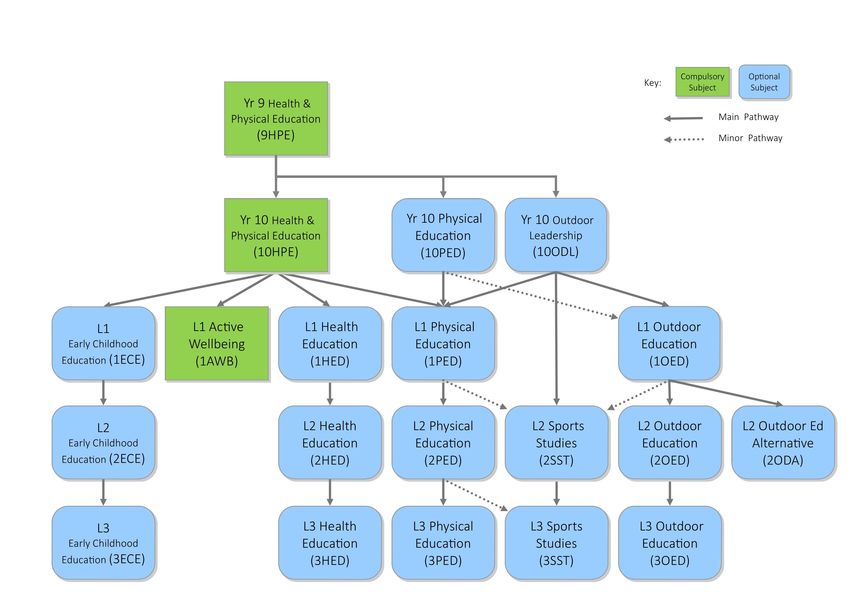
BDSC JUNIOR SCHOOL CURRICULUM
YEAR 9 YEAR 10
Core Compulsory Subjects Core Compulsory Subjects
English English
Languages (2 terms each) Mathematics and Statistics
French Health and Physical Education
Japanese Science
Maori (available as a semester option) Social Studies
or EAL (4 terms)
Mathematics and Statistics Optional Subjects (Students to select three options)
Ancient Civilisations French
Health and Physical Education
Art - Visual Investigative Geography
Science
Business Pathways Japanese
Social Studies
Dance Media Studies
Technology (1 term each)
Design and Visual Communication Maori
Food
Digital Technologies Multi Materials Technology
Textiles
Digital Art Music
Materials
Drama Outdoor Leadership
Graphics
Electronics Physical Education
Visual and Performing Arts (1 term each)
PAGE 5
English as an Additional Language Spanish
Art
Food Technology Textiles Technology
Dance
Drama
Curriculum Enrichment
Music Tutor Mentoring Curriculum
Curriculum Enrichment
Tutor Mentoring Curriculum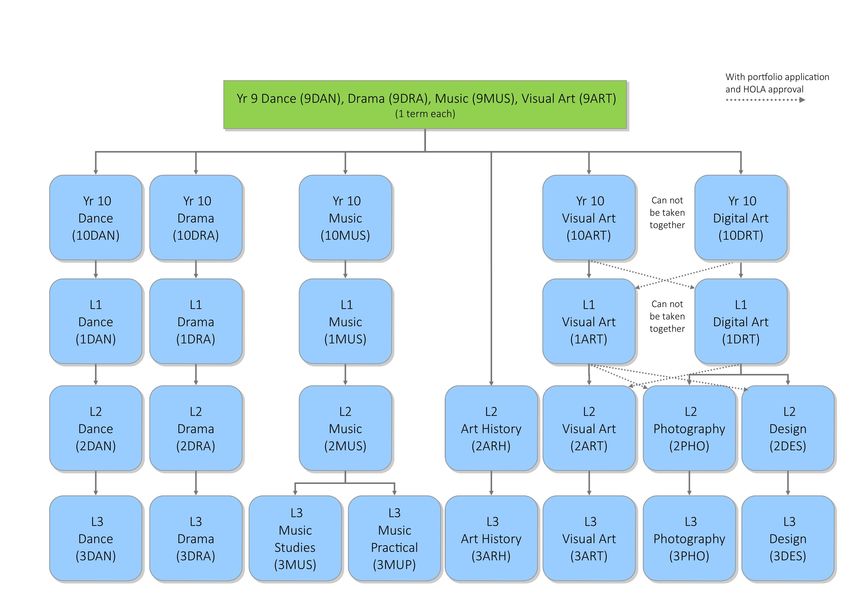
PAGE 6 BDSC COURSE STRUCTURE 2019
ENGLISH FLOWCHART 2019   ENGLISH AS ADDITIONAL
                                  LANGUAGE (EAL) FLOWCHART 2019
PAGE 7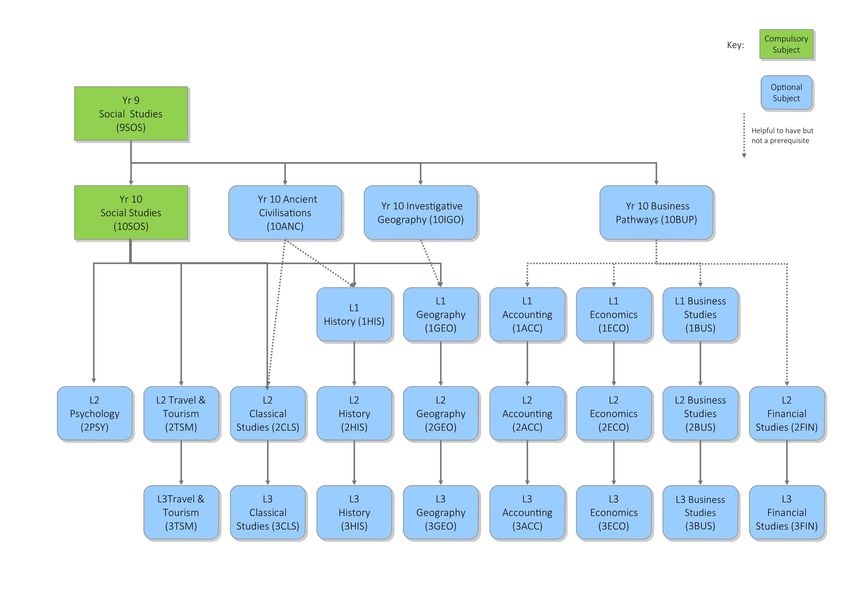
PAGE 8 HEALTH & PHYSICAL EDUCATION FLOWCHART 2019
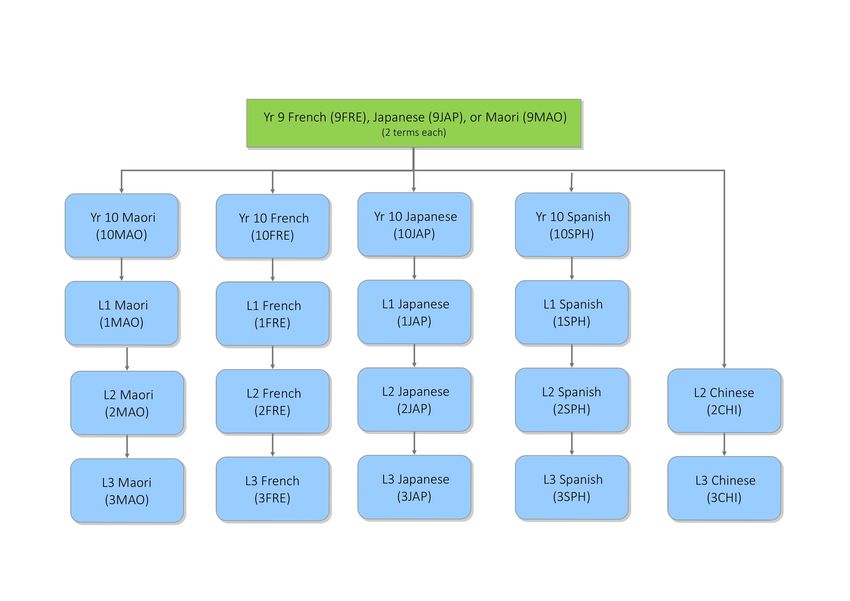
PAGE 9 LANGUAGES FLOWCHART 2019

PAGE 10 MATHEMATICS & STATISTICS FLOWCHART 2019
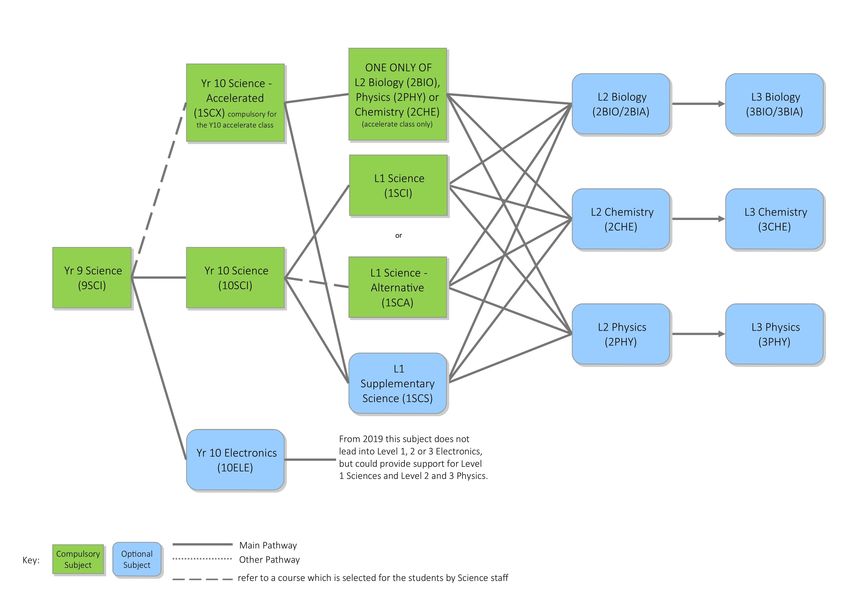
PAGE 11 SCIENCE FLOWCHART 2019
PAGE 12 SOCIAL SCIENCES FLOWCHART 2019
PAGE 13 TECHNLOGY FLOWCHART 2019
PAGE 14 VISUAL & PERFORMING ARTS FLOWCHART 2019
YEAR 10 COMPLUSORY SUBJECTS
ENGLISH (10ENG) HEALTH & PHYSICAL EDUCATION (10HPE)
COURSE INFORMATION COURSE INFORMATION
Fieldwork: Nil Fieldwork: Nil
Approximate Course Costs: $20 - optional Education Perfect subscription Approximate Course Costs: Nil
Course Leads to: Level 1 English Course Leads to: 1PED, 1HED, 1OED, 1ECE
Teacher in charge of subject: Mrs McKenna Teacher in charge of subject: Mr Hainsworth
HOLA in charge of subject: Ms Pinnell HOLA in charge of subject: Mr Saville
The Botany Downs Secondary College English Learning Area shares the aims of the New This course is based on the New Zealand Curriculum in which we look at four major
Zealand English Curriculum, which wants students to: strands:-
engage with and enjoy language in all its varieties and Personal Health and Physical Development – in which students develop the
understand, respond to and use oral, written and visual language effectively in a knowledge, understandings, skills, and attitudes that they need in order to
range of contexts. maintain and enhance their personal well-being and physical development.
Movement Concepts and Motor Skills – in which students develop motor skills,
English for Year 10 students is compulsory and aims to give students every opportunity of knowledge and understanding about movement, an d positive attitudes towards
working at the appropriate curriculum level while familiarising themselves with NCEA physical activity.
marking schedules. Students will engage with a range of literary texts covering aspects of Relationships with Other People – in which students develop understandings,
human experience such as gender, ethnicity and cultural life. Where literacy support is a skills, and attitudes that enhance their interactions and relationships with others.
recommendation for some students, this will be an added option to the programme. This Healthy Communities and Environments – in which students contribute to healthy
support is offered through a variety of means: with RTLB help, teacher aide support or communities and environments by taking responsible and critical action.
through a structured (extra) programme. Junior students are encouraged to read widely. PE lessons are taught using a wide variety of practical context based around the
following themes: Social responsibility, Biophysical skills and Socio-cultural
influences
Health topics covered in year 10 are based on: ‘Fuelling our community’, Drug
PAGE 15
Safety and Healthy relationships.YEAR 10 COMPLUSORY SUBJECTS
MATHEMATICS AND STATISTICS (10MAT) MATHEMATICS - ACCELERATED (1MAX)
COURSE INFORMATION COURSE INFORMATION
Fieldwork: Nil Fieldwork: Nil
Approximate Course Costs: $20 (Year 10 Mathematics Homework Book - must be bought from Office Approximate Course Costs: Workbook-Nulake IAS & EAS series approx $35,-highly recommended
Max) and $5.75 (course handbook) FX9750GII Casio Graphic calculator is compulsory -approximately $120
Course Leads to: Level 1 Mathematics & Statistics Course Leads to: NCEA Level 2 Mathematics Accelerated (2MAX)
Teacher in charge of subject: Mr Prasad Teacher in charge of subject:
HOLA in charge of subject: Ms Bennet HOLA in charge of subject: Ms Bennet
This course prepares students for NCEA Level 1 Mathematics. The course is determined This 1MAX course is a NCEA level 1 Mathematics course. Students are selected into this
by the National syllabus and includes the following topic areas: numbers and percentages, programme based on their Year 9 Mathematics results. This course provides students an
area and volume, geometry, measurement, trigonometry, graphing, algebraic opportunity to gain 23 NCEA Level 1 Mathematics and Statistics credits.
manipulation, statistics, probability, solving equations, vectors, constructions and The standards covered in this course are:
transformations. Year 10 Mathematics covers levels 4, 5 and 6 of the NZ Mathematics
Curriculum. The course aims to develop skills gained in Years 7, 8 and 9. AS91038: Investigate a situation involving elements of chance (3 credits)
AS91035: Investigate a given multivariate data set using the statistical enquiry (4 credits)
The Year 10 Mathematics & Statistics goals are to help students see the value and AS91027: Apply algebraic procedures in solving problems (4 credits)
usefulness of mathematics and statistics in every day life; develop their ability to think AS91028: Investigate relationship between tables, equations or graphs (4 credits)
logically, creativity, critically, strategically and provide them with the mathematical and AS91031: Apply geometric reasoning in solving problems (4 credits)
statistical skills needed for work. All of this course will be assessed by end of topic tests. AS91037 :Demonstrate understanding of chance and data (4 credits)
There will also be a Mid Year and end of year school exam, which will determine students
placement in Year 11 Mathematics courses. Students have a chance to do one Internal
NCEA Level 1 achievement standard.
There are 2 Year 10 Mathematics courses: 10MAT and 10MNU (Mathematics with
PAGE 16
Numeracy). 10MNU will cater for students with additional needs in Mathematics.
Placement into these courses will be at the decision of the Head of Mathematics.YEAR 10 COMPLUSORY SUBJECTS
SCIENCE (10SCI) SCIENCE - ACCELERATED (SCX1)
COURSE INFORMATION COURSE INFORMATION
Fieldwork: Nil Fieldwork: Nil
Approximate Course Costs: $20.00 (for Education perfect online resources) Approximate Course Costs: $20.00 (for Education perfect online resources)
Course Leads to: Level 1 Science Course Leads to: NCEA Level 2: Biology, Chemistry and Physics
Teacher in charge of subject: Mr Wang Teacher in charge of subject: Mr Kumar
HOLA in charge of subject: Mr Kumar HOLA in charge of subject: Mr Kumar
Science aims to develop understanding of the world around us. Science uses critical The Year 10 accelerate class will be given the opportunity to do Level 1 Science course while they
thinking and other important skills that are important to all citizens, not just our future are in Year 10. This group of students are our more able students and the idea is to accelerate
scientists and technologists. We live in a complex world. Understanding how technology is them as this will help keep them engaged and motivated in this subject.
developed and how science and technology affects our lives is very important. Topics All students will have the opportunity to do this course again in Year 11 if they so wish. If a
studied: Diversity, Forces and Motion, Chemical reactivity, Electricity, Investigation skills. student is successful in achieving the Level 1 Science course in Year 10, they will be required
to do the Level 1 Supplementary Science course or one Level 2 Science subject (Biology,
Year 10 knowledge expands on what is learned in Year 9, and develops complete skills to Chemistry, Physics) of their choice in Year 11. Alternatively they may choose to select both of
cope with Year 11. these courses.
All students will however be capped at one accelerated Science in Level 2. This means they
Depending on student achievement levels, and choice, this course leads to either one of will have to do at least one science course at Level 1 or Level 2 when they are in Year 11 next
the two compulsory Science courses: Year 11 Science or Year 11 Alternative Science. year. The intention is that these students will either diversify the range of subjects they are
Students who meet the pre-requisites can also choose to do the Year 11 Science taking at Year 13 or focus on a Scholarship programme. Students are reminded that there will
be no additional study periods at Year 13 and that they will be doing 5 subjects regardless of
Supplementary course (which is a further four hours of Science on top of the compulsory
what was achieved in Year 12.
four hours).
The students will be required to pay the NCEA exam entry fee for 2017 by the required date if
they wish to sit the exam at the end of the year and to have the results published. This fee is
Achievement in Year 10 determines course options in Year 11.
only required to be paid ONCE so if a student is in the accelerated Maths class and has paid
PAGE 17
this already, there will be no further payment to be made to NZQA in 2017.
Level 1 Science course aims to develop understanding of the living, chemical and physical
aspects of the world around us. It is a vital component of a sound general education for the
modern world. This course is a general science course that provides good background
towards preparing for study in Year 12 (NCEA Level 2), Biology, Chemistry, Physics and
Electronics. Topics studied in this course: Biology - genetics; Chemistry—acids and bases;
Physics - mechanics. The emphasis in the course is learning through practical experience, a
sound investigative basis and applying scientific concepts to relevant contexts. The relevance
of scientific concepts to understanding technology and relating these to society is also
important.
Internal Assessments include:
Physics 1.1 Carry out a practical investigation, with direction, that leads to a linear
mathematical relationship (4 credits)
Biology 1.2 Report on a biological issue (3 credits)
External Assessments include:
Science 1.1 Demonstrate understanding of aspects of mechanics (4 credits)
Science 1.5 Demonstrate an understanding of chemical ideas relating to acids and bases (4
credits)
Science 1.9 Demonstrate understanding of genetic variation (4 credits)YEAR 10 COMPLUSORY SUBJECTS
SOCIAL STUDIES (10SOS)
COURSE INFORMATION
Fieldwork: Nil
Approximate Course Costs: Nil
Course Leads to: Any Level 1 subject in Social Sciences
Teacher in charge of subject: Mrs Burridge
HOLA in charge of subject: Mrs Burridge
Social Studies education aims to teach students about the world in which they live and
how to be informed, critical, active and responsible citizens of that world.
Contexts are drawn from the past, present and future and from places within and beyond
New Zealand across Year 9 and 10. The Year 10 course focuses on global issues.
Topics covered in Y10 are:
Water! Water! Everywhere? (Access to water)
The Pursuit of Happiness (Human Rights)
Cool Karma Cola (Fair Trade)
eWaste (Sustainability)
Earth on the Move (Natural Disasters)
In addition to the content covered, mapping, graphing, interpreting and research skills will
be taught and tested.
PAGE 18
At the end of each topic there will be an assessment to generate a grade for reporting
purposes.YEAR 10 OPTIONAL SUBJECTS (choose 3 options)
ANCIENT CIVILISATIONS (10ANC) ART (10ART)
COURSE INFORMATION COURSE INFORMATION
Fieldwork: Nil Fieldwork: Nil
Approximate Course Costs: Nil Approximate Course Costs: $40
Course Leads to: Any literacy based subjects Course Leads to: Level 1 Art or Level 1 Digital Art (with HOD approval)
Teacher in charge of subject: Miss Douglas Teacher in charge of subject: Miss Clapperton
HOLA in charge of subject: Mrs Burridge HOLA in charge of subject: Miss Clapperton
This course will offer students the opportunity to study the cultures of some of the
world’s ancient civilisations. These include: the Ancient Chinese, the Ancient Romans and The Year 10 Visual Art course will allow the students to experience and experiment with a
variety of media, techniques and tools for particular art-making purposes. The students
the Ancient Egyptians., and possibly the Vikings. These civilisations provide some of the
most interesting opportunities for students to explore and learn about ancient cultures. will generate, develop and refine visual ideas in a body of work in response to different
motivations. Students will have the opportunity to identify and analyse the processes,
This course will be an integrated studies course involving aspects of history, classical
studies, geography, economics, art and literature focusing on specific aspects of each of procedures, and art-making traditions of other artists and to relate their findings to their
own and their peer’s artworks. Each student completes a Ukulele/Skateboard unit which
the civilizations. It will also include ICT , with sites dedicated to student learning on these
topics needing to be accessed, and selected activities needing ICT knowledge. Within is displayed in the end of year Art Exhibition. Students are able to keep their completed
painted item at the end of the course.
these topics will be the opportunity to look at how archaeologists find and interpret
evidence. Key themes include the rise and fall of ancient civilisations, religion, society, art,
culture, and technology. It is important to note that this course is a prerequisite if students are intending to take
Visual Art in Year 11. So you must take Year 10 Art if you wish to take Year 11 Art the
following year.
Note: Year 11 Visual Art is a prerequisite for Year 12 Visual Art (Year 12 Photography and
Year 12 Design with HOLA approval). If you wish to take any of these Year 12 courses, you
will need to take Year 10 Visual Art.
PAGE 19
Note: you can not take both ART and DIGITAL ART as optionsYEAR 10 OPTIONAL SUBJECTS (choose 3 options)
BUSINESS PATHWAYS (10BUP) DANCE (10DAN)
COURSE INFORMATION COURSE INFORMATION
Fieldwork: MIT (Dragons Den) Fieldwork:
Approximate Course Costs: $10 for trip Approximate Course Costs: $30 (Beats –Y10 dance production, workshops, theatre trips)
Course Leads to: Level 1 ACC, ECO, BUS Course Leads to: Level 1 Dance
Teacher in charge of subject: Mr Sharma Teacher in charge of subject: Aroha Rakanui
HOLA in charge of subject: Mrs Burridge HOLA in charge of subject: Aroha Rakanui
Year 10 Business Pathways aims to teach students essential thinking, decision making
investigative and statistical skills as they relate to Accounting, Business, Economics, This programme is designed to give students an understanding of dance, and is
preparation for Level 1 NCEA. Students will learn a variety of dance techniques and
Personal Finance and Law. These skills are of primary importance to our young people as
New Zealand is a country built on small businesses. choreographic skills. As well as attending regular dance performances the students are
required to attend workshops with dance professionals and work with guest tutors
Over the year students will be introduced to the financial language of Accounting,
Budgeting, Economics, Marketing, starting a Business. This course provides the pathways throughout the year. The students will learn a variety of genre’s and styles of dance such
as: ballet, hip hop, contemporary, Jazz, traditional and ethnic dance forms, Latin
for Level 1 NCEA Accounting, Business Enterprise, Economics, Finance and also future
business pathways. American, ballroom dance, as well as choreographic techniques to compose dance works.
Students are required to work independently and in groups as well as perform their work
on stage, before an audience. Students are to bring PE gear and a water bottle to class as
Students who do Year 10 Business Pathways also take part in Dragons Den competition and
also be part of Money week. well as their 2B5 dance journal.
It is compulsory for all students to perform in the annual dance performance of BEATS in
Term 4. This production is a night of live assessment of all performance based
assessments.
PAGE 20YEAR 10 OPTIONAL SUBJECTS (choose 3 options)
DESIGN & VISUAL COMMUNICATION (10DVC) DIGITAL TECHNOLOGY (10DIT)
COURSE INFORMATION COURSE INFORMATION
Fieldwork: Nil Fieldwork: Nil
Approximate Course Costs: $10 Approximate Course Costs: Nil
Course Leads to: Level 1 DVC Course Leads to: Level 1 DIT
Teacher in charge of subject: Mr Jowers-Wilding Teacher in charge of subject: Mr Patchigalla
HOLA in charge of subject: Mr Achary HOLA in charge of subject: Mr Achary
Using drawing, modelling and presentation skills, students develop solutions to a range of Digital Technologies is a taster course for students who might be interested in computer
challenging design problems. They should ultimately become competent in applying a programming, computer science, multimedia, web development and digital
variety of design and visual communication techniques through graphics practice. This infrastructure. This course is suitable to students who are creative, logical and problem-
forms the foundation for NCEA level one Design and Visual communication course to solvers. They move beyond being users and consumers of digital technologies to become
follow in Year 11. creators of new technologies for authentic users. Students will learn computer science
concepts and how to program a Robot, Micro:bit and the basics for developing websites,
Design and visual Communication is a portfolio based course with no formal examination. multimedia and what is inside a PC. It leads on to Digital Technologies courses in Year 11-
12. These classes are going to be held in a normal classroom and students will need to use
It is strongly advised that students who are intending to take Design and Visual their own laptops. Details on the minimum specifications are listed below. All students
Communication at Level 1, to choose Year 10DVC as an option. that take this course must commit to providing a laptop that meets these requirements
and also to bringing it fully charged to class each lesson. The Teacher reserves the right to
move the student to another Year 10 subject at any time through the year if the student
cannot fulfil these requirements.
It is strongly advised that students who are intending to take Digital Technologies at Level 1,
to choose Year 10DIT as an option.
PAGE 21
Minimum Specifications for Laptop
Windows: intel Premium 4 or AMD Athlon 64 processor (2 GHz or faster), Microsoft
Windows 10, 2GB of RAM, 5GB of available hard-disk space, 1024x768 display (or higher),
wireless connectivity.
Mac: 2GB RAM, multi core processor, Mac OS X v10.8 or higher, 5GB of available hard-
disk space., wireless connectivity.YEAR 10 OPTIONAL SUBJECTS (choose 3 options)
DIGITAL ART (10DRT) DRAMA & THEATRE STUDIES (10DRA)
COURSE INFORMATION COURSE INFORMATION
Fieldwork: Nil Fieldwork:
Approximate Course Costs: $20 Approximate Course Costs: $30 (approximate cost of theatre trips, resources)
Course Leads to: Level 1 Digital Art Course Leads to: Level 1 Drama
Teacher in charge of subject: Miss Clapperton Teacher in charge of subject: Ms Hood
HOLA in charge of subject: Miss Clapperton HOLA in charge of subject: Ms Hood
Digital Art focuses on experiencing a variety of digital and practical media, techniques and
tools for art-making in the fields of Photography, Design and Animation. It leads on to Drama is creative, collaborative, confidence building and a fun, expressive way to learn
and develop knowledge. It leads on to the NCEA level 1 Drama and is a course that is
Level 1 Digital Art but is not an essential prerequisite for entry into these courses. Places
will be granted in this course at the discretion of the Head of Art. accepted by Tertiary institutions.
Taking Drama and Theatre Studies develops students ability to work with others, think
Students can use a laptop for this course but will need it to be high functioning. Students creatively and apply this thinking in practical ways, find solutions to practical and technical
problems, to present themselves with confidence in a public setting. It encourages
also are required to have purchased a copy of Adobe Photoshop CS5 or higher for their
laptops. leadership skills and opportunities to be empathetic to others.
In the Year 10 course, you will expand your study of dramatic techniques, elements, and
conventions in process and performance. You will study a range of Theatrical styles and
Information regarding purchasing the required programmes directly from Adobe or via
the school can be obtained from the HOD of Art (t.clapperton@bdsc.school.nz) or will be texts which may include Shakespeare, Melodrama , devised and scripted drama. You will
initiate ideas to create drama, and work individually and collectively to develop skills that
sent to all students (in Term 4) who choose this option.
will aid both verbal and non-verbal communication. You will work as designers and
creators, learning how to present your designs to a director. You will be introduced to
Note: you can not take both 10ART and 10DRT (DIGITAL ART) as options
lighting design and use. You will be given the opportunity to attend a professional drama
production.
PAGE 22
Drama is a practical course that requires co-operative group work and for you to devise,
rehearse, perform and learn lines for scripted work. You will be expected to see the
senior/school production in order to review it with a critical eye. You will require a black
long sleeved top, black relaxed (track) pants and black lace up canvas shoes to be worn
for assessments and any performance opportunities.YEAR 10 OPTIONAL SUBJECTS (choose 3 options)
ELECTRONICS (10ELE) ENGLISH as an ADDITIONAL LANG (10ENP)
COURSE INFORMATION COURSE INFORMATION
Fieldwork: Nil Fieldwork: Nil
Approximate Course Costs: $57.50, Project Materials (estimated) Approximate Course Costs: Nil
Course Leads to: Course Leads to: Level 1 ENS/ENP
Teacher in charge of subject: Mr Jeet Teacher in charge of subject: Mrs Narain
HOLA in charge of subject: Mr Kumar HOLA in charge of subject: Ms Pinnell
This course is designed to give students a good grounding in the basic principles English as an Additional Language is primarily for those students whose first language is
of electronics. The course will enable students to obtain hands-on experiences not English and who need extra support to cope with literacy across the curriculum and to
since most of the course will involve working with different electronic develop English language skills. Students will be regularly monitored in EAL classes to
assess their progress in reading, writing, speaking, and listening.
components and building simple projects. The students will also be introduced
to programming chips. This course gives interested students the opportunity to
There are 2 classes of English as an Additional Language, 10ENS and 10ENP. Only 10ENP is
take part in competitions such as Science Fair, Robotics Challenge and listed as an option in the online selection process. Please select this one. Once students
Brightsparks. are accepted for 10ENP they will be placed into either the 10ENS class or 10ENP class
dependant on their strengths and weaknesses determined by the Head of the Learning
The topics covered are: Basic Electricity, Study of Components, Making Area.
prototype, Making PCB, Soldering, Project work developing electronic products,
Picaxe programming.
NOTE: From 2019 this subject does not lead into Level 1, 2 or 3 Electronics, but
could provide support for Level 1 Sciences and Level 2 and 3 Physics.
PAGE 23YEAR 10 OPTIONAL SUBJECTS (choose 3 options)
FOOD TECHNOLOGY (10TEF) FRENCH (10FRE)
COURSE INFORMATION COURSE INFORMATION
Fieldwork: Nil Fieldwork: Nil
Approximate Course Costs: $80 Approximate Course Costs: Highly recommended: $20 Education Perfect website ; Workbook (Studio
1B $12)
Course Leads to: Level 1 TEF/FAH
Course Leads to: Level 1 French
Teacher in charge of subject: Mrs Thomson
Teacher in charge of subject: Mrs Killip
HOLA in charge of subject: Mr Achary
HOLA in charge of subject: Mrs Killip
This is a practical and theory course progressing on from Year 9 and looks at the exciting
and creative facets of food technology, including basic nutrition, product development, Year 10 French is a one-year course, developing all 4 language skills of listening, reading,
writing and speaking to enable students to communicate and cope in a real-life situation.
safe food handling, bread-making, investigating kitchen machines and being highly
creative and original with foods. Those who may be passionate about cooking and Students will be able to engage with new ways of thinking, questioning and interpreting
their world using a wide range of resources (games, ICT) which will make the lessons fun
designing food products, becoming a chef, or food technologist, while developing culinary
skills and will benefit from learning the basics of food development. This is an exciting and and interactive. The aim is for them to understand how languages work, help them to
communicate more effectively in a new language but also in their own language(s). The
dynamic Year 10 programme. It offers a very good introduction to the many opportunities
in the food industry, leading onto Food Technology at Level 1, 2 and 3 or Hospitality at course will cover theme-based vocabulary and sentence structures from Level 2 and 3 of
the curriculum with topics that are engaging and current and talk about their routine, at
Level 1, 2 and 3. There is a weekly practical component where course costs will be
home and at school, talking also about their favourite activities and their future plans.
charged.
Students will also become familiar with NCEA style assessments and will be given the
opportunity to use their language skills with native speakers.
Course Costs:
Basic ingredients will be supplied, however students will be requested to bring some
It is important to note that this course is a prerequisite if students are intending to take
foods for practical lessons, when their ingredient choices are outside the food
department’s pantry basics list. A fee is charged to cover basic ingredient supplies ($80) - French in Level 1.
[$20 per term]
PAGE 24YEAR 10 OPTIONAL SUBJECTS (choose 3 options)
INVESTIGATIVE GEOGRAPHY (10IGO) JAPANESE (10JAP)
COURSE INFORMATION COURSE INFORMATION
Fieldwork: A one day trip into Auckland City, local field work and a two day field trip to Fieldwork: Nil
Waitomo.
Approximate Course Costs: Highly recommended: $20 subscription Education Perfect website ; Course
Approximate Course Costs: $18.00 for transport for the Auckland field trip (estimated) and $110.00 for
Book $23
the two day Waitomo field trip (estimated).
Course Leads to: Level 1 Japanese
Course Leads to: Level 1 Geography
Teacher in charge of subject: Ms Lodge
Teacher in charge of subject: Miss Brodie
HOLA in charge of subject: Ms Lodge
HOLA in charge of subject: Mrs Burridge
Year 10 Japanese is a one-year course, developing all 4 language skills of
Location, location, location. Why is location so important?
listening, reading, writing and speaking to enable students to communicate and
What are the factor s that affect where urban areas are
cope in a real-life situation. The course will cover theme-based vocabulary and
situated? An in-depth case study of Auckland (one of the
world’s most liveable cities) is used to investigate this, sentence structures from Level 2 and 3 of the curriculum (e.g. ordering food,
including a field trip. We will also look at factors affecting daily routine, travel, and hobbies). Students will become familiarised with NCEA
the livability of Auckland. style assessments and will be given the opportunity to use their language skills
with native-speakers. The learning will be enhanced with cultural activities,
The geography of disease is investigated. What factors access to outside competitions and the use of ICT.
assist the spread of diseases both today and in the past;
why did cholera occur and spread in nineteenth century London and Auckland? Where It is important to note that this course is a prerequisite if students are
are contagious and non-communicable diseases prevalent today and why? What are the
intending to take Japanese in Level 1.
consequences of these diseases for people and their families?
Adventure landscapes and fizzy rock looks at the formation of limestone landscapes, how
they have been used in the past by people and how they are used by people today.
PAGE 25
Field work and practical work will be important in this course, involving team work and
navigation in our urban environment with an introduction to using GPS and GIS
technology. A two day field trip to Waitomo will be offered.
This introductory course is designed to get students thinking
about the world we live in, how some of the natural and
cultural features in it are formed and how we interact with
them. In the process, students learn a number of
geographic skills. It is an academic course with a practical
emphasis. A positive and enthusiastic attitude is required.
Students do not have to take this option in order to study
Geography at Level 1.YEAR 10 OPTIONAL SUBJECTS (choose 3 options)
MAORI (10MAO) MEDIA STUDIES (10MED)
COURSE INFORMATION COURSE INFORMATION
Fieldwork: TBC
Fieldwork: N/A.
Approximate Course Costs: Nil
Approximate Course Costs: N/A
Course Leads to: Level 1 Media Studies
Course Leads to: Level 1 Te Reo Maori
Teacher in charge of subject: Mr Greenstreet
Teacher in charge of subject: Ms Lodge
HOLA in charge of subject: Ms Pinnell
HOLA in charge of subject: Ms Lodge
Year 10 Media Studies introduces all the concepts required in later levels of Media Studies
This course encourages students to develop a deeper understanding of the and leads to the 3-year NCEA Media Studies course, in which students build on the skills
world around them. Students will discuss whanau relationships in Te Reo. They and concepts, culminating with Scholarship Media Studies at the end of Year 13. It allows
students to begin examining the role media plays in their lives and the importance it has
will also communicate about their belongings as well as their likes and dislikes.
for society.
Students would also be expected to communicate in Te Reo about day to day
life including themes such as time, weather and seasons. They should also During the year, students will cover close reading skills, the study of a film genre,
develop the skills to communicate about physical characteristics and feelings. research, and coverage of news stories where students produce their own stories. They
This course provides a platform for future studies at NCEA level. Provisioning of will also examine animation in a wide sense, something that touches all people in this day
this course will be reliant on the availability of teachers and the number of and age. Students will also get practical experience in using several different media
students who select this course. The usual mode of delivery for this course is technologies which include camera, sound and editing software. Towards the end of the
through Te Kura (The New Zealand Correspondence School) with the support of year, they show case their skills by working in small groups and producing and editing a
a Maori language specialist within the school where this is possible. short film which could be in any genre (this could include music videos, TV commercials,
documentaries).
This course is an excellent pathway for students who may want to experience
communication, social media, production technologies, journalism, and is crucial in
PAGE 26
developing critical thinking skills. It leads itself to lots of career opportunities in the future
after finishing school.YEAR 10 OPTIONAL SUBJECTS (choose 3 options)
MULTI MATERIALS TECHNOLOGY (10TEM) MUSIC (10MUS)
COURSE INFORMATION COURSE INFORMATION
Fieldwork: Nil Fieldwork: Nil
Approximate Course Costs: $50 Approximate Course Costs: $23 (Trip to orchestra/opera) estimated
Course Leads to: Level 1 TEM Course Leads to: Level 1 Music
Teacher in charge of subject: Mr Jowers-Wilding Teacher in charge of subject: Ms Treneman
HOLA in charge of subject: Mr Achary HOLA in charge of subject: Ms Treneman
The Year 10 Music course will cover units which allow students’ to develop their aural,
This course builds on the skills and knowledge students have gained in Year 9. performing, composition and music appreciation skills. The unit topics are selected from:
Students in Year 10 are presented with a range of challenging and authentic Musicals and Popular Music, A Night at the Movies, Twentieth Century Composers,
projects aimed at developing their technological literacy, increasing their range History of Music, Reggae and Blues. Assessment tasks will involve a range of activities
of workshop skills and expanding their understanding of the different material including composing music, using computer music writing programs, and performing solo
properties and processes associated with wood, metal and plastic. and as part of a small group. It is essential that students taking this course learn an
instrument, either privately or through the itinerant music programme in school.
Students are encouraged to think creatively, using their problem solving skills
to develop successful design solutions and quality outcomes. The course is
intended to provide students with a sound background for senior NCEA
Technology courses.
It is important to note that this course is a prerequisite if students are
intending to take Materials Technology in Level 1.
PAGE 27YEAR 10 OPTIONAL SUBJECTS (choose 3 options)
OUTDOOR LEADERSHIP (10ODL) PHYSICAL EDUCATION (10PED)
COURSE INFORMATION COURSE INFORMATION
Fieldwork: Tramping , sailing, rock climbing, mountain biking, caving, crafting and Fieldwork: Nil
coaching Approximate Course Costs: Nil
Approximate Course Costs: Trips/Camps approx $300. Some off-site practical work in which there will
be some transport cost (to be announced). Course Leads to: Level 1 Physical Education
Course Leads to: 1OED and 1PED
Teacher in charge of subject: Mr Hainsworth/Williams Teacher in charge of subject: Mr Hainsworth
HOLA in charge of subject: Mr Saville HOLA in charge of subject: Mr Saville
Year 10 Outdoor Leadership has a semester focus on Outdoor Education, and a semester
focus on Sports Leadership. Year 10 Physical Education has been designed to give a greater foundation of
knowledge for students who are wishing go onto study NCEA Level 1-3 Physical
Outdoor Education provides students with opportunities to develop personal and social Education. Please be aware the course contains a combination of both practical
skills, to become active, safe and skilled in the outdoors, and to protect and care for the and theoretical work with the emphasis on applying the theoretical concepts in
environment. Through outdoor pursuits, students develop particular skills and attitudes in the practical context. Physical Education leads to an understanding of how the
a range of outdoor settings. It will include rock-climbing, orienteering, tramping, body works, how it responds to exercise, how it adapts and personal, social and
mountain biking, caving and crafting. Students will also complete a sailing module and environmental responsibilities. The context of the theory is applied in a number
undertake the NZ Coastguard Day Skipper Certificate. Students must be aware that some
of varying practical situations. Course content includes: Science in Sport –
of the trips and assessments take place after school hours (exact dates will be given at the
beginning of the course). Students undertaking this course are expected to catch up on
(Anatomy, Biomechanics, Exercise Physiology, Performance Improvement);
any other missed school work. Eighth unit standards will be undertaken in this course. Social influences on Physical Activity; Sport Fit – (Methods of training, Principles
of Training and Components of Training). Course Prerequisites: Open entry, but
Sports Leadership offers students the opportunity to participate and get started in should have shown a high participation and effort in year 9 HPE.
learning principles of coaching, leadership and officiating. Students will have real
experiential learning when they lead a small group of students at Point View Primary
PAGE 28
School through four kiwi sports. Further to this they will also have real practical leadership
experience when they lead a group within the class in a sport of their choice.
During the year, students will get the opportunity to gain up to 10 Unit Standard credits.YEAR 10 OPTIONAL SUBJECTS (choose 3 options)
SPANISH (10SPH) TEXTILES TECHNOLOGY (10TET)
COURSE INFORMATION COURSE INFORMATION
Fieldwork: Nil
Fieldwork: Students will visit fabric retailers. Other trips TBC.
Approximate Course Costs: Highly recommended: $20 subscription to Education Perfect website
Approximate Course Costs: $40.25 estimated
Course Leads to: Level 1 Spanish
Course Leads to: Level 1 Textiles
Teacher in charge of subject: Miss Grall
Teacher in charge of subject: Ms Lynskey
HOLA in charge of subject: Ms Lodge
HOLA in charge of subject: Mr Achary
This is a one‐year course aimed at developing basic writing, listening, reading
This course encourages students to gain an appreciation of Technology while
and speaking skills in Spanish. It also aims to develop awareness of Spanish
developing the creativity and skills to design and manufacture a variety of
culture, the role of Spanish in the world and the culture of Latin American
textiles products used in fashion, costume and interior design. As well as design
countries who have Spanish as their main language. Students will become
illustration skills, students will gain the necessary skills to use and adapt
familiar with NCEA style assessments and will be given the opportunity to use
commercial patterns, fit and adjust apparel, create fabric using a variety of
their language skills with native speakers. The learning will be enhanced with
techniques, as well as accurately use a plain sewer and overlocking sewing
cultural activities, access to outside competitions and the use of ICT.
machine to sew woven and knit fabrics. The course is intended to provide
students with a sound background for senior NCEA Textiles Technology. Course
It is important to note that this course is a prerequisite if students are cost covers only basic materials for trials and sampling. Students are
intending to take Spanish at Level 1. encouraged to purchase their own fabric and patterns for their projects.
PAGE 29You can also read


