SHAPING OUR FUTURE 2019 Pre Election Report - TE WHAKAIRO I - Hawke's Bay Regional Council
←
→
Page content transcription
If your browser does not render page correctly, please read the page content below
TE WHAKAIRO I
TŌ TĀTAU ĀPŌPŌ
SHAPING
OUR FUTURE
 2019
 Pre Election
 Report

For more info visit hbrc.govt.nz
Contents
                                                                          Message from the
                                                                         Chief Executive		                4
Ohonga ake ki te Taiao e tangi aurere
                                                                        Community feedback		              6
ana,Rata wareware, maranga mai!
                                                                        About this Document		             7
Me pēwhea ngā uri whakaheke?
                                                                       Strategic Partnerships		           8

The inconsolable despair of our environment                            Our Regional Challenges		          10
Oh forgetful one, be awake, be alert                                   Our Strategic Plan		               12
Lest the legacy to your children be lost.                              Strategic Snapshot & Goals		       14

                                                                       Major Projects		                   16
‘Rata wareware’ is a metaphor for people, their forgetfulness and
forsake of ambition. Māori relate the story of Rata who, so incensed   Our Council		                      20
with his desire to build a waka, cut down a tree without paying
respect to Tāne, atua of the forest. Tāne’s children, the insects,     Key Planning Documents		           24
birds and creatures of the forest spying Rata’s departure at
day’s end, resurrected the tree as if it had never been felled.        Financial Information		            27
This happened three times at which point Rata secreted
                                                                       Investment Strategy		              30
himself and watched. The creatures returned and on
hearing their work and chanting, “Rata wareware                         Funding Impact Statement		        31
– Rata the forgetful one”, realised his mistake.
                                                                        Balance sheet		                   32

                                                                        Rating Information		              33

                                                                         Financial Reporting Benchmarks   34

                                                                         2019 Elections		                 36

                                                                                                          p. 3
Water
Focus on Future
Security
Whakakī & Farming
Tūtira Initiative
Integrated
Catchment
approach
HEALTHY VIBRANT
ENVIRONMENT
Message from the COMMUNITY
EXPECTED
Chief Executive HIGHLIGHTS
Predator FOR 2019-20
Biodiversity
Free Hawke’s
Regional Strategy &
Bay Coastal
Pest Action Plan
Hazards
Management
Strategy
Plan
2120
E ngā mana, e ngā reo, tēnā koutou katoa Through our work, we care for our land and biodiversity, programmes, such as TANK Plan
Sustainable
our waterways and marine environment, working directly erosion control, water Change
Homes
We are a council with a focus on the Hawke’s Bay with individual landowners, tāngata whenua, businesses Consultation Erosion
security, coastal hazards uptake
region as a whole, and particularly on our natural and industries, local government and central government.
Control Stronger
environment – the air, land, lakes, rivers, aquifers
and our long-standing Scheme PROSPEROUS Regulation
and the marine areas that sustain all of us.
Our most popular work includes the region’s cycle trails, flood protection schemes. rollout
ECONOMY
regional parks and open spaces, public transport and
sustainable homes programmes. The Napier Port share offer
This Pre-Election Report has been prepared to inform public
means we retain majority ownership
discussion about the issues facing Hawke’s Bay relevant to Some of our most important work includes the
the Hawke’s Bay Regional Council ahead of the upcoming of the Port, at the same time as
management of pumping stations and stop banks, For election-related information, please contact the
council elections in October 2019. enabling our Port to grow.
long-term planning, consents for using natural Regional Council’s Electoral Officer, Leeanne Hooper
I lead a team of passionate staff who actively care for our resources, science monitoring and reporting, This report includes a full picture of how the Regional at leeanne@hbrc.govt.nz. You can also gain a good
region – from Mahanga in the north to Pōrangahau in the compliance monitoring and enforcement. Council is performing financially, with information on understanding of our role and work by visiting our
south. We want nothing more than a healthy environment, website hbrc.govt.nz.
our past, current and forecast financial position and has
In the following pages, we cover many of the major
a vibrant community and a prosperous economy. been prepared bringing together information from other
projects the Regional Council is funding to protect and Nāku noa, nā
So we have a big job to do now, and in the years ahead, enhance our environment, particularly over the next three published Regional Council documents. This includes the James Palmer
working together to protect what we have left and to restore years. Without a doubt, this includes a stronger focus on 2018-28 Long Term Plan, 2019-20 Annual Plan and Chief Executive
what we have lost. climate change across our current climate-related work relevant Annual Reports. Tumu Whakarae
p. 4 p. 5
Community
feedback
The results of the Regional Council’s two-yearly
regional survey of 800 ratepayers confirm widespread of Hawke’s Bay people are concerned
64.6% about the impact of climate change
support for our increasing focus on the environment.
Water is the most highly-rated issue in Hawke’s Bay.
In response to feedback on Climate Change, there is a state the value of the services received
clear desire to focus on activities to counter the effects
73.7% from Regional Council rates are acceptable
of rising seas, coastal erosion and weather changes. to very good
About this
What you told us – our top three roles:
1 Environmental management of you named Hawke’s Bay Regional
document
2 Waterways and coastal management 76.5% Council as the main environmental The purpose of this Pre-Election Report is to
3 Water management organisation. provide information to stimulate public debate in
the upcoming local election on the issues facing
Main perceived effects of climate change: The content
of you said email was the most Hawke’s Bay Regional Council.
1 Rising sea levels and coastal erosion in the Pre-Election
2 Weather changes, warming and extremes
43% preferred way of receiving Regional This document informs both potential candidates and
Council information Report collates existing
3 Water shortage and drought the voting community. It briefs potential candidates and
information from a number of sources
helps voters choose the best candidate for the job of
such as the Regional Council’s Strategic Plan,
Regional Councillor.
Long Term Plan, community surveys and financial
The Pre-Election Report is required under section 99A
Key - Encourage the best allocation of land of the Local Government Act 2002 (the Act). It is an
information. It describes the key challenges we
Findings: - Reduce slime and algae face as a region, and how the Regional Council
matters most
- Encourage sustainable farming practices apolitical document therefore it is the responsibility of the
keep in mind
- Protect soil from erosion - Improve water security plans to make positive impacts in the areas that
- Monitor water levels and quality Chief Executive rather than the Council. The Pre-Election
- Control plant and animal pests
Report must be published no later than two weeks before matter to our communities.
- Manage the Regional Council’s investments - Rules for water use and quality
- Look after native bush, reserves and wetlands - Fence stock from waterways nomination day. Nomination day is the 57th day before This report has a particular focus on how the Regional
- Maintaining flood protection polling day. Polling day is 12 October 2019. Council is performing financially. It covers the major
Interpretation of gap between
Earlier in 2019, an amendment was made to the Act to strategic projects to be funded over the next three years
satisfaction and importance
- Public transport
maintain levels
- Rules to reduce spray drift require Chief Executives to proactively promote candidate and the Regional Council’s past, current and forecast
- Reduce smoke from outdoor fires
on target
- Maintain river access and and voter participation. The Pre-Election Report is one
- Control odours or smells financial position. Financial information for the 2018-19
quality outdoor places
- Reduce smoke from home wood burners way to give effect to this new duty on Chief Executives for financial year is based on planned expenditure and is
- Minimise dust from farming - Improve health and efficiency of homes
- Have rules for water and boating safety “42(2)(da) facilitating and fostering representative and consistent with the financials used in the 2019-20 Annual
- Tourism promotion
substantial elector participation in elections and polls held Plan. This will differ from the audited accounts once
Importance to Hawke’s Bay people
under the Local Electoral Act 2001.” completed for the 2018-19 Annual Report.
p. 6 p. 7
Strategic                                                        Partnerships with Tāngata Whenua                               Increasingly, Māori are key economic players and
                                                                                                                                landowners in the region. Sustained partnerships
Partnerships                                                     Council recognises and is committed to having                  are vital to ensure the region moves forward as a
                                                                 strong relationships with tāngata whenua as a                  whole. These developments are rapidly increasing
                                                                 critical part of its core business.                            expectations on HBRC to co-govern and co-manage
                                                                 This relationship must be underpinned by growing more          the region’s natural resources. There are already a
                                                                 trust and confidence with one another because the              number of agreements and/or plans in place but
                                                                 environmental challenges in front of us all are formidable.    more are on the horizon.
Through partnerships with tāngata whenua,
                                                                 The initial groundwork for the establishment of tāngata        Discussions during Treaty settlement negotiations
and other community and business organisations
                                                                 whenua direct input into Regional Council began before         identified a need for greater tāngata whenua
we can do more, faster.
                                                                 the 1989 reorganisation of local government and before         involvement in the management of natural resources
A joined-up and coordinated approach will ensure that our        the requirements of the Resource Management Act 1991.          in the region. The Hawke’s Bay Regional Planning
efforts are greater than the sum of the parts. By tapping into   The then Hawke’s Bay United Council recognised the             Committee Act 2015 formally established a joint
funding opportunities and working with others the Regional       need for special input into decision making by Māori, and      committee of nine HBRC elected and one appointed
Council can make ratepayer funding go substantially further.     established a consultative committee of tāngata whenua.        member and ten tāngata whenua members of Iwi/
This philosophy is evident in a number of the Regional           In terms of the new Regional Council, a Māori consultative     Hapū groups to consider resource management
Council’s current projects.                                      committee was not formalised until requested by tāngata        strategies, policies and plans for the region.
In the last year, examples include:                              whenua following a hui at Kohupātiki Marae in June 1990.
                                                                                                                                The Council’s Māori Committee also plays
                                                                 The iwi at this hui requested that:
              Freshwater Improvement Funding from                                                                               a critical role ensuring that the voice of
              central government for Te Waiū o Tūtira -          “Hawke’s Bay Regional Council amend their                      Hapū, Marae and Whānau is heard on
              the milk of Tūtira                                 structure to include a ‘Māori Standing Committee”.             environmental activities and woven into
              Freshwater Improvement Funding from                                                                               HBRC’s work programmes.
                                                                 This request was duly considered by the Regional Council
              central government for Lake Whakakī
                                                                 and adopted in July 1990. This approach has been               The Regional Planning Committee and the Māori
                                                                 replicated by other councils throughout New Zealand.           Committee are important avenues for tāngata
              Funding from Predator Free 2050 Ltd
              ($1.6m) and other external funders for the         A number of Treaty of Waitangi negotiations have since         whenua and Māori to contribute to the Council’s
              Whakatipu Mahia project at Mahia Peninsula         been settled or are nearing settlement.                        decision-making, and as required by section 81
                                                                                                                                of the Local Government Act 2002. Alongside
              Funding is approved from the Ministry              In Hawke’s Bay there are 23 Iwi Authorities,
                                                                                                                                this, Council has recognised the need to grow
              for Primary Industries’ Hill Country Erosion       around 88 Hapū and 68 Marae1.                                  cultural capability and has appointed a Te Pou
              Fund to address Hawke’s Bay’s most                                                                                Whakarae in its executive leadership team
                                                                 To date, Deeds of Settlement have been signed with
              vulnerable steep, eroding land                                                                                    reporting directly to the Chief Executive, and two
                                                                 the majority of the region’s Iwi and Hapū. The Treaty
                                                                 settlements are expected to benefit not just Māori, but also   supporting and permanent roles to form Council’s
As expressed in our purpose statement “working with              the region as a whole, bringing wealth, both economically      Māori Partnerships team. Their focus is growing
our community” is at the heart of everything we do.              and in the full context of wellness.                           council-wide cultural capability, enhancing council’s
                                                                                                                                engagement with tāngata whenua and facilitating
                                                                 1
                                                                     http://www.tkm.govt.nz/region/takitimu/                    technical input to meet all statutory requirements.

p. 8                                                                                                                                                                                    p. 9
Our Regional
Challenges
Hawke’s Bay covers a total land area of 1.42 million Transforming our natural resources into goods and services such as National
requires resilient infrastructure such as flood protection and Policy Statements and
hectares of diverse geography from the foothills of
drainage, freshwater security for irrigation, and efficient Environmental Standards
major mountain ranges in the west, seven major with target compliance dates.
transport options.
river systems and extensive river plain areas, These legal and rule-based
National and regional State of the Environment (SOE)
to coastal hills and a 350km eastern coastline instruments require our Regional Council
monitoring has increasingly revealed human pressures on
with a range of physical features. to do more in certain areas and to prescribe
our ‘natural capital’ of soil, air, water, species, habitats and
more explicitly what we must do and by when.
the marine environment, and the ecosystem services2 they
provide. The more we monitor, the more we learn and the As a result, there is an increasing expectation
more we need to do. on regional councils for more active management
Increasing pressure During the year, the Regional Council undertakes a range of natural resources to deliver better outcomes,
on our natural capital of land, water and air monitoring as part of its statutory faster, with more hands-on intervention,
Photo credit: Tim Whittaker
responsibility for monitoring the State of the Environment (SOE). monitoring and compliance.
Most environmental issues managed by Hawke’s Bay
Regional Council are not new. They are a legacy of the A SOE Report is published every 5 years and supplemented
cumulative and chronic effects of previous decisions. with annual report cards and monthly updates online.
The region’s resource management challenges have The annual report cards provide a snapshot of how the Hazards and emergency management
taken centuries to develop to their current state, environment is tracking. The information gathered helps Living on the Hikurangi plate boundary means we Climate change is expected
inform the work that Council does with the community to
dating back to destruction of much of the region’s could be affected by earthquakes, tsunami, coastal to bring increased frequency
lowland forest around 700 years ago. Hawke’s Bay is improve and protect the environment including responding
erosion and volcanic ash, and our risk has increased and intensity of storm events, which
equally exposed to global pressures such as climate to new risks and informing policy setting.
with recent earthquakes. coupled with sea level rise makes the coastal
change and impacts on the marine environment from The full report cards are available online: hbrc.govt.nz,
search: #SOEreportcards. The 2018 Report cards for Although there is an increasing community awareness, environment increasingly hazardous.
sea level rise and ocean acidification.
surveys show lives continue to be at risk with people
Groundwater and Lake Water Quality are available now.
A lot of Hawke’s Bay’s wealth comes from its natural confused on how to react. So there needs to be more focus Hawke’s Bay Regional Council is working with Hastings
In response to new knowledge and growing community on risk and education. There will also be tough decisions District Council and Napier City Council on the Coastal
resource base. Hawke’s Bay has strategic competitive
expectations for action, central government is implementing and leadership required on coastal and flood hazard Hazards Strategy but the hard yards lie ahead with the
advantages with its climate, soils and water an increasingly prescriptive resource management system zones. Through the Hawke’s Bay Civil Defence Emergency difficult decisions around retreat and defend, and the
resources, generating economic outputs and jobs, through reform to the Resource Management Act, the Management Group the region has made good progress associated costs and upheaval of this.
and bringing social wellbeing to the community. Environmental Reporting Act 2015, planning instruments developing its regional civil defence capabilities,
and community readiness is improving. However, To emphasise this risk, Hawke’s Bay Regional Council
2
Ecosystem services are categorised as ‘provisioning’, such as food, timber and freshwater; ‘regulating’, such as air quality, climate and pest regulation; ‘cultural’ such as recreation and
sense of belonging; and ‘supporting’, such as soil quality and natural habitat resistance to weeds. the risks are ever present and some risks are growing. declared a climate emergency.
p. 10 p. 11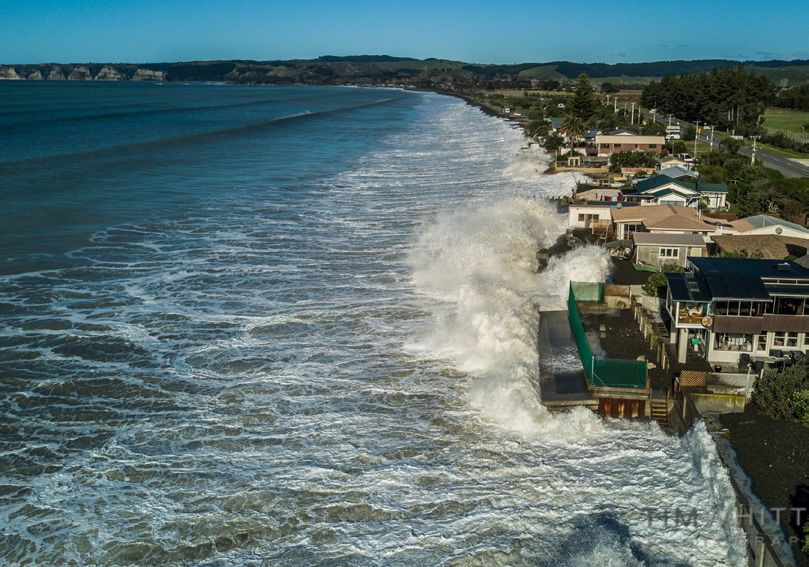
Water:                        Land:
                                                                                                                                                                        Water quality,                  Smart
                                                                                                                                                                         safety and                   sustainable
                                                                                                                                                                          certainty                    land use

                                                                                                                                                                                     Our Focus
Our Strategic Plan
                                                                                                                                                                                      Areas

In response to our regional challenges                       Our Vision and                                          Our Values:
Hawke’s Bay Regional Council adopted a                       Community Outcomes:                                                                                         Biodiversity:            Infrastructure
                                                                                                                     We believe in:
new 5-year Strategic Plan in August 2017.                                                                                                                                Healthy and                & Services:
                                                             We want a healthy environment, a vibrant                Partnership and Collaboration:
This signalled a significant change in direction for the                                                                                                                 functioning            Sustainable services
                                                             community and a prosperous economy.                     we work with our community in
organisation. The new mission reinforces this Regional                                                                                                                   biodiversity            and infrastructure
Council’s core role in environmental management,                                                                     everything we do.
deliberately taking a more proactive, forward looking and
aspirational approach. These along with “working together”
                                                                                                                     Accountability:
are common themes throughout the Strategic Plan.             Our Purpose:                                            we hold ourselves to account to deliver results,
                                                                                                                                                                                         The Strategic Plan identifies time bound
                                                                                                                     be responsive to community expectations, and
Our new purpose states a greater focus on                    We work with our community to protect and                                                                                   goals that sit below four focus areas: Water, Land,
                                                                                                                     the best use of ratepayers’ funds and assets.                       Biodiversity, and Infrastructure and Services.
managing for outcomes – versus a functional                  manage the region’s precious taonga of rivers,
approach – and puts the environment at the                   lakes, soils, air, coast and biodiversity for health,   Transparency:                                                       The Strategic Snapshot (next page) gives an
centre of everything we do.                                  wellbeing and connectivity.                             we report on what we do and the value this                          holistic view of the Regional Council’s activity. The columns
                                                                                                                     delivers for our community.                                         represent the four focus areas in the 2017-2021 Strategic
                                                                                                                                                                                         Plan, to show how our activities are contributing to achieve
                                                                                                                     Excellence:                                                         each of the 23 strategic goals in the Strategic Plan.
                                                                                                                     we set our sights and expectations high,                            Major Projects from the Strategic Snapshot
                                                                                                                     and never stop striving to do better.                               follow, see page 16

p. 12                                                                                                                                                                                                                                             p. 13
Strategic Snapshot Strategic Goals
SMART WATER HEALTHY & SUSTAINABLE SMART WATER HEALTHY & SUSTAINABLE
SUSTAINABLE QUALITY, SAFETY FUNCTIONING SERVICES & SUSTAINABLE QUALITY, SAFETY FUNCTIONING SERVICES &
LAND USE & SECURITY BIODIVERSITY INFRASTRUCTURE LAND USE & SECURITY BIODIVERSITY INFRASTRUCTURE
Hawke’s Bay Tourism Funding Review By 2025, stock is excluded from By 2025, plans for catchments By 2020, regional priority By 2025, regional air quality
Future Farming Mohaka Plan
Investigate Coastal Marine Science Programme Heretaunga Plains all year-round flowing streams where life supporting capacity locations for ecosystem consistently meets World
Right Tree Right Place Tukituki Taskforce Flood Protection
and rivers and at least 30% is compromised are in place restoration - including in the Health Organisation guidelines
are fenced and planted to filter and actively implemented coastal marine area - have
Integrated Catchment Management Plans & Data Management Strategy Coastal Hazards By 2025, coastal hazards
Strategies contaminants been identified
Plans Outstanding Water Bodies 30 year Infrastructure
By 2025, Tāngata Whenua are being managed to meet
STRATEGIC
& Policies TANK Plan Strategy and Asset Plans By 2025, Land Use Suitability values for all catchments are By 2030, key (target) species foreseeable climate change
Water Conservation Order
information is available to all identified and embedded and habitat (sites) are risks to coastal communities
Heretaunga Plains Urban Regional Pest Management Plan Gravel Management Strategy commercial land owners to in the Regional Resource prioritised and under active out to 2100
Implement Development Strategy Regional Freshwater Security restoration (source: HB
Hawke’s Bay Hawke’s Bay Civil Defence Emer- inform smarter land use Management Plan By 2025, the Napier Port
Tukituki Plan Biodiversity Strategy gency Management Group Plan Biodiversity Strategy 2015-2050
By 2030, all commercial farms, By 2030, all aquifers, lakes is future-proofed with the
and Action Plan 2017-2020)
orchards and vineyards operate and rivers have community- addition of a new wharf with
Evaluate Regional Policy Statement & Regional Resource Management Plan
Regional, Land Transport, under a Farm Environment agreed quantity and quality By 2050, a full range of supporting land transport
Public Transport & Cycling Plans
Management Plan or an limits in force indigenous habitats and infrastructure
independently audited industry ecosystems, and abundance
By 2030, cultural monitoring By 2030, flood risk is being
Karamū | Tūtira | Whakakī | Ahuriri | Whātuma HB Biodiversity Foundation Asset Management Schemes best-practice framework and distributions of taonga
Non- & Ecological Enhancement
tools in use in all catchments managed to meet foreseeable
Ecosystem Prioritisation Predator Free HB species are maintained and
regulatory By 2030, all farms in critical By 2030, all popular Hawke’s climate change risks out to 2100
Erosion Control Scheme Open Spaces Sustainable Homes increased in every catchment
source areas have phosphorous Bay swimming sites are By 2030, Hawke’s Bay has
OPERATIONAL
in Hawke’s Bay (source: HB
Navigation Bylaw & management plans being
Farm Plans Consents & Compliance 3 Waters Possum Control Areas Harbourmaster
swimmable 80% of the time, Biodiversity Strategy 2015-2050 environmentally sustainable,
Regulatory implemented, with at least 50% and 90% of the time by 2040 harvestable water identified
Pollution Response Water Information Services Pest Monitoring & Compliance Airshed Monitoring & and Action Plan 2017-2020)
of highly erodible land treated and stored or plans to be
Compliance By 2050, there is an
with soil conservation plantings By 2050, Hawke’s Bay is
increasing trend in the life- stored if required
Monitor predator free in line with NZ
Evaluate State of Environment Monitoring & Reporting Terrestrial Biodiversity Flood Assessment & Warning By 2030, there is 20% less supporting capacity of all of By 2040, Hawke’s Bay is
Report
2050 target (source: Regional
Tukituki Monitoring, Evaluation, Reporting, Improvement Outcome Monitoring Asset Design & Engineering contaminants from urban the region’s degraded rivers carbon neutral.
Improve Pest Management Plan).
and rural environments into and major streams.
receiving waterbodies.
Learning & Development Strategy • Health & Safety Strategy • Cultural Competency • Information By 2050, all highly erodible
PEOPLE, Communication Technology Strategy • Customer Relationship Management System • Intergrated land is under tree cover
PROCESSES, Regulatory Information Systems • Brand Strategy • Communication & Environmental Education •
By 2050, there is 50% less
CUSTOMER Environment Awards • Perception Survey • Māori Engagement • Project Management Office •
& RESULTS Financial Strategy & Investment Policy • Staff Surveys • Capital Structure Review • Stakeholder contaminants from urban
Engagement Plan • Long Term Plan, Annual Plan & Report • Organisational Performance Reporting and rural environments to
waterbodies.
p. 14 p. 15
Major Projects                                                                                                                               Major Project   Description
                                                                                                                                                             Central Hawke’s Bay District Council, Hastings District Council, Hawke’s Bay Regional Council, Napier City
These pages provide more information on key projects in the Strategic Snapshot.
                                                                                                                                                             Council and Wairoa District Council (“the Councils”) have collectively commenced a review of Hawke’s Bay’s
The projects are colour-coded to the focus area they mainly contribute to.                                                                                   three waters service delivery. The three waters are drinking water, wastewater and stormwater. The primary
                                                                                                                                                             objective of this review is to complete an assessment and recommendations of the current and potential service
                                                                                                                                               3 Waters
 Major Project   Description                                                                                                                                 delivery models for three waters in the Hawke’s Bay region. The review’s first phase is progressing well and is
                                                                                                                                                             intended to provide the Councils with information to engage effectively with central government on the water
                 In 2019 we introduced a subsidy of up to 75% to encourage planting on erosion prone land, with a plan for regional                          sector reforms. Ultimately a recommendation will be provided to the Councils about the best way forward. It
                 uptake and extension over the coming years.                                                                                                 will then be for the Councils and their communities to decide the next steps.
                 This $30 million scheme targets Hawke’s Bay’s 252,000 hectares of land (as at 2018) at high risk of erosion and                             Work is ramping up on a plan change under the Resource Management Act (RMA) to set rules for water quality and
                 which is estimated to lose, on average, more than 3 million tonnes of sediment into the regions waterways every                Mohaka       quantity in the Mohaka catchment, as required under the National Policy Statement for Freshwater Management
    Erosion      year. The scheme itself enables tree planting and erosion control work on land that is intended to stay in pastoral
                                                                                                                                                 Plan        (NPSFM). Science plus engagement with iwi and stakeholders will inform drafting of freshwater objectives and
    Control      use or to be retired – we are not targeting commercial afforestation opportunities. We want to see changes to the                           limits for water quality and quantity to be incorporated into the Mohaka plan change.
    Scheme       landscape, at a fast pace and a regional scale, that:
                                                                                                                                             Outstanding     A plan change under the RMA to identify and ensure policies are in place for protection of the region’s outstanding
                 • Reduce soil erosion
                                                                                                                                             Water Bodies    waterbodies is progressing towards public notification for submissions in late 2019, with hearings to follow in 2020.
                 • Improve water quality - through less sediment finding its way into waterways
                 • Improve biodiversity - on land and in water - through habitat protection and creation                                                     The 2018-28 Long Term Plan set aside $5 million to develop an integrated set of freshwater security of supply solutions.
                 • Provide community and cultural benefits through forest ecosystems                                                           Regional      The package includes:
                 With larger teams now operating in Wairoa and Waipawa, we’re working more closely with landowners to coordinate              Freshwater     • Investigating and developing a Managed Aquifer Recharge programme in Central Hawke’s Bay
        Farm     quality farm plans, erosion control plans, nutrient budgets, riparian buffer planting and offer specialist advice. The        Security      • Investigating small-scale water storage across the Heretaunga Plains
        Plans    2018-28 Long Term Plan enabled the Regional Council to borrow up to $5 million over 10 years to speed up Farm Plan           Programme      • An aerial electromagnetic survey of Hawke’s Bay aquifers
                 completion based on actual demand. This removes a big barrier of up-front cost to landowners, with an interest-free loan.                   • A regional freshwater demand and supply assessment
                 The 2018-28 Long Term Plan commits $650,000 over 3 years to set up a local hub of knowledge, research,                                      In the 2017-18 Annual Plan, we allocated $1 million annually for freshwater improvement work in identified
     Future
                 education and opportunity for profitable and resilient farming. We want to ensure the health of the region’s soil                           environmental hotspots across the region.
    Farming      and water, communities and farmers into the future.
                                                                                                                                                             Currently, these are Lake Tūtira, Te Whanganui-ā-Orotu (Ahuriri Estuary), Whakakī Lake, Lake Whatuma and the
                 In 2018, a reviewed HPUDS was jointly adopted by HBRC, Hastings District Council and Napier City Council as an                              Tukituki Catchment, and the Marine Environment (refer to the Coastal Marine Science Programme).
  Heretaunga
                 updated version of the original 2010 strategy for urban development within the Heretaunga Plains sub-region. The                            Te Waiū o Tūtira - the milk of Tūtira - is a joint project with Maungaharuru-Tangitū Trust, Ministry for the Environment,
 Plains Urban
                 HPUDS joint Implementation Working Group oversee implementation of the Strategy and is supported by a small                                 Tūtira local residents and the Regional Council. This project aims to restore the mauri of Lakes Tūtira, Waikōpiro, and
 Development
                 technical advisory group of senior staff from the three councils. Much of the implementation, monitoring and                                Orakai, making it a place that families can happily return to, and where children can swim. This work relies on a total
   Strategy
                 reporting of development indicators is also driven by the 2017 National Policy Statement for Urban Development                              investment of $3.3 million over four years, including $1.5 million of Freshwater Improvement funding secured in 2018.
 hpuds.co.nz                                                                                                                                   Regional
                 Capacity which classifies the Hastings/Napier area as a ‘medium growth’ urban area.
                                                                                                                                               Hotspot       The Ahuriri Estuary project is a partnership with Mana Ahuriri and associated hapu, Napier City Council, Hastings
                 Tukituki was the first of Hawke’s Bay’s catchments to be subject to a plan change under the National Policy                                 District Council, Department of Conservation, other landowners and businesses in this area - a national treasure -
                 Statement for Freshwater Management (NPSFM). This reflected the poor water quality and a decline in natural                  Programme      to clean up water entering the estuary, remove pests and restore the environment to good health.
  Implement
                 (biodiversity) values that need to be resolved. New rules under the Tukituki Plan include stock exclusion from                              The Whakakī Lake project, supported by the Whakakī Lake Trust, local iwi and Whakakī community, aims to
  the Tukituki
                 permanent and some intermittent streams, Farm Environment Management Plans, and maintaining records for                                     revitalise the taonga of Whakakī Lake, so tuna are fit for consumption and people can access the lake and swim safely.
      Plan       nutrient budgeting and restrictions on water takes. Putting this plan change into practice will take a coordinated                          This five year project is an investment of over $3 million which includes $1.38 million of Freshwater Improvement
                 effort from the Regional Council, landowners and the community.                                                                             Funding secured in June 2019.
                 Planting the right trees in the right places in the rural landscape will be a substantial part of the solution to this                      The Lake Whatuma project objective is to partner with tangata whenua, and other key stakeholders, for the long term
  Right Tree                                                                                                                                                 restoration and management of Lake Whatuma. We want to help create a foundation that will provide a platform for
                 region’s significant nutrient and sediment-related land and water challenges. The focus of this project is to inform
  Right Place    investment in tree planting in Hawke’s Bay.                                                                                                 establishing a shared vision and collaborative decision making, to pursue potential actions for enhancing Lake Whatuma.

p. 16                                                                                                                                                                                                                                                                              p. 17
Major Project    Description                                                                                                            Major Project     Description

 Regional Policy                                                                                                                                        The first phase of Predator Free Hawke’s Bay is called Whakatipu Mahia, initially working to remove possums from
 Statement (RPS) The RRMP became operative in 2006 replacing a suite of individual regional plans and RPS that were prepared                            14,500 hectares of land on Mahia Peninsula over four years. Staff have re-located to Mahia to work on this.
  and Resource after the RMA came into force in 1991. A Review of the RRMP was scheduled to commence in 2020/21 financial year,            Predator     Predator Free Hawke’s Bay is a collaborative project building on the success and learnings from the Poutiri Ao ō Tāne
  Management but timing is likely to be adjusted to accommodate other RMA plan change priorities, particularly freshwater.                  Free HB     and Cape to City projects. Finding ways to deliver low-cost predator control enables a massive upscaling of predator
   Plan (RRMP)                                                                                                                                          suppression on farmland. The initial phase of Predator Free Hawke’s Bay aims to eradicate possums and suppress
                  A plan change under the RMA is in preparation for the Tutaekuri, Ahuriri, Ngaruroro and Karamu catchments,                            feral cats, stoats and ferrets across Mahia peninsula, alongside education and biodiversity restoration actions.
                  plus the Heretaunga aquifer system to implement the NPS-FM. This TANK Plan change (’PC9’) will set new rules of                       The new Regional Pest Management Plan came into effect on 1 February 2019. Its primary aim is to limit the adverse
                                                                                                                                         Regional Pest
                  water quality and quantity in the TANK catchment area after an extensive six-year phase of working with the TANK                      effects of unwanted plants, animals, horticultural and marine pests. These invasive species can have wide ranging
        TANK                                                                                                                             Management
                  Collaborative Stakeholder Group. PC9 is progressing towards public notification in late 2019 as a proposed plan                       effects on human health, indigenous flora and fauna, our heritage, or the economy. Hawke’s Bay Regional Council
        Plan                                                                                                                                  Plan
                  for public submissions and hearings to follow in 2020. An implementation plan has also been drafted in parallel to                    implements this plan alongside landowners.
                  the plan change. The implementation plan outlines an extensive package of non-regulatory actions that HBRC and          Civil Defence Since 2018-19, the Hawke’s Bay CDEM Group is funded by a single regional rate. This completes that consolidation of CDEM
                  others would need to do so that objectives in the TANK plan change are achieved.                                       and Emergency Group as a shared services across all councils with in the Hawke’s Bay region. With savings from this approach, the focus
                  A taskforce set up by the Regional Council and Central Hawke’s Bay District Council in September 2018 seeks             Management    is on strengthening civil defence capability with more focus on public education and information during an event.
                  solutions to water quantity issues in Central Hawke’s Bay. The members include irrigators, local residents,                           The Regional Council is working directly with Napier and Hastings Councils, iwi and the community on this long-
    Tukituki
                  environmental groups and local taiwhenua. Currently, the group – in conjunction with staff and governors of CHBDC                     term project to better understand causes and effects of coastal hazards such as coastal inundation (flooding by
   Taskforce      and HBRC – is investigating the right approach to this going forward, with adequate resourcing and support to ensure                  the sea), coastal erosion and tsunami and to find solutions to reduce their impact. Coastal hazard risk is expected
                                                                                                                                            Coastal
                  that the policy intent is met while at the same time ensuring CHB communities are adequately supported.                               to increase due to climate change projections of increased storm intensities and sea level rise. A joint long-term
                                                                                                                                            Hazards     strategy for managing coastal hazards between Clifton and Tangoio has been developed. Work is ongoing to model
                  In 2017, HBRC submitted in opposition to an application for a WCO spanning the Ngaruroro River, Clive River
    Water                                                                                                                                               possible unintended consequences moving to design, costs and funding. Public consultation will occur before
                  and connected groundwaters because it cuts across the TANK/PC9 community decision process. A Minister-
 Conservation                                                                                                                                           decisions are made. The focus will moved to other coastal areas in future.
                  appointed Special Tribunal has concluded hearings submissions, (including evidence presented by HBRC)
 Order (WCO)      and is currently preparing its report and recommendations back to the Environment Minister.                              Hawke’s Bay     Hawke’s Bay Tourism receives annual funding of $1.52 million to promote and market the region, generated through the
                                                                                                                                          Tourism (HBT)    Economic Development rate. A review is underway to develop a long-term sustainable funding model for tourism to
                  The Hawke’s Bay Marine and Coast Group (HBMaC) has developed a ‘roadmap’ for future coastal and marine                 Funding Review    ensure that those who benefit the most contribute more, and to lessen the burden on Hawke’s Bay ratepayers.
    Coastal
                  research for the region. Their intent and vision is to achieve a healthy and functioning marine ecosystem in                             Regional Council administers 25 flood control and drainage schemes throughout the region to reduce the likelihood
    Marine
                  Hawke’s Bay that supports an abundant and sustainable fishery. The multi-stakeholder HBMaC group includes                                of damage from flooding on people, property, productive land and businesses for long term benefits to the
    Science
                  recreation and commercial fishing interests, tāngata whenua as well as government agencies and the Regional             Heretaunga       regional economy. The schemes consist of stopbanks, river and drainage channels, pumping stations, structures
  Programme
                  Council. The Regional Council is currently undertaking a master science programme to give effect to the roadmap.
                                                                                                                                          Plains Flood     and culverts with a replacement value (RV) of close to $185 million. The Heretaunga Plains Scheme is the largest
                                                                                                                                          Protection       scheme with a RV of $139 million. Phased design and construction planning is under way to improve the level of
                  Our team has mapped and prioritised our most at-risk ecosystems, in partnership with the Hawke’s Bay
                                                                                                                                                           protection provided by the Heretaunga Plains Flood Control and Drainage Scheme from 1% (1 in 100 year return
                  Biodiversity Foundation and Guardians. Work is ongoing to cost, manage and monitor the work that needs to be
  Ecosystem                                                                                                                                                period) to 0.2% AEP (1 in 500 year return period) to accommodate climate change impacts.
                  done and engage with landowners. Our goal is to secure and improve prioritised ecosystem sites for biodiversity
 Prioritisation   benefits. The 2018-28 Long Term Plan set aside $200,000 funding annually for planting, fencing, pest management                          Further regional park development will include protecting and enhancing biodiversity values at Hawea Historical
                                                                                                                                             Open
                  and other enhancement work, such as improving water quality in wetlands.                                                                 Park, Pākōwhai Regional Park Pekapeka Regional Park, Te Mata Park, Tūtira Regional Park, Waipātiki Campground
                                                                                                                                            Spaces         and Waitangi Regional Park
                  We have been assisting with the establishment of the Hawke’s Bay Biodiversity Foundation and the HB Biodiversity
  Hawke’s Bay                                                                                                                                              The scheme now applies across the region to include Clean Heat, insulation, solar power systems, double-glazing,
                  Guardians as part of implementing the HB Biodiversity Strategy and Action Plan.                                         Sustainable
  Biodiversity                                                                                                                                             water storage and septic tanks. Eligible ratepayers can now borrow up to $20,000 at 4% from the Regional
                  The Foundation is charitable Trust set up in November 2017 to build and administer an endowment fund,                     Homes
   Strategy,                                                                                                                                               Council and repay over 10 years by way of a voluntary targeted rate.
                  with seed funding from the Hawke’s Bay Regional Council.
  Foundation
                  The Guardians are an Incorporated Society focused on building the conservation community through events,                                 A new bus ticketing and smartcard system for bus services will be introduced, once testing is complete. The new
      and
                  education and small-scale community projects. Both the Trust and the Guardians are supported by a Project                Transport       system means that passengers can top-up their travel cards online, and will return accurate data on passenger
   Guardians
                  Manager funded by Hawke’s Bay Regional Council.                                                                                          trips. NZTA is a major partner in the new system, funding 65% of the implementation cost.

p. 18                                                                                                                                                                                                                                                                         p. 19
Our Council
Te Whakapakari Tahi I Tō
Tātau Taiao – Enhancing
Our Environment Together.
Role and Functions
Hawke’s Bay Regional Council was established as These include: We are also all about the people of this region, employing The boundaries of a region are generally based
• Biosecurity Act 1993 our own passionate team of around 220 people who live on river catchments, while district and city
part of the framework of Local Government [Local
• Civil Defence Emergency Management Act 2002 all over Hawke’s Bay and take pride in the work we do on council territories are based on population
Government (Hawke’s Bay Region) Reorganisation
• Hawke’s Bay Endowment Land Empowering Act 2002 your behalf.
Order 1989] whose purpose is to enable democratic and communities of interest.
• Land Drainage Act 1908
local decision-making and action by, and on behalf • Land Transport Management Act 2003 As an organisation, Hawke’s Bay Regional Council is: The Regional Council has historically, and through legislative
of, communities; and to promote the social, • Local Electoral Act 2001 and Regulations • Outcome and result focused direction, concentrated more on the ‘natural environment’
economic, environmental and cultural well-being • Local Government Act 2002 - water, air, land, the coast - with a long-term view to make
• Local Government (Rating) Act 2002 • Agile and forward looking sure these are used sustainably, and are just as available and
of communities in the present and for the future.
• Maritime Transport Act 1994 • Open out outward facing just as good (if not better) in the future as they are today.
All councils have the full capacity, rights, powers and • Resource Management Act 1991
• Data driven and science informed The Resource Management Act 1991 is one of the principal
privileges to carry on or undertake any activity or business, • Soil Conservation and Rivers Control Act 1941
Acts behind the work of regional councils and many of our
do any act, or enter into any transaction. However, the
These statutes have, to date, principally directed and • In tune with the community we serve activities are aimed primarily at benefiting the environment.
Regional Council must exercise these powers wholly or
determined the responsibilities and activities of the Council.
principally for the benefit of all or a significant part of its • Committed to continuous improvement We also have responsibility for functions that are more
region and not for the benefit of a single district. Hawke’s Bay Regional Council is this region’s • An employer of choice appropriately carried out on a regional basis such as
It is important to note that there are numerous statutes, environmental management authority. We are economic development, land transport planning,
which specifically identify regional councils as having a all about the wise use of Hawke’s Bay’s natural • Committed to health and safety river control and land drainage, and plant and animal
specific function and role in various activities. resources, now and for generations to come. • Passionate about our work pest control.
p. 20 p. 21Organisation and Structure The Executive Team considers organisation-wide issues and Governance
provides a key linkage between Councillors and staff. They
Hawke’s Bay Regional Council is supported ensure what is undertaken within the Groups is consistent Elected members govern the Hawke’s Bay region,
by a professional corporate organisation, with Council’s goals and objectives in the Strategic, Long collectively exercising the powers, duties,
led by the Chief Executive. Term and Annual plans. authorities and responsibilities vested in the
Officers provide Council with policy advice and are The elected members and Council staff work together at
Council by the Local Government Act, Resource
responsible for implementing Council’s policies to achieve different levels to decide what activities should be carried Management Act and other Acts.
the results Council wants. out to achieve the community’s vision and goals, and to plan Individual members do not have any specific authority
The Chief Executive and staff are responsible for managing how they can best be undertaken. This takes place within a to act or make decisions as individuals, and actions of
Permanent Joint
day-to-day issues and implementing Councils’ decisions Councillors are covered by an adopted Code of Conduct.
Committees Committees
framework of competing priorities, timeframes, resources,
and policies. decisions of Council, and within the overall goal of growing
The purpose of the Councillor’s role is to represent
The organisation is structured under eight Groups, each and developing the region in a sustainable environmental,
the interests of all communities in the Hawke’s Environment Hawke’s Bay Civil
headed by a member of the Executive Leadership Team. social, cultural and economic context.
Bay region, ensuring ongoing community and and Services Defence Emergency
economic development, the effective stewardship Committee Management Group
of existing assets, sustainable management of the Joint Committee
Corporate and
environment, and the prudent management of the
Strategic Clifton to Tangoio
Council’s financial resources. Committee Coastal Hazards
Strategy Joint
In order to facilitate decision making and discharge Council’s Finance, Audit & Risk
Subcommittee Committee
governance responsibilities, the Council reviewed its
committee structure following the October 2016 elections
The organisation is structured under Regional Hawke’s Bay Drinking
CHIEF EXECUTIVE and established the Committee structure currently in place. Water Governance
eight Groups, each headed by a member James Palmer
Planning Committee
Joint Committee
of the Executive Leadership Team:
Māori
Committee
Regional Transport
Committee
OFFICE OF THE ASSET INTEGRATED STRATEGIC
CATCHMENT CORPORATE REGULATION HBCDEM MĀORI
CHIEF EXECUTIVE MANAGEMENT PLANNING
& CHAIR GROUP MANAGEMENT GROUP SERVICES GROUP GROUP GROUP PARTNERSHIPS Hearings
GROUP
Committee
GROUP MANAGER GROUP MANAGER GROUP MANAGER GROUP MANAGER GROUP MANAGER GROUP MANAGER GROUP MANAGER TE POU WHAKARAE Tenders
Joanne Lawrence Chris Dolley Iain Maxwell Tom Skerman Jessica Ellerm Liz Lambert Ian Macdonald Pieri Munro
Commitee
p. 22 p. 23Civil Defence Emergency Management Local Government Act 2002
(CDEM) Act 2002 plan 2018-28 LONG TERM PLAN (LTP)
Key Planning plan CIVIL DEFENCE EMERGENCY MANAGEMENT detail In effect from July 2018. Amended in 2019
Documents GROUP PLAN 2014-19
detail In effect from 20 June 2014, currently under review
purpose This plan, which includes the Annual Plan 2018-19,
includes information on Council’s policies, actions
The Long Term Plan (LTP) is a strategic planning Resource Management Act 1991 purpose Covering the areas contained within CHBDC, HDC, and funding that are to be undertaken over the ten
NCC and WDC, this plan is prepared to meet the years of the planning period. This Plan includes
document, adopted every three years, describing plan REGIONAL POLICY STATEMENT & REGIONAL
community outcomes, policies and statements
the community outcomes the Council aims to RESOURCE MANAGEMENT PLAN requirements of the CDEM Act 2002.
required by the Local Government Act 2002.
achieve and the activities it will fund and undertake detail In effect from August 2006 The purpose of the Group Plan is primarily to
Subject to issue-by-issue rolling review guide and inform the agencies involved in CDEM
to achieve those outcomes over a ten year period.
purpose To assist Hawke’s Bay Regional Council’s role (local government, emergency services, non- plan 2019-20 ANNUAL PLAN
The LTP is part of the broader planning cycle, including an under the RMA by setting out a policy framework government organisations). It also gives the
detail In effect from July 2019
Annual Plan which is prepared in intervening years to for managing natural and physical resource use Hawke’s Bay community an overview of how
purpose This plan includes budgets, funding and financial
set the budget and sources of funding for that year. in an integrated manner across the whole of hazards and risks in the region will be managed
and well as what individuals and communities statements for that year, which are contained
Hawke’s Bay Regional Council is also required by law the region (the regional policy statement), and within the LTP 2018-28.
to prepare a number of statutory planning documents, regional planning provisions applicable for the can do to prepare.
under various pieces of legislation, including the Local region, excluding the coastal environment.
Government Act 2002, Resource Management Act 1991, Land Transport Management Act 2003
Biosecurity Act 1993, Civil Defence Emergency Management plan REGIONAL LAND TRANSPORT PLAN 2015-25:
plan ANNUAL REPORT YEAR END 30 JUNE 2018
Act 2001, and the Land Transport Management Act 2003,
plan REGIONAL COASTAL ENVIRONMENT PLAN detail In effect from November 2018
2018 REVIEW
following the processes described in relevant legislation. detail In effect from November 2014 purpose This report compares actual performance with
detail In effect from June 2018
purpose To assist Hawke’s Bay Regional Council’s role proposed performance set out in Council’s
The following have been identified as key Council planning purpose The Regional Land Transport Plan sets out the
and policy documents. A number of these documents are under the RMA of promoting the sustainable planning documents, and contains audited
region’s land transport objectives, policies and
currently under review. To view or to find out more about management of natural and physical resources financial statements, set of accounts, and annual
measures for a ten year period. It includes the
these plans, reports, policies and strategies see Council’s within the coastal environment, including the financial reports which assess Council’s financial
region’s funding application to the New Zealand
website: hbrc.govt.nz. coastal marine area. performance against budget
Transport Agency for local road and state highway
maintenance and improvements, public transport,
walking and cycling, road safety education,
plan ASSET MANAGEMENT PLANS
Biosecurity Act 1993 transport planning and other activities.
detail Operative 2018
The LTP is part of the broader plan REGIONAL PEST MANAGEMENT PLAN 2019
plan REGIONAL PUBLIC TRANSPORT PLAN 2019-29 purpose These plans focus on the management of flood
planning cycle, including an detail In effect from February 2019
detail In effect from 26 June 2019 control and drainage scheme assets; the level
Annual Plan which is prepared purpose Provides the framework for managing defined
purpose The Regional Public Transport Plan sets out which of service they provide; and their improvements
in intervening years to set pests in the region and sets out objectives Council and replacement. There are 3 plans for Council’s
wishes to achieve. public transport services are integral to the
the budget and sources of region’s network. The Plan is also a statement of flood and drainage schemes, and these are
funding for that year. policies and procedures that apply to the public updated regularly.
transport services provided in the region, and
describes how they will be managed.
p. 24 p. 25plan HBRC SIGNIFICANCE & ENGAGEMENT POLICY
detail Adopted by Council resolution 27 June 2018
plan NAVIGATION SAFETY BYLAWS
detail In effect from September 2018
Financial
purpose This policy: purpose The Navigation Safety Bylaws 2018 provide for Information
• Enables Council and our communities to identify Council to regulate or control navigation of
This section includes the Council’s Financial Strategy
the degree of significance attached to particular vessels in the navigable waters within its region
and key financial statements for the Regional Council.
issues, proposals, assets, decisions and activities out to the 12 mile limit and also to regulate related
• Provides clarity about how and when activities for the purpose of safety, such as the We have included sources of operating and capital
communities can expect to be engaged in mandatory carriage of lifejackets. In addition,
funding, and how this funding is applied. These
decisions made by Council the bylaws enable certain areas to be reserved
statements also show the Regional Council’s financial
• Informs Council from the beginning of a for certain activities in the interest of separating
decision-making process about the extent, conflicting recreational activities. position and compliance with financial benchmarks.
form and type of engagement required. One key variance in this year’s Annual Plan figures
- compared to other years - is the assumptions on
the Napier Port capital transaction, the associated
plan TRIENNIAL AGREEMENT Council Plans revenue and capital release.
detail Adopted by Council resolution 22 February 2017 plan HBRC 2017-21 STRATEGIC PLAN
To be revised before 1 March 2020 detail Adopted August 2017
purpose This agreement promotes cooperation between
purpose To describe the vision, purpose, focus areas,
local authorities for communication and values and intended approaches for the
coordination, also to avoid duplication Council’s operations over the next 5 years.
when engaging communities and exercising
general empowerment.
Councillor Community
Representation Input
Strategic Plan Community Outcomes
= Review
Statutory Documents Long Term Plan: (10 Year Plan)
Review Initiatives Annual Report Annual Plan
p. 26 p. 27Key Port Statistics (FY2018)
5 million 3 million
tonnes of tonnes of bulk
cargo handled cargo handled
$92 million3 260,000 TEU*
total revenue in 2018 of containers handled
Financial Strategy Napier Port $37 million4 >2805
Pro formula number of
and Performance Transaction EBITDA employees
The Financial Strategy adopted in the 2018-2028 This Financial Strategy includes an increase in A significant financial lever the Council has recently
Long Term Plan signals a step-change in Regional debt funding for long-term projects that provide pulled is to introduce new capital, via an IPO, to
intergenerational benefits. This includes projected new the Port of Napier Limited (Napier Port) to fund the
Council activity, particularly in the areas of land A final decision of Council was made on 26 June
borrowing of $71 million over ten years with a total Port’s growth and release capital for the Hawke’s
and water to achieve real results on-the-ground at outstanding loan balance of $38 million by the end of the 2019 to proceed with a 45% IPO of shares in the Port.
a regional pace and scale. Bay Regional Council.
2018-28 Long Term Plan period, after repayments.
This decision followed an extensive community consultation This 45% IPO of Napier Port will deliver the funds needed to
There are a range of interventions available to the Council
This supports the goals set out in the 2017-2021 around four options for the funding of significant investment enable the Port to invest in future growth, while protecting
to achieve its goals and objectives. Council always
Strategic Plan in the focus areas of Land, Water, in Napier Port. The Regional Council’s preferred option was ratepayers from the costs, diversifying the Regional
considers the best mix of these to get results within a
to offer shares to the public in an up to 49% stake in the Port Council’s income streams and maintaining majority
Biodiversity, Infrastructure and Services. desired timeframe. This does not mean that it will always
via an Initial Public Offering (IPO) on the New Zealand Stock ownership and control.
take the lead on an issue. A regional leadership role means
The Financial Strategy shows the financial levers available proactively identifying regional issues and working with Exchange (NZX). Council’s objectives for the funding were: The IPO will be conducted by newly-formed Napier Port
to the Regional Council to accelerate and up-scale activity others to deal with these. Leveraging funding from external • Retain majority community ownership of Napier Port Holdings Limited as the entity that will prepare and lodge
and influence behavioural changes to achieve these goals. parties or agencies is a key strategy within the existing • Secure the investment Napier Port requires the product disclosure statement setting out the details of
We have deliberately front-loaded the current incremental delivery model. When working in partnership greater (for a new wharf and other capital items) the IPO, offer the shares under the IPO, become the entity
activity for greater impact sooner. listed on NZX and be the parent company of Napier Port.
flexibility can be required for delivery timeframes. • Protect ratepayers from the costs of funding
Key levers include the Regional Council’s funding mix – During the 2018-19 financial year considerable additional the development
* TEU = Twenty foot equivalent unit.
fees and charges, investment income, debt, external grant funding has been secured and is expected to continue, for • Diversify and de-risk the Council’s investments 3
Revenue relates to operating income as disclosed for the Historical Periods in the
funding and rates. We have also adjusted the balance of example funding received from the Provincial Growth Fund to better protect ratepayers audited financial statements for Napier Port.
4
Pro forma EBITDA is a non-NZ GAAP measure that includes pro forma adjustments as
incentives and regulation, increased internal capacity, and for freshwater security projects, LINZ for Lidar and NZTA for • Retain exposure to the future financial described in Section 7.9 of the PDS (Reconciliation of Pro forma EBITDA to Statutory NPAT).
operating and capital expenditure. transport projects. performance of a growing strategic asset 5
As at March 2019.
p. 28 p. 29You can also read


