SJB Junior High Student Handbook 2017-2018 - Calgary Catholic School District
←
→
Page content transcription
If your browser does not render page correctly, please read the page content below
SJB Junior High
Student Handbook
   2017-2018

                 Home of the
                  Bulldogs
            Principal – Mrs. Saraceni
       Vice-Principal – Mrs. Adriana Wild

                St. Jean Brebeuf School
                5030 Northland Dr. NW
                  Calgary, AB T2L 2J6
         Ph: 403-500-2046 Fax: 403-500-2246
Website: https://www.cssd.ab.ca/schools/stjeanbrebeuf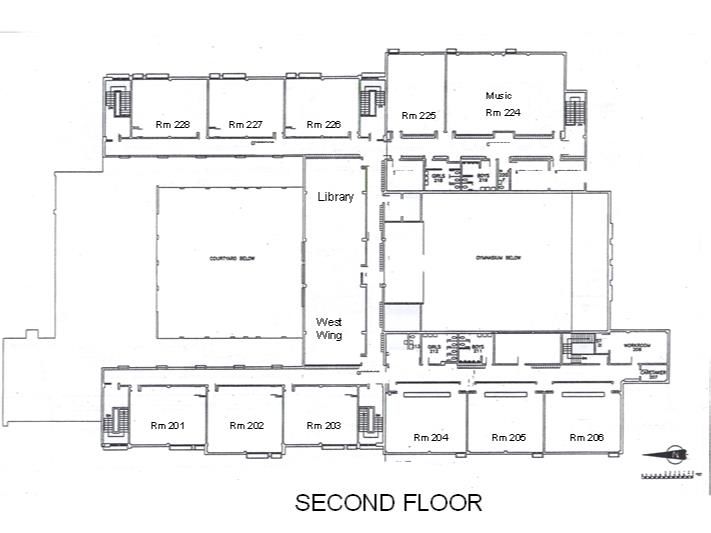
BACK-TO-SCHOOL 2017

Dear Students:

Welcome to St. Jean Brebeuf! Our teachers and staff are looking forward to working
cooperatively with you in making St. Jean Brebeuf a positive and successful school community.

This SJB Junior High Student Handbook is designed to familiarize you with our school’s operations
and expectations. In addition, emails, phone calls, D2L and other written methods of
communication will keep you informed.

If you require further assistance, please contact your teacher advisor (TA), as they are the best
source for information regarding your progress.

Sincerely,

Mrs. Elisé Saraceni                            Mrs. Adriana Wild
Principal                                      Vice-Principal

                                           DESCRIPTION

St. Jean Brebeuf is a Grade 7-9 school of approximately 540 students, operating under the
auspices of the Calgary Roman Catholic School District #1.

St. Jean Brebeuf-The Person

                       Our School is named in honour of St. Jean Brebeuf. Father Brebeuf could
                      be described as an apostle, a brave adventurer, a skilled writer, a man of
                      vision and more simply as a saint and a martyr. He lived his life in the spirit
                      of the Beatitudes and the Sermon on the Mount. Each September we
                      celebrate the feast of our patron saint. May St. Jean Brebeuf guide our
                      lives in the service of God.

                                       MISSION STATEMENT

Our commitment is to the growth of students in their spiritual, intellectual, social, emotional,
aesthetic and physical development. We believe all students can learn. Success for all students.
As members of the St. Jean Brebeuf School Community, we will reflect the teaching of the Gospel
in our words and actions.

                          BELIEVE, BELONG, BECOME

                                                  2
SCHOOL ORGANIZATION

BELL TIMES

                      3
ATTENDANCE
   • The School Act states that students must be punctual in their attendance at school.
   • In the event of an absence, parents/guardians are requested, prior to 8:50 am, to contact
     the school by phone indicating the reason for the student’s absence. The school’s absence
     line (403-289-8485) as well as the main line (403-500-2046) have answering machines
     that are always switched on.
   • Please try to schedule appointments outside of school hours whenever possible, as being
     absent can be disruptive and detrimental to students’ academic success. However, in the
     case of a medical or dental appointment, a note or phone call should be sent in advance
     so the student can be released from class. As well, a parent/guardian can come into the
     school to sign their child out and the office will then call the student to be released.
   • Please note that when parents authorize their children to leave the campus during the
     school day, the District accepts no liability during those times.
   • When students are marked absent and the office has not received a note or phone call,
     the School Connects Automated Notification Service will attempt to contact
     parents/guardians by telephone and email to confirm absence. This procedure is
     undertaken to ensure the safety of our students.
   • It is important to note that students who are absent due to vacation will be marked as
     unexcused as per District guidelines.
   • Students who are repeatedly late or absent without a reasonable excuse are considered
     in violation of the School Act. The guidance counsellor will meet with students who are
     habitually late arriving at school or late getting to class within the time provided.

ILLNESS/ INJURY AT SCHOOL
    • Parents will be contacted before a child is permitted to leave the building because of
       illness or injury. In the case of a severe injury or illness, an ambulance may be called if
       necessary.
    • The school will always err on the side of caution when dealing with injured or ill students.
       It is imperative that we have current emergency contact, work and cell phone numbers
       so parents can be contacted should situations arise.

ENTRANCE/EXIT DOORS
   • We ask that students NOT use the main entrance except under the following
     circumstances:
     ▪ Attending a morning practice
     ▪ Are late and are reporting his/her arrival to the office
     ▪ Are accompanied by a parent/guardian

SCHOOL PARKING LOT
   • Please be extremely cautious and safe when dropping off or picking up your child. Please
     refrain from driving into our front parking lot as it is reserved for staff and visitor use
     only. Parking in the Sir Winston Churchill parking lot is prohibited and you will be ticketed.
   • Our side parking lot is ideal for dropping off and picking up student and has two
     entrances. However, we will be restricting parking for drop-off/pick-up limiting this
     where students play basketball. Signage (and/or) pylons will be in place to help enforce
     these parameters to ensure student safety.

                                                4
VISITORS TO THE SCHOOL
• To maintain a safe school environment, all visitors and parent volunteers are required to
enter by the front doors and register at the main office. Board policy dictates:
o Anyone who is not a regular staff member or student of the school will be termed
a “visitor”.
o Any visitor to the school must report to the school office upon arrival at the school.
o Visiting alumni are requested to visit only after school hours.
o Visitors and parent volunteers are required to wear a visitor’s badge while in the
building. This policy assists in maintaining security in the school. Parents collecting
their children for appointments during the day are asked to meet their children at
the main office to sign them out.
o Parents attending liturgies or celebrations in the gym are not required to register
at the office.
o Teachers are unable to take class time to discuss individual matters with visitors.
VOLUNTEERS
• St. Jean Brebeuf School welcomes all parents/guardians who would like to volunteer.
• Parents/guardians who wish to volunteer at the school or with a class on a field trip must
complete the required documents, located on our school website at:
https://www.cssd.ab.ca/schools/stjeanbrebeuf/Parents/Volunteer/Documents/Volunte
erGuidelinesExpectations.pdf
TELEPHONE USE
• St. Jean Brebeuf services over 540 students and staff. Contacting your child during the
school day can be difficult. It is suggested that all arrangements be made for
appointments or rides before your child comes to school.
• Students are not permitted to use cell phones during the instructional day.
• Students can use school telephones in case of emergencies and illness.
• If contact with a student is necessary, parents/guardians may call the school and leave
the message with our secretary. Please refrain from contacting your child on their cell
phone, by calling or texting, as our school policy is that cell phones may be used in class
at teacher discretion for educational means, for example, calendar and calculator.
• Please note that students are contacted at dismissal bells to come to the office for
messages. This practice reduces the number of disruptions during the instructional
time. Your patience and cooperation is greatly appreciated.
LOST AND FOUND
• Clothing that is lost or misplaced is put in the ‘Lost and Found’ area located by the west
gymnasium doors.
• Smaller items such as jewellery and calculators are kept at the main office.
• Students and parents are encouraged to look through these boxes on a regular basis.
• Every year many excellent articles are not claimed. Consequently; pre-Christmas, pre-
Easter and at the end of the school year, unclaimed articles are donated to charitable
services.
5BACKPACK POLICY
• Students may enter and exit the school with their backpacks, gym bags, purses, etc.;
however, they are not allowed to carry them from class to class.
LOCKERS
• All students are assigned lockers and provided with a high-quality combination lock at the
beginning of the school year. Only school-issued locks will be permitted.
• Students are entirely responsible for the security of their own lockers and combinations.
• Locks are rented from the office at the beginning of the year and collected by the
homeroom teacher at year end. Lost or damaged locks will be reissued with a charge to
the student.
• Students are discouraged from sharing their locker combo with other students.
• Homeroom teachers collect the student’s locker combinations to obtain access if
required.
• As the owner of the school lockers, the Calgary Catholic School Board empowers the
principal (or designate) to carry out general inspection of the lockers.
PERSONAL ITEMS
• Students are discouraged from bringing personal items of significant value to school and
from carrying any substantial amount of money.
• In addition to being a possible distraction and/or hazard, the security of these items
cannot be guaranteed. The school cannot take any responsibility for the safekeeping of
valuables.
• When changing for gym class, do not leave valuables (i.e. jewelry, cell phones) in the
change room. In addition to being distractions and/or hazards, the security of these items
cannot be guaranteed. Please be aware that the school will take no responsibility for their
safekeeping.
AIR RIFLES/GUNS
• The district prohibits students from possessing weapons or engaging in violent or
threatening acts on school property, and at school sponsored functions and activities.
"Weapon" means any object, device, or instrument designed or through its use can
threaten or producing bodily harm to oneself or others. By this definition, air rifles/guns
are therefore considered weapons.
• As it is challenging to visually identify these weapons as air rifles/guns, school staff,
Calgary Police Services and the RCMP will likely respond in the same manner as they
would an actual rifle/gun.
• For the safety of all students, staff and visitors in the school, these items are not allowed
on school property or at school-related activities under any circumstance.
STUDENT DRESS AND APPEARANCE CODE
• As a Catholic School District, the goal of our Dress and Appearance Code is to provide a
positive and safe learning environment that will reflect our virtues of decency, modesty
and respect. A student’s dress and appearance shall be appropriate for educational
activities:
6o Emblems, printing/writing on shirts, jackets and headwear shall be in harmony with
Catholic values and beliefs.
o Shorts and skirts shall be in good repair and of appropriate length (end of finger tips
while arms are by their side).
o Appropriate footwear shall always be worn (no flip-flops).
o Clothes, jewellery or accessories which create a safety or health concern or threaten
to cause disruption to the educational process, are prohibited.
• The following are prohibited:
o Midriff shirts, halter tops, spaghetti straps, muscle shirts.
o Garments revealing bare back, shoulders, plunging necklines or those made of sheer
or fishnet fabrics.
o Clothing or accessories that depict or symbolize alcohol, drugs, violence, gang
associations or inappropriate language/messages.
o Heavy or spiked chains.
• Students not complying with the Dress and Appearance Code will be asked to change into
more appropriate attire. It will be viewed as defiant behaviour if the student repeatedly
violates the Dress and Appearance Code. Consequences, as outlined in our school’s
Progressive Discipline Plan, will range from a verbal reminder to a suspension from school.
TEXTBOOKS/BAND INSTRUMENTS
• All students are expected to take proper care of their instruments and textbooks, which
are provided by the school.
• To ensure the school maintains sufficient quantities, students are expected to return
materials by the assigned deadlines.
• If these items are lost or damaged, students are charged replacement costs.
• Textbook covers are available to purchase for $1.00 in the library
LUNCH POLICY AND PROCEDURES
• Grade 7 students do not leave the campus during the lunch period.
• Grade 8 and grade 9 students may leave, if written permission is granted.
• The lunch hour is very tight; therefore, we recommend that students bring lunches or
purchase items from the school concession. We have microwaves available for students
use and hot water available for dried soup.
• After lunch, a variety of teacher supervised clubs (ie: math, chess etc) are available for
students and the learning commons is open for individual study.
• Students not involved in lunch activities are expected to remain outside, weather
permitting.
• Students are to remain outside before school and during non-hours unless the
temperature falls below –18° Celsius. We remind students to wear appropriate clothing
that allows for the weather fluctuations.
GUM/FOOD
• Gum chewing is allowed at the discretion of each individual classroom teacher.
• Students are encouraged to have a snack during the morning nutrition break. There is no
eating or drinking (other than water) in the classroom, unless directed otherwise by the
teacher.
7FIELD TRIPS
• Field trips approved by the school or District Office are considered an integral co-
curricular component of the instructional program. Field trips are an extension of the
school therefore, appropriate behaviour is an expectation.
• An annual authorization form will be sent home early in the school year. In addition, an
authorization form will be sent home for each individual field trip. These forms include
pertinent information regarding the specific field trip and in some instances parents will
be asked to contribute a fee to cover some of the costs (ie, transportation and/or
entrance fee). Other times it is incorporated into school fees collected in September.
• Students will not be permitted to go on a field trip without written authorization from a
parent/guardian.
CALGARY TRANSIT BUS PASSSES
• Students who live more than 2.4 km from their designate school are entitled to receive a
rebate for their Calgary Transit bus pass. The school office will collect bus passes from
students for bus pass scanning each month and parents will receive their rebate at the
end of the following month, provided a yearly rebate form has been returned to the
office.
STUDENT FEES
• All students are required to pay school fees at the beginning of the year. These fees reflect
program costs that do not receive financial support from the regular school budget. The
fees will cover subject supplies and activities such as field trips and guest speakers. The
fee format is discussed and approved by the School Council prior to year-end.
SCHOOL SERVICES
COMPUTER AND INTERNET USE
• All students are required to have an Annual Student Acceptable Use Policy for Internet
form signed by the student and the parent/guardian. Misuse of the internet will result
in serious penalties including student access privileges being revoked. Please read the
permission form very carefully to avoid any compromising situations.
COUNSELLOR
• St. Jean Brebeuf Junior High School has a qualified teacher/counsellor who is a resource
person for students, parents/guardians and faculty. The guidance and counselling offered
at the school is of a developmental and preventative nature, but also includes situational
and crisis intervention referrals. Students and parents are encouraged to consult the
counsellor about academic, social or personal concerns.
HEALTH SERVICES
• A public health nurse is assigned to the school on a part-time basis. The nurse assists
students in maintaining good health.
• The nurse will also maintain inoculation records and will coordinate grade appropriate
vaccinations. Parents will be notified prior to any treatments. It is imperative that
8accurate and current contact numbers be retained at the office always.
LEARNING COMMONS
• The learning commons is a flexible and digital learning environment where students can
collaborate and inquire as they develop their learning.
• Students can also borrow books and use computers available. Lost or damaged materials
or equipment are charged to the student. Borrowing privileges may be revoked if deemed
necessary.
SCHOOL COUNCIL
• An advisory council to the Principal consisting of parents/guardians and teachers exists
for enhancing communication between the school and the community.
• All St. Jean Brebeuf parents/guardians are members of this council and are invited to
attend meetings.
• All meeting dates will be published in the newsletter, on the school website or can they
be obtained by contacting the school.
ENGLISH LANGUAGE LEARNER
• The Calgary Catholic School System assists students from other countries in learning
English and adapting to Canadian culture. Based on the anticipated needs of the school
and student population, the school is allocated second language support to these
students and parents/ guardians.
SCHOOL RESOURCE TEAM (SRT)
• The School Resource Team is comprised of St. Jean Brebeuf teachers and administrators
who meet to discuss concerns regarding individual students. Schools may access
Instructional Services personnel to assist in meeting individual student needs. These
meetings are part of the process that help teachers better meet the needs of students
and address areas of concern.
SCHOOL RESOURCE OFFICER
• The Calgary Police Service assists our school in a variety of ways. We have a School
Resource Officer assigned to our school. These individuals are available to classroom
teachers for educational presentations related to safety, bullying, etc. The Resource
Officer also investigates criminal activities in and around our school.
• Please call the office if you would like the SRO to contact you.
NEWSLETTER
• The school publishes a weekly newsletter, which is emailed home and available on our
website.
• Any additional information that may need to go out throughout the month will be sent in
the form of an email.
9ACADEMIC PROGRAM
PROGRAM OF STUDIES
• Alberta Learning establishes the program of studies and recommended time allotments
per subject. A detailed outline of grade level curricula may be obtained from the school
or on the Alberta Learning Website at www.learning.gov.ab.ca.
COURSE OUTLINES
• Teachers provide students with course outlines at the start of the year. Included in these
outlines are homework expectations and course evaluation methods.
HOMEWORK POLICY
• Homework is any task assigned by teachers that students complete during non-school
hours. The Calgary Catholic School District recognizes well-planned homework can be a
meaningful part of a student’s learning. Time spent on homework may vary from one
student to the next. Parents/ guardians who have concerns with homework expectations
should contact their child’s teacher or the school principal to discuss the situation and the
options available.
• The Calgary Catholic School District finalized a homework regulation in consultation with
its community for the benefit of parents/guardians and students. You can find more
information about the District’s homework regulation at
https://www.cssd.ab.ca/Parents/ParentSupport/Homework/Pages/Default.aspx
REPORTING PERIODS
• There are four reporting periods in each academic year. The first is an initial conference
that is meant to meet the Teacher Advisor and discuss potential goals. Formal written
Progress Reports are sent home in November, March, and June.
• Parent/Student/Teacher Conferences are scheduled the week after the November and
March reporting periods.
• Parents/guardians are encouraged to contact the corresponding subject teachers with
questions or concerns related to student progress at any time throughout the year via
email, phone or by making an appointment.
• Parents can find information about their child’s progress on D2L; however, we are
encouraging teachers and parents to keep open lines of communication throughout the
school year. If there are things to be discussed, waiting for Parent/Teacher Conferences
is too late.
• There are two important aspects to the progress report: achievement grade and work
habits. These are two separate assessment areas and are not necessarily connected to
each other. For example, it is entirely possible for a student to achieve a 90% and a “1”
for Work Habits on any course.
10WORK HABITS RUBRICSS
4 3 2 1
Consistently Often Inconsistently Experiencing
demonstrates demonstrates demonstrates difficultly
behaviours in behaviours in behaviours in demonstrating
the following the following the following behaviours in
areas areas areas the following
areas
Citizenship - respects the rights of others by demonstrating a positive
attitude, collaboration and appropriate behavior
Course Work - completes all assigned work with care and attention
within the required timelines
Organization - comes to class with required materials; collects and
manages information; makes appropriate use of time
Engagement - demonstrates initiative and responsibility for learning; is
attentive and contributes to class activities
BRIGHTSPACE BY D2L
• Our school district uses Brightspace by D2L as our main platform for online
communication between school and home. D2L stands for “Desire2Learn” – a web-based
Learning Management System used to provide students, teachers and parents/guardians
access to course news, content, grades, and other tools. You can access D2L by clicking
the D2L link on our school website or at: https://dl.cssd.ab.ca/d2l/login.
• Students are required to give parents/guardians their username and passwords to access
Brightspace D2L. If a parent/guardian is unable to access the student’s account, please
contact the school and we will reset their passwords.
PHYSICAL EDUCATION PROGRAM
• Physical Education is a mandated subject, and all students are required to participate
unless formally excused for medical or disability reasons.
• If a student is unable to participate in more than three regular classes, a medical note
must be provided stating the time during which the student is excused from class
participation.
PHYSICAL EDUCATION DRESS
• To foster a proper learning environment, promote safety, comfort, hygiene, and neatness
in appearance, physical education attire should be worn for all athletic activities in junior
high.
• The St. Jean Brebeuf School gym strip consists of shorts and a t-shirt, which are available
from the school.
• Proper running shoes are also compulsory for all grades.
11CO-CURRICULAR AND EXTRA CURRICULAR ACTIVITIES
RELIGIOUS ACTIVITIES
• Numerous liturgies/celebrations and masses are presented throughout the year, and are
prepared and presented by students and teachers.
• Parents/guardians and family members are always invited to attend these
liturgies. Please watch for dates and times in our newsletters.
STUDENT GROUPS & HUMAN SEXUALITY TOPICS
• Our school has established a student group which engages in discussion and activities
related to diversity and justice issues, including support for students belonging to sexual
minorities.
• Within our Religious Education and Family Life Catholic Community of Caring program,
students may provide leadership and receive support to continue to build inclusive
communities, aligned with our Catholic social teachings. If you wish further information,
please contact the principal.
INTER-SCHOOL SPORTS
• St. Jean Brebeuf School enters teams in the Calgary Catholic Junior High School Athletic
Association’s sponsored events. There are opportunities for junior high students at each
grade level to participate in most events. These teams involve students who have the
interest and ability to compete at a higher level than that which exists in the intramural
program.
• To be eligible to try out for such teams, a student must maintain a satisfactory record of
academic achievement, classroom conduct, cooperation and contribute positively to the
school community. Our school teams are known as “the Bulldogs”, will participate in cross-
country running, volleyball, basketball, flag football, badminton and well as track and field.
STUDENT CODE OF CONDUCT
BEHAVIOURAL EXPECTATIONS
As stated in The School Act, Section 45.1, the district is committed to providing welcoming,
caring, respectful and safe learning environments that respect diversity and foster a sense of
belonging. Each member shares responsibility for the well-being of every other member of the
district. As such, a code of conduct must be established and reviewed yearly and shared
publicly with staff, parents/legal guardians, and students.
The following elements will be common to the code of conduct in each district school:
1. Statement of purpose:
Calgary Catholic School District’s value statement is as follows: “All members of our
community are sacred and must be treated with dignity and respect. We value excellence in
Catholic education, guided by shared responsibility and the moral authority of the Church.”
This statement guides all district stakeholders as they work to support student success and
achievement. The school should be a positive learning environment in which students are
12safe, secure and successful. The code of conduct will outline expectations for student
behaviour while at school, at a school-related activity, or while engaging in an activity that
may have an impact on others in the school. The school’s code of conduct will be
communicated to parents, students and staff annually and reviewed regularly.
2. The Alberta Human Rights Act:
Section three of the Alberta Human Rights Act prohibits discrimination on the basis of an
individual’s race, religious beliefs, colour, gender, gender identity, gender expression,
physical disability, mental disability, age, ancestry, place of origin, marital status, source of
income, family status or sexual orientation of that person or class of persons. Any behaviour
that supports this discrimination is prohibited.
3. Acceptable behaviours:
All district schools have established Catholic Community of Caring programs that focus on
building respectful and caring school environments, rooted in Catholic values. Catholic
Communities of Caring programs align with the School Act’s requirement to provide
welcoming, caring, respectful and safe learning environments. Within our schools, we are
building communities that are inclusive and celebrate respect for one another, community
and diversity.
This includes placing a strong value on:
• Respecting all others, regardless of race, religious beliefs, colour, gender, gender
identity, gender expression, physical disability, mental disability, age, ancestry, place of
origin, marital status, source of income, family status or sexual orientation.
• Respecting the school authority.
• Respecting the school and district property, as well as the property of others.
• Respecting yourself and the rights of others in the school.
• Making sure your conduct contributes to a welcoming, caring, respectful and safe
learning environment in the school that respects the diversity and fosters a sense of
belonging of others in your school.
• Refraining from, reporting and refusing to tolerate bullying or bullying behaviour, even if
it happens outside of the school or school hours or electronically.
• Informing an adult you trust in a timely manner of incidents of bullying, harassment,
intimidation or other safety concerns in the school.
• Acting in ways that honour and appropriately represent you and your school.
• Attending school regularly and punctually.
• Being ready to learn and actively engage in and diligently pursue your education.
• Knowing and complying with the rules of your school.
• Cooperating with all school staff.
• Being accountable for your behaviour to your teachers and other school staff.
• Contribute positively to your school and community.
4. Unacceptable behaviours:
Behaviours that do not support the Community of Caring program, and therefore interfere
with the establishment of welcoming, caring, respectful and safe learning environments are
considered unacceptable.
These include, but are not limited to:
13• Behaviours that interfere with the learning of others and/or the school environment, or
that create unsafe conditions;
• Acts of bullying, cyber-bullying, harassment, or intimidation;
• Retribution against any person in the school who has intervened to prevent or report
bullying or any other incident or safety concern;
• Breaches of digital on-line safety;
• Inappropriate use of mobile devices;
• Inappropriate student dress;
• Physical violence or threats;
• Personal or sexual harassment;
• Hazing;
• Illegal activity such as:
o gang activity;
o possession or use of weapons;
o possession, use or distribution of illegal or restricted substances (including drugs,
alcohol, tobacco, or e-cigarette products);
o theft or damage to property.
As outlined in Alberta’s School Act, students can be held accountable for conduct that
occurs outside of the school building or school day and electronically (e.g. social media), if
the conduct negatively affects a member of the school or interferes with the school
environment.
5. Progressive discipline plan:
Students who engage in unacceptable behavior will be held accountable through the
school’s progressive discipline plan. Consistent and logical consequences, rather than
punitive measures, are important to support students in making appropriate choices and
help shape their future actions.
In any disciplinary situation, each student will be dealt with on an individual basis, and will
take into account the student’s age, maturity and individual circumstances. As well,
parental or district involvement may be requested to support school discipline procedures.
The school’s use of the progressive discipline plan will determine the expectations,
consequences and the progression of actions to be taken depending on the severity and/or
frequency of the occurrences. At all times, teachers and administrators will use their
professional judgment in applying consequences.
Consequences must have a positive effect on the student’s journey through reconciliation,
either formally or informally, with the school community and those affected by the
student’s behaviour. The following consequences are progressive in their degree of
intervention and will be enacted depending on the frequency and severity of
occurrences. They will be applied consistently and equally to all students, notwithstanding
the individual differences of children and the uniqueness of specific circumstances and
situations.
14Progressive discipline is a whole-school approach that utilizes a continuum of interventions,
supports, and consequences, including:
• prevention measures and initiatives;
• early and ongoing intervention strategies;
• strategies to address unacceptable behaviour.
Interventions and consequences increase when:
• the concerning behavior is persistent;
• the concerning behavior escalates;
• there is a very serious infraction of the code of conduct.
Interventions and consequences may include, but are not limited to, the following:
• informal conferences;
• restriction of privileges;
• parent conferences;
• in-school suspensions;
• risk assessment;
• suspension / expulsion (AP 356);
• student redirection
• Behaviour Support Plan (as part of the Learner Support Plan);
• involvement of Instructional Services and supports;
• involvement of external services and supports.
The principal may involve police in disciplinary matters when criminal activity has become
evident. When police are involved, the principal will conduct a separate, parallel
investigation at the school level and provide disciplinary action separate from any criminal
charges that may be issued.
6. Student support:
Support will be provided to students impacted by inappropriate behaviour and to those
students who engage in inappropriate behaviour. This is significant because while the
student code of conduct must address the consequences for inappropriate behaviour, such
as bullying, it also ensures that support (not just consequences) is provided to those
students who engage in unacceptable behaviour. Examples of how support could be
provided to students who have engaged in unacceptable behaviour include mentoring,
restorative processes, regular check-ins with teachers or schools counsellors, counselling,
etc.
7. Consideration of student diversity:
The School Act requires that the student code of conduct address consequences for
unacceptable behaviour and that these reasonable consequences take into account the
student’s age, maturity, and individual circumstances. The specific circumstances of the
situation and of the student need to be taken into account when determining appropriate
consequences. For example, any diverse needs that the student has – whether they are
physical, behavioural, communicational, mental health, trauma, etc. – must be considered.
15The age and maturity of students involved should be considered when determining the
consequences and support required.
SCHOOL DISCIPLINE PLAN
The maintenance of discipline in school is the responsibility of the teachers, staff, and school
administration.
Specific disciplinary measures used at St. Jean Brebeuf School include the following:
- Warning/discussion with student regarding the concern
- Detention/time out/reflective story/community service
- Informal/formal talks between student, teacher, counsellor, parents/guardians and
administration
For Repeat Offenders or Serious Offences:
▪ In-school suspension
▪ Student sent home in the care and custody of parents/guardians in order to reflect on or to
defuse the situation. In such cases, parents/guardians are contacted and a conference with
a representative from administration is required prior to reinstatement
▪ Formal suspension of 1-5 days
▪ Parents/ guardians and superintendent notified in writing
*Note: Any time a student is given an in or out of school suspension, parents/guardians and their
child must meet with their TA and administration to plan for a successful reinstatement, discuss
conditions and corrective measures prior to students returning to school.
The seriousness of an offence may be such that the school resorts directly to formal suspension.
Noon hour or after school detentions may be assigned by teachers for violations of school and
classroom regulations (incomplete assignments, tardiness, disruptive behaviour in class).
We believe positive change will result from:
▪ Continued communication and cooperation between home and school.
▪ Consistent application of the disciplinary measures noted above.
A CATHOLIC COMMUNITY OF CARING (Climate & Culture)
• St. Jean Brebeuf is proud to be a Catholic Community of Caring School. Our school strives to
promote, model and teach six key values. These values are Faith, Family, Caring, Trust,
Respect and Responsibility.
• All activities, interactions and planning begin with these values at the core. We believe that
all students will benefit from practising these values when it comes to decisions both now
and in the future.
• The Catholic Community of Caring philosophy is exciting because it permeates every aspect
of our school. The six core values are incorporated into classroom learning, extra-curricular
activities, school awards, playground activities and our Catholic celebrations.
16WEBSITE/TWITTER
We are proud to have our Website and Twitter Feed updated on a regular basis. They are both great
ways to keep apprised of what’s happening at St. Jean Brebeuf School. Please consider these
platforms as other communication tools.
Website: https://www.cssd.ab.ca/schools/stjeanbrebeuf/
Follow us on Twitter at: https://twitter.com/SJB_CCSD
TECHNOLOGY POLICY
St. Jean Brebeuf Technology Policy Framework
Rationale:
Technology can be very helpful for personalized, student-centered learning, such as organization,
research, collaboration, D2L/Google access, and creating digital products/portfolios. Together
with parents/guardians, our goal is to help students become Digital Citizens who use technology
in respectful, responsible and productive ways.
Albert Education Policies:
● Inspiring Education
https://education.alberta.ca/media/7145083/inspiring%20education%20steering%20co
mmittee%20report.pdf
● Learning and Technology Policy Framework
http://www.education.alberta.ca/admin/technology/policyframework.aspx
● Bring Your Own Device: A Guide for Schools
http://education.alberta.ca/media/6749210/byod%20guide%20revised%202012-09-
05.pdf
Engage Stakeholders:
● Digital Citizenship Workshop-share with teachers, then admin presents to students
Technology in the Classroom
Clarification of Use:
● St. Jean Brebeuf supplies Chrome Books, Computers and iPads for student use
● BYOD (Bring Your Own Devices) helps support learning in addition to school based
technology (ex. laptops, tablets, smartphones/handhelds/netbooks/e-book readers,
mp3 players, etc.)
Responsible Use:
● Students should not expect that they will be permitted to use their electronic devices
every day during every class. It’s at the discretion of the teacher.
Students agree to use personally owned devices at school as follows:
● School-related learning (i.e. no texting, social media, phone calls)
17• teachers give permission, as discussed in each class
● Connected to the school Wi-Fi, under POD (Personally Owned Devices)
● Record/photograph others only for school related purposes (ex. projects, assignments)
and have teacher and classmate(s) permission.
● Recordings/photos must be deleted after classroom projects are finished
• cannot be posted to YouTube, Facebook, Twitter, Instagram etc. or shared with
others
● Devices must be kept on silent (cell phones should not ring or buzz when someone is
calling or texting them)
Electronic devices can be used for the following, with permission of individual teachers:
● listening to music during work or study times
● use school appropriate Apps (dictionary, calculator, calendar, etc.)
● entering assignment due dates during class when the teacher has given permission to
the students
● check D2L for marks and course content
● use Google Drive for assignments
● use the internet for research purposes
Provincial Mandate:
With the devices provided by St. Jean Brebeuf and students’ devices, combined with the right
pedagogy and used responsibly, technologies in learning can serve as:
1. lines of inquiry and interest based on academic subjects and beyond
2. allow for collaboration with teachers and peers to express themselves and their ideas
effectively
3. personalize their learning to ensure that they are fully engaged and are successful in
attaining the established learning outcomes
4. allow for student choice to explore, research, think, synthesize, analyze, evaluate,
communicate and express ideas
5. platform for students' voice
6. access to digital content and digital learning environments that provide multiple
pathways to learning
7. connect to local and global learning environments - enables students to connect and
purse real-world issues and topics that interest them (individually and collectively)
8. learn and attain standards for digital citizenship
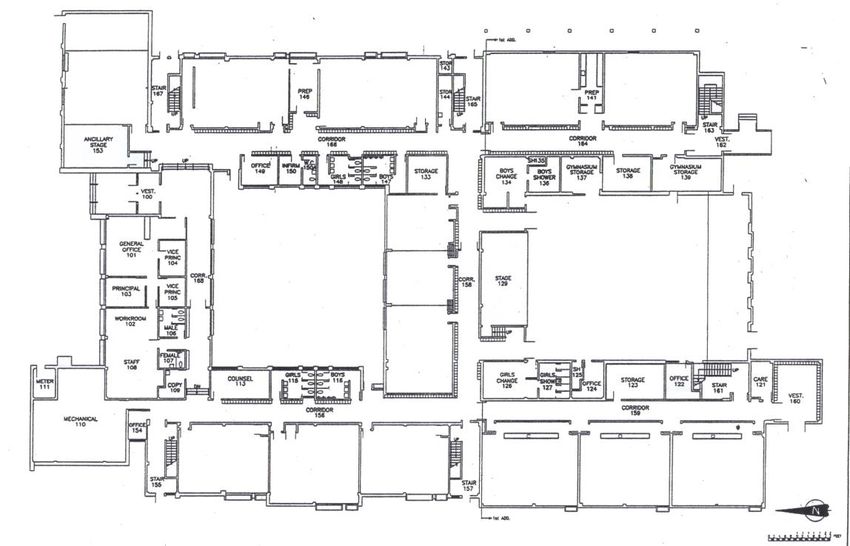
18SCHOOL MAP
Portable 11
DRAMA Rm 151 Rm 145 Rm 142 Rm 140
FRONT Portable 12
ENTRANCE ART
BREBEUF Rm 131
MAIN
GYM
OFFICE
Rm 130
Rm 112 Rm 114 Rm 117 Rm 118 Rm 119 Rm 120
MAIN FLOOR
19Note to Student’s Parents/Guardians
Understanding the policies and procedures that are outlined
in this handbook is essential for a successful year of learning.
Please take the time to review the contents of this handbook
with your child.
We have read and discussed the St. Jean Brebeuf Junior High
School Handbook:
Parent/Guardian’s Name : _________________________
Student’s Name: ________________________________
TA: __________________________________________
Date: _________________________________________
Watch for more information about our school in the weekly
newsletter or access our website at:
https://www.cssd.ab.ca/schools/stjeanbrebeuf/
20You can also read


